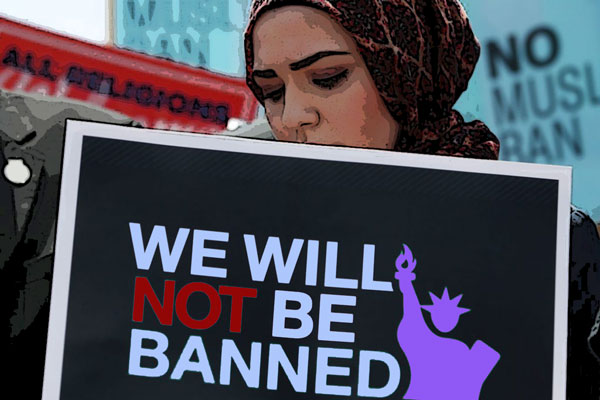
When Donald Trump announced his intention to have a “Muslim Ban,” stating that early on as a presidential candidate, many were unsure of its effects and what it meant for the future of American Muslims. President Trump signed an executive order on January 27th, 2017 that banned foreign nationals from seven Muslim-majority countries from entering the United States. Protests took place and lawsuits immediately initiated in the attempt to repeal the order. However, four years on, as Trump prepares to leave office, the effects of his anti-Muslim policies and rhetoric on American Muslims have largely been ignored. In fact, however, Trump’s tenure has seen a dramatic decline in Muslim refugees, as well as a rise in hate crimes against Muslim citizens.
According to a CATO Institute report, after the United States welcomed a record 38,555 Muslim refugees in the fiscal year of 2016, that number was cut to a mere 3,321 in the fiscal year 2018 — a 91 percent decrease. The Pew Research Center also found that Christians comprised 79 percent of refugees in 2019, despite Muslims outnumbering Christian refugees just three years earlier. Trump’s Muslim Ban has had a devastating effect on Muslims who seek to escape war, poverty, and/or hunger, especially in countries such as Yemen, Syria, and Iraq. Syrian refugees who would have sought to escape the chaotic civil war that left their country in ruins had their hopes diminished when Trump’s executive order suspended Syrian refugee immigration indefinitely. That is despite the fact that in 2017, a Pew survey found that almost half of Americans believed that the United States had a responsibility to accept refugees from Syria. This is likely due to America’s long-term involvement in the war that has devastated the Middle Eastern nation. Yemeni refugees were also blocked by the initial executive order; and despite the United Nations warning that Yemen has become the largest humanitarian catastrophe in the world, Trump saw fit to forbid the entry of the three million displaced persons from Yemen. The United States also has a significant hand in the Yemen war, providing a multitude of arms to Saudi Arabia, one of the main players in the war, under the 2017 United States-Saudi Arabia arms deal.
Ongoing Negative Effects of the Muslim Ban
Trump’s insistence on a Muslim ban may end up hurting the United States economically. Studies have shown that over time, refugees have high labor force participation rates and rely less on social welfare programs. Therefore, most refugees represent a net positive to the U.S economy in the long run. A 2017 New York Times report detailed that the Trump administration rejected a report which found that refugees generated over $60 billion to the U.S economy over a decade, a glaring detail that was overlooked or ignored when Trump imposed the travel ban.
Trump’s travel ban has likely also had a hand in decreasing international student enrollment in the United States. According to a recent U.S. News & World report, 2019 was the first year that international student enrollment into American universities dropped, with many students citing the U.S political climate as an area of concern when considering the U.S. for studies. Moreover, the U.S Department of Commerce stated that international students contributed $45 billion and nearly half a million jobs to the U.S economy in 2018; losing these students will undoubtedly deprive the U.S of an important source innovation and expertise in STEM (science, technology, engineering, and mathematics) in the years to come.
It is evident that Trump has largely fulfilled his promise to halt Muslim immigration to the United States. However, this may have caused increased resentment toward Muslims in America and there is little evidence that it has made America much safer. A Pew Research survey conducted in 2017 found that 75 percent of Muslims believed that there was a lot of anti-Muslim discrimination, and half of all Muslims expressed that it has become harder to be Muslim in America in recent years. It also seems that the 68 percent of U.S Muslims who claimed that Trump “worried them” may have been justified considering an uptick in hate crimes against Muslims since Trump took office. A study published by the Council on American-Islamic Relations (CAIR) documented 300 cases of hate crimes against Muslims in 2017, a 15 percent increase from 2016, a year which also saw an increase in hate crimes. CAIR stated that this increase was at least partly a result of Trump’s policies and inflammatory rhetoric regarding Muslims.
A Powerful Lesson for American Muslims
In light of the undeniable correlation between Trump’s Muslim ban and public attitudes toward Muslims, we have a responsibility to debunk all stereotypes about Muslims and fabrications about Islam. In order to achieve this objective, Muslims must be good ambassadors of Islam and let their character speak louder than the words of anti-Muslim politicians and ordinary hatemongers. In the early years of Islam, the Prophet was relentlessly tormented by disbelievers in every manner possible. There is a well-known story of a woman who used to throw garbage at the Prophet as he walked by her house to go for prayer every day. One day she did not appear. He inquired about her and was told she was sick and so he visited her. He extended to her many kindnesses to help her recover her health. She then accepted the truth of Islam (while this story is not found in the authentic hadith, it is repeated in many biographies of the Prophet; while its authenticity cannot be verified, its message of the Prophet’s patience, tolerance, and kindness even toward those who hated him, and acted upon that hatred, is verified by a multitude of reliable accounts in the life of the Prophet).
A similar lesson is found in the contemporary true story of Richard McKinney, an American veteran returning from the Middle East. He planned to bomb a mosque in Indiana due to his hatred of Muslims. However, after receiving a warm welcome to the mosque he had planned to bomb, Mr. McKinney instead took home a Quran and eight weeks later he converted to Islam. He later became president of the that same Islamic Center.
These two examples contain a powerful lesson for American Muslims — we need to show others the true nature of Islam. Non-Muslims do not go to mosques, they do not read the Quran, and many of them do not know anything about Islam beyond what they hear on the news. The only exposure to Islam is through Muslims in America, through the agency of Islamic personality and character. It is, therefore, imperative to be a good ambassador of Islam so as to change any negative perceptions that people may have about Islam and Muslims. In today’s tumultuous political climate, in order to combat hate-mongering sentiments and Islamophobic policies, Muslims must be distinguished exemplars of Islam and its teachings, and that starts with purifying the heart and doing good deeds. The Prophet, peace be upon him, said, “Verily, Allah does not look at your appearance or wealth, but rather he looks at your hearts and actions” (Sahih Muslim).
Last year, during a raging controversy over the building of an Islamic center in Lower Manhattan, Time Magazine ran a cover story titled, “Is America Islamophobic?” Shortly thereafter, a poll released by Time showed nearly six in ten Americans held an unfavorable view of Muslims. A Gallup poll released the same year revealed four in ten Americans admitting to “feeling at least ‘a little’ prejudice” towards Muslims. The Gallup poll indicated that these adverse attitudes are likely the result of most Americans (62 per cent) personally not knowing anyone who is Muslim. The incessant headlines about violence in the name of Islam have led nearly one in two Americans to erroneously conclude that the faith of Islam is more likely than other religions to encourage violence.
But beyond the headlines lurks another reality.
A recent study by the newly established Abu Dhabi Gallup Centerconcluded, “Muslim Americans are satisfied with their current lives and are more optimistic than other faith groups that things are getting better.” Muslims in America continue to profess a positive attitude despite being misunderstood by many and demonised by a few.
The Southern Poverty Law Center, an American non-profit civil rights organization dedicated to combating bigotry, wrote in a recent report that “…certain Americans, [who have been] prodded into paranoia by clever activists, opportunistic politicians and guileful media players, seem downright eager to deny Muslims the guarantees of religious freedom and the presumption of innocence.”
In New York, educator Debbie Almontaser was compelled to resign from a secular Arabic-English public school after she was misquoted in the New York Post, which “clever activists” exploited to insidiously imply she supported violence. However, when a similar cast of characters tried to rile up a controversy by selectively misquoting me to derail my nomination to the Jacksonville Human Rights Commission, they were effectively thwarted after influential leaders stood up to condemn the witch-hunt, which lead to the City Council voting in favor of my candidacy.
This year, extreme right-wing activists rallied voters in Oklahoma to pass a constitutional amendment prohibiting judges from making rulings based on sharia, the source of Islam’s religious and moral laws. A federal judge blocked the implementation of this referendum, but more than a dozen states are considering “banning” sharia. Meanwhile Congressman Peter King of New York continues his series of unbalanced congressional hearings about the “radicalization” of American Muslims, which negatively stereotype the Muslim community with the imprimatur of the US government.
Despite the efforts to marginalize this community, Muslim life in America remains vibrant, youthful and nuanced. According to Gallup, the average age of American Muslims is significantly lower than people of other faiths. This youthfulness explains why Muslims are least likely to vote despite having the most positive attitude towards American democracy, although they also have the least positive view of law enforcement and US military engagement abroad.
One of the most common complaints about Muslims is that they do not condemn terrorism as much as they ought to. Following the London bombings in 2005, New York Times columnist Thomas Friedman wrote, “To this day, no major Muslim cleric or religious body has ever issued a fatwa [a non-binding religious opinion] condemning Osama bin Laden.” Such spurious statements help solidify the misperception of Muslims being sympathetic to terrorism. University of Michigan Professor Juan Cole and Professor Charles Kurzman from the University of North Carolina have documented many fatwas and statements from Muslim scholars and groups condemning terrorism. One only need enter the phrases, “Muslims Condemn Terrorism” or “Islamic Statements Against Terrorism”, in any online search engine to read the multitude of statements against terrorism.
In fact the latest Gallup survey shows nine out of ten American Muslims saying that they do not sympathize with Al Qaeda and view themselves as loyal Americans. Survey results also show that Muslims are the least likely of all religious groups to say that there is ever any justification for attacking civilians. However, most of their fellow Americans do not see Muslims as being patriotic. To win the hearts and minds of their fellow Americans, Muslims must spend more time not only educating others about their faith but also increase their commitment to endeavors that promote the common good.
Recently, mainstream media and civic groups have begun to question the means and motives of the anti-Muslim network. A report from the Center for American Progress, a progressive research and advocacy organization, shows that from 2001 to 2007 a handful of wealthy donors poured nearly $42 million in financing anti-Muslim activities. Although the money trail is unprecedented, in many respects the challenges facing Muslims are no different from those faced by other religious minorities as they struggled to integrate in America. This gives hope because eventually the marginalized groups found acceptance and respect in mainstream society.
The West’s Islamophobia never ends. As communism exiles itself into history; the West is tirelessly talking about “Islamic fundamentalism” as its new archenemy. In recent months, the Western news media have intensified their campaign: contain Islam or be ready for the extinction of the Euro-American civilization.
Now that the Cold War is over and communism Is collapsing, what more is there to fear? For many Western commentators, the answer is Islam. They see its rise as the new principal threat to Western security and values, a menacing force in an area extending from Yugoslavia to the deserts of Central Asia – the so-called “Crescent of Crisis,” writes Shireen T. Hunter in the Tampa Tribune.
“During the 1980s, the growing strength of Islamic fundamentalism and the increasing support for militant Islamic movements within the Middle East and parts of Asia have been of major concern to most Western analysts,” opines Avrum J. Gray of the Houston Post.
Vice President Dan Quayle was not far behind. In a commencement address at the U.S. Naval Academy in Maryland in May, he said: “We have been surprised this past century by the rise of communism, the rise of Nazism. and the rise of radical Islamic fundamentalism…let us always be prepared.”
Islam in the category of communism and Nazism? Mr. Quayle must be out of his mind, or words. Or was he..?
Around the same time, the National Endowment for the humanities paid 10,000 of our tax dollars to Bernard Lewis, a British-born Jew, to lecture Americans on Why Muslims Hate America.
In one of the many speeches, called the Jefferson Lecture, Mr. Lewis declared that Muslim “hatred” of America was in part an outgrowth of their ” humiliation – a growing awareness, among theirs of an old, proud and long-dominant civilization, of having been overtaken, overborne and overwhelmed by those whom they had long regarded as their inferiors.”
North of the American border, a Canadian professor at Manitoba University was busy organizing a conference on Islamic terrorism in the 1990s and its Threat to North America.
Although Muslims succeeded in having the term Islamic replaced by Middle Eastern, the conference’s ire was still solely directed at the Muslims. Israel, the real cause, and often the practitioner of terrorism, was neither implicated nor criticized!
Given the frequent occurrences of anti-Muslim incidents, one wonders if it is a case of Muslims hating the West or vice versa.
Why are Muslims feared, rather than admired and emulated as they once were? Why does a community that once inspired the world with its indomitable spirit, enlightened achievements, religious confidence, and tolerance, invite all the negative attributes today?
That Muslims everywhere are going back to their natural roots and shedding alien, unworkable ideologies imposed on them, is reassuring. But what also needs a clear, if not greater, priority is the allaying of fears in Western minds that Islamic ascendancy would bring doom to non-Muslims.
As we welcome a new decade, the last of this century, it is important that we review our performance in the ’80s.
The ’80s witnessed a large influx of immigrant Muslims to the United States and Canada. An overwhelming majority of these immigrants, both old and new, decided to make North America their permanent home. A significant increase in Muslim population also resulted from births in the community, which boasts of 6 million people in the United States and 750,000 in Canada.
The increase in population also affected the way we live and worship. Disappointed with a life without inter-community communication, proper mosques and a social support system, Muslims in the ’80s joined hands to attack these problems and made impressive gains.
While figures of the ’70s are not available, today there are an estimated 800 mosques across North America. Organizations which carry out Islamic da’wah, and social and cultural agendas of the community have been founded in every nook and cranny of the continent. While most of these organizations are rooted in the local communities, there are at least four major organizations which work on national and even continental level. The Tableegee Jama’ah, the American Muslim Mission (AMM), The Islamic Society of North America (ISNA) and The Islamic Circle of North America (ICNA), although founded before the ’80s (except ISNA), have broadened their activities and are seen as an important force in the life of the North American Muslim community.
In 1985 Warith Deen Mohammed, president of AMM, designed for African American Muslims, dismantled the organization, and asked its members to work with the mainstream Muslim community. This was a very important development, as it showed that African American Muslims had come a long way from the racist days of Elijah Muhammad, father of Warith Deen Mohammed and founder of AMM’s race-based predecessor, the Nation of Islam.
Although Mr. Mohammed and AMM did a highly commendable job in bringing non-Muslims to the fold of Islam in the ’70s, lately they seem to have slowed down. There could be two immediate reasons for this: their emphasis on indoctrinating and training members and internal divisions. Their work was also affected by a lack of rallying point for African Americans, and the Islamic Revolution in Iran. In the ’60s and ’70s, riots in black ghettos and civil rights movement had endeared Islam to many African Americans, who were looking for better alternatives to capitalism. Islam to them epitomized salvation from op pression. In the ’80s the civil rights movement, as we knew it in the ’60s, was simply not there.
In the wake of the Islamic revolution in Iran, hostage taking in the U.S. embassy in Tehran, and a spate of hijackings in the Middle East, the American media portrayed Islam in a negative light. As a result, Muslims of North America, many of whom would have proudly carried out Islamic da’wah, were forced to spend much of their time defending Islam.
In contrast with slowdown in AMM activities in the ’80s, ICNA made important gains. Founded in 1968 as an Islamic Jama’ah and movement and devoted to Urdu-speaking community until the ’70s, ICNA took its message to the entire Muslim community of North America and to non-Muslims, many of whom accepted Islam in one of its several units. It also published and distributed da’wah literature through its workers in most of the major cities of U.S. and Canada.
ICNA workers were also active in the propagation of Islam to inmates in different city jails.
However, we have a long way to go in winning the respect that we as Muslims deserve from others and fulfilling the task that we must. Despite its spiritual hollowness and liberal atmosphere, North America remains a fertile land for the propagation of Islam. And unless we change the society we have chosen to live in, it is possible the society will change us and devour our children.
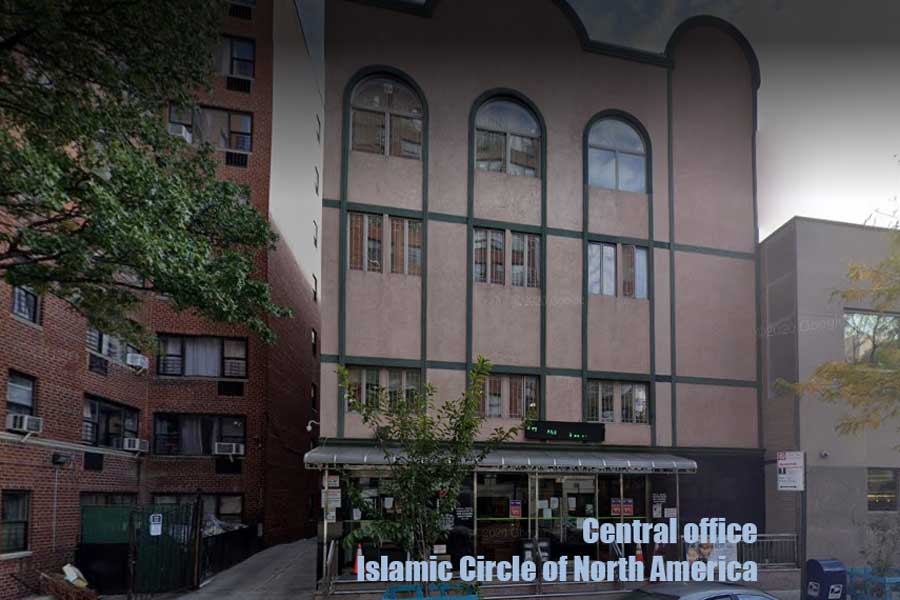
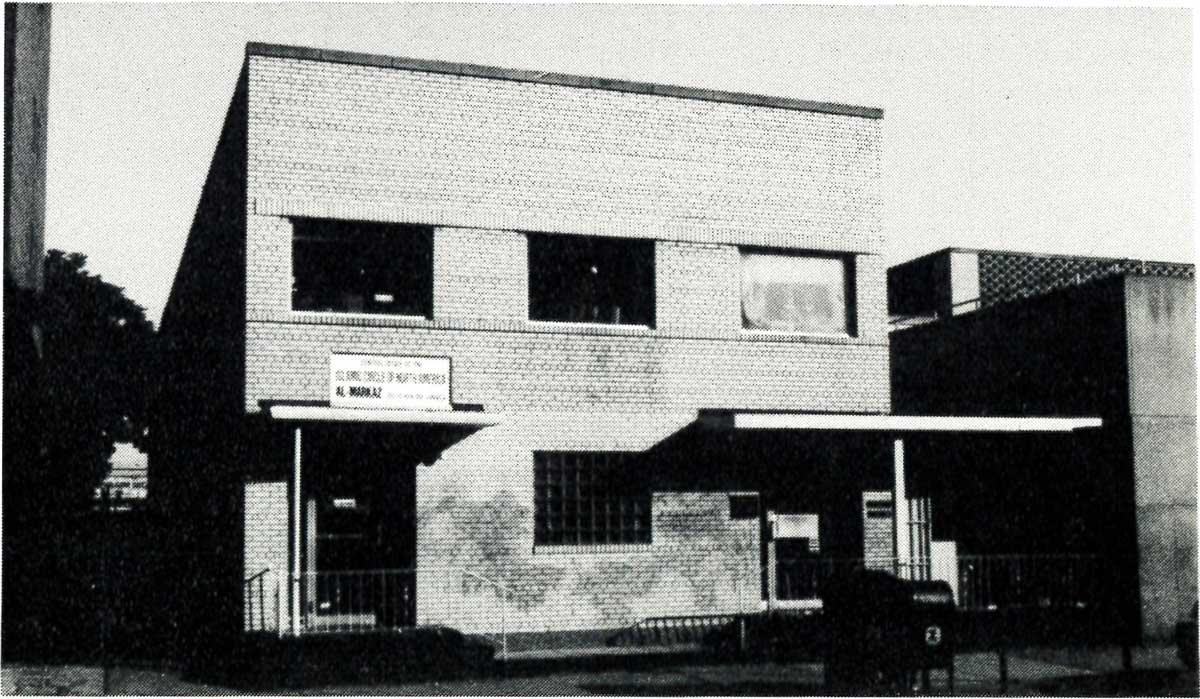
ICNA Central Office New York
ICNA central office in Queens, New York
Besides ICNA, several mosques and Islamic centers also worked towards this end. Masjid At-Taqwa and Malik Shabazz Mosque in New York City, and Masjid Al-Islam in Dallas, worked hard to rid their neighborhoods of drug dealers and invite non-Muslims to Islam. The ’80s were also important for the establishment of mosques, Islamic centers, schools, and businesses. As far as schools are concerned, the African American Muslims led the way by founding a chain of full-time schools called Sister Clara Muhammad School, in several big cities. Immigrant Muslims also made significant gains in this area. By the end of the decade, 60 schools had been established in the United States and Canada, with some of them better than many public schools. New Jersey’s Al-Ghazaly is by far the best Islamic school.
In the field of education at least three more ventures were launched in the ’80s. Among them were Is-lamia College in Chicago (1983), Nizamia Madrassah at Cornell, Canada (1985), and Darul Uloom Al-Islamiyah of America in California (1988). Unfortunately, the community response has been poor. The Islamia College, where the first batch was graduated in 1988, now has only 60 students. The two madrassahs have also had a disappointing experience. These Islamic educational institutions have to be supported by the community so that they can grow into powerful seats of learning.
To offer Muslims a chance at interest-free banking, ICNA was able to set up the Muslim Savings and Investments, Ins. (MSI) in 1985. MSI not only offers a chance to invest and earn profits, where possible, it also finances homes for qualified customers.
It is hoped that in the ’90s MSI will develop into a full-fledged bank.
There are many financial institutions which were established in ’80s. Some are interest-free like Baitul Maal (BMI) of New Jersey, and some have investment in stocks (according to many `Ulama is not halal) like Amana Mutual Funds.
In the area of housing Toronto Housing Coop, in Canada, was an important Muslim organization to be founded in the ’80s. Started by a few sincere Muslims, it has been able to buy more than 100 interest-free homes for the community. Other smaller organizations are also working in other cities on these lines. The ’80s also saw a growing unity and sense of Ummah among Muslims of North America, both indigenous and immigrant. The unity was reflected in the community’s work in providing political and monetary support to jihad in Afghanistan and Palestine. A number of Muslims were so dedicated that they actually went to Afghanistan to fight against the Communists.
Unlike the ’70s, Muslims in the ’80s showed political awareness and began taking active interest in the mainstream political parties of the United States and Canada, with some of them holding political offices. Muslims played an important role in the election of (late) Chicago Mayor Harold Washington, Detroit’s Coleman Young and Virginia’s governor L. Douglas Wilder. It is noteworthy that in Detroit a Muslim, Adam Shakoor, was chosen as the deputy mayor. In the 1988 presidential elections, Muslims got involved in the campaigning and as a result were able to push their weight behind Rev. Jesse Jackson’s debate of the Palestinian problem on the Democratic Party platform. First time in the history of U.S., the Senate has passed a bill (S.794) in 1988 which also includes Muslim and Mosque. This legislation makes it a federal offense to interfere with the exercise of religious freedom, or to damage or desecrate religious property. In the ’80s Muslims learned that American politics was governed by interest and pressure groups. The first significant manifestation of this realization was the founding of the Muslim Political Action Committee (MPAC) in California. Similar efforts have been made in New York and Illinois. ISNA held a conference in 1989 in this context, and it determined to mobilize people towards greater participation in political process of North America.
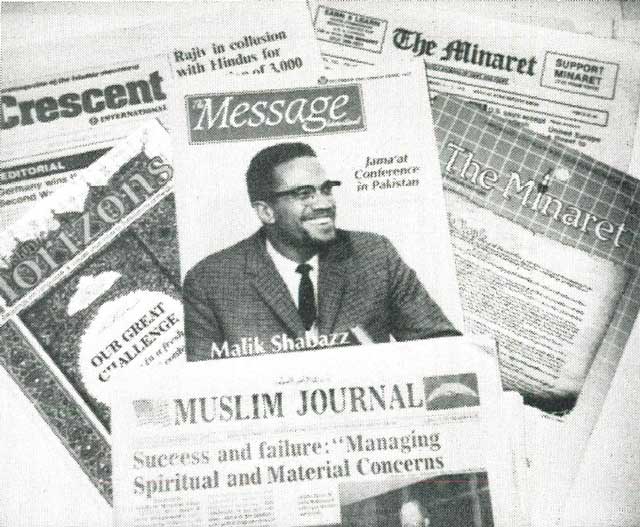
Major Islamic magazines and newspapers of U.S. and Canada
The role of the mainstream American media in the ’80s continued to be hostile and negative towards Muslims. However, there was a realization that unless Muslims worked on this area, they would have to be always defensive. The Rushdie affair drove this point home very powerfully and helped galvanize Muslim activism. At the end of 1988, ICNA took up this matter on a continental basis, and along with different Islamic centers and Muslim organizations, tried to have Salman Rushdie’s book “The Satanic Verses” banned. Although Muslims were not successful in getting the book banned, the outrage over it brought them together and gave them a chance to talk to the media and present their side of the story. It was also the first time that many non-Muslims learned about Muslims and their religion so extensively.
The Rushdie affair also opened doors of inter-faith dialogues, arranged until the early ’80s mainly by Muslim Students Association, a little wider. Now Christian organizations began to invite Muslims for interfaith dialogues and included Muslims in several committees dealing with interfaith matters. However, much needs to be done. Muslims should try to gain a place on the boards of public television networks where major religions are represented. They should also invite the media to their functions and programs so that Americans can know them better.
Speaking of the media, Muslims in the ’80s made progress in this direction. Many Islamic centers began to publish a monthly or quarterly magazine to air their point of view and publicize community issues. Important among the many are the weekly Muslim Journal (Chicago), bimonthly Islamic Horizons (Indiana), tri-monthly Minaret (California), biweekly Minaret (New York), Crescent (Toronto) and monthly The Message International. Among the Islamic publications, The Message is an up-and-coming monthly international magazine and fills the void created by the closures of the London-based Arabia and Afkar.
Like the ’70s, Muslims did not have much involvement in the electronic media in the ’80s. However, paid Islamic and non-Islamic cultural programs continued to be aired on local channels. In this regard the role of the California-based Islamic Information Service (IIS) is important. A major problem with some ITS programs is that they have not portrayed Islam properly. This has to be corrected if we are to save Islam from ridicule and ideological impurities. TV is the most effective news medium and Muslims should increase their presence on it, and also see that Islam is not presented in a twisted manner.
In the ’80s the Muslim community, reflecting greater maturity, entered hitherto unchartered waters. Although not all its new initiatives succeeded, at least they decreased its insularity. For instance, in the early ’80s ISNA experimented with the Muslim Community Association (MCA), an organization designed to unite the communities. Due to several reasons MCA failed and had to be scrapped. Perhaps the main reason of its failure was that it was not a grassroots organization and had not involved the entire community in decision making.
Realizing that a whole new generation of Muslims had come of age, both ISNA and ICNA separately founded youth organizations that are called Muslim Youth of North America (MYNA) and Young Muslims for Faith and Action (YMFA). While MYNA is basically concerned with organizing summer camps for youths, YMFA is based in different towns and cities where Muslim youths organize into groups and carry out Islamic and extracurricular activities. Muslim youths are our invaluable asset for the future, and if they are not cultivated Islamically, we would lose them to the American society, just like the early Muslim settlers did. We need to mobilize ourselves and the community, and act now!
The ’80s also saw the establishment or expansion of several research and publishing organizations. The most notable among them are the Virginia-based International Institute of Islamic Thought and American Trust Publication, and Vermont-based Amana Books. The ATP and Amana, which are basically Muslim publishing houses, have produced some very useful books. But they have not been able to fulfill the needs of the entire community, nor publish much-needed books for youths and Islamic education. In the ’90s we definitely need more books of this kind. We also need more Muslim intellectuals and activists to deal with social, academic and religious problems faced by the community. In this context, ICNA has decided to form an Institute of Leadership Development to train Muslims to handle the responsibilities of imam, directorship of an Islamic center and da’wah work.
In the area of ibadah, or worship, Muslims were found lacking in the ’80s. Although there has been an impressive increase in Muslim population and mosques in the last decade, no more than 10 percent of Muslims living in the vicinity of a mosque attended Jum’a prayers. This is particularly disheartening to those da’wah groups and activists who worked hard to bring Muslims to the house of Allah. The lack of attendance even in Jum ‘a prayers is not a healthy sign, and the problem must be corrected. On the other hand, those who did come to the mosque, were only concerned with offering prayers. Most of them made no effort to pass the message of Islam to their neighbors. ICNA has started preparing Muslim Data Base to reach to these 90% Muslims who are not involved in any Islamic activity. At the end of ’80s thousands of names and addresses of Muslims have been computerized.
No one can deny the modern Western civilization’s productivity, comfort and affluence but it must be regrettably acknowledged that Western civilization’s shortcomings and weaknesses are no fewer than its advantages. Despite the leisure and ease which American science and technology provide for society and despite the new pages of history turned, human happiness has not increased nor have social ills diminished. Living and bringing up of new generation in this non-Islamic society is a great challenge for Muslims.
Despite many gains and lot of Islamic work, like the ’70s, many Muslims in the ’80s were not successful in meeting this great challenge.
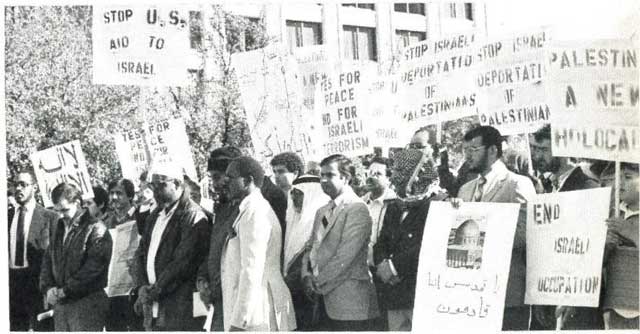
Indigenous and immigrant Muslims united in a rally in Dallas, against Israeli occupation of Palestine
In some cases, the whole Muslim family lost the Islamic and Muslim identity and accepted the American and secular norms and ideology and even they changed their names from Muhammad to Mo, Sulaiman to Sam and so on. The world has tried all the religions and ideologies whether it was Hinduism or Socialism, Communism or Capitalism, none gave the humanity the peace of heart and mind. But Islam is the only way of life which can cure the mankind from their diseases, can provide the peace of heart and mind in this world and success and falah in the hereafter. The Muslim community will have a bright future in the ’90s and beyond if it can come into the fold of Islam completely and totally. And show a greater desire for pan-Islamism and pool its resources towards the creation of a United Islamic Movement consisting of workers of Islamic movements and movement-oriented indigenous brothers and sisters of the U.S. and Canada. This is the most important requirement if we want to preserve ourselves as Muslims.
Just preservation is not the guaranty for success. Therefore, Muslims have to propagate the message of Islam (da’wah) to fellow human beings. Da’wah is a comprehensive program which includes every aspect of Islam. A Muslim as an individual and the ummah as a collective body cannot absolve itself of its responsibility of da’wah if it is not an all-embracing movement. And this da’wah has to be relevant to North American society.
Then we hope through the ’90s and beyond that the future will belong to Islam and America will belong to Islam, In shaa Allah.