بسم الله الرحمن الرحيم

Tag: muslim history

  • American Muslim Demographics

    American Muslim Demographics

    [button size=medium style=less_round color=gray align=none url=http://hipcast.com/podcast/HNTT6h7s]Click here to listen to this article in audio[/button]

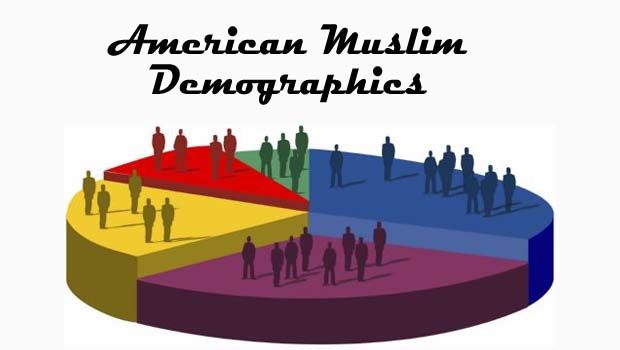
    63%

    Almost two-thirds of American Muslim adults are first-generation immigrants from at least 77 different countries

    37%

    More than a third of Muslim American adults were born in the United States

    81%

    The vast majority surveyed, more than three-quarters, report that they are U.S. Citizens

    59%

    More than half of adult Muslims are between the ages of 18 and 39, compared with 40% of adults in the general public

    Source: Pew Research Survey 2011


  • Interview: From MSA to ICNA and ISNA

    Interview: From MSA to ICNA and ISNA

    Dr. Talat Sultan, originally from Pakistan, immigrated to the U.S. in 1962. He earned his Master’s in Islamic history and culture from the University of Karachi and then a Doctorate of Education from UCLA. He has served as the principal of a number of Islamic fulltime schools in Memphis, Chicago, Phoenix, and Alexandria, Virginia. Dr. Sultan taught and served as the chair of the Division of Education and Psychology at Barber-Scotia College in North Carolina for 14 years, and as a professor of research in Islamic education at Umm Al-Qura University, in Makkah, Saudi Arabia. His further contributions include serving as the Director of Education for ISNA, the first President of ICNA from 1968 to 1975 and then again 2003-05, and president of AMSS (Association of Muslim Social Scientists).

    Question: What did the early Muslim immigrants to the U.S. find with regard to Islamic groups and organizations?

    In the 1950s, many Muslim youth started coming to the U.S. for higher education. When they arrived, they did not find very many organized Islamic groups here. The largest national organization of Muslims –Nation of Islam — was not an authentic Islamic organization. It was led by a self-proclaimed prophet, Elijah Muhammad, who had mixed some Islamic tenets with his own distorted beliefs. The only other national organization was the Federation of Islamic Associations (FIA). It was a loose association of a few Islamic centers that held an annual convention to provide an opportunity for Muslims, especially Muslim youth, to socialize. Many Islamic norms were violated in that process.

    Question: How did the organizational work begin that led to the formation of MSA, and how did it progress over those early years?

    Muslim students started to form Islamic organizations on their campuses. Some efforts were made in 1950s to forge a union of all campus organizations on the national level, but financial considerations became the main obstacle. The second such known effort took place on January 1, 1963 when it was resolved that we would work hard for the sake of Allah SWT to overcome all difficulties and within a period of three months, we established a network of communication with 200 universities and colleges. Dr. Ahmad Sakr, who recently passed away, may Allah SWT have mercy on him, was a graduate student in Food Technology at the University of Illinois, Champaign – Urbana, and he hosted the first convention of the Muslim Student Association of U.S. and Canada in April, 1963. Five universities were represented, with 15 individuals in attendance. That convention heralded the coming of ISNA, the national organization that was officially founded in 1982.

    MSA’s motto, “And hold firmly to the rope of Allah all together, and do not become divided…” (Quran 3:103), clearly reflects the very purpose of the organization, given that there was at that time no authentically Islamic national organization to unify Muslims. This was, indeed, the need of the hour and soon MSA became not only an association of chapters on almost all major campuses in the U.S. and Canada, but also an organization representing various Islamic centers. The MSA annual conventions soon became a gathering of people from around the world.

    Question: What was the focus of MSA in the early years?

    A number of projects were developed that focused on providing support and guidance to Muslims, including the establishing of congregational prayer on campuses, development of a network of Islamic centers, providing assistance in funeral services and burials, and other services. One initiative was North American Islamic Trust (NAIT), the financial arm of the MSA, focused on the financial and investment needs of Muslim individuals, organizations, and businesses. It set up a special fund to accept deposits from Islamic centers, then making interest-free investments and providing them with halal, profit-and-loss-sharing returns. NAIT also offered legal and arbitration services. Initially established in the early 1970s with Dr. Jamal Barzingi (M) as its first general manager, NAIT continues today to provide capital growth and investment services. Some of its other general managers have included Dr. Abu Saud (M), Br. Mohammad Badr, Dr. Yaqub Mirza, and Br. Mohammad Naziruddin Ali (M).

    MSA also focused on dawah among Muslims, including arranging weekly meetings, regional conferences, and annual conventions. Their tarbiyah, or educational initiatives, focused mostly on organizing youth camps and an annual imam training program. MSA published a regular MSA Newsletter and later, since the 1970s, the ISNA magazine, Islamic Horizons, first on a monthly and now on a bi-monthly basis. In the ‘70s and ‘80s, an important scholarly journal, Al-Ittihad, was published annually. NAIT also established American Trust Publications (ATP), a publishing division, in 1976, which has published original books on Islam, as well as translating a number of important works into English.

    There were another two marvelous divisions. One was the Audio-Visual Center which over the years produced cassette tapes of Quranic recitation for distribution around the world, as well as tapes of the proceedings of conferences and conventions held by MSA and then ISNA. The other important division was the Islamic Book Service (IBS) which distributed books and tapes in the U.S. and overseas. For a while, under the direction of another dedicated MSA leader, Br. Abdul Mateen Chida (M), a printing division, International Graphics, was also established, but it was later sold to a private Islamic enterprise.

    Question: Did MSA develop educational projects and what, if any, initiatives were put forward to establish Islamic schools?

    When MSA’s permanent headquarters was established in 1974 at Indianapolis, an education committee was established. As chairman of the committee, my first responsibility was to conduct teacher training workshops. In 1982, we decided to establish two model fulltime Islamic schools. The first school was established in Toronto under the leadership of Br. Abdullah Idris Ali who served as its first principal. This effort became a stepping stone for the establishment of many excellent schools nationwide.

    MSA also established a program to assist Islamic centers in their development of weekend Islamic schools. They published the “Manual for Weekend Islamic Schools” and it was widely distributed. The book, “A Guide for Muslim Parents & Teachers for Educating Muslim Children and Youth” was published in 1979 by Dr. Anis Ahmed, the second director of education. When I succeeded him, it was recognized that the need was not restricted to weekend schools as there were quite a few fulltime Islamic schools looking for similar guidance. So I started my work on “Curriculum Guide for Islamic Studies” that was published by Umm Al-Qura University in 1992, and distributed by ISNA to all fulltime and weekend Islamic schools. Another important educational activity was the annual meeting of fulltime Islamic school (FTIS) administrators. A comprehensive study of these schools was also conducted. These meetings were the predecessor of two ISNA educational activities that continue to this day: the Annual Education Forum and CISNA (Council for Islamic Schools of North America). The Council works to help FTIS to acquire accreditation.

    Question: How was MSA, and then ISNA, involved in dawah work?

    One of the most important challenges MSA recognized from its inception was to bring the so-called Nation of Islam within the purview of authentic, mainstream Islam. Regular contact was established with the NOI leaders including Warith Deen Muhammad (M), the son of Elijah Muhammad, who succeeded him as the imam and leader of the group. MSA organized an Imam Training Camp for the Bilalians (the first alternative name to NOI). A stalwart of Islamic work in North America, Imam Siraj Wahaj, emerged from that process to influence and support NOI to move onto the path of mainstream Islam.

    In order to further enhance dawah among new Muslims and non-Muslims, the Islamic Teaching Center (ITC) was established by the dynamic and enthusiastic efforts of Dr. Altijani Abu-Guderi (M), a former president of MSA and the first director of education. He became the first director-general of ITC. I was a member of the ITC Board of Trustees from the start. I later served as its acting director-general for a year.

    Beside imam training and scholarship programs, ITC’s major thrust was its dawah project for those who were incarcerated. Br. John Sullivan was our devoted director of correctional facilities and carried out a correspondence course for the new Muslim inmates. He and his team visited the correctional facilities regularly. It was around the same time that Muslim chaplains began being hired by the prisons as well as by the military, in no small way through the efforts of Br. John and his dedicated team.

    Question: Were there other programs or initiatives that were part of the MSA/ISNA agenda?

    One of the responsibilities of the director of education was to hold the Youth Committee meetings. I prepared a proposal for the organization of Muslim Youth of North America (MYNA), and it was approved by the Executive Council in 1983. It is still an active constituent of ISNA and its president sits on the Majlis Shura.

    Another major MSA project was the initiation of three professional organizations. The first was the Islamic Medical Association, which is now IMANA, established in late 1960s. The Association of Muslim Scientists & Engineers (AMSE) was founded in the early 1970s. The third organization is the Association of Muslim Social Scientists (AMSS). It was founded in 1972, an inspiration of the great scholar and professor, Ismail Faruqi (shaheed), who was its first president.

    Question: Can you describe the transition from MSA to ISNA?

    MSA was a student organization, but those of us who graduated from our respective universities and colleges continued to carry our MSA membership. By 1977, almost 70 percent of the membership was non-student. The same year, about fifteen years since MSA’s establishment, it was felt that there was a need to hold a meeting of all core members. Roughly 70 brothers and sisters assembled at the newly acquired headquarters in Plainfield, IN during the December holidays. They appointed an Future Vision Committee to review organizational progress. I served as a member of that committee.

    The committee recommended that an umbrella organization, with the name Islamic Society of North America, be formed. All other organizations would become constituent parts of ISNA. The Council of Presidents (AMSS, AMSE, IMA, and MSA) approved the proposal and appointed a Steering Committee to work on the constitution of ISNA and outline a schedule of implementation. I was Chairman of the Council of Presidents, and after much hard work by the committee, I presented the resolution to establish ISNA and it was unanimously adopted during the 19th MSA convention. That was the last MSA convention, in May of 1981. After the constitution was approved by the membership, Br. Ilyas Ba-Unus was elected as its first president.

    The primary focus of work under ISNA was the same as that of MSA. And in the same spirit as MSA’s mission, ISNA’s new motto was “Indeed, this community of yours is a single community and I am your Lord, so obey Me” (Quran 23:52). Muslim unity was the foremost concern, with education as the second highest priority on our agenda.

    Question: Can you please describe how ICNA was established?

    In the years leading up to the establishment of ISNA, many of us recognized the need for a grassroots dawah movement to invite non-Muslims to Islam and to educate Muslims about Islam as a way of life and daily dedication to Allah SWT. Those involved in this dawah work would need to be committed to developing their Islamic character, striving only for the sake of Allah SWT, and to utilizing all legal and peaceful means to accomplish this work. In September, 1968, the Halqa-e-Ahbab (Circle of Friends) was established. I was chosen as its first president. On January 1, 1970, during a special meeting in Northville, Michigan, the first constitution was adopted. The name was changed to Halqa Ahbab-e-Islami (Islamic Circle of Friends). Formal membership was introduced. I was re-elected as the president and, in 1974 at Columbia University, the first public event was held with Maulana Sayyid Abul Ala Mawdudi who was on a personal visit to the U.S. The regional meetings of Islamic Circle of Friends were held during the regional conferences of MSA. The first separate regional conference was organized by the Eastern Region that included our largest unit, New York, held in Sanford, Connecticut in 1974. By 1977, the work was expanded to 16 cities. The first national convention was held in 1976 in Chicago.

    I served seven years as president and then Dr. Anis Ahmed was elected in 1975. But in 1977, I was again made acting President as Br. Anis had to complete his dissertation. During that time, I drafted the proposed new constitution and after a great deal of discussion, the draft was approved by the Shura. A special meeting of all the members was held on Thanksgiving weekend in November, 1977 at the Islamic Center in Jersey City. About 70 members attended. The debate continued for three days and nights! Finally the constitution of the Islamic Circle of North America (ICNA) was adopted. ICNA now has chapters across the U.S. and focuses its work on education, outreach to the greater American community and interfaith cooperation, and social services.

    Over the years, ICNA has launched many initiatives that have grown to national prominence, like ICNA Relief, Helping Hand for Relief and Development, 877-Why-Islam and GainPeace dawah projects, Muslim Alert Network, Sound Vision, Muslim Savings Investment, Muslim Children of North America, ICNA Sisters Wing, Young Muslims, The Message magazine, Council for Social Justice, Islamic Learning Foundation, Muslim Family Day, Muslim Family Services, among many others.

    I have been blessed by Allah SWT to have been part of this movement and have the opportunity to continue on this path, fulfilling my dream of doing Islamic work and dawah in America. Alhamdulillah.

  • Obituary: Dr. Ahmad Sakr

    Obituary: Dr. Ahmad Sakr

    Born in Beirut, Lebanon, Dr. Sakr got his Ph.D. from the University of Illinois. He was a founding member and president of the Muslim Students’ Association (MSA) as well as a founding member of the World Council of Mosques, Makkah. He was the first director and representative of the Muslim World League to the U.N.

    Dr. Ahmad Sakr passed away on November 23, 2015. May Allah SWT have mercy on him and admit Him to Paradise. The path Dr. Sakr followed was one that faithfully emulated our Prophet, may the peace and blessings of Allah be upon him. His dedication will always stand out in the beautiful memories we have of him, and will always remind us of the strengths and blessings of faith. He played an inspirational role in the founding of many Islamic institutions and centers, including the first Islamic college in the United States, the American Islamic College of Chicago. He was a founding member and president of the Muslim Students’ Association (MSA), and a founding member of the World Council of Mosques in Makkah. Dr. Sakr was a staunch supporter of ICNA, active in interfaith activities, published more than fifty books, and was a board member of the Islamic Food and Nutrition Council of America.

    Dr. Sakr was a selfless community leader and tireless Islamic worker. He was regularly invited to fundraise for various community projects and he did so without compensation. He happily accepted his role in serving communities around the country and beyond. He also offered his guidance and wisdom to individuals facing personal problems, be they Muslim or non-Muslim, and he was always tried to make himself available to those in need.

    One of the early Muslims hoping to build a strong community in America, Dr. Sakr collaborated with brothers and sisters from nations around the world who had settled in the U.S., helping to clear the path for the future Muslim generations in America. They prepared the foundation for the vibrant and active American Muslim spirit that we see around us today. They learned to adapt to a new culture, assimilating into the American fabric of life while holding strong to the teachings of Quran and Sunnah. Dr. Sakr’s confidence in meeting the challenges he and his contemporaries encountered set the bar high so that today’s generation can move forward armed with trust in Allah SWT, guided by His light and empowered through the knowledge of His deen. He was a father, an uncle, a teacher, and a counselor. He inspired in us the ability to channel the strength of Omar, the gentleness of Abu Bakr, the shyness of Othman, and the knowledge of Ali, may Allah bless them all.

    Dr. Sakr once shared with me an issue that bothered him. He said, “Why do the obstructionists do what they do, despite having knowledge and understanding that what we are trying to do to build Islam [in America] is a good thing? They make us fail in endeavors again and again.” I pondered this question for many years since then, and I finally realized the obstructionists’ aim was to disrupt our unity. I would say to Dr. Sakr, my teacher, if he were still with us, a phrase uttered by the Emperor of Rome, Marcus Aurelius: “What we do today echoes in eternity.” Thus, we must persevere to make today better.

    I would also say to him, “My teacher, you have departed from us as we face challenges today that are unprecedented. We have met the challenge of absolving our faith from the deception enacted by people from our own creed. We must now carry the torch of faith and pass it on, uncorrupted, to the next generation. Then, insha’Allah, we will deliver the new generation to a safe ground so they can grow into faith with the clarity that the Prophet, may the peace and blessings of Allah be upon him, left us with.

    “I say to you my teacher, we will, God willing, be the men and women who stand firm, carrying this generation on our shoulders and uplifting the spirit of the dejected. Allah only allows us to succeed when we care for the weak and empower the destitute. May Allah SWT allow us to meet on the Day of Judgment in the circle of the beloved Prophet and his companions. Ameen.”

  • Some Notable and Renowned American Muslims

    Some Notable and Renowned American Muslims

    [button size=medium style=less_round color=gray align=none url=http://hipcast.com/podcast/HDYwjjSs]Click here to listen audio podcast of this article[/button]

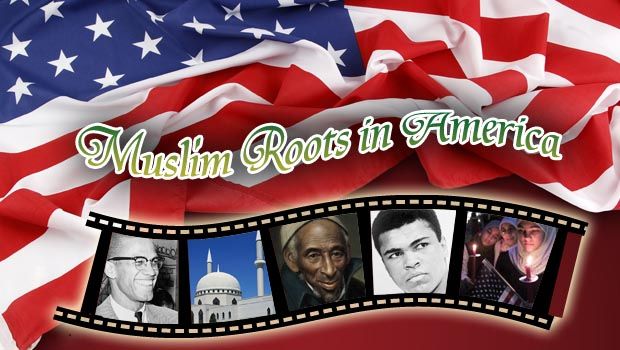
    Malcolm X

    Malcolm Little, born in 1925, became a drug addict and petty criminal. He converted to Islam while in prison, named himself Malcolm X, and began a quest for knowledge that continued throughout his life. Affiliated with the Nation of Islam, he became disillusioned with its teaching of black supremacy and after traveling in Africa and the Middle East, and making Hajj in 1964, he embraced the teachings of orthodox Islam and took the name Al-Hajj Malik Al-Shabazz. In 1965 he was assassinated. “The Autobiography of Malcolm X” is considered one of the most important nonfiction works of the 20th century.

    Muhammad Ali

    Muhammad Ali, born Cassius Marcellus Clay, Jr. in 1942 in Kentucky, is a former professional boxer, generally considered one of the greatest heavyweights in the history of the sport. Arguably the most recognized and loved sports figure of the past 100 years, he was crowned “Sportsman of the Century” by Sports Illustrated and “Sports Personality of the Century” by the BBC. Ali is also known for his dedication to his faith, his principled stance against the Vietnam War, his humanitarian work, and his fundraising for research on Parkinson’s disease.

    Hakeem Olajuwon

    Olajuwon, a 12-time NBA All-Star, led the Houston Rockets to two NBA championships. After he retired in 2002, his #34 jersey was retired by the Rockets, and a monument honoring him is outside the Rockets’ arena. He was inducted into the Basketball Hall of Fame in 2008.

    Keith Ellison and Andre Carson

    In 2006, Keith Ellison was the first American Muslim elected to the U.S. House of Representatives. He is now in his fourth term representing a Minnesota district. In 2008, another Muslim, André Carson, won a congressional seat for Indiana.

    Fazlur Rahman Khan

    Acclaimed as an engineer and architect, Khan designed systems for high-rise building construction. Two of his most notable achievements are Chicago’s John Hancock Center and the Sears Tower.

    Fareed Zakaria

    CNN talk show host and editor-at-large for TIME magazine

    Dr. Mehmet Oz

    Surgeon and TV host

    Shahid Khan

    Owner of an NFL team, the Jacksonville Jaguars

    Jawed Karim

    Co-founder of YouTube

  • Muslims Have Been Here for Centuries

    Muslims Have Been Here for Centuries

    Islamic presence in the Americas since the 1400s is well documented
    1178 – Muslims Sail to America

    A Chinese source known as the Sung Document records Muslim sailors journeying to a land known as Mu-Lan-Pi, which some researchers identify as the American continent.

    1300s – African Muslims Explore the New World

    According to some scholars, Abu Bakari, a king of the Muslim state of Mali in West Africa, initiated a series of sea voyages to North America beginning in the early 1300s. About the same time, Mandingo Muslims from Mali and other parts of West Africa are said to have arrived in the Gulf of Mexico and traveled up the Mississippi River to explore the interior of the North American continent.

    1527 – Spanish Explorers and Spanish Refugees

    Estevanico of Azamor, a Moroccan Muslim, arrived in Florida with the expedition of Panfilo de Narvaez in 1527. He stayed in America and joined expeditions across the continent to Arizona and New Mexico. By the late 1700s, historical records indicate the presence of Spanish “Moors” living in South Carolina, many of whom were expelled from their homeland by edict of the Spanish Crown.

    1530 – African Slaves Begin to Arrive in the Americas

    During three centuries of the slave trade, over 10 million Africans were enslaved and brought to the Americas. Scholars estimate that 10-30 percent of these slaves were Muslim, although practicing Islam had to be done in secret, and many slaves were forced to convert to Christianity.

    1807 – Freed Muslim Slave Puts Down Roots in America

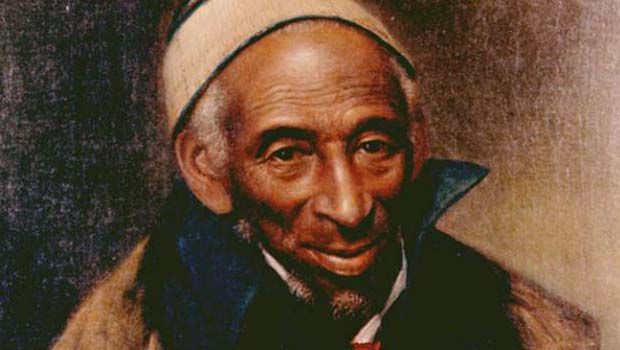
    Yarrow Mamout is an example of Muslim ex-slaves putting down roots in the U.S. Enslaved at 16 and brought to Maryland from Guinea in 1752, Mamout was set free in 1801 and became an early shareholder in Columbia bank, the second chartered bank in the country. Today, portraits of Mamout hang in the Historical society of Pennsylvania and the Georgetown Public Library in Washington.

  • Early American Mosques

    Early American Mosques

    Many early Muslim communities were comprised of a few individuals and/or families. They met in private homes for prayers, and rented out halls for the Muslim holidays.

    1900 – First Documented Communal Muslim Prayers

    Muslims of Arab descent in Ross, North Dakota gathered in homes for the first documented communal prayers held by American Muslims.

    1915 – Mosque Built in Biddeford, Maine

    Albanian Muslims built a mosque in Biddeford, Maine and established an Islamic association. In 1919, they established another mosque in Waterbury, Connecticut. These were among the first Islamic associations in America.

    1929 – Mosque Built in Rural North Dakota

    The small Ross community built the mosque, but in time it fell into disrepair as some Muslims relocated and others passed away. It was rebuilt in 2005 in memory of one of the town’s few remaining Muslims.

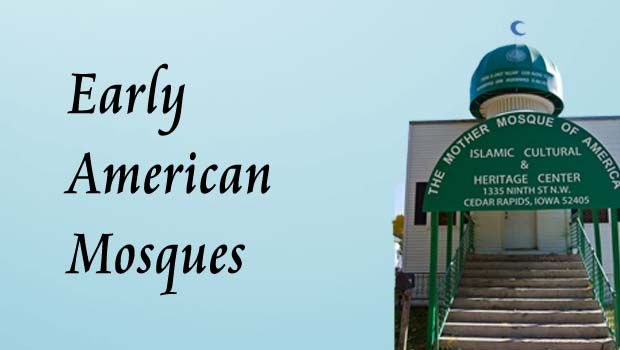
    1934 – The Mother Mosque of America

    Lebanese Muslims in Cedar Rapids, IA built this mosque in 1934; it is the longest continually standing Muslim house of worship still in use today.