بسم الله الرحمن الرحيم

Tag: moslem

  • Islam Has Been Part of American History Since Its Founding

    Islam Has Been Part of American History Since Its Founding

    [button size=medium style=less_round color=gray align=none url=http://hipcast.com/podcast/Hc90ZYxs]Click here to listen audio podcast of this article[/button]

    Muslims are feeling unwelcome in America today, but followers of Muhammed were living here before the arrival of English in Spanish-controlled Florida and French Louisiana, where slaves were imported from the Senegambia region of Africa, home to a large Muslim population.

    Muslims wish to be seen as Americans, and a look at America’s Islamic roots proves that they have every right to be – even more, perhaps, than those who rail against them.

    Influenced by the tolerance of the Enlightenment, America’s founders considered Islam’s place in the new republic despite widespread fear of Barbary pirates and a sense of European rivalry with the Ottoman Empire. As befitting a student of law in a religiously diverse land, Thomas Jefferson purchased a Quran to learn about the Islamic legal code – the same Quran that was used in the swearing in of Muslim Keith Ellison to the U.S. Congress. In 1776, John Adams published “Thoughts on Government,” which praised the prophet Muhammad as a “sober inquirer after truth.” Ben Franklin set up a non-sectarian meeting house in Philadelphia, declaring in his autobiography that “even if the Mufti of Constantinople were to send a missionary to preach Mohammedanism to us, he would find a pulpit at his service.”

    Tea Partiers occasionally know and distort these facts, but they are completely ignorant about another side of American Islam. Until recently, the study of the African transmission of Islam to America has been neglected, partly because materials are scarce, and partly because early observers were often ignorant of Islam or had reasons for downplaying the fact that God-fearing, literate people among the enslaved had to be written off as heathen and backwards in order to justify the institution.

    And yet the numbers of enslaved Africans who were Muslims was significant: Conservative estimates put the number at 10 percent of all slaves, with some estimates running as high as 30 percent. A hodgepodge of sources – from plantation records to runaway slave advertisements to WPA interviews – show that Muslims went to great lengths to observe their religion; that Islam was a marker of status in the larger African American society; and that African American culture reflects the influence of early Muslims. On Sapelo Island, Georgia, for example, the congregation of the First African Baptist Church always prays to the east, the direction in which the church is pointed, and bodies are buried pointing to the east. The Nation of Islam may have been the 20th-century manifestation of a very ancient connection to a religion that had lived on in the South for centuries among African Americans even though it was overtaken by Christianity. Historian Michael Gomez points out that Elijah Muhammad, born in 1898 in Georgia, grew up at a time when Islam may still have been practiced by African-born Muslims, and the children and grandchildren of early Muslims were likely aware of their Islamic heritage.

    The real foreign presence is Islamophobia, which is completely at odds with America’s founding principles.

    On plantations throughout the South, particularly in the early period of slavery, it would have been possible to see enslaved Africans with names like Mustapha and Fatima kneeling on prayer mats, their faces turned toward the rising sun. (Writing of “Arabic-Africans” along the coast of Georgia, Joel Chandler Harris called them “not the most numerous, but the most noticeable” type.) Some planters particularly sought slaves from Senegambia for their knowledge of rice cultivation, and some Southern slave owners considered Muslims superior to non-Muslims as workers, though others considered their education and literacy to be dangerous.

    Polls show that Americans remain unfamiliar with Islam, and according to the ACLU, anti-mosque activity has bubbled up in more than half of U.S. states in the last five years. Yet Islam is inextricably woven into the fabric of American history, from the distinctive service of Muslims in all American wars, including the Revolution, to the legacy of their descendents, which include notable figures. (Abolitionist Frederick Douglass changed his name from Frederick Bailey, and it is possible that the name “Bailey” is a form of the Arabic common name “Bilali.”)

    Muslims wish to be seen as Americans, and a look at America’s Islamic roots proves that they have every right to be – even more, perhaps, than those who rail against them. It’s time to clarify the confusion about the role of Islam in early America and remind ourselves that far from being a foreign presence, Muslims have exerted an influence on American culture even greater than their numbers would suggest from the very beginning. The real foreign presence is Islamophobia, which is completely at odds with America’s founding principles.

    For further information on America’s Islamic roots, see Allan D. Austin’s “African Muslims in Antebellum America.” Helpful articles include Michael Gomez’s “Muslims in Early America” published in the Journal of Southern History and Thomas Custis Parramore’s “Muslim Slave Aristocrats in North Carolina” published in the North Carolina Historical Review. I was aware of this history as a child because the last historian mentioned is my late father.

  • America’s ‘Peculiar Institution’: Slavery and the Making of a Nation

    America’s ‘Peculiar Institution’: Slavery and the Making of a Nation

    [button size=medium style=less_round color=gray align=none url=http://hipcast.com/podcast/HrrzzsXs]Click here to listen audio podcast of this article[/button]

    Slavery, in all its hideous iterations throughout history, was, paradoxically, the outgrowth of “civilization.” In more primitive groupings of human beings such as hunters/gatherers or subsistence farmers, slaves would have been viewed as burdensome additions to an already tenuous existence. There was no hidden or apparent advantage in being responsible for the food and shelter of another person when survival, itself, was difficult and uncertain. With the development of villages and towns, along with the establishment of commercial farming and craft development, cheap or unpaid workers became desirable. There were many ways for a free person to end up as a slave, including inability to pay off a debt, being captured by adversaries during raids, kidnappings, or wars. Slaves and their societal status have been outlined in ancient legal works such as the Babylonian Code of Hammurabi, and in religious texts such as the Old Testament, the Quran, and the authentic traditions of Prophet Muhammad (pbuh). Slavery has also been chronicled in the practices of ancient Egypt, Greece, and Rome. With the advent of Islam, all justifications for enslaving another human being were eliminated except for prisoners of war. However, Muslims were commanded to feed them the same food as they ate, to clothe them as they were clothed, and not to overburden them.

    Slavery in the U.S. was more brutal, and culturally and religiously destructive than its counterparts in the Caribbean, Central and South America where slavers did not routinely separate slaves of the same tribe, family, language, or religion.

    Throughout the annals of history, slavery was mostly a life-long condition of brutal bondage with escape being an offense punishable by death. The Old Testament stipulates that if a person from the Hebrew tribes had a Hebrew slave, after six years that slave was to be released. That did not apply to “foreigners,” meaning anyone who was not a Hebrew, and enslaved persons from other nations or temporary residents living among the Hebrew people, could be enslaved for life. The Quran and Sunnah of Prophet Muhammad (pbuh) provided any and all slaves the potential for freedom, and those who owned slaves were given religious incentives to liberate them. In a narration contained in Sahih Bukhari, narrated by Abu Hurayra, The Prophet (pbuh) said, “Whoever frees a Muslim slave, Allah will save all the parts of his body from the (Hell) Fire as he has freed the body parts of the slave.”

    The Transatlantic Slave Trade – Unrivaled Brutality

    Of all the historical periods of slavery, with its cruelty and exploitation for personal and economic gain, the transatlantic slave trade is perhaps unrivaled in its brutality, and its continuing detriment to African-American social and economic life in the U.S. is highly visible. The first recorded shipment of African slaves to the Americas was captained by Sir John Hawkins, a pirate, merchant, British naval commander, and slave trader. In October 1562, John Hawkins set sail from England to Sierra Leone on a 700-ton ship purchased by King Henry VIII and loaned to him by Queen Elizabeth. Hawkins named the vessel “The Good Ship Jesus,” despite his plundering and pirating and, ironically, he was known as a religious gentleman who insisted that each member of his crew “serve God daily.”

    Black slaves built the White House and U.S. Congress, as well as many university buildings in the Northeast and South.

    Hawkins was aware of the Spanish and Portuguese need for African slaves to transport to the New World to labor in their newly colonized lands in the Western Hemisphere. Upon arriving in Sierra Leone, Hawkins and his crew joined in the country’s native wars, and at one point set fire to a village of 8,000 inhabitants. Five hundred natives of Sierra Leone were captured by Hawkins and his men, “partly by the sword, and partly by other means,” according to Hawkins own description. One of the other means was to deceive the unsuspecting Africans by telling them that if they came with him peacefully, without resistance, he guaranteed for them free land and riches. Queen Elizabeth gave her permission for Hawkins to transport Africans to the New World “only if they did so by their own free consent.”

    Hawkins was not yet done as he pirated a Portuguese ship, commandeering 70,000 pieces of gold. His human cargo of 500 Africans was smuggled in and sold on the island of the Dominican Republic, a Spanish possession. The official policy of the Spanish government at that time was that slavery was not allowed in their Western possessions. The 1531 decree by King Ferdinand and Queen Isabella forbidding the presence of African Muslims in the West was officially still in effect, but rarely enforced. Slaving was a profitable enterprise. While the Spanish government offered a weak pretense that they did not want slaves in the West, the British played no such charade. In 1619, a Dutch ship, the White Lion, pirated 20 enslaved Africans from a Spanish ship. Landing in the English colony of Jamestown, Virginia for repairs, the Dutch sailors sold the slaves to the colony in exchange for food and supplies.

    Chattel Slavery and Tobacco

    The newly-arrived slaves in Jamestown started a 240-year love affair between the land that was to become the United States of America and the immensely profitable institution of chattel slavery. The British immediately understood the profitability of tobacco once the Native Americans introduced them to smoking and the medicinal use of the plant. Virginia was an ideal climate for tobacco production. After receiving a favorable review of tobacco from England, the British in Virginia proceeded to drive Native Americans off their ancestral homelands so that tobacco and British colonizers could replace them. Although the British, Spanish, and Portuguese attempted to enslave Native Americans, it was quickly determined that Native Americans were not easily subjugated. Foremost among the reasons was that Native Americans had the advantage of intimately knowing the land. It was virtually impossible to capture them once they escaped their bondage. Secondly, the Europeans brought diseases against which the Native Americans had no immunity, and over a short period of interaction with Europeans, disease decimated their once prolific numbers, killing up to 95 percent of the population.

    White supremacy and racism, and its despicable outgrowth, chattel slavery, fueled the economic engine of this nation’s past.

    The colonization of North American territory in the late 1500s, 1600s, and 1700s by the British, Spanish, and French corresponded with the rapidly developing slave population in this country. As the British demand for tobacco increased, tobacco growing states like Virginia, North and South Carolina, and Georgia increased their growing and production. Planting and harvesting tobacco were labor-intensive operations that motivated an ever-rising demand from planters for slave labor. The transatlantic slave trade also generated a new class of slavery-related jobs in the colonies, including brokers, patty rollers (slave patrols), and overseers, as well as a new class — ultra-wealthy landowners who planted vast tracts of tobacco. This wealthy planter class (“planter” generally defined as an owner of property and 20 or more slaves) included most of the “Founding Fathers” of the American republic including George Washington, Thomas Jefferson, and James Madison. As a result, the American Constitution and the Declaration of Independence, undoubtedly beautifully-worded documents, elucidate the rights and privileges of White, male land owners, including the right to vote, hold public office, or serve on juries. Excluded from the Constitutional assurance of these rights were those who did not own property, as well as females, African Americans, Native Americans, and non-White immigrants. For the purpose of taxation, African slaves were designated three-fifths of a human being.

    When the United States entered the business of transporting human cargo in the bowels of slave ships from Africa to America, the cruelness of the slave trade exponentially increased. American slavers preferred the less expensive markets in Central or East Africa to the more common areas on the coast of West African. To increase their profit margins, American slavers also specialized in capturing and buying African children since more of them could be crammed in holding areas below deck. Slavery in the U.S. was more brutal, and culturally and religiously destructive than its counterparts in the Caribbean, Central and South America where slavers did not routinely separate slaves of the same tribe, family, language, or religion. Thus, In Brazil, the mainly Muslim slaves held on to their religious beliefs and practices, and among them were very learned Muslims. A well-known rebellion took place in Bahia, a northeastern state, in 1835. The Muslim slaves organized a revolt against their enslavers, calling it a jihad. Their struggle to obtain freedom was short-lived, but it shows the critical mass of Muslims that existed in Bahia at the time.

    The Cotton Gin – Growing Profits and Demand for More Slaves

    The last two decades of the 1700s, following the American Revolution and the founding of the United States of America, saw the abolition of slavery in a number of Northern states, and the abolitionist movement grew. George Washington, first president of the U.S., had owned 318 slaves at the highest point, and had sanctioned slavery throughout most of his life. But in a letter to his secretary and close friend Tobias Lear in 1794, five years before his death, Washington wrote about selling a lot of his land in the Southern state of Virginia. “I have another motive,” he wrote, that “is indeed more powerful than all the rest, namely to liberate a certain species of property which I possess, very repugnantly to my own feelings; but which imperious necessity compels.” The more industrialized North was naturally less dependent on slave labor than the mostly agriculture South. Northern states, however, were the primary brokers of Southern products to be distributed on the world market. In addition to cotton, the South was the primary producer of agricultural products for export to England. As cotton production increased, primarily due to the needs of England, the capacity of the South to meet demands seemed doubtful at best. Growing and picking cotton was not only labor intensive, but required tedious and time-consuming effort to separate the sticky seeds from the cotton.

    In 1793, a Massachusetts farmer named Eli Whitney invented a machine, the cotton gin, which would revolutionize cotton production. Before the cotton gin, it took 10 hours to produce one pound of cotton. The cotton gin would eventually produce 1,000 pounds a day at a fraction of the cost. This revolutionary invention increased cotton production from 138,000 pounds a year to 1,600,000 pounds. “King Cotton” would grow to become 50-60 percent of the new nation’s exports. Before the cotton gin, the full production of cotton, by hand, could not be done quickly and cotton was not profitable. When the cotton gin quickened and increased production, slavers needed greater numbers of slaves in the field to keep up with demand. So the cotton gin not only made cotton growing profitable, it further entrenched slavery as a Southern profit-making institution.

    In fact, chattel slavery was the engine that ran the economic expansion during the 17th and 18th centuries. Thomas Jefferson pushed Congress to outlaw the importation of slaves into the United States after January 1, 1808. This action was of great benefit to his home state of Virginia since it would become the slave breeding capital of the country after this legislation became law. Northern businessmen invested heavily in slavery, and the profitable buying and selling of African men, women, and children was augmented by the financial instruments that were created to facilitate and capitalize on slavery — “bonds backed by asset securitization,” the assets being the slaves themselves. Thus, human beings were used as collateral by the slave holders and traders to borrow money from banks.

    In fact, many major corporations, including Lehman Brothers, JP Morgan Chase, Brown Brothers Harriman, Barclays, and Wachovia, have acknowledged and apologized for their involvement and profiteering from the slave trade. With the ascension of the South’s “King Cotton,” the balance of power significantly shifted from the North to the South.

    Slavery: ‘Our Peculiar Institution’

    Slavery in the United States was a near-perfect confluence of the country’s push for economic expansion, religious justification for slavery (Genesis 9:20-27 for example), legal sanctioning and institutionalizing of White supremacy, and pseudo-scientific theories of the day that posited the inferiority of non-White races.

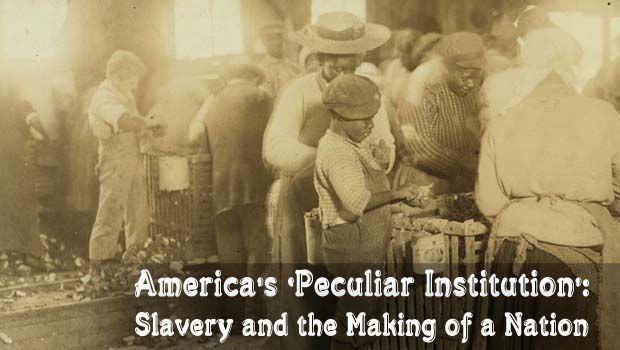
    The dehumanizing, exploitation, and brutality against Black slaves in the United States represented one of the longest, most sustained assaults on human life and dignity in history. Slaves were characterized as sub-human, savages to be trapped like animals and brought to America to serve, without compensation, the interests of White supremacy. Black slaves built the White House and U.S. Congress, as well as many university buildings in the Northeast and South. In his monumental book, “Race, Slavery, and the Troubled History of America’s Universities,” Craig Steven Wilder writes, “American colleges were not innocent or passive beneficiaries of conquest and colonial slavery…The academy never stood apart from American slavery, in fact, it stood beside the church and state as the third pillar of a civilization built on bondage.” White supremacy and racism, and its despicable outgrowth, chattel slavery, fueled the economic engine of this nation’s past. In countless ways, the discrimination, brutality, and denial of rights continue into the present.

    Those who participated in and profited from slavery euphemistically referred to it as “Our Peculiar Institution.” Better to call a spade a spade and realize that slavery was America’s “vile institution.” The racism at its core monopolized and kept power in White hands. It supported and vitalized wealth building for Whites only, and created a seemingly permanent underclass of African Americans whose ancestors toiled and suffered so that prosperity and power and privilege for the dominant class could be built upon their backs.

  • Interview: From MSA to ICNA and ISNA

    Interview: From MSA to ICNA and ISNA

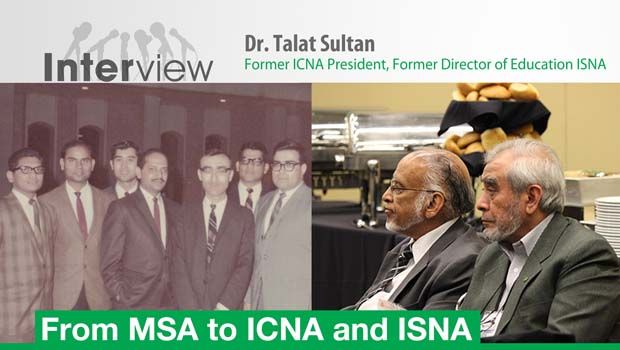
    Dr. Talat Sultan, originally from Pakistan, immigrated to the U.S. in 1962. He earned his Master’s in Islamic history and culture from the University of Karachi and then a Doctorate of Education from UCLA. He has served as the principal of a number of Islamic fulltime schools in Memphis, Chicago, Phoenix, and Alexandria, Virginia. Dr. Sultan taught and served as the chair of the Division of Education and Psychology at Barber-Scotia College in North Carolina for 14 years, and as a professor of research in Islamic education at Umm Al-Qura University, in Makkah, Saudi Arabia. His further contributions include serving as the Director of Education for ISNA, the first President of ICNA from 1968 to 1975 and then again 2003-05, and president of AMSS (Association of Muslim Social Scientists).

    Question: What did the early Muslim immigrants to the U.S. find with regard to Islamic groups and organizations?

    In the 1950s, many Muslim youth started coming to the U.S. for higher education. When they arrived, they did not find very many organized Islamic groups here. The largest national organization of Muslims –Nation of Islam — was not an authentic Islamic organization. It was led by a self-proclaimed prophet, Elijah Muhammad, who had mixed some Islamic tenets with his own distorted beliefs. The only other national organization was the Federation of Islamic Associations (FIA). It was a loose association of a few Islamic centers that held an annual convention to provide an opportunity for Muslims, especially Muslim youth, to socialize. Many Islamic norms were violated in that process.

    Question: How did the organizational work begin that led to the formation of MSA, and how did it progress over those early years?

    Muslim students started to form Islamic organizations on their campuses. Some efforts were made in 1950s to forge a union of all campus organizations on the national level, but financial considerations became the main obstacle. The second such known effort took place on January 1, 1963 when it was resolved that we would work hard for the sake of Allah SWT to overcome all difficulties and within a period of three months, we established a network of communication with 200 universities and colleges. Dr. Ahmad Sakr, who recently passed away, may Allah SWT have mercy on him, was a graduate student in Food Technology at the University of Illinois, Champaign – Urbana, and he hosted the first convention of the Muslim Student Association of U.S. and Canada in April, 1963. Five universities were represented, with 15 individuals in attendance. That convention heralded the coming of ISNA, the national organization that was officially founded in 1982.

    MSA’s motto, “And hold firmly to the rope of Allah all together, and do not become divided…” (Quran 3:103), clearly reflects the very purpose of the organization, given that there was at that time no authentically Islamic national organization to unify Muslims. This was, indeed, the need of the hour and soon MSA became not only an association of chapters on almost all major campuses in the U.S. and Canada, but also an organization representing various Islamic centers. The MSA annual conventions soon became a gathering of people from around the world.

    Question: What was the focus of MSA in the early years?

    A number of projects were developed that focused on providing support and guidance to Muslims, including the establishing of congregational prayer on campuses, development of a network of Islamic centers, providing assistance in funeral services and burials, and other services. One initiative was North American Islamic Trust (NAIT), the financial arm of the MSA, focused on the financial and investment needs of Muslim individuals, organizations, and businesses. It set up a special fund to accept deposits from Islamic centers, then making interest-free investments and providing them with halal, profit-and-loss-sharing returns. NAIT also offered legal and arbitration services. Initially established in the early 1970s with Dr. Jamal Barzingi (M) as its first general manager, NAIT continues today to provide capital growth and investment services. Some of its other general managers have included Dr. Abu Saud (M), Br. Mohammad Badr, Dr. Yaqub Mirza, and Br. Mohammad Naziruddin Ali (M).

    MSA also focused on dawah among Muslims, including arranging weekly meetings, regional conferences, and annual conventions. Their tarbiyah, or educational initiatives, focused mostly on organizing youth camps and an annual imam training program. MSA published a regular MSA Newsletter and later, since the 1970s, the ISNA magazine, Islamic Horizons, first on a monthly and now on a bi-monthly basis. In the ‘70s and ‘80s, an important scholarly journal, Al-Ittihad, was published annually. NAIT also established American Trust Publications (ATP), a publishing division, in 1976, which has published original books on Islam, as well as translating a number of important works into English.

    There were another two marvelous divisions. One was the Audio-Visual Center which over the years produced cassette tapes of Quranic recitation for distribution around the world, as well as tapes of the proceedings of conferences and conventions held by MSA and then ISNA. The other important division was the Islamic Book Service (IBS) which distributed books and tapes in the U.S. and overseas. For a while, under the direction of another dedicated MSA leader, Br. Abdul Mateen Chida (M), a printing division, International Graphics, was also established, but it was later sold to a private Islamic enterprise.

    Question: Did MSA develop educational projects and what, if any, initiatives were put forward to establish Islamic schools?

    When MSA’s permanent headquarters was established in 1974 at Indianapolis, an education committee was established. As chairman of the committee, my first responsibility was to conduct teacher training workshops. In 1982, we decided to establish two model fulltime Islamic schools. The first school was established in Toronto under the leadership of Br. Abdullah Idris Ali who served as its first principal. This effort became a stepping stone for the establishment of many excellent schools nationwide.

    MSA also established a program to assist Islamic centers in their development of weekend Islamic schools. They published the “Manual for Weekend Islamic Schools” and it was widely distributed. The book, “A Guide for Muslim Parents & Teachers for Educating Muslim Children and Youth” was published in 1979 by Dr. Anis Ahmed, the second director of education. When I succeeded him, it was recognized that the need was not restricted to weekend schools as there were quite a few fulltime Islamic schools looking for similar guidance. So I started my work on “Curriculum Guide for Islamic Studies” that was published by Umm Al-Qura University in 1992, and distributed by ISNA to all fulltime and weekend Islamic schools. Another important educational activity was the annual meeting of fulltime Islamic school (FTIS) administrators. A comprehensive study of these schools was also conducted. These meetings were the predecessor of two ISNA educational activities that continue to this day: the Annual Education Forum and CISNA (Council for Islamic Schools of North America). The Council works to help FTIS to acquire accreditation.

    Question: How was MSA, and then ISNA, involved in dawah work?

    One of the most important challenges MSA recognized from its inception was to bring the so-called Nation of Islam within the purview of authentic, mainstream Islam. Regular contact was established with the NOI leaders including Warith Deen Muhammad (M), the son of Elijah Muhammad, who succeeded him as the imam and leader of the group. MSA organized an Imam Training Camp for the Bilalians (the first alternative name to NOI). A stalwart of Islamic work in North America, Imam Siraj Wahaj, emerged from that process to influence and support NOI to move onto the path of mainstream Islam.

    In order to further enhance dawah among new Muslims and non-Muslims, the Islamic Teaching Center (ITC) was established by the dynamic and enthusiastic efforts of Dr. Altijani Abu-Guderi (M), a former president of MSA and the first director of education. He became the first director-general of ITC. I was a member of the ITC Board of Trustees from the start. I later served as its acting director-general for a year.

    Beside imam training and scholarship programs, ITC’s major thrust was its dawah project for those who were incarcerated. Br. John Sullivan was our devoted director of correctional facilities and carried out a correspondence course for the new Muslim inmates. He and his team visited the correctional facilities regularly. It was around the same time that Muslim chaplains began being hired by the prisons as well as by the military, in no small way through the efforts of Br. John and his dedicated team.

    Question: Were there other programs or initiatives that were part of the MSA/ISNA agenda?

    One of the responsibilities of the director of education was to hold the Youth Committee meetings. I prepared a proposal for the organization of Muslim Youth of North America (MYNA), and it was approved by the Executive Council in 1983. It is still an active constituent of ISNA and its president sits on the Majlis Shura.

    Another major MSA project was the initiation of three professional organizations. The first was the Islamic Medical Association, which is now IMANA, established in late 1960s. The Association of Muslim Scientists & Engineers (AMSE) was founded in the early 1970s. The third organization is the Association of Muslim Social Scientists (AMSS). It was founded in 1972, an inspiration of the great scholar and professor, Ismail Faruqi (shaheed), who was its first president.

    Question: Can you describe the transition from MSA to ISNA?

    MSA was a student organization, but those of us who graduated from our respective universities and colleges continued to carry our MSA membership. By 1977, almost 70 percent of the membership was non-student. The same year, about fifteen years since MSA’s establishment, it was felt that there was a need to hold a meeting of all core members. Roughly 70 brothers and sisters assembled at the newly acquired headquarters in Plainfield, IN during the December holidays. They appointed an Future Vision Committee to review organizational progress. I served as a member of that committee.

    The committee recommended that an umbrella organization, with the name Islamic Society of North America, be formed. All other organizations would become constituent parts of ISNA. The Council of Presidents (AMSS, AMSE, IMA, and MSA) approved the proposal and appointed a Steering Committee to work on the constitution of ISNA and outline a schedule of implementation. I was Chairman of the Council of Presidents, and after much hard work by the committee, I presented the resolution to establish ISNA and it was unanimously adopted during the 19th MSA convention. That was the last MSA convention, in May of 1981. After the constitution was approved by the membership, Br. Ilyas Ba-Unus was elected as its first president.

    The primary focus of work under ISNA was the same as that of MSA. And in the same spirit as MSA’s mission, ISNA’s new motto was “Indeed, this community of yours is a single community and I am your Lord, so obey Me” (Quran 23:52). Muslim unity was the foremost concern, with education as the second highest priority on our agenda.

    Question: Can you please describe how ICNA was established?

    In the years leading up to the establishment of ISNA, many of us recognized the need for a grassroots dawah movement to invite non-Muslims to Islam and to educate Muslims about Islam as a way of life and daily dedication to Allah SWT. Those involved in this dawah work would need to be committed to developing their Islamic character, striving only for the sake of Allah SWT, and to utilizing all legal and peaceful means to accomplish this work. In September, 1968, the Halqa-e-Ahbab (Circle of Friends) was established. I was chosen as its first president. On January 1, 1970, during a special meeting in Northville, Michigan, the first constitution was adopted. The name was changed to Halqa Ahbab-e-Islami (Islamic Circle of Friends). Formal membership was introduced. I was re-elected as the president and, in 1974 at Columbia University, the first public event was held with Maulana Sayyid Abul Ala Mawdudi who was on a personal visit to the U.S. The regional meetings of Islamic Circle of Friends were held during the regional conferences of MSA. The first separate regional conference was organized by the Eastern Region that included our largest unit, New York, held in Sanford, Connecticut in 1974. By 1977, the work was expanded to 16 cities. The first national convention was held in 1976 in Chicago.

    I served seven years as president and then Dr. Anis Ahmed was elected in 1975. But in 1977, I was again made acting President as Br. Anis had to complete his dissertation. During that time, I drafted the proposed new constitution and after a great deal of discussion, the draft was approved by the Shura. A special meeting of all the members was held on Thanksgiving weekend in November, 1977 at the Islamic Center in Jersey City. About 70 members attended. The debate continued for three days and nights! Finally the constitution of the Islamic Circle of North America (ICNA) was adopted. ICNA now has chapters across the U.S. and focuses its work on education, outreach to the greater American community and interfaith cooperation, and social services.

    Over the years, ICNA has launched many initiatives that have grown to national prominence, like ICNA Relief, Helping Hand for Relief and Development, 877-Why-Islam and GainPeace dawah projects, Muslim Alert Network, Sound Vision, Muslim Savings Investment, Muslim Children of North America, ICNA Sisters Wing, Young Muslims, The Message magazine, Council for Social Justice, Islamic Learning Foundation, Muslim Family Day, Muslim Family Services, among many others.

    I have been blessed by Allah SWT to have been part of this movement and have the opportunity to continue on this path, fulfilling my dream of doing Islamic work and dawah in America. Alhamdulillah.

  • Obituary: Dr. Ahmad Sakr

    Obituary: Dr. Ahmad Sakr

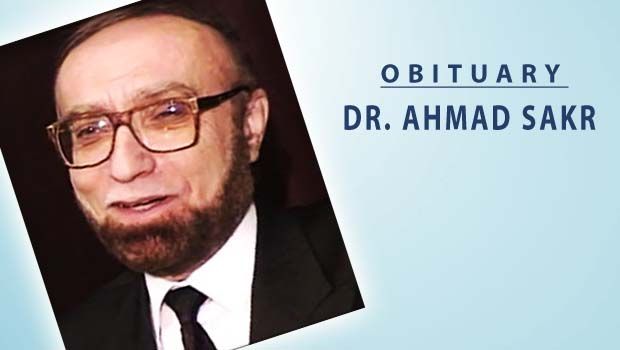
    Born in Beirut, Lebanon, Dr. Sakr got his Ph.D. from the University of Illinois. He was a founding member and president of the Muslim Students’ Association (MSA) as well as a founding member of the World Council of Mosques, Makkah. He was the first director and representative of the Muslim World League to the U.N.

    Dr. Ahmad Sakr passed away on November 23, 2015. May Allah SWT have mercy on him and admit Him to Paradise. The path Dr. Sakr followed was one that faithfully emulated our Prophet, may the peace and blessings of Allah be upon him. His dedication will always stand out in the beautiful memories we have of him, and will always remind us of the strengths and blessings of faith. He played an inspirational role in the founding of many Islamic institutions and centers, including the first Islamic college in the United States, the American Islamic College of Chicago. He was a founding member and president of the Muslim Students’ Association (MSA), and a founding member of the World Council of Mosques in Makkah. Dr. Sakr was a staunch supporter of ICNA, active in interfaith activities, published more than fifty books, and was a board member of the Islamic Food and Nutrition Council of America.

    Dr. Sakr was a selfless community leader and tireless Islamic worker. He was regularly invited to fundraise for various community projects and he did so without compensation. He happily accepted his role in serving communities around the country and beyond. He also offered his guidance and wisdom to individuals facing personal problems, be they Muslim or non-Muslim, and he was always tried to make himself available to those in need.

    One of the early Muslims hoping to build a strong community in America, Dr. Sakr collaborated with brothers and sisters from nations around the world who had settled in the U.S., helping to clear the path for the future Muslim generations in America. They prepared the foundation for the vibrant and active American Muslim spirit that we see around us today. They learned to adapt to a new culture, assimilating into the American fabric of life while holding strong to the teachings of Quran and Sunnah. Dr. Sakr’s confidence in meeting the challenges he and his contemporaries encountered set the bar high so that today’s generation can move forward armed with trust in Allah SWT, guided by His light and empowered through the knowledge of His deen. He was a father, an uncle, a teacher, and a counselor. He inspired in us the ability to channel the strength of Omar, the gentleness of Abu Bakr, the shyness of Othman, and the knowledge of Ali, may Allah bless them all.

    Dr. Sakr once shared with me an issue that bothered him. He said, “Why do the obstructionists do what they do, despite having knowledge and understanding that what we are trying to do to build Islam [in America] is a good thing? They make us fail in endeavors again and again.” I pondered this question for many years since then, and I finally realized the obstructionists’ aim was to disrupt our unity. I would say to Dr. Sakr, my teacher, if he were still with us, a phrase uttered by the Emperor of Rome, Marcus Aurelius: “What we do today echoes in eternity.” Thus, we must persevere to make today better.

    I would also say to him, “My teacher, you have departed from us as we face challenges today that are unprecedented. We have met the challenge of absolving our faith from the deception enacted by people from our own creed. We must now carry the torch of faith and pass it on, uncorrupted, to the next generation. Then, insha’Allah, we will deliver the new generation to a safe ground so they can grow into faith with the clarity that the Prophet, may the peace and blessings of Allah be upon him, left us with.

    “I say to you my teacher, we will, God willing, be the men and women who stand firm, carrying this generation on our shoulders and uplifting the spirit of the dejected. Allah only allows us to succeed when we care for the weak and empower the destitute. May Allah SWT allow us to meet on the Day of Judgment in the circle of the beloved Prophet and his companions. Ameen.”

  • Some Notable and Renowned American Muslims

    Some Notable and Renowned American Muslims

    [button size=medium style=less_round color=gray align=none url=http://hipcast.com/podcast/HDYwjjSs]Click here to listen audio podcast of this article[/button]

    Malcolm X

    Malcolm Little, born in 1925, became a drug addict and petty criminal. He converted to Islam while in prison, named himself Malcolm X, and began a quest for knowledge that continued throughout his life. Affiliated with the Nation of Islam, he became disillusioned with its teaching of black supremacy and after traveling in Africa and the Middle East, and making Hajj in 1964, he embraced the teachings of orthodox Islam and took the name Al-Hajj Malik Al-Shabazz. In 1965 he was assassinated. “The Autobiography of Malcolm X” is considered one of the most important nonfiction works of the 20th century.

    Muhammad Ali

    Muhammad Ali, born Cassius Marcellus Clay, Jr. in 1942 in Kentucky, is a former professional boxer, generally considered one of the greatest heavyweights in the history of the sport. Arguably the most recognized and loved sports figure of the past 100 years, he was crowned “Sportsman of the Century” by Sports Illustrated and “Sports Personality of the Century” by the BBC. Ali is also known for his dedication to his faith, his principled stance against the Vietnam War, his humanitarian work, and his fundraising for research on Parkinson’s disease.

    Hakeem Olajuwon

    Olajuwon, a 12-time NBA All-Star, led the Houston Rockets to two NBA championships. After he retired in 2002, his #34 jersey was retired by the Rockets, and a monument honoring him is outside the Rockets’ arena. He was inducted into the Basketball Hall of Fame in 2008.

    Keith Ellison and Andre Carson

    In 2006, Keith Ellison was the first American Muslim elected to the U.S. House of Representatives. He is now in his fourth term representing a Minnesota district. In 2008, another Muslim, André Carson, won a congressional seat for Indiana.

    Fazlur Rahman Khan

    Acclaimed as an engineer and architect, Khan designed systems for high-rise building construction. Two of his most notable achievements are Chicago’s John Hancock Center and the Sears Tower.

    Fareed Zakaria

    CNN talk show host and editor-at-large for TIME magazine

    Dr. Mehmet Oz

    Surgeon and TV host

    Shahid Khan

    Owner of an NFL team, the Jacksonville Jaguars

    Jawed Karim

    Co-founder of YouTube

  • Muslims Have Been Here for Centuries

    Muslims Have Been Here for Centuries

    Islamic presence in the Americas since the 1400s is well documented
    1178 – Muslims Sail to America

    A Chinese source known as the Sung Document records Muslim sailors journeying to a land known as Mu-Lan-Pi, which some researchers identify as the American continent.

    1300s – African Muslims Explore the New World

    According to some scholars, Abu Bakari, a king of the Muslim state of Mali in West Africa, initiated a series of sea voyages to North America beginning in the early 1300s. About the same time, Mandingo Muslims from Mali and other parts of West Africa are said to have arrived in the Gulf of Mexico and traveled up the Mississippi River to explore the interior of the North American continent.

    1527 – Spanish Explorers and Spanish Refugees

    Estevanico of Azamor, a Moroccan Muslim, arrived in Florida with the expedition of Panfilo de Narvaez in 1527. He stayed in America and joined expeditions across the continent to Arizona and New Mexico. By the late 1700s, historical records indicate the presence of Spanish “Moors” living in South Carolina, many of whom were expelled from their homeland by edict of the Spanish Crown.

    1530 – African Slaves Begin to Arrive in the Americas

    During three centuries of the slave trade, over 10 million Africans were enslaved and brought to the Americas. Scholars estimate that 10-30 percent of these slaves were Muslim, although practicing Islam had to be done in secret, and many slaves were forced to convert to Christianity.

    1807 – Freed Muslim Slave Puts Down Roots in America

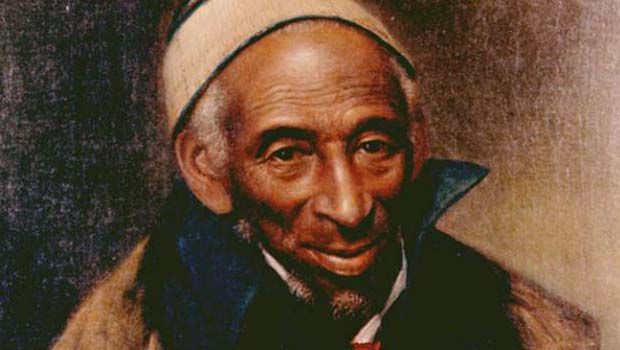
    Yarrow Mamout is an example of Muslim ex-slaves putting down roots in the U.S. Enslaved at 16 and brought to Maryland from Guinea in 1752, Mamout was set free in 1801 and became an early shareholder in Columbia bank, the second chartered bank in the country. Today, portraits of Mamout hang in the Historical society of Pennsylvania and the Georgetown Public Library in Washington.

  • Early American Mosques

    Early American Mosques

    Many early Muslim communities were comprised of a few individuals and/or families. They met in private homes for prayers, and rented out halls for the Muslim holidays.

    1900 – First Documented Communal Muslim Prayers

    Muslims of Arab descent in Ross, North Dakota gathered in homes for the first documented communal prayers held by American Muslims.

    1915 – Mosque Built in Biddeford, Maine

    Albanian Muslims built a mosque in Biddeford, Maine and established an Islamic association. In 1919, they established another mosque in Waterbury, Connecticut. These were among the first Islamic associations in America.

    1929 – Mosque Built in Rural North Dakota

    The small Ross community built the mosque, but in time it fell into disrepair as some Muslims relocated and others passed away. It was rebuilt in 2005 in memory of one of the town’s few remaining Muslims.

    1934 – The Mother Mosque of America

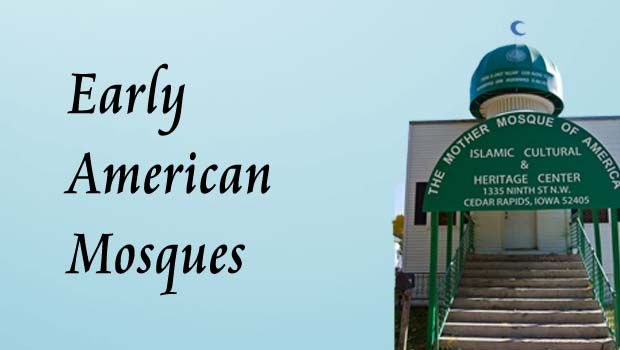
    Lebanese Muslims in Cedar Rapids, IA built this mosque in 1934; it is the longest continually standing Muslim house of worship still in use today.

  • Timeline of Major Milestones in American Muslim Politics

    Timeline of Major Milestones in American Muslim Politics

    Click here for the timeline of major milestones related with Islam and Muslims in American Politics

    [button size=medium style=less_round color=gray align=none url=http://hipcast.com/podcast/HXx5rrWs]Click here to listen audio podcast of this article[/button]


  • Do You Know America’s First Muslims?

    Do You Know America’s First Muslims?

    [button size=medium style=less_round color=gray align=none url=http://hipcast.com/podcast/HW2v7KKs]Click here to listen audio podcast of this article[/button]


    Estevanico (Stephen the Moor)

    Estevanico, also known as Stephen the Moor, was born in Morocco around 1503 and raised as a Muslim. He was sold into slavery and in 1527 his owner, Andres de Dorantes, took him on an expedition to Florida, along with six hundred colonists and soldiers. During his time with Dorantes, Estevanico converted to Christianity. After encountering hostile Native Americans, the surviving contingent of colonists and soldiers escaped by barge, sailing toward Mexico, but ended up in Texas. After being enslaved by Indians, only four men survived — Estevanico, Dorantes, Cabeza de Vaca, and Alonso Castillo. These four traveled for eight years across northern New Spain (present-day U.S. Southwest and northern Mexico), reaching Spanish forces in Mexico City in 1536. He is said to have been the first African man in North America.

    Omar ibn Sayyid

    Omar ibn Sayyid was born around 1770 in what is present-day Senegal. He was an educated Muslim man who was kidnapped from his home at age 37, transported to South Carolina and sold into slavery, remaining enslaved until he died, in 1864. He converted to Christianity while a slave, but wrote heartfelt reminiscences of his early days as a Muslim and some scholars maintain that he stayed true to Islam throughout his life. He wrote 14 manuscripts, all in Arabic, including his autobiography which begins with verses from the Quran.

    Adbul Rahman Ibrahima Sori

    A man who spent 40 years as a slave in Natchez, Mississippi, Abdul Rahman Ibrahima Sori, was born in 1762, a prince from the Kingdom of Futa Jallon, a territory in present-day Republic of Guinea. He was sold into slavery in 1788, at the age of 26. Upon being freed in 1829, he and his wife set sail for Timbuktu, his birthplace, but they made it only as far as the American colony in Monrovia, Liberia on the west coast of Africa. He died soon after arriving, while his nine children remained enslaved in America. His remarkable story is told in a 2008 film, “Prince Among Slaves” which includes the reunion of Abdul-Rahman’s descendants, from both Liberia and the U.S., in 2003.

    Abu Bakr Al-Siddiq

    From a family of learned and prosperous Muslims in Mandingo (now Ghana), Abu Bakr Al-Siddiq was taken as a prisoner of war at the age of 15, sold into slavery and sent to Jamaica in 1807 to work on a plantation. He was forced to change his name and convert to Christianity, but he always thought of himself as Abu Bakr, maintained his faith as a Muslim, and years later wrote a short autobiography in Arabic. Abu Bakr compiled detailed lists of trade routes in Western Africa, and some of his works were later translated into English.

    Salih Bilali

    Most of his life was spent as a slave on St. Simon’s Island, Georgia, a long way from where Salih Bilali was born, in Massina (present-day Mali) in the 1770s. Then he was kidnapped and sold into slavery around 12 years old, ending up in the Bahamas where he worked as a slave until he was purchased by the Couper family of Georgia. Bilali was characterized by his owner’s son as the most religious man he had ever known, stating that Bilali’s last words before his death were “Allah is God and Mohammed his prophet.” (The above image is an artist’s rendering of a native of Hausa, said to resemble Salih Bilai. Image from African Muslims in Antebellum America.)

    Bilali Mohamed

    Bilali Mohamed was born in Timbo, Guinea around 1770. His family was Muslim and highly educated. He was enslaved as a teenager and taken to the Caribbean where he worked for 10 years, and then sold to a planter on Solepo Island, Georgia. Among the slaves, Bilali was seen as a leader and a teacher and some of his writings are preserved in the Georgia State Library in Atlanta. Upon his death in 1857, a 13-page Arabic manuscript was found and it has come to be called the Bilali Mohamed Document. It is a statement of Islamic beliefs. Bilali is also known for motivating his fellow slaves during the War of 1812 as they defended the island from the British. (Image of Bilali Mohamed descendant, Shad Hall of Sapelo. Photo circa 1930s, from African Muslims in Antebellum America.)

    Ayuba bin Sulaiman

    Ayuba bin Sulaiman, known in Europe and the U.S. as Job Ben Solomon, was born in 1701 of a religious Muslim family, was well-educated, and became a merchant. He was captured and sold into slavery in 1731 and sent to Annapolis, Maryland where he spent two years on a tobacco plantation. He was briefly imprisoned after attempting to escape from the plantation. He was later purchased by a British man and granted his freedom, and in 1734 he sailed back to Africa where he stayed until he died, in his seventies. He was known for his intelligence and conveyed a great pride in his African and Muslim identity.

    Mahommah Gardo Baquaqua

    Born around 1830 in Djougou (now Benin in West Africa), Mahommah Gardo Baquaqua was from a Muslim family of merchants. He was captured and shipped to Brazil as a slave in 1845. After two years, his owner, a ship captain, took him on a voyage to New York where abolitionists secured Baquaqua’s freedom. He made his way to Haiti and worked there for a time, converting to Christianity. He returned to New York in 1849, enrolled in college, but in 1853 he moved to Canada and collaborated with a local writer to produce his biography.

    Mahammed Ali ben Said (Nicholas Said)

    Mahammed Ali ben Said, later named Nicholas Said, was born in 1836 in northern Africa. When Said was around 15 years old, he was enslaved and transported across the desert, subsequently being owned by masters of various nationalities including Arab, Turk, and Russian. He was eventually hired as a valet to a European man and traveled with him to America. Said became a teacher in 1862 in Michigan and fought in the Civil War as part of the 55th Regiment of Massachusetts Colored Volunteers. His autobiography was published in the Atlantic Monthly in 1867 in which several references to Allah are found. He died in 1882.

  • American Muslim Demographics

    American Muslim Demographics

    [button size=medium style=less_round color=gray align=none url=http://hipcast.com/podcast/HNTT6h7s]Click here to listen to this article in audio[/button]

    63%

    Almost two-thirds of American Muslim adults are first-generation immigrants from at least 77 different countries

    37%

    More than a third of Muslim American adults were born in the United States

    81%

    The vast majority surveyed, more than three-quarters, report that they are U.S. Citizens

    59%

    More than half of adult Muslims are between the ages of 18 and 39, compared with 40% of adults in the general public

    Source: Pew Research Survey 2011