بسم الله الرحمن الرحيم

Tag: moslem

  • Seeking His Shade: Growing up in the Worship of God

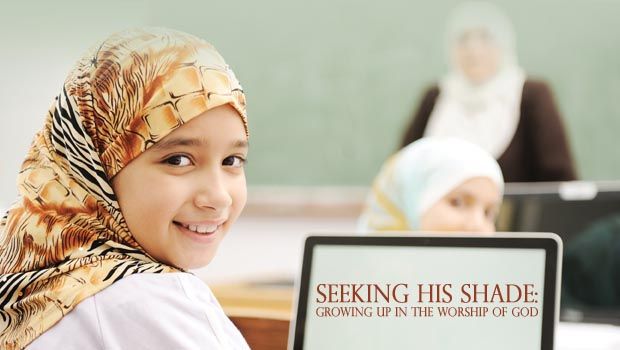
    Seeking His Shade: Growing up in the Worship of God

    Have you ever heard the saying — Youth is wasted on the young? Those of us who can still lay claim to being young often have no real sense of the value of our youth. We’re strong in body, passionate in emotion, and have ample free time that makes older folks envious. There are young people who use their youthful years wisely, and others who fritter it away as though it holds no worth, thinking, “I’ll change sooner or later but I’ve got time to do whatever I want now.”

    Youth is a time of exploration. Older youth don’t yet have the family, financial, and civic responsibilities of an adult; but they have time, energy, health, and exuberant curiosity to explore, develop skills, and grow in knowledge

    Prophet Muhammad (pbuh) said, “Take benefit of five before five: your youth before your old age, your health before your sickness, your wealth before your poverty, your free time before you are preoccupied, and your life before your death.” Youth is mentioned as one of the categories here because it involves the part of your life where you are at your peak health. It’s the time when you’re in a position to lay a foundation for the rest of your life, to institute habits of discipline, to practice virtues, to learn how to think and reason and use common sense. This is the time when you’re able to begin an exciting journey of discovery, of contribution and service, of beneficial impact on your community and the world.

    In the era of the Prophet (pbuh), youth was not seen as a barrier to accomplishing things. There were military leaders who were teenagers. There were Quranic scribes who, in our times, would be considered too young to take on such an important task. There were scholars who were raised in the presence of the Prophet, listening to his words and absorbing his wisdom at tender ages. For these individuals, their youth was an asset, never a limitation. We’re often (mistakenly) taught that as young people we do not have the skills, patience, or dedication to contribute in a substantive way to our communities and to the larger ummah. But as we’ve mentioned, throughout Islamic history many young people achieved great things.

    The very act of having good people in your life can make or break your status with God. Your peers affect you in ways that you may not comprehend at first glance.

    Prophet Muhammad (pbuh) said, “There are seven whom Allah will shade in His Shade on the Day when there is no shade except His Shade.” Among the seven he mentioned is a young person who grows up in the worship of Allah. How can we ensure that Allah (SWT) grants us this status on the Day of Judgment? And how can we capitalize on our time to make sure we’ve fulfilled our greatest potential during the dynamic and bountiful years of our youth?

    Surround Yourself with Good Friends

    I couldn’t be more grateful to my parents who strove to put me in the presence of intelligent and well-mannered people, including my peers. They always knew where I was and with whom. They knew my friends’ parents, and the kinds of people they were. I’ll openly admit that as a child, this was often irritating to me. I didn’t want to have to answer a million questions about who my friends were or where we were going and for how long. I wanted my “freedom.” Now, as an adult and as a parent, I have come to sincerely appreciate the effort that my parents exerted so that I would be in the company of good, trusted people. The very act of having good people in your life can make or break your status with God. Your peers affect you in ways that you may not comprehend at first glance.

    For example, in Surat al-Kahf, Allah (SWT) mentions the story of a group of young men who escaped their town and secluded themselves in a cave because they were the only ones who believed in one God. Allah (SWT) caused them to sleep for 309 years. As part of the story, Allah (SWT) describes the group, saying: “They will say there were three, the fourth of them being their dog; and they will say there were five, the sixth of them being their dog – guessing at the unseen; and they will say there were seven, and the eighth of them was their dog. Say, [O Muhammad], ‘My Lord is most knowing of their number. None knows them except a few. So do not argue about them except with an obvious argument and do not inquire about them [among the speculators] from anyone’” (18:22). It may seem like the dog is mostly irrelevant in the story, but the fact that Allah (SWT) mentions him several times is no coincidence. Scholars of tafseer have explained that the reason the dog is mentioned so often is that it was in the company of these righteous young people. Being in the company of these believers was enough for the dog to be honored to the level of being mentioned three separate times in this Quranic verse. This is the blessing of righteous companionship!

    Not only do we need to surround ourselves with good people, we also need to ensure that we become the sellers of musk. Every person who sits with us should leave with something beautiful.

    Similarly, in a beautiful hadith Qudsi, Allah (SWT) explains that the angels search for groups of people who are remembering Allah, and they surround them with their wings. At the end of the hadith, Allah (SWT) says: “Bear witness that I have forgiven them.” Then one of the angels would ask, “Among those assembled, there is one who is not of them [i.e., a sinner]; he only came for some other need.” Allah would reply: “Even so, they are one another’s companions and their companions shall not suffer.” Just our presence with the people who remember Allah can be a means for us to be forgiven!

    Having righteous companionship can affect our status with Allah (SWT). Good people remind us of our blessings and remind us to be grateful for them. Good people can lift us up in times of distress so that we don’t get lost in our pain. Good people help our hearts stay open and receptive to Allah’s message and guidance. Prophet Muhammad (pbuh), said, “The likeness of a righteous friend and an evil friend is the likeness of a perfume seller and a blacksmith. As for the perfume seller, he may either bestow something on you or you may purchase something from him, or you may benefit from his sweet smell. And as for the blacksmith, he may either burn your clothes or you may be exposed to his awful smell.”

    Not only do we need to surround ourselves with good people, we also need to ensure that we become the sellers of musk. Every person who sits with us should leave with something beautiful.

    Read, Read, and Read Some More

    As a child, I would walk to the nearby library with my siblings and we would each take out at least ten books at a time. Once we got home, we would hole ourselves up in our rooms, devouring the books one by one. This was our entertainment before the advent of hand-held devices. Our mother would have to pry books out of our hands in order for us to eat or sleep at a decent time.

    Growing up this way made us into voracious readers. Although many of us have succumbed to the allure of hand-held devices, there is still no greater pleasure than holding a book and reading in silence. Reading opens the mind to frames of reference other than our own. It enriches our vocabularies so that we might become articulate speakers and writers. It lets us glimpse realities that we haven’t lived, and helps us develop understanding and empathy. “Read!” was the first word ever revealed to our beloved Prophet (pbuh). Years later, after a victorious battle in which the Muslims captured a number of their enemies, Prophet Muhammad advised that if any of them would teach ten children how to read and write, they would be freed. The ability to read and write was given such significant value that teaching it was considered enough of a ransom to warrant an enemy’s freedom. Allah (SWT) tells us in the first verses revealed: “Read! — in the Name of your Lord Who created, created man from a clinging substance. Read! — and your Lord is the Most Generous, Who taught by the pen, taught man that which he knew not” (96:1-5).

    In the Quran and the Prophetic traditions, there is great emphasis placed on reading, learning, and contemplating. Attaining to knowledge is given such a high status that even the Prophet himself would supplicate to Allah, saying “My Lord! Increase me in knowledge.” Reading is the gateway into the world of learning. It is the start of a life-long journey of reflection and exploration. The Quran advises, “Say, [O Muhammad], ‘Travel through the land and observe how He began creation. Then Allah will produce the final creation. Indeed, Allah is able to do all things’” (29:20).

    Reading isn’t just an intellectual exercise. It’s about expanding your mind to a point where you start to recognize and appreciate all the signs that Allah (SWT) has placed on this earth. So for a portion of each day, put aside social media, gaming, and TV and read! Read and strive to understand the Quran; read about the amazing scholars, writers, and inventors who came before us. Read about history, politics, economics, psychology, physics, linguistics, alternative energy sources, health and fitness… the list is endless. And the capacity to expand our minds and deepen our understanding is relatively endless as well.

    Grow Your Passions and Be Active

    Once you reach the age of puberty, you are held accountable for all that you do, and that thought can be daunting. But you also have the opportunity to do good and therefore cement your status as a “youth who grew up in the worship of God.” Youth is a time of exploration. Older youth don’t yet have the family, financial, and civic responsibilities of an adult; but they have time, energy, health, and exuberant curiosity to explore, develop skills, and grow in knowledge.

    Take courses outside of school, develop interesting hobbies, volunteer with your school’s MSA or other groups, work on neighbourhood projects or political campaigns that you believe in. You can even start a small business on your own or with a group of other like-minded peers. The opportunities are quite literally endless. But above all, remember that you are doing all of these things so that Allah will accept you as a youth who took advantage of his or her years before old age. And most of all, remember that you are doing all of these things as part of your worship, as a demonstration that your words and deeds flow from your eman; and your eman, in turn, is constantly growing and informing your daily living with a believer’s sense of meaningfulness and purpose. Ensure that this intention is present, and He will bless all that you do.

    Remember that Your Surroundings Don’t Define You

    I know how difficult it is to grow up in a place where others often belittle your identity, or look at you with suspicion. Perhaps you may feel that you’re at a disadvantage because you live somewhere remote, unable to learn at the feet of scholars, or you live in an environment not conducive to Islamic beliefs. But I remind myself constantly of the examples of the righteous people who came before me – some of whom had to live and preach in much more difficult circumstances. Prophet Musa (pbuh) was raised in the household of one of the worst oppressors and transgressors in history — Pharaoh himself. His adoptive mother Aasiya (may Allah be pleased with her) was in the same boat, but she had it even worse – she was married to Pharoah. And yet both of them rose above these toxic influences surrounding them – Musa (pbuh) became a prophet and messenger whose brilliant example is immortalized in the Quran. Aasiya became a martyr whose strength inspires us to this day, and whose dying words have become part and parcel of our beliefs: “My Lord, build for me near You a home in Paradise.”

    The opposite is also true. You can grow up in the best and most loving, supportive environments for a believer and still go astray. Take for example Prophet Nuh’s (pbuh) son. Regardless of the fact that his father was a prophet, Nuh’s son vehemently disbelieved in the truth. Even as the waves of the flood were getting higher and more violent, he refused to board his father’s ark and eventually perished. You are not defined solely by your surroundings. You are defined only by your own worship of God and your dedication to goodness in all facets of your life. Despite your flaws and sins (we all have them) – you’re so much stronger than you think.

    I pray that I and each person reading this meet under the Shade of Allah (SWT) because we used our youthful years to worship Him (SWT). Ameen.
     

  • A Day Trip to the Kaaba: The Ultimate Privilege and an Absolute Blessing

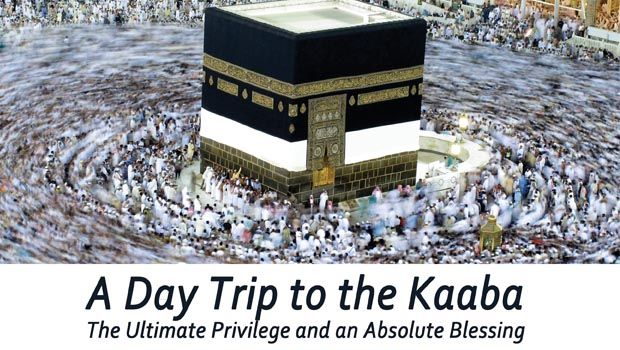
    A Day Trip to the Kaaba: The Ultimate Privilege and an Absolute Blessing

    At seven in the morning I would step out of my house into glorious sunshine and board the bus with my neighbours, who were also my colleagues, my friends, and my newly adopted family. In a state of Ihram and donned in two pieces of white cloth, the men would take the front of the bus. The women would be armed with their prayer beads and supplies of breakfast snacks as we yet again shared our overwhelming awe of being absorbed in the present moment: a day trip to the glorious Kaaba.

    We were a group of British and South African teachers living out an adventure in Jeddah, Saudi Arabia. The reasons to emigrate were many, but the common thread was our desire to be within close proximity to our spiritual home. The frustrations and stresses of working within a Saudi system paled in comparison to standing in front of the Kaaba, or in front of the beloved Prophet Muhammed’s (peace be upon him) grave and amongst thousands of worshippers who shared the same desire and passion to immerse themselves in contemplation of the oneness of God — escaping from the earthly world and into the ephemeral where the human heart can find complete rest and tranquillity.

    Words cannot convey the immensity of gratitude that ran through me each time I visited the two holy cities. Inevitably, large crowds of worshippers brought with them many challenges that had to be overcome; patience, respect, and understanding were all part of the process in ensuring that the full benefits of the Umrah trips were gained. However, during periods when international visas were closed, uninterrupted meditations were an absolute blessing. I would place my hands on the wall of the Kaaba fully absorbed in the moment. Deep in heartfelt prayers, I had the privileged opportunity to pray for all of humanity. From my late father who passed away prematurely from pancreatic cancer to the stranger who laboured endlessly to fund his child’s education, I asked Allah to grant them all peace in this world and the hereafter.

    Medina was a more relaxed experience compared to Mecca, and during the periods of closed visas, it offered an even more incredible opportunity to feel the love of the beloved prophet (pbuh). Through the blessings of Allah, I could sit close to the Prophet’s grave, taking my time in offering the two rakats of prayer and simply absorbing the immense strength of spirituality that seemed to have a unique and powerful vibe exclusively reserved for the city of Medina.

    My one year stay in Jeddah was an eclectic mix of experiences. Frustration, anger, and disappointment was balanced out with inspiring nature and beautiful friendships. But my greatest motivation was always my deep desire to be spiritually moved, to be fully absorbed into a world of prayer where only God exists. Mecca and Medina fulfilled this desire, and as I sit in my home in the UK watching the autumn change into winter, I cannot express enough gratitude for the blessings of having said time and time again, “Let’s go for a day trip to the Kaaba!”

    It is narrated on the authority of the amir al-muminin (leader of the believers), Abu Hafs Umar bin al-Khattab (may Allah be pleased with him), who said, “I heard the Messenger of Allah (peace be upon him), say, ‘Actions are according to intentions, and everyone will get what was intended. Whoever migrates with an intention for Allah and His messenger, the migration will be for the sake of Allah and his Messenger. And whoever migrates for worldly gain or to marry a woman, then his migration will be for the sake of whatever he migrated for’” (Bukhari and Muslim).

  • Al Servicio de la Comunidad Mexicana

    Al Servicio de la Comunidad Mexicana

    Hace solo cuatro años que el primer informe fue escrito acerca del Proyecto WhyIslam en México, pero mucho ha ocurrido desde entonces. La campaña mexicana comenzó con un deseo de repartir ropa islámica y literatura a una comunidad creciente en la Ciudad de México llamada Centro Al Hikmah. Siete organizaciones se unieron para contribuir a la causa, donando todo lo necesario. Durante su vacación, Nahela Morales, una conversa mexicana, distribuyó los artículos a la comunidad islámica en junio de 2012. El viaje tuvo tanto éxito que se convirtió en un esfuerzo anual.

    El interés aumentó cuando personalidades muy conocidas como Nouman Ali Khan, Omar Suleiman, y Boonaa Mohammed respaldaron los proyectos en México. En 2013, Nouman Ali Khan viajó al estado mexicano de Chiapas, al pueblo de San Cristobal de las Casas, como parte del segundo viaje de divulgación en México. Se conmovió tanto al ver las condiciones de vida tan pobres en las que viven las familias musulmanas indígenas, que decidió filmar un recorrido de un hogar típico, una estructura humilde hecha de paredes de madera cubiertas en plástico para que no entre la lluvia, un techo de chapa, y piso de tierra. El video fue lanzado en el canal de YouTube de WhyIslam y lo han visto más de 215.000 personas.

    La meta para ese año era comenzar planes para renovar la mezquita, Al Kauthar. A través del uso de medios de comunicación y campañas para recaudar fondos, Morales logró reunir más de $30.000 para el material islámico y alimentos a distribuir durante el mes de Ramadán, y el proyecto de renovación para la mezquita. Sin embargo, las metas futuras eran ofrecer apoyo continuo a las familias necesitadas en este sector y proporcionar renovaciones a sus casas. Esto provocó planes para establecer un capítulo de Mano Amiga para la Ayuda y el Desarrollo en México, o HHRD (Helping Hand for Relief and Development).

    En 2014 Boonaa Mohammed viajó con HHRD y un equipo de grabación a México para producir documentales que llaman la atención necesaria a esta causa.

    El Profeta Muhammad, la paz sea con él, una vez aconsejó a Aisha cuando ella deseaba ofrecer un regalo a un vecino; le dijo que debía dar “a aquel cuya puerta está más cerca a la tuya”. La idea de ayudar a nuestros hermanos y hermanas en México nace de este consejo, siendo que México es uno de solo dos países que comparte una frontera con los EE.UU. También es el país más grande de América Latina con la población musulmana más pequeña. Sin embargo, los musulmanes están creciendo en número y necesitan ayuda. Alhamdulillah, hemos sido bendecidos con la capacidad de ayudar a nuestros hermanos por lo que pedimos su continuo apoyo y oraciones.

    Esperamos que ustedes disfruten leer algunos relatos y artículos informativos de nuestros hermanos y hermanas de México y de habla hispana, y que también los recuerden en sus oraciones. YazakumAllahu khaiyran.


  • Serving the  Mexican Community

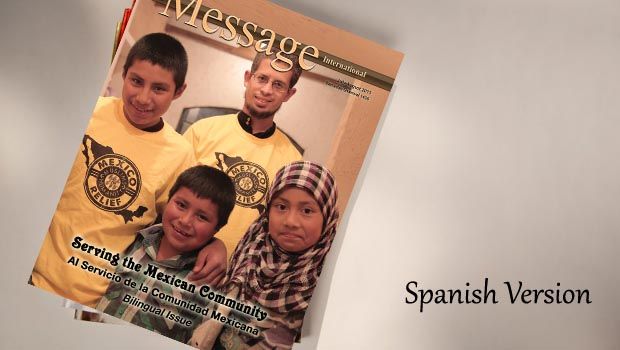
    Serving the Mexican Community

    It was only four years ago that the first story about WhyIslam in Mexico was written, but many exciting events have transpired since then. The Mexican campaign began with a desire to deliver Islamic attire and literature to a growing community in Mexico City, Al Hikmah Center. Seven organizations joined forces to contribute to the cause, donating everything from Islamic CDs to siwaks. During her vacation, Nahela Morales, a Mexican convert, distributed the items to the Islamic community in June of 2012. The trip was so successful that it became an annual effort and each year expanded to cover more than five cities within the country.

    Interest really took off when well-known lecturers and personalities such as Nouman Ali Khan, Omar Suleiman, and Boonaa Mohammed endorsed the projects in Mexico. In 2013, Nouman Ali Khan even traveled to the Mexican state of Chiapas, to the Islamic village in San Cristobal de las Casas, as part of the second annual dawah trip to Mexico. He was so moved by the poor living conditions of the indigenous Muslim families that he filmed a video tour of a typical home, a humble structure with walls made of planks and plastic covering to keep out the rain, a tin rooftop, and a dirt floor. The video was released on WhyIslam’s YouTube channel and has over 215,000 views.

    The goal for that year was to begin plans to renovate the town’s masjid Al Kauthar. Through the use of social media and fundraising campaigns, Morales was able to gather over $30,000 for Islamic material and food for distribution during Ramadan, and the masjid renovation project. However, future goals were to offer continuous support to needy families in this sector and to provide home renovations and reconstructions. This sparked plans to launch Mexico Relief Project by Helping Hand for Relief and Development.

    In 2014 Boonaa Mohammed traveled with HHRD and film crews to Mexico to produce documentaries that bring the necessary attention to this cause.

    The Prophet Muhammad, peace be upon him, once advised Aisha when she desired to offer a gift to a neighbor, that she should give, “to the one whose door is nearer to you.” The idea of helping our brothers and sisters in Mexico is one that stems from neighborliness, in the sense that Mexico is one of only two countries which share a border with the US. It is also the largest Latin American country with the smallest Muslim population; however, the Muslims are growing in number and need assistance. Alhamdulillah, we have been blessed with the ability to aid our brethren so we ask for your continued support and prayers.

    We hope that you will enjoy reading some stories and informative articles from our Mexican and Spanish-speaking brothers and sisters, and that you will also remember them in your prayers. JazakumAllahu khaiyran.

  • The Missing Peace

    The Missing Peace

    My path towards Islam has taken many twists and turns throughout Latin America and here in the USA, where I finally became a Muslim. My parents are from Chile. They were political refugees exiled to Mexico because they were Socialists. In the 70s, to be a Socialist in Latin America was synonymous with being a rebel. Having political views that were left-leaning was very dangerous at that time. In 1973, a military coup d’état in Chile resulted in years of brutal political repression. My father was imprisoned and tortured before being exiled. A few months later he met my mother, who was also a Chilean political refugee. In 1976, I was born in Mexico City. My parents, my sister and I lived as a relatively happy, typical Mexican middle class family except for one thing: my parents were agnostic. To not be Catholic in Mexico was almost unthinkable.

    In 1989, when democracy was reinstated in Chile, my parents decided to return. I was a 12-year-old boy. Chile is a small country, dominated by one of the most conservative churches in the world. Like in Mexico, I grew up surrounded by Catholic messages over the radio, on television, and in the streets. In my own innocent way, I always liked the idea of God, of one God, but that was not what people believed. How could a boy from an agnostic family firmly believe in God? In my house that topic was never a theme of conversation. “Religion is the opium of the masses,” my father used to say. Over the years, my desire for a spiritual connection continued to increase.

    As a teenager, I was exposed to Capoeira (a Brazilian dance/martial art form) during a family vacation to Brazil. In Chile, I began taking Capoeira classes which helped to fill the void of my lacking spirituality. In 2000, I was accepted to the school of business in Chile and I studied Capoeira every day. My life became busy, “too busy” for religion.

    In 2003, I met my wife, a beautiful American woman who was teaching English in Santiago, Chile. She came from a Catholic family and thus, I came closer to the religion. In 2005, I moved to the USA and in 2006 we married in a Catholic Church in Richmond, Virginia. In 2008, I opened my own studio to teach different styles of martial arts, fitness and dance. That same year my first daughter, Priya, was born and in 2010 I became a home owner. In a period of only five years I had achieved the “American dream”, things that some people do not achieve in their entire life. But something was still missing.

    2012 was one of the hardest times in my life. My arrogance led me to tear my patella tendon which took almost a full year to recover. That same year my second daughter, Mireya, was born. In 2013, I began my spiritual-religious search. I started investigating the Yoruba religion, Santeria, but I did not feel identified with it.

    In December of 2014, I spent Christmas with my family in Chile. After Christmas dinner I went to my room to sleep, but stayed awake just sitting on my bed. Memories of my adolescence and my youth came to me and I began to cry. I cried a lot. I can’t remember for how long, maybe for five or 10 minutes, but I remember putting my knees on the floor and my arms in a supplication position. And I stayed there, asking, really asking, for God to guide me and help me to come closer to Him. After that, I turned on the TV and it was showing a program about the life of Jesus. A lot of questions came to mind like, “Is he God”? Then I googled the word “Jesus” and somehow landed on a page discussing Jesus and Islam. Then I researched the words “Islam” and “Prophet Muhammad.” By the end, I didn’t sleep until 5 or 6 am.

    Around 11am, I woke up. My mother said I must have been tired because of how much I had slept. I told her then that I wanted to become a Muslim but she didn’t believe me. When I arrived in America again, I called a Muslim friend to see if he could take me to a mosque. There, I felt so much peace and harmony within myself. Then another friend, who is from Turkey, helped me to take my Shahada, the testimony of faith. I also met a Gambian brother, a student at my studio, who helped me visit different mosques and meet with some imams. By Ramadan time, I realized that I was surrounded by a nice community of brothers to help me in my journey.

    My wife has been a tremendous support to me. We have been married for 10 years now. I consider myself an impulsive person and I used to get angry with her for insignificant things. But now I try to remember this hadith: “The strong person is not the good wrestler. Rather, the strong person is the one who controls himself when he is angry.” (Sahih al-Bukhari, Book 73, #135)

  • The Qur’an Opened My Heart

    The Qur’an Opened My Heart

    My name is Margarita Aguirre and I am from the city of Guadalajara in Jalisco, Mexico. I was born in the midst of a practicing Catholic family. I remember that while I was in high school, I had my first encounter with Islam without realizing it. On our school’s bulletin board, they displayed a “poem” that caught my attention. I remember jotting it down in my favorite poetry journal because I loved it. At the end of the poem, it simply read: “The Qur’an.” I thought that it must have referred to a book of poetry, and so I did not think to look for any more information.

    Years passed and again I came face-to-face with the Qu’ran. In my profession as a teacher, and until now, I have always been passionate about everything that has to do with history. Consequently, it was while I was reading about history that I learned about all the many world religions, including Islam. One day, I planned a lesson dealing with world religions for my students. It was during that particular class that I again found the word, “Qur’an” in the history books. Then I realized that this book was not a book of poetry, but rather a book that Muslims read, similar to the Bible for Christians.

    It was a huge surprise for me, because I used to think that the Bible was God’s only book. I recall that at the end of my work day, I went home and searched for what I had written in my journal all those years ago during high school, and I found it. It was then that I wanted to know more about Islam. That was the most striking incident that occurred which sparked my search for information about Muslims and Islam. In fact I did not have a good concept about Islam but I wanted to explore and understand the religion myself, and I wanted to know why Muslims also had a holy book.

    During my investigation I found an internet page with information about Islam. I really enjoyed reading the articles, and that is how I began learning. The site manager explained a lot about the religion and answered all my questions, dispelling any doubts. I would double check whatever the brother said, just to be certain, until one day I decided to download a copy of the Qur’an.

    In the beginning, this Qur’an contained a biography of the Prophet Muhammad, peace be upon him, and it impressed me. I finally learned firsthand about the person who had established the Islamic teachings. When I began reading the verses of the Qur’an, my heart recognized that they were God’s words; that I was reading the very words of Allah.

    I felt so moved that I could no longer resist the truth that my heart had acknowledged. This beautiful religion that has changed my life is a fountain of wellbeing and joy for the heart. God, in His divine wisdom has left us with all the knowledge we need in the Holy Qur’an and in the Sunnah of our Prophet Muhammad, peace be upon him. More importantly is that it was in this religion that I finally understood God’s Oneness, and I learned how to love Him alone. I felt complete and I understood so many things. Islam perfected my soul and my feelings, and all my doubts were resolved, Alhamdulillah. And as Allah tells us in the Qur’an, “This is the Book about which there is no doubt, a guidance for those conscious of Allah,” (Qur’an, 2:2).

    My first Ramadan was about total surrender to God. I was very excited; it had only been two months since my conversion. I had declared my testimony of faith long distance with a Moroccan brother, because I did not know a single Muslim in Mexico. Later I searched for an Islamic community in my city, and to my surprise, I found other Muslims in Guadalajara. Until that time I had thought that I was the only one in Mexico! I was able to say the Shahada again with my Muslim sisters in the mosque. Alhamdulillah, it was a wonderful Ramadan for me, as I observed the fast, and not only did I leave food and drink during the prescribed times, but I also abstained from everything that was harmful to the soul, such as bad manners and evil actions.

    I give thanks to God for having guided me to Islam as my religion and way of life, for I have never been happier, alhamdulillah.


  • A New Translation of the Holy Qur’an in the Spanish Language

    A New Translation of the Holy Qur’an in the Spanish Language

    There was an interest in me that was awakened in translating the Holy Qur’an that was not so much devoted to imitating the style of the original in Arabic or in copying the literary style of the original, but rather in transmitting in the correct and most direct way all of the meanings, both profound and spiritual, as well as describing the whole approach of it all, that I had understood when reading and studying it in its original language. –Isa García.

    A Little History

    When I embraced Islam and accepted it as my way of life, I was thirsty for knowledge. I wanted to learn as much as possible about the primary source of knowledge, the divine revelation: the Holy Qur’an. I knew from the beginning that the Qur’an was revealed in Arabic, and that this text was the original; that it had been preserved and safeguarded intact for more than 14 centuries. But since I did not know Arabic, I had to refer to the various Spanish translations that were available.

    What I found disappointed me, because many times the text was confusing and incoherent. I understood that the reason for this was due to two factors. The first was that many of these translations were done by people who did not have the necessary knowledge about Islam, its message, and its history. Because of this, certain concepts were misinterpreted and erroneous. In some cases, there were premeditated attempts to discredit Islam and its holy book by altering the meanings.

    Furthermore, most of the translations are too literal, imitating the Arabic style not only in the expressions used but also in the word order. The result was that the normal grammar and syntax used in the Spanish language were not utilized, resulting in confusing translations. Add to this the fact that the language used is archaic and almost foreign, in a style that is seldom used in Latin America. Also, most of these translations do not have clarifying notes regarding historical and legal contexts.

    Later on, when I had the opportunity to study the Arabic language and I began accessing the meanings of the Holy Qur’an in its original language, I understood that I had lost much of the meanings and contexts through the translations I had read. It is a fact, however, that there are no translations that can approximate the beautiful narrative and the poetic rhetoric of the Qur’an, nor can any translation reproduce its eloquence or the multiple ways in which it can be recited. It is also true that the translations, some more than others, fail to convey to the reader the real essence of the Quranic message.

    This awoke in me an interest in translating the Holy Qur’an that was not so much devoted to imitating the style of the original in Arabic or in copying the literary style of the original, but rather in transmitting in the correct and most direct way all of the meanings, both profound and spiritual, as well as describing the whole approach of it all, that I had understood when reading and studying it in its original language.

    Alhamdulillah, I could finally embark on making a translation of the Holy Qur’an for the benefit of the Spanish-speaking world, but mostly for the benefit of Latin America. Along with a team of experts, I have tried to provide Muslims and non-Muslims with the message of Islam in the closest possible form to the original revelation in Arabic, but at the same time using language that is simple and plain, and also using explanatory notes for certain terms so that the content of the text is easy to understand.

    Current Trends

    While Islam still is not one of the major religions with a large number of followers in Latin America, it is growing rapidly throughout the continent. There are now mosques in all of the major cities in Latin America and conversion to Islam is also a growing phenomenon among the Hispanic populations of the United States.

    The fact that the media projects a bad image of Islam and Muslims, having a translation of the Qur’an in the Spanish language that transmits its message in a direct and simple way has become urgent and of the utmost importance for two reasons:

    Firstly, for those Muslims who do not know the Arabic language, they need to read the meanings of the Qur’an in their language to understand and better practice their religion. In this way, they can be good examples of what it is to be a Muslim.

    Secondly, for those non-Muslims who desire to learn about Islam, they need a reliable source of information. This will let them form their own opinions based on what the Qur’an actually teaches and not on stereotypes and erroneous ideas that have lasted for centuries in many of the works by Orientalists and in some of the translations of the Qur’an.

    From there, the objective of this translation is to present to Spanish-speakers the real message of the Qur’an, how it was known, understood, and practiced by the scholars of Islam and by the devout Muslims for more than 1,400 years. The translation is based on clear and simple language with a direct and contemporary message with the Latin American public in mind.

    Distribution of Printed and Digital Versions

    The goal of this translation is free distribution so that in this way it can be available to the maximum number of people possible.

    To achieve this goal, it has been distributed in a digital version in PDF. It has been added to various programs on multiple platforms. It will soon come out in its own unique reading and audio format.

    Also, many were printed for the free distribution to the public. The first edition included 50,000 pocket-sized books for free distribution during the 2014 World Cup in Brazil.

    Also, 100,000 copies were printed in Qatar to be distributed throughout the world. In Latin America, in particular, many small printings have been made in Bolivia, Colombia, Guatemala, and Mexico. In Spain, the distribution has begun for a project that has already printed 10,000 copies.

  • Musulmana y Mexicana en Turquia

    Musulmana y Mexicana en Turquia

    Como llegue al Islam es doloroso recordar, pero le agradezco a Dios por todo lo que pasé para llegar hasta donde estoy ahora. Mi primer encuentro con el Islam fue en el 2009, cuando conocí a un musulmán turco en las redes sociales. Comencé a investigar acerca de sus creencias y por medio de esa amistad fui aprendiendo.

    Mi vida cambio por completo en el 2010, pues fue ese año que los médicos me diagnosticaron con lupus eritematoso. La noticia fue muy difícil para digerir ya que desconocía por completo esa enfermedad. Los doctores siempre me han dicho que jamás me curare pero llevo cinco años sobreviviendo porque la fuerza que Dios me da es infinitamente misericordiosa. Veo a mi enfermedad como una bendición, pese a las bajas y recaídas que he tenido desde que soy lupica, todo me ha ayudado a madurar y a reforzar más mi fe.

    Ahora reconozco que la vida en este mundo es pasajera; aquí vine para aprender y para servir al Altísimo, y por cada dolor, por cada recaída, por cada pérdida, sé que Dios me recompensará en Yannah, el Paraíso, insha’Allah. Tal vez mi salud decaiga cada día más, tal vez tendré que hacer más sacrificios, tal vez perderé algo o alguien, Alá sabe más, pero como musulmana lo que jamás perderé será la fe y la fuerza en Alá.

    En el año 2011 viaje a Turquía y ahí escuche el Adhan, el llamado a la oración, por primera vez y visité una mezquita. Desde ese primer viaje, me centré más en el Islam porque había cosas de ese amigo musulmán que me llamaban la atención. Él hablaba tan bonito del Profeta Muhammad, que la paz sea con él, y me aconsejó que para conocer más el Islam debía investigar más sobre el Profeta, leer de su vida y enamorarme de él.

    Ese mismo año tuve la oportunidad de ser madre pero por cuestiones de salud, a los cinco meses de gestación, el 17 de noviembre de 2011, mi embarazo tuvo que ser interrumpido. Al estar en el quirófano los doctores me preguntaron si era católica. A lo que yo respondí, “No, mi religión es el Islam”. Desde ese momento me consideraba musulmana de corazón aunque aún no había tomado Shahada.

    Destrozada y entendiendo que ahora tenía que afrontar dos pérdidas; debido a que no solo murió mi bebé, sino también me abandonó el hombre a quien consideraba mi pareja, caí en una gran depresión. No veía el momento de salir de aquella crisis; todo lo veía perdido. Pasaron algunos meses y las cosas seguían igual. Un día, en febrero del 2012, tome mi computadora y decidí entrar a Facebook para ver que había ocurrido durante mi ausencia. En ese entonces, un amigo musulmán que estaba conectado me preguntó cómo estaba. Como yo necesitaba desahogarme, y él era alguien que, como musulmán, veía la vida de una manera diferente, con otro punto de vista, otra cultura y otra religión, le conté todo. Él solo leyó mis palabras de angustia y continuó leyendo hasta la última que escribí.

    Su respuesta fue, “Te mandaré algo que te ayudará”, y así fue como llegó a mis manos mi primera copia del Corán. La primera Sura, o capítulo, que leí fue Al Kauthar, y la aleya que me abrió los ojos fue, “Reza, pues, a tu Señor y sacrifica” (108:2). Fue tras leer esas palabras que entendí el por qué estaba pasando por esos momentos tan dolorosos; tenía que sacrificar algo que no era para mí, algo que tal vez no me haría feliz. Alá ya había escrito mi destino. Comencé a entrar más en el Corán e investigar más y más, hasta que el 2 de mayo de 2012, tomé la decisión de hacer mi Shahada, declarar mi fe en una mezquita en México, D.F.

    Ahora llevo cuatro años de haber entrado al Islam, Allahu akbar, Dios es Grande. Mi vida no acabó con aquella pérdida, al contrario, me fortaleció y encontré mi verdadero amor, Alá, glorificado y alabado sea, y mi verdadera fe. Entendí que para ser feliz hay que hacer sacrificios y dejar todo en las Manos de Dios.

    Me casé con aquel amigo musulmán que me envió el Corán y ahora vivo en Turquía. Llegue aquí en el 2013, a una ciudad llamada Erzurum, donde la gente es más religiosa, conservadora y de buenos sentimientos. Me han ayudado mucho a aumentar mi fe. Asisto cinco veces a la semana a clases de Corán, donde aprendí a recitar en árabe y ahora estoy intentando memorizarlo. Insha’Allah, si Dios me lo permite, pueda regresar a México para compartir mi conocimiento en mi país natal.

    Tome la decisión de aprender a recitar el Corán y posteriormente memorizarlo porque el tiempo que viví el Islam en México había un hermano joven converso que yo pensaba tenía más conocimiento que yo y sin embargo me confundía. Hasta incluso llegó a decirme cosas que eran el contrario de lo que enseñaba la Sunnah, o las tradiciones proféticas, y me decepcioné. Por eso decidí aprender a recitar en árabe y memorizar el Corán para que no me volvieran a sorprender de esa manera y también porque es el deber de todo musulmán aprender el Sagrado Corán y vivir conforme a la Sunnah.

    Como conversa me sentía aún más comprometida a buscar el conocimiento. Si los nacidos musulmanes pueden aprender, yo también puedo. Ser converso no es un pretexto para mí, como tampoco el no haber nacido en un ambiente islámico es un pretexto para no buscar el conocimiento. Desde el momento que hice mi Shahada, para mí fue un compromiso para cambiar mi vida. Quise aceptar todo lo que el Islam abarca y siempre tener la sed de aprender más y más de mi fe, alhamdulillah.

    La vida en Turquía no ha sido fácil ya que he tenido que aprender y cambiar algunas costumbres, pero sobretodo llevar una vida como el Corán y la Sunnah lo dispone. Aquí en Turquía fue donde por primera vez vi una mujer tapando su rostro con un velo y a los hombres con barbas largas y sus tasbih (cuentas) haciendo dhikr (recordando a Dios) a cada momento. También los hombres y las mujeres conviven por separado y el gobierno dedica mucho esfuerzo, amor, y trabajo al mes de Ramadán. En Turquía cuando saben que eres musulmán occidental las personas te admiran y se sorprenden tanto, pero a la vez te brindan su amor y cariño. Considero a Turquía como el país que me abrió las puertas y me adoptó como una hija y donde no me siento excluida ni juzgada por mi religión.

    Recuerdo que en México era señalada por usar el hiyab; era el centro de atención en aquellas calles. Pensé que al llegar a Turquía eso cambiaría pero no fue así. Aquí también soy el centro de atención, pero por ser musulmana latina, alhamdulillah, y eso es hermoso.

    Recientemente, durante una reunión familiar, alguien me preguntó – Después de haberte convertido, ¿Tu vida ha cambiado? ¿Te ha gustado? ¿Cómo describes tu vida ahora? – A lo que yo simplemente respondí: Claro que ha cambiado, y para el bien, alhamdulillah, la vida en el Islam es otra vida.


  • Dando una mano para fortalecer las comunidades musulmanas en México

    Dando una mano para fortalecer las comunidades musulmanas en México

    Mientras la mayoría de niños de su edad asisten al colegio, el joven Nurudin pasa una mayor parte de sus días preparando postres para vender en las calles de México D.F. Cada bandeja le toma tres horas para preparar. Cuando los dulces están listos, los deja enfriar para poder envolverlos y venderlos, esperando ganar 15 pesos por cada uno, lo que equivale a 1 dólar. Si le va bien, en un día puede vender 30 postres, ganando unos $30 para ayudar a su padre, quien sufre de problemas del corazón, mantener a su familia. Nurudin y su familia son parte de una creciente minoría de mexicanos que han aceptado el Islam como su religión, y como millones de otras personas en México, la pobreza es su forma de vida.

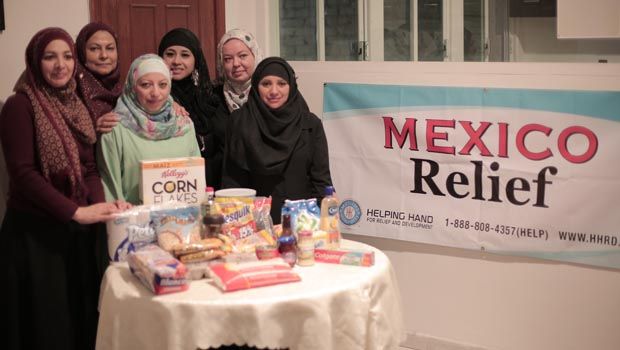
    Helping Hand for Relief and Development o Mano amiga para la ayuda y el desarrollo (HHRD) es una de las pocas organizaciones no gubernamentales musulmanas enfocando su atención en asistiendo a familias en México con programas de ayuda y desarrollo a largo plazo. Desde el 2012, HHRD ha estado trabajando en varias partes de México para ayudar a las familias más necesitadas con paquetes de alimentos incluyendo comidas que cumplen con las normas de Zabihah y cenas para Ramadán, programas de detección de diabetes, útiles escolares y bolsas de regalos para los niños.

    “Yo no sé si quizás la impresión es que los musulmanes en México son auto-subvencionados y autoportantes, pero esto no es el caso”, dijo el embajador de Libia ante México, Muftah Altayar.

    Según el informe de PEW 2009, el número de musulmanes en México es aproximadamente 110.000, lo que representa menos del uno por ciento de la población total. Sin embargo, por la misericordia de Alá y luego los esfuerzos de divulgación de ambos musulmanes mexicanos e inmigrantes, el Islam en México está creciendo.

    “Alhamdulilah, en México es muy fácil hablar en las universidades y las escuelas secundarias. Nos invitan a hablar acerca del Islam porque la gente realmente quieren aprender de los musulmanes “, dijo Imam Isa Rojas, el primer graduado mexicano de la Universidad Islámica de Medina, fundador del Centro Al-Hikmah en la Ciudad de México, y un activo llamador al Islam en México. “La gente quiere conocer el Islam, ya que no tienen una opinión negativa de los musulmanes como lo tienen las personas en Europa o tal vez en los Estados Unidos.”

    La Ciudad de México, la bulliciosa capital situada en el centro del país, cuenta con más de 3.000 musulmanes que viven dentro de sus fronteras, muchos de los cuales son conversos. En la región Sureste de México se encuentra el Estado Libre y Soberano de Chiapas. Es una tierra fértil y culturalmente abundante con aproximadamente 100 a 300 conversos musulmanes mexicanos que han establecido una pequeña pero creciente comunidad islámica en la ciudad San Cristóbal de las Casas. Sin embargo, muchos de los hermanos y hermanas en esta área luchan para obtener necesidades básicas como la estabilidad laboral, educación y asistencia médica.

    Durante su visita a Chiapas este año pasado, los voluntarios de HHRD pudieron recorrer la comunidad, dirigidos por el hermano Yahya Gómez, uno de los muchos conversos al Islam mexicanos y activistas en la ciudad de San Cristóbal de las Casas. La mayoría de los hogares eran simples estructuras con paredes de madera y techos de chapa, hechos para albergar a sólo unas pocas personas. Sin embargo, es común ver a familias con 15 parientes o más viviendo juntos en un mismo espacio. Los hombres de la comunidad sólo pueden conseguir trabajo como obreros, si son capaces de encontrar empleo.

    “Está en muy mal estado. Hay algunas familias que viven en una misma casa. Es más como un refugio temporal; Yo ni puedo decir que es una casa. Necesita una renovación… Creo que necesitan una nueva casa en su lugar “, dijo el Director del Programa Internacional HHRD, Irfan Khurshid, mientras observaba las pésimas condiciones de vida.

    Por tan sólo $ 27.000 por cada casa el Proyecto de Construcción y Renovación de Hogares de HHRD puede permitir que las viviendas actuales en San Cristóbal de las Casas sean remodeladas o completamente reconstruidas para proporcionar un lugar más espacioso y seguro para que las familias crezcan. Esto incluye los costos de toda la tubería necesaria, electricidad y construcción. Algunas casas serán incluso totalmente reconstruidas en vecindarios más seguros cerca de la mezquita local.

    Para contribuir aún más a las familias musulmanas en Chiapas, HHRD está implementando una iniciativa de Micro Finanzas que proporcionará préstamos para pequeñas empresas sin intereses a los individuos con la ambición de tener su propio negocio y ser autosuficientes. Con pequeñas donaciones que van desde $ 1.500 a $ 4.000, los participantes en el programa pueden aprender un oficio y comenzar a operar sus propios negocios en las áreas de carpintería, costura, panadería, y mecánica automotriz para ayudar a aliviarlos y a sus familias de la pobreza.

    “Este proyecto de financiamiento microempresas es tan sorprendente, ya que toma una simple donación, alguien puede dar $ 1.000 o $ 2.000 para ayudar a un musulmán poner en marcha una empresa” dijo Boonaa Mohammed, un voluntario que viajó recientemente con HHRD a Chiapas. “Va a tomar ese dinero y les permite comprar lo que sea necesario, las herramientas necesarias para el oficio específico. Se les dará lo mínimo. Y luego, una vez que hayan logrado tener éxito en su oficio y tienen ese dinero, dan de nuevo a la caridad, que luego da de vuelta a otro musulmán que quiere, una vez más, demostrar su valía a través de un comercio. “

    HHRD también está en el proceso de establecer un Centro de Entrenamiento Vocacional en San Cristóbal de las Casas para ayudar a los desempleados a obtener la educación y la capacitación necesaria para obtener fuentes de ingresos estables y licitos.

    “En este centro les podemos enseñar diferentes habilidades y ellos pueden aprender un oficio para que puedan iniciar su propio negocio o encontrar diferentes puestos de trabajo”, dijo Khurshid. “Esto les ayudará económicamente y les ayudará a educar a sus hijos, porque muchos de los niños de estas familias de bajos ingresos y desempleados no han tenido acceso a una buena educación.”

    Además de estos grandes proyectos de desarrollo a gran escala, HHRD también está en el proceso de iniciar un programa de donaciones en especie para proveer las necesidades inmediatas a las familias en San Cristóbal de las Casas, Rosarito, y la Ciudad de México, así como un Programa de Apoyo a la Educación donde los donantes pueden apadrinar a un niño por sólo $ 1 al día para ayudar a proporcionarles el material escolar que necesiten.

    “Muchas veces, en Norteamérica, cuando miramos a conversos, hay tantas dificultades que tienen para integrarse en nuestras comunidades musulmanas”, dijo Mohammed. “Ahora imagina una comunidad de conversos que tratan de integrarse en una sociedad no musulmana que no tiene una base sólida del Islam para apoyarlos. Es imperativo que ofrezcamos nuestro apoyo en todo lo que podamos sabiendo que quien da por la causa de Alá, glorificado y alabado sea, su caridad no se desperdiciará”.

    Para involucrarse en los programas de HHRD en México, visite su página www.hhrd.org, contacte info@hhrd.org, o llame 1-888-808-HELP (4357).


  • Combatiendo la violencia domestica como musulmana

    Combatiendo la violencia domestica como musulmana

    La violencia hacia las mujeres debería ser un tema que nos preocupe a todas y a todos, sin embargo parece ser que pocas y pocos estamos interesados.

    Una de cada tres mujeres en el mundo es golpeada o sometida a algún otro tipo de abusos a lo largo de su vida. Según informes de la Organización Mundial de la Salud, el 70 % de las mujeres que son víctimas de asesinato mueren a manos de su compañero o ex pareja.

    La violencia contra las mujeres está presente en todas las sociedades del mundo, sea cual sea su sistema político o económico, sin importar el estatus de la mujer, sus estudios, color de piel, situación económica, cultura, ni religión. Esta realidad cotidiana se manifiesta de diferentes maneras y tiene lugar en múltiples espacios, y por supuesto, mi país, México, no es la excepción.

    En México la violencia contra la mujer es un problema social que se esconde en los hogares. Muchas de las mujeres víctimas de la violencia doméstica viven con el enemigo en casa, amenazadas cada día.

    Soy Psicóloga y trabajo en una institución en la que se les da apoyo psicológico a mujeres que han sido víctimas de violencia familiar. Cada día escucho historias de mujeres que hablan sobre cómo sus esposos las golpean, las amenazan, les son infieles, las insultan y penosamente también algunas han muerto en el intento de salir de la violencia. Esta es una realidad latente de la que muchas y muchos prefieren no hablar.

    Mi trabajo es un reto en mi vida, alhamdulillah; es lo que amo hacer. Me siento muy bendecida por tener la oportunidad de escuchar a mujeres que ponen en mis manos la esperanza de salir de un problema que afecta sus vidas y las de sus hijos.

    Soy musulmana, soy mexicana y defiendo los derechos de la mujer. Esto puede ser una sorpresa para muchas mujeres que entran a mi consultorio; algunas hasta lo consideran incongruente. – ¿Que nos es contradictorio? – Me preguntó una mujer – ¿Cómo una mujer que lleva la cabeza cubierta por sometimiento (refiriéndose a mi hiyab), me va a decir a mí cómo puedo salir de la violencia en la que vivo, cuando ella no puede salir de su propio sometimiento? – Yo sonreí. Mi hiyab es mi herramienta principal de dawah.

    De hecho, fue mi inconformidad y sentimiento de injusticia sobre la violencia hacia las mujeres lo que me acercó al Islam. Tuve mi propia visión errónea acerca de la situación de las musulmanas que ahora veo reflejada en la cara de muchas de mis pacientes cuando me ven por primera vez; algunas expresan su sorpresa, otras aunque no digan nada, solamente es necesario ver sus caras de asombro o hasta de susto.

    Podría decir que me veo a mí misma en algunas de ellas cuando conocí por primera vez a mujeres musulmanas sonriendo y libres, cuando me hablaron sobre el valor de la mujer en el Islam, cuando leí sobre los derechos de las mujeres en el Islam. Yo me preguntaba – ¿Esto es posible? – queriendo entender. Por eso es que disfruto tanto intentando explicarles un poco con mis palabras y otro poco con mis actitudes, sobre el por qué soy musulmana.

    El Islam vino a complementar mi vida; me ayudó a entender mejor mi trabajo, me ayudó a entender mi valor como mujer. Es ahora que lo entiendo, sé mi valor. Pues lo que lleva a los hombres a tratar mal a las mujeres es ignorar el valor de la mujer. Un hombre que ignora el valor que Dios le da a la mujer, ignora el Islam.