بسم الله الرحمن الرحيم

Tag: Interview

  • Interview: A Children’s Book on Using Positive Self-Talk

    Interview: A Children’s Book on Using Positive Self-Talk

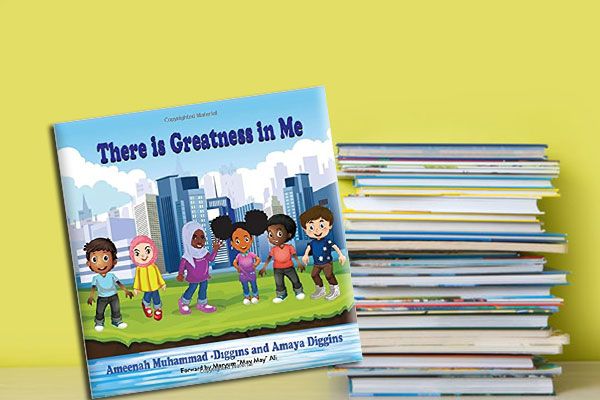
    Title: “There is Greatness in Me” Paperback length: 28 pages Author: Ameenah Muhammad Price: $15.00 at Amazon

    This is an interview with Sr. Ameenah Muhammad, an entrepreneur and writer. She is the author of “There is Greatness in Me,” a children’s book for ages 7-9. The interview has been slightly edited for length and clarity.

    Q – Sr. Ameenah, what was your inspiration for the book?

    A – Personally, I struggle with negative self-talk. I know that a lot of things we deal with as adults come from childhood insecurities. So, I wanted to empower children to have positive self-talk so that it’s repetitive and becomes deeply ingrained – “There Is greatness in me,” “If I believe it, I can achieve it,” “If I say bismillah…,” “If I fall down, I get back up.” So just to empower our little ones, our little Muslims — it’s important to empower them with this awareness and training when they’re younger so they can embrace it and have it become second nature by the time they’re older.

    Q – Did you consider writing it from a broader perspective for children in general, or did you feel that it was important for Muslim children specifically?

    A – Even non-Muslim parents have bought the book and they’ve said that it was inclusive in the way it addressed children’s openness to learning positive self-talk. There’s one illustration that shows “bismillah” on the wall of the girl’s bedroom; there are also two little girls wearing hijab on the book cover and an ayah [Qur’anic verse] in the back of the book. But in today’s world of diversity, the book is good for all children.

    Q – Yes, when I looked at the reviews on Amazon, it looked like many people from other cultures were really appreciative of the diversity, as well as the message of positivity that it was teaching children.

    A – A fun fact, Muhammad Ali – may Allah have Mercy on his soul and grant him Paradise – his eldest daughter wrote the foreword to the book.

    Q – Yes, I saw that, that’s awesome! How did you hook up with her or did you know her before?

    A – My father was really good friends with Muhammad Ali, so growing up we knew the family. She’s a little bit older than me but I knew how to get in contact with her and pitched her the idea of the story and asked if she would be willing to write the foreword for the book and she said, “Of course!” Alhamdulilah.

    Q – So, what is the most important thing about positivity for children you would want people to know about?

    A – I think that all of us have those notions where we have an idea that we want to do something and then when the going gets tough we start thinking, “Well, maybe that wasn’t such a good idea.” So, it’s important to just to have fortitude and to always rely on Allah and also rely on our inner spirit to keep going. Because sometimes we can get knocked down. Sometimes we have these aspirations and start to feel a little bad about ourselves but to just keep going and know that there’s a specialness in all of us, and “if we can believe it, we can achieve it.” We just have to get started and then maintain that motivation. That’s the main message of the book — to get started. Start where you are, keep going, have faith, and always empower yourself because we may not always have people around us telling us to keep going, telling us, “You can do it!” So, we have to draw on that from within.

    Q – Wow, that really impacted me because that’s exactly me. I say some of those same things, “I can’t do that because I have too much pressure from this or that.” That’s so powerful, masha’Allah, thank you for that. Do you think that self-talk is more important for Muslim children, or is it just positive self-talk for children in general?

    A – Here in America our children are sometimes in an uphill battle with some of the images and messages that they are taking in on a daily basis. So, it is important for them to have that fortitude inside that “my values that are instilled inside from my family, from my masjid, from my community, may not always look like the values outside my community but I’m going to stick to them and I’m going to keep going and keep pressing and I’m not going to be intimidated because I may look different, or I believe differently.” I think that our children definitely need a little bit more confidence and conviction because a lot of times there is going to be a rift between their values and the social values surrounding them, especially when they get older. When they’re younger, everybody’s just playing and having fun. When they get older, everybody around them starts having boyfriends and girlfriends, or people are starting to do things that are contrary to what their own values are telling them to do. So, we need to have that voice that says, “This is who I am, I’m going to continue to be me and have confidence.”

    Q – I guess people often have a hard time finding that confidence within and sometimes think that others have it easier than them. Do you find that?

    A – If you ask them, whoever they are, they’ll say the same thing. It’s all about perspective— everybody has this idea that “the grass is always greener on the other side.” But we’re all dealing with our own things. I think it all comes down to the confidence within ourselves. Because if we don’t have confidence within ourselves, it’s easy to say, “If I was this, I’d be that…” Everybody has their stuff.

    Q – I wanted to touch on social media and the effect of body image. It’s a huge concern for parents. Can you speak to that in regard to positivity?

    A – I think we have these ideals of what we think our bodies should look like based on images and photoshopping and slimming down everything. You can do things to photos and images and people are like, “Oh my gosh, her skin is so beautiful!” And they fall into a habit of comparing themselves to others. For years, after maybe looking outwardly for what we think is beautiful, maybe we can start to say, “I love myself for who I am.” And then if there’s something you want to work on, put in the work and go after it. People just have to be honest. I think it comes down to honesty. If we feel good about ourselves, great. But if we don’t feel good about ourselves, then we can start to do things to change that. We can eat healthier, for example, and make any positive changes in our lives that we want. It’s about what do you want for yourself. Also, don’t beat yourself up about things, sometimes we can be too hard on ourselves.

    Q – So what are some more examples of positive self-talk words that you use in your daily life or teach your children?

    A – One of the things I say to myself is, “Whether the sun is shining, or the rain is falling, alhamdulilah.” I also thank Allah all the time, even for things I could be mad or sad about. But we have choices about how we look at things. If we are grateful, Allah will bless us with more. It’s the simplest thing but we seem to forget.

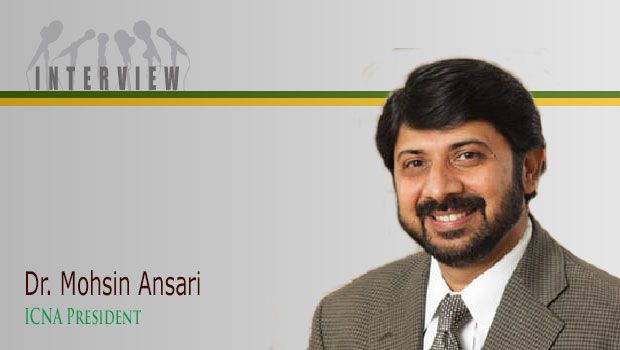
  • Interview with ICNA President, Dr. Mohsin Ansari

    Interview with ICNA President, Dr. Mohsin Ansari

    Q: Dr. Ansari, can you please tell us about yourself and your family life?

    A: I am a Muslim American, physician by profession, and I am constantly looking for opportunities to get involved in the healing process in all aspects of human life. I try to manage my time as best as I can between various responsibilities as a husband, father of five, and only son to my aging father.

    With regard to family, my wife is an electrical engineer by profession, and she helps me out in my medical office for the management of my practice as well. Alhamdulillah, she is involved with ICNA’s work in the sister’s division. Allah has also blessed me with five sons, all of whom are part of ICNA and its activities. Four of them have actually gone overseas to work on projects with Helping Hand.
    Alhamdulillah, Allah has blessed me with a family that helps in my work with ICNA, and without their support, it would have been difficult to spend time away from them, but alhamdulillah they are very understanding and supportive. Their verbal and active support, as well as their duas and encouragement, are very important for me and help me perform my duties as ICNA’s humble worker.

    My oldest son is Muadh Ansari and he is in his first year of medical school. Haris Ansari is my second son and, in sha’a Allah, he is going to start medical school this year. Hassan Ansari, the third son, is currently in the second year of his undergraduate program at the University of Maryland. My fourth son, Hamzah Ansari, is going to, in sha’a Allah, start college this year as a student at the University of Maryland. Finally, Amar Ansari, my youngest son, is homeschooled but is also doing a full-time Hifz program, and alhamdulillah he is doing very well in this program. All of them, alhamdulillah, are heavily involved with Islamic work and ICNA with its activities and various entities.

    As far as hobbies are concerned, I have always been a sportsman and I have played several sports throughout my life and I still try to do so. I played cricket in my college days and even up to now. I also play badminton and table tennis. When I was younger I did quite a bit of martial arts and still try to practice as my body allows me to do so! Apart from that, traveling to different places and countries has always been something I liked to do. These are my personal hobbies. Spending time with my family on vacations and playing various sports are things I try to do whenever I get the chance.

    Q: Please share your experience growing up in Pakistan during your student life?

    A: I moved to the U.S. when I was thirty years old, so before that, the time I spent in middle school, high school, college, and medical school were all memorable times as a student in Pakistan. I was fortunate enough to be accompanied by friends who were very dedicated Islamic workers. When I was in 10th grade, I got affiliated with a student organization that was working to help improve the conditions of students in Pakistan but at the same time tried its best to help students live the life of true Muslims and follow the religion of Islam. That organization created the basis of everything which I am today.

    Like hundreds and thousands of people across the world who are serving in different communities and countries, I would say the organization provided a huge amount of leadership for Islamic leaders throughout the world. Whether you go to South Africa, Japan, the U.K, Canada, America—everywhere in the world—wherever Islamic work was started, sustained, and run successfully, you will see people who were trained by this organization. Hence the time I spent in my college days and in medical school gave me a very good experience of balancing life as a student and the guidelines given to us by the Prophet (pbuh). Lastly, all the young people in the world bring so much energy, drive, ambition, and enthusiasm and that time as a student provided the basis of my personality and my lifelong commitment to Islamic work. These were just a few things I would like to share about my growing up in Pakistan. It was just extremely memorable and my student life built the foundation of everything I was able to do later in my life.

    Q: What inspired you to join ICNA and when did you become a member of its general assembly?

    A: As I already mentioned, when you work for the cause of Islam and you decide that you want to spend your life in accordance with the Qur’an and Sunnah, it is not something that you do as just as a student or at any particular age. The commitment to the religion of Allah (SWT) is a lifelong commitment. Since I was already involved in a lot of Islamic work before coming to the United States, although I came to the United States for higher studies and medical training, it was at the same time very clear in my mind that I had to follow the guidelines of the deen and work for the cause of Islam. The activism and the effort to establish the deen of Allah around me was the goal I adopted during my student life and I wanted to continue it with ICNA. ICNA was the only organization in the country that was pursuing the goal of improving the lives of individuals and the lives of collective Muslims in order to achieve the goal of pleasing Allah.

    My inclusion to ICNA and becoming a GA member was also very different and unique. I arrived in the United States on November 19th, 1993 on a very cold snowy day in New York City. The brother who came to receive me was one of the friends who worked with me during my Islamic work in Pakistan. Many of the ICNA brothers know him, his name is Rashid Siddiqui, and he is currently serving as the vice president of ICNA and is also a cardiologist by profession. He received me at the JFK International Airport and the first thing he told me was “Mohsin Bhai (brother), we are not going home yet, we are going to the central office of ICNA to make you fill out the form to become an MGA.” He reminded me that there was no gap in the life of a Muslim for working in the cause of Allah. He told me that although I had just arrived from Pakistan, that there should not be a single day that I do not continue the work I had done in Pakistan. I filled out the paperwork in the headquarters of ICNA in Jamaica, New York. It was only then that I went home to where I was supposed to stay. This is how I became a member of the General Assembly of ICNA.

    Q: What has been your role and responsibilities within ICNA in the past and how has ICNA played a role in turning you into how you define yourself today?

    A: In ICNA, I have been given different responsibilities. I worked as a regional president of ICNA and later, around 2003, I was elected as part of the ICNA national shura for the first time. I had been part of the shura until I completed my four-year term. Moreover, I worked in the capacity of the chairman of the board of directors of ICNA Relief for almost seven years. I was then given the responsibility of chairman of Helping Hand USA, which I left around September 2020. Then, within 2-3 months, I was elected as the president of ICNA, my current position. These are the different responsibilities I have been given throughout my time in ICNA. However, each of these responsibilities had a different flavor and experience.

    The work in the humanitarian field has impacted my mindset, opinions, and my approach to the work a lot. Being part of ICNA Relief, Helping Hand, and as a person who has been involved in these activities, I truly believe in the compassion, love, and belief that our work changes so many lives. I met many orphans who Helping Hand takes care of around the world, visited many refugee camps in Syria and Lebanon, got involved in shelter homes, and helped feed the hungry in the United State with ICNA Relief. All these activities gave me a huge insight in the suffering of fellow human beings in a variety of ways. That also made me think that whatever we are doing in the humanitarian area is vital, and it really changes the lives of so many. Many of the orphans who I have met have left a very long-lasting effect on my approach, commitment, and determination towards the work of the deen of Allah. Charity and humanitarian work are part of this deen. The hugs, the kisses, the love, the appreciation, the duas, and the thankfulness in the eyes of these orphans and refugees make me feel extremely committed to the work which we do, and every time it energizes me to do more for the future, and to do more and sacrifice more as much as we can so that the lives of these underprivileged people can be better.

    Q: Please elaborate for us a full picture of ICNA as a whole organization, its niche and how you plan to take it to the next step?

    I have always said that ICNA is a one-stop-shop. That means that ICNA is the only Muslim organization in this country that provides the opportunity to do good for every single individual—both non-Muslims and Muslims. In our neighborhoods, populations, and circle of friends, especially among Muslims, we have many who are interested in doing charity and humanitarian work. ICNA has immense and great opportunities available whether they want to do international relief work through HHRD, they want to feed the hungry, they want to serve in a shelter home, or help people during a natural disaster. Every single opportunity is there to provide for those interested in charity work. Similarly, there are many Muslims who are interested in doing dawah work and they want to spread the deen of Allah, they want to reach out to Muslims and non-Muslims to let the people know what Islam is, and let them realize the true character of Islam. That is what attracts and excites them the most.

    ICNA’s dawah organizations like Why Islam and Gain Peace, with their extensive networks and the immense number of opportunities, allow them to perform the dawah work that they want to do. Similarly, the ICNA Sisters division provides an opportunity to Muslim sisters, both English speakers and non-English speakers, to do a lot of great work. The sister’s division has grown immensely in the last 20 years and has done amazing work in improving lives and the commitment towards Islam for so many sisters. There is a lot of opportunity for Muslim sisters who want to join the work and make efforts for the deen of Allah. Similarly, many other areas, such as the Young Muslims, gives the opportunity for our youth to do a lot for the young Muslims in this country. Hence, the youth have the opportunity to participate in halaqahs (study circles), improve their level of education, attend seminars, and go to conferences.

    All the youth have the opportunity to grow in their relationship with Allah when they join ICNA. There are so many other divisions of ICNA which provide the opportunity for volunteer work, activism, and the spread of the deen. Our social justice department provides opportunities for those eager to work in social justice fields as well. As I said, ICNA is a one-stop-shop— there are so many things that ICNA has done and ICNA has provided the opportunity for every taste. They are all good deeds and it is up to the person to choose where to work for the deen of Allah and humanity. ICNA has something for each person living in this country who wishes to work for goodness. As far as ICNA’s niche is concerned, as I said, it is everything—whether it’s charity, dawah, or conventions, ICNA has proved that it can do a lot of good in many areas.

    Q: Under your leadership, how will ICNA equip and strengthen itself to deal with the modern-day challenges?

    A: If we analyze the current overall situation of American Muslims and Muslims around the world, there are a couple of things that stand out as challenges to Islam and Muslims, particularly American Muslims. One is Islamophobia and the false allegations made against Islam, Muslims, and Islamic organizations. The second is obviously the effort to grow and develop the organization itself. ICNA has planned to deal with all these issues this year. As far as exterior challenges are concerned, we have planned a very organized effort where we will use all resources—media, advocacy, public relations— to let the world know who we are and what we do. The work of ICNA, particularly the humanitarian work, which has positively impacted the lives of millions around the world, needs to be elaborated on and become more well known. What the Islamophobes do is that they not only attack us, but they also detract from our ability to help those who need our aid.

    When they attack ICNA, Helping Hand, or ICNA Relief, it takes our focus away from charity work and towards answering the Islamophobes. It also has the potential to cut down on the financial support we get from our donors. The Islamophobic attacks may scare and confuse some donors which can result in the reduction of the support we give to orphans, refugees, and those in dire need of help. So, our goal to deal with the external challenges is to let the world know that Islamophobes have an agenda which is not only to attack us but with the result that it deprives the millions of people of the charity they receive from ICNA, Helping Hand, ICNA Relief, and other Muslim charities.

    Internally, this year we have focused on introducing several new areas of our work. We want to safeguard our organization, we want to ensure we follow the best organizational models, and we want to enhance our work not only in number but also by making sure we fulfill every single requirement that is given to us by the laws applying to a 513c organization. To achieve that we have created several new departments and one of them is the Growth and Development department. ICNA attracts so many people—25,000 attend the national convention, 50,000 attend the ICNA Six Flags events, and thousands attend regional conventions—and many of these people know ICNA but are only loosely attached to it. They are familiar with ICNA but they are not really “part” of ICNA. Our goal is to increase our membership and growth. That is why our new Growth and Development department, under the leadership of Dr. Arif Mannan, has been created. Similarly, for all the challenges which 501(3)c organizations including Helping Hand, ICNA Relief, and ICNA face, we have created a legal department. Under the leadership of one of our senior attorneys, Br. Hamid Siddiqui, we have created ICNA’s Legal department which will guide all the entities and divisions of ICNA about the legal issues. ICNA’s membership and leadership will be able to get an initial consultation and if needed, we can be directed to further legal assistance from other entities.

    Another department which we have added this year is our Compliance department. The growth of ICNA has been, alhamdulillah, phenomenal. But this growth also comes with more responsibility and more scrutiny, so we want to conduct “self-policing.” We want to make sure that we police ourselves, and that is why we have created a Compliance and HR department headed by Dr. Shahid Mansoor. Also, this year our focus has again been on youth, so our new vice president, Br. Salman Mujahid, will lead the department of ICNA Youth to focus on the younger Muslims.

    One more thing that has been on many minds for many years is that Islamic movements across the world have always had immense support from literature and those who have provided us necessary guidelines. However, the need to change some of the details and practical aspects of that literature needs to be evaluated. That literature will be print or social media, anything that will reach the masses and improve their tarbiyah, mindset, and anything that will attract the young living in this country, written in a more understandable and familiar language to the American population. So, a new department under the leadership of Dr. Shahid Rafiq has been created and will be called the Publication and Research department. As a vice president, Dr. Shahid and his team will work to produce social media and literature which will be modified so it is up-to-date according to the current needs of American, European, and English-speaking Muslims. That was a much-needed department, and we have decided to focus on producing literature applicable to the current age and trends. Insha’Allah, we will commit financial resources and efforts to produce something which will be beneficial for decades to come.

    Q: What is the greatest challenge Muslims are facing in America, and under your leadership, what is the solution ICNA has to offer?

    A: I largely answered this question previously, where I stated that the major challenges we face are both external and internal. The biggest external challenge we face is the misinformation of Islamophobes against Muslims in general and the misinformation of Islamophobes against Islamic work, movements, and organizations. They are not only targeting the religion of Islam and Muslims only, but they are also targeting organized Islamic work. ICNA has taken on the responsibility to let the world know how beneficial Islamic work is. Let everyone know that our existence depends on the good work that Islamic movements have done and are how they are needed across the world. I see Islamophobia as the biggest challenge externally for Muslims in this country and outside the country, and I see the education of Muslims about the positive impact and need for Islamic movements and organized work is another challenge we face; and insha’Allah we would like to educate Muslims about the benefits of Islamic work today and in the past.

    Q: Has recent instability in America’s socio-political arena changed ICNA’s approach to its outreach, activism, or other domestic services, and if so, to what extent?

    A: ICNA’s approach to current problems is the same approach that our Prophet taught us, that all humans are equal, as he said in his last sermon which guided humanity almost 1500 years ago. This still remains the hallmark and solution to problems not only in America but all across the developed and underdeveloped world. No white is superior to a black and no black is superior to a white. No Arab is superior to a non-Arab and no non-Arab is superior to an Arab. These were the words that were told to us by our Prophet before he left the world. He made it clear that all humans are equal and suggested that the only thing that will help us is to take care of each other. He also mentioned women’s rights and taking care of Muslims as well as fellow human beings. All these are guidelines for Muslims in the current socio-political arena. ICNA’s Social Justice department has geared its efforts to address these issues. They are not new, and we are not changing ourselves, we are just presenting our true image to the world. We are a religion, a faith, and a group of people who believe in our default mindset that all humans are equal. No one is superior on the account of gender, ethnicity, or skin color. Establishing those guidelines of our religion and conveying them to the people of this country is the challenge, and ICNA’s Social Justice department, as well as ICNA’s other entities, will work on it.

    Q: In a polarized political atmosphere, how will ICNA seek to establish a socio-political Muslim presence without compromising on Islamic social, moral, and religious values?

    A: We all know very well that ICNA is a 513c organization that cannot, should not, and will not be directly involved in political activism. However, we are the largest Muslim grassroots organization in this country. Hence, the members, supporters, volunteers, and affiliates of ICNA look towards ICNA for guidelines and leadership. They want to know what ICNA thinks about certain issues. In the last four years, hatred against minorities, Muslims, and people of color was promoted by some parties in the U.S. ICNA has taken a stand through its subsidiaries to let the world know the true Islamic social, moral, and religious values. They are based on justice, equality, fairness, and respect. There is a hadith of the Prophet where he states that those who do not respect the elders and are not kind to the youngsters are not among us. This basically sets the guidelines of how an individual Muslim should be: respect for our elders, which is not emphasized in modern societies, taking care of young ones by being kind, merciful, and helping them take responsibility for their lives in this world and the next.

    The Prophet said that the best thing a father can leave behind is solid (righteous) children. I believe that it is important to convey this message. At the same time, there are some basic Islamic values. Whether it is the hijab of sisters, salat, zakat—whatever it is, we need to make sure the world knows that the basic attributes of our religion are here to stay and we need to explain them better. We need to let people know what Sharia means and what Jihad means. We need to make sure people know how Islam approaches non-Muslims, the rights of women, and the rights of minorities. It is very important that though we are not a political organization, at the same time our membership and followers need guidelines. Insha’Allah ICNA will provide the guidelines, leadership, mindset, education, and resources to ensure the world and American Muslims who seek ICNA’s leadership, that they will receive the proper answers.

    Q: What are ICNA’s most significant goals for the next ten years and how will ICNA methodically work to accomplish them?

    A: ICNA is an organization that has always looked for improvement and an ongoing development of an organizational vision. That is one of the reasons that, alhamdulillah, ICNA has taken care of many challenges and has continued to grow. ICNA’s leadership and shura have created a plan called “Vision 2030.” The plan is basically to envision what ICNA will be in 2030. Under the leadership of one of our vice presidents, Br. Sa’ad Kazmi, he and his team have worked tirelessly and have spent hundreds and hundreds of hours to develop a plan as to how ICNA will grow, most effectively deal with challenges, safeguard the organization, improve its image in society, and what ICNA will be ten years from now. The development of the Vision 2030 plan has already been completed, and it’s in the works of being implemented in the next few months.

    The plan is extremely detailed and significant because it will help ICNA grow, help Muslims living in North America, and implement a vision and plan. For example, ICNA’s plan in the next two years is to reach out to every single Islamic center in America and reach out to every single Muslim community, big or small. Our goal is that an ICNA entity, whether it is ICNA itself or any of its subsidiaries, will be established in every single Muslim community in the next two years. Insha’Allah, that is our goal. Similarly, our dawah department has started a very comprehensive plan, and under the leadership of one of our vice presidents Br. Farhan Pervez, our goal in the next several years is to reach every single American household. You heard it right! Every single American home. It is an extremely ambitious plan but we, in shaa’ Allah, with the help of Allah and our fellow Muslims, are very much determined to achieve this goal of introducing our great religion to every single household in this country. There are many things we have adapted to achieve this goal, utilizing social media tools and other similar tools. This is briefly the game plan for the next ten years. ICNA is an organization with a vision, and we are looking forward to our ten-year plan and, insha’Allah, may Allah guide us, we will achieve the implementation of this plan.

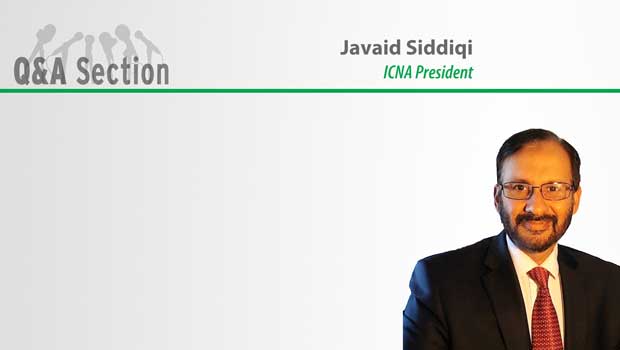
  • Interview: Javaid Siddiqi

    Interview: Javaid Siddiqi

    The following interview with ICNA President Javaid Siddiqi was conducted by Imam Khalid Griggs. Dedicated to Islamic service
    and dawah, he also serves as Chief Operating Officer for Helping Hand USA and previously held the
    office of ICNA Vice President for Tarbiyah.

    1. How were you first made aware of ICNA and what factors influenced you to become a member of its General Assembly (MGA)?

    My parents have long been associated with the work of Islamic movements for decades. When my father migrated to the United States, one of his first efforts was to make contact with brothers who were active in Islamic activities and work in America. My formal introduction to ICNA was in the late 1990s. I was extremely impressed by the sense of brotherhood that existed among members of this organization and felt a deep connection to the work and its membership. I studied the charter and bylaws of the organization and worked very closely with members of ICNA’s General Assembly. ICNA’s mission and vision resonated clearly with the mission entrusted to the ummah of Muhammad (pbuh), which is, through education and service, inviting mankind to the worship of one God. The combination of these key factors played a central role in my decision to become an MGA of ICNA.

    2. What have been some of your organizational responsibilities over the years? And, through the prism of these duties, what changes have you seen in the membership and support base of ICNA?

    Over the years, I have served in a variety of leadership roles at the local, regional, and national levels. What I feel is important, though, and one of the most important and distinguishing features of the organization, is the practice of “not desiring or seeking leadership roles or positions.” This practice has been adopted in accordance with Islamic principles and teachings of the Prophet Muhammad (pbuh) to promote an environment of volunteerism and service to God and community. Members of the organization do not seek, and neither desire nor campaign, for leadership positions. Rather, members are nominated or elected based on their commitment to the cause, capability, experience, and skills. This model stands out in today’s cultural and political environment where campaigning and self-promotion by candidates is the norm. Once elected for any position, members mostly serve in volunteer positions and consider this as a religious duty, a responsibility for which they are accountable before God. I believe this Islamic model is a mature and moral alternative to the current mode of campaigning that is self-centered and often ruthless competition, dominated by mutual bashing by candidates.

    Over the years, I have witnessed an always evolving, committed and enthusiastic membership base that subscribes to the vision and mission of the organization. It is exciting to see the expansion we are experiencing but feel much more can be done to share Islam with everyone in America. It is humbling to see the trust and support ICNA has received from the community at large. In the 1980s and ‘90s, the majority of the membership were immigrants to the United States; but in the last 20 years, young men and women who have been born and raised in America have joined the ranks of the organization. ICNA’s social service and relief projects created a perfect opportunity for Muslims who may not have identified themselves as religious-minded but saw service to humanity as a duty. So many became volunteers and supporters of these important projects. This is still a work in progress and we must do more to deepen our roots within the Muslim community. I’m confident that with the help of Allah and the dedication and sincerity of our brothers and sisters, we will be able to share the message of Islam, and its solutions to the challenges faced by humanity, to every corner of this continent.

    3. To what degree do you think changes in the socio-political landscape of America have influenced the programmatic thrust, emphasis, and services of ICNA?

    ICNA’s program and methodology are based upon the teachings of Quran and Sunnah of Prophet Muhammad (pbuh). I believe the similarities in the challenges faced by the early Muslims during the time of Prophet Muhammad (pbuh) and the Muslim community in America today provide an amazing blueprint for success. ICNA’s dawah projects, WhyIslam and Gainpeace, provide the backbone of dawah-related activities. These projects — through an online presence, a network of dedicated volunteers, highway billboards, 24/7 toll free hotlines, and publications — present the Muslim message and invitation to the truth and peace of Islam.

    The rise in Islamophobia over the past decade, as well as the need to offer the Islamic narrative to social challenges in society, have provided the thrust to expedite ICNA’s efforts to be actively involved in the social justice movement and, hence, the birth of ICNA’s Council for Social Justice (CSJ). The council has established several areas of focus: family breakdown, structural racism, global injustice, hunger/poverty/inequality, injustice to indigenous people, Islamophobia, and unjust immigration policies. Similarly, the fight against hunger and poverty and Islam’s teachings about the rights of neighbors, the needy, and the poor in our communities propelled us to establish ICNA’s domestic relief efforts in the form of ICNA Relief. The work of ICNA Relief is one of the most beautiful manifestations of what Islam stands for, and clearly sends the message that Muslims care! We realize the tide of negative propaganda against Islam and Muslims has risen to unprecedented levels, but we truly feel that intensifying our efforts of outreach, through dawah and service, is the best way to educate our fellow Americans about Islam and its beautiful way of life. Our social service projects at home and abroad show that Muslims are active contributors to the well-being of people and societies. We feel the pain and suffering of humanity, and based on the teachings of Islam, continually strive to look beyond our own self-interests. Our social justice program is designed to bring awareness to all forms of injustice in society. The list is long.

    4. In your opinion, has ICNA’s response to the needs of the larger Muslim community been sufficient?

    Over the years, ICNA has launched projects designed to address the needs of every segment of the community and family. ICNA Sisters, an organization dedicated to women, has been busy transforming the lives of our mothers, sisters, wives, and daughters through education, organization, and service. Young Muslims (brothers and sisters) is organized to address the needs of our youth, starting at an early age, to provide a safe, educational, and enjoyable environment for their development.

    In our recent Shura retreat in September, we took a pause to reflect on our past 50 years and evaluate our developing needs. It was apparent that despite our efforts, a lot more needs to be done to address the needs of the Muslim community. We can’t consider ourselves immune from the harmful aspects of the environment around us. The challenges of broken families, troubled marriages, divorce, drug abuse, and mental health issues are affecting the Muslim community in the same way the larger society is affected. I feel ICNA has done a great job creating model organizations to address a variety of challenges, but that’s not enough. We need everyone to participate in this effort. These challenges are bigger than one organization. So, for example, the existing availability of Muslim counselors or matrimonial services is not able to keep up with the demands. Complicating matters is that issues related to mental illness are often avoided in our communities due to cultural stigmas and, therefore, don’t receive appropriate attention. There is a dire need for many more Muslim mental health professionals. The time is long overdue for Muslims to forthrightly recognize these issues and brainstorm how best to address them. I’m confident with an integrated and unified approach these issues can be addressed, insha’Allah.

    5. ICNA classifies itself as an integral part of the Islamic movement, not the only one. What mindset underlies this self-designation?

    We feel that our role is to complement the efforts of many other Muslim organizations who seek to
    provide leadership to the Muslim community. We recognize and appreciate the efforts of mainstream Muslim organizations who are providing leadership in this space and are committed to working with them in a cooperative manner, not in some kind of petty competition with them. We believe that our role is to unite the community, and therefore we seek partnerships, staying far away from an isolationist mentality, for we are clear that we do not “know it all.”

    Our mission and vision outline what we believe in and how we intend to accomplish that. Every individual who subscribes to these principles is our brother or sister in this journey. We are confident that every Muslim who believes in Allah and the final Prophet will see our vision and mission as their own vision and mission. We believe that Quran and Sunnah are the two primary sources that provide a holistic view for every aspect of life. We fully subscribe to the calling of Quran to “believe in Allah and do good deeds.” ICNA feels that its efforts and projects must provide an opportunity for every member to learn and gain knowledge while exercising that knowledge through action and activism.

    6. What is ICNA’s relationship to the global Islamic movement and how has that changed, if at all, over the years?

    We continue to feel that our organization is an integral part of the global Islamic movement. We aim to collaborate, cooperate, and share. The changing socio-political climate around the world and realities on the ground have hampered and slowed down these efforts to collaborate and cooperate. I believe that the changing dynamics around us have forced Islamic movements to redefine themselves to address their local needs. I wish we could have established closer relations and more practical exchange of ideas and solutions. Leadership visits do happen from time to time but not in systematic and effective ways.

    7. This year, 2018, commemorates 50 years of ICNA’s continuous organizational existence. In your opinion, what have been some of the most significant accomplishments and disappointments during this period?

    I would like to thank Allah (SWT) who has allowed us to reach this milestone. We are humbled and grateful. First let me mention a couple of areas for improvement. The establishment of professional educational institutions has been an area in which we have not yet been able to make any significant progress. There is a demonstrable need for an educational institution of higher Islamic learning for our youth and adults, but we have not yet found a workable means to achieve this. In recent times, more organizations have joined the efforts to address this need and meet this challenge, but options right now remain limited. Also, ICNA has been slow in developing content for North America in the various local languages. I feel we have a lot of work to do in this area.

    As to significant accomplishments, in addition to the projects that ICNA has launched over the years, we feel that ICNA has been able to create different organizational models. For example, in dawah, we have learned tremendously over the years and have successfully established “the needs” of “dawah” and how to address them. Similarly, our conventions continue to grow year after year, alhamdullilah. I feel, we have been able to create a model for how and what to address through these conventions. As to social services in this country, I’m thankful to Allah (SWT) for allowing us to establish a good working model for serving the society and providing relief and support wherever it is needed. Coming to understand in comprehensive ways what is needed and how to best address these needs has been part of the ever-expanding domain of knowledge we have gained over the years. So, when I look at the past 50 years, I feel we have made a lot of progress. At the same time, we are dedicated to continual growth and
    improvement, with the help of Allah (SWT).

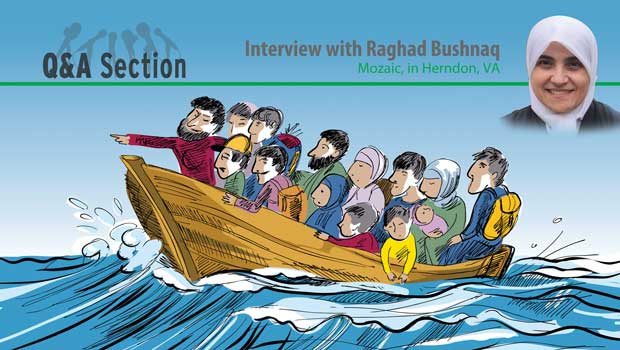
  • Interview with Raghad Bushnaq, Mozaic, in Herndon, VA

    Interview with Raghad Bushnaq, Mozaic, in Herndon, VA

    (Some editing for clarity and length)

    What is your background?

    I am Syrian — I was born and raised in Syria for 19 years of my life. I got married and moved to the DMV (D.C., Maryland, Virginia area) and lived here for 29 years. I have five kids, two boys, three girls. My two eldest are married and I am a grandmother and have three grandchildren. I worked as a teacher and instructor. I now work at Fawakih Institute (Herndon, Virginia) as a Quranic linguistics instructor. I am very happy with them.

    What pushed you to start an organization and begin helping Syrian refugees?

    Since the war, we started to see many tragic incidents happening. A lot of people started to seek refuge somewhere out of Syria and even in Syria. We felt that we can’t just look. Yes, we can pray and make dua and that is very important but that’s not all, we have to do something more. So the only thing I could do, I am good at cooking, I have talent in doing beads, so I thought let’s invest in that. So we tried to be involved in every bazaar. We cook, we sell food, get the money, and we send it to needy people. We helped people in Zaa’tari camp in Jordan. We brought about four containers and little by little we started to send clothes containers to the refugee camps in Turkey and Lebanon. We did a good job and then we started receiving refugees here. We received seven families and the first meeting we did as a Syrian community. We sat together and when we talked only about these seven families I can’t tell you the amount of pressure I felt. I felt like a nightmare is coming. How are we going to assist all of these people? They were only seven families.

    Alhamdulillah, all the community stood up for these seven families. A year after, we started to receive like three or four families every week. Six months later the number increased. Then we started to hear about more families in Norfolk, more families in Charlottesville. It was a lot of pressure. Many of the people who came to visit they couldn’t go back. They sat and applied for TPS (immigration status: “temporary protected status”) — now they have no work permits — they need financial assistance and rent. Since we know how to work together as a team, we thought that it was about time to establish our own organization. So we applied to the State Department and we were approved, alhamdulillah, as a non-profit with a tax ID number and that really boosted our help for people. Now we have legal status and if we ask people to donate, we can issue tax receipts and we are legal and can work on a legal basis. We can build credibility, and we can show people where their money went and how it was spent.

    How many families have you helped so far?

    Alhamdullilah, we were able to help 180 Syrian families. We helped a few Iraqi and Afghan families too. To be honest, I wanted to help more non-Syrian refugee families but it was too much. It was a heavy load.

    What kinds of social challenges do the refugees have?

    Each family has their own suffering and their own needs. We have a lot of widows and people with disabilities. We have many people that can’t provide for themselves for very legitimate reasons. A lot of illness among kids.

    Are the illnesses physical or mental, or both?

    Both. We have kids five-years-old seeing psychiatrists – they’ve been through a lot. They’ve seen the bombs. They’ve seen their houses were demolished – they were in the war zone. They have seen their own family members killed, sometimes two or three, in front of them. One man lost his wife and he doesn’t know where she is after a bomb in the market. Many, many devastating stories.

    How has the Muslim community responded to this crisis?

    As a Syrian, you understand the mentality of the Syrian refugees. Of course, many people have helped. Many people from all communities, masha’Allah. I’m very proud of the Muslim community, and non-Muslims helped a lot. So, alhamdulilah, many people have good hearts and they want to help. But Syrian families come back to you because you understand their mentality and their needs. At certain points you have to give them tough love, at other points you have to just deal with whatever anger they have. Sometimes you are able to endure it, and sometimes not, but you have to because you know they’re in difficult circumstances.

    The donations we receive is Amana and we have to put it in the right place — give it to the right people. But alhamdulillah we are able to help many families — with furniture, with rent and utilities, tutoring, whatever is need. Today we have at least nine families that we are responsible for, almost fully for their rent and other expenses.

    How long do the local agencies or the agency which brought the refugees to the U.S. help each family?

    The United Nations brought them here. It’s not how long, but how much. They give each person in the family $950 dollars. If it’s a family of four, it will be $950 times four. If the family is seven, $950 times seven. If the social worker is really a good person or he or she has good skills in money management, they would use it for them in the best way, would get decent furniture at the best price, and use the rest of the money for rent and utilities. Many social workers don’t have those skills. They rent them expensive houses that they don’t need so money is wasted. What we do here with Br. Khaled from IRC, we have a good relationship with him, all of the families that go to him he refers them to us ahead of time. With Br. Khaled, we were able to furnish most of the Landover, Maryland houses for about 25 families. For other families we were able to partially help, because they didn’t recently arrive but got our phone number from another family. We ask them what they need, how many are in their family, what was their occupation in Syria. I take that information because it will play a big role, later on with how I’m going to be able to help. If their needs aren’t great and they live too far, I order the things on Amazon, and they receive it to their home. Believe me, the new items they receive, they really love it.

    What is Mozaic Kitchen for Refugees?

    Our project, Mozaic Kitchen for Refugees, started in October of 2016. The purpose of this business was to bring all of the talents in cooking among refugees and for them to start catering, learning business building skills, learning the American standard in cleanliness, sanitizing, and all of that training, and bringing them all the supplies they need. Cooking for one’s family is different than cooking for 100 people. We put them on the right track. The other important thing is marketing because they don’t know anybody here. So It is our mission to bring customers and spread the word, do some promotion here and there. We have done many bazaars and events where we cater.

    Many of the refugees say that they can cook everything. The first step is that I order food for my house, and tell them to cook me this or that. I bring it home and try it. I’m a good cook and I give him or her feedback and say, this is good or maybe this has an odd flavor, maybe you need to put butter instead of oil. We try to increase the quality getting it as good as possible. Then we check where they are buying their food and supplies from. They have to go to the right stores so at least they can make a good profit and have fair prices and not be overpriced.

    As to pricing, we sit together and I advise them, but it is their choice in the end. I tell them that fair prices will not only bring customers but will keep them coming back. Then we start connecting them with people. We advertise by letting people know what types of food each chef cooks. We also started business cards for whichever chef is really professional. Whoever I see that has potential and is striving to get on their feet, and doesn’t want to live on aid and assistance, we immediately help them. Those are the good candidates.

    Who are the people involved in Mozaic?

    There are three officially, and our volunteers are over 100. Myself, I deal with the families one-on-one. Mona Darwish, the co-founder, she deals with the Virginia families. She’s been helping the Muslim community for over thirty years. The third board member is an accountant, Rana Hmaidan, and deals with all our accounting and giving us advise.

    Is an organization founded and run by women?

    Yes.

    Do you have assistance from your husbands?

    Well, it’s mostly moral support. The thing that my husband really helps me with are the personal visits. When we go to the families, he goes with me. I think that gives the males in the family a lot of support. He gives them advice from his own experience. He refers them to job opportunities.

    Are the people you help mostly in Maryland because it’s cheaper?

    Yes, when the official refugees arrive, they are placed in Maryland. In Virginia we have some in Norfolk and help them partially with Eid and through the winter drive, and connect them to people there who can help them more. The same for Charlottesville. We send trucks for them on Eid, and for winter, we send carpets, jackets, blankets— all of the stuff they need.

    Are you connected with other organizations in your work?

    Locally, we work with a lot of organizations like Islamic Relief, ICNA relief, and we have good connections with McLean Islamic Center, Adams Center, 17 Cents A Day, Kind Works, and many more.

    What do you see as the future of Mozaic?

    Our mission is not only helping refugees. Our mission is having projects— educational projects, training in life skills — and not only with refugees. This year it is refugees, because it’s a high demand, but when things settle, insha’allah, we will help other needy people. Our focus will be on women and children. We will give them all kinds of training, especially widows and divorced women, to make them independent and able to support themselves and their families.

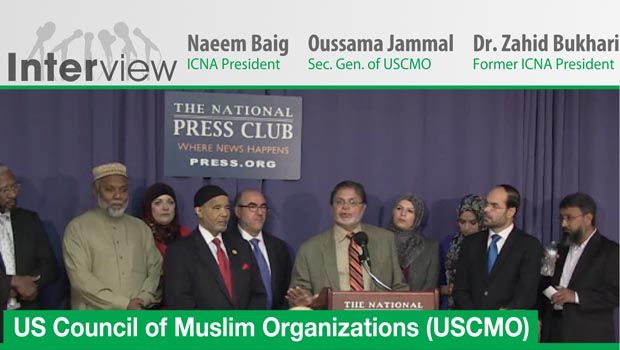
  • Interview: US Council of Muslim Organizations (USCMO)

    Interview: US Council of Muslim Organizations (USCMO)

    What was the driving force, situation, or event that triggered the idea and brought about the formation of the US Council of Muslim Organizations (USCMO)?

    Naeem Baig and Dr. Zahid Bukhari: There were essentially two driving forces that triggered this idea of a unified organization. The first trigger was due to the resulting situation after the 9/11 tragedy and consequential backlash the Muslim American community experienced, and the media’s harshness and biased coverage following these events. Additionally, recent terrorist events and the anti-Muslim rhetoric from the Republican presidential candidates fanned further the flames across the country and even beyond. It was clear then that no one individual will be able to respond to this effectively and that we needed an organization to represent the community in a unified manner, to be able to present our concerns, priorities, and response to this Islamophobia that was picking up pace.

    The other driving force was ICNA’s continuous efforts, since the mid-90s, to find a platform for uniting the Islamic organizations under one umbrella for the purpose of taking action on issues common to all American Muslims, such as fighting Islamophobia. The Islamic Shura Council was an example of this effort but it did not gain traction. It took 4 to 5 years of continuous meetings and discussions before we were successful and able to announce the USCMO initiative in late 2014.

    It was when I (Dr. Bukhari) came across an article while working on a project at Georgetown University that this idea struck me most prominently. It was a project funded by two charitable trusts where representatives were asked to perform a study on their own respective communities, American Muslims being one of these communities. John W. Foster, Secretary of State under former president Dwight D. Eisenhower, wrote an article advising the Jewish communities of that time to unify themselves to help enhance their voice and presence and help address and resolve their concerns. This advice resonated with me with regards to the Muslim communities in America dealing with the racism and hateful rhetoric that is being spewed around us.

    This organization can help us to redefine our struggles and help in the cause to bring back America to its true values.

    What is unique about this organization’s mission and purpose that sets it apart from the rest of the Muslim/Islamic coalitions that exist in the United States?

    Naeem Baig: This organization is unique in the sense it is a national coalition that is not specific to one city or regional area and as a result brings more strength and potential impact to our common causes. It is also unique because it is bringing together professionals from all areas that contribute their diverse skills to enhance the organization’s capacities to complete tasks and accomplish goals. Our next phase includes opening membership to local and regional organizations, Islamic centers and mosques, from various parts of the country.

    As President of ICNA, an organization that already unites Muslims across North America, and with you already shouldering the responsibility of leading this organization, what motivated you to help build this new USCMO coalition?

    Naeem Baig: ICNA has always been part of this struggle, for many years now, so this new coalition was already implanted in the roots of our planning and organizing. We truly need to work together as this is a commandment from Allah (SWT) in Surah Al-Imran, reminding us, “And hold fast to the rope of Allah together…” We are one body that has different parts and functions, striving together as an Ummah. We are in earnest need of this endeavor so I strongly believe in engaging in this type of community work.

    We understand that one of the major campaigns that this organization has undertaken is the “One America” campaign. Please describe this initiative including what the motivation was for this campaign and what it hopes to accomplish?

    Naeem Baig: In our USCMO National Leadership Summit held in December, where we had approximately 120 Muslim leaders from all over the country, this was one of the ideas brought forth after a series of discussions and debates. This initiative is to motivate Muslim Americans as well as other minorities such as Latinos, African Americans, etc. to register themselves to vote by setting up voter registration booths at mosques and other community venues to reach as many people as possible. After seeing the current racist narratives out there against Muslims and minorities, especially from the Republican presidential candidates, we need to counter this with a positive force. No one should be trying to isolate American Muslims from the rest of the country and to treat them as unworthy of being true Americans. Therefore, we need to register to vote so we always have a voice, and an impactful one.

    What has been the progress so far on this drive to register one million Muslim voters? What are your expectations of reaching the goal?

    Naeem Baig: Our plan as a major Muslim organization is to use ICNA’s 40 chapters throughout the US to set up booths at Islamic centers and mosques to help facilitate voter registration. We are also inviting Latino Americans and African Americans to come and register at these booths. We have gained progress on motivating the public but are still working towards our goal of registering as many citizens as we can, regardless of religion or race.

    Have you encountered any resistance to the idea of a national umbrella organization, or heard any criticism from Muslims or non-Muslims?

    Dr. Zahid Bukhari: From non-Muslims, we did not receive criticism but rather encouragement. Up to 37 churches of all different denominations have actually been encouraging Muslims to form this type of organization. They feel that it is a positive step for Muslim communities to have a unified voice. As for Muslims, there usually is always some type of reservation due to natural differences of opinions but we have worked with and gained membership with several major organizations. Among those who do not have a formal membership in USCMO, some have participated with us in press conferences or events such as our National Leadership Summit that we recently conducted. Alhamdulillah, there have been no major criticisms towards this initiative and we hope to grow in membership in the coming years as we become more rooted and established in our current landscape.

    Do you feel that the rise of Islamophobia combined with the hateful rhetoric in the current presidential campaign has made it easier to convince US Muslim organizations to unite, despite any differences, so as to face this threat together as a single entity?

    Dr. Zahid Bukhari: Absolutely correct. Essentially, two ideas became prominent that made for an easier pathway to unifying ourselves: first, everyone was convinced that there must be unity among us to generate a strong reaction to the anti-Muslim and hateful rhetoric that is occurring during the current presidential campaign. And second, Donald Trump’s and Ben Carson’s bigoted and hateful speech essentially put Muslims and their reactions to the bigotry in the spotlight, front and center in the prime-time news coverage. Hence, we get the opportunity to represent our community in a strengthened and unified way.

    Oussama Jammal (current Secretary General of USCMO): It is healthy to have different specialties among American Muslim organizations and more so with respect to their views and opinions. Yet, the unity of purpose and shared destiny is an obligation. Within the current climate of Islamophobia and hateful rhetoric, disunity among Muslim organizations becomes a sin.

    What issues or limitations do you see among the American Muslim population that may still be a hindrance to forming a unified and effective front against this tide of Islamophobia?

    Dr. Zahid Bukhari: One limitation is in regards to first generation citizens who have migrated here from countries that do not have strong democratic institutions and therefore do not always have enough experience to know where and how to make an impact in the political framework here in the U.S. They tend to focus on major elections such as the one for president, but do not realize there is significance and value in participating in local politics and voting in local and state elections as well. Secondly, there is a communication gap between the first and second generation of Muslims, those who have migrated here from a different country and the younger generation which are born and raised in the American culture. Ideas and thoughts can then sometimes conflict or get lost in translation.

    Oussama Jammal: I believe the leaders of Muslim organizations around the country need to understand the scope of this danger not only to the Muslim community but to our society at large and that the only effective response is to come together in unison. Different opinions and views are healthy and needed to enrich understanding and decision-making, but should not be the cause for divisions. The biggest hindrances are narrow-mindedness and ego.

    What are your suggestions for increasing emergency preparedness for Islamic institutions and individual Muslims to address the rising number of hate incidents nationwide?

    Oussama Jammal: Clearly we need to do the following to help ourselves be prepared: Connect with local law enforcement and establishing direct communication protocols; increase vigilance around Islamic institutions as well as individual homes; receive training on safety and security measures including evacuation plans, soft lockdown, active shooter scenarios, and fire drills; install enhanced security and surveillance systems; and develop emergency plans for institutions and individuals such as a close network of people or contacts and specific numbers to call.

    What do you think the American Muslim community, and more specifically USCMO member organizations, can and should do to address the real and present threat of violent extremist groups that are preying on young people via the Internet and who twist the meaning of the Quran to justify their atrocities?

    Oussama Jammal: This is a serious problem and requires a much more comprehensive approach than the current government approach. It will require several components in order to counter violent extremism. The main components include:

    • Develop counter narrative curricula for Imams, youth directors and mentors, teachers, and parents to deconstruct the extremists’ narrative and to show that their ideology is false;
    • Utilize scholars, prominent speakers, and leaders to deliver the message;
    • Mount a social media youth-to-youth campaign on Facebook, Twitter, Instagram, and YouTube
    • Organize and/or utilize workshops, programs on mental health issues, and youth camps to discuss the danger of extremism and extremist groups;
    • Establish principled parameters for cooperation between “Muslim leadership” and the FBI to counter domestic and foreign violent extremists;
    • Engage in political campaigns to address root causes of violent extremism and its connection to counterproductive and damaging foreign policies such as support of dictatorships.

    USCMO held a National Leadership Summit in December 2015. Please explain why USCMO felt this event was necessary and what it hoped to accomplish? What were the key takeaways that American Muslims should be aware of in this current politically charged climate? What do American Muslims need to do in order to counter this negativity?

    Oussama Jammal: After the San Bernardino shootings and the following increase of hateful speech toward American Muslims, the community was under extreme pressure and fear and needed leadership. USCMO rose to the occasion and called upon Muslim leaders to come together and discuss strategies to address the concerns of the community. Focus was on the hatemongering ideology of some politicians and public figures, the rise of Islamophobic rhetoric, and the need for immediate safety measures especially after frequent reports of hate crimes against the Muslim community. The summit showed that we have the ability to bring Muslim leaders together from around the country, even on a short notice, sending a comforting message to the community that its leaders are actively addressing issues of importance to them. The summit provided a forum for discussion and exchange of ideas and strategies, with great benefit from the contributions of diverse groups representing different organizational specialties including civil rights, grassroots and community organizing, academic think tanks, education, religious organization, and so on. The diversity also encompassed various leadership levels, gender, age, and ethnic backgrounds. At the summit, we took note that we should always feel and act as Americans of equal rights and never give in to intimidation. Also that engaging with our fellow citizens on common issues concerning our society will help dispel myths about Muslims and Islam. Building alliances and coalitions with other minorities and like-minded groups is vital for our survival especially under the current politically charged climate.

    Are there resources available to Muslim communities, masjids, and other organizations that they can use to help educate their community members and implement positive changes?

    Oussama Jammal: USCMO is working with its member organizations and specialists in the relevant areas on developing, compiling, and sorting materials needed to educate the community. Several of our organizations, CAIR, MAS, ICNA, MLFA, and MUNA, have already started some training and campaigning in their respective areas of expertise.

    USCMO organized the first of its kind international conference in February 2016 in Washington, D.C. Please describe the mission and goal of this conference?

    Oussama Jammal: We began with collecting ratings on what were considered the most alarming issues affecting our community, such as racism/bigotry, radicalization of Muslim youth, etc., to help get a handle on what we should focus on first. We discussed the role that the media plays in disseminating false information and fear about Muslims and how much influence it has in creating the negative climate. We took surveys on how active our community is in engaging in activities that counters the Islamophobia, and which political parties we feel best represent our interest and concerns. We gathered as much information as possible about the attributes and activities of our community so we can most effectively direct our energy on programs that address the most critical issues. And I am happy to say we already jump started programs in those areas.

    Elaborating on this international conference, please describe the key accomplishments of this gathering of Muslim officials from around the world?

    Dr. Zahid Bukhari: Establishing the Annual Muslim Capitol Hill day, an original initiative of CAIR, is a great achievement. In the past, this event allowed us to hold up to 280 meetings with general councils, a valuable effort on outreach campaigns. The National Leadership Summit and Open Mosque day are also great initiatives and successful campaigns that are mobilizing our efforts and abilities to voice our narrative and address issues and concerns.

    Oussama Jammal: One very significant and strategic objective the conference was able to achieve is the formation of a Western entity to function as an umbrella organization for Muslim groups. The formation of committees, work groups, and task forces will facilitate the momentum of working together, sharing information, coordinating efforts, utilizing resources, enhancing communication, and facilitating planning. The conference also helped to introduce Muslim leaders and organizations to one another and create networking opportunities, and also to learn about Muslim minorities living in various countries. In addition, the conference sent an uplifting message of unity to our local communities, with assurance that their leadership is thinking ahead about their safety, security, and their future.

    What are the next steps that must be taken in order for the mission of this international conference to maintain its momentum and to achieve its aims? Do you see any obstacles that may need time to overcome?

    Dr. Zahid Bukhari: We want to see the One America campaign reach its goal of registering one million voters. The other is Open Mosque day where we have representatives inviting non-Muslims to mosques and talking about Islam, passing out accurate information, and raising political awareness. This is already in the planning and executing phases so insha’Allah the momentum will continue to grow and flourish.

    Oussama Jammal: By the grace of Allah, a steering committee was formed to explore options, develop structure, and present the results to the leadership. The committee is meeting regularly since its formation immediately following the last day of the conference. I must say that I’m very pleased and confident of the ability of this committee to accomplish the tasks at hand and deliver results because of the high spirit of unity, cooperation, and commitment of all its members that I witnessed and experienced firsthand.

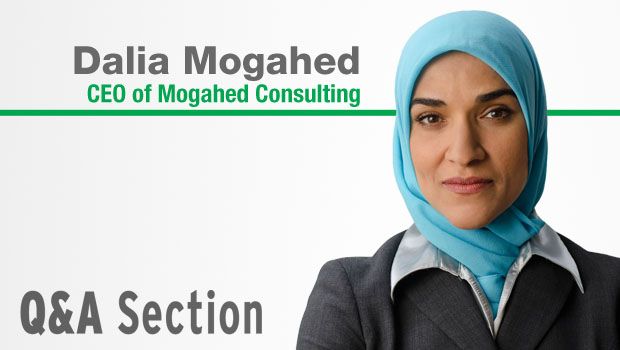
  • Interview with Dalia Mogahed

    Interview with Dalia Mogahed

    Dalia Mogahed is an American leader with notable achievements in research related to Muslims societies worldwide and, in particular, the Middle East. She is currently President and CEO of Mogahed Consulting, an executive coaching and consulting firm based in Washington, D.C. She served as the Executive Director of the Gallup Center for Muslim Studies and also as an adviser for the White House Office of Faith-Based and Neighborhood Partnerships under the Obama administration. In addition, she contributed to the Countering Violent Extremism Working Group of the Homeland Security Advisory Council, and worked with Madeleine Albright on the U.S. Muslim Engagement Project where she produced policy recommendations, many of which were adopted by the Obama administration.
    Mogahed also serves as a nonresident senior public policy scholar at Issam Fares Institute for Public Policy and International Affairs at the American University of Beirut, and was chosen a World Economic Forum Young Global Leader. Her experience began as founder and director of a cross-cultural consulting organization in the U.S. that offered workshops and other programs addressing diversity and cultural understanding. Mogahed joined with John Esposito in co-authoring the book, “Who Really Speaks for Islam? What a Billion Muslims Really Think,” a work compiling many years of research and interviews with or related to Muslims from more than 30 countries.

    Q: Your career began as a researcher in marketing products for Procter and Gamble but progressed to social work and research related to Muslims. How did you progress to these types of roles from your position at Procter and Gamble?
    A: My position at P&G taught me the art of applying science to the study of human behavior. I took this passion for research into my MBA and when I graduated, I joined Gallup. At Gallup I was able to live my dream of helping the world understand Muslims by giving them a voice through rigorous survey research.

    Q: What was the motivation or incentive that drove you towards this path?
    A: My motivation was to be a bridge and a ‘translator’ between Muslims and the broader society. I always played this role in different ways though the means changed throughout my career.

    Q: You co-authored a book “Who Speaks for Islam? What a Billion Muslims Really Think?” What impact do you feel this book has made on bridging the gap between Muslims and non-Muslims, particularly the understanding of Muslims by non-Muslims?
    A: I think the book’s biggest impact was in changing the conversation regarding Muslims and violence. The book dispelled the myth that religion was the problem and showed clearly that it was politics and not [some misguided] piety that drove the small fringe who condoned violence.

    Q: What were the most challenging criticisms to the book that you have had to respond to?
    A: The most challenging criticisms were ones that simply dismissed the entire book because they claimed Muslims lie to pollsters. My response to this claim is it is pretty hard for so many people in so many countries to agree on a common lie. Polling is not perfect by any means, but the best way to understand what people think is still to ask them and then listen.

    Q: We have seen rises and falls in the wave of Islamophobia that has spread across many different regions. What is your understanding of the current situation of Islamophobia, especially in terms of its intensity?
    A: It is important to understand that anti-Muslim prejudice is largely manufactured by an industry of well-funded organized activists. It intensifies around war and elections, not just terrorist attacks. This means that it is more than a response to bad Muslims doing bad things. It is also a product of a media campaign meant to instill fear and hate to forward a political agenda. I think it is going to get much worse as the 2016 election starts to heat up.

    Q: Our focus, as a Muslim-American community, is to change the currently negative narrative about Islam and Muslims that we have been witnessing lately. In what areas do you feel our community needs to expend more effort and development to achieve this goal?
    A: We need to do two things: We need to offer a human narrative of Muslims and continue to unapologetically explain Islam as it is. And we need to challenge the bigotry and call it out and this includes the incessant and never-ending demand to have Muslims condemn terrorism. We can’t do one without the other.

    Q: What are some insights about the perceptions of Islam and the Muslim communities that you have come across in your work at the Gallup Center for Muslim Studies that are relevant to the Islamophobia crisis we constantly see around the world? You can share with us insights about what has fostered the misunderstanding of Islam/Muslims as well as the actions taken that have helped reduce the public’s negativity about Islam.
    A: One of the major ones is what I mentioned earlier [about the myth regarding Muslims and violence]. Another is that Muslims around the world want democracy and see it as a key to Muslim progress. Yet another is that men who support women’s rights are neither more or less religious than men who do not support women’s rights. The main difference is their education and their own employment. When men are more educated and have greater well-being, they support women’s rights.

    Q: Are there certain behaviors and actions that are critical to being successful in the dissemination of accurate information about Islam and Muslims?
    A: I think it is reaching people’s hearts and not just their minds. We need to make people laugh. We need to make people cry. We need to touch their hearts and connect on a human level.

    Q: Of all your efforts that you have executed in the past, which do you feel was the most effective in helping the public to better understand Muslims?
    A: My best and proudest achievement was befriending and, I hope, educating Howard Gordon on Islam and Muslims. He is an American television writer and producer, and the screenwriter for [the television series] “24.” He went on to write much more human depictions of his Muslim characters.

    Q: To the aspiring younger generation, what advice would you provide to help them continue the efforts for better understanding between communities of all backgrounds? Where should their focus be and what assets should their development be focused on?
    A: Young people should first ground themselves in a mad love for Islam. If it isn’t there they can’t convey it to others. Then they should explore their own talents and do what they do best, letting God’s hand guide their path. If their eyes are set on the right mission, they will find that the best road will unfold before them.

    Q: The recent situation in France was a tragedy for Muslims in the sense of how much Islamophobia it has generated on top of what we were already experiencing. Yet, in my personal opinion, I think sometimes tragedy leads to an explosion of hate followed by a proactive measure by the public to contemplate on the situation and really question whether what they hear from media is true or exaggerated. And in turn, this actually leads to more understanding of Islam and Muslims eventually. For example, the event of 9/11 elevated Islamophobia but it also had copies of the Quran flying off the shelves and people converting to Islam as they discovered what it really was. So in conclusion, do you feel that outcome is possible here? In other words, what do you feel will be the outcome of this tragedy in terms of the situation of Islam, Muslims, and Islamphobia?
    A: The shooting was tragic in every way. I hope that good things can come from terrible tragedies but it is not clear if this will occur. The issue in France is that racism that would make us cringe in the U.S. if it were applied to our racial minorities, is hailed as a symbol of progressive modernity in France. France needs to evolve and join the modern world. Their problem is not being “too free” or “too modern” but instead backward and bigoted. Unless France reforms and modernizes, the hate will only worsen.

  • Interview: ICNA Relief

    ICNA has been involved in the relief work since its inception in 1968. In 1992, ICNA Relief was established as a separate department of ICNA in order to better coordinate social services for Muslims in America. ICNA Relief is a Domestic Faith Based Social Service and Disaster Relief Organization, serving the needs of the under privileged in America.

    Charity begins at home and the best charity is given our own back yards.

    Alhamdulillah ICNA Relief has 15 Field Offices in United States. Our programs include; Disaster Relief, Muslim family Service, Funeral Services, Foster Care, Feed the Hungry, Feeding the Hungry and Shelter Care for Women.
    The Message Magazine sat down with Sr. Malika Rushdan; Program Director ICNA Relief Boston Field Office to learn more about how ICNA Relief USA is working towards the alleviation of hunger in America.

    Q Who benefits from IR feeding programs?

    A Honoring the Prophetic tradition of caring for our neighbors, ICNA Relief USA serves all those in our community who are in need of food security, regardless of race, ethnicity or religious affiliation.

    ICNA Relief served 70,000 people in 2009.

    Q What type of feeding programs does IR provide?

    A ICNA Relief USA meets the needy where they are, in their homes, on the street and in underserved communities. We provide meals on wheels, soup kitchens, food pantries and food vouchers, ensuring that our programs are accessible to all those in need. To date ICNA Relief has established 16 feeding programs in 12 states.

    Q Why feed the hungry in America?

    A Contrary to common perception, the poor in America are not adequately provided for through Government assistance. Today’s welfare benefits have not kept up with recent inflation. I often find families whose Food Stamps run out before the end of the month. Traditionally Food Stamps are only sufficient to purchase 3 weeks of food per month at best. Many families find their cupboards bare at the end of the month.

    Q What makes ICNA Relief’s feeding programs unique?

    A ICNA Relief USA is meeting the dietary needs of Muslims by providing Halal meals through our feeding programs. This past summer ICNA Relief Boston became the first Halal Summer Foods Program sponsored by the USDA and the MA Department of Education, serving all out of school youth nutritious lunches over the summer. The program was open to any youth age 18 or younger in our surrounding area. We were happy to see both Muslim and non-Muslim youth participating in the program.

    Our Food Pantries are unique in that we are careful to select items which are more popular among Muslim immigrant populations such as Basmati rice, lentils, semolina, dry beans and grains. ICNA Relief USA is also one of the largest distributors of Qurbani meat in the US.

    Food Pantries locations:
    Melbourne, FL
    Boca Raton, FL
    New York, NY
    Boston, MS
    Detroit, MI
    Houston, TX
    Atlanta, GA
    Chicago, IL
    Bonifay, FL
    Somerset, NJ

    For more infomation, please visit www.ICNARelief.org or call at 718-658-7028.