
I am the child of immigrants.
My parents left the United Kingdom in hopes of attaining the American Dream. My kindergarten teacher followed her husband to the U.S. from Poland. My Sunday School tutor moved from Iraq to America with his new bride. My piano teacher emigrated from Russia to reunite with her children. My Spanish professors fled violence in Colombia, poverty in Mexico, political unrest in Spain. My college advisor chose to share her expertise and work towards her PhD in the U.S. instead of in China. My friends left loved ones in Egypt, Pakistan, Nigeria, Palestine, the Philippines, and Saudi Arabia to pursue further education in America. My life was saved by a doctor who chose to build a career in this country, rather than in her homeland of India.
I am the child of immigrants. And you are too.
When Donald Trump called for legislation banning refugees from six countries — Iran, Iraq, Libya, Somalia, Syria, and Yemen — few commentators noted that there hasn’t been a fatal terror attack committed by immigrants from these countries since 1975. There are many who see Trump’s vitriol toward immigrants as a dangerous sign of his willingness to undermine even the rights of American citizens. Upon its signing in 1789, the Constitution of the United States of America proposed unconventional ideas, decreeing freedoms people could only dream of: freedom of speech and assembly, freedom of the press, freedom of religion. Fast forward to 2017. Trump is threatening these rights for millions of Americans. Still, discrimination, in any form, is illegal in this country. Ostracizing an individual on the basis of race, religion, ethnicity, gender, sexuality, or anything else is the very definition of being un-American.
“Give me your tired, your poor, your huddled masses, yearning to breathe free.” Millions of people saw this inscription on the Statue of Liberty, signifying the beginnings of a new life in a place known for its opportunities and freedoms. This country would not be what it is today without immigrants — immigrants, who left the comfort of their homes and the familiarity of their communities; immigrants who said goodbye to their loved ones, knowing that they may never be reunited with them; immigrants who have poured their blood, sweat, and tears into this nation, and continue to do so today, to build better lives for themselves, and for their children.
We are the children of immigrants.
If you claim to be a “true” American through and through, examine your lineage. Unless you can entirely trace your ancestry back to our Native American brothers and sisters, you, in one way or another, are the son or daughter of immigrants. Being an immigrant and being American are forever intertwined. And if that doesn’t convince you, consider this. Immigrants touch your life day in, day out, whether you choose to acknowledge it or not. Our physicians, our teachers, our co-workers, our scientists, lawyers, farmers, celebrities, politicians — everyone came from somewhere. And your life has been indubitably influenced by people, from all across the globe, who have become participants in the American project of multiculturalism and diversities of every kind.
In March, a federal judge in Hawaii blocked Trump’s revised travel ban. A small victory — a win for all citizens who see America as a nation open to new ideas and new people – a win for morality. But that’s not the end of the story. Our battle doesn’t end here. We must make sure that refugees are and always will be welcome in the United States of America.
Make sure that you channel the frustration, hurt, and disappointment that you may be feeling into something productive. Simply feeling sorry and/or fearful for yourself or others will accomplish nothing. Call your elected officials and voice your concerns. Reach out to your local refugee support organizations and offer your time or monetary donation. They need it now, more than ever.
We are the children of immigrants. We are proud Americans. And we refuse to allow our country to be overrun by ignorance and bigotry.
#NoBanNoWall #UnapologeticallyMuslim #MuslimBan #NotMyAmerica #LetThemIn
Tag: Immigrant
-
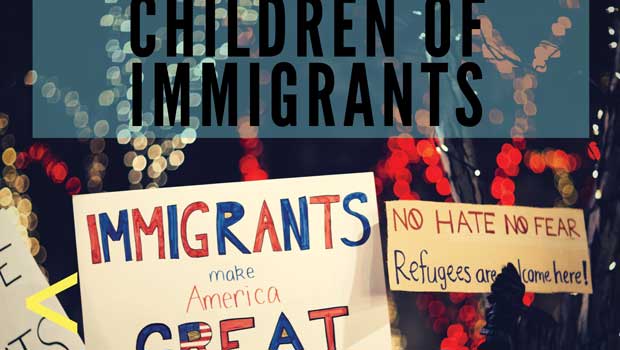
Children of Immigrants
-
Physical Abuse in Relationships – Legal Advice for Immigrant Victims
If you are an immigrant victim of spousal abuse, you can still get a Green Card without any help from your U.S. citizen or Green Card holder spouse who has sponsored you. The Violence Against Women’s Act guarantees that if you are abused or even threatened by your U.S. citizen or Green Card holder spouse, you can self-petition for a Green Card.
BackgroundIn today’s United States, it is very common to encounter countless examples where a husband or a wife is abused, exploited, tortured, and victimized by their U.S. citizen spouse. Since victims are sponsored by their spouses for a Green Card, they constantly face and fear deportation from the United States. Consequently, they keep bearing the unbearable. Wives threaten their husband to get them deported from the U.S. and often do not accompany them when they are scheduled for an interview at the Immigration Office. They use blackmail and exploit their immigration status to extort money from them. As a result, most victim immigrants are afraid to report the abuse to the police or other authorities. The government has therefore legislated a special act, which is known as the “Violence Against Women’s Act”, which provides a series of guidelines, benefits, and relief so that victims no longer have to be afraid of their immigration status. The law states that if you are abused by your U.S. citizen or Green Card holder spouse who has also sponsored you for a Green Card, you can self-petition for a Green Card. Read on for more details.
Who can apply for a battered spouse petition?
Any alien who is married either to a U.S. citizen or a Green Card holder can apply for permanent resident status under battered spouse petition if he/she is abused by his/her spouse. The petition is also known as “self-petition”, which means that the victims can petition on their own without any help or sponsorship from their U.S. citizen or Green Card holder spouse.
Who is Eligible?You may self-petition if you are a battered spouse married to a U.S. citizen or lawful permanent resident (Green Card holder). Unmarried children under the age of 21, who have not filed their own self-petition, may be included on your petition as derivative beneficiaries. For example, “A” is a U.S. citizen who is married and files petition for a Green Card in the immigration for “B”, who is an Indian citizen. “B” also has two children from his first marriage. “A”, the U.S. citizen spouse, abuses and threatens “B” for deportation. “B” and his two children can still qualify for permanent residence even if “A” does not cooperate and continues threatening for reporting them to Immigration.
What immigration law applies to the battered spouse petition?
Under the Violence Against Women Act (VAWA) passed by Congress in 1994, the spouses and children of United States citizens or lawful permanent residents (LPR) may self-petition to obtain lawful permanent residency. The immigration provisions of VAWA allow battered immigrants to file for immigration relief without the petitioner’s assistance or knowledge in order to seek safety and independence from the abuser.
What if I was married to a U.S. citizen outside the U.S.?
It does not make any difference if you were married inside or outside the U.S. But, following your marriage, you can only self-petition and use this law if you are in the U.S. You cannot apply under this law from outside the U.S.
Can I qualify even if I am married to a Green Card holder?
Yes, you can. Even if you are married to a person who is a Green Card holder and is not a U.S. citizen, you can still self-petition and qualify as long as you meet the other requirements.
What are the examples of abuse?
It really varies from case to case. However, generally, if your spouse physically or mentally tortures you, abuses you in front of family members and friends, frequently insults you and does not allow you to live the way you wish to, blackmails and extorts money from you, or even if your spouse threatens you that he/she will report you to the immigration for deportation this can alone be enough to qualify for self-petition. In fact, in one of the cases, a person’s wife constantly threatened to get him deported from the U.S., and just based on this threat, the husband was able to get a Green Card with any assistance from his wife.
Can I still qualify for self-petition even if I am divorced?
Yes, you can apply even if you are divorced, provided your marriage was terminated within the last two years preceding the date of your self-petition. Therefore, at the time of filing, if you were already divorced for more than two years, you cannot apply. But, if two years have not lapsed, then you can qualify. Meanwhile, for those who are not divorced yet, it is very important for them to consult with an immigration attorney before they file the complaint for a divorce. It is important because all of the details of abuse that were inflicted upon you by your spouse must be included in the divorce complaint.
What happens if I am divorced for more than two years?
As per a change in law, which came into effect on October 28th 2000, you may still be eligible for cancellation of removal, which means that you can request from an Immigration Judge to not be deported. This is provided for under Section 240A(b)(2) of the INA. To qualify, he/she must meet the other requirements that would be necessary for the approval of a self-petition and must also have been physically present in the U.S. for three years immediately preceding the filing of the application for cancellation of removal.
Is it necessary that I was abused by my spouse inside the U.S. to qualify?
Yes, you must have been battered in the United States unless the abusive spouse is an employee of the United States government or a member of the uniformed services of the United States. If you were abused after your marriage by your spouse outside the U.S., even though your petition is pending in the U.S. immigration, you do not qualify for it. You must be abused in the U.S. after the marriage.
What if I remarry someone else after my divorce?
If you are remarried to someone else, you are no longer eligible to file for self-petition. However, you are still eligible to file under this law if you are abused by your current spouse.
Do I qualify under this law if I am ordered deported by the Immigration Judge?
Yes, you can qualify for Green Card even if you are ordered deported. However, first you need to file self-petition in the USCIS office, and once your petition is approved, based on that approved petition, you can file a motion to reopen your case in which the Immigration Judge entered the deportation order against you. Based on the approved self-petition, the judge can re-open your case and grant you the cancellation of removal, which means that your order of deportation will be stopped.
Can I apply for a Greed Card if I entered into the U.S. without a visa?Yes, even if you entered into the U.S. without a visa, you can still apply for a Green Card sitting in the U.S., and you do not have to leave the U.S. to get the Green Card.
What is the Application Process?Filing of Application: You should prepare and attach the entire application and mail it to the U. S. Immigration Services to the concerned office. For the New York region, all of the applications are submitted to the Vermont Service Center.
Notice of Receipt: You should receive an acknowledgement or Notice of Receipt within a few weeks after mailing the application and fee to the USCIS. However, if you mail to the correct department addressing it to the correct location, a quick response is very likely. In general, however, it takes approximately 120 days before you receive a notice.
Prima Facie Determination: Battered immigrants filing self-petitions who can establish a “prima facie” case (apparent qualification) are considered “qualified aliens” for the purpose of eligibility for public benefits. The USCIS reviews each petition initially to determine whether the self-petitioner has addressed each of the requirements listed above and has provided some supporting evidence. This may be in the form of a statement that addresses each requirement. This is called a prima facie determination. If the Service makes a prima facie determination, the self-petitioner will receive a Notice of Prima Facie Determination valid for 150 days. The notice may be presented to state and federal agencies that provide public benefits.
Approved Self-Petition: If the self-petition or battered spouse petition is approved, the Immigration Service may exercise the administrative option of placing the self-petitioner in deferred action. This is the case if the self-petitioner does not have legal immigration status in the United States. Deferred action means that the Service will not initiate removal or deportation proceedings against the self-petitioner. Deferred action decisions are made by the Vermont Service Center and are granted in most cases. Deferred action validity is 27 months for those for whom a visa was available on the date that the self-petition was approved. All others have a validity of 24 months beyond the date on which a visa number becomes available. The Vermont Service Center has the authority to grant appropriate extensions of deferred action beyond those time periods upon receipt of a request for extension from the self-petitioner. Once the petition is approved, you are in line for a Green Card and in a few more months, you can get the Green Card.
Can I get Employment Authorization based on this application?
If your petition is approved by the Immigration Service Center, you qualify for employment authorization. Your employment authorization is renewable until you receive your Green Card. Meanwhile, you are also eligible to travel on a travel document.
Do I need an attorney to help me prepare the application?
Advice is generally a must on a self-petition case. It is therefore advisable to consult with an attorney who not only practices in immigration law, but must also be familiar with the battered spouse petition and its process. It is a very lengthy and cumbersome process, and advice of an attorney can be very fruitful.
We hope this FAQ on this important topic was helpful. If you are a victim of domestic violence or know someone in such situation, you should know that help is available through Ali & Bains Firm, where we can also assist the victims in further guidance about their legal rights and the possibility of getting a Green Card without any help from their spouses.