بسم الله الرحمن الرحيم

Author: Nailah Dean

  • Ramadan — Some Keys to Unlocking Closeness to Allah

    Ramadan — Some Keys to Unlocking Closeness to Allah

    Ramadan is upon us once more, and I am excited. For Muslims across the world, it is the most important month of the entire year, filled with immense blessings and rewards. During this month, most people not only decorate their homes or re-stock their pantries, but they also generate ideas of how to increase their ibadah. This might include memorizing a new surah, listening to more lectures, going to tarawih prayer, and/or increasing acts of charity. There are so many different ways to increase closeness to Allah.

    One practice that I have adopted is attempting to memorize and understand more of the 99 names of Allah. In doing so, I gain greater understanding of the attributes of Allah and am able to incorporate their significance and ramifications into my daily life.

    Al-Salam

    One of the first names I studied is Al-Salam. Salam means peace, soundness, safety, and security. It also means perfection and freedom from fault. I am witness to Allah’s attribute of Al-Salam as the giver of peace and serenity because of the goodness He instills within mankind. Allah has created a world with dueling forces of good and evil. But He has promised us that ultimately it is the good within us that will lead us to Paradise. While it may seem strange to pinpoint human beings at the center of an example about Allah’s peace, it makes sense when you remember people in your life and in the world that embody peace. Have you ever met someone whose very demeanor and presence brings a feeling of calm over you? Or what about well-known leaders and scholars who have been the champions of peace in periods of intense conflict or war? Allah’s ability to create peace and inspire it in the heart of man, is something that brings me immense comfort.

    On the other hand, I connect with Allah when I personally am in need of peace, and it is life circumstances or human beings that have disrupted my peace. In moments when I need to find calm, I turn to Allah. Complaining to Him about my troubles and asking Him to bring me peace of mind and heart always leads to alleviation of stress. One du’a of the Prophet that I make is the following: “O Allah, I seek refuge with You from worry, grief, incapacity, laziness, miserliness, cowardice, debt, and being overpowered by others.”

    Al-Jabbar

    Another name of Allah that I ponder is Al-Jabbar. It means The Compeller. Yaqeen Institute breaks the meaning down further into two parts: 1) the One who is able to compel and subdue all His servants, with all of creation submitting to Him; and 2) the One who mends the broken and enriches the poor. As the world currently watches a worsening genocide, it brings me comfort to know that Allah will enact control over the oppressors and bring to justice those who have injured, harmed or murdered the innocent. The Prophet (s) said, “The arrogant and the tyrants will be gathered on the Day of Resurrection as tiny particles. The people will trample upon them due to their disgrace before Allah Almighty.”

    Yaqeen Institute also described the name Al-Jabbar as the One who mends what is broken and the One who consoles the hearts. This brings me comfort to know that those whose hearts have been harmed due to the disregard and abuse from their fellow man, will have their hearts soothed by Allah and their wounds healed.

    Al-Rahman

    One of the most well-known names of Allah is Al-Rahman, the Most Merciful. Rahmah is tenderness, kindness, care and compassion. Allah says in the Qur’an, “My mercy encompasses all things.” In that same vein the Prophet (s) told us, “When Allah completed the creation, He wrote in His book with Him upon the Throne, ‘Verily, My mercy prevails over My wrath.’”

    I rely on this name when I am feeling lost due to all the mistakes I have made in my life. In those moments I start to doubt myself and my abilities to do good and receive good. It’s a comfort to remember that as long as I am able to turn to Allah to ask for help or ask Allah for forgiveness, He SWT will always respond with mercy.
    Reflecting on the Names of Allah

    I have only mentioned three of the 99 Names of Allah. According to the Prophet (s), the reward is great for memorizing all of His 99 names. The Prophet said, “Allah has ninety-nine names. Whoever memorizes them will enter Paradise” (Bukhari and Muslim). We know of course that memorizing and reciting His names comes with further responsibility. We have to strive to understand the meaning and scope of each name and to see how each one can connect to, and impact, our daily lives. For example, we mentioned above that He SWT is Ar-Rahman, The Most Merciful. He is also Ar-Raheem, the Bestower of Mercy. So, when one has sinned, calling upon Him with sincere repentance, and asking for His mercy, can bring relief and set things straight.
    Allah SWT tells us in the Qur’an, “And the most beautiful names belong to Allah, so call on Him by them” (7:180). What better time than Ramadan to learn His names, to memorize as many as we can, and to reflect on their beauty and power and meaningfulness.

  • Origins of Black History Month

    Origins of Black History Month

    Every February, Black History Month rolls around and we begin to witness schools, corporations and small business owners, and a wide variety of civic organizations seizing the moment to educate and commemorate Black history and the contributions that Black Americans have made. This year, before getting swept up in the frenzy of the month, I took the time to learn about the origins of Black History Month. In doing so, it has increased my appreciation and love of the month and the people it attempts to honor.


    The origins of the month began with the historian Carter G. Woodson. Woodson was born in 1875 to former slaves. His schooling was inconsistent because he worked in coal mines to supplement his father’s income. Eventually, he entered high school at the age of 20, and went on to get a degree in literature from Berea College in Kentucky. Eventually, he went on to earn a Ph.D. from Harvard University.


    It wasn’t until he was excluded from attending American Historical Association conferences that he realized Black history would never be told by White-dominated organizations and their professionals. That’s when Woodson had the idea of creating a new group to preserve and honor Black history.


    In 1915, Woodson, alongside the minister Jesse E. Moorland, founded the Association for the Study of Negro Life and History (ASNLH), an organization dedicated to researching and sharing achievements made by Black Americans and those of African descent. The success of an event in Illinois inspired Woodson and ASNLH to do more. It was a celebration of the fiftieth anniversary of the Emancipation Proclamation sponsored by the state of Illinois. The celebration included exhibits that highlighted the accomplishments and progress of African Americans since slavery. The crowds that gathered to learn and witness the exhibit were in the thousands.


    ASNLH sponsored a national Negro History Week in 1926, choosing the second week of February to coincide with the birthdays of Frederick Douglass and Abraham Lincoln. It was important for Woodson to stick with February because Black communities had been celebrating Douglass during that month since the late 1890s. It worked — Negro History Week was popular. Black history clubs appeared across the country. Teachers needed materials to instruct their students, and the general Black community that was expanding its middle class sought more Black culture and literature.


    The Association, led by Woodson, thus worked to produce the materials needed to educate the public about the vibrant and important history of African Americans. They created lessons for teachers, plays for historical performances, and posters of important dates and people. As the movement grew, mayors issued Negro History Week proclamations and, in places like Syracuse, progressive White communities joined Negro History Week with National Brotherhood Week. In the 1940s, a few places like Chicago and West Virginia expanded Negro History Week to a full month-long celebration. Then, on the 50th anniversary of the beginning of Negro History Week in 1976, the Association for the Study of African American History made the shift to Black History Month. President Gerald Ford said that with the celebration “we can seize the opportunity to honor the too-often neglected accomplishments of Black Americans in every area of endeavor throughout our history.


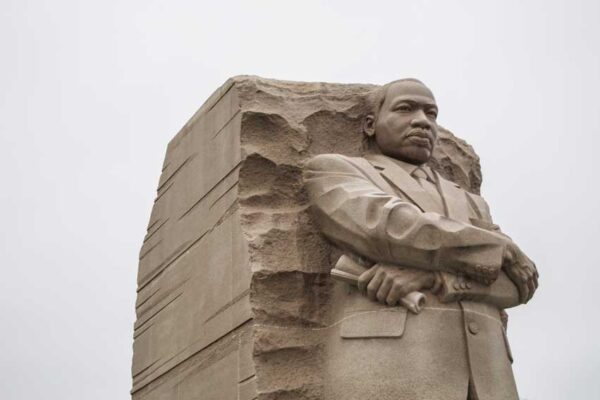
    Today, Black History Month continues to be recognized as an important month in which we spend time reflecting on Black history, devote educational resources to the topic, and create or engage in civic events to learn about and disseminate more widespread interest and appreciation of the history and accomplishments of African Americans. During this month we recognize and honor Black activists and civil rights pioneers such as Harriet Tubman, Sojourner Truth, Marcus Garvey, Martin Luther King Jr., Malcolm X, and Rosa Parks.


    And there have been Black leaders in industry, politics, culture, and more. In the realm of law, John Mercer Langston was the first Black man to become a lawyer in the U.S., passing the bar in Ohio in 1954. He then went on to become one of the first African Americans ever elected to public office as Town Clerk.


    Thurgood Marshall was the first Black man to be appointed to the Supreme Court. Marshall served on the Court for 24 years, having been appointed by President Lyndon B. Johnson.


    The first African American woman elected to the House of Representatives was Shirley Chisholm in 1968. She continued to make headlines four years later when she became both the first female candidate and first major party African American candidate to run for president.


    When we think of wealth of the past, we seldom think of prominent African Americans like Madam C.J. Walker. Although she was born on a plantation, she became the country’s first self-made female millionaire after creating a line of popular Black hair care products. She went on to create Madame C.J. Walker Laboratories which was a successful hair care company for decades after. Similarly, Robert Johnson became the first African American billionaire when he sold Black Entertainment Television (BET) to the giant media Viacom group in 2001.


    As a Black American, I believe it’s important to study and honor those who came before us, so that we can encourage and uplift Black youth to aspire to greatness for the future. I pray we continue to recognize the leaders, activists, prominent individuals as well as ordinary men and women — all who have paved the way for Black Americans to succeed, innovate, and lead.

  • Finding Compromise in Marriage

    Finding Compromise in Marriage

    In marriage, conflict is inevitable. The little irritations that transpire over weeks, months or even years, add up. Eventually, the little problems escalate into something big and unavoidable. The conflict becomes the elephant in the room, and the only way to remove it, is to seek a solution. Sometimes that means seeking compromise.

    A healthy, long-lasting marriage is not one devoid of arguments or fights, it is one where the couple understands how to navigate a conflict which can, at times, mean finding compromise. Understanding how to compromise has been determined to be a predictor of a successful relationship. John Gottman, renowned marriage expert and psychologist, in his book The Seven Principles for Making Marriage Work, shared his research that couples who were skilled at resolving their differences had a higher likelihood of being satisfied with their relationship. In his book, he provides examples of couples that had solvable versus perpetual problems. The couples with ongoing, yet solvable issues, were able to adopt a steady rhythm in conflict resolution and compromise.

    But what does it mean to find compromise in your marriage? How can you find a long-lasting solution that allows both parties to feel at ease? Well, the short answer is — it’s a process. It involves the parties engaging in a constructive dialogue that will allow them to make concessions or sacrifices to achieve a mutually agreed-upon solution. The question then is: How? How does one engage in a level-headed conversation and practice that will allow for the process to occur? There are several steps that can be taken to get to a compromise.

    Identifying Your Wants/Needs

    As any good negotiator knows, the first thing to do before entering into negotiations is to gain clarity on what you want. What is at the heart of this conflict and what is it that you are seeking from a peace deal? It’s necessary to take a moment to reflect with a clear head and determine what it is you need to feel that a resolution has been attained. Have you thought about the why? Have you asked yourself how and why you might have been contributing to the conflict? Are you making demands based on your lower nafs? Are you keeping in mind the bigger picture? Is getting what you want going to lead you to being a happier spouse and having a healthier marriage? Will you be okay if you get less than what you hope for? Part of compromising might be potentially giving up one thing, to gain another. What are you willing to sacrifice? These questions must be answered before engaging with your spouse.

    It is very important to keep in mind that achieving a compromise through negotiations should avoid certain things. The first and most important is that religious obligations and doctrine cannot be compromised. The other is that both spouses should be careful to stay grounded in sincerity and fairness so that the lower nafs does not hold sway. It might be that one of the spouses is more articulate than the other and is able to make a more persuasive case. But if he or she is coming from the lower nafs, then they might think they are achieving something positive, something in their self-interest, but in actuality they are indulging their ego and selfish desire; and that is contrary to what is necessary to resolve conflict.

    Active Listening

    Of course, there is no way to achieve a negotiation without turning on your active listening skills. It is crucial to share your feelings and then provide a time for your partner to speak without you butting in, to question, resist, or even attack their viewpoint. Active listening includes removing all distractions, and focusing on what the other person is saying. It is helpful to repeat back to them, in your own words, what they have said to prevent misunderstanding and to build trust. Then the two of you can come to a place where you are ready to do the nitty-gritty negotiating.

    Meeting in the Middle

    It’s important not to jump quickly to a resolution. It may take a few different times to come to a solution that works for both sides. It’s okay to present several proposals, and do multiple meetings of the mind, before coming to a final resolution. You should be able to explore the potential advantages and disadvantages of each possible outcome. You should always be open to new ideas and re-engage with active listening to fully understand your partner’s perspective. If what your spouse explains about their perspective is not clear to you, ask clarifying questions. But do so in a way that sincerely seeks to understand how they see things. Avoid any attitude or tone of challenge, annoyance, or blame. Be respectful of their feelings and ask about how they are feeling at various points to make sure you are both experiencing the process in a positive way. Go back to your objectives of what you want and see if that has changed now that you hear your partner’s perspective.

    Understand that you might need to be more flexible than you intended. For a marriage to succeed, there must be more than selfish interest.  In the end, it is both parties that must make concessions. Both spouses must make the intention to seek common ground and to stay moderate in their perspective and their objective. The Prophet (s) said, “… do good deeds properly, sincerely and moderately, and worship Allah in the forenoon and in the afternoon and during a part of the night, and always adopt a middle, moderate, regular course whereby you will reach your target ” (Sahih Bukhari). The ultimate target, of course, is Paradise. Maybe you will find it necessary to bring in a third party (e.g., a counselor) to help you navigate the process or even suggest a few ideas that can facilitate resolution.

    Seeking Inspiration from the Qur’an

    As Muslims, we can find inspiration in the Qur’an for finding the positive even in the midst of what seems difficult or negative. In Surah, al-Nisa, verse 19, Allah says “Live with them in accordance with what is fair and kind: if you dislike them, it may well be that you dislike something in which Allah has put much good” (4:19). This verse is directed at husbands when navigating difficulties with their wives. Often our nafs and our short tempers can blindside us and make it harder for us to see the goodness in our marriage and our spouse. But Allah reminds us in this surah that we should be patient and tolerant and look for the good. With that intention, when we make efforts to resolve marriage conflicts, we are seeking Allah’s pleasure and approval. Only with His blessing, can our hearts find rest.

  • Back to Nature ­— Reflecting on Allah’s Signs

    Back to Nature ­— Reflecting on Allah’s Signs

    We are arguably living in the most stimulating age. The amount of social media, news, and television that we consume on a daily basis is overwhelming. Notifications on our phone tell us the good, the bad, and the ugly of what’s happening in the world. Our obsession with what’s going on in our friends’ lives, and the compulsion to have them know what’s happening in ours, takes a toll on our peace of mind. The ability to unwind after a long day’s work is getting harder and harder because it’s difficult to “unplug.”

    The good news is that summer and autumn are a perfect opportunity to do so. Warm weather and vacation time can provide the opportunity to distance ourselves from the madness of the online world. With an intention to find a renewed self, we can immerse ourselves in nature to cultivate a feeling of tranquility.

    In thinking about the significance of nature as a source of sustenance, beauty, and peace, I looked to the Qur’an. There are so many ayahs that direct us to nature. The mentioning of certain elements of nature are used to help us identify Allah’s signs. It’s important to understand what those signs are so that we can achieve a deeper awareness of Allah and the enormity of His power, wisdom, and mercy. In taking a closer look at how Allah describes the natural world, we can increase our relationship with Him SWT.

    Searching for Allah’s Signs

    When we are young, our ability to grasp an understanding of Allah and even our own existence is difficult. For a child, not being able to see or feel something or someone can make it hard to establish a connection. What was helpful for me growing up was being told about Allah’s signs. Sometimes Allah gives us indication of His existence, mercy, and presence by His creation of people, places, and things on Earth. In surah Qaf, Allah says, “And the Earth, We spread it out, and cast therein firmly-set mountains and We have made to grow therein of all beautiful kinds; giving insight and a reminder to every servant who turns [to Allah]” (Qur’an 50:7-8).

    These verses describe the beauty that Allah unfolded on the Earth when He created mountains where trees and plants of all kinds grow. According to PRB, a demography and global health organization, “10 percent of [the] world population, live in mountain areas.” In addition, 37% of the humans living today “rely on mountains to provide fresh water to drink, grow food, generate hydropower, and sustain industries.” The mountains, like all natural phenomena are visual reminders of Allah’s existence and provisions to those He has created. If you travel to any major mountain range in the U.S like the Appalachians, Rocky, or the Sierra Nevada you will be amazed by the enormity of the rocks. It will make you contemplate your existence and inspire you to think about Allah’s might and ability to create massive, beautiful natural aspects with just a word, “’Be,’ and it is” (Qur’an 36:82).

    Further, Allah illustrates the power of His revelations by noting that even the mountains, however enormous, would feel the impact of Allah’s majesty: “Had We sent down this Qur’an upon a mountain, you would have certainly seen it humbled and torn apart in awe of Allah. We set forth such comparisons for people, so perhaps they may reflect” (Qur’an 59: 21). We are told here to reflect upon the fact that even the mountains, so firmly-set, so colossal, would be humbled and broken asunder due to awe of Allah.

    Another one of the major signs from Allah is the existence of night and day. Allah explicitly tells us in Surah Ali Imran, The Family of Imran, “And to Allah belongs the dominion of the heaven and earth, and Allah is over all things. Indeed, in the creation of the heavens and the earth, and the alternation of the night and the day are signs for those of understanding” (Qur’an 3:189-190). He SWT explicitly says that we should look to the night and day as a sign, as a reminder of Allah’s power and sovereignty, His mastery over the world.

    I remember years ago, during a trip to Morocco, I had the opportunity to camp in the Sahara Desert. I was captivated by the sunrises and sunsets, as both the sun and the moon rise and set upon the stillness of the sand dunes. Their presence and impact on the desert had such an uplifting effect on my heart and mind. The views from the top of the dune of the blazing sun falling over the horizon were incredible. I just couldn’t believe so much beauty existed.

    The captivating experience of gazing at the planets and stars reminds me of the story of Prophet Ibrahim. He too used the existence of the sun and moon to ponder upon his Creator. Part of his story is set out in Surah Al-An’am, The Cattle: “When the night grew dark upon him, he saw a star and said, ‘This is my Lord!’ But when it set, he said, ‘I do not love things that set.’ Then when he saw the moon rising, he said, ‘This one is my Lord!’ But when it disappeared, he said, ‘If my Lord does not guide me, I will certainly be one of the misguided people.’ Then when he saw the sun shining, he said, ‘This must be my Lord— it is the greatest!’ But again, when it set, he declared, ‘O my people! I am free from whatever you associate [with Allah]. I have turned my face towards the One who has originated the heavens and the earth; I am an upright one, not one of the polytheists’” (Qur’an 6:76-79).

    In these verses we see that Prophet Ibrahim contemplated the stars, the sun and the moon and came to the conviction that the true Lord of the Worlds is one who is constant and does not disappear. He understood that even though those natural elements were impressive, they clearly were just manifestations of Allah’s creation, and that only He SWT was the originating and presiding divinity. Just as Prophet Ibrahim took the time to ponder upon nature, to think about His creator, we must do so as well.

    We can also turn to the growth of fruits and vegetables when seeking signs of Allah’s love, generosity, and magnitude. In Surah An-Nahl, The Bees, Allah says, “He is the One Who sends down rain from the sky, from which you drink and by which plants grow for your cattle to graze. He causes to grow for you thereby the crops, and the olives, and the palm trees, and the grapes, and of every kind of fruit; most surely there is a sign in this for a people who reflect” (Qur’an 16:10-11). Here, we are directly told that the abundance in nature are signs for us to reflect on, not just on Allah’s existence, but generally on the creation of all things and the sustenance we have been provided. The diversity of fruits and vegetables, of trees and plants, really fills me with wonder and awe at the bounty of Allah’s gifts to His servants.

    How to Enter Upon the Signs for Yourself

    While we still have the last few weeks of summer left, as well as the coming of autumn, take advantage of the opportunity to return to nature. You don’t have to do a cross country trip or hike the Rocky Mountains. You can take a walk to your local park or go to a lake or ocean side, where there aren’t too many people, to find the peace needed to focus on Allah’s signs. If you’re in California, maybe try visiting Lake Tahoe. If you’re on the East Coast, plan a road trip to Niagara Falls. If you’re not able to do a big trip now, then simply go to a park early in the morning where there are lots of trees and you can hear the birds chirping and see squirrels build nests and gather nuts and seeds. Take time to notice the little things. And of course, silence your phone so you aren’t distracted by the online world. In doing so, you will be able to reflect better on your time and purpose in this world, and how you intend to continue cultivating a closeness to Allah SWT.

  • Healthy vs Unhealthy Guilt

    Healthy vs Unhealthy Guilt

    Have you ever encountered the heavy feeling that you did something wrong? Did it follow you around for days, weeks, or months nagging at you with flashbacks of the mistake you made? Do you remember the sinking sense of remorse even after you sought forgiveness or repentance? That little pesky emotion called guilt is a natural part of the human experience.

    The American Psychological Association defines guilt as the “self-conscious emotion characterized by a painful appraisal of having done (or thought) something that is wrong and often by a readiness to take action designed to undo or mitigate this wrong.”

    In my attempts to learn about this emotion, how it impacts us, and how to use it for our benefit, I discovered that psychologists divide guilt into two categories: healthy guilt, and unhealthy guilt. They have studied the positive impacts of “healthy” guilt and found that it can result in positive behavior, whereas studies on “unhealthy” guilt show that it leads people to self-deprecating behaviors.

    Shame, which sometimes accompanies guilt, is described as, “the additional strong fear of one’s deeds being publicly exposed to judgment or ridicule.” Distinguishing the two is important and it is said that “[s]hame is about the self” while “guilt is about things in the real world—acts or failures to act, events for which one bears responsibility” (Lewis, 1971).

    There is a fine line between guilt that is “healthy” and guilt that is “unhealthy.” Unhealthy guilt can often lead to shame, can become excessive and destructive, and is unable to find forgiveness. It is important to understand the distinction between healthy and unhealthy guilt in order to create an emotionally stable life. It is even more important to comprehend the distinction as a Muslim.

    Feeling Guilt, Seeking Forgiveness

    In Islam, we are taught the importance of atoning for our sins. Seeking forgiveness from Allah is as simple as saying “astagfirullah.” Yet, the requirements are sincerity, honesty with oneself, and the willingness and ability to accept that Allah SWT forgives us again and again.

    In order to genuinely repent, one must have an active conscience that produces feelings of guilt when one has done wrong. This is all part of operating from the nafs al-lawwamah, the self-reproaching soul, which is the second stage of the soul. At the lowest stage, one indulges in sin and wrongdoing without any pangs of conscience. But the self-reproaching soul has become conscious of shortcomings and wrongdoings and is vigilant about working on the self. Repenting for wrongdoing and asking Allah for forgiveness is then the natural course of action.

    The meaning of reproach is “to find fault with, to blame.” However, Islam is the middle way, the way of balance and proper proportion. So, when we are striving to live on a daily basis as a self-reproaching soul, we are not looking to beat ourselves down, to hate ourselves, or live in a guilt-laden way. When we commit to self-reproach, we try to be honest with ourselves, to admit when we have done wrong and strive to correct it. Imam Shafi’i said, “Whoever bears testimony to his [own] weaknesses will be granted uprightness.”

    If the sin or wrongdoing requires asking for forgiveness from another person, we are encouraged to make peace with the person as soon as possible. We are warned of the dangers of not seeking absolution in this life by learning about the people who carry guilt on Judgment Day. A verse in the Qur’an provides this warning: “And the Day the wrongdoer will bite on his hands [in regret] he will say, ‘Oh, I wish I had taken with the Messenger a way. Oh, woe to me! I wish I had not taken that one as a friend’” (25:27-28).

    Healthy Guilt Has a Positive Impact on Behavior

    We are commanded to reflect on our wrongdoings while we have the opportunity to correct them. In this vein, we find benefit in having healthy guilt. The feeling hangs on our hearts and agitates our minds, making us feel bogged down, stressed, and anxious. Thus, it provides us with an internal reminder to repent and strive to do better. This has positive effects on the individual, emotionally, spiritually, and behaviorally. Social science supports this assessment. A study by Hoffman et al. (1982) found that children who displayed a healthy sense of guilt were more likely to exhibit prosocial behavior and empathy towards others. An article in Psychology Today mentions a 2007 study by Tangney et al. that “found that individuals who experienced healthy guilt were more likely to have higher levels of moral reasoning and be less likely to engage in unethical behavior.”

    As these studies indicate, healthy guilt can have a positive impact on our behavior. Not only can it trigger positive actions like seeking repentance, but it can be beneficial to preventing harmful actions or behavior in the future. On the other hand, unhealthy guilt often slides into shame and can have a negative impact on our growth and spirituality. The APA’s definition for shame is:
    “a highly unpleasant self-conscious emotion arising from the sense of there being something dishonorable, immodest, or indecorous in one’s own conduct or circumstances. It is typically characterized by withdrawal from social intercourse […] which can have a profound effect on psychological adjustment and interpersonal relationships. Shame may motivate not only avoidant behavior but also defensive, retaliative anger.”

    Instead of inspiring one to take steps to seek repentance, or reform one’s behavior in the future, unhealthy guilt can be crippling. In 2011, a study by Moser et al. found that excessive guilt was associated with symptoms of depression and anxiety. Participants who experienced unhealthy guilt were even more likely to engage in self-punishing behaviors.

    As Muslims, we must be especially careful to recognize and resolve feelings of unhealthy guilt, because they can prevent us from seeking closeness to Allah. Shaytan may attempt to convince us that our actions are so terrible that they are not worthy of forgiveness. However, Allah directs us to call to him whenever we fall short: “O My servants who have transgressed against themselves [by sinning], do not despair of the mercy of Allah. Indeed, Allah forgives all sins. Indeed, it is He who is the Forgiving, the Merciful” (39:53).

    This verse teaches us that we should never hesitate to turn to Allah. He loves when we call upon Him for assistance, for guidance, for His forgiveness.

  • The Beauty of Eid al-Fitr in America

    The Beauty of Eid al-Fitr in America

    I’ve never spent Eid al-Fitr — the celebration that ends the holy month of Ramadan — in a Muslim country, but I have heard stories. It is remarkable that more than 2 billion Muslims around the world celebrate Eid al-Fitr and friends have shared with me wonderful memories of Eids abroad where people celebrated in the streets, sometimes with parades, playing drums, and singing nasheeds. They describe the mountains of food they share with family members and neighbors. They talk about how the children are on a long holiday break and receive their Eid money in between getting hugs and kisses from elders. Many people say that there is no place like Eid in a Muslim country because as soon as you leave your home, you feel the radiance of the people’s joy at every corner.

    In the U.S, where I’ve spent all my Eids since childhood, I have found that Americans have a harder time trying to find unique and creative ways to mark the ending of Ramadan. Although Muslims in America, being a minority, have to create their own experience of celebratory joy and fun, different from their Muslim counterparts abroad, the day still manages to be beautiful in so many ways. So how do American Muslims generally celebrate the blessed holiday?

    First, because it’s not a holiday recognized by the federal government, we don’t all automatically have the day off. We must communicate with employers in advance of the holiday to request it off. Depending on the moon sighting, it is even sometimes challenging to know which date to request off from work or school due to the uncertainty of the sighting. However, you can use an official letter from the local mosque announcing the holiday and potential days for Eid to provide you with some support. In the case of a day off from school, the school should mark it as an excused absence and allow the child extra time to turn in assignments. In some school districts where Muslim students are high in number, there has been success in petitioning the school district to recognize Eid al-Fitr and mark it as an official school holiday.

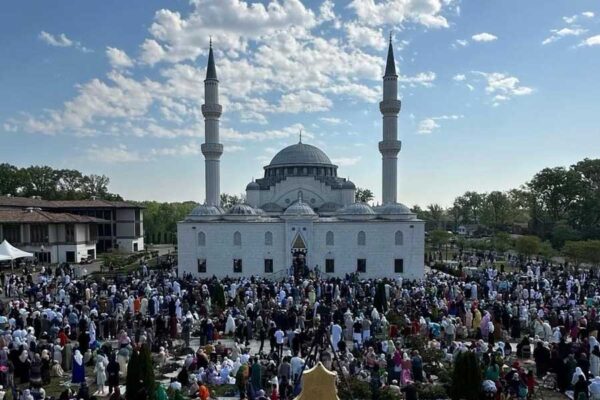
    If the day off is secured, most individuals and families will pray in congregation, the special Eid salat at the local mosque. Some mosques even rent out big venues like convention halls or football stadiums, or parks to pray in large numbers. Before leaving the house, people put in effort buying new clothes, planning their outfits, and putting on new scents. After the salat, Muslims take time to greet one another and take photos with their families. Depending on the mosque, there are various activities, pastries and tea, toys, and maybe even a mini carnival for the kids.

    After festivities at the mosque, my family usually goes out to eat for breakfast. Some years it was as simple as IHOP, other years it turned into a hunt for the best brunch in the city. We would keep our fancy clothes on and sit together happy to be eating pancakes during daylight hours, as this was a day of celebration, not fasting. With breakfast finished, we sometimes go home for a quick “Eid nap.” Based on social media mentioning, the instituting of an Eid nap seems to be a quintessential part of the American Eid tradition: fill your stomachs in the morning and then take a pause in celebrations for a quick nap. This allows your body to catch up on sleep since you probably stayed up after Fajr to prepare for festivities.

    If there are small children in the house, it also may be the time when gifts are opened. My parents always wanted us to feel the joy of Ramadan even if we weren’t old enough to understand it’s significance or could partake in fasting. So, from a very young age we would open our gifts that would be stacked in the middle of the living room with our names written on the wrapping paper. I know many of my friends growing up would instead receive “eidies” which were envelopes of money that they could use on whatever toys or gadgets they wanted.

    The post Eid activities vary from household to household. If people live close to relatives, they’ll spend the evening hopping from one home to the other to share a meal or give Eid greetings. If they don’t have family around, maybe they’ll choose to gather in a big community group and go for fun activities like miniature golf or bowling. I’ve seen some masajid organize groups specifically for singles or new Muslims who may not have anyone to spend the day with. I think organizing within the community to figure out how people are spending the day and encourage people to invite community members to their homes, is necessary to ensure no one feels alone on a joyous occasion.

    Regardless of which way you choose to celebrate Eid al-Fitr, it’s important to take stock of all the great habits you cultivated during Ramadan. It’s often said that the mosque is most empty the days following Eid because people are no longer entranced in the practice of praying daily salats at the masjid. It’s important that we not only celebrate on Eid al-Fitr, but we think about all the good we busied our time with during Ramadan and what of those newly formed good habits we can continue. We must not just go back to our old habits, allowing our eyes and ears to get thrown quickly back into dunya affairs. We should take time to do things like fasting the six days of Shawwal in the days following Eid al-Fitr. If we can extend and reinforce the blessings from Ramadan, we are demonstrating our devotion and gratitude to Allah SWT. And we can pass on good traditions and practices to future generations.

  • Black History Month:  Redlining and Public-School Segregation

    Black History Month: Redlining and Public-School Segregation

    It’s February, and that means it’s Black history month in the U.S. While big and small businesses alike attempt to turn this important month into a marketing campaign to attract new customers, the month remains an important one for all those in America who recognize the injustices that have befallen Black Americans.

    Since the death of George Floyd, there has been an increased effort within the Muslim community to pay attention to the current oppression against Black communities. However, more can and must be done to further develop a consciousness about their struggles. By diving deep into the history of policies and laws that have hindered Black Americans, we can be better prepared to prevent further injustices.

    Two such important topics are redlining and segregation in public schools. The first hindered Black Americans’ ability to own homes and the second to receive a good education. Why are these significant? Because the ability to own property and have a quality education are fundamental to ensuring generational wealth.

    Redlining

    In 1933, the federal government created the Home Owners’ Loan Corporation (HOLC) as part of the New Deal. Under the leadership of President Franklin D. Roosevelt, the HOLC was intended to refinance home mortgages under default to prevent foreclosure and to expand home buying opportunities for Americans. The HOLC placed neighborhoods into categories based on a number of factors such as age and quality of construction of the homes, availability of infrastructure such as transportation, amenities such as parks, and especially based on their racial makeup. The different categories were color coded on maps for every metropolitan area in the country. The areas marked in red (hence redlining) were considered high risk for mortgage lenders. These areas were anywhere that African Americans lived or lived nearby.

    The logic of the Federal Housing Administration, which was founded on zero research, was premised on the idea that if African Americans and other communities of color bought homes in those suburbs, or even near those suburbs, the value of homes owned by Whites would decline, and therefore those loans would be at risk. Richard Rothstein’s book, The Color of Law, according to an NPR article, educates the public about specific segregationist policies outlined in federal handbooks like the Underwriting Manual of the Federal Housing Administration. The article notes that Rothstein points out that regulations that are written policy and published in government publications like the Underwriting Manual “are as much a de jure [e.g., legally recognized] ( . . . ) expression of government policy,” even if it is unconstitutional, “as something written in law.”

    The U.S. government today acknowledges the harm done to Black communities by such policies. The Federal Register, a federal government journal, notes that “The creation of the Interstate Highway System, funded and constructed by the Federal Government and State governments in the 20th century, disproportionately burdened many historically Black and low-income neighborhoods in many American cities. Many urban interstate highways were deliberately built to pass through Black neighborhoods, often requiring the destruction of housing and other local institutions. To this day, many Black neighborhoods are disconnected from access to high-quality housing, jobs, public transit, and other resources.” In some cases, highways were designed to separate Black neighborhoods from White neighborhoods.

    The 1968 Civil Rights Act included Title VIII and Title IX, known as the Fair Housing Act, which prohibited discrimination in the selling, renting, or financing of housing because of race, color, national origin, religion, sex, (and later amended to include) family status, or disability. While the Fair Housing Act of 1968 modestly addressed future discriminatory practices, it could not undo decades of discrimination that resulted in vast disparities of home ownership and the building of wealth by Blacks, as compared to Whites.

    In October 2021, the Department of Justice announced a new initiative to combat redlining. In their press release, they not only admitted that it was their previous policy to deny credit to communities of color, but that they were going to engage in new initiatives to “ensure that federal fair lending laws are vigorously enforced and that financial institutions provide equal opportunity for every American to obtain credit.”

    Public School Segregation

    The effects of redlining not only prevented many African American families from owning homes, building wealth through home equity, and passing that ownership and wealth on to their children, but it also impacted where their children were able to go to school.

    Due to Jim Crow segregation laws, Black children attended Black schools and White children attended White schools. With the Civil Rights era came a wave of Supreme court cases that cut against segregationist laws. One such monumental case was Brown v. Board of Education of Topeka (1954). There, the U.S Supreme Court ruled that racial segregation in public schools violated the Fourteenth Amendment. While this was a massive success in the battle for racial equality, it was resisted by the South which wanted to maintain school segregation. In instances like the famous case of the Little Rock Nine, where nine Black high school students attempted to enroll in an all-White high school, they faced mobs and death threats. Most Southern schools developed plans to delay or deny implementation of desegregation even though it was federally mandated.

    Although, there were subsequent orders from the Supreme Court in Brown II that directed states to take “deliberate speed” when implementing desegregation policies, most children still attended segregated schools in 1964. The federal government used funding incentives to get schools to move quickly on desegregation. However, the biggest obstacle was in moving children in urban areas to the suburbs where the White schools were. The majority of Black children had to be bused to attend those schools. This often meant leaving their home very early in the morning to attend school sometimes twenty or more miles from home. In those new schools, children often faced racism from both their fellow students and teachers. It wasn’t only the Southern states that protested integration. Northern cities like Boston and Detroit had historic protests from White parents who didn’t want busing to occur.

    Today, we continue to see public school segregation. In a recent study released by the U.S Government Accountability Office (GAO), more than a third of students (about 18.5 million) attended a predominantly same-race/ethnicity school during the 2020-21 year. Furthermore, 14% of students attended schools where almost all of the student body was of a single race/ethnicity. The studies also show that the lack of diversity means the Black and Brown children are more likely to attend under-funded schools.

    We can see the intersection of redlining and school segregation, and the resulting wealth gap and educational achievement gap between Black and White students. Yet, there are ways to address underfunded schools and some states are doing so.

    Funding for public schools in a district come from property taxes, as well as state and federal contributions. Since more affluent school districts receive more funding from property taxes than do lower income districts, the only way to level the playing field is to allocate more state and federal monies to low-income districts than to those with greater funding from property taxes. A number of states have already implemented this strategy including Utah, Ohio, South Dakota, Georgia, and others, and they have seen increases in students’ academic achievement. These reforms target not just greater funding for economically disadvantaged students, it also invests in the ongoing acquisition of knowledge and development of skills of the teachers, and greater funding for early childhood education. Other states such as Massachusetts, Minnesota, and New Jersey “have undertaken reforms based on these practices and, in turn, have narrowed achievement gaps.”

    Conclusion

    Redlining and school segregation have had lasting impacts on how Black people were and are able to succeed in this country. The systematic tactics to prevent them from owning their own home in the suburbs not only contributed to ongoing segregation, but they also impacted their children’s ability to get a good education in properly funded schools.

    I believe it’s important to learn more about these and other discriminatory policies so that we can better support Black communities. In addition, we must understand the past injustices, so we don’t allow the same types of wrongs to repeat themselves in the future. Muslims should look towards the well-known hadith for inspiration on what to do when they see an injustice: The Messenger of Allah said, “Whosoever of you sees an evil, let him change it with his hand; and if he is not able to do so, then with his tongue; and if he is not able to do so, then with his heart — and that is the weakest of faith” (Muslim). Following the footsteps of our beloved Prophet (s), we must do our best to take action by arming ourselves with knowledge on important history. This is how we can begin to effect change.

  • The Ultimate Human Mirror: Your Spouse

    The Ultimate Human Mirror: Your Spouse

    A marriage brings together two souls. Two families. Two worlds. It’s often portrayed in film and popular culture that these two individuals are opposites, yet they are brought together under the (naive) belief of “opposites attract.” Sometimes the differences are depicted as having opposite career paths, diverging personalities, or even differing belief systems. In those storylines, we see a battle in which one spouse attempts to assert his or her principles and lifestyle choices over the other. Maybe the outcome results in harmony, or maybe it ends in dysfunction. In either scenario, we are taught the message that it’s okay if your spouse doesn’t mirror you.

    As a Muslim, the question I aim to answer when thinking about compatibility in a spouse is this: to what degree does my potential spouse need to be at the same level of religious practice as me? If Allah is pleased with my actions and efforts to fulfill my deen, do I absolutely need to find a spouse who is also doing so? Can they be a good person, but not be as devoted to daily practice as I am? In answering this question, I hope to guide single Muslims who are seeking a spouse and trying to determine what to search for in terms of a potential’s religiosity.

    What If They’re Not as Religious as Me?

    When I was on my search for a husband, I often got stumped with this question. I would meet an eligible Muslim bachelor, someone around my age who had a solid career, similar education background, and similar interests as me. We would have conversations that were easy, fun, and fulfilling. I would often step away from those initial phone calls, or meetings, thinking, “wow, I would love to get to know this person better.” However, the very next meeting or two, when we were comfortable enough to get into serious questions about religion, I would discover that we were at very different levels of practice. Usually, the men I met were still trying to get all five prayers in during the day. They didn’t make reading the Qur’an part of their daily or weekly habit, and they often missed out on Jummah when it didn’t fit into their work schedule. One guy, in particular, told me he was too afraid to pray at work, and so he would make up two or three of his salats in the comfort of his home. I on the other hand, was busy trying to attend as many halaqas a week as possible, take classes to work on my tajweed, and was bold enough to pray at work or even in other public spots like the library or the park.

    When I assessed my religious practice, I realized I just wasn’t at the same level as many of my suitors. I would go back to them and ask questions about how they intended to improve, or if they even wanted to. Sometimes the answer would be yes, absolutely, and I want my spouse to inspire me to do better, and sometimes it would be I’m happy where I’m at and I don’t want anyone to change me. Either response just wasn’t good enough. I realized we weren’t at the same level of religiosity. Admitting that made me feel icky, because I feared that I was unfairly judging someone and that such a judgment was only to be done by the Almighty, Himself.

    In trying to find some support for my decision to move on, I relied on Islamic principles that taught me about the importance of establishing relationships where you can grow your Islam. Understanding the concept of suhba was part of my enlightenment. Suhba, understood to mean companionship, or the development of relationships, forming good company, is what all Muslims should strive to foster. Although the principle of isolation can be a tool used to reflect on the greatness of God and His beautiful religion, suhba, or righteous company can also have the same, if not stronger, effect.

    Your Spouse Should Be Your Mirror

    Evidence for this concept is found in the hadith “A believer is the mirror of his brother” (al-Tirmidhi). The more time you spend with a fellow Muslim, the more likely you are to pick up their religious habits. That’s why Islam encourages us to surround ourselves with righteous companions so that we may increase our chances of having good religious practices. That hadith has its literal meaning by mentioning “his brother [in faith],” but the meaning extends of course to any believer, including our spouse.

    As Muslims, the most important factor that we aim to find when seeking a spouse, is good deen. Although we are given lessons from the Sunnah that tell us we may use wealth, beauty, or lineage as a starting point for selecting a spouse, it is attraction to a person’s religion that is unequivocally the most important. This is the ultimate litmus test for compatibility.

    A marriage, if done properly, involves two people that connect with their mind, body, and soul. In the Qur’an, in Surah Baqarah, verse 187, Allah describes the spouse as “a garment” to emphasize the comfort, protection, and multiple layers of closeness you will obtain with your spouse. If it is understood that our spouse is meant to be so closely connected to us, it can only be that their spirituality and attention to their deen is also intended to be closely related. If one spouse wakes for Fajr, the other should do the same. If one spouse is mindful of using foul language, the other should be mindful of doing so too. The day-to- day religious practices we engage in should be something we can bond with our spouse over. It should never be a point of contention or dissention. Agreement, or mirroring of religion between spouses becomes especially important when there are children involved. So many times, when there are parents who have different levels of practice, the children are left confused about who they should follow. One parent is seen as strict and the other as easy-going. This can create division in the home if not addressed at the outset of the relationship.

    Ultimately, I answered that question for myself by searching for a spouse who not only would mirror my devotion and level of practice of Islam but would also inspire me to improve, because he, himself, was committed to improving his own devotion and practice. I strongly believe anyone searching for a spouse should focus on finding someone that strives to gain closeness to Allah and is actively doing so. I do not believe people should search for someone that is lightyears ahead of them in practice. I think having an uneven match of religiosity could create unrealistic expectations for both parties. Instead, if two individuals come together, for the purpose of marriage, and see good deen in each other, then that should be sufficient. Otherwise, the reflection in the mirror becomes opaque. We need to be mindful of selecting spouses who will help us to continue to improve our connection to Allah and who will help us achieve the ultimate goal of getting into jannah.

  • Improving Our Lives: Cultivating the Islamic Principle of Self-control

    Improving Our Lives: Cultivating the Islamic Principle of Self-control

    In the modern world, we are constantly seeking to improve ourselves. We seek to better our bank accounts, our bodies, and our minds. We turn to gurus, self-care professionals, and psychologists to help us achieve improvements. While the current trend is to talk about the importance of mindfulness, another principle that is often endorsed in today’s self-help literature is the concept of self-control. Psychologists and social scientists have done experiments like the popular Marshmallow test, to highlight the importance of delaying gratification, the ability to tell one’s own self “no.” This principle however is nothing new for those who have grown up in Muslim households where the idea of limiting one’s nafs, in accordance with sharia, is central.

    In Islam, control of our desires, whether they be halal or haram, is a key to finding success in the dunya and in the hereafter. In our study of the Qur’an and Sunnah, we can find so many examples of how a mastery of self-control can help us in our journey to the next life. The practice of self-control allows us to use our time and energy and resources to fulfill our purpose and make sure that our time in this life is not wasted but utilized to demonstrate our eman. The Qur’an reminds us: “He did not accept the truth, nor did he pray; but he denied and turned away! Then he went to his family with swagger. Woe to you, and woe! Again, woe to you, and woe! Does man think that he will be left sudaa?” (75:31-36). “Sudaa” is an Arabic word which means “in vain, without purpose, wasted, to no avail, producing no result, pointless.”

    Limiting Wastefulness

    Western culture promotes a certain type of lifestyle. We are told by big companies to “just do it” (Nike) or “have it your way” (Burger King). Even in India, self-indulgence is touted by companies like Fastrack, a youth accessories brand. Their new slogan is “You Do You.” Buy what you want. Spend to “treat yourself” under the hedonistic philosophy that you only have one life to live so you should “live it up,” have as much fun as possible. Such an outlook has led to an insane amount of consumerism, irresponsible spending, debt, and extravagance. People shop recklessly on Amazon, making quick purchases with a click of a button, giving in to cheap fashion outlets, and then throwing away items that instead could be donated. In Islam, we are encouraged to practice self-control to limit such behavior. In ayah 26 of Surah Al-Isra, or the Night Journey, Allah tells us, “Give to close relatives their due, as well as the poor and the traveler. And do not spend wastefully” (17:26). If we are able to change our spending habits and learn to tell ourselves “no” when we have the impulse to spend unnecessarily, we will be practicing self-control and also focusing on caring for those that Allah has told us to spend on – our families and those in need.

    Restraining Our Sexual Desires

    Another major aspect of practicing self-control is to temper our innate desires. These desires whether they are for food, material goods, or sex, are part of our natural human makeup. They are not wrong, but they must be tempered. Islam provides us the understanding of how important it is to control our lower selves – the nafs al-ammarah, the base self that incites to sin and gives in to the temptations of morally low desires and uncontrolled appetites. By controlling this lower self, we are able to seek Allah’s pleasure and realize other aspirations that may have been blocked by the noise and frenzy of the lower nafs. In ayahs 40 and 41 of Surah Al-Naziat, or the Snatchers, Allah says, “But as for him who feared standing before his Lord and restrained himself from vain desires, verily, Paradise will be his abode” (79:40-41).

    Here we are reminded that Allah loves those who prevent themselves from indulging egotistic or lustful desires. In a society that prides itself in encouraging the seeking of joy in anything the self wants, without boundaries, Islam reorients us to find fulfillment in the halal. This is why it’s so important to marry, whenever possible, at a young age, so that the worldly temptations that provoke lust and illicit passions can be more easily avoided. In the safety and security of a peaceful and loving marriage, one can fulfill their desires, and avoid the haram.

    Being Mindful of Allah

    Controlling our desires, whether they be halal or haram, is ultimately achieving the goal of being mindful of Allah. Mindfulness of Allah comes when we maintain within the involvements and transactions of our worldly affairs our consciousness of His presence. Whatever our senses perceive, whatever we ponder about, whatever objectives we pursue, we should aim to do so knowing Allah is there with us, guiding us and witnessing all that we do and say. The practice of staying mindful of Allah SWT in order to gain closeness to Him is experienced in the most profound way during Ramadan. When we voluntarily give up eating and drinking, our senses and our perspective seem to alter so that everything we do during the day and night is focused on remembrance of Allah.

    In ayah 183, of Surah Al-Baqarah, The Cow, Allah commands Muslims: “O believers! Fasting is prescribed for you — as it was for those before you — so perhaps you may be righteous.” The last word in the verse is a derivative of taqwa, and it means “leading to taqwa.” Taqwa is fear of Allah’s wrath, but it also is to remember Him at all times, to be mindful of Him, and that includes knowing Him as the most merciful and most forgiving Lord. With this ayah, we understand that in fulfilling the obligation of fasting, we will become more mindful of Allah. However, I see that this idea of mindfulness of Allah can be both the cause and result of having self-control. How? Because when our focus is on Allah, and achieving nearness to Him, we remember to restrain ourselves in all our everyday aspects. And when we find success in that restraint – stopping ourselves from engaging in excess or avoiding bad behavior – we are able to more easily focus on Allah, and He SWT rewards us for our actions. We do not want to be among those who say on the Day of Accountability, “Ah, woe is me, that I was forgetful of Allah…” (39:56).

    Conclusion

    I think it’s important that we, both in the Western world and in the worldwide ummah, work to practice self-control. This is especially important as we are surrounded by temptations to partake of drugs, alcohol, and pornography. And addiction to these various harms is a growing problem, tragically affecting individuals, families, and society. We must educate the next generation on the slick marketing and seductive cultural fads that try to push us away from our ability to control our desires. We can take advantage of practical methods found in psychological journals and self-help books to practice self-control, but the ultimate form of education in this arena is in learning our deen. A strong focus on obtaining ilm, or knowledge, of Qur’an and sunnah, will help our ummah to better understand the importance of self-control. In doing so, we will transform our minds, bodies, and souls, forever orienting them in the desire to reach the next life.

  • Where Is the Love… Or at Least the Adaab?

    Where Is the Love… Or at Least the Adaab?

    Finding love and marriage in the modern age as a Muslim American is challenging. There are many apps, online websites, and Instagram-famous matchmakers, all keeping us swirling around in the dreamland of plentiful choices. Young Muslims are looking for partners whose hopes, dreams, religious practices, and culture overlap with theirs. With the ever-growing number of choices, the wants, don’t wants, must haves, deal breakers, and more, is a long list, making it difficult to find “the one.” However, what’s more concerning is the behavior of some of the players in the serious game of courtship.

    I’ve been reporting on the front lines of Muslim marriage matters for the last few years, exploring and writing about how young Muslims are experiencing the search for love and marriage. While I speak to both men and women, I’ve focused special attention on Muslim women and the difficulties they encounter. In the online world of Muslim courting and non-Muslim dating, the Millennial and Gen Z generations have defined certain patterns of behavior that are most often (though not exclusively) exhibited by the men. There are men who are literally “on the hunt” for women (be they wives, girlfriends, or hookups), and they are infamous for gaslighting (a form of psychological manipulation of another person that makes them question their experiences, perceptions, or sanity) and ghosting (completely and abruptly stopping all communication). The tendencies for bad behavior seem to be more frequent in online spaces where there is little accountability. I’ve heard stories of men sending inappropriate photos, engaging in lewd speech, and inviting women to commit zina. Unfortunately, such behavior is as common in our communities as it is everywhere else.

    I’ve been told about encounters where men pretend to be pious and even make introductions to the woman’s father, trying to appear transparent and genuine as a person of character, and then do a 180 by asking her to Facetime late hours into the night or travel alone to meet him in private. I’ve heard of men who seek out women saying they are serious about engaging in discussions of marriage, but then they just disappear without any reasonable explanation. There are some who begin conversations with multiple women at once, and others who are already married and enter into second marriages without even notifying the first wife of their decision and action. The stories of lies, indiscretions, and even abuse, are far too many to chalk it up as exceptions.

    While each instance of soured courtship is unique based on circumstances of the individuals, there is a unifying thread: lack of character and bad adaab. What is adaab? It is defined as manners, decency, and morals. Muslims are taught proper adaab through prophetic examples. Reading about the prophetic model of character, with sincerity and good manners front and center, shows me that too many of the men of this current generation are seriously lacking in the character traits that Allah SWT has enjoined upon us. We must look towards our beloved Prophet Muhammad to learn how to improve.

    Seeking the Necessary Knowledge

    Two books that I have found extremely relevant and helpful in lighting the pathway to knowledge of character and proper adaab are 44 Ways to Manhood: Breaking Old Habits and Building New Personalities Based on the Quran and Sunnah by Taymullah Abdur-Rahman; and With the Heart in Mind: The Moral and Emotional Intelligence of the Prophet (S) by Mikaeel Ahmed Smith.

    In 44 Ways to Manhood, the author sets out to answer the question “What does it mean for a Muslim man to have a personality that is in accordance with the Islamic guidelines?” Using the Qur’an and sunnah, he outlines 44 principles that Muslim men should integrate into their daily lives. Regarding one of the principles, he cites this hadith: The Prophet (s) said “The best among you are those who have the best manners and character” (Sahih Bukhari). And in another, Al-Nawwas Bin Samaan (ra) reported that the Prophet (s) said: “Righteousness is in good character, and wrongdoing is that which wavers in your soul, and which you dislike people finding out about” (Sahih Muslim). Such hadiths show us the emphasis placed on cultivating good character in order to please God. The book is helpful in laying the foundation for how men can cultivate good character and seek righteousness, and improving their manners is an integral part of this process.

    In the book, With the Heart in Mind, Mikaeel Smith uses an analysis of Imam Abu Hamid al-Ghazali’s Alchemy of Happiness to develop an understanding of “emotional intelligence training.” This training, says Smith, involves an understanding of one’s own self which he argues, is essential for “understanding and influencing the emotional state of others, but also the only means by which a person can gain control of themselves.” In connecting the understanding of the self with one’s devotion to Allah SWT, Smith notes that the connection can be optimized only when we have freed ourselves from being controlled by our lower desires and passions. Allah refers to the effect of the lowly passions: “And had We willed, We could have elevated him by means of them [the signs] but he clung to the earth and followed his desires. So, his likeness is as the likeness of a dog: if you attack him, he lolls out his tongue, or if you leave him alone, he lolls out his tongue. That is the similitude of those who deny Our signs; So, relate the story so that they may reflect” (Qur’an 7:176).

    Knowledge of the self involves a struggle to become aware of and bring under control the ego and the lower desires. This is so challenging that the Prophet (s) referred to it as jihad al akbar, or the greater struggle or battle. While some scholars note that there is weakness in the hadith’s chain of transmission, the meaning can be inferred and supported by other hadith and verses in the Qur’an. Resisting passions, acting with intentionality, remaining within the boundaries of morality as defined by our religion — all are facets of the struggles men must engage in to cultivate character, to obtain piety, and to act with proper adaab. Smith says, “the prevalent cultural misunderstanding of masculinity must be corrected and replaced with the Prophetic standard of masculinity.”

    In the event that some might interpret this article as a broad condemnation of males, we can balance things by pointing out that women have responsibility in this state of affairs. While the men who act improperly are accountable for their own choices and their behavior, the mothers who raised these young men, who were their first teachers and had the most influence on them from birth onward, somehow failed to inculcate proper adaab in their sons. We all have to take responsibility for the shortcomings of our ummah, whatever part we may have played.

    And we should all advocate for change. Those men of the current generation who are ignorant of the necessity of building good character and demonstrating good adaab will continue to engage in failed courtships and unhappy marriages. We must teach the next generation proper adaab so that those seeking marriage, those who become husbands and fathers, will act with propriety, thus upholding prophetic principles that will carry on for generations to come. And those women seeking marriage, those who become wives and mothers, must act with resolve, doing their part to teach our children proper adaab as an integral part of the challenge to build character and bring the desires and passions under control.

    The Prophet (s) said, “A believer to another believer is like the bricks of a wall, reinforcing each other.” The Prophet then clasped his hands together, interlacing his fingers (Sahih Bukhari).