بسم الله الرحمن الرحيم

Tag: whyislam

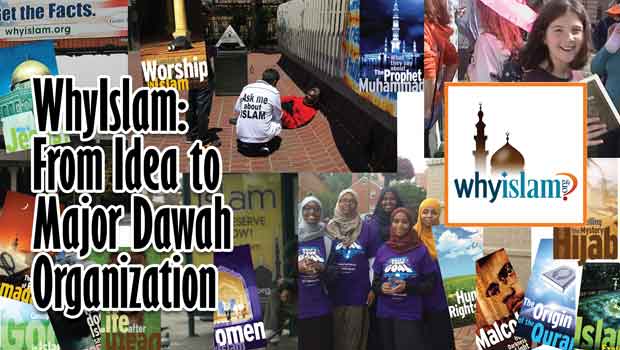
  • WhyIslam: From Idea to Major Dawah Organization

    WhyIslam: From Idea to Major Dawah Organization

    In 1998, a group of brothers from the Islamic Circle of North America’s New Jersey chapter got together with a desire to spread the true message of Islam to their American neighbors. They wanted to provide authentic information about Islam directly from the primary source, the Quran. Many ideas were floated and finally it was suggested to secure a toll-free number which people from all over America could call and talk to a Muslim. This would open channels of communication between American Muslims and their fellow citizens, many of whom never get to talk to a Muslim in their daily life, and most are shy to walk into a mosque to ask questions. The phone line would provide opportunity for dialogue with a Muslim, allowing any and all questions to be asked, as well as dispelling misconceptions about Islam and Muslims. Many names were discussed for the hotline and an associated website and finally a name was agreed upon: WhyIslam.

    This name was selected to create curiosity in the minds of Americans about the beliefs and practices of Islam, a religion with over a billion followers globally. Islam is the fastest growing religion in the world and, according to the Pew Research Center. Muslims are set to overtake Christians as the world’s largest religious group in the second half of this century.

    A Toll-free Hotline and Website

    It was not easy to secure the toll-free 800 number for Whyislam as an Ahmadiyyah group already had bought the 1-800-Whyislam number. It was decided to go with 1-877-Whyislam, to go along with the website www.whyislam.org. Since 1999, the toll-free number 1-877-Whyislam has provided service to callers in both English and Spanish. Initially very few calls would come in, as the hotline was not widely known, and we did not have the funds to advertise much. We did set up dawah booths and stalls at various shopping malls and parks as a way to promote the toll-free number. Over time, we also advertised in newspapers and magazines and on buses, radio, TV, and the internet. So, from a humble beginning twenty years ago of only a few calls a month answered by one volunteer, to currently almost 800 calls per month, is a great achievement. Alhamdulillah! Today 50 percent of our callers are repeat callers who have additional questions or want to engage in further discussion with a Muslim as they seek more knowledge about the religion.

    With regard to the WhyIslam website, the content and tech teams have worked enthusiastically over the past two decades to develop a really professional and user-friendly website with informative articles about Islam and Muslims, on foundational Islamic teachings, as well as articles on various relevant topics including the strength of character of Prophet Muhammad (pbuh), ethnicity in Islam, the Medina Charter and its representation of peace and pluralism, how the Quran has been preserved throughout the centuries, and so much more. Visitors to the website can order free brochures in English, Spanish, or Chinese, as well as an English translation of the Quran. They can also request one-to-one email correspondence with an associate or a mosque tour in their area. The WhyIslam website has been in the top ten websites about Islam and Muslims when searched on Google and other search engines. Alhamdulillah, we have distributed millions of Qurans and brochures over the past two decades throughout the United States.

    A Dedicated Team of Volunteers

    WhyIslam has a dedicated team of 24 volunteers taking calls on the hotline round the clock, 365 days a year. Our team includes bilingual associates who can also take calls in Spanish. The team receives ongoing training, in professionalism and courtesy as well as in Islamic knowledge, by an experienced and well-qualified Imam. He provides regular feedback by listening to recordings of the calls in order to ensure the highest quality service. Due to a high turnover of hotline volunteers, it is a constant challenge to recruit and train new volunteers.

    Although the hotline is based in New Jersey and run by the ICNA-NJ chapter, volunteers are from ICNA chapters across the nation. Initially calls were taken from all over the U.S. and Canada. Starting in 2010, we have also taken calls from the U.K. and Australia. In 2014 we started taking calls from France as we added a French-speaker to our volunteer roster. Toll-free numbers were acquired in those countries and then calls are routed to the headquarters in New Jersey. Alhamdulillah, we are now a global dawah hotline taking calls from three continents and five countries.

    Our volunteers, located in fifteen cities in nine different states, answer questions about Islam, as well as take orders for free literature and English translations of the Quran. If a particular caller wants to visit a mosque, then our volunteers arrange their visit with local masjid volunteers; or if the caller wants to take shahadah, then they facilitate that for them. For any individual who takes shahadah, the WhyIslam associate also arranges for a mentoring process by taking the revert’s contact information and passing it on to local volunteers in the revert’s area. Alhamdulillah, we have been having almost one shahadah a day on our hotline for the past decade. A Google search for a Muslim hotline or Islamic hotline shows our website and hotline as the first entry on the results page. This is due to the hard work of all brothers and sisters in WhyIslam who, over the last two decades, have worked tirelessly to make WhyIslam a known and trusted name across the country.

    Expanding Dawah Initiatives

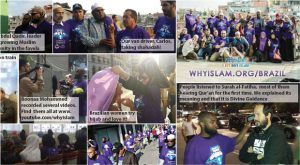
    A huge spike in interest was after 9/11 when many Americans were curious to learn about Islam and read the Quran. Since then we have seen a rise in bulk orders as people have ordered in large quantities in order to distribute in their local area. Whyislam undertook an immense dawah challenge by going to Brazil during the 2014 World Cup to distribute free literature to soccer fans and local residents, as well as to set up a toll-free hotline there, operative during the six-week tournament. We got some calls on the hotline, taken by our U.S. associates in Spanish as well as in English. We set up dawah booths outside the soccer stadiums and distributed thousands of free brochures and free Quran translations in Spanish as well as English.

    WhyIslam has also created many major billboard campaigns across the U.S., disseminating various messages and themes such as “Islam: The Message of Abraham, Moses, Jesus and Muhammed” or “Muhammed always taught Love, Not Hate; Peace, Not Violence.” Another one features three women from different faiths wearing a headscarf, with the caption, “They wore it for the same reason.” The billboards offer viewers a free Quran and encourages them to call 877-WHY-ISLAM or visit www.whyislam.org.

    WhyIslam also organized a Global Dawah Day on July 4, 2014. Across the country, in many different cities, dawah booths were set up and street dawah was done by small teams of volunteers spreading out in groups of three or four individuals to initiate and engage with passers-by about Islam and providing free brochures and the Quran to those interested. Today we have brochures in four different languages (English, Spanish, Chinese, and French) and Quran translations in English and Spanish, along with a sister website in Spanish for our Latino neighbors and friends to learn about Islam.

    WhyIslam: Now a Major Dawah Organization

    WhyIslam started off with just a few volunteers. It has now grown to a major dawah organization with over a thousand volunteers and hundreds of chapters in many cities across the nation. All are busy in promoting the truth about Islam, working to remove misconceptions and confusions about the religion and its followers. The WhyIslam team started from humble beginnings and built, for the sake of Allah SWT, a well-run and professional outreach organization with countless volunteers and many employees. They diligently, and with devotion, manage daily dawah operations. What has been attained to date is a great and satisfying accomplishment, alhamdulillah. It has been a long journey thus far, but the road ahead is a challenging one as Islamophobia needs to be continually confronted and dismantled in today’s world.

    Future plans are to further expand dawah into additional languages so as to facilitate outreach to as many communities as possible. We also plan to do more dawah tours across the nation by visiting various communities and offering street dawah. There are plans to acquire a vehicle to transform it into a mobile dawah station, with teams going on the road to visit various cities across the nation. May Allah SWT accept all our efforts and always guide us to do the right thing for His deen.

  • Poverty and Protest in Brazil

    Poverty and Protest in Brazil

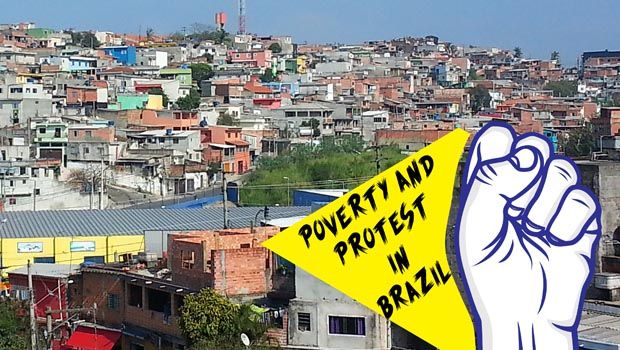
    The Maracana Stadium, which hosted the final match in the 2014 FIFA World Cup, can be seen from the hills of a close-by shantytown or “favela,” in Rio de Janeiro, Brazil. The favelas are notorious for their extreme poverty and the violence and turmoil that result when drug gangs are left to dominate their neighborhoods. In preparation for the World Cup, Rio established the Police Pacification Unit (UPP) to bring order and security to particular favelas. The UPP program was initiated in 2008 and thousands of military police officers were hired. Critics charge that the UPPs do not function as normal police officers – enforcing the law, protecting public safety, providing assistance to victims of crime and investigating crime. The UPP appear to function to make sure that gang members do not carry guns or other weapons and to ensure safe passage for utility company workers to read meters. No attention was paid to the security needs of the favelados before the city authorities and real estate developers decided the slums needed law and order and as much gentrification as possible so as to present a glorious image of Brazil to the world for the World Cup and the 2016 Olympics. UPPs patrol all the favelas that are located near the Maracana Stadium, the tourist hotels, and the international airport.

    Brazil’s impoverished majority are disgusted and deeply frustrated with inadequate public services, political corruption, and the vast amount of money spent to host the World Cup

    To make sure that the squalid and neglected blight of the favelas did not ruin the visual splendor of the FIFA event, Brazil built walls between the stadium and some of the surrounding slums. As to Favela de Metro, one shantytown near the stadium, the decision was made to force a hundred families from their homes in order to bulldoze the dilapidated shacks out of view of FIFA fans and tourists. Those families were relocated to a slum across town.

    For another favela, Vila Autodromo, close to the site of the 2016 Rio Olympic Village, a different tactic was used to force residents out. Finding resistance to the relocation plans from pesky residents, the city of Rio uprooted many of the trees that beautified the otherwise unsightliness of slum environs, full foliage trees that provided shade as gathering places of residents, to watch their children playing or simply socialize with neighbors. To date, 150 of the 500 families who called Via Autodromo home have left. Remaining residents complain that the city also cut down on garbage collection in their neighborhoods and turn off streetlights at intervals throughout the night, all in an effort to make life in the favela inhospitable. “It’s a psychological attack…a perverse strategy to weaken community and weaken our resolve,” said Jane Nascimiento from the Vila Autodromo Neighborhood Association.

    In the months leading up to the World Cup, there were demonstrations in more than one hundred of Brazil’s cities, with estimates of up to one million protestors. Brazil’s impoverished majority are disgusted and deeply frustrated with inadequate public services, political corruption, and the vast amount of money spent to host the World Cup. With a total cost of an estimated $11.3 billion, and of that, $3.6 billion for 12 new and refurbished stadiums, it is no wonder that many Brazilians are outraged.

    The research literature shows, in fact, that the construction of stadiums and arenas for large events such as the World Cup offer the host country little to no long-term economic benefit. Protesters argued that for the money spent in refurbishing the Maracana Stadium alone, the city could have upgraded a number of schools and increased much needed social services for the poor. In Rio de Janeiro an estimated 300,000 protestors were met with tear gas, pepper spray, and rubber bullets.

    From Elite Rule to Populism

    In 2002, after 500 years of being governed by elites with immense power and wealth, the voters of Brazil elected Luiz Inacio Lula da Silva as president. Lula had little formal education, quitting school after the fourth grade to work and help his family. As president, he increased the minimum wage more than 150% and, along with other reforms, this raised 26 million Brazilians out of poverty. Lula’s Chief of Staff and handpicked successor, Dilma Rousseff, took office in January 2011 and is expected to win re-election in October of this year.

    Following Sao Paul, Rio de Janeiro is the second largest city in Brazil, the third largest metro area in South America, and the sixth largest city in the Americas. Of its 6.35 million population, 1.3 million live in favelas. Once the UPPs were instituted in certain favelas to prepare for the World Cup, investors began buying up houses in the newly secured areas and real estate prices and rentals soared; many residents were unable to pay increasing rents. They were forced to move, typically finding their way to further outlying locations where drug gangs and militias continue to hold sway. That investors are eying prime locations of certain favelas is underscored by real estate developer Eike Batista’s donation of $80 million Brazilian reals (roughly $36 million USD) to the UPP program.

    While Lula’s and Rousseff’s administrations have made many reforms that benefit workers and the poor, activists chronicle the ongoing needs that must be addressed regarding housing, sanitation, healthcare, and education. With regard to income distribution, Brazil is one of the most unequal nations in the world. Pedro Alvares Cabral of Portugal landed in Brazil in April of 1500 and in 1532 a permanent trading post, Sao Vicente, was founded. Sugar cane cultivation followed which required much labor and this demand was met with the slave labor of the indigenous people and later African slaves brought to the Americas. Eventually, the Portuguese Crown divided Brazil into fifteen large tracts of land. The unequal distribution of land continues to be a source of conflict and protest. Land concentration in the hands of a powerful few and the crushing poverty in rural areas gave rise to the Movimento dos Trabalhadores Rurais Sem Terra (Landless Workers’ Movement – MST) in 1979. The MST today has 1.5 million members and is one of many other indigenous movements in Latin America. According to educator, linguist, and activist Noam Chomsky, these movements point to “the vibrancy and vitality of democracy in much of Latin America today — denounced in the West as ‘populism,’ a term that translates as ‘threat to elite rule with marginalization of the public in systems with democratic forms but with only limited substance.’”

    Friends of the MST is a network of people and groups who support the MST in the wider struggle for social justice and economic fairness. One of its volunteers, Charlotte Casey, writes “Motivated by their slogan ‘Occupy, Resist, Produce,’ families in the encampments and settlements have found, however, that the legal battle is just a small part of the struggle for land. Violence carried out by forces opposed to agrarian reform has resulted in thousands of assassinations, death threats, and imprisonments. Political education is key to their organizing efforts, helping rural workers understand Brazilian reality and see that land in itself does not free them from exploitation. The MST organizes settlement families to pressure the government for schooling, health care, access to credit to support farm production, and other necessities. Rural workers also learn to oppose agricultural policies like genetically modified crops and patenting of seeds that benefit the bottom line for giant agribusinesses like Monsanto, but are ruinous to small farmers and do nothing to eliminate hunger in Brazil.” She also lists the MST principles:

    To love and preserve the land and the creatures of nature.

    To improve our understanding of nature and agriculture.

    To produce food and wipe out hunger. To avoid monocultures and the use of agricultural poisons.

    To preserve living plants and to reforest new areas.

    To care for springs, rivers, ponds, and lakes. To struggle against the privatization of water.

    To beautify the settlements and communities, planting flowers, medicinal plants, vegetables, and trees.

    To adequately handle waste and combat any practice that will contaminate or abuse the environment.

    To practice solidarity and fight injustices and aggression toward people, communities, or nature.

    To struggle against land concentration so that all may have land, bread, education, and freedom.

    To never sell the land that we have attained. Land is an absolute good for future generations.

    These are not the principles of agribusiness, neoliberal policies, or elite exploiters of the earth and its masses!

    Ordinary People Protest and Speak Out

    It is understandable that many citizens of Brazil see the enormous sums of money spent to host the World Cup as appalling and immoral when so many are hungry and without employment, and hospital’s and schools and basic social services are neglected. While the Ministry of Sports official figure is $11.6 billion for cost of the World Cup, it has been suggested that it is closer to $15-20 billion. In addition, the government has spent $1 billion on security, including 170,000 law enforcement, military, and private security personnel. These were backed up by 10,000 members of the Shock Riot Police. During one of the many protests, Gizele Martins, a journalist and activist from one of the favelas spoke to the people: “We have the right to housing, the right to a life. The World Cup destroyed and ended many lives with policies that target poor, black favela residents. Amarildo [a bricklayer from one of the favelas who was killed by UPP forces in 2013] was just one case, but innumerable others are exterminated in the favelas. We are tired of tears of blood. We are tired of wiping up the bloodied ground.” Some have noted that the protests in 2014 were small in comparison to those in 2013. The answer from those on the ground is that the heavy-handed response of the police to peaceful protests in 2013, as well as the media portraying the protestors as criminals, deterred many from joining in ongoing protests. Those who did brave the punitive police responses were faced with greater police brutality.

    Many observers look to Rousseff to continue to bring about reforms that address the income inequality in Brazil, reforms that were started by Lula. During Lula’s term in office, the number of citizens living in poverty, according to the World Bank, dropped from 21 percent in 2003 to 11 percent in 2009. Interestingly, it is reported that over a period of the last ten years, the top 20 percent of Brazilians saw their share of wealth decrease while the poorest 20 percent saw a 2.6 to 3.5 percent increase. President Rousseff, in June of 2011, initiated a social welfare program called Brazil Sem Miséria (Brazil Without Misery) to address the extreme poverty still rampant in the country. It will include many programs to bolster aid in health, education, and infrastructure. It will also expand the Bolsa Familia program, a cash transfer program for the most needy, which was launched by Lula. The Economist has called the Bolsa Familia initiative an “anti-poverty scheme invented in Latin America which is winning converts worldwide.”

    Nicholas Lemann, a journalist, interviewed Lula and in an article in The New Yorker in 2011 he quotes the then-still-president: “We have to distribute wealth in order to grow. The economists were always agonizing over this. We proved that it was possible to grow, to distribute income, and to do so with social inclusion without inflation. Today, Brazil has three hundred and fifty billion dollars in reserves. We don’t owe a cent to the I.M.F., and the I.M.F. owes us fourteen billion.” Lemann also quotes an email response he got from Rousseff after sending her some interview questions: “The main aim of economic development must always be the improvement of living conditions. You cannot separate the two concepts. The creation and distribution of wealth increases living standards; likewise, increases in living conditions lead to economic prosperity.”

    Re-emergence of Elite Power

    Some see gains made by Rousseff’s opponent in polls as they move toward the October election and wonder if she still has a powerful draw for the Brazilian people. They point to the current slowdown in economic growth and the possibility of recession. Yet Brazil still has low unemployment and real income remains stable. And Rouseff will undoubtedly point to the gains made by her party and administration in moving millions into the middle class. In February of this year, however, MST activists took to the state palace, accusing Rousseff of capitulating to the interests of Big Agro. “Dilma’s government has taken a step back on agrarian reform because she is in an alliance with conservatives,” said national co-coordinator Marina dos Santos. “Industrial capital has appropriated the countryside and brought agrarian reform to a standstill.”

    In an article in Al Jazeera America by Donna Bowater, “Whatever happened to Brazil’s World Cup protests?”, Bowater talks of the petering out of the 2013 protests that shook Brazil. Yet the mood and view of the man and woman on the street remains determined to continue the reforms that Brazilians have come to expect since Lula was in office. The author quotes a biologist, Iuri Souze, who describes the lives of people who are overlooked and disregarded by those in power: “We don’t have health or education, we have corrupt police. It’s always been like this: people were always treated like rubbish while the rich had everything.” He continued, “People are dying in favelas. People are living in sewage. It’s a chaotic state. It’s going to continue after the World Cup. We can’t put up with this life.”

    The anger is understandable, despite the gains made, given that half the available farmland in Brazil remains uncultivated while four million landless peasant farmers are homeless and unable to make even a substandard living. The reality is that less than three percent of the population owns two-thirds of the land. There is no justification for this inequity. People everywhere are tired of the institutionalized, systemic inequalities that afflict societies worldwide.

    We must be willing to critically call out a system of international finance that is unjust and immoral, that, “with the IMF at its centre, works to reward the international commercial banks and the elites in developing countries, at the expense of the common people in the debtor countries.”

    Debt and the Monetary Foundations of Inequality

    Richard Robbins, a professor at SUNY at Plattsburgh in New York, in an article on anthropologynews.org, the site of the American Anthropological Society, finds the core problem to lie in the the type of monetary system that revolves around debt and interest. He writes about an “institutionalized…debtor-creditor relationship” that inevitably creates the economic inequality that we see in the U.S. and other countries around the world. In our monetary system, money is “lent into existence by privately-owned banks.” Since all money is debt, and since not only the principal but also the interest must be repayed, “the economy must perpetually grow at an exponential rate to generate the interest on the debt and/or the dividend on investments.”

    For the privately-owned banks, these debts created by the creation/lending of money are their assets. For the banks’ assets to grow, debt held by “federal, state and local governments, businesses, households, students and financial institutions” must also grow. It is no wonder that the $11 trillion worth of government, business, and public debt in 1990 in the U.S. has ballooned to almost $59.4 trillion as of March of this year. That debt is owed to the wealthiest Americans, those who are the “net-creditors.” Robbins writes, “Interest is paid out in virtually all economic transactions, since prices and rents include interest that sellers and entrepreneurs must pay as a price of money. Interest and or dividends are realized from bank deposits, loans, and investments. Based on studies done in Germany and Norway, some 90% or more of the population count as net debtors, while 10% or less are net creditors.” He also notes that as the debt has spiraled to massive amounts, the “the gap between rich and poor is greater than any time in almost 100 years and that the bottom 30% of US families have seen their median income fall by 29% since 1979.” The institutionalized debtor-creditor relationship afflicts all nations which participate in the international banking system.

    Robbins sums up the sad reality: “Clearly, in the present state of things, creditors control the system. They do so by control of financial and multilateral institutions and central banks charged with protecting money as a store of value, and by ensuring that creditors receive their return on capital (eg, by bank bailouts, structural adjustment programs and ad hoc actions such as seizing portions of Cypriot bank accounts to repay debts owed to European banks). And creditors control nation-states whose legislatures are pressured to reduce taxes on creditors (eg, capital gains taxes) and support programs that force people (eg, students) to accept more debt… In sum, our monetary system is constructed in a way that ensures a growing division of wealth and income; a division that, like the economy, must grow exponentially.”

    The current U.S. national (government) debt is $17+ trillion. The interest expense for fiscal year 2014 is $354,863,251,628.78 (that’s nearly $355 billion!) The debt of federal and state governments, businesses nationwide, and all people is nearly $60 trillion, as stated above, according to the latest economic data from the St. Louis Federal Reserve. The situation for developing countries clearly shows the same out-of-control black hole of exponentially growing debt. According to the World Bank’s Global Development Finance report of 2012, “The combined stock of developing countries’ external debt rose $437 billion to $4 trillion at end in 2010…” When numbers are so large, they seem to lose meaning, until we look at the real-world repercussions of such massive debt and the toll on ordinary lives: “According to UNICEF, over 500,000 children under the age of five died each year in Africa and Latin America in the late 1980s as a direct result of the debt crisis and its management under the International Monetary Fund’s structural adjustment programs. These programs required the abolition of price supports on essential food-stuffs, steep reductions in spending on health, education, and other social services, and increases in taxes. The debt crisis has never been resolved for much of sub-Saharan Africa. Extrapolating from the UNICEF data, as many as 5,000,000 children and vulnerable adults may have lost their lives in this blighted continent as a result of the debt crunch” [“The Rich Borrow and the Poor Repay: The Fatal Flaw in International Finance,” by Ross P. Buckley, professor of international finance regulation and law at UNSW Australia (The University of New South Wales)].

    Current Monetary System Alternatives

    The Institute of Islamic Banking and Insurance is a not-for-profit organization that “brings together people of all faiths, and those with no faith, to create the awareness of a viable alternative financial system that that aspires to realize fairness, justice and equity in dealings for the public good that must be accompanied by righteous behaviour and moral conduct . The important message of Islamic banking and insurance is that all financial dealings whether in the form of commercial transactions, financial products and services, must always produce a benefit and lead to goodness for the welfare of society.” The IIBI delineates the basics of Islamic banking that throw a revealing light on the monetary systems that are based on an institutionalized debtor-creditor relationship. It is beneficial here to quote them at length:

    “In order to be Islamic, the banking system has to avoid interest. Consequently, much of the literature on the theory of Islamic banking has grown out of a concern as to how the monetary and banking system would function if interest were abolished by law.

    Another Islamic principle is that there should be no reward without risk-bearing. This principle is applicable to both labour and capital. As no payment is allowed to labour unless it is applied to work, so no reward for capital should be allowed unless it is exposed to business risks.

    Consider two persons, one of whom has capital but no special skills in business, while the other has managerial skills but possesses no capital. They can co-operate in either of two ways:

    1) Debt-financing (the western loan system). The businessman borrows the capital from the capital-owner and invests it in his trade. The capital-owner is to get back his principal and an additional amount on the basis of a fixed rate, called the interest rate, as his compensation for parting with liquidity for a fixed period. The claim of the lender for repayment of the principal plus the payment of the interest becomes viable only after the expiry of this period. This payment is due irrespective of whether the businessman has made a profit using the borrowed money. In the event of a loss, the borrower has to repay the principal amount of the loan, as well as the accrued interest, from his own resources, while the capital-owner loses nothing. Islam views this as an unjust transaction.

    2. Mudarabah (the Islamic way). The two persons co-operate with each other on the basis of partnership, where the capital-owner provides the capital and the other party puts his management skills into the business. The capital-owner is not involved in the actual day-to-day operation of the business, but is free to stipulate certain conditions that he may deem necessary to ensure the best use of his funds. After the expiry of the period, which may be the termination of the contract or such time that returns are obtained from the business, the capital-owner gets back his principal amount together with a pre-agreed share of the profit.

    The ratio in which the total profits of the enterprise are distributed between the capital-owner and the manager of the enterprise is determined and mutually agreed at the time of entering the contract, before the beginning of the project. In the event of loss, the capital-owner bears all the loss and the principal is reduced by the amount of the loss. It is the risk of loss that entitles the capital-owner to a share in the profits. The manager bears no financial loss, because he has lost his time and his work has been wasted. This is, in essence, the principle of mudarabah.

    There are at least three reasons for considering the mudarabah relationship to be more just than the creditor-debtor relationship:

    Both parties agree on the ratio in which profits will be shared between them.

    The treatment of both parties is uniform in the event of loss, since if the provider of the capital suffers a reduction of his principal, the manager is deprived of a reward for his labour, time and effort.

    Both parties are treated equally if there is any violation of the agreement. If the manager violates anyone of the stipulated conditions, or if he does not work, or is instrumental in causing loss to the business by negligence or bad management, he will have to bear the responsibility for the safe return of the whole amount in question. If, on the other hand, the provider of the capital violates any of the stipulated conditions, for example, by withdrawing his funds before the stipulated time, or by not providing part or full funds at the promised time, etc., he will have to pay the manager a reward equivalent to what he would have earned in similar work.

    Mudarabah is the basis of modern Islamic banking on a two-tier basis.

    1st tier: The depositors put their money into the bank’s investment account and agree to share profits with it. In this case, the depositors are the providers of the capital and the bank functions as the manager of funds.

    2nd tier: Entrepreneurs seek finance from the bank for their businesses on the condition that profits accruing from their business will be shared between them and the bank in a mutually agreed proportion, but that any loss will be borne by the bank only. In this case, the bank functions as the provider of capital and the entrepreneur functions as the manager.

    Islam argues that there is no justifiable reason why a person should enjoy an increase in wealth from the use of his money by another, unless he is prepared to expose his wealth to the risk of loss also. Islam views true profit as a return for entrepreneurial effort and objects to money being placed on a pedestal above labour, the other factor in production. As long as the owner of money is willing to become a shareholder in the enterprise and expose his money to the risk of loss, he is entitled to receive a just proportion of the profits and not merely a merely nominal share based on the prevailing interest rate.

    Thus, under an Islamic banking system, the cost of capital is not analogous to a zero interest rate, as some people wrongly assume it to be. The only difference between Islamic banking and interest-based banking in this respect is that the cost of capital in interest-based banking is a predetermined fixed rate, while in Islamic banking; it is expressed as a ratio of profit.”

    Toward a Decent and Hopeful Life for All

    Pundits in Brazil, the U.S., or any country which has a monetary system in which money is “lent into existence by privately-owned banks” can debate endlessly about which policies will bring about greater economic equity and narrow the gap between rich and poor. But no long-lasting change of any value will take place until we, ordinary citizens, educate ourselves about the inevitable contemptible outcomes of a system which is purposely structured in such way that, as Robbins says, “debt represents a regressive tax in which money trickles up rather than down.” We must be willing to critically call out a system of international finance that is unjust and immoral, that, “with the IMF at its centre, works to reward the international commercial banks and the elites in developing countries, at the expense of the common people in the debtor countries,” as described by Professor Buckley. “It does this by only selectively applying market principles and disciplines, that is the market is allowed to operate unimpeded when it is delivering profits to the international banks and the elites in the developing countries, and its operation is interfered with, grossly, when market forces would impose massive losses on the banks and/or the developing country elites.”

    The change can only come when enough individuals insist upon – as described by the Institute of Islamic Banking and Insurance – “a viable alternative financial system that aspires to realize fairness, justice and equity in dealings for the public good that must be accompanied by righteous behaviour and moral conduct.” Then those in the favelas, slums, shantytowns, and ghettos of the world might be afforded a decent and hopeful life.

    It was narrated from A’ishah (may Allah be pleased with her) that the Prophet (pbuh) used to say in his prayer, “O Allah, I seek refuge with You from sin and heavy debt.”

     

  • Brazil: A Dawah Trip of a Lifetime

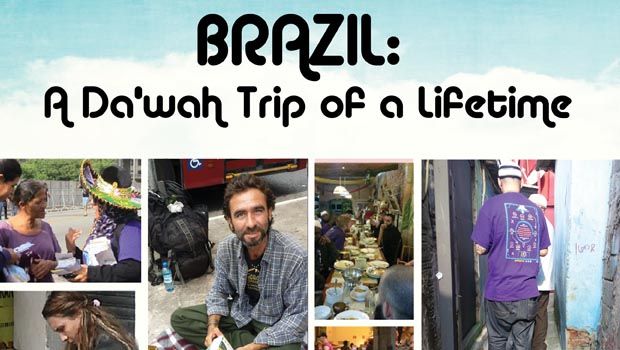
    Brazil: A Dawah Trip of a Lifetime

    Even though I am considered a fifth generation from Guyana, South America, I must confess that I have little to no knowledge of neighboring Brazil except that it is a vast country that borders Guyana and every other country in South America except Chile. Brazil is home to the massive Amazon rainforest, part of which extends into Guyana and which is commonly nicknamed “the lungs of the world” as it covers an area of 2.1 million square miles, a vast tract of forest that sucks up carbon dioxide from global emissions and in turn produces the oxygen we need to breathe. Sixty percent of the rainforest is in Brazil.

    Da’wah is not just words. Oftentimes it is through the way we interact with others

    Questions About Islam and Muslims in Brazil

    I always think of Brazil and other South American countries in terms of their Muslim communities and I wonder if they have masaajid (mosques). Is any Da’wah work going on in these places and if so by whom? What have their populations heard about Islam? Are the people biased against Islam and Muslims? Who are the native Muslims in terms of understanding and practice of their Deen?

    Since most of South America speaks Spanish, and Portuguese in Brazil, I continued to have these questions and few answers as I concentrate on da’wah in the English-speaking environments of Guyana and the U.S. Yet I always hoped that one day I would be able to venture into the Spanish-speaking parts of my own continent and find answers for myself, by the grace of Allah SWT.

    WhyIslam Heading for Brazil

    In May of this year, Br. Farhan from WhyIslam, an ICNA project, reached out to let me know that a da’wah team would be going to Brazil for the 2014 FIFA World Cup; I immediately knew this was my long-awaited opportunity. This was my chance to see first-hand how Islam has advanced into the heart of South America and what, if any, da’wah goes on in this vast country of 202 million people, most of whom are Catholics. So without a second thought I replied that I would like to be part of the WhyIslam team.

    I was pretty excited about the upcoming trip to Brazil but as the time drew near I had many “what ifs” popping up in my mind. Perhaps having second thoughts was because I was going to a strange land, not knowing what lay ahead. Or perhaps it was the Portuguese language and even though my knowledge of Spanish is fairly good, I wondered if it would be sufficient to maintain a dialogue, to give da’wah in an effective way. At the same, the media was covering the large demonstrations preceding the World Cup including strikes, acts of civil disobedience, and the harsh, sometimes brutal, reaction of the police to the protestors. But by the time we got there none of this was evident. Once the match begins, Brazilians are in football frenzy and grooving!

    What is your Goal? ¿Qual é o seu objetivo?

    Brazil, like many of the South American countries, is all about football. For them football is bigger than life itself. Hence, the theme WhyIslam chose for the da’wah campaign in Brazil was “What is your goal?” or as you say in Spanish “¿Cuál es tu meta?” and in Portuguese “Qual é o seu objetivo.” This was so appropriate as it opens up the question for a dialogue, seeing that the main “goal” for many was which player would score a goal for their country. In fact, one day as I was standing on a street corner handing out flyers, a Brazilian journalist approached me and asked me about the place or relevance of religion at the World Cup. So I had the opportunity to explain that beyond the goals on the field is a bigger goal of life that we should also think about, and while the worldly goals of sports and all of life’s activities will end and are short-lived, the real goal of life – to find meaning, purpose, and truth – is everlasting. I explained to her that the first goal is easier, requiring that one kick a ball to score a goal; but the second goal requires a lot more than just kicking a ball! It’s about life! What is the goal of your life? What happens beyond this life? Have you prepared anything for it? And thus my da’wah experience in Brazil began.

    Da’wah at the Games

    Most of our outreach programs were centered around the games. Whenever a match was played in Sao Paulo there would be a huge gathering and there we distributed flyers and had conversations with people. Whenever the Brazilian team was playing, the crowd kept pouring into the “Fan Fest Zone,” a free area not too far from the stadium where fans could watch the match on big screens. While most of the passers-by were Brazilians, we did run into a number of people from different parts of the world. We met several Muslims who had come to see the games. They were very happy to know that we were taking the opportunity to reach out to people with the message of Islam.

    Our first stop was quite a remarkable one. It was Thursday June 19 and we had decided to go to an area where the WhyIslam team had been a few days before to pass out flyers. However there was lots of open drinking in the streets. As we began distributing flyers, one elderly lady came to us and welcomed us, but barely had she done so when she began in an evangelical style to preach that Jesus is the only son of God and that God so loved the world that He sent His only son. So I felt compelled to answer her claims and with my limited Spanish I joined her in the same evangelical style and began to proclaim loud enough for the surrounding people to hear, “El Dios es el más grande. Él no tiene necesidad de un hijo o una hija! Jesús es un profeta. Allah solamente es el Dios!” The meaning is “God is The Greatest. He has no need for a son or a daughter. Jesus is a Prophet. Allah alone is God!”

    At that time Sister Nahela, our Spanish-speaking team member, and Br. Fayed and his wife, Sister Bia, our Portuguese-speaking team members, began a deeper conversation with the woman, gently but confidently refuting her proclamations. In the end she was silent, looking very thoughtful and surprised at what had just taken place. While this was going on, some men who were drinking at a bar began to gather around us. Even though it was a little intimidating, we continued handing out our flyers. It took some time, but I came to realize that people are genuinely interested in knowing about Islam. I expect that the men from the bar have listened to these evangelical speeches countless times and now they were willing to hear what “the newcomers” had to say.

    The Fan Fest Zone

    After a while we went to the Fan Fest Zone on another side of the stadium and there we began handing out flyers at a very fast pace. Every time we gave a flyer we would say “obrigado” meaning thank you or “muito obrigado” thank you very much. With these two phrases and a smile we handed out thousands of booklets and flyers and the da’wah campaign was off and running in Brazil!

    There were a few incidents at the Fan Fest Zone that are worth narrating here. First there was a Brazilian gentleman with whom we were engaging in some discussions. He had a bottle of beer in his left hand and all of a sudden during our conversation with him his beer fell out his hand and the bottle broke. The guy was kind of shocked and bewildered as if some power had just pushed the bottle from his hands, plummeting it to the ground where it broke. It was almost as if Allah SWT’s words and beer could not be with a person at the same time. Another amazing incident that took place within the same hour was praying Salaatul Maghrib and Eshaa at the Fan Fest Zone. It was crowded with thousands of people walking by and lots of drinking was going on. Also the security was very intense. It was time to pray Maghrib and so we decided that we would look for a fairly clean place (which was hard to find) on the pavement and do our Salaah there, even though there was a Masjid nearby. Earlier that day we tried to get into the Masjid to pray Zuhr and Asr Salaah but it was locked and we ended up praying in a nearby parking lot which was far from clean. So right where we were seemed the best choice.

    As we were looking for a possible area to pray, two brothers happened to pass by and gave me salaams. So I told them to join us, that we were about to pray our Maghrib Salaah. Just then I mentioned that we had to pray on this dirty pavement because the nearby Masjid is closed and we did not know who to contact to have it opened. They said that they were the ones in charge of the Masjid and they had the keys. They were very happy to open the Masjid for us and alhamdulillah they did. This was finding an oasis in a desert; the luxury of restrooms, wudhu, a clean place to pray, away from the noise and chaos of a drinking, boisterous crowd. We could only conclude that you make one step to serve Allah SWT and He SWT makes the way easy for you.

    When we engage with the people and listen  to their narratives and the struggles that  they deal with each and every day, we can  offer them words of comfort, hope, and truth

    Da’wah in Liberdade (Little Japan)

    The next day was Friday and after delivering the Khutbah in Arabic at Sao Paulo’s main Masjid, Abu Bakr Assiddik (translation in Portuguese using the head-phones), we headed for a busy junction called Liberdade in the heart of Sao Paulo. There we were joined by the British da’wah team. This area is known to be home to the largest Japanese community in the world, outside of Japan. There we had a lot more interaction with the crowd. What was noticeable was that the majority of the Japanese people did not accept any flyer from us and the majority of Brazilians took the flyers and booklets and at least interacted with us. One lady said that she heard that The Qur’an is recited like a song. So I had no choice but recite to her Suratul Fatihah in the middle of Liberdade so that she could hear the recitation of The Qur’an.

    After several hours of handing out flyers with the same obrigado and a smile it was time for Maghrib and Eshaa Salaah. This time there was no nearby Masjid so we had no choice but to hit the pavement. One of the brothers called Adhan and the police kind of made sure we prayed undisturbed. So when the Salaah began, a little crowd gathered to see this rare sight: people in a row standing, bowing, prostrating and sitting; all in the same sequence with the sound of Allahu Akbar! I was told that several people took out their phones and took pictures of us and some videoed the prayer. When we were done praying, some more flyers were distributed to the lookers-on. That evening Br. Fayed and Sister Bia invited us for a traditional Brazilian dinner. Needless to say that it was absolutely delicious and a reminder of my own Guyanese cuisine with yuca (we say cassava in the Caribbean) and organic beef in a soup form and the highlight was a passion fruit mousse. Saturday we spent at the center where Sh. Rodrigues, a native Brazilian, had classes for new Muslims. Each one of us introduced ourselves and shared some of our experiences and encouraged them to be firm in their Deen. Most of us spoke in English while sister Bia and Br. Fayed translated.

    Da’wah in the Favelas (Slums)

    The next day was an experience in da’wah that was a unique Brazilian experience that. It was da’wah in the favela. Favela is the term for a slum in Brazil and very often one can find these slums near upscale urban areas, in such close proximity that on one side of the street there are multimillion dollar high-rises and on the other side are slums with open sewerage, little or no utilities, poverty evident everywhere, and the potential for crime in every corner. Indeed we were told before entering the favela that we needed to be very vigilant because in some of those areas the police have no presence. Only Br. Boonaa and his camera man, Br. Adnan, were allowed to film and only at particular places and when permission was granted. We met Imam Kaab who by himself established a Musallah just at the entrance to the favela. He informed the “leader” of that particular favela that a group of people wanted to go around and distribute flyers after which they would hand out food boxes to the poor and needy. This was in collaboration with Br. Irfan Khurshid from Helping Hand. So with our trust in Allah SWT and taking our precaution, we went door to door handing out flyers and booklets on Islam and to anyone we met in the street. The favela was set on a hilly region of the city, apparently typical of most of the favelas. The “leader” himself met us and went around with us as if he were part of our team. Wearing a gold chain with a cross around his neck, he took us to the nooks and crannies of the favela. The streets were so narrow that two people of any size would find it difficult to pass. The smell was far from welcoming, but with pleasure our team went from door to door to spread the word of Allah SWT.

    Most people we met had smiles on their faces. SubhanAllah! What a miserable life people are forced to be in while the country prospers! One wonders what government would deprive so many of its citizen from participating in the prosperity. But this is reality, not only in Brazil but so many places around the world. We went higher and higher up the hills until some of us thought it was becoming very hard physically to go on. But with trust in Allah SWT and the motivation from each other we all climbed until we reached the top. Then we finally returned to Imam Kaab’s house and Br. Irfan organized the distribution of the food boxes.

    Our Taxi Driver Takes Shahaadah

    Imam Kaab prepared a humble yet delicious meal for all of us. Just after the meal our taxi driver, Carlos, who had been observing us from day one, decided there and then that it was time for him to take the Shahaadah. He observed how we put aside fear to deliver Allah SWT’s message and how we helped the poor in the favela. He felt that this religion must be true. It was a special moment. You think back at all those stories of the Sahaabah (RA) who prior to their acceptance of Islam were in a state of kufr (disbelief) but just by observing the Muslims they joined the ranks and became the most upright of Believers.

    We prayed Salaatul Maghrib and Eshaa at the Musallah of Br. Kaab after which we engaged in some reflections on Br. Carlos’ Shahaadah and it was very emotional. For many of the brothers and sisters there, it was a humble reminder of their journey from kufr to eman, and the challenges and joys of being Muslim. We were all touched and every one of us cried. Br. Carlos said that he was observing us from the first day and even though he understood very little of what we were saying, just by our behavior and kindness he felt this must be the right way. SubhanAllah! It brings us to another reality check that da’wah is not just words. Oftentimes it is through the way we interact with others. This is such an important lesson for us to learn, especially living amongst non-Muslims.

    Like Carlos, many people in Brazil are ready to listen to the message of Islam and I think that we are somewhat obligated to go and let them know what Islam is. It is Allah SWT who changes the hearts but our job is to deliver the message. Only Allah SWT knows how many of those people to whom we gave flyers and booklets may one day accept Islam and if by His Qadr, they do not, they cannot stand before Him on the Day of Judgment and say that they never heard about Islam.

    Two Incidents – One Uplifting and One Not So Much

    Let me start with the “not-so-much-uplifting” incident, the only down moment in Brazil, and ironically it happened to be with an Imam at one of the first masaajid built in Latin America. We visited this masjid the day after Br. Carlos took Shahaadah. While we were basking in the beauty of the masjid, the Imam appeared and very rudely asked us who gave us permission to enter. We introduced ourselves and I mentioned that Br. Carlos had just taken Shahaadah the day before. The Imam’s next remark was quite disheartening. He asked in a rude way what could Carlos know about Islam to become a Muslim. Then he questioned me as to where I studied about Islam and for how many years. When I told him seven years, he immediately did a “one up” on me, stating that he has studied for 26 years. At that point we realized that we were not welcome there. Ironically, the day before a gang leader graciously and respectfully escorted us around the slums to do da’wah; and the very next day a Shaykh who studied Islam for many years all but kicked us out of Allah’s house of worship. These were teaching moments, reminding us that a man of the streets, without education, might be humble and courteous while a man inhabiting a house of God, one with so-called “knowledge,” might be arrogant and rude.

    Now let me share the uplifting story, one with a happy ending. On my way home I had a layover in Panama for almost eleven hours. So I decided to venture into Panama City for a while. The taxi driver took me to see several important sites including the Panama Canal. During our trip we spoke a lot about religion and I told him about Islam, that Ramadhan would begin the next day and what it meant for Muslims. He explained that he had doubts about some of the tenets of his faith. The last stop we made was to a Masjid. I invited him to come with me into the Masjid. I showed him how to make wudhu and then he stood next to me for prayer. After the prayer he took Shahaadah by Allah’s Grace.

    Conclusion

    I observed in both Brazil and in Panama that the Islamic Centers are built to serve the Muslim community and accommodate their religious and fellowship needs. Alhamdulillah, that is good. But as for da’wah, and Allah SWT knows best, it seems to me that very little is done.

    Muslims cannot take benefits from the society and feel satisfied with just taking. They must give back to society more than what they take. I encourage every Shaykh to take time to leave the minbar (pulpit) and go into the field. When we engage with the people and listen to their narratives and the struggles that they deal with each and every day, we can offer them words of comfort, hope, and truth. In case you want to step out and head down south, Brazil is a good place to go. Just remember a smile, a flyer, and a simple obridgado!

  • WhyIslam Scores “GOAL”

    WhyIslam Scores “GOAL”

    Organizing a massive dawah effort for the 2014 FIFA World Cup in Brazil, bringing together over 20 Islamic organizations on an international level, and mobilizing dozens of volunteers originating from 6 continents is a task of epic proportions. With the help of Allah and the assistance of the Centro de Divulgação do Islam para a América Latina (CDIAL), an equally dynamic dawah initiative based in Brazil, South America, the Islamic Circle of North America (ICNA)’s WhyIslam Project was able to take on the challenge and as of June 12th a team of daees was already in Sao Paulo kicking off the World Cup by asking soccer fans, “What is your goal?”
    Team members began arriving in Brazil as early as June 10th, from as far as the UK and also the US. After some meetings with local volunteers and logistics coordinating, they began hitting the streets of Sao Paulo on June 12th, which marked the beginning of the World Cup soccer matches. In preparation for the games, they printed 40,000 dawah handouts in Portuguese and Spanish, as well as other languages. As they work, they don the official campaign T-shirt with the slogan, “What is Your Goal?” or “Qual é o seu meta” in Portuguese. The purpose of the slogan is to make people think about what really is the most important goal in life.

    In just one week, there have been three shahadahs facilitated by dawah volunteers

    The crew engaged local residents and fans from all over the world in “street dawah,” a style of outreach in which Muslim men and women approach individuals in the street, local vendors, or fans at stadium-side to provide them with information about Islam and answer questions. In just one week, there have been three shahadahs facilitated by dawah volunteers in Sao Paulo, one of which was the cab driver who was transporting some of the volunteers, alhamdulillah.

    Throughout their days, volunteers take photos and video to post on social media in order to keep WhyIslam’s global audience informed of their progress.
    The many volunteers include Nahela Morales, WhyIslam’s National Spanish Outreach Coordinator, Sheikh Abdool Rahman Khan, Boonaa Muhammad, Cyrus McGoldrick, Andrew Morales, Anwer Arshar and Abu Sumayyah Lebron. Bia Kehdy and Muhammad Martins, both Muslim Brazilian natives, and other local Brazilian volunteers have been instrumental in planning logistics and breaking language barriers. More team members continuously arriving from places such as the US, Canada, Mexico, Colombia, and the UK. Others involved in managing and organizing, taking hotline calls, and media coverage are not physically present in Brazil, but working remotely from the US and Canada to provide assistance to the group.

  • Finding God and a Purpose in Islam

    Finding God and a Purpose in Islam

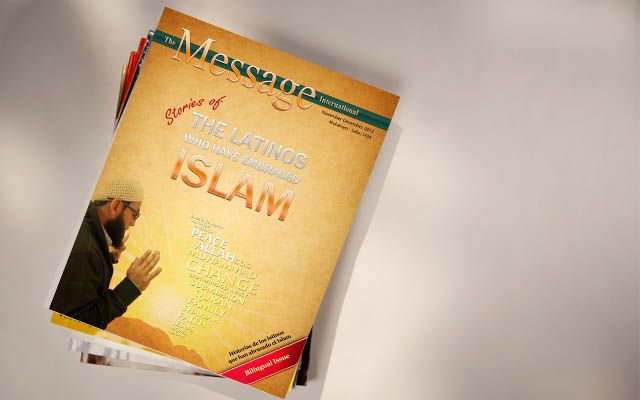
    My name is Martha Guadalupe; I am originally from Ecuador, but live in New Jersey, and I have been Muslim since 2003, alhamdulillah (all praise is due to Allah).Why did I embrace Islam? Interestingly, every time I have been asked this question, I have a different story to tell. There is never enough time to say it all. I recently saw a post on Facebook which drew my attention. It stated: “Searching for happiness, I found Islam.” What I can say is, “While searching for God, I found Him in Islam,” alhamdulillah!

    At first I was not the one who was searching for this beautiful religion. My family and I had distanced ourselves from the Catholic religion, but I never stopped worshipping God, praying to Him, asking him to guide my children by whatever means would permit them to reach Him, and to never abandon them. I was sure that God always protected us and that He was the only one who provided us with everything we need.

    It so happened that on September 11, 2001, my son Hernan (the eldest and a university student at the time) visited us in the evening and told my husband and me that he had accepted the Islamic religion. In my ignorance, I responded, “What is that?” He explained to me that it was the true religion of Allah, and I remember saying to him, “If this is the path that will take you to God, blessed be His Name, then may He continue guiding you,” and I hugged him.

    It was my eldest son who brought the religion of Islam to our home but a month after he became a Muslim, my second son did so as well, alhamdulillah. Then I began to learn for myself about the basics of this religion. Hernan would tell me about the life of Prophet Muhammad (may peace and blessings be upon him), that he was the last and seal of all the Prophets. At first I found it strange because for me, the last prophet had been Jesus (may peace be upon him).

    Whenever he could, Hernan would teach me about Islam. I began to worry because during one of our conversations, he told me about the punishments in the hereafter for those who did not obey the laws of God. That filled my heart with terror, and I feared God more than ever. “What will happen if I don’t follow what God wants? What will happen if I don’t have any time left? What will happen if I don’t wake up?,” I would ask myself. This is one of the reasons why I began to reflect deeply about what was better for me. I wanted to be a good servant so that God would not punish me.

    Two years later I accepted this wonderful religion. Now I am a proud Muslim, alhamdulillah. I won’t say that the change was easy. At first, it was very difficult, but Allah eased the way and I have been able to persevere, breaking through barriers and overcoming all obstacles in my path. I know that Allah has always guided me, but I had been blind for a portion of my life. Today everything is clear and I am very happy knowing that I am a humble servant of Allah; to Him we belong, and to Him we will return.

    In my daily living, my faith imbues all aspects of my outlook on life with hope and trust in God. When I left my job, I said to myself, “If Allah has taken me away from this job which has been very good, it is because He has something better for me.”I have always loved sewing and I used to make clothes for girls, but had stopped doing so 11 years previously. Then during a conversation, I heard some sisters speaking about how they would like to buy Islamic clothing online but it was too expensive. I suggested, “If you want, I can make the clothing for you at a much lower price, insha’Allah.” With the help of Allah, and my sons, I decided to start my own business, which we called, “Modasty Designs,” alhamdulillah. The business has been successful at a national level due to internet sales and Islamic conferences, and above all, Muslim women in my locality who ask me to make their clothes. It is always a pleasure for me and I am here to serve my Muslim community, insha’Allah.

    Since I have been Muslim, I dedicate myself to prayer and following the Sunnah, or the teachings of Prophet Muhammad (may peace and blessings be upon him). May Allah bless us, protect us, and guide us always. Ameen.

  • My Conversion Story

    My Conversion Story

    It’s hard to believe how different my life was just three years ago. Alhamdulilah, Allah (SWT) blessed me by guiding me to the straight path. My story was written by Allah (SWT) and happened solely by His will. In early 2009, I attended a wedding at a Catholic church, and subhan’Allah, I don’t know what it was about the wedding ceremony, but I walked out of that church knowing that I no longer wanted to be Christian. I didn’t know what I wanted to be, but I knew I didn’t want to be Jewish because I knew the conversion process was very lengthy and involved.

    I had an Egyptian Muslim friend during that period who I spent a lot of time with. I witnessed the unity of the their family during Ramadan and it was something that really stood out and appealed to me. I sat at my computer one day and I googled “what does it take to become Muslim,” and to my surprise, all it took was saying a few words!

    I told my Muslim friend and family that I wanted to be Muslim and they were very excited. I was given a Quran, but truth be told I didn’t really read it much. I did know, however, that I wanted to take my shahada before Ramadan of 2009.

    It happened one June day. I was on my way home from a trip to Los Angeles and I was walking to my car, and at that moment I was overwhelmed with a feeling of absolute, one hundred percent certainty, that I was ready to take my shahada. I really didn’t know much about Islam at that point, but it was implanted into my heart at that moment that I was ready to become Muslim. The next Friday I took my shahada. I didn’t know how to pray until my first day of Ramadan 2009. Fortunately, after that Ramadan, at the end of October, I found the M.E.C.C.A. Center and their New Muslims Program. It has been an amazing journey ever since.

    I have been blessed to be able to use my professional expertise to help Muslims. I am a movement therapist and nutrition coach and have been in the health and fitness industry for over 20 years. I operate a training and nutrition business in Manhattan and my students have nicknamed me “the hijabi drill sergeant.” In addition, I run Fit For Allah, a group strength-training class held weekly at the MECCA center in Manhattan, and work as director for the non-profit, health and fitness organization, Nadoona.

    Through this organization and their Nadoona Body Makeover, I am able to create and design individualized programs for weight loss. It is very fulfilling to bring an entirely new perspective to the fitness industry, utilizing the teachings of the Quran and Sunnah. I begin each class with a du’a, striving for the pure intention to spread health and fitness for the sake of Allah SWT.

  • Gift of Islam

    Gift of Islam

    There was a wooden shelf in the corner of my parents’ bedroom with a statue of Our Lady of Guadalupe, and every Sunday my father replaced the flowers in a vase that was set by the statue. I remember him so clearly as he stood in front of the shelf which also had many other statues and he prayed with such strong belief. When I was nine years old, before his passing, he taught me many prayers, and I was taught to perform a spiritual cleansing of the evil eye (in Spanish “mal ojo”).

    Soon after my father passed, I started catechism (principles of the Christian religion) classes, and I spent most nights and Sundays at church. I received the communion as a Catholic and also the sacrament of confirmation, but I never felt close to God. During most of my younger years I had the Catholic religion forced upon me by my family; it wasn’t a choice to attend classes or mass, it was just obligatory in my home.

    As I got older, my mother distanced herself from the church as she became busy with her full-time job and we weren’t practicing our religion much anymore. In my mother’s bedroom was still that homemade shelf my father had built and all the statues he prayed to. But no one placed any flowers in the vase or prayed as my father had done.

    By my high school years my life had changed tremendously. I had become a very rebellious teenager. I was definitely lost. I experienced so many unwholesome things during my teenage life and I had lost my faith and didn’t believe in God.

    Alhamdulillah, after my daughter’s birth when I was 27 years old, I realized it was time to change the way I was living. I was introduced to Islam by a few friends online and I will never forget the first time I heard the Qur’an recited—I felt a connection with God! I felt something that I had not felt before in my life. Even though I had no idea what was said during the recitation, I fell in love with the Qur’an.

    I was blessed to be in contact with many wonderful brothers and sisters who provided me with the information I was looking for. It wasn’t long after that I decided to become Muslim. I took shahada in 2006, alhamdulillah. Today I know why I fell in love with the Qur’an; I know why I felt an instant connection with Allah SWT. Allah the Almighty Says: “This day have I perfected your religion for you and completed My favor upon you and have chosen for you Islam as your religion” (Qur’an 5:3).Islam is beautiful and Allah SWT has granted us the greatest gift possible and that is the gift of guidance to His religion, the complete and final religion.

    My life as a Muslim woman is amazing. My days are filled with so much peace and contentment — my family, home, and daily efforts are continuously blessed and it only gets better alhamdulillah. Muslims are bound together in heart and this unity is the means of strength for the Muslim ummah. In fact, it’s a divine gift that we Muslims must make use of. “And the believers, men and women, are protecting friends one of another; they enjoin the right and forbid the wrong, and they establish worship and they pay the poor-due, and they obey Allah and His messenger. As for these, Allah will have mercy on them. Lo! Allah is Mighty, Wise (Qur’an 9:71).

    That we are meant to be supporters of one another means so much to me. I want for my brothers and sisters what I want for myself, and after contemplating for months I finally decided to launch an effort that would be of benefit to my sisters in Islam. In May 2011 I established Muslimahs Covered With Care (MCWC). This initiative is designed to provide hijabs and abayas to Muslim women. I personally understand the difficulty in adopting the Islamic attire and I understand the number of reason why some Muslim women do not cover.

    Presently the MCWC team consists of seven wonderful women and others are always encouraged to join us. We have coordinators in the US, Europe, Canada, Australia, and the UK. Join our team in helping Muslimahs around the world to dress modestly, one hijab and one abaya at a time. Visit www.muslimahscoveredwithcare.org for more information.

  • Sh. Al-Husary – Spotlight on Islamic Traditions

    Sh. Al-Husary – Spotlight on Islamic Traditions

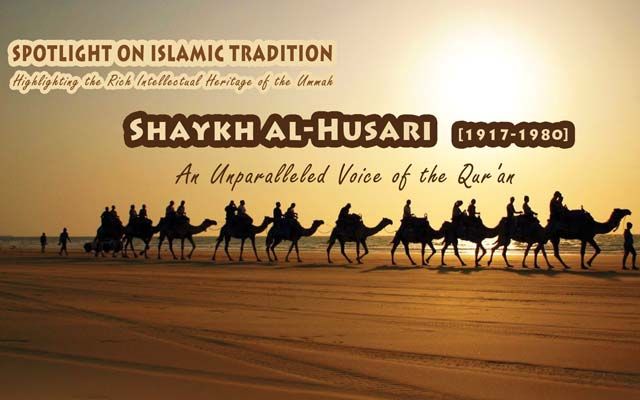
    In the narrative that chronicles the preservation of the Qur’an, Shaykh Mahmud Khalil al-Husari occupies a unique position. He was born in 1917 in the center of Tanta, Egypt, with an excelling aptitude for learning the Qur’an. He began his journey at the age of four with local Qur’an teachers and finished memorizing the Qur’an by the age of eight. Too young for admission to any of the Qur’an schools, he began to recite in the village mosques and quickly became a local sensation. As his voice matured, he was invited to gatherings and events to recite the Qur’an. When he reached the age of 12, he entered formal studies at the renowned al-Azhar University schools and completed formal degrees as well as attaining proficiency in the Ten Readings of the Qur’an.

    In 1944, Shaykh al-Husari became nationally known when he won first place in a radio competition, and thereafter became a familiar voice in Egypt. He held various positions in the region’s mosques and religious institutions, as well as serving on several academic and government councils to advance the cause of the Qur’an.

    His passion turned global as he became one of the first Qur’an scholars to travel widely throughout the world as an informal “Ambassador of the Qur’an.” He travelled to India in 1960 to recite at a conference in the presence of Egypt’s president Gamal Abdul Nasir and India’s Nehru, and went to Kuwait in Ramadan of 1963. He frequently visited the major Muslim nations, including Saudi Arabia and Pakistan where he was chosen as the head of an International Reciters Forum at a conference in Karachi in 1966.

    His passion to spread the voice of the Qur’an did not exclude the West. He visited France in 1965 where ten individuals embraced Islam upon hearing his recitation. He visited the U.S. on multiple occasions in the 1970s, met President Jimmy Carter, and visited some of the oldest Islamic centers in the country. On one occasion, it is said that 18 men and one woman embraced Islam after hearing him. He was the first individual ever to recite the Qur’an in the U.S. Congress, the first to recite at the United Nations, in 1977, and in London’s Buckingham Palace in 1978.

    A Rich Legacy

    In addition to being a reciter, Shaykh al-Husari left behind a dozen written works on the Qur’an and its sciences, including a textbook on the science of Tajweed. His greatest legacy, however, is one that placed his name squarely on the historical roadmap of pioneers in preserving the Qur’an and advancing its status in the world. Shaykh al-Husari has the distinction of being the first person in history to record the entire Qur’an in audio media and preserve it for posterity. Although there were others who did partial recordings before his time, and many who did recordings after him, his work became preeminent for a number of reasons.

    To begin with, he was simply the first to record the entire Qur’an. The story behind this project reveals a glimpse into his visionary spirit as well as the workings of destiny. Shaykh al-Husari was greatly concerned about the efforts of Christian missionaries, particularly in Africa, to spread confusion and doubts about the Qur’an. Moreover, this was the dawn of the age of electronic communication and the world was just beginning to take shape as a global village. Shaykh al-Husari used his influence and position to raise awareness of the need to preserve the Qur’an, in the spirit of its early pioneers, this time in an audio format.

    The project had initially been presented to a number of reciters but never came to fruition due to disputes about monetary compensation and related issues. After exhausting these avenues, the matter returned to Shaykh al-Husari, who reluctantly agreed to do it. But he did it as a service to the ummah, without any monetary compensation. He did the same for all his written works, preferring charitable distribution rather than selling for profit.

    Most importantly, his complete mastery and precision in articulating the letters and words of the Qur’an were undeniable. After the project’s completion, the recordings were presented to numerous scholarly experts, and it was only after all of them testified to its precision that the project was allowed to proceed. And to this day, with the unanimous and universal approval of the leading experts of Tajweed, Shaykh al-Husari’s crystal clear voice continues to resonate with divine beauty and power from schools, cars, audio players, and computer software throughout the world.

    Finally, the ambitious nature of the project was also a key factor in its success. After recording the entire Qur’an in the rendition of Hafs in 1961, Shaykh al-Husari’s work was not over. He proceeded to do another entire recording in the Reading of Warsh in 1964 and additional ones in Qalun and Duri in 1968. He also produced another recording in Mujawwad form, a slower style of recitation, as well as one in a teaching style (Muzallam). These recordings have all been widely available since, and continue to our times.

    In 1980, Shaykh al-Husari began suffering from a heart condition and ultimately passed away on November 24, 1980 after completing the last prayer of the day. Upon his death, he left a third of his wealth for charitable works for advancing the cause of the Qur’an.

  • Charity and Service to Others

    Charity and Service to Others

    The Prophet stated: “Every Muslim should give charity.” He was asked, “What if one cannot?” He replied, “Then he should go find work and help himself and others.” He was asked, “What if one cannot?” The Prophet replied,“Then he should help someone in need.” He was asked, “What if one cannot?” He replied, “Then he should command what is right or good.” The Prophet was asked, “What if one cannot?”He replied, “Then at least he should refrain from evil, and that would be charity for him” (Bukhari, Muslim).

    The spirit of charity, volunteerism, and service to others is a hallmark of Islam and among its greatest teachings. The Prophet never lost an opportunity to convey this message to others, and on this foundation he built a prosperous and charitable society oriented to public service.

    Prophet Muhammad exhibited this generosity of character in his own life in a marvelous way. Before he became a Prophet, he earned the greatest respect and regard from his contemporaries by being al-Sidiq (the truthful) and al-Amin (the trustworthy). People confided in him, went to him to arbitrate differences, sought his advice, and even entrusted their valuables to his safekeeping. It was these ethical qualities in his early life that enabled him to be a successful Messenger later on. And so, when the first revelations came down to anoint him as a Messenger of the Divine and he rushed home fearful and full of great distress, his wife Khadijah, beloved supporter and confidante, consoled him and gave him confidence by reminding him of his impeccable character and service to others: “No, rejoice! By God, He would never disgrace you! For you uphold the ties of kinship, always speak the truth, bear the people’s burdens, help the destitute, honor guests, and serve those whose rights are due.”

    This tradition of service continued throughout his prophet-hood and became an integral part of his mission and message. When he arrived in his adopted home of Madinah to establish the first Islamic society, his very first words to the people summed up that message: “People, spread peace among yourselves, uphold family ties, feed each other, and pray during the night while the rest of the people sleep, and you shall enter Paradise in peace!” The formula was simple. Build a peaceful society which consists of service to others (your families and those who are needy) and service to God (in the form of prayers). That, in essence, is the road to salvation. The balance between the body and spirit, between personal and civic responsibilities, and between spirituality and the mundane affairs of life is wonderful guidance bequeathed by Islam to humanity.

    As part of this prophetic lesson, Prophet Muhammad emphasized the need for financial independence so that one can be in a position to help others. Charity, primarily in the form of donations, is a responsibility of every believer. This can be monetary donation or other type of material provision, depending upon the need. And for those unable to afford such, the Prophet strongly urged them to find work to earn something with their own hands so that they could help themselves and then others. In other words, tangible donations are among the greatest forms of charity and financial independence is, therefore, a desirable value in Islam.

    Yet, for those who truly are not in a position to give material assistanceto others, then the Prophet recommended they find some other means to help someone in need. Financial assistance takes precedence but if that is simply not possible, then service to others is a priority. The principle of charity is so important that no single person is exempt from practicing it, even those who cannot afford it.For those who are neither in the position to give nor in a position to help, then they were urged to at least enjoin something that is good or virtuous. That could entail, for example, teaching someone something beneficial, speaking out for social justice, or promoting some worthy cause. Finally, those not in a position to practice any of these approaches must, at the very least, stay away from wrongdoing of any sort which indirectly protects people from that potential harm.

    So charity and public service should involve everyone in a sound and healthy society. There are no exceptions because there are many forms of giving and helping. In our current political atmosphere where public assistance and providing for those in need have been assailed by some in the public discourse, these lessons on charity are very timely. There are, indeed, hopeful signs as the majority has rejected a selfish and self-serving political agenda—as the recent elections have shown. And in the aftermath of Hurricane Sandy, we recognize once again that we live in difficult times; and that the tenuousness of this life is best dealt with by engaging and cooperating with those whose spirit of charitableness is ever ready to provide support and relief to those in need.

  • Editorial: Our Collective Role  in Spanish Dawah

    Editorial: Our Collective Role in Spanish Dawah

    More than 1,400 years ago, Prophet Muhammad, peace be upon him, said: “Surely, this religion will reach the boundaries of the day and night and Allah will not spare a rural or an urban dwelling except that He would cause Islam to enter it…”(Ahmad and Ibn Hibban, classified as authentic). We are witnessing the realization of this prophecy today, as Islam continues to spread from the East to the West, including North and South America, where the number of Muslims will more than double by the year 2030, according to statistical projections.

    Many of the new Muslims are Latinos who are living in the US and in Latin America. Recent studies such as the The American Mosque 2011 Report reveal that the number of Latino converts in the US has been steadily increasing since the year 2000, more so than any other racial or ethnic group. Similar trends are occurring in neighboring Mexico and further south in Central and South America, where the primary language is Spanish.

    Spanish is the second most widely spoken language in the world, and the official language of 21 countries. With over 50 million native speakers and second-language speakers, the United States has the second largest Spanish-speaking population in the world, after Mexico. Spanish is the most studied foreign language in the US.

    In the Qur’an, God says, “And We sent not a Messenger except with the language of his people, in order that he might make (the Message) clear for them. Then Allah misleads whom He wills and guides whom He wills. And He is the All-Mighty, the All-Wise”(Qur’an, 14:4). This points to the importance of providing educational materials about Islam in all languages. And due to the dramatically rising number of Spanish-speaking Muslim converts in the US, the need for resources in Spanish cannot be ignored.

    ICNA and its WhyIslam project are among the few organizations providing services for this demographic, with Spanish-speaking operators on the 1-877-WhyIslam hotline, educational material in Spanish, Spanish sessions during the annual ICNA-MAS convention, and The Message International magazine now featuring articles in the Spanish language.

    Islam is an integral part of Latino history and culture and as such, Hispanics who choose to become Muslim are merely rediscovering and embracing their past. Through our efforts, with God’s help, we can share the message with our brothers and sisters in humanity and facilitate the success of their transition.