Earlier this year, I traveled to Jordan with a relief organization. I spent a week visiting refugee camps sheltering countless Gazan and Syrian families, as well as individuals who have lost their families, including too many child orphans. Often when people visit refugee camps, they return with emotional messages, haunted by the tremendous pain and loss they have witnessed, stories of grieving widows, children without shoes, and nomadic campsites lacking water or basic human necessities.
But beyond these personal narratives, something else comes to mind, a thought that boils the blood of every Muslim who cares. We ask ourselves what caused this immense pain and suffering. The answer? — carnage and destruction inflicted by people who care little about justice, who seem to care nothing about being the direct cause of human suffering. Yet, we know that the Lord is fully aware of what they do.
And the Lord also knows what we do. So, where is the Muslim ummah, two-billion strong, in the pursuit of long-delayed, long overdue justice? Where are we, American Muslims, who enjoy the opportunities and conveniences of living in this country— what are we doing to bring about justice? Are we aware of and willing to pay the price of living here?
Are We Willing to Pay the Price?
 The price of living here is you being angry about the injustices prevalent in the world and, therefore, engaged with the political system. The price of living here is you aiming to be the most pious practicing Muslim you possibly can be. You must be, when the land you call home is one of the most politically and economically powerful in the world. The price of living here is you regularly inviting others to Allah’s truth in a way that reflects the profound goodness of Islam: “Invite to the Way of your Lord with wisdom and kind advice…” (Qur’an 16:125). The price of living here is you never compromising on the truth of what Allah (SWT) has revealed and you living by it with firm resolve: “And do not incline toward the wrongdoers, or you will be touched by the Fire…” (Qur’an 11:113).
The price of living here is you being required to learn about the worldwide impact of America’s political system as it morphed into a military-industrial complex, to be aware of how many innocent people that the oligarchy oppresses, and to recognize its taint of discrimination by race, class, national identity, religion, etc., both at home and around the world.
As Muslims, we are called to care and act when we see injustice wherever it may be. How then can we watch a genocide unfold in Gaza and not engage with our political system? The Prophet (pbuh) said: “Whoever among you sees evil, let them change it with their hand… If you cannot, then with your speech; if you cannot, then hate it in your heart—and that is the least degree of faith” (Muslim).
We see the state of the economy, the government corruption, the immorality of some politicians; and we see scores of people who feel frustrated and helpless. However, many Muslims cast their votes this month, determined to make themselves known as an important and integral part of this country’s political dynamics. They voted to make it clear there are hundreds of thousands of people who see the genocide taking place and cannot remain silent.
Nonetheless, you may think, “I’m just one person, what can I do?” But this is exactly how the oppressors want you to think— that you are powerless, that you are insignificant. But that isn’t true, and the Prophet (pbuh) said wanting for your brother what you want for yourself is a sign of a believer, offering us hope in the importance of our compassion and our actions. The Prophet (pbuh) said, “None of you truly believes until he loves for his brother what he loves for himself” (Sahih al-Bukhari). Conversely, we also hate for our brothers and sisters what we hate for ourselves. Therefore, if we don’t desire genocide for ourselves, we cannot be complacent when we see others subjected to it.
The Fight for Justice Can Never Cease
 However, the road isn’t always easy. Understand that when you struggle against evil you will likely face people who wish to see you silenced by any means necessary. These people have demonstrated in other lands the lengths they will go to dehumanize a group and commit war crimes against them. Nevertheless, Muslims’ fight for justice can never cease, particularly for those who live in the West. As followers of Islam, justice for all people is part of our faith-based worldview. We must fight for it until our last breath. We must stay focused, and we must plan, work, and strategize to inspire others as our ummah did in the past.
If you find yourself falling short, remember the Prophet’s (pbuh) words: “The most beloved people to Allah are those who are most beneficial to others” (al-Ṭabarani). If we want to be beneficial to others as our Prophet (pbuh) advised us, and we hope to earn Allah’s love, I offer the following suggestions:
- Strengthen your relationship with Allah.
- Educate yourself and others.
- Volunteer your time and skills.
- Use your wealth for good.
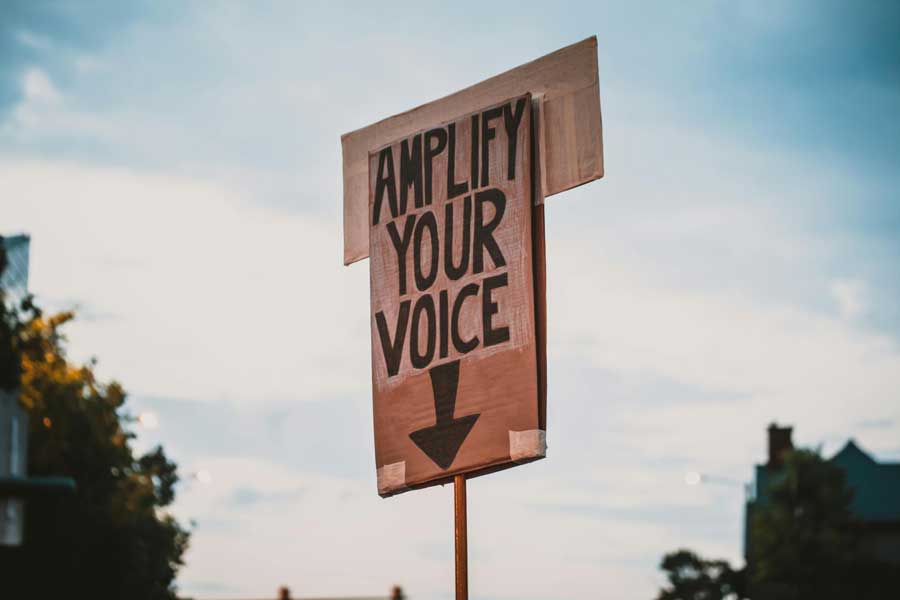
- Speak out for justice even if your voice trembles.
- Engage with the political system to your best capacity.
- Reassess how you spend your time.
- Join and strengthen your Muslim community.
- Always keep your intentions pure.
- Most importantly, keep moving forward. Get up and get moving.
For those already fighting in the way of justice, alḥamdulillah! There are so many amazing men, women, and youth working for noble causes worldwide and doing what’s required of them by fulfilling their promises to Allah (SWT). “Among the believers are men true to what they promised Allah…” (Qur’an, 33:23).
However, if you’re ever struggling to live up to this noble stature, having difficulty in implementing any of the above suggestions, let the coming Day of Judgment be your inspiration. Imagine standing before Allah (SWT) and Him asking you what you did with the blessings He gave you. So, we should ask ourselves whether we are paying the price of these blessings.