بسم الله الرحمن الرحيم

Tag: taqwa

  • Reflecting on Taqwa During Ramadan

    Reflecting on Taqwa During Ramadan

    Every Ramadan, we are reminded about the verse of fasting (2:183) and other verses that guide us to the objective of taqwa. And every Ramadan we need to reaffirm our understanding of the comprehensive facets of taqwa, for ourselves, our families, and our communities, so that we are aiming for its bountiful scope, not just one or another of its aspects.Consider the following three verses of the Qur’an. Allah says:“O you who believe, have taqwa of Allah as His right upon you” (3:102); and He says,“O you who believe, have taqwa of Allah, and let every soul reflect on what it has sent ahead for the afterlife” (59:18); and “O you who believe, fasting has been obligated upon you as it has been obligated upon those before you so that you may gain taqwa” (2:183).

    Taqwa is translated variously as God-consciousness, fear of God, being in awe of God, awareness of God, mindfulness of God, and conscious obedience to God. However, the Arabic term ‘taqwa’ is far more extensive and multi-faceted than the narrow translations found in one or two English words. One can understand the various facets of taqwa based on the verses of the Qur’an, the authentic aḥadith, and the commentary of the companions (r) of the Prophet (s) and scholars of Islam throughout the ages.

    What Is Taqwa?

    Taqwa is to be mindful and conscious of Allah, recognizing His Majesty and Perfection, acknowledging one’s status as a human being in need before the Creator, and recognizing the importance of submission to Allah out of love, hope, and fear, all with a consistent equilibrium. Thus, the internal state of taqwa leads to external manifestations such as obeying Allah’s commands, staying away from His prohibitions, and regularly reviewing one’s actions in order to progress towards Allah. Taqwa is a safeguard against complacency in this life; it is a fortress against sinning without remorse; it is to protect oneself with cautiousness in everyday life, so that nothing risks harming one’s relationship with Allah and, consequentially, one’s place in the afterlife.

    Taqwa is a shield, but it is not inert like a physical shield. It is a dynamic consciousness, a vitality infused into the believer’s soul so that he or she sees broadly and minutely while walking in a field of thorny bushes, walking cautiously so that they are not harmed by the prick of the thorn. Taqwa is a protection against recklessness whether with one’s thoughts or actions,or with choosing one’s companions or environment.Taqwa is to be so aware of one’s purpose in this life, and of Allah’s Perfection and Majesty, that the only reasonable lifestyle in this temporary and relatively insignificant world is that of awareness and vigilance.There is an adage that a prudent caution precedes wisdom.

    A Healthy Fear that Is Part of Taqwa

    Oftentimes, taqwa is wrongly taken to be a type of fear that is so debilitating that an adherent is living with excessive paranoia and spiritual paralysis. While fear is healthy to have in the proper proportion, it must be coupled with hope in the mercy of Allah, to the extent that one always recognizes their ultimate need for Allah’s mercy regardless of how often they repent or do good. Taqwa is to be so mindful of Allah that one’s actions change for the better.In the modern world, when people know they are being recorded, they tend to be more conscious of what they say or do.

    Then what about the mindfulness we should practice in the sight of Allah, Al-Basir, the All-seeing, and the effect this should have on our lives? While taqwa has within it the aspect of fear, everything in Islam is imbued with a healthy apportionment. What, then, is the healthy type of fear that accompanies taqwa with regards to our lives as believers?

    The component of fear in taqwa is multifaceted: it is fear of misguidance, fear of shortcomings in good deeds, fear of sinfulness, fear of God’s anger, fear of the hellfire — fear of any and all things that can result in ultimate and eternal loss. This fear, however, must be coupled with recognition of Allah’s vast mercy, as He promises to forgive the sinner every time he or she sincerely repents – and that sincerity is demonstrated by stopping the sin, having remorse, and intending to never return to the sin again. Allah’s mercy is so explicit that no believer can reasonably fall into paranoia and debilitating fear unless they have failed to reflect upon His mercy.The All-Merciful says, “O my servants who have transgressed upon themselves in sins, do not lose hope in the mercy of Allah, for certainly Allah forgives all sins. Indeed, He is the All-Forgiving, the Ever-Merciful” (39:53). Further, Allah says in a hadith qudsi, “O son of Adam, were your sins to reach the clouds of the sky and then you asked forgiveness from Me, I would forgive you” (Tirmidhi). Grasping the vast mercy of Allah prevents a believer from experiencing the fear of Allah in such way that it is paralyzing, preventing him or her from thriving mentally and emotionally. That is why it is so crucial for every believer to recognize the formula for equilibrium: it is to worship Allah out of true love and humility, with a balance between fear because of one’s shortcomings and hope for Allah’s mercy.

    The opposite extreme is when believers ignore the element of fear in taqwa and thus, they typically find themselves disregarding Allah’s prohibitions, ignoring His commands, missing some (or all) obligations, and thinking only of Allah’s mercy while ignoring the balancing weight on the other side of the scale:“Inform My servants that I am the Ever-Forgiving, the Ever-Merciful; and that My punishment is the most painful punishment” (15:49-50).

    Taqwa is to recognize Allah’s right over His creation, and as a result to humble oneself and follow His command. Taqwa is what leads the humble, wise, human being to recognize that true success and salvation cannot be achieved without Allah’s vast mercy, but that it is Allah’s right that He be worshipped and His Oneness not denied, praised and His guidance not forgotten, called upon in need and His punishment not downplayed.Imam Ibn al-Qayyim says: “Such a person [of taqwa] will be convinced that he cannot rely on his actions, lest he be destroyed. Many people think about their rights over Allah and not about His rights over them. This is how they are detached from Allah and deprived of the desire to meet Him. This is the epitome of ignorance of their Lord and of themselves.”

    The Path to Taqwa

    If taqwa is a necessary shield, fortress, lifestyle, mindfulness, and a condition of salvation and success, then it is only reasonable that every believer should strive to become a muttaqi, or one who has taqwa. Taqwa comes through holding oneself accountable in this world by reflecting on one’s thoughts and actions, before one is held accountable on the Day of Judgment. Taqwa comes through recognizing that this life is the only opportunity for good deeds – the currency of success! – and that the Day of Accountability is for justice, whether reward or punishment, with no more opportunity for good deeds. It was Umar (r) who said, “Hold yourselves accountable before you’re held accountable, and weigh your deeds [by reflecting on them] before they are weighed [on the Day of Judgment].” Similarly, Al-Hasan al-Baṣri (r) said: “Those who frequently hold themselves accountable in this life find their accountability in the next life easy, and those who take this matter lightly will find their accountability very heavy and difficult in the next life.”

    Taqwa is to check oneself frequently by reflecting and measuring. What is measured is oftentimes managed, and what is measured oftentimes progresses. What greater thing to measure — to manage and to facilitate progress — than one’s own journey to Allah? Taqwa in everyday life is to avoid the consumption of anything damaging to one’s journey to Allah such as watching inappropriate videos, movies, orany other form of improper entertainment, or listening to anything displeasing to Allah, or reading that which distances oneself from Allah’s mercy.Taqwa is to choose one’s environment cautiously and one’s friends carefully, in the hopes of finding support on one’s journey to the Ever-Merciful.

    Imam al-Ghazali (r) wrote,“It is incumbent on every person who believes in Allah and the Last Day that he should not be oblivious of self-accountability. Every breath of life is a precious jewel which can buy eternal treasures. Wasting these breaths or using them for detrimental purposes is such a great loss which no intelligent person could justify.” It was reported that Umar (r) donated a valuable piece of land when he missed Asr prayer in congregation, and that his son, Ibn Umar, used to pray qiyam all night if he missed a prayer in congregation. Thus, disciplining the self when one falls short helps to raise the believer in rank, to preserve the default level and standard of taqwa, and to experience true liberation from worldly desires and attachments, all while connecting to Allah the Ever-Merciful.

    Taqwa puts a proper order and proportion in one’s life, giving the believer a means to facilitate and measure his progress on the journey to Allah. Taqwa reminds the believer of Allah’s punishment while, at the same time, relieving the believer of distress by assuring him of the incomparable grace and power of Allah’s mercy. Taqwa is remembrance that Allah’s mercy is available so long as one ascribes no partner to Him and calls upon Him with true sincerity of repentance. “…And whoever has taqwa of Allah, He will make for him a way out. And He will provide for him from where he could not imagine. And whoever puts his trust in Allah, sufficient is He for him. For Allah will surely accomplish his purpose. Verily, Allah has set for all things a measure” (Qur’an 65:2-3).

    This Ramadan, let us fortify, through remembrance and reflection, a broad understanding of taqwa and then strive for its fullest application in ourselves, our families, and our communities.

  • Ramadhan: Opportunity to Attain a Higher Spiritual Status

    Ramadhan: Opportunity to Attain a Higher Spiritual Status

    All praises are for Allah, The Almighty, and may His peace and blessing be upon His true servant and final Messenger Muhammad, on his Companions and his household. The month of Ramadhan always comes to us with lots of blessings and opportunities from Allah SWT. Ramadhan is a very special month. It is the month of the Quran, siyaam (fasting), and qiyaam (the voluntary night prayer). In this month there is a great night, the Night of Qadr, that is better than one thousand months. This blessed month is an annual retreat of the soul to attain a higher spiritual status and to deepen and improve the relationship with the Divine — Allah SWT, with the creation (particularly with the servants of Allah SWT), and with the self (an-nafs).

    The words ‘fasting is for Me’ (Allah SWT) are sufficient to indicate the superiority of fasting over all other acts of worship

    Each of these has rights over us and Ramadhan is the time when we reset and reprogram ourselves to rectify and enhance these relationships. We hope that after we finish our fasting, we get closer to good and discard anything that might have stifled those relationships over the past year. No wonder we learn that the Sahaabah (RA) used to look forward to the month of Ramadhan six months before its arrival, and when it was done, they would reflect for the next five months upon their efforts and experience during the just-completed Ramadhan. Each Ramadhan, they would maximize every moment to fulfill the above-stated goals.

    Relationship with Allah SWT

    Let us begin with our relationship with Allah SWT. One of the greatest benefits of fasting the month of Ramadhan is to purify our intention and increase our sincerity in our relationship with Him. We are not fasting except to please Allah SWT. This particular act of worship distinguishes itself from the other acts of worship or Ibaadaat. For this we read the hadith of Abu Huraira (RA) who reported Allah’s Messenger (pbuh) as saying: “Every deed of the son of Adam would be multiplied, a good deed receiving a tenfold to seven hundredfold reward. Allah, the Exalted and Majestic, has said, ‘With the exception of fasting, for it is done for Me and I will give a reward for it, for one abandons his passion and food for My sake. There are two occasions of joy for one who fasts — joy when he breaks it, and joy when he meets his Lord, and the breath [of the one who fasts] is sweeter to Allah than the fragrance of musk” (Sahih al-Bukhari and Muslim).

    We ought to refrain from backbiting, slander, lies, gossip, and any other word or deed that could harm another person

    Al-Haafiz ibn Hajar (RA) quoted several views from scholars who sought to explain the meaning of this hadith as to why fasting was singled out in this manner. Firstly, there is no showing off in fasting as may happen in other acts of worship. Imam Al-Qurtubi said: “Because showing off may enter into all good deeds, but no one can see when a person is fasting except Allah, so Allah connected it to Himself. Hence He said in the hadith ‘He gives up his desire for My sake.’” Ibn al-Jawzi further explained it in a similar way: “All acts of worship can be seen when done, and they may be contaminated with some element of showing off, unlike fasting where there is no action to be seen or heard.”

    Regarding what is meant by the words “I shall reward for it” is that only Allah SWT knows the extent of the reward and how much his good deeds (hasanaat) will be multiplied. Al-Qurtubi said: “What this means is that the amount of reward for good deeds may become known to people, and they will be rewarded between ten and seven hundredfold, and as much as Allah wants, except fasting, for Allah will reward it without measure.” This is supported by a report narrated by Muslim from Abu Hurairah (RA). The Messenger of Allah (pbuh) said: “Every deed of the son of Adam will be rewarded between ten and seven hundredfold. Allah said, ‘Except fasting, for it is for Me and I shall reward for it.’” Again, this means that He shall reward it greatly, without specifying how much.

    Regarding what is meant by “fasting is for Me” is that it is the dearest of acts of worship to Allah SWT. Ibn Abd al-Barr (RA) said: “The words ‘fasting is for Me’ are sufficient to indicate the superiority of fasting over all other acts of worship.” This is supported by a hadith narrated by Abu Umaamah (RA). The Messenger of Allah (pbuh) said: “You should fast, for there is nothing like it” (An-Nasaa’i). Yet another thought about the statement “fasting is for Me” is that fasting is mentioned in conjunction with Allah by way of honoring. This is similar to when one says Baitullah or “the House of Allah,” giving honor to the Kabah as opposed to the other houses or places of worship.

    There is no doubt that fasting done for Allah’s (SWT) sake cleanses one from shirk, doubts, showing-off, insincere intentions, arrogance, and all those negative qualities that cause a person to be distanced from Allah SWT. Another way of strengthening our relationship with Allah SWT is to humble ourselves in what Allah has commanded us to do so. Allah alone is the one who issues rulings, and His rulings are the most wise and perfect. Thus, the Believers hasten to obey the commands of Allah and His Messenger (pbuh). He SWT says in the Quran: “It is not for a believing man or a believing woman, when Allah and His Messenger have decided a matter, that they should have any choice about their affair. And whoever disobeys Allah and His Messenger has certainly strayed into clear error” (Quran 33:36).

    These days too many people believe that they can pick and choose their acts of worship. A person may choose to give a thousand dollars in charity but not fast a single day. Or vice versa, or he may fast all month but not want to give anything from his wealth. So fasting the month of Ramadhan is done for His sake and has its immense rewards. But it also is meant to strengthen the relationship with Allah SWT so that one complies with His commands without hesitation, with devotion and sincerity.

    Relationship with Our Fellow Human Beings

    Next in line is the relationship that ought to be strengthened with our fellow human beings during the month of Ramadhan. We are given the glad tidings from Rasoolullah (pbuh) who said: “In Paradise there are rooms whose insides can be seen from the outside, and the outside can be seen from the inside. A Bedouin asked, ‘Who are they for, O Messenger of Allah?’ He said, ‘For those who speak kindly, feed the hungry, and stand in prayer at night whilst the people are sleeping.’” While this can be done throughout the year, during the month of Ramadhan it is easier to increase these good deeds. It is the best time to provide food to those who are poor and hungry.

    Fasting makes us feel compassion and empathy towards the poor, because when the fasting person tastes the pain of hunger for a while, he remembers those who are in this situation all the time, so he will hasten to do acts of kindness and show compassion towards them. So fasting is a means of feeling empathy with the poor and intensifying the urge to give. During Ramadhan, Rasoolullah (pbuh) exercised this quality of giving more than other times. In a hadith we learn that Rasoolullah “was the most generous of all the people and he used to become more generous in Ramadhan when Jibril met him. Jibril used to meet him every night during Ramadan to review the Quran with him. Allah’s Apostle then used to be more generous than the fast wind.” He even encourages us to offer a fasting person something with which to break his/her fast. He tells us: “Whoever gives food to a fasting person with which to break his fast will have a reward like his without detracting from the reward of the fasting person in the slightest” (At-Tirmidhi).

    Above all, Ramadhan teaches us to withhold our tongues and hands from harming others. This perhaps is the one of the most powerful ways of strengthening our relationship with our fellow human beings. He (pbuh) warns: “Whosoever does not leave bad words and bad actions, Allah does not care if he leaves his food and drink” (Al-Tirmidhi). Thus, we ought to refrain from backbiting, slander, lies, gossip, and any other word or deed that could harm another person. So if we fast right, we can discard hypocritical relationships with our fellow brothers and sisters, and instead develop a lasting bond of fellowship based on mutual caring, respect, and sincerity. If a person does that for a whole month sincerely, the rest of the year will go well. If on the other hand, we harm each other while fasting, then there is no difference between a day when we fast and a day when we do not. We may end up fasting year after year yet we are back to square one. Nothing has stayed with us and this is sad.

    Rasoolullah (pbuh) advises us that the month of Ramadhan is time to be sincere and make du’a for our brothers and sisters. In a hadith, Safwan narrates: “I visited Abu Darda’s house in Sham. I did not find him there but Umm Darda [was present at the house]. She said, ‘Do you intend to perform Hajj during this year?’ I said, ‘Yes.’ She said, ‘Do supplicate Allah for blessings upon us, for Allah’s Apostle [peace be upon him] used to say: The supplication of a Muslim for his brother in his absence is responded to so long as he makes a supplication for blessings for his brother and the commissioned Angel says: Ameen, and says, may it be for you too! I went to the market and met Abu Darda and he narrated the same from Allah’s Apostle [peace be upon him]” (Muslim).

    Relationship with Our Own Nafs (Self)

    The nafs is the seat of Shaitan within us and Allah SWT has given us this noble opportunity in the month of Ramadhan to conquer the Shaitan that resides within. Rasoolullah (pbuh) informs us: “When Ramadan comes, the gates of Paradise are opened, the gates of Hellfire are closed, and the devils are chained up. For this He SWT has chained the devils so that we can utilize his weakness to gain our strength.” While there are many interpretations for this hadith, it would appear that the Shaiateen are not able to tempt the Muslims as they are able to do to others because they are busy with the fast which controls their desires, and by reading the Quran and doing zhikr of Allah SWT.

    Another dimension to this is that fasting humiliates and weakens the Shaitan. It weakens the effects of his whispers (waswaas) on a person, and thus the person’s sins are reduced. That is because the Shaitan “flows through the son of Adam like blood” as the Prophet (pbuh) said, but fasting narrows the passages through which the Shaitan flows, so his influence grows less.

    The greatest inner quality that is developed deep within us during the month of Ramadhan is taqwa. In fact, it is the primary reason for fasting in the month of Ramadhan. Allah SWT says: “O you who believe! Observing the fast is prescribed for you as it was prescribed for those before you, that you may become al-muttaqoon [those who are pious, those with taqwa]” (Quran 2:183). The aim mentioned here is taqwa (God- consciousness, piety, and fear of God) and taqwa means giving up haraam things, and in general terms includes both doing what is commanded and abstaining from what is forbidden for Allah’s (SWT) pleasure. So if by fasting we can give up halaal things (temporarily) in order to please Allah and for fear of His painful torment, then we will be more likely to refrain from haraam things for the same purpose. Once again, if a person does that for a whole month, the rest of the year will go well in his or her efforts to achieve this inner deep God-consciousness.

    Finally, every heart desires something great. Each individual wants to achieve great things in life. Through fasting, we aim high, with the goal of attaining the forgiveness of our sins and reaching the special place in Jannah called ar-Rayyaan! Sahl ibn Sa’d reported that the Prophet said: “There is a gate to Paradise that is called ar-Rayyan. On the Day of Resurrection it will say, ‘Where are those who fasted?’ When the last [one] has passed through the gate, it will be locked” (Al Bukhari and Muslim).

    Concluding Thoughts

    Dear brothers and sisters, let us not allow the month of Ramadhan to come and go without achieving the greatness and grandeur it can bring us. I’ll remind myself and all of us of a hadith of Rasoolullah (pbuh): “The Messenger (pbuh) climbed the minbar and said, ‘Ameen, Ameen, Ameen!’ The Companions inquired concerning this, and he responded, ‘Verily Jibril approached me and said: Whomsoever reaches the month of Ramadhan but does not have his sins forgiven before his death, and due to this he enters the Hell-fire, may Allah distance this person. Jibril then ordered me to say Ameen, so I said Ameen.’” (Ibn Hiban)

    If we do not do good in this blessed month of Ramadhan, then when else? Qatadah (one of the early scholars) said, “It used to be said: Whoever does not have his sins forgiven in Ramadhan, he will not have his sins forgiven in other than Ramadhan.” May Allah (SWT) accept all of our Ibadaat, ameen.

  • Taqwa Must Enter the Heart

    Taqwa Must Enter the Heart

    The word “taqwa” comes from the Arabic root letters wa, qaf, and ya. Its meaning is broad, signifying consciousness of Allah (SWT), love and fear of Him, and righteousness. In Quran, Allah (SWT) uses the word taqwa 151 times. We read these verses and get in-depth understanding of what this word really means as we ponder its profound significance. We realize that taqwa is a shield which prevents us from doing immoral acts. We internalize that Allah (SWT) sees and hears all things, and this awareness keeps us away from sins. One time, some companions asked the Prophet (peace be upon him) about taqwa. He tapped his fingers over his chest and said that “taqwa is here.” He repeated that three times. This indicates that taqwa involves more than an intellectual grasp of the divine reality. Consciousness of Allah (SWT) must enter the heart and inform one’s character, so that love and fear of Him bears its fruit in a person’s actions.

    A farmer knows the secrets of getting a good harvest. He chooses a good location with plenty of sunlight, cleans the ground from weeds, ensures that the soil is fertile, plants good quality seeds, and gives the right amount of water. He continues to work hard for a good harvest. In the same way, if we want to cultivate taqwa in our hearts, then we have to locate ourselves well — surrounding ourselves with good people, sound ideas, and wholesome pleasures.

    Once Umar (r) queried Kaab (r) about taqwa. Kaab (r) then asked Umar (r) if he had ever walked through a thorny path. Umar (r) said that he had done that many times. Kaab (r) then asked Umar (r) to describe how he moves amongst the thorns. Umar (r) responded that he walks carefully with all his clothes collected close to his body so they are not ripped by the thorns. Kaab (r) said that this is the answer to his question about taqwa. Indeed, this world is a place surrounded by the thorns of temptations, provocations, deceptions, and pretenses. We must carefully tread this life’s journey to protect ourselves from the traps of Shaitaan, our own base desires, and worldly snares. If we are successful, then we are a “muttaqi” – a person with taqwa.

    How Can We Attain to Taqwa?

    In Surah al-Baqarah, Allah (SWT) says, “O mankind! Worship your Lord, Who has created you and those before you, so that you may become righteous [attain taqwa]” (2:21). This verse indicates that if we really want to cultivate taqwa in our hearts, we can do so through ibadaat, our acts of worship, like fasting, daily prayers, charity, and other acts. As we increase the sincerity and devotion of our ibadaat, taqwa increases – we become more conscious of Allah (SWT), our love and fear of Him permeates our daily lives, and our behavior reflects our feelings of closeness to Him.

    The Benefits of Taqwa

    We should keep in mind the full meaning of taqwa when we read Quranic verses. So when the translation of “ittaqullah” is rendered as “be conscious of Allah” or “fear Allah” or “be righteous,” the original in Arabic encompasses all the meanings.

    Taqwa brings about the following benefits:

    • Allah will facilitate our self-reform and forgive our sins: “O you who believe! Be conscious of Allah (have taqwa), and speak words directed to what is right. He will [then] make your conduct whole and sound and forgive you your sins: he that obeys Allah and His Messenger, has already attained the highest achievement” (33:70-71).
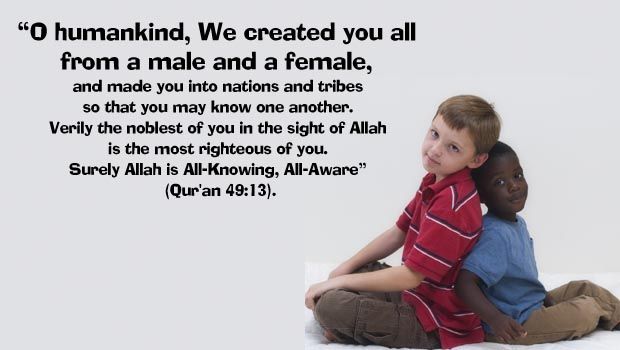
    • We will attain to an honored status: “Verily the most honored of you in the sight of Allah is [he who is] the most righteous of you [has the most taqwa]. And Allah has full knowledge and is well acquainted [with all things]” (49:13). The criterion for high ranking in the sight of Allah (SWT) is taqwa, not appearance, wealth, status, or other worldly attribute.
    • We will find ease in affairs, have bad deeds pardoned, and our reward magnified: “… and for those who fear Allah [have taqwa], He will make their path easy… And if anyone fears Allah, He will remove his ills from him, and will enlarge His reward” (65:4-5).
    • We will be able to discern right from wrong and have our sins forgiven: “O you who believe! If you fear Allah, He will grant you a criterion [to distinguish between right and wrong], and remove from you all evil and forgive you” (8:29).

    All the above blessings are available to us in this world and will result, insha’Allah, in earning the pleasure of Allah (SWT) and gaining us entry into Jannah with His mercy.  Ameen.

    Concluding Remarks

    A farmer knows the secrets of getting a good harvest. He chooses a good location with plenty of sunlight, cleans the ground from weeds, ensures that the soil is fertile, plants good quality seeds, and gives the right amount of water. He continues to work hard for a good harvest. In the same way, if we want to cultivate taqwa in our hearts, then we have to locate ourselves well — surrounding ourselves with good people, sound ideas, and wholesome pleasures. Then we plants seeds of taqwa with devotion, nourishing ourselves with the light of truth. We also have to regularly clean our minds and hearts from negative thoughts and feelings, and enrich and soften the loam of our souls with our tears.

    There are countless ways to plant seeds of taqwa: a kind word, a charitable act, support of social justice, turning away from temptation and refraining from wrongdoing, a focused and sincere prayer, and so on. And remembering Allah (SWT) is a continuous dedication to producing a good harvest in our souls. The best time to do this is at tahajjud time when others are sleeping. We leave the comfort of our beds to remember Allah (SWT), to make dua to Him for qulb-e-saleem (a sound heart) and for nafs-ul-mutmainnah (a tranquil soul).

    Insha’Allah, He will accept our duas and give us the taufiq (good fortune) to remain conscious of Him always, to love and fear Him so that we follow His commands and the wisdom of His guidance, and to be of those who attain righteousness. For then, taqwa has entered the heart. Ameen.

  • Tafseer of Verse 13 of Surah Al-Hujurat

    Tafseer of Verse 13 of Surah Al-Hujurat

    In this verse, the whole of mankind has been addressed to reform it of the great evil that has always caused disruption in the world, that is, the prejudices due to race, nationality, or other group affiliation. On account of these prejudices, man in every age has generally drawn around himself some closed circles, and regarding those born within those circles, they are seen as his own people, and those outside the accepted group as “others.” These circles have been drawn on the basis of accidental birth and not on rational or moral grounds. Born in a particular family, tribe, or race, or in some particular geographical region, or in a nation having a particular ethnicity or speaking a particular language – these are the chance factors by which the circles are established.

    The Creator divided human communities into nations and tribes for that was a natural way of creating cooperation and affection-enhancing social experience

    Superiority of One’s Own Group

    Discrimination toward “others” involves looking upon one’s own group as superior, and this has resulted in the worst forms of hatred, conflict, and tyranny. New philosophies have been propounded based on such supremacism, new religions invented, new codes of law developed, and new moral principles framed; so much so that nations and empires have made this distinction a permanent way of life. A supremacist mindset gave birth to class distinctions (varnashrama) among the Hindus, according to which superiority of the Brahmins was established and all other human beings came to be regarded as inferior and unclean, and the shudras (the working, servant caste, the lowest of the four varna) were subjugated in the depths of disgrace and degradation. Jewish people regard themselves as the chosen people of God and even in the practice of their religious rites look upon non-Jews as inferior in rank and human worth. It is a tragic irony that the concept of the chosen people and its conflation with superiority as claimed by Jewish people was ruthlessly matched by the supremacist ideology of Nazi Germany.

    Another example is in the atrocities that have been committed against people of color in Africa and America on account of the white man’s notion of his own supremacy. The treatment that the Europeans meted out to the indigenous Indian race in America and to the weak nations of Asia and Africa has the same concept underlying it. These ethnocentrists thought they had the right to plunder the wealth of other peoples and take them as their slaves, exterminating them if need be to advance their agenda of exploitation.

    Three Cardinal Truths

    One can easily see how devastating is the error of fanatic tribal loyalty to one’s own group, unequivocally condemned by the above Qur’anic verse. In just two lines, AIlah has drawn the attention of all mankind to three cardinal truths:

    (1) The origin of all human beings is one and the same. The human species has sprung up from one man and one woman. Thus, aII races found in the world today are, in fact, the branches of one initial race that started with one mother and one father. In this process of creation there is no basis whatever for the artificial divisions and distinctions which humans have established based on false notions. One God alone is the Creator of all, having made all people from one and the same substance. it is not the case that some people have been made from some pure and superior substance and some others from an impure and inferior substance.

    (2) In spite of being one in origin, it is natural that human beings have been divided into nations and tribes. Obviously alI individuals on the earth could not belong to one and the same family. With the increase of the population, it was inevitable that countless families should arise, and then tribes and nations emerging in time. Similarly, it was inevitable that after settling in different regions of the earth, the various populations developed distinctive genetic traits such as color of skin and facial features due to geography, climate, and reproductive separateness from other groups. Distinct social features such as language also developed among the particular populations. But these natural differences never demanded that distinctions of human value and rank should be established, that one group should claim superiority over others, that skin color or any other accident of birth should bring favor and preference to one and deprivation and abasement to another. The Creator divided human communities into nations and tribes for that was a natural way of creating cooperation and affection-enhancing social experience and a common way of life among them. But due to ignorance, those natural differences among mankind – created by Allah to be a means of recognition, a way to acquire greater understanding and awareness of the human condition – became an expression of ego, overweening pride, and impulse to debase and exploit others. Every kind of injustice and tyranny emerged from that ignorance.

    (3) The third cardinal truth proclaimed in verse 49:13 is that the only basis of surpassing merit and excellence is that of piety and moral elevation, yielded by God-consciousness. The substantive thing that makes one person superior to any other is that he or she, with greater God-consciousness, is a devoted avoider of evils, a follower of the way of piety and righteousness. Such an individual, regardless of race or nation, is elevated on account of personal merit. And the one who is bereft of that merit of character is of less stature, whether black or white, male or female, born in the east or the west.

    Confirming the Superiority of Taqwa

    These same truths that have been stated in this brief verse of the Qur’an, have been explained in greater detail by the Holy Prophet in his addresses and traditions. In the speech that he made on the conquest of Makkah, after going round the Ka’bah, he said: “Thank God Who has removed from you the blemish of ignorance and its arrogance. O people, men are divided into classes: the pious and righteous, who are honorable in the sight of Allah, and the sinful and vicious, who are contemptible in the sight of Allah; whereas aII men are the children of Adam and Adam was created by Allah from clay” (Baihaqi, Tirmidhi).

    On the occasion of the Farewell Pilgrimage, in the midst of the Tashriq days (the eleventh, twelfth and thirteenth of Dhu’l-Hijjah, during which the Prophet forbade fasting), the Prophet addressed the people, and said: “O people, be aware: your God is One. No Arab has any superiority over a non-Arab, and no non-Arab any superiority over an Arab, and no white has any superiority over a black, and no black any superiority over a white, except on the basis of taqwa (piety). The most honorable among you in the sight of Allah is he who is the most pious and righteous of you. Say if I have conveyed the Message to you?” And the great congregation of the people responded, saying: “Yes, you have, O Messenger of Allah.” Thereupon the Holy Prophet said: “Then Iet the one who is present convey it to those who are absent” (Baihaqi).

    In a hadith he has said: “You are all the children of Adam, and Adam was created from dust. Let the people give up boasting of their ancestors, otherwise they will stand more degraded than a mean insect in the sight of Allah” (Bazaar). In another hadith the Holy Prophet said: “Allah will not inquire about your lineage on the Day of Resurrection. The most honorable in the sight of AIIah is he who is most pious” (Ibn Jarir). In still another hadith he said: “Allah does not see your outward appearances and your possessions, but He sees your hearts and your deeds” (Muslim, lbn Majah).

    These teachings cannot remain confined to words only, as Islam aims to establish a universal brotherhood of the believers on such basis, disallowing any distinction on account of color, race, language, or nationality, bestowing on all human beings equal rights. Even the opponents of Islam have had to admit that no match is found in any religion or any ideological system as to the principle of human equality and unity that has been given practical shape in the Muslim society. Islam is the only religion which has united multiple races and communities, scattered to all corners of the earth, into one universal Ummah.

    A Misunderstanding in the Case of Marriage

    In this connection, a misunderstanding needs to be addressed. In the case of marriage, the importance that Islamic law gives to the likeness of socio-economic status between prospective spouses has been taken by some people to imply that a person of the upper class is better than one who is of a lower socio-economic status, and that marriage between these two is objectionable. But this, in fact, is a wrong idea. According to Islamic law, any Muslim man can marry any Muslim woman, but the success of the matrimonial life depends on maximum harmony and understanding between the spouses as regards characteristics, habits, ways of living, family traditions, and economic and social status. Where there is unusual difference and disparity between the man and the woman in this regard, lifelong companionship will be difficult. That is why Islamic law discourages such marriages; not, as claimed by some, that one of the spouses is elevated and the other lowly.

    As we have shown in this article, the true character and merit of a human being is defined by Allah. The standards of distinction that human beings have set up of their own accord and by their own design are not acceptable to or approved by AIIah. It may be that the one who has been regarded as a person of high rank in this world will be declared as the lowest of the low in the final judgment of AIIah; and maybe the one who has been looked upon as a very lowly person here, will attain to a very high rank in the Hereafter. The real importance is not of the honor or dishonor of worldly considerations and its emphasis on ego aggrandizement, but of the honor or dishonor that one will receive from Allah. Therefore, what every human being should be most concerned about is that he should create in himself those genuine qualities and characteristics which make him worthy of honor in the sight of AIlah.