
بسم الله الرحمن الرحيم

Tag: risks

  • Seeking His Shade: Growing up in the Worship of God

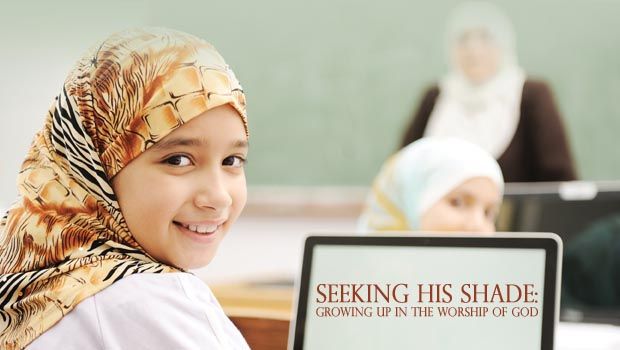
    Seeking His Shade: Growing up in the Worship of God

    Have you ever heard the saying — Youth is wasted on the young? Those of us who can still lay claim to being young often have no real sense of the value of our youth. We’re strong in body, passionate in emotion, and have ample free time that makes older folks envious. There are young people who use their youthful years wisely, and others who fritter it away as though it holds no worth, thinking, “I’ll change sooner or later but I’ve got time to do whatever I want now.”

    Youth is a time of exploration. Older youth don’t yet have the family, financial, and civic responsibilities of an adult; but they have time, energy, health, and exuberant curiosity to explore, develop skills, and grow in knowledge

    Prophet Muhammad (pbuh) said, “Take benefit of five before five: your youth before your old age, your health before your sickness, your wealth before your poverty, your free time before you are preoccupied, and your life before your death.” Youth is mentioned as one of the categories here because it involves the part of your life where you are at your peak health. It’s the time when you’re in a position to lay a foundation for the rest of your life, to institute habits of discipline, to practice virtues, to learn how to think and reason and use common sense. This is the time when you’re able to begin an exciting journey of discovery, of contribution and service, of beneficial impact on your community and the world.

    In the era of the Prophet (pbuh), youth was not seen as a barrier to accomplishing things. There were military leaders who were teenagers. There were Quranic scribes who, in our times, would be considered too young to take on such an important task. There were scholars who were raised in the presence of the Prophet, listening to his words and absorbing his wisdom at tender ages. For these individuals, their youth was an asset, never a limitation. We’re often (mistakenly) taught that as young people we do not have the skills, patience, or dedication to contribute in a substantive way to our communities and to the larger ummah. But as we’ve mentioned, throughout Islamic history many young people achieved great things.

    The very act of having good people in your life can make or break your status with God. Your peers affect you in ways that you may not comprehend at first glance.

    Prophet Muhammad (pbuh) said, “There are seven whom Allah will shade in His Shade on the Day when there is no shade except His Shade.” Among the seven he mentioned is a young person who grows up in the worship of Allah. How can we ensure that Allah (SWT) grants us this status on the Day of Judgment? And how can we capitalize on our time to make sure we’ve fulfilled our greatest potential during the dynamic and bountiful years of our youth?

    Surround Yourself with Good Friends

    I couldn’t be more grateful to my parents who strove to put me in the presence of intelligent and well-mannered people, including my peers. They always knew where I was and with whom. They knew my friends’ parents, and the kinds of people they were. I’ll openly admit that as a child, this was often irritating to me. I didn’t want to have to answer a million questions about who my friends were or where we were going and for how long. I wanted my “freedom.” Now, as an adult and as a parent, I have come to sincerely appreciate the effort that my parents exerted so that I would be in the company of good, trusted people. The very act of having good people in your life can make or break your status with God. Your peers affect you in ways that you may not comprehend at first glance.

    For example, in Surat al-Kahf, Allah (SWT) mentions the story of a group of young men who escaped their town and secluded themselves in a cave because they were the only ones who believed in one God. Allah (SWT) caused them to sleep for 309 years. As part of the story, Allah (SWT) describes the group, saying: “They will say there were three, the fourth of them being their dog; and they will say there were five, the sixth of them being their dog – guessing at the unseen; and they will say there were seven, and the eighth of them was their dog. Say, [O Muhammad], ‘My Lord is most knowing of their number. None knows them except a few. So do not argue about them except with an obvious argument and do not inquire about them [among the speculators] from anyone’” (18:22). It may seem like the dog is mostly irrelevant in the story, but the fact that Allah (SWT) mentions him several times is no coincidence. Scholars of tafseer have explained that the reason the dog is mentioned so often is that it was in the company of these righteous young people. Being in the company of these believers was enough for the dog to be honored to the level of being mentioned three separate times in this Quranic verse. This is the blessing of righteous companionship!

    Not only do we need to surround ourselves with good people, we also need to ensure that we become the sellers of musk. Every person who sits with us should leave with something beautiful.

    Similarly, in a beautiful hadith Qudsi, Allah (SWT) explains that the angels search for groups of people who are remembering Allah, and they surround them with their wings. At the end of the hadith, Allah (SWT) says: “Bear witness that I have forgiven them.” Then one of the angels would ask, “Among those assembled, there is one who is not of them [i.e., a sinner]; he only came for some other need.” Allah would reply: “Even so, they are one another’s companions and their companions shall not suffer.” Just our presence with the people who remember Allah can be a means for us to be forgiven!

    Having righteous companionship can affect our status with Allah (SWT). Good people remind us of our blessings and remind us to be grateful for them. Good people can lift us up in times of distress so that we don’t get lost in our pain. Good people help our hearts stay open and receptive to Allah’s message and guidance. Prophet Muhammad (pbuh), said, “The likeness of a righteous friend and an evil friend is the likeness of a perfume seller and a blacksmith. As for the perfume seller, he may either bestow something on you or you may purchase something from him, or you may benefit from his sweet smell. And as for the blacksmith, he may either burn your clothes or you may be exposed to his awful smell.”

    Not only do we need to surround ourselves with good people, we also need to ensure that we become the sellers of musk. Every person who sits with us should leave with something beautiful.

    Read, Read, and Read Some More

    As a child, I would walk to the nearby library with my siblings and we would each take out at least ten books at a time. Once we got home, we would hole ourselves up in our rooms, devouring the books one by one. This was our entertainment before the advent of hand-held devices. Our mother would have to pry books out of our hands in order for us to eat or sleep at a decent time.

    Growing up this way made us into voracious readers. Although many of us have succumbed to the allure of hand-held devices, there is still no greater pleasure than holding a book and reading in silence. Reading opens the mind to frames of reference other than our own. It enriches our vocabularies so that we might become articulate speakers and writers. It lets us glimpse realities that we haven’t lived, and helps us develop understanding and empathy. “Read!” was the first word ever revealed to our beloved Prophet (pbuh). Years later, after a victorious battle in which the Muslims captured a number of their enemies, Prophet Muhammad advised that if any of them would teach ten children how to read and write, they would be freed. The ability to read and write was given such significant value that teaching it was considered enough of a ransom to warrant an enemy’s freedom. Allah (SWT) tells us in the first verses revealed: “Read! — in the Name of your Lord Who created, created man from a clinging substance. Read! — and your Lord is the Most Generous, Who taught by the pen, taught man that which he knew not” (96:1-5).

    In the Quran and the Prophetic traditions, there is great emphasis placed on reading, learning, and contemplating. Attaining to knowledge is given such a high status that even the Prophet himself would supplicate to Allah, saying “My Lord! Increase me in knowledge.” Reading is the gateway into the world of learning. It is the start of a life-long journey of reflection and exploration. The Quran advises, “Say, [O Muhammad], ‘Travel through the land and observe how He began creation. Then Allah will produce the final creation. Indeed, Allah is able to do all things’” (29:20).

    Reading isn’t just an intellectual exercise. It’s about expanding your mind to a point where you start to recognize and appreciate all the signs that Allah (SWT) has placed on this earth. So for a portion of each day, put aside social media, gaming, and TV and read! Read and strive to understand the Quran; read about the amazing scholars, writers, and inventors who came before us. Read about history, politics, economics, psychology, physics, linguistics, alternative energy sources, health and fitness… the list is endless. And the capacity to expand our minds and deepen our understanding is relatively endless as well.

    Grow Your Passions and Be Active

    Once you reach the age of puberty, you are held accountable for all that you do, and that thought can be daunting. But you also have the opportunity to do good and therefore cement your status as a “youth who grew up in the worship of God.” Youth is a time of exploration. Older youth don’t yet have the family, financial, and civic responsibilities of an adult; but they have time, energy, health, and exuberant curiosity to explore, develop skills, and grow in knowledge.

    Take courses outside of school, develop interesting hobbies, volunteer with your school’s MSA or other groups, work on neighbourhood projects or political campaigns that you believe in. You can even start a small business on your own or with a group of other like-minded peers. The opportunities are quite literally endless. But above all, remember that you are doing all of these things so that Allah will accept you as a youth who took advantage of his or her years before old age. And most of all, remember that you are doing all of these things as part of your worship, as a demonstration that your words and deeds flow from your eman; and your eman, in turn, is constantly growing and informing your daily living with a believer’s sense of meaningfulness and purpose. Ensure that this intention is present, and He will bless all that you do.

    Remember that Your Surroundings Don’t Define You

    I know how difficult it is to grow up in a place where others often belittle your identity, or look at you with suspicion. Perhaps you may feel that you’re at a disadvantage because you live somewhere remote, unable to learn at the feet of scholars, or you live in an environment not conducive to Islamic beliefs. But I remind myself constantly of the examples of the righteous people who came before me – some of whom had to live and preach in much more difficult circumstances. Prophet Musa (pbuh) was raised in the household of one of the worst oppressors and transgressors in history — Pharaoh himself. His adoptive mother Aasiya (may Allah be pleased with her) was in the same boat, but she had it even worse – she was married to Pharoah. And yet both of them rose above these toxic influences surrounding them – Musa (pbuh) became a prophet and messenger whose brilliant example is immortalized in the Quran. Aasiya became a martyr whose strength inspires us to this day, and whose dying words have become part and parcel of our beliefs: “My Lord, build for me near You a home in Paradise.”

    The opposite is also true. You can grow up in the best and most loving, supportive environments for a believer and still go astray. Take for example Prophet Nuh’s (pbuh) son. Regardless of the fact that his father was a prophet, Nuh’s son vehemently disbelieved in the truth. Even as the waves of the flood were getting higher and more violent, he refused to board his father’s ark and eventually perished. You are not defined solely by your surroundings. You are defined only by your own worship of God and your dedication to goodness in all facets of your life. Despite your flaws and sins (we all have them) – you’re so much stronger than you think.

    I pray that I and each person reading this meet under the Shade of Allah (SWT) because we used our youthful years to worship Him (SWT). Ameen.
     

  • Protecting Our Muslim Youth in a Gender-fluid and Hyper-sexual Society

    Protecting Our Muslim Youth in a Gender-fluid and Hyper-sexual Society

    When I was invited to write an article about preparing youth for marriage, I eagerly agreed. I was excited to tackle the topic, not because this has become my field of expertise as the subject of my doctoral research and the focus of a great deal of my work as a youth counselor, but because I saw an opportunity. I had an opportunity to address marriage preparation, one among a list of important topics focusing on the well-being of our youth, including mentoring, developing leadership, time management, and other skills for success, or finding balance in one’s life. However, rather than simply discussing the importance of premarital education and counseling, I decided to focus instead on the issue of moral decline as it relates to sexuality, an issue that is plaguing our youth and causing a detrimental ripple effect deep into the bedrock of young marriages. This article focuses on the hyper-sexuality and shifting views of gender identification that our youth are currently exposed to. We, as parents, educators, community leaders, and activists must come to understand these issues if we are going to protect our children and youth.

    At an increasingly younger and younger age, youth are exposed to very mature content for which they are completely unprepared to process in the context of family, faith, and personal well-being

    As Muslims, we don’t talk about sex. And we definitely don’t talk about sexuality or sexual orientation with our youth. The taboo topic that often results in tongue-tied parents and red-faced religious leaders is not discussed in a healthy way with youth who are already socially exposed to these concepts through a variety of mediums. In neglecting the discussion of these topics, we are left instead with a multitude of curious teens and young adults seeking to learn about sexuality from the many sources that do offer open dialogue: friends, books, magazines, school, television, and, of course, the Internet. While the information may be plentiful and easily accessible, without guidance, a teenager may be left to his or her own devices to make sense of a very grown-up topic. Yet, our faith clearly indicates that we must have conversations with our youth in preparing them for dealing with the real world, as the Prophet (peace be upon him) instructed that there should be no shyness in matters of religion when legitimately seeking knowledge.

    Social Influences

    Today, our youth are surrounded by books, movies, shows, and songs that glamorize intimacy removed from the sanctity of marriage. At an increasingly younger and younger age, youth are exposed to very mature content for which they are completely unprepared to process in the context of family, faith, and personal well-being. Songs by popular figures aim to normalize homosexuality and/or bisexuality, such as Katy Perry’s “I Kissed a Girl,” in which Perry sings, “and I liked it.” Popular family shows such as “Modern Family” present same-sex parents Mitchell and Cameron.

    At the same time, books aimed at a young audience such as “See You at Harry’s” by Jo Knowles encourage exploration of teen and preteen sexual identification rooted in same-gender relationships. “Adult” books such as the infamous “Fifty Shades of Grey” by E.L. James completely subvert the idea of sexuality, presenting the content as romantic while filled with sexual and emotional abuse of women characters. Teenagers can covertly access this book despite warnings to stay away. Without a doubt, the impact of exposure to sexuality outside of marriage, and sexual lifestyle choices, is a corruption of the eyes, ears, and hearts, particularly in youth; and this is highly destructive to their developing worldview, sense of self and identity, and perceptions of marriage.

    With every open conversation we have with a teenager, there are ten more conversations that we need to have. Education, communication, patience, love, and prayer—lots and lots of prayer—form the cornerstone of open dialogue with our youth

    Every day, we see media icons such as Caitlyn Jenner (formerly known as Bruce Jenner) who are portrayed as heroes for choosing to “become” a gender they are more comfortable with, while the famed offspring of that same notorious family (Kim, Khloe, Kylie, and the other Kardashians) consistently flaunt their hyper-sexuality in the grossest form of shameless media exposure. Early teens and preteens are encouraged to explore not only what they will be when they grow up, but also what gender they select, as if it is a choice as easily negotiable as dying your hair or wearing colored contacts. Gender is currently viewed by pop culture as completely unbound by biology and genetics, resulting in the emergence of the cisgender identification (referring to the alignment of one’s gender identity with one’s biological sex assigned at birth) so as to normalize the transgendered choice.

    What can help our youth withstand the tide so as not to be swept away by the appeal to satisfy every fleeting desire? In a world that constantly preaches individualism and unbridled fulfillment of self, children are taught to feed the nafs al-ammara (base, lower self), to satisfy all worldly desires regardless of moral or religious reservations. This message of satisfying the self at all times and at all costs is a problematic contradiction for Muslims who believe in controlling desires of dunya as the ultimate form of submission to the will of Allah (SWT). But this message pales in comparison to the glitzy appeal of a world that advocates for the unfettered attainment of all desires. Consistently raising the bar on what will satisfy the nafs becomes a major factor in the lack of contentment pervading the marriage realm. When presented with a buffet of lifestyle choices, the singular distinction of monogamous marriage is seen as restrictive and confining. Marriage then becomes synonymous with monotony rather than being viewed as a path towards tranquility, stability, and, according to hadith, completing “half the deen.”

    Opportunities

    As Muslims in the West, we find ourselves working so hard on the constant defense of our faith from threats external to our communities that we sometimes lose sight of what threatens our youth internally. At one time, parents could easily warn their children about staying away from relationships with the opposite gender, which of course often occurred anyway but were considered scandalous when news inevitably reached the ears of the community. Yet, the parents of today have a whole other slew of sexual stances and definitions to warn their children about, things that they themselves may not fully understand. Trying to keep up with the constant barrage of LBTQ+ messages and identities from transsexual to pansexual to everything in between, is difficult for a generation that understands sexuality and gender identities as their parents and grandparents did, and their religion sanctions. Despite the religious rejection of these identities and actions, the exploration of such identities among our youth is growing at a terrifyingly rapid rate. The Internet provides an ever-changing menu for a variety of identifications, and our youth, decidedly more tech-savvy than us, are exposed to this confusing and harmful phenomenon.

    One may argue that the youth of the ‘60s, ‘70s, and ‘80s also grew up in a sexually permissive society and that the generation of that era turned out just fine. In those days, however, family values were still at the core of society and children were not indoctrinated to believe they had a choice in sexual orientation and gender identity. Traditional families and gender roles still held sway.

    As a Muslim community, we have yet to find the antidote for exposure to today’s sexual permissiveness, or the words to address it. We prefer to remain reticent on the topic of gender identification and homosexuality. Unlike the vocal faith groups who actively speak out against same gender relationships and the breakdown of the traditional family, we tend to tiptoe around the situation and prefer not to discuss something that we feel has nothing to do with our community. We try to avoid “planting the seed” in the minds of our youth without realizing that the seed has already been planted by others and that our reticence causes more confusion than clarification.

    Into the Future

    Protecting our youth in a gender-fluid and hyper-sexual society begins with talking to our own children. It begins by bringing down the barriers and allowing our youth the safe space needed to discuss with us openly what may be on their minds, what they are confused about, and what challenges they face as they attempt to navigate psychologically and emotionally through such turbulent times. Our work continues with identifying the factors that may influence our children and promoting a healthy consciousness of what a traditional faith-based relationship looks like. We must model purposeful, mature, and peaceful living in our own relationships. We are the stewards of the coming generation. With every open conversation we have with a teenager about the topics discussed in this article, there are ten more conversations that we need to have. Education, communication, patience, love, and prayer—lots and lots of prayer—form the cornerstone of open dialogue with our youth.

    What More Can We Do?

    After understanding the identity threats that impinge on our youth’s emotional, physical, and spiritual well-being, our natural response is “what more can we do?” The seemingly insurmountable mountain can be scaled by opening the lines of dialogue and discussion with our children. Here are some suggestions:

    • Begin discussion with your children from a young age about biological elements of the body. Don’t let their natural curiosity lead them down the path towards asking the wrong people or looking for information in the wrong places.
    • Refer often to the Quran. Teach your children the verses of Surat Ar-Rum regarding marriage and the creation of males and females as mates for one another, and other verses from the Quran that emphasize the beauty and sanctity of the marital relationship.
    • Keep hay’aa (modesty) as a central reference point in your home. Teach youth what modesty in action, in thoughts, in glances, and in interactions means, in addition to modesty in dress. Emphasize the importance of hay’aa for both girls and boys.
    • As your pre-teens and teens begin to enter the world of changing emotions and fluctuating hormones, be sure to discuss with them the difference between desire and action and how they can mitigate the emotions that they may not yet understand fully.
    • Help your children to recognize and fully appreciate the beauty of tawbah (repentance) and the love that Allah (SWT) has for those who sincerely repent; also talk about His love for those who are tested with desires but guard against sin because of their love for pleasing Him (SWT).
    • Use the words of the Quran regarding our prophets to exemplify guiding principles that can help protect our youth. For example, reference the story of Prophet Yusuf (pbuh) and how he was pulled by a woman’s desire, and he preferred to be put in prison than to be placed in that position. Explain to them also the situation of Prophet Lut (pbuh) and how he stood against those who acted in a way that was not pleasing to Allah (SWT) in trying to satisfy their lustful desires.
    • Finally, make a great deal of dua for the protection of your children and all the children of the ummah. Let your children see and hear you making dua often, and talk to them about the power of dua. Let them know that your dua is sincere and heartfelt, coming from a place of love for Allah (SWT) and for them.

    Finally, if you find it difficult to have these conversations with your children or teens, find a trusted mentor, an older sibling, or a youth group leader who can help guide your child in the right direction. May Allah (SWT) guide us all and guide all our children to the straight path. May He protect our coming generations from the fitnahs that we see today and the ones that we may not yet see.


  • Muslim Youth: Developing Leaders for Today and Tomorrow

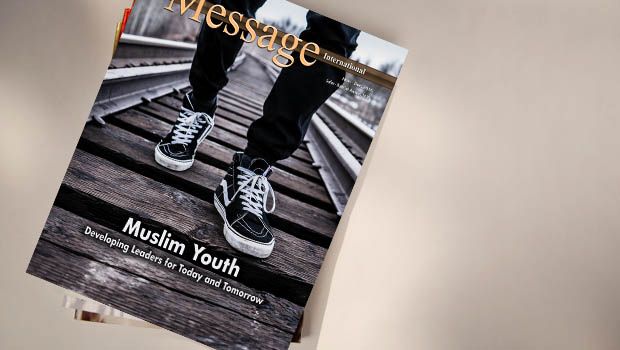
    Muslim Youth: Developing Leaders for Today and Tomorrow

    “The youth of today are the leaders of tomorrow.” This concept has been drilled into our heads. Both in Islamic contexts and elsewhere, we hear about youth potential and how one day they will be leaders of society. While experience and maturity is important, the role of Muslim youth is not to sit back and wait for the future to arrive. Prophet Muhammad, peace be upon him, told all Muslims that when we see something wrong, we should first change it with our hands. If we cannot change it with our hands, then change it with our tongues, by speaking up, and if we cannot do that, then at the very least we must recognize that evil and in our hearts, support changing the situation.

    Young Muslims presents and stresses core concepts of Islamic character and leadership, helping youth deepen their understanding of Islam and implement virtuous traits crucial to their success

    Muslim youth in America face challenges that can stifle their potential. One of the biggest challenges is the lack of necessary Islamic knowledge. Oftentimes Muslim youth in America are taught only the basics of their faith and sometimes not even that. They typically learn how to read and write Arabic without learning the meaning. It is no mystery why many young Muslims are not confident in their faith. Many do not understand Arabic enough to understand the Quran for themselves. Their own holy book can seem strange and foreign. If they want to truly understand their faith, they must go out of their way to seek Islamic knowledge.

    Another hurdle for Muslim youth in America is the lack of support in Muslim communities. Mosques sometimes feel to young people like a place of judgment and close-minded attitudes. Mosques are meant to be community centers where anyone can find help and support. Sadly, youth find that the issues they deal with are considered by adults to be too taboo or uncomfortable to discuss amongst Muslims. Youth end up turning to other sources for guidance, whether peers, social media gurus, or non-Muslim teachers or advisers. Their advice, while often well-intended, may contradict Islamic principles. Who can blame youth for taking that advice when Muslim mentors aren’t available to give them credible information and guidance suitable for young Muslims?

    Muslim youth are also constantly surrounded by vulgarity in pop culture. Every day they are exposed to music, movies, TV shows, and media filled with obscene messages. Living in a culture where modesty is rejected and “doing whatever you want” is celebrated can drain anyone, especially young people who are still building identities and figuring out their boundaries. Young Muslims in America are in a constant struggle between being accepted by society and firmly adhering to their faith. It is easier to follow the crowd and gain acceptance than to reject societal norms and risk being an outcast.

    Despite the challenges, Muslim American youth are part of history in the making. Being a Muslim in America today means you are contributing to the ever-changing portrait of Islam in America. Whether through standing up and driving change, or staying silent and allowing politicians, journalists, or even Islamophobes to speak for them, Muslim youth affect the image of Islam in America every day. The passion and energy of youth is an incredible asset. Young people can accomplish amazing feats in life when their efforts are channeled correctly. Some of the most esteemed companions of the Prophet (pbuh) gained respect and leadership positions at a young age. They used their passion and youth to help their communities grow and prosper. Their age did not limit them, instead their youth helped them further contribute to society. In order for Muslim youth to succeed as they have in the past, they must be given the proper tools.

    Safe spaces are crucial for developing dynamic youth. Muslim youth need to be in an environment where good deeds and good character are celebrated, somewhere they can to turn to receive wholesome Islamic advice without being looked down upon for their flaws. Being around people who encourage good deeds and discourage bad is a positive form of peer pressure that builds confidence and strength of character. Communities can implement this by encouraging youth to participate in community affairs, providing space to grow and learn from fellow community members while contributing to discussions and activism with their unique perspectives.

    Young Muslims, a division of ICNA, connects Muslim youth throughout America. This grassroots organization provides the tools youth need to grow and develop. YM presents and stresses core concepts of Islamic character and leadership, helping youth deepen their understanding of Islam and implement virtuous traits crucial to their success. Through weekly meetings, YM gives youth the opportunity to explore their faith and build bonds of companionship that last a lifetime. Organizations like YM give Muslim youth the tools they need to become the leaders of today and tomorrow.