بسم الله الرحمن الرحيم

Tag: palestine

  • When Oppressors Fall, Lessons are Learned

    When Oppressors Fall, Lessons are Learned

    Human history is rife with oppression, often cloaked by illusions of grandeur, military strength, and wealth. Yet the Qur’an reminds us of one unchanging reality: When the powerful resort to tyranny, they will inevitably face divine justice. It’s easy to believe might makes right, but the Qur’an demonstrates that no degree of power, wealth, or influence can avert God’s decree. Whether in the past or today, the same pattern emerges – tyrants rise, grow arrogant, oppress others, and are eventually undone.

    The Arrogance and Fall of Pharaoh

    Consider Pharaoh, who ruled Egypt with absolute power and committed crimes fueled by pride, declaring, “I am your lord, most high!” (Qur’an 79:24). His unchecked arrogance led him to subject the Children of Israel to forced labor, to deny them basic rights, and to have their newborn sons killed. Today we witness tyrants using lethal force against innocents, like Zionist forces in Palestine. Like Pharaoh, they disregard human life, believing political or military power shields them from moral accountability.

    Yet Pharaoh suffered Allan’s wrath when he and his army drowned in the Red Sea, obliterating his empire. No worldly luxuries nor amassed wealth shielded him. The lesson? When tyranny challenges divine authority, it’s condemned to failure.

    Wealth and the Pitfalls of Arrogance

    And what of Qarun, of Prophet Musa’s (peace be upon him) community? He had immense wealth and believed it a result of his intellect and skill, not divine blessings, making him arrogant.

    Yet his wealth, like Pharaoh’s armies, couldn’t save him. The earth swallowed him and his treasure. “So, We caused the earth to swallow him and his home.” (Qur’an 28:81) Qarun’s downfall challenges materialism. We often celebrate wealthy people and view them as paragons of success. But the Qur’an tells us that, while wealth can be a blessing, if it fosters arrogance and neglect of moral and spiritual responsibilities, it can become a curse. Qarun’s story teaches blessings must be used to serve God’s creation rather than to inflate personal egos.

    Historical Empires’ Collapse

    Historically, grand empires and powerful regimes that once seemed immutable have vanished. The Persian Empire, the Roman-Byzantine Empire, and other colonial powers have crumbled, leaving behind ruins and lessons.

    When the French colonized Algeria from1830–1962, indigenous Muslim populations suffered. Cultural suppression was rampant, and those who resisted were persecuted, imprisoned, and subjected to violence. The French believed themselves invincible, supported by a powerful military and a sense of cultural superiority. Yet the colonial edifice eventually collapsed, just like past empires.

    At its zenith, the British Empire included large swaths of South Asia, North Africa, and the Middle East. Many Muslims lived under restrictive policies that stunted their economic growth, suppressed Islamic institutions, and dismissed local voices. Though it presented itself as a beacon of civilization, the Empire disintegrated over the course of the twentieth century.

    Modern Examples of Tyranny’s End

    Syria’s Assad regime once appeared unassailable, surviving over fifty years of systematic oppression, torture, sexual violence, arbitrary arrests, and extrajudicial killings. Political power once considered monolithic is now fragmented and unstable. Many Syrians, those who endured torture, families who lost children, and the displaced who fled for safety, rejoiced at even partial signs of this regime’s weakening. Despite an uncertain future, we know oppressors who believe their power permanent eventually face their vulnerability.

    Leaders aren’t alone in their tyranny. Abusers who harm via physical, emotional, or psychological means, can oppress as well. When they face justice, their victims are relieved, yet believers recognize real accountability extends beyond this life. The Prophet (peace be upon him) taught, “No one who has an atom’s weight of pride in his heart will enter Paradise” (Muslim), underscoring how even a small measure of arrogance leads to spiritual ruin.

    Pride and Paradise

    Pride doesn’t just lead to external oppression; it poisons from within. It blinds individuals to their flaws, distances them from divine mercy, and deceives them into thinking themselves self-sufficient. The Prophet (peace be upon him) warns pride is destructive and must be rejected, teaching that humility is the path to divine success.

    The Question of Justice Delayed

    If oppressors’ downfalls are certain, why do many live long, successful lives with no punishment. Both Belgium’s Leopold II and Russia’s Joseph Stalin’s regimes led to the deaths of countless people yet they died in bed, seemingly without earthly retribution. Countless Zionist politicians seem to “escape” with barbaric crimes against humanity.

    This can test faith. The story of the People of the Ditch in Surah al-Burūj depicts believers thrown alive into a ditch of fire. The Qur’an doesn’t mention their oppressors’ immediate downfall, suggesting they escaped punishment. However, the message is this: Divine justice is never absent, only delayed. “And never think that Allah is unaware of what the wrongdoers do. He only delays them until a Day when eyes will stare [in horror].” (Qur’an 14:42)

    When oppressors die without accountability, we must remember our perception is limited. Complete justice belongs to God, whose knows all and who settles all moral debts on Judgement Day. This knowledge strengthens faith.

    Having Hope in Divine Justice

    Delayed or unseen justice encourages a profound relationship with Allah. The believer’s trust doesn’t just hinge on what happens in this world but rests in the conviction that God’s justice transcends human limitations. While this can be a severe test for oppressed communities, the Qur’an reassures us. “The way [of blame] is only against those who wrong the people and tyrannize upon the earth without right. Those will have a painful punishment.” (Qur’an 42:42)

    Moreover, martyrs’ fate reminds us that one’s spiritual standing trumps one’s worldly circumstances. The People of the Ditch perished in flames, but they are immortalized as paragons of faith and resistance. Conversely, their oppressors remain examples of moral bankruptcy who faced the ultimate reckoning. As a result, we recognize that patience and steadfastness have cosmic value.

    Responding to Oppression

    The Qur’an and hadith emphasize believers mustn’t despair when oppressed. Even when the wheels of justice grind slowly, or not at all, Muslims must remember Allah’s accounting is meticulous. This perspective pushes believers to stand against injustice, advocate for the oppressed, foster goodness in their communities, and speak against international atrocities, making Muslims ethical change agents.

    Sometimes regimes collapse abruptly. Other times oppressors remain entrenched, leaving suffering behind. Yet the moral imperative remains the same – work to oppose oppression through lawful, ethical means while maintaining confidence in divine justice. Allah says, “That home of the Hereafter We assign to those who do not desire exaltedness upon the earth or corruption. And the [best] outcome is for the righteous.” (Qur’an 28:83).

    By remembering Pharaoh, Qarun, and historical despots, believers realign their priorities, ensuring their pursuit of power or wealth never eclipses the goal of pleasing Allah and serving humanity. We also must guard against arrogance in daily home life, at work, or among friends, lest it manifest in oppressing others.

    Navigating Modern Complexities

    When criminals profiteering off healthcare, warfare, or exploitative industries face justice, many celebrate. However, believers should be cautious. While feeling relief is natural, gloating over another’s downfall can cultivate a hidden seed of arrogance. Believers can acknowledge that divine or worldly justice has come to pass, especially if it protects victims. However, we must remain humble, conscious that ultimate reckoning belongs to God.

    This caution extends to vigilante justice. In Islam, justice must come via legitimate means like due process and moral restraint, not deliberate acts of revenge killing or extrajudicial violence. This doesn’t diminish the oppressor’s crimes, rather it preserves the dignity and consistency of religious ethics from social anarchy.

    Remaining Steadfast Amid Uncertainty

    In the present, where new conflicts emerge and old tyrannies persist, Muslims must anchor themselves in the divine justice’s certainty. This makes us resilient and hopeful that suffering isn’t in vain while reminding potential oppressors that no worldly advantage can shield them forever.

    Finally, it’s crucial to build institutions and communities that embody ethical conduct, social justice, and spiritual wisdom. Islamic scholarship, community activism, charitable work, and moral leadership are practical expressions of faith. In these efforts, we reflect historical and scripture-based lessons, destroying arrogance, while humility and righteousness build societies worth living in.

  • Can Israel Survive Its Current Downward Spiral?

    Can Israel Survive Its Current Downward Spiral?

    Considering our world’s fast-changing geopolitical landscape and Israel’s horrific actions over the years and particularly since the Hamas attack on Oct. 7, 2023, I doubt Israel can survive much longer. I can’t predict the future, but I find the trajectory of Israel’s recent moves indicative of a great demise.

    Factors Leading to Failure


    First, when it comes to its geographical position, Israel is in a losing demographic situation. Its population will likely never surpass that of Palestinians and certainly not that of Middle East Arabs. In Israel, there are 7 million Jews and 1.9 million Arabs, i.e. Palestinians. An additional 5.5 million Palestinians live in the occupied territories. Outside these borders, Arabs number approximately 450 million, including 7 million Palestinians in Jordan, Lebanon, Syria, Europe and the United States. However, only about 7 million Jews live in America and Europe.


    Second, Israeli Prime Minister Benjamin Netanyahu and the general Israeli population have shifted from the support of a two-state solution and instead want to create a Greater Israel — defined as Israel and the Palestinian territories — where Jews will be first-class citizens and others, including Muslims and Christians, will be second-class citizens. However, they know a one-state solution under current demographics, with a 50 percent or higher non-Jewish voter base, won’t allow a Jewish nation to survive. As a result, Israel has turned to brazen ethnic cleansing, driving Palestinians out of their homes and cities, forbidding their return, and, finally, committing genocide. This leads to a third problem. Israel is pushing its agenda hard, but in our modern age, with social media and live streaming, their agenda is on full display for the world to see.


    Considering these factors, coupled with the resolute and courageous character of the Palestinians, it’s no wonder that despite Israel’s scheming, violent occupation, and controlling of the narrative for 75 years, it hasn’t gained a firm grip on the occupied land or full control of those living there.


    Its Own Worst Enemy


    Despite this, Israel’s arrogance and defiance demonstrate that it views success through a different lens, namely its strong economy, the Abraham Accords, Saudi Arabia’s plan to recognize Israel, and most importantly, its influence on American politicians and policymakers, as well as significant control of U.S. media. However, the U.S. is a democracy, and policy will shift when popular support changes. What’s more, there are signs this shift is happening fast—particularly among young people.


    In the world geopolitical hierarchy, America is still the superpower and enjoys unparalleled influence. However, its unflinching support of Israeli brutality, be it militarily or in the United Nations Security Council, has significantly damaged America’s global standing. Coupled with misguided military campaigns over the past decades in Vietnam, Afghanistan, Iraq, and various Latin American countries, unquestioned support of Israel has damaged the American brand, one earned through two world wars when the U.S. stood against colonialism and fascist regimes. Now, its influence is declining, and nations like South Africa, China, Russia, Turkey, and India are seeing theirs grow.


    Negative Public Perception and Missed Opportunities


    Other factors are also weakening Israel’s position. The Holocaust engendered great sympathy for Jewish people and for those who created the modern nation of Israel. However, the past year-plus assault on Gaza has been a horrific exposé of death and destruction and has shifted sympathy from Israelis to Palestinians, with live streaming of massacres and wanton destruction shocking people worldwide.


    A press release on the website of the UN Human Rights Office of the High Commissioner notes that the International Court of Justice ruling on July 19 of this year, “declared that Israel’s occupation of the Gaza strip and the West Bank, including East Jerusalem, is unlawful, along with the associated settlement regime, annexation and use of natural resources. The Court added that Israel’s legislation and measures violate the international prohibition on racial segregation and apartheid. The ICJ mandated Israel to end its occupation, dismantle its settlements, provide full reparations to Palestinian victims and facilitate the return of displaced people.” This ruling cuts to the very heart of Israel’s latest campaign of destruction in Gaza and the West Bank, discrediting all justifications for its lethal rhetoric and actions. Finally, Muslim countries, while not very influential, are returning to the world stage with economic, technological, and military powers, all factors likely to influence global policymaking.


    Of course, one could argue Israel can simply course correct, right? After all, if the issues noted above are leading to Israel’s demise, it could just change policy and avoid any negative consequences. Perhaps, but it is not likely.  In my mind, Israel squandered a once-in-a-lifetime opportunity after the Hamas attack when images of invasions of homes and women being taken as hostages to Gaza horrified the global community. Had Israel worked to investigate war crimes committed that day and focused on freeing hostages through negotiation rather than genocide, I believe they would now enjoy worldwide support. But that’s not what happened, and as a result, support for Israel has dwindled, and Netanyahu is largely to blame.


    Flawed Leadership


    The Israeli Prime Minister is shrewd, leading his country on a wild ride. He’s logged successes, including strong economic development and political recognition from nations both Muslim and non-Muslim. He has weakened Palestinian leadership by corrupting leaders, fueling divisions, slowly destroying the West Bank with settlements, containing Gaza in an open-air prison, and, most significantly, creating an illusion of security and stability in Israel.
     

    However, over time he’s became more arrogant, autocratic, and defiant of opposition. Like other autocratic leaders, he’s lengthened his political life by weakening or controlling democratic institutions. He’s also succumbed to corruption and is scheduled to testify in court when his trial resumes in December, as he is charged with fraud, breach of trust, and bribery. Meanwhile, the Israeli population has become more extremist, leading to radical politicians gaining prominence. Netanyahu’s ambitions, successes, and the real possibility of facing up to ten years in jail have pushed him to a point of no return.


    The U.S., led by President Joe Biden, made it worse. Biden, an ardent supporter of Israel and self-proclaimed Zionist, has supported Israel throughout his political career. Naturally, when Hamas attacked Israel and Israel retaliated, Biden stood firm in his support for his long-time ally, even when it became clear that Israel intended a widespread destruction of Gaza with a death toll mounting by the day. But Biden isn’t the only U.S. politician to unfailingly support the Jewish state. Due to AIPAC’s influence on American politicians, it’s nearly impossible for a politician to attain and keep office without the blessing of the lobby. Its power means Israel can do nearly anything it wants without repercussions and with little pushback.


    Dim View of Israel’s Future


    Looking forward, how does Israel’s current aggression play out over the next few years? It’s decades-long PR campaign has demonized Palestinians, and for many the killing of non-combatants, even women, children, and the elderly, seems justified. They’re viewed as “collateral damage” because, supposedly, Hamas and Hezbollah used them as “human shields.” Powerful nations, particularly America and some in Europe, buy into this narrative thanks to media propaganda. However, the unprecedented rise of news consumption via social media has made it increasingly difficult for Israel to hide its atrocities.


    Consequently, the tactic of labeling anyone who criticizes Israel or sympathizes with the Palestinians as an anti-Semite is weakening, despite it working well for decades. Recently, the global consciousness has shifted, recognizing Palestinians’ legitimate right to self-determination and calling out the apartheid state. As horrors in Palestine remain at the forefront, this trend will continue in Europe and America, driving a dramatic change in public opinion and, ultimately, in government policy. It’s already happening in Ireland and Spain, and to some extent in the UK and the U.S.


    Israel’s actions today may significantly diminish any sympathy it still enjoys and possibly spur a resurgence of anti-Semitic sentiment in Europe and America. Should this happen, it could force U.S. presidents to rethink their unflinching support, both in the UN Security Council and by the military aid it provides to Israel.


    If the current hostilities escalate, the ethnic cleansing in Gaza and the West bank and/or between Israel and Lebanon, there could be bloodshed for millions and even a possible WWIII. Is there any way to avoid this? In my view, Israel must accept a two-state solution with a viable Palestinian state. If that happens, Israel may survive. Many Jews in America already understand this, and more are coming around to this position. However, Israel is not only making life difficult for Jews in their own state, but it also is creating an unsafe environment for Jews worldwide. The sooner Israelis understand this, the better for their fellow Jews everywhere, and the sooner a major impediment to peace in the world might be resolved.

  • I Wonder…

    I Wonder…

    I wonder…
    if man-made problems wreak more havoc
    than natural disasters ever do,
    if the problems we create are worse
    than adversities falling upon us.

    Nature can wipe out a people in an instant,
    humans buried under scorching lava,
    or swept out to sea by tsunamis,
    or succumbing to death by virus.

    History narrates, though, and the present manifests too
    intentional destruction of deeply sacred spaces,
    silencing of peacemakers, making souls to suffer
    and dimming the hopes of a decent humanity.

    The pain is more piercing when man destroys man,
    when brother hates brother,
    when one just like us, walking amongst us,
    invents ways to crush men, women, and children.

    Is not ethnic cleansing of a place, sanctity of life defiled,
    far worse than any fire leaving nothing but ashes?
    Is not a seed of hatred planted, growing in bursts of violence,
    more ghastly than torrential floods that drown?

    I wonder…
    How you are blind that your own babies are precious cargo
    yet you massacre “other” mothers with babes in arms.
    You are so fueled by this fiery hate
    that your eyes are hollow…and your soul and your humanity dead.

    I wonder…
    Why do you hate?
    Because his hue is a shade darker than yours?
    She was born across a border in a land you don’t like?
    Or you fear the religion they study to know their Creator?

    I wonder…
    How it is that the greed of wanting and taking what you want
    allows you to murder innocent, defenseless lives.
    How you deceive yourself and the world that you are so right, so moral
    while making a calamitous killing field upon this earth.

    I wonder…
    Why evil perpetrated by man shakes the soul of mankind
    more than any powerful quake shakes the earth.
    We need not bunkers from geologic upheaval,
    but rather shelter from slaughter by deranged men.

    I wonder and worry …
    When will it end?
    When humanity hates more than it loves?
    When more structures are blown up than built?
    When humans bury more of their own than they birth?

    I wonder…
    How you don’t see that your hubris deforms generations,
    Knee upon neck, muting talents and wiping out hopes, dreams, and giants.

  • Could Speaking Up About Palestine Affect Your Career?

    Could Speaking Up About Palestine Affect Your Career?

    Muslims in the U.S. might feel compelled or even morally obligated to educate others about the catastrophic destruction in Gaza, and many believe the First Amendment will protect their right to free speech. But can expressing their views about Palestine affect their current or future employment?

    In recent months, several prominent figures who have publicly voiced pro-Palestinian views have found their careers in jeopardy. Jackson Frank, a Philadelphia sports reporter, was fired after tweeting “solidarity with Palestine.” Michael Eisen, editor-in-chief of the journal eLife, lost his job after he retweeted a satirical article that he felt “calls out indifference to the lives of Palestinian civilians.” David Velasco, the editor in chief of the magazine Artforum, was terminated after he published an open letter from artists calling for “an end to the killing and harming of all civilians.”

    The Council on American-Islamic Relations (CAIR) reports, “Employees are experiencing intimidation should they choose to express support for Palestinian human rights. Multiple websites have emerged to target employees in recent days, documenting the names of individuals at major corporations who expressed support for Palestinians under attack in Gaza. Corporate executives, such as one JP Morgan Chase executive, have amplified efforts to intimidate employees who oppose the humanitarian crisis in Palestine. These efforts together send a clear message to employees: support for Palestinian human rights may cost them their career.”

    University students also have reason to believe their professional aspirations will be in jeopardy if they speak openly in favor of Palestine. An anonymous student at Harvard University told Al Jazeera, “Any graduate students who support Palestine have to come to a decision on whether or not they’re willing to put their future career on the line before they speak up.”

    Her worries are justified. When thirty student groups at Harvard signed a letter holding Israel “responsible for all the unfolding violence,” there was an immediate backlash. Some Wall Street executives demanded to know who was behind the letter so they could avoid hiring them. Additionally, many of the students were doxxed – their personal information was shared online to shame or intimidate them.

    On top of that, a conservative news media watchdog called Accuracy in Media parked a billboard truck by Harvard’s campus and displayed names and photos of students allegedly involved in the letter, calling them “Harvard’s leading antisemites.” Similar trucks appeared near other Ivy League campuses. In a country whose First Amendment supposedly guarantees the right of free speech, why are people being sanctioned for voicing their concerns, opposition, or opinions? Can Americans freely speak up about Palestine, or not?

    The answer is not black and white. Before you publicly share your opinions on Palestine, it would be wise to keep some things in mind:

    “Free speech” has limitations

    CAIR advises, “Employees should be aware that the First Amendment does not protect private employees from discipline because of speech. The First Amendment generally only protects public employees, like federal and state government employees, if they are speaking as a private citizen on a matter of public concern, and that speech does not disrupt the workplace. Some states have laws that protect employee speech, but not all do. It is your responsibility to be aware of your free speech limitations in your workplace.”

    CAIR adds, “Employees may have specific clauses in their employment contracts that impact their rights and legal remedies. Employees should review their employment contracts and consult with a local attorney to make informed decisions and protect their rights.”

    Take precautions on social media

    You might assume your employer isn’t reading your Instagram or Facebook posts, but if they’re public, anyone can see them. CAIR recommends that you take the following steps to ensure that you are not subjected to disciplinary measures at work:

    1. Set your social media accounts to private.
    2. If your account is public, use a pseudonym and remove any personal identifying information such as personal photos and location.
    3. Never identify your employer on your social media accounts.
    4. Do not post hateful or threatening content.

    Employers should be equitable

    Your private-sector employer might decide to sanction you for expressing pro-Palestinian sentiments, but in that case, they should also discipline anyone who voices pro-Israel opinions.

    CAIR notes, “Under both Title VII and Section 1981, employers should be mindful not to treat their Palestinian or Muslim employees differently than their Israeli or Jewish counterparts. A situation in which we believe an employee may have an actionable claim would be if a Palestinian or Muslim employee was disciplined for posting a Palestinian flag or expressing Pro-Palestinian sentiments at work, but an Israeli or Jewish employee is not disciplined for posting an Israeli flag or expressing Pro-Israeli sentiments at work. An employer would be discriminating against the Palestinian employee on the basis of national origin, or the Muslim employee on the basis of religion.

    Moreover, if employers are offering benefits such as paid compassionate leave to their Jewish or Israeli employees, an employer should offer the same benefits to their Palestinian or Muslim counterparts.”

    Resources if you face disciplinary measures or discrimination in the workplace


    Finally, remember that you do have the right to feel safe and fairly treated in your workplace. Title VII of the Civil Rights Act of 1964 protects employees and job applicants from employment discrimination based on race, religion, color, sex, and national origin.  If you believe that your rights are being violated, contact CAIR immediately. Report any incidents of bias, discrimination, and/or harassment.

  • Frontlines of Empathy: Unveiling Grief and Resilience in Palestine

    Frontlines of Empathy: Unveiling Grief and Resilience in Palestine

    Politics and journalism have been, for a long time, two of my greatest passions in life; and Palestine has always been the driving force, the soul of my unwavering commitment to truth and justice. The first thing we are taught in journalism is that it’s a form of storytelling, sharing narratives and perspectives, the pursuit of understanding the complex terrain of reality. As a journalist you are given the duty of upholding truth and an obligation to present facts. The principle of positing information objectively is drilled into our brains. Journalism serves as a watchdog, taking on the responsibility of truth-telling, of shedding light on injustices and abuses of power. This is in stark contrast to politics, which is so often a realpolitik that covets power, not ideals, and thus falls short of a moral commitment to humanity and an empathy that is willing to look at suffering and seek its relief.

    For years, I’ve dedicated myself to raising awareness, my own first and then others’, through publishing articles, researching hours upon hours, writing academic papers, and doing projects on Palestine. While, simultaneously, I have attended events, protests, and seminars to dig deep into the core of that intransigent issue. I have read works of Edward Said and Mahmoud Darwish, two souls who shared the struggle to free Palestinians, their advocacy through action, writing, and storytelling. But in the end, mine has been a small attempt to use logic and reason in trying to make sense of the decades of illegal occupation and the politics encumbering the region.

    I was willing to fall into the rabbit hole where politics, geopolitical agendas and exploitation, propaganda, deceit, and human failing all swirl in a disorderly, life-defying maelstrom. But upon reflection, the series of events that unfolded in October forever changed my trajectory in life and my understanding of humanity, mortality, and journalism.

    One October evening, I marched on the streets of Cambridge for hours, demanding first a ceasefire and then justice for Israel’s brutal attacks on Gaza. Marching on the same streets years ago, I was among those demanding justice for the attacks on Sheikh Jarrah. My keffiyeh, wrapped around my neck, was adorned with a picture of Al-Aqsa and “Free Palestine” written across the bottom in Arabic. I joined hundreds upon hundreds of protesters, all flushed with anger and adrenaline. As always, I believed it was my duty to stand up, to be a voice for those made mute by censoring or censure or oppression.

    The trajectory of my life changed when, twenty-four hours later, I received news that my grandfather had suddenly passed away. Everything I took for granted shattered. Everything around me blurred as I was forced to grapple with a reality that I had no choice but to face. The funeral home was where I said my final goodbye. He looked at peace, asleep, the room becoming a sanctuary, for moments transcending the boundaries of life and death. The person who raised me to be strong and resilient laid motionless in front of me. And then, moments later, the world outside felt distant, and for the first time in my life I felt powerless.

    I stood and watched him being buried. I helped pat the fresh dirt on his grave, gently placing his favorite roses down. I sat and played with the soil, and as my phone buzzed with messages of condolence, I was also receiving notifications of breaking news in Gaza. The parallels of watching reports on my phone of entire families being obliterated while living my own personal encounter with death drew me into a spiral of mind-boggle and desolation. I wanted to block all of it out, I wanted to look away as if that might fix things. These two experiences, though quite distinct and incomparable, melded into immense grief for me. In the weeks following my grandfather’s passing, I struggled.

    I returned to the city to find people that I had known as friends being targeted and doxed. Campuses all around were sending nearly-identical emails, dismissing claims of the genocide taking place in Gaza. The same politics and journalism classes in which I had been taught ethics, brushed all the obvious evidence of injustice under the rug. For the first time, everything that I had been accustomed to according to a political framework of social justice and advocacy for those who are marginalized, discriminated against or oppressed — all of that came crumbling down. Every protest I attended, I heard the same stories of entire families being wiped out, of children being brutally murdered, and hospitals being attacked. I thought of my grandfather often, and of thousands like him. The juxtaposition of dealing with intimate personal sorrow while witnessing the large-scale horror of genocide became a driving force in my deepening commitment to advocacy for positive social and political change. Over the course of two months, I began collecting videos of protests and rallies, creating video packages, researching public opinion, analyzing and writing about the psychopathy of ethnic cleansing and genocide, and speaking at multiple protests.

    Seeing what Palestinians are going through, right there on the screens in front of our eyes, makes commitment to social justice, which can be for many people an intellectual exercise, become the reality it is — life’s challenge to feel the suffering of others, to empathize in ways that mobilize us intellectually, spiritually, emotionally, and morally. My voice is just a mere fraction of the megaphonic call to action to stop the destruction and death in Gaza.
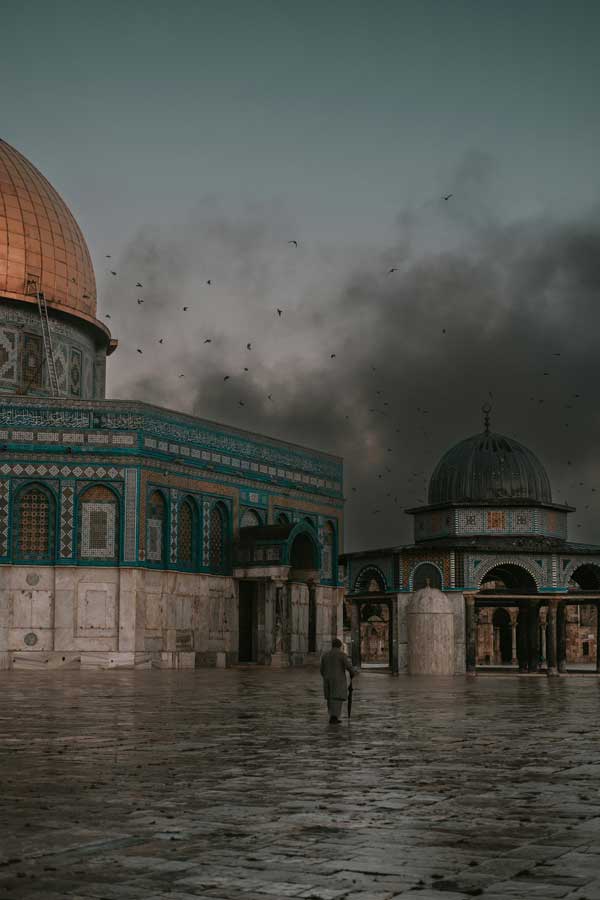
    To grasp Palestinian resistance, that it will not die, one must understand grief. This was the first time in my life I felt concomitant resistance in the form of refusing to surrender to despair, in a willingness to face death and defy its pull to hopelessness and the dissolution of personal autonomy and power. This is nothing less than a total commitment to keep going, to find a solution in undying resistance to oppression.

    The struggles of the Palestinians have been obscured for decades by carefully curated narratives in the media. Headlines often reduce the suffering and deaths to numbers and statistics, stripping away their identities. Reducing individuals to these statistics perpetuates a cycle of indifference. Now, however, we see journalists on the ground in Gaza who are dismantling these decade-old narratives. At its core, we have all been forced to bear witness to the atrocities taking place. What we see is a compelling display of Palestinian strength and resilience. No class, no academic project, no intellectual analysis or reflection has shown me, as the Palestinians have, the depth of the human soul and its refusal to capitulate to death and destruction.

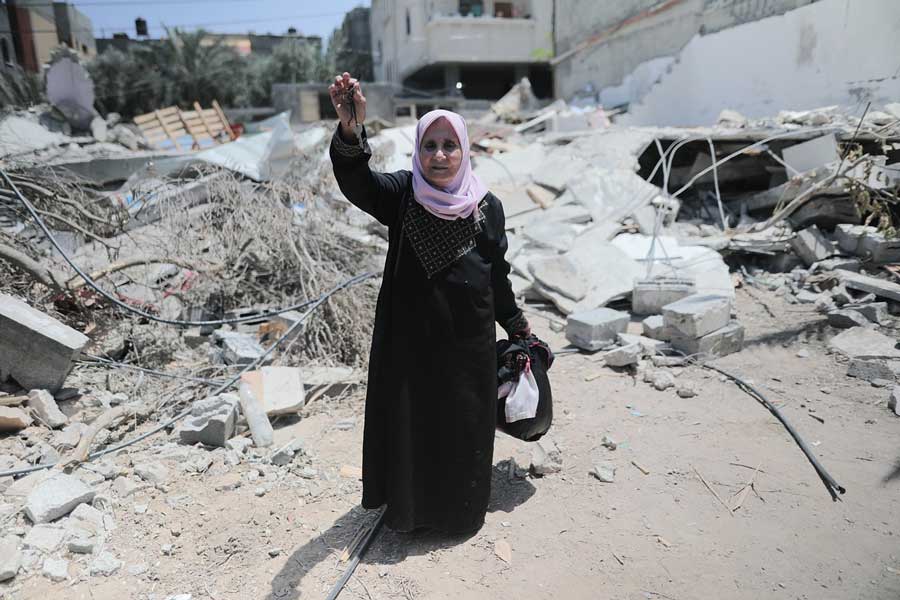
    Now, during every protest I think of my grandfather. I don’t think of statistics or politics or propaganda. I think of people like him. And so, I speak of him often, in hopes that as long as I speak my truth, the memory of his life’s principles and virtues will never die. Political leaders and governments too easily create “us vs them” as a cover for their destructive policies, a way of abolishing the meaning and value of individual lives. But in journalism, truth can prevail, it must be the guardian of veracity. Storytelling is our lifeblood, and it unfailingly points towards justice and resilience in the face of oppression. The Palestinian story is a living testament to this truth. In solidarity always.

  • Palestine: The Beating Heart of the Ummah

    Palestine: The Beating Heart of the Ummah

    Every time I stroll down the street unafraid, walk down a grocery aisle stocked with food, turn on the faucet, or flick a light switch, my mind turns to the people of Gaza. My home in Alexandria, Egypt, is only about 400 kilometers away, but with the border strictly closed, I feel so close yet so far.

    Muslims worldwide have been feeling a whirlwind of emotions since Israel began its total blockade and bombing of Gaza on October 9: shock, grief, and horror at Israel’s targeting of civilians and complete disregard for human life; anger and betrayal at the complicity of Western powers who have effectively rubber-stamped Israel’s actions; and despair and helplessness at the unwillingness of Muslim countries to intervene. Beyond these emotions, however, these unprecedented events have clarified some hard realities. Here are five lessons I’ve learned from the past few weeks.

    First, Allah is the source of all strength.

    Gazans have been suffering immensely for a very long time. Many of them are descendants of refugees from the first Nakba of 1948, when hundreds of thousands were forced to flee their homes as Zionist militias engaged in forced expulsions, massacres, and destruction of villages. This was according to an ethnic cleansing blueprint called Plan Dalet. In the present, Gazans have been living under a blockade for 17 years, with all aspects of life limited—food, water, work, and movement—and with intermittent Israeli bombings causing repeated loss of life and property.
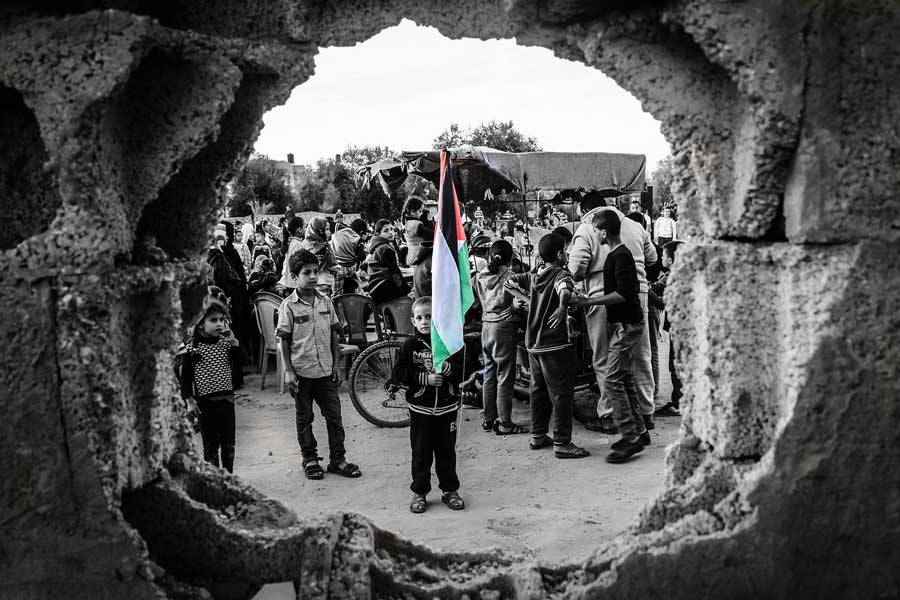
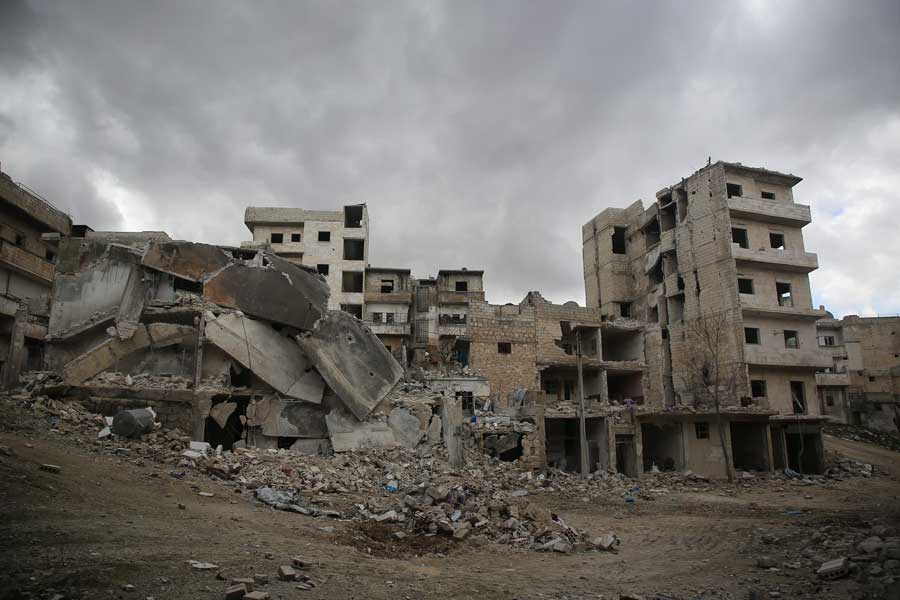
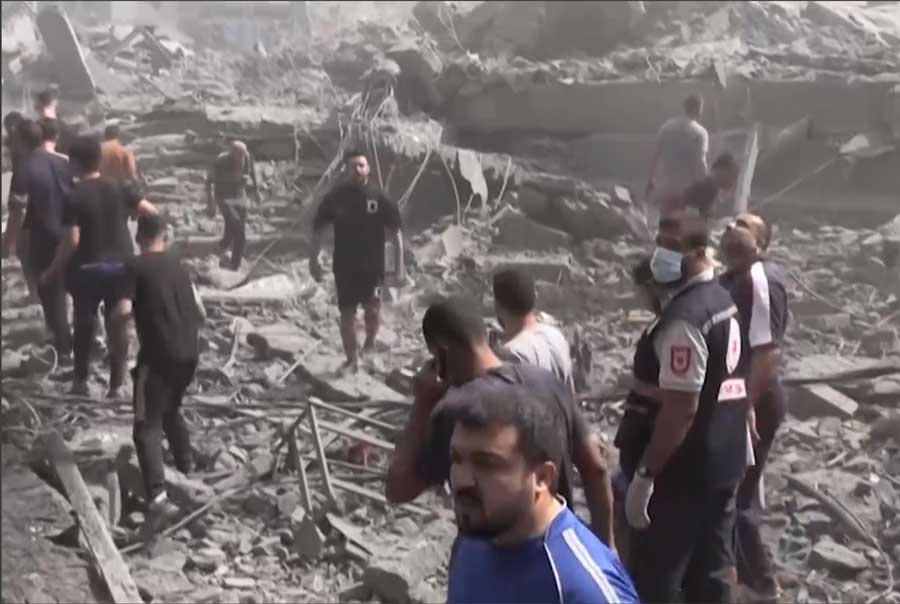
    However, this latest assault, which can only be described as genocide, has dwarfed all these difficulties. Thousands of civilians, half of them children, have been killed in indiscriminate bombings. Entire families have been wiped out. Hospitals, schools, mosques, residential buildings, refugee camps, and even bakeries, have been decimated.

    Despite all the death and destruction, the people of Gaza show us the imperative value of faith by praising Allah, calling out to Him, and seeking His help. At a time when the powers of the world have turned against them and ignored their heart-wrenching suffering, the people of Gaza see with certainty that Allah is their only helper. They also, insha’Allah, maintain their certainty in Allah’s promise—that calamities erase sins, that patience is rewarded without measure, and that those they’ve lost
    will be granted an honorable status in the hereafter.

    If people who have experienced so much difficulty and injustice can endure, surely, we can as well. They’ve truly been an inspiration—and not just to Muslims. By observing such resilience and faith, many non-Muslims have been motivated to learn more about Islam and read the Qur’an. The more we understand and internalize that all strength comes from Allah—by increasing our knowledge of and adherence to Islam, and by strengthening our relationship with Allah—the stronger and more resilient we will be. Hopefully, these painful events have brought our hearts closer to our Creator. Perhaps we can follow the lead of Gazans and say, “Allah is sufficient for us, and He is the best protector.”
    Second, Palestine is the beating heart of the ummah.

    The land of Palestine holds a special place in the hearts of Muslims around the world, and the latest barbaric bombing and virtual destruction of northern Gaza has torn off the covering of a long-festering wound within the Muslim consciousness. Palestine is a sacred land on whose soil many prophets walked, and in which stands Masjid al-Aqsa, the first qiblah of the Muslims and the location from which our Prophet Muhammad ascended to the heavens on his miraculous journey.

    The loss of Palestine to the British in 1917 was a key stepping-stone towards the apartheid state we see today. The land where Muslims, Christians, and Jews lived side by side in harmony for centuries was, as of 1947-48, in the hands of Zionist militias, who immediately began the brutal campaign of ethnically cleansing the indigenous population, expelling over 750,000 people and killing 15,000.

    The dormant hearts of millions of Muslims around the world have been jolted awake by these atrocities committed against the Palestinians—the latest culmination of a 75-year history of erasure and oppression—as well as recent provocations and violations at Al-Aqsa Mosque. Despite our differences, the cause of Palestine is one that unites Muslims everywhere.

    As our Prophet taught us, “The parable of the believers in their love, affection, mercy, and fellowship is that of a body. When any limb aches, the whole body aches with sleeplessness and fever” (Bukhari and Muslim). In the many actions being taken by Muslims around the world—protests, boycotts, educational initiatives, social media activism—we can see that the ummah, as one united body, is very much alive.

    Third, people have shown their true colors.

    The most disturbing lesson from the genocide in Gaza has been discovering who has a moral compass and who doesn’t. Hard times bring out what’s deep inside us of good or evil, and the stances taken have been revealing. Nations and individuals who we thought stood for justice and equality were suddenly silent about the killing of thousands of civilians. Most Western powers, along with their media, are still proclaiming their undying support for Israel and its “right to defend itself,” while the rest of us are wondering what self-defense has to do with killing more than 18,000, including children (as of mid-December). The true values of the imperial powers—to whom nothing is sacred but money, power, and self-interest—have become clear to all, and it’s been a rude awakening.

    In contrast to this morally bankrupt world order, Allah warns us in the Qur’an against transgression, even in times of war: “O believers! Stand firm for Allah and bear true testimony. Do not let the hatred of a people lead you to injustice. Be just! That is closer to righteousness. And be mindful of Allah. Surely Allah is All-Aware of what you do” (Qur’an 5:8).

    Thankfully, many people have also shown the good that’s inside them. Tens of thousands have marched in cities around the world calling for an end to the killing, and many more are seeing through the lies, racism, and hypocrisy of the dominant narrative.

    Fourth, storytelling is powerful, but so is knowledge.

    This latest attack on Gaza has shown me just how powerful storytelling is. Reality can be clarified or twisted based on how an issue is framed, who is chosen to speak and who is silenced, and the choice of words used. As Malcolm X famously said, “If you’re not careful, the newspapers will have you hating the people who are being oppressed, and loving the people who are doing the oppressing.”

    As a journalism school graduate, I’ve never been more disappointed by the lack of fairness in news coverage. Mainstream media outlets tossed everything I’d been taught about objectivity and balance out the window and became government mouthpieces. Whether right-leaning or left-leaning, these outlets were bent on showing Israelis as the civilized folk and Palestinians as the savages. Even when Palestinians were invited to speak, they were interrogated rather than interviewed. Decades of Zionist narratives came to fruition, and the tired victim tropes of “anti-Semitism” and the “right to self-defense” were used to shut down any meaningful debate.

    But something is very different this time around: the true story has been coming out on social media. Palestinians on the ground have been filming what’s happening in real time—in both devastated Gaza and in the West Bank, where settler and state violence is spiraling out of control. Despite the algorithms designed to censor these stories, as well as Israel’s destruction of communication towers in Gaza, the truth is coming out loud and clear. The efforts of these citizen journalists, together with allies working hard to amplify their voices and create content showing the real face of historic and modern-day Israel, has shifted the narrative.

    People around the world are finally learning the truth about Palestine and the skewed narrative of mainstream media. We need to keep telling our own story, amplifying the voices of the oppressed, and educating our children about the true story of Palestine.

    Fifth, let’s appreciate our blessings and utilize them for good.

    In the past weeks, many of us have given more thought to the blessings that surround us and that we often take for granted. We’ve realized that things as simple as water gushing from a faucet, a house to shelter in, a stove to cook on, a healthy body, and even waking up to a new day are not simple givens after all. As Prophet Muhammad said, “Whoever among you wakes up in the morning secure in his dwelling, healthy in his body, and has his food for the day, then it is as if the whole world has been given to him” (Ibn Majah).

    We need to recognize and appreciate the immeasurable blessings Allah has given us. We can show this gratitude through praising Allah, adhering to His guidance, and helping our brothers and sisters, especially those who are being tested, in whatever ways we can—by asking Allah to grant them relief, by donating to relief efforts, by raising awareness of the crimes being committed, and by protesting these crimes.

    Just as we should not underestimate any of the blessings that Allah has bestowed upon us, we should also not belittle any positive action we can take. Every good deed counts on our scale, and perhaps Allah will bless our small efforts and cause them to add up to big change.

    As an ummah, we have a long road ahead of us—in becoming better Muslims, raising strong and aware Muslim children, and changing the narrative. But we should take comfort in Allah’s promise: “O believers! If you stand up for Allah, He will help you and make your steps firm” (Qur’an 47:7).

    We are also promised victory if we worship Allah alone and do good deeds: “Allah has promised those of you who believe and do good that He will certainly make them successors in the land, as He did with those before them; and will surely establish for them their faith which He has chosen for them; and will indeed change their fear into security. They worship Me, associating nothing with Me. But whoever disbelieves after that, it is they who will be the rebellious” (Qur’an 24:55).

    Let’s keep moving forward and living each day in a way that pleases Allah and makes our ummah stronger. Let’s remember Allah’s blessings on each one of us and think of ways we can use those blessings for good.

  • Palestine: Where is God’s Help?

    Palestine: Where is God’s Help?

    “Where is God’s help,” Muslims ask. In Palestine and around the world, in times of mild, moderate, or extremely severe injustice, the question comes up. We believe fully in the promises of Allah, that He is the wisest of the wise, the Most Merciful, the All-Seeing, and that He is just. We believe that He responds to the prayers of the righteous and the oppressed. Thus, how do we reconcile our understanding of those promises with the extended suffering experienced by individuals or groups of people in the world, such as in Gaza today?

    First, we begin with foundations. Who is Allah? Allah is the one and only God, Creator and Sustainer of the created world. He is perfect. He has no flaws. When we say Allah is the All-Wise, it means that His wisdom places everything in the right place, right time, and in the right way, sometimes for some reason or wisdom that we cannot know, see, or comprehend with our limited minds. If we were to comprehend them, we would be at the level of the Divine, but we are limited human beings. Allah is perfect, so if He tells us there is no injustice from the Creator to the creation, then we believe in what He says without any doubt whatsoever. We do not question Him, and we do not question Divine destiny, but we may wonder at times about the suffering that we experience or see others experiencing.

    Second, Allah has informed us about the reality of this world. So, when we wonder about the suffering, we remember that this is the life of trials, sometimes easy and sometimes difficult. What follows is that this life is an opportunity to practice patience and perseverance, an opportunity to do good. And we are to remember that this life is short and fleeting. The afterlife is eternal, the life of consequences, of reward or punishment, and the opportunity for rights to be truly restored in the court of Allah.

    Allah is aware of the good-doers and promises that an eternal life of bliss will be worth whatever has befallen them in this world, where those in Paradise will have whatever they desire (see Qur’an 50:35). These are the people who express gratitude to Allah for guidance, protection against ongoing difficulties, and the fulfilment of His promise of paradise. The evildoers, the oppressors, those who violate the rights of God and creation, will face accountability as Allah The Just sees fit. He is more just, wise, and merciful than we can imagine, and we are not in a position to question His authoritative decisions. If we establish this fact and believe in it, and are constantly reminded of it, it helps us to frame this life’s trials through that lens. Some people are good, and some are evil, and Allah is aware and will compensate both. The final verse revealed to humankind summarizes this reality perfectly: “Be mindful of the Day when you will be returned to Allah, then every soul will be paid in full for what it has done, and none will be wronged” (Qur’an 2:281).

    Third, Allah has informed us of His promises and that His promises are true (see Qur’an 35:5). He has informed us about the acceptance of the prayer of the oppressed, the righteous, the one who sincerely calls upon Him, and that not only are His promises true, but also that He is nearby (see Qur’an 2:186). Someone may wonder, then, where is Allah’s response to the du’a of the people of Palestine? The answer to that is found in the narration where Prophet Muhammad said to those with him: “There is no Muslim who calls upon Allah, without sin or cutting family ties, but that Allah will give him one of three answers: He will quickly fulfill his supplication; He will store it for him in the Hereafter; or He will divert an evil from him similar to it.” They said, “In that case we will ask for more [in du’a].” The Prophet said, “Allah has even more” (Musnad Ahmad). While du’a is answered in different forms, the one calling upon Allah is always rewarded for every single sincere du’a, and no du’a goes unanswered.

    Furthermore, one cannot ignore Allah all year and then make du’a and expect, even demand, it be fulfilled immediately on their terms, giving up if it’s not manifesting the way they requested. Du’a, as we are taught in Islam, is a means of communication and relationship between the Master and the servant, the Creator and the created being. It is an ongoing relationship, whether in times of ease or difficulty, whether to cry out in desperate need or to express gratitude, amplified if the believer is consistently pious all year. Making du’a shows that the believer recognizes how much we are in need of Allah, regardless of how much one has been blessed with worldly things, or not. The truth is that we are always in need of Allah, not just during calamities. Additionally, one does not know which form the du’a is being accepted in, but one must persevere and not be hasty, for Allah’s promise is always true.

    Fourth, we learn from stories of the most righteous humans, the prophets and messengers. We learn that Allah could instantly change a person’s situation but sometimes tests the believer for various reasons in His unlimited wisdom. If anyone “deserved” instantaneous relief from oppressors and the fulfillment of their requests, it would be the prophets who went through severe pain for years, sometimes decades, with patience and sincere dedication. This is a lesson we learn historically and, also, we see today in the resilience of the righteous Muslims in Gaza. Their faith is tested, their sins are purified, their rank in paradise is raised, their du’a is elevated, their resilience is strengthened, their eman is manifest, their shahaadah (martyrdom) is eternal bliss. Their worldly loss leads to increased gratitude and trust in Allah, and their firmness is inspiration for other Muslims. Without doubt, their pain is unequivocally recorded and will ultimately be ameliorated and rewarded by Allah SWT.

    Allah informs us of so many people historically who went through suffering, and yet persevered, in order for us to learn lessons from their resilience and promised reward. Some of them won battles when they were attacked by others, and the victory given to them in this world is a type of worldly success. But many of them did not live to experience relief or victory. Some were martyred in battles like Badr and Uhud. Their success was in holding on to their faith and enduring difficulty with patience and dedicated convictions about Allah, His wisdom, His justice, His promises. Leaving this world in a good spiritual state is the true success, when the believer enters the realm of eternal bliss and reward.

    None of us chooses the tests that come our way. The tests are sometimes hard and sometimes almost inconceivably difficult. Palestinians did not choose the test of being occupied. But we believe with full conviction that Allah will never burden us with a test we cannot handle and will reward each of us based on the personal tests we encounter. We do not know what tests may come our way in this life. But we are only accountable for our reactions and decisions relative to those tests. Whoever surrenders to Allah SWT, is patient, inculcates goodness in himself and enjoins it in the world, and stands firm in justice — Allah does not fail to reward him or her.
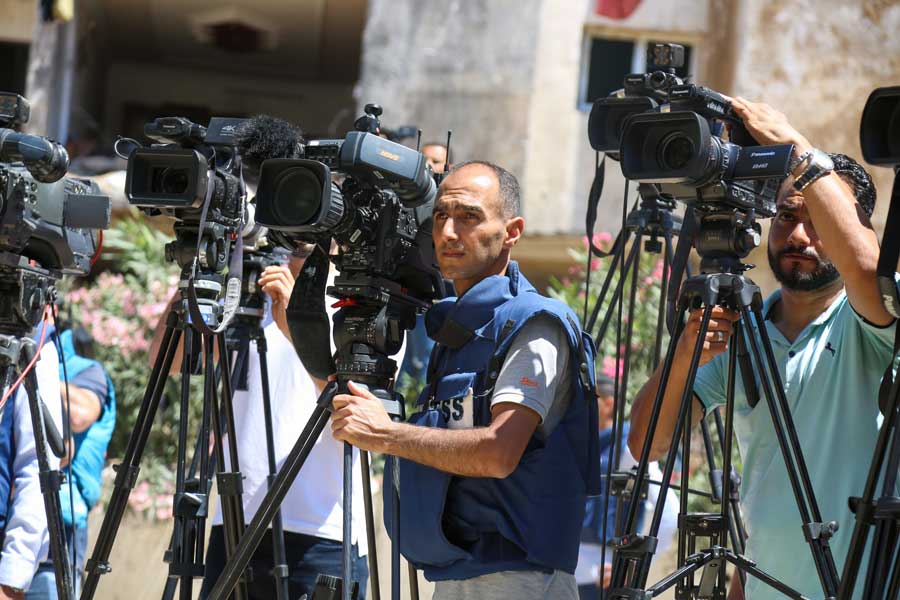
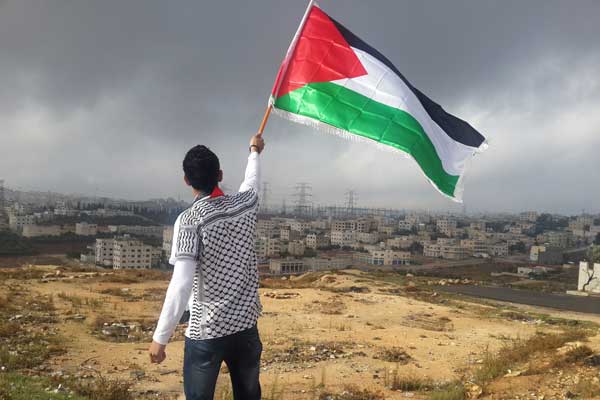

    We are required to persevere against injustice in all forms, to free others from oppression, and to stand firm for justice consistently, regardless of the religion, ethnicity, or background of the one being oppressed. If we are the ones enduring injustice, we are commanded to persevere, spread optimism, be strong, avoid faltering and becoming weak of heart. We are to turn to Allah in prayer and du’a, until the last breath of life. The meeting with Allah is near, so we cannot let this world distract us from why we are here; we cannot let this transitory world obscure what awaits us in the next life, the life of eternity.

    To answer the question posed — Where is God’s help? Allah says: “Do you think you will be admitted into Paradise without being tested like those before you? They were afflicted with suffering and adversity and were so shaken that the Messenger and the believers with him cried out, ‘When will Allah’s help come?’ Indeed, Allah’s help is near” (Qur’an 2:214). Allah’s help is near.

    May Allah grant justice and relief to our brothers and sisters in Palestine and all around the world. May He use us as a means of facilitating justice for them and for all oppressed people, wherever they are.

  • A Spotlight on the Israel-Gaza War

    A Spotlight on the Israel-Gaza War

    The items below are from a variety of media sources, some of which are written from a pointedly pro-Israel perspective. They are included because within the content is some information that is relevant in any attempt to dig deeper than the official American and Israeli narrative.

    Clamping down on free speech, criminalizing support of Palestinian rights
    • Consortium News article:
      “At least 57 members of Jewish Voices for Peace were arrested while showing their solidarity with Palestinians in New York City. Pro-Palestinian rallies in France and Germany have been outlawed. And the British home secretary likewise warned about criminalizing flying the Palestinian flag.”


    • THE Hill article:
      “BBC apologizes for saying pro-Palestine demonstrators were ‘backing’ Hamas”


    • Yahoo News article:
      ‘BBC Takes Six Reporters Off Air Amid Investigation Into Anti-Israeli Tweets’


    • AlJazeera article:
      ‘Twitter under fire for censoring Palestinian public figures’
    Open letters and public statements from Congressional staffers, scholars, lawyers:
    • 411 Congressional staffers anonymously sign letter calling for ceasefire:
      “Today, we write to implore our bosses, Members of the United States Congress, to join calls for an immediate ceasefire between Israel and Hamas. Millions of lives hang in the balance, including the 2.3 million civilians — half of whom are children — in Gaza, civilians in Israel, and Jews and Muslims around the world. This is especially urgent with antisemitism, anti-Muslim, and anti-Palestinian sentiment on the rise nationwide, which instigated the brutal murder of a six-year-old Palestinian-American child, Wadea Al-Fayoume.”


    • 178 legal scholars write open letter demanding that the U.S. stop supporting the attacks on Gaza and warn of humanitarian catastrophe:“We fear that this humanitarian crisis is poised to get significantly worse as the Israeli government prepares an expected ground invasion of northern Gaza, killing and forcibly relocating even more Palestinian people. Israeli officials have ordered that there be ‘no electricity, no food, no fuel’ in Gaza because Israel is ‘fighting human animals’ and is ‘acting accordingly.’ The Israeli President, meanwhile, stated, ‘It’s an entire nation out there that is responsible,’ insisting ‘this rhetoric about civilians not aware, not involved, it’s absolutely not true,’ and that Gazans ‘could have risen up, they could have fought against, that evil regime which took over Gaza in a coup d’etat. Although Israeli officials claim that civilians in Gaza can avoid further harm if they ‘leave immediately,’ the International Committee of the Red Cross warns that ‘the instructions issued by the Israeli authorities for the population of Gaza City to immediately leave their homes, coupled with the complete siege explicitly denying them food, water, and electricity, are not compatible with international humanitarian law.’”


    • Almost 800 lawyers, scholars, and academics put out public statement to warn of the crime of genocide in Gaza:
      “As scholars and practitioners of international law, conflict studies and genocide studies, we are compelled to sound the alarm about the possibility of the crime of genocide being perpetrated by Israeli forces against Palestinians in the Gaza Strip. We do not do so lightly, recognising the weight of this crime, but the gravity of the current situation demands it.”
    International investigation needed to sort out responsibility for Israeli civilian deaths
    • Mondweiss article:
      ‘A growing number of reports indicate Israeli forces responsible for Israeli civilian and military deaths following October 7 attack’


    • GRAYZONE article:
      “Israel’s military received orders to shell Israeli homes and even their own bases as they were overwhelmed by Hamas militants on October 7. How many Israeli citizens said to have been ‘burned alive’ were actually killed by friendly fire?”


    • Mondoweiss article:
      Using the Hannibal Directive?
      According to Brig. Gen. Avi Rosenfeld, the Israeli commander of the Gaza Division, “Many of the soldiers, most of them not combat personnel, were killed or wounded outside. The division was compelled to request an aerial strike against the base itself in order to repulse the terrorists.”


    • Electronic Intifada article:
      “Israel’s Haaretznewspaper on 20 October published an interview – only in its Hebrew edition – with a man called Tuval who lived in Kibbutz Be’eri, but who was away on 7 October. Tuval’s partner was however killed in the events. Haaretz reports: ‘According to him [Tuval], only on Monday night and only after the commanders in the field made difficult decisions – including shelling houses with all their occupants inside in order to eliminate the terrorists along with the hostages – did the IDF [Israeli army] complete the takeover of the kibbutz. The price was terrible: at least 112 Be’eri people were killed. Others were kidnapped. Yesterday, 11 days after the massacre, the bodies of a mother and her son were discovered in one of the destroyed houses. It is believed that more bodies are still lying in the rubble.’”
    Some observers see something strange in Hamas attacks
    • Efret Fenigson substack article:
      An Israeli woman, Efret Fenigson, who served in the IDF years ago, points out that “something is very wrong here.” She says in her podcast —“I served in the IDF 25 years ago, in the intelligence forces. There’s no way Israel did not know of what’s coming. A cat moving alongside the fence is triggering all forces. So this?? What happened to the ‘strongest army in the world’? How come border crossings were wide open?? Something is VERY WRONG HERE, something is very strange, this chain of events is very unusual and not typical for the Israeli defense system.”


    • Fenigson noted in an update that —
      “…about 3 years ago, the IDF started a process of taking back weapons from people living in the Gaza envelope villages, under the excuse that these weapons are being stolen. A certain allowance of permitted weapons for each village was granted, which created even more anxiety and distrust amongst the citizens, who wish to protect themselves.” Further, Efret states that in the past year, more guns were taken from these communities, also on the pretext that they were stolen.


    • The Guardian article:
      While Netanyahu denies having advanced warning, The Guardian reports, ‘Egypt warned Israel of Hamas attack days earlier, senior US politician says’The article states, “An Egyptian official told the Associated Press that Egypt, which often serves as a mediator between Israel and Hamas, had spoken repeatedly with the Israelis about ‘something big’. The unnamed official claimed Israeli officials were focused on the West Bank and had played down the threat from Gaza. ‘We have warned them an explosion of the situation is coming, and very soon, and it would be big. But they underestimated such warnings,’ said the official, who spoke on condition of anonymity.”


    • Times of Israel article:‘Surveillance soldiers warned of Hamas activity on Gaza border for months before Oct. 7’
      “Survivors of massacre on IDF base say they passed information up the chain of command on digging, mapping, training near the fence long before mass onslaught, but were ignored.”
    Al-Ahli hospital bombing
    • Mint Press News article:
      “The Israeli military dropped ‘roof knocking’ rockets with no warheads on the hospital in the days leading up to the Oct. 17 strike, the familiar warning given by Israel to evacuate buildings, according to al-Ahli hospital officials. Hospital officials also said they had received calls from Israel saying ‘we warned you to evacuate twice.’ Israel has demanded that all hospitals in northern Gaza be evacuated.”


    • CNN article:
      Gaza officials say IDF had warned al-Ahli hospital 4 days ago that it should be evacuated


    • UN News article:
      “During a virtual press conference held later on Tuesday, senior officials underlined WHO’s condemnation over the strike on the hospital. There have been over 115 attacks on healthcare across the Occupied Palestinian Territory since the start of the conflict on 7 October, sparked by Hamas’s bloody incursion into southern Israel. Of this number, 51 occurred in the Gaza Strip, with 15 healthcare workers killed and 27 injured, said Hyo-Jeong Kim, Lead of WHO’s Attacks on Health Care Initiative.  The remaining incidents took place in the West Bank.”


    • Mint Press News article:
      “Following the strike on the hospital, Hananya Naftali, a ‘digital aide’ to Israeli Prime Minister Benjamin Netanyahu, posted on X, formerly Twitter: ‘Israeli Air Force struck a Hamas terrorist base inside a hospital in Gaza.’ The post was quickly deleted.
    Atrocity stories used to justify bombing and ground invasion of Gaza
    • Al Jazeera article:
      “The beheaded babies tale originated with a report on Israel’s i24News site by reporter Nicole Zedeck, from her interview with Israeli reserve soldier David Ben Zion. Max Blumenthal and Alexander Rubinstein reported on October 11 that Ben Zion is a notorious radical leader in Israel’s West Bank settler movement. Among other things, he called on rampaging armed settlers earlier this year to wipe out the Palestinian village of Harawa, which settlers attacked and burned several times.”


    • Mint Press News article:“The claims of ‘beheaded babies’ made headlines on various news outlets, including CNN. The source of this claim was the Israeli channel i24 News, but it later emerged that the source was David Ben Zion, an extremist settler known for inciting race riots against Palestinians. A Haaretz investigation previously found that i24 News functions as a proxy for the Netanyahu family, with directives coming straight from the Israeli Prime Minister’s office at times. Subsequently, the Israeli military distanced itself from these claims, CNN retracted the story, and the White House acknowledged a lack of evidence.”


    • The Intercept article:
      “The Israel Defense Forces could not confirm a horrific claim that Hamas beheaded babies during a weekend assault, a spokesperson for the military told The Intercept on Tuesday. The claim went viral, becoming a headline-grabbing aspect of a massacre that left more than 1,000 Israelis dead.”
    Released elderly hostage says the hostages were treated well
    • i24 news article:
      Released hostage Yocheved Lifshitz, 85 years old, said, “They told us, ‘We believe in the Quran, and [that they] will do us no harm. They will give us the same conditions they have,’ she said, adding ‘They were with gentle us. Our needs were met. They were prepared for us.’” She continued, “There was a paramedic and a doctor also came every couple of days. We lay there on mattresses and they took great care of the sanitary side, so that we didn’t get sick. They were very afraid of diseases spreading. They made sure we had everything, they were very friendly.”
  • Apartheid: Let Us Not ‘Turn a Blind Eye to Injustice’

    Apartheid: Let Us Not ‘Turn a Blind Eye to Injustice’

    The Spanish philosopher George Santayana famously said, “Those who cannot remember the past are condemned to repeat it.” If there are lessons to be found in remembering and studying history, the greatest lessons of all are derived from analyzing and understanding the mistakes of the past. Throughout the world’s history we have seen empires rise and fall, whose leaders ran nations into ruins, unable or unwilling to look at the mistakes of the past. Ironically, the leaders typically acted as if they were visionaries, destined to lead, yet their actions showed them to be blind to common sense, let alone wisdom or sound leadership. What usually ensues is great suffering and loss for the people.

    One of the greatest tragedies of the 20th century was apartheid in South Africa. Apartheid, the Afrikaans word meaning “apartness,” was first used to describe the racial discrimination in that nation which began in the early 1900s and became legalized in 1948. The National Party of South Africa, an all-White government, introduced legislation in 1950 to formalize racial segregation. Although segregation had long existed before the party came into power, the government officially enacted laws and policies that institutionalized racial discrimination and dominance of Whites.

    One such law, the Lands Act, required non-Whites to carry identification that authorized their presences in areas that were restricted to them. The Group Areas Act of 1950 enforced residential zones for Whites and non-Whites, reserving the best land for Whites and restricting non-Whites from entering that area. The Bantu Authorities Act of 1951 grouped Blacks into “homelands” based on their ethnic and tribal identities. The tribal leaders of these homelands were designated as territorial authorities, and the Blacks in each homeland were granted political rights only within that territory. Establishing Blacks as citizens of their individual homelands resulted in the stripping of their South African citizenship. Article 7 of the Rome Statute of the International Criminal Court defines apartheid as, “inhumane acts… committed in the context of an institutionalized regime of systematic oppression and domination by one racial group over any other racial group or groups and committed with the intention of maintaining that regime.”

    What We Can Learn from Desmond Tutu

    Archbishop Desmond Tutu, a well-known South African anti-apartheid activist and Nobel Peace Prize laureate recently passed away at the age of 90 in Cape Town, South Africa. He was known for his fight against inequality and discrimination and worked tirelessly on the campaign to end the apartheid regime that oppressed the nation’s Black majority. He became the liaison between Whites and non-Whites when apartheid finally collapsed in the 1990s. He served as the chairman for the Truth and Reconciliation Commission, bringing forth a full disclosure of the truth with a plethora of evidence of the atrocities committed under apartheid, to ensure justice to victims and to promote healing for the nation.

    Tutu was also well known for his criticism of Israel, and often viewed the Israeli-Palestinian Conflict through the lens of apartheid in South Africa. He once remarked that he found Israel’s treatment of Palestinians very similar to “what happened to us Black people in South Africa.” He was a witness of the tragedies that unfolded in South Africa during that time and raised a very powerful point of refusing to be a bystander and letting it happen again in Palestine. He openly called for a boycott of Israel to end the oppression and wanted nothing but peace for both the Israelis and the Palestinians. But most importantly he wanted the Israeli government to understand and acknowledge their violations of human and civil rights.

    He wrote in support of the Palestinian Boycott, Divestment, and Sanctions (BDS) movement the following:
    “In South Africa, we could not have achieved our democracy without the help of people around the world, who through the use of non-violent means, such as boycotts and divestment, encouraged their governments and other corporate actors to reverse decades-long support for the apartheid regime. My conscience compels me to stand with the Palestinians as they seek to use the same tactics of non-violence to further their efforts to end the oppression associated with the Israeli Occupation. The same issues of inequality and injustice today motivate the divestment movement trying to end Israel’s decades-long occupation of Palestinian territory and the unfair and prejudicial treatment of the Palestinian people by the Israeli government ruling over them.”

    Israel: ‘A Threshold Crossed’

    Concerning the definition of apartheid, there is great evidence that Israel’s laws and policies regarding the Palestinian people fit in this category. According to a 2021 report published by Humans Right Watch, the Israeli government has committed crimes against humanity in the form of persecution and apartheid. HRW states, “Laws, policies, and statements by leading Israeli officials make plain that the objective of maintaining Jewish Israeli control over demographics, political power, and land has long guided government policy. In pursuit of this goal, authorities have dispossessed, confined, forcibly separated, and subjugated Palestinians by virtue of their identity to varying degrees of intensity. In certain areas, as described in this report, these deprivations are so severe that they amount to the crimes against humanity of apartheid and persecution.”

    Israel, since 1948, has engaged in policies and projects aimed at removing Palestinians from their homeland. Even at this late date, in 2021, in the neighborhood of Sheik Jarrah located in East Jerusalem, more than 150 Palestinian residents were given eviction notices, many of them living in those homes for decades. Once they were forced out of their residences, Jewish settlers moved in. According to a staggering report from the United Nations Office for the Coordination of Humanitarian Affairs (OCHA), in 2021 a total of 833 Palestinian homes and structures were demolished. In 2020, the UN accused the Israeli government of carrying out “the biggest demolition of Palestinian homes in the occupied West Bank for a decade.” Those demolitions left 73 people, including 41 children, displaced, making them homeless.

    According to a 2020 report by Amnesty International, in addition to the demolitions and evictions, Israel continues to expand illegal settlements in the occupied territories, to refuse to lift the blockade of the Gaza Strip, to engage in unlawful killings and excessive use of force, to place restrictions on movement with at least 593 Israeli checkpoints and roadblocks in the West Bank. The report also condemns arbitrary detentions and the use of torture and ill treatment of prisoners, as well as the 157 Palestinian children in prison in 2021.

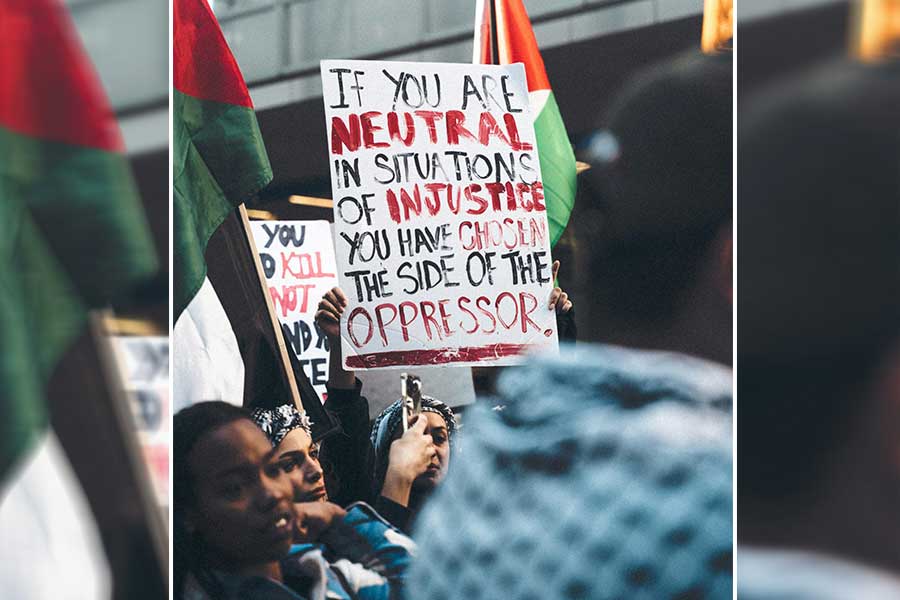
    The Holy Land is a sacred place for Jews, Christians, and Muslims. It has, however, become a country greatly afflicted by division, hatred, conflict, and war. The ongoing occupation results in a never-ending devastating humanitarian crisis. Let apartheid in South Africa be a lesson — holding the occupying regime accountable is the only way to bring justice for the oppressed. As Desmond Tutu once famously stated, “Those who turn a blind eye to injustice actually perpetuate injustice. If you are neutral in situations of injustice, you have chosen the side of the oppressor.”

  • Ben & Jerry’s Ice Cream: The BDS Movement Gains Traction

    Ben & Jerry’s Ice Cream: The BDS Movement Gains Traction

    Support for Palestinian rights waxes and wanes in the public sphere. Attempts by activists to increase visibility of the plight of Gazans and the suffering in all the occupied lands under Israeli rule is instantly stomped out with cries of anti-Semitism. Now Ben & Jerry’s, a popular ice cream brand and socially conscious company, announced mid-July that they would no longer sell their products in the occupied territories, beyond the pre-1967 borders. The company’s founders, Ben Cohen and Jerry Greenfield, made their decision public on July 19, stating in part, “We believe it is inconsistent with our values for Ben & Jerry’s ice cream to be sold in the Occupied Palestinian Territory (OPT).”

    Those who support Israel unequivocally, including most politicians in the U.S. government, are more than disturbed by the position taken by Ben & Jerry’s. What they fear is a snowball effect. A decade ago, Ehud Barak, then Israel’s defense minister, presaged this development. Speaking at Israel’s Institute for National Security Studies, he stated, “We face a diplomatic tsunami that the majority of the public is unaware of,” and that “Israel’s delegitimization is in sight.” He also referenced the prime minister at that time, Benjamin Netanyahu, warning that he “was pushing Israel into a corner from which the old South Africa’s deterioration began.”

    The snowball has picked up speed. While Ben & Jerry’s issued a public statement about their decision, most don’t know that McDonald’s decided in 2013 not to open a franchise in the Israeli settlement of Ariel in the West Bank. According to an article in The Times of Israel in July of this year, McDonald’s decision was in line with their position that they would not operate anywhere in the occupied territories, including the Israeli settlements. McDonald’s did not publicize this decision and it flew under the radar. Not so with Ben & Jerry’s and their decision increases the mainstream denunciations of Israeli occupation and oppression of Palestinians.

    Mainstream Criticism of Occupation Grows

    The Israeli human rights organization B’Tselem has called the Israeli form of apartheid, a “regime of Jewish supremacy from the river to the sea.” In March, the International Criminal Court announced its decision to investigate the charge of war crimes in the West Bank, East Jerusalem, and the Gaza Strip since June 2014. A paper published in April this year by the Carnegie Endowment for International Peace declares that the Israelis and Palestinians “do not live as equals” and that the U.S. must “seek to mitigate the fundamental asymmetry of power between Israel, an occupying state, and Palestinians, an occupied people, and devise strategies to confront the enduring structural barriers to conflict resolution.” Human Rights Watch reported this year that Israeli “…authorities have dispossessed, confined, forcibly separated, and subjugated Palestinians by virtue of their identity to varying degrees of intensity. In certain areas, as described in this report, these deprivations are so severe that they amount to the crimes against humanity of apartheid and persecution.”

    These are just a few examples of the increasing criticism of Israeli policy and practice toward Palestinians. After Ben & Jerry’s took its stand, many tried to smear them as anti-Semitic. They responded to all the negative reactions in a Bottom of Form New York Times op-ed with the following: “The company’s stated decision to more fully align its operations with its values is not a rejection of Israel. It is a rejection of Israeli policy, which perpetuates an illegal occupation that is a barrier to peace and violates the basic human rights of the Palestinian people who live under the occupation. As Jewish supporters of the State of Israel, we fundamentally reject the notion that it is anti-Semitic to question the policies of the State of Israel.”

    Opposition to BDS

    For sixteen years the BDS movement has been urging the use of the same tactics which helped to end apartheid in South Africa. Yet, as the BDS movement gains strength, some Western governments have either ruled BDS as anti-Semitic (Germany) or passed laws to prevent boycotts of Israel (U.K). Since 2005, 35 U.S. states have also written resolutions and executive orders to punish boycotters or block pension fund investments to BDS-supporting companies, while others are placed on blacklists.

    According to an article on the news website Axios, Israel has created a special task force “to pressure Ben & Jerry’s ice cream and its parent company Unilever to reverse their decision to boycott Israeli settlements in the West Bank.” Many political leaders in Israel have accused the ice cream company of anti-Semitism and Gilad Erdan, the Israeli ambassador to the U.S. and the U.N., has contacted the governors of the 35 U.S. states that have sought to outlaw boycotting Israel. In a letter, he urged them to denounce Ben & Jerry’s and to take “any other relevant steps, including in relation to your state laws and the commercial dealings between Ben & Jerry’s and your state.” His letter continued, “We view this decision very severely, as it is the de-facto adoption of anti-Semitic practices and advancement of the de-legitimization of the Jewish state and the de-humanization of the Jewish people.” Ironically, Benjamin Netanyahu, Israel’s former Prime Minister, encourages boycotting Ben & Jerry’s, saying, “Now we Israelis know which ice cream NOT to buy.”

    Declining Support for Israel’s Occupation

    International support for Israel has been on the decline in the past decade as their human rights abuses continue and more and more Americans see the occupation for what it is. A Brookings Institution poll from 2019 showed that 48 percent of Democrats who know about BDS, support it. Yet, Israel reflexively paints critics of its policies as anti-Semitic. Now they have pushed that further, labeling Ben & Jerry’s move as a new type of terrorism. Israeli President Isaac Herzog stated, “The boycott of Israel is a new sort of terrorism, economic terrorism.”

    Lawsuits have challenged the anti-boycott laws in a number of states including Arkansas, Arizona, Georgia, Kansas, Maryland, and Texas. Four federal district courts have ruled that the boycotts are protected by the First Amendment and, as of July of this year, none of the anti-boycott laws has been upheld by the courts. As BDS continues to gain traction, there is enormous pressure from pro-Israel political and media forces in the U.S. While Ben & Jerry’s move is a minor economic threat to Israel, they fear this will signal to other corporations and companies that it is possible to follow suit.

    In recent times, Americans have risen up to highlight the need to face the malevolence of racism, and grassroots activists from different groups increasingly support one another’s movements, knowing that a struggle for the rights of indigenous people and other minorities in the U.S. intersects with the Palestinian struggle, and that each success advances the other movements for human rights and non-discrimination. BDS activists still have a target on their backs as governments, evangelicals, and Israel-firsters campaign hard to bring them down. Time will tell who will come out on top.