بسم الله الرحمن الرحيم

Tag: muslim slaves

  • Your Child is Being Bullied: What Should You Do?

    Your Child is Being Bullied: What Should You Do?

    Bullying happens too often in schools, both in public and Islamic schools, and parents often don’t know what to do to help their child when he or she is a victim of bullying. When a parent becomes aware that their child is being bullied, it’s very important to address the issue immediately in order to avoid the negative effects of bullying. Those negative effects can impact their development, and diminish their confidence, security, and sense of self-worth.

    Studies in the past have shown that children who are subjected to bullying are likely to have problems in various other aspects of their lives. In addition to feeling unsafe, the child who is subjected to bullying feels the misery of social rejection. This can lead to poor academic performance and other more serious problems as the child gets older. Wanting to feel accepted and liked by his or her peers is extremely important to a child. Yet some children simply lack the social skills that allow them to navigate their way successfully on the playground, in groups of children playing together, or in any casual interaction with peers whether in the classroom, in the hallway, or during lunch at the cafeteria.

    For all children, the younger ones as well as older youth, it is also very important to make sure that they have some basic guidelines as to how to respond when bullying does occur. There is a nonprofit organization that provides very practical steps that you can teach your child in this regard. Their website is www.kidpower.org. The guidelines are available at: kidpower.org/library/article/prevent-bullying/.

    In all cases, make sure that you are supportive of your child and that he or she knows they can tell you anytime about what is going on at school and anything they are having difficulty with. Never convey the idea to your child that he should ignore the bullying or that she is somehow to blame. Make sure he knows that bullying is wrong and that it is not his fault. Share with your child the Islamic teachings about mocking others, calling them names, or talking badly about other people. You can read with your child Surah Al-Hujurat, verse 11, and discuss the meaning on an age-appropriate level.

    When your child is bullied, gently try to get him or her to talk about the bullying so that you can elicit information and details about when, where, and how it happens. Talk to your child’s teacher and, if necessary, the school principal and let them know that you want to work with them to ensure that your child does not continue to be subjected to bullying.

    Most importantly, make sure that your home is a place where your child feels safe and secure, physically as well as emotionally. Your child should always feel that he/she can openly and honestly communicate with you. Let your child know that together you can solve any problem or handle any challenge, and that with patience and perseverance the solution will be found.

    Contributed by LivingEman.com

  • Scaremongering Around Online Speech Makes No One Safer

    Scaremongering Around Online Speech Makes No One Safer

    The world of social media is a frightening place for many parents of Muslim children. Domestically and internationally, prosecutions of teenagers for terrorism-related offenses often cite social media activity as evidence. Police have created fake profiles to “friend” people on Facebook in order to further investigations. And Black Lives activists have been surveilled online by the Department of Homeland Security. Against this backdrop, some Muslim parents seek to prevent their children from using social media at all, or urge them not to post political views online. Parents should of course care what their children do on social media, as they care what they do offline, for many reasons. Children may not yet fully contemplate the possible repercussions of expressing views or sharing photos or location information publicly. Ultimately, any social media activity presents some reputational risk for anyone, as does any public speech. Privacy settings can alleviate some risk, but certainly not all. Ultimately, parents and families have to make their own decisions about privacy, and weigh how best to encourage children to identify and express their political voices while being aware of the risks.

    Yet we must not confuse our personal choices, even if those choices are to restrict our online presence, with acceptable limits to enforce on society as a whole. While parents are wise to model and encourage awareness of online privacy for youth, we should not abdicate our rights to free speech online, or elsewhere, out of a misguided belief that some rights are superfluous or just too risky in the current political atmosphere. Doing so would seriously undermine public access to information and, consequently, prospects for advancing peace and justice domestically and internationally.

    Capitalizing on Fear to Police Dissent

    Some current efforts to regulate and control dissent disingenuously play upon Muslim parents’ understandable worries about social media, influencing them to push for more surveillance and policing of speech. “Countering violent extremism” (“CVE”) campaigns, for example, are sometimes claimed to provide “off-ramps” from prosecution for Muslim youth who might otherwise be charged with terrorism-related offenses. In this storyline, federal law enforcement has no choice but to prosecute youth who have given indications of potential “extremist” views. Social media is presented as an exceedingly dangerous place for Muslim youth due to terrorist recruiters’ sophisticated use of online platforms. CVE, it is claimed, could provide a safe haven where law enforcement avoid sting operations and prosecutions targeting those who express “vulnerabilities to extremism” (which could perhaps include anger at Western governments, interest in traveling to a conflict zone, or sympathy with victims of the war on terror) and instead engage mental health professionals, imams, and others to implement “interventions” — effectively, political and/or religious deprogramming — upon such a youth.

    What these claims about CVE “off-ramps” overlook or obscure is that law enforcement agencies already have prosecutorial discretion. This prosecutorial discretion empowers federal investigators and prosecutors to avoid engaging in entrapment or overly aggressive prosecutions of every Muslim youth who might subjectively be labelled a potential “extremist.” Yet, in spite of this authority, many prosecutions for terrorism-related offenses are pursued in circumstances constitutional lawyers and other advocates have noted are not only constitutionally unsound but appear to be predatory upon those with mental health or other challenges. It is highly doubtful, then, that CVE collaborations between law enforcement and trusted social service professionals would protect Muslim youth who could otherwise be targeted for terrorism-related prosecutions. It is entirely possible such collaborations could increase the number of youth on law enforcement’s radar who have mental health or other challenges, or who express political dissent on social media.

    At the same time as CVE “interventions” are being promoted to our communities by the FBI and other federal law enforcement agencies, Western governments have pressured social and other tech media companies to regulate speech deemed “extremist” — in ways which are unaccountable to the democratic process or formal channels for redress. In a joint statement criticizing a recent “code of conduct” in which adhering IT companies agree to police controversial online content, European Digital Rights, Access Now, and allied organizations noted the code “creates serious risks for freedom of expression as legal but controversial content may well be deleted as a result of this voluntary and unaccountable take down mechanism.” Allowing our fears about “extremist” speech and of law enforcement targeting of that speech to persuade us to relinquish speech and privacy protections would be deeply misguided. A campaign to counter vague and subjective concepts like “extremism” are not only likely to be used predominantly against dissidents in the most “suspect” of communities — including Muslim communities, Black communities, environmentalists and others — they are deeply harmful to society as a whole.

    Online Speech is Speech

    Limits on permissible speech online should and do exist, but they should remain consistent with limitations on free speech limits offline. For example, in the U.S., “true threats” of violence against someone, incitement to violence (speech “directed to inciting or producing imminent lawless action” and “likely to incite or produce such action”), and libel are all illegal. But the U.S. government may not constitutionally regulate speech based on political viewpoint. Similarly, social media, as with all communications, may provide evidence of a crime. However, in the U.S., constitutional Fourth Amendment protections must apply to protect against unreasonable search and seizure of private communications.

    The First Amendment protects not only our ability to share information, but seek and receive it as well— with good reason. When governments are permitted to treat people as suspects for seeking information, the results are foreseeably discriminatory. States are unlikely to treat all people who seek information about a controversial topic as criminals and suspects. After all, governments employ many analysts who study terrorist movements and rely on the research of others. But in a landscape in which seeking knowledge makes you a potential “extremist,” identity-based distinctions, as to who is permitted and who is not, are likely to be drawn among those who seek knowledge. As the case of a Muslim terrorism researcher in the U.K. illustrates, being a member of a suspect community may consign you to be perpetually the subject of other people’s studies, never permitted to conduct your own.

    Punishing Online Dissent

    One of the primary ways social media differs from traditional media and spoken speech is in its democratizing impact. Social media theoretically provides anyone, regardless of funds or viewpoint, with an opportunity for a broad audience. Activist movements whose views do not align with the dominant print, television, and radio outlets can and do share information — including evidence of human rights abuses, and practical information to help keep activists safer — through social media.

    Social Media therefore plays an essential role in spreading information about social justice struggles, including through drawing international attention more rapidly than otherwise results from traditional media channels. Yet as social media has become more popular, online speech has also been aggressively regulated in many countries in ways that criminalize viewpoints.

    The prosecution of Azhar Ahmad, a young British Muslim, is one prominent example. In 2012, Ahmad was convicted of “sending a grossly offensive communication,” for having posted on Facebook his views following the killing of six British soldiers, citing his anger at the inattention to the violence against innocent Afghanis and stating he believed the soldiers deserved to die. Many readers of Ahmad’s post would find it deeply offensive. But whether something offends is an inappropriate and dangerous test for whether it is criminal. We cannot, and should not attempt to, criminalize disagreement into silence. Discussing Ahmad’s prosecution in the Guardian, Ralph Seymour observed, “it [was] disloyalty that [was] being punished, in a racialised way. The action of the police and courts is about constituting a new field of punishable conduct. And when disloyalty is punished, there really isn’t much that can’t be included under its canopy.”

    It is entirely foreseeable that governments that prosecute political speech do not prosecute all speech that offends. Unsurprisingly, the viewpoints governments criminalize tend to be those that dissent from the official state narrative. Reflecting on Ahmad’s prosecution and on the 20,000 cases of social media postings investigated by UK police between 2012 and 2015, Glenn Greenwald noted, “It is … extremely difficult to imagine that Facebook users who sanction violence by the UK in Iraq and Afghanistan, or who spew anti-Muslim animus, or who call for and celebrate the deaths of Gazans, would be similarly prosecuted. In both the UK and Europe generally, cases are occasionally brought for right-wing ‘hate speech’ … [but t]he real punishment is meted out overwhelmingly against Muslim dissidents and critics of the West.”

    When we recognize the reality that regulations on political speech are not, and perhaps cannot be, applied equitably, it is easy to predict that states that police political speech will target activists who challenge their own state violence. And indeed they have. Bahraini human rights activist Nabeel Rajab, who heads the Bahrain Center for Human Rights, was arrested in April, 2015 for tweets criticizing the war on Yemen by a Saudi-led coalition, of which both Bahrain and the U.S. are a part. Charges against him include spreading “false or malicious news, statements, or rumors,” “offending a foreign country” (Saudi Arabia), and “offending national institutions” (the last charge based on his speaking out about torture in the prison in which he was held).

    While outspoken human rights activists are generally aware the regimes they criticize may seek to silence them, including through speech regulations where possible, the questions, issues, and fears that speech regulations present for the general population are also destabilizing and counterproductive. The ability of governments to impose fear and uncertainty on a citizenry about the permissible limits of their speech is a powerful tool for enforcing social conformity and political control. This consequence has been observed in Russia where, according to the Associated Press, in 2015, at least 54 people (out of 233 convicted) were sentenced to prison for social media “hate speech.” Russia’s extremism law criminalizes promotion of, among other things, the “exclusivity, superiority or inferiority of citizens” based on religion, and according to the U.S. Commission on International Religious Freedom, the weight of this law has been borne primarily by Muslims. The Director of Sova, a Russian human rights group, described the impacts of arbitrary prosecutions for “extremist” social media speech: “No one knows where the red line is: It’s like roulette.”

    The Right, and Responsibility, to Speak

    In the U.S., guarding against efforts to restrict dissenting speech — many of which focus on “hate speech” or “extremism” — has been an ongoing necessity. Neither “hate speech” nor “extremism” are currently criminalized in the U.S. — nor should they be. Due to our robust First Amendment, speech may not constitutionally be restricted based on viewpoint. And there are multiple dangers in criminalizing “hate speech” or “extremist speech.” Not only are subjective terms like “hate speech” and “extremism” difficult to define, governments tend not to apply them equitably. Such regulations also drive radical dissent, including hateful dissent, underground where it is more difficult to challenge, undermining the ability of society to advocate in an informed way for just and peaceful solutions to societal problems.

    But recognition that restricting adversarial political speech — whether by labeling it “hate speech,” “extremist” or otherwise — would be unwise, impractical and unethical does not counsel in favor of our own silence. A corollary to robust speech protections is a responsibility to challenge hateful ideas with which we disagree — and not only when they emanate from the fringes of the political spectrum. As the writer Kenan Malik observed in an interview for The Content and Context of Hate Speech: Rethinking Regulation and Responses, “[W]e should be clear that what often legitimizes bigotry are the arguments not of the bigots but of mainstream politicians and intellectuals who denounce bigotry and yet accept bigoted claims… Challenging bigotry requires us to challenge the mainstream ideas that give it sustenance, and to campaign against those discriminatory social practices and laws that help make the arguments of the racists, the sexists, and the homophobes more acceptable.”

    This principle is particularly apt in our current political climate, where in the U.S., election year rhetoric has led many to condemn various politicians’ bigoted statements, but comparatively little corresponding attention has been paid to current policies and practices — such as racialized policing of Black, Latino and Muslim communities under “public safety” or “national security” pretexts — which are supported by identical, if unspoken, racism. In ostensibly democratic societies, governments rely on an informed and active populace to operate in ways that promote peace and justice. Informed members of the public can more effectively advocate than those who are terrified of accessing information or expressing “extreme” views. We must therefore reclaim and maintain strong protections for social media speech, as for traditional speech. This reclamation requires us to have the courage to reject attempts to paint “extremist” views as criminal, and instead to advocate vocally for the kind of government and policies with which we want to live.

  • Duas from the Quran

    Duas from the Quran

    [button size=large style=round color=gray align=none url=https://messageinternational.org/wp-content/uploads/2016/09/Duas-from-Quran.pdf]Click here for Duas from the Quran[/button]

  • Quran: The Divine Guidance

    Quran: The Divine Guidance

    “We have sent our messengers with clear evidences and sent down with them the Scripture and a balance that the people may maintain [their affairs] in justice” (Quran 57:25).

    “Surely, this Quran guides to that which is most just and upright” (Quran 17:9).

    The primary purpose of the Quran is to define the true set of beliefs with regard to the Creator and His creation, and to implement these beliefs in a system of laws that will benefit humanity in this life and the next.

    These are just two out of many verses in which the Quran describes itself. Those familiar with the subject matter of the Quran, no matter whether they recognize it as divine scripture, would agree that it is a book providing guidance for individuals, families, and society. It is a book that has profoundly influenced people around the world for centuries. The Quran continues to enlighten, and to change the lives of people from all walks of life. After simply reading a few passages of this magnificent book, a good number of people have embraced Islam. And the number of converts increases day by day. This is indeed one of the miraculous powers of the Quran.

    One analyst rightly says, “The primary purpose of the Quran is to define the true set of beliefs with regard to the Creator and His creation, and to implement these beliefs in a system of laws that will benefit humanity in this life and the next” (see “The Eternal Miracle of the Qur’an” by Yasir Qadhi in The Message International, May-June 2011, p.21). Interestingly, while there are people in the West who are obsessed with propagating a tag line that Islam oppresses women, those who convert to Islam in the West are overwhelmingly female. And these women are typically not unsophisticated individuals or social misfits; they are rather well-educated and accomplished. They have read the Quran, studied Islam, and made an informed decision. They were not deceived by those who spread fictions about the Quran. Instead they were moved to check it out for themselves. To quote Ustad Nouman Ali Khan, “This book has been attacked before and it will be attacked again. It is Allah’s word and no amount of criticism is going to take away from its glory” (see “Quran and Me,” in The Message International, May-June 2011, p.25).

    Any close and careful reading of the Quran reveals that this unique book presents a comprehensive system that balances human beings’ personal needs with the general good. It gives humanity a formula that speaks to moral and spiritual issues as well as practical, everyday affairs and aspirations. It has been said that there are three pillars upon which social justice in Islam is built: the absolute freedom of conscience; human equality as to worth, rights, and opportunities; and the reality of human and social interdependence. Each one of these pillars is necessary to the integrity and stability of social justice. Freedom of conscience, for example, allows the human being to choose voluntarily what he or she believes about God and the meaning and purpose of life. The one who chooses submission to God finds psychological and emotional liberation from thralldom to other people, material things, or any other earthly influence or relative power. That individual realizes it is Allah who creates man, provides him with sustenance, and holds him accountable in a final reckoning as to his belief and his deeds. Allah, the Almighty, says in the Quran: “Say: O people of the scripture [Jews and Christians], come to a word that is just between us and you, that we worship none but God, and we associate no partners with Him, and that none of us shall take others as lords besides God” (3:64).

    Interlocking with man’s freedom of conscience and right to choose his ultimate destiny is the principle of equality. Islam presents this principle to the world, that in spite of outward differences, all human beings are equal in human worth, in their basic civil, political, social, and economic rights, and in their claim to fair opportunity, without discrimination or politically imposed impediment. The Quran declares, “O people, We have created you from a male and a female, and formed you into nations and tribes that you might know one another. Indeed, the noblest of you in the sight of Allah is the most righteous of you. Surely Allah is wise and all-knowing” (49:13). This verse makes it clear that the diversity of nationalities, races, and cultures among human beings allows for greater discernment and understanding of the human condition. False notions of superiority set the stage for discrimination based on outward, superficial characteristics. This is nothing but folly, leading to injustice and conflict.

    The third pillar, human and social interdependence, is further commitment to mutual understanding and tolerance. Humanity is one family and each person is integral to the common good and social progress. This interdependence ties people together through empathy and affection; it also fosters positive, moral, and concrete action such as helping the needy and vulnerable.

    Social justice is one of the most important values and gifts of Islam, and Prophet Muhammad and his companions built a strong, stable society that reflected fraternity and fairness across the board. Those who want to understand firsthand, are invited to read the Quran, to experience for themselves the beauty and powerful appeal of Divine guidance and wisdom in its uncompromising call for social justice and peace.

  • Slavery, Supremacism, and Hegemony

    Slavery, Supremacism, and Hegemony

    What is the mentality of a slaveholder? He looks upon his slave as his property, to be used for his benefit, profit, and convenience. He does not see a human being with desires and needs and rights of his or her own. He sees no aspirations, no family ties, no sorrows or hopes of the heart. All he sees is his right to exploit and control. At the core of the slaveholder mentality is a sense of supremacy and the right to do as he pleases with and to his chattel, with impunity.

    A firmly entrenched system of discriminatory laws based on race, dominating power, oppression, denial of equal rights – these are hallmarks of the early American institutionalizing of white supremacy and racist treatment of African-Americans.

    Undergirding and extending the power of the slaveholder in pre-Civil War southern states was the “Slave Patrol,” precursor to modern policing in the South. Dr. Gary Potter, professor in the School of Justice Studies at Eastern Kentucky University, details the patrol’s main functions: “(1) to chase down, apprehend, and return to their owners, runaway slaves; (2) to provide a form of organized terror to deter slave revolts; and, (3) to maintain a form of discipline for slave-workers who were subject to summary justice, outside of the law, if they violated any plantation rules.” He notes that these were “vigilante-style organizations” which enforced a coercive and discriminatory social and legal structure as freed slaves transitioned into laborers in an “agricultural caste system.” A firmly entrenched system of discriminatory laws based on race, dominating power, oppression, denial of equal rights – these are hallmarks of the early American institutionalizing of white supremacy and racist treatment of African-Americans.

    Unequal treatment of blacks is seen today in the over-policing of black communities and the growing number of incidents involving police brutality. After a dash cam video was released the end of November showing Chicago police officer Jason Van Dyke propelling 16 bullets into the body of Laquan McDonald, a 17-year-old African-American, some analysts suggested that the officer did not see a human being, a young man, a son. The initial report had officers asserting that Laquan had lunged at Van Dyke. The video shows Laquan walking away from Van Dyke and his fellow officer. He was not a threat. But McDonald was seen, just like Walter Scott, Michael Brown, Tamir Rice, and other African-Americans, as other than human, a creature to control and degrade; and if any scintilla of threat appears – real or imagined or itched for – a menace to be killed.

    Vetting of the Intention Behind Killing

    Sam Harris, a neuroscientist well-known for his incessant bashing of Islam, engaged last year in private email exchanges with Noam Chomsky, MIT professor of linguistics and critic of American foreign policy, on the issue of whether one should take into account the role of intentions on the part of those who kill. Following the publication of the exchange, Harris expressed the following about Chomsky: “I think there is a kind of moral confusion expressed in his political writings which ignores intention as a basis on which to evaluate certain human behaviors.” Chomsky stated the core issue he has with this approach is that the dominant group always thinks of, and presents, its actions as honorable, following from good intentions. In retrospect, they might admit the actions were misguided or wrong or a mistake, yet still originating from good intentions.

    The crime of innocence is pretending to not know, or if one does know, remaining silent about the ongoing systemic discrimination and violence against African-Americans and other minorities.

    Chomsky notes in one of the emails to Harris that President Clinton’s 1998 bombing of the al-Shifa pharmaceutical plant in Sudan cannot be justified based on “professing benign intention,” that one can look at “…the substantial evidence about the very sincere intentions of Japanese fascists while they were devastating China, Hitler in the Sudetenland and Poland, etc.” Chomsky continues, “There is at least as much reason to suppose that they were sincere as Clinton was when he bombed al-Shifa. Much more so in fact. Therefore, if you [Sam Harris] believe what you are saying, you should be justifying their actions as well. I also reviewed other cases, pointing out that professing benign intentions is the norm for those who carry out atrocities and crimes, perhaps sincerely – and surely more plausibly than in this case. And that only the most abject apologists justify the actions on the grounds that perpetrators are adopting the normal stance of criminals.”

    Chomsky goes on to say that the al-Shifa bombing was a flat out atrocity. “And of course they knew that there would be major casualties. They are not imbeciles, but rather adopt a stance that is arguably even more immoral than purposeful killing, which at least recognizes the human status of the victims, not just killing ants while walking down the street, [like] who cares?”

    Conscience and Justification

    Justifying bad behavior, let alone atrocities, is unfortunately endemic to the human condition. Just ask John Perkins, author of “Confessions of an Economic Hitman,” an exposé of international corruption among governments, corporations, and wealthy elites. According to Perkins, based on his first-hand experience, economic hitmen are “highly paid professionals who cheat countries around the globe out of trillions of dollars. They funnel money from the World Bank, the U.S. Agency for International Development (USAID), and other foreign ‘aid’ organizations into the coffers of huge corporations and the pockets of a few wealthy families who control the planet’s natural resources.” Perkins continues, “Their tools include fraudulent financial reports, rigged elections, payoffs, extortion, sex, and murder. They play a game as old as empire, but one that has taken on new and terrifying dimensions during this time of globalization.”

    Let us strive for the maturity to engage in discourse in ways that are respectful but fully willing and able to talk truth, unabashedly, to power.

    He finally blew the whistle and documented what he had seen while he participated in the system of corruption. It took him a long time for his conscience to kick in, however. For years he says he justified the mendacity and criminality he partook in by various tricks and ruses of the mind. At one point, “…I convinced myself that by learning more, by experiencing it, I could better expose it later—the old ‘working from the inside’ justification.” And during another bout of conscience nagging at him, he writes, “…I usually had been able to calm my feelings by calling on reason, on the example of history, and on the biological imperative. I had justified our involvement as part of the human condition, convincing myself that Einar, Charlie, and the rest of us were simply acting as men always have: taking care of ourselves and our families.” Along the decades there were other justifications: “exploring ways to change the system from within” or, what he calls “the old standby” that “if I quit, someone even worse would fill my shoes.”

    Willful Obliviousness

    As Americans, we cannot justify staying silent about the wrongdoing of our own government in international affairs. We can also not justify silence in the face of wrongdoing domestically, such as the institutional racism that allows African American men to be summarily gunned down by law enforcement. Not to mention the institutional racism that continues in the form of an unequal public school system for blacks; for-profit prisons, with prison industry lobbyists pushing for tougher laws so as to fill the prisons and increase profits, and those who are targeted by over-policing are the poor and minorities; a disproportionate targeting of African-Americans for traffic stops, use of force, and jail sentences in cities across the nation; draconian zero-tolerance policies in schools resulting in a school-to-prison pipeline, largely, of course, in inner-city schools; a two-tier credit system that perpetuates credit discrimination against blacks and obstructs their ability to build wealth, and the list goes on.

    James Baldwin, 20th century African-American writer and social critic, enunciated the enormity of “the crime of which I accuse my country and my countrymen and for which neither I nor time nor history will ever forgive them.” He continues, “… that they have destroyed and are destroying hundreds of thousands of lives and do not know it and do not want to know it…but it is not permissible that the authors of devastation should also be innocent. It is the innocence which constitutes the crime.” The crime of innocence is pretending to not know, or if one does know, remaining silent about the ongoing systemic discrimination and violence against African-Americans and other minorities. Being willfully oblivious, remaining silent, looking the other way — all make one complicit in the wrongdoing.

    Exploiting, Tormenting, and Brutalizing

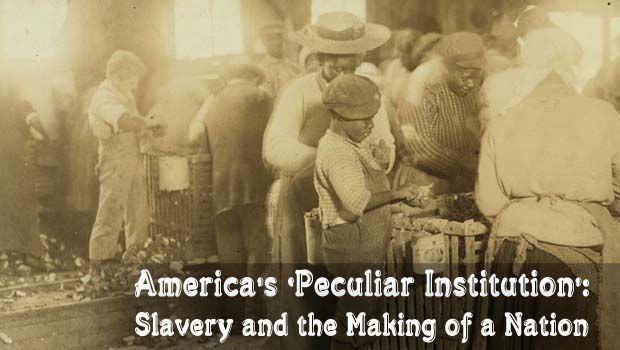
    A firmly entrenched system of discriminatory laws based on race, dominating power, oppression, and denial of equal rights exists because of supremacist thinking and the obsessive clamor to acquire or maintain wealth, power, and privilege. The foundation of this system was the chattel slavery of the 18th and 19th centuries in America. The resulting atrocities committed against human bodies and minds shock any person with normal human sentiments. In American Slavery As It Is: Testimony of a Thousand Witnesses, a book published in 1839 by the American abolitionist Theodore Dwight Weld, his wife Angelina Grimke, and her sister, Sarah Grimke, the authors write:

    “We will prove that the slaves in the United States are treated with barbarous inhumanity; that they are overworked, underfed, wretchedly clad and lodged, and have insufficient sleep; that they are often made to wear round their necks iron collars armed with prongs, to drag heavy chains and weights at their feet while working in the field, and to wear yokes, and bells and iron horns; that they are often kept confined in the stocks day and night for weeks together, made to wear gags in their mouths for hours or days, have some of their front teeth torn out or broken off, that they may be easily detected when they run away; that they are frequently flogged with terrible severity, have red pepper rubbed into their lacerated flesh, and hot brine, spirits of turpentine, &c. [sic], poured over the gashes to increase the torture; that they are often stripped naked, their backs and limbs cut with knives, bruised and mangled by scores and hundreds of blows with the paddle, and terribly torn by the claws of cats drawn over them by their tormentors; that they are often hunted with blood hounds and shot down like beasts, or torn in pieces by dogs; that they are often suspended by the arms and whipped and beaten till they faint, and when revived by restoratives, beaten again till they faint, and sometimes till they die; that their ears are often cut off, their eyes knocked out, their bones broken, their flesh branded with red hot irons; that they are maimed, mutilated and burned to death over slow fires. All these things and more, and worse, we shall prove.”

    Putting Things in Historical Perspective

    Slavery, with all its abuses and torments, existed in countless cultures throughout history. According to Encyclopedia Britannica, slavery flourished in China as early as the 18th century BC, and almost every ancient civilization engaged in some sort of enslavement of other human beings. Slavery dovetails perfectly with a belief in one’s racial supremacy. European colonialism viewed “native” people, euphemism for people of color, as inferior. This justified, according to the White Man’s Burden, the imperialism that exploited, enslaved, and murdered untold numbers of indigenous people in colonial nations. But this mental madness was not confined to the Caucasian mindset. Even into the first half of the 20th century, Japanese propaganda touted the superiority of the Yamato, the dominant ethnic group in Japan, as a superior race which should rightly rule Asia and the Pacific nations. The Muslim scholar Al-Biruni, in the 11th century, wrote that the ancient Indians called foreigners impure; Hindus looked upon Europeans as barbarians, as did the Chinese who saw Europeans as repulsive. Nazism famously promoted the racial superiority of the Aryan (Germanic/Caucasian) race. And Arab racism against non-Arabs, minorities, and dark-skinned individuals is well documented.

    The U.N. General Assembly adopted the Universal Declaration of Human Rights on December 10, 1948. Article 4 states, “No one shall be held in slavery or servitude; slavery and the slave trade shall be prohibited in all their forms.” Yet, many forms of slavery continue today and, according to endslaverynow.org, 28 million people worldwide are ensnared in “modern-day slavery.” Whether it is sex trafficking, domestic servitude, or forced, bonded, or child labor, all are international in scope.

    The roles change over the centuries, victims too often become perpetrators of atrocities, and no one race or nation or people has a monopoly on exploitation and brutality. Human history is an unbroken chain of one group dominating and exploiting, and doing violence, to another. No one should feel above the fray. Does any one of us really know what we might be capable of, guilty of, if we were born into circumstances that predisposed us to bigotry, a sense of superiority and entitlement? In many ways, we are a product of our environment, acculturated by parents, teachers, and social conventions. But this does not contravene our responsibility; we do have relative free will and we are accountable for our actions. And it does not change what is in front of us in our contemporary times. Those who are guilty today of wrongdoing are guilty and need to be held accountable.

    Recognizing the Emptiness and Folly of All Justifications

    When an unarmed African American man is killed by a police officer, we hear conservative commentators trying to deflect the issue by mentioning that most officers are good and heroic. Yes, many are good, even heroic at times, but that is a separate issue from a power structure that affords license to kill, that allows a blue code of silence (tacit agreement not to report on, or even cooperate to cover up, a colleague’s errors, misconducts, or crimes), that doesn’t put an end to “throwaway” guns (carried in case an officer needs to plant a gun in order to justify his excessive force). Apologists will also assert that unjustified killing by cops is rare, that Black Lives Matter activists protesting police brutality should focus on black-on-black crime in their own communities, or some other red herring. We can then call to mind what the abolitionist authors quoted above wrote regarding the denials and justifications that were expected from slavers:

    “We know full well the outcry that will be made by multitudes, at these declarations; …the charges of ‘exaggeration’ and ‘falsehood’ so often bandied…” The authors foretell the apologists’ claims that abuse of slaves is “exceedingly rare,” that slavers could never “perpetrate such enormities upon human beings.” But the authors zero in on the core issue: “…who that hath eyes to see has not sickened at the blindness that saw not, at the palsy of heart that felt not, or at the cowardice and sycophancy that dared not expose such shallow fallacies. We are not to be turned from our purpose by such vapid babblings.” The authors state that they will “show their emptiness and folly.”

    Remember what Chomsky said about those who kill with no compunction: “…killing ants while walking down the street – Who cares?” Whether it is second-class citizens targeted within the U.S. by a supremacist power structure, or people around the world designated enemy combatants and executed by an unmanned aerial killing machine – insurgents or dissenters or incidental passers-by – any can be “neutralized,” a nice euphemism for being killed without too much concern or remorse by those who see themselves positioned to rule, without accountability.

    ‘Not a Bug Splat’

    Democracy Now interviewed Dr. Akash Goel, a physician, one of the co-creators of the “Not a Bug Splat” project. This project is a protest against the drone assassination program in which a small percentage of the strikes kills the intended target. Human Rights Watch found that between 2009 and 2013, 57 of the 82 individuals killed by drones in Yemen were civilians, including three children and one pregnant woman. Nine drone strikes in Pakistan between May 2012 and July 2013 killed more than 30 civilians, according to Amnesty International investigations. “Bug splat” refers to a computer software program that attempts to predict how specific weapons aimed at a target will spread its destructive power, both in terms of surrounding infrastructure and civilian life. The Pentagon’s Joint Warfighting Analysis Center developed the software, aptly, callously, naming it “Bugsplat” since the computer models of the destruction from a bomb resemble a splattered bug on a car’s windshield.

    The “Not a Bug Splat” project printed a huge vinyl banner, roughly 70 ft. by 100 ft., showing the face of a young Pakistani girl who survived a drone attack which killed both her parents and her sibling (google “not a bugsplat – democracy now” to see the banner). The banner is large enough to be seen on satellite imagery and visible to the drone operators who sit in their cubicles thousands of miles away. Let the drone operator see the child’s face staring up at him. Let his conscience kick in as it did for four whistleblowers from the U.S. Air Force who participated in the drone campaign. The four wrote an open letter to President Obama, stating, “We came to the realization that the innocent civilians we were killing only fueled the feelings of hatred that ignited terrorism and groups like ISIS, while also serving as a fundamental recruitment tool similar to Guantanamo Bay. This administration and its predecessors have built a drone program that is one of the most devastating driving forces for terrorism and destabilization around the world.” The “Not a Bug Splat” project is a global initiative comparable to the Black Lives Matter campaign domestically. Both demand an end to abuses of power and the atrocities committed by the global powerbrokers and their agents.

    The Worldview of the Supra-Elite

    For sure there is a clash today between two worldviews. The one with the upper hand in American policy-making today is elitist and anti-democratic, loathe to offer up any iota of its power or privilege to the lower strata of society. We should distinguish, of course, between the elites who happen to be wealthy but live normal, decent lives. They are a mixed bag of good and bad like the rest of us. The elites condemned in this article are the supra-elite, the imperialist, hegemony-seeking, rapaciously capitalist oppressors of the world. To them, the notion that every citizen has the right to food, shelter, education, and healthcare is the weak sentiment of bleeding-heart liberals. In the class (and race) stratified system of their making, an authoritarian control tightens around the neck of the common man and woman while the elite corporate class expects ever loosening of regulation as to the environment, privacy and consumer rights, and employment and labor issues including safety and protection from hazard or harm at the workplace. The oligarchy wants total freedom to exploit and pollute. It inveigles the right to buy and extort political leverage to ensure its ever-burgeoning monopoly of influence, favor, opportunity, and reward. It works hard to enlarge its domain of impunity so that white-collar crime, ordinary criminal acts committed by the wealthy, and even governmental crimes against humanity are all whitewashed, not prosecuted, or rewarded with light sentences or slaps on the wrist. All that, while encouraging and benefiting from the fining and/or incarceration of minorities and the poor for even minor offences such as playing music too loud, rollerblading, parking too far from the curb, or leaving old appliances in the yard (per CNNMoney, in a search of nationwide databases of arrest warrants).

    The freedoms and rights of the common people are anathema to these elites, to be extinguished at every turn, as their supremacy pivots on a quest for full-spectrum dominance. Thus, it cares little for public education except as a tool of regimentation and control. It shrugs off the call for maintenance of public infrastructure or demands to ensure the social safety net for those who need it, all but ignoring entreaties to protect and enhance the common good. It is willing to deny even the most basic human and civil liberties to those it deems inferior to its own status of ascendancy and unquestionable authority. Violence used to secure its position and control over the masses is seen as a natural and legitimate offshoot of its self-proclaimed superiority. In this world-view, “regime change” (toppling another nation’s government), “enhanced interrogation” (torture), “collateral damage” (killing of civilians), and countless other practices that flout international law, are seen as business as usual.

    The Worldview of the Egalitarians

    Confronting and disputing this worldview is an ethos that believes in an egalitarian paradigm, one in which all people are equal in their fundamental worth as human beings; and all should be equally afforded the political, social, economic, and civil rights necessary to live a life of dignity and to fulfill their life’s potential. In this worldview, public education is a fundamental right. Investment in the common good is natural and elemental to the collective mindset, including the maintenance and improvement of public infrastructure as the very foundation of a properly functioning society. Protection of the commons, shared resources, and the integrity of the environment informs the governmental imposition of reasonable regulations to impede the corporate/capitalist impulse to put short-term profit over consumer rights, responsible stewardship of the earth, and fair and safe treatment of workers. As the mutual and aggregate well-being of the society is intrinsic to this perspective – the idea that “we are all in this together” – personal interests and needs are balanced by considerations of the larger good and the betterment of the community, the nation, and humanity.

    This worldview recognizes the responsibility to care for the needy and vulnerable, and places social justice at highest levels on the pyramid of human concerns and issues. One system of law and justice applies to every citizen so that a street cleaner and a Wall Street CEO are both treated fairly and according to a single system of criminal justice. Then travesties in the judicial system would be considered unthinkable, like teenager Ethan Couch getting 10-years’ probation and court-ordered rehab after killing four people while driving drunk. His lawyers argued that Couch was a victim of “affluenza” – having the “misfortune” of being from an affluent, privileged family where limits on his behavior were never imposed by his parents. Contrast such crazy leniency with the stark reality that, according to The Sentencing Project, “two-thirds of all persons in prison for drug offenses are people of color.” While drug use by whites and blacks are comparable, and white people are more likely to deal drugs (certainly more anti-social and harmful than individual use), it is blacks and other minorities who get disproportionately jailed, and doled out tougher sentences.

    A Worldview in Harmony with Islam

    Countries, like people, are a mixed bag. And so it is with America. Its history is replete with good and bad principle, policy, and action. Today, however, there is a dominant strain within its governing circles who have set the national course on a destructive trajectory. Subscribing to a hierarchal global system with them at the top, they readily use fear and violence to achieve and maintain their absolute control, exploiting the peoples and resources of this earth to their own end. In contrast, the egalitarians see all races and classes of people as equals, worthy of life, dignity, safety, and opportunity (of course many people fall somewhere in between, on the continuum between the supra-elite mentality and the spirit of those who genuinely believe in a more egalitarian model of society). But anybody who has rudimentary knowledge of Islam knows which worldview Islam is in harmony with.

    Muslims today are at the very crux of the clash between the two worldviews. This is not a clash of civilizations, i.e., Western vs. Islamic. The clash is also not between Muslim Americans and the rest of America. The clash is not between whites and blacks, between police and communities, between rich and poor. The clash is an opposition of worldviews: one worldview seeks peace, cooperation, and mutual respect; the other seeks hegemony through war, even if it has to foment conflict and create war. While proclaiming itself a peacemaker with humanitarian ideals, it pursues endless war, filling the coffers of the militarist elites and spreading tentacles of control around the world. It looks for cooperation only where it enhances its domination, and offers any modicum of respect only to its own ilk.

    Let us rise to the challenge and reclaim this earth for those who cherish its divinely bestowed abundance and beauty and ecological balance. Let us strive for the maturity to engage in discourse in ways that are respectful but fully willing and able to talk truth, unabashedly, to power. Let us use our creativity to initiate endless numbers of projects like “Not a Bug Splat” so that faces are put on the suffering and oppressed multitudes. Let us, like the abolitionist authors in 1839, be sickened by those who are willfully blind to the atrocities committed, and bristle at the “palsy of heart” that feels no compunction, let alone outrage, when confronted by evidence of discrimination, exploitation, and violence as tools of repression and control. Let us not be of those who are “guilty of innocence,” pretending to not know what is going on. Let us not allow ourselves to be beguiled by “American exceptionalism” or the claims of national security necessities that stealthily erode our rights and liberties; let us be spared from the “cowardice and sycophancy” that refuses to “expose such shallow fallacies.”

    “O you who have attained to faith! Stand up firmly for justice, bearing witness to the truth for the sake of God” (Quran 4:135).


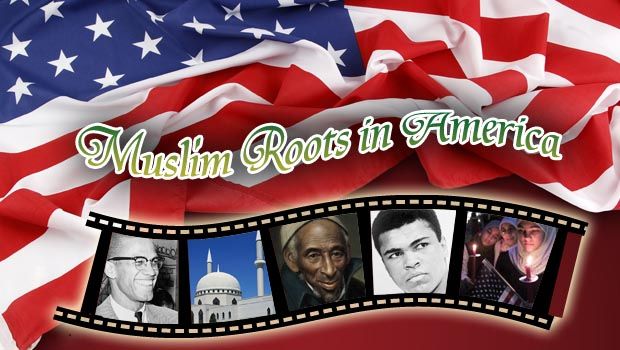
  • Muslim Roots in America

    Muslim Roots in America

    [button size=medium style=less_round color=gray align=none url=http://hipcast.com/podcast/HsJd6gfs]Click here to listen audio podcast of this article[/button]

    Islam and Muslims have been part of American history for centuries, but most people are unaware of this fact. They think Islam in the United States is a relatively recent phenomenon and, hence, alien and un-American. In reality, there is a centuries-long recorded history of a Muslim presence in America, and Muslim Americans have contributed much to the nation they call home, as noted by President Barrack Obama: “They have fought in our wars, they have served in our government, they have stood for civil rights, they have started businesses, they have taught at our universities, they’ve excelled in our sports arenas, they’ve won Nobel Prizes, built our tallest building, and lit the Olympic Torch.” This record of contribution and service is extensive, but Islamophobes, sadly, overlook or conceal this fact.

    Far from being a foreign presence, Muslims have exerted a positive influence on American culture even greater than their numbers would suggest from the very beginning.

    Their aim, by any and all means, is to rip out the interlaced thread of Muslim historical and contemporary presence from the American tapestry. But do they not realize that tearing out one thread can unravel the whole? Still they want to ostracize Muslim Americans, to blame the Muslim community collectively for any extremist act anywhere on the globe by any individual(s) who purport to represent the Muslim faith. Yet we hear little about Christian terror groups around the world like The Army of God and The Concerned Christians in the U.S., Eastern Lightening in China, and The Lord’s Resistance Army operating in various countries in Africa, all of which are actively carrying out terror attacks in the name of Christianity.

    It’s truly unfortunate that whenever a Muslim commits an act of terror, the media lets stand, and even exacerbates, the false notion that Muslim extremism is a unique phenomenon. Then we hear Donald Trump call for profiling and increased surveillance on Muslim communities, and a total ban on Muslim immigration to the U.S. Thankfully, political leaders from both parties have either denounced or distanced themselves from Trump’s Islamophobic remarks.

    Negative attitudes toward Muslims in America, however, is far from fading and many Americans only know about Muslims through negative media coverage. A YouGov poll found that more than two-thirds of people surveyed have no Muslim friends or co-workers. Asked if they have ever been inside a mosque, 87 percent of respondents said no. This underscores how important it is to make our fellow Americans familiar with Islam, Muslims, and the historical presence of Muslims in our nation. Noted author Jerald Dirks has pointed out in his book “Muslims in American History: A Forgotten Legacy” that “written documentation, linguistic evidence, and reports of early Spanish explorers of the New World suggest Muslim contact with the Americas prior to Columbus. Muslims and Moriscos sailed with Columbus and were part of many of the Spanish explorations of the New World. Muslims comprised a significant percentage of the enslaved Africans who were brought to the Americas, and many Islamic residuals have found their way into contemporary African-American life and culture… Beginning in the late 19th century, successive waves of Muslim immigrants enriched America, and the phenomenon of Americans converting to Islam became increasingly widespread.”

    James H. Hutson who has worked for the Manuscript Division of the Library of Congress and authored many books, including “Religion and the Founding of the American Republic” (1998), has written, “The Founders of this nation explicitly included Islam in their vision of the future of the republic….Far from fearing Islam, the Founders would have incorporated it into the fabric of American life.” Lynn Stuart Parramore, with a doctorate in cultural theory, has written, “…Thomas Jefferson purchased a Quran to learn about the Islamic legal code – the same Quran that was used in the swearing in of Muslim Keith Ellison to the U.S. Congress. In 1776, John Adams published ‘Thoughts on Government,’ which praised the prophet Muhammad as a ‘sober inquirer after truth.’ Ben Franklin set up a non-sectarian meetinghouse in Philadelphia, declaring in his autobiography that ‘even if the Mufti of Constantinople were to send a missionary to preach Mohammedanism to us, he would find a pulpit at his service.’”

    As we see, Islam and Muslims are not a new or foreign presence in this country. Muslims’ love for, and attachment to, America is no less than that of any other community or faith group. To quote Dr. Parramore once more: “Muslims wish to be seen as Americans, and a look at America’s Islamic roots proves that they have every right to be – even more, perhaps, than those who rail against them. It’s time to clarify the confusion about the role of Islam in early America and remind ourselves that far from being a foreign presence, Muslims have exerted an influence on American culture even greater than their numbers would suggest from the very beginning. The real foreign presence is Islamophobia, which is completely at odds with America’s founding principles.” We hope that all Americans will get the memo that Muslims, as in the past, are contributing to and serving the American ideal, and will continue to do so, eager to enhance the common good and help fulfill America’s greatest potential.


  • Patience During the Times of Trials and Tribulations

    Patience During the Times of Trials and Tribulations

    [button size=medium style=less_round color=gray align=none url=http://hipcast.com/podcast/HyDCP9ks]Click here to listen audio podcast of this article[/button]

    These days Muslims are being tested, from being mocked at to intrusions of surveillance, the threat of expulsion, and even vile remarks towards Allah SWT, The Creator and Sustainer of all that exists. In these tough times, it is faith in Allah SWT, sabr (patience and perseverance) and tawakkul (trust in and reliance on Him SWT) that bring about calmness amidst the chaos and turmoil, bestowing peace and tranquility to the hearts. Moreover, sabr provides illumination – light, guidance, and clarity – in moments of darkness, as Rasoolullah (peace be upon him) said, “… patience is illumination.”

    The example of a believer is that of a fresh tender plant; from whatever direction the wind comes, it bends it, but when the wind becomes quiet, it becomes straight again.

    Often sabr is translated as patience or withstanding with patience whatever difficulty has befallen a person. One may think that it is a passive state of accepting the tests and trials of this dunya, including those inflicting injustice or oppression. But another meaning of sabr is “tasabbur” or perseverance. This is the ability to continue on in spite of difficulties, with steadfastness and unwavering purpose. So sabr is not fatalistic resignation, a passive acquiescence to a situation or circumstances. Both aspects of sabr, patience and perseverance, are required when going through trials and tribulations. And let us be reminded that Allah SWT is with those who have sabr: “And be patient and persevering, for Allah is with those who patiently persevere” (Quran 8:46). For sure, Allah SWT tests the believers throughout their lives, from childhood to old age. Our status in this life can change instantly, from richness to poverty, ease to hardship, joy to sadness, health to sickness, security to fear – life has ups and downs and phases of good or ill fortune.

    He SWT tested each and every one of the Prophets and He likewise tests each one of us. He tests us as individuals, as families, as communities, and as nations. And certainly He SWT tests the Muslim ummah. As He SWT says in the Quran: “…Do people think that they will be left alone because they say, ‘We believe,’ and will not be tested.” More importantly, in each of these tests the believers are measured as to how truthful they are to their belief. Allah SWT says in the very next verse: “And We indeed tested those who were before them. And Allah will certainly make known those who are true, and will certainly make known those who are liars” (Quran 29:1-3).

    Rasoolullah (pbuh) endured all that persecution with sabr and tawakkul in Allah SWT, with grace, tolerance, forbearance, self-control, and absolute resolve. He never gave up.

    So these difficult times we are enduring are part of the test. Rather than shaving one’s beard or taking off the hijab, Muslims should feel honored to visibly represent Islam, a declaration that fear will not extinguish faith! When the genocide took place in Bosnia two decades ago, many Bosnians did not even know how to perform wudhu; but when they were threatened with oppression or even slaughter just because they had a Muslim name, they stood fortified in their faith, proud to be Muslim. Indeed, we must never think that anyone will enter Jannah without being tested. Allah SWT says: “Or do you think that you will enter Paradise without such [trials] as came to those who passed away before you? They were afflicted with severe poverty and ailments and were so shaken that even the Messenger and those who believed along with him said, ‘When [will come] the Help of Allah?’ Yes! Certainly, the Help of Allah is near!” (Quran 2:214).

    Practicing Sabr – Three Requisite Ways

    In Islam, there are three requisite ways in which we must strive to practice sabr. Indeed, in our circumstances today, sabr becomes waajib or compulsory.

    First: Sabr in handling challenges and tests from Allah

    Allah gives the most striking examples of sabr in the lives of the Prophets, as they showed patience and perseverance in situations that tested the very mettle of their faith. A few examples are Prophet Yusuf (pbuh), as a child, being thrown into a well and abandoned by his own brothers; Prophet Yunus (pbuh) in the belly of a whale for three days; Prophet Ayoub (pbuh) tested with loss of health, wealth, and family. And of course all of the prophets were tested and demonstrated great sabr, but there are five who are referred to as “ulul azm,” those with exceptional azm, an unfaltering and unwavering resoluteness of belief and action. These five are Prophets Noah, Abraham, Moses, Jesus, and Muhammad, peace be upon all of them. They never deviated from their devotion to Allah, and remained resolute only for Allah SWT’s pleasure.

    In fact, Allah tests most those that He loves. Rasoolullah (pubh) said: “The Prophets, then the righteous, then those nearer to perfection – a man will be tested with regards to religion. Hence if he is firm in his religion his test will increase, and if he is weak in his religion it is lightened. And a servant will continue to have tests until he walks this earth without any sins.” Of course, both good and ill fortune can be a test. Yet we are assured that every test and trial brings good as long as we demonstrate gratitude in times of ease and sabr in times of hardship. Rasoolullah (pbuh) describes this: “Strange are the ways of a believer for there is good in every affair of his, and this is not the case with anyone else except in the case of a believer; for if he has an occasion to feel delight, he thanks [Allah SWT], thus there is a good for him in it; and if he experiences trouble and has sabr, there is a good for him in it.”

    Today, as we are bombarded with bigotry, rejection, hatred, and even physical abuse, we must not give up, but be steadfast and persevere. This is what causes our iman to increase in Allah SWT. We are reminded of what Prophet Musa (pbuh) said to the Bani Israil: “Moses said to his people, ‘Seek help in Allah and be patient. Indeed, the earth belongs to Allah. He causes to inherit it whom He wills of His servants. And the [best] outcome is for the righteous” (Quran 7:128).

    Second: Sabr in obeying Allah’s commands

    Throughout our daily lives, especially when performing our ibaadaat (acts of worship), we are taught to be patient and to be steadfast in obeying Allah’s orders. The obedience of a Muslim towards Allah SWT and his Messenger (pbuh) must be based on and backed by a strong character of sabr. This is because without patience and perseverance, it is hard for us to consistently perform all our religious obligations with complete sincerity and devotion. With regards to exercising patience, Allah SWT says, “And await in patience the command of your Lord; for verily you are in Our sight. And celebrate the praises of your Lord when you arise” (Quran 52:48).

    Indeed, patience and perseverance are required because our salaah, zakaah, and fasting, our zhikr of Allah SWT, or wearing the Muslim-identifying hijab or a beard, are not always easy and convenient. They require us to have sabr in fulfilling them. Sometimes they become a test for us, yet we have to try our best to fulfill them, for none but Allah SWT. Unfortunately there are those who reject Allah SWT spend their wealth to prevent those who believe from worshipping Allah SWT. But patience and perseverance is required to withstand such onslaughts. Allah SWT says, “Indeed, those who disbelieve spend their wealth to avert [people] from the way of Allah. So they will spend it; then it will be for them [a source of] regret; then they will be overcome. And those who have disbelieved – unto Hell they will be gathered” (Quran 8:36).

    Third: Sabr in refraining from Allah SWT’s prohibitions

    Sabr is required to hold oneself accountable for all actions, and that means, with regard to Allah SWT’s prohibitions, practicing restraint and holding back from all that is forbidden, disobedient, or harmful to one’s character or religious state and standing in the eyes of Allah. We practice patience in the face of annoyance or frustration so that we don’t engage in loss of temper or unfair criticism. When we experience sorrow or suffering or misfortune, we are patient, persevering with faith and guarding against bitter complaint or hopelessness. By practicing sabr in daily living, at times when things just don’t go right or as planned, we fortify our capacity to refrain from the haram, those things that are explicitly forbidden such as fornication and adultery, usury, using or consuming intoxicants, backbiting or suspicion, exploitation or fraud in business practices and dealings, and all other forbidden or unlawful things as specified by Allah SWT. We should remember that Allah is the All-Seeing and All-Knowing. We are also reminded of His promises of reward if we exercise sabr in refraining from His prohibitions.

    Benefits in Practicing Sabr

    1. Sabr results in Allah’s mercy and guidance. Allah Says in the Qur’an: “They are those on whom are the blessings from their Lord, and receive His Mercy; and it is they who are the guided ones” (Quran 2:157). Allah also says: “… those who have sabr and do right actions, for them is forgiveness and a great reward” (Quran 11:11).
    2. Sabr leads to intelligence in thought and action. One of the major factors preventing people from acting in reasonable, thorough, or prudent ways is their impulsive thinking and behavior. Sabr is the remedy for that since it is the willingness to take the appropriate or necessary time to think things through, to think before acting, to avoid being hasty or careless or reckless. With sabr, one is organized and methodical, not haphazard. One is conscious of cause and effect and considers consequences that follow one’s actions. Sudden intense emotion or desire, not countered by sabr, shuts down the mind and pushes people to act without thinking. For this reason, when he was asked for advice by one of his companions Rasoolullah (pbuh) replied, “Don’t get angry.” And the companion kept on asking for more advice, and each time Rasoolullah responded: “Don’t get angry.”
    3. Every single time we practice sabr when difficulty or hardship befalls us, Allah removes some of our sins. The Prophet (pbuh) said, “No fatigue, nor disease, nor sorrow, nor sadness, nor hurt, nor distress befalls a Muslim, even if it were the prick he receives from a thorn, but that Allah expiates some of his sins for that.”
    4. Allah SWT grants true leadership to those with sabr. He SWT says, “And We made from among them leaders guiding by Our command, so long as they exercised sabr and were certain of Our signs” (Quran 32:24).
    5. Most importantly, the reward for demonstrating sabr in this life will be in the highest plains of Jannah. May Allah SWT make us amongst those who attain that great reward. He SWT tells us: “And those who have believed and done righteous deeds — We will surely assign to them of Paradise lofty dwellings beneath which rivers flow, wherein they abide eternally. Excellent is the reward of the [righteous] workers who persevere in patience and upon their Lord rely” (Quran 29:58-59).

    Some Methods for Acquiring Sabr

    In these troubling times, increasing our sabr is essential. Here are a few ways to do that:

    • Make zhikr of Allah SWT — These days we should be engaged in zhikr (remembrance) of Allah. Our morning and evening zhikr (al-ma’thuraat, prophetic supplications) should be recited for protection and for peace of mind. Allah the Almighty says in the Quran: “…Verily in the remembrance of Allah do hearts find rest!” (Quran 13:28). When we do our part to defend Islam, the Prophet (pbuh), and ourselves, we feel good about that. And when fair-minded non-Muslims defend our rights, we feel supported and reassured of goodness in humanity. It is, however, our remembrance of Allah, of His help, support, and the certainty of success that brings about the greatest joy. Allah SWT tells the believers: “Allah made it not but as a message of good news for you and as an assurance to your hearts. And there is no victory except from Allah, the All-Mighty, the All-Wise” (Quran 3:126).
    •  Keep in mind the qadr of Allah SWT — We must keep in mind that everything comes from Allah SWT. We must be firm in our belief and faith in qadr, divine destiny, that Allah SWT has planned the entire universe and the existence of all things with His perfect justice and wisdom, and that only He possesses profound and complete knowledge of the past, present, and future. With this foremost in our minds, we will be able to put our trust in Him, fully aware that He decrees things according to a wisdom far beyond our comprehension, and that Allah SWT is in control of everything. “Unquestionably, His is the creation and the command; blessed is Allah, Lord of the worlds” (Quran 7:54).
    •  Gain strength from the Sunnah of Rasoolullah (pbuh) — Whatever the adversity or heartache we experience, we must not give up. We gain strength from the life of Rasoolullah (pbuh). During the Makkan period, from the time Rasoolullah declared his prophethood until he was expelled, he suffered torments and persecution by the Quraysh, almost beyond human endurance:
    • mockery, threats, verbal abuse, accusations of being a sorcerer, poet, liar, or madman; clamorous noise made while the Quran was being recited
    • open hostility and campaigning against Rasoolullah by kin (Abu Jahl and Abu Lahab)
    • rejection by his own people and the result that he had no clan protection; devastating boycott of his entire tribe; expulsion
    • pressure on his close family members to force him to stop preaching; torture of some of his followers such as Bilaal (RA) and killing of some such as Sumayyah (RA) and her husband Yasir (RA); offering to Abu Talib to exchange Umaarah, the son of one of the Quraysh leaders, for Rasoolulah, in an effort to stop the Prophet’s mission
    • Quraysh instigating some among the People of The Book to confront Rasoolullah (pbuh) with hard questions about religious matters, hoping he would be unable to answer correctly or effectively
    • camel entrails being thrown on him; being pelted with stones and expelled from Taif; assassination attempt; confiscation of property; plotting by various tribes to eliminate the Muslims

    Rasoolullah (pbuh) endured all that persecution with sabr and tawakkul in Allah SWT, with grace, tolerance, forbearance, self-control, and absolute resolve. He never gave up. In fact, every time they endured persecutions, he and his companions became stronger. And many who engaged in harassing and oppressing the Muslims, themselves, in time, became upright Muslims, devoted to and defending Islam. One only need to look at the example of Abu Sufyan who was the leader of the disbelievers. In the end, he accepted Islam, and from his generation came the Umayyad Dynasty. And let us never lose sight of the fact that because of the patience and perseverance of Rasoolullah, the world today is filled with 1.8 billion Muslims, found in every nook and corner of the globe, just as Rasoolullah (pbuh) predicted: “This message will reach to wherever the night and day have reached. Allah shall not leave any home built by clay or stones or by animal skin [tent] except Allah will make this religion to enter it, to give honor to those who are honorable and to disgrace those who are disgraceful. Allah shall give honor to Islam, and Allah shall give dishonor to unbelief” (Musnad Ahmad).

    Let me end with an inspiring statement from Rasoolullah (pbuh): “The example of a believer is that of a fresh tender plant; from whatever direction the wind comes, it bends it, but when the wind becomes quiet, it becomes straight again. Similarly, a believer is afflicted with calamities. And an impious wicked person is like a pine tree which keeps hard and straight till Allah cuts it down when He wishes.” We can understand from this that the believer endures all difficulties with sabr until Allah provides relief. The believer can be blown about, shoved off-center, buckled, knotted up, or wrenched by the windy storms of ignorance – its hatred, bigotry, and hostility. But, as a believer, he or she again and again will straighten up, stand upright and tall in dignity, and be ready to move ahead with resolve and vigor.

    O Allah SWT! Guide our people to the Straight Path and protect us all! Those among us whose imaan is weak, let them be strengthened through these trials. Help us to remain truthful to our faith. Help us to speak truth. And guide the Muslim ummah to ever greater righteousness, integrity, and justness as we sustain ourselves and strengthen ourselves through sabr and tawakkul. Ameen.

  • Post 9-11: Adversity Transforming and Strengthening the Muslim Community

    Post 9-11: Adversity Transforming and Strengthening the Muslim Community

    [button size=medium style=less_round color=gray align=none url=http://hipcast.com/podcast/HVtq3mxs]Click here to listen audio podcast of this article[/button]

    Terror in Paris. Mass killing in San Bernardino. These words were burned into my mind in the past few months as we were faced yet again with the horrific slaughter of innocent people, and also with a media barrage once more blurring the line between Islam — and the majority of Muslims in the world — and terrorism. The American consciousness is infused with very selective portrayals of world events, portrayals that present the “other” — foreign, dangerous — at fundamental odds with everything “we”’ stand for. The notion that “we” solely uphold the highest standards of civilization and humanitarian ideals, in contrast to the rest of the world, permeates the information we receive from news and entertainment, and is further given currency by all those around us who have been equally indoctrinated. The result is the perception of an actual “us vs. them” scenario. In the minds of so many, the identity of “them” is equated with Muslims.

    It is not an “us vs. them” scenario. The vast majority of those killed or wounded by ISIS are Muslims.

    Muslim leaders worldwide have roundly condemned ISIS, and the vast majority of Muslims around the world consider ISIS to be utterly contrary to Islamic teachings and principles. Yet, despite the near universal denunciation of terrorism, the media hypes up fear and hysteria about Islam and Muslims in the wake of a terror attack, seldom providing contextualization, larger perspective, or an agenda that brings Americans together. This results in American Muslim citizens (as well as Muslims in many other Western countries) being targeted as part of a backlash after each event; many report living in fear, always looking over their shoulders, taking extra precautions like standing farther away from the edge of platforms in train stations, women wearing hats rather than hijab, and men shaving their beards.

    Progress Has Been Made

    Although at times the current state of affairs seems dismal, we have to note that much progress has been made by our communities since the horrific attack on American soil, the September 11 attacks of 2001. Much of that progress, taking many forms of dawah dovetailing with a good number of Americans getting curious about Islam, is in fact directly related to those awful attacks and the resulting near-obsession in the media about Islam and Muslims, however negative. It’s the proverbial silver lining in a terrible event.

    The allegations against Islam have caused many to question themselves, and to feel inclined to know their religion more profoundly than before.

    For many Muslims, being wrongfully accused of moral depravity and being associated by default with a miniscule minority of extremists who happen to be very loud, has lit a fire of motivation. In some respects, it is as if there is a renaissance of Islamic learning, practice, and a new fervor for civic involvement. Many Muslims have been harshly awakened, as if from a deep slumber, by these events. The allegations against Islam have caused many to question themselves, and to feel inclined to know their religion more profoundly than before. Many want to know Islam’s stance on violence and revenge, on tolerance and forgiveness. The struggle to gain greater knowledge facilitates a deeper connection with the Quran and Prophet Muhammad, peace be upon him. For many of those who have begun reading the Quran more intently, and have put increased importance on learning about the life of the Prophet, they have found doors opening to a more purposeful life, filled with greater humility, gratitude, and faith.

    Islam Brought Into Daily Awareness

    For many non-Muslims, these events have brought Islam out of the peripheries of consciousness into the forefront of their daily awareness. It’s no longer just a boring page in a history textbook, but something that actually affects life in the real world. Personally, before 9/11, I had barely an awareness that there was a religion called Islam. The attacks, and the fear and agitation I felt as a result, caused more than cognizance. It motivated me to try to discredit religions altogether through research and logical analysis.

    Many Americans today, faced with the ongoing turmoil in the world and the increasing number of terror incidents, want further information about Islam and Muslims.

    It was 9/11 that spurred me and many other Americans to read the Quran for ourselves. Some felt motivated by macabre curiosity, others asked the question, “How can this be? What kind of religion actually encourages killing civilians?” A number of individuals had an intuition that it was not, in fact, the religion, but political agendas and grievances behind these acts. Looking into Islam became necessary for those of us who craved to understand our vulnerability and how to respond to threats to the safety and well-being of our families and nation. My journey of inquiry ultimately led me to embrace Islam as my religion and way of life. I discovered that rather than promoting violence and chaos, Islam inspires profound peace.

    Many Americans today, faced with the ongoing turmoil in the world and the increasing number of terror incidents, want further information about Islam and Muslims. Initiatives such as the WhyIslam billboards and the mobile advertising trucks of HateBusters (a non-profit charitable organization “dedicated to teaching people how to like people and how to oppose hate”), and numerous websites are furthering the conversation by providing public access to authentic sources of the tenets and teachings of Islam. When activists, Muslim and non-Muslim, present credible and thought-provoking information to the public, discourse becomes more genuine and more aligned with reality, helping to break down stereotypes and fear.

    By Allah’s Mercy, and the increase in the number of Americans researching Islam, many Americans are adopting Islam as their way of life. It is estimated that some 20,000 Americans accept Islam every year. This means that the fabric of the American Muslim community is changing. It’s becoming even more diverse, and with more native-born American Muslims, Islam is becoming less foreign to the American public, challenging the standard stereotypes. I would argue that having more Americans, especially of European descent, accepting and adopting Islam, causes many non-Muslim American families to feel differently when they hear Islamophobic rhetoric. Knowing the people who are being targeted is very different from when the victims are completely unknown.

    Identity and Civil Rights

    For Muslims, terrorism and the resulting backlash against Muslims has raised the question of identity. American Muslims who are deeply moved and disturbed by attacks on their country, yet also suffer from a backlash of hate and bigotry based on guilt by association, at first may feel obliged to choose between being Muslim or being American. But the vast majority of American Muslims have taken ownership both of their Islamic and their American identities. In fact, since the September 11 attacks, mosques and Islamic centers have increased by more than 74 percent. Numerous programs disseminating Islamic knowledge to both Muslim and non-Muslim audiences have also cropped up across the country.

    By Allah’s Mercy, and the increase in the number of Americans researching Islam, many Americans are adopting Islam as their way of life.

    Meanwhile American Muslims are increasing their civic involvement and currently two Muslims are members of the House of Representatives, Keith Ellison and Andre Carson, and several others have been elected at the state level. Muslims have garnered a much greater presence in the media since 9/11 as well, appearing as guests and experts in mainstream media, both TV and radio. We are also taking advantage of social media to make our presence and ideas known. Muslims have also recognized that, as citizens, we have constitutional rights to practice our religion freely. With the help of organizations like CAIR, Muslims are reporting discrimination, litigating their cases, and in a growing number of cases, winning in court. We are becoming savvier, more confident in the knowledge that many Islamic and American principles and values are identical or compatible.

    According to a 2011 Department of Justice report titled “Confronting Discrimination in the Post-9/11 Era: Challenges and Opportunities Ten Years Later,” the FBI reported a 1,600 percent increase in hate crimes against Muslims in 2001, following 9/11. The report notes that the initial spike went down but “it was soon replaced by other bias-related incidents, including discrimination in education, employment, and religious land use.” Government officials moved to strengthen existing civil rights laws and to ensure the rights of Muslim Americans and other individuals, like Sikh and South Asian Americans, who were targeted following the 9/11 attacks. Dr. James Zogby, founder and president of the Arab American Institute, has stated, “The threats were nothing new. My life had been threatened before. My office had been firebombed in 1980. Never a prosecution – ever. Since 9/11, three people who threatened my life have gone to jail. I’m not proud of it, but I’m pleased to know that there is somebody there to defend me.”

    The DOJ Civil Rights Division has put out statements encouraging the inclusion and embrace of American Muslims, to counter the impulse amongst some Americans to demonize, exclude, or merely tolerate Muslims. They have stated in no uncertain terms that anyone who infringes upon another’s rights, will be brought to justice. They have increased outreach to vulnerable communities and listened to concerns. Amber Khan, the Corporate Secretary of Muslim Advocates, has noted that “DOJ leaders within the first few months after 9/11 attended more than 100 meetings and events with representatives from the Arab, Muslim, Sikh, and South Asian communities.”

    Greater Muslim Presence, Representation, and Responsibility

    The fact that a new generation of American-born Muslims is coming of age and choosing from a broad range of professions, including those in politics and media, means that we will have greater presence and representation, with Muslim narratives, concerns, and contributions becoming more and more mainstream and familiar to the broader American public. Muslim women journalists wearing hijab, as well as Muslim politicians or political commentators, all without foreign accents and who appear culturally current and natural, help transfer Muslims, in the collective consciousness, out of the realm of foreign and strange. This is an important step in creating a distinction in the public mind and discourse between Muslims and terrorists.

    Although much progress has been made, we are still at the beginning of an era of change. The fact that mosques and Islamic centers have increased is good – but, are these centers truly ready for this new era? While years ago it was acceptable to have Islamic centers catering exclusively to immigrant populations, today we must transform all our places of worship into facilities that are welcoming to all. We need more programs to help Muslims acquire knowledge and develop a truly Islamic character. We also need to increase outreach initiatives and programs to encourage the participation of our non-Muslim neighbors. And with the large number of converts to Islam, all of our Islamic centers should have services supporting and assisting new Muslims so that they feel an integral part of their new community as they journey on their path of seeking knowledge and practicing Islam in their daily lives. Also, the fraternity of believers is an area that needs development. Fractured communities erode unity and solidarity and programs and events are needed to foster a sense of fellowship and love for all Muslims, regardless of ethnicity or culture.

    Because Islam was meant as a mercy for mankind, our centers should reflect that principle and wherever there is a masjid, the residents in the neighborhood should feel that it is indeed a blessing. This can occur if we collectively work to improve our communities and the lives of our neighbors, whether it be by cleaning up the streets, providing assistance to the less fortunate, or by hosting beneficial events for the entire community. Our presence, as a minority, in this nation obliges us to be visible and positive representatives of Islam. It is our responsibility to spread the word about Islam. And remembering all of Allah’s prophets can serve to give us great strength. In the face of adversity they persisted with patience, integrity, and unwavering commitment to Allah and the message of true success, the surrender to God alone. That is our path and they are the best models for us to emulate.

    If we do our part, perhaps we can turn the tables and be the reason our non-Muslim neighbors are curious about Islam, rather than as a result of atrocities. Perhaps when we work harder to be good Muslims, better neighbors, friends and citizens, people will not respond to acts of terror with fear, suspicion, and hatred toward all Muslims. They need to know that these actions contradict Islam and that the vast majority of Muslims condemn and abhor them. It starts with each one of us. If we follow the beautiful guidance in the Quran, we will find that indeed Allah is the best of helpers:

    “And strive for Allah with the striving due to Him. He has chosen you and has not placed upon you in the religion any difficulty. [It is] the religion of your father, Abraham. Allah named you ‘Muslims’ before [in former scriptures] and in this [revelation], that the Messenger may be a witness over you and you may be witnesses over the people. So establish prayer and give zakat and hold fast to Allah. He is your protector; the best to protect and the best to help” (Quran 22:78).

  • Islam Has Been Part of American History Since Its Founding

    Islam Has Been Part of American History Since Its Founding

    [button size=medium style=less_round color=gray align=none url=http://hipcast.com/podcast/Hc90ZYxs]Click here to listen audio podcast of this article[/button]

    Muslims are feeling unwelcome in America today, but followers of Muhammed were living here before the arrival of English in Spanish-controlled Florida and French Louisiana, where slaves were imported from the Senegambia region of Africa, home to a large Muslim population.

    Muslims wish to be seen as Americans, and a look at America’s Islamic roots proves that they have every right to be – even more, perhaps, than those who rail against them.

    Influenced by the tolerance of the Enlightenment, America’s founders considered Islam’s place in the new republic despite widespread fear of Barbary pirates and a sense of European rivalry with the Ottoman Empire. As befitting a student of law in a religiously diverse land, Thomas Jefferson purchased a Quran to learn about the Islamic legal code – the same Quran that was used in the swearing in of Muslim Keith Ellison to the U.S. Congress. In 1776, John Adams published “Thoughts on Government,” which praised the prophet Muhammad as a “sober inquirer after truth.” Ben Franklin set up a non-sectarian meeting house in Philadelphia, declaring in his autobiography that “even if the Mufti of Constantinople were to send a missionary to preach Mohammedanism to us, he would find a pulpit at his service.”

    Tea Partiers occasionally know and distort these facts, but they are completely ignorant about another side of American Islam. Until recently, the study of the African transmission of Islam to America has been neglected, partly because materials are scarce, and partly because early observers were often ignorant of Islam or had reasons for downplaying the fact that God-fearing, literate people among the enslaved had to be written off as heathen and backwards in order to justify the institution.

    And yet the numbers of enslaved Africans who were Muslims was significant: Conservative estimates put the number at 10 percent of all slaves, with some estimates running as high as 30 percent. A hodgepodge of sources – from plantation records to runaway slave advertisements to WPA interviews – show that Muslims went to great lengths to observe their religion; that Islam was a marker of status in the larger African American society; and that African American culture reflects the influence of early Muslims. On Sapelo Island, Georgia, for example, the congregation of the First African Baptist Church always prays to the east, the direction in which the church is pointed, and bodies are buried pointing to the east. The Nation of Islam may have been the 20th-century manifestation of a very ancient connection to a religion that had lived on in the South for centuries among African Americans even though it was overtaken by Christianity. Historian Michael Gomez points out that Elijah Muhammad, born in 1898 in Georgia, grew up at a time when Islam may still have been practiced by African-born Muslims, and the children and grandchildren of early Muslims were likely aware of their Islamic heritage.

    The real foreign presence is Islamophobia, which is completely at odds with America’s founding principles.

    On plantations throughout the South, particularly in the early period of slavery, it would have been possible to see enslaved Africans with names like Mustapha and Fatima kneeling on prayer mats, their faces turned toward the rising sun. (Writing of “Arabic-Africans” along the coast of Georgia, Joel Chandler Harris called them “not the most numerous, but the most noticeable” type.) Some planters particularly sought slaves from Senegambia for their knowledge of rice cultivation, and some Southern slave owners considered Muslims superior to non-Muslims as workers, though others considered their education and literacy to be dangerous.

    Polls show that Americans remain unfamiliar with Islam, and according to the ACLU, anti-mosque activity has bubbled up in more than half of U.S. states in the last five years. Yet Islam is inextricably woven into the fabric of American history, from the distinctive service of Muslims in all American wars, including the Revolution, to the legacy of their descendents, which include notable figures. (Abolitionist Frederick Douglass changed his name from Frederick Bailey, and it is possible that the name “Bailey” is a form of the Arabic common name “Bilali.”)

    Muslims wish to be seen as Americans, and a look at America’s Islamic roots proves that they have every right to be – even more, perhaps, than those who rail against them. It’s time to clarify the confusion about the role of Islam in early America and remind ourselves that far from being a foreign presence, Muslims have exerted an influence on American culture even greater than their numbers would suggest from the very beginning. The real foreign presence is Islamophobia, which is completely at odds with America’s founding principles.

    For further information on America’s Islamic roots, see Allan D. Austin’s “African Muslims in Antebellum America.” Helpful articles include Michael Gomez’s “Muslims in Early America” published in the Journal of Southern History and Thomas Custis Parramore’s “Muslim Slave Aristocrats in North Carolina” published in the North Carolina Historical Review. I was aware of this history as a child because the last historian mentioned is my late father.

  • America’s ‘Peculiar Institution’: Slavery and the Making of a Nation

    America’s ‘Peculiar Institution’: Slavery and the Making of a Nation

    [button size=medium style=less_round color=gray align=none url=http://hipcast.com/podcast/HrrzzsXs]Click here to listen audio podcast of this article[/button]

    Slavery, in all its hideous iterations throughout history, was, paradoxically, the outgrowth of “civilization.” In more primitive groupings of human beings such as hunters/gatherers or subsistence farmers, slaves would have been viewed as burdensome additions to an already tenuous existence. There was no hidden or apparent advantage in being responsible for the food and shelter of another person when survival, itself, was difficult and uncertain. With the development of villages and towns, along with the establishment of commercial farming and craft development, cheap or unpaid workers became desirable. There were many ways for a free person to end up as a slave, including inability to pay off a debt, being captured by adversaries during raids, kidnappings, or wars. Slaves and their societal status have been outlined in ancient legal works such as the Babylonian Code of Hammurabi, and in religious texts such as the Old Testament, the Quran, and the authentic traditions of Prophet Muhammad (pbuh). Slavery has also been chronicled in the practices of ancient Egypt, Greece, and Rome. With the advent of Islam, all justifications for enslaving another human being were eliminated except for prisoners of war. However, Muslims were commanded to feed them the same food as they ate, to clothe them as they were clothed, and not to overburden them.

    Slavery in the U.S. was more brutal, and culturally and religiously destructive than its counterparts in the Caribbean, Central and South America where slavers did not routinely separate slaves of the same tribe, family, language, or religion.

    Throughout the annals of history, slavery was mostly a life-long condition of brutal bondage with escape being an offense punishable by death. The Old Testament stipulates that if a person from the Hebrew tribes had a Hebrew slave, after six years that slave was to be released. That did not apply to “foreigners,” meaning anyone who was not a Hebrew, and enslaved persons from other nations or temporary residents living among the Hebrew people, could be enslaved for life. The Quran and Sunnah of Prophet Muhammad (pbuh) provided any and all slaves the potential for freedom, and those who owned slaves were given religious incentives to liberate them. In a narration contained in Sahih Bukhari, narrated by Abu Hurayra, The Prophet (pbuh) said, “Whoever frees a Muslim slave, Allah will save all the parts of his body from the (Hell) Fire as he has freed the body parts of the slave.”

    The Transatlantic Slave Trade – Unrivaled Brutality

    Of all the historical periods of slavery, with its cruelty and exploitation for personal and economic gain, the transatlantic slave trade is perhaps unrivaled in its brutality, and its continuing detriment to African-American social and economic life in the U.S. is highly visible. The first recorded shipment of African slaves to the Americas was captained by Sir John Hawkins, a pirate, merchant, British naval commander, and slave trader. In October 1562, John Hawkins set sail from England to Sierra Leone on a 700-ton ship purchased by King Henry VIII and loaned to him by Queen Elizabeth. Hawkins named the vessel “The Good Ship Jesus,” despite his plundering and pirating and, ironically, he was known as a religious gentleman who insisted that each member of his crew “serve God daily.”

    Black slaves built the White House and U.S. Congress, as well as many university buildings in the Northeast and South.

    Hawkins was aware of the Spanish and Portuguese need for African slaves to transport to the New World to labor in their newly colonized lands in the Western Hemisphere. Upon arriving in Sierra Leone, Hawkins and his crew joined in the country’s native wars, and at one point set fire to a village of 8,000 inhabitants. Five hundred natives of Sierra Leone were captured by Hawkins and his men, “partly by the sword, and partly by other means,” according to Hawkins own description. One of the other means was to deceive the unsuspecting Africans by telling them that if they came with him peacefully, without resistance, he guaranteed for them free land and riches. Queen Elizabeth gave her permission for Hawkins to transport Africans to the New World “only if they did so by their own free consent.”

    Hawkins was not yet done as he pirated a Portuguese ship, commandeering 70,000 pieces of gold. His human cargo of 500 Africans was smuggled in and sold on the island of the Dominican Republic, a Spanish possession. The official policy of the Spanish government at that time was that slavery was not allowed in their Western possessions. The 1531 decree by King Ferdinand and Queen Isabella forbidding the presence of African Muslims in the West was officially still in effect, but rarely enforced. Slaving was a profitable enterprise. While the Spanish government offered a weak pretense that they did not want slaves in the West, the British played no such charade. In 1619, a Dutch ship, the White Lion, pirated 20 enslaved Africans from a Spanish ship. Landing in the English colony of Jamestown, Virginia for repairs, the Dutch sailors sold the slaves to the colony in exchange for food and supplies.

    Chattel Slavery and Tobacco

    The newly-arrived slaves in Jamestown started a 240-year love affair between the land that was to become the United States of America and the immensely profitable institution of chattel slavery. The British immediately understood the profitability of tobacco once the Native Americans introduced them to smoking and the medicinal use of the plant. Virginia was an ideal climate for tobacco production. After receiving a favorable review of tobacco from England, the British in Virginia proceeded to drive Native Americans off their ancestral homelands so that tobacco and British colonizers could replace them. Although the British, Spanish, and Portuguese attempted to enslave Native Americans, it was quickly determined that Native Americans were not easily subjugated. Foremost among the reasons was that Native Americans had the advantage of intimately knowing the land. It was virtually impossible to capture them once they escaped their bondage. Secondly, the Europeans brought diseases against which the Native Americans had no immunity, and over a short period of interaction with Europeans, disease decimated their once prolific numbers, killing up to 95 percent of the population.

    White supremacy and racism, and its despicable outgrowth, chattel slavery, fueled the economic engine of this nation’s past.

    The colonization of North American territory in the late 1500s, 1600s, and 1700s by the British, Spanish, and French corresponded with the rapidly developing slave population in this country. As the British demand for tobacco increased, tobacco growing states like Virginia, North and South Carolina, and Georgia increased their growing and production. Planting and harvesting tobacco were labor-intensive operations that motivated an ever-rising demand from planters for slave labor. The transatlantic slave trade also generated a new class of slavery-related jobs in the colonies, including brokers, patty rollers (slave patrols), and overseers, as well as a new class — ultra-wealthy landowners who planted vast tracts of tobacco. This wealthy planter class (“planter” generally defined as an owner of property and 20 or more slaves) included most of the “Founding Fathers” of the American republic including George Washington, Thomas Jefferson, and James Madison. As a result, the American Constitution and the Declaration of Independence, undoubtedly beautifully-worded documents, elucidate the rights and privileges of White, male land owners, including the right to vote, hold public office, or serve on juries. Excluded from the Constitutional assurance of these rights were those who did not own property, as well as females, African Americans, Native Americans, and non-White immigrants. For the purpose of taxation, African slaves were designated three-fifths of a human being.

    When the United States entered the business of transporting human cargo in the bowels of slave ships from Africa to America, the cruelness of the slave trade exponentially increased. American slavers preferred the less expensive markets in Central or East Africa to the more common areas on the coast of West African. To increase their profit margins, American slavers also specialized in capturing and buying African children since more of them could be crammed in holding areas below deck. Slavery in the U.S. was more brutal, and culturally and religiously destructive than its counterparts in the Caribbean, Central and South America where slavers did not routinely separate slaves of the same tribe, family, language, or religion. Thus, In Brazil, the mainly Muslim slaves held on to their religious beliefs and practices, and among them were very learned Muslims. A well-known rebellion took place in Bahia, a northeastern state, in 1835. The Muslim slaves organized a revolt against their enslavers, calling it a jihad. Their struggle to obtain freedom was short-lived, but it shows the critical mass of Muslims that existed in Bahia at the time.

    The Cotton Gin – Growing Profits and Demand for More Slaves

    The last two decades of the 1700s, following the American Revolution and the founding of the United States of America, saw the abolition of slavery in a number of Northern states, and the abolitionist movement grew. George Washington, first president of the U.S., had owned 318 slaves at the highest point, and had sanctioned slavery throughout most of his life. But in a letter to his secretary and close friend Tobias Lear in 1794, five years before his death, Washington wrote about selling a lot of his land in the Southern state of Virginia. “I have another motive,” he wrote, that “is indeed more powerful than all the rest, namely to liberate a certain species of property which I possess, very repugnantly to my own feelings; but which imperious necessity compels.” The more industrialized North was naturally less dependent on slave labor than the mostly agriculture South. Northern states, however, were the primary brokers of Southern products to be distributed on the world market. In addition to cotton, the South was the primary producer of agricultural products for export to England. As cotton production increased, primarily due to the needs of England, the capacity of the South to meet demands seemed doubtful at best. Growing and picking cotton was not only labor intensive, but required tedious and time-consuming effort to separate the sticky seeds from the cotton.

    In 1793, a Massachusetts farmer named Eli Whitney invented a machine, the cotton gin, which would revolutionize cotton production. Before the cotton gin, it took 10 hours to produce one pound of cotton. The cotton gin would eventually produce 1,000 pounds a day at a fraction of the cost. This revolutionary invention increased cotton production from 138,000 pounds a year to 1,600,000 pounds. “King Cotton” would grow to become 50-60 percent of the new nation’s exports. Before the cotton gin, the full production of cotton, by hand, could not be done quickly and cotton was not profitable. When the cotton gin quickened and increased production, slavers needed greater numbers of slaves in the field to keep up with demand. So the cotton gin not only made cotton growing profitable, it further entrenched slavery as a Southern profit-making institution.

    In fact, chattel slavery was the engine that ran the economic expansion during the 17th and 18th centuries. Thomas Jefferson pushed Congress to outlaw the importation of slaves into the United States after January 1, 1808. This action was of great benefit to his home state of Virginia since it would become the slave breeding capital of the country after this legislation became law. Northern businessmen invested heavily in slavery, and the profitable buying and selling of African men, women, and children was augmented by the financial instruments that were created to facilitate and capitalize on slavery — “bonds backed by asset securitization,” the assets being the slaves themselves. Thus, human beings were used as collateral by the slave holders and traders to borrow money from banks.

    In fact, many major corporations, including Lehman Brothers, JP Morgan Chase, Brown Brothers Harriman, Barclays, and Wachovia, have acknowledged and apologized for their involvement and profiteering from the slave trade. With the ascension of the South’s “King Cotton,” the balance of power significantly shifted from the North to the South.

    Slavery: ‘Our Peculiar Institution’

    Slavery in the United States was a near-perfect confluence of the country’s push for economic expansion, religious justification for slavery (Genesis 9:20-27 for example), legal sanctioning and institutionalizing of White supremacy, and pseudo-scientific theories of the day that posited the inferiority of non-White races.

    The dehumanizing, exploitation, and brutality against Black slaves in the United States represented one of the longest, most sustained assaults on human life and dignity in history. Slaves were characterized as sub-human, savages to be trapped like animals and brought to America to serve, without compensation, the interests of White supremacy. Black slaves built the White House and U.S. Congress, as well as many university buildings in the Northeast and South. In his monumental book, “Race, Slavery, and the Troubled History of America’s Universities,” Craig Steven Wilder writes, “American colleges were not innocent or passive beneficiaries of conquest and colonial slavery…The academy never stood apart from American slavery, in fact, it stood beside the church and state as the third pillar of a civilization built on bondage.” White supremacy and racism, and its despicable outgrowth, chattel slavery, fueled the economic engine of this nation’s past. In countless ways, the discrimination, brutality, and denial of rights continue into the present.

    Those who participated in and profited from slavery euphemistically referred to it as “Our Peculiar Institution.” Better to call a spade a spade and realize that slavery was America’s “vile institution.” The racism at its core monopolized and kept power in White hands. It supported and vitalized wealth building for Whites only, and created a seemingly permanent underclass of African Americans whose ancestors toiled and suffered so that prosperity and power and privilege for the dominant class could be built upon their backs.