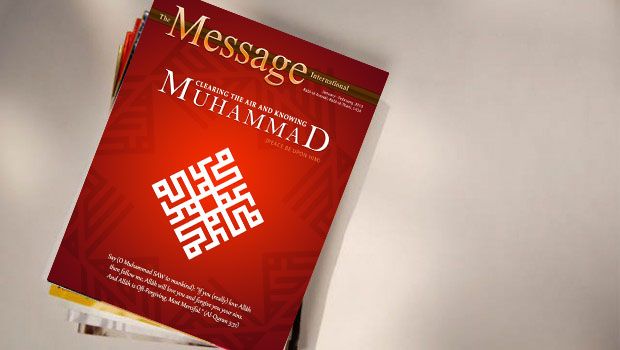
In the Quran, Allah SWT said, “It is He who sent His messenger with guidance and the religion of truth so that He makes it prevail over all religions even though the idolaters hate it.” (Qur’an 61:9)
Arabia before Rasoolullah (peace be upon him)
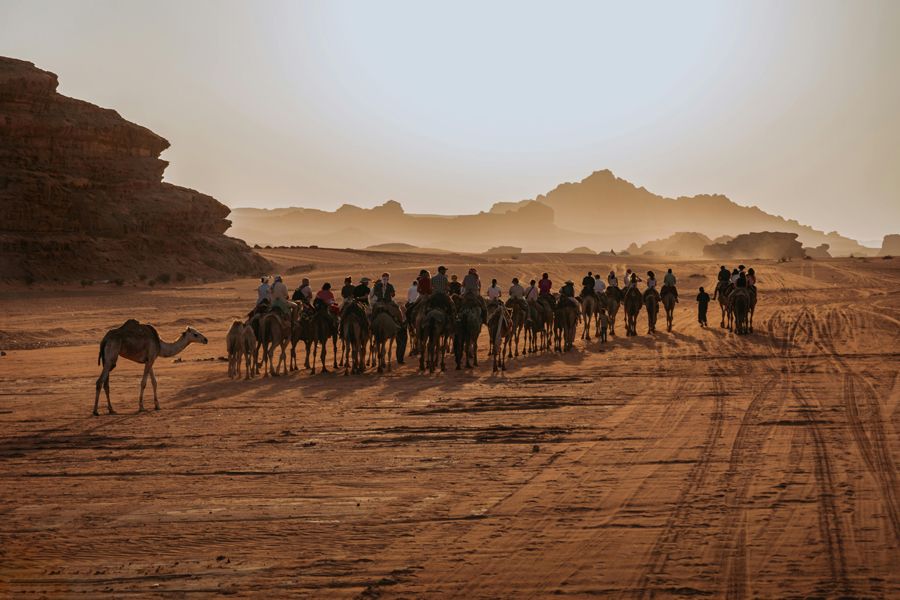
 Consider Muhammad’s (peace be upon him) life and how he transformed not only Arabian society, but the world as well. Before Muhammad (peace be upon him), Arabs were of little or no significance. With no central protective laws, Bedouin tribes were forced to protect and to safeguard their members themselves. If a member was killed, revenge was inevitable. As such, the tribes were in a near constant state of conflict with one another. If tribes did seek to form an alliance, it was often to support one group against another. This resulted in decades-long wars between tribes such as Bakr and Taghlib, ‘Abs and Zhubyaan, Aus and Khazraj and more.
Arabia’s prevailing lawlessness led to more havoc, including unprovoked attacks on caravans and weak settlements, further perpetuating its cycle of violence.
During this time, other empires like the Byzantine, Roman, and Persian surpassed the Arabs’ civilization and political and economic stability. In short, before Rasoolullah (peace be upon him), no practical bond united Arabia’s tribes.
A unique generation
This changed under Rasoolullah (peace be upon him), who revolutionized Arabia, and it became unique, prevailing and ruling over a large part of the world for centuries. By Allah’s (SWT) will, Rasoolullah (peace be upon him) transformed Arabia into a fierce and faithful nation, one that abandoned its idols and whose people believed in the divine oneness of Allah (SWT). During the 23 years of Muhammad’s (peace be upon him) mission, Islam became the way of life for most of Arabia.
Allah SWT reminded the Arabs: “Hold firmly, all of you together, to the rope of Allah (Qur’an) and do not be divided. Remember the favor of Allah on you, when you were enemies and He brought your hearts together, and you became brothers (unified) by His favor. You were on the brink of (entering) a pit of Fire, and He rescued you from it. This is how Allah makes His verses clear to you so that you may be guided.” (Qur’an 3:103)
When reflecting on this achievement, we might ask how an entire society, initially hostile to Islam and Muhammad (peace be upon him), not only embraced Islam but then defended it with their lives and wealth. How did they transform from enemies of the faith to its torchbearers?
Allah (SWT) recognized Arabia’s shift: “You are the best community brought out from humanity. You enjoin what is right and forbid what is wrong and you believe in Allah.” (Qur’an 3:110)
Methods of change
- Firm Islamic policies
Through Islamically inspired policies, Rasoolullah (peace be upon him) elevated independent tribes, and they emerged anew within the Islamic ummah framework. Indeed, this faith-based band was and is a stronger, more enduring bond than tribalism, nationalism, or ethnicity.Allah (SWT) said: “Do they wish to be judged according to (practices) at the time of ignorance (before Allah’s guidance)? Who could be better than Allah in judgment for a people with unshakable faith?” (Qur’an 5:50)
When Rasoolullah (peace be upon him) passed away, his mission was complete. He established a social system far superior to the tribal one Arabs previously lived under, and they were united, creating cohesive religious unity where it had not been before.
- Shari’ah in harmony with imaan
When an individual’s behavior revolves around the intention to please Allah (SWT), changes occur. There are worldly benefits in doing good, but the ultimate aim of righteousness is for Allah (SWT). Sharia’ah, both the Islamic law and the code of conduct, is of divine authority, which regulates religious matters as well as worldly affairs. However, all deeds ultimately return to Allah (SWT), who said, “And as for those who believed and did righteous deeds, He will give them in full their rewards and grant Rasoolullah (peace be upon him) prepared his companions for leadership, most remarkably the Khulafa’ee Rashideen, Abu Bakr, Umar, Uthman, and Ali (may Allah SWT be pleased them extra from His bounty.” (Qur’an 4:173)
- Preparing leaders
Indeed, by the end of the Khulafa’ee Rashideen period, Islam had reached Palestine, Syria, Mesopotamia, Damascus, Jerusalem, Cairo, Alexandria, Iraq, Persia, North Africa, Cypress, Europe, and China. This achievement happened by the will of Allah (SWT) who blessed Rassoolullah (peace be upon him) with selfless dedication, commitment, and excellent leadership. Unfortunately, today we often find that those in leadership positions fail to produce leaders who will succeed them, leaving a huge void and chaos when they die.By contrast, Rasoolullah (peace be upon him) was selfless and wished for all his companions to experience the same zeal he had to propagate the deen. As a result, the sahaabah (may Allah be pleased with them) understood they also should prepare the next generation for leadership in the prophetic way.
- Demonstrating moral character
Muhammad (peace be upon him) redefined and refined society’s morals. He softened people’s hearts and nature, preparing them for progress and advancement. For example, he banned the practice of burying baby girls alive, making him one of society’s greatest reformers.Muhammad (peace be upon him) was known for his forgiving nature and noble character traits of kindness, gentleness, compassion, patience, humility, and good dealings with people. He lived peacefully among people for 40 years, his relatives loved him dearly, and people of his city greatly respected his upright principles, honor, and integrity. He emphasized fairness and treated people equally regardless of social status, race, or background. He promoted rights of the poor, women, and marginalized groups, reshaping societal norms around justice. Allah (SWT) described him: “(O Muhammad PBUH), it is by Allah’s Mercy that you are gentle with them. Had you been severe and harsh-hearted, they would have turned away from you. Therefore, pardon them, pray for their forgiveness, and consult them in public affairs. Once you have taken a decision, then put your trust in Allah. Indeed, Allah loves those who put their trust in Him.” (Quran 3:159)
His integrity and honesty encouraged people to practice empathy, forgive others, and to avoid revenge, fostering a more harmonious and peaceful society. He instilled in people a sense of personal responsibility, accountability, and ethics by encouraging them to fulfill their duties, be truthful, and uphold moral standards.
How can we change?
The transformation Rasoolullah (peace be upon him) inspired happened without mass media, technology, or high-tech communications equipment. So, what prevents us from using his sunnah to bring about positive changes in a world filled with distress, grief, and trials? Imaam Malik (may Allah’s mercy be on him) said: “The latter generation of this ummah will never be rectified except by means of which rectified the earlier generation.”
To realize change, we must approach it on individual and collective levels. As individuals, we must understand Rasoolullah’s (peace be upon him) mission; have firm faith and attachment to Allah (SWT); possess honorable personal character and embrace a proactive approach to our actions. Collectively, we must practice brotherhood and love for one another, we must employ shura, or mutual consultation, and leaders must encourage discipline within the jamaa’ah, or community.
May Allah (SWT) help us make these changes, for ourselves and for our brothers and sisters.