بسم الله الرحمن الرحيم

Tag: Middle east

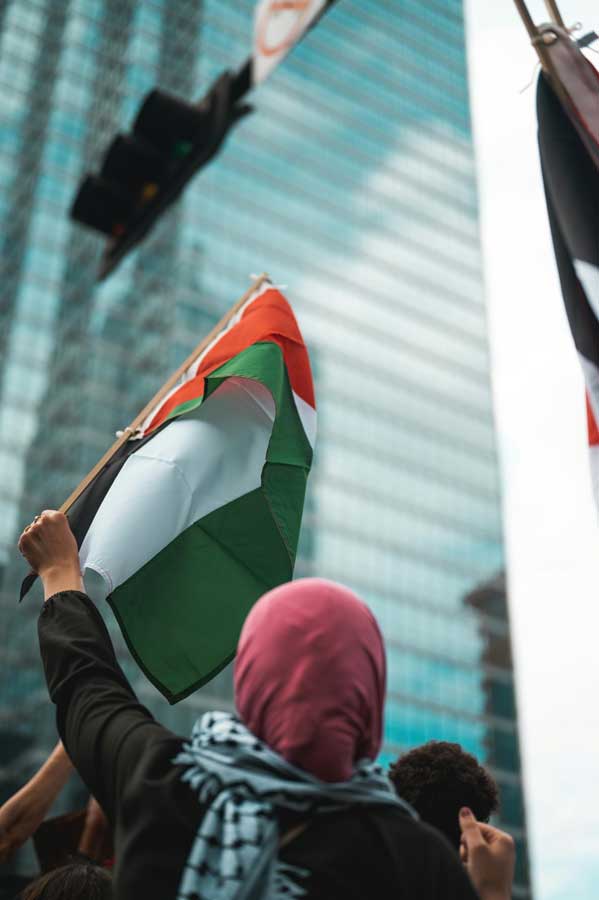
  • University Encampments for Justice in Palestine: 3 Key Insights

    University Encampments for Justice in Palestine: 3 Key Insights

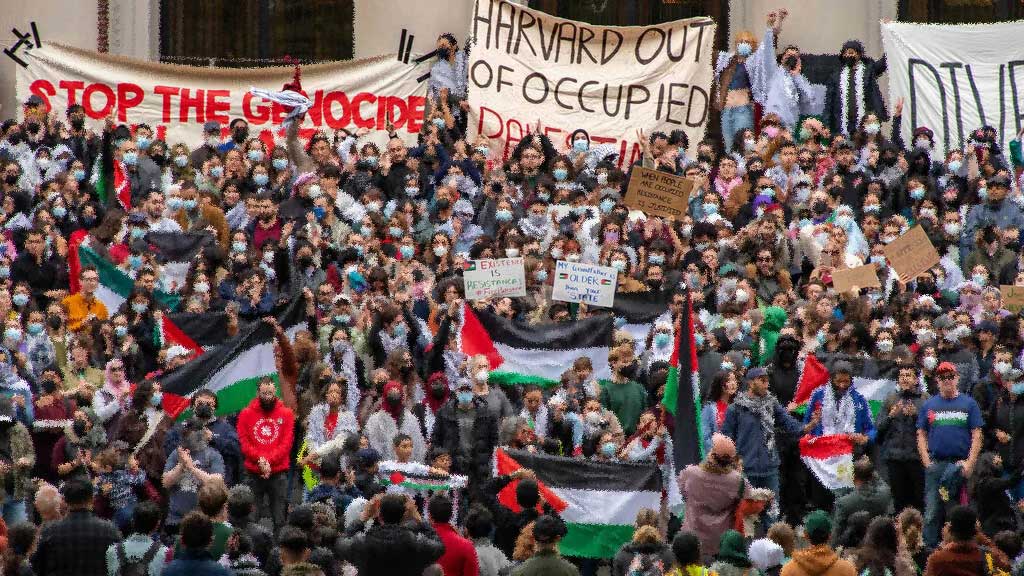
    After visiting several university encampments in the United States and engaging in hundreds of conversations with university personnel, faculty, student organizers, and national leaders, I feel it is important to share key insights for the global Muslim community and others interested in important foundational elements of the movement.

    First, the stance of anti-genocide is a self-evident principle of the most basic moral virtue.

    It is morally natural and expected for students to side with justice. People of all backgrounds are fed up with genocide and a blatantly hypocritical status quo. There is no peace while genocide is ongoing. There is no peace as long as Gaza is under occupation. Without justice and peace in Palestine, there is no true peace in the world.

    Students have much less to lose than American politicians who have collectively received millions of dollars in bribes—disguised as lobbying—from pro-Zionist groups. How can we expect politicians to advocate for true universal justice, for all people including Palestinians, Muslims, Jews, and others, when their decisions are swayed by external entities and financial incentives?

    University administrators are not exempt from scrutiny. Virtually no American university president has condemned Israel’s actions as genocide, nor have they protected the rights of students to protest occupation, immoral investments, and the ethnic cleansing of Palestinians. University presidents and regents often receive direct pressure from wealthy donors, including Zionist supporters of Israel’s occupation of Palestine, and they prioritize their careers, political connections, and long-term ambitions over ethical concerns. The higher one climbs within an unethical system, the less independence they retain, especially when moral causes require the sacrifice of their comfortable status. Only those with moral fortitude would resign from their positions rather than renounce their moral values.

    As for the everyday citizens who criticize students, it may be the media they consume shapes their perceptions of peoples, places, and events. It is the unfiltered social media documentation of genocide that has informed students and faculty worldwide.

    Second, people who advocate for universal justice are increasingly frustrated with the double standards, hypocrisy, and selective justice they observe.

    We see individuals, political groups, and institutions espouse morality and justice but then look away and remain silent when a clear injustice is taking place; they, directly or indirectly, support and promote a government and media narrative that inverts reality. This ruling class quagmire of self-interest, networked with ideological delusion, feeds a growing disgust among activists and the general population. Worse still is when peaceful protests against the genocide happening in real time, on screens in front of our eyes, are misrepresented as antisemitic and promoting of violence. How is it justifiable to violently arrest students peacefully protesting against the utter destruction of Gaza and the bombing that has killed so many tens of thousands, a majority of them women and children? The students are peacefully protesting settler-colonial structures that lead to ethnic cleansing, discrimination, land theft, oppression, violence, and now, genocide. Shutting down the peaceful protests against what is demonstrably wrong, let alone violently doing so, is the height of hypocrisy, displaying a double standard and selective justice that is beyond shameful.

    For Muslims, standing against injustice involves a full commitment to the truth, not blind allegiance to a nation’s military-industrial complex, a political party, a particular politician, influencer, or even a “religious” scholar if he speaks or acts in any way that deviates from Islamic orthodoxy. In Islam, allegiance is to universal justice and truth as defined by God. Therefore, if a Muslim commits a crime, Muslims stand with the truth by willingness to condemn his crime and support his prosecution by the law, just as Muslims worldwide have condemned the terrorist movements that do not represent Islamic teachings. Similarly, many Jews condemn the Israeli occupation of Palestine, the inherent racism and supremacism in Zionism and in the far-right extremist groups in Israeli society, as well as the weaponization of antisemitism and the Holocaust. Some of the most vocal advocates for Palestinian liberation, calling for the end of occupation and injustice, are, themselves, Holocaust survivors. Organizations like Jewish Voice for Peace are at the forefront of numerous campaigns and university encampments.

    Furthermore, students are tired of being lied to and deceived. Western media often portray peaceful protestors as radical anti-Semitic agitators, while ignoring the reality that these encampments are protesting genocide, immoral investments, and the suppression of pro-Palestinian voices. It has been documented on numerous occasions that agitators and undercover pro-Zionists frequently infiltrate these protests to provoke students, incite violence, and cause the mainstream media to portray the protestors as anti-Semitic.

    Universities preach “freedom of speech” and when people freely speak about Palestine, they respond, “No, not like that.” Universities preach “inclusivity” and when we include Palestinian dignity and rights, they say, “No, not that kind of inclusive.” Universities preach “academic freedom” but when professors and scholars speak about Israeli settler-colonialism and the Palestinian right to freedom, they say, “Not that kind of freedom.” American norms preach “freedom to protest,” but when students and faculty protest genocide, they suppress them, suspend them, expel them, and assault them with military-trained police in scenes that resemble the IDF’s brutal and barbaric assault on innocent Palestinians.

    Third, know that students and faculty involved in encampments are principled, courageous, and resilient.

    The students understand the risks of protesting at institutions like Harvard, NYU, Columbia, Yale, UNC, Northwestern, University of Michigan, and literally hundreds of other campuses. They risk their educational and career ambitions, their comfort, and often their safety, to stand up for those who have been silenced or, worse, slaughtered. If Palestinian voices are ignored and lives obliterated with U.S.-funded weapons and the ideological extremism of Zionist settler-colonialism, then university students worldwide will speak and act on their behalf.

    We should all recognize these truths: the more you suppress students and faculty who protest against genocide and the immoral investments in the Israeli economy, the stronger and more frequent the protests will become. The more you deploy military-style police to suppress peaceful protesters, to tase and assault them, to ban and intimidate them, the more that Jews, Muslims, Christians, and others will continue to rise up. And these efforts may not immediately change the status quo, but as they clearly are disrupting those in power, the Israeli war criminals, and those who fund them, protestors also recognize that the matter is intricate, complex, and contains many variables, and protest alone is not going to cause a shift in policy. It is but one part of the equation, and a necessary and inspirational one.

    History shows that many contemporary figures once considered enemies of the state are now glorified and emulated. A good example is Martin Luther King Jr. Similarly, today’s students, faculty, and others who support the end of genocide and occupation will be viewed positively by future generations, and this recognition may not be so far off. The tides have turned. The fervent desire to stop a genocide generated by a supremacist and racist ideology and 75 years of occupation cannot be extinguished. The spark ignited on university campuses worldwide is spreading rapidly. And whether or not we see the immediate results, we will persist in our efforts to end genocide, replace it with universal justice for all people, and hold those accountable who have perpetrated and enabled one of the most barbaric and violent injustices of our times. Furthermore, whether future generations see us as being on the right side of truth and justice is not the ultimate factor in our decision-making and resilience; rather, it is the awareness that God sees our actions and is our ultimate judge.

    And soon, God-willing, Palestine will be free.

  • Could Speaking Up About Palestine Affect Your Career?

    Could Speaking Up About Palestine Affect Your Career?

    Muslims in the U.S. might feel compelled or even morally obligated to educate others about the catastrophic destruction in Gaza, and many believe the First Amendment will protect their right to free speech. But can expressing their views about Palestine affect their current or future employment?

    In recent months, several prominent figures who have publicly voiced pro-Palestinian views have found their careers in jeopardy. Jackson Frank, a Philadelphia sports reporter, was fired after tweeting “solidarity with Palestine.” Michael Eisen, editor-in-chief of the journal eLife, lost his job after he retweeted a satirical article that he felt “calls out indifference to the lives of Palestinian civilians.” David Velasco, the editor in chief of the magazine Artforum, was terminated after he published an open letter from artists calling for “an end to the killing and harming of all civilians.”

    The Council on American-Islamic Relations (CAIR) reports, “Employees are experiencing intimidation should they choose to express support for Palestinian human rights. Multiple websites have emerged to target employees in recent days, documenting the names of individuals at major corporations who expressed support for Palestinians under attack in Gaza. Corporate executives, such as one JP Morgan Chase executive, have amplified efforts to intimidate employees who oppose the humanitarian crisis in Palestine. These efforts together send a clear message to employees: support for Palestinian human rights may cost them their career.”

    University students also have reason to believe their professional aspirations will be in jeopardy if they speak openly in favor of Palestine. An anonymous student at Harvard University told Al Jazeera, “Any graduate students who support Palestine have to come to a decision on whether or not they’re willing to put their future career on the line before they speak up.”

    Her worries are justified. When thirty student groups at Harvard signed a letter holding Israel “responsible for all the unfolding violence,” there was an immediate backlash. Some Wall Street executives demanded to know who was behind the letter so they could avoid hiring them. Additionally, many of the students were doxxed – their personal information was shared online to shame or intimidate them.

    On top of that, a conservative news media watchdog called Accuracy in Media parked a billboard truck by Harvard’s campus and displayed names and photos of students allegedly involved in the letter, calling them “Harvard’s leading antisemites.” Similar trucks appeared near other Ivy League campuses. In a country whose First Amendment supposedly guarantees the right of free speech, why are people being sanctioned for voicing their concerns, opposition, or opinions? Can Americans freely speak up about Palestine, or not?

    The answer is not black and white. Before you publicly share your opinions on Palestine, it would be wise to keep some things in mind:

    “Free speech” has limitations

    CAIR advises, “Employees should be aware that the First Amendment does not protect private employees from discipline because of speech. The First Amendment generally only protects public employees, like federal and state government employees, if they are speaking as a private citizen on a matter of public concern, and that speech does not disrupt the workplace. Some states have laws that protect employee speech, but not all do. It is your responsibility to be aware of your free speech limitations in your workplace.”

    CAIR adds, “Employees may have specific clauses in their employment contracts that impact their rights and legal remedies. Employees should review their employment contracts and consult with a local attorney to make informed decisions and protect their rights.”

    Take precautions on social media

    You might assume your employer isn’t reading your Instagram or Facebook posts, but if they’re public, anyone can see them. CAIR recommends that you take the following steps to ensure that you are not subjected to disciplinary measures at work:

    1. Set your social media accounts to private.
    2. If your account is public, use a pseudonym and remove any personal identifying information such as personal photos and location.
    3. Never identify your employer on your social media accounts.
    4. Do not post hateful or threatening content.

    Employers should be equitable

    Your private-sector employer might decide to sanction you for expressing pro-Palestinian sentiments, but in that case, they should also discipline anyone who voices pro-Israel opinions.

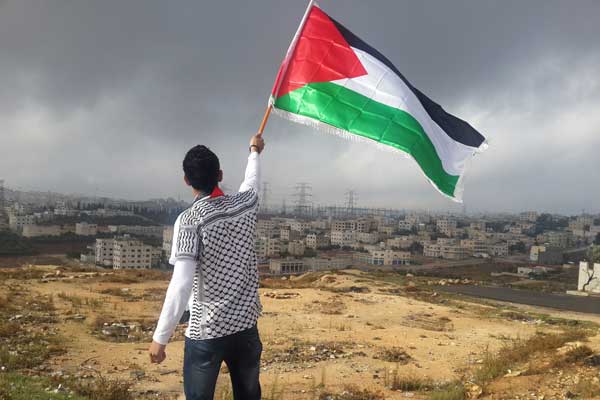
    CAIR notes, “Under both Title VII and Section 1981, employers should be mindful not to treat their Palestinian or Muslim employees differently than their Israeli or Jewish counterparts. A situation in which we believe an employee may have an actionable claim would be if a Palestinian or Muslim employee was disciplined for posting a Palestinian flag or expressing Pro-Palestinian sentiments at work, but an Israeli or Jewish employee is not disciplined for posting an Israeli flag or expressing Pro-Israeli sentiments at work. An employer would be discriminating against the Palestinian employee on the basis of national origin, or the Muslim employee on the basis of religion.

    Moreover, if employers are offering benefits such as paid compassionate leave to their Jewish or Israeli employees, an employer should offer the same benefits to their Palestinian or Muslim counterparts.”

    Resources if you face disciplinary measures or discrimination in the workplace


    Finally, remember that you do have the right to feel safe and fairly treated in your workplace. Title VII of the Civil Rights Act of 1964 protects employees and job applicants from employment discrimination based on race, religion, color, sex, and national origin.  If you believe that your rights are being violated, contact CAIR immediately. Report any incidents of bias, discrimination, and/or harassment.

  • A Spotlight on the Israel-Gaza War

    A Spotlight on the Israel-Gaza War

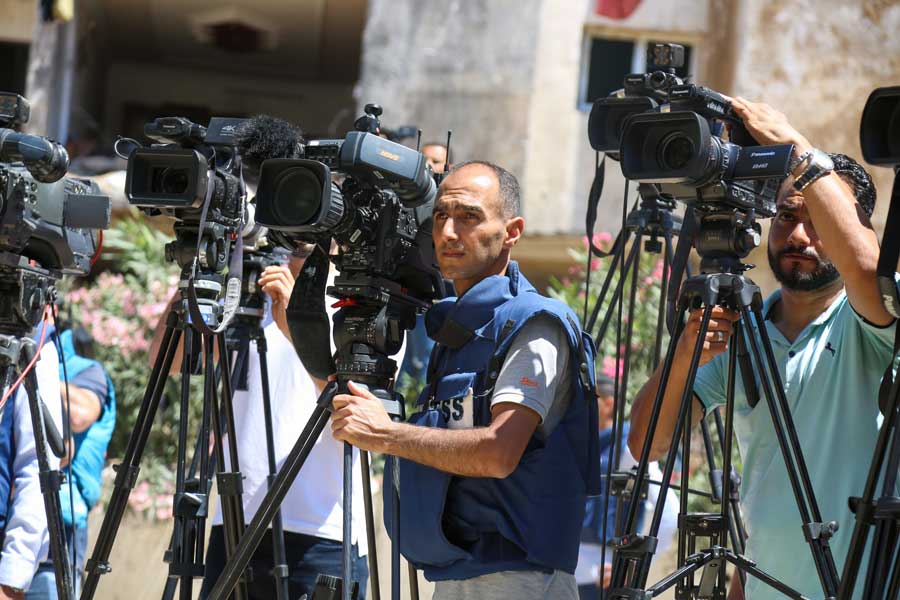
    The items below are from a variety of media sources, some of which are written from a pointedly pro-Israel perspective. They are included because within the content is some information that is relevant in any attempt to dig deeper than the official American and Israeli narrative.

    Clamping down on free speech, criminalizing support of Palestinian rights
    • Consortium News article:
      “At least 57 members of Jewish Voices for Peace were arrested while showing their solidarity with Palestinians in New York City. Pro-Palestinian rallies in France and Germany have been outlawed. And the British home secretary likewise warned about criminalizing flying the Palestinian flag.”


    • THE Hill article:
      “BBC apologizes for saying pro-Palestine demonstrators were ‘backing’ Hamas”


    • Yahoo News article:
      ‘BBC Takes Six Reporters Off Air Amid Investigation Into Anti-Israeli Tweets’


    • AlJazeera article:
      ‘Twitter under fire for censoring Palestinian public figures’
    Open letters and public statements from Congressional staffers, scholars, lawyers:
    • 411 Congressional staffers anonymously sign letter calling for ceasefire:
      “Today, we write to implore our bosses, Members of the United States Congress, to join calls for an immediate ceasefire between Israel and Hamas. Millions of lives hang in the balance, including the 2.3 million civilians — half of whom are children — in Gaza, civilians in Israel, and Jews and Muslims around the world. This is especially urgent with antisemitism, anti-Muslim, and anti-Palestinian sentiment on the rise nationwide, which instigated the brutal murder of a six-year-old Palestinian-American child, Wadea Al-Fayoume.”


    • 178 legal scholars write open letter demanding that the U.S. stop supporting the attacks on Gaza and warn of humanitarian catastrophe:“We fear that this humanitarian crisis is poised to get significantly worse as the Israeli government prepares an expected ground invasion of northern Gaza, killing and forcibly relocating even more Palestinian people. Israeli officials have ordered that there be ‘no electricity, no food, no fuel’ in Gaza because Israel is ‘fighting human animals’ and is ‘acting accordingly.’ The Israeli President, meanwhile, stated, ‘It’s an entire nation out there that is responsible,’ insisting ‘this rhetoric about civilians not aware, not involved, it’s absolutely not true,’ and that Gazans ‘could have risen up, they could have fought against, that evil regime which took over Gaza in a coup d’etat. Although Israeli officials claim that civilians in Gaza can avoid further harm if they ‘leave immediately,’ the International Committee of the Red Cross warns that ‘the instructions issued by the Israeli authorities for the population of Gaza City to immediately leave their homes, coupled with the complete siege explicitly denying them food, water, and electricity, are not compatible with international humanitarian law.’”


    • Almost 800 lawyers, scholars, and academics put out public statement to warn of the crime of genocide in Gaza:
      “As scholars and practitioners of international law, conflict studies and genocide studies, we are compelled to sound the alarm about the possibility of the crime of genocide being perpetrated by Israeli forces against Palestinians in the Gaza Strip. We do not do so lightly, recognising the weight of this crime, but the gravity of the current situation demands it.”
    International investigation needed to sort out responsibility for Israeli civilian deaths
    • Mondweiss article:
      ‘A growing number of reports indicate Israeli forces responsible for Israeli civilian and military deaths following October 7 attack’


    • GRAYZONE article:
      “Israel’s military received orders to shell Israeli homes and even their own bases as they were overwhelmed by Hamas militants on October 7. How many Israeli citizens said to have been ‘burned alive’ were actually killed by friendly fire?”


    • Mondoweiss article:
      Using the Hannibal Directive?
      According to Brig. Gen. Avi Rosenfeld, the Israeli commander of the Gaza Division, “Many of the soldiers, most of them not combat personnel, were killed or wounded outside. The division was compelled to request an aerial strike against the base itself in order to repulse the terrorists.”


    • Electronic Intifada article:
      “Israel’s Haaretznewspaper on 20 October published an interview – only in its Hebrew edition – with a man called Tuval who lived in Kibbutz Be’eri, but who was away on 7 October. Tuval’s partner was however killed in the events. Haaretz reports: ‘According to him [Tuval], only on Monday night and only after the commanders in the field made difficult decisions – including shelling houses with all their occupants inside in order to eliminate the terrorists along with the hostages – did the IDF [Israeli army] complete the takeover of the kibbutz. The price was terrible: at least 112 Be’eri people were killed. Others were kidnapped. Yesterday, 11 days after the massacre, the bodies of a mother and her son were discovered in one of the destroyed houses. It is believed that more bodies are still lying in the rubble.’”
    Some observers see something strange in Hamas attacks
    • Efret Fenigson substack article:
      An Israeli woman, Efret Fenigson, who served in the IDF years ago, points out that “something is very wrong here.” She says in her podcast —“I served in the IDF 25 years ago, in the intelligence forces. There’s no way Israel did not know of what’s coming. A cat moving alongside the fence is triggering all forces. So this?? What happened to the ‘strongest army in the world’? How come border crossings were wide open?? Something is VERY WRONG HERE, something is very strange, this chain of events is very unusual and not typical for the Israeli defense system.”


    • Fenigson noted in an update that —
      “…about 3 years ago, the IDF started a process of taking back weapons from people living in the Gaza envelope villages, under the excuse that these weapons are being stolen. A certain allowance of permitted weapons for each village was granted, which created even more anxiety and distrust amongst the citizens, who wish to protect themselves.” Further, Efret states that in the past year, more guns were taken from these communities, also on the pretext that they were stolen.


    • The Guardian article:
      While Netanyahu denies having advanced warning, The Guardian reports, ‘Egypt warned Israel of Hamas attack days earlier, senior US politician says’The article states, “An Egyptian official told the Associated Press that Egypt, which often serves as a mediator between Israel and Hamas, had spoken repeatedly with the Israelis about ‘something big’. The unnamed official claimed Israeli officials were focused on the West Bank and had played down the threat from Gaza. ‘We have warned them an explosion of the situation is coming, and very soon, and it would be big. But they underestimated such warnings,’ said the official, who spoke on condition of anonymity.”


    • Times of Israel article:‘Surveillance soldiers warned of Hamas activity on Gaza border for months before Oct. 7’
      “Survivors of massacre on IDF base say they passed information up the chain of command on digging, mapping, training near the fence long before mass onslaught, but were ignored.”
    Al-Ahli hospital bombing
    • Mint Press News article:
      “The Israeli military dropped ‘roof knocking’ rockets with no warheads on the hospital in the days leading up to the Oct. 17 strike, the familiar warning given by Israel to evacuate buildings, according to al-Ahli hospital officials. Hospital officials also said they had received calls from Israel saying ‘we warned you to evacuate twice.’ Israel has demanded that all hospitals in northern Gaza be evacuated.”


    • CNN article:
      Gaza officials say IDF had warned al-Ahli hospital 4 days ago that it should be evacuated


    • UN News article:
      “During a virtual press conference held later on Tuesday, senior officials underlined WHO’s condemnation over the strike on the hospital. There have been over 115 attacks on healthcare across the Occupied Palestinian Territory since the start of the conflict on 7 October, sparked by Hamas’s bloody incursion into southern Israel. Of this number, 51 occurred in the Gaza Strip, with 15 healthcare workers killed and 27 injured, said Hyo-Jeong Kim, Lead of WHO’s Attacks on Health Care Initiative.  The remaining incidents took place in the West Bank.”


    • Mint Press News article:
      “Following the strike on the hospital, Hananya Naftali, a ‘digital aide’ to Israeli Prime Minister Benjamin Netanyahu, posted on X, formerly Twitter: ‘Israeli Air Force struck a Hamas terrorist base inside a hospital in Gaza.’ The post was quickly deleted.
    Atrocity stories used to justify bombing and ground invasion of Gaza
    • Al Jazeera article:
      “The beheaded babies tale originated with a report on Israel’s i24News site by reporter Nicole Zedeck, from her interview with Israeli reserve soldier David Ben Zion. Max Blumenthal and Alexander Rubinstein reported on October 11 that Ben Zion is a notorious radical leader in Israel’s West Bank settler movement. Among other things, he called on rampaging armed settlers earlier this year to wipe out the Palestinian village of Harawa, which settlers attacked and burned several times.”


    • Mint Press News article:“The claims of ‘beheaded babies’ made headlines on various news outlets, including CNN. The source of this claim was the Israeli channel i24 News, but it later emerged that the source was David Ben Zion, an extremist settler known for inciting race riots against Palestinians. A Haaretz investigation previously found that i24 News functions as a proxy for the Netanyahu family, with directives coming straight from the Israeli Prime Minister’s office at times. Subsequently, the Israeli military distanced itself from these claims, CNN retracted the story, and the White House acknowledged a lack of evidence.”


    • The Intercept article:
      “The Israel Defense Forces could not confirm a horrific claim that Hamas beheaded babies during a weekend assault, a spokesperson for the military told The Intercept on Tuesday. The claim went viral, becoming a headline-grabbing aspect of a massacre that left more than 1,000 Israelis dead.”
    Released elderly hostage says the hostages were treated well
    • i24 news article:
      Released hostage Yocheved Lifshitz, 85 years old, said, “They told us, ‘We believe in the Quran, and [that they] will do us no harm. They will give us the same conditions they have,’ she said, adding ‘They were with gentle us. Our needs were met. They were prepared for us.’” She continued, “There was a paramedic and a doctor also came every couple of days. We lay there on mattresses and they took great care of the sanitary side, so that we didn’t get sick. They were very afraid of diseases spreading. They made sure we had everything, they were very friendly.”
  • Apartheid: Let Us Not ‘Turn a Blind Eye to Injustice’

    Apartheid: Let Us Not ‘Turn a Blind Eye to Injustice’

    The Spanish philosopher George Santayana famously said, “Those who cannot remember the past are condemned to repeat it.” If there are lessons to be found in remembering and studying history, the greatest lessons of all are derived from analyzing and understanding the mistakes of the past. Throughout the world’s history we have seen empires rise and fall, whose leaders ran nations into ruins, unable or unwilling to look at the mistakes of the past. Ironically, the leaders typically acted as if they were visionaries, destined to lead, yet their actions showed them to be blind to common sense, let alone wisdom or sound leadership. What usually ensues is great suffering and loss for the people.

    One of the greatest tragedies of the 20th century was apartheid in South Africa. Apartheid, the Afrikaans word meaning “apartness,” was first used to describe the racial discrimination in that nation which began in the early 1900s and became legalized in 1948. The National Party of South Africa, an all-White government, introduced legislation in 1950 to formalize racial segregation. Although segregation had long existed before the party came into power, the government officially enacted laws and policies that institutionalized racial discrimination and dominance of Whites.

    One such law, the Lands Act, required non-Whites to carry identification that authorized their presences in areas that were restricted to them. The Group Areas Act of 1950 enforced residential zones for Whites and non-Whites, reserving the best land for Whites and restricting non-Whites from entering that area. The Bantu Authorities Act of 1951 grouped Blacks into “homelands” based on their ethnic and tribal identities. The tribal leaders of these homelands were designated as territorial authorities, and the Blacks in each homeland were granted political rights only within that territory. Establishing Blacks as citizens of their individual homelands resulted in the stripping of their South African citizenship. Article 7 of the Rome Statute of the International Criminal Court defines apartheid as, “inhumane acts… committed in the context of an institutionalized regime of systematic oppression and domination by one racial group over any other racial group or groups and committed with the intention of maintaining that regime.”

    What We Can Learn from Desmond Tutu

    Archbishop Desmond Tutu, a well-known South African anti-apartheid activist and Nobel Peace Prize laureate recently passed away at the age of 90 in Cape Town, South Africa. He was known for his fight against inequality and discrimination and worked tirelessly on the campaign to end the apartheid regime that oppressed the nation’s Black majority. He became the liaison between Whites and non-Whites when apartheid finally collapsed in the 1990s. He served as the chairman for the Truth and Reconciliation Commission, bringing forth a full disclosure of the truth with a plethora of evidence of the atrocities committed under apartheid, to ensure justice to victims and to promote healing for the nation.

    Tutu was also well known for his criticism of Israel, and often viewed the Israeli-Palestinian Conflict through the lens of apartheid in South Africa. He once remarked that he found Israel’s treatment of Palestinians very similar to “what happened to us Black people in South Africa.” He was a witness of the tragedies that unfolded in South Africa during that time and raised a very powerful point of refusing to be a bystander and letting it happen again in Palestine. He openly called for a boycott of Israel to end the oppression and wanted nothing but peace for both the Israelis and the Palestinians. But most importantly he wanted the Israeli government to understand and acknowledge their violations of human and civil rights.

    He wrote in support of the Palestinian Boycott, Divestment, and Sanctions (BDS) movement the following:
    “In South Africa, we could not have achieved our democracy without the help of people around the world, who through the use of non-violent means, such as boycotts and divestment, encouraged their governments and other corporate actors to reverse decades-long support for the apartheid regime. My conscience compels me to stand with the Palestinians as they seek to use the same tactics of non-violence to further their efforts to end the oppression associated with the Israeli Occupation. The same issues of inequality and injustice today motivate the divestment movement trying to end Israel’s decades-long occupation of Palestinian territory and the unfair and prejudicial treatment of the Palestinian people by the Israeli government ruling over them.”

    Israel: ‘A Threshold Crossed’

    Concerning the definition of apartheid, there is great evidence that Israel’s laws and policies regarding the Palestinian people fit in this category. According to a 2021 report published by Humans Right Watch, the Israeli government has committed crimes against humanity in the form of persecution and apartheid. HRW states, “Laws, policies, and statements by leading Israeli officials make plain that the objective of maintaining Jewish Israeli control over demographics, political power, and land has long guided government policy. In pursuit of this goal, authorities have dispossessed, confined, forcibly separated, and subjugated Palestinians by virtue of their identity to varying degrees of intensity. In certain areas, as described in this report, these deprivations are so severe that they amount to the crimes against humanity of apartheid and persecution.”

    Israel, since 1948, has engaged in policies and projects aimed at removing Palestinians from their homeland. Even at this late date, in 2021, in the neighborhood of Sheik Jarrah located in East Jerusalem, more than 150 Palestinian residents were given eviction notices, many of them living in those homes for decades. Once they were forced out of their residences, Jewish settlers moved in. According to a staggering report from the United Nations Office for the Coordination of Humanitarian Affairs (OCHA), in 2021 a total of 833 Palestinian homes and structures were demolished. In 2020, the UN accused the Israeli government of carrying out “the biggest demolition of Palestinian homes in the occupied West Bank for a decade.” Those demolitions left 73 people, including 41 children, displaced, making them homeless.

    According to a 2020 report by Amnesty International, in addition to the demolitions and evictions, Israel continues to expand illegal settlements in the occupied territories, to refuse to lift the blockade of the Gaza Strip, to engage in unlawful killings and excessive use of force, to place restrictions on movement with at least 593 Israeli checkpoints and roadblocks in the West Bank. The report also condemns arbitrary detentions and the use of torture and ill treatment of prisoners, as well as the 157 Palestinian children in prison in 2021.

    The Holy Land is a sacred place for Jews, Christians, and Muslims. It has, however, become a country greatly afflicted by division, hatred, conflict, and war. The ongoing occupation results in a never-ending devastating humanitarian crisis. Let apartheid in South Africa be a lesson — holding the occupying regime accountable is the only way to bring justice for the oppressed. As Desmond Tutu once famously stated, “Those who turn a blind eye to injustice actually perpetuate injustice. If you are neutral in situations of injustice, you have chosen the side of the oppressor.”

  • The Holy and Blessed Lands of Al-Aqsa

    The Holy and Blessed Lands of Al-Aqsa

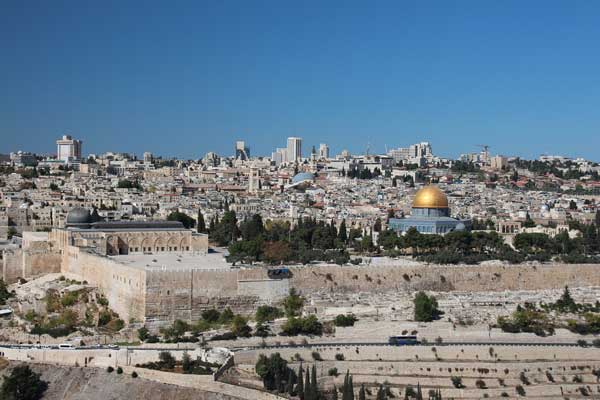
    Masjid Al-Aqsa in Jerusalem is important in Islam and beloved by Muslims for a number of reasons. First, it is important to note that the “holy” and “blessed” lands of Al-Aqsa are mentioned in numerous places in the Qur’an, such as Allah’s saying in Surat al-Isra: “Glory be to the One Who took His servant [Muḥammad] by night from Masjid al-Haram [the Sacred Mosque] to Masjid Al-Aqsa [the Farthest Mosque] whose surroundings We have blessed, so that We may show him some of Our signs. Indeed, He alone is the All-Hearing, All-Seeing” (17:1).

    Masjid Al-Aqsa, as Muslims believe, was the mosque that Prophet Muhammad was transported to during the night journey (al-israa), and then to the heavens (al-mi’raj). It did not become blessed and holy only with the final messenger Muhammad (s) but rather it was always blessed and one of the first mosques on earth. It was authentically reported in a hadith that the great companion Abu Dharr (r) asked the Prophet (s), “O Messenger of Allah, which masjid was built first on earth?” The Prophet (s) replied, “The Sacred Masjid of Makkah.” Abu Dharr again asked, “Which was next?” The Prophet (s) said, “The Masjid al-Aqsa.” Abu Dharr (r) further asked, “How long was the period between the building of the two mosques?” The Prophet (s) said, “Forty years.” He added, “Wherever [you may be, and] the prayer time becomes due, perform the prayer there, for the best thing is to do so [i.e., to offer the prayers on time]” (Bukhari).

    Based on a number of ahadith and reports from companions, some scholars opine that the first two mosques on earth, Masjid al-Haram and Masjid Al-Aqsa, were built by the forefather of humanity, aided by the angels, forty years apart. Generations later, it is believed that the two mosques were reconstructed by Prophet Ibrahim (Abraham) and his son, and then later Masjid Al-Aqsa was reconstructed by Prophet Dawud (David) and his son Suleiman (Solomon). This historical context is important in order to emphasize that Muslims believe that all prophets before Prophet Muhammad were also Muslims, and that the holy lands have always been holy and blessed lands.

    The First Qiblah in Islam

    Fast forward to the era of Prophet Muhammad (s) and one finds that the Muslims were directing all of their prayers towards Masjid Al-Aqsa. It is the first qiblah (direction one faces during prayer) in Islam. When Muslims migrated from Makkah to Madinah because of persecution and oppression, they faced towards Masjid Al-Aqsa for the first 17 months. It was during the second year after the hijrah (migration) that the revelation came down from the Creator about the change of prayer direction from Masjid Al-Aqsa in Jerusalem to Masjid Al-Haram, as found in Surat al-Baqarah (2:142-143). The masjid in Madīnah where Prophet Muhammad (s) was leading the Muslims in prayer is today called Masjid Qiblatayn, Masjid of the two qiblahs.

    Fast forward once again to the reign of Umar b. al-Khaṭṭab (r), the great companion and righteous khaliph who extended Muslim-controlled territory and established justice in every part of it, and one finds that with the liberation of Jerusalem, it was once again a source of light and peace for the world. In the year 638 CE, the Christian Patriarch Sophronius insisted he would hand over the keys to Al-Aqsa only to Umar (r). After the peaceful surrender of Jerusalem, Umar (r) gave a speech that became known for centuries later as a treaty of religious pluralism and tolerance, particularly juxtaposed with the harshness of the previous Byzantine empire. Umar permitted Jews to enter Jerusalem, after they had been banned for over five centuries by the Christian Byzantine empire, and permission was given to Christians, Jews, and Muslims to visit and worship at Al-Aqsa, honoring religious diversity in the land. Umar’s Assurance, as it became known, influenced the Byzantine Empire in that it promoted greater tolerance and established the rights of minorities, and it was a proven exemplification of Islamic law in practice – that people of various religious beliefs could live in harmony side-by-side in one land.

    The city of Jerusalem experienced several conquests, liberations, and occupations throughout the millennia after Umar (r). In 1187, for instance, it was freed from the Crusaders by Salahuddin Al-Ayyubi (also known as Saladin), and it continued to be a city that was open to various minorities to worship in peace under numerous Islamic dynasties throughout the ages.

    No Longer a Land of Peace

    Then we turn to the present century, and unfortunately the situation is no longer one of peace and good will. Since the 1917 Balfour Declaration and the 1948 colonial project to create the State of Israel, Palestine and the holy lands surrounding Al-Aqsa have been subjected to regular violence of various forms: structural (systemic), cultural (beliefs), or even physical attack by Israeli individuals or the State. The blessed land is now a land of occupation – in fact, the longest-lasting military occupation of our times – a land that demonstrates that settler colonialism and military control in the region matter more to some people than justice and rights. Religious freedom for Palestinians is limited, and in fact Muslims and Christians have both been harmed by the occupation in countless ways. Millions of Palestinians have been displaced throughout the past 73 years of occupation, hundreds of thousands displaced immediately in 1948 when Israel was formed as a nation-state, and Palestinian land has consistently been stolen as part of Israel’s greater project to completely wipe out Palestinian presence and identity. Ethnic cleansing is taking place today, and Palestinian lives – young and old – are being wiped out while the world watches.

    What Israel has not accounted for, though, is the shifting tide in favor of human rights and justice. Due to the immediacy of communications technology and social media connectivity, people worldwide have been able to witness the violence and occupation as it occurs daily. Most of the world is horrified when bombs are dropped on residential buildings in Gaza, children are shot in the back, and families are evicted from their homes by force and replaced with Israeli settlers who say “If I don’t steal it, someone else will.” Yet, the greater concern is that of ongoing structural violence. The occupation itself with its checkpoints, open-air “prison,” and constant persecution and harassment of Palestinians of all ages and backgrounds is largely ignored by most of the world when the violence is not visual and immediate.

    Accusations of Anti-Semitism Used to Silence Those Who Speak Out

    The Israeli government is constantly working with powerful lobbying organizations, hundreds of millions of dollars in funding, and international political connections in order to spread its propaganda to every home, and the message is clear: criticism of Israel will be met with swift accusations of anti-Semitism. This obfuscating canard thrown at critics of Israeli policy has devastating effect on free speech and open discourse. It also brings harm to Jewish people in general as it raises the ire of people worldwide who recognize the oppression of Palestinians for what it is and know it is their right and duty to speak out. And, sadly, there will always be some number of individuals who will blame all Jews rather than those who are perpetrating the injustice. This, unfortunately, contributes to greater anti-Semitism.

    In fact, baseless accusations of anti-Semitism by the Israeli government or by hardline Zionist persons and groups as a way to deflect criticism of the occupation and discriminatory policies has backfired in recent years, particularly with the recent evictions of residents of Sheikh Jarrah and the bombs dropped in Gaza. Much of the world is starting to realize the distinction between Zionism and Israel’s occupation on the one hand, and Judaism as a religion on the other, thanks to the many Jewish voices for peace in the world supporting Palestinian sovereignty and self-determination. When the occupation ends, one day soon God-willing, those who spoke the truth and stood up for justice will be seen as courageous and heroic, in contrast to those who remained silent and hid behind the “complexity of two sides” when clear injustice was occurring. Truly, silence in the face of injustice feeds injustice, and silence in the face of oppression invigorates it only more.

    The Holy and Blessed Land

    The land of Palestine will always be a holy and blessed land, even while it is occupied, but we believe a day will come soon in which occupation will be replaced with justice and freedom for all the people. The entire region of the Levant, in Islamic theology, plays a critical role at the end of times. The region is going to witness the emergence of Ad-Dajjal (the Anti-Christ), the presence of the Mahdi, the return of Prophet Jesus (Isa) from the heavens, and the prevention of Ad-Dajjal entering the three holy lands (Makkah, Madinah, and Al-Aqsa). Eventually, Ad-Dajjal will be slayed by Prophet Isa in the land of Al-Aqsa. It has also been reported in some narrations that the blessed land will also be the land of resurrection and gathering for the Day of Judgment.

    We all want peace, or at least that’s what most people claim. However, justice is required in order to establish peace, because ongoing injustice and violence against a community is, by definition, an obstruction of peace. Peace is established upon rights, and the rights of Palestinians and the holy land are currently being violated, and as the tide continues to shift, slowly but surely, every voice and every facilitator of peace makes a difference.

    We ask Allah to grant peace and justice to the region and to all communities worldwide.