بسم الله الرحمن الرحيم

Tag: mexico

  • Peace & Piety

    Peace & Piety

    My name is Nylka Vargas, and I live in New Jersey. My parents are from Peru and Ecuador. I converted to Islam when I was 20 years old. There are multiple reasons why I converted, the first of which was the salat (prayer). I saw some classmates at school perform the salat in public and I was immediately drawn to its peaceful and disciplined nature.

    When I was young, I was hesitant about following certain practices of Christianity, in particular, the belief in salvation through the blood of Jesus Christ. It just did not make sense to me. Once I learned about Islam, I felt a deep curiosity and asked many, many questions. My prayers to God to guide me in filling the spiritual void I felt were being answered. After reading some introductory material and various passages of the Quran, I was convinced. In just a few months time, I declared my testimony of faith.

    My family slowly accepted my conversion. They came to understood that the decision was mine to make and that the change was a positive one. It is so important to be a good example — true representatives of Islam in our speech, attitudes, and behavior. Alhamdullilah (all praise is to God) for the guidance. I can never be a servant thankful enough for the gift of hidaya (guidance) that lighted my path right when I needed it.

    In my journey since, I have found many supportive Muslims and met others with similar stories. At the North Hudson Islamic Educational Center (NHIEC) in Union City I found a proactive community of Muslims. The open-door policy and programs there facilitated my learning about Islam. I then used my own experience in learning and growing as a Muslim to give back by way of helping others. I met Sister Khadijah Rivera, may Allah shower upon her His Mercy and fill her grave with noor (light), who invited me to join P.I.E.D.A.D (Propagación Islámica para la Educación de Devoción a Alá el Divino), a women’s dawah (outreach) organization. Sr. Khadijah, a great community activist, passed away in 2009 during the blessed days of the month of Dhul Hijjah.

    However, Piedad lives on. Sr. Khadijah was a co-founder of this organization that started in the late 1980s as a vehicle to give dawah to Latino Muslims. Later it would expand to include other services. A little while before she passed away, we talked a lot about the direction of Piedad and I am glad to share this story, as it is an honor to continue the legacy of this wonderful organization that was built with little resources more than sincerity. The acronym of the organization, P.I.E.D.A.D., spells out the Spanish word “piedad” which means piety. It reminds us always to strive for piety, God-consciousness, and sincerity in performing charitable acts.

    Alhamdullilah, this year was marked by a number of exciting projects: Informational Dawah Tables, Hijab (headcovering) Workshop, Co-Sponsorship of Ladies Spa Day, Purple Hijab Day, Local Eid Toy Drive with Baitul Salaam Network, our new Stay-fit and Healthy Initiative, the NJ Walk/Jog Chapter of Nadoona, and continued Latino Muslim collaboration with the Latino American Dawah Organization (LADO) (www.latinodawah.com).

    We’ve also helped many newly converted sisters with the very basics of Islam such as learning how to properly pray. Insha’Allah (God willing), we plan to develop our women’s network, the Latino dawah focused projects, and be at the forefront of community services —all with a heartfelt vision of success for our Muslim ummah (community). May Allah accept our efforts. Ameen.

  • Allah Rescues a “Boricua” through Islam

    Allah Rescues a “Boricua” through Islam

    In the name of Allah, the most Compassionate, the most Merciful — may the peace and blessings of Allah be upon His last and final messenger, the seal of all the prophets, Muhammad. And may peace be upon those who follow in his footsteps until the Day of Judgment.

    I felt empowered each time I completed an act of obedience to Allah

    My Dear Family

    I was blessed with parents of Puerto Rican origin, which is what makes me a “Boricua” — a person of Puerto Rican heritage. I am the youngest of three sons, born in New York, and raised in both Puerto Rico and New Jersey. My mother, who was a nun before she married my dear father, taught more than fifty girls in a convent in New York. She had studied psychology at Fordham University and later during her years as a nun had many unanswered questions that led her to leave the convent. She later married my father. She taught us to always pray to God upon awakening and before going to sleep, and to thank Him for our food. In Puerto Rico, she established catechism classes in our home for the children in our neighborhood.

    I continued reading the Qur’an for nine consecutive months and through my reading and application I realized that I was gradually curing myself from the vices of smoking and drinking alcohol

    My father was hard-working and he would take us to work with him so we could learn a good work ethic and basic skills for survival. From a young age, I learned how to make pizza, scrambled eggs, and sandwiches. My father loved to be with his children and would play videogames and sports with us on his days off. My older brothers would always play with me or take me to the movies, and we had a great sense of camaraderie and a lot of fun together.

    Islam and Basketball

    During my growing-up years, I was a fan of Michael Jordan and the Chicago Bulls team. The Bulls won three championships, and then in 1993 Jordan retired. I felt like a boy without a favorite sports hero. I began to search for a new favorite player and chose Chris Jackson from the Denver Nuggets, who later accepted Islam and changed his name to Mahmoud Abdul Rauf.

    During those days, there was not much access to watching games of out-of-state teams unless they were playing against the local team. The way I kept up with everything was through collecting trading cards. Once I was reading Mahmoud Abdul Rauf’s cards and I found information about Islam including what his Arabic name meant and about the pilgrimage to Mecca. Since I didn’t have a chance to watch many of Denver’s games, I had to pick another player from one of the two local teams, the New York Knicks or the New Jersey Nets. I chose the Knicks because I was born in New York; and as a favorite player, I picked John Starks.

    That year, the NY Knicks made it to the playoffs against the Houston Rockets. The Rockets had at that time the legendary Hakeem Olajuwon who was fasting during the championship games. Many of the Knicks players would trash-talk him, but he always responded with patience and grace. The Knicks had the opportunity to win the game with a shot from Starks, but it was blocked by Olajuwon and Houston won the NBA Championship. Here again, I was being exposed indirectly to Islam, but during this time period I was not interested in religion.

    The Challenges and Hardships of Youth

    While I was in Union Hill High School, in Union City, New Jersey, I began smoking cigarettes because all my friends were doing it. After school we would go play basketball and sometimes those who were waiting their turn to play would drink beer or smoke marijuana. So my teenage years were spent playing basketball, singing reggaeton (urban music rooted in Latin and Caribbean music with a fusion of Latin and reggae rhythms) in the clubs, drinking alcohol, and hanging out with friends. It is not surprising, given my lifestyle, but still a big loss, that a friend of mine drowned while he was drunk, at the age of 18. I was also involved with a gang and became friends with Carlos Hernandez, from Colombia, who lived in my house for a few weeks. Carlos loved to read a lot and one day we visited the public library and, given my lack of moral principles at that time, I stole a copy of the Qur’an. At one point, some members of my gang killed two of my friends with whom I had been the day before. That tragedy affected me tremendously. Day after day I thought of three things —death, illness, and my family’s well-being. During that time I lost trust in all human beings except my parents, but they lacked the experience to guide me and help me see beyond my narrow perspective. I decided to search for God.

    My Spiritual Journey

    My quest to find answers began in the year 1998 when I felt like I had no direction and lacked the ability or the willingness to confide in any other human being. I visited the churches in my area and acquired six different bibles. I began to read through all of them, comparing passages, and then I remembered the Qur’an that my friend Carlos had left at my house. I looked for it and began reading it daily, along with the bibles. Interestingly, I found that there was an assertion in the introduction of the New Revised Standard Version that the King James Bible contained grave errors. I began to think that if there are different versions of “the Word of God” then we can’t trust that the Bible has been kept intact and uncontaminated by man. Later I read in the introduction of the translation of the Qur’an by Abdullah Yusuf Ali that, “This Qur’an is a confirmation of the message of Moses, Jesus, Muhammad, and all the prophets of God.” The introduction also stated that the Qur’an remain available in the original Arabic language, in its original form without having been changed for more than 1400 years; and that countless people have memorized the entire text. These things impressed me.

    Reading the Qur’an

    I continued my search and I became attached to reading the Qur’an. I wanted to apply everything I was reading. When I read a verse that said: “Establish regular prayers – at the sun’s decline till the darkness of the night, and the morning prayer and reading: for the prayer and reading in the morning carry their testimony” (Qur’an 17:78). After reading this verse, I would wake up in the middle of the night secretly, to read the Qur’an while my family slept. I felt empowered each time I completed an act of obedience to Allah. Some time later I read a verse related to speaking well: “O ye who believe! Fear Allah, and (always) say a word directed to the Right: That He may make your conduct whole and sound and forgive you your sins: He that obeys Allah and His Messenger, has already attained the highest achievement” (Qur’an 33:70-71). Immediately after I read that verse, I began to put forth a lot of effort to control my speech. I would push myself to only speak well or maintain silence.

    I continued reading the Qur’an for nine consecutive months and through my reading and application I realized that I was gradually curing myself from the vices of smoking and drinking alcohol. That internal turning toward Allah made me trust the Holy Qur’an more and more. Finally, after those nine months of reading and applying what I learned, I decided on September 24, 1999 to accept Islam. I did so at the North Hudson Islamic Educational Center (NHIEC) in Union City with Sheikh Mohammed Al Hayek, who offered regular classes in English for new Muslim converts. Two years later, my dear mother and father also accepted Islam. All praise is to Allah.

    Efforts to Teach Islam

    In 2002, I established a Spanish class at NHIEC called, “Understanding Islam.” Later, during a Dawah Committee meeting, Imam Al Hayek asked me if I had any ideas for a dawah event directed at the Latino community. I suggested holding a Hispanic Muslim Day. Through the wonderful efforts of the Dawah Committee, the first event took place in 2002. I continued offering the weekly classes from 2002 to 2004.

    Path Towards Arabic and Islamic Studies

    In 2004, I was offered a scholarship to study in Egypt; Arabic language at Eqraa Institute and Islamic Studies at Al-Azhar University. I studied in Egypt form 2004 until 2007, completing five years of course material in three years at Al-Azhar. All praise is to Allah. I met many wonderful Latino brothers and sisters in Egypt who helped me to settle into my new life. Among them were Abdul Rahman Khairo from Colombia, Sheikh Uzman from Argentina, Dr. Juan Yahya Suquillo who visited and gave us good advice, and also a dear brother, Mujahid Fletcher, founder of IslamInSpanish. We spent nights talking about how we could serve our Latino/Hispanic community.

    IslamInSpanish: My New Family

    In the year 2010, my family and I relocated from New Jersey to Houston. It was my aim to work as a teacher for Iman Academy Islamic School and also work with IslamInSpanish. I joined IslamInSpanish because of their extraordinary mission of producing multimedia to educate Latinos about Islam. It has been a marvelous experience working with them to serve the Latino community, recording IslamInSpanish programs in the Andalucia Center Studios with “The Voice of IslamInSpanish” narrator Abu Mujahid Fletcher.

    Show: Entendiendo el Corán (Understanding the Qur’an)
    All praise is to Allah. IslamInSpanish has a lot to offer the Latino community:
    educational Islamic material at www.islaminspanish.org
    networking with the Latino community through Facebook on their page www.facebook.com/IslamEnSpanish
    material available for purchase at www.dar-us-salam.com
    national and international presentations; for more information, contact them through info@islaminspanish.org or www.facebook.com/IslamEnSpanish

    Opportunity to Become an Imam

    At the end of 2011, I received an offer to become an Imam in Beaumont, Texas. My first impulse was to refuse the offer as my family and I were happy living in Houston and I was very satisfied with my work at Iman Academy and IslamInSpanish. Yet, in my current circumstances, I was extremely busy and did not have much time for my family. My wonderful wife said to me: “We’ll go wherever we need to go.” I made the Istikhara prayer (for consultation), analyzed the offer, and said to myself, “With this offer, I could balance my family life and manage my time better. I could make dawah, continue my Islamic studies, spend more time with my family, and be a good example to them.” After praying Istikhara, I also consulted with my mother and trusted friends and advisors. I then made the decision to accept the offer as Imam of the Islamic Society of Triplex.

    On January of 2012, the Islamic Society of Triplex founded Al Hidaya School, a weekend school with the mission to “Develop in our youth a love for Allah as their God, Islam as their way of life, Muhammad (peace be upon him) as the seal of the prophets, and the Qur’an as the guide for humanity.” At Al Hidaya, students learn Arabic, Islamic Studies, Qur’an reading, basketball, and martial arts. Al Hidaya is comprised of wonderful students, teachers, and volunteers.

    Looking back on my journey, I never could have imagined the wonderful blessings I would receive as I took step after step in my determination to find truth. All praise is to Allah that I have found much more than I could ever have hoped for. Indeed, Allah rescued a young, lost soul — a “Boricua” — through Islam.


  • Finding Islam in Mexico

    Finding Islam in Mexico

    My name is Martha Patricia Garcia and I am 27 years old, a graduate of the Faculty of Political and Social Sciences from the National Autonomous University of Mexico (UNAM). I am currently working as a reporter for the entertainment section of a national newspaper in Mexico. I was born into a Catholic family and never had the intention of changing my religion, but alhamdulillah (all praise is due to Allah), today I am very happy to be a Muslim.

    Any lingering doubts about Islam did not last very long. I searched on the internet for the answer to the question: what must one do to become a Muslim?

    The first impression I had about Islam was not good because it was based on two movies that made me want to never set foot in any Islamic country, particularly Turkey where one of the stories was set. I used to make many friends on the internet and the social network, Hi5, was very popular. I became friends with a guy and after a while I realized two things: he was a Muslim and he also lived in Turkey; that did away with my misconceptions.

    Before I met him, Muslims seemed to me to be backward, fanatical people. But he was not anything like that. On the contrary, he was the friendliest and most polite 19 year-old I had ever met, and he was very intelligent. But as every rule has an exception, I wanted to be sure that he was not just an anomaly. I did not want to believe that the films, newsreels, and even print media were lying. So I began searching for Muslims from other parts of the world: Algeria, Egypt, Morocco, and Saudi Arabia, and all had the common denominator of good manners, kindness, and intelligence.

    The Turkish guy and I started a long-distance relationship. He talked a lot about Islam and I liked learning, but always warned him that I would never change my religion because I was convinced about my faith. Four months later, our “courtship” ended, but I remained friends with many Muslims, who continued to explain to me their religion.
    Everything was going well until in 2010, I was told that in Islam, Jesus (peace and blessings be upon him) was a prophet. That offended me so much that I became obsessed with finding something that could prove that idea wrong. I went to fellow followers of Catholicism and they ignored me; then I went to a Christian forum where they spoke ill of other religions and I happened to share that Muslims were good people. The forum administrator told me: “This is a Christian forum, if you do not like it, then leave.” So I left.

    By then I had been communicating with an Egyptian who offered to send me books in Spanish to better understand Islam. I accepted because I did not know at the time that there were Muslims in Mexico. I received several packages and one of the booklets seemed to be the perfect tool to “sink” the arguments of the Muslims with regards to Jesus. It was called “The True Message of Jesus.” I took the book and, since it quoted the Bible, I decided to compare the verses mentioned one by one. My Catholic faith faded a bit more with each page I read. When I finished the book I did not know if I was a Muslim, but I knew I was no longer Catholic.

    Any lingering doubts about Islam did not last very long. I searched on the internet for the answer to the question: what must one do to become a Muslim? I found the shahada, the testimony of faith: “Ash hadu anna laa il?ha illa All?h, wa Ashadu anna Mu?ammadan ras?l All?h” (I bear witness that there is nothing worthy of worship, except Allah and that Muhammad is His servant and Messenger). My heart was stirred by the idea of pronouncing it and so I did; I did it so many times that I memorized it. From that moment onward, I would repeat it, and as a Catholic would make the sign of the cross upon himself, I would say the Islamic declaration of faith whenever something frightened me.

    Shortly after I was pleasantly surprised to find a Mexican Muslim on Facebook who took me to the Educational Center of the Muslim Community in Polanco, Mexico City, and a week later I declared my shahada to the community. At first my family did not accept it, but gradually they realized that I had made a very serious decision and I would not change my mind.

    An Ordinary Muslimah

    One of the biggest obstacles I faced was the clothing. I tried to adjust my wardrobe to keep using clothes that were Islamically acceptable to my eyes, but not strange enough for people to consider me “weird”. The battles were tougher in the beginning when I would leave the house without hijab (the Islamic head-covering) and try to “play super hero” by looking for somewhere to cover myself before going to the mosque, or to remove the hijab before returning home. I disliked the idea of being questioned, especially by my neighbor across the street, who was also my “godmother” for my first communion.

    One day on a work assignment, I visited the hotel where the musical band, U2, was staying while on tour in Mexico City. As a journalist, I write for the entertainment section of the paper and often cover such stories. That day I dared to wear the hijab and when I asked a police officer for information about the fans surrounding the hotel, he looked at me in a derogatory manner because of the hijab and said “I cannot give that information.” This situation made my heart uneasy, but politely and firmly I asked “Am I being discriminated against?” while I pointed to my hijab. Another policeman who witnessed the scene from afar came and answered my questions politely.

    That incident put doubts on my intention to wear the hijab regularly; I was terrified of being discriminated against. Little by little I started inventing more excuses not to cover my hair despite having the desire to do so. During this period, my clothing began to transform into long shirts and blouses, and pants a little less tight. At last, this Ramadan, alhamdulillah, I began to wear the hijab every day and nothing negative has happened. People glance at me with a bit of curiosity, but no one has been rude.

    There are still days when I feel so strange that the thought of taking off my hijab crosses my mind, but then I remember that no matter how weird or unappealing my attire may seem to others, I have decided to do what pleases God. I will never give up my hijab! Another major battle I faced was the reaction of my family and friends. It took a while for them to get used to the idea that I do not drink and that I am no longer interested in partying. I cannot say I lost my friends because I know they are still there, although I do not see them as often. I would much rather say that I have found many new brothers and sisters.

  • The Beginning of My New Life

    The Beginning of My New Life

    While a university student, I became overwhelmingly interested in exploring all religions. One of the reasons was that I began to read the Bible. Unfortunately, each time I read the Bible, I found matters that contradicted one another or just didn’t make sense, until I reached the point where I no longer believed in any religion and thought to myself, “I will continue to worship God in my own way.” That lasted for two years. Then everything changed when I found a website about Islam and saw a “Dialogue between a Christian and a Muslim.”

    It was the first time I had heard the words “Muslim,”“Islam,” and “Quran.” The first thing I wanted to do was find a Quran so that I could study it completely, and alhamdulillah (all praise is due to Allah), when I had it in my hands, not even three days had passed before I was convinced that I wanted to state the testimony of faith. When I read the Quran, I immediately knew that it was a book that could not have been written by a human being, since I could feel that Allah knew everything about humanity through the statements that spoke directly to all of us. I had no doubt that this was the Last Message, like Prophet Muhammad had said, peace be upon him, and that he was the final one of the series of prophets and messengers sent by Allah to mankind.

    Allah, Glorified and Exalted is He, blessed me by giving me the opportunity to go study in Medina, Saudi Arabia, after my mother and my brothers accepted Islam three months after me. I stayed there for eight years and I studied Islamic Law, or Shariah. Those were the best years of my life, and even better when my wife came to live with me and our son, Ismael, was born.

    I returned to Mexico three years ago and there is much to be done as far as dawah is concerned, but Allah, the Majestic, has blessed us with a good group of brothers and sisters who are willing to work for His Cause, eager to sacrifice from our wealth and our time to propagate this beautiful Message through classes, conferences, gatherings, and other efforts. I feel that we are being successful in our endeavors, alhamdulillah.

    The History of Islam in Mexico

    Islam is relatively new in Mexico because, contrary to other countries in the Americas where mass migrations from Islamic countries have been welcomed, in this country there are many obstacles in place that restrict this from happening. People of different cultures are viewed as a threat to the traditional way of life in Mexico.

    In addition, the Catholic religion has always played an important role in Mexico, on both a political and social level. One of three countries in the world with the greatest number of Catholics, there are a many churches in Mexico. Given the pervasive and strict adherence to the Catholic tradition, immigrants lose their language, culture, and religion. Once they marry non-Muslims and send their children to schools that provide a Catholic education, Islam gradually is abandoned in the home for good. There are stories of Muslim families whose grandchildren became priests or nuns.

    At the end of the 1970s, immigration policies became more flexible, allowing the influx of foreigners, but very little is known about how many of the newcomers were Muslims and whether or not they maintained the practice of their religion. With the introduction of diplomatic representation from Islamic countries, the perception of Muslims and local Islamic communities in Mexico became more tolerant. As early as the mid 80s, one of the embassies began to host Friday prayers. The construction of the first mosque in Mexico began during this time, founded by the Shia community in the city of Torreon.

    Dawah in Mexico

    With regard to the initiation of dawah (propagation) in Mexico, Omar Weston has played a vital role. He started one of the very first Islamic web pages in Spanish, founded an Islamic Center in the capital, and currently directs a center outside the city of Morelos. Also noteworthy are the Muslims of Chiapas and the diverse groups that exist among them; they are, unfortunately, divided by sectarian problems. In Mexico there are approximately 5000 Muslims and five to ten mosques at the most. The majority of immigrants come with a long-term goal of establishing a business and eventually returning to their home countries. They are not interested in establishing an Islamic school or a mosque so that their children remain devoted to the religion. They think, “For what? Soon I’ll be going back to where I came from.”

    Given that mindset, there is no cemetery for Muslims or a well-organized mosque to offer necessary education and services to the people. There are few educated Muslims who can properly teach the religion and at the present time, I am the only individual in Mexico who holds a degree in Islamic Studies (and I consider myself only a student of the religion). Yet, more and more individuals come to us every day, wanting to find out about Islam, or have already made a decision to embrace Islam.

    Alhamdulillah, there is great opportunity for dawah at the universities, and local fairs and events where the beauty of Islam can be introduced to Mexicans. We can provide them with a restored hope of returning to Allah through surrender and peace.

  • Dawah in Mexico

    Dawah in Mexico

    On June 26, 2012, as Nahela Morales-Essouiri stepped off her plane and she and her son Andrew walked through the arrival gates in Mexico City, she was unsure of what to expect from the place she once called home. Visiting her country for only the second time as a Muslim woman wearing hijab, Morales was on a special mission.

    Visiting her country for only the second time as a Muslim woman wearing hijab, Morales was on a special mission.  She was unsure of what to expect from the place she once called home

    Morales, like other immigrant Latinos in the US who have accepted Islam, was eager to introduce Islam to her family members in her native country and dispel common stereotypes and misconceptions. She had also volunteered to take essential Islamic materials and monetary donations to the emerging Muslim community in Mexico City. Her journey began at 3 a.m. in her home in Union City, New Jersey where she prepared to go to Newark Airport to board the 6 a.m. connecting flight to Detroit, Michigan which would take her to her destination.

    Prior arrangements were made with the religious leader of the Islamic Center, Al-Hikmah, in Mexico City to pick up the seven extra bags Morales had packed with educational materials and clothing donated by Muslims in the US, especially for this trip. She met Imam Isa Rojas and his wife, Moserratt Pimentel, for the first time in the airport and presented them with the luggage loaded with the Islamic provisions. She was then greeted by family members who drove her to her grandparents’ home, where she would be staying during her three week vacation.

    The following day after performing her morning prayer in her guest room, she recalls, “I sat there for a while crying, reflecting on every aspect of my journey the previous day… the struggle to get everything on and off a cart at the airport while people stared and still being able to smile at them as our Prophet [Muhammad] told us, making sure that the missing luggage would get there on time, hearing people whispering, ‘wow, she speaks perfect Spanish,’ and the hundreds of stares… that was all super easy.”The hard part, according to Morales, was her family’s immediate response to her attire.“My grandmother saying she does not want to see me with ‘that thing on my head because they don’t wear that here’ the night before in front of the cousin who had physically attacked me a few years back because of the hijab [Islamic head covering]was not [easy].”

    Her 103-year-old grandmother’s comment brought back bitter memories for Morales, who had received criticism four years prior for embracing the Muslim faith which obliged her to pray five times daily and don a headscarf and flowing garments to cover her shape. Although Morales was raised for years in her grandparents’ home in Cuernavaca, Morelos, she was now a stranger in her homeland because she is Muslim.

    In 1979, Morales’ mother took the risk of entering the US illegally and alone, leaving her infant daughter behind in Mexico under her grandmother’s care, to search for a better way of life. When Morales was 5-years-old, she was finally reunited with her mother who had settled in Los Angeles, California. After the Immigration Reform and Control Act was passed in 1986, the family was able to apply for amnesty and obtain US citizenship.

    Even as a US citizen, however, Morales still felt like a foreigner. At the age of 12, she revisited the land that gave her the most memorable years of her life, and she continued to visit often thereafter, even after moving to the East Coast in 2001.

    One of the highlights of the trip, according to Morales, was having the chance to pose side-by-side for a photo with a Mexican nun, a wonderful way to show that modesty is an integral part of both Catholicism and Islam

    However, this most recent visit was unlike any other. “I promised myself that I was there with a purpose and was going to carry it out no matter what,” Morales said. “The purpose was to show my family that my faith was here to stay, not a trend or phase like some thought, but very strong, true, firm, and most importantly, that I was only there to convey the message, and not to convert anyone.” As an Administrative Assistant and National Spanish Dawah Coordinator for WhyIslam, a project of the Islamic Circle of North America, Morales was more than prepared.

    One of her daily tasks in the WhyIslam office in Somerset, New Jersey, is to take calls from the 1-877-WhyIslam hotline, where people of all faiths in the US and Canada are encouraged to call to ask questions about Islam. The project advertises all over the nation, online, through mailings, and billboards inviting Americans to get answers. Such projects are unheard of, or perhaps only in the very beginning stages in Mexico; but Morales hopes to change that.

    Last year, when Morales began to plan her trip to Mexico to visit relatives, she called the mosque near her home. During her conversation with Imam Rojas, she learned about the resources that were lacking at the Al-Hikmah Islamic Center. She then spoke with friends and colleagues and formed an online network called “United for Dawah in Mexico/Unidos para Dawah en México.” Along with WhyIslam, seven other Islamic organizations volunteered to assist Morales on her trip and provided numerous resources including Islamic clothing for the new converts in Mexico City, pamphlets and audio CD’s about Islam, Islamic children’s books, and toiletries.

    This was an unprecedented collaboration of Islamic organizations in the US with the aim of assisting a growing Muslim community in Latin America. With Hispanic converts to Islam on the rise in the US since 9/11 —according to statistics in The American Mosque Report 2011 —many of these new converts, like Morales, are becoming involved in Islamic propagation and reaching out to their families back home.

    Tanya Cantu, a Spanish convert and mother of four living in San Antonio, Texas, is the founder of Muslimahs [female Muslims] Covered With Care (MCWC), one of the organizations which joined “United for Dawah in Mexico.” MCWC specializes in providing Muslim converts around the world with modest attire. They provide monetary and clothing donations and have distributors in the US, Canada, Europe, and Australia. Through MCWC, Cantu wishes to reach out to new converts to comfort them during a time, she knows, they are at their most vulnerable. She relates, “When I converted to Islam from Catholicism, my family accused me of rejecting our culture because of their misconceptions about Islam.” Cantu remembers receiving her first Islamic dress from a Muslim friend after her conversion in June 2006, during the month of Ramadan, a gesture which inspired her work.

    After hearing about Morales’ trip to Mexico, she was immediately on board, “We have been working together on a few projects and early this year, Sister Nahela shared with me the news about going to Mexico to visit her family. We discussed her huge desire to provide the Masjid Centro Al-Hikmah with much needed items. This was one of our many goals; to visit remote countries where the demand [for Islamic attire]is high. It was a great opportunity for MCWC to reach out and assist the Muslim women in Mexico.”
    Some of the other organizations that contributed material were Islam in Spanish, Hablamos Islam Niños (We Speak Islam, Kids), Radio Islámico (Islamic Radio), and NHIEC, who raised $1000 for the Hikmah Center and presented them with a plaque commemorating their dawah efforts in Mexico.

    In addition to bringing the donations and Islamic educational materials for the Islamic Center, Morales spent time with Imam Isa Rojas and community members, offered the female worshippers classes on Islamic hygiene, provided advice to the Muslim women on various issues, and participated in an educational expo in the capital to diffuse negative stereotypes about Islam. Morales also encouraged the members of the mosque to set up an outreach committee. She felt her involvement within the safe haven of the small Mexican Islamic community was successful, but dealing with her own family was the bigger challenge.

    Eventually, however, during her three week stay, things began to change. Her uncle surprised her when he confessed that he had purchased a Quran weeks before her visit, and other relatives began asking her about Islam.“Within a few days of my stay, I felt everyone was more at ease and questions began to flow from every direction. The questions never stopped or maybe it felt that way because I was always stuck in a conversation to clear up as many misconceptions as they had.” The cousin who had insulted her a few years previously and ripped off her hijab, now bought her some scarves as gifts. And when her 8-year-old niece tried Morales’ head covering on out of curiosity, family members smiled and said she “looked beautiful.”

    The opportunities to talk about Islam did not stop at her family’s home. While sight-seeing in Mexico, Morales was also approached by strangers who wanted to learn about Islam. “I did notice when I flashed a huge smile, the women’s faces would light up and they would admire my attire by pointing at it or they would come to me and in their limited English they would tell me ‘muy beautiful’ [very beautiful].” She carried WhyIslam brochures and educational Islamic CD’s in Spanish to hand out to anyone who was curious. One of the highlights of the trip, according to Morales, was having the chance to pose side-by-side for a photo with a Mexican nun, a wonderful way to show that modesty is an integral part of both Catholicism and Islam. The photo went viral after Morales posted it on Facebook and she hopes that it will serve as a reminder of what Muslims and Latinos have in common.

    Since returning to the US, Morales continues to collaborate with the community in Mexico and Islamic organizations like MCWC, to facilitate dawah and the distribution of resources to Muslims in Mexico.

  • El Sumarai Latino

    El Sumarai Latino

    For many people, when they think of martial arts, the first thing that comes to mind is Bruce Lee or Chuck Norris; and when they think of a Muslim, the first image that comes to mind is that of an Arab. So how about a Latino Muslim who is also a martial artist? Something of a samurai Latino, but one who only bows down to Allah SWT —this is who I am.

    Muslims throughout history have had a reputation of being disciplined, strong, and courageous. We can see and learn about this through the stories of the companions

    My parents migrated from Ecuador in the late 70s. In 1980 I was born and eight years later, I found myself in a black uniform and belt, kicking and punching on a green mat in Union City, New Jersey. I had started practicing traditional Tiger Claw Kung Fu and continued to do so all through my youth and teenage years up until my freshman year of college. Martial arts was a major and crucial part of my life because it helped keep me disciplined and focused. I didn’t hang around in the streets like most kids, I didn’t join a gang, or get into trouble because I was too busy focusing on training and maintaining a healthy way of life.

    When I entered college in 1998, I decided to push my training aside and focus on my education. During my college years, I was exposed to Islam and embraced it as my way of life in 2001. As I learned more and more about Islam — worshipping Allah alone and the sunnah of the Messenger of Allah, Muhammad (peace be upon him) — I realized that many of the things we practiced during our Kung Fu training were not acceptable Islamically, including bowing, working out to music, and intermixing with the opposite gender. However, there were other aspects that coincided with Islam such as honor, responsibility, mercy and love, discipline, dedication, perseverance, and loyalty.

    I found no solution to the conflict between the great benefits of training and the aspects of it that were not in accordance with Islam. Fast-forward to 2009. After having married and having two children, I moved to College Park, Maryland. At that time I was very unhappy with the condition of my health. I was 5’4” and over 200 pounds, which is considered obese according to medical standards. I remember thinking that the only way I could change would be if I began martial arts training again. When I started a new job at the local masjid in the administration office, I found out that one of my co-workers was training in the karate program that the masjid hosted. I was so happy that I finally found the opportunity I had been waiting for.

    I went the first day and immediately joined. I dedicated myself the same way I had during my teenage years. I shed 50 pounds and earned my Black Belt in a little over a year, all in an Islamic environment, training with other Muslims brothers, and worshipping Allah along the way. What I found here in College Park was a unique program. It is something that I encourage all communities to strive to establish and invest in to promote discipline, leadership, exercise, and a healthy lifestyle.

    Today, I am one of the head instructors of Aqabah Karate at Dar-us-Salaam/Al-Huda school, coaching in Korean Tang Soo Do and Brazilian Jiu Jitsu. We run a solid program with 11 Black Belts and 5 Black Belt candidates. We have classes for men, women, and children starting as young as 5 years old. It gives our community members an opportunity to exercise and feel good about themselves while learning practical self-defense techniques.

    The Martial Arts: A Great Opportunity

    For many, including myself, Aqabah Karate is more than just an exercise class, a hobby, or an afterschool program; it is a complement to our way of life as Muslims. The Prophet (peace be upon him) said in an authentic hadith narrated by Abu Hurairah, “The strong believer is better and more beloved to Allah than the weak believer, but in both there is good” (Reported in Sahih Muslim).

    Many scholars have stated that this hadith relates not only to faith (eman), but also to physical strength because it is a means to increase eman. Physical well-being allows one to perform more acts of worship. The one who exercises, stretches, and eats right will feel much more energetic and alive compared to the one who does not. This energy contributes to the ability to stand in prayer longer, wake up on time for fajr or tahajud, and do charitable acts and other good deeds.

    In addition, the martial arts bring about so much benefit for the one who engages in the discipline as a journey toward self-mastery. It increases confidence and leadership abilities and develops agility, flexibility, and coordination in the practitioner. And, of course, it provides the practical knowledge of self-defense. Martial arts teaches the practitioner to be humble, respectful, honorable, and one who always strives to maintain self-control, self-awareness, and integrity in all his or her actions; and it provides the tools needed to overcome all obstacles, insha’Allah.

    Too many youth today are involved in sedentary pastimes that have little to no benefit such as video games and television. There is a huge increase in obesity and the associated diseases that affect the heart and digestive system. This is amazing, especially knowing that the Messenger of Allah stated in an authentic hadith, “The son of Adam will never fill a container as something worse and [more] evil than [that of filling] his stomach. It will suffice him some morsels [of food] that will keep him on his feet; otherwise, he should divide his stomach into three parts: one third for his food, the other for his drink, and the other third for his breath” (Ibn Hibban).

    There is a need for programs such as Aqabah Karate in our communities in order to help put a stop to the obesity epidemic. Muslims throughout history have had a reputation of being disciplined, strong, and courageous. We can see and learn about this through the stories of the companions such as Omar ibn al-Khataab, Khalib ibn al-Waleed, Osama bin Zayd, Abdullah ibn az-Zubayr, and many more. When we read about their lives, we learn that they were, in a very real way, true martial artists. They may not have had Black Belts in Karate or Kung-Fu, but they lived by the code of conduct integral to the martial arts — loyalty, obedience, respectfulness, mercy, honor, courage, intelligence, and an indomitable spirit. These are the standards of behavior that Aqabah Karate upholds and passes on to their students.

    Practice of the martial arts is indeed an essential discipline that can bring great benefit to Muslims in this age of sedentary lifestyles and obesity. Strength training and conditioning to build endurance and cardio health; grappling, sparring, and self-defense to increase confidence and acute awareness of one’s surroundings; and general principles to instill leadership, discipline, and honor — these are excellent physical, mental, and character assets for men, women, and children alike. Islamic centers and masjids can serve their communities well by establishing such programs. This is a means for all of us to be better than the weak believers and be of those who are more beloved to Allah.

  • A Puerto Rican Imam in Alabama

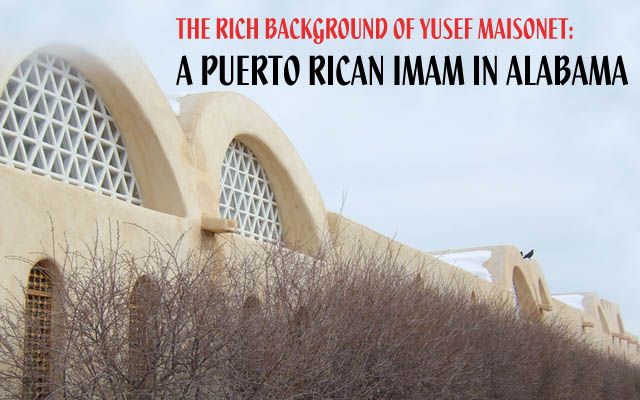
    A Puerto Rican Imam in Alabama

    Deep in the heart of Alabama, in the city of Mobile, rests a small mosque called Masjid AsSalaam, which means “Mosque of the Peace.” The imam of the mosque, Imam Yusef Maisonet, is a Spanish-speaking Puerto Rican convert. Imam Yusef, who was raised both in New York and Puerto Rico, is 61 years old and has been Muslim for 45 years. He was exposed to Islam in his teens through an Arab Muslim who introduced him to the Quran and Islamic manners.

    Imam Yusef’s rich background makes him a unique and well-rounded religious leader in his community. He explains, “I am a retired Merchant Seaman of 30 years, and have traveled through most of the world, made the Hajj (pilgrimage to Mecca)three times, been to the city of Medina three times, and also visited all of Palestine, including Jerusalem. I studied Islam in the UAE and also went to Al-Azhar University in Cairo for an intensive course in May 2012.”

    Imam Yusef works closely with the other Islamic centers and religious groups in Mobile, arranges educational and cultural exchange programs and visits to the Middle East and Puerto Rico, lectures, and is active in online activities that promote outreach and understanding. He is also a Muslim Chaplain at one of the most notorious prisons in America, Atmore Prison.

    From Alabama to Al-Azhar

    In May 2012, Imam Yusef was selected to attend a thirty-day intensive dawah course for Latinos at Al-Azhar University in Cairo. The program, which was sponsored by generous donors in Egypt, was designed to teach the 23students from Spanish-speaking countries or backgrounds how to effectively propagate a peaceful and moderate message of Islam. “The curriculum was put together by people who are educators and put a lot of thought into how they could get the message of moderation across to us as students and future preachers of Islam,” Imam Yusef describes.

    During their long days which began at 3 a.m. with Fajr prayer, they studied Qur’an and tajweed, Arabic, hadith sciences, the various schools of thought, or religious jurisprudence (fiqh), human rights, Islamic history, and Islamic economics. Now that Imam Yusef is back home in Mobile, he is putting his knowledge into full practice.

    Masjid AsSalaam offers classes on tajweed, marriage in Islam, “Riyadh us-Saliheen” (“The Gardens of the Righteous”, a classical work by Imam Al-Nawawi), and salat (prayer). They also offer once a week to substance abusers the “12 Step Islamic Program of Recovery from Alcohol, Cocaine, and Other Drugs.”

  • Spanish: Nuestro papel colectivo en el dawah en español

    Spanish: Nuestro papel colectivo en el dawah en español

    Hace más de 1.400 años, el Profeta Muhammad, que la paz esté con él, mencionó: “Sin duda, esta religión llegará a los límites del día y la noche y Alá no dejara pasar una zona rural o una vivienda urbana, excepto que Él hará que el Islam entre en ella…” (Ahmad y Ibn Hiban, Clasificado como auténtico)

    Somos testigos de la realización de esta profecía hoy en día, ya que el Islam sigue extendiéndose desde el este hacia el oeste, incluyendo América del Norte y del Sur, donde el número de musulmanes se duplicará para el año 2030, según las estadísticas.
    Muchos de los nuevos musulmanes son latinos que viven en los EE.UU. y en Latinoamérica. Estudios recientes, como el Reportaje de La Mezquita Americana 2011, revelan que los conversos latinos en los Estados Unidos están aumentando gradualmente desde el año 2000, más que cualquier otro grupo racial o étnico. Tendencias similares se están produciendo al sur de la frontera en México y también en América Central y del Sur, donde el idioma principal es el español.

    El español es el segundo idioma más hablado en el mundo, y el idioma oficial de 21 países. Con más de 50 millones de hablantes nativos y hablantes de segunda lengua, los Estados Unidos tiene la segunda mayor población de habla hispana en el mundo después de México y es la lengua extranjera más estudiada en los EE.UU.

    En el Corán, Dios dice, “Y no hemos enviado a ningún mensajero que no hablara en el idioma de su pueblo, para (poder) explicarles. Alá extravía a quien Le place y guía a quien Le place y Él es el Poderoso, el Sabio.” (El Corán 14:4)

    Debido al número creciente de musulmanes latinos de habla hispana en los EE.UU., la necesidad de recursos en español no puede ser ignorada. ICNA y su proyecto WhyIslam son dos de las pocas organizaciones que proporcionan servicios para esta demográfica, con operadoras de habla hispana en la línea telefónica 1-877-WhyIslam, material educativo en español, sesiones para los hispanohablantes durante la conferencia anual ICNA-MAS, y ahora la revista The Message International (El Mensaje Internacional) presentando artículos en español.

    El Islam es parte de la historia y cultura latina, por lo tanto, los hispanos que optan por convertirse en musulmanes no hacen más que volver a descubrir y aceptar su pasado. A través de nuestros esfuerzos, con la ayuda de Dios, podemos compartir el mensaje con nuestros hermanos y hermanas en la humanidad y facilitar su transición.

  • Spanish: El inicio de mi nueva vida

    Cuando me encontraba estudiando en el colegio, el deseo de saber sobre todas las religiones me llamó bastante la atención. Una de las razones fue que empecé a leer la Biblia. Lamentablemente en cada una de ellas encontraba asuntos que se contradecían, hasta llegar al momento en que no creía en ninguna religión y pensé: “Seguiré adorando a Dios a mi manera.” Mi búsqueda había durado 2 años y todo cambió cuando encontré en el internet una página de Islam donde estaba escrito, “Diálogo entre un cristiano y un musulmán”.

    Sinceramente era la primera vez que yo escuchaba acerca de las palabras “musulmán, Islam, y Corán”. Al leer eso lo primero que quería era conseguir un Corán para estudiarlo más a fondo y, Alhamdulilah (Alabado sea Alá), cuando lo tuve en mis manos no pasaron ni 3 días para que yo ya quisiera hacer mi testimonio de fe. Al leer el Corán, inmediatamente supe que era un libro imposible de ser escrito por un ser humano, ya que sentía que Alá conocía todo acerca de la humanidad, como en algunas ocasiones se dirigía a cada uno de nosotros y no dude en ningún instante que era el Mensaje Final, como había dicho el Profeta Muhammad –que la paz y la misericordia de Alá sea con él- el último ladrillo de una serie de Profetas y Mensajeros mandados por Alá a toda la gente.

    Alá –Glorificado y Exaltado Sea- me bendijo al otorgarme una oportunidad de ir a estudiar a Medina, Arabia Saudita, luego de que mi mamá y mis hermanos aceptaron el Islam 3 meses después de mí. Ahí permanecí durante ocho años y estudié Leyes Islámicas, o Sharia. Esos años han sido los más bonitos de mi vida, y mejor aún cuando mi esposa se fue a vivir conmigo y nació nuestro hijo, Ismael.

    Hace 3 años regresé a México y nos falta mucho por hacer en cuanto a Dawah se refiere, pero Alá –Majestuoso Sea- nos ha agraciado con un buen grupo de hermanos y hermanas dispuestos a trabajar por Su causa, dispuestos a sacrificar de nuestros bienes y tiempo para propagar este bonito Mensaje, a través de clases, conferencias, reuniones, y esfuerzos. Siento que se está logrando, Alhamdulilah.

    La historia del  Islam en México

    La historia del Islam en México se puede decir que es nueva, porque a diferencia de otros países del continente americano donde está registrado que hubo migraciones de miles de personas de países islámicos hacia América y estos fueron bien recibidos; en México hubo muchos obstáculos para que esto llegara a pasar, ya que no se veía bien a gente con diferente tipo de cultura a la ya establecida en ese entonces.

    De la misma manera la religión católica siempre ha tenido un papel muy importante dentro de México, tanto a nivel político como social, de esta manera es conocido como uno de los tres países con mayor número de católicos en el mundo. De la misma manera en que podríamos encontrar mezquitas en un país islámico; en México se pueden encontrar iglesias, ésta es otra razón por la que puede ser que el Islam no haya florecido con la llegada de los antiguos migrantes, debido a que encontraban un territorio fuertemente arraigado a las costumbres de los cristianos, donde a quien llevara otro tipo de creencia de seguro que se encontraría en diversas adversidades para seguir con su religión.

    Poco a poco los migrantes fueron perdiendo su lengua, cultura y religión, al casarse con no-musulmanas y que los hijos crecieran en la escuela con una educación católica. Solo bastaba que muriese el padre para que el Islam se dejara de practicar en la casa y se encuentran historias de familias musulmanas, que posteriormente sus nietos llegaron a ser sacerdotes o monjas respectivamente.
    A finales de los años 70´s hubo más apertura nuevamente para la llegada de extranjeros, pero muy poco se sabe acerca de los que eran musulmanes y siguieron con su religión.

    Con la apertura de representaciones diplomáticas de países islámicos se percibió una presencia más palpable dentro de la comunidad islámica, de hecho, una de las embajadas prestaba un espacio para orar en ella los rezos de los viernes alrededor de mediados de los 80´s. También en esos años empezó la construcción de la primera mezquita en México por parte de los shia en la ciudad de Torreón, terminándose en 1989.

    El Dawah en México

    Si se habla de los musulmanes y los centros islámicos actuales en México, necesariamente se deben de mencionar a personas como Omar Weston, pieza clave para el inicio de la Dawah (propagación) dentro del país, pues fundó una de las primeras páginas del Islam en el internet en español, fundó un Centro Islámico en la capital, y actualmente dirige un Centro fuera de la ciudad en Morelos. De la misma manera se debe mencionar a los musulmanes de Chiapas y los diversos grupos que hay dentro de ellos pues lamentablemente están divididos por problemas sectarios.

    En México se podría decir que hay alrededor de 5000 musulmanes, alrededor de 5 a 10 mezquitas a lo mucho y como es un país que cuenta con 32 Estados y una capital, donde en muchos de ellos solo hay pequeños grupos desde 20 hasta 10, 5 o 1 un musulmán o inclusive ninguno. La mayoría de los extranjeros que vienen tienen un proyecto a largo plazo de hacer un buen negocio y después regresarse a su país, sin tener como objetivo alguno el interés de hacer una escuela o mezquita para que sus hijos puedan permanecer en la religión, pues tienen el pensamiento de “¿Para qué? Si yo me regresaré de donde vine”. Esta es una de las razones por las cuales no se cuenta en todo el país con un cementerio para los musulmanes, una mezquita grande que represente al Islam como se debe, y si a eso le agregamos la falta de sheikhs (eruditos) que enseñen la religión, pues solamente hay un licenciado de estudios islámicos en todo el país, como es el caso de su servidor (Isa Rojas) –que me considero un estudiante- y a parte la mala situación económica del país, esto nos da una breve reseña de lo que se puede encontrar.

    Pero, Alhamdulilah la gente llega a nosotros cada vez más para abrazar el Islam, de cada 5 personas, una es mujer, y tenemos más oportunidades dentro de las universidades, escuelas, ferias, y exposiciones para hablar sobre esta bella religión que tanto le hace falta a nuestro pueblo mexicano, que sin duda ha sido engañado y abusado durante mucho tiempo por los malos ejemplos de líderes y organizaciones religiosas de otras creencias, haciéndoles perder la esperanza de volver a Alá.

  • Spanish: Encontre El Islam En Mexico

    Mi nombre es Martha Patricia García, tengo 27 años y soy egresada de la Facultad de Ciencias Políticas y Sociales de la Universidad Nacional Autónoma de México (UNAM) y actualmente soy reportera de espectáculos en un diario de circulación nacional en México. Nací en una familia católica y nunca tuve la intensión de cambiar mi religión, pero alhamdulilllah (gracias a Dios) hoy soy musulmana y soy muy feliz.

    La primera referencia que tuve del islam no fue buena porque estaba basada en dos películas que me hicieron desear jamás poner un pie en ningún país islámico, particularmente Turquía que fue donde se desarrollaba una de las historias.

    Solía hacer muchas amistades en Internet y estaba muy en voga la red social Hi5, ahí me hice amiga de un chico, cuyo nombre omitiré por respeto, y luego de un tiempo me di cuenta de dos cosas: era musulmán y además vivía en Turquía, eso rompió con mis esquemas.

    Antes de él los musulmanes eran para mí gente fanática y retrograda, pero él no era nada de eso, al contrario: era el chico de 19 años más amable y educado que había conocido y además era muy inteligente. Pero como toda regla tiene su excepción yo quería estar segura de que él no era la excepción. No me cabía en la cabeza que las películas, los noticiarios e incluso los medios impresos mintieran. Entonces me puse a buscar musulmanes de otras partes del mundo: Argelia, Egipto, Marruecos y Arabia Saudita y todos tenían el común denominador de la buena educación, la amabilidad y la inteligencia.

    El turco y yo comenzamos una relación a distancia. Él me hablaba mucho de islam y a mí me gustaba aprender, pero siempre le advertí que jamás me cambiaría de religión porque yo estaba convencida de mi fe. Cuatro meses después el “noviazgo” terminó pero aún conservaba la amistad de varios musulmanes, quienes seguían explicándome de la religión.

    Todo iba bien hasta que en 2010 me dijeron que en el islam Jesús (que la paz esté con él) era un profeta, eso me ofendió tanto que me obsesioné con buscar algo con lo que pudiera demostrarles que estaban muy equivocados. Me acerqué al catolicismo y me ignoraron, luego entré a un foro cristiano donde hablaban muy mal de otras religiones y se me ocurrió compartirles que los musulmanes eran buenas personas. El administrador me dijo: “Este es un foro cristiano si no te gusta, vete”, y me fui.

    Para entonces le había dado mis datos a un egipcio que se ofreció a enviarme libros en español para comprender mejor el islam, yo acepté porque no sabía que había musulmanes en México.

    Recibí varios paquetes y uno de ellos parecía darme la oportunidad perfecta para “hundir” los argumentos de los musulmanes, se llama “El verdadero mensaje de Jesús”. Tomé el libro y como en él citaban la Biblia decidí cotejar uno a uno los fragmentos mencionados. Mi fé católica se desvaneció página tras página; cuando terminé el libro no sabía si era musulmana, pero sabía que ya no era católica.

    La duda no duró demasiado, como cosa natural busqué en la red qué hacer para convertirse al islam y encontré la shahada: “Asshadu an la illaha il Allah, wa asshadu anna Muhammadan rusullulah” (Atestiguo que no existe divinidad excepto Allah y que Muhammad es su siervo y Mensajero). Mi corazón se agitaba con la idea de pronunciarla y lo hice, lo hice tantas veces que me la aprendí y como el católico que por reflejo se persigna cuando siente temor, yo repetía la shahada cuando algo me asustaba.

    Poco después me llevé una grata sorpresa al encontrar a un musulmán mexicano en Facebook quien finalmente me llevó al Centro Educativo de la Comunidad Musulmana en Polanco, en Distrito Federal y una semana después hice mi shahada ante la comunidad.
    Al principio mi familia no lo asimilaba, pero poco a poco comprendieron que había tomado una decisión muy seria y que no iba acambiar de opinión.

    Una musulmana ordinaria

    Uno de mis mayores obstáculos fue la ropa. Trataba de adecuar mi armario para poder seguir usando prendas que a mis ojos eran apenas islámicamente aceptables, pero lo suficientemente extrañas para que la gente me considerara “rara”.

    Las batallas más fuertes fueron al principio cuando salía de casa sin hijab y tenía que jugar al súper héroe buscando algún sitio donde pudiera colocarme el velo antes de llegar a la mezquita y de regreso a casa la historia era la misma. Me molestaba la idea de responder cuestionamientos, sobre todo de mi vecina de enfrente, que fue también mi madrina de primera comunión. Un día me enviaron de mi trabajo al hotel donde se hospedaba U2 que estaba en México para dar un par de conciertos. Ese día me atreví a usar el hijab y cuando le pedí información a un policía sobre los fans que rodeaban el hotel éste me miró de arriba abajo y dijo, “No le puedo dar esa información”, eso me oprimió el corazón pero firme y educada le pregunté “¿Me está discriminando?”, mientras tocaba mi velo. Otro policía que presenció de lejos la escena se acercó y amablemente respondió a mis preguntas.
    Aquel incidente puso un freno a mi intensión de usar el velo diariamente, me aterrorizaba la idea de volver a ser discriminada.

    Poco a poco me fui inventando más pretextos para no usarlo pese a tener el deseo de hacerlo; mientras eso sucedía, mi ropa se iba transformando en blusas de manga larga, blusones y pantalones un poco menos ajustados. Al fin este Ramadán, alhamdulillah (gracias a Dios), comencé a usar el velo todos los días y nada pasó. La gente me acosa un poco con miradas curiosas, pero nadie ha sido grosero.

    Aún hay días en que me siento tan extraña que pienso en quitarme el pañuelo, pero en seguida recuerdo que no importa cuán extraño o feo les parezca mi atuendo a las personas, yo decidí usarlo por amor a Dios. ¡Nunca más dejaré de usar mi hijab!

    Otra batalla importante fue con amigos y familiares que tardaron un poco en asimilar la idea de que ya no bebo y que las fiestas ya no me son atractivas como antes. No puedo decir que perdía mis amigos porque sé que siguen ahí, aunque ya no los veo con tanta frecuencia, más bien diría que gané muchos hermanos.