بسم الله الرحمن الرحيم

Tag: mexico

  • Mexico, Muslims, and Cinco De Mayo

    Mexico, Muslims, and Cinco De Mayo

    As May unfolds and the promise of flowers after April showers is fulfilled, we find ourselves in the middle of another vibrant spring. With Ramadan and Eid-ul-Fitr behind us, the Muslim community in the United States is left to the routine of shifting American celebrations. Easter décor makes way for Mother’s Day preparations and Fourth of July fireworks. Amidst this seemingly never-ending cycle of festivities, another notable occasion passed unnoticed in the first week of May. Many Americans recently, in a mindless way,  celebrated Cinco de Mayo, or the Fifth of May, a holiday often misunderstood and adopted from Mexican culture, characterized by fiestas replete with sombreros, tacos, and margaritas. Frequently confused with Mexico’s Independence Day (which falls on September 16), Cinco de Mayo is vastly different. Contrary to popular opinion, it has no connection to Mexican independence from Spain but instead commemorates a battle against France with surprising ties to Islamic history.

    The Franco-Mexican War erupted from 1861 to 1867 due to Mexico’s suspension of debt repayments to European powers, triggering French intervention. Napoleon III used Mexico’s economic situation to justify invading in 1861 to expand French influence in the Americas and establish a French-controlled regime. In 1863, the French captured Mexico City and established the Second Mexican Empire, with Maximilian I as Emperor, aided by the French military. The conclusion of the American Civil War in 1865 prompted the United States to pressure France to withdraw its troops. US intervention, coupled with internal Mexican resistance, led to the empire’s collapse, Maximilian’s execution, and the end of French involvement in Mexico.

    The Battle of Puebla occurred on May 5, 1862, during the Franco-Mexican War, and it holds profound significance as a pivotal victory for Mexican forces against the sizable and better-equipped French army. Despite daunting odds, the Mexican army successfully defended the city of Puebla against French invasion. This triumph became emblematic of Mexican resilience and patriotism, strengthening morale and inspiring resistance against French occupation. While the Battle of Puebla did not stop the eventual French occupation of Mexico City and the establishment of the Second Mexican Empire, it endures as Cinco de Mayo, a holiday commemorating the Mexican army’s triumph over a superior French force. Cinco de Mayo is celebrated in the city of Puebla and other places in Mexico on a lesser scale, with parades and re-enactments of the battle between Mexican and French soldiers. It is not considered a major holiday in Mexico, but according to History.com, Cinco de Mayo was popularized in the U.S. in the 1960s by Chicano (Mexican American) activists inspired by the victory of indigenous Mexicans over European forces. Now, Cinco de Mayo is celebrated more in the U.S. than in Mexico.

    Notably, the connection between Cinco de Mayo and Muslims arises from a lesser-known aspect of history. During the Franco-Mexican War, while France engaged Mexico, it concurrently held colonies in North Africa and the Muslim world. This context meant that Muslim Algerian and Egyptian subjects from French colonies participated in the conflict alongside French soldiers, including the Battle of Puebla. Depictions of this battle often feature Muslim soldiers, identifiable by their attire, adding a unique layer to the historical narrative. Reflecting on the role of Muslims in the Franco-Mexican War prompts questions about their agency and the complexities of their involvement. Perhaps they sympathized with the indigenous Mexicans who fought to protect their land from the same colonizing force they once faced. Were they coerced combatants fighting battles for their oppressors in foreign lands, or did they willingly align with their French colonizers? Did any of these soldiers get captured, surrender, or flee and go on to settle in Mexico? These inquiries compel deeper examination and contemplation. What is certain is the undeniable presence of Muslims on Mexican lands during that crucial time.

    Muslim Imprints on Mexico

    Muslims have left enduring imprints on Mexican soil throughout history, from early colonial encounters to contemporary migrations. From the 16th century onward, waves of Iberian, African, and South Asian Muslim migrants have been involved in shaping Mexican society, contributing to its cultural fabric. Aside from the documented presence of Iberian and North African Muslims and enslaved West Africans during the colonial period, the Spanish also sought indentured laborers from South Asia, predominantly British India (present-day India, Pakistan, and Bangladesh), to fill labor shortages in Mexico. Among this group were Muslims, Christians, and Hindus. Over time, the descendants of enslaved Muslims and migrants integrated into Mexican society, while others maintained distinct cultural identities within diaspora communities.

    The legacy of these influences persists, evident in architectural motifs, culinary traditions, and religious practices across Mexico. In contemporary times, the presence of Islam in Mexico continues to evolve. The late 20th and early 21st centuries witnessed a resurgence of Islam among Mexicans and Latin Americans, contributing to a vast and diverse Muslim population throughout the region. Still, more Mexican Muslims find themselves here on U.S. soil as immigrants and descendants of immigrants, joining the greater Latino Muslim presence in America’s mosques. While some members of this community are converts, others trace their heritage to generations of practicing Muslim families. Educating youth and elders within our communities about this shared history is essential to cultivate appreciation for the cultural, historical, and spiritual connections between Islam and Latin American culture.

    The influence of Islam on Mexican society is profound and enduring, evident in even the day-to-day lives of its citizens. Guadalajara, one of Mexico’s largest cities, bears an Arabic name derived from Wadi al hijara (Valley of Stones). Some celebrities like Salma Hayek, Jaime Camil, Alejandro Bischir, and Peso Pluma have Arab ancestry. One of Mexico’s most beloved culinary treasures, tacos al pastor, traces its origins back to Lebanese immigrants. Although many Arab immigrants were also Christian, there have also been Muslim-Arab and Turkish migrations since the 20th century. With over 120,000 Muslims currently residing in Mexico and a significant conversion trend observed among indigenous Mexican Mayans in the state of Chiapas since 1989, Islam’s presence in the country is becoming more visible and continues to grow. The Muslim community in Mexico enjoys access to a network of more than forty mosques, including four in the capital , Mexico City, making Islamic worship and community engagement accessible across the nation, with only seven out of thirty-two states currently lacking a mosque, according to Centro Salafi de Mexico.

    Understanding and celebrating the ties between Islam and Latin American culture ultimately enriches both communities. The enduring impact of Iberian, Arab, and African Muslims on Mexican society highlights the intersections of diverse cultures and histories. From linguistic influences to culinary masterpieces, the cultural fusion between Islam and Latin America exemplifies the richness of human heritage. In Mexico today, mosques are tucked away like precious gems, serving as centers of worship, learning, and community for Mexican Muslims and Muslim tourists, reflecting the mostly unknown yet enduring presence of Islam in the region. Although Muslims do not typically observe Cinco de Mayo, the legacy of Islam in Mexico is undoubtedly something to celebrate.

    For those interested in learning more about Islam in Mexico, see here and here.
  • Dando una mano para fortalecer las comunidades musulmanas en México

    Dando una mano para fortalecer las comunidades musulmanas en México

    Mientras la mayoría de niños de su edad asisten al colegio, el joven Nurudin pasa una mayor parte de sus días preparando postres para vender en las calles de México D.F. Cada bandeja le toma tres horas para preparar. Cuando los dulces están listos, los deja enfriar para poder envolverlos y venderlos, esperando ganar 15 pesos por cada uno, lo que equivale a 1 dólar. Si le va bien, en un día puede vender 30 postres, ganando unos $30 para ayudar a su padre, quien sufre de problemas del corazón, mantener a su familia. Nurudin y su familia son parte de una creciente minoría de mexicanos que han aceptado el Islam como su religión, y como millones de otras personas en México, la pobreza es su forma de vida.

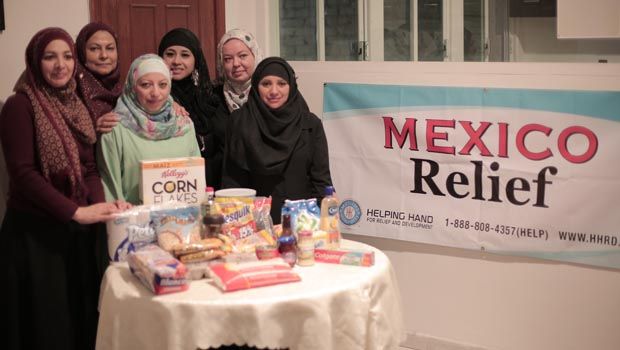
    Helping Hand for Relief and Development o Mano amiga para la ayuda y el desarrollo (HHRD) es una de las pocas organizaciones no gubernamentales musulmanas enfocando su atención en asistiendo a familias en México con programas de ayuda y desarrollo a largo plazo. Desde el 2012, HHRD ha estado trabajando en varias partes de México para ayudar a las familias más necesitadas con paquetes de alimentos incluyendo comidas que cumplen con las normas de Zabihah y cenas para Ramadán, programas de detección de diabetes, útiles escolares y bolsas de regalos para los niños.

    “Yo no sé si quizás la impresión es que los musulmanes en México son auto-subvencionados y autoportantes, pero esto no es el caso”, dijo el embajador de Libia ante México, Muftah Altayar.

    Según el informe de PEW 2009, el número de musulmanes en México es aproximadamente 110.000, lo que representa menos del uno por ciento de la población total. Sin embargo, por la misericordia de Alá y luego los esfuerzos de divulgación de ambos musulmanes mexicanos e inmigrantes, el Islam en México está creciendo.

    “Alhamdulilah, en México es muy fácil hablar en las universidades y las escuelas secundarias. Nos invitan a hablar acerca del Islam porque la gente realmente quieren aprender de los musulmanes “, dijo Imam Isa Rojas, el primer graduado mexicano de la Universidad Islámica de Medina, fundador del Centro Al-Hikmah en la Ciudad de México, y un activo llamador al Islam en México. “La gente quiere conocer el Islam, ya que no tienen una opinión negativa de los musulmanes como lo tienen las personas en Europa o tal vez en los Estados Unidos.”

    La Ciudad de México, la bulliciosa capital situada en el centro del país, cuenta con más de 3.000 musulmanes que viven dentro de sus fronteras, muchos de los cuales son conversos. En la región Sureste de México se encuentra el Estado Libre y Soberano de Chiapas. Es una tierra fértil y culturalmente abundante con aproximadamente 100 a 300 conversos musulmanes mexicanos que han establecido una pequeña pero creciente comunidad islámica en la ciudad San Cristóbal de las Casas. Sin embargo, muchos de los hermanos y hermanas en esta área luchan para obtener necesidades básicas como la estabilidad laboral, educación y asistencia médica.

    Durante su visita a Chiapas este año pasado, los voluntarios de HHRD pudieron recorrer la comunidad, dirigidos por el hermano Yahya Gómez, uno de los muchos conversos al Islam mexicanos y activistas en la ciudad de San Cristóbal de las Casas. La mayoría de los hogares eran simples estructuras con paredes de madera y techos de chapa, hechos para albergar a sólo unas pocas personas. Sin embargo, es común ver a familias con 15 parientes o más viviendo juntos en un mismo espacio. Los hombres de la comunidad sólo pueden conseguir trabajo como obreros, si son capaces de encontrar empleo.

    “Está en muy mal estado. Hay algunas familias que viven en una misma casa. Es más como un refugio temporal; Yo ni puedo decir que es una casa. Necesita una renovación… Creo que necesitan una nueva casa en su lugar “, dijo el Director del Programa Internacional HHRD, Irfan Khurshid, mientras observaba las pésimas condiciones de vida.

    Por tan sólo $ 27.000 por cada casa el Proyecto de Construcción y Renovación de Hogares de HHRD puede permitir que las viviendas actuales en San Cristóbal de las Casas sean remodeladas o completamente reconstruidas para proporcionar un lugar más espacioso y seguro para que las familias crezcan. Esto incluye los costos de toda la tubería necesaria, electricidad y construcción. Algunas casas serán incluso totalmente reconstruidas en vecindarios más seguros cerca de la mezquita local.

    Para contribuir aún más a las familias musulmanas en Chiapas, HHRD está implementando una iniciativa de Micro Finanzas que proporcionará préstamos para pequeñas empresas sin intereses a los individuos con la ambición de tener su propio negocio y ser autosuficientes. Con pequeñas donaciones que van desde $ 1.500 a $ 4.000, los participantes en el programa pueden aprender un oficio y comenzar a operar sus propios negocios en las áreas de carpintería, costura, panadería, y mecánica automotriz para ayudar a aliviarlos y a sus familias de la pobreza.

    “Este proyecto de financiamiento microempresas es tan sorprendente, ya que toma una simple donación, alguien puede dar $ 1.000 o $ 2.000 para ayudar a un musulmán poner en marcha una empresa” dijo Boonaa Mohammed, un voluntario que viajó recientemente con HHRD a Chiapas. “Va a tomar ese dinero y les permite comprar lo que sea necesario, las herramientas necesarias para el oficio específico. Se les dará lo mínimo. Y luego, una vez que hayan logrado tener éxito en su oficio y tienen ese dinero, dan de nuevo a la caridad, que luego da de vuelta a otro musulmán que quiere, una vez más, demostrar su valía a través de un comercio. “

    HHRD también está en el proceso de establecer un Centro de Entrenamiento Vocacional en San Cristóbal de las Casas para ayudar a los desempleados a obtener la educación y la capacitación necesaria para obtener fuentes de ingresos estables y licitos.

    “En este centro les podemos enseñar diferentes habilidades y ellos pueden aprender un oficio para que puedan iniciar su propio negocio o encontrar diferentes puestos de trabajo”, dijo Khurshid. “Esto les ayudará económicamente y les ayudará a educar a sus hijos, porque muchos de los niños de estas familias de bajos ingresos y desempleados no han tenido acceso a una buena educación.”

    Además de estos grandes proyectos de desarrollo a gran escala, HHRD también está en el proceso de iniciar un programa de donaciones en especie para proveer las necesidades inmediatas a las familias en San Cristóbal de las Casas, Rosarito, y la Ciudad de México, así como un Programa de Apoyo a la Educación donde los donantes pueden apadrinar a un niño por sólo $ 1 al día para ayudar a proporcionarles el material escolar que necesiten.

    “Muchas veces, en Norteamérica, cuando miramos a conversos, hay tantas dificultades que tienen para integrarse en nuestras comunidades musulmanas”, dijo Mohammed. “Ahora imagina una comunidad de conversos que tratan de integrarse en una sociedad no musulmana que no tiene una base sólida del Islam para apoyarlos. Es imperativo que ofrezcamos nuestro apoyo en todo lo que podamos sabiendo que quien da por la causa de Alá, glorificado y alabado sea, su caridad no se desperdiciará”.

    Para involucrarse en los programas de HHRD en México, visite su página www.hhrd.org, contacte info@hhrd.org, o llame 1-888-808-HELP (4357).


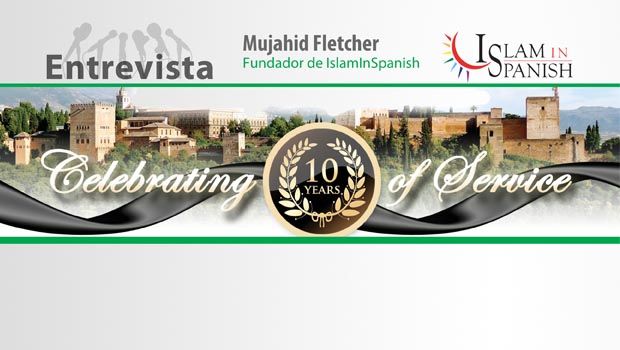
  • Entrevista: Mujahid Fletcher (Islam in Spanish)

    Entrevista: Mujahid Fletcher (Islam in Spanish)

    Nacido y criado en Colombia hasta la edad de 8 años, Mujahid Fletcher emigró con su familia a Houston, TX. Sin embargo, tras una adolescencia llena de violencia pandillera y serios problemas, sus padres lo mandaron de vuelta a su país de origen donde, Fletcher dice, su vida dio un giro positivo. Permaneció en Colombia dos años y regresó nuevamente a Houston. Poco tiempo después, un amigo le hablo acerca del Islam. Después de estudiar la religión por un año, decidió abrazar el Islam, y luego fundó IslamInSpanish (IslamEnEspañol), una organización sin fines de lucro que ofrece productos y servicios audiovisuales islámicos en español. IslamInSpanish recientemente celebró su décimo aniversario con un banquete y recaudación de fondos en Dallas, TX.

    P ¿Cuáles han sido algunas de las dificultades que has encontrado como un nuevo musulmán?

    R Algunos meses después de que me convertí en musulmán, ocurrieron los atentados del 11 de septiembre, y me di cuenta durante ese tiempo que no había ninguna materia en español para darle a mi padre ni a cualquier otra persona que quería saber del Islam. La Sociedad Islámica de Greater Houston me pidió que hablara con la prensa hispanohablante para informar al público sobre el Islam, y después de explicarle más a mi papá acerca de la religión, él se convirtió tres meses después de mí. Luego me dijo que si no existía ningún material audiovisual para educar a la gente latina acerca del Islam, entonces debería ser mi responsabilidad producirlo. Este reto me llevo a mí y a mi esposa a matricularnos en el Instituto de Arte de Houston para obtener licenciaturas en Multimedia y Diseño Gráfico. Lo que nos motivo fue el hecho de que los musulmanes parecían muy débiles o no suficientemente preparados para presentar al Islam en los medios de comunicación de una manera efectiva, de tal manera que hicimos esto nuestro objetivo en la vida, y nos graduamos con honores siendo una pareja joven de nuevos musulmanes latinos de 22 y 24 años.

    P ¿Qué has contribuido para el dawah a los hispanohablantes y en general (incluyendo a tu familia)?

    R Una de mis humildes contribuciones al dawah en el idioma español es la fundación de IslamInSpanish, que por más de diez años ha producido el material islámico audiovisual en español tan necesario para educar a los latinos sobre el Islam a nivel mundial. Yo soy el fundador, y como tal, un productor de cine y televisión. Mi padre ha sido el narrador y mi esposa es la diseñadora gráfica para la compañía. Mi madre, mi suegra y su hermana, y muchos otros en nuestra familia han abrazado el Islam, al igual que miles de otros a nivel mundial por medio de nuestra página web www.IslamInSpanish.org y otros medios sociales como www.Facebook/IslamEnSpanish, nuestro canal en YouTube IslamInSpanishTV que tiene miles de visitantes, y a través de canales locales de televisión y también internacionales desde Madrid, España.

    P ¿Qué otro tipo de servicios ofrece IslamInSpanish?

    R También se nos invita a lugares públicos como universidades, Iglesias, sinagogas, Sam’s Club, convenciones, y otras avenidas, para hablar en inglés y en español acerca de lo que es el Islam y el punto de vista latino dentro del Islam. Yo, personalmente, he tenido la oportunidad de hablar en la Universidad de Harvard, la Universidad Rutgers, iglesias Unitarias, estaciones de radio católicas, Sam’s Club para entrenamiento de sensibilidad cultural durante el mes de Ramadán, y estaré hablando en una clase de confirmación en una sinagoga el próximo mes. Los propietarios de negocios musulmanes incluso piden que visitemos a sus empleados que están interesados en aprender del Islam.

    P ¿Cuáles son algunos de los obstáculos que ha tenido que superar en sus proyectos educativos?

    R Un problema que tenemos es que la producción de multimedia es costosa por el hecho de que requiere personal con entrenamiento técnico y requiere mucho tiempo. A pesar de las limitaciones presupuestarias y el desafío de encontrar las personas con las habilidades para llevar a cabo nuestros proyectos de producción ambiciosos, IslamInSpanish ha producido el primer set de 26 CDs de una traducción española del Corán, así como la producción de audios en español de otras obras clásicas como Los 40 Hadices de Al Nawawi, El Néctar Sellado (Biografía del Profeta Muhammad), y CDs muy informativos como Conozca a Jesús y María en el Islam, Conozca el Corán, y Conozca al Profeta del Islam.

    P En tu opinion, ¿Cuáles son algunos de los más grandes logros de?

    R Hoy somos la primera fuente auténtica de multimedia islámico en español para educar a los latinos sobre el Islam, y ahora después de diez años estamos a punto de viajar a zonas donde las personas quizás no sepan de nosotros o donde no se han celebrado eventos en vivo, con el fin de aumentar nuestro alcance y la conciencia. En los últimos cinco años hemos recaudado e invertido 200.000 dólares en nuestro estudio de producción llamado “Centro de Artes de Medios de Andalucía (www.AndaluciaCenter.org).” Hemos producido en los últimos diez años, más de 500 títulos de audiolibros y 200 programas de televisión hasta la fecha.

    Llevamos a cabo una firma de puertas abiertas para los latinos no musulmanes en los EE.UU. titulado “Raíces islámico en la cultura latina” – “Raíces Islámicas en la Cultura Latina” – donde cientos de personas han abrazado el Islam. Otros talleres de eventos en vivo se les da a los no musulmanes. Dos clases de español semanales se llevan a cabo en Houston y dos sermones españoles se entregan mensualmente, que es una actividad pionera que esperamos, en el futuro, que tendrá lugar durante todo los EE.UU.

    P ¿Cuál es la mejor manera de presentar el Islam a los latinos aquí [en nuestros países]?

    R En primer lugar, hemos aprendido que la clave es conectarse con la gente basada en la situación que se encuentran. En general, todos queremos el bien para nosotros mismos y para nuestras familias. Si hay una oportunidad para ayudar a alguien, mucha gente lo haría. La manera que nos dirigimos a las personas cuando hablamos con ellos es de la misma manera que nosotros quisiéramos que ellos nos hablen. Nunca se trata de debatir o discutir, porque esto abre la puerta de la negatividad. Esto es una regla mayor que se encuentra en el Islam y es una regla universal.

    En segundo lugar, nos acercamos a la gente para levantar los puentes de comprensión entre nosotros a nivel humano para poder conocernos bien. Si no nos conocemos, eso es cuando los problemas ocurren; no importa la raza, cultura, o afiliación religiosa. Y hemos sido creados para conocernos, basado en un verso en el Corán, en la Surah (Capítulo) al-Huyurat 49:13 –

    “¡Oh, humanos! Os hemos creado a partir de un hombre [Adán] y una mujer [Eva], y [de su descendencia] os congregamos en pueblos y tribus para que os conozcáis unos a otros. En verdad, el más honrado de vosotros ante Alá es el más piadoso. Ciertamente Alá es Omnisciente y está bien informado de lo que hacéis”.

    En tercer lugar, el idioma juega un papel enorme en la comunicación, por eso escogimos el nombre IslamInSpanish. Hablamos el idioma de nuestra gente, porque esta es la manera de comunicar el mensaje de manera natural – en nuestro propio idioma –como hicieron los mensajeros enviados por Alá, tal como Adán, Noé, Abrahán, Moisés, Jesús, y Muhammad (que la paz este con todos ellos). Alá menciona esto en el Corán en la Surah Ibrahim 14:4 –

    “Todos los Mensajeros que enviamos hablaban el idioma de su pueblo para transmitirles claramente el Mensaje. Pero sabed que Alá extravía a quien Le place y guía a quien quiere; ciertamente Él es Poderoso, Sabio”.

    Por lo tanto, se establece el sentido más profundo de comunicación entre ambas partes, y el corazón del que escucha se conecta al corazón del que habla basado en la cultura y el idioma que comparten. Esta es la razón que los eventos de IslamInSpanish son organizados en el idioma de la gente que sirven. Si la audiencia habla inglés, podemos presentar la información en inglés también, pero cuando una persona de habla hispana escucha la misma información en su lengua natal, su impacto y efecto son duraderos y los lleva al punto de aceptación, o al menos, de empatía hacia el Islam y los musulmanes.

    Para más información acerca de IslamInSpanish, consulte:

    La página web: www.IslamInSpanish.org

    Número telefónico gratuito: 1 (877) 717-4961

    www.IslamInSpanish.org

    www.facebook.com/islamenspanish

    www.youtube.com/user/IslamInSpanishTV


  • Finding God and a Purpose in Islam

    Finding God and a Purpose in Islam

    My name is Martha Guadalupe; I am originally from Ecuador, but live in New Jersey, and I have been Muslim since 2003, alhamdulillah (all praise is due to Allah).Why did I embrace Islam? Interestingly, every time I have been asked this question, I have a different story to tell. There is never enough time to say it all. I recently saw a post on Facebook which drew my attention. It stated: “Searching for happiness, I found Islam.” What I can say is, “While searching for God, I found Him in Islam,” alhamdulillah!

    At first I was not the one who was searching for this beautiful religion. My family and I had distanced ourselves from the Catholic religion, but I never stopped worshipping God, praying to Him, asking him to guide my children by whatever means would permit them to reach Him, and to never abandon them. I was sure that God always protected us and that He was the only one who provided us with everything we need.

    It so happened that on September 11, 2001, my son Hernan (the eldest and a university student at the time) visited us in the evening and told my husband and me that he had accepted the Islamic religion. In my ignorance, I responded, “What is that?” He explained to me that it was the true religion of Allah, and I remember saying to him, “If this is the path that will take you to God, blessed be His Name, then may He continue guiding you,” and I hugged him.

    It was my eldest son who brought the religion of Islam to our home but a month after he became a Muslim, my second son did so as well, alhamdulillah. Then I began to learn for myself about the basics of this religion. Hernan would tell me about the life of Prophet Muhammad (may peace and blessings be upon him), that he was the last and seal of all the Prophets. At first I found it strange because for me, the last prophet had been Jesus (may peace be upon him).

    Whenever he could, Hernan would teach me about Islam. I began to worry because during one of our conversations, he told me about the punishments in the hereafter for those who did not obey the laws of God. That filled my heart with terror, and I feared God more than ever. “What will happen if I don’t follow what God wants? What will happen if I don’t have any time left? What will happen if I don’t wake up?,” I would ask myself. This is one of the reasons why I began to reflect deeply about what was better for me. I wanted to be a good servant so that God would not punish me.

    Two years later I accepted this wonderful religion. Now I am a proud Muslim, alhamdulillah. I won’t say that the change was easy. At first, it was very difficult, but Allah eased the way and I have been able to persevere, breaking through barriers and overcoming all obstacles in my path. I know that Allah has always guided me, but I had been blind for a portion of my life. Today everything is clear and I am very happy knowing that I am a humble servant of Allah; to Him we belong, and to Him we will return.

    In my daily living, my faith imbues all aspects of my outlook on life with hope and trust in God. When I left my job, I said to myself, “If Allah has taken me away from this job which has been very good, it is because He has something better for me.”I have always loved sewing and I used to make clothes for girls, but had stopped doing so 11 years previously. Then during a conversation, I heard some sisters speaking about how they would like to buy Islamic clothing online but it was too expensive. I suggested, “If you want, I can make the clothing for you at a much lower price, insha’Allah.” With the help of Allah, and my sons, I decided to start my own business, which we called, “Modasty Designs,” alhamdulillah. The business has been successful at a national level due to internet sales and Islamic conferences, and above all, Muslim women in my locality who ask me to make their clothes. It is always a pleasure for me and I am here to serve my Muslim community, insha’Allah.

    Since I have been Muslim, I dedicate myself to prayer and following the Sunnah, or the teachings of Prophet Muhammad (may peace and blessings be upon him). May Allah bless us, protect us, and guide us always. Ameen.

  • My Conversion Story

    My Conversion Story

    It’s hard to believe how different my life was just three years ago. Alhamdulilah, Allah (SWT) blessed me by guiding me to the straight path. My story was written by Allah (SWT) and happened solely by His will. In early 2009, I attended a wedding at a Catholic church, and subhan’Allah, I don’t know what it was about the wedding ceremony, but I walked out of that church knowing that I no longer wanted to be Christian. I didn’t know what I wanted to be, but I knew I didn’t want to be Jewish because I knew the conversion process was very lengthy and involved.

    I had an Egyptian Muslim friend during that period who I spent a lot of time with. I witnessed the unity of the their family during Ramadan and it was something that really stood out and appealed to me. I sat at my computer one day and I googled “what does it take to become Muslim,” and to my surprise, all it took was saying a few words!

    I told my Muslim friend and family that I wanted to be Muslim and they were very excited. I was given a Quran, but truth be told I didn’t really read it much. I did know, however, that I wanted to take my shahada before Ramadan of 2009.

    It happened one June day. I was on my way home from a trip to Los Angeles and I was walking to my car, and at that moment I was overwhelmed with a feeling of absolute, one hundred percent certainty, that I was ready to take my shahada. I really didn’t know much about Islam at that point, but it was implanted into my heart at that moment that I was ready to become Muslim. The next Friday I took my shahada. I didn’t know how to pray until my first day of Ramadan 2009. Fortunately, after that Ramadan, at the end of October, I found the M.E.C.C.A. Center and their New Muslims Program. It has been an amazing journey ever since.

    I have been blessed to be able to use my professional expertise to help Muslims. I am a movement therapist and nutrition coach and have been in the health and fitness industry for over 20 years. I operate a training and nutrition business in Manhattan and my students have nicknamed me “the hijabi drill sergeant.” In addition, I run Fit For Allah, a group strength-training class held weekly at the MECCA center in Manhattan, and work as director for the non-profit, health and fitness organization, Nadoona.

    Through this organization and their Nadoona Body Makeover, I am able to create and design individualized programs for weight loss. It is very fulfilling to bring an entirely new perspective to the fitness industry, utilizing the teachings of the Quran and Sunnah. I begin each class with a du’a, striving for the pure intention to spread health and fitness for the sake of Allah SWT.

  • Gift of Islam

    Gift of Islam

    There was a wooden shelf in the corner of my parents’ bedroom with a statue of Our Lady of Guadalupe, and every Sunday my father replaced the flowers in a vase that was set by the statue. I remember him so clearly as he stood in front of the shelf which also had many other statues and he prayed with such strong belief. When I was nine years old, before his passing, he taught me many prayers, and I was taught to perform a spiritual cleansing of the evil eye (in Spanish “mal ojo”).

    Soon after my father passed, I started catechism (principles of the Christian religion) classes, and I spent most nights and Sundays at church. I received the communion as a Catholic and also the sacrament of confirmation, but I never felt close to God. During most of my younger years I had the Catholic religion forced upon me by my family; it wasn’t a choice to attend classes or mass, it was just obligatory in my home.

    As I got older, my mother distanced herself from the church as she became busy with her full-time job and we weren’t practicing our religion much anymore. In my mother’s bedroom was still that homemade shelf my father had built and all the statues he prayed to. But no one placed any flowers in the vase or prayed as my father had done.

    By my high school years my life had changed tremendously. I had become a very rebellious teenager. I was definitely lost. I experienced so many unwholesome things during my teenage life and I had lost my faith and didn’t believe in God.

    Alhamdulillah, after my daughter’s birth when I was 27 years old, I realized it was time to change the way I was living. I was introduced to Islam by a few friends online and I will never forget the first time I heard the Qur’an recited—I felt a connection with God! I felt something that I had not felt before in my life. Even though I had no idea what was said during the recitation, I fell in love with the Qur’an.

    I was blessed to be in contact with many wonderful brothers and sisters who provided me with the information I was looking for. It wasn’t long after that I decided to become Muslim. I took shahada in 2006, alhamdulillah. Today I know why I fell in love with the Qur’an; I know why I felt an instant connection with Allah SWT. Allah the Almighty Says: “This day have I perfected your religion for you and completed My favor upon you and have chosen for you Islam as your religion” (Qur’an 5:3).Islam is beautiful and Allah SWT has granted us the greatest gift possible and that is the gift of guidance to His religion, the complete and final religion.

    My life as a Muslim woman is amazing. My days are filled with so much peace and contentment — my family, home, and daily efforts are continuously blessed and it only gets better alhamdulillah. Muslims are bound together in heart and this unity is the means of strength for the Muslim ummah. In fact, it’s a divine gift that we Muslims must make use of. “And the believers, men and women, are protecting friends one of another; they enjoin the right and forbid the wrong, and they establish worship and they pay the poor-due, and they obey Allah and His messenger. As for these, Allah will have mercy on them. Lo! Allah is Mighty, Wise (Qur’an 9:71).

    That we are meant to be supporters of one another means so much to me. I want for my brothers and sisters what I want for myself, and after contemplating for months I finally decided to launch an effort that would be of benefit to my sisters in Islam. In May 2011 I established Muslimahs Covered With Care (MCWC). This initiative is designed to provide hijabs and abayas to Muslim women. I personally understand the difficulty in adopting the Islamic attire and I understand the number of reason why some Muslim women do not cover.

    Presently the MCWC team consists of seven wonderful women and others are always encouraged to join us. We have coordinators in the US, Europe, Canada, Australia, and the UK. Join our team in helping Muslimahs around the world to dress modestly, one hijab and one abaya at a time. Visit www.muslimahscoveredwithcare.org for more information.

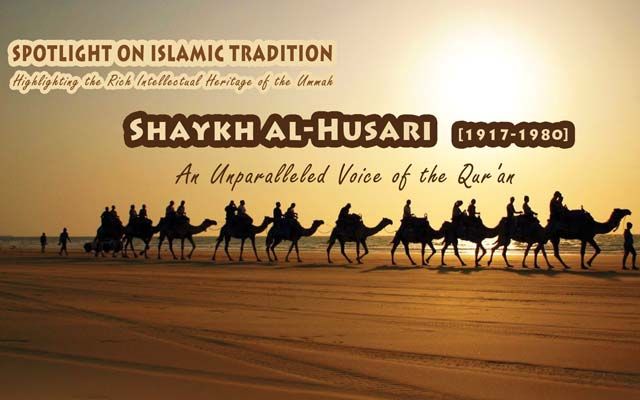
  • Sh. Al-Husary – Spotlight on Islamic Traditions

    Sh. Al-Husary – Spotlight on Islamic Traditions

    In the narrative that chronicles the preservation of the Qur’an, Shaykh Mahmud Khalil al-Husari occupies a unique position. He was born in 1917 in the center of Tanta, Egypt, with an excelling aptitude for learning the Qur’an. He began his journey at the age of four with local Qur’an teachers and finished memorizing the Qur’an by the age of eight. Too young for admission to any of the Qur’an schools, he began to recite in the village mosques and quickly became a local sensation. As his voice matured, he was invited to gatherings and events to recite the Qur’an. When he reached the age of 12, he entered formal studies at the renowned al-Azhar University schools and completed formal degrees as well as attaining proficiency in the Ten Readings of the Qur’an.

    In 1944, Shaykh al-Husari became nationally known when he won first place in a radio competition, and thereafter became a familiar voice in Egypt. He held various positions in the region’s mosques and religious institutions, as well as serving on several academic and government councils to advance the cause of the Qur’an.

    His passion turned global as he became one of the first Qur’an scholars to travel widely throughout the world as an informal “Ambassador of the Qur’an.” He travelled to India in 1960 to recite at a conference in the presence of Egypt’s president Gamal Abdul Nasir and India’s Nehru, and went to Kuwait in Ramadan of 1963. He frequently visited the major Muslim nations, including Saudi Arabia and Pakistan where he was chosen as the head of an International Reciters Forum at a conference in Karachi in 1966.

    His passion to spread the voice of the Qur’an did not exclude the West. He visited France in 1965 where ten individuals embraced Islam upon hearing his recitation. He visited the U.S. on multiple occasions in the 1970s, met President Jimmy Carter, and visited some of the oldest Islamic centers in the country. On one occasion, it is said that 18 men and one woman embraced Islam after hearing him. He was the first individual ever to recite the Qur’an in the U.S. Congress, the first to recite at the United Nations, in 1977, and in London’s Buckingham Palace in 1978.

    A Rich Legacy

    In addition to being a reciter, Shaykh al-Husari left behind a dozen written works on the Qur’an and its sciences, including a textbook on the science of Tajweed. His greatest legacy, however, is one that placed his name squarely on the historical roadmap of pioneers in preserving the Qur’an and advancing its status in the world. Shaykh al-Husari has the distinction of being the first person in history to record the entire Qur’an in audio media and preserve it for posterity. Although there were others who did partial recordings before his time, and many who did recordings after him, his work became preeminent for a number of reasons.

    To begin with, he was simply the first to record the entire Qur’an. The story behind this project reveals a glimpse into his visionary spirit as well as the workings of destiny. Shaykh al-Husari was greatly concerned about the efforts of Christian missionaries, particularly in Africa, to spread confusion and doubts about the Qur’an. Moreover, this was the dawn of the age of electronic communication and the world was just beginning to take shape as a global village. Shaykh al-Husari used his influence and position to raise awareness of the need to preserve the Qur’an, in the spirit of its early pioneers, this time in an audio format.

    The project had initially been presented to a number of reciters but never came to fruition due to disputes about monetary compensation and related issues. After exhausting these avenues, the matter returned to Shaykh al-Husari, who reluctantly agreed to do it. But he did it as a service to the ummah, without any monetary compensation. He did the same for all his written works, preferring charitable distribution rather than selling for profit.

    Most importantly, his complete mastery and precision in articulating the letters and words of the Qur’an were undeniable. After the project’s completion, the recordings were presented to numerous scholarly experts, and it was only after all of them testified to its precision that the project was allowed to proceed. And to this day, with the unanimous and universal approval of the leading experts of Tajweed, Shaykh al-Husari’s crystal clear voice continues to resonate with divine beauty and power from schools, cars, audio players, and computer software throughout the world.

    Finally, the ambitious nature of the project was also a key factor in its success. After recording the entire Qur’an in the rendition of Hafs in 1961, Shaykh al-Husari’s work was not over. He proceeded to do another entire recording in the Reading of Warsh in 1964 and additional ones in Qalun and Duri in 1968. He also produced another recording in Mujawwad form, a slower style of recitation, as well as one in a teaching style (Muzallam). These recordings have all been widely available since, and continue to our times.

    In 1980, Shaykh al-Husari began suffering from a heart condition and ultimately passed away on November 24, 1980 after completing the last prayer of the day. Upon his death, he left a third of his wealth for charitable works for advancing the cause of the Qur’an.

  • Charity and Service to Others

    Charity and Service to Others

    The Prophet stated: “Every Muslim should give charity.” He was asked, “What if one cannot?” He replied, “Then he should go find work and help himself and others.” He was asked, “What if one cannot?” The Prophet replied,“Then he should help someone in need.” He was asked, “What if one cannot?” He replied, “Then he should command what is right or good.” The Prophet was asked, “What if one cannot?”He replied, “Then at least he should refrain from evil, and that would be charity for him” (Bukhari, Muslim).

    The spirit of charity, volunteerism, and service to others is a hallmark of Islam and among its greatest teachings. The Prophet never lost an opportunity to convey this message to others, and on this foundation he built a prosperous and charitable society oriented to public service.

    Prophet Muhammad exhibited this generosity of character in his own life in a marvelous way. Before he became a Prophet, he earned the greatest respect and regard from his contemporaries by being al-Sidiq (the truthful) and al-Amin (the trustworthy). People confided in him, went to him to arbitrate differences, sought his advice, and even entrusted their valuables to his safekeeping. It was these ethical qualities in his early life that enabled him to be a successful Messenger later on. And so, when the first revelations came down to anoint him as a Messenger of the Divine and he rushed home fearful and full of great distress, his wife Khadijah, beloved supporter and confidante, consoled him and gave him confidence by reminding him of his impeccable character and service to others: “No, rejoice! By God, He would never disgrace you! For you uphold the ties of kinship, always speak the truth, bear the people’s burdens, help the destitute, honor guests, and serve those whose rights are due.”

    This tradition of service continued throughout his prophet-hood and became an integral part of his mission and message. When he arrived in his adopted home of Madinah to establish the first Islamic society, his very first words to the people summed up that message: “People, spread peace among yourselves, uphold family ties, feed each other, and pray during the night while the rest of the people sleep, and you shall enter Paradise in peace!” The formula was simple. Build a peaceful society which consists of service to others (your families and those who are needy) and service to God (in the form of prayers). That, in essence, is the road to salvation. The balance between the body and spirit, between personal and civic responsibilities, and between spirituality and the mundane affairs of life is wonderful guidance bequeathed by Islam to humanity.

    As part of this prophetic lesson, Prophet Muhammad emphasized the need for financial independence so that one can be in a position to help others. Charity, primarily in the form of donations, is a responsibility of every believer. This can be monetary donation or other type of material provision, depending upon the need. And for those unable to afford such, the Prophet strongly urged them to find work to earn something with their own hands so that they could help themselves and then others. In other words, tangible donations are among the greatest forms of charity and financial independence is, therefore, a desirable value in Islam.

    Yet, for those who truly are not in a position to give material assistanceto others, then the Prophet recommended they find some other means to help someone in need. Financial assistance takes precedence but if that is simply not possible, then service to others is a priority. The principle of charity is so important that no single person is exempt from practicing it, even those who cannot afford it.For those who are neither in the position to give nor in a position to help, then they were urged to at least enjoin something that is good or virtuous. That could entail, for example, teaching someone something beneficial, speaking out for social justice, or promoting some worthy cause. Finally, those not in a position to practice any of these approaches must, at the very least, stay away from wrongdoing of any sort which indirectly protects people from that potential harm.

    So charity and public service should involve everyone in a sound and healthy society. There are no exceptions because there are many forms of giving and helping. In our current political atmosphere where public assistance and providing for those in need have been assailed by some in the public discourse, these lessons on charity are very timely. There are, indeed, hopeful signs as the majority has rejected a selfish and self-serving political agenda—as the recent elections have shown. And in the aftermath of Hurricane Sandy, we recognize once again that we live in difficult times; and that the tenuousness of this life is best dealt with by engaging and cooperating with those whose spirit of charitableness is ever ready to provide support and relief to those in need.

  • Editorial: Our Collective Role  in Spanish Dawah

    Editorial: Our Collective Role in Spanish Dawah

    More than 1,400 years ago, Prophet Muhammad, peace be upon him, said: “Surely, this religion will reach the boundaries of the day and night and Allah will not spare a rural or an urban dwelling except that He would cause Islam to enter it…”(Ahmad and Ibn Hibban, classified as authentic). We are witnessing the realization of this prophecy today, as Islam continues to spread from the East to the West, including North and South America, where the number of Muslims will more than double by the year 2030, according to statistical projections.

    Many of the new Muslims are Latinos who are living in the US and in Latin America. Recent studies such as the The American Mosque 2011 Report reveal that the number of Latino converts in the US has been steadily increasing since the year 2000, more so than any other racial or ethnic group. Similar trends are occurring in neighboring Mexico and further south in Central and South America, where the primary language is Spanish.

    Spanish is the second most widely spoken language in the world, and the official language of 21 countries. With over 50 million native speakers and second-language speakers, the United States has the second largest Spanish-speaking population in the world, after Mexico. Spanish is the most studied foreign language in the US.

    In the Qur’an, God says, “And We sent not a Messenger except with the language of his people, in order that he might make (the Message) clear for them. Then Allah misleads whom He wills and guides whom He wills. And He is the All-Mighty, the All-Wise”(Qur’an, 14:4). This points to the importance of providing educational materials about Islam in all languages. And due to the dramatically rising number of Spanish-speaking Muslim converts in the US, the need for resources in Spanish cannot be ignored.

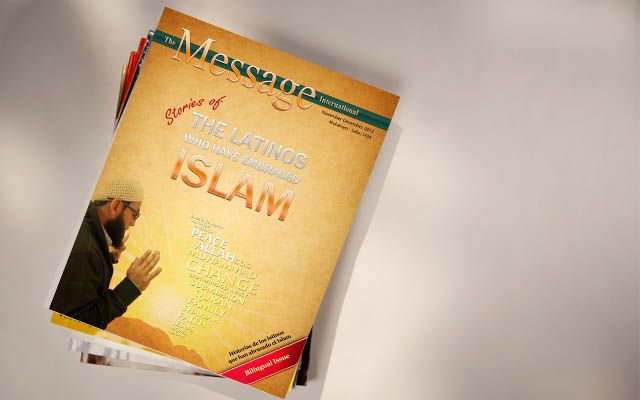
    ICNA and its WhyIslam project are among the few organizations providing services for this demographic, with Spanish-speaking operators on the 1-877-WhyIslam hotline, educational material in Spanish, Spanish sessions during the annual ICNA-MAS convention, and The Message International magazine now featuring articles in the Spanish language.

    Islam is an integral part of Latino history and culture and as such, Hispanics who choose to become Muslim are merely rediscovering and embracing their past. Through our efforts, with God’s help, we can share the message with our brothers and sisters in humanity and facilitate the success of their transition.

  • Allah Rescues a “Boricua” through Islam

    Allah Rescues a “Boricua” through Islam

    In the name of Allah, the most Compassionate, the most Merciful — may the peace and blessings of Allah be upon His last and final messenger, the seal of all the prophets, Muhammad. And may peace be upon those who follow in his footsteps until the Day of Judgment.

    I felt empowered each time I completed an act of obedience to Allah

    My Dear Family

    I was blessed with parents of Puerto Rican origin, which is what makes me a “Boricua” — a person of Puerto Rican heritage. I am the youngest of three sons, born in New York, and raised in both Puerto Rico and New Jersey. My mother, who was a nun before she married my dear father, taught more than fifty girls in a convent in New York. She had studied psychology at Fordham University and later during her years as a nun had many unanswered questions that led her to leave the convent. She later married my father. She taught us to always pray to God upon awakening and before going to sleep, and to thank Him for our food. In Puerto Rico, she established catechism classes in our home for the children in our neighborhood.

    I continued reading the Qur’an for nine consecutive months and through my reading and application I realized that I was gradually curing myself from the vices of smoking and drinking alcohol

    My father was hard-working and he would take us to work with him so we could learn a good work ethic and basic skills for survival. From a young age, I learned how to make pizza, scrambled eggs, and sandwiches. My father loved to be with his children and would play videogames and sports with us on his days off. My older brothers would always play with me or take me to the movies, and we had a great sense of camaraderie and a lot of fun together.

    Islam and Basketball

    During my growing-up years, I was a fan of Michael Jordan and the Chicago Bulls team. The Bulls won three championships, and then in 1993 Jordan retired. I felt like a boy without a favorite sports hero. I began to search for a new favorite player and chose Chris Jackson from the Denver Nuggets, who later accepted Islam and changed his name to Mahmoud Abdul Rauf.

    During those days, there was not much access to watching games of out-of-state teams unless they were playing against the local team. The way I kept up with everything was through collecting trading cards. Once I was reading Mahmoud Abdul Rauf’s cards and I found information about Islam including what his Arabic name meant and about the pilgrimage to Mecca. Since I didn’t have a chance to watch many of Denver’s games, I had to pick another player from one of the two local teams, the New York Knicks or the New Jersey Nets. I chose the Knicks because I was born in New York; and as a favorite player, I picked John Starks.

    That year, the NY Knicks made it to the playoffs against the Houston Rockets. The Rockets had at that time the legendary Hakeem Olajuwon who was fasting during the championship games. Many of the Knicks players would trash-talk him, but he always responded with patience and grace. The Knicks had the opportunity to win the game with a shot from Starks, but it was blocked by Olajuwon and Houston won the NBA Championship. Here again, I was being exposed indirectly to Islam, but during this time period I was not interested in religion.

    The Challenges and Hardships of Youth

    While I was in Union Hill High School, in Union City, New Jersey, I began smoking cigarettes because all my friends were doing it. After school we would go play basketball and sometimes those who were waiting their turn to play would drink beer or smoke marijuana. So my teenage years were spent playing basketball, singing reggaeton (urban music rooted in Latin and Caribbean music with a fusion of Latin and reggae rhythms) in the clubs, drinking alcohol, and hanging out with friends. It is not surprising, given my lifestyle, but still a big loss, that a friend of mine drowned while he was drunk, at the age of 18. I was also involved with a gang and became friends with Carlos Hernandez, from Colombia, who lived in my house for a few weeks. Carlos loved to read a lot and one day we visited the public library and, given my lack of moral principles at that time, I stole a copy of the Qur’an. At one point, some members of my gang killed two of my friends with whom I had been the day before. That tragedy affected me tremendously. Day after day I thought of three things —death, illness, and my family’s well-being. During that time I lost trust in all human beings except my parents, but they lacked the experience to guide me and help me see beyond my narrow perspective. I decided to search for God.

    My Spiritual Journey

    My quest to find answers began in the year 1998 when I felt like I had no direction and lacked the ability or the willingness to confide in any other human being. I visited the churches in my area and acquired six different bibles. I began to read through all of them, comparing passages, and then I remembered the Qur’an that my friend Carlos had left at my house. I looked for it and began reading it daily, along with the bibles. Interestingly, I found that there was an assertion in the introduction of the New Revised Standard Version that the King James Bible contained grave errors. I began to think that if there are different versions of “the Word of God” then we can’t trust that the Bible has been kept intact and uncontaminated by man. Later I read in the introduction of the translation of the Qur’an by Abdullah Yusuf Ali that, “This Qur’an is a confirmation of the message of Moses, Jesus, Muhammad, and all the prophets of God.” The introduction also stated that the Qur’an remain available in the original Arabic language, in its original form without having been changed for more than 1400 years; and that countless people have memorized the entire text. These things impressed me.

    Reading the Qur’an

    I continued my search and I became attached to reading the Qur’an. I wanted to apply everything I was reading. When I read a verse that said: “Establish regular prayers – at the sun’s decline till the darkness of the night, and the morning prayer and reading: for the prayer and reading in the morning carry their testimony” (Qur’an 17:78). After reading this verse, I would wake up in the middle of the night secretly, to read the Qur’an while my family slept. I felt empowered each time I completed an act of obedience to Allah. Some time later I read a verse related to speaking well: “O ye who believe! Fear Allah, and (always) say a word directed to the Right: That He may make your conduct whole and sound and forgive you your sins: He that obeys Allah and His Messenger, has already attained the highest achievement” (Qur’an 33:70-71). Immediately after I read that verse, I began to put forth a lot of effort to control my speech. I would push myself to only speak well or maintain silence.

    I continued reading the Qur’an for nine consecutive months and through my reading and application I realized that I was gradually curing myself from the vices of smoking and drinking alcohol. That internal turning toward Allah made me trust the Holy Qur’an more and more. Finally, after those nine months of reading and applying what I learned, I decided on September 24, 1999 to accept Islam. I did so at the North Hudson Islamic Educational Center (NHIEC) in Union City with Sheikh Mohammed Al Hayek, who offered regular classes in English for new Muslim converts. Two years later, my dear mother and father also accepted Islam. All praise is to Allah.

    Efforts to Teach Islam

    In 2002, I established a Spanish class at NHIEC called, “Understanding Islam.” Later, during a Dawah Committee meeting, Imam Al Hayek asked me if I had any ideas for a dawah event directed at the Latino community. I suggested holding a Hispanic Muslim Day. Through the wonderful efforts of the Dawah Committee, the first event took place in 2002. I continued offering the weekly classes from 2002 to 2004.

    Path Towards Arabic and Islamic Studies

    In 2004, I was offered a scholarship to study in Egypt; Arabic language at Eqraa Institute and Islamic Studies at Al-Azhar University. I studied in Egypt form 2004 until 2007, completing five years of course material in three years at Al-Azhar. All praise is to Allah. I met many wonderful Latino brothers and sisters in Egypt who helped me to settle into my new life. Among them were Abdul Rahman Khairo from Colombia, Sheikh Uzman from Argentina, Dr. Juan Yahya Suquillo who visited and gave us good advice, and also a dear brother, Mujahid Fletcher, founder of IslamInSpanish. We spent nights talking about how we could serve our Latino/Hispanic community.

    IslamInSpanish: My New Family

    In the year 2010, my family and I relocated from New Jersey to Houston. It was my aim to work as a teacher for Iman Academy Islamic School and also work with IslamInSpanish. I joined IslamInSpanish because of their extraordinary mission of producing multimedia to educate Latinos about Islam. It has been a marvelous experience working with them to serve the Latino community, recording IslamInSpanish programs in the Andalucia Center Studios with “The Voice of IslamInSpanish” narrator Abu Mujahid Fletcher.

    Show: Entendiendo el Corán (Understanding the Qur’an)
    All praise is to Allah. IslamInSpanish has a lot to offer the Latino community:
    educational Islamic material at www.islaminspanish.org
    networking with the Latino community through Facebook on their page www.facebook.com/IslamEnSpanish
    material available for purchase at www.dar-us-salam.com
    national and international presentations; for more information, contact them through info@islaminspanish.org or www.facebook.com/IslamEnSpanish

    Opportunity to Become an Imam

    At the end of 2011, I received an offer to become an Imam in Beaumont, Texas. My first impulse was to refuse the offer as my family and I were happy living in Houston and I was very satisfied with my work at Iman Academy and IslamInSpanish. Yet, in my current circumstances, I was extremely busy and did not have much time for my family. My wonderful wife said to me: “We’ll go wherever we need to go.” I made the Istikhara prayer (for consultation), analyzed the offer, and said to myself, “With this offer, I could balance my family life and manage my time better. I could make dawah, continue my Islamic studies, spend more time with my family, and be a good example to them.” After praying Istikhara, I also consulted with my mother and trusted friends and advisors. I then made the decision to accept the offer as Imam of the Islamic Society of Triplex.

    On January of 2012, the Islamic Society of Triplex founded Al Hidaya School, a weekend school with the mission to “Develop in our youth a love for Allah as their God, Islam as their way of life, Muhammad (peace be upon him) as the seal of the prophets, and the Qur’an as the guide for humanity.” At Al Hidaya, students learn Arabic, Islamic Studies, Qur’an reading, basketball, and martial arts. Al Hidaya is comprised of wonderful students, teachers, and volunteers.

    Looking back on my journey, I never could have imagined the wonderful blessings I would receive as I took step after step in my determination to find truth. All praise is to Allah that I have found much more than I could ever have hoped for. Indeed, Allah rescued a young, lost soul — a “Boricua” — through Islam.