
بسم الله الرحمن الرحيم

Tag: Islamophobia

  • Rising to the Next Level: Institution Building and Civic Engagement

    Rising to the Next Level: Institution Building and Civic Engagement

    Mosques and other Islamic organizations and institutions have never been more active and widespread than they are today. The imperative for greater engagement in society, and increased activities to serve the needs of the growing community, have also never been more pronounced. Muslims have launched initiatives like One America and Canadian Muslim Vote to encourage participation in federal elections. Mosques like the Islamic Society of Central Jersey have opened their doors to those of other faiths in events like “Common Ground Connection,” and others like the Ummah Mosque in Halifax and Worcester Islamic Center have held open houses and “Meet a Muslim” days to welcome non-Muslim neighbors, show them hospitality and friendship, and answer their questions about Islam. Individual Muslims, on their own initiative, have held events like “Meet a Muslim Family” or “Talk to a Muslim” in the wake of growing Islamophobia. Mosques, Islamic centers, and organizations have participated in soup kitchens and meal programs for the homeless and needy, as well as running food banks and free medical clinics for the underserved like the Muslim Welfare Center in Scarborough in Toronto and at the Islamic Association of Collin County in Plano, Texas.

    Often, the biggest obstacle in the way of any institution’s ability to properly serve the needs of its community is a lack of knowledge and understanding of what those needs really are.

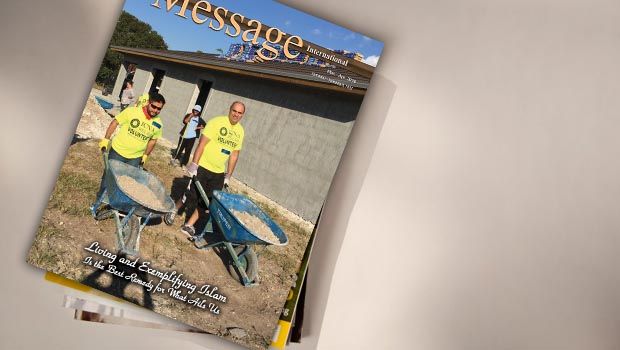
    Many mosques and Islamic centers have educational programs including daily or weekly classes on various topics, as well as classes catering especially to the youth, in addition to organizing and coordinating programs for Muslims as well as non-Muslims. Conferences like those held by ICNA, ISNA, Reviving the Islamic Spirit, and ILEAD promote education and awareness. Various Muslim media initiatives like The Muslim Link, Message International, Islamic Horizons, Illume, AltMuslim, and others, provide a voice to communities, aim to correctly represent Muslim concerns and interests, and provide an alternative to mainstream media.

    Yet at the same time, Muslims are facing challenges that need to be addressed more than ever before. While many institutions are active in promoting engagement and serving community needs, others are not doing much. “I think the Muslim community is finally waking up,” says Azra Baig, an elected member of the Board of Education in South Brunswick, New Jersey. “9/11 was definitely a wake-up call, but I think people have just gotten more comfortable after that. But I think with what has happened recently at San Bernardino – the terrorist attacks and the Islamophobia and anti-Muslim remarks by candidates for elections, I think people are finally waking up to the need to get more engaged and more involved. I’ve heard it so many times in the polls – when someone knows a Muslim, they are more comfortable regarding Islam and different aspects, but if their only source of information is the media, then I don’t blame them for being scared, how else are they learning about Islam and Muslims?” While many great efforts are being made by organizations and individuals, a lot more needs to be done. Below are a number of suggestions based upon my discussion with various activists, and community leaders and members, and my research into actions our organizations can take to better meet the challenges of today.

    Create Awareness Among the Leadership

    For any effective changes to take place in our institutions, it is vital that our leadership be well-informed and aware of the needs and problems of the community they serve. Many mosque boards are made up of first generation immigrants, those who have not grown up in Western societies and therefore do not fully understand the problems faced by the youth, are not inclined to promoting political participation, and tend to be somewhat conservative and resistant to change. Also, says Asif Hirani, Program Director at WhyIslam, many of them “do not understand the importance of interfaith activities because they may not be as important in their Muslim majority countries.” He adds, “We need to create awareness in the leadership of the masjids and among board and shura members. In terms of keeping our masjids open, we also need to change the culture of our masjids.” For effective civic engagement and educational and counseling activities to properly meet the needs of the community, it is essential that board members and community leaders be those with an awareness and understanding, based on experience, of present-day Western society and culture.

    Conduct a Survey About Community Needs

    Often, the biggest obstacle in the way of any institution’s ability to properly serve the needs of its community is a lack of knowledge and understanding of what those needs really are. Without adequate information, any available funds are just funneled into activities which may or may not be relevant or adequately serve the needs of the community. Each region and each community has different needs based on its demographics. Masjids with a membership primarily of professionals will have different needs from those of a lower income community. Those with more third generation immigrants have different needs than those with many newly arriving immigrants. It is important to know who makes up the community, what the most pressing needs are, and what issues are important to community members.

    Knowing all of this can help an institution or mosque cater to the specific needs of the community in terms of designing classes or lectures, mobilizing support for social services, acting as advocate at city council meetings, or presenting issues to boards of education. As such, a survey should include questions about marital status, household composition including gender and age of each family member, ethnicity, country of origin, length of residence in the U.S., education, professional or employment status, and income range. The survey can also solicit information about what social, economic, and political issues the respondents consider important, what they expect their institutions to advocate for them, and on what issues and/or topics they want educational opportunities by way of lectures, workshops, or classes.

    Surveys can be in paper form or provided on an Islamic center’s website. Additional methods can be used in tandem, such as assigning individuals or teams to solicit the information from community members; events and meetings can also be held to solicit information, discuss issues, and brainstorm activities and services to meet community needs.

    Designate Teams or Individuals for Specific Tasks

    Once a community’s needs are identified, tasks must be prioritized and funds and resources channeled accordingly. Depending on the size of the community, the amount of work needed for a particular task, and the resources available, the institution must designate either an individual or a team for each task or project. For example, an individual or team should be made responsible for social justice issues, and for representing the mosque or the community at city council meetings or in meetings with regional representatives. Another team could be assigned to deal with media outreach, and so forth. “I go to meetings and sometimes I’m the only Muslim over there,” says Rameez Abid, Communications Director for the ICNA Council for Social Justice. Regarding Muslim advocacy for social justice issues like homelessness, hunger, and civil rights, he says, “I think one person dedicated to this cause can do it as a volunteer. If they can’t find someone to do it, I suggest hiring someone part time to do it. It is very important.”

    It is important that an organization assign specific individuals or teams for the various tasks so that no one person or team is overwhelmed with too many responsibilities. In that way, also, the interests, skills, and expertise of available individuals are utilized in an effective way. “Religious leaders have their own roles to play and they are already overworked,” says Amira Elghawaby, Communications Director at the National Council of Canadian Muslims (NCCM). “The roles within mosques and institutions have to be broadened to bring in more people who are keen in different areas of work and so associations and mosques can foster greater involvement because they often do have some funding available to support this kind of work.”

    Elghawaby says this could include the mosque hiring and training their own people to help represent the community and provide a Muslim perspective at municipal and other local events. They can also hire or train individuals to focus on the local media, foster relationships, and thus represent the community in that way. There can be positions open to interns and volunteers to assist the person(s) assigned to the job. This is a good way to get students to fulfill their volunteer hours and internship requirements by benefiting the community.

    Government and the Media Relationships

    Muslims need to build good relationships with their government representatives at the local and regional level in order to communicate the Muslim perspective and concerns. This requires inviting local and state officials to the mosque or other Islamic events, meeting with them about specific concerns or priorities, and attending important events organized by them. Azra Baig says, “It’s important because they want to hear from us and they do represent us. If they are going to support us, we need to support them on the various issues. We need to be there when they have their press conferences, their petitions, we have to vote and a vote helps – especially this coming election the Muslim vote is going to matter.”

    Baig says building a good relationship with the media is also vital because “the media is also our voice.” This includes issuing press releases and sending out invitations for events. An effective media strategy also means following mainstream media reporting about Muslims and responding when relevant or necessary. Nazim Bakshn, a researcher and journalist, says that engagement with the media includes making spokespersons, analysts, and scholars available to provide commentary and analysis when events involving or relevant to Muslims take place.

    Represent Community in the Mainstream

    Our institutions and mosques must step out of the traditional roles they are used to and be ready to rise to the next level. They of courses need to serve as a place of worship and spiritual guidance for the Muslim community, but also as a platform for activism and advocacy. As part of a society where Muslims are a minority, it is easy for our institutions to stay in their comfort zones, insular and disconnected to the larger community. But it is increasingly important for our institutions to step out of their own circle and be a part of the mainstream. This includes advocating causes that benefit the wider society, transcending boundaries of race, ethnicity, and religion. It also means representing the concerns and interests of the Muslim community at city council meetings or presenting issues to the board of education. Rameez Abid notes, “We cannot be isolationist,” adding, “In order to secure our rights, we have to secure others’ rights as well and that is part of our deen.”

    Build a Stronger Social Media Presence

    In this digital age of pervasive social media, it is important to utilize the tools of the time to spread our message and benefit our communities more widely. “Many a time, many members of the community are not aware of the activities at the masjid,” says Muhammad Ibrahim Ali, an Arabic instructor at Taqwa seminary and Bayyinah. “So for example the event is over and they get to know [too] late – so it’s very important for them [organizations] to improve their social media presence and not only to improve, they have to compete with the other organizations – even utilizing modern methods of media marketing.” Our Prophet (pbuh) also used the technique of his time to get his message across to a wider audience. For instance, he went to Mount Safa to call out to people to deliver his message when he wished to invite the Quraish openly to Islam. The custom was to go to Mount Safa when one had an important message to announce to the people at large.

    Come Together and Unite with Others

    Although each institution works independently, it is vital that links be maintained with other institutions and that the institutions stand united on a variety of causes, cooperating by sharing resources, expertise, information, ideas, and personnel. “Unity is something that strengthens all communities,” says Elghawaby. “I think that we need to come together at the local level for sure to find out what’s going on in our communities and who is doing what… how can we either replicate or complement or contribute to these efforts on a professional national scale and in a way that the work that is done is not lost in someone’s mind, it becomes part of our institutional memories.”

    Professionalism and Concerted Effort

    Organizations today base their operations on goal-setting, efficiency, productivity, and streamlining of systems. “I think the really most important thing is to approach these issues with a very high degree of professionalism,” says Elghawaby. She says one of the challenges is that there will always be well-meaning individuals who work as activists on one cause or another, and that this is valuable work. But the drawback is “when an individual undertakes this work, not with an institution, then there is going to be the loss of the memory of what they have done, so there is no institutional memory to the type of work or relationships they fostered. Once they lose interest or once they don’t have time to continue their work, it sort of disappears so that is one reason why it is so critical to engage institutions.”

    Elghawaby continues, “I think it’s really important that this work is done with professionalism and with real goal-setting in mind. It cannot be done in a way that’s sort of ad hoc. It really has to be a concerted effort.” Her organization has recently launched an initiative called “Stronger Together” which aims to galvanize Canadian Muslims in every major city to be more civically engaged, and to advocate both on local and national issues. The organization has put up a pledge on its website inviting people to commit to greater activism. The organization will then map out all those who took the pledge and cluster them together in teams according to their geographic areas, and then provide support and training on how to get involved in various issues. Their first campaign is about a Canadian anti-terror bill, C-51, and will be encouraging participants to approach their local parliament members and talk to them about the legislation. This is a good example of how institutions can work in an organized and efficient manner to promote more civic engagement. It is important for our institutions to learn from one another and pool resources, ideas, and expertise to better serve the community. Our organizations must rise to the next level, promote civic engagement and meet the various needs of the community.
  • Harmony through Allah’s Divine Guidance

    Harmony through Allah’s Divine Guidance

    All praises are for Allah, The Almighty, and may His peace and blessing be upon His true servant and final messenger, Muhammad, on his companions, and his household. Allah SWT says: “So direct your face toward the religion, inclining to truth, [according to] the natural disposition by which Allah has created people. No change should there be in the creation of Allah. That is the true faith, but most of the people do not know” (Quran 30:30).

    According to the Islamic prescription for a harmonious social life, there is to be no superiority on account of class, color, ancestry, or wealth.

    Allah SWT, the Creator of all that exists, has designed the universe and legislated laws that govern it so that all things function in a harmonious way. We, therefore, realize how the universe moves in perfect harmony by His laws, for if it did not then the entire universe would be in total chaos. There are billions of galaxies in the universe; and in our own Milky Way galaxy, it is estimated that there are 100 billion to ten trillion planets! Each one runs in its own orbit so they do not collide and bring about chaos and destruction; except on the Day of Judgment, then they will all collide. That brings the end of this life and ushers us into the Hereafter. So often Allah SWT, the Creator, draws our attention to the cohesiveness of the universe. In Surah Yaseen, Allah SWT mentions how the sun and the moon each “swim” in their own orbits. These two heavenly bodies, among trillions, are mentioned because we have knowledge about them and because the sun and moon have direct effect upon our lives here on earth.

    Allah SWT informs: “It is not permitted to the sun to catch up to the moon, nor can the night outstrip the day. All of them swim along in their orbits” (Quran 36:40). Allah SWT also tells us how the heavenly bodies move with His command: “Indeed, your Lord is Allah, Who created the heavens and the earth in six days, and then He rose over the Throne. He brings the night as a cover over the day, which is in haste to follow it, and He created the sun, the moon, the stars — subject to His Command. Surely, His is the creation and the command. Blessed be Allah, the Lord of the worlds!” (Quran 7:54). Thus, there is complete obedience to His commands, and when there is complete obedience, there is complete harmony. This is His Divine Wisdom, evident in the creation, and Allah SWT, the Creator, knows best His creation. He says: “Should He not know – He that created? And He is the One that understands the finest mysteries [of His Creation and] is well-acquainted [with them]” (67:14). With His Divine wisdom and knowledge, Allah SWT has created man to be part of this universe. Like the command He has given to the heavens, He has bequeathed to mankind laws and regulations to follow and obey in order to have peace and harmony. He has blessed human beings with the capacity to acquire knowledge, to think and ponder, and with an intellect to distinguish right from wrong. Humanity and jinn are two known creations of Allah SWT that have been given the freedom of will and action.

    Among the good qualities that we ought to inculcate in our lives and invite others to include humbleness, modesty, decency, truthfulness, honesty, politeness, tolerance, compassion, generosity, forgiveness, optimism, fairness, sincerity, self-restraint, etc.

    Unfortunately, with intellect and freedom of choice, many individuals have turned away from Divine Guidance. So many have chosen the evil way, forsaking a moral and upstanding life. Professor Andrew Delbanco, in his insightful book “The Death of Satan: How Americans Have Lost the Sense of Evil,” writes: “…more and more our society, our nation is turning their backs on God and good morals.” Lionel Tiger writes in “The Manufacture of Evil”: “Once upon a time, evil was personified. Evil was Mephistopheles or the Devil. Almost flavorful, altogether identifiable, a clarified being from another world…” And what has happened now? Evil has faded into a sea of moral ambiguity.

    The handiwork of Satan is manifest everywhere. He has his associates and agents among mankind who support the demise of morality and decency, affecting almost every aspect of human life. He incites them with confused and conflicting ideologies and notions of every sort, opening the door to criminal, depraved, and unjust behaviors. Voltaire once said: “Certainly anyone who has the power to make you believe absurdities has the power to make you commit injustices.” He goes on to say: “If you do not use the intelligence with which God endowed your mind to resist believing impossibilities, you will not be able to use the sense of injustice which God planted in your heart to resist a command to do evil.” Thus, Satan has sown the seeds of conflict throughout human affairs, and God’s laws have been violated, with nations at war with each other, corrupt government officials, families plagued by divorce and parent-child problems, high rates of murder and other crimes, gangs terrorizing communities, media promoting and sensationalizing violence, alarming rates of substance abuse, widespread lewdness and promiscuity, and never ending displays of ego gratification through celebrity worship and lust for power and wealth. And the list goes on…

    By and large we have allowed these things to happen. We have not joined together as we should have, to stop our society from losing its moral high ground. There is so much hatred, bigotry, and more recently, Islamophobia, that adds fuel to fire. But with all this burning hatred and intolerance, it is a unique opportunity for Muslims to call people back to the core values of morality and decency. Like the prophets throughout history, and particularly the five Messengers renowned for their strong will and determination – Prophet Nuh, Prophet Ibrahim, Prophet Musa, Prophet ‘Eesa, and Prophet Muhammad (peace and blessings of Allah be upon all of them). They have all gone through that inferno of hatred and intolerance from their own people. But they never gave up. In fact, they took every opportunity to bring about good in their respective societies. When the Quraish discouraged people from entering Islam, Rasoolullah (pbuh) would use the opportunity to explain to them the beliefs and principles of Islam and how it brings about human salvation. Allah SWT has indeed guided mankind in every aspect of life. By way of example let us examine a few.

    Spiritual Life

    Allah SWT has informed us of the true purpose of life. It is to be His true servant through worship and obedience to Him alone. The Quran says: “And I [Allah] created not the jinns and humans except that they should worship Me [alone]” (Quran 51:56). In order to genuinely worship God, one must have unshakable belief in His existence. Coupled with strong beliefs, acts of worship bring about decent moral behavior. Take prayer for example. If done with sincerity, it protects us from committing sins or engaging in wrongful deeds. ”…And perform the prayer. Verily, the prayer prevents immorality and wrongdoing…” (Quran 29:45). As to other aspects of worship, fasting helps a person develop self-restraint and the capacity to delay gratification; charity or zakaah inculcates the values of generosity and compassion and counters greed and miserliness; and the pilgrimage humbles us and helps us to enlarge our perspective and feel a solidarity with the vast human family, as we see the assembly of pilgrims coming from all over the world, each individual hoping for the mercy and forgiveness of Allah SWT.

    Intellectual Life

    The very first revelation given to Prophet Muhammad (pbuh) is a command to illuminate our minds with knowledge, for it is knowledge that dispels the darkness of ignorance and evil. Allah SWT commands, “Read! In the Name of your Lord Who has created — created man from a clinging substance. Read! And your Lord is the Most Generous, Who has taught by the pen, taught man that which he knew not” (Quran 96:1-5). Knowledge is the cure for ignorance. In fact, it is only through knowledge of the religion, true knowledge of Allah SWT, and knowledge of self that human beings can be saved from misery, in this life and in the Hereafter. We are told in the Quran, “Say: Are those who know equal to those who know not? It is only men of understanding who will take heed” (Quran 39:9).

    Personal Life

    Regarding our personal lives, Islam provides guidance as to cleanliness of the body, our clothes, our surroundings, and places of worship. Cleanliness, as Rasoolullah (pbuh) puts it, is half of faith. Islam also guides human beings as to what to consume, with most food available from earth’s bounty being permissible and good, and a few things being prohibited, such as pork. We are further prohibited from wasting food as that indicates ungratefulness for the sustenance provided by Allah SWT. The Quran says, “…do not squander senselessly. Verily, the squanderers are, indeed, of the ilk of the devils, as Satan is ever ungrateful to his Lord” (17:26-27). Sadly, surveys shows that every year, from the more than 350 billion pounds of edible food available for human consumption in the United States, nearly 100 billion pounds – including fresh vegetables, fruits, milk, and grain products – are thrown away by retailers, restaurants, and consumers. This waste alone adds up to $48 billion.

    Social and Political Life

    Allah’s prescription for a harmonious social life includes equality, justice, helping those in need, and each individual developing a benevolent character. Imam Al-Ghazaali named some of the qualities that the Prophet (pbuh) called for, such as doing good deeds; submitting to Allah’s will; bestowing favors on others; feeding the needy; extending greetings; visiting the sick; escorting the bier of a Muslim; protecting one’s neighbor whether Muslim or not; honoring the aged; making peace between people; and being easygoing.

    Further, according to the Islamic prescription for a harmonious social life, there is to be no superiority on account of class, color, ancestry, or wealth. One of the most shameful of social evils is the feeling of superiority over others. This was Iblees’s downfall when he told Allah SWT that he would not prostrate to Adam because Allah had created him from fire and Adam from clay, and in his thinking, this rendered him better than Adam. How many wars have been fought because one nation felt superior to another? Allah SWT informs us that our differences are only by His command and wisdom. It is for us to learn about one another, not to despise one another. He says, “O mankind, indeed We have created you from male and female and made you peoples and tribes that you may know one another. Indeed, the most noble of you in the sight of Allah is the most righteous of you. Indeed, Allah is Knowing and Acquainted” (Quran 49:13).

    We are reminded of the sermon Rasoolullah (pbuh) gave at the Farewell Pilgrimage in which he said: “All mankind is from Adam and Eve; an Arab has no superiority over a non-Arab nor a non-Arab any superiority over an Arab; also a white has no superiority over a black, nor a black any superiority over a white — except by piety and good action. Learn that every Muslim is a brother to every Muslim and that the Muslims constitute one brotherhood. Nothing shall be legitimate to a Muslim, which belongs to a fellow Muslim unless it was given freely and willingly. Do not therefore, do injustice to yourselves.” SubhanAllah! Compare that wisdom to our situation today! There is so much discrimination and discord based on race, ethnicity, family status, and wealth, even among the Muslim ummah. How do we expect success and harmony when we ignore Allah SWT’s Divine Command?

    On a global level, millions have perished in the two world wars, in Mao Tse Tung’s China, in Stalinist Russia, in the Vietnam War, as just a few examples. The carnage continues into this 21st century with regional wars, sectarian conflicts, murders, domestic violence and so on. Man has disregarded God’s laws and has ended up in never-ending conflict and destruction. Rasoolullah (pbuh) predicted that a time would come when there would be large scale killing.

    Moral Life

    Islam provides injunctions and principles, in a broad-based and precise way, for a harmonious life, built on a foundation of enjoining what is right and shunning and preventing what is evil. An individual’s moral development brings growing discernment as to what is right and what is wrong, and dedication to ethical and refined living. Regarding one of the main objects for which the Prophets and Messengers were sent, Prophet Muhammad has said: “I have been sent by God to teach moral virtues and to evolve them to highest perfection.” He also mentions: “On the Day of Recompense, nearest to me will be the one who displays in his daily life the best of manners.”

    Among the things we ought to reject are arrogance, vanity, immodesty, lewdness, lying, cheating, foul language, hatred, envy, backbiting, slandering, stinginess, vindictiveness, pessimism, unfairness, deceptiveness, self-indulgence, and impulsiveness.

    And among the good qualities that we ought to inculcate in our lives and invite others to include humbleness, modesty, decency, truthfulness, honesty, politeness, tolerance, compassion, generosity, forgiveness, optimism, fairness, sincerity, and self-restraint.

    Imam Ibn Al-Qayyim wrote in “Madarij Al-Salikeen”: “Religion is all moral character, and whoever bests you in moral character will best you in religion.” In conclusion, if human beings follow the laws of Allah they will succeed and have peace and harmony. But if they ignore God’s guidance they will face severe consequences. Not only will they spread misery in this world, but each one shall be brought before the Creator on the Day of Judgment to answer for his or her deeds. Islam changed the Arabian society from the depths of darkness to the most accomplished society mankind had ever witnessed. The Muslim ummah is meant to be an example for humanity. In this regard, Imaam Malik (RA) said: “The latter part of this ummah will not be rectified except by that which rectified its earlier part.”

  • Muslim Contributions to America: Taking It to the Next Level

    Muslim Contributions to America: Taking It to the Next Level

    “Have you ever been to a Muslim hospital? … Have you witnessed a Muslim charity? Can you show me one Muslim signature on the Constitution, Declaration of Independence, or Bill of Rights? Have you ever seen a Muslim do anything that contributes positively to the American way of life?” These were the exact words of a public statement made by a Michigan Republican National Committeeman not too long ago. This perspective is not unique, for we have heard a similar statement or narrative from other people as well. One may wonder if this is sheer ignorance or deliberate propaganda.

    Today Muslims are on the front lines of campaigns to support social justice and end civil rights abuses

    Recently, in the wake of the anti-Muslim statements made by Republican presidential candidate Donald Trump, the UK’s daily Guardian published an article providing a brief but compelling survey of contributions made by Muslims in shaping, developing, and serving America (google: the guardian, Muslims who shaped America). The article observes, “What Trump doesn’t seem to grasp is his own country’s history, and how many American achievements worth celebrating are the work of the kind of people – Muslims – he wants to keep out.” The article also commented that even a partial list of “some of the things Muslims have done for the US…is still more impressive than what Trump has done for his homeland.”

    Did the author, Stuart Jeffries, overstate the case? Actually, no. He acknowledges that his list is far from exhaustive but it nonetheless shows that Muslims have been part of American society right from its inception. That story is not well-known, however, as Muslims in America have always been a minority. Nevertheless, Islam has been present and notable all along. Professor Richard Turner, for example, mentions that while researchers disagree over the number of Muslim slaves that were brought to the Americas, they agree that many Muslim slaves were educated and literate in Arabic and they “often occupied leadership roles in the jobs that slaves performed on plantations in the American South…Their names, dress, rituals, and dietary laws were perceived as powerful significations of Islamic identities in the slave community.” To name just a few, Bampett Muhammad was a soldier who fought for the Virginia Line between the years 1775 and 1783 under Commander-in-Chief of the Continental Army, George Washington, in the war against British colonialism. A North African Arab, Yusuf Ben Ali, also fought along with him. A Muslim American soldier, Peter Buckminster, is the man who killed British Major General John Pitcairn at the battle of Bunker Hill. Buckminster later changed his surname to Salem or Salaam.

    There is evidence that founding fathers John Quincy Adams and Thomas Jefferson were quite familiar with Islam and possessed copies of the Holy Quran in their personal libraries. It is worth noting that Keith Ellison, the first Muslim elected to congress, used Jefferson’s nearly 250¬?year¬?old Quran to be sworn in on as a U.S. congressman. Many Americans don’t know that in 1777, Morocco, a Muslim nation, was the first country to formally recognize the United States as an independent nation. The vast majority of early Muslims present in the U.S. were Africans brought to this country as slaves in the 17th century. The next major wave of Muslims coming to America was in the mid-19th century through to the 1920s, with large numbers emigrating from the Middle East, mostly from Lebanon and Syria, many of whom settled in the American Midwest. Muslim immigrants, like all those who sought opportunity in America, settled in their new home, and established deep and sturdy roots for the generations to come. Achievements by Muslim Americans followed, and as proud citizens they contribute to American society as educators, doctors, engineers, athletes, lawmakers, and soldiers. Statistics provided by the American Medical Association indicate that ten percent of all American physicians are Muslim. Today Muslims are on the front lines of campaigns to support social justice and end civil rights abuses. Muslim charity groups in the United States are too numerous to catalog, though the Bay Area Islamic Networks Group, the UMMA Clinic in Los Angeles, the Chicago-based Inner-City Muslim Action Network, and Dearborn’s ACCESS are examples of groups that provide crucial services for the needy and empower the underprivileged. In 2013, the Muslim charity Helping Hand for Relief and Development (HHRD) was rated among the top ten charities in the United States.

    In this issue we look at ways by which American Muslims are thoroughly engaged in further extending their contribution and service to their local communities and to this richly diverse nation. Striving for harmony in every aspect of life through Allah’s guidance, participating fully in civic life, realizing the essential connection between proper human assumption of trusteeship of this earth and the development of ethical character, and duly disseminating the reality about Islam’s call for moderation rather than extremism in any form – these are some of the areas in which American Muslims are demonstrating their commitment to assimilation. But this is qualified assimilation into the American fabric of daily life, one that does not compromise the Islamic principles and values that make the history and contemporary presence of Muslims in America a profound and inspiring story. We must celebrate this!

  • Weathering the Storm

    Weathering the Storm

    When I was in the 5th grade, around 10 or 11 years old, I was blessed to be placed in the classroom of a teacher would become my favorite of all time, Ms. Rosa Lee Watts. She was a strict, authoritarian educator in a Texas military base elementary school, who rarely showed a soft side, but it was her stringent rules and order in the classroom that fascinated me. One of the seemingly out-of-character things that she did that I am grateful for until this day is allowing my friend and me to vent our frustrations by performing spoken poetry in front of the class.What we thought at the time was that we had composed cool rap songs. It was the early ‘90s and the topic of our amateur lyrics was Operation Desert Storm. The mother of my friend, Rachel, was active duty military and so was my father.Both had been deployed to Iraq.

    As Muslims, we just have to continue to do our best to educate the people who do not know what Islam is really about.

    This faraway land that was the Middle East was alien to us. All we knew was what we heard from our parents and what we saw in the news, but we barely understood. What mattered was that our country was at war, our parents were sent off to fight the bad guys, and that it was all Saddam Hussein’s fault. He was the evil villain who was oppressing the people of Iraq and Kuwait, and the United States had to go and liberate them, like the superheroes in the comic books I read or cartoons that I saw on TV. The details of the conflict did not matter.My father could die, Rachel’s mother was in danger, and that is all I cared about. During those times, the names of the soldiers who were lost in combat were displayed periodically on a blue screen backdrop on TV. It was traumatizing for my mother, my brother, and me to sit frozen on the couch in the living room on a daily basis watching the names scrolling alphabetically on the screen, and there was always aweary sigh of relief when the list did not include “Diaz” and got to the names starting with “E.”

    Expressing Our Emotional Turmoil

    Rachel and I would get together and talk about these things and eventually began to put our feelings on paper. The words became poetry and the poetry transformed into rap. We showed Ms. Watts our songs and expressed a desire to share them with our peers, many of whom were going through the same thing. She gave us the platform we needed to perform our rap in front of the class. We spoke about the war, the emotional turmoil that it caused our families, our fear of losing a parent, our hate for the “bad guys” and our desire to wipe them off the face of the earth so that our parents could return to us safely. We needed someone to blame and so our anger was directed at this unknown menace. One of the songs we wrote was even called “Bomb Saddam,” and as militant and hawkish as it sounds, it came from the deep-rooted fear and in security I felt as an innocent child, but it is something that now, as an adult and as a Muslim, I could never feel or say about any human being, guilty of major wrongdoing or not.

    I did not know about Islam during that time, so I never associated Iraq or its leader with Islam and Muslims, and not even in my wildest imagination would I have ever thought that I would embrace Islam only ten years after Desert Storm. When my father returned safely from the war, I did not give further thought to Saddam Hussein, Iraq, Kuwait, or anything else. I just basked in the bliss of smelling the scent of my father, of feeling his warm embrace, of cuddling next to him while watching TV and sinking into his side; I felt protected again and I felt free of worry and distress. My father told us about his adventures in the Middle East and his fascination with the culture. He told us that the people would leave their shops and belongings unattended to go pray after someone chanted something loudly in the streets and on the rooftops.

    Now as a Muslim I understand that this was the call to prayer and these people were going to worship God, Allah, despite the turmoil surrounding them and the presence of a foreign military power. I am grateful to Allah for so many things, past and present – for delivering my father safely back home and allowing him to share these stories with us, but above all for His guidance and permitting me to piece this puzzle together after so many years.

    I called Ms. Watts when I was graduating from college to let her know that she was my all-time favorite teacher, and I felt compelled to inform her that I had converted to Islam so I could undo any damage that I may have done when I performed those songs in front of her class years before. I felt it was my duty to tell her that Islam is good and is independent and separate from the mistakes of human beings. She was happy to hear from me and she spoke to me about some of my classmates who had kept in touch with her, including Rachel. I sent her a photo of me in hijab, which she told me she proudly framed and hung on her wall. A few months later her son emailed me to tell me that she lost a battle with cancer.

    Fear and Insecurity at the Forefront Again

    This weekI read a warning issued by CAIR, the Council on American-Islamic Relations, about anti-Muslim rallies being organized in front of mosques all over the US on October 9 and 10, and all the past memories came to my mind – Operation Desert Storm, rap songs venting our fears and insecurities, Ms. Watts, and my father’s homecoming. The organizers of the armed protests are calling for “fellow patriots, veterans, bikers, and good ol’ boys” to join them as they demonstrate their hatred for Muslims and vilify them in front of their places of worship. I wondered if I would be welcomed since I am an American and I happen to be the granddaughter of a veteran, the daughter of a veteran, the sister of a veteran, and the sister-in-law of a veteran…but yet I am a Muslim.

    My grandfather served in the Korean War in the famous 65th Infantry Regiment known as the Borinqueneers (as quadron of Puerto Rican soldiers).My father, who served for over 30 years,is retired from the army but still works for the Department of Defense whose mission is to protect the security of the nation and the lives of all Americans.My only brother and his wife are also in the army and both have been deployed to Iraq and Afghanistan numerous times. They represent three generations of military service, risking their lives to protect the liberties of all citizens of the US, regardless of their religion. It seems ironic that whoever organized the rallies failed to realize that there are Muslim veterans (or in my case, Muslim relatives of veterans), and that there are Muslim soldiers actively serving in the military, as well as Muslims in all sectors of American society. Their hatred has completely blinded them to the facts that surround them.

    I thought about myself and the rap songs that I wrote with Rachel and I realized that this islamophobia is nothing more than the same fear and insecurity I felt as a child. However, these folks are not children, and their irrational anxiety is being targeted towards the entire Muslim population, serving as the identity of a new menace. But rather than write poetry about it, they have pasted their hateful emotions on T-shirts, posters, billboards, and the like, and have decided to take up arms and march towards the mosques,intending to vilify and intimidate the people who they accuse of terrorism by proxy or association.

    Islam, Muslims, and Muhammad Become Household Names

    Now as a Muslim I find myself on the other side of the coin. I don’t blame them completely because the reality is that many of these people have been exposed to unrelenting negative propaganda by the mainstream media, and lack even the minimal knowledge about Islam necessary to recognize the inaccuracies in their perceptions of the religion and its followers. They have been made to believe that there is an imminent threat to their safety and security as Americans, that the Muslim is a boogie man out to take away their freedoms, and that Islamic law will slowly sneak its way into the American justice system. The major news networks, and many journalists, politicians, and ideological hacks have all participated in and contributed to the maligning of Islam and Muslims. Some engage in their campaign of exaggeration and double standard, even at times outright lies, out of ignorance or intellectual laziness; but others are quite conscious and deliberate in their loathsome denunciations, ignoring all ethical and intellectually honest considerations.

    Yes, 9/11 did happen. Terrorists are beheading people and posting the videos online for all to see. But no honest and thorough investigation of 9/11 was done, according to many of the families of the victims; 28 pages of the 9/11 Commission investigation remain redacted. And the political entanglements that result from endless American interventions in the Middle East and elsewhere are extremely complicated, with endless layers of deception, subterfuge, and personal and national exploitation by all major political actors. What is simple and straightforward is that Islam is free of all the defects, injustice, and violent zealotry that have been attached to it, whether by ignorant or cunning Western leaders and demagogues, or by extremist Muslims themselves.

    One thing we can actually thank the media for is making Islam, Muslims, and Muhammad household names and opening up the doors to communication and education. Not all (non-Muslim) Americans hate Islam and Muslims, and the ones who do might be hardened in their mental position today but receptive to a more rational and nuanced perspective tomorrow. Allah SWT makes such things possible. With a little dialogue and a lot of compassion and common sense, we can change the narrative and, insha’Allah, reach some of those people.

    As Muslims, we just have to continue to do our best to educate the people who do not know what Islam is really about.We have to weather the storm like Rachel and me did in the 5th grade, and we have to forgive the ones who offend us because they do not realize that their reactions are narrow-minded and often irrational, stemming from overblown fear and insecurity,and the proneness to bigotry not yet weeded out of their souls. In the spirit of Prophet Joseph, peace be upon him, when head dressed his brothers years after they had thrown him into the dark well, let us say to them:”No reproach on you this day; may God forgive you, and He is the Most Merciful of those who show mercy!” (12:92).

  • Islamophobia and the Muslim Center at Groud Zero

    The proposal by the Cordoba Initiative to build an Islamic center near Ground Zero has drawn major media attention and engendered fierce debate. Right-wing political commentators, politicians, hard-line Christian ministers, bloggers and some families of 9/11 victims have charged that it is insensitive to 9/11 families, dishonors memories of the victims and will be a “monument to terrorism.”

    But here are the facts: The center is not at Ground Zero but two blocks away, and the Cordoba Initiative seeks to build a center, not a mosque. The center is not designed as a local mosque for a Muslim community but rather to serve the wider community.
    It is meant to improve interfaith and Muslim-West relations and promote tolerance — not just to provide services to Muslims. The proposed 15-story community center will include a prayer room, offices, meeting rooms, gym, swimming pool and performing arts center.

    The controversy over Cordoba House is not an isolated event. It is part of a much more far-reaching pattern and problem.
    Mosque construction in the United States has become a catalyst for increased anti-Islam and anti-Muslim sentiment, discrimination and hate crimes in recent years.

    Efforts to construct mosques to accommodate growing Muslim populations have sparked intense opposition. A commentary appearing in the New York Post last month attacked plans to construct mosques in the state of New York:

    “…There’s no denying the elephant in the room. Neither is there any rejoicing over the mosques proposed for Sheepshead Bay, Staten Island and Ground Zero because where there are mosques, there are Muslims, and where there are Muslims, there are problems.”

    It continued: “Before New York becomes New Yorkistan, it is worth noting that the capital of Great Britain was London until it became known as ‘Londonstan,’ degenerated by a Muslim community predominantly from South Asia and Africa, whose first generation of ‘British Asians’ has made the United Kingdom into a launching pad for terrorists.”
    In the face of such rhetoric, where do we go from here?

    Globalization and an increasingly multicultural and multireligious America (and Europe), with their significant Muslim populations, tests the mettle of Western democratic principles of free speech and freedom of worship.

    Unfortunately, American attitudes toward Islam and Muslims often blur the line between the peaceful and rational mainstream majority of Muslims on the one hand and the acts of a small but dangerous minority on the other.

    In some states, opposition to mosque construction has been led by politicians — individuals charged with representing and upholding democratic values.

    In June 2010, a Tennessee Republican candidate, Lou Ann Zelenik, opposed the Muslim community’s proposal to build a mosque in Murfreesboro, charging the Muslim center was not part of a religious movement, but a political one “designed to fracture the moral and political foundation of Middle Tennessee.”

    She warned, “Until the American Muslim community find it in their hearts to separate themselves from their evil, radical counterparts, to condemn those who want to destroy our civilization and will fight against them, we are not obligated to open our society to any of them. “

    The charge that Muslims do not condemn terrorism has been made repeatedly, despite that post-9/11, many Muslim leaders and organizations in America and globally have consistently denounced acts of terrorism. But major media outlets do not seem to find them newsworthy, and thus they must be found in smaller outlets on the internet.

    Even though major polls by the Gallup Organization and PEW research center show that the vast majority of American Muslims are well-integrated and, in contrast to many Muslim countries, pluralistic in outlook, a 2006 USAToday-Gallup poll found that substantial minorities of Americans admit to having negative feelings or prejudices against Muslims.

    Fewer than half the respondents believed U.S. Muslims are loyal to the United States. About four in 10 favored more rigorous security measures for Muslims than those used for other U.S. citizens and requiring Muslims who are U.S. citizens to carry a special ID and undergo special, more intensive, security checks before boarding airplanes in the United States.

    Islam-bashing charges leveled with no concrete evidence by pundits and politicians ring hollow. The call by some New York politicians for a delay in the construction of the Cordoba Center to examine its funding is simply grandstanding that reinforces the notion that somehow all Muslims, mosques and Islamic centers are guilty until proved innocent.

    Why should Muslims who are building a center be any more suspect than Jews who build a synagogue or center or Christians who build a church or conference center?

    As New York’s Mayor Michael Bloomberg put it: “If somebody wants to build a religious house of worship, they should do it and we shouldn’t be in the business of picking which religions can and which religions can’t. I think it’s fair to say if somebody was going to try to on that piece of property build a church or a synagogue, nobody would be yelling and screaming. And the fact of the matter is that Muslims have a right to do it, too.”

    Muslims are part of the mosaic of America, citizens and believers who are economically, educationally and politically integrated. No longer predominantly new arrivals, many are second- and third-generation citizens. Despite terrorist attacks by a very small but dangerous minority of extremists, the majority of Muslims, like their non-Muslim fellow citizens, are loyal citizens.

    Islamophobia must be recognized for what it is, a social cancer as unacceptable as anti-Semitism, a threat to the very fabric of our democratic, pluralistic way of life. The line that distinguishes Islam from those who commit violence and terror in the name of Islam –between the majority of mainstream Muslims and the acts of a minority of Muslim terrorists — must be maintained.

    Blurring these distinctions risks the adoption of foreign and domestic policies that promote a clash rather than co-existence of cultures and threaten the rights and civil liberties of Muslims.