
بسم الله الرحمن الرحيم

Tag: islam in mexico

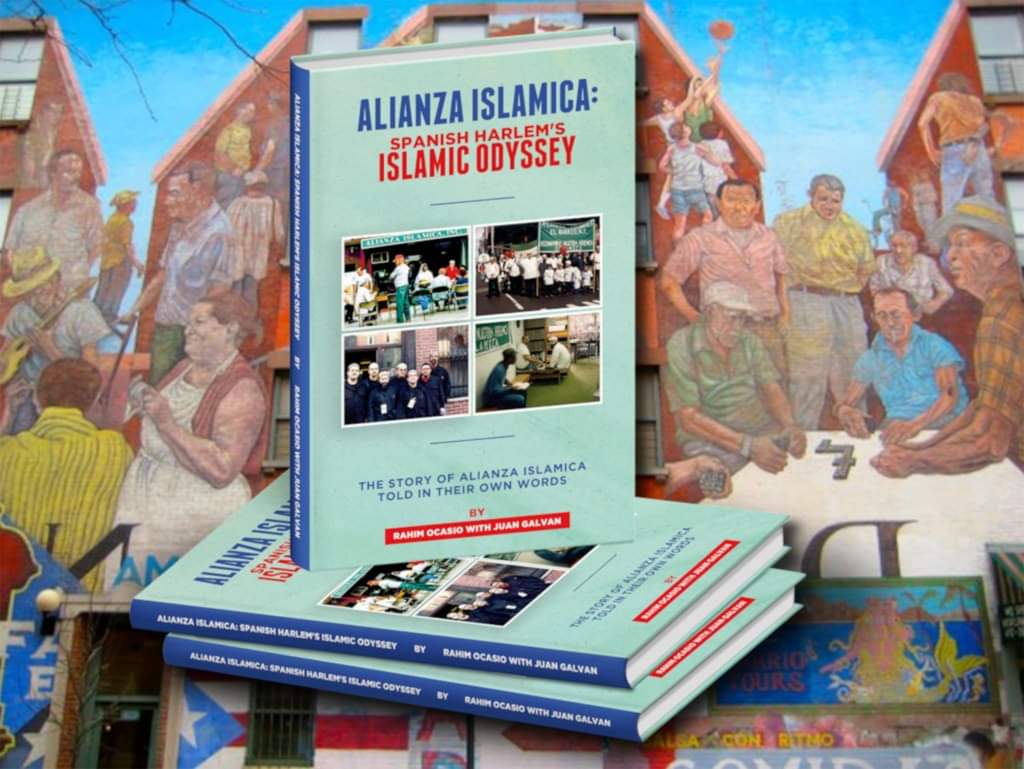
  • Alianza Islámica: Spanish Harlem’s Hispanic Odyssey A Book Review

    Alianza Islámica: Spanish Harlem’s Hispanic Odyssey A Book Review

    Courtesy of Alianza Islamica
    Courtesy of Alianza Islamica

    On the scorching summer day of July 9, 2024, high above the clouds at 35,000 feet, I finished the book Alianza Islámica: Spanish Harlem’s Hispanic Odyssey. I was traveling back home to what the pilot called “El Calentón,” the sweltering Caribbean heat of Puerto Rico. The story of Alianza Islámica is about an extraordinary group of young Muslim Puerto Ricans in the heart of New York who, against all odds, formed a community unlike anything the nation had seen. The book, compiled by Rahim Ocasio and Juan Galvan, uses previously published articles, exclusive interviews, and personal narratives to tell “the story of Alianza Islámica in their own words.” Its release is long overdue; next year marks 40 years since members of Alianza Islámica, the first known formal Latino Muslim organization and mosque in Spanish Harlem, organized an event called Reclamando Nuestra Herencia Islámica (Reclaiming Our Islamic Heritage). This event, held at Spanish Harlem’s Museo del Barrio in 1985, effectively publicized the presence of Latino Muslims and encouraged Latinos to explore their Islamic heritage. The literary project brings together a wealth of voices that give life to the journey of its founders and the people they served.

    My first encounter with Alianza Islámica was around 2002. I had the pleasure of meeting the family of one of its founders and co-author of Alianza Islámica: Spanish Harlem’s Hispanic Odyssey, Rahim Ocasio. As a bright-eyed, fresh new Muslim in my early ‘20s, I was unfamiliar with the experiences of my predecessors, pioneering figures like Rahim Ocasio, Hajj Yahya Figueroa, Mark Ortiz, Muhammad Mendez, and Ibrahim Gonzalez. In my naivete, I had wondered if I was the only Puerto Rican Muslim in existence. I later learned that not only was I not alone, but I was part of a wave of Latino conversion that began as far back as the 1920s, but with an even greater surge since the 1960s.

    My introduction to Islam came in the late ‘90s, learning about African American Muslim figures like Malcolm X and Muhammad Ali.  I later met an Egyptian Muslim family and after investigating more, I eventually accepted Islam. My exposure and conversion came by way of what Ocasio calls “Suburban Islam,” a phenomenon that began with Arab and South Asian migrations and the establishment of Islamic cultural centers outside the stronghold of the inner cities where Islam sprouted from the efforts of African American and later Latino Muslims.

    This “Urban Islam” is where Alianza Islámica was born. The movement began with a group of Puerto Rican teenagers, who were brought up in a very different time and place, finding Islam in none other than El Barrio in Spanish Harlem. Alianza Islámica: Spanish Harlem’s Islamic Odyssey begins here, in a predominately Latino inner city setting; its first chapter provides the official story of its history juxtaposed with the modern institutions steeped in the idea of Suburban Islam of Latin-American Muslims today. As Ocasio witnessed the grand opening ceremony of the IslaminSpanish Islamic Center in Houston, Texas in 2016, he wrote, “Decades ago, in the early 1990s, another Latino Muslim center opened in the heart of New York’s Spanish Harlem, but to no fanfare, speeches, ceremonial ribbon cuttings, dignitaries, or honored guests. Neither newspapers nor television networks covered it, and news of its inauguration probably spread no further at the time than the curious glance of a passerby” (p. 6). Nevertheless, in subsequent years, Alianza Islámica would become the largest and most influential Latino-run organization in the US.

    The original Alianza Islámica, meaning Islamic Alliance, was founded in the late 1980’s in East Harlem, New York, to support Latino converts to Islam. The group emerged from a broader context of social justice movements, including the Civil Rights Movement and the rise of Black and Latino nationalism. Its founding members, Mark Ortiz, Freddie (Ibrahim) Gonzalez, Ramon (Rahim) Ocasio, and John (Yahya Abdul Latif) Figueroa, aimed to create a space for Latinos who had embraced Islam to connect with one another and navigate the intersection of their ethnic and religious identities. Ocasio writes that Figueroa assumed the leadership of the organization, motivated by a desire to address the unique challenges faced by Latino Muslims, who often felt marginalized within both the local communities and the broader Muslim community – a reality that sadly prevails to this day.

    Alianza Islámica was steeped in activism, providing religious education, social services, and community support to aid Latino Muslims in developing a strong sense of identity and belonging. Ocasio said, “Alianza’s style was a hands-on, face-to-face street approach. [Yahya Figueroa] employed techniques to increase exposure and interest” (p. 17). By the ‘90s, they had acquired a storefront and transformed it into an outreach center and mosque. There were periodic caminatas or walks around the neighborhood in which brothers and sisters would participate to give visibility to their growing numbers. They offered GED classes, ESL instruction, health services, and job training. These activities played a crucial role in raising awareness about Islam within the Latino community, challenging stereotypes, and fostering greater understanding and acceptance. According to Ocasio, “We wanted to bring the word of Allah to the people, to our people, who were underserved” (p. 17). Alianza Islámica became more than just a religious organization; it was a cultural and social lifeline for many Latino Muslims.

    The organization was instrumental in providing support and guidance to many individuals who found Islam despite significant challenges in their lives. Among those were recovering drug addicts, former convicts, and HIV and AIDS sufferers. These individuals were not defined by their past struggles but were instead seen as resilient and courageous members of the inner city, who had fallen victim to the pervasive drug abuse and crime that characterized the 1970s and ‘80s. Alianza Islámica’s efforts were rooted in the Islamic principles of compassion and justice, recognizing that these individuals, like many others, were striving to overcome their circumstances and build better futures for themselves and their families.

    Throughout the 212 pages of the book, Ocasio, Figueroa, and others proudly tell the story of Alianza Islamica’s foundation from their own perspectives. Exclusive interviews and transcribed conversations between Alianza members give readers an intimate look into the outer as well as the inner motivating factors that drove them to create and sustain this pioneering community. In summary, Alianza Islámica: Spanish Harlem’s Islamic Odyssey, illustrates the dynamic and evolving nature of Latino Muslim identity in the US from the 1960s until now. By addressing the unique needs of Latino converts to Islam and fostering a supportive atmosphere, the organization left an enduring mark on both the Latino and general body of Muslims in America. Figueroa wrote:

    “From the very start, Alianza sought to combat the social conditions faced by our people with the dynamic spiritual teachings of Islam… It was a spiritual-cultural center aiming to revive and rediscover the soulful treasures of Al-Andalus (Islamic Spain). In its most successful period, we served approximately one hundred families, many of them single disenfranchised young people. Hundreds of other transients were touched profoundly as well” (p. 27).

    Courtesy of Latinodawah.org

    Despite its significant contributions, Alianza Islámica faced numerous challenges over the years. Internal conflicts, financial difficulties, and broader societal changes all played a role in the organization’s eventual decline from 2000 to its final closing in 2005. As a reader and Latino Muslim history enthusiast, I wished the book provided a more detailed explanation of why Alianza Islámica dissolved, beyond its relocation from Spanish Harlem to the Bronx. What transpired within Alianza after September 11, 2001, for instance? Why did the members disband, and why was there never an attempt to return to Spanish Harlem? If Alianza Islámica is lauded as the paradigm of the ideal Latino Islamic community in America, I would like to understand how new generations of Latin American Muslims can address similar setbacks.

    Nevertheless, the legacy of Alianza Islámica endures, influencing contemporary Latino Muslim organizations and individuals like co-author Juan Galvan who continues to draw inspiration from its pioneering work. Galvan wrote in the introduction, “this book seeks to preserve the rich and vibrant story of Islam in the Latino community, committing to paper the events and stories which helped shape Spanish Harlem and the larger Latino Muslim community into what it is today.”

    My overall impression of this book is that it is a unique historical treasure. Initially, I was skeptical about the format being a collection of narratives and interviews rather than a traditional biography or memoir, but as I read it, I appreciated its rawness and authenticity. Juan Galvan, as he did in his previous work, Latino Muslims: Our Journeys to Islam, along with his co-author Rahim Ocasio, have excelled in preserving the legacy of Latino Muslim history, The importance of documenting and broadcasting the voice of the Latino Muslim experience is evident when reading the personal stories of our forerunners. As a Latina Muslim, I believe that more than ever, we need an Alianza Islámica, but it is up to us to lay the foundation, build the structure, and not just maintain, but also expand the important part it can play in serving the Latino community in the US.

    Figueroa challenges us to consider the following: “Will our Spanish Islam be a vision, a dream of the highest form of spirituality and social order, or merely a faulty translation from one failed society to another when we are, as a minority, already the most vulnerable? A choice is ahead of us: a living, vibrant future, or a sad repetition of a failed vision” (p. 46). Let us strive for the former and pray for its realization.

    Alianza Islámica: Spanish Harlem’s Islamic Odyssey, is available for purchase on Amazon and other online bookstores. To support Juan Galvan and the Latin American Dawah Organization (LADO), visit latinodawah.org.
  • Soap Operas and the Reawakening of Islam in Latin America

    Soap Operas and the Reawakening of Islam in Latin America

    This past September 11 marked twenty years since the attack on the World Trade Center in New York City that sent shock waves all over the world. When Muslims were blamed for the bloodiest terror attack on U.S. soil, the public image of Islam in America suffered greatly. South of the U.S. border, however, another 20-year anniversary took place of an event that changed public opinion about Islam in a very different way. On October 1, 2001, a Brazilian telenovela, or soap opera, called O Clone aired for the first time on Rede Globo television. It would later be sold to over 90 countries. Its name, The Clone in English, was translated to El Clon for Spanish-speaking audiences. El Clon was the first tv series that completely revolutionized Latin America’s perception of Muslims, and it would not be the last. Latin America has been called the final frontier when it comes to the spread of Islam. Even though its history is rich with Islamic influence from its indigenous, African, and Andalusian ancestry, the Muslim population in Latin America and the Caribbean is still minimal. However, telenovelas, or novelas, for short, are ensuring everyone and, literally, their mothers, are exposed to Islam. Novelas are as Latino as apple pie or baseball is American. There are jokes and anecdotes about how sacred telenovela hour is for abuelas (grandmas) or mamis (mothers) in every Spanish-speaking household. Changing the channel may earn a person a chancletazo or flying sandal to the body. The biggest producers of Latino telenovelas have been Mexico, Brazil, and Colombia. More recently, Turkish novelas have taken center stage and the Latin American public have embraced them, but it was El Clon that would pave the way for Muslim representation.

    Enter El Clon

    Solmarie Santiago of the Latin Post ranked El Clon within the top six telenovelas of all time. “El Clon was not only a novela, it was a culture lesson,” she said while highlighting its huge success (https://www.latinpost.com/articles/6284/20140123/latin-post-exclusive-6-telenovelas-cant-forget.htm). Created by Gloria Perez and directed by Jayme Monjardim, El Clon is set in Rio de Janeiro, Brazil and Fez, Morocco. It follows the story of Jade, a Moroccan girl who spends her childhood in Brazil and is forced to return to her native land after her mother’s death. She moves in with Tio Ali, her strict Muslim uncle, and must learn to assimilate into this new Islamic environment. Jade ends up falling in love with a Brazilian named Lucas, who is coincidentally touring Morocco with his family. What ensues is a clash of cultures, ethics, and futuristic science, with a scientist secretly creating a human clone of the protagonist, Lucas. Eventually, as in all telenovelas, love conquers all.

    El Clon is most notable for its portrayal of Muslim characters and Islam itself. Rede Globo sought counsel from the World Assembly of Muslim Youth and local imams for its production; nevertheless, it is still not free from the typical stereotypes: Tio or Sidi Ali had three wives and the novela made polygamy seem like a common practice in moderate Morocco; all the Muslim women knew how to belly-dance; and the only hope of happiness for the women was marriage into a rich family. Despite these misrepresentations and cliches, El Clon managed to spark the public’s interest in Islam. Ironically, it was Tio Ali who won the hearts of viewers with his recitation of Qur’an and explanations of the teachings of Prophet Muhammad, peace be upon him.

    Within the Latino Muslim community, among converts of ten or more years, it is common to hear stories about how El Clon positively affected their opinion about Islam or changed how, as Muslims, they were perceived by others. Vilma Santos, a Puerto Rican convert to Islam and hostess of Construyendo Puentes de Paz (Building Bridges of Peace) on America’s Islamic Radio, recalls how the character of Tio Ali influenced her understanding of the faith. “Tio Ali was my favorite,” Santos said, “He was very funny, very down-to-earth, but he was the one who spoke about Allah.”

    After suffering an accident that left her bedridden for a time, Santos began watching the telenovela with her sister. It would open the doorway to her conversion two years after September 11, 2001. She believes she learned more from the novela than from the Muslims she knew personally. The show “was very impactful because it was the first time the Latino community was introduced to Islam,” Santos explained. She still gets goosebumps from remembering the words of the fictional Tio Ali, who she says spoke beautifully.

    Navirita Julia Ovando Moscoso, 39, a communications expert from La Paz, Bolivia, was also influenced by Tio Ali and the women of El Clon. She said, “I became curious about Islam after watching the telenovela and hearing Arabic spoken for the first time.” Moscoso said she was fascinated by the social roles of women within an Islamic environment set against a non-Muslim country. Meeting a Muslim friend in the university helped her learn as she watched the show. She converted to Islam a few years later. Interestingly, although the novela aired long before social media, there are pages dedicated to Tio Ali with inspirational quotes, memes, and photos on Twitter, Instagram, and Facebook (https://www.instagram.com/ensinamentosdotioali/) (https://twitter.com/frasesdoali?lang=en). One example of a Tio Ali quote is, “Allah gives each person the light necessary to distinguish what is right from what is wrong; if you do not know how to distinguish, the fault is only your own.” Pablo Porcel, 52, a computer technician and translator from Córdoba, Argentina, has been translating, subtitling, and publishing foreign series for more than two years. He credits El Clon for Latin America’s growing tolerance of Islam. He said it “was a fundamental piece to show Islam for the first time in Latin America and I think it opened the door to what later the Turkish series has definitely achieved.”

    Turkish Telenovelas: The New Ottoman Empire

    Turkish dramas have replaced the primetime lineup of novelas all over Latin-America. The exotic stories are cleaner and, with breathtaking scenery of Anatolia and the Mediterranean, have captivated Latino audiences. So much so, that they are embracing some of the language of Islamic origin such as “masha’Allah” and “insha’Allah,” along with Turkish vocabulary. Channels like WAPA Televisión in Puerto Rico and its branches in the U.S. have abandoned Mexican or Colombian telenovelas for more conservative Turkish shows. There is at least one Turkish novela on every mainstream Spanish channel. This is not the first time Turkey has revolutionized Latin American identity. Contemporary migration of Muslims to Latin America at the turn of the 19th century is related to the decline of the Ottoman Empire. An exodus from the Middle East, which especially involved Arabs from areas dominated by the Ottomans, landed Muslims in Latin America, where they established businesses and made permanent homes. Because their passports identified them as Ottoman citizens, they were all classified as Turks. This confusion led to Latin Americans referring to all Muslims, and Christians of Middle Eastern origin, as “los turcos” (the Turks) or “los árabes” (the Arabs). Other waves of Muslim migration to the Caribbean and Latin America have occurred since that time, shaping everything from government and commerce to the entertainment industry.

    Porcel is the administrator for the Facebook group, Turkic History and Culture in Series and Movies, with over 200,000 followers, as well as the website, Historia y Cultura Turca, (hyct.com.ar). He has translated more than one hundred 2.5-hour episodes of Turkish novelas, documentaries, and films. Although he has not converted to Islam, himself, he recognizes the value in the representation of Muslims on Latin American TV.

    He said, “There is an understanding and knowledge that had been hidden but is now being revealed and radically changing people’s perspective on Muslim history and culture.” The novelas and epic historical Turkish dramas, called dizi in Turkey, feature Muslim families and glimpses into Muslim life centuries ago. Porcel says the shows are doing away with what he describes as “manufactured prejudices and false perceptions of Islam as a violent ideology.” He has observed the change develop over the past five years and knows some viewers who have, as a result, converted to Islam.

    Making Strides in Latin America

    One Turkish series contributing to this shift is Dirilis: Ertugrul. Translated as Resurrection: Ertugrul, it was released on the channel TRT in Turkey in 2014. Set in 13th century Anatolia, the Resurrection is a fictionalized historical drama centered around the life of Ertugrul Gazi, father of Osman I, the founder of the Ottoman Empire. Like Tio Ali in El Clon, the scholar Ibn al Arabi al Andalusi serves as the spiritual guide for both the main character and the audience. His teachings have literally resurrected the spirit of El Clon for the Latino audience.

    “Ibn Arabi has been the person who vindicated Islam,” said Porcel of the sheikh, played by actor, Ozman Sirgood. Ibn Arabi speaks words of wisdom about Islam, Allah, and His prophets, guiding the characters of Dirilis through the worst situations imaginable, including Mongol invasions, betrayals, and Crusaders’ evil plots. The sage guidance of Ibn Arabi profoundly impacted Porcel and other viewers. He also praises other Turkish shows like Uyanis Buyuk Selcuklu, or The Great Seljuks: Guardians of Justice, who he described as “taking the knowledge of Islam to the highest level we have ever known.” Uyanis is a new and ongoing show, released in September 2020, about the Seljuk Empire. There is no doubt, however, that its popularity is due in part to the success of its predecessor, Dirilis: Ertugrul. The Guardian reported in August 2020 that “(Dirilis) is now so popular that it has been dubbed into six languages and broadcast in 72 countries.” And that “on YouTube alone, Ertugrul has surpassed 1.5bn views” (https://www.theguardian.com/tv-and-radio/2020/aug/12/ertugrul-how-an-epic-tv-series-became-the-muslim-game-of-thrones).

    “I think there is a before and after that happens after watching Dirilis: Ertugrul,” said Porcel, describing the change of heart Latin Americans have towards Islam. Amazingly, the entertainment industry has achieved more through novelas than the immigrant Muslim population has in Latin America, to educate the public about Islam. It is a reminder of what Prophet Muhammad (s), said, “…Allah will not leave a house or residence but that Allah will cause this religion to enter it, by which the honorable will be honored and the disgraceful will be disgraced…” (Musnad Ahmad). With more shows being released every year and a fully engaged and eager Latin American audience, the influence of Islamic culture is sure to continue to make strides in this part of the world.

    Note: Pablo Porcel hopes to continue his work of translating and subtitling this and other Turkish series but is seeking the Muslim community’s support to cover costs associated with maintaining his website and streaming services. He provides his services for free yet lacks the resources to continue this monumental task. Anyone wishing to donate to the cause can visit his website, hyct.com.ar and donate through PayPal.

  • Hispanic Heritage: Intertwined with  Islamic Heritage

    Hispanic Heritage: Intertwined with Islamic Heritage

    Hispanic Heritage Month is observed annually in the United States from the 15th of September to the 15th of October. It began as Hispanic Heritage Week in 1968 and was upgraded to a month in 1989 to “honor the cultures and contributions of both Hispanic and Latino Americans as we celebrate heritage rooted in all Latin American countries,” according to the official government website (hispanicheritagemonth.gov). During this month, the media and educational institutions showcase Latin American artists, entertainers, academics, scientists, politicians, and others who have left an impact on the world. This month may seem of little significance to Muslims; however, Hispanic heritage and Islamic heritage are intertwined. The celebration of Hispanic, or Spanish, heritage is incomplete without mentioning the history and influence of the cultures that helped shape Latin America. A striking and significant part of the fabric of Hispanic heritage is Islamic.

    This intertwining began just a few years after the death of Prophet Muhammad, peace be upon him, when Islam spread as far east as Persia and the Indus River and as far west as Africa and Europe, primarily Spain and Portugal. These two countries are responsible for the colonization of most of Latin America, what is now Mexico, Central and South America, and the Caribbean. Some Muslim historians such as At-Tabari and Ibn Kathir suggest that the earliest expeditions to Spain were made during the third caliphate of Uthman ibn Affan, around 653 CE, roughly 20 years after the Prophet’s death. However, it was in the year 711, 79 years after the death of Prophet Muhammad, peace be upon him, that Islam was definitively introduced to the Iberian Peninsula, to the land we now call Spain.

    This major campaign was initiated by Musa Ibn Nusayr and his general, Tariq Ibn Ziyad, after hearing of the political turmoil there and the people’s grievances with its tyrannical rulers, the Visigoths. This took place during the era of the Tabi’een, or the successors to the companions of the Prophet, peace be upon him, the best generation second only to the companions in piety and worship. Tariq Ibn Ziyad traveled from the coast of Africa to Gibraltar with 7,000 soldiers. On April 30, 711 CE, they arrived with four ships. Although their army was only one-third the size of their opponents, they eventually managed to subdue the Visigoth army and conquer the cities of Toledo, Cordoba, and Granada, which came under the Islamic rule of the Umayyad caliph, Al Walid ibn Abd al-Malik, the grandson of Marwan ibn al-Hakam.

    Freedom and Tolerance Under Muslim Rule in Spain

    The driving force that allowed the Islamic empire to expand to the lands of Spain and Portugal was the same that began as a spark and eventually spread to the whole of the Arabian Peninsula. The Muslims were disseminating the faith for the sake of Allah and in order to earn a place in the Hereafter. The non-Muslims of Spain, mainly Christians and Jews, enjoyed a great degree of freedom and tolerance under Muslim rule. They were ensured protection and freedom to practice their beliefs without persecution. This marked a time in history when all three faiths prospered in many fields, including sciences, medicine, agriculture, and the arts. The Islamic presence in Spain lasted for almost 800 years, shaping everything about Spanish culture including values, customs, and language. This was the foundation for the Hispanic traditions we celebrate today.

    This is not the only location with an Islamic infusion. Aside from the Muslims in North Africa, it is known that Muslims crossed into Abyssinia, what is now Ethiopia and Eritrea, from Arabia as early as six years before the Hijrah (614 CE), the migration of the early Muslim converts to Medina. Additionally, during the caliphates of Umar ibn Al Khattab and Uthman ibn Affan, military expeditions were sent to conquer the lands from Egypt to Tunisia, and these expansions continued throughout Africa, from east to west. Continuous interactions with Muslims, through trade and proselytizing, resulted in more and more African tribes embracing Islam and establishing their own Muslim communities.

    Catholic Spain and Portugal, after having recaptured rule in the Iberian Peninsula by 1492, engaged in the Atlantic slave trade, seeking to colonize and settle in the recently “discovered” New World. African men and women, including Muslims, along the Western Coast of Africa were captured, sold, and traded like merchandise, and many of them were shipped to the Americas, especially to the Caribbean, Mexico, and South America. This continued from the 16th to the 19th century. The presence of these Africans in Latin America helped shape a multi-ethnic identity. A common Spanish proverb in Latin America is “Si no tiene de Dinga, tiene de Mandinga,” which translates to “If one does not have something from the Dinka, then one has something the from the Mandinka. This means that a Latino or Hispanic individual cannot deny their African ancestry, whether he or she came from the Dinka, a tribe native to Sudan, or from the Mandinka people of Mali. It is interesting to note that the vast majority of Mandinka are Muslims.

    The expulsion of Muslims from Spain began after a presence of 800 years, towards the end of the 15th century and around the same time that Italian explorer Christopher Columbus and his crew, financed by the Catholic monarchs of Spain, came to the New World aboard Spanish ships. To fully understand the level of influence of Islam on Spanish culture, compare those eight centuries to the age of the United State which is only 244 years old. Muslims ruled Spain for more than twice as long as the U.S. has been in existence, yet no one can deny that the European and African descendants of slaves that are now living in this country are “American.” Therefore, the Muslims, like Jews and Christians, who were living in Spain for generations were indeed, Spanish, and not just a superficial “influence” that was completely wiped away by the Catholic Inquisition, persecution, and exile of Muslims.

    What happened to these descendants of Muslim Spaniards? Sadly, some were forced to convert to Christianity (some even did it willingly to save themselves and their property), many were killed, displaced, and evicted from their lands, sent away to “where they came from” – likely North Africa, although they had never previously set foot in that region because they had been born and raised in Spain. Still, countless others made their way to the New World. Likewise, Muslim Africans were brought to the Americas as slaves and once slavery was abolished, they formed their own communities in every country of Latin America. Later mass migrations followed the dismantlement of the Ottoman Empire and subsequent instability in Ottoman controlled lands. Many Muslim immigrants resulted from wars and political strife in the Middle East and Far East, and still others were looking for a better way of life. This migration that began with the colonization of the New World has not stopped to this day, bringing the population of Muslims in Latin America to the millions, not counting the descendants of Muslim Spaniards and Africans who were stripped of their faith.

    Loving Every Part of Our Muslim History

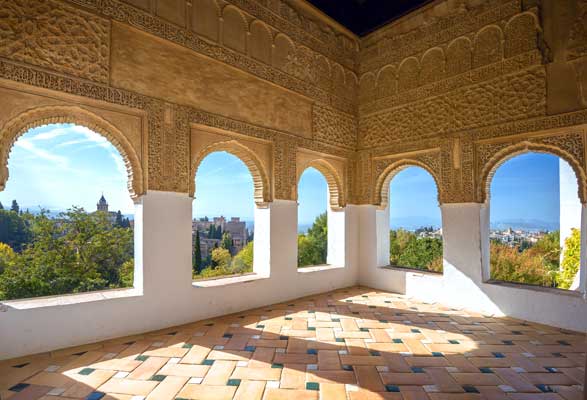
    Given the historical evidence, Muslims should recognize that many Hispanics or Latin Americans are descendants of Muslim civilizations. If we claim, as Muslims, to love our history, we must own every part of it. We cannot be enchanted with the architecture and stories of Islamic Spain, and the wealth and influence of the Muslim empire of Mali and, yet, dismiss the fact that both live on in the New World.
    Celebrating the contributions of Latin Americans is also to acknowledge that many political leaders, including 11 presidents, of Latin American countries have Muslim ancestry. It is to travel to these nations and see the Islamic influence in their architecture, arts, food, and in the very DNA of their people. It is also to know that some of the most popular Hispanic celebrities like Salma Hayek, Shakira, Emilio Estefan, and Jaime Camil are of Middle Eastern descent. It is to hear the stories of Latin Americans who remember a Muslim grandparent or great-grandparent or distant relative. It is to celebrate that Allah’s promise to His servants is true. Prophet Muhammad, peace be upon him, said: “This matter will certainly reach every place touched by the night and day. Allah will not leave a house or residence, but that Allah will cause this religion to enter it, by which the honorable will be honored, and the disgraceful will be disgraced. Allah will honor the honorable with Islam and he will disgrace the disgraceful with unbelief” (Ahmad).

    As Muslims, we have a responsibility to reject trends in the U.S. that alienate and/or objectify Latinos or treat them as second-class citizens. We should also put an emphasis on bringing Hispanics or Latinos/Latin Americans back to Islam, or at least to educate them on their history, which is tied closely with Islamic history. In 2009, only one percent of Muslims identified as Hispanic. By 2018, that number had reached seven percent, according to the Institute for Social Policy and Understanding’s annual report, American Muslim Poll: Predicting and Preventing Islamophobia. Hispanics are returning to their roots. Is the wider Muslim community doing all it can to welcome them back? Let us begin by honoring Hispanic Heritage.