بسم الله الرحمن الرحيم

Tag: hhrd

  • HHRD’s Africa Summit in Washington, DC – A Recap

    HHRD’s Africa Summit in Washington, DC – A Recap

    Around fifty delegates from ten states attended Africa Summit 2011 in Washington D.C. on Sunday, December 18th of last year, organized by Helping Hand for Relief & Development (HHRD). Islamic Circle of North America (ICNA), a partner of HHRD, facilitated the organization of this unique event. The majority of the delegates were American-born of African heritage or expatriates from various African countries including Somalia, Kenya, Ethiopia, Guinea, Gambia, Mali, Nigeria, and Ghana.

    Following an introduction of the participants and initial remarks by Dr. Farrukh Raza (CEO/President of HHRD) on the goals and objectives of the Summit, Dr. Sulayman Nyang, professor and chairman of the African Studies Department at Howard University in Washington, D.C., presented a comprehensive overview of Africa and its many political, social, and humanitarian challenges. He talked about the influence and impact on Africa by the European powers that occupied various parts of the continent during the late 19th and early 20th century, as well as the rich Muslim tradition brought by travelers and traders from Arabia and Malaysia. He informed the audience about the diverse cultures that make up this second largest and second most populous continent, a land with abundant natural resources and various regions that are fertile for agriculture. He talked about health issues such as malaria, the need to promote education, and the imperative challenge of bringing people together to resolve their tribal, ethnic, and political issues.

    Dr. Asha Samad (PhD), professor of Medical Anthropology and a human rights activist with the Somali Association for Relief and Development (SAFRAD), discussed the political, social, and humanitarian issues that adversely affect development in East Africa and the Horn of Africa (a peninsula in East Africa that juts into the Arabian Sea, alternatively called the Somali Peninsula). She pointed out that those most affected by the instability in these regions are women, children, and minorities.

    Dr. Ali Ibrahim Bahar, a professor at Houston Community College, talked about the many relief workers who go to Somalia and that most focus on Mogadishu. He made the point that this is critically necessary but that there are many other regions in Somalia such as Somaliland and Puntland (northeastern Somalia) that are experiencing extreme drought and famine, where the people need immediate assistance as well. He also spoke about a number of educational projects that he initiated a few years ago through an organization called IQRA.

    After Dhuhr prayer and lunch break, the afternoon sessions began with Nadia Zeeshan making a general presentation about HHRD. Ilyas Hasan Choudry then made a presentation about HHRD’s relief and development work in Africa. Azmat Akbar, who is one of the coordinators of the humanitarian work in Africa, called from Kenya to greet everyone and to give them the exciting news that the HHRD relief workers and staff in Africa were viewing the proceedings via video conferencing.

    Mid afternoon a group discussion was initiated by Dr. Iqbal Unus. Following some hours of intense dialogue and analysis, including input from smaller break-out groups, a consensus was built that HHRD must continue with the emergency relief work already in place that includes food and water distribution, providing of basic healthcare, shelter, and in-kind donations to the internally displaced persons in various relief camps across Africa. It was concluded that the long-term development phase will proceed where security issues do not interfere. That phase will concentrate on programs and projects in the areas of healthcare, education, poverty eradication, and the empowerment of women. It was further emphasized that arrangements should be made by HHRD, in coordination with their field staff in Africa, for doctors and nurses from the U.S. and Canada to go and work in the field for 1-2 week stints, providing medical care and helping to improve health conditions, as well as provide pertinent advice to the local HHRD staff.

    HHRD will continue to collaborate with the Summit delegates through the formation of an Advisory Council on Africa, and through the various regional offices of HHRD.  HHRD will reach out to communities nationwide through presentations, workshops, and fundraising efforts to provide humanitarian relief and development to the people of Africa.

    Following was the feedback on the Summit from the participants:

    Question

    How did the formation of the Summit come about?

    Answer

    In the past, Helping Hand for Relief & Development (HHRD), an international humanitarian charity organization with masha’Allah the highest four-star status [exceeds industry standards and outperforms most charities in its Cause], used to work in various African countries partnering with the local NGOs. This year, 2011, saw HHRD representatives going and establishing relief work in North African countries like Algeria, Tunisia, Libya, and Egypt. Then in the summer of 2011, two HHRD teams, Water & Sanitation Hygiene (WASH) and Healthcare, visited the famine-stricken areas of Kenya in East Africa and Somalia in the Horn of Africa. The situation is so bad in these regions that HHRD decided to stay in the areas and work on short-term relief and later on long-term development projects. Then HHRD’s CEO/President Farrukh Raza and Executive Director of International Programs Irfan Khurshid visited the areas. With these efforts, with HHRD teams on ground, Kenya and Somalia have become two more countries, in addition to Pakistan and Haiti, where HHRD is registered as a local NGO.  HHRD’s  long-term 2020 vision calls for expanding HHRD’s humanitarian work in other regions of Africa. For such projects it is very important to bring on activists and intellectuals from the African American community in the U.S. For this purpose the Summit was called, to build consensus and define the priorities of humanitarian work in Africa.

    Question

    What are the plans now that the Summit is over? How does HHRD intend on putting what was discussed into action?

    Answer

    Notes are being gathered to properly document the proceedings, so as to have all the comments, suggestions, and ideas incorporated, while making strategies and programs for the work in Africa. Continuous feedback from the participants is going to be vital as we move forward. As soon as an Advisory Council on Africa is formed, it will meet on regular basis, monthly or quarterly, to guide the projects and implement strategies for the short-term relief efforts and long-term developmental programs in Africa.

    Question

    As I understand, even though issues related to the drought drew immediate concern, larger scope issues were also discussed. Africa often gets overlooked by the media, ironically because of its chronic and long-standing humanitarian issues. What is the importance of addressing those chronic crises in the region as well as the immediate concerns?

    Answer

    As they say — prevention is better than cure. So there is indeed necessity to implement developmental programs so that we can try our best to avoid such critical issues in the future. However, at present there is drought and famine in an environment which is not safe and secure. So it is being projected that the short-term relief projects like water and food distribution, basic healthcare, and in-kind donations will need to continue for a while. Along the way some pilot long-term developmental programs will be implemented in close consultation with the Advisory Committee. Then these pilot programs can become the blue prints for implementation in various parts of Africa. An integrated approach has worked in the past, incorporating programs and projects such as Water and Hygiene Sanitation (WASH), Livelihood (Skills Development & Micro-Financing), Homes Construction, Orphan Sponsorship & Support, Basic Healthcare Units, Mobile Clinic arranging Health Fares, Construction or Re-Construction of Schools, and providing some kind of social support (like wedding gift boxes).

    Question

    In your opinion, what do you feel was the most poignant moment of the Summit? What was the biggest challenge in organizing the Summit?

    Answer

    There were several stirring moments during the Summit. The informative presentations by Dr. Sulayman Nyang and Dr. Asha Samad in the morning session brought to light several historical, political, social, and other realities about Africa which many were not aware of. As coordinators and facilitators of the Summit, one big challenge we faced was how to bring about a consensus among a large group of 40-plus individuals of varying backgrounds and experiences. Our group discussions facilitator for the afternoon session, Dr. Iqbal Unus, with help from Sheikh Abdur Rahman of Chicago, was able to bring about a consensus of opinion on what should be the top four priority areas of long-term humanitarian work in Africa. These four areas are poverty eradication, health, education, and women empowerment.

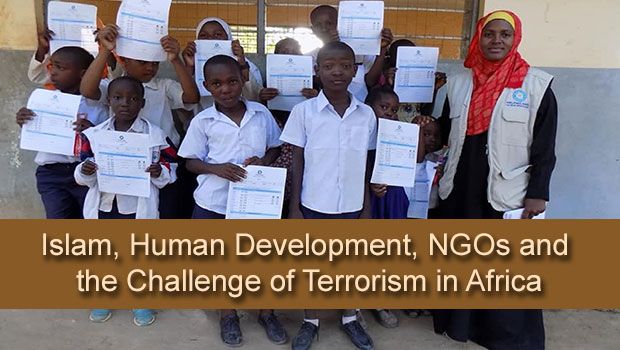
  • Islam, Human Development, NGOs and the Challenge of Terrorism in Africa

    Islam, Human Development, NGOs and the Challenge of Terrorism in Africa

    Africa is the second largest continent on the planet.   It is the home of early man; it is the cradle of life from which human beings branched out to populate the globe. Yet, despite being the fountainhead of civilization, the continent of Africa ranks today at the bottom of the totem pole of social progress. Why is this the case? What are the factors and forces responsible for this state of affairs?   How can one explain this phenomenon of economic underdevelopment?  And finally, what is the role of African religions in this state of affairs?   In writing about Islam and its connection to African development, one must examine these issues to find out what can be done to change the conditions for the better. Along these lines of thought, one must focus on the divide between African Muslims and the Western world with regard to modernization and globalization. We must look at the theological, sociological, political, and economic factors involved in the phenomenon of Islam in Africa and how these play into the perception of the role of Islam and Muslims in the arena of civic responsibility and economic development.  It is for these and other related reasons that we will here examine the relations between Islam and the development of Africa.

    Religion and Human Development

    In our attempt to shed some light on the problem at hand, let us first look at the geography and history of religion in Africa.  John Mbiti, in his Introduction to African Religions and in many other of his writings, has described the African as notoriously religious. Kwame Nkrumah of Ghana makes the point in his book, Consciencism, that Africa is the theater where three strands of religious thought compete for primacy.  In his view, however, the only way Africans can deal effectively with the existential and political challenges they face is to develop a socialist framework within which they can organize themselves for political and economic liberation. It is this author’s view that Africa must, in fact, find a renewed modus vivendi if her people are not to be torn apart by the ideological conflicts arising out of their religious divisions. More than one thousand ethnic groups are caught in the web of globalization. Science and technology, telecommunications, and market forces have penetrated the borders of Africa, challenging the Africans to address the ethnic and religious cleavages that foment conflict and create a breeding ground for the new wave of violence now identified with international terrorism.

    Thousands have died because of religious riots, and the poisonous rhetoric and religious intolerance, with or without foreign backers, have continued unabated

    Africa’s religious heritage has both an Abrahamic and non-Abrahamic face. The Abrahamic aspect is now the dominant one as Judaism, Christianity, and Islam have taken center stage in the African choice of religious ideas and practices. In fact, historically there is an African connection to all of the three Abrahamic religions. Judaism is connected to Africa as seen by the fact that Jews around the world still celebrate their Seder, a ceremonial dinner that commemorates the exodus of Moses and the Hebrew people in their long journey out of slavery in Pharoanic Egypt. Christianity too has its African connection. Reading the Christian gospels one is struck by the fact that young Jesus, Mary, and Joseph had to flee to Egypt to escape King Herod’s persecution of new-borns for fear that any one of them could be a future threat to his throne.  This episode in the Christian scriptures serves as an important reminder to Christians that Jesus was a refugee in Africa. In the modern context, this fact can serve as an effective impetus for global Christian understanding of the plight of Africans in refugee camps today. Welcome or not, the fact remains that Christianity in Africa is a force to be reckoned with, and both advocates of Islam and traditional religions are fully aware of the necessity to co-exist peacefully with their Christian neighbors. This “live and let live” modus vivendi is more evident in Yorubaland than in any other place on the African continent. The sense of inter-religious solidarity among the Yoruba people has been attributed to the “hegemony of culture” by American scholar David Laitin.

    Finally, we find that Islam too has its African connections. At its infancy, this religion that came out of Arabia found refuge from persecution by its own kinfolk with African Christians living in Ethiopia who offered succor. From the sirah of the Prophet, as well as the hadith literature, one can cite evidence showing that Islam is deeply connected to the African experience. African Muslims have always made reference to Bilal Ibn Rabah, the Ethiopian slave who gained manumission in the early stages of Islam in Mecca, and later became the Muezzin of the Islamic movement.

    With scriptural evidence of Africa’s primal connection to all three of the Abrahamic religions, the reality of religious diversity and plurality on the African continent must not be dismissed lightly. If what Samuel Huntington said about the clash of civilizations is true — that cultural and religious identities will be the primary source of conflict in the post-Cold War world — then Africa might be destined to be cannon fodder for the clash between the West and Islam.

    It is only in this context that one can discuss seriously the challenges of modernization and economic development, the expansion of international terrorism, and most importantly, the role and place of Muslim non-governmental organizations in African development.  By development I mean the successful transition of an agrarian or pastoral society into a scientifically conscious and technologically skilled dynamic community.  This would be a society which is progressively committed, through the guidance and support of their leaders, to the study and understanding of natural processes and the establishment of institutions that are sufficiently organized to meet the challenges of ignorance, superstition, natural disaster, material poverty, and cultural deprivation vis-a-vis the Euro-American paradigm generally identified as Westernization.

    Armed conflict has not solved Africa’s political and economic problems

    In this definition of development, the cultural factor must be highlighted as crucial in the self-definition of the people.  Because of the cultural deprivation and the poverty of science and technology in Africa, the people have yet to cross the threshold of industrialization. This fact, indeed, underscores the plight and dilemma of the African continent and its people.  Therefore, when we address the question of religion, economic development, and NGO activities within the sphere of social justice and social change, we find ourselves confronting the paradoxes of the African condition.  African scholars such as Ali A. Mazrui, Claude Ake, George Ayittey, and many others have addressed these paradoxes over the years.  In an essay written for a volume published by the World Bank almost a decade ago, I argued that Africa’s economic and political development has been radically affected by the neglect of culture in the policy-making process of African governments. President Julius Nyerere’s policies of social and economic development in Tanzania after it gained independence from Britain in 1961 (based on a socialist concept and vision called ujamaa), and Kwame Nkrumah’s Consciencism (a philosophical and ideological system calling for the decolonization of Africa) failed due to their unwillingness to engage their respective traditional cultures.  In African society, ethnic, religious, and geopolitical boundaries separate citizens within a nation, in contrast to the U.S., for example, where citizens share bonds of fidelity to the nation through a uniting Constitution and a long tradition of political membership and social identity,  exercise of the vote, and military service.

    Islam, Africa and Non-Govt Orgs (NGOs)

    African societies have dealt with non-governmental organizations in three separate and distinct periods. During the pre-colonial period, individual African societies and communities organized the lives of their peoples according to traditions and the necessities of communal life. With the onset of European colonialism, the patterns of life were gradually changed. For example, in the Senegambian region of the African continent, the people had ruling families and clans; however, communal life necessitated the establishment of Kafo systems (indigenous self-help village  groups) among the Mandinka and parallel structures among the Wolof, Serrere, Jola, Fulani and others. The Kafo system was, and still is, known for its mobilization of young people. Once a child reached puberty, he became a Kambano, an acknowledged member of the council of adults. By then going through certain rites of passage, he is confirmed as a full-fledged member of society with certain responsibilities relating to the welfare and development of the community, and is thus seen as an agent of social change and development. The Kafo was an NGO for its time.  The coming of the Europeans also gave rise to the Boy Scouts, the Girl Guides and other cooperative groups through the churches and secular orders of the society. Independence led to the formation of various civic organizations such as labor movements, political groups such as those advocating socialism or Marxism, and religiously motivated groups such as an Arabic instructor association or a Sufi order. Such civic organizations have gone through a new incarnation in the form of national or regional NGOs. In Gambia, for example, there is a national organization called Tango (The Gambia Association of Non-Governmental Organizations) which caters to the needs of Gambians who embrace the ideas, concepts and activism of the day.

    We can identify a number of different areas of action where the NGOs in Africa and the Islamic organizations, both national and international, share an interest and have grounds for cooperation.

    Development in African societies is inextricably linked to the stability of the international system

    With respect to education and moral development, NGOs could collaborate with Muslim leaders to come up with a wide range of viable options and programs of action. Before colonial rule, local African societies, in their varying ways, set up systems for the educating of the young people before marriage.  Through these systems, the rites of passage served as an effective way of passing the knowledge and wisdom of the elders to the younger generation. These avenues of education were taken to greater heights when Islam and Christianity were introduced. In the Senegambian narratives, for example, the arrival of the Sufi orders led to the organization “of the tongue, the hand and the feet” in the community, of fidelity to Allah and the satisfaction of the “politics of the belly.” This is to say, among the members of the Muridiyya Brotherhood of Senegal and beyond, the followers of Shaykh Ahmad Bamba put forth a new concept of social organization which made their civic engagement comparable to what Donal Cruise Obrien described of the Pilgrims in the American narratives:  serving God and doing hard work were conjoined to create the meaning of life.

    During the colonial period, the closer association between the Christian missionaries and the imperial powers made it possible for these missionaries to more effectively compete for attention among the Africans. With material advantage, they constructed schools, dispensaries, clinics, and hospitals in towns and villages.  By the end of the colonial period, Africa found herself with hundreds if not thousands of NGOs. Muslim leaders, activists for social justice, and relief agencies ought to pay close attention to the history of NGOs in Africa and the varying African opinion about, and attitude toward, NGOs. These considerations could enhance the capacity to understand the state of affairs in individual countries and, thus, better design programs for cooperation and development around the continent.

    Islam, Development, and Intl. Terrorism

    It must be noted that armed conflict has not solved Africa’s political and economic problems. The nationalist movements in Africa succeeded in creating new states that have now reconstituted themselves under the banner of the African Union, the successor to the old Organization of African Unity. Yet, it is abundantly clear that political independence has not translated into economic development. In fact, analysis of Africa’s fifty-five years following independence reveals a drama of civil wars, persecution and violence against the weak and the helpless, failed states, political kleptocracy, and the tragedy of missed opportunities. Poor governance has been rampant in Africa, whether the late Mobutu Sese Seko of Zaire who is scornfully remembered as Africa’s greatest villain and kleptocrat, or Idi Amin of Uganda, or the butchers of Kigali, Rwanda, remembered as the most notorious perpetrators of brutality.

    It is against this background that we look at the nexus of Islam, international terrorism, and development.  The issue of international terrorism was brought to global attention during and after the September 11 attack. In my testimony on Africa and international terrorism before the U.S. House of Representatives subcommittee on Africa several weeks before the end of 2001, I made it categorically clear to the U.S. government that “Africa is the weakest link in the chain of anti-terrorism.” This argument was based on a number of reasons. The first is the weakness of the African states which have little to no military power to withstand internal or external subversion.  Unwise policies, intended to hamper any political resistance or rebellion, deny the calls for democracy and reform, with leaders desperately holding on to power at all costs. This creates a breeding ground for terrorism.

    The second reason why Africa is so vulnerable to terrorism is the continent’s economic conditions. Statistical data from the United Nations and the World Bank have painted a bleak picture. The huge number of Africans who are living miserable lives, subsisting on less than one dollar a day, creates ample possibilities for the political manipulation of African youth. They are recruited by foreign or domestic groups that care nothing about African peace and prosperity, who tap the wells of frustration and then exploit the reality of little to no economic opportunity available to these young people.  The likes of Charles Taylor of Liberia, Foday Sankoh of Sierra Leone, and Joseph Kone of Uganda create armies of child-soldiers.  There must be developed practical means of weaning young Africans from the tentacles of domestic terror groups like those just mentioned or international terrorist organizations such as al-Qaeda.  Africa’s political, social, and economic development is inextricably linked to security and stability. This can only be established by the containment, if not outright elimination, of domestic and international terrorism.

    The third reason why Africa is the weakest link in the war against international terrorism lies in the low level of political and social cohesion, with African society split into varied ethnic, regional, religious, and class formations.  One evidence for this state of affairs is the growing divide between the different religious communities. Thousands have died because of religious riots, and the poisonous rhetoric and religious intolerance, with or without foreign backers, have continued unabated. There is a growing presence of non-governmental organizations (NGOs) rooted in, and financed by, religious groups that are stalwart not only in the propagation of their beliefs but also in the stigmatization of their rivals. This state of affairs is more prevalent in some countries more than others. Where such practices prevail, opportunity is created for al-Qaeda and other terrorist groups.

    The fourth reason that Africa is a weak link in the efforts against international terrorism lies in the opportunistic willingness of African intellectuals to compromise their ideals. Struggling to maintain a respectable lifestyle in the face of declining economies, and determined to be relevant in the social narrative, many  African intellectuals and scholars have consciously or unconsciously mortgaged their souls and imaginations to foreign organizations whose visions may or may not tally with the dreams and aspirations of African society. What makes the betrayal by the educated classes so tragic and deadly is that their flirtation with those NGOs, secular or religious, drafts them into the role of an accomplice in the exploitation of the masses and radicalization of some of their fellow citizens.  NGOs that go beyond propagation of their ideologies and policies and engage in divisive activities foment dissension, impeding cooperation and collaboration. Such NGOs continuously plant the seeds of discord in order to gain advantages over their rivals.

    It is important to consider the phenomenon of global solidarity of Muslims. Upon examination, we note that North Africa, Nigeria, the Horn of Africa, East Africa and South Africa have been consistent in the affirmation of support to other Muslims whose societies are undergoing severe political upheavals. This faith-based connectedness can be used for good, for purposes of the pursuit of development and peace; or for ill by groups that agitate and divide. There is need for an enquiry into the nature of such networks and how they can be tapped for peaceful purposes, for development. Without taking action, these groups, such as Hizb ul Tahrir and the affiliates of al-Qaeda, will continue peddling their destructive propaganda. The evidence is strong that many of the foreign insurgents in Iraq were African Muslims, mainly from the east Africa coast. This fact is known to U.S. authorities and attempts have been made to stem the flow.  Although scholars are not in a position to ascertain the numbers and extent of African involvement, they can shed light on the conditions that obtain in the region, the attitudes and policies of the ruling elites, and the receptivity of the Muslim groups to political engagement —  all are crucial elements in the fight against international terrorism in Africa.

    Concluding Remarks

    First, it should be stated that Islam, as a belief system and a way of life, cannot be linked doctrinally to terrorism. Hiraba, unlawful warfare or the perpetration of violence by those who seek to challenge the social or political system, is behavior that falls beyond the pale of the Sharia. Such activities are associated with “spreading disorder in the land,” whether as insurrectionists or highway robbers.  Secondly, terrorism has been demystified and disconnected from its metaphysical roots largely because of the activities of the nationalist/leftist groups that emerged during the liberation struggle in the Third World. Since the rise of the Iranian Islamic Republic in 1979 and the collapse of the Soviet Union in 1989, the groups that are described as terroristic have become more heterogeneous.  Now, however, we are witnessing the return of metaphysical-based terrorist activity after its displacement by the secular forces of the last century.

    The third important point to note is that development in African societies is inextricably linked to the stability of the international system. Africa cannot survive without the international system because of its precarious position politically and economically. Somalia is an interesting example of the paradoxical nature of the interconnectedness of nations, particularly of the U.S. and the Muslim world. As a result of the American humanitarian involvement in Somalia under Operation Restore Hope, Somalis are now scattered across the face of the earth. This unprecedented development of a Somali Diaspora has potentially positive and negative consequences for both the U.S. and Somalia.

    Finally, it is important to note that international terrorism of the al-Qaeda variety is not likely to gain ground in Africa. Although the continent is vulnerable to external penetration, the legitimacy of Osama Bin Laden is bankrupt, as his theological arguments are counterfeit. While al-Qaeda taps on the frustrations of Muslims across the globe, its indiscriminate and un-Islamic violence will ultimately undermine its success.

  • Africa Initiative of Helping Hand for Relief & Development

    The year 2011 saw dramatic changes and upheaval in the North African nations of Algeria, Egypt, Tunisia, and Libya. Helping Hand for Relief & Development (HHRD), in partnership with local non-governmental organizations (NGOs), provided emergency humanitarian assistance to thousands in these countries, and is continuing to provide services. HHRD staff member Irfan Khurshid went into the affected areas to establish the partnerships and relief work.

    In the middle of July, 2011, in the Horn of Africa (Eritrea, Djibouti, Ethiopia, Somalia, and Kenya) a severe food crisis occurred due to historic drought that threatens the lives and livelihood of more than 10 million people. Many refugees from Southern Somalia fled to the neighboring countries of Kenya and Ethiopia where they have to live in crowded camps near the borders, in unsanitary conditions.

    The crisis warranted swift action by HHRD which, according to its mission, is committed to serve humanity by integrating resources for people in need, and striving to provide immediate response to disasters. HHRD has been working in the Horn of Africa, mainly through the Water for Life and Orphan Support programs, and seasonal projects like Iftar and Eid Gift Donations, in collaboration with partners Islamic Foundation of Kenya (IFK) and the Young Muslim Association (YMA).

    Establishing HHRD Presence

    The severe situation in the Horn of Africa called for sending emergency relief teams from HHRD Pakistan to Africa. The first team to arrive in July, 2011 on the eve of Ramadan 1432 included Azmat Akbar, Sajid Iqbal, and Uzair Khan. In partnership with partners IFK and YMA, members of HHRD Team started to establish food distribution, water provision, and medical assistance in ten villages near the border of Kenya and Somalia, where Somali refugees were living.

    Immediate Respite

    The objective of  emergency response work is to save as many lives as possible, as mentioned in Qur’an 5:35: “…and if any one saved a life, it would be as if he saved the life of the whole people…”

    In the first month, around 3,200 malnourished or undernourished families were reached (about 20,000 persons), and given food ration for one month. Also during the last ten days of Ramadan and on the occasion of Eid, a cooked meal was provided and gifts were distributed among the children. Affected populations in Garissa, Isiolo, Dada Jabula, Dadab, Iffo Camp, Garbatula, and several other villages were reached.

    A second major project was started involving the trucking of water to five villages for three months, with a water tanker filling the water storage tank in each of the villages, including Sudah Lan, Hudumo, and Diisow 1 in Fafi District; and Diisow 2 and Agra Gudud in Dujis. Around 9,000 persons and 70,000 livestock benefited from this vital project. In addition to the food distribution and water provision, more than 6,000 individuals received medical treatment, 180 children were immunized, and 274 basic health awareness sessions were organized by HHRD in the Emergency Field Hospital in Dada Jabula, Kenya.

    Celebrating Eid with Those in Need

    The HHRD  team was so moved by the plight of those they were striving to help through the blessings of Allah SWT that they decided to stay in Kenya for Eid, even though they certainly wished they could be in Pakistan to celebrate Eid with their own families. They celebrated Eid-ul-Fitr with the refugees from Somalia and the orphans HHRD is sponsoring in collaboration with the Islamic Foundation of Kenya and the Young Muslim Association (YMA).

    Smiles Across Miles: In-Kind Gifts Program

    A few weeks after arriving in Kenya, the HHRD team started the process of registering HHRD as a local Kenyan and Somali NGO as the first step in establishing the HHRD long-term development work in Africa. They also laid the groundwork for the In-Kind Gifts Program which transports containers of basic necessity items, food, and medical supplies and equipment donated in various cities throughout the U.S. Last year, in the month of Ramadan 1432, HHRD organized the Horn of Africa In-Kind Gifts Program (see the list of centers at http://www.hhrd.org/hhrd-In-KindDonation.aspx). Despite fasting and hot weather, a large number of donors and volunteers came out to be part of these important efforts, and around the time of Eid-ul-Fitr, the first container was shipped from Chicago. Many individuals of various other faiths also generously joined in the efforts.

    One of these volunteers said: “We are working on a very hot day, when it is 100 plus degrees, for four to five hours to pack necessary things for those who have been facing harshness of weather and elements for months. I have really understood what it means to be hungry and thirsty while facing the severe weather. I want to thank Helping Hand for organizing this effort for humanity and creating opportunity for us here to be working with our own hands for  humanity in dire need.”

    At the time of this report, 15 containers have been shipped to the Horn of Africa valuing $1.2 million. Of these, nine containers have already been distributed, benefiting a population of 121,915 (20,320 families). Containers have included medical equipment and supplies, as well as food.

    HHRD in Mogadishu, Somalia

    In September 2011, as HHRD was about to register itself as an NGO in Somalia and Kenya,  Country Director Pakistan of HHRD,  Fazalur Rehman, visited the Horn of Africa to monitor and evaluate the progress of the relief work in Kenya and in Somalia.

    Senior Leadership in Horn of Africa

    An HHRD delegation of members of the Board of Director visited Africa once the registration was complete, in order to set up the Main Office of Africa Initiative in Nairobi, Kenya. This involved  establishing the initial guidelines and protocols for the relief work and to make necessary outreach efforts to salient stakeholders in the initiative. Members of the delegation included Dr. Farrukh Raza, Chairman of HHRD; Fazalur Rehman, Country Director Pakistan; Dr. Zahid Bukhari, President of ICNA; and Irfan Khurshid, Director for International Affairs.

    The rest of the Board members returned, while Irfan Khurshid, Director for International Affairs, went to Somalia and Tanzania to establish the office of Helping Hand in Mogadishu, and explore the possibilities of initiating projects in Tanzania.

    Africa Summit

    HHRD, in collaboration with the Islamic Circle of North America (ICNA), organized and held the Africa Summit 2011 in December of last year. The conference was a success as participants reached a consensus about the top four priority areas of long-term humanitarian work to be focused on in Africa: poverty eradication, health, education, and the empowerment of women.

    Initial Steps Towards Long-Term Plan

    Irfan Bashir joined HHRD as the Regional Director of Africa, and following the four key agenda items specified by the Africa Summit, the Africa team has gradually initiated some pilot projects in order to see how various development programs can be instituted in the African context. Some of these pilot projects include:

    Provision of sustainable water facilities in drought-affected areas: Construction and installation of hand pumps; construction of VIP latrines; waste management and garbage disposal; hygiene promotion; and training of teachers. Over 23,000 people are expected to benefit from these projects.

    Mobile Health Units in Mogadishu, Somalia: Objectives are to reduce and control the outbreaks of various common diseases such as measles, diarrhea, and skin infections; to improve the health of the IDPs (internally displaced persons); to provide medical care for an increased number of individuals and, through patient education, to achieve better compliance with treatment protocols by the patients; eight medical camps were held  and 548 patients were treated.

    Mobile Health Unit in the Eastern Province of Kenya: Currently the number of patients taken care of by emergency healthcare and treatment are 1,870;  conditions treated include respiratory infections, ringworm, tonsillitis, urinary tract infections,  malaria, fever, eye infections, muscle pains, asthma, and diarrhea.

    Skills Development Program (SDP): this program has recently been initiated, with the objectives of identifying potential trainees through a survey conducted by HHRD; to counsel potential trainees as to recommended training; to establish a vocational and skills development center at a selected location; to help facilitate trainees in areas of self-employment and income generation activities based on the skills acquired through SDP; and to develop linkages of skilled beneficiaries with market opportunities. In May 2012, two SDP centers in Kenya have been established, in Garissa and Isiolo, with computer training and tailoring training to be given to roughly 100 students in each SDP center.

    Path Forward for HHRD in Africa

    Following the recommendations from the Washington D.C. Africa Summit held by HHRD, as well as assessing the progress of work up to the current time in the Horn of Africa, HHRD will continue to move forward with short and mid-term relief, and long-term development programs, including but not limited to the following:

    • In-Kind Gifts Program in Tanzania and Somaliland
    • WASH Program in Tanzania
    • Orphan Support Program in Tanzania
    • Skill Development Program in Somaliland
    • Establishment of microfinance activities
    • Infrastructure Development Program
    • Orphan Support Program
    • Policy Making, Promotion, and Impact Assessment
    • Coordination of networking with other stakeholders
    • Long-Term Sustainability and Development Program in drought-affected areas and populations
  • Creating a Future for Somali Orphans

    Helping Hand for Relief & Development (HHRD) is partnering with the Dr. Hawa Abdi Foundation (DHAF) to sponsor of 50 orphans in a one-year pilot project. DHAF is an internationally acclaimed organization whose founder, Dr. Hawa Abdi, has just been nominated for a Nobel Peace Prize this year. DHAF is an independent non-profit organization whose mission is to support emergency relief efforts in war-stricken Somalia.  DHAF seeks to empower Somalis to take command of their own future. Since 1991, the organization has provided general, emergency, and maternal care to displaced Somalis, independent of their clan, gender, religious, or political affiliation. The DHAF camp, Waqaf-Dhiblawe, is presently hosting 90,000 internally displaced persons (IDPs).

    For the last four years, DHAF has been running a small school in the camp. This school has 848 students and 15 teachers, offering courses for grades 1 through 8. The school is committed to providing quality education to the students in an equitable and efficient fashion. Half of the children are girls and all the students are provided with education at no charge. The school is continuously expanding, adding more rooms and classroom materials each year. Currently work is being done to create a co-op program to give the students employment opportunities when they graduate, through apprenticeships with a professional in the camp so that they can learn a trade and escape the cycle of poverty.

    There are 50 students at this school who are orphans, who will be sponsored in the one-year pilot project of HHRD in collaboration with DHAF. Both HHRD and DHAF are solution-oriented organizations that seek to provide people with the skills, resources, and knowledge to stand on their own feet.

    If this pilot project is successful, additional relief and development programs and projects will be jointly sponsored by HHRD and DHAF, and through the support of generous philanthropists across the U.S. like you.

    Please visit www.HHRD.org for more information and donations.