بسم الله الرحمن الرحيم

Tag: Haiti

  • Volunteering in Haiti Amidst Tragedy

    Irfan Khurshid of Helping Hand was interviewed shortly after his arrival back to the States by Ayesha Ali on February 19, 2010.

    A. Ali: What are some of the activities that Helping Hand is engaged in in Haiti to accommodate and assist the crisis situation?

    I. Khurshid: Helping Hand arrived in Haiti just a few days after the earthquake occurred. We began first with providing immediate relief items such as water, food, and other basic necessities. There was no place in Haiti to purchase these items, so we had to obtain them from Santo Domingo in Dominican Republic. We also immediately began establishing medical clinics since we realized that after the urgent relief items, medical services were urgently needed. Many doctors came to help from different regions of the world including different parts of North America, the Middle East, and so on. Helping Hand also began providing free medicines to the people. We set up six rotational medical clinics at six different locations. The average number of patients we served at one location was about 200 per day. Therefore, we had seen approximately 6,000 patients overall while providing food for about 1,000 families. We also provided some tents and shelters to the people. We currently have an office and a base camp in Port Au Prince. We had doctors and support staff from both origins, locally and from the United States. We are a registered charity with the United Nations, so we were working in coalition with them as well as UNESCO and the World Health Organization.

    A. Ali: Among the rescue teams and volunteer staff stationed in Haiti to help the crisis, how significant and prominent would you characterize the Islamic and Muslim relief agencies set up there?

    I. Khurshid: We witnessed a big disaster where from a population of three million people, about 2 million were affected. More than 70% of homes and buildings in the area were destroyed. Even where the homes were not damaged, people were afraid to stay in them for fear they might collapse. So there were a lot of homeless people in immediate need of help. This raised the attention of relief agencies from all over the world. Everyone, including many Muslims, came out to be very effective and active in trying to help the situation and the people. There was a respectable amount of help by the Muslim people. Currently, less than 5,000 people in Haiti are Muslims, yet it was nonetheless a strong cause for the Muslim relief workers to come out to assist the human population regardless of their creed or origins.

    A. Ali: What are some of the difficulties and challenges that these local Muslim communities currently face? Also, how was their presence a possible connecting link or contribution to Helping Hand’s rescue mission?

    I. Khurshid: The local Muslims who were assisting us were also victims of the tragic earthquake at the same time. So that was their biggest limitation because almost everyone in the local communities that we worked with were affected somehow by the tragedy. Either they themselves were or they had a relative or other family member who was homeless, injured, or deceased from the incident. Hence, they were traumatized by the whole situation around them. The trauma shown on their faces, in their ability to focus on tasks that they were helping us with, or the inability to communicate without feeling distracted by their current situation. All of a sudden, they did not have a job or a home or even an idea of where to get food, so all of this was overwhelming them as they tried to offer local guidance. However, at the same time, they were also fruitful in helping us to station ourselves there and helping us to reach out to people, distribution, and logistics. We worked with at least five local masaajid in the area, including Masjids Tawhid, Fatiha, and Masjid Allahu Akbar. The masaajid were not damaged from the quake, so we were able to utilize them to set up at least five of our medical clinics on their compound. So they were essential as a source for us to get our base camp established in the area.

    A. Ali: In a previous interview, you mentioned that Haiti’s case was more chaotic than even the Indonesian tsunami and Pakistani earthquake aftermath that you had witnessed. Can you please describe what elements you witnessed in Haiti that set it apart as the more chaotic tragedy than the others?

    I. Khurshid: When we saw the extent of the damage in Haiti, it was the same or very close to what we had seen during the tsunami tragedy in Indonesia and the earthquake that occurred in Pakistan. However, in those incidents, the governments were intact and very responsive, and even the local governments were effective in controlling violence. But in Haiti, the government was not effective even before the earthquake had occurred. Additionally, the many of the government buildings were badly damaged either completely or partially when the quake hit and thus crippled and weakened the government even more seriously. Therefore, there was lots of violence and chaos among the communities, no infrastructure and little to no security options. The local companies offering security services were very costly and not reliable enough for us to depend on for our situation. A jail had been also damaged during the quake, and many of the criminals who survived were freed on to the streets as a result. I observed many instances of violence such as mobs hindering and attacking the trucks that were attempting to deliver the relief supplies. We decided to hire our own security so that we could function and also to ensure our medical and support staff were not in danger when trying to administer help to the victims. So, a combination of things resulted this to become a fairly dangerous and chaotic situation.

    A. Ali: What is the current morale of the people in Haiti from the perspectives of sides: the rescue mission teams and the victims of the quake?

    I. Khurshid: The situation is going through some phases. The extent of damage is so large that it will certainly take years before stability can be restored. What is happening currently is that after the initial trauma of the earthquake is lessening, people are beginning to see and realize the reality of their situations such as homelessness, lack of food, and the ability to find work to meet their needs. This is leading to desperation in the people that was not initially evident. Clean drinking water is difficult to obtain, sanitation is poor, and disease is potentially spreading. Plus, the rainy season is approaching, and there are many shelters needed to protect these people from the weather. However, at the same time, as relief agencies are more established in the region, their efforts are becoming stronger and more effective. At the same time, the government is regaining itself and beginning to take charge of some areas of the situation now. With all of this new coordination, the situation is starting to improve slowly and gradually.

    A. Ali: How do you find relief and maintain emotional stability as you and your team work tirelessly through such a devastating and tragic environment?

    I. Khurshid: It was one of the worst experiences for me because of the extent of destruction and chaos that I witnessed. The language was a barrier because it was difficult to find out who was able to communicate with us. All around us, we observed people who were either sick or hungry, or we saw dead bodies lying all around us on the streets. Every day was a difficult one for us. We needed to rotate our relief staff so that after two or three weeks they were able to get a break, because the trauma around them could begin to build on a person’s emotional stability and cause strain. But, at the end of the day, we knew that we had to do what we had to do. That understanding was enough for us to get through the day and accomplish what we needed to for the people.

    A. Ali: If you could communicate to the world, including the Muslim communities, what would you place as the direst need of the Haitian people, and what would be the most urgent type of help requested at this time to stabilize and help the recovery process?

    I. Khurshid: There are a few things that I would focus on in terms of what we urgently need to get out to the victims as quickly as we can. The first is shelter. The tents that are currently set up are only temporary and cannot serve sufficiently in the long run as proper shelters. The second item is medical help, which is very crucial. Without this, the society can crumble when you have so many that are possibly diseased and injured. The third critical item that is needed is drinking water which is certainly vital for the immediate health of the people. The fourth item is sanitization. We need to be able to curb the possible spread of disease. For the first two items, Helping Hand’s efforts are already underway and active. We are starting to build shelter villages with 100 homes per village. Each shelter is about 10×10 in size and costs about $900 to build. This basically leads to two additional items needed to accomplish this, which would be manpower and monetary assistance. These things together can help us to reach the goal of bringing some stability back to the area where so many people are currently suffering.
  • An Experience in Haiti

    Dr. Anees is a Family Practice physician residing in Bonifay, Florida. He arrived in Haiti on January 29, 2010. His interview was conducted by Salman Ali shortly after his return on February 17, 2010.

    S. Ali: What was your experience like on the ground in Haiti, the challenges you faced, and the scope of the medical relief effort?

    Dr. Anees: When I arrived in Haiti on January 29, 2010, it was a very bad situation. In particular, establishing Helping Hand’s base posed many challenges. Br. Irfan Khurshid, Director of HHRD: International Projects was attempting to do everything by himself, because very little help was even available. Four doctors from Florida left for Haiti. However, they had to go via Santo Domingo, Dominican Republic and drive to Haiti even though one can fly directly to Port-au-Prince in Haiti. I was the first doctor to reach there and had no clear idea of the problems facing us. Alhamdulillah, we established the base camp soon thereafter.

    Right from the beginning, Helping Hand took the difficult step of going directly into the rural areas. No other NGOs were doing so at the time

    Some of the most immediate problems we faced included the total lack of electricity and security. Physical destruction and homelessness were everywhere. Large and small buildings were on the ground. These were the difficult conditions within which we had to operate.

    We also faced a situation in which a great many of the population were already afflicted with disease, including AIDS, TB, and STDs. This, in fact, caused some physicians to hesitate about going to Haiti for relief work, as many had never faced or had exposure to such diseases.

    Right from the beginning, Helping Hand took the difficult step of going directly into the rural areas. No other NGOs were doing so at the time – primarily due to security fears. Alhamdulillah, we set up and helped right in the streets.

    S. Ali: What kinds of medical conditions and challenges did you face?

    Dr. Anees: Initially, we found everyone suffering from post-traumatic stress. The people, the old, the young, the women, and men were stressed as well as depressed. It was obvious just from their faces. Many were complaining of not being able to sleep and suffering from anxiety. This was the case with almost everyone that we were treating.

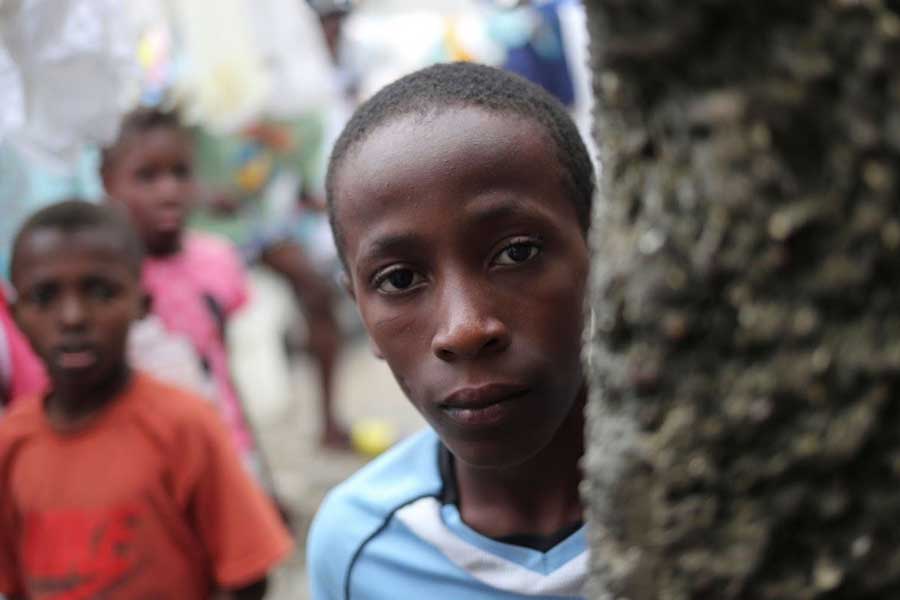
    We could see the sadness in the faces of the patients, the fear in their eyes, whether it be children or the elderly. What compounded the situation was that they were also suffering from extreme poverty.

    As Muslims, we should simply do whatever we can do – be it time or money. It is part of Islamic teaching that “to save one life is to have saved all of humanity”

    The other common challenges we faced were upper respiratory conditions and infants suffering from pneumonia and dehydration. We had injectable medications that we provided. After a few days, we found that 80% of the people coming to see us were complaining of abdominal pain. We felt this was due directly to the sanitation problems there.

    One additional thing I noticed was the cases of high blood pressure and asthma complaints in a large part of the population. There was a lack of basic anti-hypertension and asthma medication. We made a personal request to the UN for these medications, and they told us they have containers and containers of medication, but we found they were not actually being delivered. When we personally followed up and went to visit the UN center, we found our requests to still be pending. There needs to be better coordination and a faster response.

    S. Ali: Can you talk about some of the difficult stories as well as some of the success stories that you encountered?

    Dr. Anees: We saw many sad stories of teenage girls complaining from abdominal pain – they were suffering from STDs. Much of this was due to the conditions caused by the overwhelming poverty in the area and what results from such factors.

    We also saw success stories, especially after establishing the first three clinics (there are now six Helping Hand clinics in Haiti). There were hundreds waiting in lines, and it was very obvious that they were happy that they were receiving actual treatment. In addition, they did not have any expectations of receiving medication, and when we provided those to them, a lot of happiness and encouragement was expressed.

    S. Ali: What can the Muslim community, as well as the larger community, do to help those in Haiti?

    Dr. Anees: As Muslims, we should simply do whatever we can do – be it time or money. It is part of Islamic teaching that “to save one life is to have saved all of humanity.” Doctors in Florida are especially encouraged to help onsite in Haiti, particularly because Haiti is their neighbor, and we know what Islam recommends about helping our neighbors.

    For the larger community, they should share the blessings that they have and enjoy – expertise, money, knowledge, etc. Haiti also needs more nurses and volunteers. Doctors cannot do the job alone. Put simply, we should all do what we can do.

  • Haiti: Our Compassion can Make a Difference

    Haiti: Our Compassion can Make a Difference

    Once Upon a Time: Haiti’s Past

    Haiti has a long history of tragedy and destruction centuries prior to the devastating earthquake that struck earlier this year. From the Spanish invasion of Hispaniola to the French cessation of what is present day Haiti, this tropical oasis has struggled for a different type of survival. Its natural resources made it the wealthiest land in the Caribbean with its sugar and forestry related industries, but this also came with a heavy price. African slaves were imported by the French in the late 17th century as field labor, and their degrading conditions led to a slave revolt. Eventually, Haiti became the first black republic to gain independence and unfortunately, began to spiral downward soon after. For most of its independent reign, Haiti has suffered at the hands of internal strife due to political violence and, as a result, is now one of the poorest countries in the Western Hemisphere. With the forced resignation and exile, after an armed rebellion, of Haiti’s president Aristide in 2004 and the interim government set up by the United Nations, Haiti saw a glimmer of hope with a democratically elected president in 2008. But once again, violence erupted in the land in the form of a 7.0 magnitude earthquake that wreaked havoc on the citizens of the country unlike any violence of the past.

    Just west of the Dominican Republic, Haiti lies between the Caribbean Sea and North Atlantic Ocean. Somewhat smaller than the size of Maryland, this country holds a slightly rough and mountainous terrain. However, despite its majestic surroundings, Haiti lies in the middle of the hurricane belt with weather conditions that result in floods, earthquakes, and occasional droughts making potable water an environmental crisis. With a population slightly tipping over the nine million mark, the citizens of Haiti face a lower chance of life expectancy due to diseases and infections, especially AIDS and others that follow its natural disasters such as Hepatitis A and E, Malaria, Typhoid and Dengue fever. Haitians speak either French of Creole and, though close to eighty percent practice Roman Catholicism, nearly half of the population practices voodoo. In an ever changing world, Haiti sits at the forefront of those in need of aid both in the aftermath of the earthquake and in the many years to come.

    Dozens of mosques are scattered throughout Haiti with an estimated 5,000 Muslims as the numbers rapidly grow. The foundation of Islam began with the African slave laborers who were initially forced to give up their practice of the religion; however, their heritage soon became imbedded in the native Haitian culture. The 20th century saw a large number of Arab immigrants settling in Haiti while a significant amount traveled to the Americas. It has been noted that the first Arab settlers were from Morocco.


    Rising Action: Earthquake Aftermath

    The earthquakes in Pakistan and Indonesia were known for the mark they left not only in terms of their magnitude, but also the destruction they left behind. With hundreds of people dead or unaccounted for, thousands of homes destroyed, and even more people left without food and work, relief agencies scurried to pool together the basic necessities for survival. There was an overwhelming response from the global community with regard to these two natural disasters, but like the forgotten faces of these troubled people, the media and world at large returned to their daily routines. The earthquake that rung in the New Year seemed to be no different than those that preceded it. January 12th marked the day a 7.0 magnitude earthquake rocked Haiti’s capital of Porte au Prince leaving in its path complete and utter devastation. Within days, media outlets were buzzing about the strength of the quake and its effect on this forgotten country. Similarly, relief agencies from across the globe were preparing their supplies as they took ships, planes, cars, and buses to this inaccessible city. Organizations such as UNICEF, Red Cross, and the International Rescue Committee began running drives across the world to raise funds for these victims. Similarly, Muslim relief orgs and Islamic countries pooled together their resources and manpower to deliver whatever they could.


    Climax: Haiti Receives a Helping Hand

    Human beings regardless of race, religion, ethnicity, age, and gender all require food, shelter, water, and companionship to survive. Once stripped of any of these basic necessities, the human being falls into a bout of irritability, depression, and instability. The key to any given response in emergency relief work is to keep the end in mind—in other words, relief work should address the current situation by gauging what is needed to facilitate survival and follow this with the necessary skills and training of the victims in order for them to ensure a secure future for themselves. A majority of the aid work that took place in Haiti targeted the medical needs of the Haitians, which was immediately required; this was followed with the importing of tents and sleeping bags to temporarily house the thousands of people who slept on the streets out of fear of the aftershocks that continued to rock the epicenter. However, as the weeks went by, the focus on what Haitians needed to regain their sense of normalcy was removed. Fortunately, the few organizations that remained behind continued to make progress and attempted, with the Haitian people, to remain hopeful that there would be a positive future in store for the country.

    “True heroism is very undramatic. This is because true heroism is not the desire to surpass all others by any means, as we unfortunately see all too often. Instead, true heroism is the desire to serve all others by any means. By this definition, heroes are in no short supply in Haiti. I’ve seen them here every day for the past week. I’ve seen them come from all nationalities working for all types of organizations with a common goal in mind: to aid a country in its darkest hours,” shares Umair Javed, a volunteer in the Youth for Haiti program organized by Helping Hand for Relief and Development (HHRD). This program invited college students from all over the country to participate in volunteer relief work in Haiti during their respective spring break. After a rigorous selection process, nearly 30 college students were chosen to spend four week-long rotations in batches of 10 to volunteer in medical assistance and building shelter villages alongside supervised professionals.

    Falling Action: Building Haiti

    HHRD set out to rebuild Haiti by constructing hundreds of permanent shelters. The cost of $900 per shelter would give thousands of victims who have turned homeless after the earthquake a place to live with their families. These shelters were constructed into a village where they also built a mosque and school. With over 200 children playing amidst the rubble, parents welcomed this move to provide their children with an education that also helped to keep them occupied and safe. With Ramadan slowly making its way, the mosque was a breathe of fresh air for the new converts to Islam and Muslims who struggled to make inner peace after seeing such large scales of devastation and death. Millions are living in unsanitary conditions, cultivating more infections by the day.

    Moreover, doctors from Pakistan, Indonesia, the United States, and local Haitians worked round the clock to tend to the wounded. Six rotational clinics were being operated in the most remote areas with little or no medical help. These Medical Clinics treated more than 2,000 people per week, and vaccinations were provided to over 300 men, women, and children. Originally, a team of volunteer doctors of HHRD from Florida and New York took large supplies of medications bought for them by HHRD to Port-au-Prince. Over $160,000 worth of medication was administered to over 11,000 patients. These doctors helped to establish the mechanism for field and mobile clinics where they have volunteered roughly 1,000 hours of services along with an estimated 900 hours by nurses. Due to urgent need, a full-time local Haitian Doctor was hired, accompanied by a female doctor who especially tended to women’s health issues.

    With over 2,000 hours of volunteer work conducted by those at HHRD in Haiti, many respected community leaders have traveled abroad to witness and monitor the relief efforts. Naeem Baig, Vice President of the Islamic Circle of North America (ICNA) and Executive Director of ICNA Council for Social Justice, along with Imam Abdool Rahman Khan, Scholar of Islamic Foundation in Illinois and Member of ICNA Executive Council were two of the most prominent members to have gone. The work HHRD is doing abroad is essential and ongoing. They visited the Medical Camps and met with the Muslim community leaders to assess the situation and lend their support. “A lot still has to be done here,” said Imam Abdool Rahman. He also had a chance to meet some of the college students that are there for the Youth for Haiti program. “It’s a very humbling experience to come here; life here is tough, and they (the volunteers) say they enjoy it and are willing to come back.”

    Resolution: Let Us Not Forget

    “I have to admit that I am absolutely amazed and inspired by the people of Haiti. Despite their poor living conditions, they were so full of life and optimism. I’m amazed by their spirit, their perseverance, and their rare ability to find happiness in even the smallest of things. They were the most hospitable people I have ever come across. I personally feel a bit guilty because I feel that I benefited more from them than they have from me,” shares Raihan Dakhil a volunteer in the Youth for Haiti program.

    Despite centuries of strife, the people of Haiti hold in their hearts an appreciation for what they have today: their lives, their families, and their country. Though each day brings with it another struggle, these victims have been given the essential tools to help rebuild their lives and hopefully to ensure a better future. The work there is far from over—the country requires long term developmental projects such as sanitary water, educational institutions, properly utilizing natural resources, and much more. Hundreds of children are now orphans, while hundreds of women are now widows, but within each, there lies a vow to never forget how things were and to always remember that at least now life is better than before. As human beings and more importantly as Muslims, we cannot turn a blind eye to the evil in this world and the tragedy that millions are facing. Let us be those who lend a helping hand and dust off the fallen for today’s calamity can be tomorrow’s reality for many of us. Haitians are putting back together the pieces of their shattered lives, but instead of forcing them into place, they are stepping back to make sure each piece fits properly in order to ensure the best picture. We, too, must continue to do the same.