بسم الله الرحمن الرحيم

Tag: guidance

  • Muslim and Mexican in Turkey

    Muslim and Mexican in Turkey

    How I came to embrace Islam is a painful memory. However, I am grateful to God for everything that I had to endure to be where I am now. My first encounter with Islam was in 2009, when I met a Turkish Muslim online. I began investigating the religion and learned little by little through our friendship.

    The year that changed my life was 2010; it was then that I was diagnosed with lupus erythematosus. The news was difficult to bear. I knew absolutely nothing about this serious disease or its effects. The doctors told me that it is an incurable disease, but subhanAllah, glory be to Allah, for five years I have survived because of the strength of God’s infinite mercy. I consider my illness a blessing because despite the lows and relapses I have had to struggle with since being diagnosed, it has helped me to mature and strengthen my faith.

    I have realized that the life of this world is temporary; I am only here to learn and to serve the Most High, and for every pain, for every relapse, for every loss, I know that God will reward me in Jannah, in Paradise, insha’Allah. Perhaps my health will decline more with each passing day, perhaps I will have to make more sacrifices, perhaps I will lose something or someone; Allah knows best, but as a Muslim what I will never lose is my faith and strength in Allah.

    In 2011, I traveled to Turkey and heard the Adhan, the call to prayer, for the first time in my life, and I also visited a mosque. Since that first trip, I focused more on Islam because there were things about my Muslim friend that drew my attention. He spoke so highly of the Prophet Muhammad, peace be upon him, and he advised that in order to know more about Islam, I had to learn about the Prophet, read about his life, and love who he was.

    That same year I was blessed with the opportunity of becoming a mother, but because of health issues, at five months gestation, on November 17, 2011, my pregnancy was interrupted. While in the operating room the doctors asked if I was Catholic, to which I responded, “No, my religion is Islam.” From that moment I considered myself a Muslim at heart although I had not officially converted.

    I was devastated because I understood that now I had to face two losses; not only because my baby died, but the man I considered my partner had abandoned me. I fell into a deep depression. I could not wait to get out of that crisis. I lost everything and even after several months I felt the same. One day in February 2012, I decided to log into Facebook to see what had happened during my absence. Coincidentally, a Muslim friend of mine was also logged on and he asked me how I was doing. Since I needed to get everything off my chest and speak with someone who viewed life differently, through another perspective, another culture, another religion, I vented. He was patient enough to read through everything I posted, until I finished.

    His response was, “I will send you something that will help you,” and that is how my first copy of the Qu’ran came to my hands. The first Surah, or chapter, which I read was Al Kauthar, and the verse that opened my eyes was, “Therefore turn in prayer to your Lord and sacrifice,” (108:2). It was after I read those words that I realized why I was going through such painful hardships; I had to sacrifice something that was never meant for me, something that in the end would not make me happy. Allah had already determined my destiny. I began reading more of the Qur’an and exploring Islam until finally, on May 2, 2012, I made the decision to declare my faith in a mosque in Mexico City.

    It has been four years since I entered Islam, Allahu akbar – God is Great. My life did not end with the loss of a partner and a child. On the contrary, I became stronger and found my real love, Allah, may He be glorified and exalted, and my true faith. I understood that in order to obtain happiness, one has to sacrifice and leave everything in God’s Hands.

    I married that Muslim friend who sent me a copy of the Qur’an, and now I live in Turkey. I arrived here in 2013, and moved to a city called Erzurum, where people are religiously devoted, conservative, and kindhearted. They have helped me to increase my faith. I attend Qur’an class five days a week, where I have learned to recite in Arabic and am attempting to memorize the entire Book. Insha’Allah, God willing, I can return to Mexico to share my knowledge.

    I made the decision to memorize the Qur’an because during the time I was living as a Muslim in Mexico, there was a young convert whom I believed to be knowledgeable who would say things that puzzled me. He even tried to teach me things that were contrary to the Sunnah, or Prophetic traditions, and I felt disappointed. That is why I wanted to understand the Arabic and memorize the Qur’an so that no one else could confuse me and also because every Muslim should learn the Holy Qur’an and live in accordance to the Sunnah.

    As a convert I felt even more compelled to seek knowledge. If people who are born and raised Muslims can learn, then I can do the same. Being a convert is no excuse for me, just as not having been raised in an Islamic environment is no justification for not seeking knowledge. From the very moment that I declared my Shahada, it became a commitment for me to change my life. I wanted to practice everything that Islam teaches and to always have the thirst for learning more and more about my faith, Alhamdulillah.

    Life in Turkey has not been easy since I have had to learn and adjust some of my behavior, but above all live a life in accordance with the Qur’an and the Sunnah. Here in Turkey was where I saw a woman covering her face with a veil for the first time, and men with long beards and tasbih beads making constant dhikr (remembrance of God). Men and women are segregated and the government puts a lot of love and effort into the month of Ramadan.

    In Turkey when people discover you are a Muslim from the West, they are filled with surprise and admiration, and at the same time, they offer their love and support. I consider this country the place that opened its doors to me and adopted me, and where I don’t feel excluded or judged because of my religion.

    I remember that in Mexico I used to be pointed out and ridiculed for wearing hijab. I used to be the center of attention and I believed in Turkey things would be different, but they are not. I am still the center of attention, but because I am a Muslim Latina, Alhamdulillah, and that is beautiful.

    Recently, during a family reunion, someone asked me, “Has your life changed after your conversion? Do you like it? How is your life now?” I simply responded, “Of course my life has changed, and for the better, alhamdulillah. Life in Islam is a new life.”

     

  • My Advice to New Muslims

    My Advice to New Muslims

    Oftentimes when a person embraces Islam, he or she is unsure of what steps to take next. After much effort to arrive at the decision to proclaim the shahadah, the testimony of faith, with conviction and sincerity, their journey continues. Knowing where to go from there can help a new Muslim steer clear of hardships and misguidance. I am a Latino convert of over twenty years who has had a chance to study Islam and Arabic in the US and Saudi Arabia. In this article, I offer my advice to new Muslims.

    Learn About Allah

    The science which deals with this is called al-tawhid, which means “to single out Allah in worship”. Actually, al-tawhid is classified into three categories – tawhid al-rub?b?yah (singling out Allah in His Lorship), tawhid al-asm?’ wa al-sif?t (singling out Allah in His Names and Characteristics), and tawhid al-uluh?yah (singling out Allah in worship).

    Getting to know Allah is very important. Having newly entered Islam, one might still have a lot of misunderstandings about his/her Lord. In Islam, we recognize that our original state of being is one of not having knowledge, and Allah sent prophets to us to teach us about Allah and the correct way to worship Him. Allah says “We have sent to every nation a messenger (saying) “Worship Allah and avoid worship of other than Allah.” This knowledge is the most important thing a Muslim can learn and the first obligation upon him/her. One should be continually learning, recognizing, purifying, and acting upon tawhid.

    The first words uttered to enter Islam – “L? il?ha illa All?h” – are related to al-tawhid. These words are in fact a statement confirming al-tawhid. They should also be the last words a Muslim says just before he/she dies. That being the case, we can say that al-tawhid should also be the last matter in life.

    Learn the Qur’an

    Allah sent the Qur’an to us as a guide to live by, to judge by it, to recite it, to use it as a cure, to learn and teach it, to reflect upon its words, and to make it the center of our lives. Indeed, the Qur’an is one of the greatest miracles. We should spend time learning how to recite it in its original language. We should read its translation in the language we are most fluent and comfortable with. We should also invest time in our lives to familiarize ourselves with its verses. Indeed, every single verse is itself a sign (?yah) from Allah. It is Allah’s Message to us and instructions on how to live our lives and fulfill what Allah wants us to do.

    Start Praying Immediately

    Prayer is an essential part of Islam. The prophet (peace be upon him) said, “The covenant that distinguishes between us and them is the prayer, so whoever abandons it has disbelieved.” (Reported by Ahmad, Al-Nisai, and Al-Tirmidhi).

    Avoid Bad Company

    It is very important for new Muslims to stay away from bad company. Why do I say this? There are many negative and destructive behaviors that some people see as normal or even praiseworthy. Some individuals accept certain actions as being normal or acceptable; for example, dating and premarital sex, unnecessary intermixing of the genders, drinking alcohol and going to nightclubs, etc. These people have not yet understood the importance of living a pious life or felt the impact of establishing regular prayer. They may not even accept the existence of a Creator. This type of bad company might divert you – intentionally or unintentionally – from your new chosen life. They are not upon the correct path; so how can you expect them to aid you on the path that you have already chosen and recognized to be the one and only truth?

    Attend the Masjid Regularly/Get Involved

    Islam is a religion in which community is very important. Prayers are preformed in congregation five times a day. Males should try to make a great effort to attend all of these five prayers or as many as he can in the masjid if there is no difficulty in him doing this. Women are certainly allowed to pray in the masjid, but are encouraged to pray at home when children or other home matters demand attention. I would also suggest getting involved in whatever capacity you can at the local masjid.

    Learn Arabic

    Arabic is the language of Islam since the revelation was revealed through this language. Arabic is a universal language and is spoken by believers all around the world. The more we understand Arabic, the better we can understand the Qur’an.

    I would suggest learning as much of the Arabic language as possible. Focus on the correct recitation of the words, and on understanding their meaning.

    Additionally, one should not make it a stumbling block to learning or practicing the religion. At times, Muslims get diverted from other matters and may not even pray or memorize the Qur’an with the excuse that he/she has not mastered Arabic yet. Not knowing enough Arabic should never be used as an excuse for one to fall short in other areas.

    Learn the Seerah

    Muslims should learn about the Prophet Muhammad’s (peace be upon him) life. Seerah is the science which teaches about the life of the Prophet Muhammad. We should learn about his life and take lessons from it. We should also learn how he dealt with situations and try our best to model our lives according to his life. Indeed, Allah said, “You have in the Messenger of Allah the best example.” All of our actions in life should accord with his Sunnah (way of life, instruction, actions, and tacit approval).

    Learn About he Early Muslims

    There are often times where Muslims differ on issues related to the religion. Sometimes these differences are legitimate, and sometimes they are not. Allah says, “If you differ in anything, bring it back to Allah and his Messenger.” This means that we should resolve our problems by going back to Allah’s Qur’an, and in our times since the Messenger is not alive, we should go back to his Sunnah. However, there may still exist some differences of opinion on the interpretation of the Qur’an and Sunnah. Therefore, we should rely on the interpretation of the early Muslims, namely the Prophet’s Companions, their followers, and the followers of the followers. By this we can get the best and most accurate interpretation of Islam.

    If these early generations of Islam had a consensus on a particular matter, then it is not permitted to differ in that matter. If they differed on something, then the varying viewpoints are acceptable. We should never rely on our own opinion on things that have already been established or make it an issue of disunity among the Muslims.

  • The Missing Peace

    The Missing Peace

    My path towards Islam has taken many twists and turns throughout Latin America and here in the USA, where I finally became a Muslim. My parents are from Chile. They were political refugees exiled to Mexico because they were Socialists. In the 70s, to be a Socialist in Latin America was synonymous with being a rebel. Having political views that were left-leaning was very dangerous at that time. In 1973, a military coup d’état in Chile resulted in years of brutal political repression. My father was imprisoned and tortured before being exiled. A few months later he met my mother, who was also a Chilean political refugee. In 1976, I was born in Mexico City. My parents, my sister and I lived as a relatively happy, typical Mexican middle class family except for one thing: my parents were agnostic. To not be Catholic in Mexico was almost unthinkable.

    In 1989, when democracy was reinstated in Chile, my parents decided to return. I was a 12-year-old boy. Chile is a small country, dominated by one of the most conservative churches in the world. Like in Mexico, I grew up surrounded by Catholic messages over the radio, on television, and in the streets. In my own innocent way, I always liked the idea of God, of one God, but that was not what people believed. How could a boy from an agnostic family firmly believe in God? In my house that topic was never a theme of conversation. “Religion is the opium of the masses,” my father used to say. Over the years, my desire for a spiritual connection continued to increase.

    As a teenager, I was exposed to Capoeira (a Brazilian dance/martial art form) during a family vacation to Brazil. In Chile, I began taking Capoeira classes which helped to fill the void of my lacking spirituality. In 2000, I was accepted to the school of business in Chile and I studied Capoeira every day. My life became busy, “too busy” for religion.

    In 2003, I met my wife, a beautiful American woman who was teaching English in Santiago, Chile. She came from a Catholic family and thus, I came closer to the religion. In 2005, I moved to the USA and in 2006 we married in a Catholic Church in Richmond, Virginia. In 2008, I opened my own studio to teach different styles of martial arts, fitness and dance. That same year my first daughter, Priya, was born and in 2010 I became a home owner. In a period of only five years I had achieved the “American dream”, things that some people do not achieve in their entire life. But something was still missing.

    2012 was one of the hardest times in my life. My arrogance led me to tear my patella tendon which took almost a full year to recover. That same year my second daughter, Mireya, was born. In 2013, I began my spiritual-religious search. I started investigating the Yoruba religion, Santeria, but I did not feel identified with it.

    In December of 2014, I spent Christmas with my family in Chile. After Christmas dinner I went to my room to sleep, but stayed awake just sitting on my bed. Memories of my adolescence and my youth came to me and I began to cry. I cried a lot. I can’t remember for how long, maybe for five or 10 minutes, but I remember putting my knees on the floor and my arms in a supplication position. And I stayed there, asking, really asking, for God to guide me and help me to come closer to Him. After that, I turned on the TV and it was showing a program about the life of Jesus. A lot of questions came to mind like, “Is he God”? Then I googled the word “Jesus” and somehow landed on a page discussing Jesus and Islam. Then I researched the words “Islam” and “Prophet Muhammad.” By the end, I didn’t sleep until 5 or 6 am.

    Around 11am, I woke up. My mother said I must have been tired because of how much I had slept. I told her then that I wanted to become a Muslim but she didn’t believe me. When I arrived in America again, I called a Muslim friend to see if he could take me to a mosque. There, I felt so much peace and harmony within myself. Then another friend, who is from Turkey, helped me to take my Shahada, the testimony of faith. I also met a Gambian brother, a student at my studio, who helped me visit different mosques and meet with some imams. By Ramadan time, I realized that I was surrounded by a nice community of brothers to help me in my journey.

    My wife has been a tremendous support to me. We have been married for 10 years now. I consider myself an impulsive person and I used to get angry with her for insignificant things. But now I try to remember this hadith: “The strong person is not the good wrestler. Rather, the strong person is the one who controls himself when he is angry.” (Sahih al-Bukhari, Book 73, #135)

  • The Qur’an Opened My Heart

    The Qur’an Opened My Heart

    My name is Margarita Aguirre and I am from the city of Guadalajara in Jalisco, Mexico. I was born in the midst of a practicing Catholic family. I remember that while I was in high school, I had my first encounter with Islam without realizing it. On our school’s bulletin board, they displayed a “poem” that caught my attention. I remember jotting it down in my favorite poetry journal because I loved it. At the end of the poem, it simply read: “The Qur’an.” I thought that it must have referred to a book of poetry, and so I did not think to look for any more information.

    Years passed and again I came face-to-face with the Qu’ran. In my profession as a teacher, and until now, I have always been passionate about everything that has to do with history. Consequently, it was while I was reading about history that I learned about all the many world religions, including Islam. One day, I planned a lesson dealing with world religions for my students. It was during that particular class that I again found the word, “Qur’an” in the history books. Then I realized that this book was not a book of poetry, but rather a book that Muslims read, similar to the Bible for Christians.

    It was a huge surprise for me, because I used to think that the Bible was God’s only book. I recall that at the end of my work day, I went home and searched for what I had written in my journal all those years ago during high school, and I found it. It was then that I wanted to know more about Islam. That was the most striking incident that occurred which sparked my search for information about Muslims and Islam. In fact I did not have a good concept about Islam but I wanted to explore and understand the religion myself, and I wanted to know why Muslims also had a holy book.

    During my investigation I found an internet page with information about Islam. I really enjoyed reading the articles, and that is how I began learning. The site manager explained a lot about the religion and answered all my questions, dispelling any doubts. I would double check whatever the brother said, just to be certain, until one day I decided to download a copy of the Qur’an.

    In the beginning, this Qur’an contained a biography of the Prophet Muhammad, peace be upon him, and it impressed me. I finally learned firsthand about the person who had established the Islamic teachings. When I began reading the verses of the Qur’an, my heart recognized that they were God’s words; that I was reading the very words of Allah.

    I felt so moved that I could no longer resist the truth that my heart had acknowledged. This beautiful religion that has changed my life is a fountain of wellbeing and joy for the heart. God, in His divine wisdom has left us with all the knowledge we need in the Holy Qur’an and in the Sunnah of our Prophet Muhammad, peace be upon him. More importantly is that it was in this religion that I finally understood God’s Oneness, and I learned how to love Him alone. I felt complete and I understood so many things. Islam perfected my soul and my feelings, and all my doubts were resolved, Alhamdulillah. And as Allah tells us in the Qur’an, “This is the Book about which there is no doubt, a guidance for those conscious of Allah,” (Qur’an, 2:2).

    My first Ramadan was about total surrender to God. I was very excited; it had only been two months since my conversion. I had declared my testimony of faith long distance with a Moroccan brother, because I did not know a single Muslim in Mexico. Later I searched for an Islamic community in my city, and to my surprise, I found other Muslims in Guadalajara. Until that time I had thought that I was the only one in Mexico! I was able to say the Shahada again with my Muslim sisters in the mosque. Alhamdulillah, it was a wonderful Ramadan for me, as I observed the fast, and not only did I leave food and drink during the prescribed times, but I also abstained from everything that was harmful to the soul, such as bad manners and evil actions.

    I give thanks to God for having guided me to Islam as my religion and way of life, for I have never been happier, alhamdulillah.


  • A New Translation of the Holy Qur’an in the Spanish Language

    A New Translation of the Holy Qur’an in the Spanish Language

    There was an interest in me that was awakened in translating the Holy Qur’an that was not so much devoted to imitating the style of the original in Arabic or in copying the literary style of the original, but rather in transmitting in the correct and most direct way all of the meanings, both profound and spiritual, as well as describing the whole approach of it all, that I had understood when reading and studying it in its original language. –Isa García.

    A Little History

    When I embraced Islam and accepted it as my way of life, I was thirsty for knowledge. I wanted to learn as much as possible about the primary source of knowledge, the divine revelation: the Holy Qur’an. I knew from the beginning that the Qur’an was revealed in Arabic, and that this text was the original; that it had been preserved and safeguarded intact for more than 14 centuries. But since I did not know Arabic, I had to refer to the various Spanish translations that were available.

    What I found disappointed me, because many times the text was confusing and incoherent. I understood that the reason for this was due to two factors. The first was that many of these translations were done by people who did not have the necessary knowledge about Islam, its message, and its history. Because of this, certain concepts were misinterpreted and erroneous. In some cases, there were premeditated attempts to discredit Islam and its holy book by altering the meanings.

    Furthermore, most of the translations are too literal, imitating the Arabic style not only in the expressions used but also in the word order. The result was that the normal grammar and syntax used in the Spanish language were not utilized, resulting in confusing translations. Add to this the fact that the language used is archaic and almost foreign, in a style that is seldom used in Latin America. Also, most of these translations do not have clarifying notes regarding historical and legal contexts.

    Later on, when I had the opportunity to study the Arabic language and I began accessing the meanings of the Holy Qur’an in its original language, I understood that I had lost much of the meanings and contexts through the translations I had read. It is a fact, however, that there are no translations that can approximate the beautiful narrative and the poetic rhetoric of the Qur’an, nor can any translation reproduce its eloquence or the multiple ways in which it can be recited. It is also true that the translations, some more than others, fail to convey to the reader the real essence of the Quranic message.

    This awoke in me an interest in translating the Holy Qur’an that was not so much devoted to imitating the style of the original in Arabic or in copying the literary style of the original, but rather in transmitting in the correct and most direct way all of the meanings, both profound and spiritual, as well as describing the whole approach of it all, that I had understood when reading and studying it in its original language.

    Alhamdulillah, I could finally embark on making a translation of the Holy Qur’an for the benefit of the Spanish-speaking world, but mostly for the benefit of Latin America. Along with a team of experts, I have tried to provide Muslims and non-Muslims with the message of Islam in the closest possible form to the original revelation in Arabic, but at the same time using language that is simple and plain, and also using explanatory notes for certain terms so that the content of the text is easy to understand.

    Current Trends

    While Islam still is not one of the major religions with a large number of followers in Latin America, it is growing rapidly throughout the continent. There are now mosques in all of the major cities in Latin America and conversion to Islam is also a growing phenomenon among the Hispanic populations of the United States.

    The fact that the media projects a bad image of Islam and Muslims, having a translation of the Qur’an in the Spanish language that transmits its message in a direct and simple way has become urgent and of the utmost importance for two reasons:

    Firstly, for those Muslims who do not know the Arabic language, they need to read the meanings of the Qur’an in their language to understand and better practice their religion. In this way, they can be good examples of what it is to be a Muslim.

    Secondly, for those non-Muslims who desire to learn about Islam, they need a reliable source of information. This will let them form their own opinions based on what the Qur’an actually teaches and not on stereotypes and erroneous ideas that have lasted for centuries in many of the works by Orientalists and in some of the translations of the Qur’an.

    From there, the objective of this translation is to present to Spanish-speakers the real message of the Qur’an, how it was known, understood, and practiced by the scholars of Islam and by the devout Muslims for more than 1,400 years. The translation is based on clear and simple language with a direct and contemporary message with the Latin American public in mind.

    Distribution of Printed and Digital Versions

    The goal of this translation is free distribution so that in this way it can be available to the maximum number of people possible.

    To achieve this goal, it has been distributed in a digital version in PDF. It has been added to various programs on multiple platforms. It will soon come out in its own unique reading and audio format.

    Also, many were printed for the free distribution to the public. The first edition included 50,000 pocket-sized books for free distribution during the 2014 World Cup in Brazil.

    Also, 100,000 copies were printed in Qatar to be distributed throughout the world. In Latin America, in particular, many small printings have been made in Bolivia, Colombia, Guatemala, and Mexico. In Spain, the distribution has begun for a project that has already printed 10,000 copies.

  • Quran: The Divine Guidance

    Quran: The Divine Guidance

    “We have sent our messengers with clear evidences and sent down with them the Scripture and a balance that the people may maintain [their affairs] in justice” (Quran 57:25).

    “Surely, this Quran guides to that which is most just and upright” (Quran 17:9).

    The primary purpose of the Quran is to define the true set of beliefs with regard to the Creator and His creation, and to implement these beliefs in a system of laws that will benefit humanity in this life and the next.

    These are just two out of many verses in which the Quran describes itself. Those familiar with the subject matter of the Quran, no matter whether they recognize it as divine scripture, would agree that it is a book providing guidance for individuals, families, and society. It is a book that has profoundly influenced people around the world for centuries. The Quran continues to enlighten, and to change the lives of people from all walks of life. After simply reading a few passages of this magnificent book, a good number of people have embraced Islam. And the number of converts increases day by day. This is indeed one of the miraculous powers of the Quran.

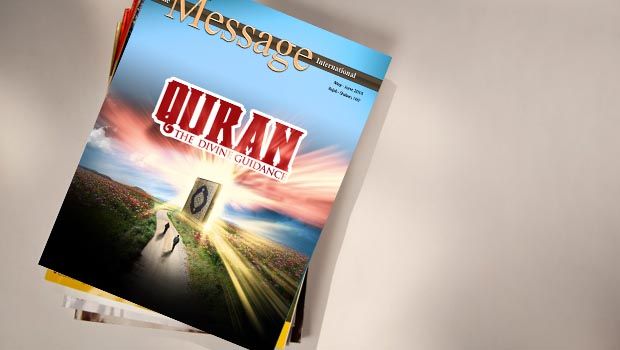
    One analyst rightly says, “The primary purpose of the Quran is to define the true set of beliefs with regard to the Creator and His creation, and to implement these beliefs in a system of laws that will benefit humanity in this life and the next” (see “The Eternal Miracle of the Qur’an” by Yasir Qadhi in The Message International, May-June 2011, p.21). Interestingly, while there are people in the West who are obsessed with propagating a tag line that Islam oppresses women, those who convert to Islam in the West are overwhelmingly female. And these women are typically not unsophisticated individuals or social misfits; they are rather well-educated and accomplished. They have read the Quran, studied Islam, and made an informed decision. They were not deceived by those who spread fictions about the Quran. Instead they were moved to check it out for themselves. To quote Ustad Nouman Ali Khan, “This book has been attacked before and it will be attacked again. It is Allah’s word and no amount of criticism is going to take away from its glory” (see “Quran and Me,” in The Message International, May-June 2011, p.25).

    Any close and careful reading of the Quran reveals that this unique book presents a comprehensive system that balances human beings’ personal needs with the general good. It gives humanity a formula that speaks to moral and spiritual issues as well as practical, everyday affairs and aspirations. It has been said that there are three pillars upon which social justice in Islam is built: the absolute freedom of conscience; human equality as to worth, rights, and opportunities; and the reality of human and social interdependence. Each one of these pillars is necessary to the integrity and stability of social justice. Freedom of conscience, for example, allows the human being to choose voluntarily what he or she believes about God and the meaning and purpose of life. The one who chooses submission to God finds psychological and emotional liberation from thralldom to other people, material things, or any other earthly influence or relative power. That individual realizes it is Allah who creates man, provides him with sustenance, and holds him accountable in a final reckoning as to his belief and his deeds. Allah, the Almighty, says in the Quran: “Say: O people of the scripture [Jews and Christians], come to a word that is just between us and you, that we worship none but God, and we associate no partners with Him, and that none of us shall take others as lords besides God” (3:64).

    Interlocking with man’s freedom of conscience and right to choose his ultimate destiny is the principle of equality. Islam presents this principle to the world, that in spite of outward differences, all human beings are equal in human worth, in their basic civil, political, social, and economic rights, and in their claim to fair opportunity, without discrimination or politically imposed impediment. The Quran declares, “O people, We have created you from a male and a female, and formed you into nations and tribes that you might know one another. Indeed, the noblest of you in the sight of Allah is the most righteous of you. Surely Allah is wise and all-knowing” (49:13). This verse makes it clear that the diversity of nationalities, races, and cultures among human beings allows for greater discernment and understanding of the human condition. False notions of superiority set the stage for discrimination based on outward, superficial characteristics. This is nothing but folly, leading to injustice and conflict.

    The third pillar, human and social interdependence, is further commitment to mutual understanding and tolerance. Humanity is one family and each person is integral to the common good and social progress. This interdependence ties people together through empathy and affection; it also fosters positive, moral, and concrete action such as helping the needy and vulnerable.

    Social justice is one of the most important values and gifts of Islam, and Prophet Muhammad and his companions built a strong, stable society that reflected fraternity and fairness across the board. Those who want to understand firsthand, are invited to read the Quran, to experience for themselves the beauty and powerful appeal of Divine guidance and wisdom in its uncompromising call for social justice and peace.