
Every time I stroll down the street unafraid, walk down a grocery aisle stocked with food, turn on the faucet, or flick a light switch, my mind turns to the people of Gaza. My home in Alexandria, Egypt, is only about 400 kilometers away, but with the border strictly closed, I feel so close yet so far.
Muslims worldwide have been feeling a whirlwind of emotions since Israel began its total blockade and bombing of Gaza on October 9: shock, grief, and horror at Israel’s targeting of civilians and complete disregard for human life; anger and betrayal at the complicity of Western powers who have effectively rubber-stamped Israel’s actions; and despair and helplessness at the unwillingness of Muslim countries to intervene. Beyond these emotions, however, these unprecedented events have clarified some hard realities. Here are five lessons I’ve learned from the past few weeks.
First, Allah is the source of all strength.
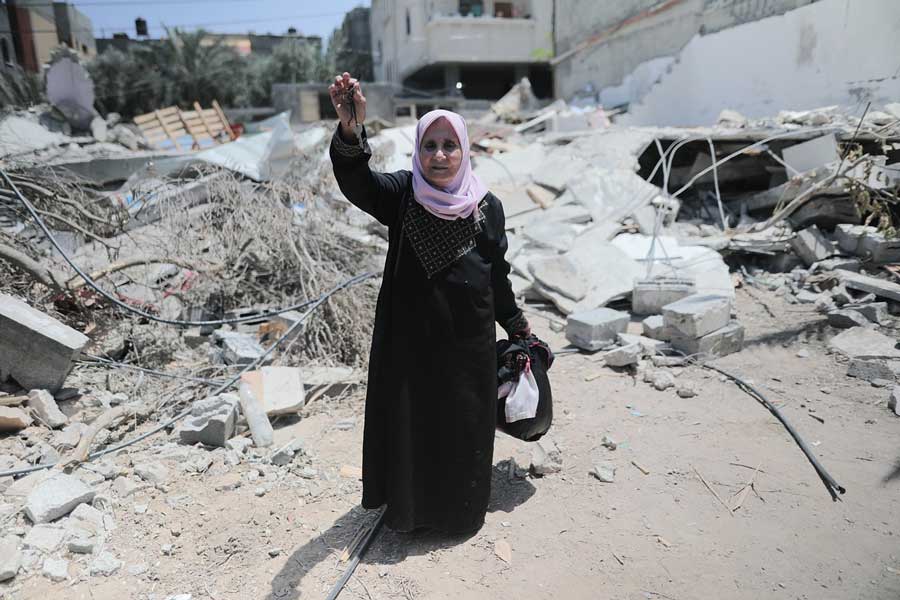 Gazans have been suffering immensely for a very long time. Many of them are descendants of refugees from the first Nakba of 1948, when hundreds of thousands were forced to flee their homes as Zionist militias engaged in forced expulsions, massacres, and destruction of villages. This was according to an ethnic cleansing blueprint called Plan Dalet. In the present, Gazans have been living under a blockade for 17 years, with all aspects of life limited—food, water, work, and movement—and with intermittent Israeli bombings causing repeated loss of life and property.
However, this latest assault, which can only be described as genocide, has dwarfed all these difficulties. Thousands of civilians, half of them children, have been killed in indiscriminate bombings. Entire families have been wiped out. Hospitals, schools, mosques, residential buildings, refugee camps, and even bakeries, have been decimated.
Despite all the death and destruction, the people of Gaza show us the imperative value of faith by praising Allah, calling out to Him, and seeking His help. At a time when the powers of the world have turned against them and ignored their heart-wrenching suffering, the people of Gaza see with certainty that Allah is their only helper. They also, insha’Allah, maintain their certainty in Allah’s promise—that calamities erase sins, that patience is rewarded without measure, and that those they’ve lost
will be granted an honorable status in the hereafter.
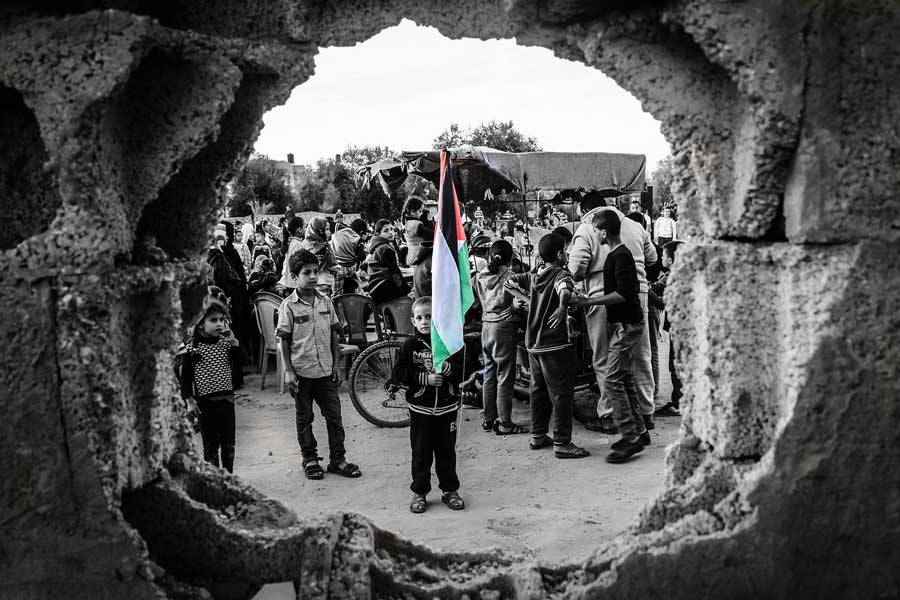 If people who have experienced so much difficulty and injustice can endure, surely, we can as well. They’ve truly been an inspiration—and not just to Muslims. By observing such resilience and faith, many non-Muslims have been motivated to learn more about Islam and read the Qur’an. The more we understand and internalize that all strength comes from Allah—by increasing our knowledge of and adherence to Islam, and by strengthening our relationship with Allah—the stronger and more resilient we will be. Hopefully, these painful events have brought our hearts closer to our Creator. Perhaps we can follow the lead of Gazans and say, “Allah is sufficient for us, and He is the best protector.”
Second, Palestine is the beating heart of the ummah.
The land of Palestine holds a special place in the hearts of Muslims around the world, and the latest barbaric bombing and virtual destruction of northern Gaza has torn off the covering of a long-festering wound within the Muslim consciousness. Palestine is a sacred land on whose soil many prophets walked, and in which stands Masjid al-Aqsa, the first qiblah of the Muslims and the location from which our Prophet Muhammad ascended to the heavens on his miraculous journey.
The loss of Palestine to the British in 1917 was a key stepping-stone towards the apartheid state we see today. The land where Muslims, Christians, and Jews lived side by side in harmony for centuries was, as of 1947-48, in the hands of Zionist militias, who immediately began the brutal campaign of ethnically cleansing the indigenous population, expelling over 750,000 people and killing 15,000.
The dormant hearts of millions of Muslims around the world have been jolted awake by these atrocities committed against the Palestinians—the latest culmination of a 75-year history of erasure and oppression—as well as recent provocations and violations at Al-Aqsa Mosque. Despite our differences, the cause of Palestine is one that unites Muslims everywhere.
As our Prophet taught us, “The parable of the believers in their love, affection, mercy, and fellowship is that of a body. When any limb aches, the whole body aches with sleeplessness and fever” (Bukhari and Muslim). In the many actions being taken by Muslims around the world—protests, boycotts, educational initiatives, social media activism—we can see that the ummah, as one united body, is very much alive.
Third, people have shown their true colors.
The most disturbing lesson from the genocide in Gaza has been discovering who has a moral compass and who doesn’t. Hard times bring out what’s deep inside us of good or evil, and the stances taken have been revealing. Nations and individuals who we thought stood for justice and equality were suddenly silent about the killing of thousands of civilians. Most Western powers, along with their media, are still proclaiming their undying support for Israel and its “right to defend itself,” while the rest of us are wondering what self-defense has to do with killing more than 18,000, including children (as of mid-December). The true values of the imperial powers—to whom nothing is sacred but money, power, and self-interest—have become clear to all, and it’s been a rude awakening.
In contrast to this morally bankrupt world order, Allah warns us in the Qur’an against transgression, even in times of war: “O believers! Stand firm for Allah and bear true testimony. Do not let the hatred of a people lead you to injustice. Be just! That is closer to righteousness. And be mindful of Allah. Surely Allah is All-Aware of what you do” (Qur’an 5:8).
Thankfully, many people have also shown the good that’s inside them. Tens of thousands have marched in cities around the world calling for an end to the killing, and many more are seeing through the lies, racism, and hypocrisy of the dominant narrative.
Fourth, storytelling is powerful, but so is knowledge.
This latest attack on Gaza has shown me just how powerful storytelling is. Reality can be clarified or twisted based on how an issue is framed, who is chosen to speak and who is silenced, and the choice of words used. As Malcolm X famously said, “If you’re not careful, the newspapers will have you hating the people who are being oppressed, and loving the people who are doing the oppressing.”
As a journalism school graduate, I’ve never been more disappointed by the lack of fairness in news coverage. Mainstream media outlets tossed everything I’d been taught about objectivity and balance out the window and became government mouthpieces. Whether right-leaning or left-leaning, these outlets were bent on showing Israelis as the civilized folk and Palestinians as the savages. Even when Palestinians were invited to speak, they were interrogated rather than interviewed. Decades of Zionist narratives came to fruition, and the tired victim tropes of “anti-Semitism” and the “right to self-defense” were used to shut down any meaningful debate.
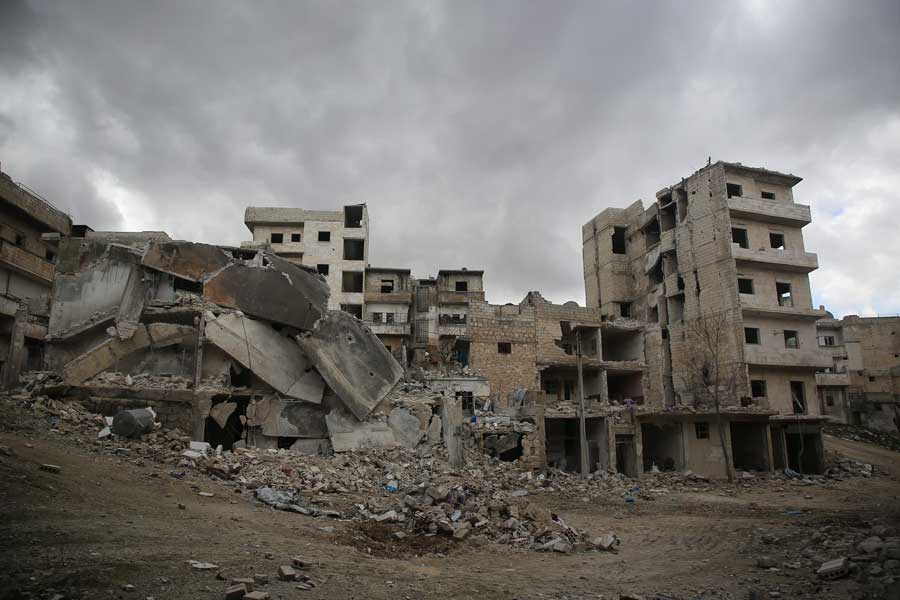
But something is very different this time around: the true story has been coming out on social media. Palestinians on the ground have been filming what’s happening in real time—in both devastated Gaza and in the West Bank, where settler and state violence is spiraling out of control. Despite the algorithms designed to censor these stories, as well as Israel’s destruction of communication towers in Gaza, the truth is coming out loud and clear. The efforts of these citizen journalists, together with allies working hard to amplify their voices and create content showing the real face of historic and modern-day Israel, has shifted the narrative.
People around the world are finally learning the truth about Palestine and the skewed narrative of mainstream media. We need to keep telling our own story, amplifying the voices of the oppressed, and educating our children about the true story of Palestine.
Fifth, let’s appreciate our blessings and utilize them for good.
In the past weeks, many of us have given more thought to the blessings that surround us and that we often take for granted. We’ve realized that things as simple as water gushing from a faucet, a house to shelter in, a stove to cook on, a healthy body, and even waking up to a new day are not simple givens after all. As Prophet Muhammad said, “Whoever among you wakes up in the morning secure in his dwelling, healthy in his body, and has his food for the day, then it is as if the whole world has been given to him” (Ibn Majah).
We need to recognize and appreciate the immeasurable blessings Allah has given us. We can show this gratitude through praising Allah, adhering to His guidance, and helping our brothers and sisters, especially those who are being tested, in whatever ways we can—by asking Allah to grant them relief, by donating to relief efforts, by raising awareness of the crimes being committed, and by protesting these crimes.
Just as we should not underestimate any of the blessings that Allah has bestowed upon us, we should also not belittle any positive action we can take. Every good deed counts on our scale, and perhaps Allah will bless our small efforts and cause them to add up to big change.
As an ummah, we have a long road ahead of us—in becoming better Muslims, raising strong and aware Muslim children, and changing the narrative. But we should take comfort in Allah’s promise: “O believers! If you stand up for Allah, He will help you and make your steps firm” (Qur’an 47:7).
We are also promised victory if we worship Allah alone and do good deeds: “Allah has promised those of you who believe and do good that He will certainly make them successors in the land, as He did with those before them; and will surely establish for them their faith which He has chosen for them; and will indeed change their fear into security. They worship Me, associating nothing with Me. But whoever disbelieves after that, it is they who will be the rebellious” (Qur’an 24:55).
Let’s keep moving forward and living each day in a way that pleases Allah and makes our ummah stronger. Let’s remember Allah’s blessings on each one of us and think of ways we can use those blessings for good.