
بسم الله الرحمن الرحيم

Tag: freedom

  • Freedom Through Faith

    Freedom Through Faith

    It’s a universal truth that we are born free and die untethered, our minds and souls unconfined in those moments. We can be physically enslaved, but our minds can never be chained. Core to our belief is Allah created us with free will and with the purpose of serving Him alone. Hence why some seemingly oppressed people seem satisfied and positive and can withstand abuses while exuding inner peace and moving forward. Their resilience may even inspire strength in others. Who then is free, and who is enslaved?

    The common denominator among enslavers

    Slavery has existed for thousands of years. The earliest documented evidence can be found in ancient Mesopotamia dating to around 3500 BC, coinciding with the rise of the first civilizations. Documentation depicts slavery as prevalent across different cultures and times. Many factors led to the enslavement of others, such as greed for free labor, the belief that other races are inferior, and the idea there would be increased political security by suppressing potential opposition, among others.

    It’s likely the perpetrators acted from a sense of entitlement or God-given right to expansion while also believing labor should fall to others, at little or no cost, and for maximum profit. The United States’ 19th century mantra of manifest destiny to expand the nation from the Atlantic Ocean to the Pacific Ocean via occupation and settlement is an example of some white Americans’ belief that they were divinely ordained not only to eliminate anyone who would hinder that goal and but to use others to advance that goal, as well.

    A widespread evil

    The current impact of past slavery is evident through observation and research. I’ve noted as such in my travels to Nassau, Bahamas, where slavery was practiced from the 17th century until 1834.  There, the wealthy elite vacation lavishly, but the locals, many who are descendants of West African slaves, seem to live on a separate island entirely. These people bear the effects of slavery, such as financial oppression, lack of education and subsequent opportunity, and loss of respectable societal status. Over time, the never-ending cycle becomes the status quo and remains a constraint. Therefore, outlawing slavery doesn’t always guarantee freedom and success, at least not in the immediate future. Freed slaves have written about the challenges they faced after gaining their freedom. “Narrative of the Life of John Quincy Adams, When in slavery and Now as a Freeman,” by John Quincy Adams in 1872 is a good example.

    Evil takes various forms

    Slavery manifests in many ways. There’s economic bondage where one can’t break free of their employment or contracts, hindering their advancement. Also, for some domestic workers, they’re promised entry into a new country, often at high cost, but remain at the mercy of employers who confiscate their important documents. Still others, fearing repercussions, are bound to remain quiet or compliant despite having opposing political views. Current events in Syria demonstrate how legions of citizens were silenced for decades and are only now free to speak after the oppressive regime was overthrown.

    Unconstrained minds: Faith is the underlying power

    Resilience is evident in many cases of slavery, and there are some common, underlying factors to consider.  For example, some important American history highlights exemplary people who accomplished amazing things but who were, in fact, enslaved. In his book, former slave John Quincy Adams wrote about the harsh realities that existed in slaves’ daily lives. He detailed atrocities like families being separated and how slaves were forced to treat their masters’ families with utmost reverence. Adams questions how this could be justified. “I ask, could a man who believed that there was a just God do such outrageous crimes to human beings, and then say it was right, and have the face to go to church and come home and have the slaves out on the back end of the farm working on Sundays, and some of the ministers going around telling the slaves they must obey their master and mistress, and all would be right.” The faith in a higher power and assurance of that power holding man accountable for his actions is what causes some who are enslaved to question their situation, to understand it to be incorrect, and to have the wherewithal to be hopeful and have the bravery to protest.

    Courage to trigger change and abolish injustice

    To cure injustice, one courageous person can be the catalyst for change by defying the odds and standing strong in opposition. Though oppressed, his mind is free and his faith is strong, a strength used to inspire and help others.

    Consider Spartacus’ (103-71BC) daring slave revolt against the Roman Republic. A gladiator and escaped slave leader, he displayed courage in the face of insurmountable odds, inspiring people to stand against authorities and to fight for their own freedom.  Sojourner Truth, an advocate for abolition and civil rights in the 19th century, was known to be rooted in her faith. She understood her God-given rights as a woman and, despite her enslavement, showed great courage, often invoking religion in her passionate sermons. “If the first woman God ever made was strong enough to turn the world upside down, all alone, these women together ought to be able to turn it right, and make it answer the end for which it was made.”

    Muhammad Ali, famous American boxer and direct descendant of slave Archer Alexander is another prime example. He boldly defied society’s expectations of him as a black man, even as he was discriminated against after converting to Islam, saying, “I know where I’m going and I know the truth, and I don’t have to be what you want me to be. I’m free to be what I want.” Ali also faced inherent racism and was fined and jailed for refusing to fight in the Vietnam War in 1967. Though he wasn’t enslaved like his ancestors, Ali had to struggle against a different type of chains that could have limited his freedom, but he wielded his dedication to his faith and made it the backbone of his defiance.

    As we move through life, who knows who is free and who is enslaved? We know we are born free and die free; yet even if we are chained in life, death releases people from worldly shackles, proving their enslavement was manmade rather than a natural state of being. Those oppressed can find strength in their conviction of faith, believing there is a power higher than their false masters, that there is a just ruler to whom their world and the war within it is known and seen, and from whom eventual justice will come.
  • Religious Freedom in India Increasingly at Risk

    Religious Freedom in India Increasingly at Risk

    In late December of last year, six female students belonging to the Government Pre-University college in a small town in the state of Karnataka, India, were not allowed to attend classes wearing hijab. Photos showing them sitting on a staircase outside the classroom started gaining attention once it was reported by several national and international media sources. The students claimed the college was not allowing them to attend classes with their hijab, even though they had been doing so since they joined the college.

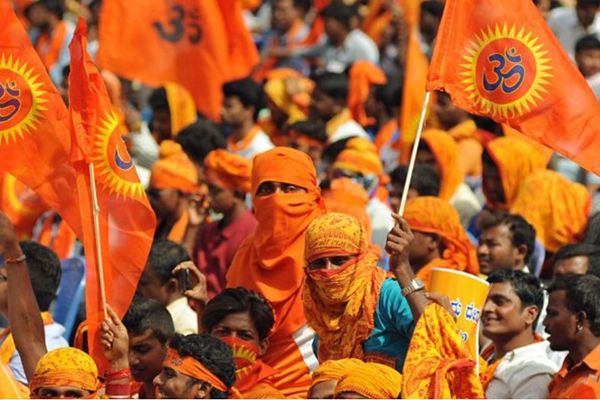
    Following this incident, a group of Hindutva male students at a college in Kundapur went to class wearing saffron shawls in protest of Muslim students attending classes wearing hijab. Then Hindutva-aligned students, both males and females, started coming to class in saffron shawls, and demanding a ban on hijab. Several elected members of the ruling BJP (Bharatiya Janata Party) started getting involved in this controversy. Then the government passed an executive order asking colleges and universities to enforce a dress code, though it left each college to define the code.

    The Muslims students filed for relief in the Karnataka High Court (HC). While this case was under review in the HC, a new video went viral of an incident of Hindutva young men harassing a Muslim girl in hijab. The girl, Muskan Khan, stood her ground when faced by the mob. This incident thrust the hijab controversy into national and international media and political discourse.

    The Case Before the Court and International Reactions

    The HC considered the case on the legal grounds of freedom of religion. The defendants were demanding the right to wear hijab as they claim that the Indian Constitution guarantees freedom of conscience and free profession, practice, and propagation of religion. The government, on the other hand, invoked public order to justify a ban on hijab. The Indian Express reports that the state issued a directive “validating decisions of state education institutions prohibiting Muslim girl students from wearing the hijab (headscarf).” The Karnataka government stated that “clothes which disturb equality, integrity and public law and order should not be worn.”

    On February 10, the full bench of Karnataka High Court adjourned the hearing until February 14 and issued the following observations: “…till the matter is pending consideration before the court, these students and all the stakeholders, they do not insist on wearing religious garments, may be headdress or saffron shawl. We will restrain everyone. Because we want peace and tranquility in the state. We are seized with the matter; we can continue the matter on the day-to-day basis.” Unfortunately, the judge’s interim order amounted to a suspension of the fundamental rights of the Muslim students until the court passes a final judgment. A higher bench in Karnataka was expected to take up the case. If Muslim students don’t get a favorable ruling, they might approach the Supreme Court of India. But it is a drawn-out legal process.

    Following that ruling, the Karnataka High Court in mid-March ruled that “There is absolutely no material placed on record to prima facie show that wearing of hijab is a part of an essential religious practice in Islam.” Heraa Hashmi is a writer and activist known as the American Muslim sister who created a 712-page list of Muslim individuals, scholars, organizations, and governments who have consistently condemned violence and terrorism in response to a non-Muslim classmate who asked why Muslims don’t condemn terrorism. Now, Hashmi wrote an article in March about the hijab situation in India, noting that the order from the court “cites certain passages from the Qur’an to establish – in their view as judges of a secular court with dubious levels of Islamic literacy and credentials to make theological prescriptions – Hijab as not obligatory, claiming that it ‘therefore cannot be made a quintessential aspect of the religion through public agitations or by the passionate arguments in court.’” She adds, “Consequently, the court found that the ban does not violate the constitutional rights of Muslim women. This startling verdict has widespread implications for similar cases across the country.” She further writes, “The three-judge bench declared that the Hijab is a ‘cultural practice’ and that it ‘is not a part of essential religious practices of Islam and thus, is not protected under Article 25 of the Constitution.’ They also introduced the verdict by quoting a US-based academic’s article that interprets the practice of veiling as one to distinguish social status and goes on to engage in poor attempts at tafsir (Qur’anic exegesis), hadith interpretation, and usul (methodology), stepping far beyond its bounds as a court. It is clear that the court was already assuming an ideological corruption of Muslims and their practices prior to this judgement.”

    Rashad Hussein, ambassador-at-large for the U.S. Office of International Religious Freedom, tweeted after the ruling, “Religious freedom includes the ability to choose one’s religious attire. The Indian state of Karnataka should not determine permissibility of religious clothing. Hijab bans in schools violate religious freedom and stigmatize and marginalize women and girls.”

    Nobel Laureate Malala Yusufzai tweeted, “College is forcing us to choose between studies and the hijab.” And Noam Chomsky, one of the West’s most eminent intellectuals, has recently said about the rise of Islamophobia, that it is “taking its most lethal form in India where the Modi government is systematically dismantling Indian secular democracy and turning the country into a Hindu ethnocracy. It is not just hijab that is under threat in India; the very existence of Muslims in that nation is in peril. After the ruling about hijab in Karnataka, Muslim vendors were prevented from doing business at Hindu religious premises. Then there was a call to boycott halal meat and, further, a controversy was raised on the use of loudspeakers for calling the adhan (the Muslim call to prayer). The apparent intent of the ruling party is to continue to demonize and dehumanize Muslims — the end result can be ethnic cleansing or even genocide.

    The Way Forward for Indian Muslims

    Systematic hate of Islam and Muslims has been spreading in India. A large section of the Hindu society has been radicalized. There are things that are beyond the control of Muslims in the Indian nation, but there are things they can and must do, including the following:

    1. The Muslim community should be educated and reminded about the meaning and purpose of their existence. Qur’an and Sunnah make it clear that Muslims are to be witnesses of truth and therefore willing to stand up and enjoin the right and forbid the wrong. The lives of Muslims —individuals, families, and communities— have to reflect these values.

    2. Muslims have masajid all across the country. But these masajid mostly function as a place for daily prayers. They should be used for social gatherings, religious advice and admonitions, education, administration of community affairs and challenges, and other functions and services to support the community.

    3. Indian Muslims should inform neighbors, co-workers, and society at large that Islam and Muslims have no intention to harm Hindus or their interests. On the contrary, the religion teaches Muslims to support the common good and to support justice for all.

    4. There are many marginalized groups in India. Working to support their rights is an Islamic obligation. This will demonstrate that Muslims stand for the human and civil rights of all people.

    5. The media, be it broadcast or social media, is the major source of spreading Islamophobia in Indian society. Muslims need to produce and distribute sound and accurate information to counter the misinformation and propaganda.

    6. Muslims should build alliances with people and organizations of conscience, both religious and secular, for the common goal of civility, equality, and justice in society.

  • World Hijab Day: Modesty Is Not the Opposite of Freedom

    World Hijab Day: Modesty Is Not the Opposite of Freedom

    Non-Muslims often use the word “oppressed” to describe Muslim women. It is such a ubiquitous term that you will find right-wing Islamophobes, left-wing social justice warriors, and average people applying it regularly, as if it is a de facto aspect of being a Muslim female. The people who use this terminology usually do not know anything about Islam, nor have they asked a single Muslim woman how she feels about her religion and her wardrobe.

    The word “oppressed” carries a lot of weight. It implies that Muslim women are perpetual victims without agency or choice; that they are coerced or brainwashed into following their faith; that they are inherently different from the rest of women, who are assumed to be liberated; that there is some sinister power forcing them into submission; that Muslim women are prevented from living a full life.

    If they bothered to ask Muslim women why they cover their hair and body, people would find that the vast majority do so willingly, as a wayof practicing their faith and obeying their Creator. Far from being imposed on women by nations or governments, the Islamic dress code is currently only mandated in three nations– Saudi Arabia, Afghanistan, and Iran. In the rest of the world, including Muslim-majority nations, the Islamic headscarf is optional or even illegal. In some countries like Tunisia and Turkey, where Islam is the predominant religion, women still had to fight for the right to wear a headscarf in public because it had been banned in all state institutions and government facilities. There are rules explicitly prohibiting Muslim women from wearing outward signs of their religious beliefs in France and Belgium, where Islam is the second most widely professed religion. So, for women who choose to dress in accordance with Islamic guidelines, it is a decision that they make freely and, in fact, courageously.

    Modest or Revealing Attire: Which Is Liberating?

    Interestingly, the term “oppressed” is almost always applied only to the Muslim women who choose to cover their hair. Those who do not are very rarely characterized as being oppressed. Even if they follow all the other tenets of Islam (praying, fasting, striving for a wholesome character, avoiding pork and alcohol, etc.) but leave their hair exposed, these women are much more likely to be considered “modern” or “liberated” because they look more like the non-Muslim women around them. But why has covering one’s body, and particularly one’s hair, been equated with oppression, while revealing them is considered liberating and progressive?

    On the most basic level, many non-Muslims simply assume that modest Islamic attire is limiting – that it prevents women from living a full life because it is too bulky or restrictive. They doubt that Muslim women can do things like play sports, fulfill their job requirements, and function in the real world while wearing modest clothing. They are unaware of, or possibly ignore, thousands of examples of successful Muslim athletes, professionals, world leaders, and activists who pursue their interests and careers while modestly dressed. Instead, they point to extreme and isolated examples, like burqa-wearing women living under Taliban rule. Choosing an extreme example and ignoring the reality of millions of women is a very common tactic. This article on seeker.com, called “Life behind the burqa in Afghanistan” is typical of mainstream media:“Afghanistan was once seen as a fairly progressive country for women’s rights. According to Amnesty International, in the 1970’s, Afghan women not only went out in public without covering their heads, they also wore short skirts and high heels. They dressed quite similarly to women in western countries.”

    Let’s look at what the author is doing in this paragraph. She is assuming that short skirts + high heels + western countries = progressive. And clearly, in her mind, “progressive” here means something good, liberal, and enlightened. This is the narrative that most people believe, and few bother to question it or think too deeply about it. It is rooted in ethnocentric ideas, ignorance, and arrogance.

    Is it more liberating to wear short skirts and high heels? Most of us in the West have been programmed to think that. But why do the majority of women dress the way they do? Is it because they truly long to wear impractical shoes that force their feet at an unnatural angle and pull muscles and joints out of alignment? Is it because they love to spend their life chasing the elusive dream of a perfect, bikini- or miniskirt-worthy body that has no excess fat or signs of aging or imperfection?

    When women’s clothing is designed to reveal their bodies, and society simultaneously promotes unrealistic ideals of female beauty, making a woman’s physical appearance her most salient characteristic, it is a perfect storm. Women will feel compelled to wear those fashionable styles – no matter how impractical– and will invest a great deal of time, money, and energy into molding and manipulating their body to fit the ideal. Preying on women’s insecurities and making them feel never quite attractive enough is a multi-billion-dollar global industry. Hair products, makeup, cosmetic surgery, diet pills, supplements, and weight loss programs are all part of the system that shackles women to the idea that their worth is tied to their outward appearance. If women didn’t care so much about how they look in revealing clothing, it would cause a monumental, earth-shattering financial upheaval.

    Who Is Brainwashed?

    Non-Muslims sometimes accuse modestly dressed Muslim women of being brainwashed. Perhaps they should consider whether they themselves are brainwashed by a sick global mentality that regularly exploits women’s bodies, focuses on their physique rather than their minds and souls, objectifies the female form, and makes women slaves to an unattainable version of female physical perfection.

    Muslim women who choose to dress modestly believe they are following the commandment of God. Their motivation is to make their soul their first priority and to privatize their body, making it inaccessible to public scrutiny. For most Muslim women, therefore, modest clothing is indeed liberating.

    Whether we realize it or not, we are all slaves to something. There is always at least one force that influences our actions and motivates our behavior. Most people’s primary goal is to be seen as fashionable, or beautiful, or popular, or wealthy, or admired. For many women, the desire to be considered attractive above all else has been programmed into them since childhood. But a person cannot be liberated until they willingly choose what they submit to. Muslim women choose to submit to God and His commandments. Whether or not those rules correspond to society’s current trends does not matter to the devout Muslim because man-made beliefs are inherently inferior to divine decree.

    Muslim women are not trying to force non-Muslims to dress modestly or to think the way we do. We simply want the right to dress according to our own religious beliefs, and to do so safely and with dignity. Ignorant people will undoubtedly continue calling us “oppressed.” But whether society chooses to recognize our agency, competence, and free will is irrelevant because our true liberation lies in our indifference to the whims of the world.