
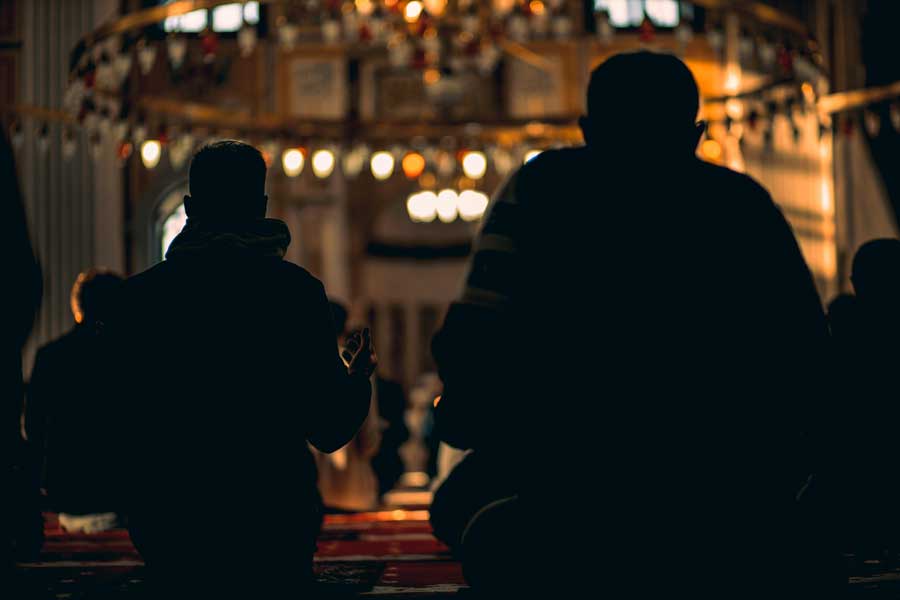
We are in it. Ramadan. A time for increased worship, a month of food and festivities, of gatherings and decorations, and of so much more. A transformative event unlike any other, that involves each of your five senses, as well as your heart, mind, and soul. As deeply intricate and masterfully woven our deen is, no ritual or ruling in it stands alone; everything is somehow connected to another and makes sense on many levels. There are multiple reasons for performing a task, and just as many affects by fulfilling an obligation. “There are people who fast and get nothing from their fast except hunger…” (Ibn Majah ). Clearly, Ramadan is not about refraining from food and drink alone.
Preparing For It
With the wisdom that comes with age, we realize that as with most things in life, we get out of a thing what we bring to it, that the more prepared we are, the more productive. Like those who physically prepare by changing their diets will often fare better when dealing with hunger, those who spiritually studied the importance of the month, read about the lofty status of Ramadan, will treat this guest better than those who had not. It behooves us to study how the month and all we do in it came about, by reflecting on relevant verses. It will benefit us to study Seerah (Prophet Muhammad’s (s) life) how he and his companions dealt with the month and how their lives changed through its meaning and purpose. One cannot rationally expect it to be easy if he or she doesn’t feel the intensity and potency of this fard (obligatory) act of worship. Nor can one be motivated if he or she doesn’t realize the immense reward that comes from it. It is not just another month. Not one day in this month should be like any other day.
Spring Cleaning
Everything gets stale if untouched or unmoved; anything can become stagnant. We get the urge to deep clean every so often, to get rid of dust from our living spaces or start new hobbies to freshen up our mental states and lives. Spiritually, this “deep clean” is needed more than anywhere else as this is our foundation. Our Creator has gifted us the month of Ramadan exactly for that purpose. We get to reboot all our systems, physical, mental, emotional, spiritual, and everything in between. We recalibrate back to the focus on our Lord, so our spiritual vision is shifted as needed, and corrected. What we, as Muslims, aim for is to access a deeper spiritual realm, to clarify the mindset until it fastens itself to the greatest mooring of all — the guidance of Allah’s deen.
Alter the Routine
Make your month distinctive, your days special, your hours fresh, by coming out of your automatic daily routine during this month. If something as simple as dressing differently helps you gain greater consciousness and mindfulness, go for it; keep your newer clothes for this time. Your “different” will not be my “different,” as we each have our own normal routine of living. Just change your routine. A writer in psychology, Jane Porter, explains it well: “Breaking out of your daily routines can be a powerful way to unlock new ideas…Deviate from your routine …when it is done with intention…can be a powerful way to stimulate new thinking, breaking bad habits…”
Sleep less than you’re used to, and you’ll be surprised by how far your stamina can take you and how much more can be achieved in the extra time. An extra thirty minutes you aren’t used to will feel like an hour. In that extra time, you can do a good deed. Muslim scholars and secular accomplishers alike always have advocated for taking advantage of the early hours. The Messenger of Allah (s) stated “O Allah! Bless my people in the early part of the day” (al-Tirmidhi and Abu Dawud).
Just as the addition of good habits is crucial during Ramadan, so too is the removal of bad habits. Reflect on what you need removed from your life that is displeasing to Allah SWT and try to commit one less of those deeds per day. Find ways to increase your armor to fight the desire to commit that act. Sometimes it is as simple as spending less time with company that encourages those bad deeds. Even if unable to completely stop at the time, simply reflecting on the sin will still have a great positive effect. Our sins will become magnified in our own eyes, our sensitivities heightened to our wrongs so they will seem like the mountains they are. If nothing else, they should become harder to do. Breaking bad habits begins with breaking routines.
Adding Intentional Study to the New Routine
It is important to hone the time we spend studying. Don’t shy away from listening to a lecture you already heard, reading a book that didn’t interest you before, or conversing on spiritual topics with learned folks. Every sentence hits differently each time you hear it, because your mind is in a different state — you have added experiences to your repertoire of devotional living, and new ideas sprout as you reflect on the meaning of your existence and the purpose of your life. Because we are constantly changing, our absorption of knowledge continues to vary and so the influx of lessons from our deen must be constant. This reorganizing will fall into a newly realigned mentality more in tune with our Rabb, to get us through another year of greater obedience and a more in-depth and proactive practice of the deen.
Every Journey Starts with a Small Initial Move
If your sights are set on lofty statuses and great accomplishments that some are blessed and talented enough to attain, you may become overwhelmed and, therefore, underachieve. The beauty in our deen is its simplicity in starting anything by making a clear and precise intention; and wisdom in its design — the Prophet (s) said, “Take up good deeds only as much as you are able, for the best deeds are those done regularly even if they are few” (Sunan Ibn Majah).
If we want to please our Rabb more this month, there are countless ways to do so. How significant and poignant that your intention already kickstarts your good deeds, uplifts your spirituality a notch, and takes you already halfway to your destination. Umar Ibn al-Khattab relates that he heard the Messenger of Allah (s) say, “Verily actions are by intentions, and for every person is what he intended…” (Agreed upon).
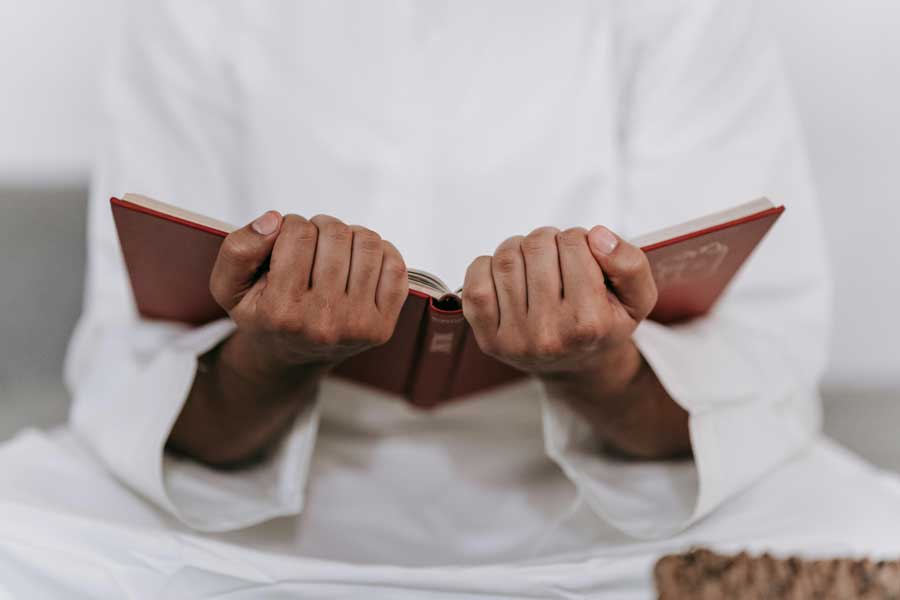 Make a conscious decision to do more good acts, in whatever capacity, whether it be globally, locally, or personally, but just do more good. Pick up debris from the road. Carry someone’s load for them. Give someone struggling in any way a little helping hand. Even a smile is an act of good, if intended to spread positivity and please our Lord. Refrain from responding to someone or something negative with vitriol. If your goal is set on something more long-term, with a higher bar set, such as beginning tadabbur ul-Qur’an (study for a deep understanding of the meaning of Qur’an), even your search for suitable classes/teachers begins the good deed counter. A small daily habit established now can become a giant in the long run. Every journey, every huge feat, every life-changing win starts from a small initial move.
Magnification of Good Deeds
With the promise of rewards for good deeds magnified in this time, you are already increasing your rewards just from the mere thought of beginning it. Abu Huraira (may Allah SWT be pleased with him) reported Allah’s Messenger as saying: “Every deed of the son of Adam would be multiplied, a good deed receiving a tenfold to seven hundredfold reward…”(Sahih Muslim). Only the terribly foolish or heedless would let this immensely golden opportunity pass by without using it for spiritual increase.
We should keep in mind that any good deed done to please Allah SWT is an act of worship. This is one of the most profound, yet simplest, concepts in our deen. Shaykh ul-Islam Ibn Taymiyyah (d. 728H), rahimahullah, said: “Worship (al-‘ibadah) is obedience to Allah by following that which He ordered upon the tongues of His Messengers.” He goes on to say: “Worship is a comprehensive term covering everything that Allah loves and is pleased with — whether words or actions, outward and inward.” From offering a smile to someone to building an orphanage, we can all participate in this wonderfully open-ended worship.
I often reflect that this month, ironically in which we should be parched and physically thirsty for most of our waking hours, actually comes to quench a different kind of thirst. The word Ramadan stems from the Arabic root “ar-ramad,” which means scorching heat or dryness, alluding to thirst. Those that feel a thirst in their souls to connect in a deeper way to their Lord, a longing to link to a community of believers, an innate desire to participate in something far greater than themselves and everything they know, Ramadan quenches this thirst. Can a Muslim ever feel alone knowing that at sunset, every single one of their fellow two billion Muslims is breaking fast at the same time along with them?
 Truly a month of miracles, Ramadan comes and beautifully fills our voids that no one else is even aware of, sometimes not even known to ourselves. Our souls know something is off before we can identify and name it. It comes and masterfully, through various channels, whether it be taraweeh prayer or simply through patiently enduring pangs of hunger, clears our vision so we can focus more sharply on the meaningfulness and purpose of our lives. It has been rebooting the personal system of each observant Muslim for over 14 centuries and will do so to the end of time.
O Allah SWT, let us experience Ramadan as fully and richly as possible so we can feel a depth of conviction as true believers, aiming for the ultimate outcome — pleasing You SWT in this life, and pleasing You on the final Day, the day of truth, judgment, and reckoning.