
During times of hardship, many Muslims ask important questions that unlock great opportunities to do good, to change, and to improve the state of the individual and the global community. One of these insightful questions is, “What are the keys mentioned by Allah that are associated with His Divine support?” And while there are many responses to this question, the following twelve keys serve as an introduction.
1. Strong eman in Allah
We respond to the trials and concerns of life with our worldview, our beliefs about God, and the strength of our eman (belief/faith). Thus, during one of the historical battles, Allah says about the believers’ reaction to a worrisome matter: “When the believers saw the enemy alliance, they said, ‘This is what Allah and His Messenger had promised us. The promise of Allah and His Messenger has come true.’ And this only increased them in faith and submission” (Qur’an 33:22). Faith and belief in Allah are associated with trials and success. A person of weak eman, for example, might give up early on during a difficulty rather than enduring.
2. Tawheed: establishing the Oneness of Allah
The early revelations were mostly about the Oneness of God, especially significant because of the prevalent idol-worship of Arabia. Belief in the oneness of God, or tawheed, is associated with success and expansiveness of the ummah. Allah says: “Allah has promised those of you who believe and do good that He will certainly make them successors in the land, as He did with those before them; and will surely establish for them their faith which He has chosen for them; and will indeed change their fear into security. They worship Me, associating nothing with Me. But whoever disbelieves after this, it is they who will be the rebellious (Qur’an 24:55).
3. Tawakkul: trusting fully in Allah
One of the greatest traits of believers is their trust in God. “And whoever puts their trust in Allah, then He is sufficient for them” (Qur’an 65:3). Allah is sufficient to dispose of one’s affairs as He is greater than one’s worries, anxieties, problems, and enemies. Allah suffices as a protector. Tawakkul, however, is an internal state of worship that is combined externally with taking all measures, such as a student trusting in Allah and also doing their best to study for an exam. An ummah that has trust in Allah does not waver in that trust, no matter how long the trial is prolonged. The early Muslims were referenced likewise in the Qur’an: “Those who were warned, ‘Your enemies have mobilized their forces against you, so fear them,’ the warning only made them grow stronger in faith and they replied, ‘Allah is sufficient as an aid for us and is the best Protector” (Qur’an 3:173).
4. Sabr: perseverance and endurance, especially in times of difficulty
Allah SWT says, “Do you think you will enter Paradise without Allah proving which of you strive and patiently endure?” (Qur’an 3:142). And in another verse, we are told, “O believers! Patiently endure, persevere, be steadfast, and be mindful of Allah, so you may be successful” (Qur’an 3:200).
Ibn Abbas reported: The Messenger of Allah (s) said, “Know that there is much good in being patient with what you detest; victory will come with patience, relief will come with affliction, and ‘with the hardship will come ease’ [94:5]’” (Musnad Aḥmad).
5. Taqwa: God-consciousness
Taqwa is to have a sense of cautiousness out of love for Allah, fear of breaking His laws and thus staying away from acts that lead to sinfulness. Allah says, “And whoever is mindful [has taqwa] of Allah, He will make a way out for them, and provide for them from sources they could never imagine” (Qur’an 65:2-3).
6. Supporting the religion of Allah
One of the greatest signs of real submission to Allah is that one seeks divine support by obeying Allah’s commands and staying away from His prohibitions. Allah gives a clear promise in the Qur’an: “Believers, if you aid Allah, He will come to your aid and will plant your feet firmly” (Qur’an 47:7). This may apply at times to situations where the companions were defending their lives in the battlefield, but this is a general promise for believers until the end of times. If we support Islam, practice it in private and public, in rituals and good character, Allah promises divine support and firmness.
7. Istiqaamah: steadfastness
Being steadfast is an integral part of Islam. The first step is submission, the second is steadfastness upon submission. It is linked to success and true worship, and it is a reminder given to the Prophet (s) and the Muslims — “So be steadfast as you are commanded, along with those who turn [to Allah] with you. And do not transgress. Surely, He is All-Seeing of what you do” (Qur’an 11:112). And in another verse: “Surely those who say, ‘Our Lord is Allah’ and then remain steadfast—there will be no fear for them, nor will they grieve” (Qur’an 46:13).
8. Unity for the sake of Allah
In a time of great division, there is an absolute need to unite as believers, to work together, to learn how to prioritize unity over ideological differences, group rivalries, personal agendas, or any other consideration. “Obey Allah and His Messenger and do not dispute with one another, or you would be discouraged and weakened. Persevere! Surely Allah is with those who persevere” (Qur’an 8:46).
9. Du’a and full conviction in His response
An essential act of worship is du’a (to call upon Allah), and it is linked to other acts of worship for the believers. It’s an act that represents a powerful relationship between Master and servant, Creator and creation. And it is the weapon and fortress of the believer. Allah says to those who doubt their du’a is heard, “Call upon Me, I will respond to you” (Qur’an 40:60). Du’a, though, is not answered only on our terms, according to our timeline, or in the manner we think is best based on our limited knowledge and wisdom. Du’a, so long as you don’t ask for anything prohibited, is accepted, but the Muslim is required to be sincere, humble, persistent, patient, grateful, and fully believing in the acceptance of the du’a. No sincere du’a goes unanswered.
10. Establishing prayer and dhikr (remembrance of God)
There are two interesting verses in Surat Taha that offer different commands. First, Allah commands the Muslims, “Do not let your eyes crave what We have allowed some of the disbelievers to enjoy, the
splendor of this worldly life, which We test them with. But your Lord’s provision is far better and more lasting” (Qur’an 20:131). In other words, don’t let this world deceive you, and do not desire what the disbelievers have of worldly things. Worldly success – material or political – is not a sign of success in the afterlife or one’s standing with God. That is not the nature of this world. Do not lose your divine support from God by craving what others have of this world, especially disbelievers who are being tested with their wealth and will be held accountable for it.
Immediately after this verse, Allah commands something greater than worldly materialism: “Bid your people to pray and be diligent in it. We do not ask you to provide. It is We Who provide for you. And the ultimate outcome is for the righteous” (Qur’an 20:132).
11. Using all economic and physical means for victory
There is a specific historical context to the following verse so beware of taking it out of context, and yet there is a timeless lesson from it as well in terms of strategizing what actions to take after having established the prayer and being diligent about its importance. Think of the early Muslims who were attacked in Madinah, preparing constantly by turning to Allah who reminded them to prepare physically and financially against those coming to harm them. He said, “Prepare against them what you can of power and cavalry to deter Allah’s enemies and your enemies as well as other enemies unknown to you but known to Allah. Whatever you spend in the cause of Allah will be paid to you in full and you will not be wronged. If the enemy is inclined towards peace, make peace with them. And put your trust in Allah. Indeed, He is the All-Hearing, All-Knowing” (Qur’an 8:60). This verse is a reminder to take all measures possible, so long as they are permissible, legal, and pleasing to Allah, and do not limit yourself to prayer and optimism. Furthermore, peace is enjoined when the enemy genuinely inclines to peace; in other cases, however, there are structural injustices and a lack of true peace, and people can be deceived by those committing injustices and human rights violations while claiming to champion peace.
12. Repentance
One of the most alarming verses for sinners and people who spread corruption is to know that their actions have consequences worldwide, and that their evil causes more corruption and evil to spread. Allah says, “Corruption has spread on land and sea as a result of what people’s hands have done, so that Allah may cause them to taste some of their deeds and perhaps they might return [to Him]” (Qur’an 30:41). This verse also makes it clear that only a fraction of consequences is experienced in this world, and it is for the purpose of people reflecting and returning to God. Some people wake up in times of hardship, globally, locally, or personally, and others double down on their arrogance and distance from God.
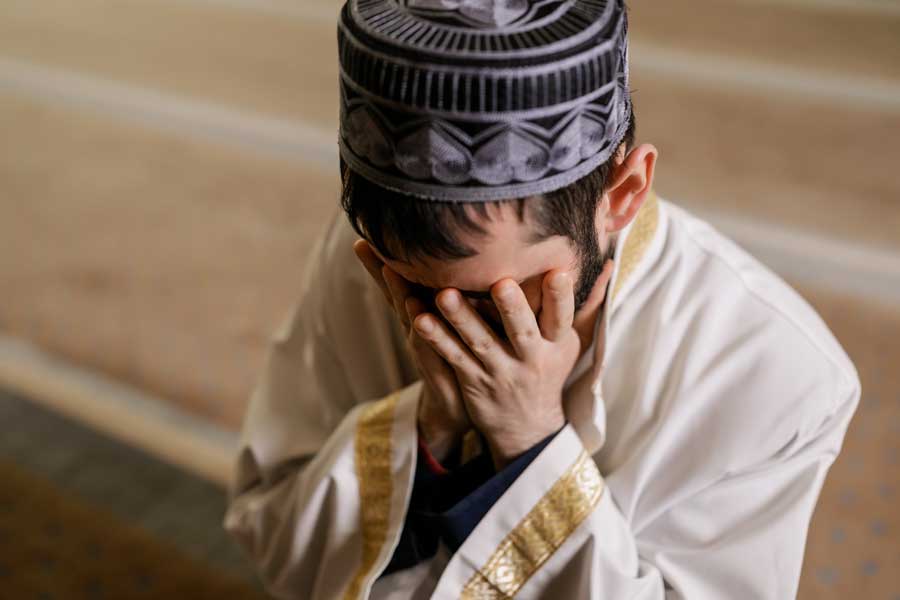
Repentance, on the other hand, is a cause of additional relief from hardships, and a source of success in this life and the next. “Turn to Allah in repentance all together, O believers, so that you may be successful” (Qur’an 24:31).
Sa’d ibn Abi Waqqas reported: “I said, ‘O Messenger of Allah, which people are tested most severely?’
The Messenger of Allah said, ‘They are the prophets, then the next best, then the next best. A man is put to trial according to his religion. If he is firm in his religion, his trials will be more severe. If he is weak in his religion, he is put to trial according to his strength in religion… The servant will continue to be put to trial until he is left walking upon the earth without any sin’” (Tirmidhi).
We must not misunderstand — Allah hates oppressors and the act of oppression. However, it is the sunnah/laws of this world that things operate beyond our understanding in terms of divine wisdom and some people leave this world by being killed as martyrs. But we have to do our part and persevere. “And persevere! Certainly, Allah does not discount the reward of the good-doers” (Qur’an 11:115).
May Allah the Exalted bring down His swift justice, deliver mercy to those suffering in the world, and use us to facilitate justice and relief for others.