بسم الله الرحمن الرحيم

Tag: Dawah in America

  • Nine Steps of Effective Dawah

    Nine Steps of Effective Dawah

    Allah SWT tells us in the Qur’an, “Invite all to the way of your Lord with wisdom and good instruction, and only discuss with them in the best manner” (16:125). He also says,“There is no compulsion in religion” (Quran 2:256). In these two verses we see that dawah— inviting others to Islam — is a delicate balancing act. On one hand, our Creator commands us to call others to our deen, but He SWT simultaneously reminds us that belief cannot be forced upon anyone. Therefore, dawah must be given gently, diplomatically, and strategically. Wisdom and kindness — not arrogance or attempt to control— must be our driving intention and approach.

    Indeed, calling others to Islam is an art form that should be planned and practiced. Imagine how well we could convey the beauty and message of our faith if we invested some time perfecting our delivery!
    Here are some strategies we can implement when inviting others to Islam:

    1. Choose the right time. Not every interaction is appropriate for an impromptu talk about Islam. If a non-Muslim approaches us with a question, however, that is often a good time to give dawah. For instance, if someone asks, “Why do you wear a headscarf” or “Why don’t you drink alcohol?” — it is a great opportunity to say, “I’m glad you asked. To understand that, I would need to tell you a little bit about Islam.Can I share that with you?”

    2. Know your audience. We should try to anticipate the mindset of the person we are talking to and cater our words to them. We can attempt to dispel some of the misconceptions about Islam they might have due to their background, culture, or the media’s portrayal of Muslims. We can also try to identify common ground within our respective religious beliefs. For instance, Christians often appreciate Islam’s reverence for Mary (Mariam), the mother of Jesus (‘Isa). Regardless of their religious beliefs, most people share at least some core values like honesty, charity, and kindness, and these can be a springboard for agreement and discussion.

    3. Speak with passion and sincerity, but don’t sound too eager and or that you need to convince them of anything. Rarely do people embrace Islam after one conversation! Sometimes it takes months or even years of discussion, so take it slowly and follow the lead of the person you are talking to. If they seem eager for more information, keep answering their questions, but if they seem to lose interest, we should end the conversation gracefully. This will give the listener the chance to contemplate what we’ve said and to part ways on a positive note. They will realize we are not pushy and will be more likely to approach us again with questions.

    4. Don’t monopolize the conversation. Dawah is not a debate, and it’s not about proving that you are right and they are wrong. Interrupting, arguing, or dominating the conversation will only come across as rude and overbearing. When the person speaks, we should listen attentively and respectfully, especially if we disagree with their point of view. In fact, the foundation that has to be laid is one of establishing a rapport with them and making it clear that we care about what they are saying and what their viewpoint is. When we do state our opinion, we must do it politely. Remember, Allah SWT says, “…only discuss with them in the best manner.”

    5. Always keep in mind that our actions speak louder than our words.Adaab or good manners are critically important in Islam. In fact, much of our dawah is actually unspoken. When non-Muslims see us engaging in acts of kindness, being honest or generous or self-disciplined, they automatically have insight into our deen. They know what Islam is through our actions, and so while we should always behave as if Allah SWT is watching (because He is), we should also remember that non-Muslims are watching us for clues that illustrate who we are and what we believe.

    6. Describe how Islam benefits them. Give some examples of how our beautiful faith enhances life for people like them. Are they females who express frustration with rampant sexism? Explain how Islam empowers women. Are they men who lament the widespread lack of morals in today’s society? Explain how Islam emphasizes the importance of morality and how it is meant to permeate everything we do on a daily basis.

    7. Talk in a way that is easy to understand. Avoid words your listener would not understand, including commonly-used Arabic words that many of us use spontaneously without conscious thought, but non-Muslims aren’t familiar with.

    8. Practice giving dawah with a Muslim friend and give each other feedback. Role-play different conversations, with one person giving dawah and the other asking questions. This will help polish our technique and think of suitable answers to tough questions.

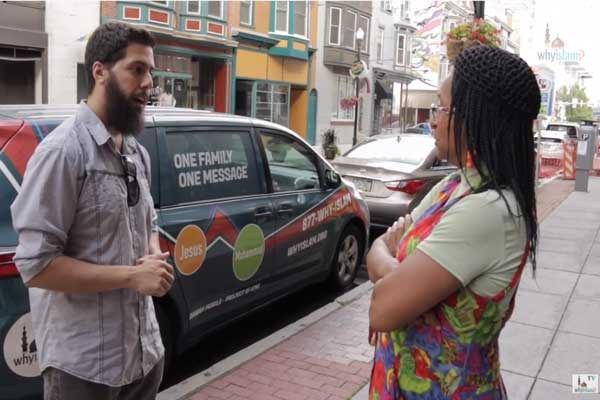
    9. End with a call to action. Experts always advise ending a pitch with a call to action — an invitation to take a desired next step. If the non-Muslim seems interested in what we have said, we can end the conversation with a specific call to action such as “Why don’t you check out this reputable Islamic website” or “I can tell you where to get a translation of the Quran” or “Maybe you’d like to visit to a local mosque” or “Here’s a great book that explains the basics of Islam.” It might even be useful to keep a list of resources on your phone so you can have them readily available. The WhyIslam website https://www.whyislam.org/ is one excellent resource for non-Muslims.
  • Sharing Islam with Our Fellow Americans: GainPeace

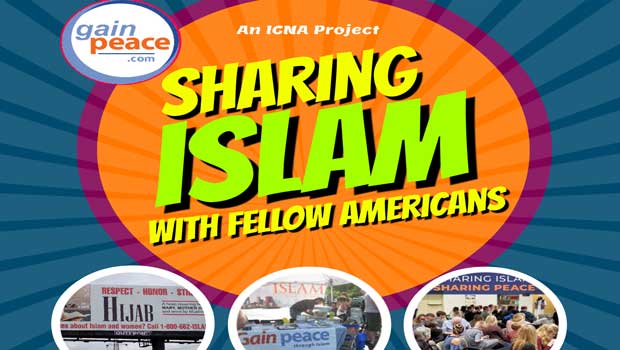
    Sharing Islam with Our Fellow Americans: GainPeace

    What do these years have in common— 629 CE, 641 CE, 648 CE, and 661 CE? These were the years during which prominent companions (sahaba) of Prophet Muhammad, pbuh, went out to different parts of the world to share Islam and give dawah. SubhanAllah, it is due to the sacrifices of these noble companions that Islam reached forward in time to us. The sahaba, when they traveled to different parts of the world, didn’t know the languages or the cultures, yet, through patience, sacrifice, and good conduct, they shared Islam with the inhabitants of the new lands. You may wonder what motivated these individuals to travel thousands of miles to the new lands. The answer is simple: the sahaba, as they read the Quran and saw the noble life of Prophet Muhammad, pbuh, realized that Islam’s guidance is not only for the Arabs, but for all of humanity. Additionally, the sahaba realized that dawah is as much of an obligation as praying, fasting, zakat, and hajj. As Allah SWT says in the Quran, “Invite all to the way of Allah, with wisdom and fair preaching; and converse with them in ways which are best and most gracious…” (Quran 16:125).

    The Three Objectives

    To fulfill the above obligation, a few brothers from ICNA Chicago met in 2009 to start the GainPeace dawah project. GainPeace had three objectives:
    • train and empower the youth and all Muslims on how to give dawah
    • follow up and support new Muslims after they embrace Islam
    • share Islam with non-Muslims through both conventional and creative projects
    The bus project was a signature project of GainPeace, with dawah messages on the sides of buses. The project created a buzz around the nation, and many ICNA teams, CAIR, and various masajid initiated the bus project in their cities.

    Accomplishments to Date

    Since its inception in 2009, GainPeace, with the help of Allah SWT, has been able to accomplish the following:
    • offering GainPeace’s services to all ICNA chapters and masajid throughout the U.S.
    • mailing out 300,000 dawah postcards to Americans in rural areas
    • answering 40,000 calls from non-Muslims on the GainPeace hotline, 1-800-662-ISLAM
    • hosting 150 masjid open houses for neighbors and local residents
    • putting up 90 billboards including the very successful hijab billboard, the Truthful Man billboard, and the Free Quran billboard; these three billboards received national media attention and generated hundreds of calls from non-Muslims curious to know more about Islam.
    • printing 16 brochures and 8 different one-minute-to-read cards to assist in the sharing of Islam
    • organizing and holding 120 dawah training workshops in the U.S., Canada, the Caribbean, South America, and Europe, training 8000 Muslims to share Islam effectively with others
    • hosting and witnessing an average of one shahada a day, mostly through the dawah hotline; an 18-month roadmap was created for new Muslims to empower them, mentor them, and train them to be on the front lines of civic engagement, activism, and dawah
    • publishing the Teachers Guide for Muslim Students; this guide is targeted towards public school teachers and staff members, helping them to understand and accommodate Muslim students in the following areas: prayers, fasting, Islamic holidays, Islamophobia, bullying, co-ed swimming, dancing, sports and physical contact; the aim is to provide the guide to all teachers and other school staff throughout the U.S.
    • developing the CONFIDENT YOUTH workshop to protect them from the influences of atheism, agnosticism, and evolution; this workshop also aims to inspire in the youth confidence in Islam, strengthening of their iman, and empowering them to become activists and daees
    • creating a sense of passion and commitment to dawah in the hearts of Muslims, and especially in the youth; this is arguably the greatest accomplishment of GainPeace

    Long-term Planning and Legacy

    As part of its long-term planning, GainPeace aims to establish a dawah academy to train full-time daees who can share the beautiful and peaceful message of Islam with all of humanity, insha’Allah.
    We must always keep in mind, however, the primary mission of sharing Islam with our fellow Americans. And just like we relate stories to our children of the sahaba and their dedication to dawah, our descendants, insha’Allah, will share stories about our generation. They may say that despite the challenges and hurdles of this era, the Muslims organized and developed their resources and, with united hearts and minds, shared the message of Islam. Yes, we must do our part to help make American a just and a peaceful nation. That is the legacy we at GainPeace would like to leave for our children; and that is the legacy that will place us into eternal paradise, with Allah’s (SWT) mercy, insha’Allah. Ameen.

  • WhyIslam: From Idea to Major Dawah Organization

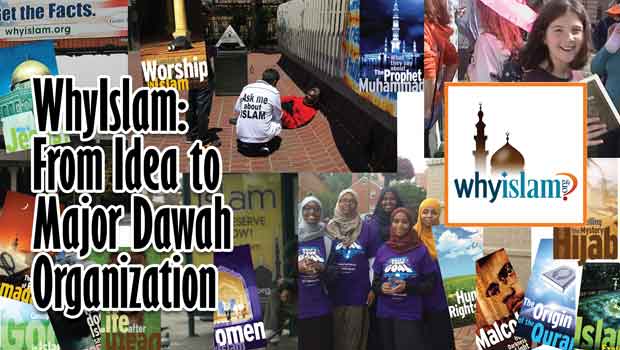
    WhyIslam: From Idea to Major Dawah Organization

    In 1998, a group of brothers from the Islamic Circle of North America’s New Jersey chapter got together with a desire to spread the true message of Islam to their American neighbors. They wanted to provide authentic information about Islam directly from the primary source, the Quran. Many ideas were floated and finally it was suggested to secure a toll-free number which people from all over America could call and talk to a Muslim. This would open channels of communication between American Muslims and their fellow citizens, many of whom never get to talk to a Muslim in their daily life, and most are shy to walk into a mosque to ask questions. The phone line would provide opportunity for dialogue with a Muslim, allowing any and all questions to be asked, as well as dispelling misconceptions about Islam and Muslims. Many names were discussed for the hotline and an associated website and finally a name was agreed upon: WhyIslam.

    This name was selected to create curiosity in the minds of Americans about the beliefs and practices of Islam, a religion with over a billion followers globally. Islam is the fastest growing religion in the world and, according to the Pew Research Center. Muslims are set to overtake Christians as the world’s largest religious group in the second half of this century.

    A Toll-free Hotline and Website

    It was not easy to secure the toll-free 800 number for Whyislam as an Ahmadiyyah group already had bought the 1-800-Whyislam number. It was decided to go with 1-877-Whyislam, to go along with the website www.whyislam.org. Since 1999, the toll-free number 1-877-Whyislam has provided service to callers in both English and Spanish. Initially very few calls would come in, as the hotline was not widely known, and we did not have the funds to advertise much. We did set up dawah booths and stalls at various shopping malls and parks as a way to promote the toll-free number. Over time, we also advertised in newspapers and magazines and on buses, radio, TV, and the internet. So, from a humble beginning twenty years ago of only a few calls a month answered by one volunteer, to currently almost 800 calls per month, is a great achievement. Alhamdulillah! Today 50 percent of our callers are repeat callers who have additional questions or want to engage in further discussion with a Muslim as they seek more knowledge about the religion.

    With regard to the WhyIslam website, the content and tech teams have worked enthusiastically over the past two decades to develop a really professional and user-friendly website with informative articles about Islam and Muslims, on foundational Islamic teachings, as well as articles on various relevant topics including the strength of character of Prophet Muhammad (pbuh), ethnicity in Islam, the Medina Charter and its representation of peace and pluralism, how the Quran has been preserved throughout the centuries, and so much more. Visitors to the website can order free brochures in English, Spanish, or Chinese, as well as an English translation of the Quran. They can also request one-to-one email correspondence with an associate or a mosque tour in their area. The WhyIslam website has been in the top ten websites about Islam and Muslims when searched on Google and other search engines. Alhamdulillah, we have distributed millions of Qurans and brochures over the past two decades throughout the United States.

    A Dedicated Team of Volunteers

    WhyIslam has a dedicated team of 24 volunteers taking calls on the hotline round the clock, 365 days a year. Our team includes bilingual associates who can also take calls in Spanish. The team receives ongoing training, in professionalism and courtesy as well as in Islamic knowledge, by an experienced and well-qualified Imam. He provides regular feedback by listening to recordings of the calls in order to ensure the highest quality service. Due to a high turnover of hotline volunteers, it is a constant challenge to recruit and train new volunteers.

    Although the hotline is based in New Jersey and run by the ICNA-NJ chapter, volunteers are from ICNA chapters across the nation. Initially calls were taken from all over the U.S. and Canada. Starting in 2010, we have also taken calls from the U.K. and Australia. In 2014 we started taking calls from France as we added a French-speaker to our volunteer roster. Toll-free numbers were acquired in those countries and then calls are routed to the headquarters in New Jersey. Alhamdulillah, we are now a global dawah hotline taking calls from three continents and five countries.

    Our volunteers, located in fifteen cities in nine different states, answer questions about Islam, as well as take orders for free literature and English translations of the Quran. If a particular caller wants to visit a mosque, then our volunteers arrange their visit with local masjid volunteers; or if the caller wants to take shahadah, then they facilitate that for them. For any individual who takes shahadah, the WhyIslam associate also arranges for a mentoring process by taking the revert’s contact information and passing it on to local volunteers in the revert’s area. Alhamdulillah, we have been having almost one shahadah a day on our hotline for the past decade. A Google search for a Muslim hotline or Islamic hotline shows our website and hotline as the first entry on the results page. This is due to the hard work of all brothers and sisters in WhyIslam who, over the last two decades, have worked tirelessly to make WhyIslam a known and trusted name across the country.

    Expanding Dawah Initiatives

    A huge spike in interest was after 9/11 when many Americans were curious to learn about Islam and read the Quran. Since then we have seen a rise in bulk orders as people have ordered in large quantities in order to distribute in their local area. Whyislam undertook an immense dawah challenge by going to Brazil during the 2014 World Cup to distribute free literature to soccer fans and local residents, as well as to set up a toll-free hotline there, operative during the six-week tournament. We got some calls on the hotline, taken by our U.S. associates in Spanish as well as in English. We set up dawah booths outside the soccer stadiums and distributed thousands of free brochures and free Quran translations in Spanish as well as English.

    WhyIslam has also created many major billboard campaigns across the U.S., disseminating various messages and themes such as “Islam: The Message of Abraham, Moses, Jesus and Muhammed” or “Muhammed always taught Love, Not Hate; Peace, Not Violence.” Another one features three women from different faiths wearing a headscarf, with the caption, “They wore it for the same reason.” The billboards offer viewers a free Quran and encourages them to call 877-WHY-ISLAM or visit www.whyislam.org.

    WhyIslam also organized a Global Dawah Day on July 4, 2014. Across the country, in many different cities, dawah booths were set up and street dawah was done by small teams of volunteers spreading out in groups of three or four individuals to initiate and engage with passers-by about Islam and providing free brochures and the Quran to those interested. Today we have brochures in four different languages (English, Spanish, Chinese, and French) and Quran translations in English and Spanish, along with a sister website in Spanish for our Latino neighbors and friends to learn about Islam.

    WhyIslam: Now a Major Dawah Organization

    WhyIslam started off with just a few volunteers. It has now grown to a major dawah organization with over a thousand volunteers and hundreds of chapters in many cities across the nation. All are busy in promoting the truth about Islam, working to remove misconceptions and confusions about the religion and its followers. The WhyIslam team started from humble beginnings and built, for the sake of Allah SWT, a well-run and professional outreach organization with countless volunteers and many employees. They diligently, and with devotion, manage daily dawah operations. What has been attained to date is a great and satisfying accomplishment, alhamdulillah. It has been a long journey thus far, but the road ahead is a challenging one as Islamophobia needs to be continually confronted and dismantled in today’s world.

    Future plans are to further expand dawah into additional languages so as to facilitate outreach to as many communities as possible. We also plan to do more dawah tours across the nation by visiting various communities and offering street dawah. There are plans to acquire a vehicle to transform it into a mobile dawah station, with teams going on the road to visit various cities across the nation. May Allah SWT accept all our efforts and always guide us to do the right thing for His deen.

  • Dawah in the 21st Century United States

    Dawah in the 21st Century United States

    The quest for religious freedom and choice is indelibly etched throughout the history of the 242-year-old social and political experiment known as the United States of America. Here, members of immigrant faith communities from across the globe have practiced and propagated, with relative openness and freedom, their religious beliefs with less interference and government opposition than in their origin countries, including Muslim-majority countries. The young nation’s first amendment to the U.S. Constitution provides that “Congress shall make no law respecting an establishment of religion, or prohibiting the free expression thereof…” The declaration by the United States government that it is committed to and will protect individual expressions of “freedom of religion” has been a comforting hope for those suffering religious persecution in their countries.
    King Henry VIII of England ignited a crisis among European Christians when, in the 1530s, he broke away from Pope Clement II and the Catholic Church, declared his spiritual supremacy over the Pope, and initiated the Church of England. His actions fomented theological divisions among European Christians, setting the stage for some Christians to abandon their ancestral homelands to seek freedom across the ocean to practice their faith without interference. Some of the earliest European settlers in North America were English Protestants known as Puritans. Puritans sought to purify the Church of England from Roman Catholic doctrine, contending that the Church of England was not fully purged of Catholic practices. These Puritans, called Pilgrims, settled the first English colonies in the country, with the Massachusetts Plymouth Colony in 1620 and the Massachusetts Bay Colony in 1629. The prevailing narrative about the settlement and occupation of this country purports that the majority of European immigrants settling in this country were driven by a quest for freedom to practice their religion. This is a partial truth. Also spurring immigration to the colonies was a desire to increase wealth through the acquition of resource-rich land. Convicted criminals were sent to the colonies, particularly by England, to rid the country of their criminal element. Some colonies rejected those transported convicts, but others utilized them as cheap labor, paying the shippers for convicts who were then put to work as indentured servants in agriculture, ship building, iron manufacturing, and other occupations.To varying degrees, persons have been motivated to immigrate to the United States, since its founding, for reasons of religious freedom and material gain.

    ICNA has, by the Grace of
    Allah, identified dawah and service to humanity as utmost priorities over the course of its 50-year organizational existence

    Except for African Muslims forcibly brought to the United States via the Trans-Atlantic slave trade, Muslims, like other faith practitioners, have come to this country and experienced varying levels of receptivity to their faith by the American populace and local, state, and national governments. One constant in the lives of Muslims in America is dedication to dawah, the invitation to submit to Allah, and the response by persons of varying backgrounds and ethnicities. From the turn of the 20th century until the 1980s, the most visible da’ees, callers to Islam, were inner city African American Muslims who utilized every available means including canvassing neighborhoods, publishing brochures and flyers about Islam, and lecturing on high school and college campuses. As the number of Muslims from Muslim-majority countries increased in visibility throughout the American landscape and their dawah efforts increased as well, larger numbers of the American public were exposed to the clarion call of Muslims: “La illaha illah, Muhammadar Rasulullah,” there is no god but Allah, and Muhammad is His Messenger. Organized dawah efforts in the United States have contributed to Islam being the fastest growing religion in the United States, a statistic that is rarely challenged even by the most Islamophobic groups. This organized call of dawah has reached to the halls of government and business, to ethnic enclaves, colleges and universities, and jails and prisons throughout America. An interesting footnote about this proliferation of the systematic call of Islam is that the incarcerated population has experienced the most rapid and consistent increase in the number of new Muslims in recent years.
    The Islamic Circle of North America (ICNA) has, by the Grace of Allah, identified dawah and service to humanity as utmost priorities over the course of its 50-year organizational existence. Why Islam, Gain Peace, Embrace, Message Magazine, Noor Magazine, ICNA Council for Social Justice, ICNA Relief, Helping Hand for Relief and Development, Young Muslim Brothers, Young Muslim Sisters, ICNA Sisters, all divisions of ICNA, have embraced the mission of dawah as an essential element of their work. The work of ICNA is to continue the Prophetic mission of calling to submission to our Creator, Allah, and embracing in every aspect of our individual and collective lives the guidance of Islam. We know that ultimately it is not in our control to bring about the conversion of individuals to Islam, as that profound matter of the heart is the sole purview of Allah. How else can we account for the consistent growth in the number of Muslims in this country, even in this Islamophobic environment, where there is the freedom to choose any religion from a multiple of choices. We must know that Allah guides American men and women to Islam despite misrepresentations of the religion by adversaries, and notwithstanding the failings of Muslims.