
بسم الله الرحمن الرحيم

Tag: Black American

  • Origins of Black History Month

    Origins of Black History Month

    Every February, Black History Month rolls around and we begin to witness schools, corporations and small business owners, and a wide variety of civic organizations seizing the moment to educate and commemorate Black history and the contributions that Black Americans have made. This year, before getting swept up in the frenzy of the month, I took the time to learn about the origins of Black History Month. In doing so, it has increased my appreciation and love of the month and the people it attempts to honor.


    The origins of the month began with the historian Carter G. Woodson. Woodson was born in 1875 to former slaves. His schooling was inconsistent because he worked in coal mines to supplement his father’s income. Eventually, he entered high school at the age of 20, and went on to get a degree in literature from Berea College in Kentucky. Eventually, he went on to earn a Ph.D. from Harvard University.


    It wasn’t until he was excluded from attending American Historical Association conferences that he realized Black history would never be told by White-dominated organizations and their professionals. That’s when Woodson had the idea of creating a new group to preserve and honor Black history.

     

    In 1915, Woodson, alongside the minister Jesse E. Moorland, founded the Association for the Study of Negro Life and History (ASNLH), an organization dedicated to researching and sharing achievements made by Black Americans and those of African descent. The success of an event in Illinois inspired Woodson and ASNLH to do more. It was a celebration of the fiftieth anniversary of the Emancipation Proclamation sponsored by the state of Illinois. The celebration included exhibits that highlighted the accomplishments and progress of African Americans since slavery. The crowds that gathered to learn and witness the exhibit were in the thousands.


    ASNLH sponsored a national Negro History Week in 1926, choosing the second week of February to coincide with the birthdays of Frederick Douglass and Abraham Lincoln. It was important for Woodson to stick with February because Black communities had been celebrating Douglass during that month since the late 1890s. It worked — Negro History Week was popular. Black history clubs appeared across the country. Teachers needed materials to instruct their students, and the general Black community that was expanding its middle class sought more Black culture and literature.


    The Association, led by Woodson, thus worked to produce the materials needed to educate the public about the vibrant and important history of African Americans. They created lessons for teachers, plays for historical performances, and posters of important dates and people. As the movement grew, mayors issued Negro History Week proclamations and, in places like Syracuse, progressive White communities joined Negro History Week with National Brotherhood Week. In the 1940s, a few places like Chicago and West Virginia expanded Negro History Week to a full month-long celebration. Then, on the 50th anniversary of the beginning of Negro History Week in 1976, the Association for the Study of African American History made the shift to Black History Month. President Gerald Ford said that with the celebration “we can seize the opportunity to honor the too-often neglected accomplishments of Black Americans in every area of endeavor throughout our history.


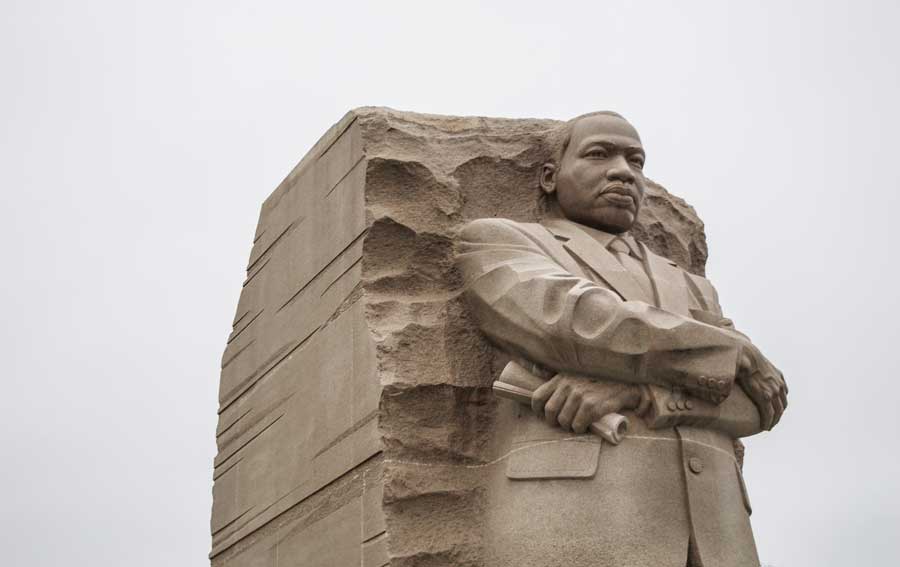
    Today, Black History Month continues to be recognized as an important month in which we spend time reflecting on Black history, devote educational resources to the topic, and create or engage in civic events to learn about and disseminate more widespread interest and appreciation of the history and accomplishments of African Americans. During this month we recognize and honor Black activists and civil rights pioneers such as Harriet Tubman, Sojourner Truth, Marcus Garvey, Martin Luther King Jr., Malcolm X, and Rosa Parks.


    And there have been Black leaders in industry, politics, culture, and more. In the realm of law, John Mercer Langston was the first Black man to become a lawyer in the U.S., passing the bar in Ohio in 1954. He then went on to become one of the first African Americans ever elected to public office as Town Clerk.


    Thurgood Marshall was the first Black man to be appointed to the Supreme Court. Marshall served on the Court for 24 years, having been appointed by President Lyndon B. Johnson.


    The first African American woman elected to the House of Representatives was Shirley Chisholm in 1968. She continued to make headlines four years later when she became both the first female candidate and first major party African American candidate to run for president.


    When we think of wealth of the past, we seldom think of prominent African Americans like Madam C.J. Walker. Although she was born on a plantation, she became the country’s first self-made female millionaire after creating a line of popular Black hair care products. She went on to create Madame C.J. Walker Laboratories which was a successful hair care company for decades after. Similarly, Robert Johnson became the first African American billionaire when he sold Black Entertainment Television (BET) to the giant media Viacom group in 2001.


    As a Black American, I believe it’s important to study and honor those who came before us, so that we can encourage and uplift Black youth to aspire to greatness for the future. I pray we continue to recognize the leaders, activists, prominent individuals as well as ordinary men and women — all who have paved the way for Black Americans to succeed, innovate, and lead.

  • Black History Month:  Redlining and Public-School Segregation

    Black History Month: Redlining and Public-School Segregation

    It’s February, and that means it’s Black history month in the U.S. While big and small businesses alike attempt to turn this important month into a marketing campaign to attract new customers, the month remains an important one for all those in America who recognize the injustices that have befallen Black Americans.

    Since the death of George Floyd, there has been an increased effort within the Muslim community to pay attention to the current oppression against Black communities. However, more can and must be done to further develop a consciousness about their struggles. By diving deep into the history of policies and laws that have hindered Black Americans, we can be better prepared to prevent further injustices.

    Two such important topics are redlining and segregation in public schools. The first hindered Black Americans’ ability to own homes and the second to receive a good education. Why are these significant? Because the ability to own property and have a quality education are fundamental to ensuring generational wealth.

    Redlining

    In 1933, the federal government created the Home Owners’ Loan Corporation (HOLC) as part of the New Deal. Under the leadership of President Franklin D. Roosevelt, the HOLC was intended to refinance home mortgages under default to prevent foreclosure and to expand home buying opportunities for Americans. The HOLC placed neighborhoods into categories based on a number of factors such as age and quality of construction of the homes, availability of infrastructure such as transportation, amenities such as parks, and especially based on their racial makeup. The different categories were color coded on maps for every metropolitan area in the country. The areas marked in red (hence redlining) were considered high risk for mortgage lenders. These areas were anywhere that African Americans lived or lived nearby.

    The logic of the Federal Housing Administration, which was founded on zero research, was premised on the idea that if African Americans and other communities of color bought homes in those suburbs, or even near those suburbs, the value of homes owned by Whites would decline, and therefore those loans would be at risk. Richard Rothstein’s book, The Color of Law, according to an NPR article, educates the public about specific segregationist policies outlined in federal handbooks like the Underwriting Manual of the Federal Housing Administration. The article notes that Rothstein points out that regulations that are written policy and published in government publications like the Underwriting Manual “are as much a de jure [e.g., legally recognized] ( . . . ) expression of government policy,” even if it is unconstitutional, “as something written in law.”

    The U.S. government today acknowledges the harm done to Black communities by such policies. The Federal Register, a federal government journal, notes that “The creation of the Interstate Highway System, funded and constructed by the Federal Government and State governments in the 20th century, disproportionately burdened many historically Black and low-income neighborhoods in many American cities. Many urban interstate highways were deliberately built to pass through Black neighborhoods, often requiring the destruction of housing and other local institutions. To this day, many Black neighborhoods are disconnected from access to high-quality housing, jobs, public transit, and other resources.” In some cases, highways were designed to separate Black neighborhoods from White neighborhoods.

    The 1968 Civil Rights Act included Title VIII and Title IX, known as the Fair Housing Act, which prohibited discrimination in the selling, renting, or financing of housing because of race, color, national origin, religion, sex, (and later amended to include) family status, or disability. While the Fair Housing Act of 1968 modestly addressed future discriminatory practices, it could not undo decades of discrimination that resulted in vast disparities of home ownership and the building of wealth by Blacks, as compared to Whites.

    In October 2021, the Department of Justice announced a new initiative to combat redlining. In their press release, they not only admitted that it was their previous policy to deny credit to communities of color, but that they were going to engage in new initiatives to “ensure that federal fair lending laws are vigorously enforced and that financial institutions provide equal opportunity for every American to obtain credit.”

    Public School Segregation

    The effects of redlining not only prevented many African American families from owning homes, building wealth through home equity, and passing that ownership and wealth on to their children, but it also impacted where their children were able to go to school.

    Due to Jim Crow segregation laws, Black children attended Black schools and White children attended White schools. With the Civil Rights era came a wave of Supreme court cases that cut against segregationist laws. One such monumental case was Brown v. Board of Education of Topeka (1954). There, the U.S Supreme Court ruled that racial segregation in public schools violated the Fourteenth Amendment. While this was a massive success in the battle for racial equality, it was resisted by the South which wanted to maintain school segregation. In instances like the famous case of the Little Rock Nine, where nine Black high school students attempted to enroll in an all-White high school, they faced mobs and death threats. Most Southern schools developed plans to delay or deny implementation of desegregation even though it was federally mandated.

    Although, there were subsequent orders from the Supreme Court in Brown II that directed states to take “deliberate speed” when implementing desegregation policies, most children still attended segregated schools in 1964. The federal government used funding incentives to get schools to move quickly on desegregation. However, the biggest obstacle was in moving children in urban areas to the suburbs where the White schools were. The majority of Black children had to be bused to attend those schools. This often meant leaving their home very early in the morning to attend school sometimes twenty or more miles from home. In those new schools, children often faced racism from both their fellow students and teachers. It wasn’t only the Southern states that protested integration. Northern cities like Boston and Detroit had historic protests from White parents who didn’t want busing to occur.

    Today, we continue to see public school segregation. In a recent study released by the U.S Government Accountability Office (GAO), more than a third of students (about 18.5 million) attended a predominantly same-race/ethnicity school during the 2020-21 year. Furthermore, 14% of students attended schools where almost all of the student body was of a single race/ethnicity. The studies also show that the lack of diversity means the Black and Brown children are more likely to attend under-funded schools.

    We can see the intersection of redlining and school segregation, and the resulting wealth gap and educational achievement gap between Black and White students. Yet, there are ways to address underfunded schools and some states are doing so.

    Funding for public schools in a district come from property taxes, as well as state and federal contributions. Since more affluent school districts receive more funding from property taxes than do lower income districts, the only way to level the playing field is to allocate more state and federal monies to low-income districts than to those with greater funding from property taxes. A number of states have already implemented this strategy including Utah, Ohio, South Dakota, Georgia, and others, and they have seen increases in students’ academic achievement. These reforms target not just greater funding for economically disadvantaged students, it also invests in the ongoing acquisition of knowledge and development of skills of the teachers, and greater funding for early childhood education. Other states such as Massachusetts, Minnesota, and New Jersey “have undertaken reforms based on these practices and, in turn, have narrowed achievement gaps.”

    Conclusion

    Redlining and school segregation have had lasting impacts on how Black people were and are able to succeed in this country. The systematic tactics to prevent them from owning their own home in the suburbs not only contributed to ongoing segregation, but they also impacted their children’s ability to get a good education in properly funded schools.

    I believe it’s important to learn more about these and other discriminatory policies so that we can better support Black communities. In addition, we must understand the past injustices, so we don’t allow the same types of wrongs to repeat themselves in the future. Muslims should look towards the well-known hadith for inspiration on what to do when they see an injustice: The Messenger of Allah said, “Whosoever of you sees an evil, let him change it with his hand; and if he is not able to do so, then with his tongue; and if he is not able to do so, then with his heart — and that is the weakest of faith” (Muslim). Following the footsteps of our beloved Prophet (s), we must do our best to take action by arming ourselves with knowledge on important history. This is how we can begin to effect change.