
بسم الله الرحمن الرحيم

Tag: american muslims

  • Why Muslims Need to Talk About Hispanic Heritage Month

    Why Muslims Need to Talk About Hispanic Heritage Month

    One of my earliest experiences at an Islamic conference was when I attended the ISNA Convention in Washington D.C. over two decades ago. It was the first time the Islamic Society of North America held its annual convention in D.C., after establishing it in Chicago for the previous 38 years. It was also its first large event after the attacks of September 11, 2001. The inaugural session of the 39th Annual Convention in 2002 opened with a solemn prayer for the victims of the 9/11 terrorist attacks. The theme of the convention was “A Call for Peace and Justice,” and began with moving speeches from a multitude of Muslim leaders from around the country. Among the many leaders who made statements during the opening session was Imam Benjamin Pérez, whom I would later meet at a session by and about Latino Muslims.

    Prior to leaving my house for the conference, I grabbed a pin with a Puerto Rican flag and secured it on my hijab, above my heart. I had only been Muslim for three years, and I was living in Maryland at the time. I did not know many Latino Muslims personally, so I held the hope that if there were any present at the ISNA convention, they would notice my pin and approach me. As I zigzagged through the crowd of Muslims, hoping to spot another Puerto Rican or Latin American, I was utterly disappointed. In the sea of familiar-looking faces, there was not one that shared my background. But just when I started to lose hope, a friend pointed out a session on the convention’s printed program.
    There was a panel discussion about Islam among Latino Americans whose speakers included Muslims with Spanish names. When I checked the session’s time, I realized that it had already started, so I took note of the hall number and sprinted there. When I made it to the conference room completely out of breath, it was packed. There were only a few seats left, so I made my way to an empty chair and sat down to listen, in awe of the mostly Latino Muslim panel. It was the first time I heard Muslim leaders who shared some of my cultural background. The panelists included Mexican American Imam Benjamin Pérez (may Allah have mercy on him), a Dominican brother named Isa Contreras, and others. They spoke about the growing number of Latin Americans embracing Islam, their own experiences embracing Islam in their respective communities, and the work that still needed to be done to bridge the gap between Muslims and our Spanish-speaking neighbors.

    After their presentations there was a question-and-answer session, so I eagerly stood up, approached the available microphone, told them my story, and asked how I could get in touch with other Latino Muslims. I think I was still catching my breath when I suggested I get the contact information of the Latin American Muslims on the panel so I could stay in touch with them. Finding others like me was important, because even though Muslims all constitute one brotherhood and sisterhood, human beings tend to seek out people of similar backgrounds and experiences. Through this meeting, I was introduced to the Latino American Dawah Organization (LADO) led by Mexican American Juan Galvan, whose online presence on Yahoo! Groups allowed me to connect with Latino Muslims from around the country.

    In the following years, I would develop relationships, join dawah efforts, and volunteer at different organizations to translate material into Spanish. Eventually, when I married another Hispanic convert, together we founded an organization called Hablamos Islam(We Speak Islam) with the purpose of creating educational resources about Islam in the Spanish language, with Latino families in mind. Eventually, it also evolved into creating programming and literature for children. Dawah organizations often forget to factor the youth into their outreach efforts, but when Latino families are entering the faith in rising numbers, it is only natural that they need educational tools for their children. I learned this firsthand. During this whole process, I had children of my own, and now my eldest is in his late teens. Although Latino Muslims were becoming increasingly visible– seeking higher Islamic education and forming their own organizations and programs – there were (and still are) areas of outreach that are lacking.

    Fast-forward over twenty years later to 2023. Allah has a way of bringing things full circle. A few months ago, I had the pleasure of helping to organize and participate in the Spanish sessions at the ICNA-MAS Convention 2023 in Baltimore, Maryland. I was not a newcomer, having been involved in the planning of Spanish language, convert, and sisters’ programs since 2010. Yet after over a decade of involvement in the weekend-long, eman-boosting conference, I noticed something different in the audience. This time as I sat on a panel with two other Latino speakers, I saw something incredible. Two young couples walked into the hall, and I recognized the wives – both were South Asian and daughters of two sisters I knew personally but I had not seen since the Covid lockdowns began in early 2020. I would have wondered why they were walking into a Spanish-only session had it not been for the gentlemen beside them. The girls had gotten married recently and both their husbands were Latinos. The two young men had converted to Islam, one Mexican and the other Guatemalan.

    The theme of this past year’s convention was “Preserving Faith, Building the Future,” and I was speaking about the importance of educating our families about Hispanic Heritage. And there in front of me was an example of what a future looks like where Latino Muslims and those of all different backgrounds come together to not only coexist but accept one another as equals. Twenty years after that panel of Latino Muslim speakers called for the Muslim ummah to recognize and reach out to Latinos, we have a thriving community of intercultural couples, generations upon generations of Latin American Muslims, Latino organizations, imams, and even Latino-led Islamic centers serving the needs of our community. Nevertheless, there is still much work to be done.

    The Importance of Learning About Hispanic Heritage

    As Muslims, we have an obligation to seek knowledge. Prophet Muhammad (peace be upon him) said in an authentic hadith: “The seeking of knowledge is obligatory for every Muslim” (Ibn Majah).This teaching emphasizes the importance of acquiring knowledge to strengthen our faith and deepen our understanding of Islam.

    Part of this knowledge entails examining our own history, including Hispanic heritage, and understanding its relevance within the broader context of Islamic history. By doing so, we not only honor our diverse cultural roots but also forge a stronger connection with our Latino brothers and sisters. Just as there are initiatives to honor other members of our community, we should also highlight the stories of Latino Muslims. I even dare say we need to prioritize Spanish outreach in every American masjid.

    Preserving and sharing our faith is part of our collective responsibility. We have a graphic description of what happens when we ignore this sacred duty. Allah says in the Qur’an: “O believers! Whoever among you abandons their faith, Allah will replace them with others who love Him and are loved by Him. They will be humble with the believers but firm towards the disbelievers, struggling in the Way of Allah, fearing no blame from anyone. This is the favor of Allah. He grants it to whoever He wills. And Allah is All-Bountiful, All-Knowing” (5:54).

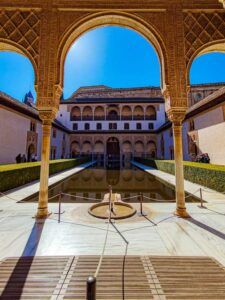
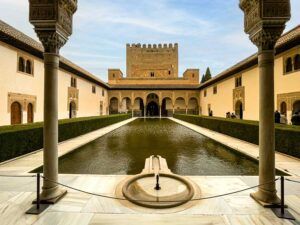
    We cannot continue lamenting what was lost and ignoring the blessings and opportunities we have in front of us. For example, despite the expulsion of Muslims from Spain, the influence of their culture and knowledge is reflected in the architecture, art, and traditions of Latin America. Although many Muslims from Al-Andalus were banished or forced to hide their faith, some found refuge in Latin America. Likewise, when enslaved African Muslims landed in the New World, they brought their faith with them. Over time, their practice of Islam faced challenges due to persecution and the necessity for discretion.

    When the hope of Islam’s survival in the Americas seemed lost, later waves of Muslim migrations from various parts of the Islamic world reintroduced Islam in every Latin American country. This is evident in the hundreds of mosques towering over cities in countries like Brazil, Venezuela, Uruguay, Mexico, and the Dominican Republic, and the millions of Muslims currently living in those various places. The Latino Muslims in America can trace their ancestry to Al-Andalus, North and West Africa, as well as to the Muslim immigrants who continue to contribute to the mosaic of Islamic heritage in Latin America.

    Remarkably, the descendants of the Muslims who suffered persecution and gradually lost their faith in a strange world walk among us and are reconnecting with their Islamic roots. Perhaps they are the answer to the prayers of our ancestors in Spain and Africa. How do we honor them? It takes more than just Hispanic Heritage Month.

    Doing Our Part

    To effectively pay tribute to our ancestors and nurture our growing Latin American Muslim community, we should consider the following course of action:

    As Non-Latino Muslims

    1.  Extend your support to Latin Muslim organizations, recognizing them as invaluable assets for advancing Islamic education among Latino Muslims and nurturing a strong sense of community and belonging. There are Latino-led groups offering their unique talents and services all over the U.S. Find an organization in your area, and contribute your time, energy, and/or other resources.
    2.  Show your backing for Latino Muslim-owned businesses and products to support their economic growth and sustainability.
    3.  Raise awareness about the rapidly increasing population of Latino Muslims in the United States. Host open houses and community events to engage both Latino Muslims and non-Muslims.
    4.  Consider offering scholarships that enable Latino Muslims to gain a deeper understanding of Islam and prepare them to assume leadership roles within their communities.
    5.  Invest time in learning about Latin America and the presence of Latino Muslims in the U.S. Explore their contributions, diverse cultures, and varied backgrounds, to gain a greater appreciation for the rich tapestry of their heritage. Be open-minded if your son, daughter, or other relative wants to welcome a Latino Muslim into your family. It may be the beginning of a beautiful connection like the two I witnessed recently.

    As Latino Muslims

    1.  Develop tailored resources and educational institutions that cater to the specific needs of our community, from the youngest to the oldest.
    2.  Educate others about our unique experiences and the essence of being Latino/Hispanic within the context of Islam.
    3.  Facilitate the dissemination of information and organize classes conducted in Spanish to ensure accessibility for everyone.
    4.  Pave the way for the establishment of mosques, Islamic centers, and schools dedicated to providing Islamic education within Latino Muslim communities.
    5.  Foster collaborations with like-minded organizations to furnish essential tools and curricula, and to provide scholarships to develop proficient educators, thereby enriching educational opportunities for Latino Muslims and their families.
    Understanding Hispanic Heritage should extend beyond a mere month of commemoration. There should be a year-round effort to educate our communities about the importance of outreach to Hispanic/Latinos. In addition, Islamic centers need to reach out to dedicated Latino Muslim leaders, educators, and volunteers to organize inclusive programs that can consistently promote awareness and appreciation. There is a wealth of materials including books, online resources, programs, and courses available in both Spanish and English, specifically catering to, and celebrating Latin American Muslims. Many of these have been created by and for Latinos and deserve our support. As we look ahead, let us aspire to further advancements in acknowledging this growing community within our ranks over the next twenty years. For additional reading, here is a list of books about Latin American Muslims.

  • America’s Secret Colony: The Shame in America’s Backyard

    America’s Secret Colony: The Shame in America’s Backyard

    On November 19, 1493, Christopher Columbus stumbled onto an island named, by its Taino inhabitants, Borikén, one of three large islands comprising the Greater Antilles in the Caribbean Sea. For the next 400 years, it remained a neglected backwater in the far-flung Spanish empire until 1898 when it was invaded and annexed, along with Guam, the Philippines, and Cuba, by the United States as a result of the Spanish-American War.

    The United States was completing a century of continental expansion, but this was its first foray into colonial empire. In a series of opinions by the U.S. Supreme Court in 1901, called the Insular Cases, it was determined that full constitutional protection of rights does not apply to Puerto Rico or other territories or places under U.S. control. And people of such territories were to be considered “alien races differing from us in religion, customs, laws, methods of taxation and modes of thought,” so that “the administration of government and justice, according to Anglo-Saxon principles, may for a time be impossible.”

    The man who wrote the majority opinion in the Insular Cases was Justice Henry Billings Brown, who also wrote the majority opinion in the “separate but equal” case Plessy v. Ferguson which upheld racial segregation laws for public facilities. Thus the tone was set for over a century of dysfunctional relations between Puerto Rico and the United States.

    Though officially a commonwealth with some local legislative control, it remains “subject to the full plenary powers of Congress under Article IV, Section 3 of the United States Constitution.” Puerto Ricans were granted American citizenship with the Jones Act in 1917, just in time for its young men to be eligible for the draft of World War I. Despite fighting in all of America’s wars ever since, Puerto Ricans are forbidden from voting for President. The U.S. Supreme Court made it official in 1922, declaring Puerto Rico a territory, not a state. The U.S. Constitution’s protections, especially those which relate to labor protections, collective bargaining, and the minimum wage, would not be available to the residents of Puerto Rico. As we shall see shortly, this was a formula for egregious exploitation that American corporations and bank syndicates wouldn’t pass up.

    Disaster Relief, American Style

    A year after the American invasion, San Ciriaco, the longest-lived Atlantic hurricane in recorded history, wreaked havoc on Puerto Rico. It left over 3,000 dead, 250,000 homeless and without food, and thousands of farms and crops destroyed. It was the worst hurricane in Puerto Rican history and an epic disaster. Curiously, the United States offered no aid whatsoever.

    The following year the United States outlawed the Spanish peso and devalued it by 40 percent so that when Puerto Ricans exchanged their pesos for U.S. dollars, they instantly lost 40 percent of their wealth. Still desperately trying to recover from the previous year’s devastation, they lost almost half their wealth and saw their debts increase proportionately. The next year the U.S. began enforcement of the Hollander Act, which imposed a land tax on already desperate farmers who were now in danger of losing their farms.

    Farmers rushed to mortgage their farms in a last-ditch attempt to save them, but their only recourse was the American Colonial Bank. Unencumbered by usury laws, the bank charged interest rates so high that defaults and foreclosures were legion. The result was an enormous land and wealth transfer to American interests and the impoverishment of the Puerto Rican masses. A major transformation would also take place as the previously diversified agricultural economy of coffee, tobacco, fruits and sugar would give way to one crop. Sugar was now king. By 1930, 45 percent of all arable land in Puerto Rico was transformed into sugar plantations. By 1934, U.S.-owned Central Guánica, Central Aguirre, Fajardo Sugar, and United Porto Rico Sugar comprised over half the island’s arable land. Their possessions included cane fields refining mills, warehouses, railroads, and the post office.

    One particular criminal bears special mention here: Charles Herbert Allen. The first civilian governor of Puerto Rico, he used his brief, nearly 17-month tenure to take control of the island’s entire economy. On his return to the United States, he became president of the American Sugar Refining Company, the largest sugar refining company in the world. You know it today by the name Domino Sugar.

    Natural disaster, currency devaluation, land taxes, and usurious banking syndicates by now had reduced the Puerto Rican population to a landless, crushing poverty. Many went to work at the major sugar cane Centrales, but the highly mechanized operation could not absorb the workforce who then sought work in the cities. Wages were less than half those paid under the Spanish. When the Puerto Rican legislature, created by the Jones Act in 1917, tried to give some relief with a minimum wage law, it was struck down as unconstitutional by the U.S. Supreme Court. This pattern of total domination by American branches of government characterizes the colonial relationship which persists to this day.

    Resistance and Repression

    With wages at a mere 12.5 cents an hour, half of what they were under the Spanish, and many families on the brink of starvation, workers embarked on a series of island-wide strikes. They were led by a man who was to become the iconic symbol of Puerto Rican patriotism and resistance— Don Pedro Albizu Campos. He was the first Puerto Rican ever to graduate from Harvard Law School. A brilliant intellectual and orator who spoke six languages, he was ever the freedom fighter, even helping Eamon de Valera draft the constitution for the new Irish republic. He turned down many lucrative offers to return to his hometown of Ponce to practice poverty law.

    He was asked to lead the strike after it was evident that some of the leaders had sold out. The syndicates finally caved in, with a resounding victory for the agricultural workers who saw their wages doubled, staving off starvation for hundreds of thousands. Albizu Campos, now leader of the Puerto Rican Nationalist Party, emerged as the undisputed leader of the island’s resistance movement. In 1934, President Roosevelt appointed General Blanton Winship governor of Puerto Rico with the express mission of crushing the Puerto Rican Nationalist Party. He began by militarizing the police, issuing them Tommy-guns, tear gas, and riot gear, and instituting intense police training modeled after military boot-camp.

    Winship appointed E. Francis Riggs Chief of the Insular Police. Riggs was a Yale graduate and military intelligence officer fresh from duties as advisor to Nicaraguan dictator Anastasio Somoza. He became notorious for the murder of four Nationalists and a bystander in broad daylight in what infamously became known as the Rio Piedras Massacre. Afterward, he called a press conference declaring that if Albizu Campos did not cease his organizing of the agricultural workers, there would be “war to the death against all Puerto Ricans.” After two Nationalists retaliated by assassinating Riggs the following year, Don Pedro Albizu Campos along with six other Nationalists were sent to prison for ten years.

    The Ponce Massacre

    In 1937, a peaceful Palm Sunday demonstration took place in the southern Puerto Rican city of Ponce. Hundreds, many of them Nationalists armed only with palm fronds, were marching in commemoration of the abolition of slavery on the island. Abruptly, Governor Winship rescinded their permit to march. While the march’s organizers were arguing with police officials, the heavily armed security force positioned themselves along the route, blocking escape and forming a killing zone. On Governor Winship’s orders, the slaughter commenced, and after a 13-minute fusillade with carbines, rifles, and Thompson submachine guns, 17 were dead and over 200 wounded. Among the dead was seven-year-old Georgina Maldonado. There was outrage throughout the island, and Roosevelt was forced to recall Winship. Despite condemnations from the press and members of Congress, he remained unrepentant and never offered an apology.

    The Struggle Continues

    Don Pedro was held in prison ten years. On his release in 1948, Law 53 was enacted. Dubbed La Ley de la Mordaza (The Gag Law), the law made any expression of sympathy for the resistance movement, singing of La Borinqueña (the Puerto Rican national anthem), or even ownership of the Puerto Rican flag punishable with up to ten years in prison. Undeterred, Albizu Campos and the Nationalists launched in 1950 an uprising that came to be known as the October Revolution. It was put down with the overwhelming might of the U.S. military. Ten P47 Thunderbolt planes indiscriminately bombed the towns of Utuado and Jayuya, marking the only time in history that the United States has dropped bombs on its own citizens on American soil.

    Don Pedro Albizu Campos, after ten more years in prison and four more under house arrest with round-the-clock FBI surveillance, died in 1965. He remains an inspiration and a powerful symbol of resistance, patriotism, unflinching determination, and courage.

    A Legacy of Colonialism

    Puerto Rico has endured indignities for being the United States’ “secret colony.” A perverted application of Law 113, which made sterilization legal on the island, resulted in one-third of all Puerto Rican women of childbearing age, from 20-49, being sterilized, the highest rate in the world. A 1968 study determined that thousands were unaware that the procedure would lead to permanent sterilization.

    The U.S. established up to 25 bases on the island, using the outlying island of Vieques as a bombing range and testing ground by the U.S. Navy, with devastating ecological impact to residents and the fishing industry upon which they depend. And now, hedge fund vultures are taking advantage of the island’s economic crisis to force the sale of public institutions and utilities to private hands, all with the complicity of the U.S. government. This has increased the cost of living for a population earning only half that of the poorest state in America.

    The United Nations Special Committee on Decolonization has repeatedly called on the United States to provide for Puerto Rican self-determination, but it has repeatedly been ignored. This situation is no longer sustainable or justifiable.

    Que viva Puerto Rico libre— May Puerto Rico live free!

  • Entrevista: Mujahid Fletcher (Islam in Spanish)

    Entrevista: Mujahid Fletcher (Islam in Spanish)

    Nacido y criado en Colombia hasta la edad de 8 años, Mujahid Fletcher emigró con su familia a Houston, TX. Sin embargo, tras una adolescencia llena de violencia pandillera y serios problemas, sus padres lo mandaron de vuelta a su país de origen donde, Fletcher dice, su vida dio un giro positivo. Permaneció en Colombia dos años y regresó nuevamente a Houston. Poco tiempo después, un amigo le hablo acerca del Islam. Después de estudiar la religión por un año, decidió abrazar el Islam, y luego fundó IslamInSpanish (IslamEnEspañol), una organización sin fines de lucro que ofrece productos y servicios audiovisuales islámicos en español. IslamInSpanish recientemente celebró su décimo aniversario con un banquete y recaudación de fondos en Dallas, TX.

    P ¿Cuáles han sido algunas de las dificultades que has encontrado como un nuevo musulmán?

    R Algunos meses después de que me convertí en musulmán, ocurrieron los atentados del 11 de septiembre, y me di cuenta durante ese tiempo que no había ninguna materia en español para darle a mi padre ni a cualquier otra persona que quería saber del Islam. La Sociedad Islámica de Greater Houston me pidió que hablara con la prensa hispanohablante para informar al público sobre el Islam, y después de explicarle más a mi papá acerca de la religión, él se convirtió tres meses después de mí. Luego me dijo que si no existía ningún material audiovisual para educar a la gente latina acerca del Islam, entonces debería ser mi responsabilidad producirlo. Este reto me llevo a mí y a mi esposa a matricularnos en el Instituto de Arte de Houston para obtener licenciaturas en Multimedia y Diseño Gráfico. Lo que nos motivo fue el hecho de que los musulmanes parecían muy débiles o no suficientemente preparados para presentar al Islam en los medios de comunicación de una manera efectiva, de tal manera que hicimos esto nuestro objetivo en la vida, y nos graduamos con honores siendo una pareja joven de nuevos musulmanes latinos de 22 y 24 años.

    P ¿Qué has contribuido para el dawah a los hispanohablantes y en general (incluyendo a tu familia)?

    R Una de mis humildes contribuciones al dawah en el idioma español es la fundación de IslamInSpanish, que por más de diez años ha producido el material islámico audiovisual en español tan necesario para educar a los latinos sobre el Islam a nivel mundial. Yo soy el fundador, y como tal, un productor de cine y televisión. Mi padre ha sido el narrador y mi esposa es la diseñadora gráfica para la compañía. Mi madre, mi suegra y su hermana, y muchos otros en nuestra familia han abrazado el Islam, al igual que miles de otros a nivel mundial por medio de nuestra página web www.IslamInSpanish.org y otros medios sociales como www.Facebook/IslamEnSpanish, nuestro canal en YouTube IslamInSpanishTV que tiene miles de visitantes, y a través de canales locales de televisión y también internacionales desde Madrid, España.

    P ¿Qué otro tipo de servicios ofrece IslamInSpanish?

    R También se nos invita a lugares públicos como universidades, Iglesias, sinagogas, Sam’s Club, convenciones, y otras avenidas, para hablar en inglés y en español acerca de lo que es el Islam y el punto de vista latino dentro del Islam. Yo, personalmente, he tenido la oportunidad de hablar en la Universidad de Harvard, la Universidad Rutgers, iglesias Unitarias, estaciones de radio católicas, Sam’s Club para entrenamiento de sensibilidad cultural durante el mes de Ramadán, y estaré hablando en una clase de confirmación en una sinagoga el próximo mes. Los propietarios de negocios musulmanes incluso piden que visitemos a sus empleados que están interesados en aprender del Islam.

    P ¿Cuáles son algunos de los obstáculos que ha tenido que superar en sus proyectos educativos?

    R Un problema que tenemos es que la producción de multimedia es costosa por el hecho de que requiere personal con entrenamiento técnico y requiere mucho tiempo. A pesar de las limitaciones presupuestarias y el desafío de encontrar las personas con las habilidades para llevar a cabo nuestros proyectos de producción ambiciosos, IslamInSpanish ha producido el primer set de 26 CDs de una traducción española del Corán, así como la producción de audios en español de otras obras clásicas como Los 40 Hadices de Al Nawawi, El Néctar Sellado (Biografía del Profeta Muhammad), y CDs muy informativos como Conozca a Jesús y María en el Islam, Conozca el Corán, y Conozca al Profeta del Islam.

    P En tu opinion, ¿Cuáles son algunos de los más grandes logros de?

    R Hoy somos la primera fuente auténtica de multimedia islámico en español para educar a los latinos sobre el Islam, y ahora después de diez años estamos a punto de viajar a zonas donde las personas quizás no sepan de nosotros o donde no se han celebrado eventos en vivo, con el fin de aumentar nuestro alcance y la conciencia. En los últimos cinco años hemos recaudado e invertido 200.000 dólares en nuestro estudio de producción llamado “Centro de Artes de Medios de Andalucía (www.AndaluciaCenter.org).” Hemos producido en los últimos diez años, más de 500 títulos de audiolibros y 200 programas de televisión hasta la fecha.

    Llevamos a cabo una firma de puertas abiertas para los latinos no musulmanes en los EE.UU. titulado “Raíces islámico en la cultura latina” – “Raíces Islámicas en la Cultura Latina” – donde cientos de personas han abrazado el Islam. Otros talleres de eventos en vivo se les da a los no musulmanes. Dos clases de español semanales se llevan a cabo en Houston y dos sermones españoles se entregan mensualmente, que es una actividad pionera que esperamos, en el futuro, que tendrá lugar durante todo los EE.UU.

    P ¿Cuál es la mejor manera de presentar el Islam a los latinos aquí [en nuestros países]?

    R En primer lugar, hemos aprendido que la clave es conectarse con la gente basada en la situación que se encuentran. En general, todos queremos el bien para nosotros mismos y para nuestras familias. Si hay una oportunidad para ayudar a alguien, mucha gente lo haría. La manera que nos dirigimos a las personas cuando hablamos con ellos es de la misma manera que nosotros quisiéramos que ellos nos hablen. Nunca se trata de debatir o discutir, porque esto abre la puerta de la negatividad. Esto es una regla mayor que se encuentra en el Islam y es una regla universal.

    En segundo lugar, nos acercamos a la gente para levantar los puentes de comprensión entre nosotros a nivel humano para poder conocernos bien. Si no nos conocemos, eso es cuando los problemas ocurren; no importa la raza, cultura, o afiliación religiosa. Y hemos sido creados para conocernos, basado en un verso en el Corán, en la Surah (Capítulo) al-Huyurat 49:13 –

    “¡Oh, humanos! Os hemos creado a partir de un hombre [Adán] y una mujer [Eva], y [de su descendencia] os congregamos en pueblos y tribus para que os conozcáis unos a otros. En verdad, el más honrado de vosotros ante Alá es el más piadoso. Ciertamente Alá es Omnisciente y está bien informado de lo que hacéis”.

    En tercer lugar, el idioma juega un papel enorme en la comunicación, por eso escogimos el nombre IslamInSpanish. Hablamos el idioma de nuestra gente, porque esta es la manera de comunicar el mensaje de manera natural – en nuestro propio idioma –como hicieron los mensajeros enviados por Alá, tal como Adán, Noé, Abrahán, Moisés, Jesús, y Muhammad (que la paz este con todos ellos). Alá menciona esto en el Corán en la Surah Ibrahim 14:4 –

    “Todos los Mensajeros que enviamos hablaban el idioma de su pueblo para transmitirles claramente el Mensaje. Pero sabed que Alá extravía a quien Le place y guía a quien quiere; ciertamente Él es Poderoso, Sabio”.

    Por lo tanto, se establece el sentido más profundo de comunicación entre ambas partes, y el corazón del que escucha se conecta al corazón del que habla basado en la cultura y el idioma que comparten. Esta es la razón que los eventos de IslamInSpanish son organizados en el idioma de la gente que sirven. Si la audiencia habla inglés, podemos presentar la información en inglés también, pero cuando una persona de habla hispana escucha la misma información en su lengua natal, su impacto y efecto son duraderos y los lleva al punto de aceptación, o al menos, de empatía hacia el Islam y los musulmanes.

    Para más información acerca de IslamInSpanish, consulte:

    La página web: www.IslamInSpanish.org

    Número telefónico gratuito: 1 (877) 717-4961

    www.IslamInSpanish.org

    www.facebook.com/islamenspanish

    www.youtube.com/user/IslamInSpanishTV


  • Racism After Ferguson:  Where Do We Go From Here?

    Racism After Ferguson: Where Do We Go From Here?

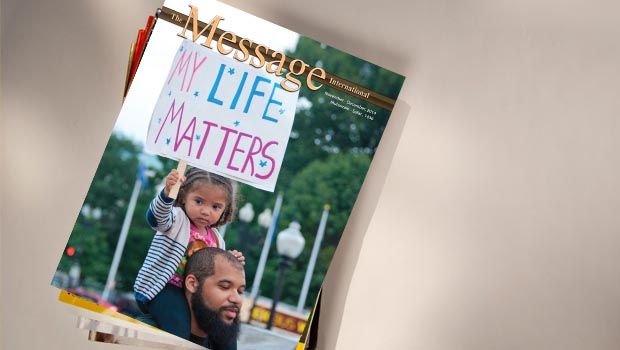
    Following the fatal shooting in Ferguson on August 2014 of an unarmed African American teenager, Michael Brown, by white police officer Darren Wilson, protests were sparked in Ferguson. The protests spread nationwide in November when a Missouri grand jury decided not to indict Wilson and then the soon-to-follow decision not to indict the Staten Island police officer who put a chokehold on Eric Garner, resulting in his death. The killing of Michael Brown, along with other similar incidents throughout the country, has heated up a debate about racism, excessive force by police officers, and the targeting of young black men. Some Americans are asking the hard questions: Where do we go from here? How can we stop this heinous extrajudicial killing of African American males by law enforcement in the streets of our cities? More fundamentally, how can we as a nation address racism and improve race relations in America?

    Many Americans now recognize what African Americans have been  saying for a long time –  that there is institutional  racism and there is  still much work to do…”

    A Guardian columnist, Isabel Wilkerson, has recently noted, “Not terribly long ago in a country that many people misremember, if they knew it at all, a black person was killed in public every four days for often the most mundane of infractions, or rather accusation of infractions – for taking a hog, making boastful remarks, for stealing 75 cents. For the most banal of missteps, the penalty could be an hours-long spectacle of torture and lynching. No trial, no jury, no judge, no appeal. ” While America has come a long way from that horrific stage in its history, one wonders if we are regressing. How is it possible that coming well into the new century, the rate of police killings of black Americans is nearly the same as the rate of lynching during a time when blacks were denied due process and whites discriminated against and victimized them with impunity?

    Isabel Wilkerson has also said, “ Even though white Americans outnumber black Americans fivefold, black people are three times more likely than white people to be killed when they encounter the police in the US, and black teenagers are far likelier to be killed by police than white teenagers.” Imam Khalid Griggs has rightly observed: “Ferguson and St. Louis, Missouri are, unfortunately, not aberrations, but social barometers of the relationship of the law enforcement community to African American males nationwide. Urban enclaves have too often been reduced to being incubators for the Prison/Industrial Complex and its voracious appetite to incarcerate Black males.”

    The tragedy in Ferguson makes it imperative that Americans of all races and backgrounds call for national action to address the issues of systemic racism and police profiling – issues that the shooting of Michael Brown brought to the surface. That these issues have been simmering for a long time is without question, and we must be willing to confront racism, whether overt or hidden away under the cover of political correctness. A position paper on racism put out by the Australian Psychological Society describes the challenge: “Modern racism still involves a rejection of minority groups and discrimination, but is now framed in terms of values and ideology rather than a straightforward dislike. Research has demonstrated that the modern variant of racism is more insidious, entrenched, resilient and difficult to counteract.”

    If there is any good to have come out of the heartbreaking Ferguson incident is that many Americans now recognize what African Americans have been saying for a long time – that there is institutional racism and there is still much work to do to create a society in which people ‘’will not be judged by the color of their skin, but by the content of their character.’’ It is encouraging that President Obama has issued an executive order to establish oversight of the increasing militarization of police departments; it also calls for funding for body cameras for officers.

    We urge all Americans to contact their elected officials to support passage of the End Racial Profiling Act (ERPA) and any similar legislation that addresses unconstitutional actions by law enforcement. We also call upon the Department of Justice to complete its independent investigation of the killing of Michael Brown in a transparent and thorough manner. We strongly feel that people of conscience in all walks of life must work together to seek an end to racial profiling and the injustices perpetrated against racial, ethnic, or religious minorities.

    Last but not least, we would like to remind everyone that racism is primarily a moral and spiritual problem. The pathology of racism therefore requires a spiritual remedy at both the individual and the collective levels. We pray that our fellow citizens recognize this. Then we might all open our minds and hearts to the spiritual cure Islam freely offers. The Qur’an declares: “O Mankind, We created you from a single [pair] of a male and a female and made you into nations and tribes, that you may know one another. Verily the most honored of you in the sight of God is he who is the most righteous of you” (Qur’an 49:13). This is indeed divine wisdom that can break the vice grip of racism. The quicker we recognize this and submit ourselves to it, the better for all of us.


  • How to be a Muslim in America?

    In a Q&A session with the Islamic Circle of North America (ICNA), Prof. Tariq Ramadan answered questions on how Muslims in a western society could proactively give back to their societies without sacrificing their Muslim faith and identity.

    Q: Having experienced the consequences of asserting Islamic identity by being banned to the US, how would you encourage American Muslims to assert their Muslim identity despite the challenges they may face?

    I would say that there’re many levels, and I really think that we have to be really cautious not to be assertive because we are resisting. We should be assertive because we want to be who we are and we know what Islam means for us.

    So the starting point is not because having been banned or because I’m facing many different attacks coming from westerners or from different circles in western societies.

    I think that our strength is mainly to come back to the fundamentals of the Islamic faith, and the tradition and ‘Aqida(creed), which is really this connection with God.

    I have one fear with Muslims living in the West and living in the States, for example. What I’m saying is two things; some are going very far into spirituality, and even Sufism, and “This is Islam”, and “This is the only way to be good Muslims”. On the other side, we have people very much against the system, struggling for rights and politics. And it is as if there’s a gap between the two.

    But to be a Muslim and to assert your identity is to be both at the same time, is to really know the very essence of Islam, which is to purify yourself and to come back to this closeness to Allah, to God, and to try to understand that at the end of the day all our life is a struggle for peace, and the most important peace is the inner peace.

    By saying this we come with values and understanding the oneness of God: At-Tawheed; is a reconciliation between you and Him (God) which means between you and yourself because the knowledge of God is between you and your heart:

    “… and know that Allah comes in between a man and his heart” (Al-Anfal 8; 24).

    This is one thing.

    Islam is visible through your actions and behavior, on the civil ground, on the social ground at both the individual level and the collective level

    For a Better World

    On the other side, we are doing all this to change the world for the better. And to change the world for the better means to change the United States of America for the better, is to be a contributing force to the best of values and justice, equality and empowerment, for Muslims.

    So, because I know the meaning of being at peace with God and to try to promote justice, that I’ve been struggling for my rights in this country by saying ‘what you are doing is wrong’, because at the end of the day nothing is wrong in me supporting Palestinians, for example, because I will keep on supporting them whatever is going to happen, because this is justice; because these are oppressed people, and this is what we have to do.

    So this mindset is important because you are not assertive against, (instead), you are assertive for: for your values, for some objectives: it’s more justice in the United States of America, it’s a democracy, but still not a perfect democracy. When you are an African American in this country you are still facing injustices. When you are poor, you are facing injustices. So the civil rights are an ongoing struggle in this country. It’s not because your president now is an African American president that everything is solved. That’s not true. It may be a symbol, but a symbol could hide the reality and not express it.

    So I would say this is where the Muslims should be, and that’s why they have to be assertive.

    Thus, by doing these two things that are very important to me; never to nurture a victim mentality. We are not victims. Life is a test:

    “He Who created Death and Life that He may try which of you is best in deed” (Al-Mulk 67; 2).

    Islam is visible through your actions and behavior, on the civil ground, on the social ground at both the individual level and the collective level

    So, life is a test. Your life and death are tests, so you have to face up to the challenges of these tests. You have to be the subject of your own history. So by being American; by being citizens in these countries it’s not to say ‘Oh, we are victims. You don’t like us, so we are going to withdraw, or to show you a nice face of spiritual things, for example. That’s not right. The nice face is there, but it should be visible through your acts and behavior within the society. Because in Islam, faith is visible through your actions and behavior, on the civil ground, on the social ground at both the individual level and the collective level. So this is one dimension; so no victim mentality.

    Stick to Your Values

    Another thing, which is quite important as it is also what I’m seeing in many western societies as exactly the same in the United States of America, is this mindset of being minority; ‘Oh we are minority in the society’.

    No, our values are majority values. So, as citizens we have to come and speak about justice, we will be understood by anyone as we do speak for justice for all, justice for every one; man and woman, black and white. Anything which has to do with justice we are for it, against, you know, torture, extraordinary rendition, wrong laws against immigrants …all these are our struggles.

    So, I would say here that we have to come with something which is a majority mindset, which is we are talking to the whole of the United States of America as a majority with our majority values, and this is where we have to be constructive.

    Q: Do you think there are ways for Muslims to be integrated into the society without just being assimilated?

    Once again, it’s always a question of terminology; what does it mean to be integrated?

    For me, it’s over. The religious and cultural integration is done. You, your organizations, all what you are doing is just showing that you are Americans, you have just to be accepting the fact that you are American Muslims or Muslim Americans. That’s not the problem. What I’m saying now, and I’m always repeating this, because you have always people who say ‘You Muslims have to integrate’. And by using the term they create the problem. And we have to do exactly the opposite, because the success of integration is to stop talking about integration. That’s over now.

    Let us talk about the real challenge which is contribution. It is what we have to do; we need to contribute. Our contribution to this society should be on many levels. And once again, not only on the social ground, but also on the spiritual ground; with ethics. Our distinction should me a moral ethical distinction, and not only distinction in the way we dress, because the way we dress is just showing what we believe in. These are values, we speak about dignity, we speak about the self. We are saying to the people your value is not in what you have, but your value is in what you are.

    So this is the way we dress. We are sending a message. So, I would say that this is something which is really important in our presence in the United States of America and in the western societies.

    So to let people know say ‘OK, look, if you want me to integrate by being lesser a Muslim and more an American, it’s over; you’ve lost the struggle.’ All the people who are now settling are willing to be both fully Muslim and fully American. And this is what we have to do.

    Our distinction should be a moral ethical distinction, and not only distinction in the way we dress

    But we also have to say to the Muslim ‘be careful. Don’t fall into the trap of this American dream that as you are settling down in the United States making money forgetting about values and principles.

    And if you look at the reality of the Muslim community in America we can say that there’s a gap between the new immigrants, the new American citizens outside the inner cities they are making money building big mosques, while in the inner cities we have African American Muslims very poor, marginalized in this society. And they are saying to this society you are telling us that we have to integrate? We are native Americans; we have been here for centuries.  It might be exactly the opposite, that the United States of America should integrate the Muslim presence, not Muslims to be integrated. This is something that we also have to tell the people.

    So, it’s also a very important intellectual struggle, an intellectual Jihad which is really to resist this use of wrong terminology used to create problems that are now solved already.

    Q: ICNA has multiple programs catering to the society at large, how important are these programs? Also, how do you think this would play into creating that Muslim identity?

    First, of course I’m supporting this because I really think this is what we have to do. I would start with a comprehensive picture is that for the Muslims not to be only visible when we speak about Islam. It’s when we speak about human beings we are here. This is what it is to be a Muslim. It’s really this. This is the essence of Islam.

    Be Proactive

    So when we speak about being Muslims in this country; in the States, it is really to be involved in all the discussions. We speak about schools we have to be involved in anything which has to do with education, not by saying ‘Oh, we are going to create our Islamic schools’.

    That’s fine. Do your Islamic schools, but what about the state system? What about the schools and the curriculum, what we are teaching?

    When we speak about social problems; marginalization, poverty in this country, this is supposedly the biggest and the richer country in the world. Despite that, if you go and see how people are living, you have poverty and things that are unacceptable. So we are speaking about human dignity. That’s what we have to be involved in; we have to be struggling against anything which has to do with poverty. In Mauritius, for example, we started a big campaign (a Jihad) against poverty because this is the right way of using Jihad-against poverty. Our enemy is not non-Muslims. Our enemy is anything which is wrong. So this is something that we have to do as well.

    When we speak about family, we Muslims are very quick to say family is very important. OK, but what is happening in the rich countries, about divorces and kids not knowing how to deal with authorities and transmission. What about fatherhood? We speak very much about women, and we are right to do that, but we also have to speak about fathers because it’s very difficult to be a father in western societies, all this question of being a presence of going along your own kids.

    Let people see you as an American- a Muslim American dealing with everything and not only with Islam.

    So, this is where the Muslims should be; everything that has to do with being a citizen or being a human being. So, this is a comprehensive approach. Let people see you as an American- a Muslim American dealing with everything and not only with Islam. Because if you come only when we speak about Islam on the domestic side or in the international scene, we are perceived by definition to be on the defensive; you come only when we speak about Islam. So, this is something that we have to do.

    The second point which is important is all the work that you are talking about; solidarity work and telling the people if you want to ask about Islam just come to us and we supporting the poor, the needy people. This is all fine, but it has to be part of something which is an overall vision. And the overall vision is when we speak about contributing we are not only talking about solidarity, it’s not only humanistic or humanitarian work. It’s also about rights, it’s dealing with rights. This is to be assertive. It’s, for example, very good to speak about democracy, but the way it is implemented is quite important. So when you are black man or black woman in this country, because you don’t have enough money sometimes, you are facing wrong implementation, it is discrimination on the job market, in housing. So this is also where we all have to be; is to assertive by saying ‘we are doing this for the sake of the country’.

    For the Sake of Humanity

    So, it’s not only to come with the big heart. It’s to come with a very demanding intellectual struggle on anything which has to do with our rights, our citizenship, our dignity. And then solidarity work should be involved into this. My fear here is really to see Muslims coming with all solidarity work during Ramadan and this solidarity thing. It’s all fine, but if we go behind it it’s as if we want to show the people that we are nice, that we are kind, that we care. That’s all good if and only if we are saying we have a heart and we have requirements as well; that we have claims, we want to be treated with dignity –and not only us but every single human being.

    The last dimension of all this work is also to be involved in things that are essential for our time. I don’t see enough Muslim contributions into something which has to do with global warming, with ecology, with the way we treat animals, for example. And that’s what we have to be self critical. In Eid-Al-Adha, for example, the way we treat the sheep, the way we are slaughtering, we have to ask ourselves: ‘is this the right way to do it?’

    Because we are very strict on the technicalities –as saying when slaughtering, “Bismillah, Allahu Akbar” (In the name of Allah, Allah is the Greatest). But on the way we treat animals, that’s wrong. That’s not the Prophet’s message. So to be self critical as the Prophet, peace be upon him, told us to treat animals with dignity.

    So we can’t send a message to the people that we are strict on technicalities and not deep on teachings. So, all these things are quite important. So, of course I would support what’s done, but I would want it to be within something which is a vision, with multiple, multi-faceted vision including all things altogether.

    Q: How do you envision the American Muslim community to be like ten years from now?

    Look, in my last book (What I believe) I’m saying it’s not a question of ten years, it’s going to be a question of two generations at least. We are going to face challenges and it’s not going to be easy. Because as you can see after 9/11 it has been more and more the case. Yet, before that it was already there. It is that we are perceived as the other; so an outsider within or an insider that is still perceived as a foreigner. And this is the very essence of the question; it is how we really deal with that.

    I would say that it is a question of time. That’s why I’m always saying that we have to normalize our presence without trivializing it. Meaning by this, it’s normal to be an American Muslim but we have an ethical distinction, and this is not to trivialize our presence. That’s what God say:

    ‘Thus, have We made of you an Ummah (nation) justly balanced, that you might be witnesses over the nations” (Al-Baqarah 2; 143).

    So, I think it’s not going to be easy, you are going to face in the States challenges and campaigns against this Muslim presence.

    Embrace the Challenge

    Listen to what is said by some trends in the States about what’s going in Europe, trends who are coming mainly from the States, saying: ‘Oh, in Europe we are now dealing with Arabia with Islam is silently colonizing Europe because of the numbers. And exponentially the fact that Muslims are going to grow and being a very effective presence. So they are sending a message which is this is very scary.

    At the same time in the States they are watching Muslims, and sometimes monitoring them. So, I would say to Muslims this is not going to be easy, but you have the choice, you will have what you deserve. If you are assertive, confident with your own values and you know that you are not coming here to be “the other”, but to be here is to be among the people as an American providing this society with the best values and the best behavior. This is where you have to be assertive.

    Your spirituality, your heart, yourself; don’t forget yourself into the society, and don’t forget the society because you care about your own self. So it’s always a balance. And then give. You are what you give, and you are what you are in the same time. This is the very meaning of being a Muslim: “those who believe and do good deeds.” (Al-Baqarah 2; 25). This is the balance.

    It’s not going to easy, you’ll have people if you are here to please them you’ll never be at peace with your own self, because life is not to please the people. Life is about His satisfaction, and you know that when you please God you will be respected by the people. This is the very meaning of being with God.

    And then the second thing which is also important is whatever are the critiques and the people rejecting you, at the end you’ll find that within this society many people are starting to listen. Many Americans know something is wrong in the whole discussion. So they are listening to Muslims, they are listening to us, they want to know who are these fellow citizens trying to be, quite vigilant with their own values. So, it is up to us to do the job; it is to just to stop putting ourselves into something like we are not liked in this country.

    If we respect ourselves we are going to be respected. It’s not going to be easy, it’s going to take time, effort, patience, perseverance and endurance, and this is life. And if we think about what happen for other Muslims in other situations and in time, they were facing much more than what we are facing. So, we still have the resources to do what we have to do Insha’Allah.

  • How to Accommodate Shariah in the West?

    Recently, Emory University law professor John Witte, Jr. laid out a bold but reasoned approach on how to accommodate sharia (Islamic law) in the United States and other Western nations — one that protects religious freedom and human rights.

    “The current accommodations made to the religious legal systems of Christians, Jews, First Peoples and others in the West were not born overnight. They came only after centuries of sometimes hard and cruel experience, with gradual adjustments and accommodations on both sides,” said Witte, director of Emory’s Center for the Study of Law and Religion (CSLR). “Many modern lessons can be drawn from these experiences for sharia advocates.”

    Witte’s lecture, to a packed auditorium at Emory Law School on Jan. 25, came on the heels of a U.S. Court of Appeals 10th Circuit decision in favor of sharia in Oklahoma. In late 2010, Oklahoma voters approved a proposed constitutional amendment that would prevent state courts from considering or using sharia. Earlier this month, the appeals court upheld an injunction blocking the vote on the basis of religious freedom.

    Witte’s approach:

    Time, patience and persistence are required for secular legal systems to adjust to the needs of a new religious group

    The religious group must be flexible and innovative to win these accommodations

    The religious group must also accommodate or at least tolerate the core values of their secular host nations

    The community’s religious tribunals have to be sophisticated legal institutions, staffed by jurists well trained in both Sharia and secular law. “A single imam making informal judgments for his members in a mosque will get no more deference from courts than a single priest or rabbi doing the same in the back of a church or synagogue.”

    Prickly questions abound when determining how religious minorities such as Muslims, with distinctive family norms, cultural practices and their own religious law, courts and schools, can be accommodated in democratic societies, Witte said. He offered the institution of marriage as example because it has both legal and religious components.

    “What forms of marriage should citizens be able to choose, and what forums of religious marriage law should states be required to respect?” he asked. Arranged marriages? Polygamy? Child brides?

    While informal methods of cultural and legal coexistence are currently in place, these are only temporary solutions — “creaky accommodations and concessions that can easily fall apart,” he said.

    What happens when a Muslim citizen appeals to the state for relief from a religious marriage contract or family practice she cannot abide but also cannot escape? When an imam or sharia court oversteps its authority? When a single-sex Muslim school that does not “spare the rod” is sued for gender discrimination or child abuse?

    Catholics have faced these challenges, Witte said. They went from the “pilloried pariahs” of mid-19th century America to the leaders of the nation — and its Supreme Court — 150 years later. “Catholics learned to embrace on their own distinct terms the nation’s commitment to democracy, human rights, religious freedom, and rule of law.”

    They learned to adjust their religious canon laws of marriage and family to the demands of a neutral state, without giving up their core religious teachings. And Catholic schools, from private kindergartens to Notre Dame, went from being viewed with suspicion and skepticism to being “the envy of the nation,” he added.

    Diaspora Muslims in America and elsewhere in the West can do the same, Witte argued, especially given the enormous “cultural sophistication and diversity” of Islamic beliefs and practices around the world, some of which are deeply congenial to Western values.

    The Jewish experience may be especially instructive, in that Jews have endured nearly two millennia of compromise as they adapted to the laws of the lands in which they settled. This made them sort out “which of their own religious laws were indispensable, which more discretionary … which had to be resisted even at the cost of life and limb.”

    Only recently, after “endless litigation and lobbying,” have Jews gained legal ground for rights such as Sabbath accommodations and access to kosher food, said Witte, as well as the option to have Jewish courts decide certain domestic and financial affairs.

    Marriage again provides a good example of a working compromise between religion and state law, said Witte. States set the threshold requirements of what marriage is and who may and may not participate, but religious parties have the right to marry in a religious sanctuary, by a religious official, following their religion’s wedding liturgy.

    States set the minimum standards of law for marriage, education, child rearing and other domestic and family practices. Religions can add to them — but not subtract — following the ceremonies, beliefs and practices of their communities, coexisting within a framework of democracy and human rights.

    “In the process of adjusting to the legal and cultural realities of their new homes,” said Witte, “Muslim religious minorities, much like their Catholic and Jewish counterparts, may eventually become legal and cultural leaders in succeeding generations of the West.”

    Editor’s Note: A world-renowned scholar of legal history, marriage law, human rights and religious liberty, Dr. Witte is Jonas Robitscher Professor of Law and Alonzo L. McDonald Family Foundation Distinguished Professor at Emory. He delivered the inaugural Don S. Browning Lecture entitled “Shari’a in the West? What Place for Religious Family Laws in America and Other Western Democracies?” Following the lecture, Mary Loftus, the associate editor of the Emory Magazine prepared this report which was subsequently published in the magazine under the title “Advocates of Sharia can learn from Catholics and Jews.” The report is reprinted here with the permission from both Professor Witte and Mary Loftus.

  • What Shariah Law Really Means to American Muslims

    What Shariah Law Really Means to American Muslims

    “Sharia Law: Coming to a Court House Near You? What Sharia Really Means to American Muslims” is the first empirical study to ask North American Muslims what shari’a means to them in their everyday lives. The study demonstrates that the present “moral panic” over shari’a and its alleged impact on American legal and social culture is wildly overblown. For most American Muslims shari’a represents a private system of morality and identity, primarily focused on marriage and divorce rituals. None of the American Muslims interviewed for this study expected American courts to enforce shari’a. Just like other Americans, they will access the courts for adjudication according to American family law if they cannot make a private agreement (relating to divorce) that meets their needs and values.

    Other than religious observance, the practice of shari’a for the vast majority of American Muslims is focused on family matters, primarily marriage and divorce

    American courts are sometimes asked to adjudicate disputes that have been originally adjudicated in a Muslim country overseas, and/or refer to Islamic law or shari’a derived principles.

    American courts will not recognize either the order of a Muslim court in another country or a private agreement referring to Islamic law or shari’a principles if this violates public policy principles of fairness and due process, does not meet the standard for a legally enforceable agreement (e.g. clarity, consensuality), or involves the court in the interpretation of religious dogma. As a result American courts approve very few cases involving Islamic law (usually marriage contracts, divorce settlements, and occasionally private commercial contracts).

    This status quo is widely accepted by American Muslims who, in common with other religious groups, regard their faith-based practices as a private matter and the courts as a place for adjudication according to the principles of American law. The vast majority of respondents in this study saw no incompatibility between their Islamic obligations and their recourse to the civil courts.

    The public discourse, however, contains great confusion about the relationship among the courts, the state, and shari’a, a reality that is being exploited for political purposes and expressed in increasing anti-Muslim hostility. Inaccurate and sometimes hateful claims about the way American Muslims understand their religious obligations and cultural norms mask the complex relationship between private religious and cultural choices and universal state protections.

    This report considers two potential strategies for ameliorating some of these concerns and enhancing the status quo. Many respondents felt that the courts  presently operate with little or no knowledge of Islam or Islamic law and without regard or respect for their beliefs. Without making structural changes, this problem could be addressed by enhanced education for both judges and Muslim religious leaders that deepens their understanding of each system and promotes co-operation between the facilitators of Islamic processes and the courts. There are already signs of mutual influence between the two systems, with many imams incorporating civil law principles into their advice on marriage and divorce agreements, and the courts increasingly asked to consider the lived-experiences of Islamic marriage and divorce as part of the context of a marital dispute. A stronger base of knowledge among judges of Islamic family law traditions would enable the development of jurisprudence that understands and respects these processes.

    The present “moral panic” over shari’a and its alleged impact on American legal and social culture is wildly over blown

    A second strategy suggested by this research is the promotion – by Muslim leaders and organizations – of Islamic family services that focus on the community’s needs and reflect the values and expertise of its own professionals. A family services marketplace could offer family services both inside and outside the mosques, deploying the skills of a range of professionals, reducing pressure on the imams, and providing broader and more inclusive programs and services. Another far more radical approach often debated in the media is the establishment of a parallel independent Islamic tribunal with jurisdiction over family law. Although widely discussed in scholarly literature and media reporting, this study found virtually no support for such an approach among American Muslims. Assessing and choosing an appropriate policy approach is critical for navigating not only issues related to American Muslims, but all religious groups.

    “Shari’a Law Is Coming”: Public Fear and Political Capital

    Such claims are commonplace on the Internet, among politicians, and even on highway billboards. Signs of preoccupation with the “threat of Islam” are so omnipresent that we barely register them. It is perhaps inevitable that the terror of 9/11 excited our fear of an unknown “Other.” However during the last ten years, public figures and popular culture have increasingly conflated that terror with ordinary Muslims and their way of life.

    Stereotypes of Muslims as violent and opposed to peaceful democracy are increasingly entrenched in American public culture. New conflicts emerge almost every week: the location of a Muslim community center in Manhattan, efforts to amend state law to proscribe the application of shari’a by state courts, Qur’an burning stunts, and general hostility toward women wearing the hijab (a headscarf) or burkah (a full-length gown and head covering). Central to this public fear is the term “shari’a,” (literally “The Way”, or guidelines for appropriate Muslim conduct) which raises deep fears among non-Muslims in the West due to its association with the violent extremist movement that has “stolen” the public understanding of Islam. A recent Center for American Progress report described a systematic campaign by particular organizations and politicians to convince Americans to be afraid of the Muslims who live and work alongside them.  This scapegoating builds on the fear that shari’a threatens the country’s social fabric and that American Muslims wish to impose their code of behavior on non-Muslims. The actual content of shari’a in this discourse remains vague, but constantly hints at brutal criminal penalties, intolerance of contemporary life, and misogyny. Some politicians and religious leaders are promoting this factually incorrect and highly divisive message for political capital.

    The study described in this Report set out to explore the real meaning of shari’a to ordinary American Muslims by talking to them about how they understood the role of shari’a in their everyday lives. It was conceived following the 2003-05 Ontario, Canada “shari’a debate,” which arose out of a highly publicized appeal by the Islamic Institute for Civil Justice for a formal Islamic tribunal in Ontario to arbitrate family matters. This event sparked widespread public alarm and divisions within the Muslim community. As one journalist commented, the public appeared to believe that “Muslim barbarians [were] knocking on the gates of Ontario.”

    The study shows clearly that other than religious observance, the practice of shari’a for the vast majority of American Muslims is focused on family matters, primarily marriage and divorce. For many respondents, following what they understand as the Islamic rules on marriage and divorce represent the most significant aspect of their Muslim obligations aside from formal religious observances such as prayer, fasting, and the celebration of religious festivals. Respondents in this study understood their personal choices of Muslim marriage and divorce processes as separate from the formal legal system, regarding them a private matter relating to religious duty or (equally common) an affirmation of cultural identity. The accounts of hundreds of Muslims and their understanding of the principles of Islamic marriage and divorce demonstrate the mundane normality of their family life, its many similarities to non-Muslim family life, and the groundlessness of the hysteria over “the coming of shari’a law.”

    None of the 212 respondents—including many imams, legal scholars, Muslim lawyers and others working in the legal system—suggested that the courts should directly apply Islamic law to Muslims (or non-Muslims). Just three imams (of 41) proposed the creation of a parallel Islamic family tribunal, with the vast majority rejecting this idea in favor of recourse to the civil courts. Many Muslims see the civil courts as “man’s law,” in contrast with shari’a which is “God’s law,” but are equally clear that they are required to obey the law of the land – this was emphasized over and over again, and see no incompatibility. Moreover, the study data shows clearly that a preference for shari’a based approaches to divorce does not prevent Muslims from using the courts to obtain a formal legal divorce (as each divorcee dissolving a legal marriage did) or from using dispute resolution in cases of conflict.

    Editor’s Note: This article is the summarized version of her latest research, “Shari’a Law: Coming to a Courthouse Near You? What Sharia Really Means to American Muslims,”  which was sponsored by ISPU. The entire report along with its references is available at http://ispu.org.

  • What is Shariah and Why Does it Matter?

    In the past year or so, one of the hottest topics in America is Shari’ah. There are those who spend tremendous amounts of human and financial resources to create the fear that Shari’ah is about to cause “destruction of the national existence of the United States,”  a force for  “destroying Western civilization from within…”  The fear of the man in the street about Shari’ah is understandable when politicians talk glibly about Shari’ah as “an infiltration … into all of our operating systems in our country as well as across Western civilization.” And now the presidential hopefuls make Shari’ah one of their top campaign issues. Gingrich, in a speech to the American Enterprise Institute in Washington, said Shari’ah is “a mortal threat to the survival of freedom in the United States and in the world as we know it.”

    As a result of this propaganda and fear-mongering, many Americans are led to believe that American Muslims should not be trusted and that Islam does not belong in America. Shari’ah has become an ominous term and currently as many as two-dozen states have passed or proposed legislation to prohibit the application of Shari’ah. Those various laws aim to make talking openly about Shari’ah unlawful. Making wudhu (ablution) or offering salat (prayer) in a public place could result in being fined or jailed. This Islamophobic campaign raises serious questions and concerns that Muslims simply cannot ignore.

    First, those who wave the red flag about “creeping shari’ah” know, or should know, that the Supremacy Clause of the U.S. Constitution establishes that the Constitution and all laws and treaties made pursuant to the Constitution shall be “the supreme law of the land.” Secondly, there are two clauses, referred to as the “religion clauses” in the First Amendment. The Establishment Clause states, “Congress shall make no law respecting an establishment of religion…” And the Free Exercise Clause adds,  “… or prohibiting the free exercise [of religion] thereof…”  According to these two clauses, Congress cannot establish a national religion and the government cannot act in any way which gives preference to one religion over another.

    Those who propagate the nonsense that shari’ah is infiltrating all the operating systems in the U.S., are concerned, as is writer James Zumwalt, a retired Marine infantry office who now heads a security firm, that, “…our Constitution is under serious attack from a foreign body of law that seeks to erode its very foundation.” Yet they seem unconcerned with a very real danger: that state legislation which they promote — banning Shari’ah and the Islamic practices which are part and parcel of it — is in effect prohibiting the free exercise of religion. That is, without debate, an erosion of Constitutional rights and guarantees.

    Many who fan the flames of fear and suspicion about Islam and Muslims forward the idea that Islam is a cult. As Muslims, we believe that Islam, surrender to God Almighty, is as old as humanity and it culminated 1400 years ago in the advent of Muhammad, peace be upon him. Allah SWT says in the Qur’an, “He (Allah) has ordained for you the same religion (Islam) which He ordained for Noah, and that which We have inspired in you (O Muhammad), and that which We ordained for Abraham, Moses, and Jesus, namely that you should establish religion and make no divisions in it. Intolerable for the disbelievers is that to which you (O Muhammad) call them. Allah chooses for Himself whom He wills, and guides unto Himself he who turns to Him in repentance and in obedience” (Qur’an 42:13).

    Calling Islam a cult brings to mind associations of fanaticism and strangeness. Yet, today almost one out of five people, or 20% of the world population, belong to the Islamic faith. Describing Islam as a cult also suggests a rejecting of mainstream America and its tenets of citizenship.  Muslims, however, have been living in the U.S. for decades as law-abiding citizens. If any Muslim American claims that he is not obligated to follow the U.S. Constitution, he is exposing his ignorance of Islam. Muslim scholars view citizenship as a covenant between the citizen and the state in which he resides. According to this view, the covenant guarantees the citizen’s security in the state and he or she, in turn, is obliged to obey the laws of the land. The Qur’an commands Muslims with regard to covenants: “And fulfill every covenant. Verily, you will be held accountable with regard to the covenants” (Qur’an, 17:34). Sheikh Salman al-Oudah, a Saudi scholar has written, “[Islamic] scholars have stated that those who enter non-Muslim countries have to adhere to their respective laws and regulations even if they entered those countries illegally; and they have no excuse for breaking those laws, since they were entrusted to abide by those laws upon entry into those countries…As long as [a Muslim] agrees to live in a non-Muslim country, he is never to rebel against the people living in his choice of residence, even it seems too hard for him to endure.”

    Shari’ah is often equated by Islamophobes with the stoning of adulterers or cutting off the hands of thieves. But Shari’ah is the total and comprehensive system of deen (religion, way of life) with all the beliefs, rituals, and practices that relate to human existence; the fixed punishments are but one integral part of this system. In fact, of the 6,236 verses in the Qur’an, only 10 verses relate to the hudud punishments. These punishments are to be applied only after a genuine Islamic society has been established, one founded on Islamic principles so that the practice of religion and spirituality can flourish; so that the social, economic, and political environment is conducive to and protective of ethics and morals; and in which the survival needs of all citizens have been procured so that, for example, stealing out of necessity is no longer a motive for theft. There are many conditions stipulated for the application of a hudud punishment so as to avoid a strictly literalist applying of such punishments without regard to conditions and contexts and mitigating circumstances.

    A prime example that demonstrates the suspension of hudud punishment in order to abide by the dictum of absolute justice is the time that the caliph Umar put a moratorium on the punishment for theft as there was a famine in the land. Another important point is that the fixed punishment is the last action in a process of seeking the best application of justice. In 2011 Sheikh Yusuf Al-Qaradawi was interviewed about the hudud on Al-Jazeera and mentioned an agreed-upon rule of fiqh — let doubt suspend hudud. Illustrating the caution with which a hudud punishment is to be applied is the hadith related by Hakim and As-Suyuti, “Refrain from enforcing hudud on Muslims as much as you can. If you find a way out for a Muslim, let him (or her) go, as it is better for the imam (ruler) to wrongly forgive than to wrongly punish.” Unfortunately, many of the punishments that are carried out in Muslim countries in the name of Shari’ah are in fact violations of the Shari’ah itself.

    The word shari’ah as used in the Qur’an holds the meaning of a straight way or a path: “Then We put you on the (straight) Way of Religion: so follow that (Way) and follow not the desires of those who know not” (Qur’an 45:18). The root meaning of shari’ah is a watering place or a path to a watering place. Allah SWT alone is the source of truth and the only One who determines it as He alone has created the entire creation and the only One who knows its secrets. We as human beings may exercise our intellects to their fullest capacity, but without His Guidance, we will overlook and misunderstand much, as we are very limited by our human and individual capacities as well as by the conditions of our environment.  On the other hand, Allah SWT transcends time and space has the ultimate knowledge of all things.  He says in the Qur’an, “Does He who created not know while He is the Subtle, the Acquainted?” (Qur’an 67:14). The truth has been communicated to us through His prophets and messengers and through revealed Scriptures: “Then We revealed the Book to you (O Muhammad!) with Truth, confirming the Book that was revealed before, and protecting and guarding over it. Judge, then, in the affairs of men in accordance with the Law that Allah has revealed, and do not follow their desires in disregard of the Truth which has come to you. For each of you We have appointed a Shari’ah and a way of life” (Qur’an 5:48).

    So each nation has had prescribed for them a shari’ah, as Qatadah (RAA) has said, “The Taurah has its Shari’ah, the Injil has its Shari’ah and The Quran has its Shari’ah. Allah SWT makes whatever He wishes lawful and whatever He wishes unlawful as a test to see to obeys from the one who disobeys but the core of belief is one: Tawheed; the Oneness of Allah SWT.”

    Shari’ah, therefore, can be defined as the totality of all the guidance and directives that Allah SWT has  presented to humanity in the Qur’an or taught by the Messenger (peace be upon him)  through his sayings and actions.  The Shari’ah thus includes beliefs, ibadah (worship) injunctions, enumeration of traits of good character as well as those of sin and evil, and codifications relating to human interactions including inheritance, contracts, witnesses, marriage and divorce, food and drink, clothing, crime and punishment, banking and business dealings, and much more. Frank Griffel, professor of Islamic Studies at Yale, points out that Shari’ah goes beyond what most Americans would consider “legal discourse, for it extends to matters concerning proprieties of clothing, conduct between spouses, filial piety, behavior at funerals, and other questions that Westerners would treat not as legal, but as moral issues or mere etiquette.” Put simply, “all normative discussions within Islam” center around Shari’ah

    Just as water is vital to sustain biological life, Shari‘ah is vital to sustain the human soul. It is the path that leads to the source of optimal nourishment — of human energy and spiritual life. Shari’ah is the straight path by which we aim for nearness to Allah SWT. It is the system of ethical, legal, social, and spiritual proprieties that Allah has provided so that human beings can live together in peace and honor their obligations to God, to society, and to each other. Shari’ah is also the inspiration by which we can end our silence and answer in the best ways those who promote hate, intolerance, or discrimination.

    “Invite (all) to the Way of thy Lord with wisdom and beautiful preaching; and argue with them in ways that are best and most gracious: for thy Lord knows best who have strayed from His Path, and who receive guidance.“ (Qur’an 16:125).

  • The Racial Divide Deepens

    Prophet Muhammad, peace be upon him said, “God does not look at your bodies nor your physical forms, but rather He looks at your hearts and your actions” (Related by Abu Hurayrah in Muslim, Riyad al-Salihin #7). In a world that is still largely driven by prejudices based upon race, color, and appearances, this teaching could not be timelier. Renowned Harvard biologist E.O. Wilson, in his 2012 The Social Conquest of Earth, writes about tribalism — the need to belong to or join groups and affiliations, usually ethnically based — as an abiding human instinct. When coupled with the need to feel superior to others, this ethnocentrism gives rise to prejudice, conflict, and war.

    A recent Newsweek poll confirms that the race divide is not only still existent, but deepening within American society, amplified by the election of a black president. Our country is dissevered over this issue and the reactionary far-right simply isn’t ready or willing to see past the color of a person’s skin. I have long maintained that the political upsurge from middle America, with everything that it has spawned, from the Tea Party to Islamophobia to anti-immigration legislation, is the same old swagger of the beast of racism. America, and the rest of the world, have not yet solved the problem of race, and have much to learn from the Islamic tradition.

    The only valid basis for superiority — for honor — is moral excellence, not race, not nationality

    Physical appearance or outward aspect has no value with God, according to Islamic teaching. What matters are the internal states of mind and heart, as well as the individual’s deeds and contributions to the human fund of goodness and well-being. Tribalism is neither inevitable nor predeterminate. The Quran emphatically asserts the common origin of all human beings: “O mankind! We created you from a single male and female, and made you into nations and tribes, so that you may know one another. Verily the most honored of you in the sight of God is the most righteous of you” (Qur’an 49:13). Race and ethnicity exist as identifiers and bounties of diversity granted out of the munificence of God. Nothing more. And the only valid basis for superiority — for honor — as the above verse tells us, is moral excellence, not race, not nationality.

    Prophet Muhammad solved the race problem in his own society in an incisive manner. His words and teachings reflect a heightened passion for perceiving and interacting with people with tolerance and appreciation of the diverseness of the human species. Few things irritated him more than people conflicting over race or tribal affiliations. In Makkah, his early followers included former black slaves and those from many different tribal and ethnic affiliations, including those who were scorned in the proudly tribal society of Arabia. Among his dearest Companions was the African, Bilal, who was to become the official caller to prayer. The Prophet continued the egalitarian tradition in his new-found home of Madinah, where he unified the various warring tribes into brothers and sisters in faith, teaching them that pride based on tribal identity or venerated ancestry was condemned. He, pbuh, said, “Let people stop boasting of their ancestors who are gone, otherwise they will stand more degraded with God than the dung-beetle that rolls dung with its nose” (At-Tirmidhi and Abu Dawud). The simile used compares the one who venerates his ancestors to the lowliest imaginable creature — the dung-beetle which thrives on the excrement of other creatures!

    After one of his Companions of prominent lineage expressed some disparaging remarks towards another in a crowded gathering, the Prophet asked him to look around and then said, “What do you see?” He replied, “I see people of all colors, white, black and red.” The Prophet informed him, “And you are not better than any of them, except by piety.” On another occasion, he told another close Companion, “Look, you’re not better than a white or black person, except by reason of your piety.” Once, heated words between individuals escalated into full-scale tribal threats and counter threats  which earned the fury of the Prophet. He remarked, “Leave these calls, for they are abhorrent! You still call to the ways of ignorance?”

    In his momentous return to Makkah, with his remaining foes humbled and surrendering, he ordered the ultimate symbolic display of egalitarianism, a sounding denunciation of racism once and for all. He directed Bilal to climb the Ka’bah in front of thousands to sound the call to prayer. One of the proud Arabs remarked, “Thank God my father did not live to see this day” and another asked, “Couldn’t Muhammad find other than this black crow to be the caller?” On this same occasion, as an inspired confutation to their ignorance, the Prophet delivered a sermon in which he reiterated the lesson on human fraternity: “There are only two types of people: the righteous, who are honorable in the sight of God; and the wicked, who are disgraced in the sight of God. In fact, all men are the children of Adam, and Adam was created from dust.”  Then he recited the verse mentioned above on the common origins of humanity (49:13).

    The Prophet never ceased his mission to eradicate the bonds of tribalism and racism. His final public address included the same lesson about egalitarianism and the only criterion for honor: “People, know that your Lord is One, and your father was one. No Arab has any superiority over a non-Arab, nor a non-Arab over an Arab; nor a white person over a black person, nor a black person over a white person — except by piety. The most honorable of you in the sight of God are the most pious and righteous of you.”

    Muslims in the U.S. possess a vibrant egalitarian tradition that continues to inform our values and our experience, as it has for the Muslims who have resided over the generations in this country. We would do well to share the Islamic wisdom that can help heal the wounds still plaguing this nation; and Americans would be well-served to open their ears and hearts to those lessons from their fellow, well-wishing, Muslim citizens.