بسم الله الرحمن الرحيم

Tag: african

  • Racism After Ferguson:  Where Do We Go From Here?

    Racism After Ferguson: Where Do We Go From Here?

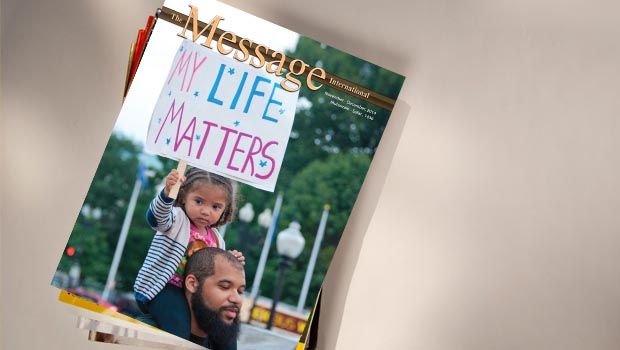
    Following the fatal shooting in Ferguson on August 2014 of an unarmed African American teenager, Michael Brown, by white police officer Darren Wilson, protests were sparked in Ferguson. The protests spread nationwide in November when a Missouri grand jury decided not to indict Wilson and then the soon-to-follow decision not to indict the Staten Island police officer who put a chokehold on Eric Garner, resulting in his death. The killing of Michael Brown, along with other similar incidents throughout the country, has heated up a debate about racism, excessive force by police officers, and the targeting of young black men. Some Americans are asking the hard questions: Where do we go from here? How can we stop this heinous extrajudicial killing of African American males by law enforcement in the streets of our cities? More fundamentally, how can we as a nation address racism and improve race relations in America?

    Many Americans now recognize what African Americans have been  saying for a long time –  that there is institutional  racism and there is  still much work to do…”

    A Guardian columnist, Isabel Wilkerson, has recently noted, “Not terribly long ago in a country that many people misremember, if they knew it at all, a black person was killed in public every four days for often the most mundane of infractions, or rather accusation of infractions – for taking a hog, making boastful remarks, for stealing 75 cents. For the most banal of missteps, the penalty could be an hours-long spectacle of torture and lynching. No trial, no jury, no judge, no appeal. ” While America has come a long way from that horrific stage in its history, one wonders if we are regressing. How is it possible that coming well into the new century, the rate of police killings of black Americans is nearly the same as the rate of lynching during a time when blacks were denied due process and whites discriminated against and victimized them with impunity?

    Isabel Wilkerson has also said, “ Even though white Americans outnumber black Americans fivefold, black people are three times more likely than white people to be killed when they encounter the police in the US, and black teenagers are far likelier to be killed by police than white teenagers.” Imam Khalid Griggs has rightly observed: “Ferguson and St. Louis, Missouri are, unfortunately, not aberrations, but social barometers of the relationship of the law enforcement community to African American males nationwide. Urban enclaves have too often been reduced to being incubators for the Prison/Industrial Complex and its voracious appetite to incarcerate Black males.”

    The tragedy in Ferguson makes it imperative that Americans of all races and backgrounds call for national action to address the issues of systemic racism and police profiling – issues that the shooting of Michael Brown brought to the surface. That these issues have been simmering for a long time is without question, and we must be willing to confront racism, whether overt or hidden away under the cover of political correctness. A position paper on racism put out by the Australian Psychological Society describes the challenge: “Modern racism still involves a rejection of minority groups and discrimination, but is now framed in terms of values and ideology rather than a straightforward dislike. Research has demonstrated that the modern variant of racism is more insidious, entrenched, resilient and difficult to counteract.”

    If there is any good to have come out of the heartbreaking Ferguson incident is that many Americans now recognize what African Americans have been saying for a long time – that there is institutional racism and there is still much work to do to create a society in which people ‘’will not be judged by the color of their skin, but by the content of their character.’’ It is encouraging that President Obama has issued an executive order to establish oversight of the increasing militarization of police departments; it also calls for funding for body cameras for officers.

    We urge all Americans to contact their elected officials to support passage of the End Racial Profiling Act (ERPA) and any similar legislation that addresses unconstitutional actions by law enforcement. We also call upon the Department of Justice to complete its independent investigation of the killing of Michael Brown in a transparent and thorough manner. We strongly feel that people of conscience in all walks of life must work together to seek an end to racial profiling and the injustices perpetrated against racial, ethnic, or religious minorities.

    Last but not least, we would like to remind everyone that racism is primarily a moral and spiritual problem. The pathology of racism therefore requires a spiritual remedy at both the individual and the collective levels. We pray that our fellow citizens recognize this. Then we might all open our minds and hearts to the spiritual cure Islam freely offers. The Qur’an declares: “O Mankind, We created you from a single [pair] of a male and a female and made you into nations and tribes, that you may know one another. Verily the most honored of you in the sight of God is he who is the most righteous of you” (Qur’an 49:13). This is indeed divine wisdom that can break the vice grip of racism. The quicker we recognize this and submit ourselves to it, the better for all of us.


  • Islam and the African American Experience

    Islam and the African American Experience

    Much has been written on the impact of 9/11 on American Muslims. The experience of African-American Muslims in dealing with the anti-Muslim feeling that followed in the aftermath of the tragedy mirrors in most ways the experience of the larger American Muslim community. The history of Islam in this country, though, has a conspicuous trajectory visible through its unfolding — that of Islam as it developed in the African-American community. That development was very much influenced by the ongoing struggle of blacks as they grappled with issues of identity in a white-dominated society. After 9/11, those issues were magnified and brought to the fore as anti-Muslim rhetoric and animosity shook the larger Muslim community and caused greater focus on the issues of social integration of Muslims and their engagement within the American experience.

    African-Americans, like human beings everywhere and in all times, have struggled with profound questions such as who am I, where do I belong; they have also had to contend like many others throughout history with the difficult question why must I suffer such oppression and indignity? These are strident questions, however, in a culture that used the African-American’s forced, indentured, then low-paid labor to build prosperity for others, all the while proclaiming against his humanity, intelligence, moral character, and loyalty. Exploring the ontological questions of identity and the nature of existence when one belongs to an oppressed group, we find in the literature two related but distinct narratives of self-definition. Between 1900 and the interwar period in the last century, the black community was adjusting to the challenges of the post Civil War period and the ramifications of migration from the South to the North for better employment and greater engagement with society as free men and women. Unsure about their status and acceptability in the North, African-Americans looked with hope at the many religious organizations emerging in the black community.

    These principles spoke to the peculiar challenge of being black in America, what W.E.B. DuBois referred to as “double consciousness.”

    Among these were the Nation of Islam and other proto-nationalist black groups. These have been studied and classified by the late Eric C. Lincoln and Essien Udom.  Lincoln coined the now widely-known name Black Muslims; and Udom, from Nigeria, wrote a dissertation on Islam and the Black experience while at the University of Chicago. Navigating between religious and ethnic folkways, many African-Americans came to rally behind the banner of the late Elijah Muhammad and the Nation of Islam. In doing so, the black community experienced a change of direction, with a new generation of African-Americans seeking a meaningful and secure-enough place for themselves in American society. What was most significant about the NOI was its advocacy of self-definition and self-discipline.

    There was, in fact, a convergence between the sectarian and heterodox ideas of Elijah Muhammad and the political and social activism of Malcolm X (Elhaj Malik Shabazz). The synergy resulted in the NOI becoming a major force in the black community’s endeavoring for social reform; the organization demonstrated a dynamism that emerged from its opposition to racist and colonialist control over the subordinated and disenfranchised black community. The NOI was, not surprisingly, rejected by orthodox Muslims who repudiated the secular and nationalist tendencies of the organization.

    Yet orthodox Islam has a quintessential utility as a politico-religious apparatus for shaping the individual and social psychology of its religionists as they view the challenges of daily living through the lens of its theological dogma and metaphysical precepts.  The Nation of Islam, admixing selected Islamic doctrine with its own nationalist creed, was very successful in reforming the lives of its followers, instilling in them the inseparable nature of their “blackness” from the foundation of their self-definition. The NOI also indoctrinated their members with an enduring sense of being American, belonging to and claiming this country as their own, a right borne from the endurance of chattel slavery to the ongoing struggles following emancipation.
    These principles spoke to the peculiar challenge of being black in America, what W.E.B. DuBois referred to as “double consciousness.” He wrote that the African-American was caught in “a world which yields him no true self-consciousness, but only lets him see himself through the revelation of the other world. It is a peculiar sensation, this double-consciousness, this sense of always looking at one’s self through the eyes of others, of measuring one’s soul by the tape of a world that looks on in amused contempt and pity. One ever feels his two-ness — an American, a Negro, two warring souls, two thoughts, two unreconciled strivings; two warring ideals in one dark body, whose dogged strength alone keeps it from being torn asunder.”

    In this ongoing struggle, one cannot, and should not, overlook the contributions made by the Nation of Islam to the advancement and well-being of African-Americans.

    This “double-consciousness” still afflicts African-Americans, to varying degrees, despite the passing of time and significant social changes. In fact, it is not so long since the American Colonization Society, founded in 1816 by three prominent white men, sought the “return” of African-Americans to Africa. The ACS helped to constitute the colony of Liberia in 1821. While purportedly aiming to provide blacks with a chance for a better life, the society was handily supported by slave-holders who wanted to “repatriate” free blacks as they were looked upon as an incitement to slave rebellions.

    Frederick Douglass, the great abolitionist, statesman, and orator reminded racist and segregationist whites of the 19th century that blacks were here to stay. Douglass and other African-Americans leaders in the fight against slavery saw abolition as an inevitable step toward justice and equality as American citizens. The idea, to them, was outrageous that blacks should be sent back to Africa after their tremendous contributions, extracted through their suffering in chattel slavery, to the building of a prosperous America, as well as the patriotic serving of the country by nearly 200,000 African-American men in the Union army during the Civil War.

    It is interesting that African-Americans who convert to Islam are in a very real way embracing a new “double-consciousness.” Especially since 9/11 and the increasing tendency among average Americans to look at Muslims through the lens of Islamophobia, African-American Muslims have to contend with a newly challenging “two-ness.” However, this “two-ness” of being African-American and being Muslim is an identity not thrust upon them by those who aimed to dehumanize and exploit; it is an identity elected in the free searching of the soul. This double-consciousness is a phenomenon that all Muslims living in America experience today. However, by voluntarily choosing to practice the religion of Islam, it becomes an experience of great honor, a demonstration of dedication to Qur’anic principles such as worshipping God and not ascribing any partner to Him, enjoining the right and forbidding the wrong, being witnesses to fair dealing, helping the needy and feeding the hungry, showing kindness and compassion, fulfilling all promises, striving to make peace, living life as a sincere lover of Truth. But the experience is an especially poignant one for the African-American, given the history of slavery, the challenges of defining one’s life within an often hostile cultural environment, and the ongoing struggle for social justice.

    The late Imam is gone but his activism has infused a cadre of highly educated, intellectually and politically astute followers who will continue to make forward strides in helping to bring about a just society for all citizens.

    In this ongoing struggle, one cannot, and should not, overlook the contributions made by the Nation of Islam to the advancement and well-being of African-Americans. Heterodox tendencies aside, the organization began addressing the horrendous and daunting conditions faced by blacks in their communities. Any Muslim who is a true student of history will look at the doctrinal distortions of the NOI within the larger context of what they accomplished in bringing a sense of dignity to the marginalized, dispossessed African-American community; providing a narrative of honor and pride when their own country denied them that most basic human birthright; actively engaging in community work such as helping drug addicts get clean, feeding the poor and helping the needy; in advocating individual and family responsibility and self-discipline; promoting entrepreneurship and small business ownership, and more. It should also be noted that after the death of Elijah Muhammad, his son W.D. Mohammad disavowed the sectarian and ultra-nationalist doctrine and directed the organization toward a more orthodox Islam. In 1978 Louis Farrakhan split with that organization and revived the original template of the Nation of Islam.

    Imam W.D. Mohammad, who died in 2008, spent his later years working with his nonprofit ministry, the Mosque Cares. He was also a vital force in promoting interfaith relations. Many young leaders have followed in his footsteps and are continuing his work, promising individuals such as Imam Talib Sheriff of Masjid Muhammad in Washington D.C.  Among these leaders are graduates from Howard, Spellman, Harvard, Columbia, and Yale.  The late Imam is gone but his activism has infused a cadre of highly educated, intellectually and politically astute followers who will continue to make forward strides in helping to bring about a just society for all citizens.

    Americans have matured since the days of slavery, and many have shown the capacity to look beyond race in electing Barak Obama as president.  African-Americans have made great strides in their search for full inclusion in the American experience and narrative. And African-American Muslims have demonstrated their spiritual mettle in re-claiming the Islamic faith which was so often opposed by their slave-masters because the Muslim who was forced into enslavement notably refused easy acquiescence to the subjugation, to submission to any other than God. African-American Muslims, along with their other American Muslim brothers and sisters, will continue to work vigorously against religious bigotry and political violation whether here or elsewhere in the world.

  • Timbuktu—Empire of Knowledge

    Timbuktu—Empire of Knowledge

    Introduction

    Imagine a city in 16th century West Africa where thousands of Black African students pondered over the latest ideas in science, mathematics, and medicine. A fabled town in the middle of the scorching desert, overflowing with countless valuable books, wonderful crafts, exquisite fabrics, and unrivalled gold jewelry! Imagine a community of highly cultured, wealthy people whose famed city was the subject of legends, its prosperity and mystique behind ochre walls attracting some of the greatest adventurers of the time.

    Timbuktu gives solid proof of a powerful African past and an unbroken chain of African scholarship.

    For most people, knowledge of such a place is vague, and not surprisingly the phrase “From here to Timbuktu” conveys, to those in the Western world, a place of remoteness and far distance from civilization. Yet West African people and the Berbers of the Sahara desert knew such a place well and took pride in being connected to it in any way possible. Timbuktu in the 16th century was home to one of the most respected universities in the world and its intellectuals reached the pinnacle of scholarship and spiritual development. Its commercial networks stretched from below the Niger River to the Mediterranean Sea, and from the Atlantic Ocean to the Arabian Peninsula. Timbuktu was the most famous meeting place of the camel and the canoe, where the highest grade gold was exchanged for salt, cloth and other essential items.

    A fabled town in the middle of the scorching desert, overflowing with countless valuable books, wonderful crafts, exquisite fabrics, and unrivalled gold jewelry!

    How did this fabulous city of commerce and scholarship appear on the shores of the Sahara desert? What became of its wealth of knowledge and material goods? A journey into present day Timbuktu may very well reveal some of the answers.

    The Founding of Timbuktu

    The story begins with a Tuareg client woman named Buktu who founded a settlement in the 11th century, some 12 kilometers (eight miles) north of the Niger River flood-plain along the southern edge of the Sahara. It was a perfect resting place for the nomadic Tuareg Imashagen who roamed the desert in the rainy season and were in need of a malaria-free base for their animals to graze during the scorching heat of the summer. Buktu’s camp had fresh water wells, and she would protect their heavy goods when they left the camp at the first rains. This small, seemingly insignificant campsite, known as “Tin-Buktu” or the well of Buktu, according to ‘Ali Ould Sidi and many historians of the region, and it became the cornerstone of a thriving, bustling city.

    Early Development

    Timbuktu, from its inception, was in a unique position to serve all of the people of the region since it was located at the precise point where the Niger flows northward into the southern edge of the desert. It provided a natural meeting place for the Tuareg, the Arabs, the Wangara, the Songhai, the Soninke, the Fulani, and others. It provided a central marketplace for the gold of the south and the salt and goods of the Mediterranean. Salt came from the Tegaza mines of the Sahara and gold came from the famous Boure and Bambuk mines of Mali. The first permanent settlers were African merchants of the Marka, Wangara, Sarakole and Mandinka peoples. They came from Gao, just to the southeast, the ancient city of Jenne, the commercial capital of the Middle Niger and the mysterious towns of Dia and Kabura in the southwest. These merchants developed the first marketplace and built fine houses of mud. A symbiotic relationship formed between the merchants and the tent dwelling Tuareg. The first Masjids (mosques) soon appeared and traders and scholars began to flock to the city.

    Mansa Musa’s Impact

    In 1325, Mansa Musa, the ruler of the vast empire of Mali returned from his fabled pilgrimage to Makkah. He had crossed the desert with over 60,000 followers. His caravan contained eight thousand soldiers, servants, and courtiers who drove 15,000 camels laden with gold, salt, perfumes, and stores of food supplies. It is said that the Mansa carried so much gold with him (approximately 180,000 kilograms) that he changed the economy of every land that he reached. On his return, Mansa Musa built a masjid at every stop and on reaching Timbuktu, he commissioned his chief architect, the Andalusian Abu Ishaq As-Saheli, to build the largest house of worship in the whole of West Africa and a spacious royal palace. The grand masjid called Jingarey Ber or Al-Masjid Al-Kabir  is still standing and has been the primary site for Friday prayers in Timbuktu since that time! Mansa Musa’s exploits made Mali and Timbuktu world famous and legends of gold-lined houses and fabulous riches were spread throughout Europe.

    Timbuktu in the Eyes of the Muslim World

    To the Muslim world, the rulers of Mali had revealed another form of wealth. Timbuktu had become a center of learning and a producer and exporter of rare and valuable Islamic books. Famous Muslim travelers like Ibn Battuta and Hasan al-Wazan (Leo Africanus) visited Timbuktu and were amazed at the high level of scholarship and the insatiable love for the study of the Arabic language and the Blessed Qur’an. Hasan al-Wazan wrote: Hither are brought diverse manuscripts or written books, which are sold for more money than any other merchandise.”

    To the Muslim world, the rulers of Mali had revealed another form of wealth. Timbuktu had become a center of learning and a producer and exporter of rare and valuable Islamic books.

    Timbuktu was a principal staging point along the pilgrimage route to Makkah and thus, became a central point for scholars and travelers to the Middle East and a perfect base for the dissemination of Islamic knowledge and ideas. Thousands of manuscripts were stored in private collections and copied by local scribes for use in the many institutions of learning.

    Timbuktu’s Educational Achievements

    At the height of the city’s golden age in the 16th century, Timbuktu boasted over 150 schools and a major University at the Sankore Mosque that enrolled over 25, 000 students. The curricula were intensive and included the Islamic sciences like Qu’ranic interpretation (tafseer), the Prophetic sayings (hadeeth), Islamic jurisprudence (fiqh), sources of Islamic law (usool), and Islamic doctrinal theology (aqeedah). These formed the core of the syllabus. The students were also required to memorize the entire Qur’an and the famous religious texts (mutoon) and gain mastery over the Arabic language through the study of grammar (nahw), literary style and rhetoric (balaagah), and Arabic poetry and logic (mantiq).

    After mastering the basic texts and memorizing the required material, the student was assigned a mentor who specialized in a particular field of study. The relationship of student and the master often grew to the point where the student would work for the master or become part of his family. This mulaazamah system produced scholars who benefited not only from their teachers’ theoretical knowledge but also from internalizing their manner of living and thus coming to more deeply understand and embody their teachings.

    Timbuktu also highlights Islam’s great legacy of development in Africa and its proper place in the annals of African achievement.

    Timbuktu’s history has come to us from a series of historical works or Tarikhs written from the mid 17th century through the 18th century. These well written Arabic treasures enable us to enter the African world of scholarship and deep intellectual thought. Some of them were bound with beautiful leather binding and have stood the test of time. The most famous chronicle in this period was the Tarikh-as-Sudan, or the History of the Sudan, written in 1653 by Timbuktu’s most illustrious historian ‘Abd ar-Rahman as-Sa’di. It gives a detailed exposition of the history of the city from its founding till the time of the writing. The two Tarikhs that corroborate the historical detail of Tarikh as-Sudan are Tarikh al-Fattash by Mahmoud Al Ka’ti and the anonymous Tadhkirat an-Nisyaan or A Reminder to the Oblivious. These chronicles remind us of the glorious past and lament the decline of the city.

    Present Day Documentation Centers

    Today, many of these great works have been unearthed from private collections and stored in documentation centers. The most famous is the Ahmad Baba Center for Documentation which began its collection around 1970 through a UNESCO educational grant. Named after one of the greatest scholars in Timbuktu history, this center has been chosen by President Thabo Mbeki of South Africa as the focus of a major drive to preserve the manuscripts of Timbuktu and train Malians in the modern art of archival science. Mr. Mbeki visited Timbuktu in 2001 on a diplomatic mission and was so impressed by the thousands of manuscripts written by African scholars that he made this project one of the chief endeavors of the African Union.

    In addition to the Ahmad Baba Center, the Bibliotheque des Manuscrits “Al Wangary” houses the private library of the family of Shaykh Muhammad Bagayogo, the teacher of Ahmad Baba. The Mahmoud Ka’ti Collection contains numerous rare manuscripts from the great scribe’s personal collection. The Mamma Haidara Memorial Library has brought together a host of important documents and has sent displays around the world. The As-Sayouti Collection contains some of the most beautiful handwritten copies of the Qur’an in West Africa. So much work has been done in bringing together the written history of Timbuktu, that a network of 23 private collections has been formed to give local direction to this sensitive task.

    Important Masjids and Heritage Sites

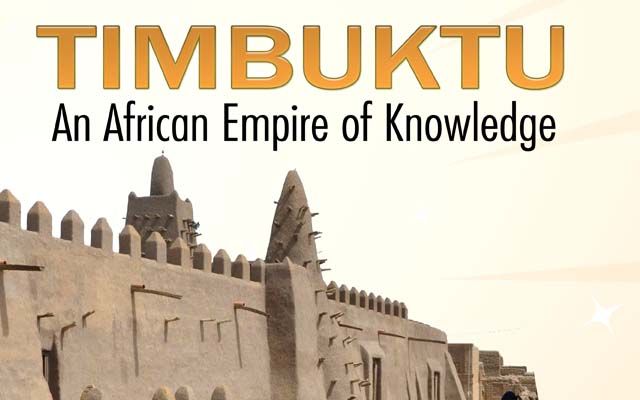
    Timbuktu’s skyline has always been dominated by its houses of worship. It is to the famous mosques that the old city with its triangular layout owes its different quarters. These adobe mosques have become famous throughout the world for their unique shapes and their long histories. In the northern quarter, at the apex of the triangle lies the Sankore Masjid with its pyramid shaped minaret laced with protruding wooden support beams. It was here that the Sankore University housed its thousands of students and produced some of the greatest scholars in Africa. In the western corner of the city lies the Jingerey Ber Masjid built by Mansa Musa in 1325.  Five hundred years later in 1858, the British traveler Henry Barth wrote that the mosque “by its stately appearance made a deep impression on my mind.” This masjid is now considered the oldest standing mosque in West Africa and it has hosted the main Imam of Timbuktu at the only Jumu’ah Prayer (Friday Prayer) in the city since its inception. In times of crisis, it stood as a sanctuary for the people of Timbuktu and for centuries was a center for deep spiritual reflection. The third major masjid is the Sidi Yahyia Masjid that was originally built by Shaykh Ibrahim Hamallah Al Kunti in the 14th century and rebuilt about 1400 by Amir Muhammad Naddi. It is the best preserved of the main houses of worship and, along with the other two, is a world heritage site.

    A Great Legacy and a Catalyst for Renewal

    The first non-Muslim to enter the city was the French explorer Rene Caille, on April 20, 1828.  He was disappointed at the condition of the buildings of Timbuktu but noted that “apparently all of the population could read the Qur’an and even know it by heart.” The golden age had passed but the spirit of scholarship and piety still remained. Timbuktu, at its height in the 16th century— with its wide-ranging commerce, fabulous prosperity, countless rare and esteemed manuscripts and  rich scholastic legacy, its designation as a center for the dissemination of religious and spiritual teaching—destroys racist notions of Black inferiority, educational and commercial backwardness, lack of record-keeping or public archives such as libraries and universities; indeed, Timbuktu is a death knell to the deception that Africa had no history.

    Timbuktu gives solid proof of a powerful African past and an unbroken chain of African scholarship. Timbuktu also highlights Islam’s great legacy of development in Africa and its proper place in the annals of African achievement. The city’s well preserved trove of spiritual wisdom may hold some of the answers to today’s complex problems and never-ending conflict and war. Perhaps the heat of the desert sands and the emptiness of its expanse can be catalyst for the deep reflectiveness and sincerity of heart necessary for an African Rennaisance of economic, cultural and political liberation; and God willing, a wider renewal of hope and aspiration for humanity.

  • African American Muslims and the Social Justice Movement

    African American Muslims and the Social Justice Movement

    The Quran and Sunnah (authentic traditions of Prophet Muhammad, peace be upon him) are clear in articulating the purpose of revelation as being the liberation of human beings from the false worship of anything other than the Creator and the establishment of justice for all creation, including the human and natural worlds. According to the Quran, the most definitive historical account of the transcendent struggle between truth (haqq) and falsehood (batil), societal justice must be based on divinely revealed principles if human efforts are to be beneficial in both this world and the life to come. Through total submission to this Divine dictum, mankind positions itself to be expunged of the soul-deforming conditions of racism, sexism, classism, religious bigotry, and economic exploitation. The message of all of the Prophets was that of worshipping the One God only and establishing the inherent dignity and humanity of all human beings. As a result, the first and largest group to affirmatively respond to the call of a prophet were the poor and oppressed.

    Slavery in History, Arab Society, and Islamic Practice

    Slavery, one of the oldest human practices of oppression, evolved to be the most repugnant institution in human history. Although it was not until the advent of the trans-Atlantic slave trade that race became the exclusive criterion for subjugation in chattel slavery, pre-Islamic Arabs similarly associated the worst forms of enslaved labor as being the sole domain of blacks. The number of sub-Saharan African blacks enslaved by Arabs during the trans-Saharan slave trade is commonly believed to be approximately equal to the number of black Africans enslaved during the 376 years of the trans-Atlantic slave trade. Prophet Muhammad, peace be upon him, did not completely eliminate slavery from Arab society, but the economic and social incentives to keep slaves were removed by Islam. Abu Dharr, one of the illustrious companions of Prophet Muhammad, peace be upon him, when asked why one of his slaves dressed in clothing like his, responded that he heard the Messenger of Allah (pbuh) say, “Your slaves are your brothers whom Allah has placed in your hands. He who has his brother in his hands must feed him what he eats; clothe him with that which he wears. He should not burden him with that which is beyond his capacity, but if he entrusts him with that, he should lend him a hand.” In his Farewell Sermon, delivered on the occasion of Hajj, Prophet Muhammad warned, “…Neither does an Arab have excellence over a non-Arab. Neither does (one with) white skin excel over (one with) black. But, of course, excellence is only on the basis of taqwah (God-consciousness, fear of God, righteousness).”

    Slavery, one of the oldest human practices of oppression, evolved to be the most repugnant institution in human history.

    Of the untold millions forcibly extracted from their homelands during the trans-Atlantic slave trade, historical evidence suggests that one of every third African enslaved in the United States was a Muslim. Great dignity was conferred upon luminary companions of Prophet Muhammad (pbuh) such as Bilal ibn Rabah, a former Abyssinian (Ethiopian) slave who became Prophet Muhammad’s (pbuh) muezzin (caller to prayer), close companion, and treasurer of the Islamic state; Umm Ayman, the African woman referred to by Prophet Muhammad (pbuh) as “My Mother” and a “Woman of Paradise”; the unnamed Black woman who chose to be patient with her epileptic condition and was told by the Prophet (pbuh) that she would gain Paradise — such dignity decries the humiliations and affronts systematically meted out to African Muslim slaves in the United States. As a matter of fact, King Ferdinand and Queen Isabella of Spain, the patrons for the voyages of Christopher Columbus, issued a royal edict in the early 1500s making it a crime to transport African Muslims into the Western Hemisphere, a crime that could be punishable by death. In fact, British and Spanish slavers attempted to eradicate the practice of Islam or Arabic speech among slaves even before the unfortunate humans reached western shores. Slaves who exhibited unrelenting resistance to their new state of dehumanizing servitude were typically taken to various Caribbean islands for “seasoning,” a process of breaking the slaves’ will and craving for freedom. Seasoning involved unspeakable acts of barbarity against the slaves in an attempt to break their spirit. Muslim slaves, strong in their faith and uncompromising in their refusal to submit body or soul to any master but Allah SWT, were often identified by their enslavers as being more rebellious and inclined to attempt escape. Yet, again probably due to their religion and its emphasis on self-governance and industriousness, they were also seen as very competent when assuming responsibilities on the plantations.

    Slave Rebellions, Revolts, and Conspiracies

    Runaway slave advertisements during the colonial period frequently mentioned slaves with obvious Muslim names such as Osman, Amir, and Samba, a common Muslim name in West Africa. Contrary to the popular American narrative that depicts slaves as contented, happy, child-like figures, historians like Herbert Aptheker document over 200 known slave rebellions, revolts, and conspiracies, the largest of which was the Black Seminole Rebellion from 1835 through 1838. Runaway slaves from Georgia and Alabama found refuge with the proud, independent Seminole Indians of Florida, intermarrying and fighting alongside them against the U.S. Army. The Seminoles, the only native nation that was not forced to sign a debasing treaty with the United States government, incorporated African Muslim styles of dress and numerous Muslim practices into their culture, strongly indicating the presence of escaped Muslim slaves in their ranks.

    Countless African Muslim slaves maintained their faith throughout their horrific sojourn in captivity in a foreign land.

    According to research done by the Islamic History Project Group and compiled in the book A History of Muslim African Americans, “…in 1742, a group of Moors (code for African Muslims) was accused of starting a riot in New York City. Twenty-one of the accused were killed or lynched and 23 were banned from New York… In the 1700s, a group of Muslims lived among the Mohican in Connecticut… One of the children of Uncas, immortalized as the Last of the Mohicans, had a son named Mohamet.” In 1839, a ship transporting 53 West Africans destined to be sold as slaves, docked in the port of Havana, Cuba. After being sold, the West Africans were placed as human cargo on the slave ship Amistad. After enduring inadequate food rations, merciless beatings, and disgrace by the ship’s captain and crew, one of the slaves, a young African by the name of Cinque, secretly plotted with the other slaves to take over the ship and sail back to Africa. Taking advantage of stormy seas, Cinque and the other slaves seized control of the ship and demanded to be returned to Africa. Unfortunately, they were tricked into sailing straight for America by the two ship’s officers who survived the rebellion, and were then captured by a United States naval vessel. Tried in a court of law, the slaves were granted their freedom, and returned to the African continent. Cinque was reportedly not a Muslim, but the Steven Spielberg film, Amistad, in highlighting the historical fact that Muslims were on board the ship, showed them collectively praying, notwithstanding that they were chained together.

    There is also solid anecdotal evidence, still in the process of being historically substantiated, to suggest that the leader of the famed 1822 slave rebellion in Charleston, South Carolina, Denmark Vesey, was a Muslim. The evidence contends that he found a platform to espouse his liberation theology through the more-acceptable-to-whites vehicle of the Christian Church. And the Vesey rebellion was impressive. According to Thomas Higgison, the author of an article on Vesey in an 1861 edition of The Atlantic Monthly Magazine, the revolt was “The most elaborate insurrectionary project formed by American slaves. In boldness of conception and thoroughness of organization, there has been nothing to compare it with.”

    Attempts to Eradicate Islam Amongst Slaves

    American enslavers and plantation owners were far more inclined than their European counterparts to punish slaves for practicing any visible remnants of Islam. For example, the Muslim slaves in Bahia, Brazil were in such sufficient numbers and social proximity to each other that they were able to wage jihad and successfully, although for a short period of time, declare an Islamic state in 1835. Contemporary research shows that the revolt emerged from a  profound conviction of Islamic belief and principle in establishing a just social order, this encompassing and subsuming the motive to free themselves and others who were enslaved.

    During the decades of the mid to late 1960s and throughout the 1970s, African American Muslims were the dominant force on the American Muslim landscape.

    Countless African Muslim slaves maintained their faith throughout their horrific sojourn in captivity in a foreign land. The bloody conflict known as the Civil War resulted in the legal dissolution of the system of chattel slavery in the United States. Muslims, such as Muhammad Ali ibn Said, distinguished themselves in battle fighting on the side of Union forces against Confederate troops. Said was a member of the 55th All Colored Regiment of the State of Massachusetts, formed after the 54th All Colored Regiment which was immortalized in the dramatic film Glory starring Denzel Washington. With the end of legalized slavery in the United States in 1865, and during Reconstruction, a relatively brief period from 1865 until 1877,  the nation flirted with more liberal political and social involvement for freedmen. However, the United States reverted to virulently anti-black, exclusionary laws, policies, and practices first euphemistically called Black Codes and later labeled Jim Crow.

    Jim Crow and Institutional Racism

    The racial apartheid practices of Jim Crow would remain the law of the land for almost another century until the U.S. Congress passed the 1964 Civil Rights Bill. From 1890 to 1920, it is conservatively estimated that approximately 5,000 African Americans were lynched by white supremacists, mostly in the South. African Americans desperately yearned for respite from pain, suffering, and systematic denial of the most basic freedoms extended to even the most recent immigrants. In 1850, Presbyterian missionaries brought a brilliant young man from St. Thomas, U.S. Virgin Islands, to the United States to attend theology school. Because of his dark complexion and the stifling system of institutional racism in America, Edward Wilmot Blyden was not only rejected for admission to the theology school, but had to flee the country to Liberia to avoid being forcibly placed into slavery. Blyden became intrigued by the Arabic language, Islam, and the Muslims he encountered in Liberia and Sierra Leone. He went to Syria to study and master the Arabic language. In his classic work, Islam, Christianity and the Negro Race, Blyden extols the virtues of Islam, specifically its apparent absence of racism and affirmation of the positive aspects of African culture. There is scant historical evidence that suggests that Blyden ever embraced Islam and appears to have died as a Presbyterian minister, albeit one with tremendous respect for Islam. Blyden was a forerunner among African and African American Christians who viewed Islam as a viable option for struggling people of African descent.

    Toward Universal Rights: Garvey to Malcolm X and Beyond

    At the turn of the 20th century, arguably the largest ever membership organization of African people was formed by the native Jamaican, Marcus Mosiah Garvey. Even though Garvey was Christian, he acquainted Africans throughout the Diaspora, especially the United States, with Islamic concepts and activist Muslims. Garvey was highly influenced by Duse Muhammad Ali, an Egyptian/Sudanese Muslim who was founder and editor of the journal African Times and Orient Review, whom he met in London. The slogan of the Universal Negro Improvement Association (UNIA), founded by Garvey, was “One God, One Land, One Destiny,” a theme that Garvey attributed to the Muslim, Ali. A number of proto-Islamic or even pseudo-Islamic organizations, such as Drew Ali’s Moorish Science Temple of America and Elijah Muhammad’s Lost Found Nation of Islam attempted to mobilize African Americans to reclaim their identity and glorious history by casting off the cultural and religious imperiousness emanating from the White church, and identifying with their “original religion,” Islam. These efforts were made more attractive to African Americans when the crimes against black people by the “White Man’s Religion” were catalogued, and the racism-free accounts of the practice of West and North African Muslims were highlighted.

    It is, however, the opportune time for a unified effort by Muslim individuals and organizations to champion social justice issues in a thoughtful, systematic, and balanced way.

    The disseminations by these groups, as well as subsequent authentic Islamic efforts in the African American community, highlighted Islam as a cornerstone for the social and religious redemption of the Black community, as well as for America in general. Malcolm X, El Hajj Malik Shabazz, was undoubtedly the foremost exponent of the social justice gospel of Islamic activism and principled struggle against all manifestations of oppression, particularly against the “Dark World.” Malcolm uniquely combined the qualities of master orator, inspiring mobilizer, and skilled organizer. As the National Spokesman and Organizer for the Nation of Islam for 12 years, Malcolm adeptly appealed to the most uneducated elements and social outcasts in Black American society while simultaneously attracting the intellectual curiosity and support, if not outright organizational commitment, of better educated Blacks. However, it was not until Malcolm’s official departure from the organizational constraints of the Nation of Islam in March 1964 that he was able to broaden his influence and appeal to the intellectual elite of Black social activists.

    He also provided an ideological foundation for the globalization of Black activism in the 1960s by broadening the objectives of the civil rights movement to include that of human rights, and Pan-Africanism and Pan-Islam. Dr. Martin Luther King, Jr., despite his life being tragically cut down at the age of 39, had realized and begun to articulate the idea that the civil rights movement was actually a universal human rights struggle. African American college students, intellectuals and scholars, and social activists—including former Black Panther Party leader Dhoruba bin Wahad; former Student Non-Violent Coordinating Committee Chairman (SNCC) H. Rap Brown (Imam Jamil Abdullah Al-Amin); revolutionary poet Askia Muhammad Toure; Revolutionary Action Movement founder, Max Stanford; Black Panther martyr Zayd Shakur— embraced Islam as a social change vehicle. This, in part or in full, was due to the dynamic influence of Malcolm X. Others like Huey Newton and Bobby Seale, co-founders of the Black Panther Party, Howard Fuller, the founder of Malcolm X University in Durham, North Carolina, and many activists for social change in the African American community were profoundly influenced by Malcolm X.

    Changing Demographics

    During the decades of the mid to late 1960s and throughout the 1970s, African American Muslims were the dominant force on the American Muslim landscape. During this period, immigrant Muslims were typically absent from public discourse and community action on domestic social justice issues, remaining socially inconsequential during this turbulent era. Hence, the mantle of Muslim activism was borne virtually alone by African American Muslims, a phenomenon that attracted large numbers of African American university students and other activists. As the number of African American Muslims grew, prison inmates began to embrace orthodox Islam, where once the prisons were almost the exclusive recruiting ground for the Nation of Islam. The decade of the 1980s ushered in an explosion in the number of large Islamic Centers founded and run by immigrant Muslims, located primarily in suburban America. Far from the urban centers where African American mosques and Muslims were principally located, these centers facilitated an exodus from the urban core of immigrant, and even some African American, Muslims.

    The social dysfunction and oppression that once provided some of the impetus for inner city dawah (inviting to Islam) and relief activities, gave way to an out-of sight, out-of-mind mentality. While these suburban Islamic Centers accommodated the growth of the Muslim population, both immigrant and African American, in countless locations across the country, they nonetheless failed to understand or address many of the unique challenges and complexities confronting African American Muslims particularly, and the inner city population in general. Many African American Muslim professionals and other skilled, highly-motivated individuals were assimilated into these suburban Centers so that the affiliation with, and financial support of, a great number of urban mosques dwindled and they were closed down. African Americans witnessed a similar co-opting of affiliation or patronage in the aftermath of the civil rights movement when newly-passed legislation made it possible for Blacks to give their business to what had been Whites Only establishments, resulting in the closure of a vast majority of Black businesses when the more highly capitalized White-owned commercial options, were available.

    Uniting to Champion Social Justice Issues

    The combination of the closure of inner city mosques, African American Muslims moving on from inner city issues to more global ones as addressed by suburban Centers, and the neglect of issues of urgent concern to African American Muslims, have all contributed to a virtual abandonment of hot-button issues affecting African Americans and this country. One such issue is the more than 2.4 million human beings who are incarcerated in the United States, a number not seen in any other country in the world. The majority of those incarcerated are African Americans and, to an increasing degree, Hispanic. The Prison Industrial Complex in America has the financial incentive to keep expanding this industry of servitude. Michelle Alexander asserts in her scathing condemnation of the Prison Industrial Complex and criminal justice system, The New Jim Crow: Mass Incarceration in an Age of Color Blindness, that more African Americans are incarcerated in federal penitentiaries, state prisons, and local jails than the number of slaves in the U.S. in 1850, 15 years before Emancipation. The 13th Amendment to the U.S. Constitution prohibits slavery and indentured servitude except when persons have been convicted of a crime. Muslims as well are increasingly being incarcerated as a direct result of entrapment and targeted prosecution, but except for the extraordinary efforts of a handful of individuals and organizations, Muslims in America seldom expend resources for the reform of these issues related to the criminal justice system.

    It is, however, the opportune time for a unified effort by Muslim individuals and organizations to champion social justice issues in a thoughtful, systematic, and balanced way. This goes hand-in-hand with dawah efforts. ICNA has made tremendous strides in this regard through programs like Why-Islam, ICNA Council for Social Justice, ICNA Relief, and Helping Hand. The future of Islam in the United States will be determined by how resolute we are in crossing all false  lines of division, for the betterment of Muslims and all the citizens of this land. And Allah knows best.