بسم الله الرحمن الرحيم

Tag: africa

  • HHRD’s Africa Summit in Washington, DC – A Recap

    HHRD’s Africa Summit in Washington, DC – A Recap

    Around fifty delegates from ten states attended Africa Summit 2011 in Washington D.C. on Sunday, December 18th of last year, organized by Helping Hand for Relief & Development (HHRD). Islamic Circle of North America (ICNA), a partner of HHRD, facilitated the organization of this unique event. The majority of the delegates were American-born of African heritage or expatriates from various African countries including Somalia, Kenya, Ethiopia, Guinea, Gambia, Mali, Nigeria, and Ghana.

    Following an introduction of the participants and initial remarks by Dr. Farrukh Raza (CEO/President of HHRD) on the goals and objectives of the Summit, Dr. Sulayman Nyang, professor and chairman of the African Studies Department at Howard University in Washington, D.C., presented a comprehensive overview of Africa and its many political, social, and humanitarian challenges. He talked about the influence and impact on Africa by the European powers that occupied various parts of the continent during the late 19th and early 20th century, as well as the rich Muslim tradition brought by travelers and traders from Arabia and Malaysia. He informed the audience about the diverse cultures that make up this second largest and second most populous continent, a land with abundant natural resources and various regions that are fertile for agriculture. He talked about health issues such as malaria, the need to promote education, and the imperative challenge of bringing people together to resolve their tribal, ethnic, and political issues.

    Dr. Asha Samad (PhD), professor of Medical Anthropology and a human rights activist with the Somali Association for Relief and Development (SAFRAD), discussed the political, social, and humanitarian issues that adversely affect development in East Africa and the Horn of Africa (a peninsula in East Africa that juts into the Arabian Sea, alternatively called the Somali Peninsula). She pointed out that those most affected by the instability in these regions are women, children, and minorities.

    Dr. Ali Ibrahim Bahar, a professor at Houston Community College, talked about the many relief workers who go to Somalia and that most focus on Mogadishu. He made the point that this is critically necessary but that there are many other regions in Somalia such as Somaliland and Puntland (northeastern Somalia) that are experiencing extreme drought and famine, where the people need immediate assistance as well. He also spoke about a number of educational projects that he initiated a few years ago through an organization called IQRA.

    After Dhuhr prayer and lunch break, the afternoon sessions began with Nadia Zeeshan making a general presentation about HHRD. Ilyas Hasan Choudry then made a presentation about HHRD’s relief and development work in Africa. Azmat Akbar, who is one of the coordinators of the humanitarian work in Africa, called from Kenya to greet everyone and to give them the exciting news that the HHRD relief workers and staff in Africa were viewing the proceedings via video conferencing.

    Mid afternoon a group discussion was initiated by Dr. Iqbal Unus. Following some hours of intense dialogue and analysis, including input from smaller break-out groups, a consensus was built that HHRD must continue with the emergency relief work already in place that includes food and water distribution, providing of basic healthcare, shelter, and in-kind donations to the internally displaced persons in various relief camps across Africa. It was concluded that the long-term development phase will proceed where security issues do not interfere. That phase will concentrate on programs and projects in the areas of healthcare, education, poverty eradication, and the empowerment of women. It was further emphasized that arrangements should be made by HHRD, in coordination with their field staff in Africa, for doctors and nurses from the U.S. and Canada to go and work in the field for 1-2 week stints, providing medical care and helping to improve health conditions, as well as provide pertinent advice to the local HHRD staff.

    HHRD will continue to collaborate with the Summit delegates through the formation of an Advisory Council on Africa, and through the various regional offices of HHRD.  HHRD will reach out to communities nationwide through presentations, workshops, and fundraising efforts to provide humanitarian relief and development to the people of Africa.

    Following was the feedback on the Summit from the participants:

    Question

    How did the formation of the Summit come about?

    Answer

    In the past, Helping Hand for Relief & Development (HHRD), an international humanitarian charity organization with masha’Allah the highest four-star status [exceeds industry standards and outperforms most charities in its Cause], used to work in various African countries partnering with the local NGOs. This year, 2011, saw HHRD representatives going and establishing relief work in North African countries like Algeria, Tunisia, Libya, and Egypt. Then in the summer of 2011, two HHRD teams, Water & Sanitation Hygiene (WASH) and Healthcare, visited the famine-stricken areas of Kenya in East Africa and Somalia in the Horn of Africa. The situation is so bad in these regions that HHRD decided to stay in the areas and work on short-term relief and later on long-term development projects. Then HHRD’s CEO/President Farrukh Raza and Executive Director of International Programs Irfan Khurshid visited the areas. With these efforts, with HHRD teams on ground, Kenya and Somalia have become two more countries, in addition to Pakistan and Haiti, where HHRD is registered as a local NGO.  HHRD’s  long-term 2020 vision calls for expanding HHRD’s humanitarian work in other regions of Africa. For such projects it is very important to bring on activists and intellectuals from the African American community in the U.S. For this purpose the Summit was called, to build consensus and define the priorities of humanitarian work in Africa.

    Question

    What are the plans now that the Summit is over? How does HHRD intend on putting what was discussed into action?

    Answer

    Notes are being gathered to properly document the proceedings, so as to have all the comments, suggestions, and ideas incorporated, while making strategies and programs for the work in Africa. Continuous feedback from the participants is going to be vital as we move forward. As soon as an Advisory Council on Africa is formed, it will meet on regular basis, monthly or quarterly, to guide the projects and implement strategies for the short-term relief efforts and long-term developmental programs in Africa.

    Question

    As I understand, even though issues related to the drought drew immediate concern, larger scope issues were also discussed. Africa often gets overlooked by the media, ironically because of its chronic and long-standing humanitarian issues. What is the importance of addressing those chronic crises in the region as well as the immediate concerns?

    Answer

    As they say — prevention is better than cure. So there is indeed necessity to implement developmental programs so that we can try our best to avoid such critical issues in the future. However, at present there is drought and famine in an environment which is not safe and secure. So it is being projected that the short-term relief projects like water and food distribution, basic healthcare, and in-kind donations will need to continue for a while. Along the way some pilot long-term developmental programs will be implemented in close consultation with the Advisory Committee. Then these pilot programs can become the blue prints for implementation in various parts of Africa. An integrated approach has worked in the past, incorporating programs and projects such as Water and Hygiene Sanitation (WASH), Livelihood (Skills Development & Micro-Financing), Homes Construction, Orphan Sponsorship & Support, Basic Healthcare Units, Mobile Clinic arranging Health Fares, Construction or Re-Construction of Schools, and providing some kind of social support (like wedding gift boxes).

    Question

    In your opinion, what do you feel was the most poignant moment of the Summit? What was the biggest challenge in organizing the Summit?

    Answer

    There were several stirring moments during the Summit. The informative presentations by Dr. Sulayman Nyang and Dr. Asha Samad in the morning session brought to light several historical, political, social, and other realities about Africa which many were not aware of. As coordinators and facilitators of the Summit, one big challenge we faced was how to bring about a consensus among a large group of 40-plus individuals of varying backgrounds and experiences. Our group discussions facilitator for the afternoon session, Dr. Iqbal Unus, with help from Sheikh Abdur Rahman of Chicago, was able to bring about a consensus of opinion on what should be the top four priority areas of long-term humanitarian work in Africa. These four areas are poverty eradication, health, education, and women empowerment.

  • Islam, Human Development, NGOs and the Challenge of Terrorism in Africa

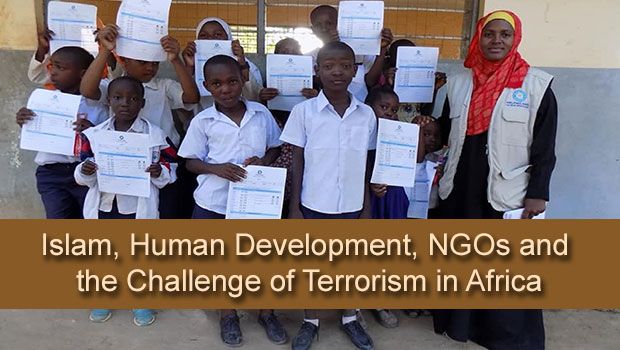
    Islam, Human Development, NGOs and the Challenge of Terrorism in Africa

    Africa is the second largest continent on the planet.   It is the home of early man; it is the cradle of life from which human beings branched out to populate the globe. Yet, despite being the fountainhead of civilization, the continent of Africa ranks today at the bottom of the totem pole of social progress. Why is this the case? What are the factors and forces responsible for this state of affairs?   How can one explain this phenomenon of economic underdevelopment?  And finally, what is the role of African religions in this state of affairs?   In writing about Islam and its connection to African development, one must examine these issues to find out what can be done to change the conditions for the better. Along these lines of thought, one must focus on the divide between African Muslims and the Western world with regard to modernization and globalization. We must look at the theological, sociological, political, and economic factors involved in the phenomenon of Islam in Africa and how these play into the perception of the role of Islam and Muslims in the arena of civic responsibility and economic development.  It is for these and other related reasons that we will here examine the relations between Islam and the development of Africa.

    Religion and Human Development

    In our attempt to shed some light on the problem at hand, let us first look at the geography and history of religion in Africa.  John Mbiti, in his Introduction to African Religions and in many other of his writings, has described the African as notoriously religious. Kwame Nkrumah of Ghana makes the point in his book, Consciencism, that Africa is the theater where three strands of religious thought compete for primacy.  In his view, however, the only way Africans can deal effectively with the existential and political challenges they face is to develop a socialist framework within which they can organize themselves for political and economic liberation. It is this author’s view that Africa must, in fact, find a renewed modus vivendi if her people are not to be torn apart by the ideological conflicts arising out of their religious divisions. More than one thousand ethnic groups are caught in the web of globalization. Science and technology, telecommunications, and market forces have penetrated the borders of Africa, challenging the Africans to address the ethnic and religious cleavages that foment conflict and create a breeding ground for the new wave of violence now identified with international terrorism.

    Thousands have died because of religious riots, and the poisonous rhetoric and religious intolerance, with or without foreign backers, have continued unabated

    Africa’s religious heritage has both an Abrahamic and non-Abrahamic face. The Abrahamic aspect is now the dominant one as Judaism, Christianity, and Islam have taken center stage in the African choice of religious ideas and practices. In fact, historically there is an African connection to all of the three Abrahamic religions. Judaism is connected to Africa as seen by the fact that Jews around the world still celebrate their Seder, a ceremonial dinner that commemorates the exodus of Moses and the Hebrew people in their long journey out of slavery in Pharoanic Egypt. Christianity too has its African connection. Reading the Christian gospels one is struck by the fact that young Jesus, Mary, and Joseph had to flee to Egypt to escape King Herod’s persecution of new-borns for fear that any one of them could be a future threat to his throne.  This episode in the Christian scriptures serves as an important reminder to Christians that Jesus was a refugee in Africa. In the modern context, this fact can serve as an effective impetus for global Christian understanding of the plight of Africans in refugee camps today. Welcome or not, the fact remains that Christianity in Africa is a force to be reckoned with, and both advocates of Islam and traditional religions are fully aware of the necessity to co-exist peacefully with their Christian neighbors. This “live and let live” modus vivendi is more evident in Yorubaland than in any other place on the African continent. The sense of inter-religious solidarity among the Yoruba people has been attributed to the “hegemony of culture” by American scholar David Laitin.

    Finally, we find that Islam too has its African connections. At its infancy, this religion that came out of Arabia found refuge from persecution by its own kinfolk with African Christians living in Ethiopia who offered succor. From the sirah of the Prophet, as well as the hadith literature, one can cite evidence showing that Islam is deeply connected to the African experience. African Muslims have always made reference to Bilal Ibn Rabah, the Ethiopian slave who gained manumission in the early stages of Islam in Mecca, and later became the Muezzin of the Islamic movement.

    With scriptural evidence of Africa’s primal connection to all three of the Abrahamic religions, the reality of religious diversity and plurality on the African continent must not be dismissed lightly. If what Samuel Huntington said about the clash of civilizations is true — that cultural and religious identities will be the primary source of conflict in the post-Cold War world — then Africa might be destined to be cannon fodder for the clash between the West and Islam.

    It is only in this context that one can discuss seriously the challenges of modernization and economic development, the expansion of international terrorism, and most importantly, the role and place of Muslim non-governmental organizations in African development.  By development I mean the successful transition of an agrarian or pastoral society into a scientifically conscious and technologically skilled dynamic community.  This would be a society which is progressively committed, through the guidance and support of their leaders, to the study and understanding of natural processes and the establishment of institutions that are sufficiently organized to meet the challenges of ignorance, superstition, natural disaster, material poverty, and cultural deprivation vis-a-vis the Euro-American paradigm generally identified as Westernization.

    Armed conflict has not solved Africa’s political and economic problems

    In this definition of development, the cultural factor must be highlighted as crucial in the self-definition of the people.  Because of the cultural deprivation and the poverty of science and technology in Africa, the people have yet to cross the threshold of industrialization. This fact, indeed, underscores the plight and dilemma of the African continent and its people.  Therefore, when we address the question of religion, economic development, and NGO activities within the sphere of social justice and social change, we find ourselves confronting the paradoxes of the African condition.  African scholars such as Ali A. Mazrui, Claude Ake, George Ayittey, and many others have addressed these paradoxes over the years.  In an essay written for a volume published by the World Bank almost a decade ago, I argued that Africa’s economic and political development has been radically affected by the neglect of culture in the policy-making process of African governments. President Julius Nyerere’s policies of social and economic development in Tanzania after it gained independence from Britain in 1961 (based on a socialist concept and vision called ujamaa), and Kwame Nkrumah’s Consciencism (a philosophical and ideological system calling for the decolonization of Africa) failed due to their unwillingness to engage their respective traditional cultures.  In African society, ethnic, religious, and geopolitical boundaries separate citizens within a nation, in contrast to the U.S., for example, where citizens share bonds of fidelity to the nation through a uniting Constitution and a long tradition of political membership and social identity,  exercise of the vote, and military service.

    Islam, Africa and Non-Govt Orgs (NGOs)

    African societies have dealt with non-governmental organizations in three separate and distinct periods. During the pre-colonial period, individual African societies and communities organized the lives of their peoples according to traditions and the necessities of communal life. With the onset of European colonialism, the patterns of life were gradually changed. For example, in the Senegambian region of the African continent, the people had ruling families and clans; however, communal life necessitated the establishment of Kafo systems (indigenous self-help village  groups) among the Mandinka and parallel structures among the Wolof, Serrere, Jola, Fulani and others. The Kafo system was, and still is, known for its mobilization of young people. Once a child reached puberty, he became a Kambano, an acknowledged member of the council of adults. By then going through certain rites of passage, he is confirmed as a full-fledged member of society with certain responsibilities relating to the welfare and development of the community, and is thus seen as an agent of social change and development. The Kafo was an NGO for its time.  The coming of the Europeans also gave rise to the Boy Scouts, the Girl Guides and other cooperative groups through the churches and secular orders of the society. Independence led to the formation of various civic organizations such as labor movements, political groups such as those advocating socialism or Marxism, and religiously motivated groups such as an Arabic instructor association or a Sufi order. Such civic organizations have gone through a new incarnation in the form of national or regional NGOs. In Gambia, for example, there is a national organization called Tango (The Gambia Association of Non-Governmental Organizations) which caters to the needs of Gambians who embrace the ideas, concepts and activism of the day.

    We can identify a number of different areas of action where the NGOs in Africa and the Islamic organizations, both national and international, share an interest and have grounds for cooperation.

    Development in African societies is inextricably linked to the stability of the international system

    With respect to education and moral development, NGOs could collaborate with Muslim leaders to come up with a wide range of viable options and programs of action. Before colonial rule, local African societies, in their varying ways, set up systems for the educating of the young people before marriage.  Through these systems, the rites of passage served as an effective way of passing the knowledge and wisdom of the elders to the younger generation. These avenues of education were taken to greater heights when Islam and Christianity were introduced. In the Senegambian narratives, for example, the arrival of the Sufi orders led to the organization “of the tongue, the hand and the feet” in the community, of fidelity to Allah and the satisfaction of the “politics of the belly.” This is to say, among the members of the Muridiyya Brotherhood of Senegal and beyond, the followers of Shaykh Ahmad Bamba put forth a new concept of social organization which made their civic engagement comparable to what Donal Cruise Obrien described of the Pilgrims in the American narratives:  serving God and doing hard work were conjoined to create the meaning of life.

    During the colonial period, the closer association between the Christian missionaries and the imperial powers made it possible for these missionaries to more effectively compete for attention among the Africans. With material advantage, they constructed schools, dispensaries, clinics, and hospitals in towns and villages.  By the end of the colonial period, Africa found herself with hundreds if not thousands of NGOs. Muslim leaders, activists for social justice, and relief agencies ought to pay close attention to the history of NGOs in Africa and the varying African opinion about, and attitude toward, NGOs. These considerations could enhance the capacity to understand the state of affairs in individual countries and, thus, better design programs for cooperation and development around the continent.

    Islam, Development, and Intl. Terrorism

    It must be noted that armed conflict has not solved Africa’s political and economic problems. The nationalist movements in Africa succeeded in creating new states that have now reconstituted themselves under the banner of the African Union, the successor to the old Organization of African Unity. Yet, it is abundantly clear that political independence has not translated into economic development. In fact, analysis of Africa’s fifty-five years following independence reveals a drama of civil wars, persecution and violence against the weak and the helpless, failed states, political kleptocracy, and the tragedy of missed opportunities. Poor governance has been rampant in Africa, whether the late Mobutu Sese Seko of Zaire who is scornfully remembered as Africa’s greatest villain and kleptocrat, or Idi Amin of Uganda, or the butchers of Kigali, Rwanda, remembered as the most notorious perpetrators of brutality.

    It is against this background that we look at the nexus of Islam, international terrorism, and development.  The issue of international terrorism was brought to global attention during and after the September 11 attack. In my testimony on Africa and international terrorism before the U.S. House of Representatives subcommittee on Africa several weeks before the end of 2001, I made it categorically clear to the U.S. government that “Africa is the weakest link in the chain of anti-terrorism.” This argument was based on a number of reasons. The first is the weakness of the African states which have little to no military power to withstand internal or external subversion.  Unwise policies, intended to hamper any political resistance or rebellion, deny the calls for democracy and reform, with leaders desperately holding on to power at all costs. This creates a breeding ground for terrorism.

    The second reason why Africa is so vulnerable to terrorism is the continent’s economic conditions. Statistical data from the United Nations and the World Bank have painted a bleak picture. The huge number of Africans who are living miserable lives, subsisting on less than one dollar a day, creates ample possibilities for the political manipulation of African youth. They are recruited by foreign or domestic groups that care nothing about African peace and prosperity, who tap the wells of frustration and then exploit the reality of little to no economic opportunity available to these young people.  The likes of Charles Taylor of Liberia, Foday Sankoh of Sierra Leone, and Joseph Kone of Uganda create armies of child-soldiers.  There must be developed practical means of weaning young Africans from the tentacles of domestic terror groups like those just mentioned or international terrorist organizations such as al-Qaeda.  Africa’s political, social, and economic development is inextricably linked to security and stability. This can only be established by the containment, if not outright elimination, of domestic and international terrorism.

    The third reason why Africa is the weakest link in the war against international terrorism lies in the low level of political and social cohesion, with African society split into varied ethnic, regional, religious, and class formations.  One evidence for this state of affairs is the growing divide between the different religious communities. Thousands have died because of religious riots, and the poisonous rhetoric and religious intolerance, with or without foreign backers, have continued unabated. There is a growing presence of non-governmental organizations (NGOs) rooted in, and financed by, religious groups that are stalwart not only in the propagation of their beliefs but also in the stigmatization of their rivals. This state of affairs is more prevalent in some countries more than others. Where such practices prevail, opportunity is created for al-Qaeda and other terrorist groups.

    The fourth reason that Africa is a weak link in the efforts against international terrorism lies in the opportunistic willingness of African intellectuals to compromise their ideals. Struggling to maintain a respectable lifestyle in the face of declining economies, and determined to be relevant in the social narrative, many  African intellectuals and scholars have consciously or unconsciously mortgaged their souls and imaginations to foreign organizations whose visions may or may not tally with the dreams and aspirations of African society. What makes the betrayal by the educated classes so tragic and deadly is that their flirtation with those NGOs, secular or religious, drafts them into the role of an accomplice in the exploitation of the masses and radicalization of some of their fellow citizens.  NGOs that go beyond propagation of their ideologies and policies and engage in divisive activities foment dissension, impeding cooperation and collaboration. Such NGOs continuously plant the seeds of discord in order to gain advantages over their rivals.

    It is important to consider the phenomenon of global solidarity of Muslims. Upon examination, we note that North Africa, Nigeria, the Horn of Africa, East Africa and South Africa have been consistent in the affirmation of support to other Muslims whose societies are undergoing severe political upheavals. This faith-based connectedness can be used for good, for purposes of the pursuit of development and peace; or for ill by groups that agitate and divide. There is need for an enquiry into the nature of such networks and how they can be tapped for peaceful purposes, for development. Without taking action, these groups, such as Hizb ul Tahrir and the affiliates of al-Qaeda, will continue peddling their destructive propaganda. The evidence is strong that many of the foreign insurgents in Iraq were African Muslims, mainly from the east Africa coast. This fact is known to U.S. authorities and attempts have been made to stem the flow.  Although scholars are not in a position to ascertain the numbers and extent of African involvement, they can shed light on the conditions that obtain in the region, the attitudes and policies of the ruling elites, and the receptivity of the Muslim groups to political engagement —  all are crucial elements in the fight against international terrorism in Africa.

    Concluding Remarks

    First, it should be stated that Islam, as a belief system and a way of life, cannot be linked doctrinally to terrorism. Hiraba, unlawful warfare or the perpetration of violence by those who seek to challenge the social or political system, is behavior that falls beyond the pale of the Sharia. Such activities are associated with “spreading disorder in the land,” whether as insurrectionists or highway robbers.  Secondly, terrorism has been demystified and disconnected from its metaphysical roots largely because of the activities of the nationalist/leftist groups that emerged during the liberation struggle in the Third World. Since the rise of the Iranian Islamic Republic in 1979 and the collapse of the Soviet Union in 1989, the groups that are described as terroristic have become more heterogeneous.  Now, however, we are witnessing the return of metaphysical-based terrorist activity after its displacement by the secular forces of the last century.

    The third important point to note is that development in African societies is inextricably linked to the stability of the international system. Africa cannot survive without the international system because of its precarious position politically and economically. Somalia is an interesting example of the paradoxical nature of the interconnectedness of nations, particularly of the U.S. and the Muslim world. As a result of the American humanitarian involvement in Somalia under Operation Restore Hope, Somalis are now scattered across the face of the earth. This unprecedented development of a Somali Diaspora has potentially positive and negative consequences for both the U.S. and Somalia.

    Finally, it is important to note that international terrorism of the al-Qaeda variety is not likely to gain ground in Africa. Although the continent is vulnerable to external penetration, the legitimacy of Osama Bin Laden is bankrupt, as his theological arguments are counterfeit. While al-Qaeda taps on the frustrations of Muslims across the globe, its indiscriminate and un-Islamic violence will ultimately undermine its success.

  • Africa Initiative of Helping Hand for Relief & Development

    The year 2011 saw dramatic changes and upheaval in the North African nations of Algeria, Egypt, Tunisia, and Libya. Helping Hand for Relief & Development (HHRD), in partnership with local non-governmental organizations (NGOs), provided emergency humanitarian assistance to thousands in these countries, and is continuing to provide services. HHRD staff member Irfan Khurshid went into the affected areas to establish the partnerships and relief work.

    In the middle of July, 2011, in the Horn of Africa (Eritrea, Djibouti, Ethiopia, Somalia, and Kenya) a severe food crisis occurred due to historic drought that threatens the lives and livelihood of more than 10 million people. Many refugees from Southern Somalia fled to the neighboring countries of Kenya and Ethiopia where they have to live in crowded camps near the borders, in unsanitary conditions.

    The crisis warranted swift action by HHRD which, according to its mission, is committed to serve humanity by integrating resources for people in need, and striving to provide immediate response to disasters. HHRD has been working in the Horn of Africa, mainly through the Water for Life and Orphan Support programs, and seasonal projects like Iftar and Eid Gift Donations, in collaboration with partners Islamic Foundation of Kenya (IFK) and the Young Muslim Association (YMA).

    Establishing HHRD Presence

    The severe situation in the Horn of Africa called for sending emergency relief teams from HHRD Pakistan to Africa. The first team to arrive in July, 2011 on the eve of Ramadan 1432 included Azmat Akbar, Sajid Iqbal, and Uzair Khan. In partnership with partners IFK and YMA, members of HHRD Team started to establish food distribution, water provision, and medical assistance in ten villages near the border of Kenya and Somalia, where Somali refugees were living.

    Immediate Respite

    The objective of  emergency response work is to save as many lives as possible, as mentioned in Qur’an 5:35: “…and if any one saved a life, it would be as if he saved the life of the whole people…”

    In the first month, around 3,200 malnourished or undernourished families were reached (about 20,000 persons), and given food ration for one month. Also during the last ten days of Ramadan and on the occasion of Eid, a cooked meal was provided and gifts were distributed among the children. Affected populations in Garissa, Isiolo, Dada Jabula, Dadab, Iffo Camp, Garbatula, and several other villages were reached.

    A second major project was started involving the trucking of water to five villages for three months, with a water tanker filling the water storage tank in each of the villages, including Sudah Lan, Hudumo, and Diisow 1 in Fafi District; and Diisow 2 and Agra Gudud in Dujis. Around 9,000 persons and 70,000 livestock benefited from this vital project. In addition to the food distribution and water provision, more than 6,000 individuals received medical treatment, 180 children were immunized, and 274 basic health awareness sessions were organized by HHRD in the Emergency Field Hospital in Dada Jabula, Kenya.

    Celebrating Eid with Those in Need

    The HHRD  team was so moved by the plight of those they were striving to help through the blessings of Allah SWT that they decided to stay in Kenya for Eid, even though they certainly wished they could be in Pakistan to celebrate Eid with their own families. They celebrated Eid-ul-Fitr with the refugees from Somalia and the orphans HHRD is sponsoring in collaboration with the Islamic Foundation of Kenya and the Young Muslim Association (YMA).

    Smiles Across Miles: In-Kind Gifts Program

    A few weeks after arriving in Kenya, the HHRD team started the process of registering HHRD as a local Kenyan and Somali NGO as the first step in establishing the HHRD long-term development work in Africa. They also laid the groundwork for the In-Kind Gifts Program which transports containers of basic necessity items, food, and medical supplies and equipment donated in various cities throughout the U.S. Last year, in the month of Ramadan 1432, HHRD organized the Horn of Africa In-Kind Gifts Program (see the list of centers at http://www.hhrd.org/hhrd-In-KindDonation.aspx). Despite fasting and hot weather, a large number of donors and volunteers came out to be part of these important efforts, and around the time of Eid-ul-Fitr, the first container was shipped from Chicago. Many individuals of various other faiths also generously joined in the efforts.

    One of these volunteers said: “We are working on a very hot day, when it is 100 plus degrees, for four to five hours to pack necessary things for those who have been facing harshness of weather and elements for months. I have really understood what it means to be hungry and thirsty while facing the severe weather. I want to thank Helping Hand for organizing this effort for humanity and creating opportunity for us here to be working with our own hands for  humanity in dire need.”

    At the time of this report, 15 containers have been shipped to the Horn of Africa valuing $1.2 million. Of these, nine containers have already been distributed, benefiting a population of 121,915 (20,320 families). Containers have included medical equipment and supplies, as well as food.

    HHRD in Mogadishu, Somalia

    In September 2011, as HHRD was about to register itself as an NGO in Somalia and Kenya,  Country Director Pakistan of HHRD,  Fazalur Rehman, visited the Horn of Africa to monitor and evaluate the progress of the relief work in Kenya and in Somalia.

    Senior Leadership in Horn of Africa

    An HHRD delegation of members of the Board of Director visited Africa once the registration was complete, in order to set up the Main Office of Africa Initiative in Nairobi, Kenya. This involved  establishing the initial guidelines and protocols for the relief work and to make necessary outreach efforts to salient stakeholders in the initiative. Members of the delegation included Dr. Farrukh Raza, Chairman of HHRD; Fazalur Rehman, Country Director Pakistan; Dr. Zahid Bukhari, President of ICNA; and Irfan Khurshid, Director for International Affairs.

    The rest of the Board members returned, while Irfan Khurshid, Director for International Affairs, went to Somalia and Tanzania to establish the office of Helping Hand in Mogadishu, and explore the possibilities of initiating projects in Tanzania.

    Africa Summit

    HHRD, in collaboration with the Islamic Circle of North America (ICNA), organized and held the Africa Summit 2011 in December of last year. The conference was a success as participants reached a consensus about the top four priority areas of long-term humanitarian work to be focused on in Africa: poverty eradication, health, education, and the empowerment of women.

    Initial Steps Towards Long-Term Plan

    Irfan Bashir joined HHRD as the Regional Director of Africa, and following the four key agenda items specified by the Africa Summit, the Africa team has gradually initiated some pilot projects in order to see how various development programs can be instituted in the African context. Some of these pilot projects include:

    Provision of sustainable water facilities in drought-affected areas: Construction and installation of hand pumps; construction of VIP latrines; waste management and garbage disposal; hygiene promotion; and training of teachers. Over 23,000 people are expected to benefit from these projects.

    Mobile Health Units in Mogadishu, Somalia: Objectives are to reduce and control the outbreaks of various common diseases such as measles, diarrhea, and skin infections; to improve the health of the IDPs (internally displaced persons); to provide medical care for an increased number of individuals and, through patient education, to achieve better compliance with treatment protocols by the patients; eight medical camps were held  and 548 patients were treated.

    Mobile Health Unit in the Eastern Province of Kenya: Currently the number of patients taken care of by emergency healthcare and treatment are 1,870;  conditions treated include respiratory infections, ringworm, tonsillitis, urinary tract infections,  malaria, fever, eye infections, muscle pains, asthma, and diarrhea.

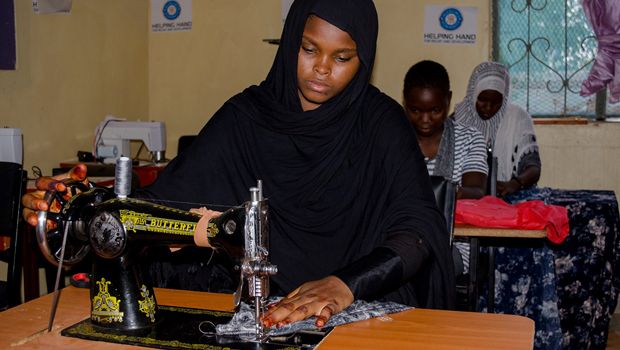
    Skills Development Program (SDP): this program has recently been initiated, with the objectives of identifying potential trainees through a survey conducted by HHRD; to counsel potential trainees as to recommended training; to establish a vocational and skills development center at a selected location; to help facilitate trainees in areas of self-employment and income generation activities based on the skills acquired through SDP; and to develop linkages of skilled beneficiaries with market opportunities. In May 2012, two SDP centers in Kenya have been established, in Garissa and Isiolo, with computer training and tailoring training to be given to roughly 100 students in each SDP center.

    Path Forward for HHRD in Africa

    Following the recommendations from the Washington D.C. Africa Summit held by HHRD, as well as assessing the progress of work up to the current time in the Horn of Africa, HHRD will continue to move forward with short and mid-term relief, and long-term development programs, including but not limited to the following:

    • In-Kind Gifts Program in Tanzania and Somaliland
    • WASH Program in Tanzania
    • Orphan Support Program in Tanzania
    • Skill Development Program in Somaliland
    • Establishment of microfinance activities
    • Infrastructure Development Program
    • Orphan Support Program
    • Policy Making, Promotion, and Impact Assessment
    • Coordination of networking with other stakeholders
    • Long-Term Sustainability and Development Program in drought-affected areas and populations
  • Creating a Future for Somali Orphans

    Helping Hand for Relief & Development (HHRD) is partnering with the Dr. Hawa Abdi Foundation (DHAF) to sponsor of 50 orphans in a one-year pilot project. DHAF is an internationally acclaimed organization whose founder, Dr. Hawa Abdi, has just been nominated for a Nobel Peace Prize this year. DHAF is an independent non-profit organization whose mission is to support emergency relief efforts in war-stricken Somalia.  DHAF seeks to empower Somalis to take command of their own future. Since 1991, the organization has provided general, emergency, and maternal care to displaced Somalis, independent of their clan, gender, religious, or political affiliation. The DHAF camp, Waqaf-Dhiblawe, is presently hosting 90,000 internally displaced persons (IDPs).

    For the last four years, DHAF has been running a small school in the camp. This school has 848 students and 15 teachers, offering courses for grades 1 through 8. The school is committed to providing quality education to the students in an equitable and efficient fashion. Half of the children are girls and all the students are provided with education at no charge. The school is continuously expanding, adding more rooms and classroom materials each year. Currently work is being done to create a co-op program to give the students employment opportunities when they graduate, through apprenticeships with a professional in the camp so that they can learn a trade and escape the cycle of poverty.

    There are 50 students at this school who are orphans, who will be sponsored in the one-year pilot project of HHRD in collaboration with DHAF. Both HHRD and DHAF are solution-oriented organizations that seek to provide people with the skills, resources, and knowledge to stand on their own feet.

    If this pilot project is successful, additional relief and development programs and projects will be jointly sponsored by HHRD and DHAF, and through the support of generous philanthropists across the U.S. like you.

    Please visit www.HHRD.org for more information and donations.

  • History of Islam in Africa

    The Prophet Muhammad reminded the Muslim world, “We are a single community, distinct from others.” The distinction shapes the Muslim’s religious identity and underlines the nature of the Islamic ideal, whether the purity of the monotheistic concept, the uncompromising quest for morality, or the lifelong seeking of knowledge.  It also accentuates the common historical thread running through the international Muslim community.

    In Global, African, and Near Eastern studies, the role of the African Muslim may be the most overlooked by Western academia, and involve the most tenacious myths about the spread of Islam. The lack of African sources allowed scholars to make false assumptions as they evidenced the old axiom, “scholarship follows the national flag.” The dominance of Western scholarship resulted in complete silence about African creativity, innovation, exploration, trade, and skills in scholastic writings and textbooks.

    In 1945, British historian Hugh Trevor Roper galvanized the Eurocentric view when he wrote, “the only history in Africa is the history of Europe in Africa.” Given the self-perpetuation of cultural exceptionalism, it is not surprising that African history remains mythologized under the shadows of Euro-American history. Yet, the dissemination of Islam in Africa by first Arabs and then African Muslims, and the role that Islam and Muslims have played in the development of Africa, are essential to a balanced and accurate understanding of African history.

    Arab Eyes on Mediterranean Africa

    In the seventh century, Islam entered Africa from the northeast corner. Unbeknownst to the second caliph Umar Ibn al-Khattab, his most competent general, Amr Ibn al-As’, led as many as twelve thousand soldiers and archers across what is now the Red Sea and conquered the city of Fustat (which became Cairo in 920). With relative ease, Amr claimed Fustat from disillusioned and tired Byzantine troops who eventually fled. Under Umar’s caliphate, he established military garrison towns and Fustat was of the first.

    Umar reminded his soldiers who were stationed in both Syria and Egypt, “we are a nation of arms.” Yet, he forewarned his troops, Bedouin tribesman who he perceived as naive, to “co-exist with them [the local people], but not to assimilate.” After effortlessly seizing the former Roman-conquered cities of Cairo, Constantinople, Alexandria, and Tripoli, geographically strategic Egypt encouraged military movements west along the perilous Mediterranean shores. Gradually, Muslim armies rode south, along the hypnotizing White Nile (a tributary of the Nile in Egypt), exploring the land of Kemet, the Kushite, Ethiopia, and the east African panorama with its jagged coastline, and out into the temperamental Indian Ocean. From Alexandria, the jewel of Alexander the Great, it took Arab Bedouins seventy-five years and four enterprising generals to cross Mediterranean Africa, despite continuous resistance by Berber mountain clans.

    The objective of the law is not to apply technicalities regardless of their consequences, but to achieve the ultimate moral and ethical objectives that represent the essence of Godliness on this earth

    Arabs thought North Africa contained hidden wealth left by the Romans, but, surprisingly, they found nothing of such riches.  Resistance to their encroachments was led by the famous Berber, Kuysaila, who subsequently accepted Islam and rose to fame after assisting the Arab Bedouins along their march through Morocco. However, after hearing of the senseless slaughter of his mountain village by Umar Ibn al-Khattab’s aggressive maverick general, Uqba Ibn Nafi, Kuysaila retreated and waited two years in the Anti-Atlas Mountains of Morocco. Upon the commander’s return from his triumphal campaign to the Atlantic Ocean, Kuysaila retaliated for the slaughter of his people by killing Uqba.

    After conquering Alexandria, Arab Bedouins met the legendary and revolutionary Berber, Al-Kahina, a woman who, it was said, fought like a man. According to lore, when she was enraged her hair stood on end and her coal-black eyes widened in intensity. Al-Kahina organized thousands of Sanhaja fighters and with cunning and prowess used the mountains they knew so well to surprise, sabotage, and kill Arab soldiers, all the while maintaining hope of independence in the minds of the Berbers who were used to extended foreign invasions.

    By the twelfth century, Christians essentially disappeared from North Africa, while the Coptic population of Egypt shrunk to less than ten percent. For the most part, the Saharan trade, except for the period when Europeans traded for slaves and gold, remained exclusively a Muslim trade as late as the seventeenth century. On the other hand, during this time, Christians controlled the maritime trade of the Atlantic and Indian Oceans. Although Umar entered Egypt, all of North Africa was soon to become a prime focus under the Umayyad caliph Muawiyya and his son and successor, Yazid. It would not be, however, until the Abbasid reigns of al-Mansur, al-Mahdi, al-Hadi, and the great Harun ar-Rashid, that expenditures from state coffers maintained security in Africa.

    The puritanical African Murabitun or Almoravid, known in the west as the “Moors,” were a Berber dynasty of Morocco in the 11th century. They adhered to the Maliki School which continues to dominate sub-Saharan Africa. In accordance with the ethics of Islam, the Almoravid, under two great leaders, Abdullah Ibn Yasin and Ibn Tashfin, sought, to reform Africans gravitating away from orthodox Islam as established by the Prophet Muhammad. The Almoravid, who originated on the third cataract of the Northern Senegal River, marched in the hopes of eliminating pagan practices. In the process, they sent reformist signals to succeeding West African kings like Ahmed Tall, Uthman don Fodio, and Ibrahim Sori. While they attempted to reinvent the image of Islam in Africa, or duplicate the Abbasid period in Africa, reformists fought against persistent pre-Islamic cultural traditions.

    Basil Davidson, a British historian, measured the Abbasid Empire against West Africa’s golden era. “Centuries afterwards, in the Western Sudan, the great reforming movements associated with Uthman don Fodio would draw inspiration from a Utopian picture of the Abbasid era of the tenth and eleventh centuries, seeing in it the prototype of that ‘Rightly Guided Caliphate’ in which all Muslims had once enjoyed equality and justice. For them the ‘golden age’ of Islam could not possibly lie in Abbasid times. Rather it lay in the earliest years when, the ten years of the prophet’s rule in Medina, and perhaps the thirty years following his death were conceived as having formed an age in which human society had come as near to perfection as could be hoped for…”

    The African-born Almoravid movement sought to reform Mauritania, Guinea, Senegambia, and Mali in West Africa, and at the request of the twelve threatened Reyes de Tarifa (the twelve Muslim kings of splintered Andalusia), recaptured eleventh century Spain from Alfonso VI. The Almohads now sailed from North Africa to re-secure the law and order, and after reconnaissance, they reaffirmed Spain as Muslim, and so it remained until 1235.

    The Muslim world was recovering from a series of unpredictable onslaughts. In North Africa, now imbued with Sufism, we begin to see the wearing of amulets, the worship of saints and intercessors, the practice by some of making predictions about the future, and the dawn of the renowned mystical schools. The Fatimids replaced the Abbasid after their crushing defeat in 1258 at the hands of the Mongols in Baghdad, and reinvigorated the authenticity of heredity in Islam. Salah al-Din and his Ayyubids, known for their challenge of the Christian troops during the final Crusades, unseated the Fatimids in Cairo.

    As in the Middle East, in Africa the Arabic language preceded Islamization. Acclimatization to the use of Arabic brought about commercial profits and preceded religious conversions. Where the Sahara married the Sahel (a region between the Sahara  in the North and the Sudan savannas in the south), two worlds solidified through language and trade. By the eleventh century, an African trading expansion, with an emerging religious culture and the common commercial language of Arabic, became apparent. Conversion meant access to a wider platform of goods, traditional trade routes to the east, credit lines, adjusted pricing, and honor. Tauregs (the nomadic Berber people of the Saharan interior of North Africa) roamed both sides of the great divide, linguistically best equipped to profit from the crossroads of trade, and mediate differences between northern Saharans and sub-Saharans.

    The Portal into West Africa

    African Muslims produced five empires: Takur (what is now southeastern Mauritania, and Western Mali) which was lukewarm to Islam; the loosely governed Kanem (what is now the countries of Chad, Nigeria and Libya) and its successor-state Bornu; Ghana, although it never claimed Islam as the state religion but is considered by many the first African Muslim nation; Mali, the most written about; and Songhay the most fought over.

    Despite Islam beginning to penetrate the indigenous consciousness and cause a shift in daily religious practices, local customs and beliefs persisted, which centuries later was used to justify the most violent raids of the Sokoto dynasty under Uthman Don Fodio. The spread of Islam among the Yoruba began late, well after the nineteenth century conversions of Wolof (a West African state that ruled parts of Senegal from 1360 to 1890), and increased after Fulbe (an ethnic group spread over many countries, predominantly in West Africa) conquests of the 1800s. Except in Ilorin, because of resilient traditional beliefs, Islam straddled the religion of the people. West Africans developed a unique religious parallelism with Islam and because of its ability to co-exist, shared local authority.

    There are misunderstandings about the historical role of Arab Bedouin military conquests during the initial spread of Islam in Africa. Except for the 1591 marauding by al-Mansur’s Sanhaja Moroccan army led by Judah Pasha in Timbuktu, there were no military excursions below the Sahara. The second myth purports Arab Bedouin merchants brought Islam to Africa, and Arab military might destroyed African institutions and cultures. The spread of Islam south of the Sahara owes very little to Arab military occupation. What is more accurate is that Arab merchants reported to wealthy Arab sponsors the religious appetite Africans had for Islam. In time, teachers and imams relocated to African towns and became responsible for the spread of Islam. The role of the merchant was the introduction of Islam and a precursor of Arabization. It was, however, the scholarly community, the teachers and imams, who became the agents of Islamization. Merchants certainly inspired an intellectual curiosity about Islam, and on return to their homelands, they reported, as mentioned previously, the eagerness of the Africans to learn more about Islam. Typically, local West African rulers embraced Islam first and became the indigenous progenitors of the process of Islamization. Traveling scholars and imams, as long as they posed no threat to the existing socio-political order, completed the process of Islamization in both East and West Africa.

    The masses initially considered Islam an innovation, and had difficulty fitting a universalist concept into their local context. The introduction of Christianity in Africa experienced the same social phenomenon and challenge. There is a revealing axiom about religious duality in Africa: “Publicly rulers claimed Islam, however, in private feared the fetish” (fetish worship involved attributing supernatural powers to some natural or man-made object). In the middle of the fourteenth century, Ibn Batutta attested to the division between indigenous practices and classical Islam. Expressing abhorrence, he wrote of gambling, drinking, sexual deviance, nudity, and idol-worship in Mali under Mansa Musa. Records indicate these practices caused a sterner Askiya Muhammad of the Songhay Empire to be religiously and morally repulsed.

    At its peak, the Songhay Empire encompassed much of the territory that had belonged to the Mali Empire in the west. Malian hierarchy and early Abbasid infrastructure had its similarities and differences. African scholars of Timbuktu, unusually active in the political sphere, lived with more than a modicum of religious authority. The campaign to determine final authority played out between the civil authority of court qadis (judges) represented on one side, and the ulama (Muslim scholars) who embraced Islamic theology, on the other side. In dynastic form, the solution of the Abbasid royal courts was to absorb the ulama into the qadis community, control legal verdicts, and further their absolutist rule. In West Africa, where there was more success, the ulama and the qadis remained separate and empowered, each in their own sphere. As with the Abbasids, the kings of Mali lived in opulence and grandeur, secluded from the lay community. They adorned themselves with imported cloths and jewels. When entering the royal space, visitors sprinkled dust on their necks to designate their lowly position and absolute loyalty to the throne. The Mansas (kings or emperors) avoided demonstrations of their humanness, so they never slept, ate food, or changed clothes in front of others.

    By the ninth century, Arab merchants made substantial profits in the marketplace. There Arabs found willing urban consumers, presenting them with abundant supplies of material goods for sale. Even as early as the ninth century, slow commercial expansion of Takrur territories found receptive African converts. Among the newly converted, Islam signaled the religion of transactions, literacy, and recording and documentation, all hallmarks of development and progress. Despite tactical religious conversions and the admiration for Islam’s literacy and administrative expertise, religion had little impact in the countryside. Only by the late twelfth century did religious conversions in West Africa accelerate, marked by such conversions as the King of Gao in 1010 and the King of Kanem-Bornu in 1068.

    With the face of universal Islam peering over a pagan, parochial Africa, a second period begins in the thirteenth century. After southerly Taureg and Almoravid incursions, the empire of Ghana weakened through internal disputes and rival provinces. A pattern of dynastic disagreements and jockeying for the throne eventually shattered its strength, and diffused the wealth from the trade routes. The people of the rural areas, considered servile in status, but loyal to ancient traditions, reemerged, claiming positions of power. The demand from the countryside for increased participation in the towns created stress and political divisions which, like in the Umayyad Empire, ultimately caused its downfall.

    In the first quarter of the fourteenth century, Sundiata, a descendant of the royal Keita family, rose to take the mantle of the new Mali Empire. A marginal Muslim, Sundiata expanded the empire, increased production from the alluvial gold fields, developed the military, and claimed to be a liaison with the spirit world. Just decades later, under Mansa Musa, Mali became the first African Muslim state, with Islam as the state religion.  From Africa in History, Basil Davidson remarked about the Mali government, “It opens the way to a literate bureaucracy, to effective diplomatic links with distant powers, and to the inner reorganization of power and authority along the lines which cut across the separatist loyalties of traditional religion.” During the reign of Mansa Musa’s progressive government, Mali was Islamically reshaped, and repositioned. After completing the Hajj, Musa was recognized by Cairo as the western caliph of the Sudan (“land of the blacks”). During his reign, he sent a signal that tolerance of traditional and indigenous practices would remain; however, he alone would now be the representative of Allah.

    By borrowing from the larger Muslim world, Musa built a literate nation. He replicated the Abbasid learning centers, and although illiterate himself, Mansa Musa found inspiration in scholarship and encouraged study abroad. He opened schools for both genders, hired translators and copiers of the Qur’an, gave stipends to scholars, elevated the status of imams, and opened the royal court.  Known for his insistence upon civil law and highly reputed for his generosity, Mansa Musa became a household name. Pointing to his generosity with gold, an account of his visit to Egypt while on his way to hajj tells of the Egyptian economy taking a nosedive upon his departure.

    With internecine squabbling in Mali, succeeding Mansas never embraced the long-range vision of Mansa Musa, and this, along with fiscal mismanagement, resulted in the empire capitulating to the Songhay. The Songhay people took advantage of the Mansas’ weaknesses, and as the trade flowed away from the capital of Niani, the ambitious Songhay rose to take control. In the Songhay, the last of the large Muslim spheres of influence, the ulama were the avowed enemies of the founder Sunni Ali. After years of intense negotiations, though, they reasserted their loyalties to the king and found political justification to back Sunni Ali.  He was an ambitious leader, who like Sumanguru of Ghana and Sundiata of Mali, was also a charismatic magician, an astute politician, but, again, a nominal Muslim at best.

    The next in line in the Songhay Empire, Askiyah Muhammad, catapulted Islam to great importance in West Africa, and elevated Muslim expectations. Amongst the few to travel to Mecca, Muhammad realized the need for outside scholarly assistance, so he encouraged Muslim scholars from Morocco, Syria, and Andalusia to relocate to sub-Saharan Africa. Of the scholars migrating to the kingdom, the celebrated Al-Maghili commented about slavery among Muslims, saying that slaves are, “a hubus, an inheritance, or an endowment to be treated carefully.”

    The Songhay did not destroy domestic slavery, but did not benefit from the European slave trade. Unlike his predecessors, Muhammad lived in accordance with the Sunnah, read Arabic, and wholeheartedly subscribed to the Maliki School of jurisprudence. In the second half of the sixteenth century, in Jenne, one of the great learning centers in West Africa, a qadi who was a son of the chief of Kala, rejected his royal status to become a scholar.

    The Reach of Islam in East Africa

    In the early years of Islam in Africa, before the Malian Mansa left for Mecca, the principal interaction between Arabs and Africans was through the markets and the hajj. On the east coast of Africa, and based upon its proximity to the Arabian Peninsula, Arabs and Africans quickly became co-religionists, engaging in much cultural exchange. Under a veneer of Islam, Arabization spread, finding groups like the Funj, Wadai and Dar Fur willing adherents.

    East of the Nile River, Christianity dominated and thus stunted the growth of Islam for more than five hundred years. Until the nineteenth century, Islam in East Africa remained a coastal religion, with the majority of schools, mosques, and trade centered on the coast, whereas in West Africa Islam stretched into the interior. In writing about Muslims in East Africa, Randall Pouwels claims in The History of Islam in Africa, “The spread of Islam took place within a wider context—one of cultural influences and migrations. In West Africa, these movements were in the same direction, from north to south, as that taken by Islam. In East Africa on the other hand, migrations and the movements of goods, from the interior to the coast, were contrary to the direction Islam would have taken, that is to say from east to west.”

    Despite the unifying force of Islam, geography accounts for Africa becoming culturally disparate. And despite East Africa’s cultural link to the Arabian Peninsula, Arab Bedouins made their way to the Horn of Africa as late as 780, and the Islamic-Swahili civilization only became an indelible African phenomenon between 1200 and 1500.  Students from the Senegal, Mali, Ivory Coast, Nigeria, and Guinea regions of Africa were sent to the University of Sankore at Timbuktu, the University of Qayrawan at Fez, Al-Ahzar University in Cairo, the learning centers at Jenne, Kano, or to Birin Ngarzagamo. Based upon geography and the close proximity to the home of Islam, East African Muslims studied in Hadhramaut, Medina, and Mecca.

    By the beginning of the nineteenth century, a religious revival began, with wealthy Muslim landowners and traders uniting to build a Muslim presence. They segregated the sexes, established Muslim cemeteries, built mosques, schools, and libraries filled with manuscripts. The commitment to Islam furthered the reputation of East African Muslims. Thus, in the course of a few decades, East Africa became the home of Ismaili and Sufi communities, and attracted prominent Ahmadiyya scholars from India.

    Summary of African Reform Movements

    Traveling from Andalusia, the fiery al-Maghili warned African chiefs about maintaining a religious duality in the Dar ul-Islam. The sixteenth century began to heed such warnings, and ultimately brought about the era of classic African reform movements in several regions. During the Songhay Empire, Askiya Muhammad initiated severe attacks on villages which tolerated non-Islamic practices, and battles were fought in Kano during the reign of Muhammad Rumfa, related to the famous Sokoto reformist Uthman don Fodio. In the Bornu Empire, for a brief time Ali Ghaji cleared the way for Islam.

    Umar Ibn al-Khattab was adamant about his Arab Bedouin soldiers not disturbing the social order of conquered territories. He ordered his troops to ensure that churches, agriculture, and homes not be destroyed. In Umar’s decentralized form of governance, he sent signals about tolerance and keeping local cultures alive. In West Africa, the indigenous people were not invaded by foreign armies, so traditional customs persisted without a dramatic parting with the past. Through the Mali and the Songhay, the foundation of power depended upon the vibrancy of indigenous practices. By the end of the eighteenth century, classical forms of the new religion overrode the old parity between tradition and Islam, with Muslim reformers now considering a break with the traditional past a necessity demanded by Islam.

    Exposure to the outside world by pilgrims traveling to Mecca sparked a curiosity about the authenticity of African-Islamic practices. There were questions about the indigenous practices and traditions and whether they could be permitted by Islam. Then the eleventh century Almoravid dynasty, with a deep attachment to life on the Arabian peninsula, galvanized a puritanical Islam. This caused some African kings to re-evaluate their understanding and practice of Islam. The reform movements in Africa, however, also included destructive episodes such as the raids and chaos caused by the Ethiopian Muslim Ahmad Gran.

    Given the overemphasis placed on Arab history as the totality of Islamic history, it would be in the best interest of Western historians to assess anew the history of Islam in Africa, and for Muslims to re-engage the heritage and reawaken the vitality of Islam in Africa.

  • Editorial – Helping Hand in Africa: Let’s Care and Share

    Editorial – Helping Hand in Africa: Let’s Care and Share

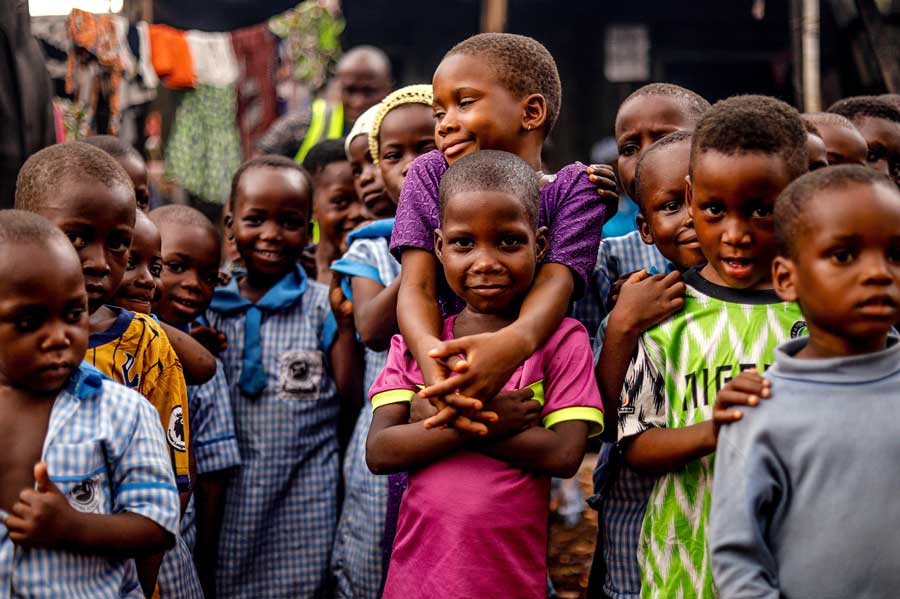
    People are suffering everywhere in the world today. The suffering of the people of Africa, however, is perhaps the worst, due to both natural and man-made disasters. Poverty, illiteracy, political and ethnic conflicts, drought, famine, epidemics—by any count or measure, the suffering of the people of Africa is beyond description and imagination. The challenges facing this continent, therefore, are daunting, and the responsibility of the rest of the humanity toward the African situation is inescapable.

    What exactly is the scenario of suffering in Africa today? Beyond the well-known fact that Africa has the highest proportion of population in extreme poverty is the reality of the worst drought in 60 years, according to the United Nations, which is affecting at least 10 million people in the Horn of Africa. Some areas are suffering famine and, at the same time, enduring rising food prices. Countries such as Ethiopia, Kenya, Somalia, Uganda, and Djibouti have been affected the most. Then there are other, just as pernicious, perennial problems. For example, 200,000 child slaves are sold every year in Africa. There are an estimated 8,000 female child slaves in West Africa alone (sources: BBC 5 October, 2001 and the Anti-Slavery Society, a British organization committed to the worldwide abolition of slavery). About 12 to 14 million African children have been orphaned by HIV/AIDS (source: World Bank/UNICEF). Nearly 2 million children under 14 years of age are HIV positive (source: UNICEF). A startling 43 percent of children in Sub-Saharan Africa do not have safe, accessible drinking water (source: UNICEF); and 64 percent of children in Sub-Saharan Africa do not have adequate sanitation (source: UNICEF).   Four million people are still food-insecure in Somalia alone, and 3.7 million Somalis are in desperate need of health care (source: United Nations). The list of problems goes on and on.

    If you are not merciful to people, Allah will not be merciful to you

    What should be the role of Muslims, then, toward the suffering of their African brothers and sisters? Is there any justification for us to be indifferent? The answer is absolutely “No”! This moral consciousness galvanizes countless numbers of Muslim individuals and many Muslim charitable organizations, such as Helping Hand for Relief & Development. They are providing great services for distressed humanity all over the world, including Africa. We commend their services and as a gesture of appreciation, we have provided some coverage on the programs and services of HHRD in Africa in this issue of The Message International. We hope this will inspire many others to contribute to the efforts in whatever way they can.

    The issues that cause or exacerbate the suffering in Africa cannot be ignored. How can we, the Muslim community in other parts of the world, turn a blind eye while all over Africa there are children being orphaned at a rate that history has never seen before? In Qur’an, in Surah Al-Fajr, Allah SWT calls to the people of ignorance who claim to adhere to a religion that brings them close to Allah: “No indeed! You do not treat the orphans with respect nor do you urge one another the feeding of the poor and you devour the whole of inheritance greedily, and you love wealth with all your hearts” (Al-Quran 89:17-20). The Qur’an also describes a scene from the Day of Judgment in which the righteous people in their heavenly Gardens ask those who are being engulfed by the fires of Hell what the reasons are for their punishment. Among the reasons cited are neglecting the rights and needs of the poor, allowing people to suffer with hunger or thirst, lack of shelter, or other adversity, and turning callously away from those afflicted and miserable human beings. Indeed, the moral mandate of Islam requires that a Muslim be kind, charitable, and merciful to his/her fellow human beings. Love for God veritably entails loving and serving humanity.

    The Qur’an further reminds us, saying: “You cannot attain to righteousness unless you spend (in charity) out of what you love” (Surah Al-Imran, 3:92).  In other words, there is no piety without charity. Prophet Muhammad (pbuh) also exhorted: “The highest level of the intellect, after belief in God, is to be of service to the creation.”

    It should be mentioned that foremost among God’s attributes are mercy and compassion (in Arabic, Rahman and Rahim). The Qur’an declares that “God has enjoined upon Himself (the rule of) rahmah” (6:12). The root meaning of Rahman and Rahim is “womb” which characterizes a place where something is formed, nourished, and protected. The family is a place where human ties are formed and nourished and protected, whether a single family unit or the entire human family. Indeed, our local and global human ties must be characterized by the compassion that Allah SWT enjoins upon Himself and us.

    One of the practical purposes of fasting during the month of Ramadan is “to help one empathize with the hunger pangs of those less fortunate, to enhance sensitivity to the suffering of others, and to develop compassion for the poor and destitute.”

    Prophet Muhammad (pbuh) is referred to by the Qur’an as the Mercy to the world (21:107); and in one of his sayings, the Prophet (pbuh) warned the believers: “If you are not merciful to people, Allah will not be merciful to you.” May Allah SWT guide us and help us to be mindful and dutiful toward hapless humanity.

  • Mohammad Ali, Champion in the Ring to Champion of the Disadvantaged

    In 1954 Muhammad Ali was 12 years-old and his bike was stolen after he left it in front of a Louisville, Kentucky department store. A police officer happened to be nearby and Ali approached him to report the theft. He told the officer that he wanted to “whup whoever stole it.” The officer, Joe Martin, was also the coach of a boxing program at Columbia Gym and told Ali that if he was going to “whup” somebody, he better learn to fight properly. Ali showed up the next day at the gym and the rest is history. Ali has said that Martin is the one who taught him to “float like a butterfly, sting like a bee.”

    Considered one of the greatest, if not the greatest, in boxing history, Ali won three World Heavyweight titles. His words, however, speak of a deep understanding of the dedication it takes to excel: “Champions aren’t made in gyms. Champions are made from something they have deep inside them – a desire, a dream, a vision. They have to have last-minute stamina, they have to be a little faster, they have to have the skill and the will. But, the will must be stronger than the skill.”

    Ali retired from boxing in 1981 and brought that same drive and dedication to social activism and humanitarian work. But as early as 1966, Ali was already showing his benevolence, visiting a home for orphans in Notting Hill, London, sitting with a large group of children and reading a book to them. This benevolence has been fully actualized over the years. As noted on the Muhammad Ali Center website, alicenter.org, Ali “has hand-delivered food and medical supplies to such needy sites as the Harapan Kita Hospital for Children in Jakarta, Indonesia; the street children of Morocco; and Sister Beltran’s orphanage for Liberian refugees on the Ivory Coast, to name just a few.”The Muhammad Ali Center was opened in 2005 in Louisville, Kentucky as the realization of Ali’s long-held desire of “creating a place to share, teach and inspire people to be their best and to pursue their dreams.” Despite a diagnosis of Parkinson’s disease in 1984, Ali has worked tirelessly to spread peace and freedom around the world. During his boxing days, Ali was known for his bravado, proclaiming himself “the greatest.” Yet, years later, as he matured and deepened in spiritual understanding, Ali said, “God gave me this physical impairment to remind me I am not The Greatest — He is.”

    One touching story is told about a luncheon held in Muhammad Ali’s honor at Britannia Stadium in Stoke-on-Trent in Britain in 1997. Ali was there with his wife Lonnie. By 1997 his tremors were severe and his speech was slow and slurred. A man approached Ali and his wife and they recognized in him the tremors of Parkinson’s. The man told them that his teenage son was embarrassed about the way his hands shook and didn’t want to go anywhere with him in public, but that he loved Muhammad Ali and had enthusiastically come to this luncheon. Lonnie asked the man to bring his son to their table. The man and his son sat with the Ali’s for a while and finally Lonnie told the boy that her husband was never embarrassed by his condition and that it only made him stronger. She told him to be proud of his father and to help him, that their solidarity would make them both stronger. The father and son had tears in their eyes and hugged each other, thanking Muhammad Ali and his wife Lonnie for the inspiration.

    This year Ali has turned 70. John Yarmuth,U.S. Representative from Kentucky, introduced the Muhammad Ali Legacy Act to “honor his values and build upon his humanitarian work.”  The bill would allow non-profit organizations to work under the auspices of the State Department to promote the values that Ali has lived and worked by, including respect for all people, helping others, and promoting spirituality. It would also advocate peace-building, violence prevention, and the combatting of radicalism worldwide. On the floor of the House of Representatives, Yarmuth said about Ali, “He’s a man of peace and justice, of patience and grace, a visionary who changed the boxing world so he could change the entire world.”

    None can argue that Muhammad Ali doesn’t do his part to change the world. Ali has said, “Service to others is the rent you pay for your room here on earth.” And serving others is what he has done, as a devotion, since retiring from boxing. According to the Muhammad Ali Center website, he travels “upwards of 200 days a year” and through his relief work has provided “an estimated 22 million meals to feed the hungry.”  Ali has collaborated with Yank Barry through the Global Village Champion Foundation to provide humanitarian relief in numerous countries across the world including Albania, the Bahamas, Belarus, Bosnia and Herzegovina, Burundi, Buryatia, China, Colombia, Cote d’ Ivorie, the Democratic Republic of Congo, El Salvado, Guatemala, Honduras, Indonesia, Kazakhstan, Kenya, Liberia, Mexico, Morocco, Mozambique, the Netherlands, Nicaragua, Peru, Romania, Russia, Rwanda, South Africa, South Korea, Sudan, Turkey, Ukraine and Venezuela.

    In recognition of his humanitarian work, Ali was appointed the United Nations Messenger of Peace in 1998 and in that role has hand-delivered food and medical supplies to poor and war-torn regions and populations around the globe. He supports a myriad of projects to end hunger and eradicate poverty, and to provide educational opportunities to children in the poorest communities. He has said, “To be able to give away riches is mandatory if you wish to possess them. This is the only way that you will be truly rich.” Whether it’s sending $100,000 to a senior citizen center for the handicapped to keep it from closing, helping to negotiate the release of hostages in Iraq in 1990, traveling to South Africa to meet with Nelson Mandela when he was released from prison, or being chosen to carry the inaugurating flame for the 1996 Olympics, Ali is always a commanding presence, eliciting love and admiration everywhere he goes. Called “Mr. International Friendship” by former President Jimmy Carter, Ali has more recently been characterized by President Obama as a “force for reconciliation and peace around the world.” In 1997 Muhammad Ali received the Arthur Ashe Courage Award and in 2005 he was awarded the Presidential Medal of Freedom.

    While he came from a Baptist-Methodist background, Alijoined the Nation of Islam in 1964 and in 1975 embraced the tenets of Sunni Islam. In Muhammad Ali: His Life and Times, author Thomas Hauser quotes Ali on his experience when first becoming Muslim: “I’d sneak into Nation of Islam meetings through the back door. I didn’t want people to know I was there. I was afraid, if they knew, I wouldn’t be allowed to fight for the title. Later on, I learned to stand up for my beliefs.” Being outspoken about his beliefs and convictions led to him being seen as a controversial figure in his boxing days. The transformation to a person who is considered aphilanthropist and elder statesman is a remarkable story. These days he has replaced braggadocio with humbleness. “Faith is something you don’t brag about,” he said. “It’s not for publicity. In your heart and soul, only God knows that it’s good. He’s the only one you have to face in the end.”

    In a book co-authored by Hauser and Ali himself, Healing: A Journal of Tolerance and Understanding,Hauser says, “Muhammad Ali is the most loved person in the world. Everywhere he goes, wherever he goes, people of all colors and religions crowd around, hoping to get close to him. I’ve seen it happen so many times, and each time, I ask myself, If we can all get together and have a meeting of the minds on Ali, why can’t we all get together, period? I look at this man and I say to myself, God is trying to tell us something.” Ali and Hauser articulate a beautiful message: “If today’s world is to be truly healed, that healing must be achieved one person at a time. The tolerance and understanding necessary to heal must come from each and every one of us, arising out of our everyday conduct, until decency reaches a flood tide.”

    That commitment to healing through tolerance, understanding, and decency continues to impel Ali. He has long campaigned for debt relief for the poorest of countries, many of which are in Africa. A World Bank program called the Heavily Indebted Poor Countries Initiative (HIPC) was put in place in 1996 as a result of extensive lobbying by individuals and NGO’s. As of December of last year, 39 countries (of which 33 are in sub-Saharan Africa) were deemed by HIPC to be eligible. To date, 36 of those countries have received some debt relief. Such relief is conditioned upon meeting a range of economic management objectives, and that the savings be channeled into health care, agricultural development, and free primary education.

    Now 70 years-old and slowed down by Parkinson’s, Muhammad Ali nonetheless continues on the path he has chosen, to feed the hungry, provide medical care, alleviate suffering, and stand up for those who have been denied freedom and dignity.  And he reminds us that those of us who are able to give, to donate, to contribute to the betterment of this world, should remove the impediments wherever they might be — even if in our own souls — which keep us from the caring and generosity of spirit that Islam enjoins. Muhammad Ali, the man who went from champion in the ring to champion of the disadvantaged, says, “It isn’t the mountains ahead to climb that wear you out; it’s the pebble in your shoe.”

  • Ecumenism of the Zanzibar Swahili

    Ecumenism of the Zanzibar Swahili

    “The language of Zanzibar par excellence is Swahili, and Zanzibar may be said to be the home of this language. After the days of opening up of Africa, explorers (Missionaries) and traders (Orientalists) generally fixed up their caravans in Zanzibar, and these porters (Colonialists) and soldiers (Crusaders) journeyed into the exterior, some of them remained there and thus making Swahili a lingua franca understood.”

    Source: W. H. Ingram (1923). “The Dialects of Zanzibar” Bulletin of school of oriental studies. Vol. 11. p.1
    0ne of the unique features of the Swahili language is that it has had a written tradition since the (late) sixth century. The Qur’anic script was used by the Waswahili, a generic lingo-ethnic identity of the people along the East Coast of Africa, stretching from northern Mozambique to Kismayu in southern Somalia. It was later used extensively in poetry.

    However, it was only in 1924, after the Anglo-Dutch Colonialism in the East African countries, that the Roman script was introduced by the Orientalists and Christian Missionaries. Although the Roman script is widespread, the Qur’anic script is still used in personal documents. The effect of British Colonialism on the Zanzibar Swahili has been to cleanse its Qur’anic impact for secularization, ostensibly in the name of standardization (Christianization) of the Zanzibar Swahili. The ultimate goal is to totally destroy the Islamic culture in Zanzibar, the last stronghold of Islam in East Africa. as Cordova in Spain.

    Although the Zanzibar Swahili developed as an Islamic language, it has increasingly become the heritage of Africa as a whole. Truly, the impact of Qur’anic loan words is irreversible as the impact of Latin on the English language. But the Standard Swahili is becoming less Islamic and more African due to its Ecumenism for Christianization in East Africa and beyond.

    Generally, two trends have made the Standard Swahili less Islamic. First, Christian missionaries and Orientalists in Zanzibar used Swahili as a medium of worship and theology for spreading Christianity. Swahili Islamic concepts were intended for Muslim discourse penetrated into the vocabulary of the Bible and African paganism. This crucial trend of Zanzibar Swahili is a part and parcel of its ecumenicalization from church state to marketplace.

    The second trend is the secularization of Zanzibar Swahili. This involved the increasing use of Swahili in areas of African life which are no longer as deeply affected by religion as they once were. The Zanzibar Swahili was so powerful that it was the most important instrument of social and economic development from Barawa, Somalia in the north to Sofala, Mozambique in the south along the East African coast. The need in secularization of the Zanzibar Swahili has encompassed its use for the administrative, economic and political purposes.

    As for the impact of Anglo-Dutch Colonialism on the Zanzibar Swahili, this has been a process of contradictions. This Colonialism arrested the spread of the Swahili Islamic language, but fostered the spread of the Zanzibar Swahili, which Professor Ali Mazrui and Pio Zirimu called an “Afro-Islamic” language.

    According to them, the Islamic civilization has suffered, but the linguistic side of the Islamic civilization gained. They argued that both the Germans and the British contributed to the triumph of the Zanzibar Swahili as a lingua franca in East Africa. On the other hand, the Christian missionaries promoted Christianity and constrained the expansion of Islam. Ironically, they often used the “Afro-Islamic” language to spread the Gospel of Jesus in the East African countries before and after their respective independences.

    Spread of the Zanzibar Swahili before independence

    UGANDA: Paradoxically, Swahili was the first non-Ugandan language to be used in that country. Both oral and written Swahili was already in use in the courts of the kings of Baganda and Bunyoro before the first British set foot in Uganda for Christianization. Even Bishop A. Mackay, who frequently evangelized Kabaka (King) Mutesa (1856-1884) of Uganda agreed that Swahili should be used for spreading Christianity:

    “Fortunately, Swahili is widely understood, and I am pretty much at home in that tongue, while I have many portions of the Old and New Testaments in Swahili. I am thus able to read frequently to the King of (Uganda) and the whole court (of Buganda) the word of God.”

    Earlier, the Muslims from Zanzibar had already introduced Swahili in Uganda through Islamization. Despite the fact that the British used the Zanzibar Swahili to impose Christianity under Colonialism in Uganda, the hired Orientalists and Christian Missionaries opposed Swahili for two main reasons. First, in order for the spread of Christianity to be well understood by Ugandans, it had to be taught in the mother tongue, and since Swahili did not belong to any indigenous tribal group in the country, it could not serve that purpose.

    Their second reason was based on Islamophobia. One of the strongest opponents of Swahili in those days was Bishop Tucker. He lamented that “Swahili is too closely related to Mohammedanism (sic) to be welcomed in any mission in Central Africa.” The Christian Missionaries promoted the indigenous languages of Uganda which, over the years, became very ingrained for Swahili to compete with. An important note here is that the Christian Missionaries discarded Swahili after acquiring a grasp of Luganda, one of the languages of Uganda. In the words of Bishop Tucker:

    “(Bishop A.) Mackay…was very desirous of hastening the time when one language should dominate Central Africa and that language, he hoped and believed, would be Swahili…That there should be one language for Central Africa is a consummation devoutly to be wished, but God forbid that it should be Swahili. English?! But Swahili never! The one means the Bible and Protestant Christianity—the other Muhammedanism (sic)… sensuality, moral and physical; degradation and ruin…Swahili is too closely related to Muhammedanism (sic) to be welcome in any mission field in Central Africa.”

    In 1927, the Governor of Uganda, Sir W. F. Gowers recommended that Swahili be widely used as an educational and administrative language of the country, instead of English and Luganda. This suggestion prompted the Baganda to unite with the Christian Missionaries in opposing Swahili and insisted that the Luganda should be used instead. The opposition of the Baganda was implied in a statement made by the Kabaka (King) of Baganda, Sir Daudi Chwa in 1929. He opposed Gower’s recommendation because the Baganda might lose their national identity.

    In spite of the establishment in 1930 of an Interterritorial (Swahili) Language Committee, the Ugandan Bishops, both Protestant and Roman Catholic, submitted a weighty memorandum to the Colonial Secretary in London through the Governor of Uganda. The burden of the memorandum was to demolish the arguments for Swahili as the official language and put a strong case for Luganda.

    Nevertheless, Swahili remained a suitable medium of instruction in police training institutions, prisons and armed forces. This concerted opposition to Swahili not only proved to be the death of this language locally, but also spelt danger to the native language of Uganda as well. Because in 1953 the Royal Commission of East Africa ruled out the teaching and official usage of Luganda, to make way for English.

    TANGANYIKA: Events in Tanganyika were different from those in Uganda. Tanganyika was first ruled by Germans. There were two main factors for spreading Swahili in Tanganyika. First, Islamization by Zanzibari Muslims, after the settlement of Sayyid Said bin Sultan (1806-1856) to Zanzibar, Swahili had emerged as a lingua franca. The Germans took advantage of this consolidated language by using it in schools and administrations. Like the British in Uganda, the Germans in Tanganyika used Swahili to govern and spread Christianity. The second factor which increased the prestige of this language was the German government’s policy of making Swahili compulsory for German officers before they were dispatched to Tanganyika.

    German Christian Missionaries learnt the Zanzibar Swahili before they arrived in Tanganyika. Though by 1914, most of the German administrators carried out correspondence in Swahili, they did not take this step for the nostalgia of the language. The people used it, but only to facilitate their Colonialism in Tanganyikan. Because the reasons given by the German themselves for their decision was that “it is better and wise politically not to teach the African German because by doing so we will be opening our secret to him.” The German Missionaries were highly Swahiliphobic because Swahili is irredeemably mixed with Islam and must be obstructed. Marcia Wright (1971) stated in Germans Mission In Tanganyika that:

    “In Germany, Director Buchner proved to be unrelenting for Swahili, going so far in a speech before the Kolonialrat in 1905 as to declare that it was so irredeemably mixed with Islam that every expedient ought to be employed to obstruct their joint penetration….Buchner’s opposition to Swahili was adopted and expanded by (the Rev.) Julius Richter, a member of the Berlin Committee. The Rev. Richter delivered a diatribe during the Kolonial Kongress in 1905 against the pernicious influence of Islam everywhere in Africa. Isolating East Africa as the scene of the worst danger, he envisage a mosque alongside every coastman’s hut, and took the official support for Swahili to be blatantly pro-Islamic.”

    After the defeat of the Germans in the First World War (1914 -1918), Tanganyika, was colonized by the British. The new Colonialists found that Swahili had already been established in the administration and in the educational system. In 1925, besides the Zanzibar Swahili, the British Missionaries introduced vernacular languages in the lower primary classes, but Swahili in the middle ones, and English in the upper level. Because of the development of the Swahili during German Colonialism (1885-1918), this change of policy regarding the medium of instruction in the educational system had little effect on Swahili. This was due to the fact that in most parts of the country, the trend was irreversible. By 1945, the vernaculars had also disappeared from the school system.

    KENYA: As was the case in Tanganyika, Swahili was well established in Kenya before the penetration of the British. But in Kenya, the British started to undermine and suppress Swahili immediately after hosting their flag of the Union Jack. Also, the Christian Missionaries did not wait so long before advocating the use of vernaculars for two reasons. First, it was easier to read a person’s mind through one’s knowledge of the mother tongue. Second, it Was easier to impart knowledge to a pupil by using his vernacular. To some of the Christian Missionaries, their strong opposition to Zanzibar Swahili stemmed from the fact that it incorporated many words of Arabic origin containing Islamic concepts.

    In 1900, the Governor of Kenya, Charles Eliot, recommended increased usage of the vernacular languages instead of Swahili. Incidentally, he was responsible for sending British settlers to Kenya in large numbers, and for providing them with tracts of fertile land robbed from original Kenyan owners. These settlers were not only against the Kenyans learning English, but also not interested in learning proper Swahili. As a matter of fact, they despised and regarded it with contempt. They considered it useful only when “giving order to (Kenyan) servants.” Swahili was therefore called “Kisetla” meaning the language of the settlers. This, to a certain extent, caused Kenyans in those ares to oppose and despise Swahili, for they associated it with low status.

    One of the settlers, Major E.S. Grogan, when making his contribution to the debate in Kenyan Legislative Council on 18 October 1929, said that: “I cannot think of anything more dangerous than teaching English to Africans. The only good education for them is to work as labourer on the farm.” Despite this the East African Royal Commission (1953-1955), under pressure from the Christian Missionaries conducted in a report that to teach and treat Swahili as the second language, was a complete waste of time and effort.

    By 1958, many Kenyan schools in the rural areas abolished the teaching of Swahili and concentrated on English. They were made to believe that English was a language of prosperity and civilization. The Kenyans were led to expect to reap material benefits by adhering to this new policy as the editorial of the daily, East African Standard (renamed The Standard) reported that:

    “If mothers of tomorrow could bring up their children with English in home, progress would be swifter and surer.” (13 May 1960).

    Spread of the Zanzibar Swahili after independence

    UGANDA: When independence was imminent, the Ugandan People’s Congress (UPC), led by Milton Obote, agreed to start giving Swahili national status in the country, and delegates at the UPC Conference in 1961 passed a resolution that Swahili be taught in Ugandan schools. However, after independence, this was not pursued. This may be attributed to the fact that the first Ugandan government was a coalition between the UPC and the predominantly Baganda monarchist party called “Kabaka Yekka” which was led by King Edward Mutesa.

    Therefore, English continued to be the official language and the medium of instruction in independent Uganda, as it was under the British Colonialism. In addition, the vernaculars were encouraged as regional and tribal languages. Nearly 20 vernacular languages were broadcast by Radio Uganda, but English as the main language on radio and television. The following statement made in 1967 by the Attorney General of Uganda reflected the official attitude on Swahili:

    “The Official language of the Government of Uganda shall be English…Swahili is no near to the language of honorable member than Gujerati….He might as well learn what they speak in Paraguay as learn Swahili.”

    During the reign of Idi Amin Dada (1971-1979), for the first time in the history of Uganda, Swahili was given national prominence. It was used in the national services of both Ugandan radio and television. He stressed the significance of Swahili from a Pan-African context when he addressed his nation:
    “On the advice of the entire people of Uganda, it has been decided that the National Language (of Uganda) shall be Swahili. As you all know, Swahili is the lingua franca of East Africa, and it is a unifying factor in our quest for total unity in Africa.”

    In 1979, this first post-colonial Muslim President, Idi Amin Dada, was toppled by the first post-colonial Catholic President, Julius Kambarage Nyerere. He installed Dr. Yusuf Lule, his schoolmate at the University of Edinburgh. Many of the Nyerere’s soldiers who participated in his Catholic Crusade, branded as vita vya Kagera, were ironically Muslims, many among them from Zanzibar. Their reward by Nyerere was nothing but many Ahsante!!! (thanks)

    They, and some Ugandans who had exiled in Tanganyika, helped to promote Swahili, and bestowed on it the honor it had never had. Swahili is now being taught at the Makerere University in Kampala, Uganda, something which was never dreamt of during Milton Obote’s first phase in power (1961¬1971). At present, there is no clear language policy in Uganda regarding Swahili as opposed to Tanganyika.

    TANGANYIKA: Despite the impact of Qur’anic language in the Zanzibar Swahili, when Tanganyika became independent in 1961, moves were already underway for realizing the dream of making Swahili the national and political language. This was made essential for the benefit of Nyerere to gain Union support of Muslims from Zanzibar.

    Most of the Zanzibar representatives in the neo-Tanganyikan parliament did not understand English. Others did not know languages of their counterparts in Tanganyika. To the Zan-zibaris, Swahili is their only indigenous language. Because the language is power, the National Kiswahili Council of Tanzania (Tanganyika) was formed by an act of Union parliament in 1967, and was entrusted with the work of overseeing, directing, encouraging and developing Swahili.

    However, we can argue that the formation of the National Kiswahili Council of Tanzania was a rubber-stamp of Inter-Territorial (Swahili) Language Committee (ITLC) for a continuation of standardization of Zanzibar (Christianization) Swahili from primary education to the National Executive Com-mittee (NEC) of the ruling Chama Cha Mapinduzi.

    In the educational system, the medium of instruction in all primary schools is Swahili, while in secondary schools only some subjects are taught in Swahili. Currently, the educational institutions are trying to overcome the handicap of teaching science in English by preparing the required scientific terminologies, books and dictionaries in Swahili. At the University of Dar es Salaam, a higher degree can be pursued in the Swahili language.

    KENYA: In Kenya, there are many educated Kenyans who feel proud that they understand no language, even their own mother tongue, better than English. Such people do not take Swahili seriously, but regard it as the language of the uneducated. In 1964, the government declared Swahili the national language of Kenya. After the announcement, no steps were taken to implement the decision. In 1974, President Jomo Kenyatta (1963-1979) ordered the parliamentary procedures to be held in Swahili and English instead of English alone. Very few members chose to speak Swahili, though by law, to be eligible to stand for parliamentary election, a candidate must pass a language proficiency test in both Swahili and English.

    The policy of the Swahili language in Kenya is confusing, but legally, English is the official language. Of the two, it is English which is being emphasized in offices. But in primary schools, it is a compulsory language, and the medium of instruction while in secondary schools. Swahili is an optional language, and because of this lack of emphasis, most Kenyan students prefer to learn French, German or Latin. Although Swahili is one of the 15 vernacular languages in broadcasting on national services, no other language is as widely used in Kenya today.