بسم الله الرحمن الرحيم

Author: James Yusuf-Yee

  • For God and Country: My Perspective on Patriotism

    For God and Country: My Perspective on Patriotism

    I love Allah, and I love America. I love my religion, and I love my country. But can I have loyalties to both? Many Muslims in the U.S., including myself, have pondered this question.
    It was something I thought deeply about when I accepted Islam while serving in the U.S. Army. A graduate of the United States Military Academy at West Point, I was an army officer. I worried that perhaps my military career was not Islamically permissible. At the time, U.S. involvement in the first Gulf War had just begun with Operation Desert Storm well on its way. Operation Desert Storm was the U.S. military mission staged in Saudi Arabia to oust Saddam Hussein and his Iraqi army from Kuwait in 1991. So naturally I was asking myself, “What if I am ordered to deploy to this conflict and find myself face-to-face fighting against Muslims from Iraq?” It’s not like I would have had a choice if given military orders — but what about my faith? I had learned that as a Muslim it is forbidden to kill another Muslim. If this is my religion, then how would it be possible for me to serve both God and country as an American Muslim soldier sent off to this war? It was a matter of conscience. I also wondered about Muslim soldiers from Saudi Arabia, Kuwait, and other Muslim countries in the U.S.-led coalition who were fighting alongside us. Would it be Islamically prohibited for them to fight in this war too since they were also Muslims fighting against Muslims? These questions were never satisfactorily answered.

    I did later deploy to the combat zone in Saudi Arabia during Operation Desert Storm with an air defense artillery PATRIOT missiles unit. Alhamdulillah, I was never confronted with a situation where I might have had to take the life of, or even point a weapon at, another Muslim. In fact, this was true throughout the entirety of my military career. However, I’m certain this has not been the case for every Muslim American who has served or continues to serve in the U.S. military. Nevertheless, for those who are U.S. veterans or military service members, most other Americans will honor us as patriots, even though we are Muslim. Fellow citizens have thanked me “for [my] service” and called me a patriot. Going a bit further, we know that there are American Muslims who have, as they say, “paid the ultimate sacrifice,” having lost their lives while fighting for this country. Several of them who have been killed in the “War on Terror,” either in Afghanistan or Iraq, are buried at Arlington National Cemetery. Images of their grave markers can be seen on the internet. America will forever honor these Muslims as American patriots. But what is a patriot? What is patriotism?

    Loving the Values and Freedoms of America

    The American Heritage Dictionary defines patriotism as “love of and devotion to one’s country.” Patriotism comes in many forms and is often associated with things like fireworks on the Fourth of July, a barbecue on Memorial Day, or a parade on Veterans Day. One of the most visual signs associated with patriotism is flag waving. In the “Make America Great Again” socio-political climate, proud calls are made for massive deportation of ethnic minorities and widespread travel bans to prevent persons from six Muslim-majority countries from entering the United States. Many people have been emboldened to wave the red, white, and blue in support of these kinds of policies, policies that seemingly contradict American values. But is this flag waving patriotism?

    America is supposed to be built on diversity, equality, liberty, and justice; the principle that “all me are created equal;” inclusion, not exclusion. The American way includes the freedom to speak your mind, the freedom to practice a religion, and the freedom to live the life you choose so long as it doesn’t break the law or infringe upon the rights of others. This is the America that I love, and this is the type of country I want to be devoted to. Loving these kinds of values, in my view, is patriotism. I would further argue that these American values run quite parallel to Islamic tradition, insomuch that when I uphold them I am also upholding my religion. In this way, I can love both God and country. I reject the notion that we should blindly love America just because it is our country, our team, some nationalistic rendering of “us vs. them.” Many wave the flag as a fanatic expression of American exceptionalism, losing any sense of what the ideal America is or what it should be, and they believe this to be patriotism.

    Renouncing ‘My Tribe Right or Wrong’

    During the time of Prophet Muhammad (peace be upon him), one of the prevailing issues was asabiyah or tribal partisanship. Khalid Griggs, the Imam of the Community Mosque of Winston-Salem in North Carolina, indicates that under asabiyah, adherence to tribal norms, mores, and taboos was unquestionable, to the degree that the operational social norm at the time was “my tribe right or wrong.” Prophet Muhammad (pbuh) spoke out against this type of overzealous tribalism saying, as recorded in Sahih Muslim, “Whosoever fights under the banner of the blind, becoming angry out of partisanship [asabiyah i.e., tribalism], calling towards it, or supporting it, and then dies, he dies a death of [a person in the days] of ignorance [jahiliyah].” The Sunan of Abu Dawood further documents Prophet Muhammad (pbuh) as saying, “He is not of us, the one who calls to partisanship; he is not of us, the one who fights for partisanship; and he is not of us, the one who dies by partisanship.”

    Today, there are those who function with the same type of mentality: “My America right or wrong.” Are our public institutions to blame? In public schools, children are taught to ritually stand for the Pledge of Allegiance. As adults we are conditioned to do the same for the National Anthem. When standing for the Pledge of Allegiance, our pledge “to the flag” and “to the republic for which it stands” also asserts the principle “with liberty and justice for all.” Yet, as Americans, we should be free to choose not to stand for the national anthem or even to recite the Pledge of Allegiance. In fact, most state statutes stipulate that school children be given “the opportunity” to recite the pledge. Various wordings regarding providing the time to recite the pledge but not coercing students include “to voluntarily recite the pledge,” “for those students who wish to recite the pledge of allegiance,” “have a right not to participate in the pledge of allegiance,” “no student shall be compelled,” and “any student who wishes to be excused…shall be excused.”

    Mandating or pressuring a citizen to stand for the Pledge of Allegiance is not liberty, not freedom, and not patriotism. However, not standing for the Pledge or for the national anthem is patriotic when it’s done to highlight the reality that our country is falling short of its ideals. Not standing in this situation is real patriotism because it’s done out of a love for America that demands that we, as citizens, recognize and rectify our nation’s shortcomings, and affect a path toward change. If people don’t stand simply because it is their individual right, religious or otherwise, to me the message here is also quite clear: they love America and they love the freedom guaranteed to its citizens. Wanting to deny individuals this freedom is the antithesis of patriotism.

    Taking a Principled Stance for Justice

    The controversy over NFL player Colin Kaepernick’s decision last year not to stand for the national anthem before games has taken the media and sports world by storm. Kaepernick chose to sit during the playing of the national anthem as his way of bringing attention to police brutality and the growing number of unarmed black men killed by police. Many of Kaepernick’s critics have scorned him as being unpatriotic. I disagree. His actions, which have drawn widespread support far beyond the world of sports, instead make him a patriot. His national anthem protest has further moved scores of athletes on other professional sports teams, as well as in colleges and high schools, to carry out similar types of social justice protests during the pre-game playing of the Star-Spangled Banner.

    American Muslim and former NBA player Mahmoud Abdul-Raouf created a similar controversy in 1996 when he refused to participate in the pre-game national anthem ceremony in protest over the role he sees America playing in global tyranny and oppression. While speaking publicly in Harlem recently, Abdul-Raouf stated that he uses the platform that Allah has given him to speak his conscience. In doing so, he continues to be critical of U.S. foreign policy in his fight for global justice, and encourages fellow citizens to represent what they themselves believe in. Academic historian Howard Zinn once noted in an interview, “While some people think that dissent is unpatriotic, I would argue that dissent is the highest form of patriotism. In fact, if patriotism means being true to the principles for which your country is supposed to stand, then certainly the right to dissent is one of those principles. And if we’re exercising that right to dissent, it’s a patriotic act.” It is in this light that I view both Mahmoud Abdul-Raouf and Colin Kaepernick.

    As Muslims, we too must act or speak out when we see something wrong. Prophet Muhammad (pbuh) said, “Whoever of you sees an evil must then change it with his hand. If he is not able to do so, then [he must change it] with his tongue. And if he is not able to do so, then [he must change it] with his heart. And that is the slightest [effect of] faith” (Muslim). Furthermore, Allah says in Quran, “O you who believe! Stand out firmly for justice, as witnesses to Allah…” (4:135).

    Islam requires us to take a principled stance for justice, and when we do we are being faithful to Allah and His commands. If our stand means we must be critical of American wrongdoing, then it is out of love and loyalty to the country and to its people who deserve better. Patriotism is not flag waving in blind support of your country, but it is engaging yourself in that which makes that flag deserving of being waved.

    James “Yusuf” Yee is a former U.S. Army officer who served as the Muslim chaplain at the U.S military prison camp at Guantanamo Bay. The views and opinions expressed in this article are those of the author and do not necessarily reflect the views or ideological position of The Message International.

  • Ten Years of Gitmo: An Open Letter to President Obama

    Ten Years of Gitmo: An Open Letter to President Obama

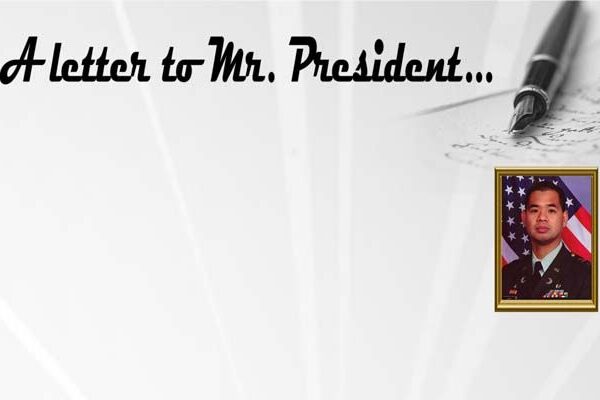
    As the former U.S. Army Muslim Chaplain at Guantanamo Bay, I’ve often been asked what I would say to the President if given the opportunity to share my views about Guantanamo. This meeting is not likely to occur, but perhaps he (or his staff) may be inclined to read the following letter.

    Mr. President, during the 2008 campaign, you promised to close Guantanamo, reject the Military Commissions Act, and adhere to the Geneva Conventions.

    January 2012

    President Barack Obama
    The White House
    1600 Pennsylvania Avenue, NW
    Washington, DC 20500

    Dear Mr. President,

    I hope this letter reaches you in the best of health and spirit in this new year. I offer you my thanks for all efforts you make to listen to the concerns of your constituents. And I pray that God augment your patience, vision, and sound judgment to optimally lead our nation in this year of 2012.

    As we welcome the new year, I wish to bring attention to January because it is a very meaningful month.  January is the month in which we celebrate the legacy of civil rights icon Dr. Martin Luther King, Jr., an individual who undoubtedly helped pave the way for your fellow citizens to recognize your qualities of leadership and elect you to the highest executive position in our country.

    January too was the month of your inauguration, an historic event consequent to the promise of “Change We Can Believe In.”  That day millions of hopeful Americans, myself included, braved the freezing temperatures to experience the excitement of the inaugural moment. Hearts were warmed and uplifted by an African-American taking the oath, affirming that he would, to the best of his ability, preserve, protect and defend the Constitution, as President of the United States.

    Hearts were warmed and uplifted by an African-American taking the oath, affirming that he would, to the best of his ability, preserve, protect and defend the Constitution, as President of the United States.

    However, January is noteworthy for another reason. It’s the month during which former president George W. Bush opened the U.S. military prison camp at Guantanamo Bay. The first 20 prisoners arrived on January 11, 2002.  These prisoners, all Muslims, were consigned to the open-air cages of Camp X-Ray. Of the roughly 680 prisoners at Guantanamo, the vast majority were never charged with a crime, but have been accused, often without evidence, of terrorism. Among the prisoners were juvenile detainees as young as 12 years old. Today more than 170 individuals remain at this military prison which unfortunately has become a worldwide symbol of American human rights violations and a self-determined right to flout the rule of law.

    January 11, 2012 marks the tenth anniversary of the opening of Guantanamo Bay and I, like so many others, am disheartened and offended by the abuse of prisoners, the cruelty of confinement conditions, the uncertainty of indefinite detention, the lack of due process, the unfairness of the military commissions designed to try prisoners at Gitmo, and the stripping of habeas corpus. These are contrary to all values of justice, human rights, and international humanitarian law.

    As the U.S. Army Muslim Chaplain assigned to the Joint Task Force Guantanamo mission in November of 2002, I witnessed first hand prisoners subjected to sensory deprivation, beaten by guards in the hidden interrogation rooms and cell blocks of Camp Delta, resulting in bruises and broken teeth, and violently handled by Reaction Force teams with riot shields and protective gear. They were humiliated for their belief in one God and their five daily prayers were routinely mocked.  Almost on a daily basis U.S. personnel, both guards and interrogators, desecrated the Quran.

    More and more Americans have become aware of the official military investigations and FBI documents that have confirmed many of the abuses and shed light on the full extent of the problem.  In 2005, the military ordered an inquiry into the desecration of the Quran at Guantanamo Bay.  It found that U.S. guards and interrogators had abused the Muslim holy book in ways that included sitting on it and, in some instances, urinating on it.

    The U.S. Southern Command later released the Schmidt Report which uncovered 79 instances of improper interrogation techniques that included 15 allegations of sexual abuse. The report detailed the use of harsh interrogation tactics that included sleep deprivation, blaring loud music for long durations of time, exposing detainees to hot and cold temperature extremes, being stripped naked in front of female personnel, short shackle stress positions, and the use of military working dogs (German Shepherds) to threaten and intimidate prisoners during sessions.

    FBI memos obtained by the ACLU through Freedom Of Information Act lawsuits that describe the improper interrogation techniques detail physical harm to the genitals, forced viewings of homosexual pornography, denial of food and water, disorientation techniques such as sleep deprivation, and religious abuse such as forced “satanic baptisms.”

    The experience in military detention has left me with a true appreciation for the rights guaranteed by our Constitution and an unwavering commitment to advocate for the protection of these monumental rights.

    Susan Crawford, a top military judge overseeing the tribunals at Guantanamo,  refused to prosecute the case of one detainee because he was tortured. The abuse Mohammed Al-Qahtani suffered at the hands of his captors was so severe that on at least one occasion it caused his heart rate to drop so low that he had to be hospitalized, administered an electrocardiogram and hooked up to a heart monitor.  Crawford later stated, “His treatment met the legal definition of torture. And that’s why I did not refer the case for prosecution.”  More specific details of Qahtani’s abusive treatment were exposed by TIME Magazine which published declassified (or leaked) pages of his Gitmo interrogation log.

    Amnesty International, referring to Guantanamo as the “gulag of our time,” has said it has become a “symbol of abuse and represents a system of detention that is betraying the best U.S. values and undermines international standards.”  The International Committee of the Red Cross has described the treatment of prisoners at Guantanamo to be “tantamount to torture.”  Major newspaper editorials have called Guantanamo a “legal black hole.”  Not surprisingly, the UN Commission on Human Rights has called for Guantanamo Bay to be closed.

    As significant are the viewpoints of U.S. officials who have called for the closure of Guantanamo Bay.  General David Petraeus, the Director of the CIA, is on record saying that Guantanamo should be closed.  He has described it as a security liability, stating “the existence of Gitmo has indeed been used by the enemy against us.”  Brigadier General Michael Lehnert, the military general responsible for setting up Guantanamo, has called for the prison camp to be closed saying, “for those who think our standing in the international community is important, we need to stand for American values.”  Former Secretary of State Colin Powell said “If it were up to me, I would close Guantanamo – not tomorrow, this afternoon.”  He has explained that Guantanamo has allowed others to say, “…see, this is what America is all about. They’re all about torture and detention centers.”  Along with Colin Powell, four other former U.S. Secretaries of State — Henry Kissinger, James Baker, Warren Christopher and Madeleine Albright — all agreed that closing Guantanamo would immediately improve America’s reputation in the world, and they unanimously recommended its closing.

    During your administration and the previous one, after careful review, more than 500 detainees have been released, a clear indication that most of the individuals held at Guantanamo were not a threat to the security of the United States and its citizens.

    Mr. President, during the 2008 campaign, you promised to close Guantanamo, reject the Military Commissions Act, and adhere to the Geneva Conventions.  You asserted that “Our Constitution and our Uniform Code of Military Justice provide a framework for dealing with terrorists.”  You further promised to reject indefinite imprisonment without trial and to repudiate torture, without exception.  When I learned that you helped lead the fight in Congress against the Bush Administration’s efforts to strip courts of the jurisdiction to hear Guantanamo cases, I was convinced that you would be the one to clean up the disgrace at Guantanamo.  It appeared at the time that no one would be better suited to restore our country’s status as superlative upholder of the rule of law than a Harvard Law School graduate and civil rights attorney who had taught constitutional law.

    Inspired by your promises, I campaigned for you that election season as an elected national delegate from the State of Washington.  At the Democratic National Convention in Denver, I cast my delegate vote for you, the first African-American to be nominated by a major political party for the nation’s highest office. I was elated to see you win the presidential election in historic fashion, and even more excited to learn the day following your inauguration that you had ordered the immediate suspension of the military commissions for not providing adequate protections to defendants. So many Americans felt reaffirmed in their perception of America’s greatness just a day later on January 22, when you signed an executive order to close Guantanamo Bay within one year. The image of you signing that executive order at the White House with Vice President Joe Biden at your side and a group of retired military officers standing behind you was forever embedded into our memories. That is the America we believe in — not perfect, but willing to correct mistakes and restore rightness when moral obligation dictates it.

    Yet, that was three years ago, and today Guantanamo remains open, and our country continues to hold prisoners indefinitely, without charge.  You’ve signed a new executive order that created a formal system of indefinite detention for prisoners who will not be put on trial nor be released.  You’ve reinstated the military commissions, albeit with some revisions, but they continue to lack the legitimacy and transparency expected of the American legal system.

    Now, Mr. President, the National Defense Authorization Act (NDAA) was just recently signed into law. This is another eroding of our civil liberties, allowing a president to order the indefinite detention of any U.S. citizen merely suspected of terrorist activity, without due process. Provisions of this Act violate a citizen’s Sixth Amendment right to counsel and disregard the Miranda process that informs a suspect of his rights while in custody.

    Clearly in conflict with the Constitution, the NDAA makes possible a scenario in which a U.S. citizen can be disappeared on loose suspicion of terrorist activity into a Guantanamo-like prison and held by the military indefinitely without ever being charged, tried, or convicted, held within a system of limbo, a system with no congressional or judicial oversight. You initially threatened to veto the bill because of these constitutional issues, but instead chose to and sign it “despite having serious reservations with certain provisions.”  The Washington Post said of this, “Congress’s creation of this legislation and the President’s decision not to veto it represent severe breaches of their constitutional and moral responsibilities.”

    Mr. President, I have experienced what it’s like to be a U.S. citizen held by the military in a special maximum security prison fitted for terror suspects. I was swept into this very nightmarish circumstance after objecting to the abuse of prisoners at Guantanamo Bay while serving the prison camp as a Muslim chaplain.  Secretly arrested, I was baselessly accused of spying, espionage and aiding the enemy.  I was whisked away to the Consolidated Naval Brig in Charleston, South Carolina and thrown into solitary confinement, subjected to sensory deprivation, held for 76 days in the same prison which held “enemy combatants.” I had no idea if I was ever going to be charged with a crime or ever be brought before a court of law.  Mr. President, being in solitary confinement, innocent of any wrongdoing, and not knowing if I would be allowed my citizen’s right to due process, is a psychologically harrowing experience that no man should ever be subjected to.

    Perhaps the Bush administration wrestled with the idea of declaring me as an “enemy combatant” and holding me indefinitely (a veritable life sentence with no charge, trial, or conviction) or to accord me rights as a military service member under the Uniform Code of Military Justice (UCMJ).  The UCMJ option prevailed and one month into my incarceration, I was charged with the minor offense of mishandling classified information.  Once afforded due process and the right to retain legal counsel, I was ultimately cleared of all charges and reinstated to full duty. I then made the decision to resign my commission and left the military with an honorable discharge. The experience in military detention has left me with a true appreciation for the rights guaranteed by our Constitution and an unwavering commitment to advocate for the protection of these monumental rights.

    One commander-in-chief used his authority to create Guantanamo.  As Commander-in-Chief today, please Mr. President, with boldness and courage, close Guantanamo Bay. I ask you on behalf of all loyal, responsible, law-abiding, and freedom-loving American citizens to close it down and overturn the troubling provisions in the NDAA. What better time than now to fulfill promises and demonstrate profound commitment to the “change we can believe in.”

    Sincerely,

    James Yee
    Former US Army Muslim Chaplain at Guantanamo Bay
    2008 Democratic National Delegate for Obama