بسم الله الرحمن الرحيم

Author: Sarah Siddiqui

  • To Be Grateful

    To Be Grateful

    We always want more. Isn’t that the fundamental human experience? Always feeling inadequate, unfulfilled, like something’s missing. We could have the whole world and everything in it, and it still wouldn’t be enough. There’s a reason Jannah is such a powerful motivator, with its promises of bliss that never fades nor grows old. Isn’t that the ultimate dream? But instead of always seeking more in a never-ending quest for happiness, what if we tried to recognize the blessings we have in our lives and sincerely be thankful for them?

    I was married on October 5, 2024, and it was not the easiest journey. I was first introduced to my husband more than a year ago. We spoke over the phone twice and met in person once, but almost immediately we independently realized the relationship wasn’t going anywhere. So, we told our respective parents as much and ended the conversation pretty quickly. And yet, for the next six months wherein we had no contact, I couldn’t shake this nagging feeling out of my heart this was whom I was meant to marry. Even after we ended things, even after I told my parents “no,” in my heart I was still making dua for him. Because despite how ridiculously contradictory my actions were to my feelings, I knew it was meant to work out, but I also knew it wasn’t the right time.

    Six months passed and we decided to give it one more shot; two months later we were engaged, and four months after that we were married. Allah’s plan is beyond perfect. When the time was right, when we had become right for each other, everything fell into place in the most beautiful of ways. Nevertheless, those four months of engagement felt infinitely slow and agonizing. Speaking objectively, four months is not a long time. However, when you’ve made the decision to spend the rest of your life with someone, every second away from them feels like a minute, and every minute feels like an hour, and it feels like the time will never come. Of course, it did come, and we were soon married alhamdulillah.

    But the test of patience didn’t end with our nikaah, and we were quickly forced to confront the reality of our situation. I live in Houston, and he’s based in Chicago. Neither of us is in a place where we can uproot our lives and move across the country, and while this is something we discussed before getting engaged, I don’t think either of us expected a long-distance relationship to be quite as challenging as we quickly realized it was.

    There is something so emotionally draining, so genuinely hard, about committing your entire existence to someone and then having to live more than a thousand miles away from them. Life quickly begins to feel like a ‘filler episode,’ like you’re floating in space, going through the motions of life meaninglessly until you see him again. Then when you do see him, lights flash, the world beams in color, your heart starts to beat again, and you feel like you have purpose once more. That is until the weekend is over and you go your separate ways, and you can feel the ache creeping back into your chest from the distance.

    Recently I complained about this to a friend, hoping for sympathy and comfort. Instead, her response forced me to pause and reflect. What a sad life I was choosing for myself. To live my day to day as if it meant nothing. To have put my all into one man, who may be deserving of it sure, but aren’t there also things I owe to myself? Don’t my parents deserve to have a daughter who serves them and treats each moment with them as precious? Don’t my siblings deserve a sister who’s present and makes time for them? Don’t my friends deserve my company, my conversations? And most importantly, doesn’t my Lord still have rights over me? Did He not give me purpose? Was I not created to worship Him and Him alone? Allah did not gift me with a husband for him to become my entire life. He is meant to be an addition to what already exists. A wonderful, kind, sweet addition but an addition nonetheless – not a replacement. The rest of the world did not vanish when I got married. Of course, it’s ridiculously difficult to be so far from him, but when I finally make the move across the country, I will be tested with distance from every single other person who I hold valuable. So instead of getting lost in the potential future, I have to live in the present and actively strengthen my connection with those who matter to me because this time with them is limited. That is the advice I was given, and while hearing it shook me to my core, it’s advice I’ve taken to heart.

    To live in the moment, to make the most of each second as it passes, that is the true test of gratitude. Can I thank Allah for allowing me to have a home to live in, for blessing me with family and friends, for each minute I get to call my husband? Am I going to spend this year resentful and frustrated or content and grateful? Am I going to value the gifts Allah has granted me now or be upset about the things He’s saved for me in the future?

    “Alhamdulillah ala kulli haal.” The Prophet (peace be upon him) taught us these words – “Praise be to Allah in all circumstances.” It doesn’t matter what test we’re faced with, whether it’s in regard to family, school, career, or anything else. We trust Allah and we trust in His perfect plan, and, with that trust, we are grateful to Him. Alhamdulillah.

  • Urdu and Arabic: My People and My Faith

    Urdu and Arabic: My People and My Faith

    Like many young Muslims in this country, I’m second-generation American. My parents immigrated to this country in the ‘90s, and me and my siblings grew up as third culture kids — intermixing Urdu phrases in our English, jeans with a “kameez” (a long cultural shirt) was the height of fashion, and we learned to eat with our hands before ever touching a spoon.

    There’s often a lot of dialogue on the difficulties that children of immigrants face, that feeling of never quite fitting anywhere. But I wonder how many of us have thought about how much it must ache to truly belong to a place – to live in a place where everyone speaks how you speak, where everyone eats what you eat, where everyone dresses how you dress – and then to have to give it all up and move to a land where you become a “minority” that is mocked and ridiculed for the very things that are the cornerstones of your identity?

    I wonder sometimes, if I would have been able to make the kind of sacrifice that my parents made. Would I have been able to leave my country, my people, and everything that defined me, to immigrate to a different continent, just so I could give my own children their very best opportunity for success? I’d like to think I would, but I genuinely don’t know. That requires a level of strength and tawakkul that I’m not sure I possess.

    And then, imagine watching those very children, the ones you gave it all up for, go through that phase where they become ashamed of your culture. The food our moms’ make, imbued with so much love and care, suddenly becomes “boring”, or even “gross.” We’d love to be called multilingual, but in something exotic like Italian or French, not the Urdu and Arabic that is our birthright.

    There is this defining moment that almost every child of an immigrant goes through — you’re asked a question, in what should be your native language, that you understand completely and you know the answer to, but you have no clue how to articulate it. Your tongue stutters, and your throat seizes, and your thoughts race in English but never translate over, and you feel absolutely humiliated.

    This loss of language might be the most heart-breaking part of it all. Language is the soul of community. To know a people, we must know their language. How many stories lay untold on the tongues of our grandparents because we can barely stutter our way through a sentence in Arabic? How many of our uncles, our aunts, our cousins, those who should be some of our closest family, have we barely scratched the surface in getting to know them, because their English might be broken but our Urdu is still yet worse? How many gems sit in the bookshelves of our parents’ personal libraries, in the hearts of our scholars back home, that we have allowed to become inaccessible to ourselves?


    Urdu is a beautiful language. There’s a gentleness and an eloquence to it, and it quite literally sits softer on the tongue and the throat. There’s a common stereotype of Desis (those of South Asian descent) not having the best pronunciation of the Qur’an, and that’s actually because a lot of Arabic letters rely heavily on the back of the throat while Urdu is spoken almost completely from the mouth. But despite these pronunciation differences, Urdu is very similar to Arabic in vocabulary.

    Neither of my parents have formally studied Arabic. They couldn’t tell you all the grammatical rules, the different morphological patterns, or the reasons for a word’s vowels. But their Urdu is fluent. Me, on the other hand, I’ve been taking an intensive Arabic course for the past 9 months. I can break down a verse into all its components and tell you the root letters of almost any word. But my Urdu is broken.

    And the longer I study Arabic, the more I realize that the level of comprehension of the Qur’an that my parents have, which is miles ahead of mine, is almost purely founded on their grasp of Urdu vocabulary. In allowing my own Urdu to weaken, I lost with it a critical understanding of Qur’anic vocabulary. And while I can still learn Qur’anic vocabulary now, and am taking steps to do so alhamdulillah, I often think of how much easier I know this all would’ve been if I had just retained my Urdu.

    My parents really tried their best to encourage us to embrace Urdu as much possible – it used to be tradition in our household to only speak Urdu at the dinner table. But as we grew from naïve children into insecure teenagers, we were desperate to find our footing in American culture and we made such a fuss about speaking English, my parents eventually gave in. And now, as an adult with too many responsibilities and barely enough time, I look back and truly regret the moments that could have been spent solidifying my native tongue, but instead was wasted on trying to prove to myself that I was American enough.

    If it was just about Urdu as a language, I would still have these regrets of course, but perhaps they wouldn’t be as strong. But it’s also about how Urdu ties into Arabic and Arabic is the language of the Qur’an and the Qur’an is the Word of Allah. It is quite literally God’s Message to me and you. So, it is regret for the loss of the language itself, yes, but more importantly it’s the regret of knowing how much stronger my connection with the Qur’an could have been.

    But we can’t waste our lives on regret. Regret is meant to be a teacher – it should drive us to do better, it should force us to reflect on our errors, but it should never paralyze us.

    Our relationship with Allah in particular is the one part of our lives that we cannot allow to become stagnant. Allah loves us, and it is out of this mercy and care that He has revealed His Message in His chosen Arabic. And we live in the age of technology, it has never been easier to learn a language – there are so many classes, such passionate teachers, endless YouTube videos. There is genuinely no excuse for willful ignorance. And why would we want to stay ignorant? Our Creator, The Merciful, The All-Loving, The Most-Kind, has sent us a Message and given us the means to understand that Message. Don’t we want to know what our Creator has to say to us?

    So, this is a call to myself, first and foremost, to work on my relationship with the Qur’an. This is an oath to myself that I will learn the language of the Qur’an insha’Allah, even if it’s just one word at a time. And maybe, just maybe, in this endeavor to please Allah and find my faith, I will find it in me to strengthen my Urdu and connect with the heritage of my people.

  • Niqab: For You, Ya Rabbi

    Niqab: For You, Ya Rabbi

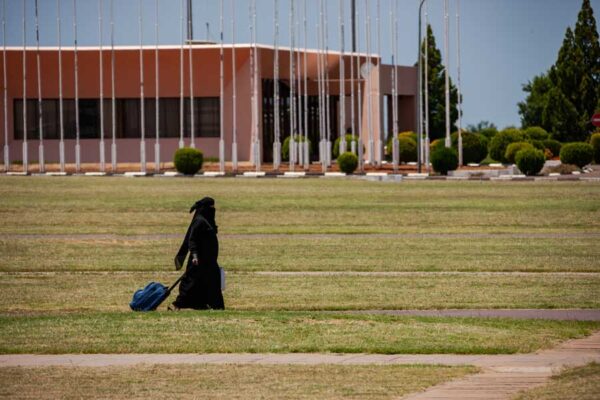
    I was born with my umbilical cord wrapped around my neck. My mother, exhausted from having given birth, and my father, staring in shock, could only watch on as the doctor took action. Calmly, efficiently, she snipped off the cord and so I took my first breath. This is a story I’ve heard many times, and this is a story that perfectly highlights the nature of not only my life, but of human existence as a whole. Death is an inevitable truth that follows every single one of us from the moment we appear in this world. And we never know when it may come for us, so it is crucial that we treat each day as if it is our last. Death is the reality that drove me to becoming a niqabi.

    When I was first considering wearing niqab, I was desperate to talk to someone else who had taken this step. I needed to hear about someone else’s experience. So I went through all my contacts, stretched all my connections, and yet came up empty-handed. Until finally, by the will of Allah, I stumbled across the profile picture of a girl who I had mutual connections with but had never interacted with. All I knew of her was that she was wearing niqab in one picture, and I messaged essentially this complete stranger, asking if she’d be willing to get on a call with me. And Subhan Allah, she said yes. We had one phone call which lasted maybe an hour. And then years later when I began wearing niqab, I texted her to thank her, and she replied by congratulating me and making du’a for me. And that was the extent of our interaction, two conversations, years apart. But what she did for me — the advice, the sisterhood, the instant support that I was offered – those are things for which I will be forever grateful.

    I went to my parents next. I remember when I told my dad what I was considering, he only had one thing to say. He told me, “Sarah if you’re doing it, make sure you’re doing it with the right intentions.” It was a reminder that I needed. Even now when sometimes I feel my intentions start to waver, I think back on that conversation, and I renew my purpose for wearing niqab.

    Before I committed to it fully, I went through a period where I would wear it once a week. I was trying to get myself used to it, how I felt with it, how others reacted to it. So, every Thursday, I would wear niqab to campus. And the days I wasn’t wearing niqab, I would wear a mask. This was the first semester back after covid, and there were a lot of students wearing masks, so it wasn’t anything that looked out of place. Even when I was wearing a mask though, I wore it with the intention of doubling as a niqab, although it of course came without the societal pressures of niqab and was much easier. So, I very easily grew accustomed to sort-of-but-not-fully wearing niqab, and it took something really big to push me to the next level.

    Over winter break, my uncle passed away. It’s sad how often it takes something as jarring as death to puts things into perspective. There is a difference of opinion on the ruling of niqab, but the one that I follow is that covering my face is a recommended act – there is reward for doing it, but there is no sin for not doing it. But witnessing death like that made me see the frailness of my own life, how my own death could be right around the corner. I realized that I need all the reward I can get before I meet my Creator. I began to understand that my fard acts weren’t enough, I needed to perfect my sunnahs as well, niqab being one of them. And I was already doing it once a week, so why not just commit to it all the way? My uncle’s passing was the catalyst that pushed me to go through with wearing niqab full-time, and so I pray that every time I adorn it, he is rewarded as well.

    I will admit however that this wasn’t the easiest decision. I didn’t want to diminish the seriousness of this choice. Once I took this step, I wanted to have taken it for good and not keep going back and forth on it. But it quickly became a test when I saw how everyone was reacting to it.

    A lot of the people who I was sure would be supportive, or at the very least not make a fuss over it, were extremely critical of my decision. I got told I was being “extreme” and doing “too much” by those who should have had my back. Someone I trusted tried to pull my niqab down in public because they thought it would be “funny.” I understand that it was a big change for everyone, but it was also a big change for me, and I, myself, needed time myself to adjust and grow comfortable with it. The way I saw it was that if my parents were supportive of my decision, and they were alhamdulillah, then no one else had the right to interfere or be opposed to my choices. And it truly hurt that a lot of the criticism came from those who should have been proud of me. But at the same time, the amount of support I got from the overall Muslim community, as well as even the non-Muslims in my life, was beautiful to witness.

    The one thing I was completely unprepared for how difficult it would be to eat. And that’s when my mom as well as my friends really stepped up. My mom taught me how to bend my upper body forward so my niqab would fall away from my face, and I could eat without making a mess. When I went out to lunch with some friends, they insisted on offering me the seat closest to the wall – something any niqabi can tell you makes eating so much easier. When I grabbed ice cream with another friend, she offered to hold the bowl while we walked, so I could hold my niqab with one hand, and eat with the other. So many people were so cognizant, and it opened my eyes to the strength that comes with being in this ummah. I began to understand why the concept of community is stressed so much in our religion.

    Wearing niqab also did wonders for my confidence. It made me so much more comfortable with being Muslim and talking about Islam. It forced me to self-reflect on my words and actions and renew my intentions to do everything for only my Rabb.

    One point I will mention is that wearing the niqab also unfortunately made many Muslims put me on a pedestal. People came to me as if covering my face meant I had a higher level of eman, even though that is absolutely not the case. I wear niqab because of how much I sometimes struggle with concentrating in salah or because of how difficult I can find it to connect with the Qur’an. And so, part of my intention is that because I’m struggling with these other elements of the deen, I can at least maximize the part of the deen that is easy for me – dressing modestly.

    I’ve been wearing niqab for about a year and a half now. It is a decision that I’ve doubted and questioned — yes, but also one where every doubt is swiftly followed by relief. On each occasion where I’ve begun to feel uncertain about niqab, Allah SWT sends me some kind of sign, and I’m able to find contentment in this matter. To anyone who’s considering starting the niqab, or deciding to put on the hijab, or even just attempting to dress more modestly – say bismillah and go for it. Life is too short, and death is too quick to be hesitant on these matters. And as long as whatever decisions we make are made for the sake of pleasing our Rabb, He has promised us a beautiful reward.

  • My Intention, My Reward

    My Intention, My Reward

    I was speaking to a good friend the other day and she asked me something that really made me reflect. She asked, “If you weren’t born Muslim, do you think you would have chosen Islam for yourself?” We mused over the question for a while, and eventually I realized my answer to that question was twofold. There are the more “spiritual” elements of this deen such as the concept of a God who has sworn to answer everyone who calls upon Him, a final Prophet who is quite literally “a mercy to mankind,” and a preserved Book that is healing in its essence. And these are all aspects of this faith that I know with certainty I would find myself drawn to in any case, regardless of being born Muslim, because these are self-evident signs of the perfection of Islam.

    Then there are the more “physical” elements of this deen such as praying multiple times daily in a ritualistic fashion, fasting for an entire month each year, and wearing a hijab and embodying modesty in general. These are the elements that I know I personally would struggle with, as these elements aren’t as much matters of faith as they are matters of obedience – actions that become obligatory upon us once we’ve accepted the faith. But only Allah truly has the knowledge on the why of these actions.

    The idea of hijab in particular is what really got me thinking. In the scope of my very-limited human intellect, I don’t understand it, I don’t understand the wisdoms behind it, and I don’t believe it is something that I personally will ever understand. But I know Allah is real, and I know His Prophet was truthful, and I know His Book is complete. And so, I wear hijab. I wear it solely out of obedience to my Creator. That is my intent, and so I trust that there is a reward for me in doing so.

    Reactions to Our Actions

    Every action has an equal and opposite reaction – Newton’s Third Law of Motion. It’s something that anyone who’s taken even a basic physics class could tell you. I remember learning it for the first time in high school in the context of force. If you push against a wall with a certain amount of force, the wall essentially reacts by pushing back, so to speak, with “an equal and opposite force.” reactions in the physical world occur perfectly in accordance with the initial action that triggered them. Human beings, with our free will, however, bring another dimension to this action-reaction relationship. When faced with a difficulty of some kind, we have the ability to choose how we react. We could choose to panic or complain or cast blame upon one another. Or we could choose to practice patience, seek help from Allah SWT, and remind ourselves that with every hardship, there is always ease (Quran, 94:5). Under the Islamic paradigm however, there is even a more subtle layer of depth: the niyyah (intention). The intent that exists behind any act, determines what “reaction” there will be to it in the akhirah.

    So, when I wear hijab, unable to rationalize it to myself, but worn purely with the intent of pleasing my Lord, I remember that our Prophet (s) taught us, “actions are according to intentions, and everyone will get what was intended.” So, I have to trust that by wearing hijab with this niyyah, I am able to gain the pleasure of Allah.

    The beautiful part about Islam is that this power of intentionality is not limited to only the obligatory acts, like salah or hijab. Rather it is something that can be easily harnessed in even the most mundane of actions. When we eat, we can make the intention – “ya Allah, I am eating to take care of this body that You have given me as an amanah.” When we sleep, we can intend – “ya Allah, I am sleeping so I can wake up for Fajr and worship You as You ought to be worshipped.” When we exercise – “ya Allah, I am trying to make myself strong so I can serve Your deen.” When we smile – “ya Allah, I am fulfilling the Prophetic teaching that smiling is a form of charity.” When we create memories with our family – “ya Allah, I am maintaining the ties of kinship.” And on and on and on. Our religion is so beautiful and perfect that any act, with a heartful intention, can become an act of worship.

    Back in high school, I had to do a project on the nature of good and evil. I remember asking an older cousin if the motive behind an evil act should be factored into the punishment of that action. He told me that, in an ideal world, yes. Motive should be considered and play a heavy role in determining the outcome. But we live in an imperfect world. And human beings are imperfect creatures. Sometimes we lie and sometimes we make false assumptions.

    But Allah is maximally perfect in all of His attributes – including, but not limited to, His knowledge, His mercy, and His justice. And of His utmost perfection is that it is He who has full knowledge of people’s hearts and what intents they conceal therein. It is Allah alone who can shower mercy on the deserving without ever diminishing His justice, and He alone who can serve true justice without ever neglecting His promise of mercy.

    I Choose Islam

    So, intentions do matter. Why we do what we do matters just as much, if not more, than what we actually end up doing. In fact, there’s a long hadith that breaks down the dynamic between action and intent. Our Prophet taught us that if a person intends to do a good deed and then follows through with it, the reward of that one action is multiplied up to 700 good deeds. And if the person intends to do this good deed, but is unable to for whatever reason, they still gain the reward of one full good deed, just for having that intent. And if a person intends to do a bad deed, but then doesn’t follow through with it, they actually end up gaining the reward of one full good deed, for giving up that evil act. And it is only when a person intends to do a bad deed and they follow through with it, then and only then, is something written down for them as one bad deed (Sahih Bukhari and Muslim).

    Subhan-Allah. Our Lord has made this religion easy for us.

    So, to answer the question I mentioned above – I would choose Islam in a million different lifetimes. And I’m sure I would struggle with some elements of it, yes. But despite any of the struggles, I sincerely believe that I would always find my way to the Straight Path. Because who other than a perfect Being could reveal a faith where even my intentions, my inner thoughts, could be the source of immense reward?

  • Egypt: A Journey of Reflection

    Egypt: A Journey of Reflection

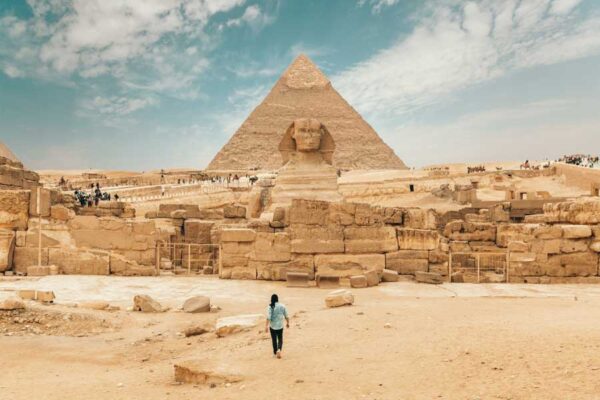
    I visited Egypt recently, a country rich in history and desperate to preserve the monuments that attest to this reality. I saw tombs from over 3,000 years ago, dug deep into the earth, laid out with perfectly measured blocks of sandstone and rock. These were then inscribed with colorful hieroglyphs, carved beautifully, painstakingly, by hand, into the hard stone. When I asked about the remains of the great prophets, of Yusuf and Musa, those who we know existed in Egypt, the guide, who was Muslim himself I might note, struggled to find an answer before eventually saying that there might perhaps be something in areas further north in Egypt. But when I asked of the pharaohs of old, of tyrants and dictators, of those who committed mass genocides and ethnic cleansings — oh the tales were endless.

    Fantastical legends were woven from the faint remains of once-decorated rock. Stories of kings and queens hiding away incomparable treasures far deep underground, desperate to ensure an afterlife for themselves, completely oblivious or perhaps even uncaring about the economic stability of their people. Stories abound of massive festivals, where the poorest of the poor would be convinced to give fine sacrifices for the deities, which would instead go directly into the hands of the ruler. And stories of traveling through mythical worlds in dreams, of being appointed by gods and goddesses with the divine right to rule.

    The Egyptians have done exceptionally well for themselves in sustaining a continuous income of tourism. The international airport gleams, and the hotels surrounding it are elegantly maintained. The roads leading to the most popular historical sites are freshly constructed, and the merchants in these spots have perfected the art of commerce, selling trinkets to the hundreds or thousands of tourists passing through daily. Everything is designed to guide visitors on the perfect journey where they can enter and leave the country without ever having to look past this carefully constructed image.
    Ancient Egypt
    My trip, however, didn’t follow the traditional tourist route of airports and hotels to temples, pyramids, and tombs, before heading straight back to those same hotels and airports. I did visit all of those, yes, but I also went into the heart of the land. I prayed in mosques under construction, passed run-down graveyards, and visited local stores. I saw crumbling homes, peeling graffiti, and streets more pothole than asphalt. This is not to criticize Egypt for its lack of wealth. I have lived in Pakistan, so believe me when I say I know fully well that there is a beauty and a strength here that will not be found in any developed nation. But beauty and strength are not what my story is about.

    Rather what this is about, the primary thing I took home from Egypt, is the realization of the utterly selfish nature of humanity. These pharaohs, kings, queens, self-appointed royalty of all sorts, had all the world’s power, knowledge, and wealth at their disposal. The ancient Egyptians are revered as one of the most technologically advanced civilizations of their day. And yet, the one thing they chose to spend decades constructing, often the majority of their lives, was not schools or hospitals or libraries. No, the chosen legacy of the ancient Egyptians is their tombs.

    The Great Pyramids of Giza, one of the Seven Ancient Wonders of the World, served one and only one purpose – to house exactly one dead body in each of three pyramids — father, son, and grandson. Historians estimate that over 100,000 slaves were used to create these shrines, many of whom were literally worked to death, dying on average by the age of 35. This legacy of the ancient Egyptians, their magnum opus, is built on nothing but blood.

    The worst part, however, is not just the brutal conditions these slaves had to endure, but rather the completely useless projects for which they lost their lives. These people died, not to start some revolution or as martyrs to a greater cause or even for any reason of their own choosing. Rather, tens of thousands of people were worked to death solely because some rich ruler essentially wanted a glorified tombstone. These pharaohs then chose to bury their wealth in these tombs, so not only did they steal the lives of the people, they stole the possibility for financial stability and economic prosperity as well. While thousands labored and starved, these kings and queens cared for nothing but scurrying away with anything even remotely valuable.

    We have been told in the Qur’an, “Say [O Prophet], travel through the earth and see what the end was of those before; most of them worshipped others besides Allah” (Qur’an 30:42). And never had this verse really struck me, until I visited Egypt. There is a palpable desperation in the tombs of the ancient Egyptians that both horrifies and saddens me. These arrogant pharaohs have been knocked down into complete humiliation, by the Rabb Himself. The bodies that they were so frantic to mummify have shriveled and decomposed so thoroughly that they are barely recognizable. The gold that they selfishly hid away from everyone now rests in museums for the entire world to see. And the gods that they worshipped and in whose names they committed the worst atrocities, are now known to all to be nothing but childish myths.

    Allah speaks of the particularly tyrannical pharaoh from the time of Musa, promising him, “Today We will preserve your body so you can be a Sign for the people who come after you…” (Qur’an 10:92). The promise of Allah holds true. While the exact body of this pharaoh may currently be undetermined, the remains of the Ancient Egyptian dynasties are enough of a sign for anyone who seeks to reflect.

    May Allah protect us all from such a humiliating end. Ameen.

  • Legacy: The Prophetic Way

    Legacy: The Prophetic Way

    Prophet Muhammad (s) was born in an uncivilized society, and through the message of Islam, he educated, reformed, and refined that society. Idol-worship had been rampant, the poor were oppressed and exploited by the rich, and women were refused the dignity of being treated as worthwhile human beings. And in just over 20 years, the Prophet (s) transformed this society completely, creating and fostering a culture where Allah SWT alone was worshipped, where the rights of the poor were not only safeguarded but prioritized, and where women were raised to their divinely ordained status.

    In some ways, our world today has fallen back into many of the norms of that uncivilized society before the advent of Prophet Muhammad, that era of jahiliyah, ignorance. We’re being forced to confront this ignorance on all different fronts — godless ideologies, religious fanaticism, unbridled greed, war mongering, and economic exploitation, to name just a few. The pervasive nature of this unchecked darkness makes us doubt if we could ever possibly find our way out of this.

    But Allah SWT told us, more than 1400 years ago, “Today I have perfected your faith for you, completed My favor upon you, and chosen Islam as your way” (Qur’an 5:3). Islam is our salvation. Islam is the solution. And so, we turn to the example of the Messenger of Allah (s), and we ask ourselves this: how did one man come to a people who were in a state of such moral degradation and completely transform them into the most righteous of all generations?

    True Transformation

    It starts with perfecting one’s own character. The Prophet (s) was a man whose sense of morality and virtue was completely unparalleled. Before prophethood, he was known amongst his tribe as “Al-Amin,” “The Trustworthy,” and after, even as those same people were abusing and torturing him for bringing the message of Islam, they had no doubts about his honor. In fact, up until the very night he was migrating to Medina, despite suffering at the hands of his own kin for almost 13 years, many of them still entrusted him with their valuable possessions, because even as they despised his message, they knew there was no one more trustworthy than him.

    However, this transformation doesn’t end with just our own selves, but rather we ought to work to facilitate growth in others as well. The Prophet (s) was a mercy to mankind and forgiveness was a constant theme throughout his life. There is a narration of a woman who would throw trash at the Prophet (s) and attempt to humiliate him daily. But there came a day when she did not throw trash and when he noticed her absence, the Prophet (s) went and inquired about this person who had expressed such abuse towards him. And when he heard that she had fallen ill, he went to visit her, and she was so moved by the compassion and generosity of soul of the Prophet (s), she immediately accepted Islam, right then and there.

    There is something powerful in how the Prophet (s) was able to forgive all people, even those who were directly responsible for some of the most difficult moments of his life. The Prophet (s) looked at Wahshi, the man who murdered his beloved uncle, Hamza (r), and he was able to show him compassion. So, when Wahshi came to the Prophet upon accepting Islam, instead of demanding retribution for the death of his uncle, the Prophet (s) forgave him. And Wahshi (r) would go on to face the false prophet, Musaylamah the Liar, and with that same spear he had once used to kill the uncle of Prophet Muhammad (s), Wahshi (r) defeated one of the greatest enemies of Islam.

    And the fulfillment of this transformation can be seen in an impact that lasts long after individuals. The Prophet (s) was generous and tolerant, even to those who might not have expected it of him. After the conquest of Mecca, representatives from all over the Arabian Peninsula began sending delegations to the Prophet (s). In one such instance, a delegation of Christians from the city of Najran came to visit the Prophet, and while conversing with him, the time for their prayer arrived. Instead of asking them to leave or find somewhere else to perform their worship, Prophet (s) showed them respect and honor and he allowed them to pray according to their religious tradition within his own mosque.

    This tradition of tolerance and respect was continued under the Caliphate of Umar ibn Al-Khattab (r). When the Muslims conquered Jerusalem, Umar (r) entered the city peacefully and with assurances of the protection of the religious freedom of all those who inhabited the land. In fact, when prayer time came around, and a priest offered Umar (r) the opportunity to pray within a church, Umar turned it down – not out of disrespect, but rather because he didn’t want the church to eventually be turned into a mosque. Thus, to maintain the dignity and rights of the Christians under his rule, Umar (r) made the decision to preserve their holy site.

    But this didn’t end with the Companions and those who had directly learned from the Prophet. Rather, more than 500 years later, when Salahuddin Ayyubi conquered Jerusalem once more, he spared the Christians within it. He allowed them to live and freely practice their faith, in stark contrast to how the Crusaders had brutally shed the blood of Muslim inhabitants when they had entered the city. Salahuddin also made active efforts, like Umar (r), to protect Christian sites in Jerusalem, namely The Church of The Holy Sepulchre, in accordance with the same teachings of the Prophet Muhammad (s) that had been passed down to him through centuries and across generations.

    An Incomparable Legacy

    We can’t start talking about reforming the world until we first purify ourselves and then work to change the hearts and minds of the individuals around us. The Prophet (s) was a master at this. He understood people on a level that most never even bother to try. He made them feel heard and appreciated for even the smallest of things. He took the time to get to know and love everyone on such an individual basis that even those who only had a couple years with him were infinitely impacted by him.

    We speak of legacy, but real legacy is not defined by hitting certain milestones, or by leading in polls, or by being obsessed with solo success. Real legacy is about the lasting impact you are able to leave, on the world, on those within it, and on those who come long after you, yourself, have passed on.

    Every single time the adhan is called and all Muslims in the vicinity who hear and heed this call, stand together, united in their striving to worship the Creator, that is a mark of the Prophet’s legacy. Every single time a Muslim makes an effort to smile and treat others with kindness because the Prophet (s) said “smiling is charity,” that is a mark of his legacy. Every single time a Muslim helps an orphan, in any way possible, because the Prophet (s) loved and emphasized the care of orphans, that is a mark of his legacy. Every time we choose courage, humility, selflessness, kindness, tolerance, patience — the list of the Prophet’s exalted traits goes on and on — that is a confirmation and a testimony to the legacy of Prophet Muhammad (s).

    This legacy wasn’t built in one day or one month or one year. This is a legacy that took 23 years to build; 23 years of changing the hearts and the minds of the people by approaching them from a place of genuine concern and commitment to sharing divine guidance; 23 years of guiding and facilitating individuals to become leaders and creating communities of people who were committed to the overall betterment of society. And for 23 years the Prophet instilled such love and hope and trust that even today, more than 1400 years later, those of us who have never met the Prophet (s), who know him only through what’s been preserved about him, every single day 1.8 billion of us around the world actively choose to carry on and fulfill the legacy of Prophet Muhammad (s).

  • From Zigzags to the Straight Path — Part Two

    From Zigzags to the Straight Path — Part Two

    Part one of this article covered five Names of Allah, and here are an additional six. To reiterate what I wrote in part one: the Names that I’ve chosen to focus on in this article are by no means any more powerful or valuable than the rest of His Names, but rather these are the Attributes of Allah that I have built a strong emotional connection to and that I, personally, have found to be a salve for my soul. “And to Allah belong the most beautiful Names, so invoke Him by them…” (Qur’an 7:180).

    Al-Lateef / The Subtle

    This Attribute is so unique because at first glance, it refers to one who is merciful and compassionate, but if we dig just a little further, Al-Lateef has this beautiful depth to it, where He is not just kind, but He is subtle in His kindness. He always provides us with what we truly need – even if we don’t know it ourselves in the moment. And although it is often difficult to recognize the wisdom behind His Will, if we are able to keep in mind that we have a Rabb who is Al-Lateef, it is a constant reminder for us to have hope in and trust Him.

    There is no more powerful way to truly understand Al-Lateef than by looking into the life of Prophet Yusuf (a.s.) who has one of the most heart-wrenching stories. As a child, he was betrayed by his brothers and sold into slavery. He was thrown in prison for a crime that, he himself, was actually the victim of. He was forgotten by those who he helped save. And even after he finally gained some measure of authority, it took years for him to reunite with his family and he had to trick them into bringing them back into his life. And yet, after all the hardships he endured, he was forgiving and gentle, and as he reflected back on his entire life, Yusuf (a.s.) said, “…Indeed my Lord is Lateef (Subtly Kind) in what He wills…” (Quran 12:100). What more need we say?

    Ash-Shakur / The Grateful

    Allah doesn’t ask much of us. The One who created us, who we quite literally belong to, all He asks for is our obedience. And it’s not like there’s some kind of hidden agenda – obeying Him is for our own good; we are the ones who benefit from it. It doesn’t affect Allah whether we do what He commands. He is Allah, The Most High, and He is completely independent of any kind of need. And yet, He chose to reveal Himself as Ash-Shakur, as The Grateful?!

    Similar to Al-Fattah, getting to know this Attribute of Allah should be such a humbling experience. Because the bare minimum that we need to do is be appreciative of the one who has blessed us beyond imagination. We ought to be the grateful ones. But Allah chooses to reveal Himself as The Grateful, as The Appreciative. And in what universe, do we, some of the most sinful of all creation, have the right to expect anything from Him, much less that He be grateful?

    Ash-Shaheed / The Witness

    Wallahi. Allah is my Witness. I swear to God.
    These are all variations of the same concept that is illuminated in the verse “sufficient is Allah as a witness between me and you” (see Qur’an 17:96). Allah sees all, He hears all, and He knows all regardless of whether it is something that is clearly manifest to everyone or a secret that is hidden in the deepest recesses of our souls. And when we invoke Allah as Ash-Shaheed, we are making a very, very powerful statement. Who needs the validation of people when we can call upon Allah Himself as The Witness to what we claim? It is also risky though because if we take Allah as our witness and what we have said is incorrect — that’s terrifying.
    One side point to note is that witnessing shares the same root with the Arabic word for martyrdom. In fact, someone who dies in the cause of Allah is called a shaheed. Because it is the martyrs, the shaheed, who are those who bore witness to the truth with their lives.

    Al-Haqq / The Truth

    Truth is a constant – it can never be hidden for long, it will always find its way to the surface, and it is very easily distinct from falsehood. And if this is what we say about truth, then Al-Haqq Himself, the one who has created and designed every facet of reality, can only be greater in every sense. He can never be hidden and certainly never behind falseness and deceit. Those who are sincere will distinguish Allah as easily as one can distinguish truth.
    Truth also gives us purpose. If Allah is The Truth, then that means His promise is true. The Day of Judgement is true, His mercy is true, and most beautiful of all, Jannat ul-Firdaus, the reward of eternal contentment and bliss, that too is true. And once truth has become clear from falsehood, is it not our responsibility to adhere to it? Once we recognize Allah alone as The Truth, and we feel that mixture of fear and hope that comes with this realization, we are given the purpose of living our lives in obedience to Al-Haqq.

    Ar-Ra’uf / The Kind

    There is so much suffering in human lives, but we must remember that we have a Rabb who is kind. There is no better way to say it. And what makes Him as Ar-Ra’uf distinct from His other attributes of mercy and compassion is that ra’fah is a kindness that is apparent. There are sometimes in life where we go through something terrible and painful, and it takes us years down the line before we see.
    His mercy and are able to realize how Allah protected us. Then there are other times when we are able to comprehend the kindness of His Will in the moment it happens. And this is an indication of Ar-Ra’uf, the one through whom compassion is outwardly manifest.
    Like Al-Wahhab, invoking Allah by Ar-Ra’uf is such an emotional experience. In times where everything feels like it is going wrong, yes, we trust in the judgement of Allah, but trusting Him doesn’t mean that we don’t feel pain. And in those moments of pain, sometimes all we need is something small to happen, some tiny kindness, and it allows us to take that second to just breathe and ground ourselves and for that pain to begin to ease – that is the manifestation of the mercy of Ar-Ra’uf.

    Ar-Rasheed / The Guide

    The attribute of Ar-Rasheed has a special place in my heart because my dad’s name — Rashid — is based on the same root. I remember when I was young, I would listen to this one nasheed (religious, vocal music) that would list the 99 Names of Allah, and I would wait, not very patiently, to get to the end because that’s when Ar-Rasheed would come.
    Ar-Rasheed is The Guide. He is the one who keeps us firm on His straight path. He is the one who makes clear what is right from what is wrong, whether it be in terms of halal and haram or what the right choices are even in the most minute of issues. And Ar-Rasheed has blessed me with parents who have been the manifestation of His guidance for me, and what more perfect way to symbolize that than by having one of them named Rashid.

    The All-Beautiful Names of Allah, asmaa-ul-husna, they have been given to us as a mercy and as a way to get to know our Lord. So many Muslims feel a disconnect from Allah, feel an emptiness in their souls – and it’s no wonder that we struggle because too many of us aren’t taught any more than how to pray and read Qur’an. But we’re not taught anything about the one who we’re praying to and the one whose word we’re reciting. Dhikr means remembrance – but how can we remember a Rabb that we’ve never taken the time to get to know in the first place?

    Allah has gifted us with 99 ways to get to know Him. And if we put in a little bit of effort to get closer to our Rabb, to just try to build that connection with Him, He has made us a powerful promise that can heal the aching loneliness that festers inside us all – “Remember Me; I will remember you…” (Qur’an 2:152).

  • From Zigzags to the Straight Path— Part One

    From Zigzags to the Straight Path— Part One

    It started with the innocent musings of a child.

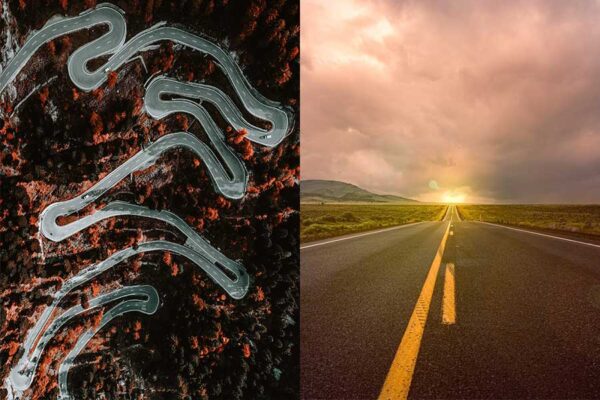
    I would look at the lines that zig-zagged across the palms of my hands. On my left hand, two lines cross to form the Arabic symbol for the number 8 and then next to it is a single line that forms the Arabic symbol for the number 1. On my right hand, the order switches so the 1 comes first and then the 8. So, my left hand looks like 81 in Arabic and my right hand 18; 81 plus 18 is 99. There are 99 Names of Allah. Boom. For 10-year-old Sarah, that was more than enough proof that Islam was the truth.

    Now that I’m older, and perhaps a bit wiser, while I can still recognize that there is an eerie beauty to be found in these small signs, my faith in Allah does not rely upon them. Rather my faith, my trust in His wisdom, my fear of His wrath, and ultimately my hope for His mercy, all have arisen through realizing the importance of getting to know and invoking Allah by how He has chosen to reveal Himself.

    One of the mercies of Allah is that He has blessed us with so many of His Names and Attributes and then He has given us the freedom to choose the ones by which we remember Him. So, the Names that I’ve chosen to focus on in this article are by no means any more powerful or valuable than the rest of His Names, but rather these are the Attributes of Allah that I have built a strong emotional connection to and that I, personally, have found to be a salve for my soul. “And to Allah belong the most beautiful Names, so invoke Him by them…” (Qur’an 7:180).

    Al-Quddus / The Holy

    If we look at the references to Al-Quddus in the Qur’an, both times Allah chose to mention this Attribute (59:23 and 62:1), He places it right after Al-Malik. There is a powerful symbolism here — Al-Quddus, The Holy, the One who is free of any kind of imperfection, is also Al-Malik, The King, The Sovereign One to whom everything belongs. Allah being Al-Malik speaks to His complete authority and dominion, but what differentiates a benevolent king from a tyrant is not just power, but what they do with that power. A tyrant uses it to be the primary perpetrator of injustice. But for Allah to reveal Himself as Al-Quddus directly after mentioning Al-Malik emphasizes not just His power but His glorified holiness and His unique right to be worshipped and obeyed by His creation.

    We also see how Allah chose to grant some element of sacredness to some of His creations. Masjid Al-Aqsa in Jerusalem is often referred to as Bayt al-Muqaddas, “The Purified House.” And He bestowed upon the Angel Jibreel the honorific of Ruh ul-Quds, “The Holy Spirit” (16:102). Of course, in no way are we comparing the quds of Masjid Al-Aqsa and Angel Jibreel to Al-Quddus Himself; but because Allah allowed select creations to carry some measure of sanctity, we can use that as a way of trying to comprehend the limitless holiness of Allah.

    Al-Musawwir / The Fashioner

    Allah is the one who fashioned, shaped, and perfected us into our distinct forms and natures. He who has infinite wisdom chose to create us in this way. As human beings, we have a distinct status that Allah, our Creator, has bestowed upon us. It is really sad that so many of us treat these bodies that we have been gifted, so callously. Whether it’s by starving ourselves, binge-eating, falling into addictions, engaging in self-harm, or the multitude of other ways we abuse ourselves, most of us don’t treat our bodies as the amanah that they are.

    Yet, if only we could see ourselves how Allah describes us. The Fashioner who made all of creation, designed the universe and all the multitudes of animals and plants and insects within it, Al-Musawwir Himself, says that, indeed, He created us, human beings, “in the best of forms” (see Quran 95:4). Thus, even as we face our own individual struggles with self-image, we should take comfort in that, in the eyes of Allah, we are an honored creation.

    Al-Awwal, Al Akhir / The First, The Last

    Allah is The First. He has no beginning and He has always existed. And He is The First in terms of priority as well; adhering to His Commands must come first before fulfilling any of our desires. Allah is also The Last. He will be there even as all of us fade out of this earthly existence because He alone is eternal, and it is His pleasure that is the ultimate goal. Instead of getting caught up in the worldly results of our efforts, if we focus on Him as the sole finality, we would be able to find some measure of contentment in all of His decrees.

    That Allah is Al-Awwal and Al-Akhir covers every possible scenario – every single thing falls within His dominion, nothing escapes His presence as He exists outside the limitations of space and time, and He is with us, when we start and when we end, and all throughout and in between.

    Al-Wahhab / The Giver

    Al-Wahhab is one of the names of Allah that should evoke a powerful emotional response, particularly in du’a. Allah gives because He is generous. He gives beyond what we could ever hope for. He gives and He gives and He gives, and even when we are so completely undeserving of it, He never ceases to give.

    Al-Wahhab shares a root with the Arabic word hibah which translates into gift, and so we can look at everything He gives us as gifts. And the thing about gifts is that they are given out of affection – it is unlikely that one gives a gift to someone who they couldn’t care less about. At the same time, gifts are also highly personalized – the giver chooses the gift based on their knowledge of the recipient. And so, Allah is The Giver, and the gifts we keep receiving are a sign of His love and care and, as He is the All-Knowing, every gift that He has bestowed upon us is perfectly suited to our exact needs and desires.

    Al-Fattah / The Opener

    Fath-Makkah refers to when the Prophet (s) returned to Makkah for the first time after the migration to Madinah. It’s commonly translated as Conquest of Makkah, and certainly “fath” does mean victory and conquest, but fath also has a second meaning of something being opened or being revealed. Fatiha, as we all know, is the opening chapter of the Qur’an and reciting Surah Fatiha sets us up to engage with the remainder of the Book of Allah.

    So, Al-Fattah is the one who grants victories, but He is also The Opener – the one who opens all things for us. And really this idea is quite humbling. Al-Fattah opens up all possibilities, whether it be in terms of our spirituality (guidance, knowledge, Paradise), in terms of our livelihoods (status, resources, wealth), in terms of our relationships (love, companionship, family), or in any and all other aspects of our lives. He truly is the opener and the granter of all kinds of victories.

    Part two of this article is coming soon and will cover six additional Names of Allah SWT.

  • Nature: Calling Us to Our Creator

    Nature: Calling Us to Our Creator

    Take a moment.
    Walk outside.
    Feel the welcoming embrace of a bed of grass. Allow the gentle breeze to whisper the secrets of the universe into your ear. Let the cool droplets of rain leave soft kisses against your skin. Sit in nature and just breathe.

    See how the sweetness of nature is matched by the ferocity of its strength – the ground shudders, the winds rage, and the waves crash. A cheetah tears a zebra to shreds, devouring the fallen creature with no thought given to the sanctity of the life it has just taken. The unknown depths of the ocean are comparable only to the all-encompassing darkness of space.

    And yet even these seeming horrors of nature inspire a sense of awe. Within what appears to be savagery and chaos, there is design and intent if we only but reflect. For all this could not have been made by any random chance. No, there is something, some power, behind it – a creator who chose to fashion it all in this most perfect of ways. And who could it be but Allah, The Originator, The Fashioner, The Best of Planners, The Most High, and the one who alone has knowledge of even the most minute details: “Have they not looked at the heaven above them – how We structured it and adorned it and it has no rifts? And the earth – We spread it out and cast therein firmly set mountains and made grown therein of every beautiful kind, giving insight and a reminder for every servant who turns [to Allah]” (Qur’an, 50:6-8).

    The Beauty of Nature
    Nature is one of the means by which Muslims, and really anyone who’s attuned to their spirituality, can grow closer to and maybe, just maybe, begin to barely understand the majesty of the Creator. For it is only a Being of unimaginable power, limitless knowledge, and an all-powerful will that can fashion this vast universe. He alone possesses the power to create the orbits of all the planets and galaxies. He alone knows where and how to place each organ of the human body in order to maximize survival. He alone simply wills “‘Be’ and it is” (see Qur’an 36:82).

    And there is something in nature that calls out to every one of our souls, beseeching us to marvel at the prowess of our Lord. The farmer finds beauty in the scent of freshly-tilled soil, in the bleating of baby goats, in the golden colors of a successful harvest. The scientist sees beauty in analyzing the properties of chemicals, in the never-ending diversity of species, in the miracle of the microscopic cells, supporting and interacting with each other to produce all manner of life. The businessman finds beauty in the supply chain of life – in how tiny seeds transform into giant trees that, even if not able to bear fruit, can provide lumber, paper, wax, and rubber, until finally they decompose only to then facilitate the growth of new trees, thus creating an endless supply to fulfill the demands of their dependents. The mathematician sees beauty in observing the perfect structures of the universe, in scribbling and poring over the calculations of the forces allowing our planet to continue to orbit, in witnessing patterns of Fibonacci numbers and golden ratios in flowers, bone structures, and even snail shells. And the artist? Oh, the artist sees beauty in everything. The artist even sees beauty in the darkness of a cloudy night, in the just-healed scars over deep gashes, in the pangs of childbirth that give rise to new life.

    Remembering Our Rabb

    No matter where you see this beauty, this order, this simultaneous simplicity and complexity – it all serves one purpose – to call us to the remembrance of our Creator. We witness through the Qur’an itself how nature is used as this means of bringing people back to the Master. Allah SWT narrates to us the story of the Prophet Zakariyya (s), who was the guardian of Mariam. When he entered the home of his ward, he found her supplied with an abundance of fresh fruits and provisions, many of which weren’t even in season. So, understandably, he inquired about them, and she reminded him that all sustenance comes only from Allah. Upon hearing her wise words, Zarakiyya (s) immediately called upon His Lord with the most beautiful and heartfelt of prayers (see Qur’an 3:37-39). And so, nature can be one of the means through which even the Prophets were reminded that almighty power belongs only to Allah.

    We also have the story of the Prophet Ibrahim (s) when he debated with a tyrannical king who refused to accept the truth of Islam. After a little bit of back and forth, finally Ibrahim left the arrogant man in complete shock by presenting him with the most powerful of challenges that makes clear the limitations of human power: “Allah causes the sun to rise from the east. So, make it rise from the west” (Qur’an 2:258). Thus, we see nature being used as proof for the power and might of our Lord. The rising of the sun, an occurrence we see every day, was utilized as major evidence for a greater Designer of the whole system.

    We also see how nature is used as a way of testing and punishing those who have begun to go astray. The Qur’an narrates the story of two men, one with a humble abode, and the other who owned the finest of gardens with palm trees and grapevines and even a river flowing through it. But this second man was arrogant and continued to be boastful, even when his poorer neighbor reminded him to be appreciative of his blessings. So, Allah SWT sent down a raging storm that left his gardens in complete destruction. And finally realizing the gravity of his sins, the man turned back to His Lord in repentance and regret (see Qur’an 18:32-43). So, nature, and specifically the more destructive side of nature, was also a means employed by Allah SWT to cast fear into the hearts of people, and thus, bring them back to His remembrance.

    Fulfilling Our Purpose

    Modern science informs us that spending time in nature, even if it is only a few hours over the course of the week, has a significant positive impact on both one’s physical and psychological health. Being in the great outdoors is known to reduce anxiety and lower blood pressure, increase immunity, and enhance higher brain functions such as creativity. Most people have probably experienced this themselves at one point or the other; after a long day of classes or work or being cooped up inside, sometimes just stepping outside for a breath of fresh air is – well, like a breath of fresh air. Ironically enough, Muslims have known for centuries of the blessing that nature holds. The scholars of old highly encouraged being outside, spending time in contemplation, and using the natural world as a means of coming closer to God. For what is the purpose of our existence but to build that relationship with Him? Allah SWT tells us “I did not create jinn and mankind except to worship Me” (Qur’an 51:56). If marveling at the perfection and beauty of nature is a way to fulfill that purpose, to worship Allah SWT through pondering over His Signs, then why not take advantage of this simple but powerful way of gaining His pleasure?

    So take a moment.
    Walk outside.
    Breathe in the fresh air.
    And ask yourself – “Which of the favors of your Lord will you deny?” (Qur’an 55:13).