

In July 2026, the United States celebrated its 250th anniversary, its semi quincentennial, marking the birth of a nation. Indeed, on July 4, 1776, and as part of the Second Continental Congress, 13 American colonies declared themselves free from British rule and adopted the Declaration of Independence at the Philadelphia State House, now called Independence Hall.
This declared independence had far-reaching ramifications that extended far beyond the borders of a single nation. In fact, history has shown that the US’ bold move 250 years ago shaped the destiny of countless people throughout history.
Independence Through the Lens of Islam
 As Muslims, we must understand independence through the Quran and the sunnah of our beloved Prophet Muhammad (peace be upon him), and not only through the breaking away from former colonizers, particularly if we discover we have become colonized once again under this very banner of freedom America promises. This is among the greatest of human deceptions – when the appearance of liberation leads to a new form us subjugation and colonization emerges. With this warning in mind, there are several points for us to ponder.
Islamic Perspective of Governance and Sovereignty
Before we discuss a nation’s independence, we must first establish a fundamental Islamic principle – that Allah’s promise is true, and true sovereignty belongs to Him alone. After all, people and nations come and go, but Allah (SWT) reminds us of His absolute authority when he said, “It is He who has made you successors (generations after generations) on earth.” (Quran 35:39) This verse teaches us that all authority on earth is delegated by Allah, and we are merely stewards and successors on this land while we remain temporarily on Earth.
Blessings and Benefits of Independence
Being free from colonial oppression and foreign domination is one of independence’s greatest blessings. Throughout history, many Muslim lands suffered under colonial rule; their resources were exploited, their dignity was trampled, and their ability to freely practice Islam was restricted. Islam condemns this and all forms of oppression. The Messenger of Allah (peace be upon him) said in a Hadith Qudsi, narrating from Allah: “Oh my servants! I have forbidden dhulm (oppression) for myself, and I have made it forbidden amongst you, so do not oppress one another. (Muslim)
Nations Behave with Oppression
Sadly, many nations, once entrusted with authority, failed to uphold justice. Instead, they perpetrated oppression, spread corruption and abused the power granted to them. What’s more, this is a pattern repeated throughout history, and when people persist in injustice and transgressions, Allah (SWT) withdraws his favors, strips them of their authority, and raises others in their place.
Allah (SWT) said: “They were followed by a curse in this world and (will be cursed) on the Day of Judgment. Aad certainly rejected their Lord, so away with ’Aad, the people of Hood. (Quran 11:60)
Many Great Empires and Dynasties
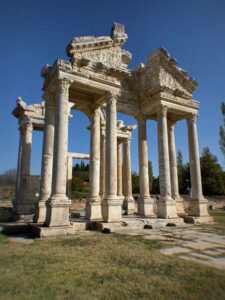 The world has witnessed the rise and fall of many great empires and dynasties. For some, during the height of their power their names along would strike fear among weaker nations. These triumphant nations conquered, ruled, slaughtered, and boasted of their conquests and occupation of foreign lands. Their armies were seemingly unstoppable and often unchallenged. However, what has become of them now?
What of the ancient Kingdom of Egypt, which ruled around 1450 BC, or the Hittite Empire which was in power circa 1350 BC. And what of the Assyrian Empire that reigned in 721 BC, not to mention the great Babylonian, Persian, Macedonian, Roman, and Byzantine empires that came later? Even the great Islamic Empire, which has experienced an overall decline over the last five centuries after a long period of prosperity and development, has to be mentioned.
And what of modern empires? In recent history, mankind has seen the fall of the Soviet Union, the Germain Reich, the Japanese Empire of Hirohito, the British Empire and others around the world.
As we can see, nations and civilizations have come and gone, their existence recorded in history books and some of their remains enshrined in museums and art galleries. Allah (SWT) mentioned as much in the Quran. “Then just as the earth flourishes (with cultivated lands) and is fully beautified, and people think they have full power over it, Our command comes by night or by day, so We turn it into stubble as if it never flourished the day before. This is how We explain the verses to people who reflect.” (Quran 10:24)
Why Nations Rise and Fall
For a nation to flourish, it must have tawheed and it must fulfil its duties to the Creator and uphold the rights of His creation. This adherence to duties owed to Allah is the cornerstone upon which everything is built. This is more likely to happen when a nation’s belief in Allah (SWT) as the Creator, Lord, and Sovereign is strong. Allah said: “We blessed David with Our favor saying, “O mountains and birds! Glorify (Allah) with him.” We made the iron malleable (soft) for him (and told him), “Make coats of armor (for combat) with (interlocking rings of) chain having precise measures. Do righteous deeds for I am All-Seeing of everything you do.” (Quran 34:10-11)
Here Allah SWT tells us how He blessed His servant and messenger David (peace be upon him) and what He gave him of His great bounty, giving him both prophethood and kingship, and a huge number of troops.
He also blessed David with a mighty voice, such that when he glorified Allah (SWT) the mountains joined him in glorifying Allah, and the free-roaming birds, who go out in the morning and come back in the evening, stopped for him. But this blessing did not end with David, Allah (SWT) told us: “We strengthened his kingdom and blessed him with wisdom and decisive judgment.” (Quran 38:20)
In addition to establishing tawheed, a civilization’s rise and fall depends heavily on whether or not it upholds the rights of Allah’s creation. In the United States, the Statue of Liberty stands as an enduring symbol of liberty, justice, democracy, and the God-given dignity of every human being. Lady Liberty’s inscription, which bears the date July 4, 1776, serves as a timeless reminder that these ideals are foundational to the birth and identity of the American nation.
 With that in mind, one cannot help but ask, after 250 years of independence, do we truly feel more secure than ever before? Do we feel liberated? Do we feel justice prevails for all?
When nations protect and uphold justice, if follows they are bound to thrive and flourish; but when they withhold or even violate justice, they are doomed as other nations before it were doomed. Remember – justice sustains, and oppressions destroys.
As Muslims living in America, if, upon reflection, we decide the values of justice, freedom and independence to worship our Creator, and to simply be who we are without prejudice and fear is upheld, then we should celebrate 250 years of America’s founding.
However, if not, I believe we must question why these ideals are not being carried out and only boasted about. After all, America’s story was built not just by its government and its institution, but by ordinary citizens – including immigrants and those born here – who quietly contributed their time, talents, and resources for good of all.
True independence is found in the freedom to worship Allah (SWT), the Absolutely Just, in Whose judgment perfect justice prevails and in Whose promise there is never disappointment.