بسم الله الرحمن الرحيم

Author: Hernan Abu Uthman Guadalupe

  • Superando el acoso escolar como musulmán latino

    Superando el acoso escolar como musulmán latino

    Soy un latino que también es musulmán, lo que todavía es una anomalía aquí en los Estados Unidos. Mis compañeros del colegio pensaban que era mexicano y cuando les dije que era mitad puertorriqueño y mitad ecuatoriano, siguieron llamándome mexicano por molestarme. Ellos no podían burlarse de mi religión porque también eran musulmanes, así que se enfocaron en mi origen. Desde que comencé la escuela, todos los niños me llamaban mexicano y me preguntaban burlonamente si tenía mi visa, y decían muchos otros comentarios racistas o xenófobos. Me molestaban por otras cosas como la ropa que usaba y la comida que comía, por ser latino. Siempre era el blanco de toda clase de insultos.

    Un día usé una sudadera que mi tío diseñó para su escuela de jiu-jitsu brasilero, llamada Rollstar. La sudadera tenía uno de los lemas de mi tío: “No se permiten los egos; mantente humilde”, lo que para mí significa que nunca deberíamos ser arrogantes o creernos mejor que nadie. Irónicamente, eso se convirtió en el próximo objeto de burla. Mis compañeros de clase decían el eslogan con acento japonés y se burlaban del jiu-jitsu como arte marcial. No sabían nada sobre el deporte de jiu-jitsu, así que simplemente pateaban sus piernas en el aire y fingían golpear como si fuera una forma de karate. Dijeron que “No se permiten los egos; mantente humilde” se había convertido en un meme por yo usarlo. A pesar de eso, todavía usaba la sudadera con orgullo.

    No me importaba si se burlaban de mí, aunque a veces me molestaba. Después de un tiempo escuchando lo mismo, me cansé y les dije que pararan. En ese momento, dejaron de llamarme sobrenombres. Sin embargo, al día siguiente, comenzaron de nuevo. Estos incidentes me recuerdan a una frase que leí en un libro que decía: “¿Por qué tratar de hacer lo correcto si la gente siempre piensa lo peor?” Cuando traté de decirles que terminaran con sus humillaciones, se burlaron aún más de mí. Pensaban que era un cobarde. Incluso me llamaron un debilucho, pero en mi mente, sabía que podía derrotarlos si quisiera. Llegaron a atacar verbalmente a mi familia e insultar a mis padres. Llamaron a mi padre débil y se burlaron de él por su estatura. Les dije firmemente que guardaran silencio, y ellos sabían que hablaba muy en serio. Dejaron de insultar a mis padres, pero siguieron con sus ataques hacia mí.

    Uno de los chicos en mi clase que me molestaba publicó un video burlándose de mí y hablando groserías estaba en las redes sociales. Aunque le dije a los maestros lo que estaba ocurriendo, el niño no se metió en problemas. Como vi que los maestros no hicieron nada, traté de tomar el asunto en mis propias manos, lo que resultó ser un grave error. Hice una caricatura de mí peleando con el niño y golpeándolo. Mi amigo publicó la caricatura en las redes sociales para vengarse. Supongo que el chico que lo inició vio la publicación y se lo contó a los maestros. Mi amigo y yo nos metimos en problemas. Sorprendentemente, el que comenzó toda la polémica no sufrió ningunas consecuencias. Se rumoreaba que la razón era porque en el colegio que asistíamos, que es una escuela islámica privada, algunos de los maestros favorecían a los niños pakistaníes. Aunque era musulmán, yo era el único latino en mi clase.

    No trates de buscar venganza

    De esa experiencia, aprendí una valiosa lección: cuando alguien te hace algo malo, no trates de vengarte haciendo algo similar. Como dice el refrán: “Dos errores no hacen un bien”. Si alguien te está haciendo daño, debes tener paciencia, hablar con él y tratar de resolver el problema sin pelear. También es una buena idea hacerle saber a un adulto lo que está sucediendo e involucrar a tus padres.

    Después de un tiempo, el acoso en la escuela terminó por completo porque el chico que más me molestaba tuvo un corte de pelo horrible. Su cabeza estaba completamente afeitada. Él se dio cuenta en ese momento, que, si quisiéramos, mis amigos y yo podíamos burlarnos de su cabello. ¡Fue justicia divina! Sin embargo, no me burlé de él porque nunca quiero rebajarme al mismo nivel que un acosador. A veces, cuando ridiculizamos a las personas, terminamos en una situación peor como castigo por nuestras malas acciones. Yo aprendí eso muy bien después del incidente con la caricatura.

    Pasó mucho tiempo antes de que lograra que mis compañeros de clase dejaran de molestarme, pero por fin lo hicieron. Una vez que el líder del grupo se detuvo, sus amigos lo siguieron. Esto demuestra que la mayoría de las personas que se burlan de otros son solo seguidores. Los líderes tienen la opción de ser acosadores o defender a otros contra la intimidación. Entonces, ¿por qué tratar de hacer lo correcto si la gente siempre piensa lo peor? Porque tenemos el deber de hacer el bien sin mirar a quien y, con suerte, otras personas también nos seguirán.

    Debo aclarar que mientras los niños que me acosaban en la escuela eran musulmanes, los acosadores pueden ser de cualquier religión, raza o clase. Mis compañeros de clase vieron que yo era diferente porque era latino, y por eso decidieron burlarse. No quisieron conocerme por quién era, y se enfocaron en mi origen. Eso nunca debería importar porque todos somos seres humanos de la misma raza humana. La lección que debemos aprender de mi experiencia es que nunca tenemos que sentirnos mejor que nadie. Como dice el suéter: “No se permiten los egos, mantente humilde”.

  • Overcoming Bullying as a Latino Muslim

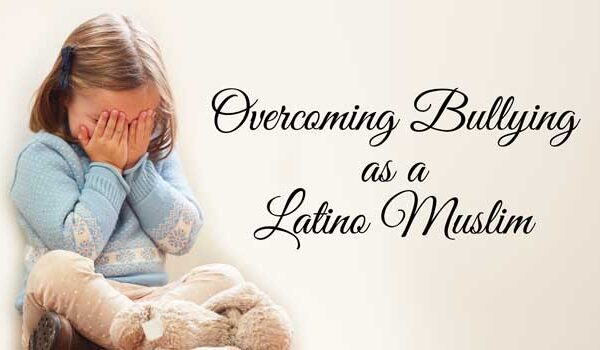
    Overcoming Bullying as a Latino Muslim

    I am a Latino who also happens to be Muslim, which is still somewhat of an anomaly here in the U.S. People in school used to think that I was Mexican and when I told them that I was half Puerto Rican and half Ecuadorian, they still called me Mexican just to annoy me. My peers could not make fun of my religion because they were also Muslims, so they targeted my background instead. Ever since I was in school, all the kids called me Mexican and asked me if I had my visa, and many other racist comments like that. I used to be called names for other things such as the clothes that I wore and the food I ate, because I was Latino. I was always the class target of name-calling.

    One day I wore a sweatshirt that my uncle designed for his Brazilian Jiu-Jitsu school, called Rollstar. The sweatshirt had one of my uncle’s slogans on it: “No egos; stay humble,” which to me meant that we should never be arrogant. Ironically, that became the next object of ridicule. My classmates used to say the slogan with a Japanese accent and make fun of Jiu-Jitsu as a martial art. They did not know anything about the Jiu-Jitsu sport, so they just kicked their legs in the air and pretended to punch as if it was some form of karate. They said that “No egos; stay humble” had become a meme now that I wore it. Despite that, I still wore the sweatshirt with pride.

    I did not care if they made fun of me, although sometimes it did get on my nerves. Eventually, I got tired of it and told them to stop. At that time, they stopped calling me names. However, the next day, they started again. These incidents remind me of the quote: “Why try to do right if people will always look at me and assume wrong?” When I tried to tell them to stop, they made even more fun of me. They thought I was a wimp. They even called me a wimp, but in my mind, I knew that I could defeat them if I chose. They even went as far as verbally attacking my family and insulting my parents. They called my father weak and poked fun of him because of his height. I firmly told them to stop again. While they stopped insulting my parents, they continued insulting me.

    This boy in my class, who happened to be on social media, made a live video of himself mocking me and calling me bad names. He did not get in trouble even though I told the teachers at school. Then I tried to take matters into my own hands, which turned out to be a big mistake. I made a drawing of me beating him up. My friend posted a picture of it on social media. I guess the boy who started it saw the post and told the teachers. My friend and I both got in trouble. Surprisingly, the one who started the whole mess did not get in trouble at all. There was a rumor that it was because at my school, which was a private Islamic school, some of the teachers were racist and favored the Pakistani kids. Even though I was Muslim, I was the only Latino in my class.

    Do Not Try to Seek Vengeance

    From that experience, I learned a valuable lesson: when somebody does something bad to you, do not try to seek vengeance by doing something similar. Like the saying goes, “Two wrongs do not make a right.” If someone is being harsh to you, you need to have patience, talk to them, and try to solve the problem without a fight. It is also a good idea to let an adult know what is going on and have your parents involved.

    After a long time, the bullying ended completely because the boy who bullied me the most got a very bad haircut. His head was completely shaved. He knew that at that moment, it would be easy for my friends and me to get a comeback by making fun of his hair. This was divine justice! However, I would not mock him because I never want to stoop to the same level as a bully again. Sometimes when we ridicule people, we end up in a bad situation as a punishment for our bad actions.

    It took a long time to get my classmates to stop bullying, but eventually they did. Once their ringleader stopped, they soon followed. This goes to show that the majority of people who tease others are just followers. Leaders have the choice to either be bullies or to defend others against bullying. So, why try to do right if people will still assume wrong? Because we have to do right no matter what stands in front of us, and hopefully, others will also follow.

    I should clarify that while the bullies were Muslim, bullies can be from any religion, race, or class. My classmates just saw that I was different because I was Latino, and I became a target for that reason. They were not getting to know me for who I was, and instead focusing on where I was from. That should never matter because we are all human beings from the same human race. The lesson we should take from this is that we never feel better than anyone. Like the sweater says: “No egos, stay humble.”

  • Los modales islámicos hacia los vecinos

    Los modales islámicos hacia los vecinos

    La esencia del Islam es el tauhid, o el monoteísmo islámico puro; es decir, la creencia en la absoluta unicidad del Creador. Esta creencia firme en el tauhid está representada en la Shahada, o la declaración de fe, al atestiguar que “No hay una deidad digna de adoración excepto Alá, y que Muhammad es el Mensajero de Alá”. Sin embargo, la creencia y la fe no son completas si no se combinan con las buenas acciones, como Alá menciona en el Corán, “Salvo a quienes crean y obren rectamente, porque ellos recibirán una recompensa inagotable” (84:25). De manera similar, en otro versículo, dice: “En cambio, quienes hayan creído y obrado correctamente serán recompensados con jardines por donde corren los ríos. Ese es el triunfo grandioso” (El Corán, 85:11). En estos dos versos, y en muchos otros similares a ellos, Alá conecta las buenas acciones con la fe. El “imán”, o la fe, es deficiente sin las buenas acciones, y esto incluye los buenos modales. De hecho, el Mensajero de Alá, que la paz sea con él, dijo en un hadiz auténtico, “He sido enviado para perfeccionar los buenos modales” (Bujari).

    El comportamiento bueno y adecuado se aplica en un espectro amplio de relaciones y situaciones que comienzan, ante todo, con los modales adecuados hacia Alá, el Todopoderoso y Majestuoso, y hacia Su religión del Islam. Esto es seguido por los modales hacia el Mensajero de Alá, la paz sea con él, y su Sunnah, o tradiciones y enseñanzas proféticas, así como los modales hacia los demás, como con los padres y familiares, compañeros de trabajo, vecinos, musulmanes y no musulmanes, etc. Por lo tanto, el tema de los modales no se debe tomar a la ligera. Con respecto a los modales adecuados hacia el vecino, Alá menciona en el Corán: “Adoren solamente a Dios y no dediquen actos de adoración a otros. Hagan el bien a sus padres, a sus familiares, a los huérfanos, a los pobres, a los vecinos parientes y no parientes, al compañero, al viajero insolvente y a quienes están a su servicio. Dios no ama a quien se comporta como un arrogante jactancioso” (4:36).
    Podemos entender algunos detalles sobre la importancia de una buena relación con el vecino a través de las enseñanzas en el Libro de Alá y los hadices (narraciones) auténticos del Profeta Muhammad, la paz sea con él. Esto nos ayuda a establecer una mejor comprensión de la importancia y el valor de los buenos modales hacia el prójimo, y entender cómo nos ayuda a acercarnos a Alá a través del conocimiento y la implementación de esta sabiduría.

    Ser un buen vecino es parte de la fe

    El Islam pone un gran énfasis en la relación entre los vecinos. Esto es algo lógico, ya que el vecino es una de las personas que vemos con más frecuencia y con la cual tenemos mayor contacto diariamente. El vecino, independientemente de su afiliación religiosa, tiene un estatus especial en el Islam. La buena relación de un musulmán con su vecino lo aumentará en virtud y finalmente lo acercará a Alá. Esta relación debe estar llena de amabilidad, asistencia, sensibilidad, confianza y paciencia. Cualquier daño o malicia hacia el vecino está absolutamente prohibido. Abu Huraira narró que el Profeta Muhammad, la paz sea con él, dijo: “Quien crea en Alá y en el Último Día no debe lastimar a su vecino; y quien crea en Alá y el último día debe servir a su invitado generosamente; y quien crea en Alá y el último día debe hablar bien o permanecer callado”. (Bujari)

    En otro hadiz, narrado por Abu Shuraih, el Profeta dijo: “¡Por Alá, que no cree! ¡Por Alá, que no cree! ¡Por Alá, que no cree!” Le preguntaron sus compañeros, “¿A quién te refieres?, ¡Oh, Mensajero de Alá!” Él respondió: “Aquel cuyo vecino no se siente a salvo de su maldad” (Sahih Al-Bukhari). Estos hadices destacan que una buena relación con el vecino es parte de la fe. Un musulmán que daña a su vecino de cualquier manera es deficiente en su fe porque está descuidando su deber hacia Alá y su reunión final con Él en el Día del Juicio.

    El estatus del vecino en el Islam

    Hay muchos ejemplos en las enseñanzas del Profeta Muhammad, la paz sea con él, con respecto al vecino y su papel en la vida del musulmán. Sin embargo, uno que resume el estatus del vecino es el hadiz narrado por la esposa del Profeta, Aisha, que Alá esté complacido con ella, quien informó que él dijo: “El Ángel Gabriel continuó aconsejándome acerca de la bondad hacia mi vecino hasta que pensé que iba a convertirlo en mi heredero” (Bujari). El Islam le otorga un nivel tan elevado a los vecinos que Gabriel, la paz sea con él, reiteró la importancia de tratarlos con buenos modales una y otra vez; tanto así que el Profeta, la paz sea con él, pensó que alcanzarían un estatus similar al de la propia familia y, finalmente, se les otorgarían derechos de herencia.

    Cómo ser un buen vecino a la luz de las tradiciones proféticas

    Honrar y respetar a los vecinos se manifiesta a través de las buenas acciones hacia ellos, a través de actos de bondad y compasión. Aisha, que Alá esté complacido con ella, narró que una vez le preguntó al Profeta Muhammad, la paz sea con él, “Oh, Mensajero de Alá, tengo dos vecinas, ¿a cuál debo enviarle un regalo?” Él le respondió, “A aquella cuya puerta esté más cerca a la tuya” (Bujari). Está claro que el Islam alienta no solo a ser amables con nuestros vecinos, sino también a darles obsequios como un medio para mostrar afecto y mantener una buena relación y amistad. El Mensajero de Alá, la paz sea con él, mencionó en otro hadiz, “Si cocinas un poco de caldo, agrega más agua y envía una cantidad a tu vecino”. (Muslim)

    Un musulmán nunca descuida a su vecino y, de hecho, se nos enseña que un musulmán que se duerme con el estómago lleno mientras su vecino sufre de hambre es deficiente en su fe. En otra tradición profética, el Mensajero de Alá, la paz sea con él, dijo, “No es un creyente quien se sacia mientras su vecino tanga hambre” (Bujari). En otra narración similar, el Profeta dijo, “No cree en mí, quien se sacia mientras su vecino a su lado tiene hambre y él lo sabe” (At-Tabarani). Los musulmanes deben estar ansiosos por echar una mano y mostrar amabilidad y cariño de cualquier manera posible.

    Sonreírles a nuestros vecinos es una forma de caridad por la cual Alá recompensa a un musulmán. El Sheij Muhammad bin Salah al-Utheimin mencionó en su libro Makaarim al-Akhlaaq (El Carácter Moral Recto) que, “El tercer tipo (de carácter moral recto) es saludar a las personas con una sonrisa agradable, en lugar de fruncir el ceño. El Profeta, que Alá eleve su estatus y le conceda paz, dijo: ‘No menosprecies ningún acto de bondad, incluso aunque sea encontrarte con tu hermano llevando una sonrisa agradable en tu rostro’”. Continuó diciendo, “Una sonrisa placentera hace que las personas se pongan felices, gana su amor y afecto y hace que ambas partes tengan buenos pensamientos el uno del otro. ¡Pruébalo y verás!” Esta simple acción tiene un efecto tremendo en los corazones de las personas.

    Los musulmanes deben ser una fuente de comodidad, confianza y seguridad para el vecino. El vecino debe sentirse seguro en su presencia sin tener alguna duda de que el musulmán respetará sus derechos y protegerá su hogar. Una historia de nuestros predecesores piadosos es el cuento de Said bin al-Aas y su vecino. El vecino de Said deseaba vender su casa por 100.000 dirhams, debido a una necesidad. Un hombre estaba interesado en la casa, y el vendedor le dijo: “Este (100.000 dirhams) es el precio de la casa, pero ¿Cuánto pagarías por tener a Said bin al-Aas como tu vecino?” Cuando Said se enteró de esto, le envió a su vecino 100.000 dirhams y le dijo que se quedara con su hogar (El musulmán ideal, por Muhammad Al-Hashimi). Esta historia es un ejemplo de lo que significa ser un buen vecino musulmán. El vecino valoraba tanto su relación con Said bin al-Aas que sabía que cualquier persona se beneficiaría al vivir a su lado. La otra lección en la historia de Said es que tan pronto Said supo que su vecino estaba vendiendo su casa únicamente por necesidad, él le regaló al vecino el precio de la casa para que este pudiera permanecer en su hogar.

    Pensamientos finales

    El objetivo de cada musulmán es complacer a su Creador de cualquier manera posible. Adorar y obedecer a Alá, por medio de Su Misericordia, finalmente lo llevará a residir en el Paraíso junto a los mejores entre la creación. La oración o el ayuno son actos profundos de adoración y obediencia. Tener buenos modales y mantener buenas relaciones con los vecinos también son actos de adoración y obediencia. La belleza del Islam es que incluso las interacciones diarias con otras personas, si se hacen con la intención de complacer a Alá, se consideran actos de adoración.

  • Islamic Manners Toward Neighbors

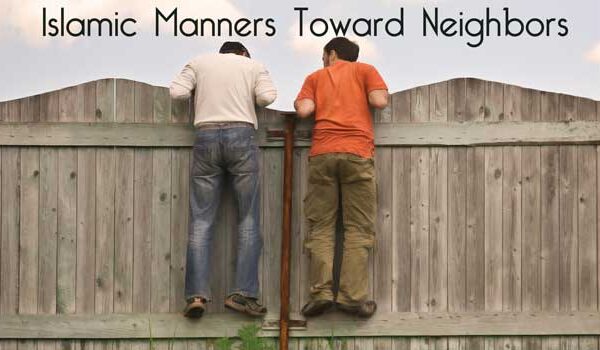
    Islamic Manners Toward Neighbors

    The essence of Islam is tawheed (pure Islamic monotheism), and one’s firm belief in tawheed is represented in the shahadah, the declaration of faith, that “there is no deity worthy of worship except Allah, and that Muhammad is the messenger of Allah.” However, belief and faith are hollow if not coupled with good actions, as Allah mentions in the Qur’an, “…except those who believe and do righteous deeds, for them is a reward never-ending” (Qur’an, 84:25). And, similarly, in another verse, we are told: “Verily, those who believe and do righteous deeds, for them will be Gardens under which rivers flow. That is the great success” (Qur’an, 85:11). In these two verses, and many others similar to them, Allah connects good deeds and actions to faith. Eman, or faith, is deficient without good actions, and this includes good manners. Indeed, the Messenger of Allah said in an authentic hadith reported by Al-Bukhari and in the Musnad of Imam Ahmed, “I have only been sent to perfect good manners.”

    Good and proper manners apply to a broad spectrum of relationships and situations starting, first and foremost, with the proper manners toward Allah, the Mighty and Majestic, and toward His deen of Islam. This is followed by manners toward the Messenger of Allah (peace and blessings be upon him) and his sunnah, as well as manners toward others such as parents and family, co-workers, neighbors, Muslims and non-Muslims, etc. Therefore, the subject of manners is a subject that cannot be taken lightly. Regarding proper manners toward the neighbor, Allah mentions in the Qur’an, “Worship Allah and join none with Him; and do good to parents, kinsfolk, orphans, the needy, the neighbor who is near of kin, the neighbor who is farther away, the companion by your side, the wayfarer, and those [slaves] whom your right hands possess. Verily, Allah does not love the one who is proud and boastful” (Qur’an, 4:36).

    We can look at some detail as to the importance of good relationship with one’s neighbor in light of the Book of Allah and the authentic ahadith (narrations) of the Messenger of Allah (peace and blessings be upon him). This helps us to establish a better understanding of the significance and value of good manners toward the neighbor, and how this aids us in coming closer to Allah through knowledge and implementation of this wisdom.

    Being a Great Neighbor is Part of Eman

    Islam places a great emphasis on the relationship with one’s neighbors. This is naturally so, since the neighbor is one of the people you will most frequently see, run into, or interact with on a daily basis. The neighbor, regardless of his or her religious affiliation, holds a special status in Islam. A Muslim’s good relationship with his neighbor will increase him in virtue and ultimately bring him closer to Allah. This relationship is to be full of kindness, concern, sensitivity, trust, and patience. Strictly forbidden is any harm or malice toward the neighbor. Abu Hurairah narrated that the Prophet (peace be upon him) said, “Whoever believes in Allah and the Last Day should not hurt his neighbor; and whoever believes in Allah and the Last Day should serve his guest generously; and whoever believes in Allah and the Last Day should talk what is good or keep quiet” (Saheeh al-Bukhari).

    In another hadith, narrated by Abu Shuraih, the Prophet said, “By Allah, he does not believe! By Allah, he does not believe! By Allah, he does not believe!” It was said, “Who is that, O Allah’s Apostle?” He said, “That person whose neighbor does not feel safe from his evil” (Sahih Al-Bukhari). These ahadith emphasize that a good relationship with one’s neighbor is tied to faith. A Muslim who harms his neighbor by any fashion is deficient in his faith because he is neglecting his duty towards Allah and his final meeting with Him.

    The Status of the Neighbor

    There many examples from the teachings of the Messenger of Allah regarding the neighbor. However, one that sums up what a neighbor’s status is in the life of a Muslim is the hadith narrated by Aisha (may Allah be pleased with her) who reported that the Messenger of Allah (peace and blessings be upon him) said, “Jibreel continued to advise me (to be good to my) neighbor until I thought that he was going to make him my heir” (Bukhari). Islam gives such a lofty status to the neighbor that Jibreel reiterated the importance of treating them with good manners time and time again; so much so that the Prophet (peace and blessings be upon him) thought that they would reach the status similar to one’s own family and ultimately be given rights of inheritance.

    How to Be a Good Neighbor in Light of the Prophetic Traditions

    Honoring and respecting one’s neighbors is manifested through the actions toward them, through acts of kindness and compassion. It is narrated from Aisha (may Allah be pleased with her) that she once asked the Prophet (peace and blessings be upon him), “O Messenger of Allah, I have two neighbors, so to whom shall I send a gift?” He replied, “To the one whose door is closer to yours” (Saheeh al-Bukhari). It is clear that Islam encourages not only to be kind to our neighbors, but also to give them gifts as a means of showing one’s caring and maintaining a good relationship or friendship. The Messenger of Allah (peace and blessings be upon him) mentioned in another hadith reported in the Saheeh of Imam Muslim, “If you cook some broth, add extra water and send some to your neighbor.”

    A Muslim does not neglect his neighbor and we are taught, in fact, that a Muslim who goes to sleep with his belly full while his neighbor is suffering from hunger is deficient in his eman. Imam al-Bukhari and Imam at-Tabarani reported that the Messenger of Allah said, “He is not a believer, who eats his fill while his neighbor is hungry.” In another narration reported by at-Tabarani and Al-Bazzar, the Prophet said, “He does not believe in me, who eats his fill while his neighbor beside him is hungry and he knows about it.” Muslims are keen to lend a helping hand and show kindness and caring in whatever way they can.

    Smiling at our neighbors is a form of charity for which Allah rewards a Muslim. Shaykh Muhammad bin Salah al-Uthaymeen mentioned in his book, Makaarim al-Akhlaaq (Upright Moral Character), “The third kind (of upright moral character) is to greet the people with a pleasant smile, as oppose to frowning at them. The Prophet (may Allah raise his ranks and grant him peace) said, ‘Do not look down on any act of kindness, even if it is just meeting your brother with a pleasant smile on your face.’” He continues, “A pleasant smile causes people to become happy, wins over their love and affection, and leads to both parties having good thoughts of each other. Just try it and you will see!” This simple action has a tremendous effect on the hearts of people.

    Muslims are to be a source of comfort, security, and safety for the neighbor. One’s neighbor should feel safe in his presence and be secure that a Muslim will honor his rights and protect his home. One story from among our pious predecessors is the story of Sa’eed ibn al-‘Aas and his neighbor. Sa’eed’s neighbor wished to sell his home for 100,000 dirhams, out of necessity. A man was interested in the house and the seller said to him, “This (100,000 dirhams) is the price of the house, but what would you pay to have Sa’eed ibn al-‘Aaas as your neighbor?” When Sa’eed heard about this, he sent his neighbor 100,000 dirhams and told him to keep his home (Muhammad Al-Hashimi, The Ideal Muslim). This story is an example of what it means to be a good Muslim neighbor. The neighbor valued his relationship with Sa’eed ibn al-‘Aas and knew that anyone would want to live next to him. And there is another layer of meaning in that Sa’eed, once aware that his neighbor was selling his house out of necessity, paid the neighbor the price of the house so that he could remain in his home!

    Final Thoughts

    The goal of each and every Muslim is to please his Creator by any means possible. A Muslim’s worship and obedience to Allah, through His Mercy, will ultimately lead him to reside in Paradise with the best of creation. Salah or fasting are profound acts of worship and obedience. Having good manners and maintaining good relations with neighbors are also acts of worship and obedience. The beauty of Islam is that even one’s everyday interactions with other people, if done with the intention to please Allah, are considered worship and obedience.

    A Muslim who adheres to the sources of Islam, the Qur’an and the Sunnah, is knowledgeable about the teachings of Islam as well as being dedicated to implementing those teachings in his or her everyday life. Among the many relationships a Muslim has in his lifetime is his relationship with his neighbors. Honoring the neighbor through good manners and actions is a source of joy and happiness for both parties involved. Demonstrating just how profound is the relationship with one’s neighbor, the Messenger of Allah said, “None has faith until he loves for his brother or his neighbor what he loves for himself” (Sahih Muslim).

  • Mami, soy un musulmán ahora

    Mami, soy un musulmán ahora

    A primera instancia de aceptar el Islam, un nuevo musulmán siente una sensación de enorme alegría, orgullo y entusiasmo. Él o ella quieren hacer todo en su capacidad para aprender y mantenerse firme en este camino del Islam con el permiso de Alá. Su objetivo es ser el mejor musulmán que pueden ser. Algunos de nosotros dejamos todos los vicios por la causa de Alá de la noche a la mañana.
    Yo me acuerdo cuando acepte el Islam, recién comenzaba mi tercer año de la universidad. Yo declaré la shahada (el testimonio de fe) e inmediatamente comencé a vestir un gorro kufi blanco y un pañuelo Saudí. Arranqué de la pared el cartel del rapero Eminem, así como los otros carteles de la cultura de hip-hop. De inmediato dejé de socializar con mis amigas mujeres y comencé a aislarme. Crecí mi barba y me aseguré de nunca faltar mis oraciones, como cualquier musulmán nuevo lo haría y debe hacer.
    Recuerdo que fui a mi casa ese fin de semana y entré a la habitación de mis padres. Ese sábado por la noche ambos estaban acostados en su cama viendo una película. Les dije que tenía algo que contarles. Cuando sus ojos y oídos se enfocaron en mí, les dije con mucho honor y orgullo: “Mamí, Papí, ahora soy musulmán”. Yo estaba feliz y emocionado de haber encontrado un llamado, especialmente uno que estaba relacionado con la creencia en el Creador. Mi madre pasó a compartir mi alegría y dijo: “Si eso es lo que deseas creer, pues está muy bien, siempre y cuando encuentres a Dios”.
    Mi padre no fue tan comprensivo; él me dijo, “Está bien, pero, ¿por qué ahora?” Yo había aceptado el Islam durante una época muy controversial en la historia de los EE.UU. y la preocupación de mi padre era genuina debido a los factores que estaban cambiando la situación para los musulmanes en ese momento. Sin embargo, mi confianza en ser musulmán aumentó y no me preocupe de nada.
    Este alto estado de fe me duró poco tiempo, como le suele pasar a muchos de los nuevos musulmanes. Igual de rápido que me puse el kufi y quité los carteles, sentí que el mundo me jalaba de nuevo hacia abajo. Sin un mentor ni guía para alimentar el entusiasmo por el Islam en una manera correcta, siendo un nuevo musulmán se pone difícil y frustrante.
    Donde había una vez el sonido de “takbir” y “Allahu Akbar” en el aire después de tomar tu shahada en frente de una multitud de gente, ahora solo queda el sentimiento de abandono, y las susurras de tu pasado. Además de las luchas internas, hay factores externos que afectan el camino de un nuevo musulmán. Muchos musulmanes tienen que defenderse por sí solos, tras ser rechazados por sus familiares y amigos. Conozco a una hermana que aceptó el Islam y después de informarle a sus padres, la botaron de la casa. Otra hermana fue encerrada en el sótano de su casa. Estas son las polémicas que enfrentamos.
    Pero nuestras adversidades no siempre comienzan con la familia y amigos no musulmanes. Muchas veces, son los propios musulmanes que le imponen a un nuevo musulmán sus bagajes culturales, opiniones y veredictos cuando esa persona no está preparada. Es increíble que un nuevo musulmán ni siquiera sabe cómo rezar y adorar a su Señor correctamente, y sin embargo ya le estén haciendo sugerencias sobre el matrimonio e imponiéndole veredictos islámicos.
    Por ejemplo, había una historia de una hermana latina que aceptó el Islam y ella tenía un perro como mascota por muchos años. Su perro era todo para ella; sin embargo, las hermanas musulmanas comenzaron a decirle que el perro era un Shaitan (demonio), debido a su pelo negro, y que no era permisible tener un perro. Esta nueva musulmana no pudo aceptar esto y dejó el Islam. En otro caso, un hermano de Chicago se convirtió, pero decidió dejar el Islam porque no podía conectarse con la comunidad.
    ¿Cuántas veces los musulmanes se acercan a los conversos recientes y antes de enseñarles acerca de su relación con su Creador o mostrarles cómo rezar, les dicen: “Necesitas cambiar tu nombre”? Esto le ocurrió a un hermano latino llamado José, ¡Aunque su nombre es el equivalente en español del nombre del Profeta Yusuf mencionado en el Corán! Entiendo que las intenciones pueden ser puras, pero la manera que se presenta es incorrecta y las prioridades están distorsionadas. Es importante que tanto el musulmán veterano como el nuevo musulmán tomen un segundo para retroceder, respirar y considerar los siguientes puntos:
    O nuevo musulmán…
    Recuerda que Alá te ha escogido para seguir este camino. Es el camino de las personas más excepcionales que han recorrido este planeta. Es el camino que Alá ha prescrito para toda la humanidad. En el Islam, como en otras situaciones, el empoderamiento viene con una gran responsabilidad y desafíos. En la vida de jahiliyyah (la ignorancia), Shaitan estaba complacido contigo. Pero ahora que has elegido ser una persona que adora a Alá solamente, Shaitan hará todo lo posible para traerte de vuelta. Lo curioso es que está haciendo el trabajo que Alá le ha prescrito. Todo esto es simplemente una prueba para separar a los creyentes de los incrédulos, y para distinguir a los sinceros de los mentirosos.
    Alá dice en el Corán:
    “Piensan los hombres que se les dejará decir: ‘¡Creemos!’, sin ser probados? Ya probamos a sus predecesores. Alá, sí, conoce perfectamente a los sinceros y conoce perfectamente a los que mienten.” (29:2-3)
    Alá prueba a los creyentes mucho más que a los que no creen. Mira las historias de los Profetas y Mensajeros de Alá. Eran los más cercanos a Él, sin embargo, fueron afligidos con pruebas inimaginables. Reflexiona sobre Noé, Abraham, Moisés, Jesús, y Muhammad como ejemplos. No podemos ni empezar a comprender sus luchas, sin embargo, fueron los más amados por Alá. ¿Por qué fueron probados tan severamente? Para elevar su estatus ante los ojos de Alá. No es diferente para nosotros.
    O, Nuevo musulmán…
    ¿Alguna vez has pensado por qué le pedimos a Alá que nos guíe 17 veces al día? Es porque, aunque ya hemos sido guiados, la vida hará lo que sea posible para quitarnos de este camino. En algún momento de nuestras vidas anteriores le hemos pedido a Alá que nos guie, pero esa súplica nunca termina. Siempre necesitaremos Su guía y ayuda. Debemos continuar profesando nuestra devoción a Alá e implorándole que nos mantenga firmes en este camino. Sí, muchos de nosotros estamos atravesando por serias dificultades. Algunas peores que otras, pero recuerden que Alá no los abandonó cuando no éramos musulmanes; ¿Qué nos hace pensar que nos abandonaría ahora, siendo creyentes?
    O musulmán veterano…
    Recuerda que los musulmanes latinos, y otros nuevos musulmanes, desean ser parte de la hermandad más grande del Islam; sin embargo, esto no significa que quieren ser árabes o seguir costumbres que son distintas del Islam. Si no se encuentra en el Corán y la Sunnah a través de la transmisión auténtica, entonces no necesita contarlo. Entiende que un nuevo musulmán no está listo para aprender todo en un día o convertirse en un estudiante de conocimiento, Sheij o Alim inmediatamente. Él o ella es como un bebé recién nacido. Se le necesita alimentar, cuidar y enseñar a gatear antes de que pueda caminar. Concéntrate en los aspectos más importantes del Din, como cultivando una relación con el Creador. Enséñales cómo hacer wudu apropiadamente, cómo orar, cómo decir algo de athkaar (las súplicas) – estas son las cosas que le pueden ayudar a construir su carácter e identidad islámica.
    No les digas que tienen que cambiar sus nombres o casarse en el primer día. Enséñales poco a poco. Y más importante que nada, cuando tomen su Shahada, no grites, “Takbir, Allahu Akbar”, y les beses en la mejilla izquierda y derecha, les des un abrazo, digas “Masha’Allah”, y luego nunca les vuelvas a hablar. Un nuevo musulmán está buscando ser aceptado y sentirse como si pertenecen a la comunidad. Anímalo a venir a la mezquita, recógelo de su casa y llévalo a la mezquita, a las clases o a cenar.
    Una de las lecciones más importantes que encontramos en la historia de la vida del Profeta, que la paz sea con él, es la mu’akhaah (la hermandad) que el Profeta formó entre los Muhajirun (los que emigraron de La Meca a Medina) y los Ansar (Los habitantes de Medina que recibieron a los emigrantes). Él emparejó a un musulmán de los Muhajirun con un musulmán de los Ansar cuando emigraron a Medina para establecer un nivel de amor y solidaridad entre ellos. Esto fue tan profundo y poderoso que aprendemos y conocemos historias sobre cómo los Ansar estaban dispuestos a compartir todo sin pensarlo dos veces con sus nuevos hermanos en el Islam. Esa es la verdadera hermandad y es lo que falta en nuestro tiempo.
    Nos faltan grupos de apoyo, mentores, consejeros, clases y otros programas para que el nuevo musulmán cultive su Islam. Las comunidades musulmanas deben hacer todo lo posible para establecer estos lugares para los nuevos musulmanes.
    Además, los nacidos musulmanes necesitan entrenamiento de sensibilidad cultural para entender a los musulmanes latinos. No todos los latinos son mexicanos o puertorriqueños o comen tacos. Es extremadamente ofensivo generalizar. Te diré que en el fondo, me duele. Duele cuando sabes que el Islam es una hermandad, pero los musulmanes caen a 100 metros de la meta. Es muy triste.
    No sabes cuántas veces mis hermanos musulmanes suponen que soy mexicano o que como tacos. Ustedes no saben cuántas veces otros chicos musulmanes les han llamado a mis hijos nombres como “Pedro” y “Pablo” para burlarse de ellos. Mis hijos se llaman Muhammad y Uthman por el Profeta mismo y por el gran compañero y califa. Tú no sabes cuántas veces la gente ha pensado que yo estaría dispuesto a trabajar en una tiendita o como obrero para un salario mínimo o que conozco a alguien que lo haría, simplemente porque soy latino. Nunca te has tomado el tiempo para conocerme. Si lo harías, entonces supieras que soy un ingeniero profesional, educado en la universidad, y que nací y me crie en los Estados Unidos.
    O, los musulmanes veteranos… duele.
    Cuando te pregunten, ¿qué necesitamos hacer para los nuevos musulmanes? Yo diría mucho. Pero comienza con la mu’akhaah (hermandad), el sincero deseo de fraternidad sin barreras, sin discriminación, sin condiciones previas. Comienza simplemente con el Islam.
    O, Nuevo musulmán…
    Ante todas las luchas que enfrentes, recuerda por qué aceptaste el Islam. Muy pocos de nosotros entramos al Islam por complacer a alguien; más bien, llegamos al Islam debido a nuestra propia reflexión profunda. Cuando las cosas se ponen difíciles, no te olvides la razón por que aceptaste el Islam desde el principio. Esta vida, este mundo y sus alrededores nos distraen. Shaitan está trabajando extra fuerte para desviarnos del camino del Islam. No te rindas. Nos encontraremos con dificultades a pesar de todo; por lo tanto, la mejor respuesta es mejor enfrentarlo con paciencia y confianza en nuestro Señor. No esperes que alguien te tenga por la mano y te guíe por el túnel o el camino. Debes ser proactivo y tomar la iniciativa para aprender y aumentar tu conocimiento. Esto te aumentará tu tawakul (confianza) en Alá y tu sabr (paciencia y perseverancia).
    O, musulmanes veteranos…
    Haz lo mejor que puedas para establecer avenidas para que los nuevos musulmanes se sientan amados y como parte de la familia. Vive el ejemplo de los compañeros y construye esa ukhuwah (hermandad). Abdullah bin Omar narró que el Profeta de Alá, que la paz sea con él, dijo, “Un musulmán es un hermano de otro musulmán…” (Bujari).
    Esta es una oportunidad para ganar recompensas que realmente podrían beneficiarte hasta el Día del Juicio, incluso después de le la muerte. No pierdas la oportunidad por ser sentencioso, dominante o grosero. Recuerda que muchos de nosotros estamos viniendo de situaciones difíciles, algunos sin hogar y sin el apoyo de nuestras familias. Los estamos buscando para que nos acepten. Recuerda de querer para tu hermano lo que quieres para ti mismo, y el resto caerá en su lugar, insha’Allah.

  • Mom, I Am a Muslim Now

    Mom, I Am a Muslim Now

    At the first instance of embracing Islam, the new Muslim feels a sense of overwhelming joy, pride, and zeal. He or she wants to do everything in their capacity to learn about Islam and stay firm upon this path, by Allah’s permission. Their goal is to be the best Muslim they can possibly be. Some of us, from one night to the next, give up vices, all for the sake of Allah.
    I remember when I first embraced Islam, I had just started my third year of college. I declared the shahada and before I knew it, I was wearing a white kufi and Saudi kufayyah. I ripped the Eminem poster off my wall as well as other posters of the hip-hop culture. I immediately stopped socializing with female friends and began spending more time reflecting on life. I started to grow out my beard and make sure that I was on top of my prayers, like any new Muslim would and should.
    I remember going home that first weekend and walking into my parents’ room. They were laying on their bed, watching a movie on a Saturday night. I said that I had something to tell them. With their eyes and ears on me, I said, “Mom, Dad, I am Muslim now!” I said it with a great sense of pride and honor. I was happy to have found a calling, especially one that was related to belief in the Creator. My mother went on to share in my joy and said, “If that is what you want to believe in, then great, as long as you found God.” My father wasn’t so understanding; he said, “That’s okay but why now?” You see, I had accepted Islam during a very controversial time in the history of the U.S. and my father’s worry and concern was genuine due to the hyper-focus on Muslims at that time. Nonetheless, my new sense of confidence due to being Muslim soared, and I was not worried one bit.
    This high, this “eman rush,” was short-lived, as it is with many new Muslims. As fast as that kufi went on my head and the posters came down, I felt the world pulling me back in. With no true mentors or guidance on how to nurture one’s Islamic zeal in a correct manner, being a new Muslim often becomes difficult and frustrating. Where there was once the sound of “takbeer” and “Allahu Akbar” in the air after taking your shahada in front of a crowd, you are now left alone, feeling somewhat abandoned, with the whispers of your past trying to pull you in again. In addition to one’s inner struggles, there are often external factors that affect a new Muslim’s journey. Many Latino Muslims are left to fend for themselves, shunned by their family members and friends. I know one sister who embraced Islam and after informing her family, they expelled her from her house. Another sister was locked up in her family’s basement. These are the real struggles that we face.
    But our adversities do not always start with non-Muslim family and friends. Many times, it is the Muslims themselves who impose upon a newly minted Muslim and bombard him/her with cultural baggage, opinions, and rulings that the person is not ready for. It is incredible that a new Muslim does not even know how to pray and worship their Lord properly, yet they are already fielding suggestions for marriage and trying to navigate peer and/or community pressure. For example, there was a story of a Latina sister who embraced Islam and she owned a pet dog for a very long time. Her dog meant everything to her. However, Muslim sisters began telling her that the dog was a shaytaan (devil) due to its black color, and that dogs are not allowed in the house. This new Muslimah could not cope with this and left Islam. In another instance, a brother from Chicago converted but decided to leave Islam because he could not connect with the community.
    How many times do Muslims approach recent converts and before teaching them about their relationship with their Creator, and showing them how to pray, they tell them, “You need to change your name”? This occurred to a Latino brother named Jose, even though his name is the Spanish equivalent of Yusuf, our Prophet mentioned in the Quran! I understand that the intentions may be pure, but the approach is wrong and the priorities are twisted. It is important for both the seasoned and the new Muslim to take a second to step back, breathe, and consider the following points:
    O, New Muslim…
    Remember that Allah has chosen you to follow this path. It is the path of the greatest people ever to walk this planet. It is the path that Allah has prescribed for all of mankind. In Islam, as in other situations, empowerment comes with a great amount of responsibility and challenges. You see that before, in the life of ignorance (jahiliyyah), Shaytaan was pleased with you. But now that you have chosen to be a person who worships Allah alone, Shaytaan will do everything he can to try to bring you back. The funny thing is that he is doing the job that Allah has prescribed for him. All of this is simply to test you and to separate the believers from the disbelievers, to separate the truthful from the liars. Know that Allah says in the Quran, “Do the people think that they will be left to say, “We believe” and they will not be tried? But We have certainly tried those before them, and Allah will surely make evident those who are truthful, and He will surely make evident the liars” (29:2-3).
    Allah tests those who believe much more than those who do not. Look at the stories of the Prophets and Messengers of Allah. They were the closest to Him, yet they were tested with trials that are unimaginable. Reflect on Nuh, Ibrahim, Musa, Isa, and Muhammad as examples. We cannot begin to fathom their struggles, yet they were the most beloved to Allah. Why would they be tested so severely? It was only to elevate their status in the sight of Allah. It is no different for you and me.
    O, New Muslim…
    Have you ever stopped to think why we ask Allah to guide us so many times a day? It’s because, even though we have been guided, life will do what it can to take us off this path. At some point in our lives we asked Allah for guidance, but that supplication never ends. We will always need His guidance and help. We must continue to profess our devotion to Allah and implore Him to keep us firm upon this way of life. Yes, many of us are going through serious difficulties. Some are worse than others, but remember that Allah did not abandon you when you were a non-Muslim; why would He abandon you when you have embraced His deen?
    O, Seasoned Muslims…
    Remember that Latino Muslims, and other new Muslims, are yearning to be part of the larger community (ummah) of Muslims; however, this does not mean they want to be Arabized or follow cultural traditions that are distinct from Islam. If it is not found in the Quran and the Sunnah through authentic transmission, then it does not need to be told. Understand that a new Muslim is not ready to learn and digest everything at once. He or she is like a newborn baby. They need to be nurtured, cared for, and taught how to crawl before they can walk. Focus on the most important aspects of the deen such as how to cultivate a relationship with the Creator. Teach them how to make wudu properly, how to pray, how to say some athkaar (plural of dhikr or remembrance of Allah) — these are the things that can help them to build their Islamic character and identity.
    Don’t tell them about changing their names or getting married on day one. Spoon feed them, little by little. Most importantly, when they take their shahada, don’t shout, “Takbeer, Allahu Akbar,” kiss them on the left and right cheek, give them a hug, say masha’Allah — and then never speak to them again! A new Muslim is looking to be accepted and feel like they belong. Encourage them to come to the masjid, pick them up from their house and take them to the masjid, to classes, or out for dinner.
    One of the most important lessons we find in the seerah of the Prophet (pbuh) is the mua’akhaah (brotherhood and sisterhood) that the Prophet (pbuh) formed between the Muhajiroon (those who emigrated from Makkah to Madinah) and the Ansar (the Muslim residents in Madinah who helped the Muslims upon arrival). He paired a Muslim from the Muhajiroon with a Muslim from the Ansar to establish a level of love and solidarity with each other. This approach was so deep and powerful that we learn about how the Ansar were willing to share everything, with no hesitation, with their new brothers and sisters in Islam. This is true mua’akhaah. This is what is missing in our time.
    We lack support groups, mentors, counselors, classes, and other programs for the new Muslim to cultivate his Islam. Muslim communities should do everything in their power to establish these venues for new Muslims. In addition, born Muslims need cultural sensitivity training to understand the Latino Muslim. Not all Latinos are Mexican or Puerto Rican or eat tacos. It is extremely offensive to generalize. I will tell you that deep down inside, it hurts. It hurts when you think that Muslims all support and nurture a unified and caring community; yet the Muslims fall 100 yards away from their goal post. It’s quite sad.
    You don’t know how many times Muslims have assumed that I’m Mexican or that I eat tacos. You don’t know how many times my Latino Muslim sons have been bullied by other Muslim boys and called names like “Pedro” or “Pablo.” Their names are Muhammad and Uthman, after the Prophet himself and after the great companion and khalifah. You don’t know how many times people have thought that I would be willing to work in a convenience store for minimum wage or that I know someone who could, simply because I’m Latino. You never bothered to get to know me. If you did, then you would know I am a university-educated, professional engineer, who was born and raised in America.
    O, Seasoned Muslims…
    When asked, what do we need to do for the new Muslim population? I say, a lot. But it starts with the mua’akhaah, the sincere desire for brotherhood and sistserhood without barriers, without discrimination, without preconditions. It starts, simply, with Islam.
    O, New Muslim…
    In the face of all the struggles you encounter, remember why you embraced Islam. Very few of us come into Islam because of someone; rather, we come into Islam due to our own deep reflection. When things get tough, don’t forget why you accepted Islam in the first place. This world, this life and its surroundings get the best of us. Shaytaan is working extra hard to make us sway from the blessed path. Don’t give up or give in. We will encounter trials and tribulations no matter what; the best response is to deal with it through patience and trust in our Lord. Don’t expect someone to hold you by the hand and walk you through the tunnel. You should be proactive and take the initiative to learn and increase your knowledge. This will enable you to increase your tawakkul (trust) in Allah and sabr (patience and perseverance).
    O, Seasoned Muslims…
    Do your best to establish opportunities for new Muslims to feel loved and part of the family. Live the example of the companions and build that fellowship. Abdullah bin Umar narrated that the Messenger of Allah said, “A Muslim is a brother of another Muslim…” (Sahih Al-Bukhari).
    This is an opportunity to earn rewards that could truly benefit you until, during, and after the Day of Judgment. Don’t blow it being judgmental, overbearing, or imposing. Remember that many of us are coming from difficult circumstances, some without homes, some who have been rejected by their families. We are looking to you to accept us. Remember to love for your brother or sister what you love for yourself, and the rest will fall into place, insha’Allah.

  • Latinos Accepting Islam: A Return to Their True Heritage

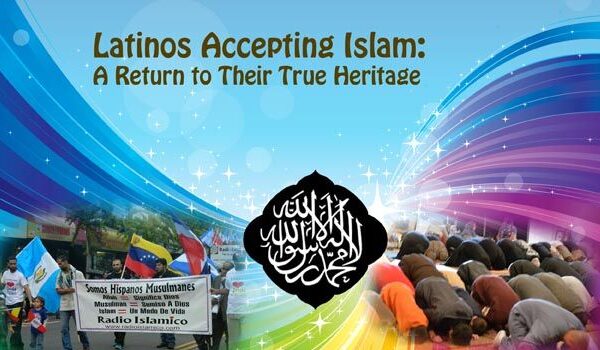
    Latinos Accepting Islam: A Return to Their True Heritage

    The vast majority of Latinos are Roman Catholic due primarily to their culture or upbringing. But many of these inhabitants of North, South, and Central America are uncomfortable and disenchanted with the various beliefs and practices of the Catholic Church, including the emphasis on saints, doctrines such as the Trinity, praying to Mary (according to Catholic doctrine, it is “through” Mary as an intercessor who prays to God on behalf of the supplicant), and original sin, issues related to Church hierarchy, and lack of implementation of religious practices by many Catholics.

    It has been reported in The Catholic Almanac that an estimated 100,000 Hispanics or Latinos leave the Catholic Church every year in the U.S. alone. Whether they choose to accept Islam or not, they are engaged in a search for greater spiritual satisfaction and a sense of purpose. Islam is the answer for many due to its simplicity and its teaching of a direct relationship between an individual and Allah, with no intermediary such as Jesus (as considered by Catholicism as the son of God) or a priest. When they find that Islam teaches the message of pure monotheism and promotes a belief in the true and original teachings of Jesus as a man and a prophet of God, they are attracted and want to know more. The following are some additional reasons why Latinos are drawn to Islam.

    Islam teaches that the human being is born with an innate nature of purity and primal inclination to tawheed.

    Natural Inclination

    Islam teaches that the human being is born with an innate nature of purity and primal inclination to tawheed (oneness of God; monotheism). This natural disposition, fitrah in Arabic, is in complete harmony with the beliefs and practices of Islam. Every single person is born upon the fitrah as a Muslim or, by definition, one who submits to God, but it is their parents or society who turns them away. Allah says in the Qur’an in Surah Al-Araf: “And (remember) when your Lord brought forth from the Children of Adam, from their loins, their descendants and made them testify as to themselves (saying), ‘Am I not your Lord?’ They said: ‘Yes! We testify!’ [This] lest you should say on the Day of Resurrection, ‘Verily, we have been unaware of this’” (Qur’an 7: 172).

    Human beings intuitively know that there is something greater than themselves, a supreme power or being. Many people who do not affiliate with a particular religion or church still believe in a Creator, so much so that in times of despair they call upon God to help them, as described in the Qur’an in Surah Yunus: “He it is Who enables you to travel through land and sea, till when you are in the ships and they sail on in them with a favorable wind, and they are glad therein, until comes a stormy wind and the waves come to them from all sides, and they think that they are encircled therein, they invoke Allah, sincere in their faith in Him Alone, saying: ‘If You deliver us from this, we shall truly be of the grateful’” (Qur’an 10:22).

    When Latinos feel some doubt about the faith they were born and raised in, still yearning to know the purpose of life and answers to questions about the origin and destiny of man, some seek knowledge about other faiths. When they encounter Islam, they find the answers to their questions and they find that the belief system makes perfect sense.

    Belief in Tawheed

    Latinos without a doubt believe in a Creator or Higher Being due to their culture and heritage. When they are introduced to Islam through various means, they begin to truly appreciate the importance of tawheed or the Oneness of Allah. Even though they were taught that Christianity is a monotheistic faith, they can clearly see the difference between the Christian doctrine of God as a Trinity (and the irreconcilable contradiction of “one God in three persons”) and God as one, absolute, indivisible, and transcendent being. And further, they see that the Islamic belief of tawheed with its corollaries such as one universal truth and one human family, are put into practice by Muslims.

    True Practice of Faith

    In Catholicism and Protestant Christianity, there are principles taught which are not necessarily implemented or even encouraged. For example, Mary, the daughter of Imran (the Virgin Mary), has been depicted as wearing a head covering or hijab in many paintings and statues that adorn churches and cathedrals all over the world. Even in the Christian scripture, the issue of a woman covering her hair has been addressed. However, this modesty and the desire to emulate the most pious woman in Christianity is not taught or promoted. In Islam, on the other hand, it is an obligation upon every Muslim woman to wear a head covering and to dress modestly so that her physical form is not revealed, as commanded by Allah in the Qur’an. As a matter of fact, only a few decades ago in Latin American countries, women used to wear a head covering when they went to the church, and a general modesty of dress was the custom. Today this practice is slowly fading.

    Latinos without a doubt believe in a Creator or Higher Being due to their culture and heritage.

    No Intermediaries

    Islam teaches that each individual has a direct and personal relationship with Allah, and no intermediary such as a priest is needed to worship God, to ask for forgiveness, or be saved from punishment in the Hereafter. In the Catholic Church, if one commits a sin, he/she must seek atonement through confession, disclosing the sin committed to a priest who then gives a “prescription” of a number of prayers that must be performed in order for God to accept repentance. Another example of needing an intermediary is found in protestant churches, particularly evangelical churches: Worshippers obtain “salvation” for their sins through accepting Jesus (the “son of God”) as their savior and being “anointed” or “born again” through this process. In Islam, worship is profoundly fulfilling as the five daily prayers, as well as supplications, are communicated directly to Allah who is “…nearer to him than his jugular vein” (Qur’an 50:16).

    A Religion of Balance and Moderation

    Islam is a faith of moderation. The Qur’an says, “Thus We have willed you to be a community of the middle way…” (2:143). This is a Divine exhortation to establish moderation in every aspect of life, avoiding the extremes of both worldliness and excessive asceticism. It is a perfect balancing of both spiritual and material existence, as can be found by studying the lives of Prophet Muhammad, peace be upon him, and his companions. Islam does not require or even condone disassociation from the world; it simply requires that a Muslim live in the world according to the ethical principles and character virtues espoused by Islam.

    Cultural Similarities

    There are many Islamic influences that had a part in the cultural shaping of Latin America. And many Latinos feel a strong historical connection to the Islamic heritage found in the classical Islamic period in Spain, as well as by recognizing that Muslim slaves were brought from Africa to Latin America and there is a documented Muslim presence in the Americas prior to Columbus. Through learning about the Spanish Inquisition and the Spanish conquest of indigenous lands in the Americas, and forced conversions of Muslims, Jews, and indigenous peoples to Christianity, many Latinos feel that by accepting Islam, they are reclaiming their true religious heritage.

    Language

    The Spanish language has been greatly influenced by Arabic. During the almost 800 years in which most of Spain was under Islamic rule, its inhabitants spoke both Spanish and Arabic. Approximately 30 percent of words in the Spanish language, equivalent to roughly 6000 words, have an Arabic origin. Some examples are alfombra (rug), café (coffee), batata (potato), algodon (cotton), algebra (alegbra), azucar (sugar), aceituna (olive), ojala (God willing), sofa (sofa), and arroz (rice). Also names (both first names and surnames) such as Omar, Fátima, Benjamín, Medina, Alvarez, Guadalupe, Benalcazar, to name a few, are Arabic in origin.

    Poetry

    Flamenco, a style of music with its origins in Southern Spain, is said to have been created as a way to camouflage Qur’an recitation, and its lyrics describe the acts of persecution that were brought upon the Muslims by the Christians. Flamenco was mainly established around 1499 C.E., during the Spanish Inquisition, when Muslims were either expelled or forced to abandon their belief in Allah and accept the religion of the New Spain. Muslims would hide their faith and secretly recite the Qur’an, fearing persecution by the Spanish authorities. Although guitar was introduced to flamenco songs in the 19th century, they were originally performed without instruments, similar to Arabic poetry. In flamenco, the waves of vibration and sound are reminiscent of Qur’anic recitation.

    Physical Features

    Many Latinos realize the physical resemblance they have with Arabs, South East Asians, and Africans. This drives them to find out more about their genealogy, resulting in many discovering their ancestral ties with Muslims and arousing their curiosity to learn about Islam.

    Family Values in Islam

    There are significant parallels between Latinos and Muslims in their family values. Islam teaches high respect for parents. Allah says in Surah Al-Isra: “And your Lord has decreed that you worship none but Him. And that you be dutiful to your parents. If one of them or both of them attain old age in your life, say not to them a word of disrespect, nor shout at them but address them in terms of honor. And out of kindness, lower to them the wing of humility, and say: ‘My Lord! bestow on them Thy Mercy even as they cherished me in childhood’” (Qur’an 17:23-24).

    There are many other examples of the importance of family in the narrations or ahadith of our beloved Prophet. In an authentic hadith found in Bukhari and Muslim narrated by Abdullah Ibn Masood, he asked the Prophet, peace be upon him, “Which action is the most beloved to Allah?” The Prophet replied, “Salat (prayer) on time.” Ibn Masood asked “Then what?” He replied, “Kindness to your parents.” The Latino culture, likewise, teaches obedience to parents and respect of elders. Even neighbors or friends who are not part of the immediate family are considered cousins and are treated with respect. This is an Islamic value as well, where elders are referred to as uncles and aunts, and all Muslims are considered brothers and sisters in faith.

    Latino Customs

    In Latino culture and throughout individual countries in Latin America, there are many interesting customs that have roots in Islam or Muslim culture. For example, many Latinos are averse to killing spiders. This may be related to the story of a spider that helped to save Prophet Muhammad by weaving a web around the entrance of the cave in which he was hiding from those who wished to harm him, prior to his migration to Madinah. Also, there is a saying, “Al que madruga, Dios le ayuda,” which means “Allah helps those who awaken early” (with the implication that one is getting up early for prayer). Other examples are mentioning the name of Allah (God) prior to cooking, saying “Glory to God” after sneezing, belief in the evil eye, stepping out of bed with the right foot first, and many others.

    Community Ethics

    Another reason for the growing wave of Latinos entering Islam is the fact that some Latinos do not see the Church truly supporting the rights of the poor and underprivileged.

    In countries in Central and South America it is common to find poor, homeless individuals sitting on the steps of cathedrals begging, while these places are decorated inside with gold and opulent ornamentation and the priests are dressed in the finest robes. This is discouraging for those who feel the church should be an advocate and source of solace and help for the poor and oppressed.

    In the U.S., Latinos also find Islam to be more sympathetic to their plight as minorities. They see Islam as a religion that truly cares about those who are poor and underrepresented . They can readily identify with Islam due to the Latino struggle for justice and equality being similar to the struggle of African Americans in the Civil Rights era, during which, comparably, many African Americans embraced Islam.

    Islam is, in fact, a religion that promotes racial equality and social justice, appealing to minority groups and all fair-minded individuals. The perfect summary of this equality can be found in Prophet Muhammad’s speech during his last pilgrimage: “All mankind is from Adam and Eve; an Arab has no superiority over a non-Arab nor a non-Arab has any superiority over an Arab; also a white has no superiority over a black nor does a black have any superiority over a white except by piety and good actions. Know that every Muslim is a brother to every Muslim and that the Muslims constitute one brotherhood” (Sahih Bukhari).

    Because of the above cited reasons, which include both historical and cultural factors, many Latinos believe that accepting Islam is a way of returning to their true heritage. It also offers them a new beginning, where they can worship their Creator in a most direct and straightforward way and fulfill their natural spiritual inclinations. Finally, they are able to join the global community of Muslims in their belief in pure monotheism and the experience of genuine brotherhood and sisterhood.

  • El Sumarai Latino

    El Sumarai Latino

    For many people, when they think of martial arts, the first thing that comes to mind is Bruce Lee or Chuck Norris; and when they think of a Muslim, the first image that comes to mind is that of an Arab. So how about a Latino Muslim who is also a martial artist? Something of a samurai Latino, but one who only bows down to Allah SWT —this is who I am.

    Muslims throughout history have had a reputation of being disciplined, strong, and courageous. We can see and learn about this through the stories of the companions

    My parents migrated from Ecuador in the late 70s. In 1980 I was born and eight years later, I found myself in a black uniform and belt, kicking and punching on a green mat in Union City, New Jersey. I had started practicing traditional Tiger Claw Kung Fu and continued to do so all through my youth and teenage years up until my freshman year of college. Martial arts was a major and crucial part of my life because it helped keep me disciplined and focused. I didn’t hang around in the streets like most kids, I didn’t join a gang, or get into trouble because I was too busy focusing on training and maintaining a healthy way of life.

    When I entered college in 1998, I decided to push my training aside and focus on my education. During my college years, I was exposed to Islam and embraced it as my way of life in 2001. As I learned more and more about Islam — worshipping Allah alone and the sunnah of the Messenger of Allah, Muhammad (peace be upon him) — I realized that many of the things we practiced during our Kung Fu training were not acceptable Islamically, including bowing, working out to music, and intermixing with the opposite gender. However, there were other aspects that coincided with Islam such as honor, responsibility, mercy and love, discipline, dedication, perseverance, and loyalty.

    I found no solution to the conflict between the great benefits of training and the aspects of it that were not in accordance with Islam. Fast-forward to 2009. After having married and having two children, I moved to College Park, Maryland. At that time I was very unhappy with the condition of my health. I was 5’4” and over 200 pounds, which is considered obese according to medical standards. I remember thinking that the only way I could change would be if I began martial arts training again. When I started a new job at the local masjid in the administration office, I found out that one of my co-workers was training in the karate program that the masjid hosted. I was so happy that I finally found the opportunity I had been waiting for.

    I went the first day and immediately joined. I dedicated myself the same way I had during my teenage years. I shed 50 pounds and earned my Black Belt in a little over a year, all in an Islamic environment, training with other Muslims brothers, and worshipping Allah along the way. What I found here in College Park was a unique program. It is something that I encourage all communities to strive to establish and invest in to promote discipline, leadership, exercise, and a healthy lifestyle.

    Today, I am one of the head instructors of Aqabah Karate at Dar-us-Salaam/Al-Huda school, coaching in Korean Tang Soo Do and Brazilian Jiu Jitsu. We run a solid program with 11 Black Belts and 5 Black Belt candidates. We have classes for men, women, and children starting as young as 5 years old. It gives our community members an opportunity to exercise and feel good about themselves while learning practical self-defense techniques.

    The Martial Arts: A Great Opportunity

    For many, including myself, Aqabah Karate is more than just an exercise class, a hobby, or an afterschool program; it is a complement to our way of life as Muslims. The Prophet (peace be upon him) said in an authentic hadith narrated by Abu Hurairah, “The strong believer is better and more beloved to Allah than the weak believer, but in both there is good” (Reported in Sahih Muslim).

    Many scholars have stated that this hadith relates not only to faith (eman), but also to physical strength because it is a means to increase eman. Physical well-being allows one to perform more acts of worship. The one who exercises, stretches, and eats right will feel much more energetic and alive compared to the one who does not. This energy contributes to the ability to stand in prayer longer, wake up on time for fajr or tahajud, and do charitable acts and other good deeds.

    In addition, the martial arts bring about so much benefit for the one who engages in the discipline as a journey toward self-mastery. It increases confidence and leadership abilities and develops agility, flexibility, and coordination in the practitioner. And, of course, it provides the practical knowledge of self-defense. Martial arts teaches the practitioner to be humble, respectful, honorable, and one who always strives to maintain self-control, self-awareness, and integrity in all his or her actions; and it provides the tools needed to overcome all obstacles, insha’Allah.

    Too many youth today are involved in sedentary pastimes that have little to no benefit such as video games and television. There is a huge increase in obesity and the associated diseases that affect the heart and digestive system. This is amazing, especially knowing that the Messenger of Allah stated in an authentic hadith, “The son of Adam will never fill a container as something worse and [more] evil than [that of filling] his stomach. It will suffice him some morsels [of food] that will keep him on his feet; otherwise, he should divide his stomach into three parts: one third for his food, the other for his drink, and the other third for his breath” (Ibn Hibban).

    There is a need for programs such as Aqabah Karate in our communities in order to help put a stop to the obesity epidemic. Muslims throughout history have had a reputation of being disciplined, strong, and courageous. We can see and learn about this through the stories of the companions such as Omar ibn al-Khataab, Khalib ibn al-Waleed, Osama bin Zayd, Abdullah ibn az-Zubayr, and many more. When we read about their lives, we learn that they were, in a very real way, true martial artists. They may not have had Black Belts in Karate or Kung-Fu, but they lived by the code of conduct integral to the martial arts — loyalty, obedience, respectfulness, mercy, honor, courage, intelligence, and an indomitable spirit. These are the standards of behavior that Aqabah Karate upholds and passes on to their students.

    Practice of the martial arts is indeed an essential discipline that can bring great benefit to Muslims in this age of sedentary lifestyles and obesity. Strength training and conditioning to build endurance and cardio health; grappling, sparring, and self-defense to increase confidence and acute awareness of one’s surroundings; and general principles to instill leadership, discipline, and honor — these are excellent physical, mental, and character assets for men, women, and children alike. Islamic centers and masjids can serve their communities well by establishing such programs. This is a means for all of us to be better than the weak believers and be of those who are more beloved to Allah.

  • Spanish: El Sumurai Latino

    Al pensar en artes marciales, mucha gente inmediatamente se imaginan a Bruce Lee o a Chuck Norris, y al pensar en un musulmán, lo que se les viene a la mente es alguien árabe. ¿Pero qué tal un musulmán latino que también es artista marcial? Algo como un samurái latino que solo se inclina hacia Alá? – Ese soy yo.

    Mis padres emigraron desde Ecuador a los Estados Unidos a final de los años setenta. En 1980 nací yo y después de ocho años me encontré en un uniforme negro y un cinturón, pateando y pegando sobre una estera verde en Unión City, Nueva Jersey. Comencé a practicar Kung Fu de Garra de Tigre durante mi niñez y adolescencia, continuando hasta mi primer año de la universidad. Las artes marciales fueron una mayor y crucial parte de mi vida porque me ayudaban a mantenerme disciplinado y enfocado. No me la pasaba andando por las calles como otros muchachos, no me uní a una pandilla, ni me metí en problemas porque estaba muy ocupado entrenando y manteniendo una vida saludable.

    Cuando entre a la universidad en 1998, decidí dejar mi entrenamiento para enfocarme en mi educación. Durante mis años de estudio, conocí el Islam y lo abrace como mi estilo de vida. A según fui conociendo más y más del Islam; sobre cómo adorar a Alá únicamente y las costumbres del Mensajero de Alá, Muhammad (que la paz este con él), me di cuenta que muchas de las cosas que practicaba durante Kung Fu no eran aceptables islámicamente, como la reverencia, haciendo ejercicios al escuchar música, entremezclarse con el sexo opuesto, etc. Sin embargo, había otros aspectos que coincidieron con el Islam como el honor, responsabilidad, la misericordia y amor para los demás, disciplina, dedicación, perseverancia, lealtad junto con otras cualidades.

    No encontraba una solución al conflicto entre los beneficios del entrenamiento y los aspectos que no estaban de acuerdo con el Islam. Pasemos hasta el 2009; después de haberme casado y tenido dos hijos, me mude a College Park, Maryland. Durante ese tiempo me encontraba descontento con mi condición de salud. Mido 5’4 de altura y pesaba más de 200 libras, de acuerdo con la mayoría de doctores era obeso. Recuerdo que pensé que la única manera que podría cambiar era si comenzaba a entrenar nuevamente en artes marciales. Empecé un trabajo nuevo en la oficina administrativa de la mezquita local. Uno de mis compañeros estaba entrenando en el programa de karate que la mezquita ofrecía. Estaba tan feliz que finalmente encontré la oportunidad que esperaba.

    Fui mi primer día e inmediatamente me inscribí. Me dedique de la misma manera que lo había hecho durante mi adolescencia. Perdí 50 libras y recibí mi Cinturón Negro poco más de un año después; todo en un ambiente islámico, entrenando con otros hermanos musulmanes, y adorando Alá mientras tanto. Lo que encontré en College Park era un programa único. Es algo en que todas las comunidades deben establecer e invertir para promover la disciplina, liderazgo, buena salud y el ejercicio.

    Hoy soy uno de los instructores principales de Aqabah Karate en Dar-us-salaam/Al Huda School, enseñando clases de Tang Soo Do Coreano y Jiu Jitsu Brasileño. Dirigimos un programa solido con seis Cinturones Negros y doce candidatos al Cinturón Negro. Tenemos clases para hombres, mujeres, y niños desde los 5 años de edad. Les da a los miembros de nuestra comunidad una oportunidad para hacer ejercicios y sentires bien mientras aprenden técnicas de defensa propia prácticas.

    ¿Por qué es importante que todos los musulmanes aprendan artes marciales?

    Para muchos, incluyéndome a mí, Aqabah Karate es más que un programa extracurricular o un pasatiempo; es un complemento al estilo de vida que llevan como musulmanes. El Profeta (que la paz este con é) dijo en un hadiz autentico narrado por Abu Huraira, “El creyente fuerte es mejor y más amado por Alá que el creyente débil, pero hay bien en ambos.” (Reportado en Sajih Muslim)

    Muchos de los eruditos han dicho que este hadiz es relacionado no solo a la fe (el iman), sino también a la fuerza física y que es una manera de aumentar el iman. El bienestar físico ayuda al individuo a practicar más actos de adoración. El que hace ejercicios, se estira, y come bien tendrá más energía comparado al que no. Esta energía contribuye a la habilidad de pararse a rezar por un tiempo prolongado, a despertarse a tiempo para fayr o tajayud, o para hacer actos de caridad y otras buenas obras, etc.
    Además, las artes marciales tienen tanto beneficio para el que se propone embarcar en su trayecto, tal como aumentar la confianza, coordinación, habilidades de liderazgo, agilidad, flexibilidad, y, por supuesto, el conocimiento práctico de la defensa propia. A través de las artes marciales, el estudiante aprende a ser humilde, respetuoso, honorable, y también le ayuda a mantener el control, la integridad en sus acciones, y le provee las herramientas necesarias para superar todos los obstáculos, insha’Alá.

    Demasiados jóvenes hoy en día están involucrados en actividades sedentarias como los videojuegos y la televisión. Hay un gran aumento en la obesidad y las enfermedades asociadas que afectan al corazón y al sistema digestivo. Esto es sorprendente, especialmente sabiendo que el Mensajero de Alá dijo en un hadiz auténtico,

    ““El hijo de Adán nunca va a llenar un recipiente con algo peor y malo que su estómago. Es lo suficiente algunos pedazos (de alimentos) que lo mantengan en pie, de lo contrario, se debe dividir el estómago en tres partes: Un tercio para su comida, el otro para la bebida y la otra tercera parte para su aliento “(Ibn Hibban)

    Hay una necesidad para programas como Aqabah Karate en nuestras comunidades para ayudar a parar esta epidemia de obesidad. Los musulmanes a lo largo de la historia han tenido una reputación de ser disciplinados, fuertes, y valientes. Podemos ver y conocer de esto por las historias de los compañeros del Profeta (que la paz este con él) como Omar bin el Khatab, Khalid bin el Walid, Osama bin Zaid, Abdulá bin az Zubair, y muchos más.

    Cuando leemos sobre sus vidas, aprendemos que ellos fueron verdaderamente, maestros de las artes marciales. Quizás no tenían Cinturones Negros en Karate o Kung Fu, pero vivían por los códigos de conducta íntegros de las artes marciales que incluyen la lealtad, obediencia, respeto, amor y misericordia, honor, valentía, inteligencia, y espíritu indomable. Estas son las normas de comportamiento que se han establecido en Aqabah Karate y se les enseña a sus estudiantes.

    La práctica de las artes marciales es una disciplina esencial que puede traer grandes beneficios a los musulmanes en esta etapa de pereza y obesidad. Actividades de fuerza y acondicionamiento ayudan a aumentar la resistencia y la salud cardiovascular; la lucha, el entrenamiento de golpes y defensa propia ayudan a aumentar la confianza; y en general, las clases inculcan un sentido de liderazgo, disciplina, y honor que son cualidades excelentes tanto para los hombres que para las mujeres y niños. Los centros islámicos y mezquitas pueden servir sus comunidades a través del establecimiento de este tipo de programas. Es una manera para todos poder ser mejor que los creyentes débiles y ganar el amor de Alá. ¿Por qué no comenzar hoy?