بسم الله الرحمن الرحيم

Author: Ayeshah Ali

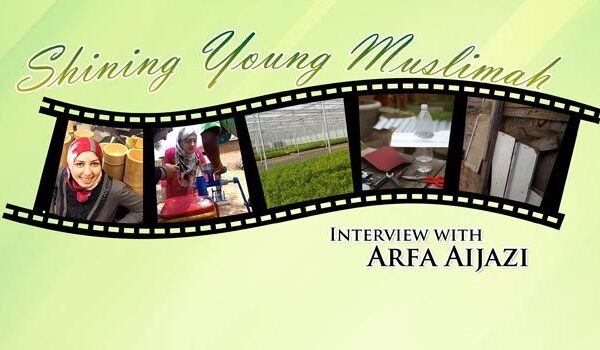
  • Shining Young Muslimah: Interview with Arfa Aijazi

    Shining Young Muslimah: Interview with Arfa Aijazi

    Arfa Aijazi is a student at one of the best colleges in America, Massachusetts Institute of Technology (MIT), an institution that has served as the educator of some of the most notable politicians, historians, and physicists of our time. Arfa was recently named by the Business Insider as one of the “Top 14 Most Impressive Students” at the institution. She is a Materials Science and Engineering major, giving her the opportunity to understand and characterize material properties and structure, as well as design improved materials for different applications. She has also engaged in research studies at top-notch universities such as Oxford and Cambridge. Arfa has traveled Tanzania and Brazil where she worked directly with the local leadership in efforts to develop technologies that may aid and benefit the local people in their everyday lives. She has worked with a Latin American NGO to improve shelter construction in urban slums in Brazil and has researched the use of bamboo as an alternative construction material. She also participated in a project to develop a hand powered maize grinder for a community in Tanzania, which could greatly improve access to basic nutrition. Arfa’s direct role in helping communities by dramatically changing and improving their lives has proved her to be influential individual who is capable of innovation, creativity, and use of technical skills that are forward-looking and beneficial to human welfare. Now vice president of MIT’s Muslim Students’ Association, Arfa will represent MIT in the upcoming Saudi Arabian Ministry of Higher Education’s conference on “The Social Responsibility and Engagement of Universities” in April of this year. The following interview reflects not only her achievements and career aspirations, but also her determination to conjoin her professional path with her religious devotion.


    Question:

    You have pursued a less traditional field than the usual common fields of medicine and law often pursued by young Muslim adults. As a woman and secondly as a Muslim woman, do you find yourself as a unique individual in your field of study in materials science and engineering? Describe the demographic of your peers who you are currently studying alongside with and explain if you feel different from them?

    Answer:

    MIT as a whole has a very diverse student population and a near equal ratio of men and women. I would say that this diversity and gender ratio is also true in the Materials Science and Engineering department. If anything, the department may actually have more female students. In one of my classes last semester, there was actually a 1:3 ratio of men to women. And I would also add that I’ve had a near equal number of men and women professors and instructors in my engineering courses. Similarly, the Muslim community at MIT represents a broad range of majors and career interests, of which there are several in the Materials Science and Engineering department. So while at school, I haven’t felt conscious of the demographics of my peers. However, in my internship experiences, I have observed that there were fewer women in engineering positions than men and few Muslims, but I don’t think it impacted my work experience or discouraged me in pursuing my future aspirations.

    Question:

    How and when did your interest in materials science and engineering expand into a means or pathway to help less privileged and impoverished communities abroad? How did the connection between your studies and helping others first occur and how has it developed you as a person?

    Answer:

    Before college, I had been involved in many volunteer projects through school and my local masjid, and while it was definitely fulfilling to help someone in need, I wanted to do something that also fit my interests. Upon the recommendation of upperclassmen, in my second year of college I took a class through an MIT program called D-Lab (http://d-lab.mit.edu/), which is where I first explored applying my interest in engineering to international development and then I later sought research opportunities at MIT in this area. I view my interest in these projects as an extension of our responsibility as Muslims to provide assistance to those who are less fortunate than us. In this way, I can apply my engineering training to the service of others.

    Question:

    Describe your perspective of Islam and your religious values and how they have contributed to the person you are today.

    Answer:

    I would consider Islam an integral part of my life and I feel like many values we learn and practice in Islam, such as patience, time-management, and seeking knowledge, have helped me attain success in other academic related goals that I have set for myself.

    Question:

    Did you have any instances, from either cultural or religious perspectives, that have hindered or inhibited you from pursuing the endeavors you have accomplished such as working abroad in Tanzania and Brazil?

    Answer:

    I think my greatest challenge in my experiences abroad was defining my personal cultural and religious boundaries to people who may have never met a Muslim. It was hard to explain about eating halal [food] and not drinking alcohol. I found that since I was in a new and unfamiliar place it was harder to opt out of social activities that I was not as comfortable participating in, such as going out to drink or going to dance clubs and parties, whereas in America, I don’t feel that pressure in my friends’ group.

    Question:

    What lessons of life have you acquired through these experiences and what have you learned about yourself through this process?

    Answer:

    Being in social situations that I wasn’t as comfortable in encouraged me to seek out Muslim communities in the places I was traveling. There is a sizeable Muslim population in Tanzania, and a smaller one in Brazil, and in both places I was able to visit and pray at local mosques. I spent the end of Ramadan in Brazil and was also able to attend iftar dinners held at the large Islamic center, where I found a welcoming Muslim community.

    Question:

    After your college experience at MIT and working abroad, what do you see yourself doing in the long term future? What type of career do you plan to pursue and what type of contribution do you see yourself striving to provide to other communities?

    Answer:

    Right now I’m applying for full time jobs in the building technology field and I hope to work with engineers and architects to utilize materials in ways that would reduce the environmental impact and improve the performance and comfort of buildings.

    Question:

    As an accomplished college senior, what advice would you offer to younger girls who are searching for ways to define themselves as well as striving to develop their talents to become successful professionals and individuals in the future? What religious advice would you give them, if any?

    Answer:

    I would advise girls (and boys) to challenge themselves academically and pursue the best higher education opportunities they have available to them including those that are away from home. I would also remind them to not necessarily view professional life as something independent of your religious life. Both pathways, professional and religious, can be interlinked to get the most of each experience and to maximize the potential of your goals on each path. The values on both sides picked up along the way can be of tremendous value to what you eventually decide to pursue in your short and long term goals.


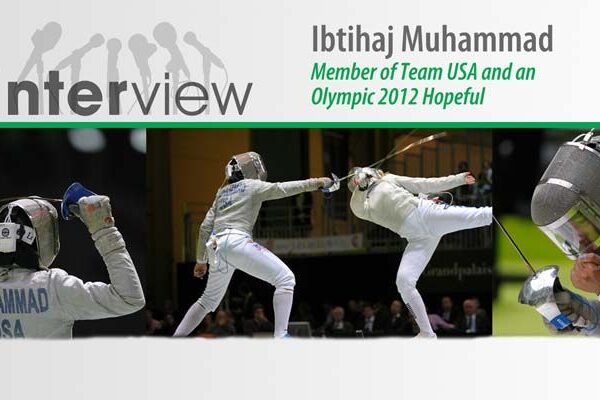
  • Interview with Ibtihaj Muhammad – Olympics 2012 Hopeful

    Interview with Ibtihaj Muhammad – Olympics 2012 Hopeful

    My advice would be to reach for the stars. Never allow bias to your religion, ethnicity, or your gender to hinder you from reaching your dreams and doing what you love to do. Anything is possible with hard work, determination, and prayer.

    Ibtihaj Muhammad is an accomplished fencer and the first Muslim woman to compete for the United States in international competition. She is a 3-time All-American and 2005 Junior Olympic Champion and holds a bronze medal from the 2011 World Fencing Championships. She has overcome odds as an ethnic and religious minority and currently stands as a strong contender for the Olympic team.

    Q:  Please share how you were first exposed to fencing and how your interest for it developed into a strong pursuit for excellence. Was there anyone who was part of your inspiration?

    IM: I discovered fencing for the first time when I was about 12 years old as we drove past a fencing team in practice. I was attracted to it because I noticed the attire of the players and how they were fully clothed. It did not compromise my desire to dress modestly as a Muslim woman so it presented an opportunity for me where I felt I could be comfortable in my values and yet engage my heart in a physical sport. I was 13 years old when I joined a high school fencing team and from there followed this pursuit to where I am today.

    Q:  Not many of us have been in your position nor do we know what the process of training for an Olympic event is. Please describe how or what your schedule is like in training for an event like this.

    IM: No doubt, training for an Olympic event requires rigorous training, commitment and discipline. As part of my preparation, I have to train 5 days per week and at least two times per day. In the morning, I work with my personal trainer and cross train using weights, agility training and running. In the afternoon, I head into New York City where I fence and work with my private fencing coach to build my expertise in the sport itself.

    Q:  What should a society offer inner city youth in order to help create and improve their opportunities to excel in what they do best?

    IM: This is a critical endeavor yet very crucial. It is our responsibility to ensure the youth in our society are educated and taught to learn core values of responsibility and discipline to prevent them from being misguided by social ills. We need to invest in youth programs that offer constructive outlets for inner city youth which are pivotal in developing practical life skills that provide them with hope and opportunities where they can build and develop their talents. These efforts will aid in diverting them away from crime and feelings of frustration and help to create nonviolent communities.

    Q:  You have broken one of common stereotypical notions by excelling in a sport not typical to women, or furthermore, Muslim women. Is this achievement important to you and if so, what is your wish regarding people who continue to possess these stereotypes and misconceptions, especially regarding women and sports?

    IM: I had the upbringing that helped me to be the person that I am today. Early on, my parents always encouraged my sisters and me to participate in sports. They felt that engaging in sports provided us with opportunities to be physically fit, learn time management and also to be active socially in a halal and productive way. I agree, that Muslim women may not be common in the sports arena but that is also partly due to many sports requiring them compromise on the modesty of their dress. In my case, I have found a sport that embraces my religious beliefs and my desire to wear hijab. My desire to wear hijab brought me to a sport that I love but probably would have never discovered otherwise if this principle was not important to me. So, inadvertently, I exposed a sport that gave me a foundation to become who I am and in turn, may have provided other Muslim women who wish to participate in a physical sport and also to those who doubt that Muslim women can have a role in it. I hope my story reminds Muslim youth that nothing should hinder them in their pursuit of reaching their dreams.

    Q: You are now a Muslim women competing at the highest level of an athletic career. What kind of spotlight has this brought to you as a Muslim and your faith and what has been the reaction of other athletes and spectators to your current athletic status as a Muslim woman?

    IM: My journey through my fencing career has undoubtedly brought a significant amount of attention to Muslim women in sports. Their has been an element of surprise but at the same time, Alhamdulillah, the spectators and the press alike have been very curious to know how my faith and my love for fencing have come to an intersect. It highlights how the hijab is not always an obstacle. It can actually be an instrument in guiding you to find a sport that you love as it has done in my life. I may have never discovered this skill of mine had it not been for these factors in my life so perhaps that is part that draws curiosity from others on my current disposition.

    Q: During your athletic career, from beginning to present, have you experienced any type of discrimination or obstacles due to your being a Muslim woman?

    IM: Of course, I cannot deny that I do face prejudice. However, I feel that comes simply with being an ethnic and religious minority in the US. People can be apprehensive when dealing with a Muslim American fencer, but I do not let that distract me or affect me or my goals. If I get discouraged, I have to continually remind myself that not only am I doing this for myself but Inshallah, this is also beneficial to those Muslims who join their pursuits after me. Hopefully, my story will help to pave their way at least in part.

    Q: Were you waived at any point to consider giving up your hijab or your Islamic ideals as you ascended through your career? Did you ever feel tempted to give up the hijab so that you can perform without bias or hindrance?

    IM: I can honestly say that there was not a single time where I considered giving up my hijab to make the situation easier. My hijab has become an integral part to who I am as a person. If fencing became a hindrance to my identity or in practicing Islam, I would not continue to fence.

    Q: These days, most individuals, especially young girls, are raised to admire famous women who represent fame, glamour and physical beauty rather than hard earned achievements through talent, skill and hard work. Being a women who has earned a prestigious rank through the mastery of a skill and while being the example of modesty and good values, what would your message be to the youth around the country and other parts of the world?

    IM: I agree, we can be distracted by icons that do not represent the best methods of achieving a higher rank. My advice would be to reach for the stars. Never allow bias to your religion, ethnicity, or your gender to hinder you from reaching your dreams and doing what you love to do. Anything is possible with hard work, determination, and prayer. Hold tight to these and you shall not fail with the will of Allah.

    Q: What are your plans or hopes for the future?

    IM: Inshallah, my current goal is to qualify for the Olympic team. Once I have completed my athletic career, I plan to apply for law school to study international law. I hope my career path ultimately leads me to experiences abroad where I can invest time in helping children in need.

  • Relief for Relief Worker?

    “They ask, ‘So what do you do for a living?’ a drink in hand. I usually get two kinds of responses from two kinds of people when I tell them I am an aid worker. Those who roll their eyes and those who say, ‘Really’? For the first, I usually do not go any further; either they are not interested or it is something beyond their level of understanding and imagination. For the others, I know I will have a hard time explaining what I do and why” (Blogger working in Albania and Kosovo, The Road to the Horizon 2009).

    While many of us have heard and read about relief aid workers deployed to emergency disaster areas, not many of us actually know one personally or ever spoken to them about the experience and life that they lead. In fact, in the event of an emergency crisis situation, so much is discussed and researched about the victims and even the perpetrators of the crime, but hardly much attention is paid to the experiences that the relief workers undergo from working on the same scene. The atrocities, hardships, and struggles that the victims face or that the perpetrators create are the same sights and sounds that relief workers are witnessing and living in as full constituents. Leanne Olson, a nurse and international relief worker who has worked on assignments in Bosnia and Zaire, describes it best in her book, A Cruel Paradise: Journals of an International Relief Worker. She frames the whole experience in her introductory quote: “Nobody ever comes away from a war unchanged, not those who perpetrate it, nor their victims, not those of us there to help.”

    Hence, it leads us to wonder on the pun whether there is any form of relief for the relief worker. As a nurse, Olson has engaged herself with Doctors without Borders (DWB) and recounts the normal stresses of the duties of a nurse and then conducting those duties in the arena of a war zone, witnessing human atrocities such as ethnic cleansing or finding mass graves. Just envisioning the possible scenes they witness is difficult to fathom and leads us to wonder how people commit to such a noble and difficult volunteer act and, moreover, whether they have the resources and support needed to cope with the aftermath of images living in their minds when they return home. These needs are sometimes met with the creation of a subculture, smaller groups among relief workers that are able to comfortably share what many people cannot even fathom. Yet still, they find the ability to move on to a level of normalcy in their lives, engaging in daily activities with family members and friends. There are some attempts to convey stories of their relief work, but the rest is kept unmentioned except with those living in the same realm as them. Relief workers are witness to events that cannot be fully realized or comprehended by the outside world, yet their contributions to the causes they pursue are enormous and a ray of hope to millions of people that otherwise have very little to expect in life.

    Much attention and support are provided to the obvious and larger populations of people exposed to these events, such as soldiers. However, a beneficial level of training and support oftentimes are not offered to relief workers, and often the support provided is built on what the relief agency expects the workers will need and not on the basis of needs from the perception of the relief workers. Hence, support is required and is being developed in key areas of a relief workers’ life such as preparation at pre-departure, sufficient and effective management of the organization, self and the relief workers’ own sense of value for the operation. Furthermore, coaching in areas of communication with relief workers, teamwork, and finally re-integration back into the home society are areas that relief workers can value and benefit from in order to ensure their experience is as endurable and valuable as possible. It also ensures their ability and willingness to stay committed as relief workers and to prevent people from declining service due to the expected poor infrastructure provided to them.

    “I did not want to leave my fellow Haitian human-beings
    in a desperate situation while I had to begin my journey
    back to the contrasting luxurious life in the US”

    The disposition of a relief worker comprises of a matrix of many different feelings and emotions. They are embedded with feelings of both the good and the bad, the excitement, satisfaction, and moments of sheer gratitude for the change they were able to bring to people, the relief of the blessings they have in their own lives, and the satisfaction of being able to elevate the level of hope of complete strangers in a devastated society. The other part comes with guilt of their inability to do more and complete the needs of the people they are serving, the moments of decreasing self value when they cannot obtain the resources needed to make an effective change for the people in distress, followed by extreme sadness and heaviness when they depart from their sites of service. Leaving without a sense of completion, of almost abandoning those that so heavily are relying on them for sustenance and support, and instead going back to a place where it appears a heaven in comparison to what they have just witnessed embodies the opportunity to leave as less than a rewarding choice.

    Ilyas Hasan Choudry, the South Central region coordinator and relief worker for Helping Hand for Relief and Development, attributes his past experience in Haiti with the same tumultuous roller coaster ride of emotions. He was born and raised in Pakistan for 24 years before venturing to the West and settling in the United States. It was a matter of 15 years before the tsunami incident in late 2004 awoke him to the cause of working for a relief agency, followed by the incident of Katrina in 2005. “My mindset had almost likened to taking things for granted. However, this has changed in me and I feel most blessed from Allah SWT who has given me the opportunity to serve His creation.” On the other hand, after serving in the aftermath of the earthquake in Haiti, he was preparing to return home with some conflicting thoughts, as he describes it:

    “Let’s say for seven days in a row, you wake up to see a dire situation around you. But when you woke up on the eighth day, you are going to take an airplane to a place, almost like paradise on this Earth, as compared to the everyday anguish of the past seven days. But instead of feeling happy to leave the devastated place, you have this extreme lingering sadness inside of you telling you that you should not leave. Instead, you see yourself saying that maybe there is a way to delay your departure and that you can stay for few more weeks or maybe months or even years to see this torturous place come out of its ruins.

    This is what I felt on Sunday, March 15th, 2010, when I went through a long queue for more than two hours to board American Airlines Flight 1908 from Port-au-Prince to Miami International Airport. I did not want to leave my fellow Haitian human-beings in a desperate situation while I had to begin my journey back to the contrasting luxurious life in the U.S.”

    The life of a relief worker
    is an amalgam of good
    and yet challenging elements.

    They literally exist on two antagonistic ends of destiny with the people they are there to serve
    The value of relief and humanitarian aid works is immeasurable and despite the location of the disaster or crisis, even when in an affluent part of the world, their presence and assistance largely determine the success of alleviating the victims’ dire and sudden circumstances. For instance, New Orleans was devastated by hurricane Katrina and despite being in one of the most affluent countries in the world, most of the assistance was provided by NGOs and self-organization of the relief workers deployed to the area. Faith-based communities were contacted and through the formation of a coalition, each of them contributed $125,000 to provide funds for food and living accommodations at a convention center for the Katrina victims. They each brought a minimum of 300 volunteers, the Muslim community bringing in far more than the expected 300 and symbolically on the day 4th anniversary of the September 11 tragedy.

    The life of a relief worker is an amalgam of good and yet challenging elements. They literally exist on two antagonistic ends of destiny with the people they are there to serve. Yet they are directly facing each other in the scenery of turmoil and leaving the mind to make logical sense of the gross and vastly uneven distribution of luck that life has left for both individuals. It opens the vulnerability of one individual to another, forcing the victim to relinquish their own independence as a human being and instead look to others to fulfill what are known to be basic and simple requirements of living. On the other hand, it reveals the guilt and sadness of the relief worker to the victim, forcing them to realize the surreal world they exist in, pampering them in ways unknown to millions in other countries and yet still finding room for unhappiness. Maybe it is these antagonistic principles, these opposing universal forces unfavorably forced to face each other that make the reasons for relief workers to take on this task. It is an idea similar to looking in the mirror and seeing their personal weaknesses, hurtful at first but at the same time unleashing a good conscience that in turn pursues them to do better and make right on what is or appears wrong. Our fellow relief worker working in Albania mentions, “But destiny has put them there and me here. Sheer destiny determined those who need help and those that can help. I can help.”

  • Communication in Marraige

    Interview with Dr. Sarah Sayeed
    Dr. Sarah Sayeed is a communication consultant and researcher based in NYC.

    Q What are some topics that spouses should engage in to help understand one another better? What rules should they follow so that these conversations do not become antagonistic and create a divide between them?

    A S. Sayeed: It’s important to remember that family communication sets the architecture within which family life operates—whenever we communicate, it is like we are laying bricks, building foundations, floors, and rooms. With attention, devotion, and care, our structure is less likely to crumble. Also, family communication is about much more than conversation—though conversations are critical to connection, there is a lot of communication that happens non-verbally. Spouses can create a feeling of togetherness by being involved in each other’s daily routines. The things we do on a daily basis offer opportunities to deepen our relationship with each other—things like making our salah together, preparing meals together, sharing housework, and sharing the responsibilities of taking care of children. There is certainly a precedent in the example of our Prophet (pbuh), who was involved and helped his wives with their daily routines. Families can and should prioritize making at least one prayer together like the saying goes: Families that pray together stay together.

    Family meetings can be established each week as a regular forum to check in about sharing good news, positive affirmations, concerns for the week, or decisions that need to be made. Once this is established as a part of the regular routine, then there is a time to speak about what is good as well as what is bothering you. Spouses can make it a point to make sure there is discussion of both what is good as well as the challenges—this will allow them to feel a balance in the relationship.

    People have different styles of communication, and what works for some will not work for others. I think three principles are important though: listening with an open heart, turn-taking, and helping each other think clearly by asking open-ended questions.
    Listening means allowing each other to speak honestly but not to take each other’s feelings personally. Like hunger—if your child or your spouse is hungry, you don’t take it personally—you realize that they have an inner setup that requires food, and you help them to meet that need by preparing something for them to eat. It is like that for emotional needs as well—we all have an inner need for connection, love, and closeness. We need to treat these needs as valid, and incorporating loving messages into daily life can be very helpful, whether that is a smile, a hug, kiss, a loving note, or leaving special surprises for each other.

    Sometimes, spouses look to each other to meet needs that they can fulfill themselves. For instance, if one person needs to feel more connected, they can fulfill that need by being connective and close to others. When we give love to others, we meet the needs for closeness, and ultimately, spouses will place less demands on our marriage.

    Q What are some of the reasons that spouses who have been married a long time begin to lose interest or harmony with one another?

    A S. Sayeed: It is easy for marriage to become dull; anything that is part of our daily routine risks that, especially if we don’t pay attention to it. That’s why the Imam tells us to pray each prayer as if it is our last prayer. We have to bring consciousness and loving awareness of God into our daily prayers so they retain meaning for us; this also applies to marriage, which is like a flowering plant—without conscious nurturing and loving care-taking, it is easy for the connections in marriage to wither and, ultimately, the root will stop growing deeper.

    Reminding ourselves about our death helps keep us focused on the fact that we have a short time on earth and a short time with all of the people in our lives. To keep things fresh, spouses can remember that each day is a new day, like the ayah of Surah Rahman tells us: “On Him depend all creatures in the heavens and on earth; [and] every day He manifests Himself in yet another [wondrous] way” (Al-Quran, Surah Rahman,29).

    Since Allah creates each day as a new day, we can train ourselves to be observant and look for the new and wondrous in each other. One really important cornerstone of marriage and any relationship is a sense of gratitude to the Creator for the bond that we have with our family members, friends, and colleagues: it is Allah who brings our hearts together. The Muslim’s view of life must be directed towards the idea of “Alhamdulillah ‘ala kulli haal”- Praise be to Allah for all conditions. If things are hard in marriage, it is because there is a test for us in it, and we have to seek Allah’s help and ask Him to guide us towards a good solution that will benefit both parties.

    It’s important to note also that marriages end sometimes even when people are trying really hard. While divorce is the last option, Allah in His Mercy did grant us this provision and ease and gave us the guidelines to make sure that divorce is equitable and preserves the rights of both parties. There should be no blame placed on either party because it does not help. Because Allah allowed Muslims to avail of divorce, the community needs to develop norms, education, structures and services that help Muslims get through this process in a way that retains mutual dignity and emotional wholeness so that, hopefully, if they choose to, people can begin another relationship without the stigma of divorce.

  • Achieving Spousal Peace

    Interview with Sohaib Sultan
    Sohaib Sultan is the full-time Muslim Chaplain at Princeton University.

    Q The latest method of meeting a soul mate has been through networking events. How can these be more effective?

    A S. Sultan: Before we assess that our networking events have not been successful, it is important to ask whether or not such events are ever really successful. For example, Orthodox Jews have tried similar meet-and-greet events for much longer than the Muslim community, but their singles still complain of the same inadequacies as our young singles do. So, the method itself is a good avenue for young singles to meet, but it is unlikely to ever produce many results. This is partly due to the fact that it is difficult for people to make good assessments of compatibility in a short period of time and with a tense atmosphere. Having said this, though, there are a few couples that I know who have met through these matrimonial events, and, mashaAllah, their marriages are successful. So, at the end of the day, it is worth it for the community to organize such events and for singles to try them out even if it ends up working for just a few people. One of the ways to improve these events is to have more substantial questions for the seekers to exchange. These questions should go beyond the superficial and should help facilitate conversations that touch on faith, family, and the like. In the end, though, it is also the responsibility of attendees to go into these events with positive but realistic expectations.

    Q What are some of the pitfalls that young couples seem to be falling into that result in broken relationships over a short-term period? What is this generation lacking in being able to maintain relationships that succeed in longevity?

    A S. Sultan: I think that previous generations accepted, even before they got married, that marriage requires a lot of hard work and sacrifice. Many of our parents were even raised in difficult circumstances in which life itself was about struggle. Love was seen as something that developed over the years, rather than at first sight. On the other hand, too many of our youth in this generation are influenced by romanticized ideas of marriage and are surprised to find how difficult marriage can be. Our youth are also products of an individualistic culture that undervalues notions of sacrifice. But, it is also important to point out that just because there are more broken marriages in this generation does not mean that marriages in previous generations were more successful. Nowadays, divorce is culturally more acceptable, and couples are more willing to get out of bad marriages. This is not necessarily a flaw; divorce is permissible in Islam for a reason, and bad marriages can negatively affect children in society as much as, if not more than, broken marriages. So, while divorce should be prevented as much as possible, it should not be treated as complete taboo.

    Q How can we guide the youth to balance their personal pursuits with maintaining their cognizance of others and their needs?

    A S. Sultan: Individualism is the core of American culture. It is here to stay, and young Muslims are as affected by it as anyone else. What I think our religion has to offer is this ancient wisdom that independence is an illusion. In reality, all our lives are interconnected in some way, and we are all a creation of the same Creator. As such, our dreams and pursuits in life should always be checked by what is beneficial for our family, friends, neighbors, and society as a whole. So, the idea of having personal dreams should be encouraged, but what should also be cultivated in the human being is to dream big for others and not only for the self. When we realize that we are part of this web of life of which we are just one strand, it is easier to live a life of compassion and compromise, and this will naturally manifest itself in all of our relationships, including family life.

    Q What are some points of consideration that must be kept in mind in marriages of different ethnicities?

    A S. Sultan: Inter-ethnic marriages, particularly in the American Muslim context, are beautiful and should be cultivated. However, we also have to be real about the potential challenges that come with such marriages rather than ride a wave of idealism. Our ethnic cultures have a lot to do with who we are, how we think, and how we behave. Our expectations of a good husband or wife are often informed by our ethnic cultures or what we are used to at home. As such, there needs to be an open conversation about cultural differences and how those differences might manifest in a marriage. A couple who has been born and raised in America might have more in common with each other than with their respective ethnic cultures. But, even then one needs to keep in mind how cultural differences can affect their relationship with the in-laws. Premarital counseling is always useful and encouraged for any young couple, but might be even more beneficial in circumstances where there are obvious differences.

    Q Marriages can lose their original luster over time. What can spouses do for one another to help nurture themselves so that they do not find themselves bound to a less than satisfying situation?

    A S. Sultan: Marriage may be hard work, but it does not always need to be so serious. The greatest joy of a successful marriage is enjoying the company of your spouse. It is important for couples to find things that they both enjoy doing together and then make a commitment to doing those things even when life gets busy or tough. Marriage is about bringing two people and two families together, but this does not mean that a couple always has to be together. There should be a healthy respect for individual likes or hobbies, and enough space should be given in a marriage for husband and wife to pursue those things. This requires working together and taking on equal responsibilities in raising a family.

  • Parenting in the Information Age

    Interview with Sh. Ali Sulieman Ali
    Sh. Ali Sulieman Ali is member of ICNA Shariah Council and Director of Muslim Family Services, an ICNA Relief Project

    Q Online networking, such as Facebook and Twitter, has caught on like wildfire. About how old children should be before allowing them to create accounts on these networks and whether they should be monitored?

    A Sh. Ali: First and foremost, Allah holds us responsible to protect ourselves and our families from actions that may divert us to the Hellfire. Therefore, anything that may lead someone to such actions that weaken their Iman should be guarded from and prevented. In current times, technology has become an integral part of society and one of the primary sources for obtaining knowledge. This technology and information superhighway has caught the attention and curiosity of these young minds. It is a critical fact to know that children differ among each other in terms of their intellect, obedience to elders, and the traditions of their home. Therefore, their response to the internet will also vary. However, it is my personal opinion that we can allow children to establish their presence on the internet at the age of 12 or 13 at the earliest. Anything prior to this may be premature for them. We can make this available to them with guidance on using it responsibly and relay that they have been entrusted with this tool. If they adhere to their guidelines, we should reward them with our trust. However, if they cross the boundaries, they should be admonished along with appropriate punishment to help them learn the value of trust and responsibility in what can be a dangerous environment.

    Q Today, young Muslims often leave home to dorm at schools or utilize study abroad programs where they are away from the supervision of their parents. This allows them easier access to the dangers and pitfalls of the ills of society. Yet, hindering them from this may cause problems. How can Muslim parents develop a learning environment for their children while at the same time protect them from harm?

    A Sh. Ali: Every child or human being goes through at least two different levels of learning. The first stage is the stage of imitation when the child is absorbing whatever information or knowledge that you provide. If you take him/her to the masjid for prayers, he/she will go with you and do as you do. The second stage is the stage of “why”. They begin to start thinking and questioning the knowledge that you are presenting, no longer taking it with quiet acceptance. This is a very critical stage and the longest of every child’s life. He/she is no longer a child and wants to know the “why” of everything he or she is told to do or practice. At this stage, if we fail to direct them and teach the essentials, we may mislead them either temporarily or permanently. Hence, this is where our responsibility to respond is critical. As Muslim parents, we have to create an educational environment for them where it is inclusive of talented and educated individuals to help them in developing their talents and to remind them that they represent the future of Muslims in this part of the world.

    One really important cornerstone of marriage and any relationship is a sense of gratitude to the Creator for the bond that we have

    There is wisdom in the statement that it takes a whole village to raise a child. Jewish communities have already adapted this as part of their own society where they bring their children to schools and religious communities, introducing them to talented and educated individuals, such as psychologists, educators, administrators, etc. We have to create a similar environment for our kids in our own communities and bring in the best educators, psychologists, etc. that we feel will help guide and educate our children. Again, in my personal opinion, I would allow my children to travel or explore his/her world outside the home, but not before the age of 17. At the age of 17, they have developed some sort of foundation and maturity. Secondly, I would only allow this as long as I believe that they are in the company of good people and not those who would cause them to deviate into a more detrimental path. With a proper foundation and good companions, we as parents will not have to worry as much as to what choices and types of lives they will lead.

    Q Parents are torn between full-time Islamic schools versus part-time Islamic education. Particularly with teenagers, how can we find a harmonious balance of exposing them to the Western world as well as proper Islamic culture?

    A Sh. Ali: Every Muslim parent should raise their children based upon Islamic principles. A strong method for pursuing this is to establish them in Islamic schools at least up to the eighth grade. By this age, 13 or 14 years old, they will have learned the Islamic principles, basic elements of the faith, and developed an ability to know and read the Quran. They will have a set of Islamic values instilled in them that they can utilize later in life as they pursue their goals. I know there are different opinions in placing them in Islamic schools for high school years as well, but a minimum for eighth grade is essential. After that, they can pursue different high schools to continue their education. However, if they do, it is important to keep them connected with their Muslim identity and not to isolate them from the rest of the world.

    Regardless of the life that they pursue, they must know that they are Muslims, and it is part of their core selves. It is important for them to get involved in local Muslim organizations and supplement their worldly education with part-time Islamic activities in the evening or on weekends so that they do not become alienated from their core identity as Muslims. The culture here is definitely different, especially when being raised by immigrant parents. They are then a combination of an American/Western as well as Muslim and also tied to ethnicity; hence, it can be a real challenge for our children to live with this unique mix of identities. We have to understand where they are coming from and the experiences they are going through, being gentle and kind in guiding them. We have to work towards a difficult goal of developing them into educated and intellectually- minded Muslim individuals.

    Q What kind of communication techniques can Muslim parents implement with their children of pre-teen and teenage years in order to stay engaged with them and their personal lives?

    A Sh. Ali: As parents, we have to establish and maintain a meaningful connection with our children and their lives. It is important for parents to get to know and become friends with the parents of their children’s friends. They should attend and participate in their school activities and watch them in their extracurricular activities. The parents’ role in their lives should not be just in their homes, but in their lives externally. The ways the older generation was brought up is different from the ways to bring up the new generation. For the first seven years, work on disciplining the child. From 7-14 years, teach them about values and life, and then after that, become their friends and guide them as associates rather than parents. Remind them of the character of the Prophet (pbuh) and tell them the importance of discipline in Islam. Having good character is an integral part of a human being no matter where they go in life. A person’s character is the first quality through which a person’s ability is measured.

    Prevent them from engaging in what is prohibited in this country by bringing them to workshops where the dangers of drugs, alcohol, etc. are discussed. Implement in them good values and talk with them on a regular basis so that you may well prepare them for the experiences they may encounter later in life.

  • Volunteering in Haiti Amidst Tragedy

    Irfan Khurshid of Helping Hand was interviewed shortly after his arrival back to the States by Ayesha Ali on February 19, 2010.

    A. Ali: What are some of the activities that Helping Hand is engaged in in Haiti to accommodate and assist the crisis situation?

    I. Khurshid: Helping Hand arrived in Haiti just a few days after the earthquake occurred. We began first with providing immediate relief items such as water, food, and other basic necessities. There was no place in Haiti to purchase these items, so we had to obtain them from Santo Domingo in Dominican Republic. We also immediately began establishing medical clinics since we realized that after the urgent relief items, medical services were urgently needed. Many doctors came to help from different regions of the world including different parts of North America, the Middle East, and so on. Helping Hand also began providing free medicines to the people. We set up six rotational medical clinics at six different locations. The average number of patients we served at one location was about 200 per day. Therefore, we had seen approximately 6,000 patients overall while providing food for about 1,000 families. We also provided some tents and shelters to the people. We currently have an office and a base camp in Port Au Prince. We had doctors and support staff from both origins, locally and from the United States. We are a registered charity with the United Nations, so we were working in coalition with them as well as UNESCO and the World Health Organization.

    A. Ali: Among the rescue teams and volunteer staff stationed in Haiti to help the crisis, how significant and prominent would you characterize the Islamic and Muslim relief agencies set up there?

    I. Khurshid: We witnessed a big disaster where from a population of three million people, about 2 million were affected. More than 70% of homes and buildings in the area were destroyed. Even where the homes were not damaged, people were afraid to stay in them for fear they might collapse. So there were a lot of homeless people in immediate need of help. This raised the attention of relief agencies from all over the world. Everyone, including many Muslims, came out to be very effective and active in trying to help the situation and the people. There was a respectable amount of help by the Muslim people. Currently, less than 5,000 people in Haiti are Muslims, yet it was nonetheless a strong cause for the Muslim relief workers to come out to assist the human population regardless of their creed or origins.

    A. Ali: What are some of the difficulties and challenges that these local Muslim communities currently face? Also, how was their presence a possible connecting link or contribution to Helping Hand’s rescue mission?

    I. Khurshid: The local Muslims who were assisting us were also victims of the tragic earthquake at the same time. So that was their biggest limitation because almost everyone in the local communities that we worked with were affected somehow by the tragedy. Either they themselves were or they had a relative or other family member who was homeless, injured, or deceased from the incident. Hence, they were traumatized by the whole situation around them. The trauma shown on their faces, in their ability to focus on tasks that they were helping us with, or the inability to communicate without feeling distracted by their current situation. All of a sudden, they did not have a job or a home or even an idea of where to get food, so all of this was overwhelming them as they tried to offer local guidance. However, at the same time, they were also fruitful in helping us to station ourselves there and helping us to reach out to people, distribution, and logistics. We worked with at least five local masaajid in the area, including Masjids Tawhid, Fatiha, and Masjid Allahu Akbar. The masaajid were not damaged from the quake, so we were able to utilize them to set up at least five of our medical clinics on their compound. So they were essential as a source for us to get our base camp established in the area.

    A. Ali: In a previous interview, you mentioned that Haiti’s case was more chaotic than even the Indonesian tsunami and Pakistani earthquake aftermath that you had witnessed. Can you please describe what elements you witnessed in Haiti that set it apart as the more chaotic tragedy than the others?

    I. Khurshid: When we saw the extent of the damage in Haiti, it was the same or very close to what we had seen during the tsunami tragedy in Indonesia and the earthquake that occurred in Pakistan. However, in those incidents, the governments were intact and very responsive, and even the local governments were effective in controlling violence. But in Haiti, the government was not effective even before the earthquake had occurred. Additionally, the many of the government buildings were badly damaged either completely or partially when the quake hit and thus crippled and weakened the government even more seriously. Therefore, there was lots of violence and chaos among the communities, no infrastructure and little to no security options. The local companies offering security services were very costly and not reliable enough for us to depend on for our situation. A jail had been also damaged during the quake, and many of the criminals who survived were freed on to the streets as a result. I observed many instances of violence such as mobs hindering and attacking the trucks that were attempting to deliver the relief supplies. We decided to hire our own security so that we could function and also to ensure our medical and support staff were not in danger when trying to administer help to the victims. So, a combination of things resulted this to become a fairly dangerous and chaotic situation.

    A. Ali: What is the current morale of the people in Haiti from the perspectives of sides: the rescue mission teams and the victims of the quake?

    I. Khurshid: The situation is going through some phases. The extent of damage is so large that it will certainly take years before stability can be restored. What is happening currently is that after the initial trauma of the earthquake is lessening, people are beginning to see and realize the reality of their situations such as homelessness, lack of food, and the ability to find work to meet their needs. This is leading to desperation in the people that was not initially evident. Clean drinking water is difficult to obtain, sanitation is poor, and disease is potentially spreading. Plus, the rainy season is approaching, and there are many shelters needed to protect these people from the weather. However, at the same time, as relief agencies are more established in the region, their efforts are becoming stronger and more effective. At the same time, the government is regaining itself and beginning to take charge of some areas of the situation now. With all of this new coordination, the situation is starting to improve slowly and gradually.

    A. Ali: How do you find relief and maintain emotional stability as you and your team work tirelessly through such a devastating and tragic environment?

    I. Khurshid: It was one of the worst experiences for me because of the extent of destruction and chaos that I witnessed. The language was a barrier because it was difficult to find out who was able to communicate with us. All around us, we observed people who were either sick or hungry, or we saw dead bodies lying all around us on the streets. Every day was a difficult one for us. We needed to rotate our relief staff so that after two or three weeks they were able to get a break, because the trauma around them could begin to build on a person’s emotional stability and cause strain. But, at the end of the day, we knew that we had to do what we had to do. That understanding was enough for us to get through the day and accomplish what we needed to for the people.

    A. Ali: If you could communicate to the world, including the Muslim communities, what would you place as the direst need of the Haitian people, and what would be the most urgent type of help requested at this time to stabilize and help the recovery process?

    I. Khurshid: There are a few things that I would focus on in terms of what we urgently need to get out to the victims as quickly as we can. The first is shelter. The tents that are currently set up are only temporary and cannot serve sufficiently in the long run as proper shelters. The second item is medical help, which is very crucial. Without this, the society can crumble when you have so many that are possibly diseased and injured. The third critical item that is needed is drinking water which is certainly vital for the immediate health of the people. The fourth item is sanitization. We need to be able to curb the possible spread of disease. For the first two items, Helping Hand’s efforts are already underway and active. We are starting to build shelter villages with 100 homes per village. Each shelter is about 10×10 in size and costs about $900 to build. This basically leads to two additional items needed to accomplish this, which would be manpower and monetary assistance. These things together can help us to reach the goal of bringing some stability back to the area where so many people are currently suffering.