
بسم الله الرحمن الرحيم

Tag: Terrorists

  • Un-Islamic, Radical Terrorists: A Tool for Election Hype

    Un-Islamic, Radical Terrorists: A Tool for Election Hype

    Neighbors were frightened of Mohamed Lahouaiej-Bouhlel, the man who plowed a truck into a celebratory crowd in Nice, France, killing more than 80 people and injuring over 200. People who knew him explained that he was anything but a devout Muslim. He had a record of petty crime, often displayed unrestrained bouts of anger, drank alcohol, used drugs, and neglected to pray or fast. Bouhlel, in recent times, was convicted of assaulting a motorist, and abused his estranged wife. In fact, he had a history of mental illness documented by visits to psychologists in Tunisia. What remains unclear is whether or not he had any direct links to terrorist networks.

    Inflammatory speech invariably has a negative impact on the unity of our nation

    Gunman Omar Mateen, who opened fire inside a nightclub in Orlando Florida, had a long history of behavioral problems, documented by school records over the years. He was expelled, arrested and eventually enrolled in an alternative high school after numerous fights in which he injured other students, and what one of his teachers noted as his “inability to show self-control.” According to witness Patience Carter, who survived the Orlando rampage, Mateen announced his motive as he murdered club-goers, saying he wanted “Americans to stop bombing his country.” His parents were originally from Afghanistan.

    Richard Reid, also known as “the shoe bomber,” attempted to take down an American Airlines passenger plane in 2001 by igniting explosives contained in his shoes. Upon his arrest, he told officials conducting his interrogation, “Your government has sponsored the torture of Muslims in Iraq and Turkey and Jordan and Syria with their money and weapons. It’s in your hands.” Like the others, Reid had a history of delinquency and criminal offences. When he was born, his father was absent, having been incarcerated for car theft. After dropping out of school at the age of 16, Reid pursued a life of crime, often winding up in prison himself.

    “Do you think that you will enter Paradise without such [trials] as came to those who passed away before you? … Yes! Certainly, the Help of God is near!” (Quran 2:214)

    ISIS entry form documents of roughly 4,000 foreign recruits recently released to the Associated Press prove what Muslims have been saying for years. In an August 19 article in the Times of Israel, the authors note that the terrorist organization known as ISIS, “preys on those with minimal connection to Islam, because the more they know the less likely they are to endorse its methods.” Recruiting members largely ignorant of Islamic teachings, allows extremist organizations to indoctrinate them with a distorted version of Islam, designed to help advance its aggressive territorial expansion and slaughter of innocent men, women, and children.

    Compulsive Use of Misnomer: ‘Islamic’ Terrorism

    According to these and many more examples, it appears that an overwhelming number of terrorists display similar characteristics: ignorance and lack of devotion to Islam, mental illness, recurrent criminal behaviors, and violence towards innocent people. They are motivated – not by religion – but by geopolitical grievances and a thirst for vengeance. Despite these glaring facts, and their availability to the public, we continue to witness the term “Islamic” consistently being attached to heinous terrorist crimes and their perpetrators.

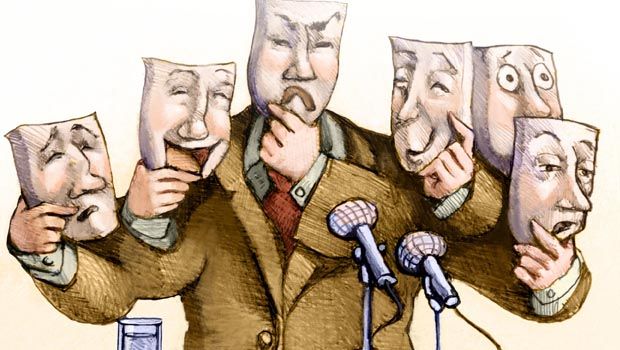
    Certain politicians, TV personalities, and pundits help form public sentiment surrounding attacks, branding them as “Islamic” while the shock and horror are fresh, and details that undermine the “Islamic terror” narrative are yet unavailable. Information acquired in the investigations following attacks, in most of the cases, tends to paint an entirely different picture: individuals with a criminal history and psychological and behavioral issues, who are motivated by anger and driven by very real and disturbing geopolitics.

    The confidence with which the initial speculations were presented, and the subsequent time that elapses in which people return to their daily routines, inevitably renders subsequent investigations and analysis far less newsworthy. The lack of sensation and inconsistency with the favored theme of “Islamic terror” renders almost inconsequential the ensuing findings such as non-existent religiosity, lack of clear ties to terrorist networks, no overtly political motivations, records of criminal activity, and/or histories of mental health problems.

    A Tool for Election Hype

    While we can’t always assume that the statements made by political candidates are intentionally misleading, this election season is a perfect example of disinformation about Islam and Muslims being used for political gain. From the inflammatory rhetoric of reality star and now presidential candidate, Donald Trump, to the attempts to garner attention by former Republican Speaker of the House Newt Gingrich, we are seeing a lot of very strong words being thrown around without much concern for the real consequences they have for average Muslim citizens. And inflammatory speech invariably has a negative impact on the unity of our nation. Polarizing rhetoric such as Trump’s infamous call for Muslims to be banned from entering the United States, and his blanket (and frequently grammatically challenged) statements like “I think Islam hates us,” have done more than raise eyebrows.

    Newt Gingrich, on national television went so far as to say, “Western civilization is in a war. We should frankly test every person here who is of Muslim background and if they believe in sharia, they should be deported. Sharia is incompatible with Western civilization.” Statements like these have proven to elicit intense levels of bigotry, hatred, and violence that have apparently been pent-up in a portion of the American electorate.

    The Pressure of Polarization

    These alarmist calls from powerful people to equate Islam with terrorism urge the general populations of Western countries to associate all Muslims with violence and danger, thus engendering distrust and fear of all things Islamic. Consequently, we are seeing an unprecedented rise in crimes against Muslims in the United States and elsewhere ranging from verbal abuse and discrimination to physical assaults, and sadly, hate-motivated murder. We can sense the increasingly negative sentiments in our neighborhoods and communities. Many of us feel awkward, ashamed, and even frightened to go to public places immediately after tragedies such as the recent attacks in France, San Bernardino CA, and Orlando FL. The pressure may be felt even more by those of us who outwardly appear to be Muslim, primarily women who cover and men who choose to wear ethnic clothing and kufis.

    David Lisnard, mayor of Cannes in southern France, fueled controversy with incendiary statements regarding Muslim women who choose to go swimming, yet insist on covering their bodies while doing so. Referring to a ban on Muslim swimwear he said, “I simply forbid a uniform that is the symbol of Islamic extremism.” Thierry Migoule, Cannes’ head of municipal services, echoed the mayor’s sentiments, saying, “We are not talking about banning the wearing of religious symbols on the beach… But ostentatious clothing, which refers to an allegiance to terrorist movements which are at war with us.” Yes, they both just said that any Muslim woman who chooses to cover her body while swimming is displaying support for terrorism and extremism. Do they hope to force Muslim women to acquiesce to their standards of fashion and stop standing out so confidently in their voluntary modesty? Whatever it is behind those words, the result is the same: an increasingly polarized population, pitting the general population against Muslims.

    These politicians have whitewashed the complexity of reality and presented a simplistic picture to the public: good vs. evil – and they are defining what means good and what means evil. People are afraid for their lives, for their futures. These politicians are capitalizing on that fear and telling all of us: choose a side – or else. This, in turn causes innocent people to appear guilty.

    The Heat is On

    Being under constant suspicion can cause individuals to feel guilty – even when totally innocent. Dalia Mogahed explained how she felt after 9/11, saying, “Not only had my country been attacked, but in a flash, somebody else’s actions had turned me from a citizen to a suspect… for the first time in my life, [I was] afraid for anyone to know I was a Muslim.” This guilt by association is advanced and reinforced by few, but very loud voices. After the Nice attacks, Kelvin Mackenzie, a columnist from the UK’s Sun newspaper, wrote a controversial column questioning why a “young woman wearing a hijab” had been allowed on television to report on the attack in Nice. He was horrified that the reporter, Fatima Manji, was visibly Muslim. He asked. “Was it appropriate for her to be on camera when there had been yet another shocking slaughter by a Muslim?”

    Avoiding the Herd Mentality

    More than one-third of those killed by the attacker in Nice were Muslims. According to a report published by the Counter Terrorism Center at the US Military Academy, Al-Qaeda kills over seven times more Muslims than non-Muslims. The majority of ISIS’ victims are Muslims. If it’s offensive for a Muslim to report a terror attack on television, is it also offensive for us to mourn our dead? We have to reject this idea outright and think critically: was it wrong for a Christian to report on the murder of Dr. George Tiller by anti-abortionist terrorist Scott Roeder in 2009, or the Centennial Olympic Park bombing in 1996 by Eric Rudolph who had ties to the white supremacist “Christian Identity” theology and movement? In fact, both Roeder and Rudolph had ties to another Christian terrorist group, The Army of God. To suggest that a Christian reporter should not cover a terror act committed by a fellow Christian is clearly, easily, and immediately recognized as preposterous.

    In the face of this monumental and growing problem, I refuse to allow others to determine how I feel about myself. As Muslims, we have to be the masters of our own thoughts and allow no one to convince us we are guilty by association due to our faith. That our modest attire or names or beards are incriminating, that the word “Islamic” must appear next to its antithesis, terrorism… No! The Quran differentiates between human beings who reason and those who follow the crowd without intelligent thought: “Or do you think that most of them listen or use their reason? No, they are but like cattle. Rather, they are even less conscious of the right way” (Quran 25:44).

    Fighting Doubts

    Prophet Muhammad said, “The people will see a time of [much-needed] patience in which someone adhering to his religion will be as if he were grasping a hot coal” (Tirmidhi). It’s becoming clearer that this applies to our current time. Some of us feel like giving up. Being under constant scrutiny, guilt-tripped, cursed at, ridiculed, and hated – it is exhausting. It might appear easier if we just took our headscarves off, shaved our beards, and changed our names. The thing is, though, the solution is in the same hadith – the heart of the issue — that we adhere to our faith. Letting go of it will never lead us to success or ease.

    We’ve Got a Choice to Make

    It’s election season. Time to make a decision. And while it’s important to exercise your right at the polls, there’s an even more important choice to make, right now. Allah says, “The truth is from your Lord, so whoever wills – let him believe; and whoever wills – let him disbelieve” (18:29). Our akhirah is waiting and the choices we make today will be there for us to see, either as witnesses against us or in our favor. It helps to remind ourselves again and again:

    “Do you think that you will enter Paradise without such [trials] as came to those who passed away before you? … Yes! Certainly, the help of God is near!” (Quran 2:214). All of this life is intended to be a test. If it weren’t this or that test, it would be something else. So, remember the advice of Jacob to his sons, “Despair not of relief from God. Indeed, no one despairs of relief from God except the disbelieving people” (Quran 12:87).

    All the Information We Need

    It’s about time that we turn off our TVs, sign out of our social media accounts and turn to the Quran. The Quran provides the bigger picture and lays out a plan for the future – putting everything into proper perspective: “So be patient. Indeed, the promise of God is truth. And ask forgiveness for your sin and exalt with praise of your Lord in the evening and the morning. Indeed, those who dispute concerning God’s signs without authority having come to them – there is not within their hearts except pride, [the extent of] which they cannot reach. So seek refuge in God. Indeed, it is He who is the Hearing, the Seeing” (Quran 40:55-56).

    Allah’s plan is geared towards our success, if we choose to follow it. With Allah’s help, we can make our ummah great again. “O you who believe! Persevere in patience and constancy; vie in such perseverance; strengthen each other; and fear Allah that you may be successful” (Quran 3:200).
  • Model for Civic Engagement – Dar al-Noor Masjid (MAV) in Manassas, VA

    Model for Civic Engagement – Dar al-Noor Masjid (MAV) in Manassas, VA

    Civic engagement for America’s Masajid could not be more crucial than now. America is facing challenges that can only be overcome by propelling the voices of reason into public and civic life and driving the voices of bigotry and closed- mindedness out of the public spotlight. We are facing the public rise of anti-Islamic sentiment while some of the country’s political leadership, both at the local and state levels and in Washington, D.C., have become detached from reality. Consequently, the safety and security of our families have become a growing concern for everyone. Muslim-Americans must engage in the civic arena in order to ensure, by Allah’s permission and will, that we contribute to the betterment of America, something that we, and all fair and decent citizens, want for ourselves and for our children.

    With civic engagement, your Masjid will have a voice in government decisions both big and small; your Masjid can achieve solutions for issues in the community; and your Masjid can do its part to ensure social justice and equality for all – with Allah’s guidance and help. Muslim-Americans’ civic engagement with their communities and our participation in the political process is a mutually beneficial affair. Engaging with our elected and public officials guarantees that the voices of Muslim-Americans are heard, especially on topics such as presenting accurate information about Islam, countering terrorism and violence in our communities, and finding sensible solutions to community issues.

    The Muslim Association of Virginia (MAV) has, in fact, been active in the civic arena for some 16 years now. Alhamdulillah, MAV has been successful in achieving major accomplishments for our community including the successful defeat of the anti-Sharia legislation in the Virginia Congress; the introduction and passing of a Halal bill in Virginia to regulate the labeling, identification, and sale of Halal products; lobbying for legislation granting students a religious holiday for Eid; and active voter registration which resulted in registering over 200 voters during Ramadan this year.

    MAV has identified some crucial steps and activities in a successful civic engagement program, and encourages all Masajid and Muslim organizations who have not already done so, to develop their own civic engagement program. Some of the steps and activities include:

    Set Up Voter Registration

    Your primary leverage with elected officials is demonstrating that you represent a large group of voters. In order to effectively represent your Masjid, you must ensure that its members are registered to vote. There are two ways to accomplish this goal: (1) your Masjid can set up its own voter registration team with registration tables at Jumu’ah prayers; or (2) you can bring in an outside organization that focuses on getting voters registered.

    Provide a Forum for Community Engagement

    The Masjid is a perfect space for school board or town hall meetings, and for debates between local, regional, and even national candidates. Not only does this benefit your community by bringing the information directly to your Masjid, but this also allows some non-Muslim members of the community an opportunity to set foot inside a Masjid for the first time in their lives. That opportunity to introduce community members of other faiths to your Masjid and their Muslim neighbors is critical to the success of your civic engagement program.

    Assist Homeless Shelters

    Show your community how vital charity is in Islam. Assist with food drives, help find shelter for families in need, visit the elderly at senior centers, become mentors/tutors for disadvantaged youth, volunteer at local schools or hospitals — your involvement in charity outside the Masjid demonstrates that you are dedicated to improving the community and, more importantly, that we care about our fellow citizens, Muslims and non-Muslims alike.

    Build a Relationship with Local Law Enforcement

    The security, good will, and community building that your Masjid receives from fostering a good relationship with local law enforcement is vital to the success of your civic engagement program. When a tragic event injures or takes the life of an officer protecting your community, be proactive about supporting the police station and the families of the officers. Your support of law enforcement events, memorials, and parades establishes a relationship of trust between the Masjid, its community, and local law enforcement. Inviting local law enforcement leaders to the Masjid is a great way to begin that relationship.

    Encourage Members of your Masjid to Get Involved

    Members of your Masjid should strive to serve on school boards, commissions, and civic associations, and to run for elected office. Having Muslims in those positions amplifies the voice of your Masjid and the Muslim community, from the grassroots level and up.

    Participate in Public Events

    Announce at your Masjid public events like parades and 4th of July celebrations and encourage attendance. If possible, provide transportation to such events to ensure turnout and that your community supports these events as a unified group. The more the wider community interacts with the members of your Masjid, the more successful your civic engagement program can, and will be, insha’Allah.

    Offer Elected Officials Speaking Time During Jumu’ah and Eid Prayers

    Invite local, state, and federal elected officials and candidates to speak at your Masjid. This benefits your Masjid in the following ways: 1) gives your members an opportunity to hear directly from officials and candidates; and 2) offers an opportunity for your members to speak directly to their elected official, asking questions to learn where that official stands on important issues. Set aside time (approximately 10-15 minutes) before the start of prayers to allow elected officials to speak to your community (for those officials who did not get to speak, acknowledge them and their attendance). It is vital that you make every effort to invite all candidates who are running for an elected office, regardless of party affiliation. Ensure that you are keeping a record of those invitations so that the non-profit status of your Masjid is protected and not placed in legal jeopardy.

    Support Sensible Elected Officials Regardless of Party Affiliation

    Do not engage with only one side of the political spectrum. Not every issue your Masjid encounters will be a shared concern of the major political party you (may) typically affiliate with. There are sensible elected officials in every party and it is important to have the opportunity to speak with them and raise issues, regardless of their political affiliation.

    Work Towards Common Goals

    When you engage an elected official, work towards achieving common goals rather than debating divisive issues. Your Masjid’s civic engagement program cannot solve every issue. Identify what issues are feasible for that elected official to accomplish and focus on those. Aggressively pursuing issues that the elected official is strongly opposed to, or where an agreement cannot be achieved, will usually result in little being accomplished and can burn rather than build bridges of understanding and cooperation. Choose your battles carefully.

    Organize with Others When Meeting Elected Officials

    Communicate with other Masajid, interfaith organizations, civic organizations, and local entities to encourage leaders from those organizations to attend meetings with elected officials alongside you. Showing unity and representation of a large voting bloc is important when speaking with elected officials. Don’t show up at the elected official’s office with a mob, however. Carefully choose leaders that represent a variety of organizations with goals and concerns in common with your Masjid.

    Know your Strengths and Abilities

    If you know you have large numerical or widespread support in the community – and can demonstrate or document it – strategically and tactically let officials know. Do not be hostile or overbearing at any time. Do not exaggerate your capabilities and strengths. Accentuate your good relations with other elected officials who support your position(s) and who may be allies to the particular official you are meeting with. Be organized in your presentations, making sure to highlight the key objectives or issues on your list.

    Establish Interfaith Engagement

    Reach out to other faith organizations in your area and work with them in all aspects of your civic engagement program. They likely already have some activities and strategies in place and may be willing to share what they have learned. And many faith organizations share similar values with Muslims. Remember, the more unity, the better!

    Promote on Social Media

    Remember that most Americans get their news and social views from what is on their social media feeds. Promote your Masjid and community events on social media and connect with other local organizations and your wider community.

    Determine the Intentions of Those Who You Engage With

    There are three reasons why another organization or an elected official is engaging with your Masjid:

    • They are focused on the best interests of the community
    • They are there for their own self-interest
    • They just need your Masjid for a photo opportunity
    • Know what you want to accomplish with those your Masjid engages with and focus your efforts on those who can produce positive results.

    Designate a Credible Spokesperson

    Your Masjid’s civic engagement program must have a credible spokesperson who can meet with elected officials, other organizations, and the wider community to successfully engage in the civic arena. The designated spokesperson does not need experience in politics; they just need to be able to accurately and effectively convey the community’s issues and messaging to elected officials.

    REMEMBER:

    In order for 501(c)(3) organizations to participate in civic political engagement, they must invite all candidates who are involved in an election and they must announce that they do not endorse or oppose any candidate.
    ——
    This article is compiled by Dar al-Noor Masjid (MAV) in Manassas, VA.

  • Planting Seeds of Hope: Raising Muslim Kids in an Era of Islamophobia

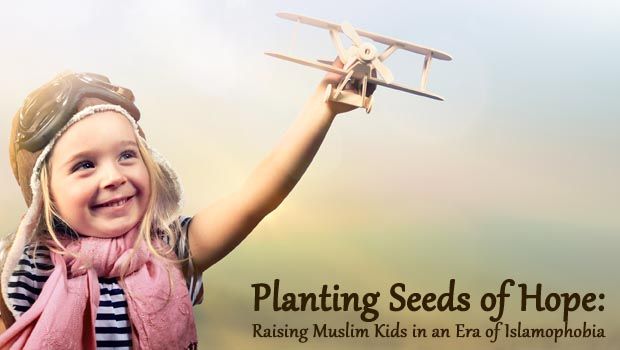
    Planting Seeds of Hope: Raising Muslim Kids in an Era of Islamophobia

    I’m one of those parents who stares at her kid as she sleeps. I notice every curve of her face and arch of her eyebrows. I know what her steady breathing sounds like. I’ve memorized the intonation of her laughter and the way she throws her head back and giggles when I tickle her. She is so effortlessly mine as I am hers… she’s from me, as though a piece of my being broke off and claimed its own place in this world. But with this belonging and this connection comes a heavy sense of responsibility. Raising her in an era fueled by social upheaval and warring political parties that often bring out the worst in people is daunting to say the least.

    A day will come when our kids’ awareness of themselves and their environment will be heightened. With all our hearts we want that day to be one of unfolding maturity and self-assurance, not a day that might cause them to retreat into themselves, intimidated by bigotry and hatred directed toward them.

    Think about it for a moment – as adults we struggle every day to maintain a strong and holistic Muslim identity. I recently heard a Muslim woman say that she sometimes feels “itchy” in her own skin. She is so hyper-aware of all the negative stereotypes that people have about Muslims that she has become uncomfortable with herself. She is trapped in a self-imposed panopticon of sorts – assuming that she is being observed and judged from every angle. If these are the very real and palpable struggles of adults, how do our children fare? They’re still frighteningly malleable and they’re still being shaped and molded into the people they will become. It’s only natural that we should worry about our children having an even harder time navigating this current political climate.

    As parents, we yearn to shelter our young ones from the hatred and suspicion geared towards people who are visibly Muslim. More than anything, we want them to have normal childhoods full of bike riding, popsicle-eating, sleepovers, and unbridled fun. But a day will come when their awareness of themselves and their environment will be heightened. With all our hearts we want that day to be one of unfolding maturity and self-assurance, not a day that might cause them to retreat into themselves, intimidated by bigotry and hatred directed toward them. I comfort myself with the knowledge that it’s often in times rife with great difficulty that strong, confident change-makers and leaders are born. Rather than looking at the political climate with despair and asking ourselves, “How is my kid going to survive with his or her faith intact in such a messed up world?”

    we should raise children who we sincerely believe will be a part of the solution. Of course, that’s easier said than done! But here are some ways we can get started.

    Foster a Strong Sense of Identity

    Before occupying ourselves with whether our kids have eaten a proper breakfast, or whether they’re too warm or cold in what they’re wearing, or how well or poorly they’re doing academically, we need to ask ourselves – does my child feel comfortable in his own skin? Are our children comfortable being Muslims? Do they know what they believe in and why? Fostering a strong sense of identity starts when our children are young. I’m a great believer in books and storytelling as a way to ingrain a sense of self-acceptance. I still remember the books I read when I was a child and how they, to this day, affect the way I process my feelings and realities. Thankfully, we’re living in a time where great stories about Muslim kids are not hard to come by. Find these books and read these stories to your kids. Normalize and together cherish their names and faith and cultures, as we live in a place where their names will often be mispronounced and their faith and cultures misunderstood. Make their faith a source of comfort, love, and inspiration. Only then will they embrace their Muslim identities without discomfort or resentment. Make Eids meaningful celebrations for them. Let them feel joy and ease in their faith instead of feeling judged or forced. Help them find a second home in the mosque by creating fun and welcoming programs for them.

    One of the most important contributions we can make to nurturing our children’s identities is to ensure they have good like-minded companions. It’s important to make an effort to connect with other strong Muslim families whose kids can become companions for yours. A man asked Prophet Muhammad (peace be upon him) about the Hour (Day of Judgment), saying, “When will the Hour be?” The Prophet (pbuh) replied, “What have you prepared for it?” The man said, “Nothing, except that I love Allah and His Apostle.” The Prophet said, “You will be with those whom you love.” The company we keep has a very real and direct effect on our level of faith, and our standing in the sight of God. In a world where a child’s group of friends is instrumental to his or her development and self-concept, making sure that they have good companions is paramount to their success.

    Leave Your Bubble and Get Involved!

    While it’s important to build a great foundation for our children around other Muslims and within the Muslim community, that absolutely must not translate into segregating ourselves or our kids from the wider community where we live. Distancing ourselves from the non-Muslim population will just lead to the unhealthy practice of “othering.” Our beloved messenger Muhammad (pbuh) was known for decades in his community as a trustworthy individual – he lived with the people, he was one of them, he had real relationships with them. He celebrated with them, and mourned with them, all before ever receiving wahi (revelation) from God. When he began to preach the message of guidance, he was already familiar with the mindset and traditional ways of his people. No doubt it was an uphill battle, but there was a level of trust of the Prophet (pbuh) present, even amongst those who never accepted Islam.

    It was not his practice to segregate himself or his family from those who didn’t believe in his message. Quite the contrary! He interacted with them a great deal – he was generous with them, he was just towards them, and he kept his promises to them. While we’re working on strengthening our children’s Muslim identities, we shouldn’t forget that they need to know how to navigate the greater community as well. They are part of that community, integral to its existence and its well-being.

    I strongly believe that getting involved in positive activist work is one of the most important ways to instill a sense of purpose and confidence in our children. Enjoining good and forbidding evil is an important and well-known cornerstone of our faith. In the Quran, Allah (SWT) praises the believers who support and promote good actions and who prevent evil actions. Prophet Muhammad (pbuh) said, along these lines, “Whoever amongst you sees an evil, he must change it with his hand; if he is unable to do so, then with his tongue; and if he is yet unable to do so, then with his heart — and that is the weakest form of faith.” As Muslims, our faith instructs us to be beacons of justice. But that means leaving our comfort zones. It means taking on a responsibility to change both our Muslim community and broader community for the better.

    Teaching our kids to align themselves with groups and communities that face similar challenges to those that Muslims face will ensure they not only “integrate,” but also become active contributors. Building meaningful alliances is about supporting everyone facing injustice. Black Lives Matter is an instrumental example of this. For as long as black Americans have lived in the U.S., rampant racism has been the foundation of their experience. Although the civil rights movement brought about many positive changes, racism and unequal treatment of black Americans is, unfortunately, still the default in so many places and aspects of our society. From police brutality to unequal education opportunities, the intergenerational cycle of poverty and discrimination subjects black communities to ongoing experiences that reflect a multitude of trickle-down effects of slavery.

    It’s important to understand that we cannot separate ourselves from the struggles of black Americans. We are often the same community, and Muslims of African-American heritage also face a double-edged sword when it comes to prejudice. But even when our identities do not overlap, their struggle is our struggle. It must be. When we come together as communities to fight Islamophobia, racism, classism, and any form of injustice, we become stronger, more skilled, and more capable. Brick by brick, we build the bridges that we may need to cross someday.

    Be Your Child’s First Role Model

    Prophet Muhammad (pbuh) lived at a time of ignorance. Families were ashamed to have daughters instead of sons, people were judged by the color of their skin, and those who held onto their Islamic faith were humiliated and severely oppressed. Through all this, the Prophet was not discouraged in the least. His message of mercy and guidance rang true and shone a bright light that pierced the darkness. He brought a message of hope, a message of mercy, love, and fair treatment for all people regardless of race, gender, nationality, or religion. His patience and perseverance transformed his community and the entire world. There is barely a place on this globe that has not been touched by this light.

    Prophet Muhammad (pbuh) and his companions did not hide away, ashamed of who they were or what they believed. They stood tall in the face of criticism and abuse, continuously striving to establish justice and equality. They did the work needed to actually better their community. Our children are intelligent beyond words. As parents, if we emulate and exemplify those early Muslims, pushing through the darkness of hatred to create light and hope, our children will see and recognize that virtuous and strong character in us.

    There have been so many days when I’ve worried about how to teach my daughter to be kind and charitable, to share, and to ask for forgiveness when she makes a mistake. I used to lose sleep over it, looking at her napping cherub face and wondering: how can I help her become a good person? I was in a constant state of apprehension, searching for good Islamic books and resources to help me convey to her the beauty of good character. While I still scour Islamic conference bazaars for helpful resources, I have come to understand that the answer is actually quite simple – I must be who I want her to be. I should speak to her the way I expect her to speak to others. I should pray the way I expect her to eventually pray. I should dress the way I wish for her to dress; I should exude confidence the way I wish for her to. In me, my daughter has her first role model. In me, she has the person who she will – without her consciously understanding it – imitate. And while verbal instruction is important, actions are overwhelmingly what will determine what our children learn and internalize. As we all know, it’s a running joke that we eventually become our parents!

    Seek Help from Allah

    This point should be number one on the list. We are not capable of doing a single thing until Allah (SWT) wills it. But we do have a tool in our tool chest that unfortunately can go unused for long periods of time. Prophet Muhammad (pbuh) said, “Three supplications will not be rejected [by Allah] — the supplication of the parent for his child, the supplication of the one who is fasting, and the supplication of the traveler.” We can employ every parenting trick in the book, expose our kids to only the best books and media, get them involved in positive activism and volunteer work, and make sure they’re around good role models – but when all is said and done, it is only Allah (SWT) who is the controller of hearts. So be steadfast in asking Him to guide your children, and to make them grow and mature in a way that renders them fit to be leaders of the believers. Our hope always remains pinned on Allah’s all-encompassing mercy.

    “Our Lord! Grant to us from our spouses and our offspring the comfort of our eyes, and make us models for the righteous (Quran 25:74).