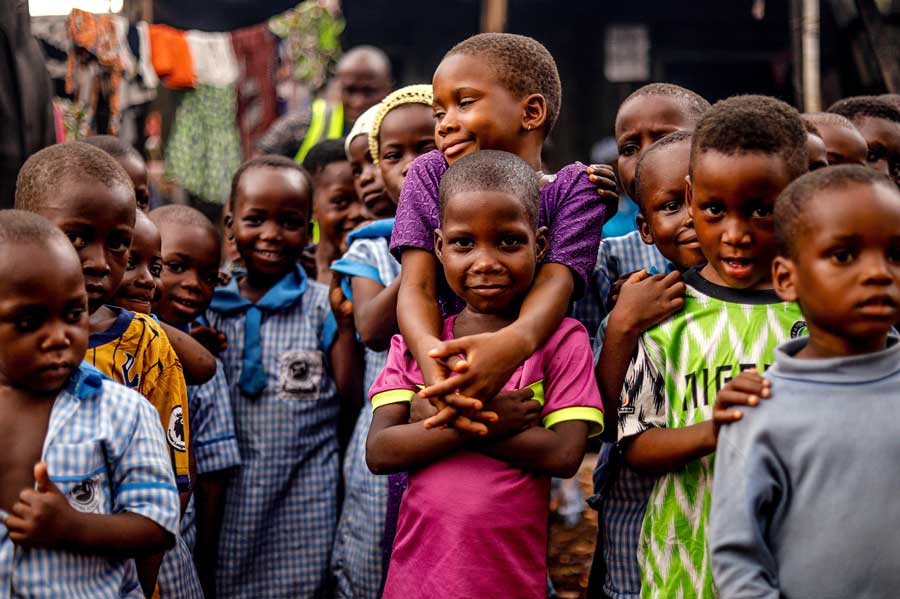
The year 2011 saw dramatic changes and upheaval in the North African nations of Algeria, Egypt, Tunisia, and Libya. Helping Hand for Relief & Development (HHRD), in partnership with local non-governmental organizations (NGOs), provided emergency humanitarian assistance to thousands in these countries, and is continuing to provide services. HHRD staff member Irfan Khurshid went into the affected areas to establish the partnerships and relief work.
In the middle of July, 2011, in the Horn of Africa (Eritrea, Djibouti, Ethiopia, Somalia, and Kenya) a severe food crisis occurred due to historic drought that threatens the lives and livelihood of more than 10 million people. Many refugees from Southern Somalia fled to the neighboring countries of Kenya and Ethiopia where they have to live in crowded camps near the borders, in unsanitary conditions.
The crisis warranted swift action by HHRD which, according to its mission, is committed to serve humanity by integrating resources for people in need, and striving to provide immediate response to disasters. HHRD has been working in the Horn of Africa, mainly through the Water for Life and Orphan Support programs, and seasonal projects like Iftar and Eid Gift Donations, in collaboration with partners Islamic Foundation of Kenya (IFK) and the Young Muslim Association (YMA).
Establishing HHRD Presence
The severe situation in the Horn of Africa called for sending emergency relief teams from HHRD Pakistan to Africa. The first team to arrive in July, 2011 on the eve of Ramadan 1432 included Azmat Akbar, Sajid Iqbal, and Uzair Khan. In partnership with partners IFK and YMA, members of HHRD Team started to establish food distribution, water provision, and medical assistance in ten villages near the border of Kenya and Somalia, where Somali refugees were living.
Immediate Respite
The objective of emergency response work is to save as many lives as possible, as mentioned in Qur’an 5:35: “…and if any one saved a life, it would be as if he saved the life of the whole people…”
In the first month, around 3,200 malnourished or undernourished families were reached (about 20,000 persons), and given food ration for one month. Also during the last ten days of Ramadan and on the occasion of Eid, a cooked meal was provided and gifts were distributed among the children. Affected populations in Garissa, Isiolo, Dada Jabula, Dadab, Iffo Camp, Garbatula, and several other villages were reached.
A second major project was started involving the trucking of water to five villages for three months, with a water tanker filling the water storage tank in each of the villages, including Sudah Lan, Hudumo, and Diisow 1 in Fafi District; and Diisow 2 and Agra Gudud in Dujis. Around 9,000 persons and 70,000 livestock benefited from this vital project. In addition to the food distribution and water provision, more than 6,000 individuals received medical treatment, 180 children were immunized, and 274 basic health awareness sessions were organized by HHRD in the Emergency Field Hospital in Dada Jabula, Kenya.
Celebrating Eid with Those in Need
The HHRD team was so moved by the plight of those they were striving to help through the blessings of Allah SWT that they decided to stay in Kenya for Eid, even though they certainly wished they could be in Pakistan to celebrate Eid with their own families. They celebrated Eid-ul-Fitr with the refugees from Somalia and the orphans HHRD is sponsoring in collaboration with the Islamic Foundation of Kenya and the Young Muslim Association (YMA).
Smiles Across Miles: In-Kind Gifts Program
A few weeks after arriving in Kenya, the HHRD team started the process of registering HHRD as a local Kenyan and Somali NGO as the first step in establishing the HHRD long-term development work in Africa. They also laid the groundwork for the In-Kind Gifts Program which transports containers of basic necessity items, food, and medical supplies and equipment donated in various cities throughout the U.S. Last year, in the month of Ramadan 1432, HHRD organized the Horn of Africa In-Kind Gifts Program (see the list of centers at http://www.hhrd.org/hhrd-In-KindDonation.aspx). Despite fasting and hot weather, a large number of donors and volunteers came out to be part of these important efforts, and around the time of Eid-ul-Fitr, the first container was shipped from Chicago. Many individuals of various other faiths also generously joined in the efforts.
One of these volunteers said: “We are working on a very hot day, when it is 100 plus degrees, for four to five hours to pack necessary things for those who have been facing harshness of weather and elements for months. I have really understood what it means to be hungry and thirsty while facing the severe weather. I want to thank Helping Hand for organizing this effort for humanity and creating opportunity for us here to be working with our own hands for humanity in dire need.”
At the time of this report, 15 containers have been shipped to the Horn of Africa valuing $1.2 million. Of these, nine containers have already been distributed, benefiting a population of 121,915 (20,320 families). Containers have included medical equipment and supplies, as well as food.
HHRD in Mogadishu, Somalia
In September 2011, as HHRD was about to register itself as an NGO in Somalia and Kenya, Country Director Pakistan of HHRD, Fazalur Rehman, visited the Horn of Africa to monitor and evaluate the progress of the relief work in Kenya and in Somalia.
Senior Leadership in Horn of Africa
An HHRD delegation of members of the Board of Director visited Africa once the registration was complete, in order to set up the Main Office of Africa Initiative in Nairobi, Kenya. This involved establishing the initial guidelines and protocols for the relief work and to make necessary outreach efforts to salient stakeholders in the initiative. Members of the delegation included Dr. Farrukh Raza, Chairman of HHRD; Fazalur Rehman, Country Director Pakistan; Dr. Zahid Bukhari, President of ICNA; and Irfan Khurshid, Director for International Affairs.
The rest of the Board members returned, while Irfan Khurshid, Director for International Affairs, went to Somalia and Tanzania to establish the office of Helping Hand in Mogadishu, and explore the possibilities of initiating projects in Tanzania.
Africa Summit
HHRD, in collaboration with the Islamic Circle of North America (ICNA), organized and held the Africa Summit 2011 in December of last year. The conference was a success as participants reached a consensus about the top four priority areas of long-term humanitarian work to be focused on in Africa: poverty eradication, health, education, and the empowerment of women.
Initial Steps Towards Long-Term Plan
Irfan Bashir joined HHRD as the Regional Director of Africa, and following the four key agenda items specified by the Africa Summit, the Africa team has gradually initiated some pilot projects in order to see how various development programs can be instituted in the African context. Some of these pilot projects include:
Provision of sustainable water facilities in drought-affected areas: Construction and installation of hand pumps; construction of VIP latrines; waste management and garbage disposal; hygiene promotion; and training of teachers. Over 23,000 people are expected to benefit from these projects.
Mobile Health Units in Mogadishu, Somalia: Objectives are to reduce and control the outbreaks of various common diseases such as measles, diarrhea, and skin infections; to improve the health of the IDPs (internally displaced persons); to provide medical care for an increased number of individuals and, through patient education, to achieve better compliance with treatment protocols by the patients; eight medical camps were held and 548 patients were treated.
Mobile Health Unit in the Eastern Province of Kenya: Currently the number of patients taken care of by emergency healthcare and treatment are 1,870; conditions treated include respiratory infections, ringworm, tonsillitis, urinary tract infections, malaria, fever, eye infections, muscle pains, asthma, and diarrhea.
Skills Development Program (SDP): this program has recently been initiated, with the objectives of identifying potential trainees through a survey conducted by HHRD; to counsel potential trainees as to recommended training; to establish a vocational and skills development center at a selected location; to help facilitate trainees in areas of self-employment and income generation activities based on the skills acquired through SDP; and to develop linkages of skilled beneficiaries with market opportunities. In May 2012, two SDP centers in Kenya have been established, in Garissa and Isiolo, with computer training and tailoring training to be given to roughly 100 students in each SDP center.
Path Forward for HHRD in Africa
Following the recommendations from the Washington D.C. Africa Summit held by HHRD, as well as assessing the progress of work up to the current time in the Horn of Africa, HHRD will continue to move forward with short and mid-term relief, and long-term development programs, including but not limited to the following:
- In-Kind Gifts Program in Tanzania and Somaliland
- WASH Program in Tanzania
- Orphan Support Program in Tanzania
- Skill Development Program in Somaliland
- Establishment of microfinance activities
- Infrastructure Development Program
- Orphan Support Program
- Policy Making, Promotion, and Impact Assessment
- Coordination of networking with other stakeholders
- Long-Term Sustainability and Development Program in drought-affected areas and populations