
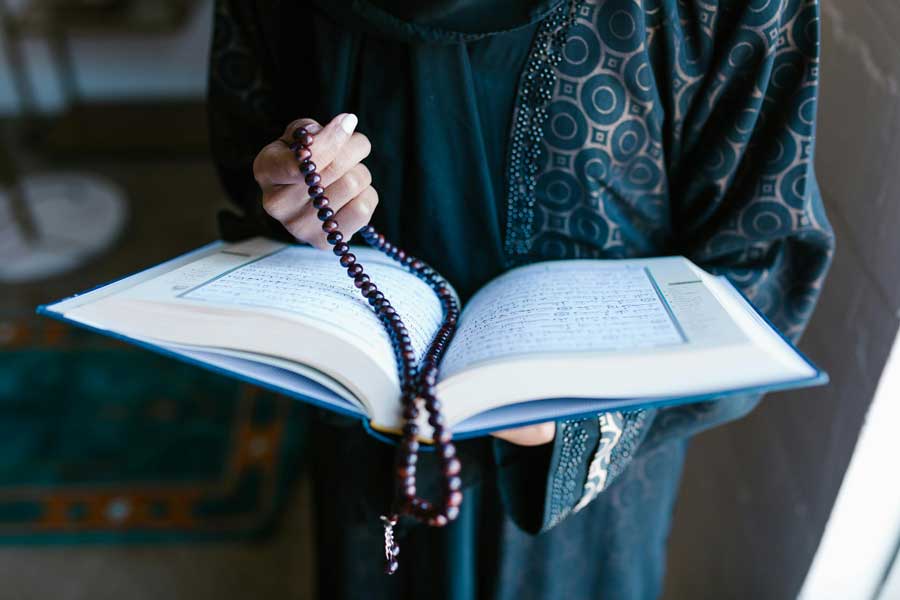
The Qur’an and the Sunnah highlight the importance of embracing silence as a transformative path to heightened spirituality, a practice that the pious predecessors recognized and often employed as a safeguard for spiritual well-being and ethical conduct. Fundamental Islamic acts of worship, such as prayer, fasting, listening to the recitation of the Qur’an, muraqabah or mindfulness, dhikr or remembrance, and fikr or reflection, all share the standard requirement of entering into a state of silent humility. Within this intentional silence, a person finds khushu, the focus of mind and humble submission before Allah.
The discipline in practicing intentional silence does not entail restraining from speech necessary for worship, such as the utterances of prayer, supplication, and remembrance, or restraining from necessary daily speech, but rather an abandonment of excessive idle talk. Additionally, during this practice of silence, the inner disturbances of the heart surface, facilitating self-awareness and surrender to the Divine presence. Practicing silence involves becoming deeply aware of one’s thoughts, attitudes, and emotions. In this way one is striving for a greater purity of self, enhancing worship and peaceful submission, this being a journey toward discovering wisdom – all conducive to reaching ihsan, or spiritual excellence.
Sheikh Abd Al-Qadir Al-Jilani said in the tenth discourse of Al-Fath ar-Rabbani, or The Sublime Revelation: “O young man! Let dumb silence be your custom, unobtrusiveness your habit, and fleeing from creatures your whole aim and purpose. If you can dig yourself a den in the earth to hide away in, do it. This should be your regular practice until your faith has matured, your certitude has gained a firm footing, the wing of your truthfulness has grown all its feathers, and the eyes of your heart have both opened. Then you may rise up from your home in the ground and fly into the air of the knowledge of Allah” (Al-Jilani, p. 65).
Two points might be made here: the translation “dumb silence” would seem more in line with the meaning of “dumb” as “lacking [in this case, purposefully foregoing] the power of speech” rather than “lacking intelligence or good judgement.” The usage by Sh. Al-Jilani would appear to be along the lines of “speechless silence.”
The second point is about the line “…dig yourself a den in the earth to hide away in…” in conjunction with the previous line, “Let…fleeing from creatures [be] your whole aim and purpose.” Islam does not encourage complete withdrawal from people or society. Sh. Al-Jilani is addressing a young man and apparently trying to highlight and emphasize the importance of practicing silence, being reflective, and protecting oneself from the distractions and allurement of the dunya, especially during the formative years before full adult maturity is reached.
The Transformative Power of Regular Silence
In a general sense, Al-Jilani imparts timeless insight, urging believers to cultivate a lifestyle characterized by silent introspection, humility, and a deliberate withdrawal from worldly distractions. His words, rooted in the Qur’anic guidance and Prophetic teachings, stress the transformative power of regular silence, advising individuals to make it a habitual practice. By embracing moderation in speech and seeking solitude when worldly responsibilities allow, the devout can embark on a journey of self-reflection, essential for nurturing a profound God-consciousness. Al-Jilani envisions a process whereby an individual who metaphorically retreats to a den or hole in the earth attains spiritual maturity, certitude, and the full blossoming of sincerity. The disciplined restraint of the voice from speaking unnecessarily and only speaking in virtuous ways becomes crucial in this transformative process. The ultimate aim is to reach a heightened awareness of Allah, symbolized as rising from the grounded solitude into the expansive air of knowledge of the Divine. Al-Jilani thus teaches that disciplined silence and introspection are personal virtues and essential prerequisites for those who aspire to call others to the Oneness of God, ensuring their message is rooted in a deep and authentic connection with the Divine. This view on silence to achieve piety is a recurring theme in the Islamic tradition. Indeed, one of the pious predecessors said, “He who has been given silence and asceticism has been given all knowledge” (Al-Ghazali, p. 21).
Here too, it is important to note that the English word “asceticism” has the primary definition of “extreme self-denial or self-mortification for religious reasons.” Islam does not countenance inflicting pain or punishment upon oneself. It also does not recommend “abstaining from the normal pleasures of life.” If we take “asceticism” in the narrower meaning of leading a simple life and abstaining from the temptations and allurements of materialism or devotion to pleasure, then it aligns more closely with Islamic doctrine.
The Wisdom in Silence
The wisdom of keeping long periods of silence is grounded in the Qur’an and the Sunnah and the teachings of classical and contemporary scholars. Allah says in the Qur’an: “When the Qur’an is recited, listen to it attentively and be silent, so you may be shown mercy” (7:204). In another verse, when Luqman addresses his son, he advises him with the following: “Be moderate in your pace. And lower your voice, for the ugliest of all voices is certainly the braying of donkeys” (31:19). Ibn Kathir mentioned in his tafsir, that this verse means not to exaggerate in speaking nor raise the voice unnecessarily.
Similarly, Al-Qushayri mentioned two types of silence: the external, observable quietness and the internal, profound silence within the heart and mind. The heart of an individual who trusts Allah refrains from seeking material provisions through prayer. On the other hand, the heart of a person with deep spiritual knowledge remains silent in acceptance of divine will, as it possesses the attribute of compliance. The former displays confidence in the benevolence of Allah’s actions, while the latter is content with whatever decree Allah ordains (Al-Qushayri, p. 168).
In his famous Ihya Ulum al-Deen, Imam Al-Ghazali mentioned, “We were told that wisdom has ten parts and nine of them are in silence.” He also wrote about The Prophet, peace and blessings be upon him, often practicing reflective silence. Simak narrated that he asked Jabir ibn Samrah, “Have you sat with the Messenger of Allah, peace and blessings be upon him?” Jabir said, “Yes, and he would observe silence for long periods and seldom laugh. His companions would mention poetry in his presence and some of their affairs. They would laugh and smile at times” (Musnad Aḥmad, 20810). The Prophet Muhammad, peace and blessings be upon him, also advised his companions to maintain silence to ward off sins, avoid injustice, and be closer to Allah. He said, “Whoever believes in Allah and the Last Day, should not hurt his neighbor and whoever believes in Allah and the Last Day, should serve his guest generously and whoever believes in Allah and the Last Day, should speak what is good or keep silent” (Sahih al-Bukhari, 6136, Ṣahih Muslim, 47). Anas ibn Malik narrated that the Prophet, peace and blessings be upon him, said, “You must have good character and observe long periods of silence. By the One in whose hand is my soul, no behaviors are as beautifying as these two” (Musnad al-Bazzar, 7001).
A Powerful and Spiritually Enriching Practice
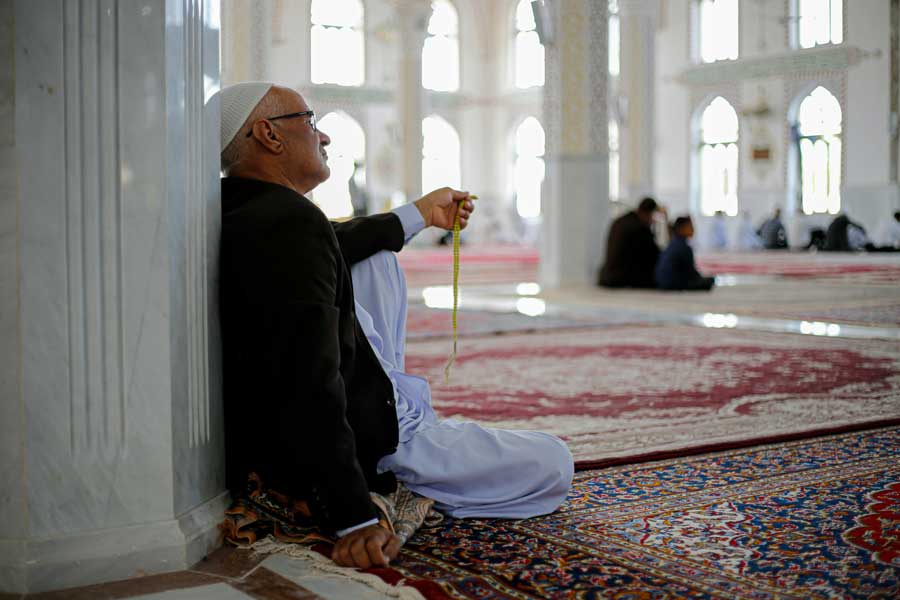
Incorporating moments of silence into daily life is a powerful and spiritually enriching practice to draw closer to Allah. Human beings can find opportunities for silence through intentional pauses during the day, especially before or after acts of worship such as the five daily prayers. The tahajjud, or voluntary night prayer, presents another perfect opportunity to come closer to Allah during the quietude of the night’s late hours when most people are sleeping. Abu Huraira reported, “The Messenger of Allah, peace and blessings be upon him, said, ‘Our Lord Almighty descends to the lowest heaven in the last third of every night, saying: Who is calling upon Me that I may answer him? Who is asking from Me that I may give him? Who is seeking My forgiveness that I may forgive him?’” (Ṣaḥih al-Bukhari 1145, Ṣaḥih Muslim 758). These hours can serve as a contemplative space for self-reflection and connection with Allah.
Additionally, the Prophet Muhammad, peace and blessings be upon him, exemplified the importance of silence by occasionally observing long periods of reflection and mindfulness. His ability to remain composed in the face of verbal insults, as narrated in countless hadiths, highlights the virtue of self-restraint.
The pious predecessors recognized the value of silence as a tool for inner purification, wisdom, and enhanced worship. Learning from their examples, contemporary believers can integrate moments of silence into their daily routines, fostering a profound spiritual consciousness and intentionality in their devotion to Allah. In his work On Knowing Yourself and God, Al-Ghazali elucidates the idea that tranquility of the heart, stemming from the continuous remembrance of God, manifests during persistent engagement in acts of worship. This serene state is attained when the ties of worldly desires are severed from the heart, achieved through intentionally avoiding sinful behavior. The abstention from sin catalyzes the calmness within the heart, while the devout worship of God drives the triumph of remembrance. Both elements contribute to the cultivation of both love and fear of God, described as the foundational seed for spiritual happiness and success, which lies in nurturing spiritual growth and consistently invoking the name of Allah.

The Profound Benefits of Mindful Silence
The practice of mindful silence in the Islamic tradition yields benefits beyond mere verbal restraint. Disciplined silence acts as a protective shield, preventing individuals from uttering words that may lead to subsequent regret. It serves as a potent barrier against speaking out of ignorance or insulting others, aligning with the teachings of Prophet Muhammad, who emphasized the importance of guarding one’s tongue. Additionally, embracing silence facilitates thoughtful contemplation before actions and ensures that words are purposeful, resonating with the wisdom in the saying attributed to Plato: “Wise men speak because they have something to say; fools speak because they have to say something.”
In a hadith echoing a similar sentiment related by Abdullah ibn Amr, the Prophet, peace and blessings be upon him, said, “Verily, Allah despises an extravagant speaker among men, who flaps his tongue about like the flapping of a cow” (Sunan al-Tirmidhi, 2853). The Prophet, his companions, and their successors taught moderation in all matters, including in speech. By refraining from constant chatter, individuals create space for necessary self-reflection. This deliberate silence is instrumental in disconnecting from worldly distractions, allowing a singular focus on worship. Thus, silence becomes a conduit for spiritual growth and enlightenment and its benefits include self-awareness, ethical conduct, and a deeper connection with the Creator.
When the followers of the Prophet Muhammad, peace and blessings be upon him, would inquire about what habits they should practice in order to protect their faith, one of his recommendations was to restrain their speech. In one narration, he instructed one of his followers: “Do not say anything on your tongue except what is right, and do not stretch out your hand except to do good” (Shu’ab al-Iman, Al-Bayhaqi, 2867). Similarly, when the companion Uqbah ibn Amir asked him what would save him and his fellow worshippers, the Prophet responded, “Restrain your tongue, let your house be enough for you, and weep for your sins” (Sunan al-Tirmidhi, 2406, DHO). There are also narrations directly from the companions regarding the importance of keeping silent like from Abu Darda, may Allah be pleased with him, who said, “Silence is a form of wisdom, yet few people practice it” (Jamiʻ Bayan al-ʻIlm, 628, DHO).
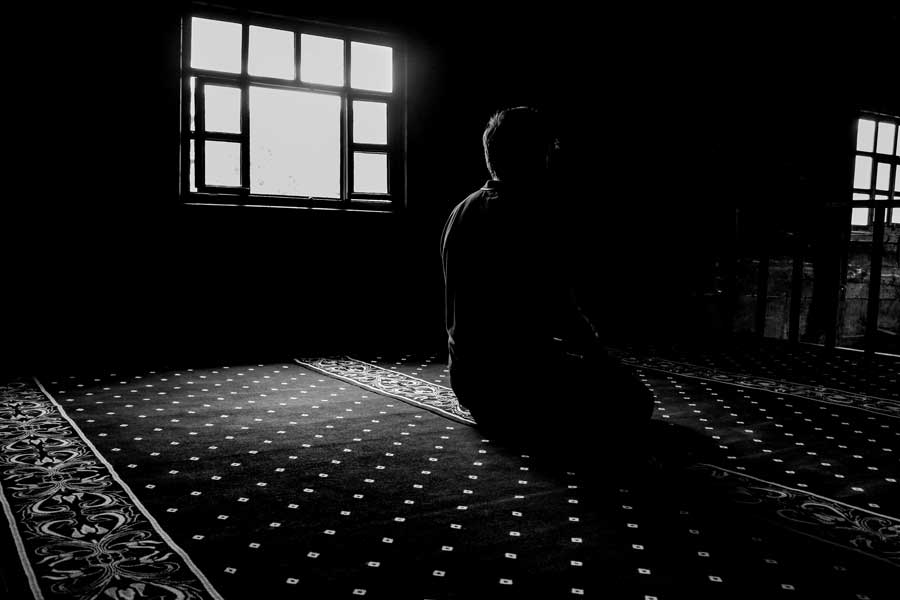 The intentional practice of silence is rooted in Qur’anic guidance and the Prophetic model. Prophet Muhammad’s teachings emphasize the virtues of silence, advising believers to speak with virtue or remain silent, due to its role in cultivating good character. The works of esteemed scholars like Al-Jilani, Al-Qushayri, Al-Ghazali, and others further expound on the topic of silence as a means to perfect worship and as an act of worship itself. Al-Jilani stresses the transformative power of silent introspection and withdrawal from worldly distractions to nurture faith, certitude, and truthfulness. Aligning with this, Al-Qushayri identifies silence as a crucial stage in the journey toward spiritual enlightenment, as it is fundamental to Islamic acts of worship, such as prayer, fasting, and remembrance. Wisdom, as articulated by Imam Al-Ghazali, is found predominantly in silence, with the Prophet himself often observing reflective silence. The correlation between faith protection and moderated speech is evident in the Prophet’s warnings to restrain the tongue. These collective teachings demonstrate that silence is a means of self-discipline, a path to wisdom, enhanced worship, and spiritual completeness.