
بسم الله الرحمن الرحيم

Tag: raising children

  • Building Resilience in Our Children

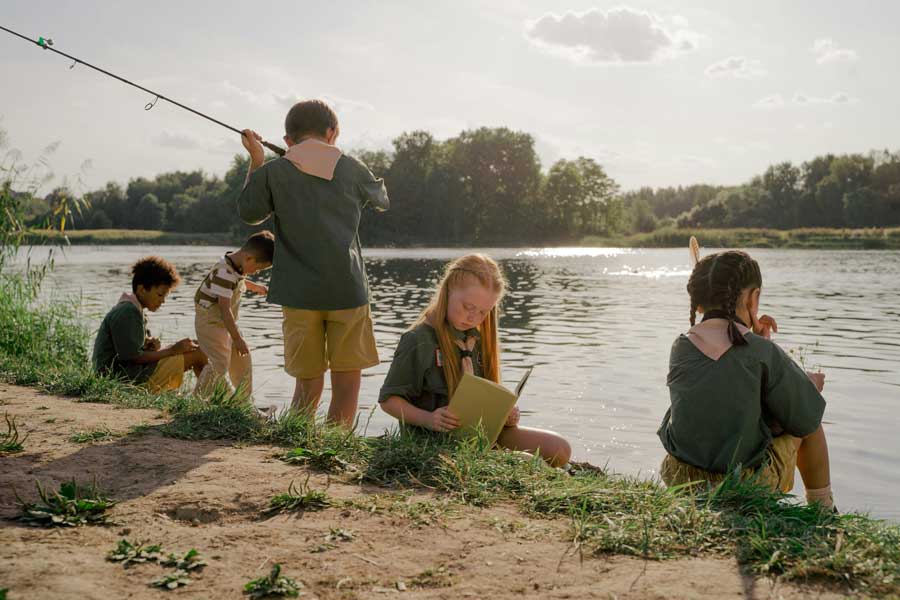
    Building Resilience in Our Children

    In a world where children constantly face new challenges — from academic pressures to social dynamics — resilience has become crucial for their overall well-being and future success. Resilience, the ability to bounce back from adversity and adapt to difficult situations, is not merely an innate trait but a learned skill that can be nurtured from a young age.

    Resilience is essential for children due to the daily obstacles they encounter. Consider a child who faces bullying at school, struggles with a complex academic subject, or experiences family upheaval. Without resilience, these challenges could have long-lasting negative effects on their mental and emotional well-being. However, with the right tools and support, children can learn to navigate these hurdles, emerging stronger and more capable. This article explores the importance of building resilience in children and offers practical strategies for parents, educators, and caregivers to foster this critical trait. Understanding and applying these techniques can help children develop the inner strength needed to thrive in an ever-changing world.

    From a psychological perspective, resilience refers to the ability to adapt and recover from stressors and challenges, maintaining positive mental health and well-being. It involves qualities such as optimism, patience, perseverance, problem-solving skills, and effective emotional regulation — all essential for children’s overall development. Resilience helps children navigate challenges, recover from setbacks, and succeed in various aspects of their lives.

    Research shows that resilience is linked to better mental health outcomes, with resilient children exhibiting lower levels of anxiety, depression, and other mental health issues. They cope more effectively with academic stress, engage more fully in school activities, and maintain emotional stability in the face of everyday adversity.

    Resilience in Islam

    In the Qur’an, the concept of resilience is closely related to the term “sabr,” which means patience and perseverance in the face of challenges. The Qur’an provides numerous stories of resilience that can inspire both us and our children. The stories of Prophet Ibrahim (alayhi as-salaam), Prophet Yusuf (as), and Prophet Ayub (as) exemplify remarkable resilience.

    Prophet Ibrahim (as) demonstrated unwavering faith when he was thrown into the fire for rejecting idolatry; and when was willing to sacrifice his son Ismail (as) in obedience to Allah’s command. Despite facing immense trials, he maintained hope and trust in God. Similarly, Prophet Yusuf (as) showed immense patience and integrity despite being betrayed, sold into slavery, and unjustly imprisoned. Through his faith, he overcame challenges and thrived. Prophet Ayub (as) also embodied resilience through severe physical ailments and the loss of his wealth and family, remaining patient and grateful to Allah, which led, ultimately, to the restoration and increase of blessings. These stories teach that resilience in Islam is rooted in unwavering faith, sabr, and tawakkul (trust in and reliance on Allah), even in the most challenging circumstances.

    Prophet Muhammad (peace be upon him) said, “Wondrous is the affair of the believer, for there is good for him in every matter, and this is not the case with anyone except the believer. If he is happy, then he thanks Allah and thus there is good for him; and if he is harmed, then he shows patience, and thus there is good for him” (Sahih Muslim). This hadith highlights the dual approach of gratitude and patience as powerful mechanisms for building resilience. By expressing gratitude during times of happiness and practicing patience during adversity, Muslims can find good in every situation. This approach not only strengthens faith but also helps navigate daily challenges with a positive and resilient mindset.

    Practical Strategies

    To build resilience in children, practical strategies are essential. Modeling resilience is key, as children learn by observing adults. Parents should demonstrate positive ways to manage stress and recover from setbacks. They should avoid overreacting to situations and refrain from giving in to negative emotions such as intolerance, resentment, or anger.

    Encourage problem-solving in children rather than solving problems for them. Problem-solving helps children think through challenges, consider potential solutions, and decide on a plan of action, boosting their confidence in handling difficult situations. Teach children that failures and setbacks are opportunities for growth. Praise their hard work and determination and help them find the positive aspects of challenging situations. This approach should be adopted by parents themselves.

    Equip children with tools to manage their emotions and stress. Teach self-soothing skills like deep breathing, mindfulness, or journaling. Introduce healthy coping strategies such as talking to someone they trust, engaging in physical activity, or pursuing hobbies.

    Spiritual Practices

    Building resilience is greatly empowered by incorporating spiritual practices. One key aspect is sabr, patience and perseverance, as mentioned above. Believers are encouraged to exercise sabr during challenges, hardships, and adversity. Many passages in the Qur’an highlight the value of sabr, which is seen as a fundamental virtue yielding immense reward and blessings.

    During trying times, Muslims are urged to turn to prayer and ask Allah for wisdom, mercy, strength, and support. As the Qur’an says, “O you who have believed, seek help through sabr and prayer. Indeed, Allah is with those with sabr” (Qur’an 2:153). We can teach children the value of du’a and the importance of consistent salah. We can help them develop steadfast faith in God’s plan, supporting their resilience. Performing the five daily prayers offers regular opportunities to connect with Allah, seek guidance, and find solace in His presence. It is important to remind children to use these moments in prayer to seek strength and patience from Allah, especially during difficult times.

    Another important practice is trust in Allah (tawakkul). Genuine resilience arises from depending entirely on Allah while making full effort in all endeavors. The Qur’an advises, “And upon Allah let the believers rely” (Qur’an 3:122). Parents must teach children about tawakkul and demonstrate through their own actions that they trust in Allah. They should encourage them to face challenges with persistence and courage while trusting that Allah will guide and help them. Additionally, regular recitation of the Qur’an and dhikr offers guidance, comfort, and wisdom to navigate life’s challenges. Reflecting on the stories of the prophets and their unwavering faith can certainly inspire resilience.

    By incorporating these psychological, emotional, and spiritual practices into daily life, we can build a strong foundation of resilience and faith, in our families and in our homes. Adversities can then be viewed as opportunities to turn to our Lord.

    “O Allah, I hope for Your mercy. Do not leave me to myself even for a blink of an eye. Correct all my affairs for me. There is none worthy of worship except You” (Abu Dawud).

  • Inspiring the Love of Learning in Children

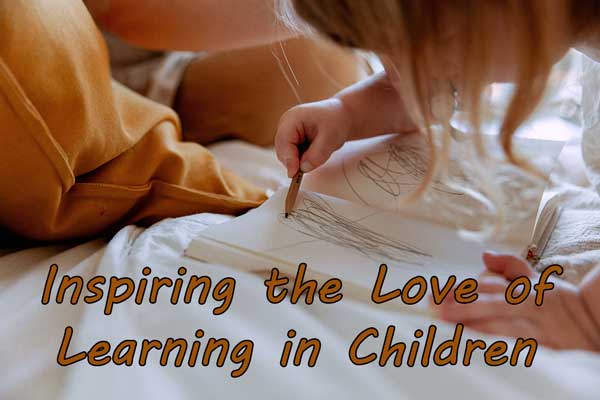
    Inspiring the Love of Learning in Children

    It is nothing less than divine wisdom that the first word revealed in the Quran is “read.” Allah says, “Read in the name of your Lord who created, created man from a clinging substance. Read, and your Lord is most generous, who has taught by the pen, taught man what he did not know” (Qur’an 96:1-5).This very first revelation to Prophet Muhammad (s) conveys to us the importance of reading and writing, of learning and seeking knowledge. In fact, Allah created children with the innate desire to learn. Even before the first year, a child begins to observe and explore his or her environment. They are curious and even employ simple investigative learning techniques— they use all their senses to explore an object, touching it, putting it in their mouth to taste it, shaking it, pulling on it, etc. There is so much they want to experience, especially in the formative years. Unfortunately, this innate desire is often crushed by parental dismissal of the creative and explorative capacity in their children and then by schools that overly emphasize regimentation.

    The Qur’an is resplendent in providing examples of learning through engaging with our environment,from the vast expanse of the galaxy to the depths of the oceans. Winds and clouds, what is within soil, the life-giving properties of water, the alternation of night and day, and so many more references to the world of nature — all are presented as being signs of Allah.The Qur’an encourages humans to engage in deep reflection and critical thinking. Aptly put, learning is a lifelong journey! As parents and teachers, it is our responsibility to encourage and provide the most appropriate learning circumstances and conditions to help our children achieve that “aha!” moment. This can be done through facilitating children to expand their inherent inquisitive nature. This also builds their confidence in themselves and encourages them to lead a more content and satisfying life.

    So how do we take on this task?It isall up to us and our readiness to educate ourselves, engage in reflection and critical thinking ourselves, and make the needed efforts to enable our children to become lifelong learners and explorers! Below are strategies that can support you and your child in developing the love and passion for learning.

    Strategies for Lifelong Learning

    Reading together: There cannot be enough emphasis on the impact of reading to children, especially reading aloud. Apart from arousing and increasing their curiosity and stimulating their imagination, reading to children develops a sense of confidence and competence in them. Because of the intimacy involved in reading to children, it  leaves a lifelong positive emotional impact and favorable attitude towards reading as the child grows up.Trips to libraries continue to infuse the desire to read in the child until he or she becomes an independent reader who loves to explore and learn.

    Active listening: This communication skill, one that must be learned,will be so valuable in both the professional and personal life of the child as their life unfolds.Active listening requires the listener to fully concentrate, understand, and then respond to what was said. Itcan be beautifully incorporated into the reading program by asking higher order questions. Here are some examples of questions that can be asked when reading with young children:

    • What was the problem in the story? Was it solved?
    • What was the lesson in the story?
    • How are you like the main character in the story?How are you different?
    • Which character in the story would you choose for a friend?
    • Did anything in the story surprise you?

    The parent has the opportunity when the child answers each question to model active listening. And the child is practicing active listening when the parent asks questions about what they are reading. Active listening improves the child’s attention span and increases engagement,creating a space for the child to respond appropriately and in a timely manner.

    Learning through play: As cliche as this phrase may seem in the world of progressive education, it is by far the most successful model in achieving the desire to learn.Playing helps children learn communication skills, develop their motor skills, and helps with problem solving,all great ingredients for a love relationship with learning.Unstructured play is a great tool to encourage children to learn how to engage with their environment and to learn independently. Researchers agree that play provides a strong foundation for intellectual growth, creativity, and problem solving— the perfect combination for cultivating a habit of lifelong learning.

    Connecting with nature: Children spend more time viewing television and playing video games on computers than they do being physically active outside. Day-to-day life, for too many young children, is a blur of color, movement, and blaring sounds on screens. Add processed food that is high in calories and sugar to the sedentary aspect of sitting in front of screens and children are being set up for counter-productive habits and ill health as they get older.

    Spending a lot of time in the natural world is healthy. Viewing the natural landscape during walks,feeling the wind, enjoying the warmth of the sun, stargazing — these experiences in nature are not only healthy for the child, it is an opportunity to discuss on a simple level how all these elements are signs of Allah, meant to inspire us to think and reflect about the creation and increase our faith.Immersing the child in nature so that it becomes a positive habit is also a way to build resilience to stress. Studies show that direct access to nature can improve physical, mental, emotional, and spiritual health.

    Exercising the mind, body, and soul: The body needs lots of exercise and for small children, this can be as simple as playing outside. And just as our bodies need exercise to thrive, our mental and cognitive faculties are like a muscle and need to be exercised. Simple games such as alternately cross-tapping the knees with the hands or putting together puzzles are a great starting place.Games for the brain are things like a face memory game, a spot-the-difference game, a match-up card game, etc. Whether store-bought or home-made,these sharpen cognitive skills, build memory and quick thinking, increase vocabulary, build the child’s capacity to reason, plan, visualize, focus, and pay attention.

    The soul also needs to be nourished to remain pure and devoted to Allah. Establishing salah and adhering to all the pillars of Islam and the articles of faith are definite enhancers in fueling and cultivating the love of Learning.

    Implementing organization and structure: Last but not least is discipline. Helping children develop and foster their own self-discipline is so important. Allah created the night and day,giving an outward structure to our daily lives. Then He provided us with the five pillars of the religion and, without doubt, prayer, fasting, and charity all facilitate a disciplined approach to life. These give us benchmarks of faith and regular habits of living and worshipping.

    Providing structure for children and setting up routines for daily living that are consistent and predictable are important.Setting limits and boundaries for children helps create a balance and gives them a sense of security and stability. It also makes them feel in control of their environment which is key in the development of self-confidence.A  lack of structure, even for young children, can lead to a haphazard existence, void of motivation, goal-setting, or striving for excellence. This is a path to low self-esteem and a stunted sense of possibility for achievement.Organization and structure must be part of the daily life schedule. An ideal sleep-wake cycle that includes seven to eight hours of sleep, monitoring and controlling screen times,regular family mealtimes, as well as some basic daily chores—all have a lasting impact on the overall well-being of the growing child.

    To conclude, the parent is the most important influencer in infusing the love of learning in children.Role modeling, including the way you yourself are disciplined,organized, and demonstrating a love of learning,has a strong and lasting effect on how deeply children fall in love with the seeking of knowledge.An expert in early childhood education once said, “You have to love to learn in order to be able to teach children to love learning.” So true.

  • The Marital Relationships: Its Impact on Children

    The Marital Relationships: Its Impact on Children

    He let out a huge sigh as he looked at himself in the mirror. He wondered how things had gotten this bad. The past few months had been difficult in the house. He and his wife had been arguing and although they did so quietly in the bedroom, the kids had been acting strangely. There’s no doubt they had been affected by this mess. He couldn’t wait around anymore for things to get better. It was time to do something about it…

    The quality of our marriage relationship profoundly impacts our children

    Allah (SWT) describes the relationship between husband and wife in the Quran: “Your spouses are a garment for you, and you are a garment for them” (2:187). This is the most beautiful description of the closeness, warmth, and security that a marital relationship is supposed to provide. And in another verse, He says, “It is He who created you from a single soul, and made its mate of like nature in order that he might incline towards her…”(7:189).This is a mutual inclining of man and woman that revolves around love and compassion. Unfortunately compassion is an ingredient that is missing in so many marriages today. Instead of understanding and accepting one’s partner and his/her experience, there is judgment, blame, and dissatisfaction. This contradicts the intended relationship in which the male and female not only incline toward each other, they complete each other. They are two parts of a larger whole, striving in their lives together with a spirit of interdependence, collaboration, and harmony.

    The couple must be a cohesive unit as the marital relationship is the foundation of the edifice called family— the very base and infrastructure of the family system. When this marital underpinning is firm, the family structure stands elevated and strong against all challenges. Keeping this analogy in mind, let us look at what makes the family structure enduring and what causes it to crumble.

    A Good Divorce vs. a Bad Marriage

    Empirical evidence suggests that children are harmed less by the difficult circumstances of a divorce than the discord present in a dysfunctional family dynamic. There is the well-known hadith that “the lawful thing which Allah hates most is divorce,” but scholars point out that this refers to divorcing without a sound reason. Sometimes in anger a spouse will threaten divorce; but the hadith makes it clear that offhand, impulsive, or malicious bandying of the issue of divorce is unacceptable. Divorce is serious and displeasing to Allah SWT unless the discord is so grievous that maintaining the marriage would cause greater harm than ending it. Unfortunately though, cultural views in Muslim communities have so stigmatized divorce that unhappy spouses too often hide in shame their martial problems and thus are reluctant to seek help. But parents who are hostile to one another yet stay married only for the sake of the children may not be doing them any favors. A stable, mature, and peaceful environment is crucial to the healthy growth of a child. His or her mental and physical health is at risk when conflict predominates in the family dynamic. Studies performed by the University of Notre Dame have shown that a child’s apprehension and worry about his or her parents’ conflictual relationship directly correlates to negative mental health outcomes such as anxiety, depression, low self-esteem, and behavioral problems. In addition, parent marital conflict is related to digestive problems, fatigue, and chronic illness in children. Marital conflict can be exhibited in many ways, but the effects are similar. The slightest hint of aggression or hostility of a spouse towards the other sparks a sharp increase in cortisol levels and elevated heart rate in children. Children exhibit the same stress reaction when one or both parents yell, are contemptuous, insult, roll eyes, give out an exasperated sigh, avoid the partner, or use intimidation such as pointing a finger in a threatening way. Both the research on the effects of marital discord on children as well as the clinical experience of counselors show just how vulnerable children are to all types of marital conflict.

    Teaching by Example

    Children who witness unhealthy communication and other relational patterns between their parents grow up with inadequate understanding of what a healthy relationship is and what it encompasses. They have experienced the unhappiness resulting from parents trying to address conflicts without effective tools that maintain marriage unity and respect even in the midst of disagreement. Thus, the children themselves will more likely not possess the tools necessary to make their own relationships work in the future. Interestingly, witnessing marital conflict that is resolved with respect, warmth, and empathy has shown to have a very positive effect on children. By example, they learn how to manage the stress, frustration, and differences of opinion that can lead to conflict, and importantly, how to resolve conflicts, when they do occur, in a healthy manner. Parents are role models for their children and are responsible for providing to the best of their abilities a healthy, stable environment for the entire family to grow and succeed.

    Healthy Couples, Healthy Families

    According to Dr. John Gottman, successful marriages have a higher ratio of positivity versus negativity. Unfavorable factors exist in a good marriage but the spouses acknowledge that and then consciously choose to focus on the positive aspects of their relationship and their partners. In his book, The Seven Principles for Making Marriage Work, Dr. Gottman provides a roadmap for couples to work on their issues and become better partners. The seven principles discussed in the book include the following: enhance your love maps [knowing your partner in deep ways including his/her hopes and aspirations, stresses, emotional wounds, important life events, etc.], nurture fondness and admiration, turn toward each other instead of away, let your partner influence you, solve your solvable problems, overcome gridlock, and create shared meaning. For more details on what these principles are and how to live by them, refer to Dr. Gottman’s book.

    Another pioneer on successful relationships is Salvador Minuchin, who has published numerous books on the subject of family structure. He stresses that the hierarchy of the family is very important, with husband and wife in charge, a team working together for the betterment of the family. Co-parenting is key, with both parents on the same page when it comes to discipline, reward, punishment, etc. Family roles are also focused upon, with each person playing a role such as scapegoat or dreamer or peacemaker, and whether that role is actually helpful or harmful to the family’s overall functioning. For more information on family structure including triangles, coalitions, and boundaries (all very significant when it comes to family functioning), refer to Minuchin’s published works.

    Getting Help When Needed

    The average couple waits six years —during which time problems worsen — before they seek help, according to extensive research done by Gottman. This means that the average couple lives with discord and unhappiness for far too long. Despite the stigma that exists against therapy, we as Muslims must understand that Islam encourages seeking help when it is needed. Prophet Muhammad (s) was the ultimate advice-giver and counselor. He listened actively and empathically to any individual seeking his counsel, considered their personal and spiritual maturity, and articulated his advice in a way that addressed their particular needs. The companions of the Prophet did not try to hide their weaknesses at all cost, but sought help when needed in order to improve themselves and elevate their characters.

    This is a facet of personal courage that we must strive to emulate. Knowing that the quality of our marriage relationship profoundly impacts our children, we must find that courage within ourselves to better our own lives and that of our spouses, and contribute to a better future for our children.

    May Allah (SWT) guide us all to the right path, ameen.