بسم الله الرحمن الرحيم

Tag: Pluralism

  • Scaremongering Around Online Speech Makes No One Safer

    Scaremongering Around Online Speech Makes No One Safer

    The world of social media is a frightening place for many parents of Muslim children. Domestically and internationally, prosecutions of teenagers for terrorism-related offenses often cite social media activity as evidence. Police have created fake profiles to “friend” people on Facebook in order to further investigations. And Black Lives activists have been surveilled online by the Department of Homeland Security. Against this backdrop, some Muslim parents seek to prevent their children from using social media at all, or urge them not to post political views online. Parents should of course care what their children do on social media, as they care what they do offline, for many reasons. Children may not yet fully contemplate the possible repercussions of expressing views or sharing photos or location information publicly. Ultimately, any social media activity presents some reputational risk for anyone, as does any public speech. Privacy settings can alleviate some risk, but certainly not all. Ultimately, parents and families have to make their own decisions about privacy, and weigh how best to encourage children to identify and express their political voices while being aware of the risks.

    Yet we must not confuse our personal choices, even if those choices are to restrict our online presence, with acceptable limits to enforce on society as a whole. While parents are wise to model and encourage awareness of online privacy for youth, we should not abdicate our rights to free speech online, or elsewhere, out of a misguided belief that some rights are superfluous or just too risky in the current political atmosphere. Doing so would seriously undermine public access to information and, consequently, prospects for advancing peace and justice domestically and internationally.

    Capitalizing on Fear to Police Dissent

    Some current efforts to regulate and control dissent disingenuously play upon Muslim parents’ understandable worries about social media, influencing them to push for more surveillance and policing of speech. “Countering violent extremism” (“CVE”) campaigns, for example, are sometimes claimed to provide “off-ramps” from prosecution for Muslim youth who might otherwise be charged with terrorism-related offenses. In this storyline, federal law enforcement has no choice but to prosecute youth who have given indications of potential “extremist” views. Social media is presented as an exceedingly dangerous place for Muslim youth due to terrorist recruiters’ sophisticated use of online platforms. CVE, it is claimed, could provide a safe haven where law enforcement avoid sting operations and prosecutions targeting those who express “vulnerabilities to extremism” (which could perhaps include anger at Western governments, interest in traveling to a conflict zone, or sympathy with victims of the war on terror) and instead engage mental health professionals, imams, and others to implement “interventions” — effectively, political and/or religious deprogramming — upon such a youth.

    What these claims about CVE “off-ramps” overlook or obscure is that law enforcement agencies already have prosecutorial discretion. This prosecutorial discretion empowers federal investigators and prosecutors to avoid engaging in entrapment or overly aggressive prosecutions of every Muslim youth who might subjectively be labelled a potential “extremist.” Yet, in spite of this authority, many prosecutions for terrorism-related offenses are pursued in circumstances constitutional lawyers and other advocates have noted are not only constitutionally unsound but appear to be predatory upon those with mental health or other challenges. It is highly doubtful, then, that CVE collaborations between law enforcement and trusted social service professionals would protect Muslim youth who could otherwise be targeted for terrorism-related prosecutions. It is entirely possible such collaborations could increase the number of youth on law enforcement’s radar who have mental health or other challenges, or who express political dissent on social media.

    At the same time as CVE “interventions” are being promoted to our communities by the FBI and other federal law enforcement agencies, Western governments have pressured social and other tech media companies to regulate speech deemed “extremist” — in ways which are unaccountable to the democratic process or formal channels for redress. In a joint statement criticizing a recent “code of conduct” in which adhering IT companies agree to police controversial online content, European Digital Rights, Access Now, and allied organizations noted the code “creates serious risks for freedom of expression as legal but controversial content may well be deleted as a result of this voluntary and unaccountable take down mechanism.” Allowing our fears about “extremist” speech and of law enforcement targeting of that speech to persuade us to relinquish speech and privacy protections would be deeply misguided. A campaign to counter vague and subjective concepts like “extremism” are not only likely to be used predominantly against dissidents in the most “suspect” of communities — including Muslim communities, Black communities, environmentalists and others — they are deeply harmful to society as a whole.

    Online Speech is Speech

    Limits on permissible speech online should and do exist, but they should remain consistent with limitations on free speech limits offline. For example, in the U.S., “true threats” of violence against someone, incitement to violence (speech “directed to inciting or producing imminent lawless action” and “likely to incite or produce such action”), and libel are all illegal. But the U.S. government may not constitutionally regulate speech based on political viewpoint. Similarly, social media, as with all communications, may provide evidence of a crime. However, in the U.S., constitutional Fourth Amendment protections must apply to protect against unreasonable search and seizure of private communications.

    The First Amendment protects not only our ability to share information, but seek and receive it as well— with good reason. When governments are permitted to treat people as suspects for seeking information, the results are foreseeably discriminatory. States are unlikely to treat all people who seek information about a controversial topic as criminals and suspects. After all, governments employ many analysts who study terrorist movements and rely on the research of others. But in a landscape in which seeking knowledge makes you a potential “extremist,” identity-based distinctions, as to who is permitted and who is not, are likely to be drawn among those who seek knowledge. As the case of a Muslim terrorism researcher in the U.K. illustrates, being a member of a suspect community may consign you to be perpetually the subject of other people’s studies, never permitted to conduct your own.

    Punishing Online Dissent

    One of the primary ways social media differs from traditional media and spoken speech is in its democratizing impact. Social media theoretically provides anyone, regardless of funds or viewpoint, with an opportunity for a broad audience. Activist movements whose views do not align with the dominant print, television, and radio outlets can and do share information — including evidence of human rights abuses, and practical information to help keep activists safer — through social media.

    Social Media therefore plays an essential role in spreading information about social justice struggles, including through drawing international attention more rapidly than otherwise results from traditional media channels. Yet as social media has become more popular, online speech has also been aggressively regulated in many countries in ways that criminalize viewpoints.

    The prosecution of Azhar Ahmad, a young British Muslim, is one prominent example. In 2012, Ahmad was convicted of “sending a grossly offensive communication,” for having posted on Facebook his views following the killing of six British soldiers, citing his anger at the inattention to the violence against innocent Afghanis and stating he believed the soldiers deserved to die. Many readers of Ahmad’s post would find it deeply offensive. But whether something offends is an inappropriate and dangerous test for whether it is criminal. We cannot, and should not attempt to, criminalize disagreement into silence. Discussing Ahmad’s prosecution in the Guardian, Ralph Seymour observed, “it [was] disloyalty that [was] being punished, in a racialised way. The action of the police and courts is about constituting a new field of punishable conduct. And when disloyalty is punished, there really isn’t much that can’t be included under its canopy.”

    It is entirely foreseeable that governments that prosecute political speech do not prosecute all speech that offends. Unsurprisingly, the viewpoints governments criminalize tend to be those that dissent from the official state narrative. Reflecting on Ahmad’s prosecution and on the 20,000 cases of social media postings investigated by UK police between 2012 and 2015, Glenn Greenwald noted, “It is … extremely difficult to imagine that Facebook users who sanction violence by the UK in Iraq and Afghanistan, or who spew anti-Muslim animus, or who call for and celebrate the deaths of Gazans, would be similarly prosecuted. In both the UK and Europe generally, cases are occasionally brought for right-wing ‘hate speech’ … [but t]he real punishment is meted out overwhelmingly against Muslim dissidents and critics of the West.”

    When we recognize the reality that regulations on political speech are not, and perhaps cannot be, applied equitably, it is easy to predict that states that police political speech will target activists who challenge their own state violence. And indeed they have. Bahraini human rights activist Nabeel Rajab, who heads the Bahrain Center for Human Rights, was arrested in April, 2015 for tweets criticizing the war on Yemen by a Saudi-led coalition, of which both Bahrain and the U.S. are a part. Charges against him include spreading “false or malicious news, statements, or rumors,” “offending a foreign country” (Saudi Arabia), and “offending national institutions” (the last charge based on his speaking out about torture in the prison in which he was held).

    While outspoken human rights activists are generally aware the regimes they criticize may seek to silence them, including through speech regulations where possible, the questions, issues, and fears that speech regulations present for the general population are also destabilizing and counterproductive. The ability of governments to impose fear and uncertainty on a citizenry about the permissible limits of their speech is a powerful tool for enforcing social conformity and political control. This consequence has been observed in Russia where, according to the Associated Press, in 2015, at least 54 people (out of 233 convicted) were sentenced to prison for social media “hate speech.” Russia’s extremism law criminalizes promotion of, among other things, the “exclusivity, superiority or inferiority of citizens” based on religion, and according to the U.S. Commission on International Religious Freedom, the weight of this law has been borne primarily by Muslims. The Director of Sova, a Russian human rights group, described the impacts of arbitrary prosecutions for “extremist” social media speech: “No one knows where the red line is: It’s like roulette.”

    The Right, and Responsibility, to Speak

    In the U.S., guarding against efforts to restrict dissenting speech — many of which focus on “hate speech” or “extremism” — has been an ongoing necessity. Neither “hate speech” nor “extremism” are currently criminalized in the U.S. — nor should they be. Due to our robust First Amendment, speech may not constitutionally be restricted based on viewpoint. And there are multiple dangers in criminalizing “hate speech” or “extremist speech.” Not only are subjective terms like “hate speech” and “extremism” difficult to define, governments tend not to apply them equitably. Such regulations also drive radical dissent, including hateful dissent, underground where it is more difficult to challenge, undermining the ability of society to advocate in an informed way for just and peaceful solutions to societal problems.

    But recognition that restricting adversarial political speech — whether by labeling it “hate speech,” “extremist” or otherwise — would be unwise, impractical and unethical does not counsel in favor of our own silence. A corollary to robust speech protections is a responsibility to challenge hateful ideas with which we disagree — and not only when they emanate from the fringes of the political spectrum. As the writer Kenan Malik observed in an interview for The Content and Context of Hate Speech: Rethinking Regulation and Responses, “[W]e should be clear that what often legitimizes bigotry are the arguments not of the bigots but of mainstream politicians and intellectuals who denounce bigotry and yet accept bigoted claims… Challenging bigotry requires us to challenge the mainstream ideas that give it sustenance, and to campaign against those discriminatory social practices and laws that help make the arguments of the racists, the sexists, and the homophobes more acceptable.”

    This principle is particularly apt in our current political climate, where in the U.S., election year rhetoric has led many to condemn various politicians’ bigoted statements, but comparatively little corresponding attention has been paid to current policies and practices — such as racialized policing of Black, Latino and Muslim communities under “public safety” or “national security” pretexts — which are supported by identical, if unspoken, racism. In ostensibly democratic societies, governments rely on an informed and active populace to operate in ways that promote peace and justice. Informed members of the public can more effectively advocate than those who are terrified of accessing information or expressing “extreme” views. We must therefore reclaim and maintain strong protections for social media speech, as for traditional speech. This reclamation requires us to have the courage to reject attempts to paint “extremist” views as criminal, and instead to advocate vocally for the kind of government and policies with which we want to live.

  • Latinos Make America Great Again, and Again

    Latinos Make America Great Again, and Again

    The current presidential race has left many unbiased Americans stunned and not-so-broadminded others rejoicing, as we all witness a surge in derogatory attacks by candidates against entire minority groups, such as Muslims, African-Americans, and immigrants, particularly Latinos/Hispanics. The drama continues to unfold in what could potentially be the most controversial election in the history of the United States of America. While unity has often been declared the focal point in shaping American society, this election has polarized the American people and contributed to a rise in racially-driven violent hate crimes, xenophobia, and islamophobia.

    Republican nominee Donald Trump and his GOP rivals who fell to the side during the primaries, like Ben Carson and Ted Cruz who are, ironically, descendants of immigrants or minorities themselves, have all contributed their share of attacks against members of the Islamic community and Latinos, through their campaigns, town hall meetings, news interviews, and even through social media. Their xenophobic and Islamophobic rhetoric questioning the allegiance and morality of Muslims and Latino immigrants, is reminiscent of the Second Red Scare during the McCarthy era, in which a hysterical fear of communists (Reds) caused panic throughout the U.S.

    Of course, the most vocal of the GOP presidential hopefuls and the most controversial has been Trump, the business tycoon and former reality TV personality who starred in NBC’s The Apprentice from 2004 to 2014. Trump has since laid to rest his famous catch phrase, “You’re fired!” and replaced it with his campaign slogan, “Let’s Make America Great Again.” He began his primary race for the Republican nomination with harsh criticisms of Mexican immigrants. Speaking from the Trump Tower Atrium in Manhattan on June 16, 2015, he said, “When Mexico sends its people, they’re not sending their best. They’re not sending you. They’re not sending you. They’re sending people that have lots of problems, and they’re bringing those problems with us. They’re bringing drugs. They’re bringing crime. They’re rapists”; after smearing almost the entire Mexican population, he sympathetically added, “And some, I assume, are good people.” One of Trump’s diehard political plans to curb illegal immigration from Mexico is to build a wall separating the border between the U.S. and Mexico. He claims that the Mexican government will be paying for the construction of the wall, and Trump has even outlined exactly how they will be persuaded to do so on his promotional website.

    History Provides a Deeper Perspective

    In order to understand the level of absurdity in the statements about Mexico and the Mexican people, it becomes necessary to explore the history of the United States and its southern neighbor. What is today Mexico, Texas, Arizona, New Mexico, Colorado, Utah, and California were once colonies belonging to Spain. In 1822, Mexican settlers, following the example of the American Revolution, rebelled against the Spanish government and won their own war of independence. Less than 25 years after Mexico became a free nation, by 1846, the U.S. had invaded and entered into war with Mexico in order to obtain their territories north of the Rio Grande River and westward all the way to California. In 1848 Mexico surrendered to the terms set by the U.S., transferring ownership of New Mexico, California, Texas, Utah, most of Arizona, Colorado, and Wyoming, for $15 million (An Historic Overview of Latino Immigration and the Demographic Transformation of the United States, David G. Gutiérrez, PhD., University of California).

    These states were already populated by Mexicans; 75,000 to 100,000 former citizens of Mexico chose to remain north of the new border at the end of the war and were granted automatic citizenship by the U.S. government (The Treaty of Guadalupe Hidalgo: A Legacy of Conflict, Norman: University of Oklahoma Press, 1990). In reality, while Trump and his followers blame Mexicans for stealing jobs from Americans, bringing crime to the U.S., and causing other problems, the fact is that much of the Western part of the U.S. was built and inhabited by Mexicans. It was, in reality, Americans who first sent troops over the border in order to incite a war against Mexico and gain territorial dominance.

    Immigration from Mexico into the U.S. thereafter became a complicated love-hate relationship, where the U.S. government would open its borders and welcome Mexicans to come and perform jobs that Americans were either unable or unwilling to do, and later would begin mass deportation when Mexicans were no longer needed or desired. Beginning in the late 1800s, U.S. companies began to fill a rising demand for labor in agriculture, mining, construction, and transportation with Mexican laborers. During the Great Depression, when average Americans were struggling to find jobs, local, state, and federal government agencies began forcing Mexicans out. A short time later, when the U.S. entered World War II and experienced a farm labor shortage, the Federal Government signed an agreement with Mexico to allow Mexican workers to again enter the U.S. and work. Much the same pattern has ensued ever since.

    This is America, Speak Spanish!

    In a childish move during the GOP primaries, Donald Trump insulted former opponent, John Ellis “Jeb” Bush, by tweeting, “Jeb Bush is crazy, who cares that he speaks Mexican, this is America, English !!” (Twitter account, @realdonaldtrump, Donald J. Trump, 7:14 PM – 24 Aug 2015). There are many things wrong with this ignorant statement. First of all, Trump confused the nationality, Mexican, with the language, Spanish, a simple fact that everyone hopes a candidate to the presidency of the U.S. would know. Secondly, the statement, “this is America, (speak) English!” implies that as Americans, everyone should give up their native tongues and trade them for English only. It is a matter of fact, however, that America consists of both North and South America, and the vast majority of the Americas is Spanish-speaking. Not to mention that hispanophones (those who speak Spanish) inhabited or explored territories of the present-day U.S. way before English settlers stepped foot on the land.

    Spanish is the second most widely spoken language in the world and, more specifically, in the U.S. It is also the language most studied by Americans. The Spanish influence in the nation is everywhere from the names of states, counties, and cities, such as Florida, Colorado, Montana, Nevada, Las Vegas, Santa Fe, El Paso, etc., to the names of bodies of water, valleys, forests, mountains, and forts. American English has borrowed common, everyday words from the Spanish language as well, such as rodeo, ranch, banana, alligator, armadillo, barbecue, and chocolate. The bottom line is this — not only the Spanish language, but Latino/Hispanic culture as well, are deeply woven into the fabric of U.S. history and heritage.

    Understanding the Latino/Hispanic Identity

    Some people not so well-versed in geography, often categorize all Latin-Americans as Mexican. However, there are a total of 21 countries in the world where Spanish is the official language. The majority of those are in Central and South America, as well as the Caribbean. Mexico is the only Spanish-speaking country that shares a border with the U.S. Thus, the majority of Hispanics in the U.S. are Mexican or of Mexican origin (64.6 percent in 2011 according to the Pew Research Center). However, all Spanish-speaking countries are represented throughout the U.S.

    The Merriam-Webster dictionary defines a Latino as “a person who was born or lives in South America, Central America, or Mexico or a person in the U.S. whose family is originally from South America, Central America, or Mexico”; whereas Hispanic means “coming originally from an area where Spanish is spoken.” Hispanic origin is based on ancestry, lineage, heritage, nationality and/or country of birth and, therefore, Hispanic people come from a variety of countries, backgrounds, and social strata. Whites, blacks, and Asians are all considered racial groups. Hispanics are an ethnic group, which means that although they share a common language and heritage, they do not share a common race. They can be black or white or Asian, or be descendants from indigenous peoples of a place colonized by Spain.

    South American and Caribbean Hispanic immigration in the U.S. experienced the fastest growth beginning in the mid-1900s until the present day. According to the U.S. Census Bureau, as of 2013 more than one-quarter (28 percent) of the foreign-born population in the U.S. came from Mexico, 9.6 percent from the Caribbean, 7.7 percent from Central America, and 6.7 percent from South America.

    Latin-American Contributions to the US

    Hispanic immigrants, as well as second and third generation immigrants from Latin America, have had a major impact on shaping the course of U.S. history. They strengthen the economy, serve in the military, defend the country during times of war, and hold offices in government. In addition to influencing the political sphere, they have also had significant imprint on American culture, arts, sciences, and education. Entrepreneurship in the Latino community helps the U.S. economy tremendously. According to the American Immigration Council, “One out of every five people in the country is Latino or Asian. Together, Latinos and Asians (both foreign-born and native-born) wield $2 trillion in consumer purchasing power, and the businesses they owned had sales of $857 billion and employed 4.7 million workers at last count. Immigrant, Latino, and Asian workers, taxpayers, and entrepreneurs are integral to the U.S. economy—and they are a potent electoral force” (Strength in Diversity: The Economic and Political Power of Immigrants, Latinos, and Asians, January 1, 2015).

    Back in June of 2013, Donald Trump tweeted, “Sadly, the overwhelming amount of violent crime in our major cities is committed by blacks and hispanics-a tough subject-must be discussed” (Twitter account, @realdonaldtrump, Donald J. Trump, 4:05 AM – 5 Jun 2013). He reiterated this sentiment in 2015 when he accused Mexicans of being rapists and drug dealers. However, nothing can be further from the truth. In a special report, published on July 13, 2015 by the American Immigration Council, entitled The Criminalization of Immigration in the United States, researchers affirm that, “immigrants are less likely to commit serious crimes or be behind bars than the native-born, and high rates of immigration are associated with lower rates of violent crime and property crime. This holds true for both legal immigrants and the unauthorized, regardless of their country of origin or level of education.” In addition, Census data from 2010 found that the incarceration rate of undocumented immigrant men from countries such as Mexico, Guatemala, and El Salvador is significantly lower than that of males born in the U.S. In other words, what the American people are witnessing during this presidential election are outright lies and sensationalist propaganda used to sway public opinion and stir controversy in order to garner attention, support, and votes from a xenophobic sector of the American constituency.

    Just as all racial, ethnic, and religious groups are part of the diverse and vibrant fabric of the U.S., Hispanic Americans are revitalizing the nation’s diversity as contributors to society, doing their part to uplift and uphold the standards that make this country great. There are countless Latinos and descendants of Latinos serving the nation as government officials, lawyers and judges, advocates and activists for social justice, and military personnel. There are Latino athletes, with immigrant parents, who proudly competed for Team U.S.A. in the just-completed 2016 Olympics. There are Hispanics contributing to all sectors of society, from the laborers who work to build the residences and commercial spaces where businesses thrive to the entrepreneurs providing opportunities for countless Americans to work; from the Latino teachers who contribute to the education of our youth to the doctors who provide healthcare. All are working for the benefit of themselves, their families, and the collective American success story.

    Immigrants in this country work hard to make a better life, and they do not take their new home for granted, but rather cherish the opportunities it provides. This is the United States of America, and they are an integral part of the whole, striving to fulfill the U.S. potential as a tolerant and inclusive land of great hope and opportunity for all its inhabitants, as well as a beneficial force for good throughout the world.

  • Model for Civic Engagement – Dar al-Noor Masjid (MAV) in Manassas, VA

    Model for Civic Engagement – Dar al-Noor Masjid (MAV) in Manassas, VA

    Civic engagement for America’s Masajid could not be more crucial than now. America is facing challenges that can only be overcome by propelling the voices of reason into public and civic life and driving the voices of bigotry and closed- mindedness out of the public spotlight. We are facing the public rise of anti-Islamic sentiment while some of the country’s political leadership, both at the local and state levels and in Washington, D.C., have become detached from reality. Consequently, the safety and security of our families have become a growing concern for everyone. Muslim-Americans must engage in the civic arena in order to ensure, by Allah’s permission and will, that we contribute to the betterment of America, something that we, and all fair and decent citizens, want for ourselves and for our children.

    With civic engagement, your Masjid will have a voice in government decisions both big and small; your Masjid can achieve solutions for issues in the community; and your Masjid can do its part to ensure social justice and equality for all – with Allah’s guidance and help. Muslim-Americans’ civic engagement with their communities and our participation in the political process is a mutually beneficial affair. Engaging with our elected and public officials guarantees that the voices of Muslim-Americans are heard, especially on topics such as presenting accurate information about Islam, countering terrorism and violence in our communities, and finding sensible solutions to community issues.

    The Muslim Association of Virginia (MAV) has, in fact, been active in the civic arena for some 16 years now. Alhamdulillah, MAV has been successful in achieving major accomplishments for our community including the successful defeat of the anti-Sharia legislation in the Virginia Congress; the introduction and passing of a Halal bill in Virginia to regulate the labeling, identification, and sale of Halal products; lobbying for legislation granting students a religious holiday for Eid; and active voter registration which resulted in registering over 200 voters during Ramadan this year.

    MAV has identified some crucial steps and activities in a successful civic engagement program, and encourages all Masajid and Muslim organizations who have not already done so, to develop their own civic engagement program. Some of the steps and activities include:

    Set Up Voter Registration

    Your primary leverage with elected officials is demonstrating that you represent a large group of voters. In order to effectively represent your Masjid, you must ensure that its members are registered to vote. There are two ways to accomplish this goal: (1) your Masjid can set up its own voter registration team with registration tables at Jumu’ah prayers; or (2) you can bring in an outside organization that focuses on getting voters registered.

    Provide a Forum for Community Engagement

    The Masjid is a perfect space for school board or town hall meetings, and for debates between local, regional, and even national candidates. Not only does this benefit your community by bringing the information directly to your Masjid, but this also allows some non-Muslim members of the community an opportunity to set foot inside a Masjid for the first time in their lives. That opportunity to introduce community members of other faiths to your Masjid and their Muslim neighbors is critical to the success of your civic engagement program.

    Assist Homeless Shelters

    Show your community how vital charity is in Islam. Assist with food drives, help find shelter for families in need, visit the elderly at senior centers, become mentors/tutors for disadvantaged youth, volunteer at local schools or hospitals — your involvement in charity outside the Masjid demonstrates that you are dedicated to improving the community and, more importantly, that we care about our fellow citizens, Muslims and non-Muslims alike.

    Build a Relationship with Local Law Enforcement

    The security, good will, and community building that your Masjid receives from fostering a good relationship with local law enforcement is vital to the success of your civic engagement program. When a tragic event injures or takes the life of an officer protecting your community, be proactive about supporting the police station and the families of the officers. Your support of law enforcement events, memorials, and parades establishes a relationship of trust between the Masjid, its community, and local law enforcement. Inviting local law enforcement leaders to the Masjid is a great way to begin that relationship.

    Encourage Members of your Masjid to Get Involved

    Members of your Masjid should strive to serve on school boards, commissions, and civic associations, and to run for elected office. Having Muslims in those positions amplifies the voice of your Masjid and the Muslim community, from the grassroots level and up.

    Participate in Public Events

    Announce at your Masjid public events like parades and 4th of July celebrations and encourage attendance. If possible, provide transportation to such events to ensure turnout and that your community supports these events as a unified group. The more the wider community interacts with the members of your Masjid, the more successful your civic engagement program can, and will be, insha’Allah.

    Offer Elected Officials Speaking Time During Jumu’ah and Eid Prayers

    Invite local, state, and federal elected officials and candidates to speak at your Masjid. This benefits your Masjid in the following ways: 1) gives your members an opportunity to hear directly from officials and candidates; and 2) offers an opportunity for your members to speak directly to their elected official, asking questions to learn where that official stands on important issues. Set aside time (approximately 10-15 minutes) before the start of prayers to allow elected officials to speak to your community (for those officials who did not get to speak, acknowledge them and their attendance). It is vital that you make every effort to invite all candidates who are running for an elected office, regardless of party affiliation. Ensure that you are keeping a record of those invitations so that the non-profit status of your Masjid is protected and not placed in legal jeopardy.

    Support Sensible Elected Officials Regardless of Party Affiliation

    Do not engage with only one side of the political spectrum. Not every issue your Masjid encounters will be a shared concern of the major political party you (may) typically affiliate with. There are sensible elected officials in every party and it is important to have the opportunity to speak with them and raise issues, regardless of their political affiliation.

    Work Towards Common Goals

    When you engage an elected official, work towards achieving common goals rather than debating divisive issues. Your Masjid’s civic engagement program cannot solve every issue. Identify what issues are feasible for that elected official to accomplish and focus on those. Aggressively pursuing issues that the elected official is strongly opposed to, or where an agreement cannot be achieved, will usually result in little being accomplished and can burn rather than build bridges of understanding and cooperation. Choose your battles carefully.

    Organize with Others When Meeting Elected Officials

    Communicate with other Masajid, interfaith organizations, civic organizations, and local entities to encourage leaders from those organizations to attend meetings with elected officials alongside you. Showing unity and representation of a large voting bloc is important when speaking with elected officials. Don’t show up at the elected official’s office with a mob, however. Carefully choose leaders that represent a variety of organizations with goals and concerns in common with your Masjid.

    Know your Strengths and Abilities

    If you know you have large numerical or widespread support in the community – and can demonstrate or document it – strategically and tactically let officials know. Do not be hostile or overbearing at any time. Do not exaggerate your capabilities and strengths. Accentuate your good relations with other elected officials who support your position(s) and who may be allies to the particular official you are meeting with. Be organized in your presentations, making sure to highlight the key objectives or issues on your list.

    Establish Interfaith Engagement

    Reach out to other faith organizations in your area and work with them in all aspects of your civic engagement program. They likely already have some activities and strategies in place and may be willing to share what they have learned. And many faith organizations share similar values with Muslims. Remember, the more unity, the better!

    Promote on Social Media

    Remember that most Americans get their news and social views from what is on their social media feeds. Promote your Masjid and community events on social media and connect with other local organizations and your wider community.

    Determine the Intentions of Those Who You Engage With

    There are three reasons why another organization or an elected official is engaging with your Masjid:

    • They are focused on the best interests of the community
    • They are there for their own self-interest
    • They just need your Masjid for a photo opportunity
    • Know what you want to accomplish with those your Masjid engages with and focus your efforts on those who can produce positive results.

    Designate a Credible Spokesperson

    Your Masjid’s civic engagement program must have a credible spokesperson who can meet with elected officials, other organizations, and the wider community to successfully engage in the civic arena. The designated spokesperson does not need experience in politics; they just need to be able to accurately and effectively convey the community’s issues and messaging to elected officials.

    REMEMBER:

    In order for 501(c)(3) organizations to participate in civic political engagement, they must invite all candidates who are involved in an election and they must announce that they do not endorse or oppose any candidate.
    ——
    This article is compiled by Dar al-Noor Masjid (MAV) in Manassas, VA.

  • Planting Seeds of Hope: Raising Muslim Kids in an Era of Islamophobia

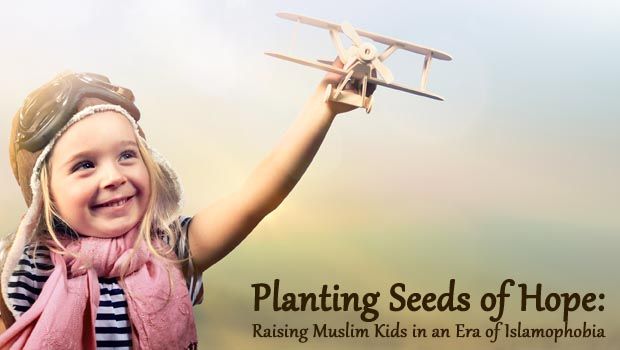
    Planting Seeds of Hope: Raising Muslim Kids in an Era of Islamophobia

    I’m one of those parents who stares at her kid as she sleeps. I notice every curve of her face and arch of her eyebrows. I know what her steady breathing sounds like. I’ve memorized the intonation of her laughter and the way she throws her head back and giggles when I tickle her. She is so effortlessly mine as I am hers… she’s from me, as though a piece of my being broke off and claimed its own place in this world. But with this belonging and this connection comes a heavy sense of responsibility. Raising her in an era fueled by social upheaval and warring political parties that often bring out the worst in people is daunting to say the least.

    A day will come when our kids’ awareness of themselves and their environment will be heightened. With all our hearts we want that day to be one of unfolding maturity and self-assurance, not a day that might cause them to retreat into themselves, intimidated by bigotry and hatred directed toward them.

    Think about it for a moment – as adults we struggle every day to maintain a strong and holistic Muslim identity. I recently heard a Muslim woman say that she sometimes feels “itchy” in her own skin. She is so hyper-aware of all the negative stereotypes that people have about Muslims that she has become uncomfortable with herself. She is trapped in a self-imposed panopticon of sorts – assuming that she is being observed and judged from every angle. If these are the very real and palpable struggles of adults, how do our children fare? They’re still frighteningly malleable and they’re still being shaped and molded into the people they will become. It’s only natural that we should worry about our children having an even harder time navigating this current political climate.

    As parents, we yearn to shelter our young ones from the hatred and suspicion geared towards people who are visibly Muslim. More than anything, we want them to have normal childhoods full of bike riding, popsicle-eating, sleepovers, and unbridled fun. But a day will come when their awareness of themselves and their environment will be heightened. With all our hearts we want that day to be one of unfolding maturity and self-assurance, not a day that might cause them to retreat into themselves, intimidated by bigotry and hatred directed toward them. I comfort myself with the knowledge that it’s often in times rife with great difficulty that strong, confident change-makers and leaders are born. Rather than looking at the political climate with despair and asking ourselves, “How is my kid going to survive with his or her faith intact in such a messed up world?”

    we should raise children who we sincerely believe will be a part of the solution. Of course, that’s easier said than done! But here are some ways we can get started.

    Foster a Strong Sense of Identity

    Before occupying ourselves with whether our kids have eaten a proper breakfast, or whether they’re too warm or cold in what they’re wearing, or how well or poorly they’re doing academically, we need to ask ourselves – does my child feel comfortable in his own skin? Are our children comfortable being Muslims? Do they know what they believe in and why? Fostering a strong sense of identity starts when our children are young. I’m a great believer in books and storytelling as a way to ingrain a sense of self-acceptance. I still remember the books I read when I was a child and how they, to this day, affect the way I process my feelings and realities. Thankfully, we’re living in a time where great stories about Muslim kids are not hard to come by. Find these books and read these stories to your kids. Normalize and together cherish their names and faith and cultures, as we live in a place where their names will often be mispronounced and their faith and cultures misunderstood. Make their faith a source of comfort, love, and inspiration. Only then will they embrace their Muslim identities without discomfort or resentment. Make Eids meaningful celebrations for them. Let them feel joy and ease in their faith instead of feeling judged or forced. Help them find a second home in the mosque by creating fun and welcoming programs for them.

    One of the most important contributions we can make to nurturing our children’s identities is to ensure they have good like-minded companions. It’s important to make an effort to connect with other strong Muslim families whose kids can become companions for yours. A man asked Prophet Muhammad (peace be upon him) about the Hour (Day of Judgment), saying, “When will the Hour be?” The Prophet (pbuh) replied, “What have you prepared for it?” The man said, “Nothing, except that I love Allah and His Apostle.” The Prophet said, “You will be with those whom you love.” The company we keep has a very real and direct effect on our level of faith, and our standing in the sight of God. In a world where a child’s group of friends is instrumental to his or her development and self-concept, making sure that they have good companions is paramount to their success.

    Leave Your Bubble and Get Involved!

    While it’s important to build a great foundation for our children around other Muslims and within the Muslim community, that absolutely must not translate into segregating ourselves or our kids from the wider community where we live. Distancing ourselves from the non-Muslim population will just lead to the unhealthy practice of “othering.” Our beloved messenger Muhammad (pbuh) was known for decades in his community as a trustworthy individual – he lived with the people, he was one of them, he had real relationships with them. He celebrated with them, and mourned with them, all before ever receiving wahi (revelation) from God. When he began to preach the message of guidance, he was already familiar with the mindset and traditional ways of his people. No doubt it was an uphill battle, but there was a level of trust of the Prophet (pbuh) present, even amongst those who never accepted Islam.

    It was not his practice to segregate himself or his family from those who didn’t believe in his message. Quite the contrary! He interacted with them a great deal – he was generous with them, he was just towards them, and he kept his promises to them. While we’re working on strengthening our children’s Muslim identities, we shouldn’t forget that they need to know how to navigate the greater community as well. They are part of that community, integral to its existence and its well-being.

    I strongly believe that getting involved in positive activist work is one of the most important ways to instill a sense of purpose and confidence in our children. Enjoining good and forbidding evil is an important and well-known cornerstone of our faith. In the Quran, Allah (SWT) praises the believers who support and promote good actions and who prevent evil actions. Prophet Muhammad (pbuh) said, along these lines, “Whoever amongst you sees an evil, he must change it with his hand; if he is unable to do so, then with his tongue; and if he is yet unable to do so, then with his heart — and that is the weakest form of faith.” As Muslims, our faith instructs us to be beacons of justice. But that means leaving our comfort zones. It means taking on a responsibility to change both our Muslim community and broader community for the better.

    Teaching our kids to align themselves with groups and communities that face similar challenges to those that Muslims face will ensure they not only “integrate,” but also become active contributors. Building meaningful alliances is about supporting everyone facing injustice. Black Lives Matter is an instrumental example of this. For as long as black Americans have lived in the U.S., rampant racism has been the foundation of their experience. Although the civil rights movement brought about many positive changes, racism and unequal treatment of black Americans is, unfortunately, still the default in so many places and aspects of our society. From police brutality to unequal education opportunities, the intergenerational cycle of poverty and discrimination subjects black communities to ongoing experiences that reflect a multitude of trickle-down effects of slavery.

    It’s important to understand that we cannot separate ourselves from the struggles of black Americans. We are often the same community, and Muslims of African-American heritage also face a double-edged sword when it comes to prejudice. But even when our identities do not overlap, their struggle is our struggle. It must be. When we come together as communities to fight Islamophobia, racism, classism, and any form of injustice, we become stronger, more skilled, and more capable. Brick by brick, we build the bridges that we may need to cross someday.

    Be Your Child’s First Role Model

    Prophet Muhammad (pbuh) lived at a time of ignorance. Families were ashamed to have daughters instead of sons, people were judged by the color of their skin, and those who held onto their Islamic faith were humiliated and severely oppressed. Through all this, the Prophet was not discouraged in the least. His message of mercy and guidance rang true and shone a bright light that pierced the darkness. He brought a message of hope, a message of mercy, love, and fair treatment for all people regardless of race, gender, nationality, or religion. His patience and perseverance transformed his community and the entire world. There is barely a place on this globe that has not been touched by this light.

    Prophet Muhammad (pbuh) and his companions did not hide away, ashamed of who they were or what they believed. They stood tall in the face of criticism and abuse, continuously striving to establish justice and equality. They did the work needed to actually better their community. Our children are intelligent beyond words. As parents, if we emulate and exemplify those early Muslims, pushing through the darkness of hatred to create light and hope, our children will see and recognize that virtuous and strong character in us.

    There have been so many days when I’ve worried about how to teach my daughter to be kind and charitable, to share, and to ask for forgiveness when she makes a mistake. I used to lose sleep over it, looking at her napping cherub face and wondering: how can I help her become a good person? I was in a constant state of apprehension, searching for good Islamic books and resources to help me convey to her the beauty of good character. While I still scour Islamic conference bazaars for helpful resources, I have come to understand that the answer is actually quite simple – I must be who I want her to be. I should speak to her the way I expect her to speak to others. I should pray the way I expect her to eventually pray. I should dress the way I wish for her to dress; I should exude confidence the way I wish for her to. In me, my daughter has her first role model. In me, she has the person who she will – without her consciously understanding it – imitate. And while verbal instruction is important, actions are overwhelmingly what will determine what our children learn and internalize. As we all know, it’s a running joke that we eventually become our parents!

    Seek Help from Allah

    This point should be number one on the list. We are not capable of doing a single thing until Allah (SWT) wills it. But we do have a tool in our tool chest that unfortunately can go unused for long periods of time. Prophet Muhammad (pbuh) said, “Three supplications will not be rejected [by Allah] — the supplication of the parent for his child, the supplication of the one who is fasting, and the supplication of the traveler.” We can employ every parenting trick in the book, expose our kids to only the best books and media, get them involved in positive activism and volunteer work, and make sure they’re around good role models – but when all is said and done, it is only Allah (SWT) who is the controller of hearts. So be steadfast in asking Him to guide your children, and to make them grow and mature in a way that renders them fit to be leaders of the believers. Our hope always remains pinned on Allah’s all-encompassing mercy.

    “Our Lord! Grant to us from our spouses and our offspring the comfort of our eyes, and make us models for the righteous (Quran 25:74).

  • The 2016 Election:  Voting for Diversity, Pluralism, and Justice

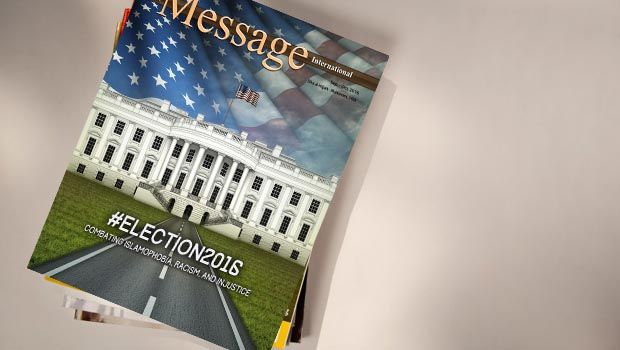
    The 2016 Election: Voting for Diversity, Pluralism, and Justice

    Since September 11, 2001, the American Muslim community has gone through a journey of social and political ups and downs. And in our current turbulent times, public opinion about Islam and Muslims is worsening once again. Hate crimes against Muslims and their masajid are increasing across the country while Islamophobia has become, unfortunately, mainstream during this presidential campaign of 2016. However, at the same time, a good number of individuals, both professionals and regular folk, have spoken forcefully and persuasively in support of the Muslim community, and occasionally American Muslims receive positive media coverage; this was the case during the funeral services of Muhammad Ali in early June, and after the speech of Khizr Khan on the last night of the Democratic Convention in July. The late Imam W. D. Muhammad used to say, “This is the worst time for Muslims in America and this is also the best time for Muslims in America.”

    A window of opportunity has been opened as Muslims respond in a variety of effective ways to the challenge of combatting Islamophobia and presenting a positive and accurate narrative to the American public

    Acts of discrimination, bigotry, and racism against non-White or non-Christian minority groups are not uncommon phenomena in America. The U.S. used to be considered a WASP (White Anglo Saxon Protestant) nation. That dominant group always felt anxiety and reacted unfavorably towards the growth of other minority groups or the influx of new immigrants they didn’t identify with. However, religion as an election issue has not been very common in American political history. Religion did play a role in the presidential elections of 1928 and 1960, when Alfred Smith and John F. Kennedy, respectively, were the nominees of the Democratic Party. They both were Catholic and the Republican Party launched a nasty campaign suggesting their loyalty would be split between the Pope and the U.S. Constitution.

    In the 2016 presidential election cycle, even though Muslims constitute less than 2 percent of the total American population, Muslims and their faith have been front and center. Trump and his campaign have been creating fear and hatred toward Muslims, but also toward Mexicans and women. Three disturbing notions or developments affecting Muslims have arisen, all fomented by Trump and his surrogates: 1) All Muslims are suspect of holding extremist views or sympathies; 2) Muslim Immigration should be banned until the development of a proper vetting process; and 3) Islamophobic rhetoric has gone mainstream.

    The hope for those who are deeply concerned about a Trump presidency is that enough independents will be disgusted with Trump’s extremist views and positions — xenophobic, Islamophobic, and misogynistic — to block his ascendency to the “highest office in the land.” Independent voters tend to identify with one party or the other, but they also tend to be more moderate as compared to those who belong to either the Republican or Democratic parties. Interestingly, according to Gallup, in 2014, Americans self-identified in the following ways: 38% conservative; 24% liberal; and 34% moderate. The percentage of self-identified moderates has shrunken from 43% in 1992 to 34% today. That coincides with the political polarization that we are seeing during the current election cycle. During the same time frame, 1992 through 2014, the percentage of liberals has grown from 17% in 1992 to 24% today; conservatives have likewise increased, but at a much smaller percentage, from 36% in 1992 to 38% today. It remains to be seen if the majority of Americans will turn away from the hatemongering of the Republican candidate.

    Donald Trump, who has no prior political or government experience, has become the Republican nominee, attracting a significant number of Republicans, especially less educated, White, working class and older Americans who feel threatened with changing demographics and a perceived loss of their political power and social dominance, especially after Obama was elected. Those who want to “take back the country” feel lost in a society that embraces diversity and pluralism. They are most comfortable with a White dominated culture that harkens back to earlier times when racism and discrimination were socially and politically unchallenged, for the most part. Precisely for these reasons, this election has also become more important than other critical elections.

    Muslims should be ready for a long struggle. Islamophobia will not go away in the short term. A window of opportunity, however, has been opened as Muslims respond in a variety of effective ways to the challenge of combatting Islamophobia and presenting a positive and accurate narrative to the American public. The One America Campaign and Million Voters Registration Drive, for example, are national initiatives under the banner of the US Council of Muslim Organizations (USCMO). There is no doubt that Muslims are growing in resilience, showing political maturity in an atmosphere that is too often hostile, suspicious of their American identity and loyalty. We should continue to be involved in the political process, locally and at the state and federal levels. And we must join with other concerned Americans who stand for ethics in politics as in personal life, and who rally against bigotry and discrimination wherever it appears. We must do our part to ensure that this election of 2016, a contest for the soul of America, leads to celebration of diversity and pluralism and, more importantly, justice for all its citizens.