
بسم الله الرحمن الرحيم

Tag: Muslims

  • Mexico, Muslims, and Cinco De Mayo

    Mexico, Muslims, and Cinco De Mayo

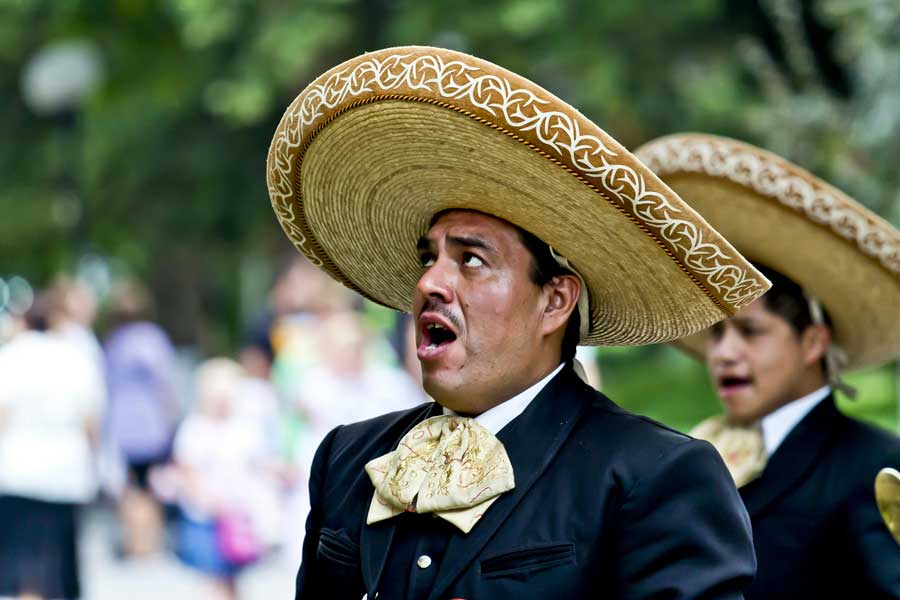
    As May unfolds and the promise of flowers after April showers is fulfilled, we find ourselves in the middle of another vibrant spring. With Ramadan and Eid-ul-Fitr behind us, the Muslim community in the United States is left to the routine of shifting American celebrations. Easter décor makes way for Mother’s Day preparations and Fourth of July fireworks. Amidst this seemingly never-ending cycle of festivities, another notable occasion passed unnoticed in the first week of May. Many Americans recently, in a mindless way,  celebrated Cinco de Mayo, or the Fifth of May, a holiday often misunderstood and adopted from Mexican culture, characterized by fiestas replete with sombreros, tacos, and margaritas. Frequently confused with Mexico’s Independence Day (which falls on September 16), Cinco de Mayo is vastly different. Contrary to popular opinion, it has no connection to Mexican independence from Spain but instead commemorates a battle against France with surprising ties to Islamic history.

    The Franco-Mexican War erupted from 1861 to 1867 due to Mexico’s suspension of debt repayments to European powers, triggering French intervention. Napoleon III used Mexico’s economic situation to justify invading in 1861 to expand French influence in the Americas and establish a French-controlled regime. In 1863, the French captured Mexico City and established the Second Mexican Empire, with Maximilian I as Emperor, aided by the French military. The conclusion of the American Civil War in 1865 prompted the United States to pressure France to withdraw its troops. US intervention, coupled with internal Mexican resistance, led to the empire’s collapse, Maximilian’s execution, and the end of French involvement in Mexico.

    The Battle of Puebla occurred on May 5, 1862, during the Franco-Mexican War, and it holds profound significance as a pivotal victory for Mexican forces against the sizable and better-equipped French army. Despite daunting odds, the Mexican army successfully defended the city of Puebla against French invasion. This triumph became emblematic of Mexican resilience and patriotism, strengthening morale and inspiring resistance against French occupation. While the Battle of Puebla did not stop the eventual French occupation of Mexico City and the establishment of the Second Mexican Empire, it endures as Cinco de Mayo, a holiday commemorating the Mexican army’s triumph over a superior French force. Cinco de Mayo is celebrated in the city of Puebla and other places in Mexico on a lesser scale, with parades and re-enactments of the battle between Mexican and French soldiers. It is not considered a major holiday in Mexico, but according to History.com, Cinco de Mayo was popularized in the U.S. in the 1960s by Chicano (Mexican American) activists inspired by the victory of indigenous Mexicans over European forces. Now, Cinco de Mayo is celebrated more in the U.S. than in Mexico.

    Notably, the connection between Cinco de Mayo and Muslims arises from a lesser-known aspect of history. During the Franco-Mexican War, while France engaged Mexico, it concurrently held colonies in North Africa and the Muslim world. This context meant that Muslim Algerian and Egyptian subjects from French colonies participated in the conflict alongside French soldiers, including the Battle of Puebla. Depictions of this battle often feature Muslim soldiers, identifiable by their attire, adding a unique layer to the historical narrative. Reflecting on the role of Muslims in the Franco-Mexican War prompts questions about their agency and the complexities of their involvement. Perhaps they sympathized with the indigenous Mexicans who fought to protect their land from the same colonizing force they once faced. Were they coerced combatants fighting battles for their oppressors in foreign lands, or did they willingly align with their French colonizers? Did any of these soldiers get captured, surrender, or flee and go on to settle in Mexico? These inquiries compel deeper examination and contemplation. What is certain is the undeniable presence of Muslims on Mexican lands during that crucial time.

    Muslim Imprints on Mexico

    Muslims have left enduring imprints on Mexican soil throughout history, from early colonial encounters to contemporary migrations. From the 16th century onward, waves of Iberian, African, and South Asian Muslim migrants have been involved in shaping Mexican society, contributing to its cultural fabric. Aside from the documented presence of Iberian and North African Muslims and enslaved West Africans during the colonial period, the Spanish also sought indentured laborers from South Asia, predominantly British India (present-day India, Pakistan, and Bangladesh), to fill labor shortages in Mexico. Among this group were Muslims, Christians, and Hindus. Over time, the descendants of enslaved Muslims and migrants integrated into Mexican society, while others maintained distinct cultural identities within diaspora communities.

    The legacy of these influences persists, evident in architectural motifs, culinary traditions, and religious practices across Mexico. In contemporary times, the presence of Islam in Mexico continues to evolve. The late 20th and early 21st centuries witnessed a resurgence of Islam among Mexicans and Latin Americans, contributing to a vast and diverse Muslim population throughout the region. Still, more Mexican Muslims find themselves here on U.S. soil as immigrants and descendants of immigrants, joining the greater Latino Muslim presence in America’s mosques. While some members of this community are converts, others trace their heritage to generations of practicing Muslim families. Educating youth and elders within our communities about this shared history is essential to cultivate appreciation for the cultural, historical, and spiritual connections between Islam and Latin American culture.

    The influence of Islam on Mexican society is profound and enduring, evident in even the day-to-day lives of its citizens. Guadalajara, one of Mexico’s largest cities, bears an Arabic name derived from Wadi al hijara (Valley of Stones). Some celebrities like Salma Hayek, Jaime Camil, Alejandro Bischir, and Peso Pluma have Arab ancestry. One of Mexico’s most beloved culinary treasures, tacos al pastor, traces its origins back to Lebanese immigrants. Although many Arab immigrants were also Christian, there have also been Muslim-Arab and Turkish migrations since the 20th century. With over 120,000 Muslims currently residing in Mexico and a significant conversion trend observed among indigenous Mexican Mayans in the state of Chiapas since 1989, Islam’s presence in the country is becoming more visible and continues to grow. The Muslim community in Mexico enjoys access to a network of more than forty mosques, including four in the capital , Mexico City, making Islamic worship and community engagement accessible across the nation, with only seven out of thirty-two states currently lacking a mosque, according to Centro Salafi de Mexico.

    Understanding and celebrating the ties between Islam and Latin American culture ultimately enriches both communities. The enduring impact of Iberian, Arab, and African Muslims on Mexican society highlights the intersections of diverse cultures and histories. From linguistic influences to culinary masterpieces, the cultural fusion between Islam and Latin America exemplifies the richness of human heritage. In Mexico today, mosques are tucked away like precious gems, serving as centers of worship, learning, and community for Mexican Muslims and Muslim tourists, reflecting the mostly unknown yet enduring presence of Islam in the region. Although Muslims do not typically observe Cinco de Mayo, the legacy of Islam in Mexico is undoubtedly something to celebrate.

    For those interested in learning more about Islam in Mexico, see here and here.
  • Circumstances Surrounding the Emergence of the Shia

    Circumstances Surrounding the Emergence of the Shia

    The rulership of the Muslim ummah, or community of believers, has undergone significant transformations throughout the centuries. Prophet Muhammad, peace and blessings be upon him, was the leader and guide for the emerging Islamic community for twenty-three years, from 610 to 632 CE, before returning to his Lord. He achieved the mission of receiving revelation of the Qur’an, conveying the message of Islam, and calling his people to worship Allah alone. However, his death was a massive test for the believers. After his passing, they were tasked with continuing his legacy and maintaining the stability of the new Islamic state. Since then, there have been disagreements surrounding whose responsibility it was (and is) to lead the general body of Muslims. Two distinct groups emerged from these initial disputes – the Sunnis and Shias – and from the two many subgroups which have endured until modern times.

    The most prominent characteristic of the early Muslim ummah, or community, was its unity in obedience to the teachings of the Prophet (s). In religious matters, they followed what was put forward by the Qur’an and the Sunnah of the Prophet Muhammad (s). They respected Prophet Muhammad’s authority, never deviating from the path he paved for them. They had direct access to this fountain of knowledge, were witnesses to the revelation of Qur’anic verses, and fought with him to establish Islam in the Arabian Peninsula.

    Among the closest people to the Prophet, peace be upon him, were his family members, those who lived with him, the first converts from Makkah, and the Ansar or helpers of Madinah. The relationship between the close companions was, at the very least, civil, as they followed a code of conduct defined by the prophetic model. Abdullah ibn Salaam reported that the Prophet said, “O, people, spread peace, feed the hungry, and pray at night when people are sleeping, and you will enter Paradise in peace” (Sunan al-Tirmidhi). Spreading peace meant that they respected one another, were generous, and displayed a positive attitude. During times of conflict, they referred to the Prophet (s) for guidance or mediation.

    Throughout the time of Muhammad’s prophethood, the new Muslims were united under the banner of faith. They had to face enemies who were stubbornly opposed to Islam and actively persecuted anyone who followed its message of pure monotheism. There was little room for division – a united front was necessary to defeat all opponents. Back then, the antagonists were mostly polytheists and other non-Muslim groups. Once Makkah was conquered, a general amnesty was granted to the Makkans, and of the most egregious oppressors of the Muslims, a handful were killed, and the others granted pardons. Consequently, many embraced Islam, hoping to benefit from its success.

    After the Death of the Prophet (s)

    Political turmoil within the Muslim community began after the death of the Prophet (s). Some senior companions, including Umar ibn al-Khattab, were stunned and even denied his passing, deduced from the traditional narration in Sahih al-Bukhari where Abu Bakr as-Siddique reprimanded those companions who suggested that the Prophet (s) had not died. He recited to them the following verse from the Qur’an: “Muḥammad is no more than a messenger. Messengers have passed away before him. So, if he were to die or be killed, would you turn back on your heels? And he who turns back on his heels will never harm Allah at all; but Allah will reward the grateful” (3:144). His reminder helped bring the general community of Muslims back to their senses. However, some late converts, especially those outside of Madinah, began to retract their decision to join the Muslims. It may have been due to wavering faith, fear that Islam would lose its stronghold in the region, or both. Nevertheless, the successors of the Prophet (s) would defeat these rebel groups and bring stability back to the ummah.

    There is a hadith attributed to the Prophet Muhammad (s), in which he said:

    “Prophethood will remain amongst you for as long as Allah wishes. Then Allah will remove it whenever He wishes to remove it, and there will be a caliphate upon the prophetic methodology. It will last for as long as Allah wishes it to last, then Allah will remove it whenever He wishes to remove it. Then there will be an abiding dynasty, and it will remain for as long as Allah wishes it to remain. Then Allah will remove it whenever He wishes to remove it. Then there will be tyrannical kingship, and it will remain for as long as Allah wishes it to remain. Then He will remove it whenever He wishes to remove it, and then there will be a caliphate upon the prophetic methodology” (Aḥmad).

    This prediction appears to align with the events after the Prophet’s death until the present day. After his departure came twenty-nine years of rule from 632 to 661 under the “Rightly Guided Caliphs” – Abu Bakr As-Siddique, Umar ibn Al-Khattab, Uthman ibn Affan, and Ali ibn Abi Talib, may Allah be pleased with them. All four were early converts. The first three were elder converts related to the Prophet by marriage, while the last was his cousin and son-in-law and the youngest to embrace Islam. Ali ibn Abi Talib, may Allah be pleased with him, is also considered one of the first, if not the first, to embrace Islam from the Prophet’s household. Yet, it was Abu Bakr who took the reins of the community to become the successor of the Prophet (s). After a discussion with a group of Ansar, Umar ibn Al-Khattab and Abu Ubaidah ibn Al-Jarrah, another senior companion, took from Abu Bakr the pledge of allegiance. Thus, he became the Khalifatur Rasulillah – the successor of the Messenger of Allah.

    This decision has proven to be a point of contention among later groups (proto-Shia) who asserted that it was Ali ibn Abi Talib’s sole right to be given the pledge for the khilafah. One piece of evidence which is cited in support of this opinion is the hadith of Ghadir Khum. Regarding the event, it is narrated that the Prophet (s) stood up and addressed the people at a well called Khum between Makkah and Madinah. After praising Allah and delivering a sermon, he said, “If I am a person’s mawla, Ali is also his mawla” (al-Tirmidhi, Musnad Ahmad ibn Hanbal, Sunan ibn Majah).

    There are varying versions of this narration; both Sunni and Shia scholars agree that it is authentic, and that the incident did indeed take place. Nevertheless, there are differences of opinion regarding the context and the meaning of the Prophet’s statement. For example, according to Sunni scholars, the term mawla could mean friend, helper, guardian, ally, etc. For the Shia, the title primarily means “leader.” The Shia would thus argue that Ali ibn Abi Talib, should have become the leader of the believers, just as the Prophet Muhammad (s) was their leader. Through the centuries, scholars have debated whether it was a matter of semantics, as the word has multiple meanings. There are other points of to consider such as why very few people disputed the decision to appoint Abu Bakr As-Siddique as the khalifah after the death of the Prophet if it was evident from the statement by the Prophet that Ali ibn Abi Talib had been named the successor. Indeed, many thousands of companions witnessed this statement and if they understood it as a decree from the Prophet (s), there would have been a major outcry when Abu Bakr was appointed.

    For the Sake of Unity

    John McHugo writes in A Concise History of Sunnis and Shiís, that Ali ibn Abi Talib, may Allah be pleased with him, “only gave way to Abu Bakr for the sake of the unity of the community” (pg. 40). He also mentions that this attitude became a regular pattern of behavior for him because, on other occasions, “he put the harmony of the community before his own interests and ambitions” (pg. 40). Ali ibn Abi Talib, may Allah be pleased with him, was not considered a candidate for the position of khilafah until the death of Umar ibn Al-Khattab, and lost the seat to Uthman ibn Affan. He served only as an advisor under their respective rules. This selfless behavior seems to have set the precedent for some who came after him who chose quietism over fighting for political leadership, individuals such as Imam Hassan ibn Ali, may Allah be pleased with him, and the famed scholar, accepted by both Sunnis and Shias, Jafar Al-Sadiq. Ali ibn Abi Talib’s disengagement with politics would end during the latter part of the reign of Uthman ibn Affan, may Allah be pleased with him, whose political decisions caused the unrest that eventually led to his assassination. The Muslim community witnessed the emergence of the Kharijites and the party of Ali (Shiatul Ali), who supported him against Muawiyyah ibn Abi Sufyan as the legitimate khalifah after Uthman.

    Since then, the ummah has been divided on the grounds of who has more right to its leadership. The death of Muawiyyah, and his naming of his son, Yazid ibn Muawiyyah, to succeed him as ruler, paved the way for the Ummayad dynasty. Other notable epochs in Islamic history stand out with key groups, such as the Fatimids, Ayyubids, Seljuks, and Mamluks, Ottomans, and modern-day Arab states, each claiming to be on the path of truth. Each of these has had its distinctive qualities and followed varying schools of thought and methodologies. Some of the most notable of the Shia political powers were the Fatimids, Buyids, Hamdanids, and Safavids. As for their beliefs, these evolved over time; different groups broke into sects, some believing that only Ali ibn Abi Talib was the imam but did not dispute anyone after that point. Other groups included Al-Hassan, Al-Husayn, and Muhammad ibn Ali (Al-Haniffiyah) in the line of leadership. Some continued down the lineage of imamate through Imam Jafar As-Sadiq (Ismailis), while the most prominent group, the Twelvers, await the return of the twelfth imam, Muḥammad ibn al-Ḥasan, whom they consider to be the awaited Mahdi. These various categorizations did not exist among the early Shia. According to McHugo, there may not have been a clear distinction between the Sunni and Shia during the time of Imam Jafar Al-Sadiq (p. 105).

    Over fourteen centuries have passed since the death of Prophet Muhammad, peace and blessings be upon him, yet the Islamic world is still debating about who was the rightful heir to the leadership after his time. There are two distinct arguments, each with its compelling evidence, but ultimately the truth is with Allah. Rather than be divided, both sides must strive for peace, following the example of Ali ibn Abi Talib, may Allah be pleased with him, who dedicated his life to uphold it.