بسم الله الرحمن الرحيم

Tag: Muslims in india

  • Religious Freedom in India Increasingly at Risk

    Religious Freedom in India Increasingly at Risk

    In late December of last year, six female students belonging to the Government Pre-University college in a small town in the state of Karnataka, India, were not allowed to attend classes wearing hijab. Photos showing them sitting on a staircase outside the classroom started gaining attention once it was reported by several national and international media sources. The students claimed the college was not allowing them to attend classes with their hijab, even though they had been doing so since they joined the college.

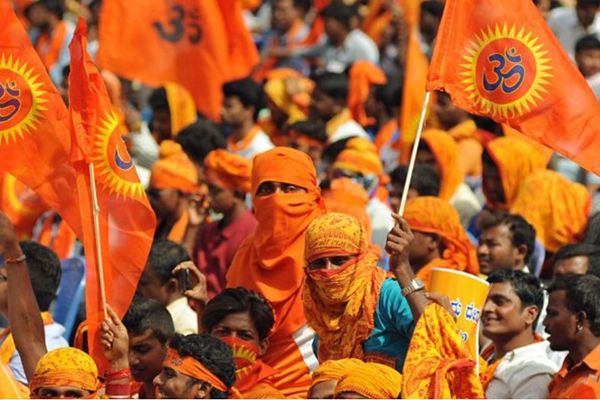
    Following this incident, a group of Hindutva male students at a college in Kundapur went to class wearing saffron shawls in protest of Muslim students attending classes wearing hijab. Then Hindutva-aligned students, both males and females, started coming to class in saffron shawls, and demanding a ban on hijab. Several elected members of the ruling BJP (Bharatiya Janata Party) started getting involved in this controversy. Then the government passed an executive order asking colleges and universities to enforce a dress code, though it left each college to define the code.

    The Muslims students filed for relief in the Karnataka High Court (HC). While this case was under review in the HC, a new video went viral of an incident of Hindutva young men harassing a Muslim girl in hijab. The girl, Muskan Khan, stood her ground when faced by the mob. This incident thrust the hijab controversy into national and international media and political discourse.

    The Case Before the Court and International Reactions

    The HC considered the case on the legal grounds of freedom of religion. The defendants were demanding the right to wear hijab as they claim that the Indian Constitution guarantees freedom of conscience and free profession, practice, and propagation of religion. The government, on the other hand, invoked public order to justify a ban on hijab. The Indian Express reports that the state issued a directive “validating decisions of state education institutions prohibiting Muslim girl students from wearing the hijab (headscarf).” The Karnataka government stated that “clothes which disturb equality, integrity and public law and order should not be worn.”

    On February 10, the full bench of Karnataka High Court adjourned the hearing until February 14 and issued the following observations: “…till the matter is pending consideration before the court, these students and all the stakeholders, they do not insist on wearing religious garments, may be headdress or saffron shawl. We will restrain everyone. Because we want peace and tranquility in the state. We are seized with the matter; we can continue the matter on the day-to-day basis.” Unfortunately, the judge’s interim order amounted to a suspension of the fundamental rights of the Muslim students until the court passes a final judgment. A higher bench in Karnataka was expected to take up the case. If Muslim students don’t get a favorable ruling, they might approach the Supreme Court of India. But it is a drawn-out legal process.

    Following that ruling, the Karnataka High Court in mid-March ruled that “There is absolutely no material placed on record to prima facie show that wearing of hijab is a part of an essential religious practice in Islam.” Heraa Hashmi is a writer and activist known as the American Muslim sister who created a 712-page list of Muslim individuals, scholars, organizations, and governments who have consistently condemned violence and terrorism in response to a non-Muslim classmate who asked why Muslims don’t condemn terrorism. Now, Hashmi wrote an article in March about the hijab situation in India, noting that the order from the court “cites certain passages from the Qur’an to establish – in their view as judges of a secular court with dubious levels of Islamic literacy and credentials to make theological prescriptions – Hijab as not obligatory, claiming that it ‘therefore cannot be made a quintessential aspect of the religion through public agitations or by the passionate arguments in court.’” She adds, “Consequently, the court found that the ban does not violate the constitutional rights of Muslim women. This startling verdict has widespread implications for similar cases across the country.” She further writes, “The three-judge bench declared that the Hijab is a ‘cultural practice’ and that it ‘is not a part of essential religious practices of Islam and thus, is not protected under Article 25 of the Constitution.’ They also introduced the verdict by quoting a US-based academic’s article that interprets the practice of veiling as one to distinguish social status and goes on to engage in poor attempts at tafsir (Qur’anic exegesis), hadith interpretation, and usul (methodology), stepping far beyond its bounds as a court. It is clear that the court was already assuming an ideological corruption of Muslims and their practices prior to this judgement.”

    Rashad Hussein, ambassador-at-large for the U.S. Office of International Religious Freedom, tweeted after the ruling, “Religious freedom includes the ability to choose one’s religious attire. The Indian state of Karnataka should not determine permissibility of religious clothing. Hijab bans in schools violate religious freedom and stigmatize and marginalize women and girls.”

    Nobel Laureate Malala Yusufzai tweeted, “College is forcing us to choose between studies and the hijab.” And Noam Chomsky, one of the West’s most eminent intellectuals, has recently said about the rise of Islamophobia, that it is “taking its most lethal form in India where the Modi government is systematically dismantling Indian secular democracy and turning the country into a Hindu ethnocracy. It is not just hijab that is under threat in India; the very existence of Muslims in that nation is in peril. After the ruling about hijab in Karnataka, Muslim vendors were prevented from doing business at Hindu religious premises. Then there was a call to boycott halal meat and, further, a controversy was raised on the use of loudspeakers for calling the adhan (the Muslim call to prayer). The apparent intent of the ruling party is to continue to demonize and dehumanize Muslims — the end result can be ethnic cleansing or even genocide.

    The Way Forward for Indian Muslims

    Systematic hate of Islam and Muslims has been spreading in India. A large section of the Hindu society has been radicalized. There are things that are beyond the control of Muslims in the Indian nation, but there are things they can and must do, including the following:

    1. The Muslim community should be educated and reminded about the meaning and purpose of their existence. Qur’an and Sunnah make it clear that Muslims are to be witnesses of truth and therefore willing to stand up and enjoin the right and forbid the wrong. The lives of Muslims —individuals, families, and communities— have to reflect these values.

    2. Muslims have masajid all across the country. But these masajid mostly function as a place for daily prayers. They should be used for social gatherings, religious advice and admonitions, education, administration of community affairs and challenges, and other functions and services to support the community.

    3. Indian Muslims should inform neighbors, co-workers, and society at large that Islam and Muslims have no intention to harm Hindus or their interests. On the contrary, the religion teaches Muslims to support the common good and to support justice for all.

    4. There are many marginalized groups in India. Working to support their rights is an Islamic obligation. This will demonstrate that Muslims stand for the human and civil rights of all people.

    5. The media, be it broadcast or social media, is the major source of spreading Islamophobia in Indian society. Muslims need to produce and distribute sound and accurate information to counter the misinformation and propaganda.

    6. Muslims should build alliances with people and organizations of conscience, both religious and secular, for the common goal of civility, equality, and justice in society.
  • The Ongoing Human Rights Violations in India

    The Ongoing Human Rights Violations in India

    This month has been a roller coaster for anyone watching the human rights situation in India. While the rightwing Hindutva party, Bharatiya Janata Party (BJP), has been in power in India since 2014, their foot soldiers have been busy gradually increasing their rhetoric to promote making India a Hindu Rashtra, that is, a Hindu nation where non-Hindus would become second class citizens, as originally conceived by the founders of the RSS (Rashtriya Swayamsevak Sangh, which means National Volunteer Organization).

    The RSS, founded in 1925, has a current membership of close to 6 million. There are so many issues related to the Hindutva rightwing groups, but a brief update will be presented in this short article.

    Preventing Muslims from Performing Prayers

    Gurgaon is a town in the state of Haryana, a bit over 19 miles from Delhi. There are not enough masajid in Gurgaon to accommodate all the Muslims for prayer and, as the immigrant Muslim population has increased over the years, Muslim leaders made arrangements with local authorities for Muslims to offer Friday prayers in public parks and open spaces. Yet rightwing groups have taken the law into their own hands and have often tried to forcibly prevent Muslims from offering their Friday prayers. One would expect in any country governed by the rule of law to rein in this intimidation, clearly illegal and discriminatory. But what we are seeing is that elected officials are giving in to the anti-Muslim rhetoric, signaling that governments themselves are either powerless to intervene, or worse, complicit in what the gangs on the streets are doing.

    The Wire, an Indian media source, writes, “Until last Friday, Muslims would gather on this spot in the afternoon to offer their customary juma namaz. From today, it ceases to be a space for them. They have been pushed out. From here and from 15 other spots in Gurgaon… This is about 2021. If you start counting from 2017, Muslims have been barred from nearly 70 spots.”

    One would have hoped that the police and authorities would assert themselves to prevent these discriminatory actions, arrest offenders, and subject them to the criminal justice system. But instead, the chief minister of Haryana, the Indian state in question, M.L. Khattar, caved into the demands of these law breakers, and declared that no prayer in public will be tolerated. While these types of activity by rightwing activists might be dismissed as the provocations and harassments of Hindu extremists, the reality is that this anti-Muslim attitude is common and widespread. A speaker at an event, attended by at least one BJP official, called for genocide of Muslims. The event was attended by more than 500 Hindu religious monks and leaders. The BJP, Prime Minister Modi’s party, has consistently denied wanting to transform India from being a secular, pluralistic nation into a Hindu nation. Yet, critics accuse them of ignoring or even inciting discrimination and persecution of Muslims and other minorities.

    Annapurna Bharti, secretary of Hindu Mahasabha, a political party, spoke at the event. He stated, “Nothing is possible without weapons. If you want to eliminate their population then kill them. Be ready to kill and be ready to go to jail. Even if 100 of us are ready to kill 20 lakhs [2 million] of them [Muslims], then we will be victorious, and go to jail… Like [Nathuram] Godse, I am ready to be maligned, but I will pick up arms to defend my Hindutva from every demon who is a threat to my religion.”

    The authorities, as usual, have been slow taking any action against these Hindutva extremists. One of them even boasted that the police “will be on our side.” Under tremendous international pressure, the government and the police finally acted, but only a few have been charged. One of those arrested in mid-January, Yati Narsinghanand, was initially charged with misogynistic speech. The authorities stated that his arrest was for “derogatory comments against women, not the Haridwar hate speech case right now.” They added, “He has been issued a notice in that case so far. He will be remanded for the hate speech case too; the procedure is on. We will include the hate speech case details also in the remand application.”

    Dividing People Along Religious Lines

    Fast forward a few weeks and we see another disturbing trend. The election commission of India announced state assembly [similar to state legislatures in the U.S.] elections in several states in India. Uttar Paradesh, with a population of more than 200 million, is one of them and is politically most significant. The current government in that state is run by BJP, with Yogi Adityanath as its chief minister. He is known to be an open Islamophobe and doesn’t hide his contempt for Muslims. It is not just his rhetoric; he has pursued anti-Muslim policies during his first term. He openly cites as one of his main achievements that of having put Muslims in their place.

    The main method BJP uses to win elections is to divide the electorate along religious lines and thus gain Hindu votes. However, the issue is not limited to elections anymore. It is has now become clear that the current situation is about the very survival of Muslims in India in the coming times. Gregory Stanton, the president of Genocide Watch (GW), testified in January before the U.S. Congress, warning about the possibility of genocide in India. He stated that now with Narenda Modi as prime minister of India, “under his BJP’s policies, he has used anti-Muslim, Islamophobic rhetoric, in fact, to build his political base.” He noted that GW has been speaking out, warning of “the threat of genocide in India since 2002.” Mr. Stanton stated that the U.S. government and other nations can take meaningful steps to preempt any such event from happening.

    The Indian government must wake up and save India from the brink. Subjugation, expulsion, or even extermination of minorities may be the main agenda of the Hindutva movement, but the Indian government is in a position to counter and oppose that agenda. Otherwise, India will descend into further crisis and international disrepute. Muslims and other minorities in India must be protected and afforded their full rights. We make du’a to Allah SWT that all decent people stand firm in support of those around the world who are subject to discrimination or persecution and push their governments to take action to prevent a potential genocide in India.

  • The Challenge of Hindutva for Indian and American Muslims

    The Challenge of Hindutva for Indian and American Muslims

    India’s ruling party, BJP (Bharatiya Janata Party), espouses an ultranationalist and supremacist ideology known as Hindutva. This virulent ideology (distinct from the religion of Hinduism) seeks to expand the existing hegemony of upper-caste Hindus, intensify the ongoing persecution of Muslims and other minorities, and relegate the minorities to the status of second-class citizens.

    The RSS (Rashtriya Swayamsevak Sangh) movement, which is the fountainhead of the Hindutva ideology, is the real power behind the ruling BJP. This movement has unleashed riots and massacres on minorities, mostly on Muslims, such as in Gujarat (2002) and Muzaffarnagar (2013). The magnitude of hate that RSS has brought to Indian society, with its supremacist ideology, has turned India into what some are calling “Lynchistan.” Organizations that document violence against Muslims and other minorities in India record more than 100 lynchings of Muslims since 2015, some simply for being accused of consuming or possessing beef or transporting cattle. Many fear that the BJP may be emboldened to begin a full-scale ethnic cleansing. According to widely publicized news in Indian media, some of the front organizations of the RSS such as the VHP (Vishwa Hindu Parishad) and Bajrang Dal are considered religious militant organizations by the CIA.
    The Danger of India’s Right-wing Nationalist Parties.

    The real and present danger faced by Muslims and other minorities in India can be gauged by the fact that the RSS idolizes Adolf Hitler, whose autobiographical manifesto, “Mein Kampf,” is now available in popular bookstores in India. The danger of the right-wing nationalist parties in India has a long history. In 1948, the Home Minister wrote, “There is no doubt in my mind that the extreme section of the Hindu Mahasabha [rightwing nationalist party] was involved in the conspiracy [to kill Gandhi].” Some Muslim youth spend decades in prison after being falsely accused of terrorism. Ultimately acquitted by the courts, they have had their lives destroyed, while Hindutva bombers and lynchers have been set free in months, and in most cases have never faced the law at all.

    The RSS and BJP have accelerated their persecution of Kashmiri Muslims, bringing the region to the brink of nuclear war. It has been more than 70 days since the Indian government revoked Article 370 of the Indian Constitution, which granted autonomy to Jammu and Kashmir, and made all of Kashmir a giant prison. More than seven million Kashmiris are confined to their homes with no access to the outside world. The Internet and all lines of communication have been cut off over two months.

    The Hindutva inspired government appears to be watching the world’s reaction in Kashmir before accelerating its plan for a massive ethnic cleansing of Muslims, starting with the state of Assam which is roughly 34 percent Muslim. The Hindu right-wing government led by Modi, who is a member of the RSS, has indirectly supported Myanmar’s ethnic cleansing and genocide of the Rohingya Muslims by blaming the crisis on “extremist violence,” while at the same time completely ignoring the crimes against humanity and war crimes committed by the Myanmar military against the Rohingya. The RSS is currently urging extremist Buddhist monks in Sri Lanka to do the same to its Muslim minority.

    Using the Law to Strip Citizenship

    India passed a Citizenship Amendment Bill (CAB) on December 10 and now, as law, it is called the Citizenship Amendment Act (CAA). CAA offers amnesty to non-Muslim illegal immigrants from Pakistan, Bangladesh, and Afghanistan. This new law amends the Indian Citizenship Law, in place for the last 64 years, which prohibited citizenship for illegal migrants.
    The discriminatory nature of the CAA is that it offers amnesty to Hindu, Sikh, Buddhist, Jain, Parsi, and Christian immigrants, excluding Muslims from the amnesty. The CAA will work in conjunction with the National Register of Citizens (NRC) which requires individuals to prove their Indian ancestry. A version of NRC that required proof of Indian ancestry before March 25, 1971 was completed recently this past August. Two million residents, many of them Muslim, in the Indian state of Assam, were left off the Register. Non-Muslims who couldn’t qualify to be included in the NRC will now be given citizenship based on the CAA, but Muslims will be left off the Register.

    In fact, a more aggressive and nationwide version of NRC is being planned. While the exact text of that NRC hasn’t been announced, it seems it may require proving Indian ancestry way back to July 19, 1948 (closer to the date of the independence of India). Most people in India were poor, landless, and illiterate in 1948. So, this requirement will be almost impossible to meet for the average citizen. While the exact number that will not be able to prove their ancestry is not known at this time, it could be very high given factors such as lack of land ownership, illiteracy and scant education, absence of a birth registry at that time, etc. So, given India’s population of 1.3 billion, this could result in tens of millions of people being unable to prove their ancestry. As mentioned above, the non-Muslims will be eligible for citizenship under CAA, but millions of Muslims will be left stripped of citizenship.
    After the law was passed, growing protests have been taking place across the nation. The police and paramilitary forces have reacted with vengeance. Peaceful protests in the northeastern states of Assam and Tiipura and also at Jamia Millia Islamia (JMI) and Aligarh Muslim University [AMU] are being brutally suppressed resulting in loss of life and a high number of serious injuries. This has further escalated student protests across the nation.

    The increasing level of persecution of Muslims, Dalits, Adivasis (indigenous tribes), Sikhs, and Christians in India is documented by human rights organizations such as Amnesty International, Human Rights Watch, as well as the United States Commission on International Religious Freedom. Many major newspapers in the U.S. and other Western countries have published extensive reports and countless editorials on this subject. Being unaware of these realities amounts to shirking our responsibilities as human beings and as Muslims.
    RSS Activists in the U.S. and Other Nations.

    RSS volunteers and supporters have taken over a vast number of Hindu temples, professional organizations, and cultural spaces of the Hindu and Indian community in the U.S., Canada, Europe, Australia. and South Africa. It has also increased its influence in the Hindu communities in the Caribbean, East Africa, Middle East, Southeast Asia, and the Pacific region. In addition, they have several important allies in Washington such as Democratic presidential hopeful, Tulsi Gabbard.

    There is another aspect of the rise of Hindutva that hasn’t been paid much attention. The Hindutva ideology poses a very serious problem and challenge for American Muslims. Hindutva followers are the fastest growing Islamophobic group in the U.S. Every year more than 50,000 hardcore Hindutva followers join thousands of highly educated professionals as IT guest workers and students. Hindutva leaders join forces with established American Islamophobes.

    Taking Action Is Imperative
    So, what are American Muslims supposed to do?
    1. We need to educate the Muslim community and the larger community about the dangers of Hindutva to Muslims in India and here in the U.S.
    2. We need to build alliances with civil rights and interfaith organizations that support human rights and oppose injustice.
    3. While Muslims are the primary target of Hindutva in India, Christians are also suffering under their rule. So, we need to educate Christians churches and the Christian community of the extremist, nationalist designs of Hindutva.
    4. We need to develop ties to journalists who can monitor Hindutva and publish content that keeps our own community, and people in general, aware of the aims and actions of Hindutva, both in India and the U.S.

  • Bestiality in India

    Bestiality in India

    • Over 1,500 Muslims massacred by Hindus.
    • Official complicity in the genocide
    • Coverup reported, full investigation unlikely.

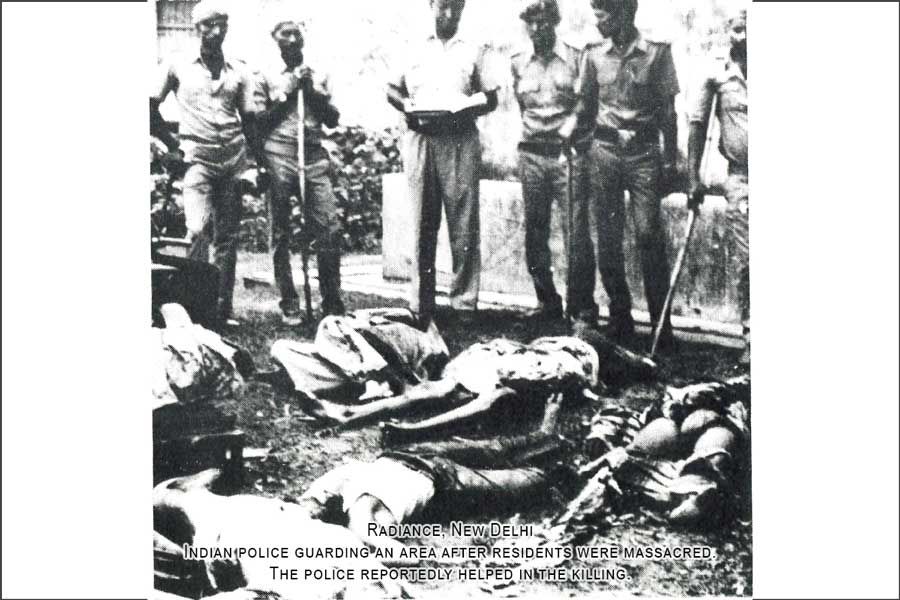
    Months after more than 1,500 Muslims were massacred in the Indian state of Bihar, New Delhi has grudgingly accepted the true magnitude of the tragedy it calls “communal riots.” For some strange reason, the American media, with its resources and knack for investigative reporting missed the Pulitz-er-Prize story in Bhagalpur District. The gory details of the Hindu savagery are gradually finding their way into the Indian and international newsrooms. In the aftermath, the world will be watching how India prosecutes those criminals and salvages its already-blotted human rights record. The following articles talk about the Bhagalpur carnage and the history of anti-Muslim and anti-minority violence in India.

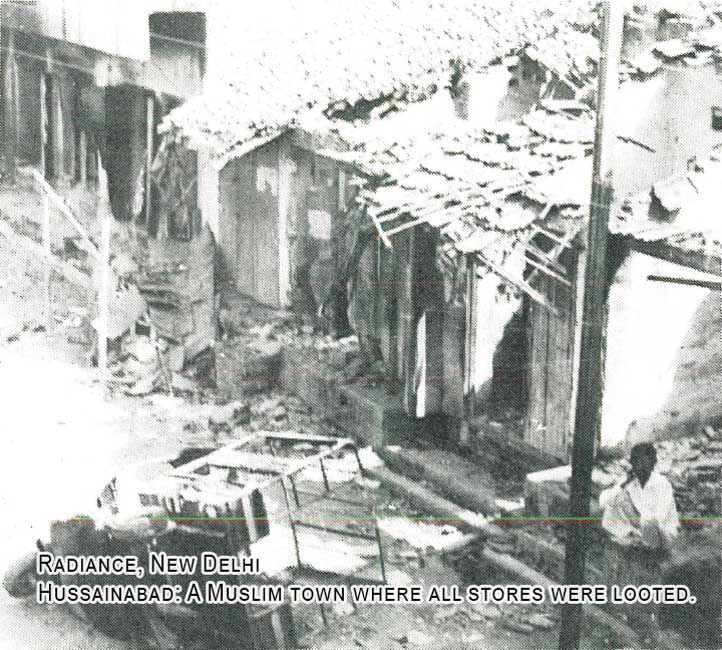
    The scars of communal holocaust may never be erased from the face of Bhagalpur, the once ever-humming silk town of northeastern India. Even three months after the Muslims of the town witnessed the state-spon-sored genocide, they appear shell-shocked. Stillness descends over the city much before the night sets in. The familiar whirl of looms has vanished from the city’s quarters where Muslim weav-ers once resided. Those who lost their near and dear ones in the October riots are still dazed. People talk about other communities in hushed tones as day after day discovery of mass graves makes macabre headlines. The burnt shells of houses, corpse-filled wells and ponds and ravaged habitations of Muslims are a living testimony to the magnitude of devastation that the area under-went.

    Marauders of Bhagalpur have put even the killers of Meerut, Maliana and Hashimpura to shame. The strategy in Bhagalpur seems to have been three-pronged: physical liquidation, economic annihilation and administrative repression and alienation. The fact that the Bhagalpur Muslims were neither as help-less or resourceless as their Maliana or Meerut counterparts lent the tragedy vast dimensions. Yet what is clear from the benefit of hindsight available now is that the Hindu communal forces are ready to put on the fascist garb all through the Hindi-speaking states of north India. They have their sympathizers and supporters in the police, vernacular language press and the administration. The game plan is to charge the atmosphere with intense, virulent communal propaganda against Muslims, pick up issues that in-flame them and let the first violent spark fly from the Muslim side. The rest is all looked after by the bi-ased administration, partisan police and armed goons. The politicians usually have no option but to avoid accusing the Hindu chauvinists, lest they annoy the majority and put their public careers at stake.

    From a distance the whole game plan of the Hindu fascist forces looks etched over the ashes of Bhagal-pur. The communal propaganda over the Babari Masjid had been built all across the Hindi-speaking states ever since the locks of the mosque were removed on February 1, 1986, under a court order. As the Rajiv Gandhi government in New Delhi appeased the upper-caste Hindu fascists, the Vishva Hindu Parishad, the Bharatiya Janata Party and the Rashtriya Swayamsevare Singh, had prepared the script for the 1989 electoral drama. Things were gradually pushed to a fiery crescendo on November 9, the date on which the first brick of the temple of hate was to be laid down at Ayodhaya, the sacred city for all faiths in India. But the bloody denouement reached at Bhagalpur decided the fate of the Gandhi gov-ernment, and the upper-caste Hindu champion, the BJP and its political accomplices carted away a good harvest out of the electoral battle. As if the warning signals sent by anti-Muslim violence in Badaun, Ko-ta, Indore, Sironj and Jaipur were not sufficient for the Gandhi government to heed, it dilly dallied to the question of propriety taking its place in the matter of Babari Masjid, which had a suit pending before the Allahabad High Court. Or perhaps the Mr. Gandhi had been waiting for a massacre of Muslims in order that the Hindu vote bank, raised by her slain mother, could tilt even more definitively in the Congress favor.

    With the Hindu fascists game plan being clear, the Bhagalpur riots now look a meticulously executed plot. “Stoning of a Hindu procession” is a conventional excuse to explain the beginning of any Hindu-Muslim riot. So was it with Bhagalpur. Violence first broke out in Parbati and Tatarpur localities of Bhagalpur on October 24 after a Ramshila procession (procession carrying consecrated bricks for Ayodhyas’s proposed grandiose temple in the place of Babari Masjid) of the VHP was stoned by Muslims. The Muslims had earlier objected to the armed procession passing through their locality and demanded a detour which was possible. Reports indicate that the agent provocateurs had been posted by the local Con-gress(I) to hurl stones and bombs at the procession. The death toll reached 23 in the first two days of violence. The criminal gangs led by the notorious gangsters Yadava, Mandal and Gangotia, who operate on the river Ganges, used the opportunity to loot and burn the Muslim property. Trains passing through Bhagalpur became unsafe for Muslims as four Delhi bound passengers of Tinsukia Mail were dragged out and lynched between Bhagalpur and Jamalpur railway stations by riotous mobs. The army was called out on October 26 as the police had become accomplices of the rioters. The press reports indicate that the police abetted the heinous crimes of gangsters. The names of two officers, Arun Jha, District Magistrate and S.K. Dwivedi, Superintendent of Police, were mentioned in this context. When Mr. Dwivedi was transferred on the second day of the mayhem, the communally motivated police force openly threatened a revolt. The SP’s transfer was withdrawn by the administration on October 27 under the specious plea that it needed rewording. Informed sources have attributed the withdrawal of SP’s transfer to a verbal order from the Prime Minister himself. Several intellectuals have condemned the Prime Minister for the annulment of the order.

    The district administration’s failure provided the marauders go to berserk for full three days which led to murders and ransacks in the localities of Champanager and Nathnagar, the two localities where poor silk weavers were killed, and their property was reduced to charred debris of looms. Among the killed were 37 members of five Muslim families of Naya Bazar Mohalla, including those of Faiyaz Bhagalpuri, the Youth Congress(I) leader of the district.

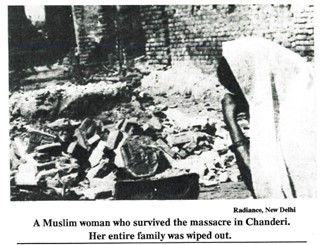
    The army and Border Security Forces (BSF) were deployed immediately after the Prime Minister visited Bhagalpur on October 26. By then the police action against Muslims had spread into the rural areas around the town. The criminal gangsters resorted to massacre of helpless Muslims with the active sup-port of the local police. The ghastliest massacre of Muslims took place in Chanderi village, 10 kilometers from Bhagalpur, on October 27. It came to light only on November 2 when the army officer Major Gen-eral G.P.S. Virk found that a hundred persons were missing. He had put those people all Muslims, in the protection of the local police. It is said the victims were reported missing when Gen. Virk came back to the village to inquire about them. He found only three people alive and the place streaming with blood. A girl was thrown into the pond after her feet were chopped off. She was rescued by the army personnel. The army arrested 31 people, of whom 29 were hardened criminals. According to the Hindi Daily Janasatta (Delhi, October 29, 1989) a tractor full of corpses was seen heading for the River Ganges near Chandeli Village on October 28. The journalist who followed the tractor also noted the number plates of the jeep escorting the tractor (DPI-4707). The policemen in the jeep prevented the journalists from following the tractor. It is assumed the corpses were dumped into the river.


    It is said the massacre took place on October 27 during the curfew relaxation hours between 11 a.m. and 4 p.m. Another report in the Telegraph, of Calcutta (November 3, 1989) said the police Super intendent Dwivedi had advanced information about the massacre but he neither went there nor rushed his forces. On October 26, immediately before the Prime Minister visited the town, gangsters attacked the Naya Bazar locality and killed 30 people and injured a hundred (all Muslims). It appears the Central. Re-serve Police Force (CRPF) helped the local police in beating and locking up people in the riot-torn areas. The Hindu, an English daily from Madras, (November 2) has quoted Dr. Kallimur Rah-man, Medical Officer of Bhagalpur University and Dr. M.A.I. Baig, Professor and Head of the Department of Botany, Marwari College, Bhagalpur, in this connection. Both had sought help from CRPF and were beaten and locked up in return. People were locked up in masse in police stations without any rhyme or reason. The partisan role of the local police, CRPF and Bihar Military Police (BMP) has been well established from the media coverage of the incidents. To the contrary, the role of BSF in checking the riots was noted by the newspapers. However, the state administration, acting in a highly biased manner, ordered the 23rd Company of the BSF, headed by Commandant Rajinder Singh, to vacate the town on November 4. Talking to newsmen, Commandant Singh said the riots were preplanned and the local administration had no intention to punish the guilty or probe into the causes of the riots. He said the BSF had found the well in Sanksrit College compound in Bhagalpur filled with corpses. They recovered 10 bodies and asked the local police to recover the rest. But the local police refused and instead poured DDT into the well to help early decomposition.

    Such was the administration mood against the BSF that it asked Commandant Singh to vacate the room in circuit house by evening of November 4. According to Mr. Singh, all this was prompted by his warning to the local police to the effect that their unhelpful attitude would be brought to the notice of the Prime Minister.

    The tales of police brutalities roam through the Muslim mohallas of Bhagalpur. Those who were killed will be forgotten soon. But those who survived will have to nurse their wounds. A glimpse into the hor-rendous accounts of their ordeal could be had from these interviews.

    Haji Samiur Rahman, 75, with a fractured hand: “The police waltzed into my house by breaking the door. Abuses were hurled at me for the first few minutes. I was then dragged out of the house and kicked with boots and tossed. On my inquiring the reasons for this treatment, the reply I got was `Old Pakistani, you seem to be expert in bomb-making.’ More kicks followed. I was made to climb onto a truck. More kicks and slaps came as the truck moved. As it reached Kotwali (police station) I was pushed down with the knock of boots. We were driven into the lockup under a barrage of club-beating which fractured my hand.”

    Mohammed Khateebur Rahman, 45, a local court clerk: “I was continuously beaten with rifle butts, el-bows, clubs and boots. Mercifully they spared me during our truck ride. But we were driven into a lock-up room which already had 250 people compressed within its narrow confines.”

    Mohammed Shahabs Khan, government employee: “We were mercilessly beaten. When we asked why, the reply was, `because you are a Muslim.’ I heard the Superintendent of Police telling his colleagues: `They need not have been arrested. You should have brought their corpses.’”

    Dr. Naseemul Haq, Professor, Post-Graduate Dept. of Physics, Bhagalpur University: ” I was arrested from my house in Basti Mohalla on October 25. The police entered the ground floor by breaking open the door. We had by then moved to the first floor. We pleaded with them that we are a dignified family. Nothing worked. They took me and my two sons, Ehtesham and Rehan, and herded us into the truck. We were beaten all along the route. Rehan, 15, was beaten so mercilessly that he fell unconscious. As the truck stopped near the Kotwali, everybody jumped under the raining lathis. We were stumbling and falling over each other while heading for the lockup.

    Sometime later a police attendant called me by `Professor Sahib’ and took me to the District Magistrate. I was ushered into a room where the DM and SP were present. The conversation that followed was:
    Q: Are you a professor?
    A: Yes.

    Q: What weapons do you have in your house?
    A: Nothing, besides a knife for slicing vegetables.

    Q: Swear by this book that you have no weapons in the house.
    I swore while keeping my hands on the book.
    But we cannot take your vow at face value. You are a professor. Per-haps you have never been beaten. So have the taste of beating today.’ From then on, I was ordered to be beaten and was beaten till I fell unconscious. They then dragged me into the lockup.”

    Mithu Singh was arrested from a Muslim locality together with several Muslims. His was a case of mistaken identity as he appeared to be a Muslim. He had grown a beard and was wearing a kurta and pajamas.

    He was continuously beaten despite his pleading with those police officers, that he was a Hindu. But the police would not believe him. “You deny being a Muslim just to avoid our lathis. We simply cannot spare you,” the constable would say.

  • Caste and Communalism in India:  Are They Prescriptions for Civil War?

    Caste and Communalism in India: Are They Prescriptions for Civil War?

    By Laxmi N. Berwa

    India is a vast country with a population of approximately 800 million. It has multitude of cultures, religions, languages and ethnic groups. As a matter of fact, one might call it a federation of “small nations.’= Historically, it should be noted that India was at one time a land of various kingdoms, with their own territories and governments. India is a predominantly Hindu nation, where Hindus constitute 80 percent of the total population. Among the rest are Muslims (12%), Christians (2%), Sikhs (2%), and other religious minorities (4%).

    India has been a scene of communal violence in most of its recent history. There have been ghastly crimes committed against the so-called low-caste Hindus by the high-caste Hindus. When Muslims came to rule India, there were Muslim and Hindu riots. When the British came, there were riots between the Indian nationals and the British police. The infamous incident at the Jalian Wala Bagh in Punjab, in which hundreds of people were shot dead by the British, is very vivid in the memory of many Indians.

    India became independent on August 15, 1947. At the time the founding fathers of India declared India a secular and democratic republic. The constitution of India “guarantees equality for all citizens irrespective of their religion, caste, sex, or place of birth.” For 10 to 15 years, India had a relatively peaceful time, but starting in the mid-’70s there was a sudden upsurge in violence between the high-caste and the low-caste Hindus, between Hindus and Muslims, and between Hindus and Christians. The chart in the middle lists communal incidents occurring since 1977. These riots have occurred because the government has failed to fulfill its constitutional obligations, and the people have failed to live up to it.

    For centuries, the untouchables or the low-caste Hindus, have been the victims of a vicious caste system in which they have been systematically deprived educationally, socially, culturally, economically and politically. What makes it worse is that these sanctions against the untouchables have the blessings of the Hindu-caste system of Manu smriti, thereby thwarting all efforts at reformation. Those who have challenged the Hindu social structure have met with stiff opposition from Brahmins, the highest caste, and other high caste Hindus.

    The Brahmin attitude and philosophy has been aptly captured by Abbe J.A. Dubois in his book. Hindu Manners. Customs. And Ceremonies. Mr. Dubois says: “Intense selfishness is also a common characteristic of a Brahmin. Brought up in the idea that nothing is too good for him, and that he owes nothing in return to anyone, he models the whole office life on this principle. He would unhesitatingly sacrifice the public good, or his country itself, if it served his own interest; and he would stop to treason, ingratitude, or any deed, however black, if it promoted his own welfare. He makes it a point of duty not only to hold himself aloof from all other human beings but also to despise and hate from the bottom of his heart everyone who happens not to be born of the same caste as himself. And further, he thinks himself absolved from any feeling of gratitude, pity, or consideration towards them. If he occasionally shows any kindliness, it is only to someone of his own caste. As for the rest of mankind, he has been taught from his earliest youth to look upon them all as infinitely beneath him. According to the principle in which he has been brought up, he ought even to treat them with contempt, hatred, and harshness, as being created solely to serve him and the minister to his wants without there being any necessity for him to make the smallest return. Such are the Brahmins!”

    The untouchables constitute approximately 120 million, which is close to half of the U.S. population or the combined populations of France and Britain. After practice of the caste system was outlawed by the Indian Constitution, one had hoped for an end to the problem. Unfortunately, the untouchables have continued to be victims of constant violence at the hands of the high-caste Hindus. This is very well compiled by Professor N.D. Kamble in his book, Atrocities on Untouchables (August 6, 1947, through August 6, 1979.) The incidents of Daoli, Shadopur, Puliangadi, Kestara, Marathwada, Gujrat and Agra are very fresh in the minds of Indians. In Rajasthan, the untouchables were not allowed to enter the Nathadwara Temple. In the district of Dausa, again in Rajasthan, the high-caste Hindus would not allow an untouchable bridegroom to ride a horse, because it is below their dignity to see an untouchable ride a horse during his marriage celebration. There have been other6vilandhumanrightsviolations, 6utthe government, the politicians and the have just not done anything.

    After low-caste Hindus, Muslims are the most frequent target of violence by Hindu chauvinists and fundamentalists. Hindus have been slaves for centuries and suddenly they have found nationalism as their moral, social and religious salvation. Although there have been numerous Hindu-Muslim riots in the past in which Muslims got the short end of the stick and bore financial and physical losses, the recent rise in violence against them has stemmed from Ram Janmabhoomi-Babri Masjid controversy.

    A respected Indian magazine India said in its last October 31 issue, “This year alone, between January and September, some 336 people have been killed – more than the toll for the whole of last year – in communal flare-ups in Uttar Pradesh, Karnataka, Bihar, Madhya Pradesh, Gujarat, Maharashtra and Rajasthan. More alarming, violence has broken out in areas hit her to untouched by the communal scourge”. An Indian Home Ministry document states that “no single issue so adversely effected the communal harmony between Hindus and Muslims as Ram Janmabhoomi- Babri Masjid controversy.” India Today said, “It is the BJP (Bharatiya Janata Party) that has set the tone for nasty chauvinism.” Many other Hindu organizations like R.S.S. (Rashtriya Swayam Sewak Sangh) and V.H.P. (Vishwa Hindu Parishad) have similar a Hindu fundamentalist ideology, which is against the secular ideas of the Indian Constitution. These very forces have formed alliances and become a major force in the political arena today. BJP’s gains of 88 parliament seats in last year’s election testifies to the rise in “Hindu nationalism.” To me, it reminds of the Nazi Germany’s rallies during the rise of Hitler. Those interested in a detailed account of the problem may find M.J. Akbar’s two books, Riot after Riot: Reports on Caste and communal Violence in India, and India: The Siege Within, Challenges to a Nation’s Unity, very informative.

    Nearly three years ago, the police in Meerut killed innocent Muslim women, children, and old men at close range. Dead bodies were dumped in the nearby river. Recent riots in Badaun, Kota, Sasaram and Mhow are fresh in everyone’s memory. Although these riots have resulted in the loss of lives-on both sides, Muslim losses have been overwhelming.

    The people who were at one time neighbors and friends and used to respect each others’ faith are now blood thirsty and look at each other with great suspicion. The government of India, under former Prime Minister Rajiv Gandhi, had been soft peddling on this issue in order to cash in on the votes and the people’s religious sentiment. As a result, people have ousted the Rajiv Gandhi Government. The fundamentalist on either side, Hindu as well as Muslim, have taken a position of confrontation rather than reconciliation. The central government should have taken a position like the Bengal Chief Minister, Jyoti Basu, who said, “If anybody wants to worship bricks, then he is free to do it at home, but I will not allow it in public places at the cost of communal harmony.”

    The next minority that is affected by the communal violence are the Christians. The Hindu fundamentalists look at Indian Christians as foreigners. Interestingly, an of the top Hindus go to the Christian schools, colleges and other institutions of higher studies, but still consider Indian Christians to be foreigners, In a November 17, 1989 article, India Abroad, a New York City weekly, reported that, “Most of the church leaders with whom the India Abroad reporter met (none wanted to be identified) said they felt even forty years after independence, Christianity is often seen as a foreign religion.”

    Catholic Bishop Menez has even stated publicly that there still is mistrust among the Hindus about the Indian Christians and they consider them outsiders. There are 16 million Christians in India.

    The Sikhs and Hindus have always enjoyed a very peaceful and harmonious relationship. As a matter of fact, the Constitution of India categorizes Sikhs, Buddhists and Jains as Hindus. Recently, the Sikhs have realized their distinct language, history, culture and religious identity and they are struggling for a Sikh homeland. I do not wish to go into the political aspect of it, but as a religious minority, Sikhs are recognizing their own identity. This has led to the killings of Hindus in Punjab and a lot of Sikhs in other areas. Nearly 3,000 Sikhs were killed in New Delhi in a very planned and organized manner by Hindus at the behest of some prominent politicians following Prime Minister Indira Gandhi’s assassination by her Sikh bodyguards in 1984.

    Seeing Hindu discrimination against low-caste Hindus, many former adherents of Hinduism have converted to Buddhism, particularly in the Indian state of Maharashtra. Called neo- Buddhists, they have started to assert their basic human rights. As a result, there have been many conflicts between the high-caste Hindus and the so-called neo-Buddhists. Shiv Sena chief, Bal Thackery, has openly stated that he is very concerned about the neo-Buddhists and is looking for a chance to teach them a lesson. Hindu fundamentalist shad tried to block the publication of Dr. Ambedkar’s book, The Riddle of Hinduism, Volume 4, by the Department of Education in Maharashtra. But they were counterattacked by the Buddhists and other sympathizers of Dr. Ambedkar’s philosophy, who believed in freedom of expression. Eventually, the wisdom prevailed, and the book was published with a disclaimer that the government does not necessarily agree with the views of the author.

    Because of explosive ethnic passions, it is possible that India may one day face a bloody civil war. And it is the duty of all Hindus, Muslims, other minorities and the government to avert such a situation. There should be an interfaith dialogue among the various religious and social leaders to create an understanding among the people of different faiths in the country. The religious leaders as well as public officials must teach Buddha’s lesson of love, compassion and brotherhood, rather than perpetuate the negatives and stereotypes of other ethnic groups. The government must take swift actions against the culprits who disturb the communal harmony, irrespective of the electoral consequences.

    Any fundamentalist organization which propagates hatred, contempt and distrust which are against the spirit and the values contained in the Indian Constitution, must be outlawed irrespective of its affiliations.


    The writer is an Indian-American physician in Maryland and has written frequently on human rights situation in his native country.