
بسم الله الرحمن الرحيم

Tag: Muslims in Europe

  • Srebrenica: Forgotten by the Ummah

    Srebrenica: Forgotten by the Ummah

    Srebrenica. The site of one of the worst atrocities to occur on European soil since World War II. This July will mark the 27th anniversary of the genocide. The Bosnian town is situated in the easternmost part of the country, sharing a border with Serbia. Before the war, Bosniak Muslims and ethnic Serbians lived side by side in Bosnia. They lived in what we falsely believed to be unity and mutual respect. In reality, suppressed ethnic tensions in Bosnia manifested into a bloody four-year war. During the years leading up to the war, Bosnia was still part of a nation known as the Socialist Republic of Yugoslavia. In Yugoslavia, ethnocentrism was highly discouraged as we were all part of a collective Yugoslav nationalist identity. Which sounds like a good thing, except that what was constituted by Yugoslavia as “nationalism” was biased against Bosniaks.

    As Bosniaks, we could not talk about the history of our region. My mother remembers her time at school in Yugoslavia. They were taught about Serbian and Croatian historical figures and stories, and left out the stories about Bosniak Muslim figures, and Bosniak figures predating Islam. Talking about pre-Ottoman Bosnia and Bosniaks was considered ethnocentric. Academics such as Alija Izetbegovic were jailed for speaking about the history of Bosnia. The Yugoslav mainstream erased parts of our history to perpetuate the notion that the Bosniak ethnicity doesn’t exist, that we were just Serbian or Croatian people who converted to Islam when the Ottomans took over region. Ethnic Serbs resented Bosniaks for following Islam and “abandoning” the religion of our ancestors. Serbian school children would call their Muslim classmates “Turks” in a denigrating way.

    Resentments and Hatreds Manifested Through Genocide

    I remember my aunt taking me to her village one summer. We passed by a bus stop that she used to take every day to go to school. She told me how she remembered the day she got on the bus and all her Serbian classmates started looking at her differently, treating her differently. Like she was no longer their classmate, she was now their enemy. That was the day she knew that war was going to happen, and that it would change their lives forever. Despite Yugoslavia masking the resentment Serbian extremists had for Bosniak Muslims, these resentments and hatred ultimately manifested themselves through genocide.

    Throughout the duration of the Bosnian war, there was a struggle to take over control of the town of Srebrenica which was home to both ethnic Serbs and Bosniak Muslims. The town was under the control of the Bosnian-Serb army for several weeks during the start of the war.They are officially referred to as the “Bosnian-Serb” army because the soldiers were Bosnian nationals and ethnic Serbs. During those weeks, Serbian forces expelled and killed Bosniak civilians in an attempt to ethnically cleanse the town of Bosnian Muslims. In May 1992, the town was recaptured by Bosnian Muslim forces. After Srebrenica was declared a “Safe Area” in April 1992 by the UN, there was an agreement reached to demilitarize the town. Under this agreement, Bosniaks had to surrender their weapons and ammunition. Despite the fact that Srebrenica was now declared a demilitarized zone, Serbian forces were still attacking Bosniaks. In 1993, the UN condemned Serbian forces for starting a “slow motion process of genocide.” However, the UN did little to stop Serbian forces from advancing on Srebrenica besides condemning their actions and calling for a cessation of the hostile advance. By early 1995, Serbian forces had taken control over most of the territory surrounding Srebrenica and the situation in the city was disastrous. Humanitarian aid was being withheld from the town, leaving its citizens to die from starvation. Serb forces continued their advances on the town, and in July, Srebrenica fell into the hands of the Bosnian-Serb Army.

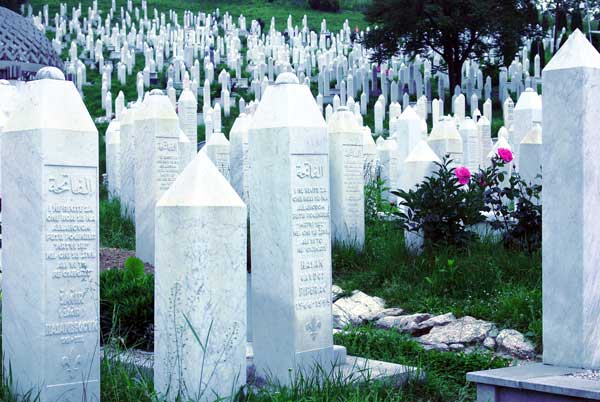
    The process of genocide began. Men and women were separated. The women and children were gathered and put on buses headed toward refugee camps in the northern town of Tuzla. The men and boys were taken to schools, community buildings, and fields where they were gathered in groups to be systematically killed by the Bosnian-Serb forces. Over the course of several days, 8,372 Bosnian men and boys were slaughtered. Many of them tried to flee Srebrenica through the forest to reunite with their families in Tuzla. Most were captured by Serbian soldiers and tortured and killed. Many of them died of wounds, exhaustion, and starvation. Nedzad Avdic was only 17 years old when he and his male family members were taken to a killing field. He was shot three times by Serbian soldiers and left for dead in a pile of corpses, men and boys who had been shot and killed. With the help of another wounded survivor, he managed to escape to Bosnian-Muslim controlled territory. They are some of the few male survivors from Srebrenica.

    The family of Hatidza Mehmedovic were not as fortunate. Hatidza lived in Srebrenica with her husband and two sons, Almir and Azmir. On July 11th, 1995, Hatidza would see her sons and husband for the last time. Her youngest son held on to her while begging her to go. He begged her to leave but couldn’t bring himself to let go of her. Her husband and sons took the forested route to Tuzla to try and avoid being captured by the Bosnian Serb soldiers. She boarded a bus with other women and young children and when she arrived, she waited for her sons and husband. After a few days, she realized they did not make it. Bosnian Serb soldiers pretending to be UN soldiers captured the men trying to escape Srebrenica on foot. A year after the war ended, Hatidza received a phone call informing her that remains of her husband and son Azmir were found, but they did not find her son Almir. It took her three years to find out what happened to the rest of her family. Only a few bones of her husband and sons were found. She also lost her brothers, her nephews, her cousins, and their children. Their entire bloodline was wiped out in a matter of days.

    While the men were the main targets of this genocidal campaign, women and girls were not spared. Bosniak Muslim women were repeatedly assaulted by Serbian soldiers. They taunted them, assaulted them in front of family members, and left them alive only so that they would have to live with the trauma. Children were killed in front of their parents and grandparents. Women and children who weren’t able to flee on buses had to flee through the forest on foot. Pregnant women, women with infants in their arms that they couldn’t feed, and women with children so young that they could not understand they needed to be quiet in order for the Serbs to not be able to locate them — many of these people died on their way to safety, their bodies yet to be found. Hundreds of victims are still declared missing because of how the Bosnian-Serb soldiers strategically hid mass graves, and how they randomly distributed the bodies and even body parts. When some victims are found, only parts of their bodies are recovered, while the other parts are still missing in different mass graves.

    Every year on July 11th, the bodies of victims found in mass graves are laid to rest in the Memorial Center Potocari. Last year, 19 victims were laid to rest. This year, there will be 18 more victims laid to rest. The funerals never end. Every year, someone receives a phone call that their husband, son, father, brother, uncle, or other male relative has been found. Every year, many mothers of Srebrenica pass away without ever having buried their sons and other loved ones. The pain and suffering are unimaginable. This is a war, one of many wars, that ravaged the Balkans in the 1990s. Bosniak Muslims were not the only victims of Serbian aggression, and Srebrenica is not the only town where genocide occurred. However, as the descendant of a Bosnian genocide survivor, I rarely hear about the Bosnian war being discussed in Muslim communities. I rarely hear about the suffering my people still endure in Bosnia and the political turmoil that makes another war and another genocide a real threat to the country.

    We Cannot Forget Bosnia’s Suffering

    I find it sad, and shameful. No one, besides Bosnians and a few supporters, have advocated against genocide denial, or for the international recognition of the genocide. Several UN officials such as Phillip Corwin and Lew MacKeznie still engage in genocide denial. Academics such as Noam Chomsky and Michael Parenti who are highly respected have continuously denied the horrific events that took place in Bosnia. In a 2006 interview, Noam Chomsky claimed that concentration and death camps were just “refugee camps” where people were free to leave any time they wanted too. My uncle was starved and tortured in one of these camps. He barely survived the beatings in the concentration camp that Chomsky describes as a camp for refugees. Michael Parenti, author of “To Kill a Nation: The Attack on Yugoslavia,” has written that the mass killings of Bosnian Muslims never took place.

    When one part of the ummah hurts, we all hurt. But Bosnia has become a forgotten part of the ummah. Bosnia’s suffering, my family’s suffering, have been forgotten. I write this article not only to educate people on what happened in Srebrenica, but also to call on people to teach others and to advocate for Bosnia. Advocate for peace in Bosnia against aggressors who threaten another war. Most importantly, I ask you to pray for Bosnia. Pray for those who lost their lives, those who are still living with the pain and trauma of war, and for the future generations of Bosniak Muslims who carry the burden and sadness our parents carry. Pray that one day, Bosniaks will truly be able to find peace and healing.
  • Muslims’ Future in France

    Muslims’ Future in France

    When President Emanuel Macron of France declared in the aftermath of the beheading of French high school teacher Samuel Paty by 18-year-old Abdoullah Anzorov that “Islam is in crisis everywhere,” he inadvertently unleashed controlled furor across the Muslim world. Rather than calming things down after the gruesome murder, Macron vilified 1.7 billion Muslims and the religion of Islam by his indiscriminate remarks. By displaying to his classes cartoons published by the French satirical magazine, Charlie Hebdo, Paty reignited a controversy that had erupted in France in 2015.The cartoons insulted the dignity of the globally-revered man, Prophet Muhammad ibn Abdullah (peace be upon him). In the aftermath of Paty’s murder and the stabbing death of three parishioners in a cathedral in Nice, the viability of Muslims living in French society has once again dominated national discourse. Yet, the contemporary relationship of Muslims to French society cannot be understood or defined by any series of singular events, or by the pronouncements or actions of various French presidents and their administrations. To understand the present and project possible future developments for Muslims in France, history is prologue; that is, history helps to set the context for the present.

    Historical Context

    France, with its considerable military might, occupied the predominately Muslim north African country of Algeria in 1830. To facilitate its near total domination of the Muslim country, one million French, Spanish, and Italian nationals (colons) settled in Algeria, thereby constituting 10 percent of the nation’s total population. These colonial settlers imposed a tiered citizenship structure in the country much akin to the social dynamics of white privilege and control established later in apartheid South Africa in 1948. The social and economic stratification of Algerian society was enforced by the French military, much to the chagrin and resentment of the Algerian people. An irreversible turning point in Franco-Algerian relations began on the day that Nazi Germany surrendered in World War II, on May 8, 1945. Approximately 5,000 Muslims celebrated Germany’s defeat, many of whom carried Algerian flags and banners decrying French colonial rule in the country. When French soldiers attempted to forcibly take the flags and banners, shots were fired and both Muslim celebrants and French soldiers were shot. As tensions escalated, 102 Europeans were killed by irate Algerians in the countryside. French military officials were commanded by Paris to take retribution for the slain Europeans. Estimates of up to 30,000 Algerians, almost all of whom were civilians, were slaughtered by the French military in retaliation. Almost ten years later, the Algerian War of Liberation was fought against France, starting in 1954, culminating in Algeria’s independence from France in 1962 after brutal attempts by the French military to suppress the revolution. The Algerian war efforts were led by the Algerian National Liberation Front.

    In 1881, fifty years after France colonized Algeria, the Muslim majority nation of Tunisia was similarly colonized. Both Algeria and Tunisia had been a part of the Ottoman empire for three centuries until after the Russo-Turkish War in 1877 when Russia defeated the Ottoman Turks. The colonial adventures of France in West Africa are reputed to have started as early as 1659 with the establishment of the trading post, Saint Louis, in Senegal, and the capture of Goree Island from the Dutch in 1677. Cheikh Anta Diop, a brilliant renowned Senegalese Muslim anthropologist, historian, physicist, author, and politician, wrote in his 1991 book, “Civilization or Barbarism: An Authentic Anthropology,” a searing analysis of European and French colonialism in Africa. He wrote, “Thus imperialism, like the prehistoric hunter, first killed the being spiritually and culturally before trying to eliminate it physically. The negation of the history and intellectual accomplishments of Black Africans was cultural and mental murder, which preceded and paved the way for their genocide here and there in the world.”

    Legacies of Colonialism

    France, along with other European nations, continue to struggle with their legacies of colonialism and how it impacts its present worldview and human and geopolitical relations. The colonial holdings of France peaked in 1929 when it was one of the largest empires of the 20th century. At that time, 72 nations were a part of the French empire, covering 8.7 percent of the land mass of the earth. Over the last 100 years, France has developed a unique colonial relationship with its non-European citizens and territories. Its spheres of influence are divided into 18 regions, states, and provinces and five Departments and Overseas Territories. Five of the Overseas Territories are island nations: Guadelope (Caribbean), Martinique (Caribbean), French Guam (South America), Mayott (Indian Ocean), and Reunion (Indian Ocean). All these territories and their citizens are considered a part of France, a single country scattered around the world. All non-Europeans residing in these areas can vote in French elections and are, theoretically at least, afforded all the rights and privileges of French citizens residing in the country of France.

    Currently, there are approximately four million Muslims residing in France, the largest Muslim population on the European continent which includes the greatest number of indigenous citizens converting to Islam. In a recent webinar entitled “France’s Islamophobia: Religious Separatism or Disciplining Muslims,” numerous French panelists emphasized the point that the acts of terror committed in Paris and Nice are being used as justifications to implement draconian measures against Muslims. Over 76 mosques have been closed, numerous Muslim schools and organizations have been forced to cease operations, and imams and other Muslim leaders are being arrested on conspiracy charges.Anti-Muslim rhetoric by right wing National Front politicians and others has increased, and physical assaults, including attacks against Muslim women and girls, are on the rise. One of the panelists, Hamza Esmili, made the point that French officials are openly lamenting the fact that Muslims have migrated to France on a daily basis from the Maghrib, West Africa, and the Middle East, and have subsequently entered into every aspect of society. The French landscape has been populated by over 2,300 mosques in a country whose core state principal is secularism (laicite). Esmili further stated that French politicians are decrying the fact that too many French Muslims have integrated into French society rather than assimilating (assimilating is adopting the ways of the dominant culture; integrating is maintaining one’s cultural differences while participating fully in the society).

    Like most issues in the world, this one is more complicated than a simple, reductionist explanation would have it. France passed a law in 1905 that created a separation of church and state, with the explicit purpose of ensuring freedom of conscience and “the free exercise of religion.” France thus became a secular state and broke its ties to the Catholic religion. Some would argue that a secular state is a positive thing in that guarantees the free exercise of religion, at least in theory. Muslims in the U.S. certainly view the separation of church and state and the secular nature of this nation as benefiting them at this point in history.

    Further complicating the matter with regard to France, is that there is an aversion to communalism, the identification and allegiance to one’s racial, ethnic, or religious group rather than to French society as a whole. That is what Hamza Esmili was referring to regarding French politicians’ lament that French Muslims had integrated rather than assimilated into French society. In the U.S., communalism is seen differently in that allegiance to American society, alongside attachment to one’s ethnic, cultural, or religious heritage, is not considered a negative. In fact, it is held aloft as America’s proud diversity. The melting pot tradition, in current times, has been somewhat transformed so that American society is described as a mosaic or a multi-colored tapestry; it is seen as a multi-cultural reality in which differences are honored at the same time that an overarching Americanism is in place. In France, communalism —allegiance to and public expression of one’s identity as a distinct racial, ethnic, or religious group within French society — is seen as a threat to assimilation and cultural cohesion. French secularism sees sameness, rather than differences, as essential to shared French values and a mainstay of the common good. Thus, French Muslims have a difficult course to navigate.

    Difficult Choices

    The future of Muslims in France is yet to be determined. At this historical juncture, Muslims in France are seemingly challenged to either assent to the citizenship demands of the state to place being French and secular above any other personal or group identity, or to develop Islamically sound community development options. As demonstrated by the 2005 civil disturbances involving young Muslims crammed into suburban slums around Paris with few opportunities for educational, social, or economic mobility, Muslims living in France are at a crossroads. On one hand, there is the realization that the conditions that necessitated their immigrating to France in the first place were to a large degree created by the colonial practices of France and other European nations.

    The downturn in the global economy and international travel restrictions imposed due to Covid-19 militate against the prospects of individuals and families improving their financial condition by migrating to another country. For the immediate future, sheltering in place and altering lifestyle practices that cause unnecessary expenses and sacrifices seem to be more viable options at this time. Since the advent of the first Islamic movement in Makkah and Madina, Arabia under the leadership of Prophet Muhammad (peace be upon him), committed Muslims have best navigated societal challenges by utilizing the guidance of the Qur’an and authentic sunnah of Prophet Muhammad (peace be upon him).

    The future of Muslims in France is yet to be determined. At this historical juncture, Muslims in France are seemingly challenged to either assent to the citizenship demands of the state to place being French and secular above any other personal or group identity, or to develop Islamically sound community development options. As demonstrated by the 2005 civil disturbances involving young Muslims crammed into suburban slums around Paris with few opportunities for educational, social, or economic mobility, Muslims living in France are at a crossroads. There is the realization that the conditions that necessitated their immigrating to France in the first place were to a large degree created by the colonial practices of France and other European nations.Since the advent, however, of the first Islamic movement in Makkah and Madina, under the leadership of Prophet Muhammad (peace be upon him), committed Muslims have best navigated societal challenges by utilizing the guidance of the Qur’an and authentic sunnah of Prophet Muhammad (peace be upon him).

  • Islamic Education in Southeast Europe

    Islamic Education in Southeast Europe

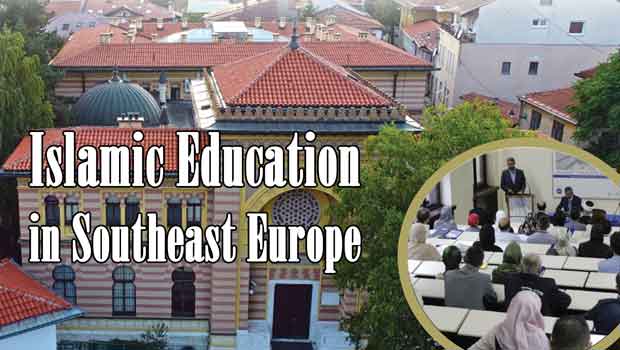
    Sarajevo, the capital of Bosnia, is home to the Faculty of Islamic Studies, a part of the University of Sarajevo. The Faculty emerged out of the Islamic School for Theology and Sharia Law, established under the Austria-Hungary administration in the late 19th century. Although, the Austro-Hungarian empire was predominantly Catholic, it granted certain religious and cultural autonomy to the Muslims in Bosnia, and the Sharia school was approved and even partly financed by Austrian authorities. The building was designed by leading Austrian architects of the time. The result was an attractive and colorful building with elements of the Moorish style (the Islamic architecture of Northern Africa and parts of Spain). After WWI, when Bosnia was incorporated into the Yugoslav kingdom, the faculty was called the School of Islamic theology. Then after WWII, Yugoslavia became a communist republic, not very friendly toward religion. So, the school was moved to another building, while the original building was turned into a city museum. Over the time, however, communist Yugoslavia became less antagonistic toward religion, and in 1977 the school was renamed the Islamic Theology Faculty. After the collapse of communism and the Bosnian War in the 1990s, the Faculty returned to its original building, this time under the name Faculty of Islamic Studies. The building had been damaged during the war, so after the conflict ended, the building was repaired with money from international donations. Today, the building looks like it appeared more than a century ago when it was the Sharia school.
    The Faculty of Islamic Studies has now become the most significant institution for higher Islamic education in southeast Europe, and equal to other faculties within the University of Sarajevo. In fact, Sarajevo has had a reputation for more than four centuries as a city with prominent Islamic education and science. At certain periods in its history, Sarajevo was home to twelve out of Bosnia’s 70 madrasas, along with other Islamic educational institutions. Today, the existence of the Faculty of Islamic Studies ensures that Sarajevo remains an important name on the international map of Islamic knowledge and academia, especially in the region of the Balkans.

    Bosnian ‘East-West’ connection

    The Faculty of Islamic Studies is not only the oldest institute of its kind in Europe, it is also the continent’s most important department of Islamic higher education and research. The Faculty exemplifies a model of Islamic education that matches European standards of higher education, while staying true to traditional Islamic educational ideals and goals. Those who graduate from the Faculty are equipped to teach Islamic studies, whether at an Islamic school or a state school, and can genuinely be considered both scholars of Islam and European intellectuals.
    Bosnian Muslims, as well as the Albanian Muslim community, have for centuries been authentic indigenous European Muslim populations, not yet fully tapped as bridges between Western and Islamic interests. The Faculty fits well within the scope of this versatility.

    Basic Islamic Studies Courses

    The Faculty of Islamic Studies attracts students from Bosnia and neighboring countries, and more and more from around the world. After the war, the Faculty started attracting non-Muslim visitors including U.S. ambassadors and diplomats from Turkey, Iran, Britain, the EU, Egypt, Qatar, Russia, and more. The Faculty of Islamic Studies maintains contact and cooperation with Oxford University and Al-Azhar in Cairo.
    With the rise of islamophobia on the European continent, the Faculty opened its doors to anyone interested in taking a course on basic Islamic doctrines and principles, along with the history of Islam and the Ottoman period in Bosnia. This special course is offered once a year for a duration of three months. If there is enough interest, the course will be offered in Bosnian as well as in English. There is a growing number of foreigners living in Sarajevo, including journalists, foreign students, tourists, international diplomats and their families, humanitarian workers, UN civil sector staff, and peace activists. Many of them would like to learn about Islam, in addition to local residents who might be interested. Zbigniew Wojdyla is a Polish citizen who lives in Sarajevo because of his work in international relations. In explaining his interest in the introductory course, he noted, “In Poland we have Muslims who are of Tatar origin, so I was familiar with Islamic culture to some extent. Here it’s interesting to learn about domestic Muslims, of Slavic background.”

    Interfaith Relations and Fostering Understanding

    The Faculty keeps good relations with Catholic, Jewish, and Eastern-Orthodox religious high schools. As Bosnia is home to other religious traditions, the Faculty considers it important to promote good interfaith relations. Ahmed Alibašić is a regular professor at the Faculty and he is also one of the lecturers for the basic introductory course. He is specialized in international politics, diplomacy, and the history of Islamic civilization. He was involved in many public interfaith dialogues. He has stated, “While the solutions found by Bosnian Muslims cannot be simply copied elsewhere, West European Muslims should study their institutions and intellectual legacy – and learn from their recent past that isolation equals destruction.”
    Bosnian Muslims are, in a real sense, a bridge between Europe and the world of Islam. The Faculty represents this connection, and can continue to foster greater understanding, not only through its academic courses but also by its commitment to interfaith dialogue and its welcoming of people from all faiths and nationalities to visit and/or partake of its introductory course on Islam. And it will continue to be a first-class institute of higher learning for those who want to pursue specialized scholarship in Islamic studies.