بسم الله الرحمن الرحيم

Tag: mohamed

  • Some Notable and Renowned American Muslims

    Some Notable and Renowned American Muslims

    Click here to listen audio podcast of this article

    Malcolm X

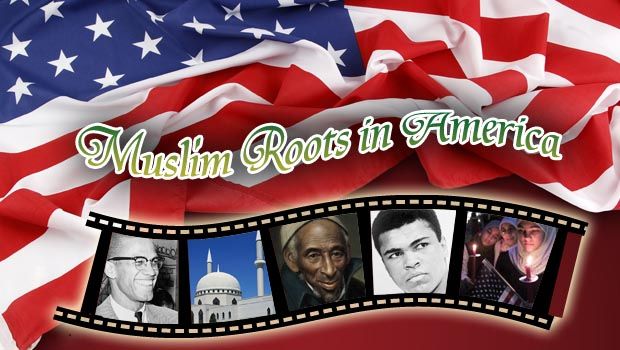
    Malcolm Little, born in 1925, became a drug addict and petty criminal. He converted to Islam while in prison, named himself Malcolm X, and began a quest for knowledge that continued throughout his life. Affiliated with the Nation of Islam, he became disillusioned with its teaching of black supremacy and after traveling in Africa and the Middle East, and making Hajj in 1964, he embraced the teachings of orthodox Islam and took the name Al-Hajj Malik Al-Shabazz. In 1965 he was assassinated. “The Autobiography of Malcolm X” is considered one of the most important nonfiction works of the 20th century.

    Muhammad Ali

    Muhammad Ali, born Cassius Marcellus Clay, Jr. in 1942 in Kentucky, is a former professional boxer, generally considered one of the greatest heavyweights in the history of the sport. Arguably the most recognized and loved sports figure of the past 100 years, he was crowned “Sportsman of the Century” by Sports Illustrated and “Sports Personality of the Century” by the BBC. Ali is also known for his dedication to his faith, his principled stance against the Vietnam War, his humanitarian work, and his fundraising for research on Parkinson’s disease.

    Hakeem Olajuwon

    Olajuwon, a 12-time NBA All-Star, led the Houston Rockets to two NBA championships. After he retired in 2002, his #34 jersey was retired by the Rockets, and a monument honoring him is outside the Rockets’ arena. He was inducted into the Basketball Hall of Fame in 2008.

    Keith Ellison and Andre Carson

    In 2006, Keith Ellison was the first American Muslim elected to the U.S. House of Representatives. He is now in his fourth term representing a Minnesota district. In 2008, another Muslim, André Carson, won a congressional seat for Indiana.

    Fazlur Rahman Khan

    Acclaimed as an engineer and architect, Khan designed systems for high-rise building construction. Two of his most notable achievements are Chicago’s John Hancock Center and the Sears Tower.

    Fareed Zakaria

    CNN talk show host and editor-at-large for TIME magazine

    Dr. Mehmet Oz

    Surgeon and TV host

    Shahid Khan

    Owner of an NFL team, the Jacksonville Jaguars

    Jawed Karim

    Co-founder of YouTube

  • Muslims Have Been Here for Centuries

    Muslims Have Been Here for Centuries

    Islamic presence in the Americas since the 1400s is well documented
    1178 – Muslims Sail to America

    A Chinese source known as the Sung Document records Muslim sailors journeying to a land known as Mu-Lan-Pi, which some researchers identify as the American continent.

    1300s – African Muslims Explore the New World

    According to some scholars, Abu Bakari, a king of the Muslim state of Mali in West Africa, initiated a series of sea voyages to North America beginning in the early 1300s. About the same time, Mandingo Muslims from Mali and other parts of West Africa are said to have arrived in the Gulf of Mexico and traveled up the Mississippi River to explore the interior of the North American continent.

    1527 – Spanish Explorers and Spanish Refugees

    Estevanico of Azamor, a Moroccan Muslim, arrived in Florida with the expedition of Panfilo de Narvaez in 1527. He stayed in America and joined expeditions across the continent to Arizona and New Mexico. By the late 1700s, historical records indicate the presence of Spanish “Moors” living in South Carolina, many of whom were expelled from their homeland by edict of the Spanish Crown.

    1530 – African Slaves Begin to Arrive in the Americas

    During three centuries of the slave trade, over 10 million Africans were enslaved and brought to the Americas. Scholars estimate that 10-30 percent of these slaves were Muslim, although practicing Islam had to be done in secret, and many slaves were forced to convert to Christianity.

    1807 – Freed Muslim Slave Puts Down Roots in America

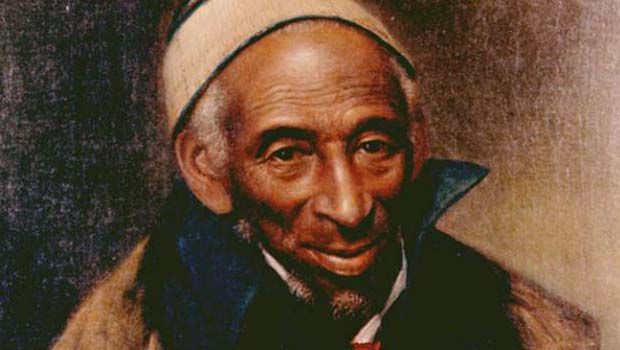
    Yarrow Mamout is an example of Muslim ex-slaves putting down roots in the U.S. Enslaved at 16 and brought to Maryland from Guinea in 1752, Mamout was set free in 1801 and became an early shareholder in Columbia bank, the second chartered bank in the country. Today, portraits of Mamout hang in the Historical society of Pennsylvania and the Georgetown Public Library in Washington.

  • Early American Mosques

    Early American Mosques

    Many early Muslim communities were comprised of a few individuals and/or families. They met in private homes for prayers, and rented out halls for the Muslim holidays.

    1900 – First Documented Communal Muslim Prayers

    Muslims of Arab descent in Ross, North Dakota gathered in homes for the first documented communal prayers held by American Muslims.

    1915 – Mosque Built in Biddeford, Maine

    Albanian Muslims built a mosque in Biddeford, Maine and established an Islamic association. In 1919, they established another mosque in Waterbury, Connecticut. These were among the first Islamic associations in America.

    1929 – Mosque Built in Rural North Dakota

    The small Ross community built the mosque, but in time it fell into disrepair as some Muslims relocated and others passed away. It was rebuilt in 2005 in memory of one of the town’s few remaining Muslims.

    1934 – The Mother Mosque of America

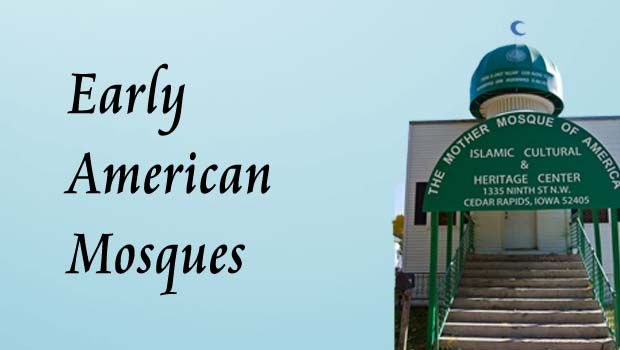
    Lebanese Muslims in Cedar Rapids, IA built this mosque in 1934; it is the longest continually standing Muslim house of worship still in use today.

  • Do You Know America’s First Muslims?

    Do You Know America’s First Muslims?

    Click here to listen audio podcast of this article

    Estevanico (Stephen the Moor)

    Estevanico, also known as Stephen the Moor, was born in Morocco around 1503 and raised as a Muslim. He was sold into slavery and in 1527 his owner, Andres de Dorantes, took him on an expedition to Florida, along with six hundred colonists and soldiers. During his time with Dorantes, Estevanico converted to Christianity. After encountering hostile Native Americans, the surviving contingent of colonists and soldiers escaped by barge, sailing toward Mexico, but ended up in Texas. After being enslaved by Indians, only four men survived — Estevanico, Dorantes, Cabeza de Vaca, and Alonso Castillo. These four traveled for eight years across northern New Spain (present-day U.S. Southwest and northern Mexico), reaching Spanish forces in Mexico City in 1536. He is said to have been the first African man in North America.

    Omar ibn Sayyid

    Omar ibn Sayyid was born around 1770 in what is present-day Senegal. He was an educated Muslim man who was kidnapped from his home at age 37, transported to South Carolina and sold into slavery, remaining enslaved until he died, in 1864. He converted to Christianity while a slave, but wrote heartfelt reminiscences of his early days as a Muslim and some scholars maintain that he stayed true to Islam throughout his life. He wrote 14 manuscripts, all in Arabic, including his autobiography which begins with verses from the Quran.

    Adbul Rahman Ibrahima Sori

    A man who spent 40 years as a slave in Natchez, Mississippi, Abdul Rahman Ibrahima Sori, was born in 1762, a prince from the Kingdom of Futa Jallon, a territory in present-day Republic of Guinea. He was sold into slavery in 1788, at the age of 26. Upon being freed in 1829, he and his wife set sail for Timbuktu, his birthplace, but they made it only as far as the American colony in Monrovia, Liberia on the west coast of Africa. He died soon after arriving, while his nine children remained enslaved in America. His remarkable story is told in a 2008 film, “Prince Among Slaves” which includes the reunion of Abdul-Rahman’s descendants, from both Liberia and the U.S., in 2003.

    Abu Bakr Al-Siddiq

    From a family of learned and prosperous Muslims in Mandingo (now Ghana), Abu Bakr Al-Siddiq was taken as a prisoner of war at the age of 15, sold into slavery and sent to Jamaica in 1807 to work on a plantation. He was forced to change his name and convert to Christianity, but he always thought of himself as Abu Bakr, maintained his faith as a Muslim, and years later wrote a short autobiography in Arabic. Abu Bakr compiled detailed lists of trade routes in Western Africa, and some of his works were later translated into English.

    Salih Bilali

    Most of his life was spent as a slave on St. Simon’s Island, Georgia, a long way from where Salih Bilali was born, in Massina (present-day Mali) in the 1770s. Then he was kidnapped and sold into slavery around 12 years old, ending up in the Bahamas where he worked as a slave until he was purchased by the Couper family of Georgia. Bilali was characterized by his owner’s son as the most religious man he had ever known, stating that Bilali’s last words before his death were “Allah is God and Mohammed his prophet.” (The above image is an artist’s rendering of a native of Hausa, said to resemble Salih Bilai. Image from African Muslims in Antebellum America.)

    Bilali Mohamed

    Bilali Mohamed was born in Timbo, Guinea around 1770. His family was Muslim and highly educated. He was enslaved as a teenager and taken to the Caribbean where he worked for 10 years, and then sold to a planter on Solepo Island, Georgia. Among the slaves, Bilali was seen as a leader and a teacher and some of his writings are preserved in the Georgia State Library in Atlanta. Upon his death in 1857, a 13-page Arabic manuscript was found and it has come to be called the Bilali Mohamed Document. It is a statement of Islamic beliefs. Bilali is also known for motivating his fellow slaves during the War of 1812 as they defended the island from the British. (Image of Bilali Mohamed descendant, Shad Hall of Sapelo. Photo circa 1930s, from African Muslims in Antebellum America.)

    Ayuba bin Sulaiman

    Ayuba bin Sulaiman, known in Europe and the U.S. as Job Ben Solomon, was born in 1701 of a religious Muslim family, was well-educated, and became a merchant. He was captured and sold into slavery in 1731 and sent to Annapolis, Maryland where he spent two years on a tobacco plantation. He was briefly imprisoned after attempting to escape from the plantation. He was later purchased by a British man and granted his freedom, and in 1734 he sailed back to Africa where he stayed until he died, in his seventies. He was known for his intelligence and conveyed a great pride in his African and Muslim identity.

    Mahommah Gardo Baquaqua

    Born around 1830 in Djougou (now Benin in West Africa), Mahommah Gardo Baquaqua was from a Muslim family of merchants. He was captured and shipped to Brazil as a slave in 1845. After two years, his owner, a ship captain, took him on a voyage to New York where abolitionists secured Baquaqua’s freedom. He made his way to Haiti and worked there for a time, converting to Christianity. He returned to New York in 1849, enrolled in college, but in 1853 he moved to Canada and collaborated with a local writer to produce his biography.

    Mahammed Ali ben Said (Nicholas Said)

    Mahammed Ali ben Said, later named Nicholas Said, was born in 1836 in northern Africa. When Said was around 15 years old, he was enslaved and transported across the desert, subsequently being owned by masters of various nationalities including Arab, Turk, and Russian. He was eventually hired as a valet to a European man and traveled with him to America. Said became a teacher in 1862 in Michigan and fought in the Civil War as part of the 55th Regiment of Massachusetts Colored Volunteers. His autobiography was published in the Atlantic Monthly in 1867 in which several references to Allah are found. He died in 1882.

  • American Muslim Demographics

    American Muslim Demographics

    Click here to listen to this article in audio

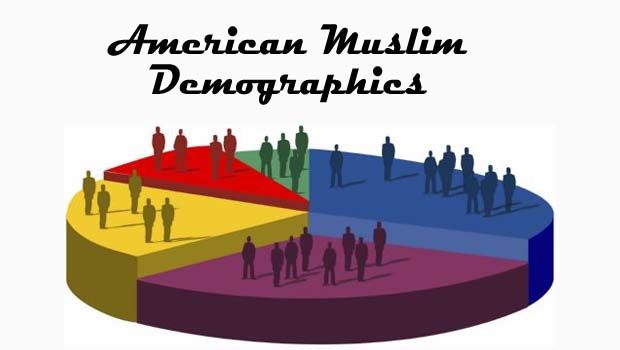
    63%

    Almost two-thirds of American Muslim adults are first-generation immigrants from at least 77 different countries

    37%

    More than a third of Muslim American adults were born in the United States

    81%

    The vast majority surveyed, more than three-quarters, report that they are U.S. Citizens

    59%

    More than half of adult Muslims are between the ages of 18 and 39, compared with 40% of adults in the general public

    Source: Pew Research Survey 2011


  • Hajj in the Bible

    Hajj in the Bible

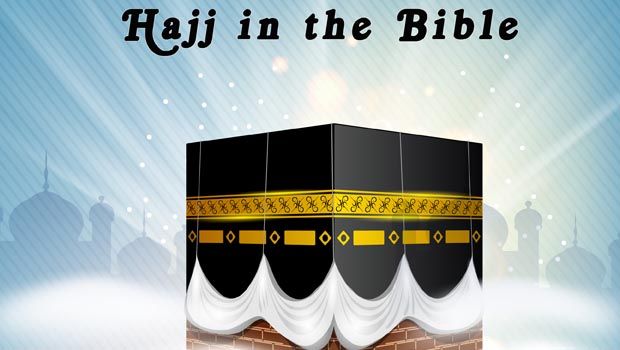
    When many Jews and Christians view Islam from the outside, they find parallels to their own faiths that usually inspire a great deal of curiosity. These parallels are often doctrinal, sometimes regarding the biographies of Prophets shared between the three Abrahamic faiths like Moses and Jesus (peace be upon them). Yet, sometimes striking parallels are found by the more discerning eye. Deep inquests often reveal textual and lexical similarities that are difficult, if not impossible, to explain by mere theories of one tradition borrowing from another.

    The book of Exodus contains the following verse in reference to a Hajj in the time of Moses: “And this day shall be unto you for a memorial; and ye shall keep it a feast to the LORD throughout your generations; ye shall keep it a feast by an ordinance forever” (Exodus 12:14).

    As millions upon millions of Muslim devotees engage in the rites of the Hajj pilgrimage, one of the five pillars of Islam, we can peer into the terms used in this age-old practice that lead us to a time long before the Prophet Muhammad (pbuh) was even born. Let us look at the word al-Hajj itself. Typically, the entire Arabic vocabulary, like its sisters in the Semitic linguistic group, consists of words structured from trilateral tri-consonantal roots. In this case the root is hajaj. According to the classical Arabic lexicon Lisan al-Arab it is defined as follows: “Purpose. As in, ‘So-and-so did hajj unto us,’ which means he presented himself before us.”

    So the general lexical meaning of the word is “intended purpose.” In the context of the Hajj, the Ka`bah within the Meccan Sanctuary is the intended destination and purpose. To list usages of this word in an Islamic context would be, for most Muslims, an appeal to the very obvious as stories of its wonder and splendor that have been related to them since childhood. However, if we peer beyond the context of Islamic rites and deep into the past, do we find this word used in the previous traditions of the Old Testament? The answer is in the affirmative. The book of Exodus contains the following verse in reference to a Hajj in the time of Moses: “And this day shall be unto you for a memorial; and ye shall keep it a feast to the LORD throughout your generations; ye shall keep it a feast by an ordinance forever” (Exodus 12:14).

    In this verse, the King James translators rendered the uninflected noun Khag as “feast.” This word Khag is wholly cognate to the Arabic Hajj. Elsewhere in the verse the word Khag is inflected as khagotem and takhaguhu. One must pay attention to the fact that the Hebrew phonetic “kh” is the pharyngeal fricative “h” in Arabic. Also, one must note that the phonetic “g” is cognate to the Arabic “j.” So for analytical purposes in this context the verse would be rendered: “And this day shall be unto you for a memorial; and ye shall keep it a Hajj to the LORD throughout your generations; ye shall keep it a Hajj by an ordinance forever.” Another verse using this root is the following: “And afterward Moses and Aaron went in, and told Pharaoh, ‘Thus saith the LORD God of Israel, Let my people go that they may hold a feast unto me in the wilderness” (Exodus 5:1).

    “This Qur’an could not have been authored by any other than God, as it rectifies what came before it and elucidates what was in the previous scriptures. Let there be no doubt that this is, indeed, from the Lord of all Worlds” (Qur’an 10:37).

    The inflected word that the King James translators rendered “feast” is yakhugg? which is cognate to the Arabic “yuhajju,” so for analytical purposes the verse would be rendered in this context as: “And afterward Moses and Aaron went in, and told Pharaoh, Thus saith the LORD God of Israel, Let my people go, that they may hold a Hajj unto me in the wilderness.” This is not to suggest that Moses and Aaron went to Mecca and performed Hajj as Muslims know it today. It is merely to exemplify that a consecrated journey and pilgrimage unto God at His Temple did, indeed, precede the rise of Islam in the 7th Century CE. An additional and astonishing dimension to this that makes the concept of lexical borrowing between the Old Testament and the Qur’an improbable, if not outright impossible, is found in an alternate form of the root in Hebrew, Khug. Friedrich Wilhelm Gesenius (1846) defines this word: “To describe a circle, to draw a circle, as with compasses. Job 26:10…m. a circle, sphere, used of the arch or vault of the sky, Pro. 8:27; Job 22:14; of the world, Isa. 40:22.” Let us look at the verses he has cited:

    “When he prepared the heavens, I was there: when he set a compass upon the face of the depth” (Proverbs 8:27).

    “Thick clouds are a covering to him, that he seeth not; and he walketh in the circuit of heaven” (Job 22:14).

    “It is he that sitteth upon the circle of the earth, and the inhabitants thereof are as grasshoppers; that stretcheth out the heavens as a curtain, and spreadeth them out as a tent to dwell in” (Isaiah 40:22).

    Thus, this word not only means sacred pilgrimage and feast unto God in the Bible, it also means to encircle. To any Muslim this will be a striking discovery.

    Semitic languages have been, since time immemorial, broad and deep systems of expression where one word’s many variant, but supplementary, meanings all coalesce to a greater understanding of that lexeme. So in this case we have a root which has a form meaning a feast, also meaning a pilgrimage, and in one form meaning to encircle! The Hajj pilgrimage, which is at its core an encircling of the Ka`bah, called Tawaf, is concluded with none other than the Feast of the Sacrifice, Eid al-Adha, to commemorate Abraham’s willingness to sacrifice his son at God’s command. Borrowing all these meanings buried in lexica that did not even exist until hundreds of years after the life of the Prophet Muhammad (pbuh) would require nothing short of a Semitic linguist and Biblical scholar. It should be noted that the Bible itself would not be available until 200-300 years after the passing of the Prophet Muhammad (The International Standard Bible Encyclopedia, vol. 4, Geoffrey W. Bromiley, p. 982). Such lexical depth and lucidity is consistently found throughout the Qur’an as God has stated therein:

    “This Qur’an could not have been authored by any other than God, as it rectifies what came before it and elucidates what was in the previous scriptures. Let there be no doubt that this is, indeed, from the Lord of all Worlds” (Qur’an 10:37).

    —–Shibli Zaman—-

    Did Jesus (pbuh) personally claim divinity?

    The response to this question could be found in the following Qur’anic verses: “At length she brought the (babe) to her people, carrying him (in her arms). They said: ‘O Mary! Truly an amazing thing hast thou brought! O sister of Aaron! Thy father was not a man of evil, nor thy mother a woman unchaste!’ But she pointed to the babe. They said: ‘How can we talk to one who is a child in the cradle?’ He said: ‘I am indeed a servant of Allah. He hath given me revelation and made me a prophet; And He hath made me blessed wherever I be, and hath enjoined on me Prayer and Charity as long as I live; (He) hath made me kind to my mother, and not overbearing or miserable; So peace is on me the day I was born, the day that I die, and the day that I shall be raised up to life (again)!’ Such (was) Jesus the son of Mary: (it is) a statement of truth, about which they (vainly) dispute. It is not befitting to (the majesty of) Allah that He should beget a son. Glory be to Him! When He determines a matter, He only says to it, ‘be’, and it is. Verily Allah is my Lord and your Lord; therefore serve Him: this is a Way that is straight. But the sects differ among themselves: and woe to the unbelievers because of the (coming) Judgment of a Momentous Day! How plainly will they see and hear, the Day that they will appear before Us! But the unjust today are in error manifest! Warn them of the Day of Distress, when the matter will be determined: for (behold,) they are negligent and they do not believe! It is We Who will inherit the earth, and all beings thereon; to Us will they all be returned” (19:27-40).

    Actually, the Quranic verses cited above point out that Jesus, himself, proclaimed his humanity and that he was a servant of Allah and a prophet, clearly not divine. He actually rebuked the people who would develop those philosophical ideas after he is gone. An example is when Satan came to Prophet Jesus and tried to tempt him as it appears in the book of Matthew (4:1-11). Now the question is how can Satan tempt God? This is only conceivable if the person who is subjected to temptation is a human being and that is what Jesus spoke of. Also, on many occasions Jesus had gone to the wilderness or mountains to pray. Now what does it mean that Jesus is praying? He is praying to someone who is greater than himself. He is praying to his God and Lord, and in accordance to the definition of the Trinity this doesn’t make sense. Nobody prays to himself; so why would Jesus pray to himself if he was God?

    In the book of Matthew, Jesus denies any knowledge of the unseen or the last hour (24:36). Again the knowledge of the unseen is definitely one of the divine attributes and if somebody doesn’t know the future then he is not God – he is a human being. He may be pious, he may be a messenger, but he is not God. Additionally, the Gospel of Mark says that when someone ran after Jesus and said ‘Good Master’ Jesus would reply, “Why do you call me good? No one is good—except God alone” (10:17-18). Here this doesn’t mean that Jesus is not good but that goodness, in the absolute sense, is a divine attribute and that is not to be used as a description of him. In the Gospel of John, Jesus admits and says that “father is greater than I” (14:28), which is very clear evidence he never meant that he is divine and even denied it and clarified that he is simply a human and messenger of God. That is exactly what the Qur’an, 600 years later, confirms.


  • Let Us Know Muhammad (peace be upon him)

    Let Us Know Muhammad (peace be upon him)

    “Perhaps the world was never in greater need of an accurate account of Prophet Muhammad’s life than it is now.” So states Adil Salahi, author of Muhammad: Man and Prophet. While awareness of Islam and Prophet Muhammad has increased considerably in recent years, many people still do not really know who he was and what legacy he left behind. The Charlie Hebdo caricatures of Prophet Muhammad are a reminder that the understanding many people have about the Prophet is extremely flawed and far from factual. And the murder of the magazine’s editor and other staff members by extremists results from the gaping incongruity of those who call themselves followers of Muhammad yet act in ignorance of and utter contradiction to his teachings.

    The misinformation about the Prophet, however, is rather surprising. The accounts of most prophets and religious figures are mixed with myths and legends while Muhammad’s life story was documented by his contemporaries in the full light of history. Almost every aspect of his life was recorded by those who lived with him and knew him well. The vast body of literature affirms that he was a man of exalted character, one who was just, kind, and compassionate to all people, even when he encountered hostility and rejection. For example, when the Makkan leaders unleashed their persecution against him and his companions, he could still be heard saying, “O Allah! Forgive my people, for they don’t know.” Later, when he went to Ta’if, a village about 50 miles southeast of his hometown, Makkah, to spread Islam, they set the street urchins upon him, who chased him and threw rocks at him until they drove him out of town. Even at that point, when he was utterly exhausted and bleeding from head to toe, he supplicated, “O my Lord, guide my people along the true path, as they are ignorant of the truth.” His revolutionary message changed not only his own society, but the very course of history, a fact that even his bitterest enemies have acknowledged. Today, over 1,400 years later, more than 1.5 billion people revere him and follow him as God’s last messenger.

    The Prophet (pbuh) taught us how to live among people like flowers, not thorns

    The veneration of Muhammad is not limited to his followers, however. Many great philosophers, thinkers, and reformers have praised him and said that it would be to humanity’s great benefit to follow his teachings. Today, no matter how much Islamophobes try to degrade him or characterize Islam as barbaric and destructive, the fact is that Prophet Muhammad never preached violence. On the contrary, his message was one of benevolence, understanding, and forgiveness.

    The overzealous and clearly misguided Muslims who claim to be defending the honor of the Prophet by committing acts of mayhem and violence, need to know that a true defense of the Prophet will never be achieved through bullets and bombs. The only way to defend him is to honor his legacy by living a life of integrity, fairness, and mercy. We cannot become emotionally overblown and act irrationally every time an Islamophobe insults Islam or our Prophet. He (peace be upon him) is loved and respected by multitudes around the world, and no one can sully or lessen this devotion and love in our hearts. Reacting vehemently, unjustly, or even criminally when some express their hatred of Islam and the Prophet only serves to alienate non-Muslims. In fact, the Prophet taught us how to live among people like flowers, not thorns.

    The Prophet’s own example was testified to by Anas ibn Malik who served him for ten years. He said that the Prophet never, ever rebuked him. “When I did something, he never questioned my manner of doing it; and when I did not do something, he never questioned my failure to do it. He was the most good-natured of all men.” Indeed, the Prophet was an extremely tender-hearted person. “Repel evil with good” was his dictum. He was a loving father, a devoted and kind husband, and a caring neighbor. He had a dignified and noble demeanor, but he took no special privileges and comported himself like a common man. He treated everyone, friend and stranger, the powerful and the weak, with equal respect and generosity. His manner of living naturally endeared him to those who came in contact with him, and gained him respect, love, and admiration.

    The world has witnessed many prophets including the towering figures of Abraham, Moses, and Jesus. Muhammad paid high tribute to all of them and made it incumbent upon his followers to do the same. Countless individuals have contributed to human civilization, but none of them matched the achievements and impact of Muhammad. His greatness is truly unique. A mercy to mankind, he is the most remarkable man to have walked the earth in quest of universal truth and social justice. Rather than being mocked and maligned, he should be recognized as a paragon of moral excellence and spiritual merit, nothing short of the pride of all humankind! Muhammad, the man, is the greatest testimony to the truth he preached. Let us know him, explore and embrace his teachings, and make this world a better place to live, for ourselves and the generations to come.

  • Editorial: Clearing the Air and Knowing Muhammad (pbuh)

    Editorial: Clearing the Air and Knowing Muhammad (pbuh)

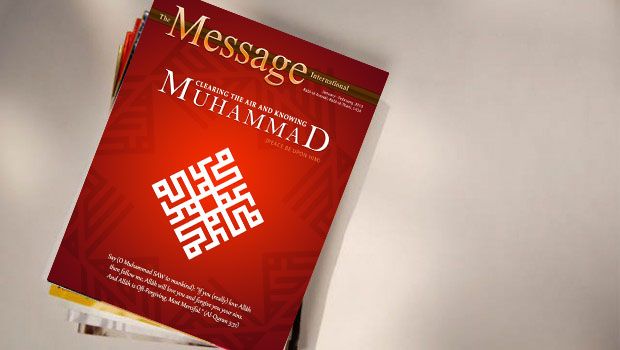
    “Perhaps the world was never in greater need of an accurate account of Prophet Muhammad’s life than it is now.” So states Adil Salahi, author of Muhammad: Man and Prophet. It’s true that after 9/11, for whatever reason(s), awareness of Islam and Prophet Muhammad (peace and blessings of God be upon him) has increased considerably. Yet many people still do not really know who he was and what legacy he left behind. Sam Bacile’s infamous film, a French magazine’s cartoon caricatures, and hate-filled remarks made by right-wing propagandists are clear reminders that many people’s understanding of Prophet Muhammad (pbuh) is flawed and far from the facts.

    Such a lack of knowledge, however, is rather surprising; for unlike most other prophets or religious personalities whose life stories are full of myths or legends, Prophet Muhammad (pbuh) lived in the full light of history. Almost every aspect of his life was recorded by those who lived with him and knew him intimately, and so we do not have to guess at what he said or did. When we read this vast body of literature, we can see that he was a man of exalted character and enlightened personality, one who was kind and just to all people, regardless of whether they treated him well or with antagonism. His distinctive benevolence extended even to animals and plants. The revolutionary message conveyed by Prophet Muhammad changed not only his own society, but the very course of history, a fact historians have unanimously noted. Today, some 1,400 years later, more than 1.3 billion people revere him and follow him as God’s last messenger.

    The veneration of Prophet Muhammad (pbuh) is not limited to his followers, however. Many great philosophers, thinkers, and reformers of other faith traditions have praised him and said that it would be to humanity’s great benefit to follow his teachings. Today, no matter how caustically Islamophobes taunt him or libel Islam, the fact is that Prophet Muhammad (pbuh) never preached any doctrine that guided to other than peace, justice, and mercy. It’s simply mind-boggling that he would be made responsible for an individual Muslim’s misreading of his message and committing wrongdoing in the name of Islam. Contrary to the widely held notion in the West and some parts of the East, the very concept of “holy war” does not even exist in Islam. The Qur’an is categorical in denouncing all wars of aggression. “And fight in God’s cause against those who wage war against you, but do not commit transgression—for, verily, God does not love transgressors” (Al-Baqarah 2:190). The Qur’an also forbids Muslims from fighting, attacking, or harming anyone who allows others to live in peace. “Thus, if they let you be, and do not make war on you, and offer you peace, God does not allow you to harm them” (An-Nisaa’ 4:90).

    Prophet Muhammad (pbuh) preached peace, mercy, and respect toward all of humanity. His heart was filled with love for people irrespective of their social standing, color, race, or gender. He eliminated the roots of racism, termed it satanic, and advised his followers to regard all people as their brothers and sisters, with no man or woman higher in rank than any other except through virtue. He cautioned, “One who has even the least amount of pride in his or her heart won’t be able to enter into Heaven.” The Prophet never endorsed any impolite or indecent manner of behavior, let alone injustice done to anybody. He said, “Those who commit injustice upon people in this world will be the greatest losers in the Hereafter and will find their place in the Hellfire.” The Prophet thus taught people how to live among others in simple and modest grace, looking always to bring benefit, never offending, never causing harm or distress.

    The Prophet’s embodiment of this manner of living was testified to by every one of his companions, including Anas ibn Malik, who served the Prophet for ten years. He said that the Prophet never ever rebuked him. “When I did something, he never questioned my manner of doing it; and when I did not do something, he never questioned my failure to do it. He was the most good-natured of all men.” Indeed, the Prophet was an extremely kind-hearted person. “Repel evil with what is good” was his dictum and his practice. He was considerate to his family and friends. He was a loving father, a generous husband, and a caring neighbor. He treated equally, without bias or favoritism, friends and strangers, the powerful and the weak, the wealthy and the poor. And his compassion and generosity to those in need naturally endeared him to those who came to know him, and gained him respect, admiration, and love from both close companions in his lifetime and those who study his biography from the distance of time or place. He exemplified the best of human conduct in all situations and the Qur’an, fittingly, describes him as “uswatun hasana,” the best example to emulate (Al-Ahzab 33: 21).

    How can anyone mock and malign such a towering figure in the annals of history? This is a man who should be cherished by the whole of humanity because of his pure and noble soul. Surely, it’s either ignorance or prejudice that permits of belligerence toward him. Those who engage in such vilification, so decidedly unjustified, insult our collective human conscience and intelligence.

    Prophet Muhammad (pbuh), the man, is the greatest testimony to the truth he preached. Let us know this man, explore his guidance, and embrace his example.

  • How Has Prophet Muhammad (pbuh) Influenced My Life

    How Has Prophet Muhammad (pbuh) Influenced My Life

    Assalamu Alaykum. My name is Ajran Nai’ma A. Arsad, 15 years old. I was born in the Philippines and lived there until last year, when I travelled here to Malaysia with my parents and my siblings because my Mother is to study here.

    For all the goodness people see in me now, it is because of Islam which he (Prophet Muhammad) has brought that turned me this way

    Just recently, a video was made to insult the Prophet Muhammad (peace be upon him) and many of the Muslims protested against it. During that time, I did not participate in any protest, nor did I make a reaction paper/video like other Muslims did. What exactly was I doing? I was just sitting at home, unable to do anything. I also don’t know so much about his (pbuh) life story. Do I love the Rasulullah (pbuh) or not? This is a question I asked myself so many times. I asked Allah (swt) to make me love him [the Prophet] or if I already love him, then to make my love for him even more. I was in fact in a complete dilemma during those days thinking about that all the time.

    Then my parents got to know of this essay competition and asked my siblings and me to participate in this. I completely had no idea what to write and had no confidence to do so. So my head was hurting so much worrying about it. But Alhamdulillah (all praise be to Allah), I’m fine now.

    Many times we were told in the Qur’an that the Prophet Muhammad (pbuh) was sent as a Mercy to mankind. And we Muslims cannot describe as to how, and how much, he made us feel blessed for having him (pbuh) as our Prophet. We love him of course, because he has brought with him Islam, my and your religion. Without the Islam he has brought, I would not have known about myself and about my Lord, Exalted is He. Without the Islam he has brought, I would have gone astray, away from Allah (swt) and away from the Truth. Without the Islam he has brought, I would not have known about the Day of Judgment, wherein we will be rewarded for the good deeds we have done and punished for the evil deeds we have committed. Without the Islam he has brought, I would not have become close to my parents, my siblings, and the rest of the people of my household and many, indeed, too many to mention.

    One of my favorite sayings of the Prophet Muhammad (pbuh) is this: “A believer is one who desires for his brother what he desires for himself.” And another saying tells us that when a believer supplicates for his brother, an angel will say, “Ameen, may you have the same.”

    It is a sad thing indeed that many people are unaware of these sayings of the Prophet (pbuh), and even ridicule and accuse him of being this-and-that when truly I have not known anyone better and kinder than him.

    Now that I am writing this essay, I’ve realized that the Prophet Muhammad (pbuh) played a major role in my life and that I do love him and am very proud of being among the people of his (pbuh) Ummah. For all the goodness people see in me now, it is because of Islam which he (pbuh) has brought that turned me this way. Allah (swt) has indeed granted me my prayer and has consoled me regarding my problem, Alhamdulillahi Rabbil A’lamin.