بسم الله الرحمن الرحيم

Tag: marriage in islam

  • Finding Compromise in Marriage

    Finding Compromise in Marriage

    In marriage, conflict is inevitable. The little irritations that transpire over weeks, months or even years, add up. Eventually, the little problems escalate into something big and unavoidable. The conflict becomes the elephant in the room, and the only way to remove it, is to seek a solution. Sometimes that means seeking compromise.

    A healthy, long-lasting marriage is not one devoid of arguments or fights, it is one where the couple understands how to navigate a conflict which can, at times, mean finding compromise. Understanding how to compromise has been determined to be a predictor of a successful relationship. John Gottman, renowned marriage expert and psychologist, in his book The Seven Principles for Making Marriage Work, shared his research that couples who were skilled at resolving their differences had a higher likelihood of being satisfied with their relationship. In his book, he provides examples of couples that had solvable versus perpetual problems. The couples with ongoing, yet solvable issues, were able to adopt a steady rhythm in conflict resolution and compromise.

    But what does it mean to find compromise in your marriage? How can you find a long-lasting solution that allows both parties to feel at ease? Well, the short answer is — it’s a process. It involves the parties engaging in a constructive dialogue that will allow them to make concessions or sacrifices to achieve a mutually agreed-upon solution. The question then is: How? How does one engage in a level-headed conversation and practice that will allow for the process to occur? There are several steps that can be taken to get to a compromise.

    Identifying Your Wants/Needs

    As any good negotiator knows, the first thing to do before entering into negotiations is to gain clarity on what you want. What is at the heart of this conflict and what is it that you are seeking from a peace deal? It’s necessary to take a moment to reflect with a clear head and determine what it is you need to feel that a resolution has been attained. Have you thought about the why? Have you asked yourself how and why you might have been contributing to the conflict? Are you making demands based on your lower nafs? Are you keeping in mind the bigger picture? Is getting what you want going to lead you to being a happier spouse and having a healthier marriage? Will you be okay if you get less than what you hope for? Part of compromising might be potentially giving up one thing, to gain another. What are you willing to sacrifice? These questions must be answered before engaging with your spouse.

    It is very important to keep in mind that achieving a compromise through negotiations should avoid certain things. The first and most important is that religious obligations and doctrine cannot be compromised. The other is that both spouses should be careful to stay grounded in sincerity and fairness so that the lower nafs does not hold sway. It might be that one of the spouses is more articulate than the other and is able to make a more persuasive case. But if he or she is coming from the lower nafs, then they might think they are achieving something positive, something in their self-interest, but in actuality they are indulging their ego and selfish desire; and that is contrary to what is necessary to resolve conflict.

    Active Listening

    Of course, there is no way to achieve a negotiation without turning on your active listening skills. It is crucial to share your feelings and then provide a time for your partner to speak without you butting in, to question, resist, or even attack their viewpoint. Active listening includes removing all distractions, and focusing on what the other person is saying. It is helpful to repeat back to them, in your own words, what they have said to prevent misunderstanding and to build trust. Then the two of you can come to a place where you are ready to do the nitty-gritty negotiating.

    Meeting in the Middle

    It’s important not to jump quickly to a resolution. It may take a few different times to come to a solution that works for both sides. It’s okay to present several proposals, and do multiple meetings of the mind, before coming to a final resolution. You should be able to explore the potential advantages and disadvantages of each possible outcome. You should always be open to new ideas and re-engage with active listening to fully understand your partner’s perspective. If what your spouse explains about their perspective is not clear to you, ask clarifying questions. But do so in a way that sincerely seeks to understand how they see things. Avoid any attitude or tone of challenge, annoyance, or blame. Be respectful of their feelings and ask about how they are feeling at various points to make sure you are both experiencing the process in a positive way. Go back to your objectives of what you want and see if that has changed now that you hear your partner’s perspective.

    Understand that you might need to be more flexible than you intended. For a marriage to succeed, there must be more than selfish interest.  In the end, it is both parties that must make concessions. Both spouses must make the intention to seek common ground and to stay moderate in their perspective and their objective. The Prophet (s) said, “… do good deeds properly, sincerely and moderately, and worship Allah in the forenoon and in the afternoon and during a part of the night, and always adopt a middle, moderate, regular course whereby you will reach your target ” (Sahih Bukhari). The ultimate target, of course, is Paradise. Maybe you will find it necessary to bring in a third party (e.g., a counselor) to help you navigate the process or even suggest a few ideas that can facilitate resolution.

    Seeking Inspiration from the Qur’an

    As Muslims, we can find inspiration in the Qur’an for finding the positive even in the midst of what seems difficult or negative. In Surah, al-Nisa, verse 19, Allah says “Live with them in accordance with what is fair and kind: if you dislike them, it may well be that you dislike something in which Allah has put much good” (4:19). This verse is directed at husbands when navigating difficulties with their wives. Often our nafs and our short tempers can blindside us and make it harder for us to see the goodness in our marriage and our spouse. But Allah reminds us in this surah that we should be patient and tolerant and look for the good. With that intention, when we make efforts to resolve marriage conflicts, we are seeking Allah’s pleasure and approval. Only with His blessing, can our hearts find rest.

  • Interview with the Founder of the ‘Isms Project’

    Interview with the Founder of the ‘Isms Project’

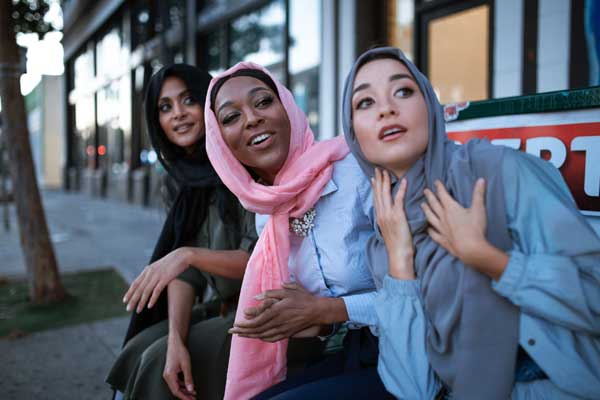
    The interview below is with Nailah Dean, a lawyer, writer, and creator behind the “Isms Project” (https://www.nailahdean.com/the-isms-project-nd), a photo series and narrative description that addresses the sexism, racism, colorism, and ageism which act as obstacles to Muslim women finding a prospective spouse. Using single Muslim women who are subject to these various “isms,” Dean hopes to “humanize” the issues and “illustrate some of the barriers to marriage.” I spoke to Sr. Nailah over Zoom to better understand the project and her concerns for the future of Muslim marriage in America.

    (Editor’s note: The following transcript of the interview has been lightly edited for length and readability.)

    Q: What do you think are the solutions to the problems of racism, sexism, ageism, and any other “ism” that makes it difficult for Muslim women in America to find a suitable spouse?

    A: In terms of solutions, I would definitely hope that the “isms” campaign creates more conversation and having these hard conversations amongst family members and between the generations, hopefully people would be able to recognize how wrong the prejudices are and start to open up their mental brackets and eliminate some of the “preferences” when they are searching for a spouse. I’ve already had men contact me during the past year, because I’ve been writing about these issues, and they write something like, “Thank you for sharing about the Black, Muslim female experience, I didn’t know what that was like…I’m going to think twice when I set my preferences to only one ethnicity going forward.”

    As to the issue of ageism, striking up these conversations can motivate men to think about their choices. They might ask themselves, “Why do I prefer someone ten years younger than me? Why don’t I look in my own age bracket? Is it really because I’m focused on increasing my chances for having children or is it because I want to have someone who’s more malleable?” Those kinds of conversations have been coming up in the comments sections of the various posts on these issues. That’s what I hope to encourage — those types of conversations to challenge people to examine their current ideas and attitudes.

    Q: What about in terms of a nationwide campaign, is there something that you’re doing on a larger scale?

    A: I would like to bring more awareness to the issues so that our local as well as regional and national leaders can use their platforms to speak on these issues and do so based on their Islamic knowledge and credibility. I’ve heard about the effects of parents limiting the choice of spouse for their son or daughter to one ethnicity or another and how damaging that is. So, when they talk about that in khutbas, I think that’s really effective, coming as it is from leadership. Hopefully they will also increase pre-marital workshops so that people know what the Islamic guidelines are for choosing a spouse. That would be really good. It’s definitely a challenge to get folks to pay attention to these kinds of things. That’s my goal at least.

    Q: Do you think that polygamy is a possible solution for some of the women?

    A: It can be for some people based on the individual, if that’s what someone wants. I hear that from some men as the solution for women over thirty who cannot find a spouse, but I don’t think that’s the only solution. I think that men can definitely consider women in their own age bracket, especially if they, themselves, are in their late thirties. There’s no reason for them to set their preferences for twenties only. We know that Khadijah (r) was much older than the Prophet when they married. I think the solution is for men not to be so limiting about age preference. Amongst matchmakers, they say that often a guy in his thirties wants a wife ten years younger. Even a man in his forties or fifties wants someone much younger than himself. I understand the fertility concerns but, once again, when Muslims are only one percent of the population in America, the older men, when they so often want someone quite a bit younger, that’s messing up the men in their twenties who want to get married. The younger men are ready, they have established themselves right after college, but they’re competing with older guys who are much more established in their careers and therefore financially set, and that is competition for the younger men, too often causing delays in their being able to marry. So, the age thing really messes people up on multiple levels.

    Q: You mention that some men are intimidated by successful women, by career women. Can you elaborate more on that?

    A: Some of the guys see a woman with a college degree or an established career and associate that, not just with being too busy to be a wife, that’s one issue that’s on their mind, but they also think of it as she’s going to be more opinionated and more difficult to handle. It’s that control issue that’s really at play here. These judgments are even before they start talking with the woman, just in the selection process, they make conclusions about these women. Maybe they had one bad experience but then after that they rule out women with advanced degrees or successful careers. There was one person I interacted with to try and matchmake with my friend, who’s a lawyer. He saw her picture and was interested, but once he found out her profession, he said “Nope, she’s too educated and too busy.” He added, “I don’t do lawyers and doctors.”

    The “too educated” part, that’s really offensive. We fought for a long time to be educated and then to find that this achievement stands as an obstacle to marriage — it’s really disheartening. I have several friends from Arab and South Asian households where the parents encourage the daughters to be high achieving. Then when it is time for their sons to marry, they encourage them to marry someone that’s going to prioritize being at home. It doesn’t align that you want your son to marry one type of woman who maybe isn’t as educated or advanced with her goals. Yet that same household, they’re pushing their daughters to become doctors or engineers and all of that. It doesn’t make sense how that’s going to work out. It’s two different expectations.

    Q: Are there any other things you would like Muslims, individuals and communities, to know?

    A: I just want people to hear the concerns of women. It’s very interesting how some don’t want to pay attention to women who are talking about problems they’re facing as they seek to find spouses. These people want to label the women as feminists or that they believe in ideas that don’t align with Islam. But Islam teaches that each individual should be seen for their character and their faith. Islam condemns the “isms,” that is, any stereotypical or discriminatory way of looking at people. There’s nothing wrong with women talking about the difficulties they face in seeking to marry. That’s one thing that I think is interesting, that some Muslims think it is taboo to talk about these issues and challenges, especially in public. But these are big challenges. Making a distinction against a woman as to her marriageability on the basis of her race or age or skin color, for example, is narrowminded. These attributes are natural and God-given. Such preconceived and damaging constraints on choosing a wife can only be addressed by acknowledging the issue exists and discussing ways to overcome it.

  • The Stigma of Divorce

    The Stigma of Divorce

    Searching for love and marriage as a practicing Muslim woman in America is no easy task. Not only must women figure out where and how to find practicing Muslim men, but they must fit the unrealistic expectations of what some men (or their mothers) want. As a writer who focuses on learning about the experiences of the single Muslim woman seeking love and marriage, I’ve encountered one type of woman who has arguably the most painful experience: the divorcee.

    The Shame

    Although I’ve never been divorced myself, I do have a tiny taste of the effects of divorce in the Muslim community. I was thirteen years old when my parents got divorced. Not only was I burdened with the task of navigating the grief that comes with living in a split household, but I also encountered feelings of shame within the Muslim circles we frequented. I remember a few Sunday school peers telling me that my parents did something haram. The anxiety they caused me led me to beg God for my parents’ forgiveness, hoping that my increased prayers would somehow absolve our family of sin.

    Unfortunately, the adults I encountered didn’t do much to alleviate my fears. In my conversations with the adults about school or about the youth program my dad conducted, my parents’ divorce was always the elephant in the room—known, but never fully acknowledged. As a teenager in Dallas where I spent my formative years, I came to understand, based on a hadith, that marriage is half of a Muslim’s deen. But I also came to the belief that divorce was an unspoken evil. As I got older, however, I learned that divorce, while discouraged and considered as a last resort, is permitted when marriages do not go according to plan and can no longer be fixed. Somehow though, even now, sixteen years later, divorce is perceived by Muslims in the U.S. as taboo, and the women that survive divorce and seek a new relationship are viewed as “dirty.”

    A Cry for Help

    Last month a woman messaged me on Instagram after having read an article I wrote about women over 25 years old having a harder time getting married. She is 36 years old, originally from Pakistan, but had spent her formative years in the U.S. She had been previously married for seven years and was now divorced for two years. In the last year, she worked her way through the usual pitfalls and indignities experienced by many Muslim women when using matrimonial apps, searching for a second chance at love and marriage, only to find scorn and rejection.

    The men she met were always hyper-focused on the fact that she was “old” and no longer a virgin. Even though she lost her virginity lawfully, within marriage, the men always alluded to the fact that she was no longer “untouched,” and therefore less desirable. If the man was younger than her (in his twenties), he would speak to her in a sexual manner, insinuating that she should be more willing to transgress bounds because she was no longer a chaste woman. As for the older men, they took note of her age and made snide remarks about her decreasing fertility.

    This was not the first time I’ve heard this story. Divorced women from different parts of the country have told me of the difficulties they face meeting prospective husbands. Women who have been married for even a short period of time are penalized. I’ve even heard stories about divorced men with children turning down divorced women. But why? The reasoning given usually has to do with age (they want more children) and virginity. Sometimes these men preface conversations with divorced women by saying, “I will only consider you as a second wife.”

    What’s arguably worse is the treatment the women receive from other women. Because of the cultural baggage that is associated with divorce, sometimes community members and other married women cut off ties with divorcees. That might have to do with some fear that their own husbands will consider taking the new divorcee as a second wife. Or it might just have to deal with people not wanting to be involved in another person’s “messy divorce.”

    Islamic Perspective on Divorce

    There is a well-known hadith on divorce. Abdullah ibn Umar reported that Prophet Muhammad (s) said, “The most detestable of lawful things to Allah is divorce.” In a recent khutbah by Shaykh Yasir Qadi (https://youtu.be/VPyW3PFke-Q), he says divorce is generally understood to be makruh (disliked). So, although divorce is permissible, Muslims are taught to take all necessary precautions to prevent it and to utilize whatever resources are available for reconciliation before divorce is sought.

    Towards the end of the khutbah, Shaykh Yasir is very clear in reminding his congregants that the stigma associated with divorcees—especially by men toward divorced women—is completely due to culture, and not a teaching of Islam. There are several examples of Islamic tradition that show us that Allah and the Prophet (s) never intended for the ummah to think or act with any discrimination toward divorcees.

    The seerah contains stories of people who sought divorce and sought the guidance/approval of the Prophet (s). The wife of Thabit bin Qais came to the Prophet (s) and said, “O Allah’s Messenger (s), I do not blame Thabit for defects in his character or his religion, but I, being a Muslim, dislike to behave in un-Islamic manner.” On that Allah’s Messenger (s) said, “Will you give back the garden which your husband has given you [as a dowry gift]?” She said, “Yes.” Then the Prophet (s) said to Thabit, “O Thabit! Accept your garden and divorce her once” (Bukhari).

    Respecting Older, Divorced, or Widowed Women

    For evidence of the proper way to view older, divorced, or widowed women — with respect — we need not look any further than the marriage of the Prophet (s) to his beloved first wife, Khadijah bint Khuwaylid. Khadijah was married twice, and widowed twice, before she married the Prophet. During a time when the trend was to have multiple wives, the Prophet (s) chose to remain married only to Khadijah until her death. His love for her is well known, as is his loyalty and respect for her. Aisha narrated that the Prophet said, “She [Khadijah] believed in me when no one else did, she embraced Islam when people disbelieved me; and she helped and comforted me when there was no one to lend me a helping hand.” Ibn Abbas reported that the Messenger of Allah (s) said, “The best of women among the people of Paradise are Khadijah bint Khuwaylid, Fatimah bint Muhammad, Maryam bint ‘Imran, and ‘Asiyah bint Muzahim, the wife of Pharaoh.”

    Thus, it is important to recount that one of the most beloved women in Islamic history was not a virgin when she married the Prophet (s); she was 40 years old when she proposed to the Prophet (s) who was only 25 years of age; and she already had children from her previous marriages.

    Shaykh Yasir ends his khutbah on an uplifting note. He reminds us about the verse in Surah At-Talaq (the chapter titled “The Divorce”), sandwiched in between instructions on how to execute a divorce: “…And whoever puts his trust in Allah, then He is sufficient for him. Indeed, Allah will accomplish His purpose. Indeed, Allah has already set for everything a measure” (Qur’an 65:3). Shaykh Yasir said it is no accident that this verse appears in the discussion about divorce. He said Allah wants divorcees to feel comforted, that they should not give up hope. The end of a marriage doesn’t signify the end of one’s life, or their well-being, or potential for happiness. If one puts their tawakul (trust) in Allah, He will provide for that person, whether that provision comes in the form of a new marriage or in a new life’s purpose. There is a way out of the sadness that comes from that door closing. Another one will surely open.

    Moving Past the Stigma

    A woman’s value as a prospective wife has historically been tied to her virginity. Islam does teach both men and women to guard their chastity for the purposes of marriage. But just like a man, a woman is worthy of being a marriage partner after being divorced or widowed. In the sight of God, a woman’s worth is no less due to divorce. Muslims know that the highest value of a person is their righteousness. And the Prophet (s) said, “A woman may be married for four reasons: her wealth, her lineage, her beauty, or her religion. Choose the pious one…” (Bukhari and Muslim).

    It’s important that we continue to discuss and destroy the stigma of divorce because it harms divorcees, it harms the children of divorced parents, and it harms the community by impairing solidarity and compassion. Those who really need to get out of a marriage find it hard to do so due to the negative perceptions of divorce, and so some women are choosing to stay in abusive relationships. I have encountered too many stories of women who have lingered too long in very unhealthy, dysfunctional, and harmful relationships because they were too scared to deal with the stigma of divorce. The fear of losing one’s social circle and not being able to get married again, especially if one wants or already has children, make women more hesitant to get out of a toxic marriage.

    Divorce can feel like one is losing everything. A divorced woman, however, can put her trust in Allah SWT, feel gratitude for another chance at happiness, and forge ahead to make a life that is meaningful and with purpose, whether remarried or not. Divorce does not — must not — diminish in the eyes of other Muslims a man’s or a woman’s integrity or honor as a human being. If we really want to practice and abide by the teachings of our deen, we will use our voices to change perceptions and uplift the status of divorced women.

  • Marriage: Seeking a Soul-Satisfying Connection

    Marriage: Seeking a Soul-Satisfying Connection

    Marriage in Islam has been described as a protective garment, a source of tranquility and comfort, and as the completion of our faith. It is the moral path to finding loving companionship and avoiding zina (unlawful sex). One of the most well-known, and well-quoted, marriage verses in the Qur’an sums up what every marriage-minded Muslim hopes and prays for: “And among His Signs is this, that He created for you mates from among yourselves that you may dwell in tranquility with them, and He has put love and mercy between you. Verily in that are Signs for those who reflect”(Qur’an 30: 21).

    It’s not just religious obligation that drives us. Allah designed our human nature to include feelings of love and passion and the desire to find a soul-satisfying connection to another human being. And society pushes romance and the happily-ever-after story at us through music, television, and film. Literature provides examples of love stories overlaid with tragedy, like Romeo and Juliet, Cleopatra and Mark Antony, or emperor Shah Jahan and queen Mumtaz Mahal. Tragic loss is often presented as the measure of a great love story for Western society.But Islam has given us a perfect standard for choosing a mate. The Prophet (s) said, “A woman is married for four things, her wealth, herlineage, her beauty, and her religion. So, you should marry the religious woman”(Bukhari and Muslim).

    Pressure on Young Adults to Marry

    For Muslim parents, facilitating marriage for their child is important. It seems a frantic process for those who fear their daughters may age out of their prime marriageable years (doomed to marry divorced men or become second wives), orthat their sons don’t have the right career or education level to attract a young woman’s family. It’s no wonder that parents, aunts, uncles, and even friends constantly pressure young adults to find a potential spouse and seal the deal. Some mothers form social networks sending out CVs or join social media marriage groups on Facebook, hoping to snag that most perfect mate for their child. A Muslim matrimonial ad reads something like this: “pious (insert ethnicity)girl’s family seeking an educated, tall, fit, practicing Muslim from (insert city, town, or village)…” Online matrimonial meetups are on the rise as well with engagements happening on a daily basis. But for every engagement, how many potential matchups dissolve after a few weeks of talking?

    With all that pressure on young adults to get married, how much emphasis is focused on what makes a good and lasting marriage? During the “getting to know” period, what questions are asked? To get an idea about what Muslims consider when looking for a spouse, we presented questions about compatibility, the importance of chemistry, goals, and mature communication to a small group of Muslim singles looking for prospective mates, as well as to married and divorced women.

    One single sister (26, TX), said, “Of course the first thing you have to get out of the way is what they’re about. Do they like the same things you do, have the same goals?” She added, “It’s obvious when you’re talking whether they can communicate, or not.” Another unmarried sister (24, OH), thought it was more important to have attraction between them, saying, “As long as there’s chemistry, I can work with the rest.” Communication is “vital” for a California single (23), who wanted a longer talking period (months) before agreeing to marriage or deciding to move on to another prospect. Four out of the six sisters wanted to find their own men, rather than a match being “arranged” because they felt that was old fashioned. The same four wanted to marry outside their cultural groups, but the two others wanted to marry someone from the same cultural background.All agreed, however, that they wanted the men to have been raised in America. All six sisters were afraid of marrying someone who wasn’t genuine and had a major secret like he was a womanizer or a homosexual. Several of the single brothers surveyed were not interested in being set up by parents or friends and preferred to be casual friends with a sister before deciding she was a good choice. A brother (24, VA) met a young woman at his university who he was talking to but hasn’t told his parents yet.

    In Retrospect

    When talking to some divorced sisters about their experiences and how they would have done things differently, their answers were surprisingly different from the singles. Three are in their late forties to early fifties and divorced from men whose cultures were different than theirs. Cultural compatibility followed by lack of communication were the biggest factors for them. A sister from Maryland said, “Culture can also lead to differences in religious understandings and expectations in many areas of marriage, child-rearing, and life. It can also create problems with in-laws.” Three women stayed in the marriage until their oldest children were at least in middle school. One sister waited until the childreng raduated high school, then she filed for divorce. Marital problems ranged from attitudes towards work outside the home, child-rearing differences between the two cultures, or communicating with the in-laws. The women also had expected Islamic behavior from their former spouses but realized that the men were either more cultural than religious Muslims or were just lax about their Islamic practice. Another sister considered compatibility as a minor concern, saying “Allah created us with differences so we can complete each other. Yes, it’s challenging to deal with someone who has a different culture/level of education/financial strength, etc. than yours, but with applying Islamic values, Allah eases it and those differences can turn into an asset to the family.”

    Married women also cited compatibility as an issue in their marriage and something that had to either be ignored or worked on to maintain the marriage. For these women, it wasn’t enough of an issue to cause a divorce, but it did present problems in the marriage. For a sister in Texas, married for over 24 years, her husband’s different culture “was not important,” but as she looks for spouses for her children, she will insist on pre-marriage counseling and “compatibility not only with the individuals but both families have to be compatible…individuals and family expectations, values and norms.”

    The Issue of Compatibility

    For young people looking to get married these days, there are many different avenues for finding someone, but laying a foundation for a successful marriage takes hard work. It is harder to stay married for this generation than for their parents’ generation because there was a great emphasis on staying married, and divorce was more taboo in Muslim communities. Today, divorce is commonplace, so if someone is unhappy, it’s easier to consider divorce. Research shows that among the common reasons for divorce are lack of commitment to the marriage and basic incompatibility.

    Those who were interviewed for this article, whether single, married, or divorced, had varying ideas about compatibility. Some thought about it in terms of culture, life goals, emotional connections, personality, or even hobbies. All are factors of compatibility. There is no single definition of compatibility because each person comes with their own ideas of what is important for a successful relationship. Honest and sincere communication,though, can bring two people together even if they have areas of difference.And what is meant to be will come to pass, as Islam teaches us. We should, however, take seriously what the Prophet (s) said — “Make a good choice of who will bear your children. Marry those who are compatible with you” (Ibn Majah, Al-Bayhaqi, and others). So, base your decision on who to marry on serious issues of compatibility, on things that make you and the prospective spouse a good fit, and on things that neither of you is willing to compromise on.The ability to communicate your wants, needs, fears, or even those things that are deal-breakers, is important in the spouse-selection process and as the relationship unfolds.

    The Prophet (s) said, “Souls are like troops gathered together — those who are compatible bond and have an affinity with each other; and those who are averse to each other are dissimilar and incompatible” (Bukhari and Muslim).