بسم الله الرحمن الرحيم

Tag: Latinos

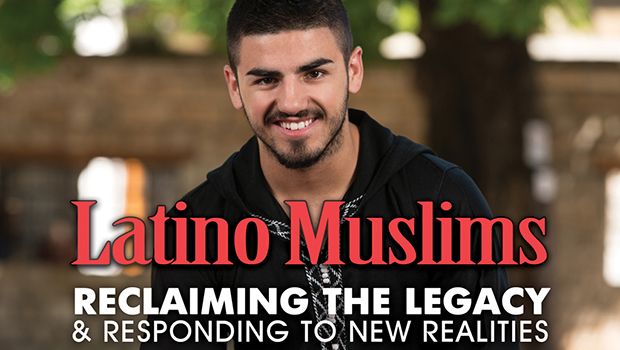
  • Musulmanes Latinos: Recuperando el legado y respondiendo a nuevas realidades

    Musulmanes Latinos: Recuperando el legado y respondiendo a nuevas realidades

    En el año 2000, cuando acepté el Islam, yo pensaba que era la única musulmana Latina en el mundo. Aprendí del Islam a través de mi amistad con una familia egipcia y conocí a musulmanes de otros países como Palestina y Pakistán, y hasta conocí algunos musulmanes americanos. Sin embargo, no fue hasta casi 2 años después que supe de otras personas como yo, musulmanes Latinoamericanos viviendo en los Estados Unidos. Cuando visité Puerto Rico, donde nací y me crie por ocho años de mi vida, por primera vez como musulmana, me sorprendí al saber que había nueve mezquitas en la pequeña isla, y miles de musulmanes viviendo ahí. Aunque la mayoría de los musulmanes en Puerto Rico son inmigrantes árabes, también existe un número cada vez mayor de conversos.

    En el Islam las acciones son juzgadas por sus intenciones, por lo tanto el objetivo de las acciones es complacer a Dios para obtener su Misericordia y el Paraíso en la otra vida

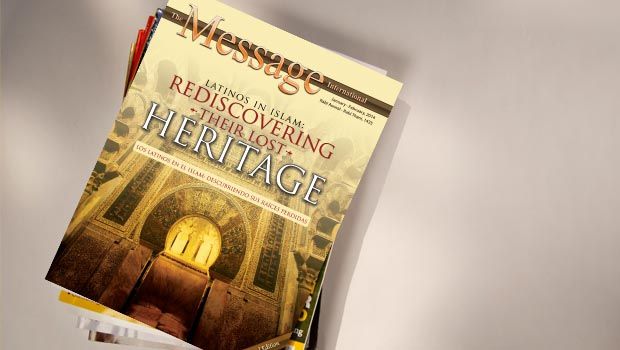
    Con un mayor sentido de determinación, continué mi búsqueda para más musulmanes latinos, para poder compartir juntos nuestras experiencias, nuestras luchas con nuestras familias no musulmanas, nuestra búsqueda de conocimiento, nuestras alegrías de encontrar el Islam y nuestra frustración por no ser aceptados o entendidos por nuestros parientes de sangre y hermanos en la fe. Con el tiempo, conocí a más y más musulmanes latinos y comenzamos a tratar de formar una identidad islámica fiel al legado que nuestros antepasados musulmanes en España dejaron hace siglos atrás. Esta edición de El Mensaje Internacional es un tributo a ese legado y un llamamiento a nuestros nuevos hermanos y hermanas para que dejen atrás su propio legado.
    Pero, ¿qué es un legado? Los famosos, iconos del deporte, pensadores o figuras políticas del pasado son recordados por alguna contribución que han hecho a su respectivo campo o a la sociedad en general. Un médico o científico puede ser recordado por descubrir una droga beneficiosa, un rey puede ser honrado por haber sido un gobernante poderoso, un músico venerado por su impacto en la cultura popular, un jugador de béisbol celebrado por el número de jonrones que bateó durante su carrera; sea cual sea el caso, un legado se basa en algún tipo de influencia. En el Islam, una persona es honrada por su piedad y buenas acciones, y sus obras son inmortalizadas en la mente de las personas debido a sus contribuciones a la sociedad y a la historia islámica. Este es el legado de un musulmán.
    Al mismo tiempo, los musulmanes debemos recordar que nuestros esfuerzos son para la causa de Alá, solo para complacerlo a Él, y no para complacer o impresionar a la gente o con la intención de dejar atrás un legado de fama. Un legado debe ser la consecuencia de nuestras acciones y sinceridad, no el resultado de luchar únicamente para su causa. El punto aquí es que el enfoque no debe ser la apariencia de nuestras obras o su resultado. El enfoque debe ser purificar nuestras intenciones y aumentar nuestra fe. De esta manera, las acciones virtuosas nacerán naturalmente.
    Hay un hadiz en Sajih Bujari acerca de un hombre que luchó junto a los musulmanes en una batalla, quien, a pesar de que la gente elogiaba su heroísmo, el Profeta dijo que estaba destinado al Infierno. Los compañeros del Profeta se sorprendieron ya que habían sido testigos de su impecable valentía. No obstante, llegó la noticia de que después de haber sido herido, el hombre se había suicidado, confirmando la predicción. El Profeta, la paz sea con él, dijo, “Un hombre puede parecer a la gente como si estuviera practicando las obras de la gente del Paraíso, cuando en realidad es de la gente del fuego (el infierno), otro puede parecer a la gente como si estuviera practicando las obras de la gente del infierno, cuando en realidad es de la gente del Paraíso”.
    En el Islam las acciones son juzgadas por sus intenciones, por lo tanto el objetivo de las acciones es complacer a Dios para obtener su Misericordia y el Paraíso en la otra vida. Si el objetivo de una persona es ganar fama o fortuna o complacer su propio ego, entonces se quedará con lo que pretendía y encontrará su recompensa en esta vida. Aunque como musulmanes esperamos dejar atrás un legado de bondad en esta Tierra como resultado de nuestra piedad, el objetivo no es enfocarnos en lo que estamos construyendo en este mundo, sino más bien en lo que estamos invirtiendo para el Más Allá.
    Le pedimos a Alá que acepte nuestras buenas obras y nos perdone nuestros pecados y nuestras faltas, y que nos permita entrar al Paraíso y reunirnos con los piadosos. Amen.

  • Latinos Make America Great Again, and Again

    Latinos Make America Great Again, and Again

    The current presidential race has left many unbiased Americans stunned and not-so-broadminded others rejoicing, as we all witness a surge in derogatory attacks by candidates against entire minority groups, such as Muslims, African-Americans, and immigrants, particularly Latinos/Hispanics. The drama continues to unfold in what could potentially be the most controversial election in the history of the United States of America. While unity has often been declared the focal point in shaping American society, this election has polarized the American people and contributed to a rise in racially-driven violent hate crimes, xenophobia, and islamophobia.

    Republican nominee Donald Trump and his GOP rivals who fell to the side during the primaries, like Ben Carson and Ted Cruz who are, ironically, descendants of immigrants or minorities themselves, have all contributed their share of attacks against members of the Islamic community and Latinos, through their campaigns, town hall meetings, news interviews, and even through social media. Their xenophobic and Islamophobic rhetoric questioning the allegiance and morality of Muslims and Latino immigrants, is reminiscent of the Second Red Scare during the McCarthy era, in which a hysterical fear of communists (Reds) caused panic throughout the U.S.

    Of course, the most vocal of the GOP presidential hopefuls and the most controversial has been Trump, the business tycoon and former reality TV personality who starred in NBC’s The Apprentice from 2004 to 2014. Trump has since laid to rest his famous catch phrase, “You’re fired!” and replaced it with his campaign slogan, “Let’s Make America Great Again.” He began his primary race for the Republican nomination with harsh criticisms of Mexican immigrants. Speaking from the Trump Tower Atrium in Manhattan on June 16, 2015, he said, “When Mexico sends its people, they’re not sending their best. They’re not sending you. They’re not sending you. They’re sending people that have lots of problems, and they’re bringing those problems with us. They’re bringing drugs. They’re bringing crime. They’re rapists”; after smearing almost the entire Mexican population, he sympathetically added, “And some, I assume, are good people.” One of Trump’s diehard political plans to curb illegal immigration from Mexico is to build a wall separating the border between the U.S. and Mexico. He claims that the Mexican government will be paying for the construction of the wall, and Trump has even outlined exactly how they will be persuaded to do so on his promotional website.

    History Provides a Deeper Perspective

    In order to understand the level of absurdity in the statements about Mexico and the Mexican people, it becomes necessary to explore the history of the United States and its southern neighbor. What is today Mexico, Texas, Arizona, New Mexico, Colorado, Utah, and California were once colonies belonging to Spain. In 1822, Mexican settlers, following the example of the American Revolution, rebelled against the Spanish government and won their own war of independence. Less than 25 years after Mexico became a free nation, by 1846, the U.S. had invaded and entered into war with Mexico in order to obtain their territories north of the Rio Grande River and westward all the way to California. In 1848 Mexico surrendered to the terms set by the U.S., transferring ownership of New Mexico, California, Texas, Utah, most of Arizona, Colorado, and Wyoming, for $15 million (An Historic Overview of Latino Immigration and the Demographic Transformation of the United States, David G. Gutiérrez, PhD., University of California).

    These states were already populated by Mexicans; 75,000 to 100,000 former citizens of Mexico chose to remain north of the new border at the end of the war and were granted automatic citizenship by the U.S. government (The Treaty of Guadalupe Hidalgo: A Legacy of Conflict, Norman: University of Oklahoma Press, 1990). In reality, while Trump and his followers blame Mexicans for stealing jobs from Americans, bringing crime to the U.S., and causing other problems, the fact is that much of the Western part of the U.S. was built and inhabited by Mexicans. It was, in reality, Americans who first sent troops over the border in order to incite a war against Mexico and gain territorial dominance.

    Immigration from Mexico into the U.S. thereafter became a complicated love-hate relationship, where the U.S. government would open its borders and welcome Mexicans to come and perform jobs that Americans were either unable or unwilling to do, and later would begin mass deportation when Mexicans were no longer needed or desired. Beginning in the late 1800s, U.S. companies began to fill a rising demand for labor in agriculture, mining, construction, and transportation with Mexican laborers. During the Great Depression, when average Americans were struggling to find jobs, local, state, and federal government agencies began forcing Mexicans out. A short time later, when the U.S. entered World War II and experienced a farm labor shortage, the Federal Government signed an agreement with Mexico to allow Mexican workers to again enter the U.S. and work. Much the same pattern has ensued ever since.

    This is America, Speak Spanish!

    In a childish move during the GOP primaries, Donald Trump insulted former opponent, John Ellis “Jeb” Bush, by tweeting, “Jeb Bush is crazy, who cares that he speaks Mexican, this is America, English !!” (Twitter account, @realdonaldtrump, Donald J. Trump, 7:14 PM – 24 Aug 2015). There are many things wrong with this ignorant statement. First of all, Trump confused the nationality, Mexican, with the language, Spanish, a simple fact that everyone hopes a candidate to the presidency of the U.S. would know. Secondly, the statement, “this is America, (speak) English!” implies that as Americans, everyone should give up their native tongues and trade them for English only. It is a matter of fact, however, that America consists of both North and South America, and the vast majority of the Americas is Spanish-speaking. Not to mention that hispanophones (those who speak Spanish) inhabited or explored territories of the present-day U.S. way before English settlers stepped foot on the land.

    Spanish is the second most widely spoken language in the world and, more specifically, in the U.S. It is also the language most studied by Americans. The Spanish influence in the nation is everywhere from the names of states, counties, and cities, such as Florida, Colorado, Montana, Nevada, Las Vegas, Santa Fe, El Paso, etc., to the names of bodies of water, valleys, forests, mountains, and forts. American English has borrowed common, everyday words from the Spanish language as well, such as rodeo, ranch, banana, alligator, armadillo, barbecue, and chocolate. The bottom line is this — not only the Spanish language, but Latino/Hispanic culture as well, are deeply woven into the fabric of U.S. history and heritage.

    Understanding the Latino/Hispanic Identity

    Some people not so well-versed in geography, often categorize all Latin-Americans as Mexican. However, there are a total of 21 countries in the world where Spanish is the official language. The majority of those are in Central and South America, as well as the Caribbean. Mexico is the only Spanish-speaking country that shares a border with the U.S. Thus, the majority of Hispanics in the U.S. are Mexican or of Mexican origin (64.6 percent in 2011 according to the Pew Research Center). However, all Spanish-speaking countries are represented throughout the U.S.

    The Merriam-Webster dictionary defines a Latino as “a person who was born or lives in South America, Central America, or Mexico or a person in the U.S. whose family is originally from South America, Central America, or Mexico”; whereas Hispanic means “coming originally from an area where Spanish is spoken.” Hispanic origin is based on ancestry, lineage, heritage, nationality and/or country of birth and, therefore, Hispanic people come from a variety of countries, backgrounds, and social strata. Whites, blacks, and Asians are all considered racial groups. Hispanics are an ethnic group, which means that although they share a common language and heritage, they do not share a common race. They can be black or white or Asian, or be descendants from indigenous peoples of a place colonized by Spain.

    South American and Caribbean Hispanic immigration in the U.S. experienced the fastest growth beginning in the mid-1900s until the present day. According to the U.S. Census Bureau, as of 2013 more than one-quarter (28 percent) of the foreign-born population in the U.S. came from Mexico, 9.6 percent from the Caribbean, 7.7 percent from Central America, and 6.7 percent from South America.

    Latin-American Contributions to the US

    Hispanic immigrants, as well as second and third generation immigrants from Latin America, have had a major impact on shaping the course of U.S. history. They strengthen the economy, serve in the military, defend the country during times of war, and hold offices in government. In addition to influencing the political sphere, they have also had significant imprint on American culture, arts, sciences, and education. Entrepreneurship in the Latino community helps the U.S. economy tremendously. According to the American Immigration Council, “One out of every five people in the country is Latino or Asian. Together, Latinos and Asians (both foreign-born and native-born) wield $2 trillion in consumer purchasing power, and the businesses they owned had sales of $857 billion and employed 4.7 million workers at last count. Immigrant, Latino, and Asian workers, taxpayers, and entrepreneurs are integral to the U.S. economy—and they are a potent electoral force” (Strength in Diversity: The Economic and Political Power of Immigrants, Latinos, and Asians, January 1, 2015).

    Back in June of 2013, Donald Trump tweeted, “Sadly, the overwhelming amount of violent crime in our major cities is committed by blacks and hispanics-a tough subject-must be discussed” (Twitter account, @realdonaldtrump, Donald J. Trump, 4:05 AM – 5 Jun 2013). He reiterated this sentiment in 2015 when he accused Mexicans of being rapists and drug dealers. However, nothing can be further from the truth. In a special report, published on July 13, 2015 by the American Immigration Council, entitled The Criminalization of Immigration in the United States, researchers affirm that, “immigrants are less likely to commit serious crimes or be behind bars than the native-born, and high rates of immigration are associated with lower rates of violent crime and property crime. This holds true for both legal immigrants and the unauthorized, regardless of their country of origin or level of education.” In addition, Census data from 2010 found that the incarceration rate of undocumented immigrant men from countries such as Mexico, Guatemala, and El Salvador is significantly lower than that of males born in the U.S. In other words, what the American people are witnessing during this presidential election are outright lies and sensationalist propaganda used to sway public opinion and stir controversy in order to garner attention, support, and votes from a xenophobic sector of the American constituency.

    Just as all racial, ethnic, and religious groups are part of the diverse and vibrant fabric of the U.S., Hispanic Americans are revitalizing the nation’s diversity as contributors to society, doing their part to uplift and uphold the standards that make this country great. There are countless Latinos and descendants of Latinos serving the nation as government officials, lawyers and judges, advocates and activists for social justice, and military personnel. There are Latino athletes, with immigrant parents, who proudly competed for Team U.S.A. in the just-completed 2016 Olympics. There are Hispanics contributing to all sectors of society, from the laborers who work to build the residences and commercial spaces where businesses thrive to the entrepreneurs providing opportunities for countless Americans to work; from the Latino teachers who contribute to the education of our youth to the doctors who provide healthcare. All are working for the benefit of themselves, their families, and the collective American success story.

    Immigrants in this country work hard to make a better life, and they do not take their new home for granted, but rather cherish the opportunities it provides. This is the United States of America, and they are an integral part of the whole, striving to fulfill the U.S. potential as a tolerant and inclusive land of great hope and opportunity for all its inhabitants, as well as a beneficial force for good throughout the world.

  • Model for Civic Engagement – Dar al-Noor Masjid (MAV) in Manassas, VA

    Model for Civic Engagement – Dar al-Noor Masjid (MAV) in Manassas, VA

    Civic engagement for America’s Masajid could not be more crucial than now. America is facing challenges that can only be overcome by propelling the voices of reason into public and civic life and driving the voices of bigotry and closed- mindedness out of the public spotlight. We are facing the public rise of anti-Islamic sentiment while some of the country’s political leadership, both at the local and state levels and in Washington, D.C., have become detached from reality. Consequently, the safety and security of our families have become a growing concern for everyone. Muslim-Americans must engage in the civic arena in order to ensure, by Allah’s permission and will, that we contribute to the betterment of America, something that we, and all fair and decent citizens, want for ourselves and for our children.

    With civic engagement, your Masjid will have a voice in government decisions both big and small; your Masjid can achieve solutions for issues in the community; and your Masjid can do its part to ensure social justice and equality for all – with Allah’s guidance and help. Muslim-Americans’ civic engagement with their communities and our participation in the political process is a mutually beneficial affair. Engaging with our elected and public officials guarantees that the voices of Muslim-Americans are heard, especially on topics such as presenting accurate information about Islam, countering terrorism and violence in our communities, and finding sensible solutions to community issues.

    The Muslim Association of Virginia (MAV) has, in fact, been active in the civic arena for some 16 years now. Alhamdulillah, MAV has been successful in achieving major accomplishments for our community including the successful defeat of the anti-Sharia legislation in the Virginia Congress; the introduction and passing of a Halal bill in Virginia to regulate the labeling, identification, and sale of Halal products; lobbying for legislation granting students a religious holiday for Eid; and active voter registration which resulted in registering over 200 voters during Ramadan this year.

    MAV has identified some crucial steps and activities in a successful civic engagement program, and encourages all Masajid and Muslim organizations who have not already done so, to develop their own civic engagement program. Some of the steps and activities include:

    Set Up Voter Registration

    Your primary leverage with elected officials is demonstrating that you represent a large group of voters. In order to effectively represent your Masjid, you must ensure that its members are registered to vote. There are two ways to accomplish this goal: (1) your Masjid can set up its own voter registration team with registration tables at Jumu’ah prayers; or (2) you can bring in an outside organization that focuses on getting voters registered.

    Provide a Forum for Community Engagement

    The Masjid is a perfect space for school board or town hall meetings, and for debates between local, regional, and even national candidates. Not only does this benefit your community by bringing the information directly to your Masjid, but this also allows some non-Muslim members of the community an opportunity to set foot inside a Masjid for the first time in their lives. That opportunity to introduce community members of other faiths to your Masjid and their Muslim neighbors is critical to the success of your civic engagement program.

    Assist Homeless Shelters

    Show your community how vital charity is in Islam. Assist with food drives, help find shelter for families in need, visit the elderly at senior centers, become mentors/tutors for disadvantaged youth, volunteer at local schools or hospitals — your involvement in charity outside the Masjid demonstrates that you are dedicated to improving the community and, more importantly, that we care about our fellow citizens, Muslims and non-Muslims alike.

    Build a Relationship with Local Law Enforcement

    The security, good will, and community building that your Masjid receives from fostering a good relationship with local law enforcement is vital to the success of your civic engagement program. When a tragic event injures or takes the life of an officer protecting your community, be proactive about supporting the police station and the families of the officers. Your support of law enforcement events, memorials, and parades establishes a relationship of trust between the Masjid, its community, and local law enforcement. Inviting local law enforcement leaders to the Masjid is a great way to begin that relationship.

    Encourage Members of your Masjid to Get Involved

    Members of your Masjid should strive to serve on school boards, commissions, and civic associations, and to run for elected office. Having Muslims in those positions amplifies the voice of your Masjid and the Muslim community, from the grassroots level and up.

    Participate in Public Events

    Announce at your Masjid public events like parades and 4th of July celebrations and encourage attendance. If possible, provide transportation to such events to ensure turnout and that your community supports these events as a unified group. The more the wider community interacts with the members of your Masjid, the more successful your civic engagement program can, and will be, insha’Allah.

    Offer Elected Officials Speaking Time During Jumu’ah and Eid Prayers

    Invite local, state, and federal elected officials and candidates to speak at your Masjid. This benefits your Masjid in the following ways: 1) gives your members an opportunity to hear directly from officials and candidates; and 2) offers an opportunity for your members to speak directly to their elected official, asking questions to learn where that official stands on important issues. Set aside time (approximately 10-15 minutes) before the start of prayers to allow elected officials to speak to your community (for those officials who did not get to speak, acknowledge them and their attendance). It is vital that you make every effort to invite all candidates who are running for an elected office, regardless of party affiliation. Ensure that you are keeping a record of those invitations so that the non-profit status of your Masjid is protected and not placed in legal jeopardy.

    Support Sensible Elected Officials Regardless of Party Affiliation

    Do not engage with only one side of the political spectrum. Not every issue your Masjid encounters will be a shared concern of the major political party you (may) typically affiliate with. There are sensible elected officials in every party and it is important to have the opportunity to speak with them and raise issues, regardless of their political affiliation.

    Work Towards Common Goals

    When you engage an elected official, work towards achieving common goals rather than debating divisive issues. Your Masjid’s civic engagement program cannot solve every issue. Identify what issues are feasible for that elected official to accomplish and focus on those. Aggressively pursuing issues that the elected official is strongly opposed to, or where an agreement cannot be achieved, will usually result in little being accomplished and can burn rather than build bridges of understanding and cooperation. Choose your battles carefully.

    Organize with Others When Meeting Elected Officials

    Communicate with other Masajid, interfaith organizations, civic organizations, and local entities to encourage leaders from those organizations to attend meetings with elected officials alongside you. Showing unity and representation of a large voting bloc is important when speaking with elected officials. Don’t show up at the elected official’s office with a mob, however. Carefully choose leaders that represent a variety of organizations with goals and concerns in common with your Masjid.

    Know your Strengths and Abilities

    If you know you have large numerical or widespread support in the community – and can demonstrate or document it – strategically and tactically let officials know. Do not be hostile or overbearing at any time. Do not exaggerate your capabilities and strengths. Accentuate your good relations with other elected officials who support your position(s) and who may be allies to the particular official you are meeting with. Be organized in your presentations, making sure to highlight the key objectives or issues on your list.

    Establish Interfaith Engagement

    Reach out to other faith organizations in your area and work with them in all aspects of your civic engagement program. They likely already have some activities and strategies in place and may be willing to share what they have learned. And many faith organizations share similar values with Muslims. Remember, the more unity, the better!

    Promote on Social Media

    Remember that most Americans get their news and social views from what is on their social media feeds. Promote your Masjid and community events on social media and connect with other local organizations and your wider community.

    Determine the Intentions of Those Who You Engage With

    There are three reasons why another organization or an elected official is engaging with your Masjid:

    • They are focused on the best interests of the community
    • They are there for their own self-interest
    • They just need your Masjid for a photo opportunity
    • Know what you want to accomplish with those your Masjid engages with and focus your efforts on those who can produce positive results.

    Designate a Credible Spokesperson

    Your Masjid’s civic engagement program must have a credible spokesperson who can meet with elected officials, other organizations, and the wider community to successfully engage in the civic arena. The designated spokesperson does not need experience in politics; they just need to be able to accurately and effectively convey the community’s issues and messaging to elected officials.

    REMEMBER:

    In order for 501(c)(3) organizations to participate in civic political engagement, they must invite all candidates who are involved in an election and they must announce that they do not endorse or oppose any candidate.
    ——
    This article is compiled by Dar al-Noor Masjid (MAV) in Manassas, VA.

  • Los Ansar de hoy

    Los Ansar de hoy

    Cuando los primeros seguidores del Mensajero de Alá, que la paz y bendiciones de Allah estén con él, estaban sufriendo persecución, siendo humillados y hasta torturados por sus propios parientes, Alá abrió el camino para que emigraran a la ciudad de Yathrib.

    La próxima vez que los vea, muéstreles su amor y apoyo, pregúnteles si necesitan ayuda, invíteles a su hogar, pregúnteles acerca de sus familias y sus hijos, y comparta su conocimiento con ellos sin esperar nada a cambio, excepto ganar la complacencia de Alá

    El Profeta Muhammad, que la paz esté con él, se reunió con una delegación de 12 creyentes de la ciudad conocida ahora como Medina en el Monte Aqabah en las afueras de la Meca quienes le ofrecieron un compromiso de lealtad. Le aseguraron al Profeta que protegerían a los nuevos musulmanes de cualquier daño de la misma manera que protegerían a sus propias esposas e hijos y que si alguna gente alzara sus espadas contra ellos, estarían listos para defenderlos. Después de este pacto, el Profeta les permitió a sus seguidores, los Mujayirin o emigrantes, a escapar a Medina, y cuando casi todos se fueron, entonces él también emigró.

    Los Mujayirin fueron los primeros en convertirse al Islam, y debido a su fe en el Profeta, que la paz esté con él, sufrieron bastante, a veces a manos de sus familiares. Por lo tanto, después de la Hégira, el Profeta estableció lazos de hermandad entre ellos y los musulmanes de Medina, que llegaron a ser conocidos como los Ansar, o los “ayudantes”. Los Ansar proporcionaron refugio, hospitalidad y protección, incluso ofreciendo compartir la mitad de sus riquezas y posesiones con sus nuevos hermanos en la fe. Alá menciona su generosidad en el Corán:

    “Los que han creído, emigrado y luchado con sus bienes y sus personas en el camino de Alá, así como los que han dado asilo y socorro, ésos son los aliados unos de otros”. (Al-Anfal 8:72)

    Se puede hacer una comparación de los Mujayirin de esa época con los nuevos conversos de hoy en que ellos similarmente han embarcado en un camino de fe y muchos se han enfrentado a numerosas dificultades y críticas de sus propias familias por la decisión. La conversión es un tiempo de prueba, cuando los nuevos musulmanes están luchando para aprender e implementar los principios básicos de su fe, mientras tratan de explicar sus acciones a sus padres, familias, amistades, compañeros de trabajo y clases, etc., y Shaitan está ocupado intentando desviarlos del camino.

    Durante esta transición, nuevos musulmanes necesitan ayuda de sus “Ansar”, o aquellos que han nacido y se han criado en el Din, que tienen la ventaja de tener la oportunidad de vivir el Islam desde una temprana edad. Los “nacidos musulmanes”, como se les llaman, tienen la responsabilidad de acoger a sus nuevos hermanos y hermanas, proporcionar la cordialidad y hospitalidad para ellos, educarlos, y refugiarlos de cualquier daño que reciban de los que se oponen y abusan de ellos, como los Ansar de Medina hicieron por los Muhayirin de la Meca, ganándoles un alto estatus con Alá, subjanaju wa ta a’la.

    A menudo, la única vez que los nuevos musulmanes reciben un abrazo de amabilidad es cuando proclaman el testimonio de fe, pero luego son abandonados a luchar solos, cuando ellos ni siquiera saben cómo hacer la ablución o rezar, o los principios básicos del Islam, y mucho menos cómo leer el Corán o pronunciar las letras árabes. Muchos se quedan solos para celebrar durante las fiestas de Eid, y algunos se sienten fuera de lugar al entrar en las mezquitas porque incluso no se encuentran ni con una sonrisa de sus hermanos y hermanas.

    Esta edición de la revista El Mensaje Internacional destaca quién es quién en el dawah en español y dispone de las narraciones de algunos de los latinos que han abrazado el Islam. Mientras lee estas historias de conversión inspiradoras, por favor recuerde a todos nuestros nuevos hermanos y hermanas en la fe. La próxima vez que los vea, muéstreles su amor y apoyo, pregúnteles si necesitan ayuda, invíteles a su hogar, pregúnteles acerca de sus familias y sus hijos, y comparta su conocimiento con ellos sin esperar nada a cambio, excepto ganar la complacencia de Alá. Puede ser que si se enteran de algún bien a través de usted, Dios le recompensará cada vez que lo pongan en práctica. El Mensajero de Alá, que la paz esté con él, dijo: “El que llama a la guía tendrá una recompensa similar a la de aquellos que la sigan, sin que la recompensa de cualquiera de ellos se disminuya en absoluto.” (Sajih Muslim: 2674)

    Que Alá haga nuestros caracteres e iman igual como los de los Mujayirin y los Ansar, que fortalezca nuestros lazos de hermandad como los de los Mujayirin y los Ansar, y que Él se complazca con nosotros como está complacido con ellos. Amen.