بسم الله الرحمن الرحيم

Tag: jesus

  • Who Was Jesus (pbuh)?

    Who Was Jesus (pbuh)?

    There are many questions that come to mind when the name Jesus is mentioned. Some people say he was a prophet, others call him a god, while others say he was a very wise man. But whatever your idea is, one thing remains certain: he was not an ordinary man. Just who was Jesus anyway?

    His Origin

    Jesus lived about 2,000 years ago in ancient Palestine when the Roman Empire was at its zenith. He was not conceived in the usual way, but was implanted in the womb of a young woman named Mary. God simply commanded, “Be,” and he was. In this sense, he was a word of God and a special sign for humanity. In fact, he was the last in a long line of religious guides sent to the Jews.

    Mary, The Blessed

    Mary was a righteous woman. Her mother dedicated her to Gods service even before she was born. As a child, she lived a life marked by health and righteousness, which others pointed to in admiration. She was raised by the wise Zechariah, who instilled in her a beautiful sense of faith in God. When she had become a young woman, Mary sought to purify herself further before her Lord. Knowing that the hustle of life in the towns was distracting, she withdrew from her people to a sanctuary in the East. There she could meditate in seclusion and peace. Suddenly, on a day that seemed no different from the rest, an angel of God visited her, disguised in the likeness of a human. Afraid of so strange a sight, Mary prayed for protection, but the strange being reassured her and declared that he was a messenger from the Lord to announce the glad-tidings of a faultless son. Mary, astounded, asked how this was possible seeing that no man had ever touched her. But the angel replied, “Your Lord says, ‘It is easy for Me.’” But when she felt the little child within her, she fled her sanctuary out of fear of what her family would do or say when they heard the news. Mary, however, was not to face hardshipwithout being provided relief. When in her despair she cried out to God for oblivion, a voice soothed her and she found shade and a cool spring. Under a date-palm in the warmth of late summer, she made her dwelling and there bore the child unlike any other in human history.

    Shortly thereafter, Mary returned to her community carrying the child who was to be called Messiah, Jesus, and son of Mary. When her people saw her with the baby in her arms they couldn’t believe their eyes, let alone accept her word. They refused to believe when she told of an angel who came and told her she was chosen above all other women to carry this burden. They accused her of infidelity and implied that she had ruined the family name. Mary, being overwhelmed, simply motioned towards the child meekly.

    The Miracles

    Now the child was the product of a miracle and consequently, miraculous things began to happen. In defense of his mother and of the truth, the infant Jesus spoke saying, I am a servant of God. He has given me Scripture and has made me a Prophet. He has blessed me wherever I may be and has made prayer and charity my duty as long as I live. This put the detractors to rest.

    Throughout his youth, Jesus remained dutiful to his mother and developed quickly in intelligence, wisdom, and piety. He dumfounded the learned and was greatly admired by those around him who appreciated his talents. He claimed to be a sign of God and a Messenger to the Israelites.

    His people had strayed from the spirit of truth and placed their trust in legalism, thereby burying their sense of mercy beneath dusty scrolls and rituals. Finally, when he came of age, Jesus began to travel and preach throughout the land of Palestine about a return to the truth of the old revelations and a rejection of all that man had added. In his task he was supported by the spirit of truth, the angel Gabriel.

    The Gospel, His Message

    Jesus taught that love and mercy overcome hate and anger and that only a true and sincere faith in the Creator and obedience to His will can bring a person salvation in this life as well as in the next. To reinforce his message, which was called Injeel (Good News), God granted him the performance of miracles. He healed the sick, uplifted the distressed, and revived the dead. All these things he did with the permission of God, never taking credit for them himself. He led a simple and pious life. Soon he attracted an inner-circle of devoted followers who listened to his teachings with fervor and humility. These disciples, among them Peter, Barnabas, and John, helped him carry the message of Divine Love to the people, helping him in his mission.

    A Test of Wills

    No righteous man of God is without trial and tribulation. As the message of Jesus began to gain wider acceptance, a small clique of hypocrites and evil men began to plot against him. They were the priests and leaders of the Jews whose position and wealth depended upon their place as the sole interpreters of religion to the masses.In collusion with the Roman authorities, they pursued Jesus and his followers and eventually captured him. Though they abused him, he never renounced his faith in the one God. So in their anger they plotted to crucify him on a Roman cross. But Jesus slipped from their grip at the last moment, and all the while they thought they had succeeded. They were sure they had killed him but God answered Jesus’ prayer and saved him from their schemes. Confusion overtook the mob and it is possible that they killed the man who betrayed Jesus instead. In any case, Jesus escaped from their grasp. Then God removed Jesus from this world into another dimension, to a place with Him, not to return until a later time.

    With their teacher gone, the devoted followers of Jesus tried to maintain the purity and simplicity of his teachings. But they were soon besieged and overtaken by a flood of Roman and Greek influences, which eventually so buried and distorted the message of Jesus that only a little of its truth now remains. Strange doctrines of Jesus being a man-god, of the son ofGod dyingon the Cross, of saint worship, and of God being made up of different parts came into vogue and were accepted by many of those who took the name Christians centuries after Jesus.

    Conclusion

    The only records that have come down to us concerning Jesus are some sketchy biographical material, poorly researched and compiled, which can in no way be representative of the full and accurate Message of Jesus, the Son of Mary. The time of the final and incorruptible Message was not yet at hand. It would be left to the last prophet of God, Muhammad (peace be upon him), to clarify the truth from human additions and deletions.

    Jesus taught the same eternal message that was taught by all the Messengers of God, from Adam on through Noah, Abraham, Moses and ending with the mission of God’s last Prophet and Messenger to humanity, Muhammad (peace be on them all), whose coming was foretold by Jesus himself.

    Every nation and every people, from the Aztecs to the Greeks, have received a Prophet or a Messenger from God. Jesus was the last of a series of Messengers sent to the Israelites, but they consistently strayed from the path of surrender to God. Each of the many Messengers spoke a different language and followed varied customs. Yet the core faith taught by each was the same: surrender your imperfect and fickle will to the perfect will of the Power that is greater than you. You will then find the peace and freedom that only the Creator of all things can provide. Then you must do what is right and good to your fellow creatures. This way of life – surrendering to God and, thus, finding peace -is called Islam.

  • Jesus and the Virgin Mary in Islam

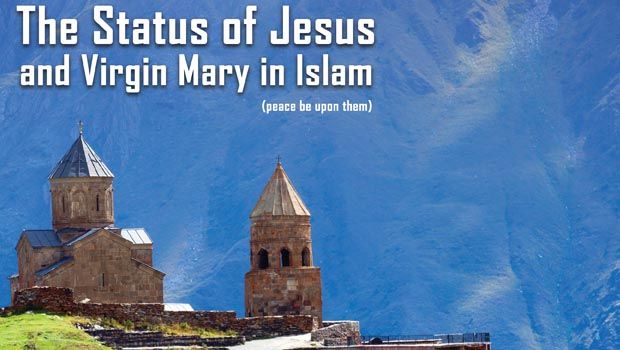
    Jesus and the Virgin Mary in Islam

    A messenger is a prophet who is given revelation from God. Examples include Moses, to whom the Torah was revealed,and Jesus, who received the Gospel. Many people may be surprised that Muslims love both Jesus and Mary, his mother (peace be upon them all). In the Quran, no woman is given more attention than Mary, being one of only eight individuals who have a chapter named after them. The third chapter in the Quran is named after her father, Imran.
    The Quranic story of Mary begins while she is still in her mother’s womb. The mother of Mary, said: “O my Lord! I do dedicate to You what is in my wombfor Your service. So accept this of me,for You hear and know all things. When she was delivered, she said,‘O my Lord! Behold! I am delivered of a female child’ – and God knew best what she brought forth – ‘And no wise is the male like the female. I have named her Mariam, and I commend her and her offspring to Your protection from Satan, the Rejected.’” Mariam literally means “maidservant of God.”While she had expected her baby to be a male who would grow up to be a scholar or religious leader, God had a better plan. God is the best of planners.
    In the next verse, the Quran states that God accepted Mary as her mother had asked. He made Mary grow in purity and beauty. She was assigned to the care of a priest named Zacharias. We are then told, “Every time that he entered her prayer chamber to see her, he found her supplied with sustenance. He said, ‘O Mary! From where is this coming to you?’ She said, ‘From God. For God provides sustenance to whom He pleases without measure’” (Quran 3:37). Upon hearing Mary’s answer, “There did Zakariya pray to his Lord, saying, ‘O my Lord! Grant unto me from You a progeny that is pure; for You are He that hears prayer!’” (Quran 3:38).Although his wife was barren and he was very old, God blessed Zacharias and his wife Elizabeth with John, known to Christians as John the Baptist. Zacharias was skeptical after the angels announced John’s birth. The response to his skepticism was “Thus does God accomplish what He wills” (Quran 3:40). John would become a noble and righteous prophet as the angels had stated (Quran 3:39).

    We should direct our reverence and devotion to God alone, as “He is God the Creator, the Maker, the Shaper.

    Mary’s Miraculous Conception

    The Quran discusses Mary’s miraculous conception as well. “And call to mind, through this Book, Mary. Lo! She withdrew from her family to an eastern place and kept herself in seclusion from them, whereupon We sent unto her Our angel who appeared to her as a man in all respects” (Quran 19:16-17). After seeing the angel, she said: “I seek refuge from Youwith the Most Gracious, if you are God-fearing” (Quran 19:18). The angel responded: “Nay, I am only a messenger from your Lord, to bestow upon you the gift of a pure son” (Quran 19:19). She asked: “How shall I have a son, seeing that no man has touched me, and I am not unchaste?” (Quran 19:20). The angel said: “So [it will be]: your Lord says, ‘That is easy for Me: and We will appoint him as a Sign unto people and a Mercy from Us.’ It is a matter decreed” (Quran 19:21). Mary then became pregnant.
    To give birth, Mary went to a distant place. The story continues: “And the pains of childbirth drove her to the trunk of a palm-tree. She cried, ‘Ah! If only I had died before this and had become a thing forgotten, utterly forgotten.’ But [a voice] cried to her from beneath: ‘Grieve not! For Your Lord has provided a stream beneath you; and shake toward yourself the trunk of the palm-tree. It will let fall fresh ripe dates upon you. So eat and drink and be consoled. And if you see any man, say, ‘I have vowed a fast to the Most Gracious, and this day will I enter into no talk with any human being’” (Quran 19:23-26).Joseph, the magi, and the manger are not mentioned in the Quran.
    Jesus, a Sign for All Peoples, Confirms the Oneness of God

    Muslims do not accept the virgin birth of Jesus as evidence of his divinity: “The similitude of Jesus before God is as that of Adam; He created him from dust, then said to him: ‘Be.’ And he was.” (Quran 3:59). Adam’s creation was even more miraculous because he was born without father and mother. After giving birth,Mary brought the baby to her people.They said, “O Mary! Truly a strange thing you have brought! O sister of Aaron! Your father was not a man of evil, nor thy mother a woman unchaste!” (Quran 19:27-8). Mary then points to the baby. They said, “How can we talk to one who is a child in the cradle?” (Quran 19:29). Then a miracle occurs that is not mentioned in the Bible. In defense of his mother, Jesus said, “I am indeed a servant of God. He has given me revelation and made me a prophet; and He has made me blessed wherever I be, and has enjoined on me prayer and charity as long as I live; and to be kind to my mother, and not arrogant or bereft of grace. So peace is on me the day I was born, the day that I die, and the day that I shall be raised up to life [again]!” (Quran 19:30-33).
    The virgin birth of Jesus was a sign: “And [remember] her who guarded her chastity: We breathed into her of Our spirit, and We made her and her son a sign for all peoples” (Quran 21:91). While the trinity (a three-fold God) is the fundamental concept of God in Christianity, tawheed (absolute oneness) is the fundamental concept of God in Islam. All previous prophets, in fact, confirmed the oneness of God. Muslims do not believe in the concept of the trinity (Quran 5:73) and Jesus, himself, proclaimed that worship is of God alone (Quran 5:72). On the Day of Judgment, when Jesus is asked if he had called people to worship him and his mother as two deities along with God, Jesus will say: “Glory to You! Never could I say what I had no right [to say]. Had I said such a thing, You would indeed have known it. You know what is in my heart, whereas I know not what is in Thy Self. For You know in full all that is hidden” (Quran 5:116).
    Jesus was a prophet and a messenger, sent as a mercy, guidance, and sign from God. “And God will teach him [Jesus] the Book and Wisdom, the Torah and the Gospel, and [appoint him] as a messenger to the Children of Israel [with this message]:’I have come to you, with a Sign from your Lord, in that I make for you out of clay, as it were, the figure of a bird, and breathe into it, and it becomes a bird by God’s leave. And I heal those born blind, and the lepers, and I bring the dead into life, by God’s leave; and I declare to you what you eat, and what you store in your houses. Surely therein is a Sign for you if you believe. [I have come to you] to attest the Torah which was before me. And to make lawful to you part of what was [before] forbidden to you. I have come to you with a Sign from your Lord. So fear God, and obey me. It is God Who is my Lord and your Lord; then worship Him. This is a Way that is straight’” (Quran 3:48-51).

    Guidance to Worship Rightly

    God sent human messengers with answers to the profound questions concerning human existence: What happens after I die? How can I discern right from wrong? Is the material world all there is, or is there a realm that transcends the physical universe? What’s the meaning and purpose of my life? The prophets have answered all these questions and have made it abundantly clear that we should not worship any of God’s creation, including Jesus and Mary. We should direct our reverence and devotion to God alone, as “He is God the Creator, the Maker, the Shaper. To Him belong the Names Most Beautiful. All that is in the heavens and the earth magnifies Him; He is the All-Mighty, the All-Wise” (Quran 59:24).Although God can do all things, begetting a son is not consonant with God’s Majesty (Quran 19:92, 19:35).
    The prophets also taught that each human being is responsible only for his or her own actions. In fact, God forgave Adam and Eve for their sin of disobedience after they sincerely repented (Quran 2:35-37). Since we are responsible for our own deeds and will not be punished for the deeds of another person (Quran 53:38-42),in Islam there is no doctrine of original sin. Although Adam and Eve were punished, God, the All-Merciful, sent guidance again and again to mankind. “We said: ‘Get down all of you from this place [the garden], then whenever there comes to you guidance from Me, and whoever follows My guidance, there shall be no fear on them, nor shall they grieve’” (Quran 2:38).
    The Arabic word Islam comes from the root “salama” which means peace through submission to God. Muslims are those who submit. While Islam is the organized religion which started in the 7th century CE with Prophet Mohammed, Muslims believe that all those who submitted to the will of God in line with divine revelation received before Prophet Muhammad and the advent of formal Islam, were themselves also Muslim. Thus, Muslims believe that we are part of one continuing faith community with Jesus and Mary, and all those who followed previous prophets of God. Mary, Jesus, and the disciples were all “Muslims” because they submitted to God:”Behold! The angels said: ‘O Mary! God has chosen you and purified you – chosen you above the women of all nations. O Mary! Worship your Lord devoutly;prostrate yourself and bow down [in prayer] with those who bow down’” (Quran 3:42-43). And in another verse we are told: “When Jesus found unbelief on their [the disciples] part he said, ‘Who will be my helpers in [the work of] God?’ The disciples said, ‘We are God’s helpers: We believe in God, and bear witness that we are Muslims’” (Quran 3:52).

    Muhammad Was the Last in the Long Line of Prophets

    Another prophet with a message similar to that of Jesus would later be born in Arabia in the sixth century. He also called people to the worship of the one and only God. Although unable to read and write, Muhammad (peace be upon him) would recite beautiful verses of the Quran as they were revealed to him. The Quran is a miracle, a sign, a mercy, a warner, and a guidance for all people. Muhammad is the last prophet from a line of prophets that included Noah, Abraham, Moses, and Jesus (peace be upon them). All prophets were models for righteous living. Muhammad’s sunnah – his teachings by word and deed, his way of living – is considered as being directly taught by God, through the Prophet:”Indeed in the Messenger of God you have a good example to follow for him whose hope is in God and the Last Day, and remembers God much” (Quran 33:21).
    God created all people to worship Him and to live life based on His wisdom and guidance. We accomplish this by bearing witness to God’s oneness and accepting His final revelation in our daily lives. “O you who believe! Fear God as He should be feared, and die not except in a state of Islam [submission]” (Quran 3:102).
    There is none worthy of worship but God, and Muhammad is His messenger.

  • Interview: Dr. Jamal Badawi – Knowing Jesus

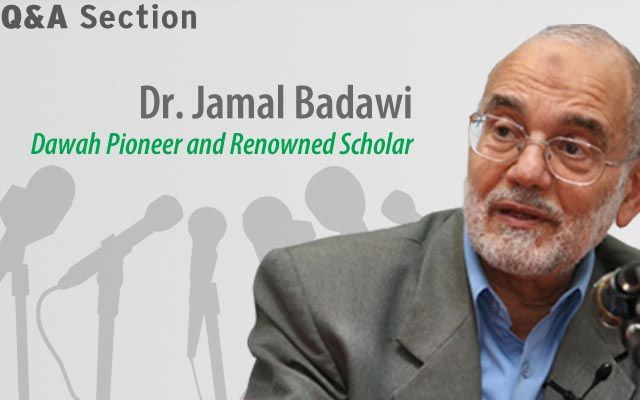
    Interview: Dr. Jamal Badawi – Knowing Jesus

    Understanding and Misunderstanding about Jesus:A Conversation with Dr.Jamal Badawi

    Q:  How many times was Jesus mentioned in the Qur’an and what is the extent of coverage given to his life in the Qur’an? 

    Jamal Badawi:  There are at least eleven chapters in the Qur’an where the name of Jesus or mention of him, his birth and life are mentioned.  This is nothing extraneous or exterior to the belief of a Muslim.  The chapters that contain mention of Prophet Jesus are 2, 3, 4, 5, 9, 19, 21, 23, 43, 57 and 61. There are one hundred and fourteen chapters in the Qur’an and eleven of them mention Jesus. This shows the substantiality of Prophet Jesus.

    The nineteenth chapter in the Qur’an is titled after Jesus’ mother, Surah Maryam or Chapter of Mary.  Chapter three is titled after Mary’s family and is called Al’Imran or The Family of Imran.  Chapter five is titled Al Ma’ida or The Table and tells the Islamic version of The Last Supper.  So the titles of three chapters in the Qur’an are related in some form or another to the story of Jesus (PBUH) as is presented in the Qur’an.

    Q:  Did Mary, according to the Qur’an, predict her predicament?  Did she know beforehand that she was going to be with child, and that child was going to be Jesus and that his status in life was going to be that important?

    JB: According to the Qur’an, she did have some notion or at least an idea of the kind of miracle that was going to take place through her.  According to the Qur’an, there is no dispute on the birth of Jesus as a virgin birth.  She gave birth before she married Joseph the carpenter.  As I said, the way he was born is the most outstanding miracle of Prophet Jesus (PBUH).

    The summary of the verses in regards to Jesus, show that at one point Mary was alone in a place secluded from her family and there appeared to her the angel of God in the form of a human being.  In the beginning she was scared since she was alone. She implored him not to get near her if he really feared God.  He told her not to be afraid, he was not there to hurt her and he was simply coming to bring her the news of the birth of a noble and pure child.

    The translation from the Qur’an says, “Relate in the Book (the story of) Mary, when she withdrew from her family to a place in the East.  She placed a screen (to screen herself) from them; then We sent her our angel, and he appeared before her as a man in all respects.  She said: ‘I seek refuge from thee in (Allah) Most Gracious: (come not near) if thou dost fear Allah.’  He said: ‘Nay, I am only a messenger from thy Lord, (to announce) to thee the gift of a holy son.’  She said: ‘How shall I have a son, seeing that no man has touched me, and I am not unchaste?’  He said: ‘So (it will be): Thy Lord saith – That is easy for Me, and (We wish) to appoint him as a Sign unto men and a Mercy from Us:’ It is a matter (so) decreed’” (19:16-21). This is how the news of the future birth of Jesus was related to Mary.

    Q:  Did Mary deliver Jesus in the normal way- was her childbearing and delivery like everyone else? Were there any miracles in this respect again?

    JB: There is no evidence in the Qur’an that the delivery was unusual. The pregnancy was just like any other woman’s pregnancy.  In fact, the Qur’an talks about Mary suffering the agony of childbirth like any other woman.  The Qur’an also says that she was very distressed psychologically because she was worried about what her people would think of her and how she was going to explain this virgin birth.  She was afraid nobody would believe her.  The Qur’an also indicates that something miraculous happened immediately after Jesus was born.  Jesus assured her and told her what to do when people asked her questions or made accusations against her.The Qur’an states, “So she conceived him, and she retired with him to a remote place.  And the pains of childbirth drove her to the trunk of a palm-tree: She cried (in her anguish): ‘Ah! If only I had died before this! If only I had been a thing forgotten and out of sight!’  But (a voice) cried to her from beneath the (palm-tree): ‘Grieve not! For thy Lord hath provided a rivulet beneath thee; and shake towards thyself the trunk of the palm-tree: It will let fall fresh ripe dates upon thee. So eat and drink and cool (thine) eye. And if thou dost see any man, say: I have vowed a fast to (Allah) Most Gracious, and this day will I not enter into talk with any human being’” (19:22-26).

    The Qur’an continues, “At length she brought the (babe) to her people, carrying him (in her arms). They said: ‘O Mary! Truly an amazing thing hast thou brought!  O sister of Aaron! Thy father was not a man of evil, nor thy mother a woman unchaste!’  But she pointed to the babe. They said: ‘How can we talk to one who is a child in the cradle?’  He said: ‘I am indeed a servant of Allah. He hath given me revelation and made me a prophet; And He hath made me blessed wherever I be, and hath enjoined on me Prayer and Charity as long as I live; (He) hath made me kind to my mother, and not overbearing or miserable; So peace is on me the day I was born, the day that I die, and the day that I shall be raised up to life (again)!’  Such (was) Jesus the son of Mary: (it is) a statement of truth, about which they (vainly) dispute.  It is not befitting to (the majesty of) Allah that He should beget a son. Glory be to Him! When He determines a matter, He only says to it, ‘be’, and it is.  Verily Allah is my Lord and your Lord; therefore serve Him: this is a Way that is straight.  But the sects differ among themselves: and woe to the unbelievers because of the (coming) Judgment of a Momentous Day!  How plainly will they see and hear, the Day that they will appear before Us! But the unjust today are in error manifest!  Warn them of the Day of Distress, when the matter will be determined: for (behold,) they are negligent and they do not believe!  It is We Who will inherit the earth, and all beings thereon; to Us will they all be returned” (19:27-40).

    Q:  Does the Qur’an say that Jesus had only a mother and no father?

    JB:Who is Eve’s father (the first woman)?  Who is Adam’s father?  If a person doesn’t have a physical human father, does this imply that he is divine or he is God?  Then Eve must have been God and Adam must have been God, because they both don’t have parents!  The Qur’an answers this question in one verse, “The similitude of Jesus before God is as that of Adam; He created him from dust, then said to him, ‘be.’ And he was.  The truth (comes) from God alone; so be not of those who doubt” (3:59-60). In accordance to this verse, it simply says that God, who was able to create Adam and Eve without a father or mother, can just as easily create Jesus without a father.  Indeed we should remember it is not only the birth of Prophet Jesus (PBUH) that is miraculous;the birth of any human being is miraculous.  If we study how the various genetic characteristics are passed on, from parents and each of their larger family gene pools to the couple’s children, we should view that as a miracle in itself.  All we can say is that it is both miraculous and unusual in the case of Prophet Jesus.

    The point to remember here is that God isn’t bound to follow the same laws that we consider to be laws of nature, because God himself created nature and these laws.  He can break the rules whenever He wishes; this of course may not necessarily be the pattern as most of the time there is harmony between what we see as natural laws and the will of God, but He has the power whenever He wants to give us certain DivineSigns that break from the norm.

    The Qur’an says, “Behold! The angels said: ‘O Mary! Allah giveth thee glad tidings of a Word from Him: his name will be Christ Jesus, the son of Mary, held in honor in this world and the Hereafter and of (the company of) those nearest to Allah.  He shall speak to the people in childhood and in maturity. And he shall be (of the company) of the righteous.’  She said: ‘O my Lord! How shall I have a son when no man hath touched me?’ He said: ‘Even so: Allah creates what He wills: When He hath decreed a plan, He but saith to it, ‘be,’ and it is!  And Allah will teach him the Book and Wisdom, the Law and the Gospel, and (appoint him) an apostle to the Children of Israel (with this message)’” (3:45-49).

    It is obvious from this that the will of God doesn’t need a human medium to create a pregnancy.  If He decides it He can just order that a child be conceived by a virgin.  God has various unusual methods in creation and the creation of Prophet Jesus (PBUH) completes the picture.  First, was the creation of people without a father or mother, which is the case with Adam.  Then there is the creation of a human being from a man’s rib (side), which is obviously Eve.  Third, there is the normal creation of a human being, both from a mother and a father and that is every one of us.  Last, is the creation of a human being from a mother and not a father.  This beautifully completes the various miracles of God, which are all equally important and stunning.

    Q: What is the difference between Islam’s understanding of the phrase ‘Holy Spirit’ with that of Christians?

    JB:The general understanding of the Holy Spirit is influenced by Greek philosophy, particularly the Platonic ideologies. The gospel of John shows this influence quite extensively. The whole idea of God as the Father, the Son and the Holy Ghost is based very closely on this same Greek philosophy that the Spirit of God or the Holy Spirit or Holy Ghost is a component of God.

    The Qur’an has two different kinds of expressions for the word spirit.  The equivalent Arabic word for the word spirit is rooh’.  In reference to Jesus, in particular, we find that the Qur’an mentions that Jesus was a spirit proceeding from God.  There is also the expression of Holy Spirit/Ghost and each has a different meaning.First, let’s take what the Qur’an means when it says that Jesus was a spirit proceeding from God. Is it exclusive to Jesus or does it apply to other people as well?  The answer is that it applies to all because the word rooh’ appears in the Qur’an in meanings that relate to the context of the verse.  For example, in 42:52 the word spirit is used to refer to revelation (the Holy Book) and that it is a spirit from God.  In 58:22, for example, the spirit is used in a sense of support from God -“and strengthened them with a spirit from Himself.”  It is also used as the secret of life or the source of our spirituality.  This is what is referred to in the Qur’an in respect to Jesus (PBUH) as well as to other human beings.  Chapter 4 verse 171 mentions the spirit in reference to Jesus.  It was also mentioned in a general sense to refer to all human beings because all of us have something of the spirit of God in us.  The Qur’an says, “But He fashioned him in due proportion, and breathed into him something of His spirit” (32:9). This refers to the creation of all human beings.  This means that every human being derives his spirituality, his instinctive natural feeling of a connection with his Creator, from the spirit of God that was breathed into him at the time of creation.

    The other usage of the term Holy Ghost or Holy Spirit is actually used specifically for archangel Gabriel.  He is called Roohul Qudoos which means Holy Spirit or AlRoohul Ameen which means Honest Spirit.  The Qur’an mentions him as the angel who brought revelation to prophets in the past, including Prophet Muhammad.The Qur’an says,“We gave Moses the Book and followed him up with a succession of apostles; We gave Jesus the son of Mary Clear (Signs) and strengthened him with the Holy Spirit. Is it that whenever there comes to you an apostle with what ye yourselves desire not, ye are puffed up with pride? Some ye called impostors, and others ye slay!” (2:87).

    And in another verse, we are told:“Then will Allah say: ‘O Jesus the son of Mary! Recount My favor to thee and to thy mother. Behold! I strengthened thee with the Holy Spirit, so that thou didst speak to the people in childhood and in maturity. Behold! I taught thee the Book and Wisdom, the Law and the Gospel and behold! Thou makes out of clay, as it were, the figure of a bird, by My leave, and thou breathes into it and it becomes a bird by My leave, and thou halest those born blind, and the lepers, by My leave. And behold! Thou brings forth the dead by My leave. And behold! I did restrain the Children of Israel from (violence to) thee when thou didst show them the clear Signs, and the unbelievers among them said: ‘This is nothing but evident magic’” (5:110).All of these verses show that Roohul Qudoos is actually referring specifically to Gabriel.  According to Islam, Gabriel and all other angels are creations of Allah- they are not part of Him.  They are all servants of God just as the prophets are.

    Q: Is there any way that a Muslim can reconcile himself with the ideas of the son of God or ‘Lord’ as they are explained in Biblical literature (The New Testament)?

    JB:In all fairness to our Christian brothers and sisters, I cannot answer that question unless I explain, first, how the Bible uses the term Lord and the term son of God.  This might be the most conclusive evidence, not from a Muslim’s point of view, but from the Bible itself.Take the word Lord, everybody knows that this term doesn’t necessarily mean divine.  In England, there are many Lords but no one would say that there are so many Gods there.  Lord means master.  It is believed that this was the exact meaning people meant when they addressed Jesus as Lord in the New Testament.

    The second term is the son of God. There is ample evidence in The Old Testament that son of God is used for a person who is close to God because of his spirituality and faith, but never because of his divinity.  The Book of Exodus says that Israel was called the first born son of God (4:22-23) but nobody says that he is divine.  In the psalms of David, David is referred to as the son of God (2:7).  In the first Chronicle, Prophet Solomon is also referred to as the son of God (2:10).Ezra (Uzair in the Qur’an, see 9:30) is referred to in the Old Testament.  He lived in 450 B.C. and was regarded as a son of God because of his crucial role, during the Babylonian exile, in recollecting the law of the Torah about a thousand years after Moses.  Evidence from The Old Testament itself shows that the term son of God was used in a metaphoric sense,not in an exclusive or divine sense.

    Even The New Testament uses it in a similar way as The Old Testament.  For example, the book of Matthew says, “Blessed are the peacemakers, for they will be called sons of God” (5:9). There are similar quotations in Matthew (5:45 and 23:9).  In fact, The Old Testament even uses theterm “sons”of God. In the book of Job, this term is used as a plural. It is quite apparent that when Jesus (PBUH) used the term father to refer to God or son to refer to himself, he only meant it in the metaphoric sense. He meant it in the same way that all human beings are children of God because we depend on Him and that God is the father because he loves and cares for all of us.

    Q:  What does the Qur’an have to say about the scope of the mission of Jesus Christ on earth?

    JB: The Qur’an is very clear about the fact that the mission of Prophet Jesus (PBUH) was explicitly and exclusively to guide the people of Israel.  The Qur’an says, “And (appoint him) an apostle to the Children of Israel, (with this message)” (3:49).  It also says, “O Children of Israel! I am the apostle of Allah (sent) to you” (61:6). Also, it discusses the various Israelite prophets saying, “And in their footsteps We sent Jesus the son of Mary, confirming the Law that had come before him” (5:46). Therefore, the Qur’an is very clear about what the mission of Jesus was, and the information found in The New Testament itself attests to this fact.

    Two very explicit quotations regarding Prophet Jesus (PBUH) show the similarity between the Bible and the Qur’an on this point.  The Gospel of Matthew tells the famous story of the Canaanite woman who wanted Jesus to cure her daughter. He says, “I was sent only to the lost sheep of Israel.”  He was very explicit and refused, and later on responded because of her faith (15:24). In Matthew, Jesus was giving instructions to the five disciples: “These twelve, Jesus sent out with the following instructions: ‘Do not go among the Gentiles or enter any town of the Samaritans. Go rather to the lost sheep of Israel” (10:5-6). Again, he is repeating the same principle that he was sent as an Israelite prophet.  This is also implied in Matthew with a very similar confirmation (19:28).  Indeed one can say that there is no evidence in the three synoptic Gospels, Matthew, Mark and Luke, of any clear and decisive statements quoting Jesus that his message is universal and that he was sent for all human beings.

    In fact, I would like to make two comments here to avoid any misunderstanding of these quotations.  The conclusiveness of the expressions of the words of Jesus as quoted in the Gospels definitely overshadow any claim that was developed much later on.  The words of Jesus are more credible than what developed later on when the notion of deifying Jesus gained momentum.The other observation is that although both the Qur’an and the Gospels support that Jesus’ mission was to the children of Israel, it doesn’t mean that none of his teachings can be valid and applicable for those who are not from the Israelites.  In fact, the teachings of all the prophets are relevant for all time and all people, especially concerning the moral aspects and the knowledge of God.  Even though the mission is valid for all time and people, God decided to send one final and universal message with Prophet Muhammad roughly 600 years after Prophet Jesus, may peace and blessings be upon them both.

    Q:  What are the miracles of Jesus? Does the Qur’an touch upon that?

    JB:Well of course the discussion of the virgin birth as one of the miracles has already been covered.  He was also given miracles, like other prophets, to support his mission.  The Qur’an states, “And (appoint him) an apostle to the Children of Israel, (with this message): ‘I have come to you, with a Sign from your Lord, in that I make for you out of clay, as it were, the figure of a bird, and breathe into it, and it becomes a bird by Allah’s leave. And I heal those born blind, and the lepers, and I quicken the dead, by Allah’s leave.And I declare to you what you eat, and what you store in your houses. Surely therein is a Sign for you if you did believe’” (3:49). Prophet Jesus’ miracles, include healing, bringing people back from the dead, and knowing what people store in their homes, are each qualified by Jesus saying“by Allah’s leave,” because God gave him this knowledge and ability.

    Q: Does the Qur’an mention that Jesus was given a divine book or the Gospel?

    JB:The Qur’an mentions a number of Holy Books or scriptures given top articular prophets. These include specific books like the Zaboor (normally interpreted as the psalms from David), the Suhoof (leaves of Prophet Abraham) and the Torah.  The Qur’an mentions the Gospel as Al Injeel, which in Arabic translates to The Good News.  The Qur’an mentions Al Injeel not only once but twelve times in six different chapters.The Qur’an mentions,in the context of other Holy Books,Al Injeel or the Gospel as a book given to Jesus.This leaves a distinct impression that the Qur’an is not referring to The Good News in general but to this specific one given to Jesus.  This may sound quite fascinating that most of our Christian brothers believe that the Gospel simply is the biography of Jesus written by the four writers and not necessarily something that was explicitly revealed to Jesus the same way it was to Muhammad or Moses.

    I have gone through some references that address, as part of Biblical studies,the comparison of the Synoptic Gospels (Matthew, Mark, and Luke) to find what sources they are drawn from. In one reference they refer to a Gospel called “Q”which, it is hypothesized, was a source of information for the Synoptic Gospels.  This means, in accordance with Biblical studies, not Muslim sources, that there was probably an earlier Gospel from which the Synoptic Gospels were sourced. This could possibly be the original Gospel Muslims believe was given to Jesus.Let’s not forget that there is also the issue of the canonized Gospels.  The history of the Church shows that there have been large numbers of Gospels and it was only in the fourth century that the church canonized the four Gospels and the others were burned.  It is quite possible,based on both Christian and Muslim sources, that Jesus did have a separate, independent Holy book that was unfortunately lost to history.

    Q:  What about the end of his mission?  Do Muslims agree with the Christian version of Jesus’ crucifixion and ascension?

    JB:There is very little information available concerning this question; therefore I’ll stick to what the Qur’an has to say. Many of the early Christian sects disputed whether it was Jesus or Judah who had been put on the cross.The Qur’an says, “That they rejected Faith; that they uttered against Mary a grave false charge; that they said (in boast), ‘We killed Christ Jesus the son of Mary, the Messenger of Allah’- but they killed him not, nor crucified him, but so it was made to appear to them, and those who differ therein are full of doubts, with no (certain) knowledge, but only conjecture to follow; for of a surety they killed him not. Nay, Allah raised him up unto Himself; and Allah is Exalted in Power, Wise” (4:156-158). According to this specific text of the Qur’an, it’s conclusive that Jesus was not the one put on the cross, no matter how commonly believed it may be.


    Q:  Has Jesus personally denied his divinity?

     Jamal Badawi:  The response to this question could be found in the following Qur’anic verses:“At length she brought the (babe) to her people, carrying him (in her arms). They said: ‘O Mary! Truly an amazing thing hast thou brought!  O sister of Aaron! Thy father was not a man of evil, nor thy mother a woman unchaste!’  But she pointed to the babe. They said: ‘How can we talk to one who is a child in the cradle?’  He said: ‘I am indeed a servant of Allah. He hath given me revelation and made me a prophet; And He hath made me blessed wherever I be, and hath enjoined on me Prayer and Charity as long as I live; (He) hath made me kind to my mother, and not overbearing or miserable; So peace is on me the day I was born, the day that I die, and the day that I shall be raised up to life (again)!’  Such (was) Jesus the son of Mary: (it is) a statement of truth, about which they (vainly) dispute.  It is not befitting to (the majesty of) Allah that He should beget a son. Glory be to Him! When He determines a matter, He only says to it, ‘be’, and it is.  Verily Allah is my Lord and your Lord; therefore serve Him: this is a Way that is straight.  But the sects differ among themselves: and woe to the unbelievers because of the (coming) Judgment of a Momentous Day!  How plainly will they see and hear, the Day that they will appear before Us! But the unjust today are in error manifest!  Warn them of the Day of Distress, when the matter will be determined: for (behold,) they are negligent and they do not believe!  It is We Who will inherit the earth, and all beings thereon; to Us will they all be returned” (19:27-40).

    Actually, the Quranic verses cited above point out that Jesus, himself, proclaimed his humanity and that he was a servant of Allah and a prophet, clearly not divine. He actually rebuked the people who would develop those philosophical ideas after he is gone. An example is when Satan came to Prophet Jesus and tried to tempt him as it appears in the book of Matthew (4:1-11).  Now the question is how can Satan tempt God?  This is only conceivable if the person who is subjected to temptation is a human being and that is what Jesus spoke of.  Also, on many occasions Jesus had gone to the wilderness or mountains to pray.  Now what does it mean that Jesus is praying?  He is praying to someone who is greater than himself.  He is praying to his God and Lord, and in accordance to the definition of the Trinity this doesn’t make sense. Nobody prays to himself; so why would Jesus pray to himself if he was God?

    In the book of Matthew, Jesus denies any knowledge of the unseen or the last hour (24:36).  Again the knowledge of the unseen is definitely one of the divine attributes and if somebody doesn’t know the future then he is not God – he is a human being.  He may be pious, he may be a messenger, but he is not God. Additionally, the Gospel of Mark says that when someone ran after Jesus and said ‘Good Master’ Jesus would reply, “Why do you call me good? No one is good—except God alone” (10:17- 18). Here this doesn’t mean that Jesus is not good but that goodness, in the absolute sense, is a divine attribute and that is not to be used as a description of him.  In the Gospel of John, Jesus admits and says that “father is greater than I” (14:28), which is very clear evidence he never meant that he is divine and even denied it and clarified that he is simply a human and messenger of God.  That is exactly what the Qur’an, 600 years later, confirms.

  • I Never Loved Jesus Until I Found Islam

    I Never Loved Jesus Until I Found Islam

    I remember fragrant and tasty family dinners at my grandparents’ house. A picture on the wall near the dining table of a blue-eyed man with long,light-brown hair gazed at us while we ate. I knew he was supposed to be Jesus because there was a heart with thorns over his chest, an image I had seen in church. There were crosses throughout the house andI often saw my grandmother sitting with her rosary beads, faithfully repeating her prayers. Whenever I slept at their house on the weekend,she would take me with her to church on Sunday morning.Although my immediate family did not attend church regularly, we did go on holidays such as Christmas, Easter and Palm Sunday. I performed in church nativity plays on occasion and attended Sunday school, where we studied the bible and Christian doctrine, intermittently until the age of 13.

    “There is nothing worthy of worship except Allah, The Creator of all, and I testify that Muhammad is His servant and messenger.”

    In spite of all this, I can’t remember ever feeling affection for Jesus. I never felt connected to him, or that I needed to know more about him. Infact, I can’t recall ever paying him much mind at all. Other than exclaiming, “Jesus Christ!” upon stubbing my toe, he really had no meaningful presence in 22 years of my existence.I had no interest in the bible either,though I remember listening attentively and asking questions in bible classes as a child, but there was little resulting impact on my life.

    As I grew into adulthood, my apathy towards, not only Christianity, but also religion in general, changed to disdain. I couldn’t listen to a word about religion or hear the word “Jesus!” or even “God”uttered, without rolling my eyes and sneering haughtily. As I began submersing myself in philosophies,reading Kant, Hegel, Nietzsche, Sartre, Camus and others, it felt as if I had found my niche. I subsequently developed a kind of arrogance. I felt superior to religious adherents because I was able to acknowledge that I didn’t know, while it seemed those who followed religions claimed a certainty I considered irrational. I was sure that uncritically believing an old book could not constitute, or substitute for,a genuine seeking of truth. I sought to use my mind, not resort to some ancient book for assistance in living my life!My disgust for religion was so great, that if someone had offered me millions of dollars to join one faith or another, I would have undoubtedly declined.

    One of my preferred authors was Bertrand Russell, who saw religion as manmade and harmful, inhibiting critical thinking and inducing irrational fears. He also saw religion as a major cause of human misery, created through persecutions and war-making carried out by the devotees of the various religions. He painted a picture of a world better off with free-thinking people, released from what he saw as unwarranted faith in an unseen realm and misguided devotion to antiquated books.I remember laughing out loud while reading “Hey, Is That You God?” by Dr. Pasqual Schievella, in which he derided the concept of God through satirical dialogue. It all seemed so logical and satisfying.

    Determined to Debunk Religions

    I really cannot be sure whether or not I had ever heard of Islam before September 11, 2001, but obviously with that abhorrent crime came the knowledge that there was this other religion out there.Although it seemed to me much more complex than the notion that the attacks were driven by something inherent in Islam, my contempt for religion was still validated when I thought about a religion being even indirectly related to this atrocity. My knowledge of geopolitics was limited at that time, but informed enough to know there were major conflicts occurring in the world resulting in inevitable turmoil and bloodshed. After the 9/11 attacks, I began studying politics and paying attention to current events like never before. At the same time,for me, it wasn’t enough to merely believe the world was better off without religion. I wanted to systematically prove religions were no more than a hoax, by demonstrating how they are flawed and therefore manmade. I purposefully set out to do just that.That meant I would have to read the religious “scriptures.”And so I bought and read the bible. I read the Bhagavad Gita (the Hindu scripture) painstakingly, as well as books on Buddhism.

    I remember reading the bible on a warm sunlit day, sitting under the trees in the backyard of my family home. I was shocked when I read in both Leviticus and Deuteronomy: “The pig is also unclean; …You are not to eat their meat or touch their carcasses” (Deuteronomy 14:8).I was confused. I had not heard of this before.Essentially everyone I had ever known had readily eaten bacon and pork chops. I pressed on. I read many unsettling stories in the bible and eventually I took a hiatus from it, going back to it occasionally, laboriously making my way through, and finally completing it years later.

    The Quran Turned Me Around, Exhilarated Me

    I had expectations about the Quran based on my readings of the other religious books. I assumed it would be painful, difficult reading: jumbled, unclear stories I would have to struggle to make sense of. Worse, I expected it to be filled with hatred and bigotry. I resolved, nonetheless, that the end goal was well worth my suffering. Fortunately, I was able to acquire a paperback translation of the Quran for free. I didn’t even stop to chat with the oddly dressed MSA students standing at the table stacked with books. I curtly asked, “Is it free?” When they replied in the affirmative, I grabbed one and continued on my way. I had no interest in them, only the free book to assist me in accomplishing my goal of debunking religions once and for all. But as I read that Quran, as its cover became worn and its pages tattered, I became more and more subdued. It was distinct from the other religious books I had read. Its straightforward message was well defined and consistent throughout. One day, a friend of mine began ranting about how God in Islam is angry and vengeful. I instinctively opened up the Quran (which was always near at hand) and easily flipped to one of the many verses that said, “Surely, Allah is Forgiving, Merciful.”

    I felt as if the Quran was speaking directly to me – even responding to my life as it unfolded. It was an “old book” but somehow it was entirely relevant and there was something captivating about its cadence and imagery and the way it communicated to me intimately.Its exquisite beauty moved me in ways I hadn’t felt when reading other scriptures, reminiscent only of the moments I had spent out west, staring out over a seemingly endless desert landscape. I found it exhilarating like running barefoot in the sand under the stars with powerful ocean waves crashing at my side. And yet, the Quran appealed to my intellect in the most logical and coherent way. It points out signs of God everywhere in the created world and then tells us to think and to ponder all the innumerable signposts pointing to an intelligent order. It rejects the notion of blind faith, encouraging the use of our God-given intellectual faculties including logic, reason, and deduction. It directs us toward recognition of the Creator, virtue, and service of humanity. It declares in unmistakable terms the duty to stand up for social justice.

    Thirsting for Knowledge

    After some time and a number of life-changing experiences,I developed an insatiable thirst to know more about Islam. My project to debunk all religions was all but forgotten.I began reading other books about Islam. I found that the Quran contained prophecies, as did many of the ahadith. I noticed that Prophet Muhammad was corrected by God several times in the Quran. This seemed inexplicable if he had, in fact, been its author. I began walking down a new path,guided by the amazing Quran, paired with the beautiful paragon of devotion:Prophet Muhammad. This man showed no signs of being a liar or a fraud in his claim to being God’s messenger. Praying through the nights, seeking God’s forgiveness for his oppressors, encouraging kindness, refusing wealth and power, and persevering with the pure message of devotion to God alone, he endured unfathomable hardship.

    It was all so uncomplicated. All things in the material universe have been created.All this complexity and diversity could not unfold out of nothingness, and display such surpassing intelligence in design and ordering. So we should naturally follow the guidance of the One who created us and the earth and the vast cosmos. I remember the warm,glowing lighting in my apartment and the way the air felt electric with meaningfulness on the night I read this verse:“Have those who disbelieved not considered that the heavens and the earth were a joined entity, and We split them asunder?And We made from water every living thing. Then will they not believe?” (Quran 21:30).

    My mind, itself, was split asunder when I read this -to me, this sounded like the Big Bang! And every living thing from water… isn’t that what science says? I was astonished. It was the most exciting and yet frightening time of my life. I read and studied and double-checked book after book until one night I sat in the library at my school, Pratt Institute, staring wide-eyed at the piles of open books, my mouth agape, in shock. I couldn’t believe what was happening. I realized I had encountered the truth. The truth I had been so sure did not exist. The library closed, forcing me to forsake the pile of books I had been devouring and walk back to my Brooklyn apartment. It was a mild autumn night.
    The Moment of Truth
    The asphalt and trees glistened in the gleam of orange-hued streetlights. I was deep in thought. I had just come to a realization I had imagined impossible. I had discovered that my preconceptions about all religions being man made had been obliterated by Islam. Momentarily, I walked on the thin line between submitting to truth and persisting in denial.The years that had led me up to that point in time – the travels, the conversations, the long nights gazing into space, the hours spent pouring over book after book on Islam – culminated in this critical moment. Should I affirm what I knew could be none other than the truth, accept this treasure and the responsibility that comes with it? Or, pretend as if I had never found it in the first place? I knew I had to accept it…and it felt so exhilarating. I wanted to scream in joy!
    Alone on the sidewalk, I paused under a glowing street lamp and I spoke to my Creator, for the very first time knowing with surety that He was there; that He was listening and knew exactly what had transpired in my heart. I didn’t even have to move my lips to declare: “There is nothing worthy of worship except Allah, The Creator of all, and I testify that Muhammad is His servant and messenger.”And with that I entered into Islam. It was the beginning of a new chapter in the story that is my life, the greatest and happiest of all my days. For sure, it was the day that led to even more peace and contentment than I had ever hoped for. Through the Quran I found knowledge of my Creator. I found that He knows me and always has, that He knew my sincerity in seeking to know the truth.
    Coming Full Circle to Jesus

    It was only because of the certainty that I have in Islam, established by the many proofs and signs that led me to accept it, that I believe without a doubt, that Jesus was born of a virgin mother, that I believe 100 percent that he healed lepers and the blind, and even raised the dead, by God’s will. It is only due to the surety that deepens as my knowledge and practice of Islam grows, that I know for sure that Jesus will return to Earth naturally. I felt compelled to look back at the bible after learning about Jesus in Islam. The Quran mentions that God had given him the Injeel (translated by some, as the Gospel). I learned a lot about the compilation of the bible and that still other “gospels” of Jesus exist that have not been included in the Canon established under the rule of Constantine in 325A.D. Indeed,as the Quran suggests, fragments of the original, unchanged message of Jesus still remain, sparkling like bits of gold from the pages of the Christian scriptures.

    For example, Jesus is reported to have said, “By myself I can do nothing; I judge only as I hear, and my judgment is just, for I seek not to please myself but Him who sent me” (John 5:30).This and many other examples are perfectly congruent with Islam.In “The Gospel of Nazarenes,” which is not included in the canonical Bible, one can find many passages confirmed in the Quran. Of particular interest to me is where Jesus is reported to have said, “No blood offering, of beast or bird, or man, can take away sin, for how can the conscience be purged from sin by the shedding of innocent blood? Nay, it will increase the condemnation” (Gospel of the Nazarenes, Lection 33 verse 2).This statement completely contradicts the modern Christian doctrine that Jesus was sacrificed by crucifixion for the sins of humanity, based on the statements of Paul, who authored much of what is followed in the bible today.

    Amazingly, all of this brought me full circle, back to Jesus, one of the icons I had grown up with, yet had remained impervious to the significance, until my acceptance of Islam. All of the ambiguity and confusion that previously surrounded him was wiped away. I went from seeing him as an enigmatic figure — a man-god on a poster staring at me with impenetrable eyes while I dined with my grandparents — to a real person. Now, as a Muslim, I see and understand Jesus as an honorable and pious human being I could understand, learn from, respect, and truly love. And I have come to love him, and all of God’s chosen ones – for their forbearance and strength, for their selflessness and fortitude in the face of such extreme adversity, for their sincere, unselfish and unwavering devotion to their Maker and Sustainer to Whom all will return. All of them, including Jesus, are tangible examples of how to be successful in this life and in the hereafter.Through Islam, the truth about Jesus and all the prophets of God – indeed, the truth itself – has been made manifest and affirmed in my mind and heart.

  • Jesus in the Eyes of Muslims

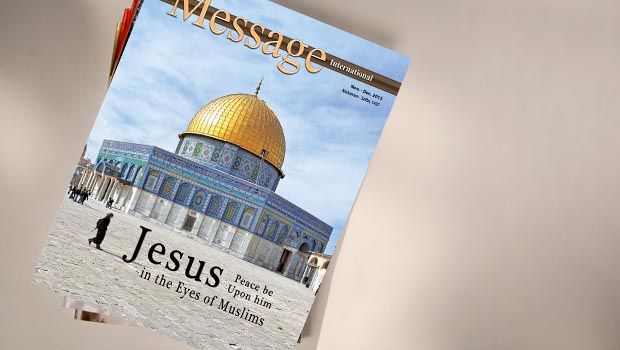
    Jesus in the Eyes of Muslims

    Most Christians in the U.S. know very little about the religion of their Muslim neighbors. This lack of knowledge, compounded by media misinformation, can lead to bigotry and a breakdown of social harmony. It is, therefore, very important for Muslims to step up and provide authentic information to demystify Islam and Muslims for those who are willing to listen with open mind and heart. This is critical to supporting and protecting the healthiness of America’s pluralistic society. A good step in this direction is to spell out what Muslims believe about Jesus, peace be upon him.

    From an Islamic point of view, a person can’t claim to be a Muslim in the first place if he or she denies the prophethood of Jesus (peace be upon him).

    Many Christians are surprised when they find out that Muslims respect and love Jesus, considering him a great messenger from God, sent to humanity. From an Islamic point of view, a person can’t claim to be a Muslim in the first place if he or she denies the prophethood of Jesus. Believing in all the messengers of God, including him, is an article of faith in Islam. In reference to Jesus as a messenger of God, the Quran says: “The Messiah [Jesus], son of Mary, was no more than a Messenger before whom many Messengers have passed away; and his mother adhered wholly to truthfulness…” (Quran 5:75). The Quran also confirms Jesus’ miraculous virgin birth: “She said, ‘My Lord, how can I have a child when no mortal has touched me?’ He said, ‘Even so, God creates what He wills. If He decrees a thing, He says to it only: Be! And it is’” (Quran 3:45-47). Muslims thus believe that Jesus was born miraculously without a father, by the command of God, the same command that brought Adam into being without a father or a mother. The Quran says: “The case of Jesus with God is like the case of Adam. He created him from dust, and then He said to him, ‘Be!’ and he came into being” (Quran 3:59).
    Muslims also venerate Jesus’ mother, Mary, and she is regarded as one of the most righteous and pure women to ever have lived. An entire chapter of the Quran is entitled “Mary.” The Quran says:“Behold! The angel said: ‘God has chosen you and purified you and has chosen you above the women of all nations. O Mary! God gives you the good news of a word from Him, whose name shall be Messiah, Jesus son of Mary, honored in this world and the hereafter, and one of those brought near to God’”(Quran3:42). Testifying to the miracles performed by Jesus, the Quran also mentions that Jesus told people: “I have come to you with a sign from your Lord. I make for you the shape of a bird out of clay, I breathe into it, and it becomes a bird by God’s permission. I heal the blind from birth and the leper. And I bring the dead to life by God’s permission….” (Quran 3:49).
    Having noted the high esteem that Jesus is held in by Islam and Muslims, it is important to mention a number of issues that Muslims and Christians disagree about. One such issue is clerical celibacy by which priests are not permitted to marry. This chiefly applies to the Roman Catholic Church, not to the Protestant denominations. More broadly, monastic asceticism (withdrawing from worldly affairs to live an austere life of rigorous spiritual devotion, thus denying oneself all worldly pleasure), like celibacy, is a later innovation, not taught by Jesus. Islam also teaches that the New Testament has undergone many changes, deletions and embellishments over the centuries, departing in serious ways from the original teachings of Jesus. Muslims reject as well the doctrine of original sin, as this was added into church doctrine by St. Augustine around the year 400.
    Most significantly, though,is that Muslims venerate Jesus as a divinely inspired human, but not as a divine being himself, or that he was “the son of God,” as this is seen as a blasphemous and untenable notion.God says in the Quran regarding the Trinity: “People of the Book (Jews and Christians)! Do not exceed the limits in your religion, and attribute to God anything except the truth. The Messiah, Jesus, son of Mary, was only a Messenger of God, which He bestowed on Mary, and a spirit proceeding from Him: So believe in God and in His Messengers, and do not say ‘Trinity.’ Desist – it would be better for you. God is indeed just One God. Far be it from His glory that He should have a son. To Him belong all that is in the heavens and on the earth. God is sufficient for a guardian” (Quran 4:171).
    To sum up,Jesus is revered by both Muslims and Christians and, therefore, common ground is established for interfaith relations, cooperation, and mutual understanding. Prophet Muhammad (pbuh) once said,“Whoever bears witness that there is no god but God Alone, with no partner or associate, and that Muhammad is His servant and messenger, and that Jesus is His servant and messenger, a word which God bestowed upon Mary and a spirit created by Him, and that Heaven is real, and Hell is real, God will admit him through whichever of the eight gates of Heaven he wishes” (Bukhari and Muslim). May God Almighty help us all come to common terms,submit ourselves fully to our Creator,and grant our salvation hereafter. Ameen.