
بسم الله الرحمن الرحيم

Tag: Islam in Europe

  • Soap Operas and the Reawakening of Islam in Latin America

    Soap Operas and the Reawakening of Islam in Latin America

    This past September 11 marked twenty years since the attack on the World Trade Center in New York City that sent shock waves all over the world. When Muslims were blamed for the bloodiest terror attack on U.S. soil, the public image of Islam in America suffered greatly. South of the U.S. border, however, another 20-year anniversary took place of an event that changed public opinion about Islam in a very different way. On October 1, 2001, a Brazilian telenovela, or soap opera, called O Clone aired for the first time on Rede Globo television. It would later be sold to over 90 countries. Its name, The Clone in English, was translated to El Clon for Spanish-speaking audiences. El Clon was the first tv series that completely revolutionized Latin America’s perception of Muslims, and it would not be the last. Latin America has been called the final frontier when it comes to the spread of Islam. Even though its history is rich with Islamic influence from its indigenous, African, and Andalusian ancestry, the Muslim population in Latin America and the Caribbean is still minimal. However, telenovelas, or novelas, for short, are ensuring everyone and, literally, their mothers, are exposed to Islam. Novelas are as Latino as apple pie or baseball is American. There are jokes and anecdotes about how sacred telenovela hour is for abuelas (grandmas) or mamis (mothers) in every Spanish-speaking household. Changing the channel may earn a person a chancletazo or flying sandal to the body. The biggest producers of Latino telenovelas have been Mexico, Brazil, and Colombia. More recently, Turkish novelas have taken center stage and the Latin American public have embraced them, but it was El Clon that would pave the way for Muslim representation.

    Enter El Clon

    Solmarie Santiago of the Latin Post ranked El Clon within the top six telenovelas of all time. “El Clon was not only a novela, it was a culture lesson,” she said while highlighting its huge success (https://www.latinpost.com/articles/6284/20140123/latin-post-exclusive-6-telenovelas-cant-forget.htm). Created by Gloria Perez and directed by Jayme Monjardim, El Clon is set in Rio de Janeiro, Brazil and Fez, Morocco. It follows the story of Jade, a Moroccan girl who spends her childhood in Brazil and is forced to return to her native land after her mother’s death. She moves in with Tio Ali, her strict Muslim uncle, and must learn to assimilate into this new Islamic environment. Jade ends up falling in love with a Brazilian named Lucas, who is coincidentally touring Morocco with his family. What ensues is a clash of cultures, ethics, and futuristic science, with a scientist secretly creating a human clone of the protagonist, Lucas. Eventually, as in all telenovelas, love conquers all.

    El Clon is most notable for its portrayal of Muslim characters and Islam itself. Rede Globo sought counsel from the World Assembly of Muslim Youth and local imams for its production; nevertheless, it is still not free from the typical stereotypes: Tio or Sidi Ali had three wives and the novela made polygamy seem like a common practice in moderate Morocco; all the Muslim women knew how to belly-dance; and the only hope of happiness for the women was marriage into a rich family. Despite these misrepresentations and cliches, El Clon managed to spark the public’s interest in Islam. Ironically, it was Tio Ali who won the hearts of viewers with his recitation of Qur’an and explanations of the teachings of Prophet Muhammad, peace be upon him.

    Within the Latino Muslim community, among converts of ten or more years, it is common to hear stories about how El Clon positively affected their opinion about Islam or changed how, as Muslims, they were perceived by others. Vilma Santos, a Puerto Rican convert to Islam and hostess of Construyendo Puentes de Paz (Building Bridges of Peace) on America’s Islamic Radio, recalls how the character of Tio Ali influenced her understanding of the faith. “Tio Ali was my favorite,” Santos said, “He was very funny, very down-to-earth, but he was the one who spoke about Allah.”

    After suffering an accident that left her bedridden for a time, Santos began watching the telenovela with her sister. It would open the doorway to her conversion two years after September 11, 2001. She believes she learned more from the novela than from the Muslims she knew personally. The show “was very impactful because it was the first time the Latino community was introduced to Islam,” Santos explained. She still gets goosebumps from remembering the words of the fictional Tio Ali, who she says spoke beautifully.

    Navirita Julia Ovando Moscoso, 39, a communications expert from La Paz, Bolivia, was also influenced by Tio Ali and the women of El Clon. She said, “I became curious about Islam after watching the telenovela and hearing Arabic spoken for the first time.” Moscoso said she was fascinated by the social roles of women within an Islamic environment set against a non-Muslim country. Meeting a Muslim friend in the university helped her learn as she watched the show. She converted to Islam a few years later. Interestingly, although the novela aired long before social media, there are pages dedicated to Tio Ali with inspirational quotes, memes, and photos on Twitter, Instagram, and Facebook (https://www.instagram.com/ensinamentosdotioali/) (https://twitter.com/frasesdoali?lang=en). One example of a Tio Ali quote is, “Allah gives each person the light necessary to distinguish what is right from what is wrong; if you do not know how to distinguish, the fault is only your own.” Pablo Porcel, 52, a computer technician and translator from Córdoba, Argentina, has been translating, subtitling, and publishing foreign series for more than two years. He credits El Clon for Latin America’s growing tolerance of Islam. He said it “was a fundamental piece to show Islam for the first time in Latin America and I think it opened the door to what later the Turkish series has definitely achieved.”

    Turkish Telenovelas: The New Ottoman Empire

    Turkish dramas have replaced the primetime lineup of novelas all over Latin-America. The exotic stories are cleaner and, with breathtaking scenery of Anatolia and the Mediterranean, have captivated Latino audiences. So much so, that they are embracing some of the language of Islamic origin such as “masha’Allah” and “insha’Allah,” along with Turkish vocabulary. Channels like WAPA Televisión in Puerto Rico and its branches in the U.S. have abandoned Mexican or Colombian telenovelas for more conservative Turkish shows. There is at least one Turkish novela on every mainstream Spanish channel. This is not the first time Turkey has revolutionized Latin American identity. Contemporary migration of Muslims to Latin America at the turn of the 19th century is related to the decline of the Ottoman Empire. An exodus from the Middle East, which especially involved Arabs from areas dominated by the Ottomans, landed Muslims in Latin America, where they established businesses and made permanent homes. Because their passports identified them as Ottoman citizens, they were all classified as Turks. This confusion led to Latin Americans referring to all Muslims, and Christians of Middle Eastern origin, as “los turcos” (the Turks) or “los árabes” (the Arabs). Other waves of Muslim migration to the Caribbean and Latin America have occurred since that time, shaping everything from government and commerce to the entertainment industry.

    Porcel is the administrator for the Facebook group, Turkic History and Culture in Series and Movies, with over 200,000 followers, as well as the website, Historia y Cultura Turca, (hyct.com.ar). He has translated more than one hundred 2.5-hour episodes of Turkish novelas, documentaries, and films. Although he has not converted to Islam, himself, he recognizes the value in the representation of Muslims on Latin American TV.

    He said, “There is an understanding and knowledge that had been hidden but is now being revealed and radically changing people’s perspective on Muslim history and culture.” The novelas and epic historical Turkish dramas, called dizi in Turkey, feature Muslim families and glimpses into Muslim life centuries ago. Porcel says the shows are doing away with what he describes as “manufactured prejudices and false perceptions of Islam as a violent ideology.” He has observed the change develop over the past five years and knows some viewers who have, as a result, converted to Islam.

    Making Strides in Latin America

    One Turkish series contributing to this shift is Dirilis: Ertugrul. Translated as Resurrection: Ertugrul, it was released on the channel TRT in Turkey in 2014. Set in 13th century Anatolia, the Resurrection is a fictionalized historical drama centered around the life of Ertugrul Gazi, father of Osman I, the founder of the Ottoman Empire. Like Tio Ali in El Clon, the scholar Ibn al Arabi al Andalusi serves as the spiritual guide for both the main character and the audience. His teachings have literally resurrected the spirit of El Clon for the Latino audience.

    “Ibn Arabi has been the person who vindicated Islam,” said Porcel of the sheikh, played by actor, Ozman Sirgood. Ibn Arabi speaks words of wisdom about Islam, Allah, and His prophets, guiding the characters of Dirilis through the worst situations imaginable, including Mongol invasions, betrayals, and Crusaders’ evil plots. The sage guidance of Ibn Arabi profoundly impacted Porcel and other viewers. He also praises other Turkish shows like Uyanis Buyuk Selcuklu, or The Great Seljuks: Guardians of Justice, who he described as “taking the knowledge of Islam to the highest level we have ever known.” Uyanis is a new and ongoing show, released in September 2020, about the Seljuk Empire. There is no doubt, however, that its popularity is due in part to the success of its predecessor, Dirilis: Ertugrul. The Guardian reported in August 2020 that “(Dirilis) is now so popular that it has been dubbed into six languages and broadcast in 72 countries.” And that “on YouTube alone, Ertugrul has surpassed 1.5bn views” (https://www.theguardian.com/tv-and-radio/2020/aug/12/ertugrul-how-an-epic-tv-series-became-the-muslim-game-of-thrones).

    “I think there is a before and after that happens after watching Dirilis: Ertugrul,” said Porcel, describing the change of heart Latin Americans have towards Islam. Amazingly, the entertainment industry has achieved more through novelas than the immigrant Muslim population has in Latin America, to educate the public about Islam. It is a reminder of what Prophet Muhammad (s), said, “…Allah will not leave a house or residence but that Allah will cause this religion to enter it, by which the honorable will be honored and the disgraceful will be disgraced…” (Musnad Ahmad). With more shows being released every year and a fully engaged and eager Latin American audience, the influence of Islamic culture is sure to continue to make strides in this part of the world.

    Note: Pablo Porcel hopes to continue his work of translating and subtitling this and other Turkish series but is seeking the Muslim community’s support to cover costs associated with maintaining his website and streaming services. He provides his services for free yet lacks the resources to continue this monumental task. Anyone wishing to donate to the cause can visit his website, hyct.com.ar and donate through PayPal.
  • France’s Macron: A Deep Dive into Islamophobia

    France’s Macron: A Deep Dive into Islamophobia

    About two weeks before Muslims worldwide acknowledged the presumed birthday of Prophet Muhammad (s),October 28-29, 2020 (11 Rabi Awwal 1493), French schoolteacher Samuel Paty shared with his history classes negative caricatures of the Prophet of Islam as examples of the freedom of speech so cherished in that secular country. The images had been previously published in the French satirical magazine Charlie Hebdo in 2006, 2011, 2015, and 2020, each time generatingprotests,sometimes violent,by Muslims in France and across the globe. They were incensed by the attempted degradation of the universally beloved Prophet. The response to Paty’s sharing of the cartoons was especially gruesome as18-year-old Abdoullakh Anzorov, a Chechen national who had lived in France from the age of six, beheaded the 48-year-old educator with a long knife. Anzorov, who was shot and killed by French police, was loudly condemned for his actions by Muslims and non-Muslims alike.

    The response to the killing by French president Emmanuel Macron was swift, and it belied any attempt on his part to try to heal the traumatized citizens.He did not call the horrific incident an individual criminal act.Instead, he demonized the religion of Islam and thus, the six million Muslims in France and the 1.7 billion Muslims around the world. Macron declared that, “Islam is in crisis in the world,” adding that “He (Paty) was killed because Islamists want our future. They will never have it.” In a dramatic display of support for free speech in France, the cartoons were projected on government buildings in Toulouse and Montpellier during memorial programs for Samuel Paty. Macron was present at the memorials.

    Macron’s response to the offensive cartoons was diametrically opposed to that of former French president Jacque Chirac. Charlie Hebdo’s 2006 publishing of 12 demeaning cartoons of Prophet Muhammad (s)resulted in boycotts of French products, rioting, and at least a dozen deaths across the Muslim world. Chirac angrily stated, “I condemn all obvious provocations which could dangerously fuel passions. Anything that can hurt the convictions of someone else, in particular religious convictions, should be avoided. Freedom of expression should be exercised in a spirit of responsibility.”

    The Fallout Continues

    Macron has instituted dozens of raids against suspected Muslim extremists and even took action against some who were already in jail but now were served with additional charges. Muslim charities and relief groups have also been closed in the aftermath of recent events. As of the end of October, at least three mosques have been attacked. Several mosques are padlocked, and Imams and religious leaders arrested. Muslim women wearing hijab have been attacked, one such brutal assault taking place at the iconic Eiffel Tower in Paris.The French Interior Ministry announced that more than 50 Muslim institutions with alleged ties to recent attacks are under investigation.

    Two weeks after Paty was decapitated by Anzorov, three worshippers in the famed Notre Dame Basilica were killed in a knife attack in Nice, a city in the south of France. The suspected attacker, a Tunisian man who entered France after arriving by boat from Italy on September 20, was taken into custody by French authorities. In Saudi Arabia, a guard was stabbed with a sharp tool outside of the French consulate. The perpetrator was arrested by Saudi police. These violent attacks on French citizens are attributed to President Macron’s continued defense of cartoons that dishonor Prophet Muhammad (s). Of course, Macron’s Islamophobic statements and policies and the subsequent attacks on French citizens are directly related. But, at the same time, we have to be clear that extra-judicial killings are forbidden in Islam. Punishments can only be established and carried out by legal and authorized authorities who ensure that due process is followed, and justice is brought about.

    President Recep Erdogan of Turkey declared in a speech that Macron was “mentally damaged.” He added, “Macron needs mental treatment. What is the problem with this person Macron with Muslims and Islam?” President Erdogan has been outspoken about Muslims suffering discrimination and oppression from non-Muslim states. Muslim countries around the world have decried Macron and other French government officials’ conflation of acts of terrorism by individual Muslims as concerted attacks by all French Muslims on European people and Western civilization. Muslim-majority nations, including Pakistan, Bangladesh, Saudi Arabia, Kuwait, Qatar, and Jordan have either directly criticized Macron’s comments and actions or called for or instituted a boycott of French products.

    Macron’s deep dive into Islamophobic rhetoric and policies comes at a pivotal time in his presidential bid for re-election. In 2022, Macron will face the leader of the National Rally(formerly National Front), Marine Le Pen, in France’s presidential election. Macron decisively defeated Le Pen in the 2017 presidential contest. As the electorate in France has embraced the more nationalistic, anti-immigration, and Islamophobic positions of the National Rally party of Le Pen, Macron has embraced a right wing populist stance that aligns him more close lywith the perceived political mood of the nation. Le Pen was an early supporter of the candidacy of Donald Trump in 2016 and now echoes his anti-Muslim and anti-immigration rhetoric.

    Muslim Presence in France: A Long History

    Since the Middle Ages, Muslims have had a presence in the south of France that coincided primarily with the almost 700-year Muslim domination of Andalusia, southern Spain.But it was not until the beginning of the 20th century, between World Wars I and II, especially after1945,that tens of thousands of Muslims settled in France, coming mostly from Morocco, Algeria, and Tunisia. World War II caused untold devastation to the infrastructure of France and required immigrant laborers to rebuild structures and to work in the factories. Muslim workers poured into the country for decades until the French government tightened immigration policies in the 1970s due to an economic crisis. After decades of almost unimpeded legal immigration,Muslims have become part of the French landscape, making Islam the second largest religion in the country.

    Some have reacted to the growing presence of Muslims in Europe with a radical and deadly animus. Brenton Tarant, the perpetrator of two mosque attacks in 2019 in Christ Church, New Zealand wrote in his manifesto, “This crisis of mass migration and sub-replacement fertility is an assault on the European people that, if not combated, will ultimately result in the complete racial and cultural replacement of the European people.” His deadly killing spree, as a member of the Identitarian Movement, resulted in 51 dead and 40 injured. The Identitarian Movement emerged in France after World War II and it appears that members today believe it is Western elites who are promoting open borders and unlimited immigration into Europe and the U.S. for their own globalist agenda. They propose that White Christians must fight to save their civilization.The group is active across Europe, United States, Australia, and New Zealand.

    The lingering issues of France’s colonial mission in Muslim-majority countries, particularly in Northern Africa, has hung over the nation like a toxic cloud. For example, France imposed colonial rule over Algeria from 1830 until the Algerian War of Independence from 1954 to 1962 that resulted in independence from France. The war was fought primarily on Algerian soil with the French widely employing torture against Algerian soldiers and civilians while unsuccessfully attempting to crush the Algerian Revolution. Some estimates are that more than 10 million Algerians died as a result of French colonial rule.

    The memory of French colonial atrocities remains in the minds of Muslim citizens of France.This is particularly true in the densely populated outskirts of cities like Paris, Marseille, and Lyon where many Muslims live. These areas are plagued by entrenched poverty, unemployment, in large part caused by discrimination, and public housing that has ended up as isolated ghettos where gangs and drugs abound. This is the perfect recipe for over-policing and its end result — prison. Some estimates are that over half of the French prison population is Muslim. These conditions lead to complete alienation from French society. Much to the chagrin of government planners and elected officials, a growing number of these disenfranchised young people are rejecting secularism and attempting to fully embrace the tenets of their Islamic faith. The response from the secular French government has been attempts to remove all vestiges of the symbols of Muslim religious and social life from the public square. This was initiated in 1989 with the government ban on wearing headscarves in government buildings and in public schools.

    Unlike in the United States, a preponderance of French Muslims, especially those living in the outlying housing projects, has not been fully assimilated into the economic or social realms of French society, even after living in the country for over 75 years. As the French economy continues to weaken and its post-colonial status on the world stage diminishes, Islam and the presence of Muslims in France have become convenient scapegoats for the country’s woes. The plight of Muslims in France should serve as a cautionary tale for Muslim minorities in Western countries.As Muslims, the model for our success in any society must not be how fully we assimilate into the mores and practices of our environment, but rather how closely we strive to emulate the Prophetic model in our personal and collective lives.

  • Islamic Education in Southeast Europe

    Islamic Education in Southeast Europe

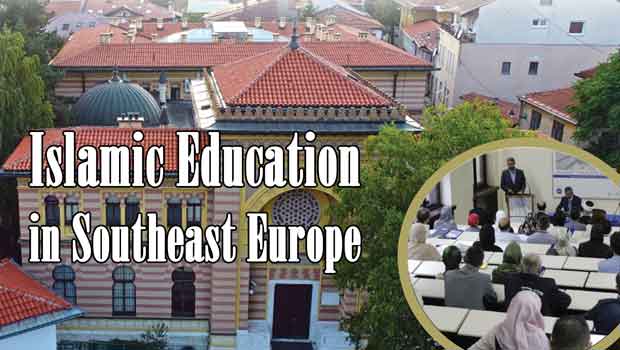
    Sarajevo, the capital of Bosnia, is home to the Faculty of Islamic Studies, a part of the University of Sarajevo. The Faculty emerged out of the Islamic School for Theology and Sharia Law, established under the Austria-Hungary administration in the late 19th century. Although, the Austro-Hungarian empire was predominantly Catholic, it granted certain religious and cultural autonomy to the Muslims in Bosnia, and the Sharia school was approved and even partly financed by Austrian authorities. The building was designed by leading Austrian architects of the time. The result was an attractive and colorful building with elements of the Moorish style (the Islamic architecture of Northern Africa and parts of Spain). After WWI, when Bosnia was incorporated into the Yugoslav kingdom, the faculty was called the School of Islamic theology. Then after WWII, Yugoslavia became a communist republic, not very friendly toward religion. So, the school was moved to another building, while the original building was turned into a city museum. Over the time, however, communist Yugoslavia became less antagonistic toward religion, and in 1977 the school was renamed the Islamic Theology Faculty. After the collapse of communism and the Bosnian War in the 1990s, the Faculty returned to its original building, this time under the name Faculty of Islamic Studies. The building had been damaged during the war, so after the conflict ended, the building was repaired with money from international donations. Today, the building looks like it appeared more than a century ago when it was the Sharia school.
    The Faculty of Islamic Studies has now become the most significant institution for higher Islamic education in southeast Europe, and equal to other faculties within the University of Sarajevo. In fact, Sarajevo has had a reputation for more than four centuries as a city with prominent Islamic education and science. At certain periods in its history, Sarajevo was home to twelve out of Bosnia’s 70 madrasas, along with other Islamic educational institutions. Today, the existence of the Faculty of Islamic Studies ensures that Sarajevo remains an important name on the international map of Islamic knowledge and academia, especially in the region of the Balkans.

    Bosnian ‘East-West’ connection

    The Faculty of Islamic Studies is not only the oldest institute of its kind in Europe, it is also the continent’s most important department of Islamic higher education and research. The Faculty exemplifies a model of Islamic education that matches European standards of higher education, while staying true to traditional Islamic educational ideals and goals. Those who graduate from the Faculty are equipped to teach Islamic studies, whether at an Islamic school or a state school, and can genuinely be considered both scholars of Islam and European intellectuals.
    Bosnian Muslims, as well as the Albanian Muslim community, have for centuries been authentic indigenous European Muslim populations, not yet fully tapped as bridges between Western and Islamic interests. The Faculty fits well within the scope of this versatility.

    Basic Islamic Studies Courses

    The Faculty of Islamic Studies attracts students from Bosnia and neighboring countries, and more and more from around the world. After the war, the Faculty started attracting non-Muslim visitors including U.S. ambassadors and diplomats from Turkey, Iran, Britain, the EU, Egypt, Qatar, Russia, and more. The Faculty of Islamic Studies maintains contact and cooperation with Oxford University and Al-Azhar in Cairo.
    With the rise of islamophobia on the European continent, the Faculty opened its doors to anyone interested in taking a course on basic Islamic doctrines and principles, along with the history of Islam and the Ottoman period in Bosnia. This special course is offered once a year for a duration of three months. If there is enough interest, the course will be offered in Bosnian as well as in English. There is a growing number of foreigners living in Sarajevo, including journalists, foreign students, tourists, international diplomats and their families, humanitarian workers, UN civil sector staff, and peace activists. Many of them would like to learn about Islam, in addition to local residents who might be interested. Zbigniew Wojdyla is a Polish citizen who lives in Sarajevo because of his work in international relations. In explaining his interest in the introductory course, he noted, “In Poland we have Muslims who are of Tatar origin, so I was familiar with Islamic culture to some extent. Here it’s interesting to learn about domestic Muslims, of Slavic background.”

    Interfaith Relations and Fostering Understanding

    The Faculty keeps good relations with Catholic, Jewish, and Eastern-Orthodox religious high schools. As Bosnia is home to other religious traditions, the Faculty considers it important to promote good interfaith relations. Ahmed Alibašić is a regular professor at the Faculty and he is also one of the lecturers for the basic introductory course. He is specialized in international politics, diplomacy, and the history of Islamic civilization. He was involved in many public interfaith dialogues. He has stated, “While the solutions found by Bosnian Muslims cannot be simply copied elsewhere, West European Muslims should study their institutions and intellectual legacy – and learn from their recent past that isolation equals destruction.”
    Bosnian Muslims are, in a real sense, a bridge between Europe and the world of Islam. The Faculty represents this connection, and can continue to foster greater understanding, not only through its academic courses but also by its commitment to interfaith dialogue and its welcoming of people from all faiths and nationalities to visit and/or partake of its introductory course on Islam. And it will continue to be a first-class institute of higher learning for those who want to pursue specialized scholarship in Islamic studies.