بسم الله الرحمن الرحيم

Tag: human rights

  • Israel: Exploding International Law

    Israel: Exploding International Law

    On September 17, pagers exploded across Lebanon. According to a UN press release, as of 9/19, 32 people were killed and 3,250 wounded. An NPR article states that a “U.S. official told NPR that Israel told the U.S. it carried out the attack.” The deaths resulting from the exploding pagers were not only Hezbollah fighters, but many civilians including two children. Surveillance video from a grocery store showed a small handheld device next to a cashier exploding. Other pagers exploded throughout southern Lebanon, where Hezbollah has a strong presence. After the explosion, hospitals saw an influx of patients who had been injured by the attack, suffering with wounds to the face, eyes, and hands. The following day more explosions occurred, this time with walkie-talkies.

    A Violation of International Law

    Human rights and international watchdog groups called for an investigation of the attack. The day after the explosions, Lama Fakih, Human Rights Watch’s Middle East and North Africa director posted this on X: “Lebanon: International law prohibits the use of booby traps precisely to avoid the devastating scenes that continue to unfold across Lebanon today. A prompt and impartial investigation into the exploding pager attacks should be urgently conducted.”

    Ms. Fakih was referring to the international treaty signed by more than one hundred countries, including Israel, which bans “the use of booby traps or other devices in the form of apparently harmless portable objects that are specifically designed and constructed to contain explosive material.” A booby trap is defined as “any device designed or adapted to kill or injure, and which functions unexpectedly when a person disturbs or approaches an apparently harmless object,” according to Article 7 of a 1996 additional protocol  of the Convention on Certain Conventional Weapons.

    Hezbollah members used pagers, wireless telecommunications devices that receive and display messages, as a means of communicating with one another in attempts to avoid Israeli surveillance. The New York Times reported that Israel hid explosive material in the Taiwan-made Gold Apollo pagers before they were imported to Lebanon. Inside the pager, the explosive material was placed next to the battery with a switch that could be triggered remotely to detonate. It is believed that a message was sent to thousands of pagers and triggered the explosives.

    While a plain reading of the treaty and description of the explosive device demonstrates that this was a coordinated attack using everyday objects, there are some that say it still might not be considered a violation of international law. Retired Lieutenant Charles Faint at West Point, said that if Israel actually intended to target Hezbollah fighters knowing they used pagers for secret messages, then that would be considered a “legitimate target” and therefore would not violate international law. However, international law also prohibits indiscriminate attacks that “are not directed at a specific military objective.” Using a method of war, however, that creates no distinction between civilians and combatants is a violation of international law.

    Some go even further than justifying the attack. Srulik Einhorn, in an opinion piece in The Jerusalem Post, glorified the operation, writing this: “This operation stands as one of the most successful military feats since the Second World War—not only because of its flawless execution but because Israel achieved something unprecedented: the most precisely targeted anti-terrorist operation in the history of the world. This was not just a disruption of terrorist capabilities but also a psychological dismantling of the minds of tens of thousands of Hezbollah members. Even those who were not physically harmed are now mentally wounded. Their mindset will never be the same. They will no longer view a refrigerator, microwave, or light bulb in the same way. Until their last day, they will never feel safe, no matter where they are. They will live in constant fear of what might explode next.”

    This kind of mindset does not bode well for the world.

    Looking at the Bigger Picture

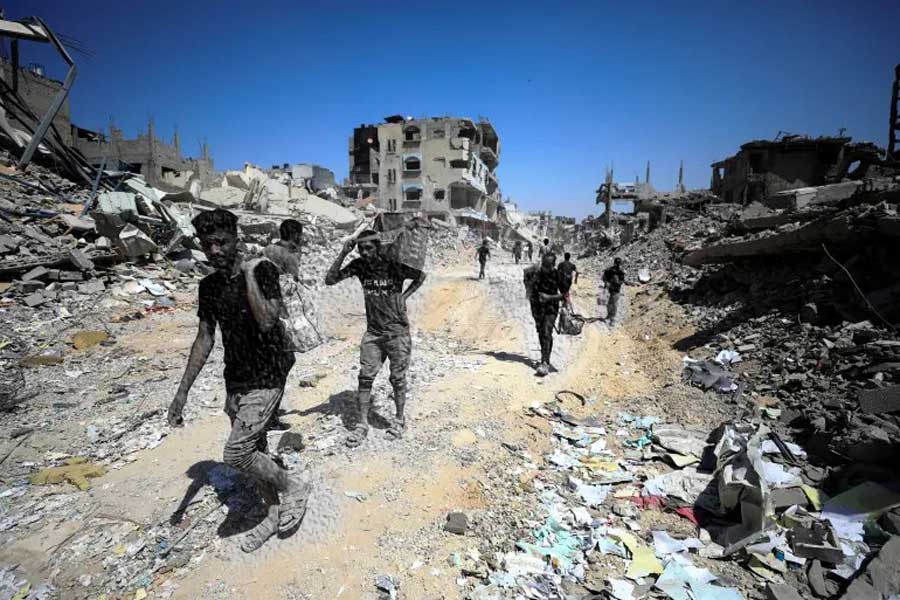
    Since the Hamas attack on October 7, 2023, Israel has repeatedly shown that it does not care to abide by international law in its retaliation. This can be seen through both their words and actions. Over the last year, the world has witnessed countless attacks on hospitals, schools, mosques, and churches in Gaza. Israel has targeted refugee camps and people sleeping in tents, and there have been reports of IDF soldiers running over bodies, both dead and alive, with tanks. Israel has also stopped aid from entering the country and created a man-made famine and a hotbed for disease.

    According to an NBC news report on October 14, the “Israeli military has launched a series of deadly strikes in the Gaza Strip over the past 24 hours, including on a flour distribution center, a school and a hospital where displaced Palestinians were sheltering.” Even areas designated by Israel itself as safe zones for Palestinians have been targeted. An Israeli air strike in Deir el-Balah was near a hospital which had been designated by Israel as safe so Palestinians could bring their children for a polio vaccine. Ilan Pappe, an Israeli historian who supports economic, political, and academic boycotts of Israel, was interviewed after the strike and had this to say: “We’ve been here before…when supposedly safe zones for Palestinians in Gaza were bombed, this keeps repeating itself.” Pappe states that Netanyahu “would do everything possible to make sure that there are no conditions or circumstances for ending the Israeli genocidal attack on Gaza.”

    Israel claims to be searching for Hamas fighters, but in reality, their objective is to clear the land for settlement purposes. If Israel had any respect for international law, there wouldn’t be mass casualties of civilians with entire cities and towns destroyed. Given Israel’s actions over the last year, and the fact that major powers like the United States have turned a blind eye to the abuses of international law, I believe the international bodies and their laws are at risk. While the ultimate arbiter of human rights law, the United Nations, has largely denounced Israel for their actions, they have failed to act in a way that would definitively push Israel to stop. I fear that Israel’s ability to act in such unlawful ways without repercussion by the international community will set a precedent for continued erosion of international law. If Israel can get away with this, so can other nations. Therefore, to preserve the sanctity of international law, Israel must be held accountable.

  • The Ongoing Human Rights Violations in India

    The Ongoing Human Rights Violations in India

    This month has been a roller coaster for anyone watching the human rights situation in India. While the rightwing Hindutva party, Bharatiya Janata Party (BJP), has been in power in India since 2014, their foot soldiers have been busy gradually increasing their rhetoric to promote making India a Hindu Rashtra, that is, a Hindu nation where non-Hindus would become second class citizens, as originally conceived by the founders of the RSS (Rashtriya Swayamsevak Sangh, which means National Volunteer Organization).

    The RSS, founded in 1925, has a current membership of close to 6 million. There are so many issues related to the Hindutva rightwing groups, but a brief update will be presented in this short article.

    Preventing Muslims from Performing Prayers

    Gurgaon is a town in the state of Haryana, a bit over 19 miles from Delhi. There are not enough masajid in Gurgaon to accommodate all the Muslims for prayer and, as the immigrant Muslim population has increased over the years, Muslim leaders made arrangements with local authorities for Muslims to offer Friday prayers in public parks and open spaces. Yet rightwing groups have taken the law into their own hands and have often tried to forcibly prevent Muslims from offering their Friday prayers. One would expect in any country governed by the rule of law to rein in this intimidation, clearly illegal and discriminatory. But what we are seeing is that elected officials are giving in to the anti-Muslim rhetoric, signaling that governments themselves are either powerless to intervene, or worse, complicit in what the gangs on the streets are doing.

    The Wire, an Indian media source, writes, “Until last Friday, Muslims would gather on this spot in the afternoon to offer their customary juma namaz. From today, it ceases to be a space for them. They have been pushed out. From here and from 15 other spots in Gurgaon… This is about 2021. If you start counting from 2017, Muslims have been barred from nearly 70 spots.”

    One would have hoped that the police and authorities would assert themselves to prevent these discriminatory actions, arrest offenders, and subject them to the criminal justice system. But instead, the chief minister of Haryana, the Indian state in question, M.L. Khattar, caved into the demands of these law breakers, and declared that no prayer in public will be tolerated. While these types of activity by rightwing activists might be dismissed as the provocations and harassments of Hindu extremists, the reality is that this anti-Muslim attitude is common and widespread. A speaker at an event, attended by at least one BJP official, called for genocide of Muslims. The event was attended by more than 500 Hindu religious monks and leaders. The BJP, Prime Minister Modi’s party, has consistently denied wanting to transform India from being a secular, pluralistic nation into a Hindu nation. Yet, critics accuse them of ignoring or even inciting discrimination and persecution of Muslims and other minorities.

    Annapurna Bharti, secretary of Hindu Mahasabha, a political party, spoke at the event. He stated, “Nothing is possible without weapons. If you want to eliminate their population then kill them. Be ready to kill and be ready to go to jail. Even if 100 of us are ready to kill 20 lakhs [2 million] of them [Muslims], then we will be victorious, and go to jail… Like [Nathuram] Godse, I am ready to be maligned, but I will pick up arms to defend my Hindutva from every demon who is a threat to my religion.”

    The authorities, as usual, have been slow taking any action against these Hindutva extremists. One of them even boasted that the police “will be on our side.” Under tremendous international pressure, the government and the police finally acted, but only a few have been charged. One of those arrested in mid-January, Yati Narsinghanand, was initially charged with misogynistic speech. The authorities stated that his arrest was for “derogatory comments against women, not the Haridwar hate speech case right now.” They added, “He has been issued a notice in that case so far. He will be remanded for the hate speech case too; the procedure is on. We will include the hate speech case details also in the remand application.”

    Dividing People Along Religious Lines

    Fast forward a few weeks and we see another disturbing trend. The election commission of India announced state assembly [similar to state legislatures in the U.S.] elections in several states in India. Uttar Paradesh, with a population of more than 200 million, is one of them and is politically most significant. The current government in that state is run by BJP, with Yogi Adityanath as its chief minister. He is known to be an open Islamophobe and doesn’t hide his contempt for Muslims. It is not just his rhetoric; he has pursued anti-Muslim policies during his first term. He openly cites as one of his main achievements that of having put Muslims in their place.

    The main method BJP uses to win elections is to divide the electorate along religious lines and thus gain Hindu votes. However, the issue is not limited to elections anymore. It is has now become clear that the current situation is about the very survival of Muslims in India in the coming times. Gregory Stanton, the president of Genocide Watch (GW), testified in January before the U.S. Congress, warning about the possibility of genocide in India. He stated that now with Narenda Modi as prime minister of India, “under his BJP’s policies, he has used anti-Muslim, Islamophobic rhetoric, in fact, to build his political base.” He noted that GW has been speaking out, warning of “the threat of genocide in India since 2002.” Mr. Stanton stated that the U.S. government and other nations can take meaningful steps to preempt any such event from happening.

    The Indian government must wake up and save India from the brink. Subjugation, expulsion, or even extermination of minorities may be the main agenda of the Hindutva movement, but the Indian government is in a position to counter and oppose that agenda. Otherwise, India will descend into further crisis and international disrepute. Muslims and other minorities in India must be protected and afforded their full rights. We make du’a to Allah SWT that all decent people stand firm in support of those around the world who are subject to discrimination or persecution and push their governments to take action to prevent a potential genocide in India.

  • Slavery and the Prison Industrial Complex

    Slavery and the Prison Industrial Complex

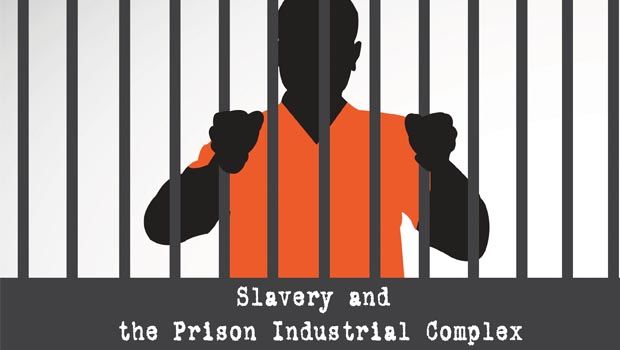
    Chattel slavery existed in continental North America, including the United States, for over three centuries. Prior to the 1830s, the Society of Friends, commonly known as Quakers, was basically the sole organized, consistent voice clamoring against the evils of slavery in the United States. The Abolitionist Movement agitated and mobilized against slavery from the 1830s until years after Abraham Lincoln issued the Emancipation Proclamation on January 1, 1863, freeing slaves living in states that were in “rebellion against the United States.” It was not until after the Civil War and the ratification by Congress of the 13th Amendment to the US Constitution on December 6, 1865 that slaves were freed in all states and territories of this country, with one categorical exception – prisoners. The 13th Amendment reads: “Neither slavery nor involuntary servitude, except as a punishment for crime whereof the party shall have been duly convicted, shall exist within the United States, or any place subject to their jurisdiction” (emphasis added). While abolishing slavery as a legally protected institution in the nation, the 13th Amendment allows for some form of bondage or involuntary servitude of persons convicted of crimes.

    European prisoners, mostly from England, were introduced into the American colonies from the earliest days of settlement. As matters of fact, convict conscription and/or banishment in lieu of the death penalty were primary tools used to populate these early colonies, especially before the Revolutionary War. The largest percentage of convicts, 40,000 or 87 percent, were sent to Maryland and Virginia. Pennsylvania and South Carolina were the third and fourth, respectively, most likely destinations for European prisoners during the colonial era. Most of these early prisoners were debtors who were either unable or unwilling to pay off their legitimate debts. Prisons were among the first public buildings erected by settlers. In Boston, a house of detention was first built in a community of 40 houses. Prisons were initially built and utilized as holding facilities for those awaiting trial, not as long-term centers for punishment. Only political prisoners, prisoners of war, and debtors were imprisoned for lengthy periods. Other forms of punishment were employed in the colonial era rather than extended terms of imprisonment. Punishment models that were imported from Europe such as shaming, public stockades, fines, whippings, and branding were frequently employed. The early state prisons often maintained wretched conditions in which dying from neglect was common.

    Penitentiaries in America

    The penitentiary is commonly accepted as being of American origin. The expected outcome of being incarcerated was that prisoners would, out of a sense of religious conviction, be penitent, read the Bible, and reflect on the errors of their ways while being isolated from not only society, but from other inmates as well. The Philadelphia Society for Alleviating the Miseries of Public Prisons and Quakers worked to replace mistreatment and corporal punishment of prisoners. They advocated incorporating elements of the English workhouse with a more enlightened treatment of inmates. The Walnut Street Jail, built in 1789 in Philadelphia, was converted into the first penitentiary. In 1799, the Penitentiary Act was put in effect determining that prisons should be built with one inmate per cell and that labor should be continuously carried out in silence. The Walnut Street Jail was the forerunner for future maximum security prisons and solitary confinement units.

    Alexis de Tocqueville, a French historian and political thinker, traveled to the United States in 1831 to observe American life and its relationship to institutions. He commented about the early penitentiaries in this country and those advocates who “…thought that absolute separation of the criminals can alone protect them from mutual pollution, and they have adopted the principle of separation in all its rigor. According to this system, the convict, once thrown into his cell, remains there without interruption until the expiration of his punishment. He is separated from the whole; and the penitentiaries, full of malefactors like himself, but every one of them entirely isolated, do not present to him even a society in the prison.” Early penitentiaries were infamous for their harsh rationing of substandard food, insufficient clothing, and woefully inadequate medical care given to the inmates. In a paradoxical twist of history, women and men of African descent were, for the most part, excluded from inclusion in these early facilities since penitentiaries were considered part of a “noble experiment” while Blacks and women were considered either subhuman or otherwise undeserving of this consideration.

    From Slave Codes to Black Codes

    In the immediate aftermath of the Civil War, the southern states enacted a series of laws known as Black Codes. These restrictions on the actions of newly emancipated slaves were modeled on previously-enforced Slave Codes, but these Black Codes attempted to ensure a supply of inexpensive agricultural labor, restrict the liberties of newly-freed slaves, and maintain the White-dominated social hierarchy. An integral part of the attempt by White southerners to maintain the existing social hierarchy was to establish a system by which they could secure sufficient numbers of manual laborers to continue uninterrupted agricultural production. Consequently, a convict lease system was established for White planters to “lease” prisoners to labor without compensation on plantations, which in some cases were the very same plantation from which a freedman was recently emancipated. Under the system of Black Codes, newly-freed slaves could be forced into convict servitude for actions such as getting drunk, handling money carelessly, vagrancy, breaking curfew, and being wanton in speech or conduct. Southern prisons were now populated by thousands of Black men, not because of actual criminal behavior on their part, but to fill the insatiable thirst of White plantation owners for free labor.

    The prison population in the United States remained relatively constant until the Great Depression of 1929 when thousands of men, women, and children suffered incarceration as they attempted to survive, by any means possible, the extreme deprivations of the time. The incarceration rate in 1939 of 137 per 100,000 people was the highest rate in the history of the country. However, the election of Richard Nixon as president in 1968 ushered in an era of mass incarceration due to his ill-advised “War on Drugs” and “law and order” policies. These policies gave birth to mandatory minimum sentencing laws and draconian drug laws championed by then New York governor Nelson Rockefeller. The Nixon Administration’s attitude towards African Americans and protest politics during this era may perhaps best be characterized by H.R. Haldeman, Nixon’s Chief of Staff, when he commented, “[President Nixon] emphasized that you have to face the fact that the whole problem is really the blacks. The key is to devise a system that recognizes this while not appearing to.”

    Racist scapegoating by the Nixon Administration and targeted arrests and incarceration of African Americans by the criminal justice system were major contributors to the prison warehousing of African Americans that continues to the present day. During the presidency of Ronald Reagan, incarceration figures in this country passed those of even the Great Depression. Reagan’s economic policy of “trickle down economics” and deregulation resulted in economic stagnation for the masses of Americans and greater numbers being given lengthy sentences for crimes against property. The year 1993 ushered in the dreaded “Three Strikes and You’re Out Law” which started in the state of Washington and spread rapidly across the country. Under these laws, convicted felons would be sentenced to a mandatory life sentence for the commission of a third felony, no matter how non-violent or relatively inconsequential the act may be. One of the most odious aspects of America’s criminal justice system is the disproportionate number of African Americans shoved into the bowels of its penitentiaries.

    In Michelle Alexander’s groundbreaking work, “The New Jim Crow: Mass Incarceration in the Age of Color Blindness,” she shockingly reveals, “More African Americans are under correctional control today – in prison or jail or parole – than were enslaved in 1850, a decade before the Civil War began. The mass incarceration of people of color is a big part of the reason that a black child born today is less likely to be raised by both parents than a black child born during slavery.”

    The Prison Industrial Complex: Neo-Slavery

    The United States has over 2.4 million men, women, and children incarcerated in jails and prisons across the country. While America represents less than five percent of the world’s population, it nevertheless locks away an astounding 25 percent of the total number of prisoners worldwide. America operates the largest penal system on earth. In “Texas Tough: The Rise of America’s Prison Empire,” Robert Perkinson explains, “Imprisonment in the United States has achieved an unprecedented scale. Combining law enforcement, courts, and prisons, the U.S. criminal justice system consumes $212 billion a year and employs 2.4 million people, more than Walmart and McDonald’s combined, the nation’s two largest private employers…Concrete and concertina wire have become integral features of the American landscape.” Although crime rates in this country are below international levels, the incarceration rate in the United States is six to ten times greater than any other industrialized nation. China, a nation with at least five times the population of this country, incarcerates 1.6 million people, a full third less than America’s prison population.

    The prison industry in the United States has reached a tipping point level of self-sustaining profitability, resulting in what has been characterized as the Prison Industrial Complex. Former President Dwight Eisenhower, a five-star general and legendary military hero, delivered a chilling commentary in his farewell address on January 17, 1961 in which he warned the nation of a major threat to the country, stating, “In the councils of government, we must guard against the acquisition of unwarranted influence, whether sought or unsought, by the Military Industrial Complex. The potential for the disastrous rise of misplaced power exists and will persist…” President Eisenhower was warning against the symbiotic relationship between government agencies that are charged with managing wars and the corporations that produce weapons and equipment for war.

    The Military Industrial Complex was described as an all-too-friendly relationship that may develop between defense contractors and government forces, where “war for profit” results. The Military Industrial Complex developed near sacrosanct status in the American halls of government after World War II, during the period from the 1950s to the early 1990s commonly known as the Cold War. The Cold War was primarily a global struggle between the former Soviet Union and the United States for strategic influence and control of the human and physical resources of the rest of the world. The civilian defense industry reaped financial windfalls from the seemingly endless quest for world domination on the part of the two superpowers. The mantra of the United States during this period was to “Fight Communism” at all costs, even if taxpayer dollars had to be redirected from national social services and education programs to sustain this effort.

    When President Reagan launched his “War on Drugs” in the mid-1980s, the U.S. prison population quadrupled in less than two decades, triggering the ascension of the Prison Industrial Complex. The majority of these inmates have been and continue to be African American and Latino. The domestic “War on Drugs” has been a cynical assault on the nation’s poor that disproportionately drives into the Prison Industrial Complex at least seven times the number of African Americans than Whites. In an insightful article by Linda Evans and Eve Goldberg entitled “The Prison Industrial Complex,” the relationship between the Military Industrial Complex and its counterpart is revealed: “As with the building of weapons and armies, the building and maintenance of prisons are big business. Investment houses, construction companies, architects, and support services such as food, medical, transportation, and furniture all stand to profit by prison expansion. A burgeoning specialty item industry sells fencing, handcuffs, drug detectors, protective vests, and other security devices to prisons…As the Cold War winds down and the Crime War heats up, defense industry giants like Westinghouse are re-tooling and lobbying Washington for their share of the domestic law enforcement market. ‘Night Enforcer’ goggles used in the Gulf War, electronic ‘Hot Wire’ fencing, and other equipment once used by the military are now being marketed to the criminal justice system.”

    The authors continue, “Communication companies like AT&T, Sprint, and MCI are getting into the act as well, gouging prisoners with exorbitant phone calling rates, often six times the normal long distance charge. Smaller firms like Correctional Communications Corp are dedicated solely to prison phone systems, fully equipped for systematic surveillance…” In a brilliant discourse about the state of America’s prison industry – “Are Prisons Obsolete?” – political activist, scholar, and author Angela Davis asserts, “…corporations associated with the punishment industry reap profits from the system that manages prisoners and acquire a clear stake in the continued growth of prison populations. Put simply, this is the era of the Prison Industrial Complex. The prison has become a black hole into which the detritus of contemporary capitalism is deposited. Mass imprisonment generates profits as it devours social wealth, and thus it tends to reproduce the very conditions that lead people to prison.”

    In “Beyond Prisons: A New Paradigm for Our Failed Prison System,” Maganani and Wray observe, “In 1979, the United States government repealed the interstate transport law that had forbidden interstate transport of prisoner-made goods. The Department of Justice implemented a national work program throughout the federal prison system. There, prisoners theoretically work for minimum wage, of which 80 percent is withheld for room, board, survivor compensation, medical fees, and educational costs…Thirty states now allow some type of legalized contracting of prison labor to private firms. Thus, prison labor has become an alternative to moving offshore for many corporations. Workers unemployed because of job flight- and their children- are now working these jobs in prison.” As U.S. corporations continued to maximize profits by outsourcing jobs to countries with much cheaper and mostly unregulated labor forces like Mexico, China, Bangladesh, and India, companies began to realize that a much more exploitable labor pool awaited them by in-sourcing to America’s prisons. Average minimum wages for state prison labor is 93 cents a day.

    As state budgetary restraints limited the unfettered expansion of state prisons, privately-owned prisons became the fastest growing sector of the corrections industry. Bastions of American capitalism such as American Express and General Electric are included in the number of investors in private prisons traded on the NASDAQ stock exchange. Correctional Corporation of America is one of the largest owners of private prisons in the world. Virtually free from government oversight, private prisons are notoriously brazen in brutally disciplining inmates for otherwise minor infractions. Private prisons receive a fixed amount of money from the contracting federal, state, or county governments for each inmate in its custody, and with profit as the bottom line, administrators and staff are incentivized to minimize expenditures on the inmates. This is accomplished by providing inadequate and substandard meals and clothing, housing inmates in grossly overcrowded conditions, and allocating insufficient staff supervision. The private prisons’ non-union officers and staff receive minimum pay and training and are, at best, ignorant of the inner city culture of the majority African American and Latino inmates or, at worse, racist.

    According to Evans and Goldberg, “Prisons are also a leading rural growth industry. With traditional agriculture being pushed aside by agribusiness, many rural American communities are facing hard times. Economically depressed areas are falling over each other to secure a prison facility of their own. Prisons are seen as a source of jobs – in construction, local vendors, and prison staff – as well as a source of tax revenues.”

    Concluding Thoughts

    The Prison Industrial Complex in the United States represents a socio-spiritual crisis for persons of faith and good conscience. Not since the institutionalization of chattel slavery has such a large percentage of the population been complicit through tacit acceptance or indifference. Angela Davis rightly observes, “The prison, therefore, functions ideologically as an abstract site into which undesirables are deposited, relieving us of the responsibility of thinking about the real issues afflicting those communities from which prisoners are drawn in such disproportionate numbers. This is the ideological work that the prison performs – it relieves us of the responsibility of seriously engaging with the problems of our society, especially those produced by racism and, increasingly, global capitalism.”

    If there is any hope for significant reform or replacement of the current Prison Industrial Complex, the following minimum steps can and must be taken by individuals of conscience who can no longer remain silent about this issue:

    Educate yourself and others about the fact that dehumanizing, torturous conditions for persons convicted of crimes are not necessary or desirable and are actually counterproductive for the rehabilitation and redemption of human beings.

    Advocate for comprehensive prison reform and greater use of sentencing alternatives to prison, such as restorative justice (a theory of criminal justice that emphasizes the rehabilitation of offenders through repairing harm caused by their criminal behavior, including reconciliation with victims and the community at large) and community service.

    Support political action and legislation to eliminate the for-profit prison model. For information, news, and updates, see www.aclu.org/prisoners-rights/private-prisons.

    Organize a support network and system for family members of incarcerated individuals that include organizing transportation to visit loved ones and establishing independent social service relief outlets for food, clothing, and emergency financial assistance.

    Assist individuals and organizations that act on behalf of the incarcerated.

    Adopt a correctional institution within a reasonable distance of your home and assist inmates by providing literature, religious outreach, and social counseling. Understand the actual needs of inmates in that facility and address real needs, and be willing to raise the issues with administration officials.

     

  • The Role of Human Rights in Islamic Law

    The Legacy of Love, Truth, and Justice

    The legacy of the Prophet Muhammad is revival of the essence of all religion. He revitalized personal awareness and loving awe of God leading to piety, which is a core aspect of  taqwa, and a resulting commitment to truth and justice. These two pillars of Islam and of every world religion reinforce each other. The neglect of either one can result in extremism. Without love and mercy, the pursuit of justice can result in cruelty and oppression. And without commitment to truth and justice, one’s love of God is powerless in the world.

    The two basic philosophical principles of Islam are known as tawhid and mizan. Tawhid refers to the concept that everything in the universe is interrelated with everything else in a coherent whole, and that this unity is the inevitable result of the Oneness of the Ultimate, the Creator of all, whom Muslims refer to as Allah and Christians call God.

    Mizan, the second philosophical principle, emanates from the first one. Mizan means balance. Since God created the universe as a balanced whole, a task of every human is to help maintain this perfect balance by avoiding extremism. This maintaining of balance and avoiding extreme thought, policy or action that neglects other necessary principles, applies to all facets of life including human interaction with the ecosystem or personal moral imprint on one’s own life activities and relationships.

    A framework for maintaining balance in life is provided by Islamic law and is its very purpose. This framework is a hierarchical system of human responsibilities and rights. For example, one has a responsibility to defend one’s family and community, and one has an equal responsibility to respect individual human life. Therefore, those who kill innocents in the alleged defense of their community clearly have lost balance. This violates the design of Allah.

    It is extremist and therefore immoral.

    The indignities of miserable poverty and political oppression can produce alienation, desperation, and extremism. Unfortunately, Muslims have suffered more than their share of both these causes and effects; but regardless of how understandable the source of extremism, the resulting indiscriminate violence and aggression is immoral and Islamically abhorrent.

    Extremism does not have to result from indignities, but it all too often does unless there is a source and framework for hope. The source must be spiritual, based on taqwa. The framework must be a coherent body of human responsibilities and rights, based on a mutually reinforcing combination of divine guidance through revelation (wahy), and natural law (sunnat-Allah or signs of divine order in the universe). Without this intellectual framework, people wander in an intellectual void, and this, in turn, can produce a spiritual malaise.

    Over the long run, the most productive initiative, available to the still largely silent majority of Muslims, to marginalize and disempower Muslim extremists is to fill the intellectual and spiritual void that serves as an ocean in which the extremists can sail, casting their spurious safety ring buoys to those drowning in poverty and humiliation. One way to fill that void  is to ally with like-minded Americans of other faiths to create mutual understanding of how classical Islamic ideals, as all classical religious principles and values, are  consonant with classical American ideals, even though many people do not understand or live up to the respective ideals.

    Teaching and emphasizing that the founders of America and the great scholars of Islam shared a similar vision for a society based upon truth, justice, and mercy is one good way to nurture a commonality of purpose in life. Those who are willing to envision a society of individuals who transcend their own self-centered interests and join together in a single pluralist community, lay down a template for hope that pushes beyond conspiracy theories and the emptiness of  a life constrained by ruthless survival demands.

    The Framework  of Justice

    Justice is the Will and Design of God.  It is also the underpinning for the body of Islamic normative law which provides the intellectual framework to understand and address all of reality. Muslims need to emphasize the universal Islamic principles, known as the maqasid al shariah, which spell out precisely the human rights that some critics have asserted do not exist in Islam. These maqasid, following the methodology instituted by the Prophet Muhammad and superlatively elaborated on six centuries ago by Al-Shatibi, are considered to consist of seven responsibilities, the practice of which actualize the corresponding human rights.

    The first one, known as haqq al-din, provides the framework for the next six in the form of respect for a transcendent source of truth that guides human thought and action. God instructs us in the Quran “…and the word of your Lord is perfected in truth and justice (Al-Quran, 6:115). Recognition of this absolute source of truth and of the responsibility to apply it in practice are needed to counter the temptations toward relativism and the resulting chaos, injustice, and tyranny that may result from de-sacralization of public life.

    Each of the seven universal principles is essential to understand the next and succeeding ones. The next three universal principles are necessary to sustain existence. First of these is haqq al-nafs or haqq al-ruh, which is the duty to respect the human person. The ruh, or spirit, of every person was created by God before and outside of the creation of the physical universe and is constantly in the presence of God. This is the basis of the intimate relationship between God and the individual as expressed in the Quranic verse, “We are closer to him than is his own jugular vein” (Al-Quran, 50:16). At the secondary level of this principle of haqq al-nafs, lies the duty to respect life, haqqal-haya. This provides guidelines for what in modern parlance is called “the doctrine of just war.”

    The next universal principle, haqq al-nasl, is the duty to respect the nuclear family and the community at every level, all the way to the community of humankind as an important expression of the individual. This principle teaches that the sovereignty of the person, subject to the ultimate sovereignty of God, comes prior to and is superior to any alleged sovereignty of the secular invention known as the State.

    This principle teaches also that a community at the level of the nation, of a people who share a common narrative of the past, common values in the present, and common hopes for the future, such as the Palestinians, Kurds, Chechens, Kashmiris, the Uighur in China, and the Anzanians in the Sudan, have legal existence and therefore legal rights in international law. This opposes any national or international entity that operates on the principle of “might makes right.”

    The fourth principle is haqq al-mal, which is the duty to respect the rights of private property in the means of production. This requires respect for institutions that broaden access to capital ownership as a universal human right and as an essential means to sustain respect for the human person and human community. This principle requires the perfecting of existing institutions to remove the barriers to universal property ownership so that wealth will be distributed through the production process rather than by redistribution from the rich to the poor through taxation, monetary policy, or other means. Such redistribution can never have more than a marginal effect in reducing the gap between the inordinately rich and the miserably poor.

    The last three universal principles in Islamic law primarily concern what we might call the quality of life. The first is haqq al-hurriya, which requires respect for self-determination of both persons and communities through political freedom, including the concept that economic democracy (which includes such ideas as giving citizens a voice in economic decision-making and ensuring that the collective well-being is not subordinated to private profit) is a precondition for the political democracy of representative government.

    The secondary principles required to give meaning to the parent principle of haqq al-hurriya and carry it out in practice are khilafa, the ultimate accountability of both the ruled and the ruler to God; shura (mutual consultation), to ensure the responsiveness of the ruler to the ruled, which must be institutionalized in order to be meaningful; ijma, the duty of policy makers, by engaging in shura, to reach a consensus on any specific issue; and an independent judiciary.

    The sixth maqasid is haqq al-karama or respect for human dignity. The two most important requirements (hajjiyat) for individual human dignity are religious freedom and gender equity. In traditional Islamic thought, freedom and equality are not ultimate ends but essential means for each individual to pursue the higher purposes inherent in the divine design of the Creator.

    The last universal or essential principle at the root of Islamic jurisprudence, which can be sustained only by observance of the first six principles and also is essential to each of them, is haqq al-ilm or respect for knowledge. Its second-order principles are freedom of thought, press, and assembly so that all persons can fulfill their purpose to seek knowledge to whatever degree they choose and in all ways available.

    This framework for human rights is at the very core of Islam as a religion. Fortunately, this paradigm of law in its broadest sense of moral theology is now being revived by what  is still a minority of courageous Muslims. They are determined to fill the intellectual gap that has weakened the Muslim umma for more than six hundred years. This revival can be part of a spiritual renaissance in all faiths, a reawakening that can transform the world.

  • India: The Task Before the New Government

    India: The Task Before the New Government

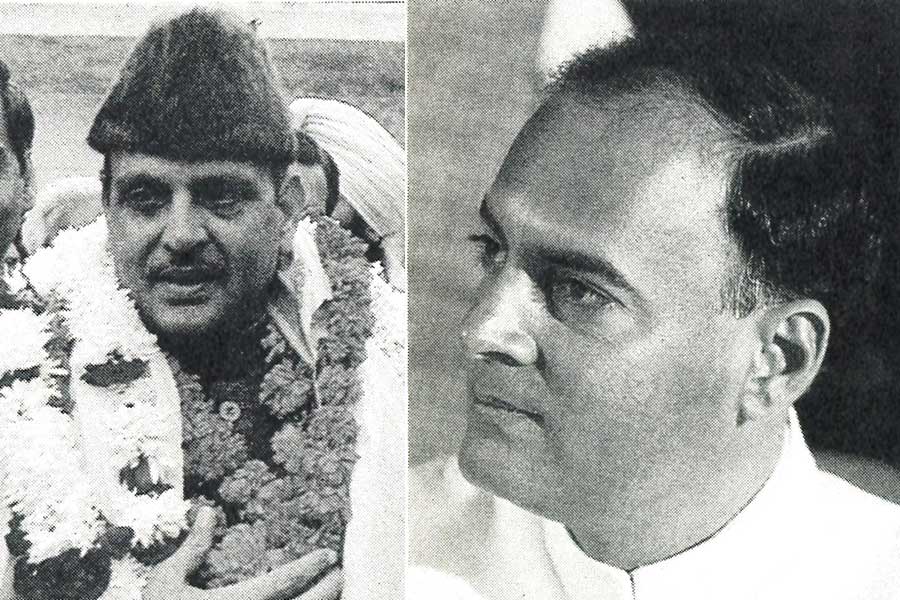
    An important task for the new government in New Delhi, led by Prime Minister V.P. Singh, is to restore minority confidence in a Hindu majority country. Now that Rajiv Gandhi is out after presiding over India’s worst killings of Muslims since independence in 1947, Mr. Singh has a chance to take the high moral ground by stopping Hindu high handedness towards Muslims and other minorities. The sad irony is that the very elements that he must control in the interest of peace are the ones who put him in power. That makes his job of bringing communal harmony and equal opportunity to all Indians even more difficult.

    Since Mr. Gandhi came to power in 1984, the law-and-order situation throughout the country had deteriorated and the minorities lived in fear. The most recent carnage in Bhagalpur, in the Indian state of Bihar, in which hundreds of Muslims were murdered in cold blood by Hindus, has only confirmed their fears once again. Anti-Muslim riots are nothing new to India, where the Hindu police often join in the killings, but in the last five years of Mr. Gandhi’s rule they have proliferated, and the official policy of slowly grounding Muslims to dust has come out in the open with all its naked11ess. During or about the same time there has been a marked increase in Hindu fundamentalism and a yearning to turn India into a Hindu state. The government of Mr. Gandhi, aware that Hindus comprise 82.5 percent of India’s population, did not do any­ thing to stop the Hindu militancy.

    Muslims in India: A Profile
    Muslim in India number over 100 million and they are in all25 Indians states. They are a religious people and they have stood in defense of human rights. Despite India’s avowed support to the Soviet-installed regime in Afghanistan, Muslims continue to support the US-backed Afghan freedom fighters.

    They cherish the ideas of democracy and believe in liberty and equality for all people in all walks of life. They are hardworking people – poor but proud of their heritage. They suffer the wrath of chauvinist elements in the government and private sector. There is a policy of open discrimination against them at the highest official level. They suffer the most at the time of anti-Muslim riots. Since 1947, close to a million people have died in these riots. The worst killing· took place immediately after India won its independence in August 1947. Despite all political problems, Muslims’ contribution to the national life has been remarkable. They are in the forefront of every movement sup­ porting justice and freedom. They have several internal weaknesses. But as the com­ munity is growing in education, the shortcomings are being taken care of.

    As supporters of democracy Muslims fear that the country’s judiciary and bureaucracy have joined hands with legislature in their attempt to turn India into a Hindu state with practically no rights to non-Hindus. Their fear is substantiated by the fact that there is a strong presence of Hindu chauvinist elements in the government. They feel that a Hindu chauvinist regime will be a threat to the world security and peace.

    It was under Mr. Gandhi’s rule that fanatic Hindus, using the pretext of Babri Masjid­ Ram Janmabhoomi controversy killed Muslims in Jaipur, Bikaner, Sawai Madhpur and Ratlam in Rajasthan; Indore, Mahow, Uj­gair and Baitool in Madhya Pardesh; and Delhi, Malyana, Badauan, Aligarh and Muzaffar Nagar, in Uttar Pardesh.

    Muslims are not the only minority to suffer at the hands of fundamentalist Hindu organiza­tions like Shiv Sena, Bajrang Dal, the Hindu Vishva Parishad, Rashtriya Swayam Sevak Sang, Hindu Suraksha Samiti and Hindu Ekta Sammelon. Sikhs, Dalits, and Christians have also received the same treatment. Fanatic Hindus claim that other minorities have no place in a Hindu India. They want to take the country back to the Vedic times when the society was divided into four classes of people: the Brahmin, the Kashtriyas (warriors), the Vaishnaus (businesspeople), and the Harijans (untouchables). They also want to rule the country in a manner that their god Ram did.

    India’s secular constitution bars discrimination based on religious beliefs, but whether the new Prime Minister can uphold and enforce it is another question. The most serious challenge to Mr. Singh will come from the pro-Hindu Bhartiya Janata Party, whose 90 seats out of 205 they had contested make them a dominant force in the 546-seat Parliament.